


202 Results
Form:
books
books
Actions:
Price:
$28.00
(available to order)
Summary:
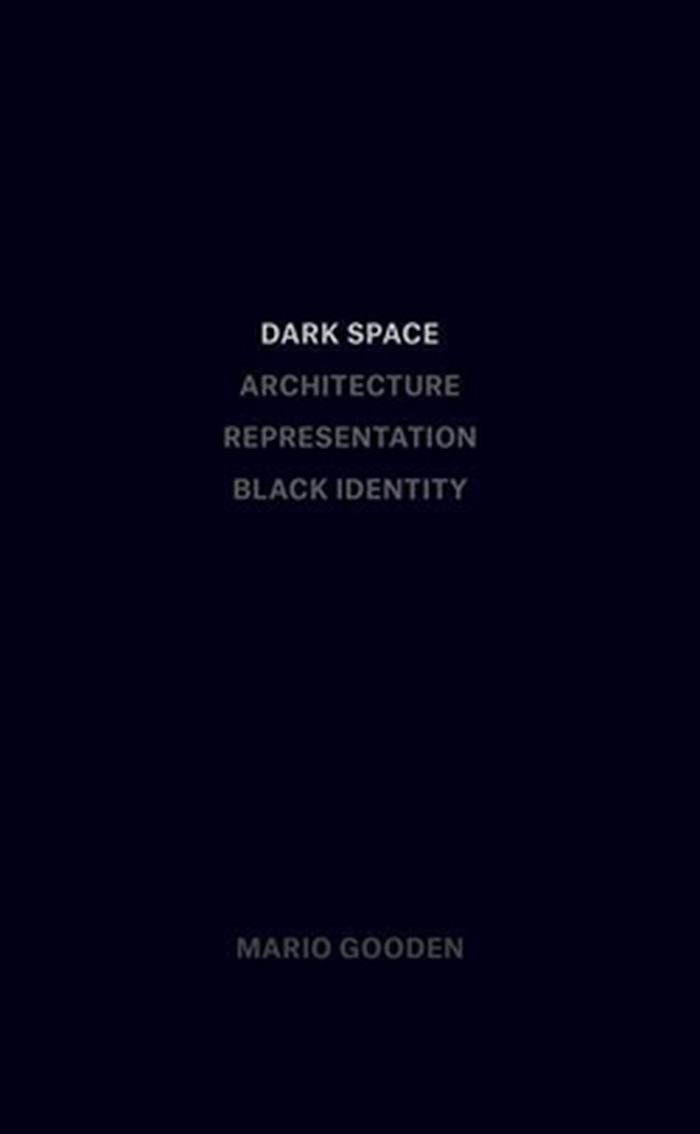
This collection of essays by architect Mario Gooden investigates the construction of African American identity and representation through the medium of architecture. These five texts move between history, theory, and criticism to explore a discourse of critical spatial practice engaged in the constant reshaping of the African Diaspora. African American cultural(...)
$28.00
(available to order)
Summary:
This collection of essays by architect Mario Gooden investigates the construction of African American identity and representation through the medium of architecture. These five texts move between history, theory, and criticism to explore a discourse of critical spatial practice engaged in the constant reshaping of the African Diaspora. African American cultural(...)
Title:
Dark space: architecture, representation, black identity
Actions:
Price:
$28.00
(available to order)
Summary:
This collection of essays by architect Mario Gooden investigates the construction of African American identity and representation through the medium of architecture. These five texts move between history, theory, and criticism to explore a discourse of critical spatial practice engaged in the constant reshaping of the African Diaspora. African American cultural institutions designed and constructed in recent years often rely on cultural stereotypes, metaphors, and clichés to communicate significance, demonstrating "Africanisms" through form and symbolism?but there is a far richer and more complex heritage to be explored. Presented here is a series of questions that interrogate and illuminate other narratives of "African American architecture," and reveal compelling ways of translating the philosophical idea of the African Diaspora's experience into space.
Dark space: architecture, representation, black identity
Actions:
Price:
$28.00
(available to order)
Summary:
This collection of essays by architect Mario Gooden investigates the construction of African American identity and representation through the medium of architecture. These five texts move between history, theory, and criticism to explore a discourse of critical spatial practice engaged in the constant reshaping of the African Diaspora. African American cultural institutions designed and constructed in recent years often rely on cultural stereotypes, metaphors, and clichés to communicate significance, demonstrating "Africanisms" through form and symbolism?but there is a far richer and more complex heritage to be explored. Presented here is a series of questions that interrogate and illuminate other narratives of "African American architecture," and reveal compelling ways of translating the philosophical idea of the African Diaspora's experience into space.
Form:
books
books
Publication:
December 2015
December 2015
Subject:
Architectural Theory
Architectural Theory
Form:
journals and magazines
journals and magazines

Actions:
Price:
$16.95
(available to order)
Summary:
Welcome to the 59th issue of ''The Funambulist'' (May-June 2025), dedicated to Black Indigeneities. The association of these two terms will certainly appear obvious to many, while it might surprise others, depending on readers’ personal and regional imaginaries. The issue examines the Indigeneity-Blackness nexus in Melanesia —in Fiji (Mara Mahoney and Ratu Ropate Rakuita(...)
$16.95
(available to order)
Summary:
Welcome to the 59th issue of ''The Funambulist'' (May-June 2025), dedicated to Black Indigeneities. The association of these two terms will certainly appear obvious to many, while it might surprise others, depending on readers’ personal and regional imaginaries. The issue examines the Indigeneity-Blackness nexus in Melanesia —in Fiji (Mara Mahoney and Ratu Ropate Rakuita(...)
Title:
The Funambulist 59: Black indigeneities
Actions:
Price:
$16.95
(available to order)
Summary:
Welcome to the 59th issue of ''The Funambulist'' (May-June 2025), dedicated to Black Indigeneities. The association of these two terms will certainly appear obvious to many, while it might surprise others, depending on readers’ personal and regional imaginaries. The issue examines the Indigeneity-Blackness nexus in Melanesia —in Fiji (Mara Mahoney and Ratu Ropate Rakuita Wailutu Kama) and beyond, in Aotearoa New Zealand (Nathan Rew and Makanaka Tuwe)—in several regions of the African Continent—South Africa (Zoé Samudzi and Mpho Matheolane/Nolan Oswald Dennis), Nubia (Menna Agha), Eritrea (Semhar Haile), and the Gabonese forests (Maya Mihindou)—in the Caribbean—Guiana (Karl Joseph and Marc-Alexandre Tareau) and Haiti (Tessa Mars)—as well as in the diaspora. The cover artwork by Tessa Mars.
The Funambulist 59: Black indigeneities
Actions:
Price:
$16.95
(available to order)
Summary:
Welcome to the 59th issue of ''The Funambulist'' (May-June 2025), dedicated to Black Indigeneities. The association of these two terms will certainly appear obvious to many, while it might surprise others, depending on readers’ personal and regional imaginaries. The issue examines the Indigeneity-Blackness nexus in Melanesia —in Fiji (Mara Mahoney and Ratu Ropate Rakuita Wailutu Kama) and beyond, in Aotearoa New Zealand (Nathan Rew and Makanaka Tuwe)—in several regions of the African Continent—South Africa (Zoé Samudzi and Mpho Matheolane/Nolan Oswald Dennis), Nubia (Menna Agha), Eritrea (Semhar Haile), and the Gabonese forests (Maya Mihindou)—in the Caribbean—Guiana (Karl Joseph and Marc-Alexandre Tareau) and Haiti (Tessa Mars)—as well as in the diaspora. The cover artwork by Tessa Mars.
Form:
journals and magazines
journals and magazines
Publication:
May 2025
May 2025
Subject:
Magazines
Magazines
Form:
books
books
Title:
L'inachevé
L'inachevé
Actions:
Price:
$44.95
(available to order)
Summary:
Depuis l’effondrement de l’Union soviétique en 1991, l’Arménie transite entre deux états, évoluant en marge, avec sa propre temporalité. Elle demeure en dehors du flux des images et c’est précisément ce vide, cette part manquante, qu’interroge le photographe Julien Lombardi, lui-même d’origine arménienne. La mémoire défaillante de cette jeune république se superpose à la(...)
$44.95
(available to order)
Summary:
Depuis l’effondrement de l’Union soviétique en 1991, l’Arménie transite entre deux états, évoluant en marge, avec sa propre temporalité. Elle demeure en dehors du flux des images et c’est précisément ce vide, cette part manquante, qu’interroge le photographe Julien Lombardi, lui-même d’origine arménienne. La mémoire défaillante de cette jeune république se superpose à la(...)
Title:
L'inachevé
Actions:
Price:
$44.95
(available to order)
Summary:
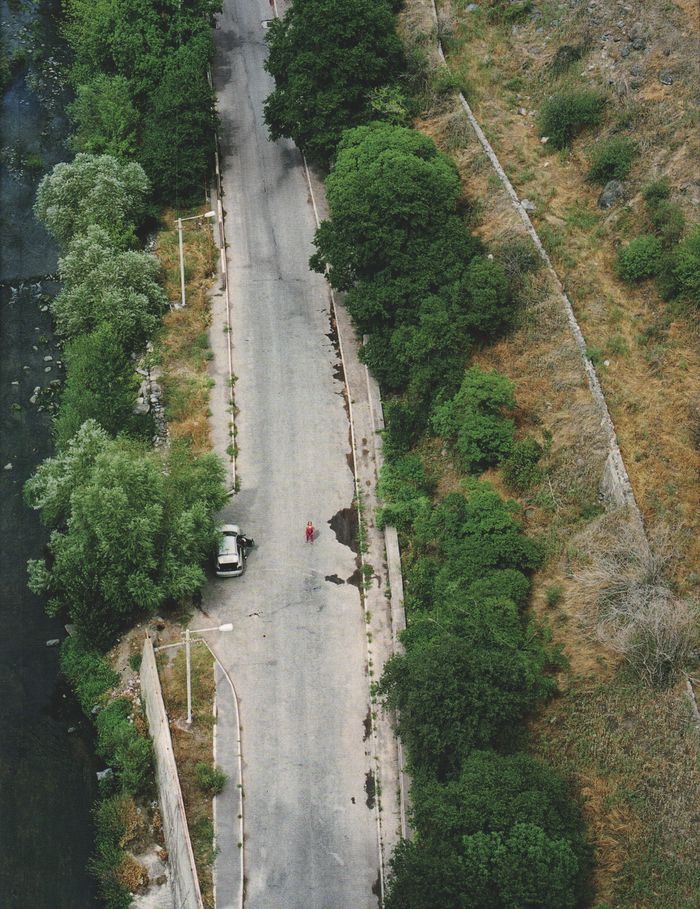
Depuis l’effondrement de l’Union soviétique en 1991, l’Arménie transite entre deux états, évoluant en marge, avec sa propre temporalité. Elle demeure en dehors du flux des images et c’est précisément ce vide, cette part manquante, qu’interroge le photographe Julien Lombardi, lui-même d’origine arménienne. La mémoire défaillante de cette jeune république se superpose à la sienne, tronquée par le déplacement et l’exil de la diaspora. Comment documenter ce qui n’existe plus ou n’est pas encore advenu ? Ces photographies sont autant de décors et d’espaces fragmentés susceptibles de devenir la toile de fond d’actions à venir. Comme le territoire qui les inspire, elles sont le réceptacle d’une nouvelle histoire à écrire, suggérant que l’inachevé est le théâtre d’une multitude de possibles.
L'inachevé
Actions:
Price:
$44.95
(available to order)
Summary:
Depuis l’effondrement de l’Union soviétique en 1991, l’Arménie transite entre deux états, évoluant en marge, avec sa propre temporalité. Elle demeure en dehors du flux des images et c’est précisément ce vide, cette part manquante, qu’interroge le photographe Julien Lombardi, lui-même d’origine arménienne. La mémoire défaillante de cette jeune république se superpose à la sienne, tronquée par le déplacement et l’exil de la diaspora. Comment documenter ce qui n’existe plus ou n’est pas encore advenu ? Ces photographies sont autant de décors et d’espaces fragmentés susceptibles de devenir la toile de fond d’actions à venir. Comme le territoire qui les inspire, elles sont le réceptacle d’une nouvelle histoire à écrire, suggérant que l’inachevé est le théâtre d’une multitude de possibles.
Form:
books
books
Publication:
September 2017
September 2017
Subject:
Photography monographs
Photography monographs
Form:
books
books
Price:
$28.95
(available to order)
Summary:
Indigenous activism in the Americas has long focused on the symbolic reclamation of land. Drawing on interdisciplinary perspectives, contributors to this issue explore narratives of territory and origin that provide a foundation for this political practice. The contributors study Indigenous-language stories from displaced communities, analyzing the meaning and power of(...)
$28.95
(available to order)
Summary:
Indigenous activism in the Americas has long focused on the symbolic reclamation of land. Drawing on interdisciplinary perspectives, contributors to this issue explore narratives of territory and origin that provide a foundation for this political practice. The contributors study Indigenous-language stories from displaced communities, analyzing the meaning and power of(...)
Subject:
Environment and environmental theory
Environment and environmental theory
Publication:
May 2020
May 2020
Title:
Indigenous narratives of territory and creation: hemispheric perspectives
Actions:
Price:
$28.95
(available to order)
Summary:
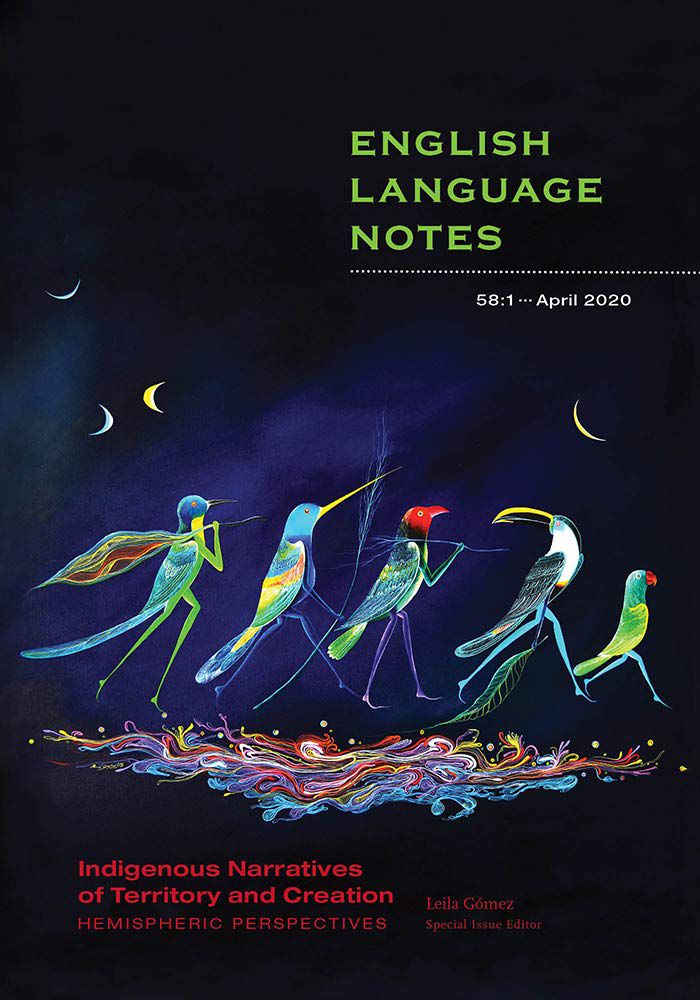
Indigenous activism in the Americas has long focused on the symbolic reclamation of land. Drawing on interdisciplinary perspectives, contributors to this issue explore narratives of territory and origin that provide a foundation for this political practice. The contributors study Indigenous-language stories from displaced communities, analyzing the meaning and power of these narratives in the context of diaspora and the struggle for land. Essays address topics including territorial struggle and environmentalism, Indigenous resistance to neoliberal policies of land dispossession, and alliances between academic and Indigenous knowledges and activisms. This issue brings together fruitful comparisons of theoretical frameworks and case studies in Indigenous studies across North and South America. Its contributors advance the process of returning to Indigenous knowledge, offering essential alternatives to Western epistemologies.
Indigenous narratives of territory and creation: hemispheric perspectives
Actions:
Price:
$28.95
(available to order)
Summary:
Indigenous activism in the Americas has long focused on the symbolic reclamation of land. Drawing on interdisciplinary perspectives, contributors to this issue explore narratives of territory and origin that provide a foundation for this political practice. The contributors study Indigenous-language stories from displaced communities, analyzing the meaning and power of these narratives in the context of diaspora and the struggle for land. Essays address topics including territorial struggle and environmentalism, Indigenous resistance to neoliberal policies of land dispossession, and alliances between academic and Indigenous knowledges and activisms. This issue brings together fruitful comparisons of theoretical frameworks and case studies in Indigenous studies across North and South America. Its contributors advance the process of returning to Indigenous knowledge, offering essential alternatives to Western epistemologies.
Form:
books
books
Publication:
May 2020
May 2020
Subject:
Environment and environmental theory
Environment and environmental theory
Form:
books
books
Actions:
Price:
$40.00
(available to order)
Summary:
Pouvons-nous décoloniser les foires du livre d'art ? Est-il possible de décentraliser les savoirs et déconstruire les privilèges dans ces domaines ? «Décoloniser les foires du livre d'art» propose de repenser les structures et les imaginaires qui encadrent actuellement l'organisation des foires du livre d'art. Ce guide tente de faire entendre de nouvelles voix pour aider(...)
$40.00
(available to order)
Summary:
Pouvons-nous décoloniser les foires du livre d'art ? Est-il possible de décentraliser les savoirs et déconstruire les privilèges dans ces domaines ? «Décoloniser les foires du livre d'art» propose de repenser les structures et les imaginaires qui encadrent actuellement l'organisation des foires du livre d'art. Ce guide tente de faire entendre de nouvelles voix pour aider(...)
Title:
Decolonizing art book fairs : Pratiques de l'édition indépendante dans les Sud(s)
Actions:
Price:
$40.00
(available to order)
Summary:
Pouvons-nous décoloniser les foires du livre d'art ? Est-il possible de décentraliser les savoirs et déconstruire les privilèges dans ces domaines ? «Décoloniser les foires du livre d'art» propose de repenser les structures et les imaginaires qui encadrent actuellement l'organisation des foires du livre d'art. Ce guide tente de faire entendre de nouvelles voix pour aider à déconstruire les frontières entre Nord(s) et Sud(s) en mettant l'accent sur les pratiques et les initiatives du continent africain et de sa diaspora. Un manifeste pour la décolonisation de l'édition et des foires du livre d'art (un ensemble de textes et d'entretiens inédits avec des artistes, des auteurs et des éditeurs du continent africain et d'ailleurs qui dresse un état des lieux des pratiques et ouvre de nouvelles voies pour décentrer l'édition d'art).
Decolonizing art book fairs : Pratiques de l'édition indépendante dans les Sud(s)
Actions:
Price:
$40.00
(available to order)
Summary:
Pouvons-nous décoloniser les foires du livre d'art ? Est-il possible de décentraliser les savoirs et déconstruire les privilèges dans ces domaines ? «Décoloniser les foires du livre d'art» propose de repenser les structures et les imaginaires qui encadrent actuellement l'organisation des foires du livre d'art. Ce guide tente de faire entendre de nouvelles voix pour aider à déconstruire les frontières entre Nord(s) et Sud(s) en mettant l'accent sur les pratiques et les initiatives du continent africain et de sa diaspora. Un manifeste pour la décolonisation de l'édition et des foires du livre d'art (un ensemble de textes et d'entretiens inédits avec des artistes, des auteurs et des éditeurs du continent africain et d'ailleurs qui dresse un état des lieux des pratiques et ouvre de nouvelles voies pour décentrer l'édition d'art).
Form:
books
books
Publication:
March 2023
March 2023
Subject:
Art Theory
Art Theory
Form:
books
books
Price:
$49.00
(available to order)
Summary:
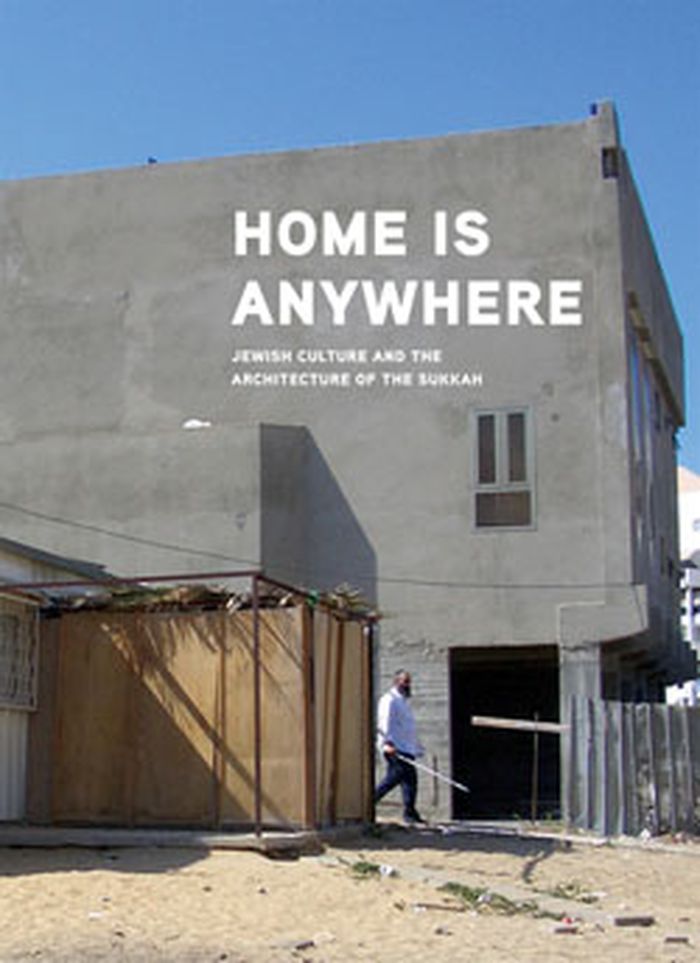
Biblical in origin, the Sukkah is a fascinating 1,500-year-old Jewish ritual of construction and habitation. Erected for only one week in the fall, its premise is paradoxical, as it encompasses issues of both diaspora and belonging. The construction guidelines are as follows: a Sukkah must have at least two-and-a-half walls and a thatched roof through which the stars are(...)
$49.00
(available to order)
Summary:
Biblical in origin, the Sukkah is a fascinating 1,500-year-old Jewish ritual of construction and habitation. Erected for only one week in the fall, its premise is paradoxical, as it encompasses issues of both diaspora and belonging. The construction guidelines are as follows: a Sukkah must have at least two-and-a-half walls and a thatched roof through which the stars are(...)
Publication:
March 2011
March 2011
Title:
Home is anywhere: Jewish culture and the architecture of the Sukkah
Actions:
Price:
$49.00
(available to order)
Summary:
Biblical in origin, the Sukkah is a fascinating 1,500-year-old Jewish ritual of construction and habitation. Erected for only one week in the fall, its premise is paradoxical, as it encompasses issues of both diaspora and belonging. The construction guidelines are as follows: a Sukkah must have at least two-and-a-half walls and a thatched roof through which the stars are visible. Here, Mimi Levy Lipis' photographs record examples of contemporary Sukkah architecture from Europe, Israel and the U.S. These include a Sukkah on a truck parked in front of a restaurant in Manhattan; Sukkot on lonely parking lots in London; a Sukkah built for eternity in Berlin; criss-cross stacked booths in Jerusalem; and Sukkot made of the same fabric in London and Tel Aviv.
Home is anywhere: Jewish culture and the architecture of the Sukkah
Actions:
Price:
$49.00
(available to order)
Summary:
Biblical in origin, the Sukkah is a fascinating 1,500-year-old Jewish ritual of construction and habitation. Erected for only one week in the fall, its premise is paradoxical, as it encompasses issues of both diaspora and belonging. The construction guidelines are as follows: a Sukkah must have at least two-and-a-half walls and a thatched roof through which the stars are visible. Here, Mimi Levy Lipis' photographs record examples of contemporary Sukkah architecture from Europe, Israel and the U.S. These include a Sukkah on a truck parked in front of a restaurant in Manhattan; Sukkot on lonely parking lots in London; a Sukkah built for eternity in Berlin; criss-cross stacked booths in Jerusalem; and Sukkot made of the same fabric in London and Tel Aviv.
Form:
books
books
Publication:
March 2011
March 2011
Form:
books
books

Title:
Nick Waplington: settlement
Nick Waplington: settlement
Actions:
Price:
$92.00
(available to order)
Summary:
The book investigates the topography of Jewish identity in the West Bank, which is in conflict not only with the Palestinian majority but also with mainstream Israeli society: While all the settlers are Jewish, and almost all are Israeli citizens, many are not natives of Israel. Most of the men and women photographed by Waplington are immigrants who arrived in the West(...)
$92.00
(available to order)
Summary:
The book investigates the topography of Jewish identity in the West Bank, which is in conflict not only with the Palestinian majority but also with mainstream Israeli society: While all the settlers are Jewish, and almost all are Israeli citizens, many are not natives of Israel. Most of the men and women photographed by Waplington are immigrants who arrived in the West(...)
Title:
Nick Waplington: settlement
Actions:
Price:
$92.00
(available to order)
Summary:
The book investigates the topography of Jewish identity in the West Bank, which is in conflict not only with the Palestinian majority but also with mainstream Israeli society: While all the settlers are Jewish, and almost all are Israeli citizens, many are not natives of Israel. Most of the men and women photographed by Waplington are immigrants who arrived in the West Bank from the United States, South Africa, Australia, the UK, the former Soviet Union, and other parts of the wider Jewish diaspora. The exact number of settlements cannot be determined with accuracy, as both construction and demolition take place regularly throughout the region. In general, however, the presence of Jewish settlers in the West Bank is entrenched, and their building projects continue with the support of the state of Israel.
Nick Waplington: settlement
Actions:
Price:
$92.00
(available to order)
Summary:
The book investigates the topography of Jewish identity in the West Bank, which is in conflict not only with the Palestinian majority but also with mainstream Israeli society: While all the settlers are Jewish, and almost all are Israeli citizens, many are not natives of Israel. Most of the men and women photographed by Waplington are immigrants who arrived in the West Bank from the United States, South Africa, Australia, the UK, the former Soviet Union, and other parts of the wider Jewish diaspora. The exact number of settlements cannot be determined with accuracy, as both construction and demolition take place regularly throughout the region. In general, however, the presence of Jewish settlers in the West Bank is entrenched, and their building projects continue with the support of the state of Israel.
Form:
books
books
Publication:
November 2014
November 2014
Subject:
Photography monographs
Photography monographs
Form:
books
books
Actions:
Price:
$137.00
(available in store)
Summary:
The 18th Venice Architecture Biennale, titled "The laboratory of the future," is conceived as a kind of workshop at which architects present examples from their practices reflecting on themes of decolonization and decarbonization. The biennale also shines a spotlight on Africa and the African Diaspora, with 89 participants, over half of whom are of African descent. Volume(...)
$137.00
(available in store)
Summary:
The 18th Venice Architecture Biennale, titled "The laboratory of the future," is conceived as a kind of workshop at which architects present examples from their practices reflecting on themes of decolonization and decarbonization. The biennale also shines a spotlight on Africa and the African Diaspora, with 89 participants, over half of whom are of African descent. Volume(...)
Title:
Biennale Architettura 2023: The laboratory of the future
Actions:
Price:
$137.00
(available in store)
Summary:
The 18th Venice Architecture Biennale, titled "The laboratory of the future," is conceived as a kind of workshop at which architects present examples from their practices reflecting on themes of decolonization and decarbonization. The biennale also shines a spotlight on Africa and the African Diaspora, with 89 participants, over half of whom are of African descent. Volume I of its catalog is dedicated to the International Exhibition, curated by Ghanaian Scottish architect Lesley Lokko. Projects by each participant are accompanied by a critical text and biographical notes and a rich plate section. Volume II presents the National Participations and the Collateral Events, with illustrated texts that delve into the projects presented in the Pavilions and the Collateral Exhibitions on display in the Giardini, the Arsenale and various locations throughout Venice.
Biennale Architettura 2023: The laboratory of the future
Actions:
Price:
$137.00
(available in store)
Summary:
The 18th Venice Architecture Biennale, titled "The laboratory of the future," is conceived as a kind of workshop at which architects present examples from their practices reflecting on themes of decolonization and decarbonization. The biennale also shines a spotlight on Africa and the African Diaspora, with 89 participants, over half of whom are of African descent. Volume I of its catalog is dedicated to the International Exhibition, curated by Ghanaian Scottish architect Lesley Lokko. Projects by each participant are accompanied by a critical text and biographical notes and a rich plate section. Volume II presents the National Participations and the Collateral Events, with illustrated texts that delve into the projects presented in the Pavilions and the Collateral Exhibitions on display in the Giardini, the Arsenale and various locations throughout Venice.
Form:
books
books
Publication:
November 2023
November 2023
Subject:
Biennial
Biennial
Form:
books
books
Actions:
Price:
$85.00
(available to order)
Summary:
The Black Arts Movement brought together writers, filmmakers, and visual artists who were exploring ways of using art to advance civil rights and Black self-determination. This book examines the vital role of photography in the evolution of the Black Arts Movement, revealing how photographs operated across art, community building, journalism, and political messaging to(...)
$85.00
(available to order)
Summary:
The Black Arts Movement brought together writers, filmmakers, and visual artists who were exploring ways of using art to advance civil rights and Black self-determination. This book examines the vital role of photography in the evolution of the Black Arts Movement, revealing how photographs operated across art, community building, journalism, and political messaging to(...)
Title:
Photography and the Black Arts movement, 1955-1985
Actions:
Price:
$85.00
(available to order)
Summary:
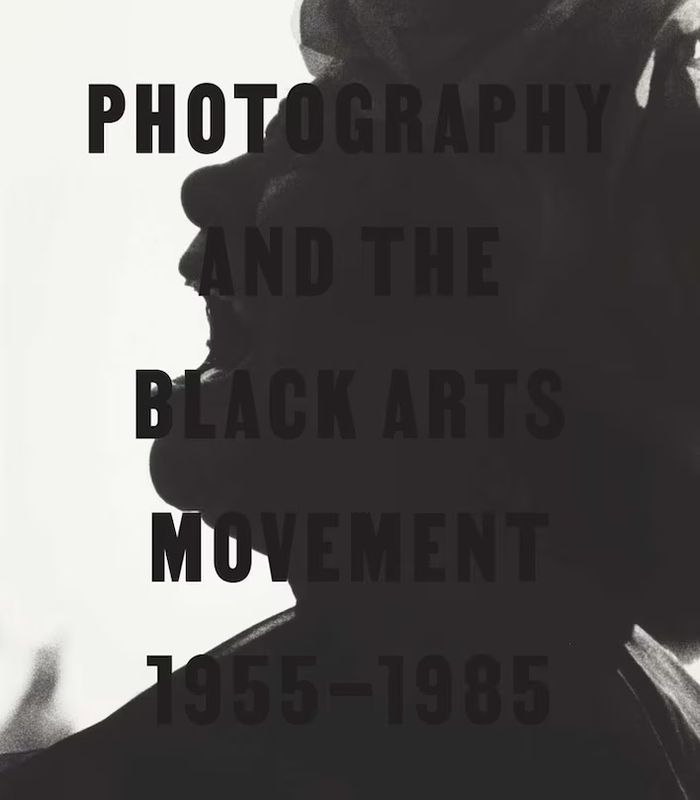
The Black Arts Movement brought together writers, filmmakers, and visual artists who were exploring ways of using art to advance civil rights and Black self-determination. This book examines the vital role of photography in the evolution of the Black Arts Movement, revealing how photographs operated across art, community building, journalism, and political messaging to contribute to the development of a distinctly Black art and culture. The book’s essays by distinguished scholars focus on topics such as women and the movement, community, activism, and Black photojournalism. Taking an expansive approach, the authors consider the complex connections between American artists and the African diaspora and the dynamic interchange of pan-African ideas that propelled the movement. Authoritative and beautifully illustrated, this is the definitive volume on photography and the Black Arts Movement.
Photography and the Black Arts movement, 1955-1985
Actions:
Price:
$85.00
(available to order)
Summary:
The Black Arts Movement brought together writers, filmmakers, and visual artists who were exploring ways of using art to advance civil rights and Black self-determination. This book examines the vital role of photography in the evolution of the Black Arts Movement, revealing how photographs operated across art, community building, journalism, and political messaging to contribute to the development of a distinctly Black art and culture. The book’s essays by distinguished scholars focus on topics such as women and the movement, community, activism, and Black photojournalism. Taking an expansive approach, the authors consider the complex connections between American artists and the African diaspora and the dynamic interchange of pan-African ideas that propelled the movement. Authoritative and beautifully illustrated, this is the definitive volume on photography and the Black Arts Movement.
Form:
books
books
Publication:
September 2025
September 2025
Subject:
Photography Collections
Photography Collections
Form:
books
books

Title:
Ellis Island
Ellis Island
Actions:
Price:
$15.95
(available to order)
Summary:
« Ce que moi, Georges Perec, je suis venu questionner ici, c’est l’errance, la dispersion, la diaspora. Ellis Island est pour moi le lieu même de l’exil, c’est-à-dire le lieu de l’absence de lieu, le non-lieu, le nulle part. c’est en ce sens que ces images me concernent, me fascinent, m’impliquent, comme si la recherche de mon identité passait par l’appropriation de ce(...)
$15.95
(available to order)
Summary:
« Ce que moi, Georges Perec, je suis venu questionner ici, c’est l’errance, la dispersion, la diaspora. Ellis Island est pour moi le lieu même de l’exil, c’est-à-dire le lieu de l’absence de lieu, le non-lieu, le nulle part. c’est en ce sens que ces images me concernent, me fascinent, m’impliquent, comme si la recherche de mon identité passait par l’appropriation de ce(...)
Title:
Ellis Island
Actions:
Price:
$15.95
(available to order)
Summary:
« Ce que moi, Georges Perec, je suis venu questionner ici, c’est l’errance, la dispersion, la diaspora. Ellis Island est pour moi le lieu même de l’exil, c’est-à-dire le lieu de l’absence de lieu, le non-lieu, le nulle part. c’est en ce sens que ces images me concernent, me fascinent, m’impliquent, comme si la recherche de mon identité passait par l’appropriation de ce lieu-dépotoir où des fonctionnaires harassés baptisaient des Américains à la pelle. ce qui pour moi se trouve ici ce ne sont en rien des repères, des racines ou des traces, mais le contraire : quelque chose d’informe, à la limite du dicible, quelque chose que je peux nommer clôture, ou scission, ou coupure, et qui est pour moi très intimement et très confusément lié au fait même d’être juif ».
Ellis Island
Actions:
Price:
$15.95
(available to order)
Summary:
« Ce que moi, Georges Perec, je suis venu questionner ici, c’est l’errance, la dispersion, la diaspora. Ellis Island est pour moi le lieu même de l’exil, c’est-à-dire le lieu de l’absence de lieu, le non-lieu, le nulle part. c’est en ce sens que ces images me concernent, me fascinent, m’impliquent, comme si la recherche de mon identité passait par l’appropriation de ce lieu-dépotoir où des fonctionnaires harassés baptisaient des Américains à la pelle. ce qui pour moi se trouve ici ce ne sont en rien des repères, des racines ou des traces, mais le contraire : quelque chose d’informe, à la limite du dicible, quelque chose que je peux nommer clôture, ou scission, ou coupure, et qui est pour moi très intimement et très confusément lié au fait même d’être juif ».
Form:
books
books
Publication:
March 2020
March 2020
Subject:
Literature and poetry
Literature and poetry


