


8431 Results
Form:
exhibitions
exhibitions
Actions:
Description:
An Atlas. A Bricolage. A Compendium of different elements and strategies for understanding the city. ABC : MTL is an urban abecedary and open-source initiative that maps contemporary Montreal in a diversity of ways and media. Over ninety contributions including photography, music videos, sculptures and installations, drawings, models, workshops, lectures, and performances(...)
An Atlas. A Bricolage. A Compendium of different elements and strategies for understanding the city. ABC : MTL is an urban abecedary and open-source initiative that maps contemporary Montreal in a diversity of ways and media. Over ninety contributions including photography, music videos, sculptures and installations, drawings, models, workshops, lectures, and performances(...)
Location:
Main galleries
Main galleries
Date:
13 November 2012 to 31 March 2013
13 November 2012 to 31 March 2013
Title:
ABC : MTL – A Self-Portrait of Montréal
Actions:
Description:
An Atlas. A Bricolage. A Compendium of different elements and strategies for understanding the city. ABC : MTL is an urban abecedary and open-source initiative that maps contemporary Montreal in a diversity of ways and media. Over ninety contributions including photography, music videos, sculptures and installations, drawings, models, workshops, lectures, and performances(...)
ABC : MTL – A Self-Portrait of Montréal
Actions:
Description:
An Atlas. A Bricolage. A Compendium of different elements and strategies for understanding the city. ABC : MTL is an urban abecedary and open-source initiative that maps contemporary Montreal in a diversity of ways and media. Over ninety contributions including photography, music videos, sculptures and installations, drawings, models, workshops, lectures, and performances(...)
Form:
exhibitions
exhibitions
Date:
13 November 2012 to
31 March 2013
13 November 2012 to
31 March 2013
Location:
Main galleries
Main galleries
Form:
archives
Level of archival description:
Fonds
archives
Level of archival description:
Fonds
Title:
Bernard Tschumi fonds
Bernard Tschumi fonds
Actions:
Reference number:
AP214
Synopsis:
The Bernard Tschumi fonds, dating from approximately 1965-2015, documents the professional activities of Bernard Tschumi including Tschumi’s career in academia and his professional practice as an architect through approximately 75 projects dating from the late 1980s to 2012.
AP214
Synopsis:
The Bernard Tschumi fonds, dating from approximately 1965-2015, documents the professional activities of Bernard Tschumi including Tschumi’s career in academia and his professional practice as an architect through approximately 75 projects dating from the late 1980s to 2012.
People:
Date:
circa 1964-2015
circa 1964-2015
Title:
Bernard Tschumi fonds
Actions:
AP214
Synopsis:
The Bernard Tschumi fonds, dating from approximately 1965-2015, documents the professional activities of Bernard Tschumi including Tschumi’s career in academia and his professional practice as an architect through approximately 75 projects dating from the late 1980s to 2012.
Bernard Tschumi fonds
Actions:
AP214
Synopsis:
The Bernard Tschumi fonds, dating from approximately 1965-2015, documents the professional activities of Bernard Tschumi including Tschumi’s career in academia and his professional practice as an architect through approximately 75 projects dating from the late 1980s to 2012.
Form:
archives
Level of archival description:
Fonds
archives
Level of archival description:
Fonds
Date:
circa 1964-2015
circa 1964-2015
People:
Level of archival description:
Series
Series
Title:
OCEAN reference files
OCEAN reference files
Actions:
Reference number:
AP194.S2
Description:
Series consist of records associated with different projects devised by OCEAN and OCEAN North prior to 1999 and retained as reference material by Johan Bettum, who did not collaborate on every project. Records occasionally include some photographs, but for the most part are images from work done with CAD software. These include plans, diagrams, renderings and views (sections, perspectives) of buildings, landscapes, exhibition scenography, and exhibited items. The amount and type of materials varies largely between projects. Files were transferred to CCA on a CD and their timestamps suggests that materials were copied for reference purpose in the first few months of 1998. The CD cover bears the date of June 3rd 1999. Projects date from 1994 to 1998. Projects included in the reference files are: Barbican, London (OCEAN Helsinki): likely an exhibition design. Museum, Buenos Aires (OCEAN U.K., 1997): a building design for a competition. Finnish Embassy, Canberra (OCEAN Oslo & Helsinki, 1996): an international architectural competition entry. Helsinki Nightclub (OCEAN Helsinki): a building design. Jeil’s Hospital, Seoul (OCEAN U.K., 1996): a building design. Jyväskylä Music and Arts Center (OCEAN Oslo & Helsinki, 1997): an international architectural competition entry. See also Series 1 for more records on this project. Lasipalatsi Media Square (OCEAN U.K.): a landscape design. Synthetic Landscape I-II, Oslo (OCEAN Oslo, 1995-1996): a landscape design. See also Series 1 for more records on this research project. Surfscape, Helsinki (OCEAN Helsinki, 1997): sculpture for an exhibition. Töölö Football Stadium, Hels. (OCEAN Oslo & Helsinki, 1997): an international architectural competition entry. See also Series 1 for more records on this project. Urban Surfaces, Oslo (OCEAN, 1997-1998): photographs of an exhibition. Source: Ateljié Sotamaa. “Portfolio.” Accessed November 2017, http://portfolio.sotamaa.net/ OCEAN design Research Association, “Exhibitions.” Accessed November 2017, http://www.ocean-designresearch.net/index.php/exhibitions-mainmenu-120/list-of-exhibitions FRAC, “Catalog, OCEAN.” Accessed November 2017, http://www.archilab.org/public/2000/catalog/ocean/oceanen.htm OCEAN CN Consultancy Network, “Projects.” Accessed November 2017, http://ocean-cn.org/projects/
AP194.S2
Description:
Series consist of records associated with different projects devised by OCEAN and OCEAN North prior to 1999 and retained as reference material by Johan Bettum, who did not collaborate on every project. Records occasionally include some photographs, but for the most part are images from work done with CAD software. These include plans, diagrams, renderings and views (sections, perspectives) of buildings, landscapes, exhibition scenography, and exhibited items. The amount and type of materials varies largely between projects. Files were transferred to CCA on a CD and their timestamps suggests that materials were copied for reference purpose in the first few months of 1998. The CD cover bears the date of June 3rd 1999. Projects date from 1994 to 1998. Projects included in the reference files are: Barbican, London (OCEAN Helsinki): likely an exhibition design. Museum, Buenos Aires (OCEAN U.K., 1997): a building design for a competition. Finnish Embassy, Canberra (OCEAN Oslo & Helsinki, 1996): an international architectural competition entry. Helsinki Nightclub (OCEAN Helsinki): a building design. Jeil’s Hospital, Seoul (OCEAN U.K., 1996): a building design. Jyväskylä Music and Arts Center (OCEAN Oslo & Helsinki, 1997): an international architectural competition entry. See also Series 1 for more records on this project. Lasipalatsi Media Square (OCEAN U.K.): a landscape design. Synthetic Landscape I-II, Oslo (OCEAN Oslo, 1995-1996): a landscape design. See also Series 1 for more records on this research project. Surfscape, Helsinki (OCEAN Helsinki, 1997): sculpture for an exhibition. Töölö Football Stadium, Hels. (OCEAN Oslo & Helsinki, 1997): an international architectural competition entry. See also Series 1 for more records on this project. Urban Surfaces, Oslo (OCEAN, 1997-1998): photographs of an exhibition. Source: Ateljié Sotamaa. “Portfolio.” Accessed November 2017, http://portfolio.sotamaa.net/ OCEAN design Research Association, “Exhibitions.” Accessed November 2017, http://www.ocean-designresearch.net/index.php/exhibitions-mainmenu-120/list-of-exhibitions FRAC, “Catalog, OCEAN.” Accessed November 2017, http://www.archilab.org/public/2000/catalog/ocean/oceanen.htm OCEAN CN Consultancy Network, “Projects.” Accessed November 2017, http://ocean-cn.org/projects/
People:
Date:
1998
1998
Title:
OCEAN reference files
Actions:
AP194.S2
Description:
Series consist of records associated with different projects devised by OCEAN and OCEAN North prior to 1999 and retained as reference material by Johan Bettum, who did not collaborate on every project. Records occasionally include some photographs, but for the most part are images from work done with CAD software. These include plans, diagrams, renderings and views (sections, perspectives) of buildings, landscapes, exhibition scenography, and exhibited items. The amount and type of materials varies largely between projects. Files were transferred to CCA on a CD and their timestamps suggests that materials were copied for reference purpose in the first few months of 1998. The CD cover bears the date of June 3rd 1999. Projects date from 1994 to 1998. Projects included in the reference files are: Barbican, London (OCEAN Helsinki): likely an exhibition design. Museum, Buenos Aires (OCEAN U.K., 1997): a building design for a competition. Finnish Embassy, Canberra (OCEAN Oslo & Helsinki, 1996): an international architectural competition entry. Helsinki Nightclub (OCEAN Helsinki): a building design. Jeil’s Hospital, Seoul (OCEAN U.K., 1996): a building design. Jyväskylä Music and Arts Center (OCEAN Oslo & Helsinki, 1997): an international architectural competition entry. See also Series 1 for more records on this project. Lasipalatsi Media Square (OCEAN U.K.): a landscape design. Synthetic Landscape I-II, Oslo (OCEAN Oslo, 1995-1996): a landscape design. See also Series 1 for more records on this research project. Surfscape, Helsinki (OCEAN Helsinki, 1997): sculpture for an exhibition. Töölö Football Stadium, Hels. (OCEAN Oslo & Helsinki, 1997): an international architectural competition entry. See also Series 1 for more records on this project. Urban Surfaces, Oslo (OCEAN, 1997-1998): photographs of an exhibition. Source: Ateljié Sotamaa. “Portfolio.” Accessed November 2017, http://portfolio.sotamaa.net/ OCEAN design Research Association, “Exhibitions.” Accessed November 2017, http://www.ocean-designresearch.net/index.php/exhibitions-mainmenu-120/list-of-exhibitions FRAC, “Catalog, OCEAN.” Accessed November 2017, http://www.archilab.org/public/2000/catalog/ocean/oceanen.htm OCEAN CN Consultancy Network, “Projects.” Accessed November 2017, http://ocean-cn.org/projects/
OCEAN reference files
Actions:
AP194.S2
Description:
Series consist of records associated with different projects devised by OCEAN and OCEAN North prior to 1999 and retained as reference material by Johan Bettum, who did not collaborate on every project. Records occasionally include some photographs, but for the most part are images from work done with CAD software. These include plans, diagrams, renderings and views (sections, perspectives) of buildings, landscapes, exhibition scenography, and exhibited items. The amount and type of materials varies largely between projects. Files were transferred to CCA on a CD and their timestamps suggests that materials were copied for reference purpose in the first few months of 1998. The CD cover bears the date of June 3rd 1999. Projects date from 1994 to 1998. Projects included in the reference files are: Barbican, London (OCEAN Helsinki): likely an exhibition design. Museum, Buenos Aires (OCEAN U.K., 1997): a building design for a competition. Finnish Embassy, Canberra (OCEAN Oslo & Helsinki, 1996): an international architectural competition entry. Helsinki Nightclub (OCEAN Helsinki): a building design. Jeil’s Hospital, Seoul (OCEAN U.K., 1996): a building design. Jyväskylä Music and Arts Center (OCEAN Oslo & Helsinki, 1997): an international architectural competition entry. See also Series 1 for more records on this project. Lasipalatsi Media Square (OCEAN U.K.): a landscape design. Synthetic Landscape I-II, Oslo (OCEAN Oslo, 1995-1996): a landscape design. See also Series 1 for more records on this research project. Surfscape, Helsinki (OCEAN Helsinki, 1997): sculpture for an exhibition. Töölö Football Stadium, Hels. (OCEAN Oslo & Helsinki, 1997): an international architectural competition entry. See also Series 1 for more records on this project. Urban Surfaces, Oslo (OCEAN, 1997-1998): photographs of an exhibition. Source: Ateljié Sotamaa. “Portfolio.” Accessed November 2017, http://portfolio.sotamaa.net/ OCEAN design Research Association, “Exhibitions.” Accessed November 2017, http://www.ocean-designresearch.net/index.php/exhibitions-mainmenu-120/list-of-exhibitions FRAC, “Catalog, OCEAN.” Accessed November 2017, http://www.archilab.org/public/2000/catalog/ocean/oceanen.htm OCEAN CN Consultancy Network, “Projects.” Accessed November 2017, http://ocean-cn.org/projects/
Level of archival description:
Series
Series
Date:
1998
1998
People:
Form:
articles
articles

Title:
Work Smart, Not Hard
Work Smart, Not Hard
Actions:
Hester Keijser, Luuk Smits, Charlie-Anne Côté, Emma Rath, and Victoria Addona discuss construction videos on social media
Published:
3 June 2024
3 June 2024
Title:
Work Smart, Not Hard
Hester Keijser, Luuk Smits, Charlie-Anne Côté, Emma Rath, and Victoria Addona discuss construction videos on social media
Actions:
Work Smart, Not Hard
Hester Keijser, Luuk Smits, Charlie-Anne Côté, Emma Rath, and Victoria Addona discuss construction videos on social media
Actions:
Form:
events
events
Title:
T pour Typographie
T pour Typographie
Actions:
Description:
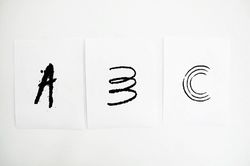
Feed is an independent graphic design studio founded in 1999 by Anouk Pennel and Raphaël Daudelin that specializes in branding, publishing and typeface design. In conjunction with the graphic design they created for the exhibition ABC: MTL, the studio invites university students to a typography drawing workshop. Each student will be assigned a letter of the alphabet and(...)
Feed is an independent graphic design studio founded in 1999 by Anouk Pennel and Raphaël Daudelin that specializes in branding, publishing and typeface design. In conjunction with the graphic design they created for the exhibition ABC: MTL, the studio invites university students to a typography drawing workshop. Each student will be assigned a letter of the alphabet and(...)
Location:
Shaughnessy House
Shaughnessy House
Date:
21 February 2013, 3pm - 5pm
21 February 2013, 3pm - 5pm
Title:
T pour Typographie
Actions:
Description:
Feed is an independent graphic design studio founded in 1999 by Anouk Pennel and Raphaël Daudelin that specializes in branding, publishing and typeface design. In conjunction with the graphic design they created for the exhibition ABC: MTL, the studio invites university students to a typography drawing workshop. Each student will be assigned a letter of the alphabet and(...)
T pour Typographie
Actions:
Description:
Feed is an independent graphic design studio founded in 1999 by Anouk Pennel and Raphaël Daudelin that specializes in branding, publishing and typeface design. In conjunction with the graphic design they created for the exhibition ABC: MTL, the studio invites university students to a typography drawing workshop. Each student will be assigned a letter of the alphabet and(...)
Form:
events
events
Date:
21 February 2013
3pm - 5pm
21 February 2013
3pm - 5pm
Location:
Shaughnessy House
Shaughnessy House
Form:
photographs
photographs
Title:
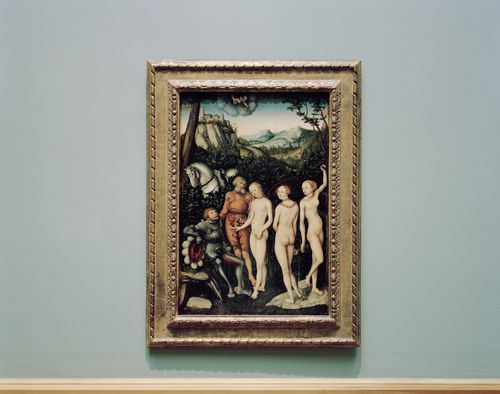
Questioning Pictures: Photograph of Judgment of Paris, painting by Lucas Cranach the elder, 1528
Questioning Pictures: Photograph of Judgment of Paris, painting by Lucas Cranach the elder, 1528
Actions:
Reference number:
PH2018:0005:025
Description:
Photograph by Stefano Graziani of the following work: Lucas Cranach the Elder, The Judgment of the Paris, mixed media on beech wood, 84.7 x 57 cm 1528, Kunstmuseum Basel, Schenkung Martha und Robert von Hirsch 1977, Inv. G 1977.37, Basel Questioning Pictures is a 36 photograph project commissioned by Fondazione Prada, Milan. Artist Stefano Graziani investigates archival and conservation systems in a number of museums. Through photographing museum objects, Graziani, focusing on the relationship between photographs, the museum objects and the power structures at play within institutions. The museums include the Canadian Centre for Architecture (CCA) in Montréal, Canada; Sir John Soane’s Museum in London, UK; the Kunstmuseum Basel, Switzerland; Museum Insel Hombroich in Neuss, Germany; the Museo di Castelvecchio in Verona, Italy; and the Plaster Cast Gallery at Museo Canova in Possagno, Italy.
PH2018:0005:025
Description:
Photograph by Stefano Graziani of the following work: Lucas Cranach the Elder, The Judgment of the Paris, mixed media on beech wood, 84.7 x 57 cm 1528, Kunstmuseum Basel, Schenkung Martha und Robert von Hirsch 1977, Inv. G 1977.37, Basel Questioning Pictures is a 36 photograph project commissioned by Fondazione Prada, Milan. Artist Stefano Graziani investigates archival and conservation systems in a number of museums. Through photographing museum objects, Graziani, focusing on the relationship between photographs, the museum objects and the power structures at play within institutions. The museums include the Canadian Centre for Architecture (CCA) in Montréal, Canada; Sir John Soane’s Museum in London, UK; the Kunstmuseum Basel, Switzerland; Museum Insel Hombroich in Neuss, Germany; the Museo di Castelvecchio in Verona, Italy; and the Plaster Cast Gallery at Museo Canova in Possagno, Italy.
People:
Date:
2017
2017
Title:
Questioning Pictures: Photograph of Judgment of Paris, painting by Lucas Cranach the elder, 1528
Actions:
PH2018:0005:025
Description:
Photograph by Stefano Graziani of the following work: Lucas Cranach the Elder, The Judgment of the Paris, mixed media on beech wood, 84.7 x 57 cm 1528, Kunstmuseum Basel, Schenkung Martha und Robert von Hirsch 1977, Inv. G 1977.37, Basel Questioning Pictures is a 36 photograph project commissioned by Fondazione Prada, Milan. Artist Stefano Graziani investigates archival and conservation systems in a number of museums. Through photographing museum objects, Graziani, focusing on the relationship between photographs, the museum objects and the power structures at play within institutions. The museums include the Canadian Centre for Architecture (CCA) in Montréal, Canada; Sir John Soane’s Museum in London, UK; the Kunstmuseum Basel, Switzerland; Museum Insel Hombroich in Neuss, Germany; the Museo di Castelvecchio in Verona, Italy; and the Plaster Cast Gallery at Museo Canova in Possagno, Italy.
Questioning Pictures: Photograph of Judgment of Paris, painting by Lucas Cranach the elder, 1528
Actions:
PH2018:0005:025
Description:
Photograph by Stefano Graziani of the following work: Lucas Cranach the Elder, The Judgment of the Paris, mixed media on beech wood, 84.7 x 57 cm 1528, Kunstmuseum Basel, Schenkung Martha und Robert von Hirsch 1977, Inv. G 1977.37, Basel Questioning Pictures is a 36 photograph project commissioned by Fondazione Prada, Milan. Artist Stefano Graziani investigates archival and conservation systems in a number of museums. Through photographing museum objects, Graziani, focusing on the relationship between photographs, the museum objects and the power structures at play within institutions. The museums include the Canadian Centre for Architecture (CCA) in Montréal, Canada; Sir John Soane’s Museum in London, UK; the Kunstmuseum Basel, Switzerland; Museum Insel Hombroich in Neuss, Germany; the Museo di Castelvecchio in Verona, Italy; and the Plaster Cast Gallery at Museo Canova in Possagno, Italy.
Form:
photographs
photographs
Date:
2017
2017
People:
Form:
events
events
Actions:
Description:
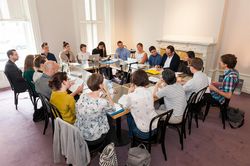
The Toolkit for Today seminar is a constitutive part of the CCA Doctoral Students Program. We invite scholars to open up their toolboxes, share methodological challenges and approaches, and discuss the key concepts they work with on contemporary issues in architecture and related disciplines. In 2016, the Toolkit for Today focuses on “Keywords for the Environment,”(...)
The Toolkit for Today seminar is a constitutive part of the CCA Doctoral Students Program. We invite scholars to open up their toolboxes, share methodological challenges and approaches, and discuss the key concepts they work with on contemporary issues in architecture and related disciplines. In 2016, the Toolkit for Today focuses on “Keywords for the Environment,”(...)
Date:
27 June 2016 to 30 June 2016
27 June 2016 to 30 June 2016
Title:
Toolkit for Today: Keywords for the Environment
Actions:
Description:
The Toolkit for Today seminar is a constitutive part of the CCA Doctoral Students Program. We invite scholars to open up their toolboxes, share methodological challenges and approaches, and discuss the key concepts they work with on contemporary issues in architecture and related disciplines. In 2016, the Toolkit for Today focuses on “Keywords for the Environment,”(...)
Toolkit for Today: Keywords for the Environment
Actions:
Description:
The Toolkit for Today seminar is a constitutive part of the CCA Doctoral Students Program. We invite scholars to open up their toolboxes, share methodological challenges and approaches, and discuss the key concepts they work with on contemporary issues in architecture and related disciplines. In 2016, the Toolkit for Today focuses on “Keywords for the Environment,”(...)
Form:
events
events
Date:
27 June 2016 to
30 June 2016
27 June 2016 to
30 June 2016
Form:
archives
Level of archival description:
Fonds
archives
Level of archival description:
Fonds
Title:
Marcel Parizeau fonds
Marcel Parizeau fonds
Actions:
Reference number:
AP104
Synopsis:
Le Fonds Marcel Parizeau contient des documents relatifs à la formation et à la vie de professionnel de Marcel Parizeau. Il contient aussi des œuvres d'art réalisées par ce dernier. Le fonds est composé de dessins d'architecture et de meubles, de carnets de croquis, de tableaux, de manuscrits, de correspondances, ainsi que quelques autres documents.
AP104
Synopsis:
Le Fonds Marcel Parizeau contient des documents relatifs à la formation et à la vie de professionnel de Marcel Parizeau. Il contient aussi des œuvres d'art réalisées par ce dernier. Le fonds est composé de dessins d'architecture et de meubles, de carnets de croquis, de tableaux, de manuscrits, de correspondances, ainsi que quelques autres documents.
People:
Date:
1917-1955
1917-1955
Title:
Marcel Parizeau fonds
Actions:
AP104
Synopsis:
Le Fonds Marcel Parizeau contient des documents relatifs à la formation et à la vie de professionnel de Marcel Parizeau. Il contient aussi des œuvres d'art réalisées par ce dernier. Le fonds est composé de dessins d'architecture et de meubles, de carnets de croquis, de tableaux, de manuscrits, de correspondances, ainsi que quelques autres documents.
Marcel Parizeau fonds
Actions:
AP104
Synopsis:
Le Fonds Marcel Parizeau contient des documents relatifs à la formation et à la vie de professionnel de Marcel Parizeau. Il contient aussi des œuvres d'art réalisées par ce dernier. Le fonds est composé de dessins d'architecture et de meubles, de carnets de croquis, de tableaux, de manuscrits, de correspondances, ainsi que quelques autres documents.
Form:
archives
Level of archival description:
Fonds
archives
Level of archival description:
Fonds
Date:
1917-1955
1917-1955
People:
Form:
events
events
Title:
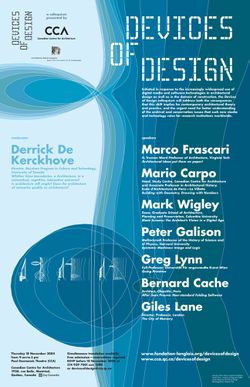
Devices of Design
Devices of Design
Actions:
Description:
A collaboration between the CCA and the Daniel Langlois Foundation for Art, Science, and Technology, Devices of Design was initiated in response to the increasingly widespread use of digital media and software technologies in architectural design and construction. A colloquium and a subsequent roundtable discussion address both the consequences that this shift implies for(...)
A collaboration between the CCA and the Daniel Langlois Foundation for Art, Science, and Technology, Devices of Design was initiated in response to the increasingly widespread use of digital media and software technologies in architectural design and construction. A colloquium and a subsequent roundtable discussion address both the consequences that this shift implies for(...)
Location:
Paul-Desmarais Theatre
Paul-Desmarais Theatre
Date:
18 November 2004 to 19 November 2004
18 November 2004 to 19 November 2004
Title:
Devices of Design
Actions:
Description:
A collaboration between the CCA and the Daniel Langlois Foundation for Art, Science, and Technology, Devices of Design was initiated in response to the increasingly widespread use of digital media and software technologies in architectural design and construction. A colloquium and a subsequent roundtable discussion address both the consequences that this shift implies for(...)
Devices of Design
Actions:
Description:
A collaboration between the CCA and the Daniel Langlois Foundation for Art, Science, and Technology, Devices of Design was initiated in response to the increasingly widespread use of digital media and software technologies in architectural design and construction. A colloquium and a subsequent roundtable discussion address both the consequences that this shift implies for(...)
Form:
events
events
Date:
18 November 2004 to
19 November 2004
18 November 2004 to
19 November 2004
Location:
Paul-Desmarais Theatre
Paul-Desmarais Theatre
Level of archival description:
Project
Project
Reference number:
AP148.S1.1970.PR02
Description:
The project series documents Poli's work on the Interplanetary Architecture project, which was also made into a film by Superstudio directed by Alessandro Poli (the film is not included in the fonds). The project reflects Poli's deep fascination with the moon landing in 1969. Poli uses this major media event as a catalyst for thinking about a new approach to architecture and tools for design, including the idea that film and the movie camera should become part of the toolset. The project also seems to be in some way a response to Epoch magazine's challenge for a "Primo concorso di architettura nello spazio" (the first architectural competition in space), and includes much imagery and textual references to a new road or architectural links between the earth and other planets, including an earth moon highway. In his storyboard, Poli also makes reference to his earlier Piper project, and some imagery features wheels and an amusement park. The Interplanetary Architecture project was exhibited by Superstudio in Rome in 1972 and featured in "Casabella" magazine in April 1972 (no. 364). The project was also featured in the 2010 CCA exhibition "Other Space Odysseys". In the accompanying CCA publication, Poli describes this project as "a voyage off earthbound routes in quest of architecture unfettered by the urban nightmare, by induced needs or by planning as the only tool for regulating and solving the world's problems" (Poli quoted in Borasi and Zardini, 2010, 110). Poli's work on this project is deeply tied to the Zeno project, which was also featured in this exhibition and is included in this fonds (see AP148.S1.1972.PR01). For the Zeno project, Poli envisioned a dialogue between astronaut Buzz Aldrin and an Italian peasant, Zeno of Riparbella. Poli felt that these two shared a similarity in that both their homes were isolated capsules, one that provided a lens from which to see the rest of the world and understand their place in it. The material in the series includes numerous photomontages and collages of astronauts in space, as well as drawings of plantery shapes and structures. There are also texts, some of which include calculations of distances and diameters of planets, as well as notebooks and sketchbooks, many of which Poli included in a folder he entitled "Storyboard." The series also includes an unsent letter from Poli to Adolfo Natalini which describes how, after the moon landing, everything - the planet, the moon, the stars - is architecture, and that this will necessitate the need for new design tools, such as the movie camera. Some works are signed Alessandro Poli-Superstudio. Source cited: Giovanna Borasi and Mirko Zardini, eds., Other Space Odysseys, Montreal and Baden: Canadian Centre for Architecture/Lars Müller Publishers, 2010.
AP148.S1.1970.PR02
Description:
The project series documents Poli's work on the Interplanetary Architecture project, which was also made into a film by Superstudio directed by Alessandro Poli (the film is not included in the fonds). The project reflects Poli's deep fascination with the moon landing in 1969. Poli uses this major media event as a catalyst for thinking about a new approach to architecture and tools for design, including the idea that film and the movie camera should become part of the toolset. The project also seems to be in some way a response to Epoch magazine's challenge for a "Primo concorso di architettura nello spazio" (the first architectural competition in space), and includes much imagery and textual references to a new road or architectural links between the earth and other planets, including an earth moon highway. In his storyboard, Poli also makes reference to his earlier Piper project, and some imagery features wheels and an amusement park. The Interplanetary Architecture project was exhibited by Superstudio in Rome in 1972 and featured in "Casabella" magazine in April 1972 (no. 364). The project was also featured in the 2010 CCA exhibition "Other Space Odysseys". In the accompanying CCA publication, Poli describes this project as "a voyage off earthbound routes in quest of architecture unfettered by the urban nightmare, by induced needs or by planning as the only tool for regulating and solving the world's problems" (Poli quoted in Borasi and Zardini, 2010, 110). Poli's work on this project is deeply tied to the Zeno project, which was also featured in this exhibition and is included in this fonds (see AP148.S1.1972.PR01). For the Zeno project, Poli envisioned a dialogue between astronaut Buzz Aldrin and an Italian peasant, Zeno of Riparbella. Poli felt that these two shared a similarity in that both their homes were isolated capsules, one that provided a lens from which to see the rest of the world and understand their place in it. The material in the series includes numerous photomontages and collages of astronauts in space, as well as drawings of plantery shapes and structures. There are also texts, some of which include calculations of distances and diameters of planets, as well as notebooks and sketchbooks, many of which Poli included in a folder he entitled "Storyboard." The series also includes an unsent letter from Poli to Adolfo Natalini which describes how, after the moon landing, everything - the planet, the moon, the stars - is architecture, and that this will necessitate the need for new design tools, such as the movie camera. Some works are signed Alessandro Poli-Superstudio. Source cited: Giovanna Borasi and Mirko Zardini, eds., Other Space Odysseys, Montreal and Baden: Canadian Centre for Architecture/Lars Müller Publishers, 2010.
People:
Date:
1969-1971
1969-1971
Title:
Architettura Interplanetaria [Interplanetary Architecture] (1970-1971)
Actions:
AP148.S1.1970.PR02
Description:
The project series documents Poli's work on the Interplanetary Architecture project, which was also made into a film by Superstudio directed by Alessandro Poli (the film is not included in the fonds). The project reflects Poli's deep fascination with the moon landing in 1969. Poli uses this major media event as a catalyst for thinking about a new approach to architecture and tools for design, including the idea that film and the movie camera should become part of the toolset. The project also seems to be in some way a response to Epoch magazine's challenge for a "Primo concorso di architettura nello spazio" (the first architectural competition in space), and includes much imagery and textual references to a new road or architectural links between the earth and other planets, including an earth moon highway. In his storyboard, Poli also makes reference to his earlier Piper project, and some imagery features wheels and an amusement park. The Interplanetary Architecture project was exhibited by Superstudio in Rome in 1972 and featured in "Casabella" magazine in April 1972 (no. 364). The project was also featured in the 2010 CCA exhibition "Other Space Odysseys". In the accompanying CCA publication, Poli describes this project as "a voyage off earthbound routes in quest of architecture unfettered by the urban nightmare, by induced needs or by planning as the only tool for regulating and solving the world's problems" (Poli quoted in Borasi and Zardini, 2010, 110). Poli's work on this project is deeply tied to the Zeno project, which was also featured in this exhibition and is included in this fonds (see AP148.S1.1972.PR01). For the Zeno project, Poli envisioned a dialogue between astronaut Buzz Aldrin and an Italian peasant, Zeno of Riparbella. Poli felt that these two shared a similarity in that both their homes were isolated capsules, one that provided a lens from which to see the rest of the world and understand their place in it. The material in the series includes numerous photomontages and collages of astronauts in space, as well as drawings of plantery shapes and structures. There are also texts, some of which include calculations of distances and diameters of planets, as well as notebooks and sketchbooks, many of which Poli included in a folder he entitled "Storyboard." The series also includes an unsent letter from Poli to Adolfo Natalini which describes how, after the moon landing, everything - the planet, the moon, the stars - is architecture, and that this will necessitate the need for new design tools, such as the movie camera. Some works are signed Alessandro Poli-Superstudio. Source cited: Giovanna Borasi and Mirko Zardini, eds., Other Space Odysseys, Montreal and Baden: Canadian Centre for Architecture/Lars Müller Publishers, 2010.
Architettura Interplanetaria [Interplanetary Architecture] (1970-1971)
Actions:
AP148.S1.1970.PR02
Description:
The project series documents Poli's work on the Interplanetary Architecture project, which was also made into a film by Superstudio directed by Alessandro Poli (the film is not included in the fonds). The project reflects Poli's deep fascination with the moon landing in 1969. Poli uses this major media event as a catalyst for thinking about a new approach to architecture and tools for design, including the idea that film and the movie camera should become part of the toolset. The project also seems to be in some way a response to Epoch magazine's challenge for a "Primo concorso di architettura nello spazio" (the first architectural competition in space), and includes much imagery and textual references to a new road or architectural links between the earth and other planets, including an earth moon highway. In his storyboard, Poli also makes reference to his earlier Piper project, and some imagery features wheels and an amusement park. The Interplanetary Architecture project was exhibited by Superstudio in Rome in 1972 and featured in "Casabella" magazine in April 1972 (no. 364). The project was also featured in the 2010 CCA exhibition "Other Space Odysseys". In the accompanying CCA publication, Poli describes this project as "a voyage off earthbound routes in quest of architecture unfettered by the urban nightmare, by induced needs or by planning as the only tool for regulating and solving the world's problems" (Poli quoted in Borasi and Zardini, 2010, 110). Poli's work on this project is deeply tied to the Zeno project, which was also featured in this exhibition and is included in this fonds (see AP148.S1.1972.PR01). For the Zeno project, Poli envisioned a dialogue between astronaut Buzz Aldrin and an Italian peasant, Zeno of Riparbella. Poli felt that these two shared a similarity in that both their homes were isolated capsules, one that provided a lens from which to see the rest of the world and understand their place in it. The material in the series includes numerous photomontages and collages of astronauts in space, as well as drawings of plantery shapes and structures. There are also texts, some of which include calculations of distances and diameters of planets, as well as notebooks and sketchbooks, many of which Poli included in a folder he entitled "Storyboard." The series also includes an unsent letter from Poli to Adolfo Natalini which describes how, after the moon landing, everything - the planet, the moon, the stars - is architecture, and that this will necessitate the need for new design tools, such as the movie camera. Some works are signed Alessandro Poli-Superstudio. Source cited: Giovanna Borasi and Mirko Zardini, eds., Other Space Odysseys, Montreal and Baden: Canadian Centre for Architecture/Lars Müller Publishers, 2010.
Level of archival description:
Project
Project
Date:
1969-1971
1969-1971
People:


