


2355 Results
Form:
books
books
Actions:
Price:
$55.00
(available to order)
Summary:
Le nom de James Duncan est inconnu, mais ses œuvres sont pourtant la mémoire vivante de Montréal pendant les cinquante années où il y fut actif, soit de 1830 à 1880. Né en Irlande, il est le premier artiste britannique à s’établir à Montréal qui s’impose alors comme la ville la plus importante du Canada. Duncan suit l’Évolution de la cité coloniale et en fournit des vues(...)
$55.00
(available to order)
Summary:
Le nom de James Duncan est inconnu, mais ses œuvres sont pourtant la mémoire vivante de Montréal pendant les cinquante années où il y fut actif, soit de 1830 à 1880. Né en Irlande, il est le premier artiste britannique à s’établir à Montréal qui s’impose alors comme la ville la plus importante du Canada. Duncan suit l’Évolution de la cité coloniale et en fournit des vues(...)
Publication:
June 2023
June 2023
Title:
James Duncan (1806-1881) : Peintre de Montréal
Actions:
Price:
$55.00
(available to order)
Summary:
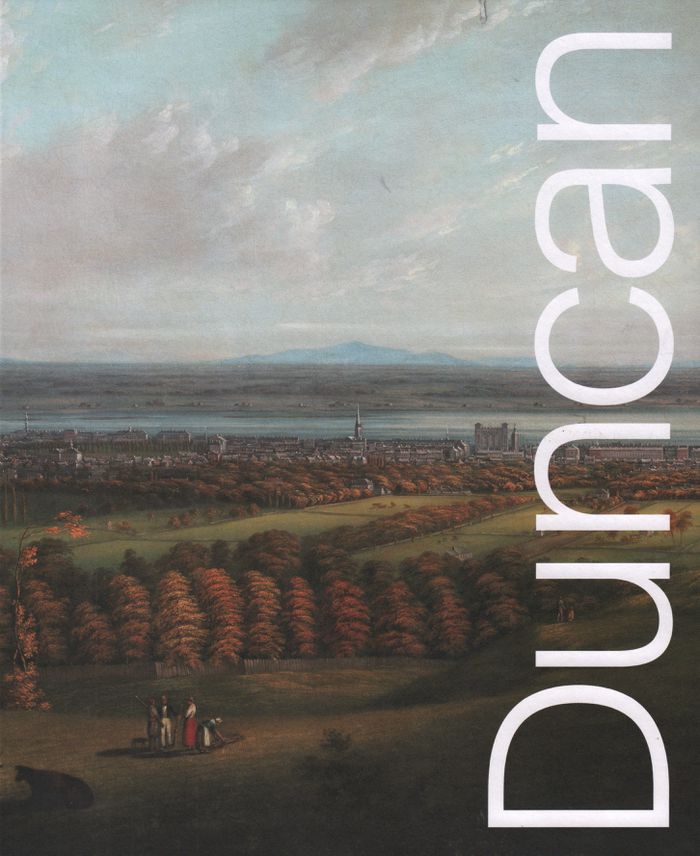
Le nom de James Duncan est inconnu, mais ses œuvres sont pourtant la mémoire vivante de Montréal pendant les cinquante années où il y fut actif, soit de 1830 à 1880. Né en Irlande, il est le premier artiste britannique à s’établir à Montréal qui s’impose alors comme la ville la plus importante du Canada. Duncan suit l’Évolution de la cité coloniale et en fournit des vues panoramiques ainsi que des scènes détaillées des événements qui s’y déroulent. Ses œuvres sont reproduites par l’estampe et publiées dans la presse. Ses aquarelles captent l’animation de la rue et montrent les résidents s’adonnant à leurs activités quotidiennes. Sensible au mouvement des saisons, Duncan célèbre les couleurs de l’automne et s’inspire de l’hiver. Particulièrement intéressé par les mœurs locales, il est attentif aux aspects qui caractérisent la vie canadienne et la spécificité des paysages. Principalement destinée aux visiteurs et aux connaisseurs, son œuvre présente la colonie britannique sous son meilleur jour. Première monographie consacrée à cet artiste, cet ouvrage illustré de plus de 160 œuvres de Duncan révèle les divers aspects de sa carrière, une plongée unique dans le Montréal du 19e siècle.
James Duncan (1806-1881) : Peintre de Montréal
Actions:
Price:
$55.00
(available to order)
Summary:
Le nom de James Duncan est inconnu, mais ses œuvres sont pourtant la mémoire vivante de Montréal pendant les cinquante années où il y fut actif, soit de 1830 à 1880. Né en Irlande, il est le premier artiste britannique à s’établir à Montréal qui s’impose alors comme la ville la plus importante du Canada. Duncan suit l’Évolution de la cité coloniale et en fournit des vues panoramiques ainsi que des scènes détaillées des événements qui s’y déroulent. Ses œuvres sont reproduites par l’estampe et publiées dans la presse. Ses aquarelles captent l’animation de la rue et montrent les résidents s’adonnant à leurs activités quotidiennes. Sensible au mouvement des saisons, Duncan célèbre les couleurs de l’automne et s’inspire de l’hiver. Particulièrement intéressé par les mœurs locales, il est attentif aux aspects qui caractérisent la vie canadienne et la spécificité des paysages. Principalement destinée aux visiteurs et aux connaisseurs, son œuvre présente la colonie britannique sous son meilleur jour. Première monographie consacrée à cet artiste, cet ouvrage illustré de plus de 160 œuvres de Duncan révèle les divers aspects de sa carrière, une plongée unique dans le Montréal du 19e siècle.
Form:
books
books
Publication:
June 2023
June 2023
Form:
books
books
Price:
$27.00
(available to order)
Summary:
L’institution du patrimoine, qu’elle concerne des collections, des monuments, ou encore des manifestations immatérielles, fait appel à des valeurs en principe partagées au sein d’une société : savantes, politiques, religieuses, idéologiques, esthétiques. Communément, son effet aujourd’hui est identifié à un développement culturel, associé à des activités qui vont de(...)
$27.00
(available to order)
Summary:
L’institution du patrimoine, qu’elle concerne des collections, des monuments, ou encore des manifestations immatérielles, fait appel à des valeurs en principe partagées au sein d’une société : savantes, politiques, religieuses, idéologiques, esthétiques. Communément, son effet aujourd’hui est identifié à un développement culturel, associé à des activités qui vont de(...)
Publication:
January 2026
January 2026
Title:
L'effet patrimoine : Transmissions entre ruptures et continuités
Actions:
Price:
$27.00
(available to order)
Summary:
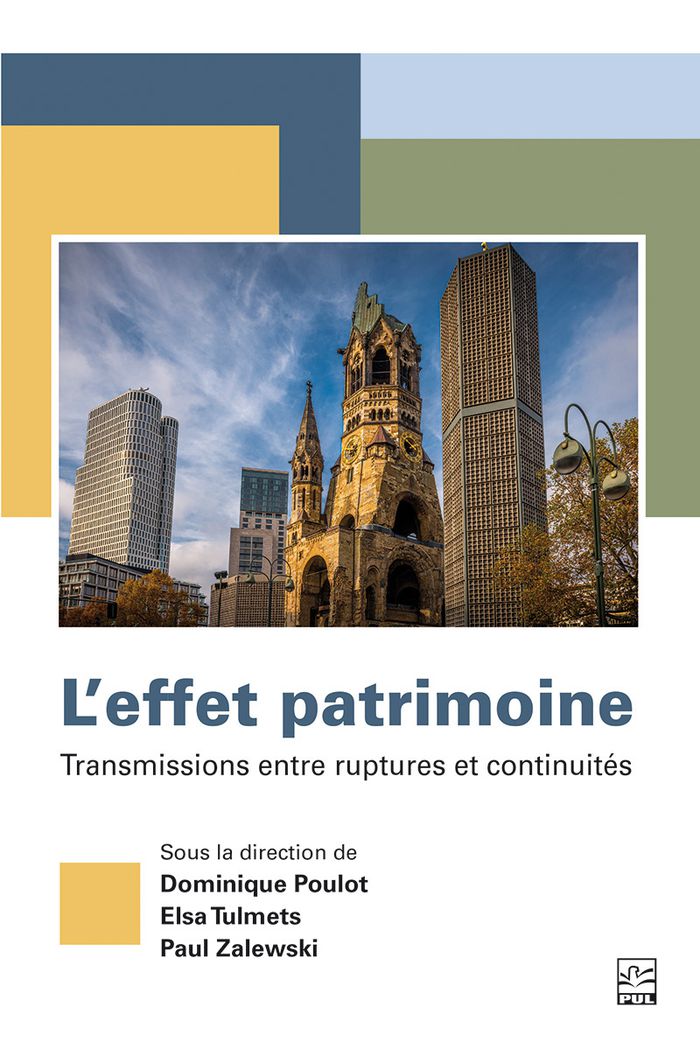
L’institution du patrimoine, qu’elle concerne des collections, des monuments, ou encore des manifestations immatérielles, fait appel à des valeurs en principe partagées au sein d’une société : savantes, politiques, religieuses, idéologiques, esthétiques. Communément, son effet aujourd’hui est identifié à un développement culturel, associé à des activités qui vont de l’histoire publique à l’économie du tourisme. Pour autant, des origines à nos jours, la patrimonialisation a suscité amitiés et inimitiés, débats et controverses autour de représentations ou de faits jugés difficiles ou dissonants. Chacune des dix études réunies ici s’applique à examiner un exemple de ces transformations récentes du patrimoine qui ont suscité des controverses plus ou moins aiguës, à la lumière de l’histoire, de la géographie ou des études culturelles. Le livre, construit dans le dialogue franco-allemand, privilégie les riches matériaux que fournissent les deux histoires nationales. Mais il s’intéresse aussi à des phénomènes mondialisés, comme l’interprétation de l’âge atomique, la réflexion post-coloniale, ou l’intérêt inédit pour les ruines industrielles. Dans tous les cas, il s’agit d’éclairer les enjeux des intérêts et des pratiques que révèlent à chaque instant les reconfigurations changeantes de l’effet patrimoine.
L'effet patrimoine : Transmissions entre ruptures et continuités
Actions:
Price:
$27.00
(available to order)
Summary:
L’institution du patrimoine, qu’elle concerne des collections, des monuments, ou encore des manifestations immatérielles, fait appel à des valeurs en principe partagées au sein d’une société : savantes, politiques, religieuses, idéologiques, esthétiques. Communément, son effet aujourd’hui est identifié à un développement culturel, associé à des activités qui vont de l’histoire publique à l’économie du tourisme. Pour autant, des origines à nos jours, la patrimonialisation a suscité amitiés et inimitiés, débats et controverses autour de représentations ou de faits jugés difficiles ou dissonants. Chacune des dix études réunies ici s’applique à examiner un exemple de ces transformations récentes du patrimoine qui ont suscité des controverses plus ou moins aiguës, à la lumière de l’histoire, de la géographie ou des études culturelles. Le livre, construit dans le dialogue franco-allemand, privilégie les riches matériaux que fournissent les deux histoires nationales. Mais il s’intéresse aussi à des phénomènes mondialisés, comme l’interprétation de l’âge atomique, la réflexion post-coloniale, ou l’intérêt inédit pour les ruines industrielles. Dans tous les cas, il s’agit d’éclairer les enjeux des intérêts et des pratiques que révèlent à chaque instant les reconfigurations changeantes de l’effet patrimoine.
Form:
books
books
Publication:
January 2026
January 2026
Form:
books
books
Actions:
Holdings:
Description:
431 p. : ill. (some col.) , plans ; 29 cm.
Description:
431 p. : ill. (some col.) , plans ; 29 cm.
Subject:
- Basâilica Colegiata de Guanajuato.,
- San Diego de Alcalá (Church : Guanajuato, Mexico),
- Christian art and symbolism Modern period, 1500-,
- Church architecture Mexico Guanajuato.,
- Art, Colonial Mexico Guanajuato.,
- Church decoration and ornament Mexico Guanajuato.,
- Architecture chrétienne Mexique Guanajuato.,
- Art colonial Mexique Guanajuato.,
- Églises Décoration et ornement Mexique Guanajuato.,
- Buildings,
- Church architecture,
- Church decoration and ornament,
- Guanajuato (Mexico) Buildings, structures, etc.,
- Mexico Guanajuato,
- Churches Mexico Guanajuato 1660-2010.,
- Church Decoration (process) Mexico Guanajuato 1660-2010.
(See more)
Publication:
Guanajuato, Mâexico : Ediciones La Rana, 2002.
Guanajuato, Mâexico : Ediciones La Rana, 2002.
Title:
San Diego : el templo conventual de San Pedro Alcâantara / LuisSerrano Espinoza.
Actions:
Holdings:
Description:
431 p. : ill. (some col.) , plans ; 29 cm.
San Diego : el templo conventual de San Pedro Alcâantara / LuisSerrano Espinoza.
Actions:
Holdings:
Description:
431 p. : ill. (some col.) , plans ; 29 cm.
Form:
books
books
Publication:
Guanajuato, Mâexico : Ediciones La Rana, 2002.
Guanajuato, Mâexico : Ediciones La Rana, 2002.
Subject:
- Basâilica Colegiata de Guanajuato.,
- San Diego de Alcalá (Church : Guanajuato, Mexico),
- Christian art and symbolism Modern period, 1500-,
- Church architecture Mexico Guanajuato.,
- Art, Colonial Mexico Guanajuato.,
- Church decoration and ornament Mexico Guanajuato.,
- Architecture chrétienne Mexique Guanajuato.,
- Art colonial Mexique Guanajuato.,
- Églises Décoration et ornement Mexique Guanajuato.,
- Buildings,
- Church architecture,
- Church decoration and ornament,
- Guanajuato (Mexico) Buildings, structures, etc.,
- Mexico Guanajuato,
- Churches Mexico Guanajuato 1660-2010.,
- Church Decoration (process) Mexico Guanajuato 1660-2010.
(See more)
Form:
books
books
Actions:
Holdings:
Description:
144 unnumbered pages : illustrations ; 23 cm
Description:
144 unnumbered pages : illustrations ; 23 cm
Subject:
- Benohoud, Hicham, 1968-,
- Students Morocco Social conditions 20th century.,
- Classroom environment.,
- Photography, Artistic.,
- Salles de classe Environnement.,
- Photographie artistique.,
- art photography.,
- Black-and-white photography.,
- photobooks.,
- Photobooks.,
- Livres de photographies.
(See more)
Publication:
Marseille, France : Loose Joints, 2025., ©2025
Marseille, France : Loose Joints, 2025., ©2025
Title:
The classroom / Hicham Benohoud.
Actions:
Holdings:
Description:
144 unnumbered pages : illustrations ; 23 cm
The classroom / Hicham Benohoud.
Actions:
Holdings:
Description:
144 unnumbered pages : illustrations ; 23 cm
Form:
books
books
Publication:
Marseille, France : Loose Joints, 2025., ©2025
Marseille, France : Loose Joints, 2025., ©2025
Subject:
- Benohoud, Hicham, 1968-,
- Students Morocco Social conditions 20th century.,
- Classroom environment.,
- Photography, Artistic.,
- Salles de classe Environnement.,
- Photographie artistique.,
- art photography.,
- Black-and-white photography.,
- photobooks.,
- Photobooks.,
- Livres de photographies.
(See more)
Form:
books
books
Actions:
Form:
books
books
Publication:
Triple Canopy 2021
Triple Canopy 2021
Form:
books
books
Actions:
Holdings:
Description:
3 volumes ; 21 cm + $e1 atlas (97 plates on 65 leaves : maps, plans ; 41 cm)
- Library cage m 221274 | DS709 .G8 1808 | atlas | Available
- Library cage m 221275 | DS709 .G8 1808 | v. 1 | Available
- Library cage m 221276 | DS709 .G8 1808 | v. 2 | Available
- Library cage m 221281 | DS709 .G8 1808 | v. 3 | Available
(See more)
Description:
3 volumes ; 21 cm + $e1 atlas (97 plates on 65 leaves : maps, plans ; 41 cm)
Author:
Subject:
- Travel.,
- China Description and travel.,
- Philippines Description and travel.,
- Mauritius Description and travel.,
- Manila (Philippines) Description and travel.,
- Beijing (China) Description and travel.,
- China Description and travel 18th century.,
- Philippines Description and travel 18th century.,
- Mauritius Description and travel 18th century.,
- Manila (Philippines) Description and travel 18th century.,
- Beijing (China) Description and travel 18th century.,
- Chine Descriptions et voyages.,
- Philippines Descriptions et voyages.,
- Île Maurice Descriptions et voyages.,
- China.,
- China Beijing.,
- Mauritius.,
- Philippines.,
- Philippines Manila.
(See more)
Publication:
A Paris : De L'Imprimerie Impériale, MDCCCVIII [1808]
A Paris : De L'Imprimerie Impériale, MDCCCVIII [1808]
Title:
Voyages à Peking, Manille et l'île de France : faits dans l'intervalle des années 1784 à 1801 / par M. de Guignes.
Actions:
Holdings:
Description:
3 volumes ; 21 cm + $e1 atlas (97 plates on 65 leaves : maps, plans ; 41 cm)
Voyages à Peking, Manille et l'île de France : faits dans l'intervalle des années 1784 à 1801 / par M. de Guignes.
Actions:
Holdings:
- Library cage m 221274 | DS709 .G8 1808 | atlas | Available
- Library cage m 221275 | DS709 .G8 1808 | v. 1 | Available
- Library cage m 221276 | DS709 .G8 1808 | v. 2 | Available
- Library cage m 221281 | DS709 .G8 1808 | v. 3 | Available
(See more)
Description:
3 volumes ; 21 cm + $e1 atlas (97 plates on 65 leaves : maps, plans ; 41 cm)
Form:
books
books
Publication:
A Paris : De L'Imprimerie Impériale, MDCCCVIII [1808]
A Paris : De L'Imprimerie Impériale, MDCCCVIII [1808]
Subject:
- Travel.,
- China Description and travel.,
- Philippines Description and travel.,
- Mauritius Description and travel.,
- Manila (Philippines) Description and travel.,
- Beijing (China) Description and travel.,
- China Description and travel 18th century.,
- Philippines Description and travel 18th century.,
- Mauritius Description and travel 18th century.,
- Manila (Philippines) Description and travel 18th century.,
- Beijing (China) Description and travel 18th century.,
- Chine Descriptions et voyages.,
- Philippines Descriptions et voyages.,
- Île Maurice Descriptions et voyages.,
- China.,
- China Beijing.,
- Mauritius.,
- Philippines.,
- Philippines Manila.
(See more)
Form:
audio
audio
Actions:
Description:
1 online resource.
Subject:
Publication:
[Place of publication not identified] : The Funambulist, 2017.
[Place of publication not identified] : The Funambulist, 2017.
Form:
audio
audio
Publication:
[Place of publication not identified] : The Funambulist, 2017.
[Place of publication not identified] : The Funambulist, 2017.
Form:
books
books
Actions:
Holdings:
Description:
320 pages : illustrations (some color) ; 30 cm
- Library main 102605 | W12905 EXHNEWHAVEN; ID:85-B15985 | Available
- Library main 102604 | ID GDER PO11816 EXHNEWHAVEN; ID:85-B15985 | Available
(See more)
Description:
320 pages : illustrations (some color) ; 30 cm
Author:
Subject:
- Art, American 18th century.,
- Art, American Exhibitions.,
- Neoclassicism (Art) United States Exhibitions.,
- Art, Colonial United States Exhibitions.,
- Art américain Expositions.,
- Art colonial États-Unis Expositions.,
- Néoclassicisme (Art) États-Unis Expositions.,
- Art américain 18e siècle.,
- Civilization English influences,
- Art, Modern,
- Art, American,
- Art, Modern United States History.,
- United States Civilization English influences.,
- États-Unis Civilisation Influence anglaise.,
- United States,
- Exhibition catalogues.,
- Exhibition catalogs
(See more)
Publication:
Boston : Published for Yale University Art Gallery, New Haven, and the Victoria and Albert Museum, London, by the New York Graphic Society, [1976], ©1976
Boston : Published for Yale University Art Gallery, New Haven, and the Victoria and Albert Museum, London, by the New York Graphic Society, [1976], ©1976
Title:
American art, 1750-1800 : towards independence / Charles F. Montgomery and Patricia E. Kane, general editors ; with essays on American art and culture by J.H. Plumb, Neil Harris, Jules David Prown, Frank H. Sommer and Charles F. Montgomery.
Actions:
Holdings:
Description:
320 pages : illustrations (some color) ; 30 cm
American art, 1750-1800 : towards independence / Charles F. Montgomery and Patricia E. Kane, general editors ; with essays on American art and culture by J.H. Plumb, Neil Harris, Jules David Prown, Frank H. Sommer and Charles F. Montgomery.
Actions:
Holdings:
- Library main 102605 | W12905 EXHNEWHAVEN; ID:85-B15985 | Available
- Library main 102604 | ID GDER PO11816 EXHNEWHAVEN; ID:85-B15985 | Available
(See more)
Description:
320 pages : illustrations (some color) ; 30 cm
Form:
books
books
Publication:
Boston : Published for Yale University Art Gallery, New Haven, and the Victoria and Albert Museum, London, by the New York Graphic Society, [1976], ©1976
Boston : Published for Yale University Art Gallery, New Haven, and the Victoria and Albert Museum, London, by the New York Graphic Society, [1976], ©1976
Subject:
- Art, American 18th century.,
- Art, American Exhibitions.,
- Neoclassicism (Art) United States Exhibitions.,
- Art, Colonial United States Exhibitions.,
- Art américain Expositions.,
- Art colonial États-Unis Expositions.,
- Néoclassicisme (Art) États-Unis Expositions.,
- Art américain 18e siècle.,
- Civilization English influences,
- Art, Modern,
- Art, American,
- Art, Modern United States History.,
- United States Civilization English influences.,
- États-Unis Civilisation Influence anglaise.,
- United States,
- Exhibition catalogues.,
- Exhibition catalogs
(See more)
Form:
books
books
Actions:
Holdings:
Description:
2 v. in 1 ; 25 cm.
Description:
2 v. in 1 ; 25 cm.
Title:
Prytaneum Bostoniense. Notes on the history of the Old State House, formerly known as the Town House in Boston--the Court House in Boston--the Province Court House--the State House--and the City Hall / by George H. Moore.
Actions:
Holdings:
Description:
2 v. in 1 ; 25 cm.
Prytaneum Bostoniense. Notes on the history of the Old State House, formerly known as the Town House in Boston--the Court House in Boston--the Province Court House--the State House--and the City Hall / by George H. Moore.
Actions:
Holdings:
Description:
2 v. in 1 ; 25 cm.
Form:
books
books
Publication:
Boston : Cupples, Upham, 1885-1886.
Boston : Cupples, Upham, 1885-1886.
Form:
books
books
Actions:
Holdings:
Description:
287 pages : illustrations (some color), maps ; 25 cm
Description:
287 pages : illustrations (some color), maps ; 25 cm
Subject:
- Cultural property Protection Gaza Strip.,
- Historic preservation Gaza Strip.,
- Genocide.,
- Génocide.,
- Cultural property Protection,
- Historic preservation,
- Art and Design.,
- Middle Eastern / West Asian Interest.,
- Gaza Strip Civilization.,
- Gaza, Bande de Civilisation.,
- Gaza Strip,
- Cultural property - Protection - Gaza Strip Cultural property - Protection Historic preservation - Gaza Strip Historic preservation Gaza Strip - Civilization Gaza Strip
(See more)
Publication:
London : Saqi Books, 2025.
London : Saqi Books, 2025.
Title:
Archiving Gaza in the present : memory, culture and erasure / edited by Dina Matar and Venetia Porter.
Actions:
Holdings:
Description:
287 pages : illustrations (some color), maps ; 25 cm
Archiving Gaza in the present : memory, culture and erasure / edited by Dina Matar and Venetia Porter.
Actions:
Holdings:
Description:
287 pages : illustrations (some color), maps ; 25 cm
Form:
books
books
Publication:
London : Saqi Books, 2025.
London : Saqi Books, 2025.
Subject:
- Cultural property Protection Gaza Strip.,
- Historic preservation Gaza Strip.,
- Genocide.,
- Génocide.,
- Cultural property Protection,
- Historic preservation,
- Art and Design.,
- Middle Eastern / West Asian Interest.,
- Gaza Strip Civilization.,
- Gaza, Bande de Civilisation.,
- Gaza Strip,
- Cultural property - Protection - Gaza Strip Cultural property - Protection Historic preservation - Gaza Strip Historic preservation Gaza Strip - Civilization Gaza Strip
(See more)


