


1902 Results
Form:
books
books
Actions:
Price:
$77.00
(available to order)
Summary:
Patterns - bold, colorful, muted, delicate, intricate, splashy, spare, figurative, abstract, dizzying, calming - are the subject in this comprehensive reference, the first to examine pattern as an essential part of twentieth-century design history. With stunning color plates and lively text, Lesley Jackson takes readers on a tour of the development of twentieth-century(...)
$77.00
(available to order)
Summary:
Patterns - bold, colorful, muted, delicate, intricate, splashy, spare, figurative, abstract, dizzying, calming - are the subject in this comprehensive reference, the first to examine pattern as an essential part of twentieth-century design history. With stunning color plates and lively text, Lesley Jackson takes readers on a tour of the development of twentieth-century(...)
Title:
Twentieth-century pattern design
Actions:
Price:
$77.00
(available to order)
Summary:
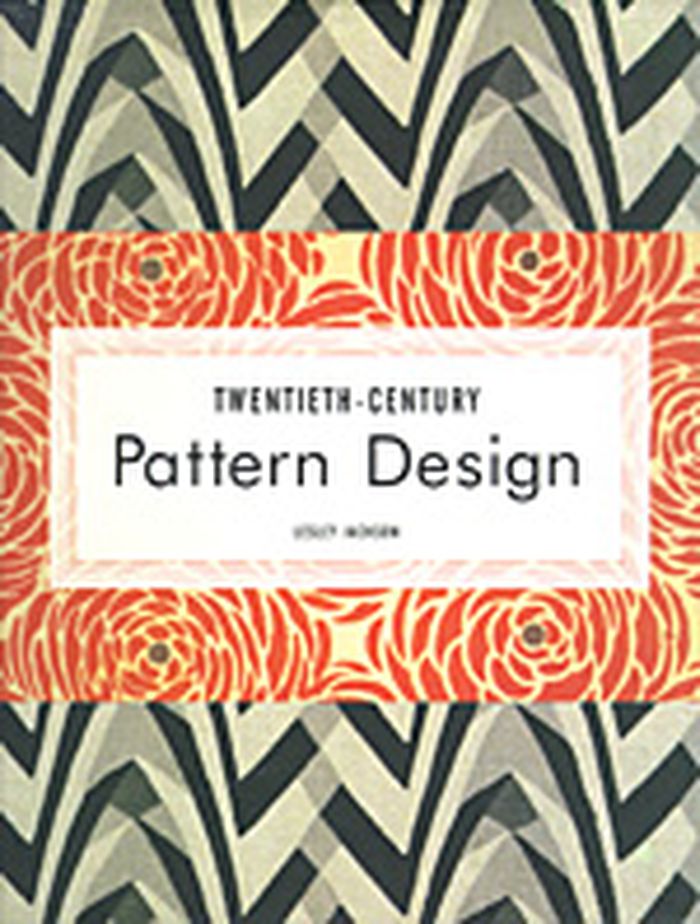
Patterns - bold, colorful, muted, delicate, intricate, splashy, spare, figurative, abstract, dizzying, calming - are the subject in this comprehensive reference, the first to examine pattern as an essential part of twentieth-century design history. With stunning color plates and lively text, Lesley Jackson takes readers on a tour of the development of twentieth-century patterns from around the world. Organized by decade, "Twentieth-Century pattern design" details the technical innovations that affected the development of modern textiles and wallpapers. Focusing on surface pattern in the home, Jackson draws frequent parallels to the worlds of fashion, packaging, and graphics, and explores the interrelationship between painting and pattern design. The result is a book as inspiring as it is informative. "Twentieth-Century pattern design" is an invaluable resource for modern design enthusiasts and historians, collectors and interior and graphic designers.
Twentieth-century pattern design
Actions:
Price:
$77.00
(available to order)
Summary:
Patterns - bold, colorful, muted, delicate, intricate, splashy, spare, figurative, abstract, dizzying, calming - are the subject in this comprehensive reference, the first to examine pattern as an essential part of twentieth-century design history. With stunning color plates and lively text, Lesley Jackson takes readers on a tour of the development of twentieth-century patterns from around the world. Organized by decade, "Twentieth-Century pattern design" details the technical innovations that affected the development of modern textiles and wallpapers. Focusing on surface pattern in the home, Jackson draws frequent parallels to the worlds of fashion, packaging, and graphics, and explores the interrelationship between painting and pattern design. The result is a book as inspiring as it is informative. "Twentieth-Century pattern design" is an invaluable resource for modern design enthusiasts and historians, collectors and interior and graphic designers.
Form:
books
books
Publication:
June 2002, New York
June 2002, New York
Subject:
Interior Design
Interior Design
Form:
books
books
Actions:
Price:
$33.95
(available to order)
Summary:
The mysterious world beneath the ocean's surface has captivated people for centuries - the Egyptians, Greeks, Romans, and ancient Chinese all kept fish in their homes for purposes other than the culinary. But it was not until the nineteenth-century invention of the aquarium that the deep was truly domesticated, offering the curiously inclined a chance to invent their very(...)
$33.95
(available to order)
Summary:
The mysterious world beneath the ocean's surface has captivated people for centuries - the Egyptians, Greeks, Romans, and ancient Chinese all kept fish in their homes for purposes other than the culinary. But it was not until the nineteenth-century invention of the aquarium that the deep was truly domesticated, offering the curiously inclined a chance to invent their very(...)
Title:
The ocean at home : an illustrated history of the aquarium
Actions:
Price:
$33.95
(available to order)
Summary:
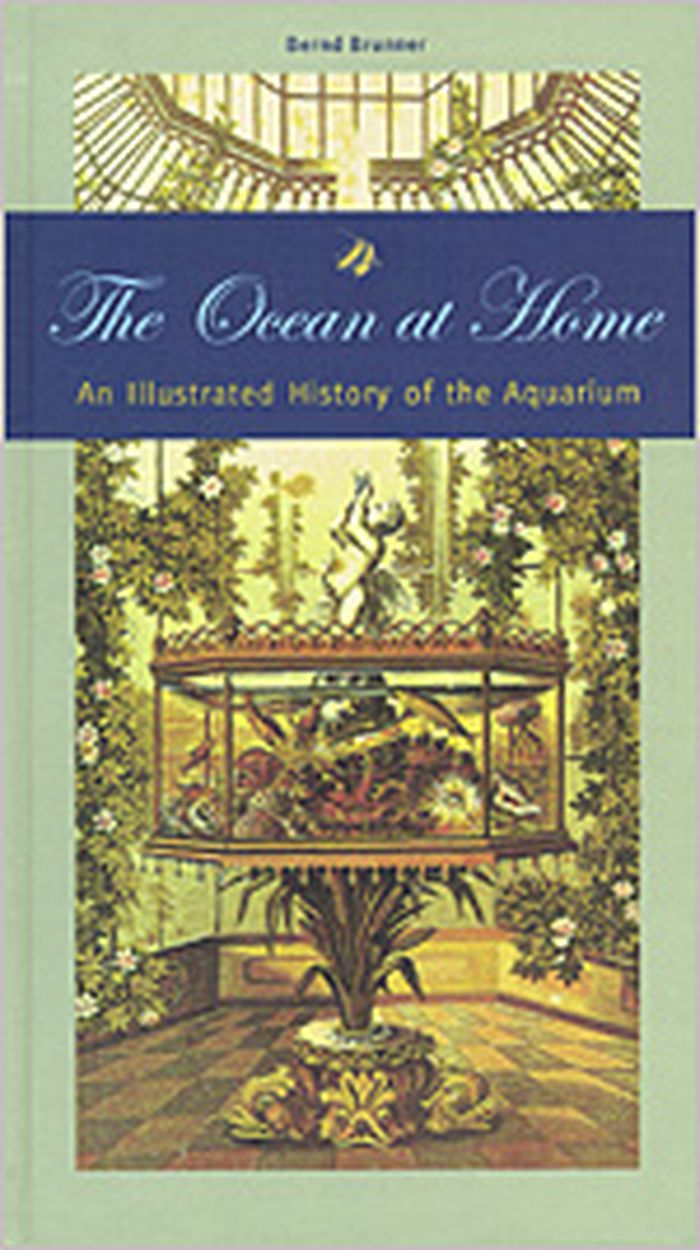
The mysterious world beneath the ocean's surface has captivated people for centuries - the Egyptians, Greeks, Romans, and ancient Chinese all kept fish in their homes for purposes other than the culinary. But it was not until the nineteenth-century invention of the aquarium that the deep was truly domesticated, offering the curiously inclined a chance to invent their very own exotic sea world within their own walls. In this fascinating history of the aquarium, Bernd Brunner traces the development of this most wonderful invention, giving insight into the cultural and social circumstances that accompanied its swift rise in popularity. Brunner tells a compelling story of obsession, beauty, discovery, and delight, from the aquarium's humble origins as a tool for scientific observation to the Victorian era's elaborately decorated containers of oceanic curiosity, to the great public aquaria of the twentieth century.
The ocean at home : an illustrated history of the aquarium
Actions:
Price:
$33.95
(available to order)
Summary:
The mysterious world beneath the ocean's surface has captivated people for centuries - the Egyptians, Greeks, Romans, and ancient Chinese all kept fish in their homes for purposes other than the culinary. But it was not until the nineteenth-century invention of the aquarium that the deep was truly domesticated, offering the curiously inclined a chance to invent their very own exotic sea world within their own walls. In this fascinating history of the aquarium, Bernd Brunner traces the development of this most wonderful invention, giving insight into the cultural and social circumstances that accompanied its swift rise in popularity. Brunner tells a compelling story of obsession, beauty, discovery, and delight, from the aquarium's humble origins as a tool for scientific observation to the Victorian era's elaborately decorated containers of oceanic curiosity, to the great public aquaria of the twentieth century.
Form:
books
books
Publication:
June 2006, New York
June 2006, New York
Subject:
Gardens
Gardens
Form:
books
books
Actions:
Price:
$48.95
(available to order)
Summary:
Existing at the margins of life, lichens are the result of symbiotic relationships between fungi and photosynthesizing partners in the form of algae or cyanobacteria. Comprising more than twenty thousand species, lichens are pioneers in diverse ecosystems, colonizing virtually any surface and growing at almost any altitude. Found in rainforests, polar regions, deserts,(...)
$48.95
(available to order)
Summary:
Existing at the margins of life, lichens are the result of symbiotic relationships between fungi and photosynthesizing partners in the form of algae or cyanobacteria. Comprising more than twenty thousand species, lichens are pioneers in diverse ecosystems, colonizing virtually any surface and growing at almost any altitude. Found in rainforests, polar regions, deserts,(...)
Title:
The lives of lichens: A natural history
Actions:
Price:
$48.95
(available to order)
Summary:
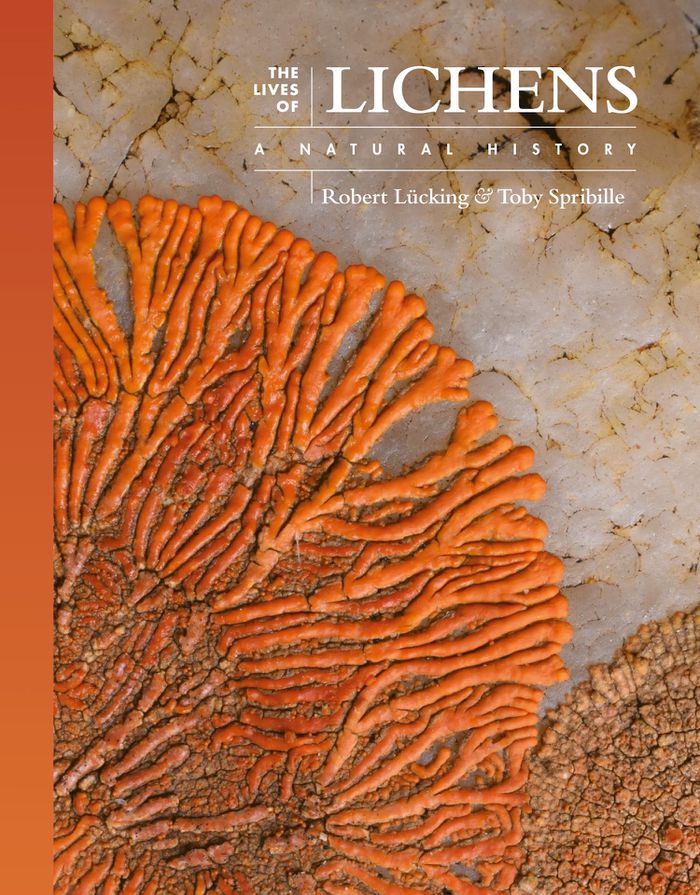
Existing at the margins of life, lichens are the result of symbiotic relationships between fungi and photosynthesizing partners in the form of algae or cyanobacteria. Comprising more than twenty thousand species, lichens are pioneers in diverse ecosystems, colonizing virtually any surface and growing at almost any altitude. Found in rainforests, polar regions, deserts, and your backyard, lichens embody a paradox of toughness and sensitivity, surviving trips to space yet endangered by even the slightest environmental changes from industrial pollution here on Earth. Lichens grow everywhere, but only on their own terms: no one has ever fully assembled a lichen in the lab from its component parts. "The lives of lichens" explores all facets of these peculiar organisms, blending stunning macrophotography and graphics with in-depth coverage of profiled species to provide an unforgettable tour of the marvelous world of lichens.
The lives of lichens: A natural history
Actions:
Price:
$48.95
(available to order)
Summary:
Existing at the margins of life, lichens are the result of symbiotic relationships between fungi and photosynthesizing partners in the form of algae or cyanobacteria. Comprising more than twenty thousand species, lichens are pioneers in diverse ecosystems, colonizing virtually any surface and growing at almost any altitude. Found in rainforests, polar regions, deserts, and your backyard, lichens embody a paradox of toughness and sensitivity, surviving trips to space yet endangered by even the slightest environmental changes from industrial pollution here on Earth. Lichens grow everywhere, but only on their own terms: no one has ever fully assembled a lichen in the lab from its component parts. "The lives of lichens" explores all facets of these peculiar organisms, blending stunning macrophotography and graphics with in-depth coverage of profiled species to provide an unforgettable tour of the marvelous world of lichens.
Form:
books
books
Publication:
June 2024
June 2024
Subject:
Fauna and flora
Fauna and flora
Form:
books
books
Actions:
Price:
$41.95
(available to order)
Summary:
Les chrétiens n'ont pas inventé le culte des images, mais une adoration fondée sur une équivalence entre corps et figure de surface. Tout au long des premiers siècles du christianisme, des récits mettent en scène des images qui s'animent: elles se déplacent de leur support, interpellent les spectateurs, les bénissent ou les agressent, perdent leurs humeurs et leur(...)
$41.95
(available to order)
Summary:
Les chrétiens n'ont pas inventé le culte des images, mais une adoration fondée sur une équivalence entre corps et figure de surface. Tout au long des premiers siècles du christianisme, des récits mettent en scène des images qui s'animent: elles se déplacent de leur support, interpellent les spectateurs, les bénissent ou les agressent, perdent leurs humeurs et leur(...)
Title:
Le peuple des images :essai d'anthropologie figurative
Actions:
Price:
$41.95
(available to order)
Summary:
Les chrétiens n'ont pas inventé le culte des images, mais une adoration fondée sur une équivalence entre corps et figure de surface. Tout au long des premiers siècles du christianisme, des récits mettent en scène des images qui s'animent: elles se déplacent de leur support, interpellent les spectateurs, les bénissent ou les agressent, perdent leurs humeurs et leur sang... On invente alors un ensemble de procédures symboliques et rituelles de " décorporation ", capables de transformer, par la prière, l'extase ou la mortification, les espèces charnelles en espèces figurales. Les trois essais qui composent cette étude explorent, en des lieux et des temps différents de l'Antiquité tardive (Byzance au VIIIe siècle, la Syrie du Ve siècle, Carthage au IIIe siècle), la manière dont s'est construit entre l'homme et l'image un espace de transaction, espace dont la culture visuelle contemporaine n'est pas tout à fait sortie.
Le peuple des images :essai d'anthropologie figurative
Actions:
Price:
$41.95
(available to order)
Summary:
Les chrétiens n'ont pas inventé le culte des images, mais une adoration fondée sur une équivalence entre corps et figure de surface. Tout au long des premiers siècles du christianisme, des récits mettent en scène des images qui s'animent: elles se déplacent de leur support, interpellent les spectateurs, les bénissent ou les agressent, perdent leurs humeurs et leur sang... On invente alors un ensemble de procédures symboliques et rituelles de " décorporation ", capables de transformer, par la prière, l'extase ou la mortification, les espèces charnelles en espèces figurales. Les trois essais qui composent cette étude explorent, en des lieux et des temps différents de l'Antiquité tardive (Byzance au VIIIe siècle, la Syrie du Ve siècle, Carthage au IIIe siècle), la manière dont s'est construit entre l'homme et l'image un espace de transaction, espace dont la culture visuelle contemporaine n'est pas tout à fait sortie.
Form:
books
books
Publication:
January 2002, Paris
January 2002, Paris
Subject:
Architectural Theory
Architectural Theory
Form:
books
books

Title:
Deserts are not empty
Deserts are not empty
Actions:
Price:
$31.00
(available in store)
Summary:
Colonial and imperial powers have often portrayed arid lands as “empty” spaces ready to be occupied, exploited, extracted, and polluted. Despite the undeniable presence of human and nonhuman lives and forces in desert territories, the “regime of emptiness” has inhabited, and is still inhabiting, many imaginaries. This volume challenges this colonial tendency, questions(...)
$31.00
(available in store)
Summary:
Colonial and imperial powers have often portrayed arid lands as “empty” spaces ready to be occupied, exploited, extracted, and polluted. Despite the undeniable presence of human and nonhuman lives and forces in desert territories, the “regime of emptiness” has inhabited, and is still inhabiting, many imaginaries. This volume challenges this colonial tendency, questions(...)
Title:
Deserts are not empty
Actions:
Price:
$31.00
(available in store)
Summary:
Colonial and imperial powers have often portrayed arid lands as “empty” spaces ready to be occupied, exploited, extracted, and polluted. Despite the undeniable presence of human and nonhuman lives and forces in desert territories, the “regime of emptiness” has inhabited, and is still inhabiting, many imaginaries. This volume challenges this colonial tendency, questions its roots and ramifications, and remaps the representations, theories, histories, and stories of arid lands—which comprise approximately one-third of the Earth’s land surface. It brings together poems in original languages, conversations with collectives, and essays by scholars and professionals from the fields of architecture, architectural history and theory, curatorial studies, comparative literature, film studies, landscape architecture, and photography. These different approaches and diverse voices draw on a framework of decoloniality to unsettle and unlearn the desert, opening up possibilities to see, think, imagine it otherwise.
Deserts are not empty
Actions:
Price:
$31.00
(available in store)
Summary:
Colonial and imperial powers have often portrayed arid lands as “empty” spaces ready to be occupied, exploited, extracted, and polluted. Despite the undeniable presence of human and nonhuman lives and forces in desert territories, the “regime of emptiness” has inhabited, and is still inhabiting, many imaginaries. This volume challenges this colonial tendency, questions its roots and ramifications, and remaps the representations, theories, histories, and stories of arid lands—which comprise approximately one-third of the Earth’s land surface. It brings together poems in original languages, conversations with collectives, and essays by scholars and professionals from the fields of architecture, architectural history and theory, curatorial studies, comparative literature, film studies, landscape architecture, and photography. These different approaches and diverse voices draw on a framework of decoloniality to unsettle and unlearn the desert, opening up possibilities to see, think, imagine it otherwise.
Form:
books
books
Publication:
October 2022
October 2022
Subject:
Architecture ecologies
Architecture ecologies
Form:
books
books
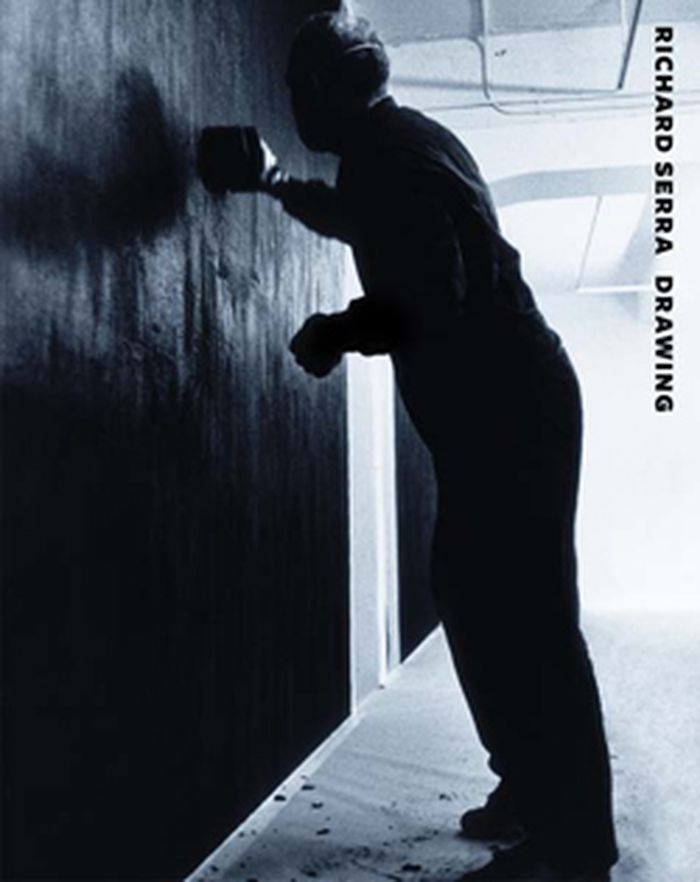
Title:
Richard Serra drawings
Richard Serra drawings
Actions:
Price:
$56.00
(available to order)
Summary:
This book brings together Serra's drawn work, considering the artist's investigation of medium as an activity both independent from and linked to his pioneering sculptural practice. First working in ink, charcoal, and lithographic crayon on paper, Serra originally used drawing as a means to explore form and perceptual relations between his sculpture and the viewer. Over(...)
$56.00
(available to order)
Summary:
This book brings together Serra's drawn work, considering the artist's investigation of medium as an activity both independent from and linked to his pioneering sculptural practice. First working in ink, charcoal, and lithographic crayon on paper, Serra originally used drawing as a means to explore form and perceptual relations between his sculpture and the viewer. Over(...)
Subject:
Contemporary Art Monographs
Contemporary Art Monographs
Publication:
April 2011
April 2011
Title:
Richard Serra drawings
Actions:
Price:
$56.00
(available to order)
Summary:
This book brings together Serra's drawn work, considering the artist's investigation of medium as an activity both independent from and linked to his pioneering sculptural practice. First working in ink, charcoal, and lithographic crayon on paper, Serra originally used drawing as a means to explore form and perceptual relations between his sculpture and the viewer. Over time, his drawings underwent significant shifts in concept, materials, and scale and became fully realized and autonomous works of art. The grand, bold forms he created with black paintstick in his monumental Installation Drawings were designed to disrupt and complement existent spaces and eventually began to occupy entire rooms. In the late 1980s, Serra explored the tension of weight and gravity through layering, and his most recent work experiments with surface effects, using mesh screens as intermediaries between the gesture and the transfer of pigment to paper.
Richard Serra drawings
Actions:
Price:
$56.00
(available to order)
Summary:
This book brings together Serra's drawn work, considering the artist's investigation of medium as an activity both independent from and linked to his pioneering sculptural practice. First working in ink, charcoal, and lithographic crayon on paper, Serra originally used drawing as a means to explore form and perceptual relations between his sculpture and the viewer. Over time, his drawings underwent significant shifts in concept, materials, and scale and became fully realized and autonomous works of art. The grand, bold forms he created with black paintstick in his monumental Installation Drawings were designed to disrupt and complement existent spaces and eventually began to occupy entire rooms. In the late 1980s, Serra explored the tension of weight and gravity through layering, and his most recent work experiments with surface effects, using mesh screens as intermediaries between the gesture and the transfer of pigment to paper.
Form:
books
books
Publication:
April 2011
April 2011
Subject:
Contemporary Art Monographs
Contemporary Art Monographs
Form:
books
books
Title:
Lukas Felzmann: Swarm
Lukas Felzmann: Swarm
Actions:
Price:
$70.00
(available to order)
Summary:
Swarm is a breathtaking photographic series exploring the flock movements of migrating birds. The photographs offer a unique view of the beauty but also the complexity and diversity of shape variations. A swarm sitting on the ground mirrors the surface of the earth like a skin, but as soon as it lifts up it becomes a fluid three-dimensional system in constant flux. This(...)
$70.00
(available to order)
Summary:
Swarm is a breathtaking photographic series exploring the flock movements of migrating birds. The photographs offer a unique view of the beauty but also the complexity and diversity of shape variations. A swarm sitting on the ground mirrors the surface of the earth like a skin, but as soon as it lifts up it becomes a fluid three-dimensional system in constant flux. This(...)
Title:
Lukas Felzmann: Swarm
Actions:
Price:
$70.00
(available to order)
Summary:
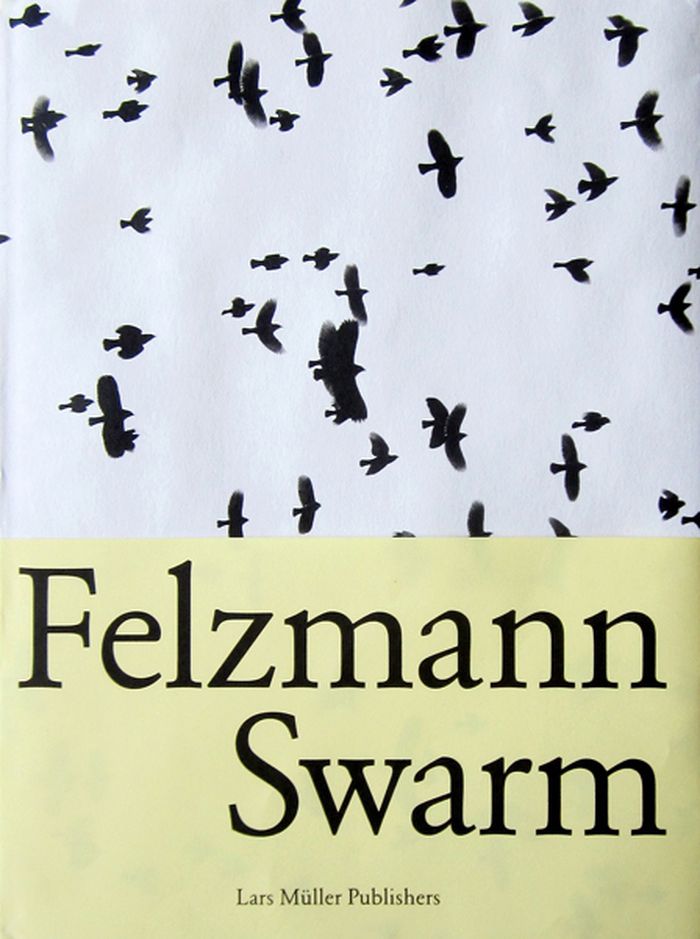
Swarm is a breathtaking photographic series exploring the flock movements of migrating birds. The photographs offer a unique view of the beauty but also the complexity and diversity of shape variations. A swarm sitting on the ground mirrors the surface of the earth like a skin, but as soon as it lifts up it becomes a fluid three-dimensional system in constant flux. This aerial ballet reveals a rhythm of upward explosion and downward, cascading movement. At times the forms seem to explode, blooming like flowers or expanding outward like fireworks. At other times they appear more stable, slowly drifting like a negative image of stellar constellations. Swarm looks up into the sky and follows flight through the dynamic landscape of streams of air. With contributions by Peter Pfrunder, Gordon H. Orians, Deborah M. Gordon, and Wallace Stevens
Lukas Felzmann: Swarm
Actions:
Price:
$70.00
(available to order)
Summary:
Swarm is a breathtaking photographic series exploring the flock movements of migrating birds. The photographs offer a unique view of the beauty but also the complexity and diversity of shape variations. A swarm sitting on the ground mirrors the surface of the earth like a skin, but as soon as it lifts up it becomes a fluid three-dimensional system in constant flux. This aerial ballet reveals a rhythm of upward explosion and downward, cascading movement. At times the forms seem to explode, blooming like flowers or expanding outward like fireworks. At other times they appear more stable, slowly drifting like a negative image of stellar constellations. Swarm looks up into the sky and follows flight through the dynamic landscape of streams of air. With contributions by Peter Pfrunder, Gordon H. Orians, Deborah M. Gordon, and Wallace Stevens
Form:
books
books
Publication:
November 2011
November 2011
Subject:
Photography monographs
Photography monographs
Form:
books
books
Actions:
Price:
$34.00
(available to order)
Summary:
Deep Veils is an architecture monograph on veils, thickness, and envelopes in architecture as a counter narrative to transparency, openness, and clarity that underpin orthodox Modern architecture. The book features ten small projects completed in South East Asia between 2007-2012 that explore various architectural ideas under the rubric of “deep veils”. Each project(...)
$34.00
(available to order)
Summary:
Deep Veils is an architecture monograph on veils, thickness, and envelopes in architecture as a counter narrative to transparency, openness, and clarity that underpin orthodox Modern architecture. The book features ten small projects completed in South East Asia between 2007-2012 that explore various architectural ideas under the rubric of “deep veils”. Each project(...)
Title:
Deep veils: Eric L'Heureux and Pencil Office
Actions:
Price:
$34.00
(available to order)
Summary:
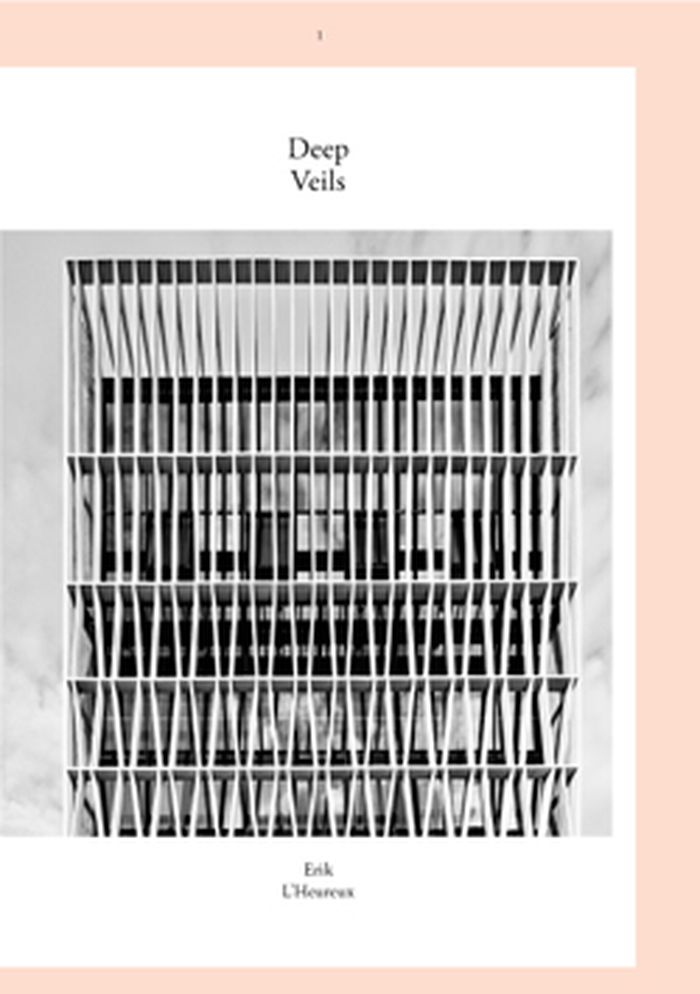
Deep Veils is an architecture monograph on veils, thickness, and envelopes in architecture as a counter narrative to transparency, openness, and clarity that underpin orthodox Modern architecture. The book features ten small projects completed in South East Asia between 2007-2012 that explore various architectural ideas under the rubric of “deep veils”. Each project responds to questions of envelope, surface, skin, form, atmosphere, perception and topicality. The projects represented within the book define in various ways how deep veils in architecture are manifest utilizing opaque and solid materials to produce forms of translucency, depth, and hazy atmospheres. Traced through the artistic legacies of Gertrud Arndt to Optical Art, the architectural theories of Gottfried Semper, Adolf Loos, and the work of Le Corbusier, Kahn, and Durell Stone, a new direction for architecture, perception, and thickness is put forth.
Deep veils: Eric L'Heureux and Pencil Office
Actions:
Price:
$34.00
(available to order)
Summary:
Deep Veils is an architecture monograph on veils, thickness, and envelopes in architecture as a counter narrative to transparency, openness, and clarity that underpin orthodox Modern architecture. The book features ten small projects completed in South East Asia between 2007-2012 that explore various architectural ideas under the rubric of “deep veils”. Each project responds to questions of envelope, surface, skin, form, atmosphere, perception and topicality. The projects represented within the book define in various ways how deep veils in architecture are manifest utilizing opaque and solid materials to produce forms of translucency, depth, and hazy atmospheres. Traced through the artistic legacies of Gertrud Arndt to Optical Art, the architectural theories of Gottfried Semper, Adolf Loos, and the work of Le Corbusier, Kahn, and Durell Stone, a new direction for architecture, perception, and thickness is put forth.
Form:
books
books
Publication:
August 2014
August 2014
Subject:
Architecture Monographs
Architecture Monographs
Form:
books
books
Price:
$45.95
(available to order)
Summary:
In a daring revisionist history of modern architecture, Mark Wigley opens up a new understanding of the historical avant-garde. He explores the most obvious, but least discussed, feature of modern architecture: white walls. Although the white wall exemplifies the stripping away of the decorative masquerade costumes worn by nineteenth-century buildings, Wigley argues that(...)
$45.95
(available to order)
Summary:
In a daring revisionist history of modern architecture, Mark Wigley opens up a new understanding of the historical avant-garde. He explores the most obvious, but least discussed, feature of modern architecture: white walls. Although the white wall exemplifies the stripping away of the decorative masquerade costumes worn by nineteenth-century buildings, Wigley argues that(...)
Title:
White walls, designer dresses : the fashioning of modern architecture
Actions:
Price:
$45.95
(available to order)
Summary:
In a daring revisionist history of modern architecture, Mark Wigley opens up a new understanding of the historical avant-garde. He explores the most obvious, but least discussed, feature of modern architecture: white walls. Although the white wall exemplifies the stripping away of the decorative masquerade costumes worn by nineteenth-century buildings, Wigley argues that modern buildings are not naked. The white wall is itself a form of clothing -- the newly athletic body of the building, like that of its occupants, wears a new kind of garment and these garments are meant to match. Not only did almost all modern architects literally design dresses, Wigley points out, their arguments for a modern architecture were taken from the logic of clothing reform. Architecture was understood as a form of dress design. Wigley follows the trajectory of this key subtext by closely reading the statements and designs of most of the protagonists, demonstrating that it renders modern architecture's relationship with the psychosexual economy of fashion much more ambiguous than the architects' endlessly repeated rejections of fashion would suggest. Indeed, Wigley asserts, the very intensity of these rejections is a symptom of how deeply they are embedded in the world of clothing. By drawing on arguments about the relationship between clothing and architecture first formulated in the middle of the nineteenth century, modern architects in fact presented a sophisticated theory of the surface, modernizing architecture by transforming the status of the surface. "White Walls, Designer Dresses" shows how this seemingly incidental clothing logic actually organizes the detailed design of the modern building, dictating a system of polychromy, understood as a multicolored outfit. The familiar image of modern architecture as white turns out to be the effect of a historiographical tradition that has worked hard to suppress the color of the surfaces of the buildings that it describes. Wigley analyzes this suppression in terms of the sexual logic that invariably accompanies discussions of clothing and color, recovering those sensuously colored surfaces and the extraordinary arguments about clothing that were used to defend them.
White walls, designer dresses : the fashioning of modern architecture
Actions:
Price:
$45.95
(available to order)
Summary:
In a daring revisionist history of modern architecture, Mark Wigley opens up a new understanding of the historical avant-garde. He explores the most obvious, but least discussed, feature of modern architecture: white walls. Although the white wall exemplifies the stripping away of the decorative masquerade costumes worn by nineteenth-century buildings, Wigley argues that modern buildings are not naked. The white wall is itself a form of clothing -- the newly athletic body of the building, like that of its occupants, wears a new kind of garment and these garments are meant to match. Not only did almost all modern architects literally design dresses, Wigley points out, their arguments for a modern architecture were taken from the logic of clothing reform. Architecture was understood as a form of dress design. Wigley follows the trajectory of this key subtext by closely reading the statements and designs of most of the protagonists, demonstrating that it renders modern architecture's relationship with the psychosexual economy of fashion much more ambiguous than the architects' endlessly repeated rejections of fashion would suggest. Indeed, Wigley asserts, the very intensity of these rejections is a symptom of how deeply they are embedded in the world of clothing. By drawing on arguments about the relationship between clothing and architecture first formulated in the middle of the nineteenth century, modern architects in fact presented a sophisticated theory of the surface, modernizing architecture by transforming the status of the surface. "White Walls, Designer Dresses" shows how this seemingly incidental clothing logic actually organizes the detailed design of the modern building, dictating a system of polychromy, understood as a multicolored outfit. The familiar image of modern architecture as white turns out to be the effect of a historiographical tradition that has worked hard to suppress the color of the surfaces of the buildings that it describes. Wigley analyzes this suppression in terms of the sexual logic that invariably accompanies discussions of clothing and color, recovering those sensuously colored surfaces and the extraordinary arguments about clothing that were used to defend them.
Form:
books
books
Publication:
October 2001, Cambridge, Mass.
October 2001, Cambridge, Mass.
Subject:
Architectural Theory
Architectural Theory
Form:
books
books
Price:
$79.50
(available to order)
Summary:
In a daring revisionist history of modern architecture, Mark Wigley opens up a new understanding of the historical avant-garde. He explores the most obvious, but least discussed, feature of modern architecture: white walls. Although the white wall exemplifies the stripping away of the decorative masquerade costumes worn by nineteenth-century buildings, Wigley argues that(...)
$79.50
(available to order)
Summary:
In a daring revisionist history of modern architecture, Mark Wigley opens up a new understanding of the historical avant-garde. He explores the most obvious, but least discussed, feature of modern architecture: white walls. Although the white wall exemplifies the stripping away of the decorative masquerade costumes worn by nineteenth-century buildings, Wigley argues that(...)
Title:
White walls, designer dresses : the fashioning of modern architecture
Actions:
Price:
$79.50
(available to order)
Summary:
In a daring revisionist history of modern architecture, Mark Wigley opens up a new understanding of the historical avant-garde. He explores the most obvious, but least discussed, feature of modern architecture: white walls. Although the white wall exemplifies the stripping away of the decorative masquerade costumes worn by nineteenth-century buildings, Wigley argues that modern buildings are not naked. The white wall is itself a form of clothing -- the newly athletic body of the building, like that of its occupants, wears a new kind of garment and these garments are meant to match. Not only did almost all modern architects literally design dresses, Wigley points out, their arguments for a modern architecture were taken from the logic of clothing reform. Architecture was understood as a form of dress design. Wigley follows the trajectory of this key subtext by closely reading the statements and designs of most of the protagonists, demonstrating that it renders modern architecture's relationship with the psychosexual economy of fashion much more ambiguous than the architects' endlessly repeated rejections of fashion would suggest. Indeed, Wigley asserts, the very intensity of these rejections is a symptom of how deeply they are embedded in the world of clothing. By drawing on arguments about the relationship between clothing and architecture first formulated in the middle of the nineteenth century, modern architects in fact presented a sophisticated theory of the surface, modernizing architecture by transforming the status of the surface. "White Walls, Designer Dresses" shows how this seemingly incidental clothing logic actually organizes the detailed design of the modern building, dictating a system of polychromy, understood as a multicolored outfit. The familiar image of modern architecture as white turns out to be the effect of a historiographical tradition that has worked hard to suppress the color of the surfaces of the buildings that it describes. Wigley analyzes this suppression in terms of the sexual logic that invariably accompanies discussions of clothing and color, recovering those sensuously colored surfaces and the extraordinary arguments about clothing that were used to defend them.
White walls, designer dresses : the fashioning of modern architecture
Actions:
Price:
$79.50
(available to order)
Summary:
In a daring revisionist history of modern architecture, Mark Wigley opens up a new understanding of the historical avant-garde. He explores the most obvious, but least discussed, feature of modern architecture: white walls. Although the white wall exemplifies the stripping away of the decorative masquerade costumes worn by nineteenth-century buildings, Wigley argues that modern buildings are not naked. The white wall is itself a form of clothing -- the newly athletic body of the building, like that of its occupants, wears a new kind of garment and these garments are meant to match. Not only did almost all modern architects literally design dresses, Wigley points out, their arguments for a modern architecture were taken from the logic of clothing reform. Architecture was understood as a form of dress design. Wigley follows the trajectory of this key subtext by closely reading the statements and designs of most of the protagonists, demonstrating that it renders modern architecture's relationship with the psychosexual economy of fashion much more ambiguous than the architects' endlessly repeated rejections of fashion would suggest. Indeed, Wigley asserts, the very intensity of these rejections is a symptom of how deeply they are embedded in the world of clothing. By drawing on arguments about the relationship between clothing and architecture first formulated in the middle of the nineteenth century, modern architects in fact presented a sophisticated theory of the surface, modernizing architecture by transforming the status of the surface. "White Walls, Designer Dresses" shows how this seemingly incidental clothing logic actually organizes the detailed design of the modern building, dictating a system of polychromy, understood as a multicolored outfit. The familiar image of modern architecture as white turns out to be the effect of a historiographical tradition that has worked hard to suppress the color of the surfaces of the buildings that it describes. Wigley analyzes this suppression in terms of the sexual logic that invariably accompanies discussions of clothing and color, recovering those sensuously colored surfaces and the extraordinary arguments about clothing that were used to defend them.
Form:
books
books
Publication:
December 1995, Cambridge, Mass.
December 1995, Cambridge, Mass.
Subject:
Architectural Theory
Architectural Theory


