


2692 Results
Form:
books
books
Actions:
Holdings:
Description:
xiv, 185 pages : illustrations ; 26 cm
Description:
xiv, 185 pages : illustrations ; 26 cm
Author:
Subject:
Publication:
London ; New York : Routledge, 2017.
London ; New York : Routledge, 2017.
Title:
The architecture of Percier and Fontaine and the struggle for sovereignty in Revolutionary France / Iris Moon.
Actions:
Holdings:
Description:
xiv, 185 pages : illustrations ; 26 cm
The architecture of Percier and Fontaine and the struggle for sovereignty in Revolutionary France / Iris Moon.
Actions:
Holdings:
Description:
xiv, 185 pages : illustrations ; 26 cm
Form:
books
books
Publication:
London ; New York : Routledge, 2017.
London ; New York : Routledge, 2017.
Author:
Subject:
Form:
books
books
Actions:
Holdings:
Description:
xxii, 401 pages : illustrations, map ; 25 cm
Description:
xxii, 401 pages : illustrations, map ; 25 cm
Author:
Subject:
Publication:
New York : Pantheon Books, 2012.
New York : Pantheon Books, 2012.
Title:
Turing's cathedral : the origins of the digital universe / George Dyson.
Actions:
Holdings:
Description:
xxii, 401 pages : illustrations, map ; 25 cm
Turing's cathedral : the origins of the digital universe / George Dyson.
Actions:
Holdings:
Description:
xxii, 401 pages : illustrations, map ; 25 cm
Form:
books
books
Publication:
New York : Pantheon Books, 2012.
New York : Pantheon Books, 2012.
Author:
Subject:
Form:
books
books
Price:
$45.95
(available to order)
Summary:
In a daring revisionist history of modern architecture, Mark Wigley opens up a new understanding of the historical avant-garde. He explores the most obvious, but least discussed, feature of modern architecture: white walls. Although the white wall exemplifies the stripping away of the decorative masquerade costumes worn by nineteenth-century buildings, Wigley argues that(...)
$45.95
(available to order)
Summary:
In a daring revisionist history of modern architecture, Mark Wigley opens up a new understanding of the historical avant-garde. He explores the most obvious, but least discussed, feature of modern architecture: white walls. Although the white wall exemplifies the stripping away of the decorative masquerade costumes worn by nineteenth-century buildings, Wigley argues that(...)
Title:
White walls, designer dresses : the fashioning of modern architecture
Actions:
Price:
$45.95
(available to order)
Summary:
In a daring revisionist history of modern architecture, Mark Wigley opens up a new understanding of the historical avant-garde. He explores the most obvious, but least discussed, feature of modern architecture: white walls. Although the white wall exemplifies the stripping away of the decorative masquerade costumes worn by nineteenth-century buildings, Wigley argues that modern buildings are not naked. The white wall is itself a form of clothing -- the newly athletic body of the building, like that of its occupants, wears a new kind of garment and these garments are meant to match. Not only did almost all modern architects literally design dresses, Wigley points out, their arguments for a modern architecture were taken from the logic of clothing reform. Architecture was understood as a form of dress design. Wigley follows the trajectory of this key subtext by closely reading the statements and designs of most of the protagonists, demonstrating that it renders modern architecture's relationship with the psychosexual economy of fashion much more ambiguous than the architects' endlessly repeated rejections of fashion would suggest. Indeed, Wigley asserts, the very intensity of these rejections is a symptom of how deeply they are embedded in the world of clothing. By drawing on arguments about the relationship between clothing and architecture first formulated in the middle of the nineteenth century, modern architects in fact presented a sophisticated theory of the surface, modernizing architecture by transforming the status of the surface. "White Walls, Designer Dresses" shows how this seemingly incidental clothing logic actually organizes the detailed design of the modern building, dictating a system of polychromy, understood as a multicolored outfit. The familiar image of modern architecture as white turns out to be the effect of a historiographical tradition that has worked hard to suppress the color of the surfaces of the buildings that it describes. Wigley analyzes this suppression in terms of the sexual logic that invariably accompanies discussions of clothing and color, recovering those sensuously colored surfaces and the extraordinary arguments about clothing that were used to defend them.
White walls, designer dresses : the fashioning of modern architecture
Actions:
Price:
$45.95
(available to order)
Summary:
In a daring revisionist history of modern architecture, Mark Wigley opens up a new understanding of the historical avant-garde. He explores the most obvious, but least discussed, feature of modern architecture: white walls. Although the white wall exemplifies the stripping away of the decorative masquerade costumes worn by nineteenth-century buildings, Wigley argues that modern buildings are not naked. The white wall is itself a form of clothing -- the newly athletic body of the building, like that of its occupants, wears a new kind of garment and these garments are meant to match. Not only did almost all modern architects literally design dresses, Wigley points out, their arguments for a modern architecture were taken from the logic of clothing reform. Architecture was understood as a form of dress design. Wigley follows the trajectory of this key subtext by closely reading the statements and designs of most of the protagonists, demonstrating that it renders modern architecture's relationship with the psychosexual economy of fashion much more ambiguous than the architects' endlessly repeated rejections of fashion would suggest. Indeed, Wigley asserts, the very intensity of these rejections is a symptom of how deeply they are embedded in the world of clothing. By drawing on arguments about the relationship between clothing and architecture first formulated in the middle of the nineteenth century, modern architects in fact presented a sophisticated theory of the surface, modernizing architecture by transforming the status of the surface. "White Walls, Designer Dresses" shows how this seemingly incidental clothing logic actually organizes the detailed design of the modern building, dictating a system of polychromy, understood as a multicolored outfit. The familiar image of modern architecture as white turns out to be the effect of a historiographical tradition that has worked hard to suppress the color of the surfaces of the buildings that it describes. Wigley analyzes this suppression in terms of the sexual logic that invariably accompanies discussions of clothing and color, recovering those sensuously colored surfaces and the extraordinary arguments about clothing that were used to defend them.
Form:
books
books
Publication:
October 2001, Cambridge, Mass.
October 2001, Cambridge, Mass.
Subject:
Architectural Theory
Architectural Theory
Form:
books
books
Price:
$79.50
(available to order)
Summary:
In a daring revisionist history of modern architecture, Mark Wigley opens up a new understanding of the historical avant-garde. He explores the most obvious, but least discussed, feature of modern architecture: white walls. Although the white wall exemplifies the stripping away of the decorative masquerade costumes worn by nineteenth-century buildings, Wigley argues that(...)
$79.50
(available to order)
Summary:
In a daring revisionist history of modern architecture, Mark Wigley opens up a new understanding of the historical avant-garde. He explores the most obvious, but least discussed, feature of modern architecture: white walls. Although the white wall exemplifies the stripping away of the decorative masquerade costumes worn by nineteenth-century buildings, Wigley argues that(...)
Title:
White walls, designer dresses : the fashioning of modern architecture
Actions:
Price:
$79.50
(available to order)
Summary:
In a daring revisionist history of modern architecture, Mark Wigley opens up a new understanding of the historical avant-garde. He explores the most obvious, but least discussed, feature of modern architecture: white walls. Although the white wall exemplifies the stripping away of the decorative masquerade costumes worn by nineteenth-century buildings, Wigley argues that modern buildings are not naked. The white wall is itself a form of clothing -- the newly athletic body of the building, like that of its occupants, wears a new kind of garment and these garments are meant to match. Not only did almost all modern architects literally design dresses, Wigley points out, their arguments for a modern architecture were taken from the logic of clothing reform. Architecture was understood as a form of dress design. Wigley follows the trajectory of this key subtext by closely reading the statements and designs of most of the protagonists, demonstrating that it renders modern architecture's relationship with the psychosexual economy of fashion much more ambiguous than the architects' endlessly repeated rejections of fashion would suggest. Indeed, Wigley asserts, the very intensity of these rejections is a symptom of how deeply they are embedded in the world of clothing. By drawing on arguments about the relationship between clothing and architecture first formulated in the middle of the nineteenth century, modern architects in fact presented a sophisticated theory of the surface, modernizing architecture by transforming the status of the surface. "White Walls, Designer Dresses" shows how this seemingly incidental clothing logic actually organizes the detailed design of the modern building, dictating a system of polychromy, understood as a multicolored outfit. The familiar image of modern architecture as white turns out to be the effect of a historiographical tradition that has worked hard to suppress the color of the surfaces of the buildings that it describes. Wigley analyzes this suppression in terms of the sexual logic that invariably accompanies discussions of clothing and color, recovering those sensuously colored surfaces and the extraordinary arguments about clothing that were used to defend them.
White walls, designer dresses : the fashioning of modern architecture
Actions:
Price:
$79.50
(available to order)
Summary:
In a daring revisionist history of modern architecture, Mark Wigley opens up a new understanding of the historical avant-garde. He explores the most obvious, but least discussed, feature of modern architecture: white walls. Although the white wall exemplifies the stripping away of the decorative masquerade costumes worn by nineteenth-century buildings, Wigley argues that modern buildings are not naked. The white wall is itself a form of clothing -- the newly athletic body of the building, like that of its occupants, wears a new kind of garment and these garments are meant to match. Not only did almost all modern architects literally design dresses, Wigley points out, their arguments for a modern architecture were taken from the logic of clothing reform. Architecture was understood as a form of dress design. Wigley follows the trajectory of this key subtext by closely reading the statements and designs of most of the protagonists, demonstrating that it renders modern architecture's relationship with the psychosexual economy of fashion much more ambiguous than the architects' endlessly repeated rejections of fashion would suggest. Indeed, Wigley asserts, the very intensity of these rejections is a symptom of how deeply they are embedded in the world of clothing. By drawing on arguments about the relationship between clothing and architecture first formulated in the middle of the nineteenth century, modern architects in fact presented a sophisticated theory of the surface, modernizing architecture by transforming the status of the surface. "White Walls, Designer Dresses" shows how this seemingly incidental clothing logic actually organizes the detailed design of the modern building, dictating a system of polychromy, understood as a multicolored outfit. The familiar image of modern architecture as white turns out to be the effect of a historiographical tradition that has worked hard to suppress the color of the surfaces of the buildings that it describes. Wigley analyzes this suppression in terms of the sexual logic that invariably accompanies discussions of clothing and color, recovering those sensuously colored surfaces and the extraordinary arguments about clothing that were used to defend them.
Form:
books
books
Publication:
December 1995, Cambridge, Mass.
December 1995, Cambridge, Mass.
Subject:
Architectural Theory
Architectural Theory
Form:
books
books
Actions:
Price:
$72.95
(available to order)
Summary:
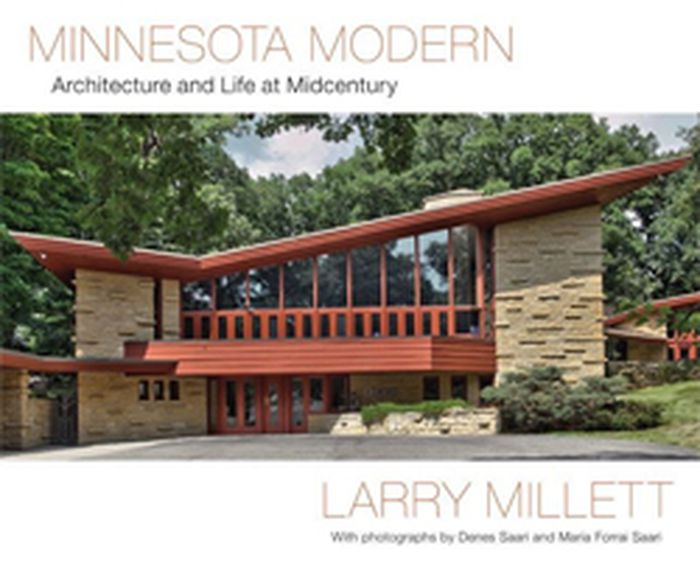
Minnesota Modern examines the style that penetrated the social, political, and cultural fabric of the United States at midcentury. Midcentury modernism expressed new ways of thinking about how to live, work, and play in the communities that formed in post-war America. American author Larry Millett describes the style’s sources in the work of European masters like Ludwig(...)
$72.95
(available to order)
Summary:
Minnesota Modern examines the style that penetrated the social, political, and cultural fabric of the United States at midcentury. Midcentury modernism expressed new ways of thinking about how to live, work, and play in the communities that formed in post-war America. American author Larry Millett describes the style’s sources in the work of European masters like Ludwig(...)
Title:
Minnesota Modern: architecture and life at midcentury
Actions:
Price:
$72.95
(available to order)
Summary:
Minnesota Modern examines the style that penetrated the social, political, and cultural fabric of the United States at midcentury. Midcentury modernism expressed new ways of thinking about how to live, work, and play in the communities that formed in post-war America. American author Larry Millett describes the style’s sources in the work of European masters like Ludwig Mies van der Rohe and Walter Gropius, as well as the midwestern innovations of Frank Lloyd Wright, and its refinement at the University of Minnesota under the guidance of Ralph Rapson and other modernists.
Minnesota Modern: architecture and life at midcentury
Actions:
Price:
$72.95
(available to order)
Summary:
Minnesota Modern examines the style that penetrated the social, political, and cultural fabric of the United States at midcentury. Midcentury modernism expressed new ways of thinking about how to live, work, and play in the communities that formed in post-war America. American author Larry Millett describes the style’s sources in the work of European masters like Ludwig Mies van der Rohe and Walter Gropius, as well as the midwestern innovations of Frank Lloyd Wright, and its refinement at the University of Minnesota under the guidance of Ralph Rapson and other modernists.
Form:
books
books
Publication:
December 2015
December 2015
Subject:
Modernism
Modernism
Form:
audio
audio
Actions:
Description:
1 online resource.
Author:
Subject:
Publication:
[Place of publication not identified] : The Funambulist, 2022.
[Place of publication not identified] : The Funambulist, 2022.
Title:
Languages of Colonialism and Resistance in Palestine.
Actions:
Description:
1 online resource.
Languages of Colonialism and Resistance in Palestine.
Actions:
Description:
1 online resource.
Form:
audio
audio
Publication:
[Place of publication not identified] : The Funambulist, 2022.
[Place of publication not identified] : The Funambulist, 2022.
Author:
Subject:
Form:
books
books
Actions:
Holdings:
Description:
320 pages : maps ; 21 cm
Description:
320 pages : maps ; 21 cm
Author:
Subject:
Publication:
New York : Vintage Books, ©1997.
New York : Vintage Books, ©1997.
Title:
Hong Kong : epilogue to an empire / Jan Morris.
Actions:
Holdings:
Description:
320 pages : maps ; 21 cm
Hong Kong : epilogue to an empire / Jan Morris.
Actions:
Holdings:
Description:
320 pages : maps ; 21 cm
Form:
books
books
Publication:
New York : Vintage Books, ©1997.
New York : Vintage Books, ©1997.
Author:
Subject:
Form:
books
books
Holdings:
Description:
xx, 246 pages ; 24 cm
Description:
xx, 246 pages ; 24 cm
Author:
Subject:
Publication:
Abingdon, Oxon ; New York, NY : Routledge, 2015., ©2015
Abingdon, Oxon ; New York, NY : Routledge, 2015., ©2015
Title:
Beyond gated communities / edited by Samer Bagaeen and Ola Uduku.
Actions:
Holdings:
Description:
xx, 246 pages ; 24 cm
Beyond gated communities / edited by Samer Bagaeen and Ola Uduku.
Actions:
Holdings:
Description:
xx, 246 pages ; 24 cm
Form:
books
books
Publication:
Abingdon, Oxon ; New York, NY : Routledge, 2015., ©2015
Abingdon, Oxon ; New York, NY : Routledge, 2015., ©2015
Author:
Subject:
Form:
books
books
Actions:
Holdings:
Description:
xiv, 158 pages : illustrations (some color) ; 28 cm
Description:
xiv, 158 pages : illustrations (some color) ; 28 cm
Author:
Subject:
Publication:
Austin : University of Texas Press, ©1999.
Austin : University of Texas Press, ©1999.
Title:
The architecture of O'Neil Ford : celebrating place / by David Dillon.
Actions:
Holdings:
Description:
xiv, 158 pages : illustrations (some color) ; 28 cm
The architecture of O'Neil Ford : celebrating place / by David Dillon.
Actions:
Holdings:
Description:
xiv, 158 pages : illustrations (some color) ; 28 cm
Form:
books
books
Publication:
Austin : University of Texas Press, ©1999.
Austin : University of Texas Press, ©1999.
Author:
Subject:
Form:
books
books
Holdings:
Description:
x, 550 pages : illustrations ; 21 cm.
Description:
x, 550 pages : illustrations ; 21 cm.
Author:
Subject:
Publication:
New York : Routledge, 2008.
New York : Routledge, 2008.
Title:
Renaissance theory / edited by James Elkins and Robert Williams.
Actions:
Holdings:
Description:
x, 550 pages : illustrations ; 21 cm.
Renaissance theory / edited by James Elkins and Robert Williams.
Actions:
Holdings:
Description:
x, 550 pages : illustrations ; 21 cm.
Form:
books
books
Publication:
New York : Routledge, 2008.
New York : Routledge, 2008.
Author:
Subject:


