


1914 Results
Form:
books
books

Actions:
Price:
$29.95
(available to order)
Summary:
Lake Ontario has profoundly influenced the historical evolution of North America. For centuries it has enabled and enriched the societies that crowded its edges, from fertile agricultural landscapes to energy production systems to sprawling cities. In "The lives of Lake Ontario" Daniel Macfarlane details the lake’s relationship with the Indigenous nations, settler(...)
$29.95
(available to order)
Summary:
Lake Ontario has profoundly influenced the historical evolution of North America. For centuries it has enabled and enriched the societies that crowded its edges, from fertile agricultural landscapes to energy production systems to sprawling cities. In "The lives of Lake Ontario" Daniel Macfarlane details the lake’s relationship with the Indigenous nations, settler(...)
Title:
The lives of Lake Ontario: An environmental history
Actions:
Price:
$29.95
(available to order)
Summary:
Lake Ontario has profoundly influenced the historical evolution of North America. For centuries it has enabled and enriched the societies that crowded its edges, from fertile agricultural landscapes to energy production systems to sprawling cities. In "The lives of Lake Ontario" Daniel Macfarlane details the lake’s relationship with the Indigenous nations, settler cultures, and modern countries that have occupied its shores. He examines the myriad ways Canada and the United States have used and abused this resource: through dams and canals, drinking water and sewage, trash and pollution, fish and foreign species, industry and manufacturing, urbanization and infrastructure, population growth and biodiversity loss. Serving as both bridge and buffer between the two countries, Lake Ontario came to host Canada’s largest megalopolis. Yet its transborder exploitation exacted a tremendous ecological cost, leading people to abandon the lake. Innovative regulations in the later twentieth century, such as the Great Lakes Water Quality Agreements, have partially improved Lake Ontario’s health.
The lives of Lake Ontario: An environmental history
Actions:
Price:
$29.95
(available to order)
Summary:
Lake Ontario has profoundly influenced the historical evolution of North America. For centuries it has enabled and enriched the societies that crowded its edges, from fertile agricultural landscapes to energy production systems to sprawling cities. In "The lives of Lake Ontario" Daniel Macfarlane details the lake’s relationship with the Indigenous nations, settler cultures, and modern countries that have occupied its shores. He examines the myriad ways Canada and the United States have used and abused this resource: through dams and canals, drinking water and sewage, trash and pollution, fish and foreign species, industry and manufacturing, urbanization and infrastructure, population growth and biodiversity loss. Serving as both bridge and buffer between the two countries, Lake Ontario came to host Canada’s largest megalopolis. Yet its transborder exploitation exacted a tremendous ecological cost, leading people to abandon the lake. Innovative regulations in the later twentieth century, such as the Great Lakes Water Quality Agreements, have partially improved Lake Ontario’s health.
Form:
books
books
Publication:
March 2026
March 2026
Subject:
Architecture in Canada
Architecture in Canada
Form:
books
books
Actions:
Price:
$50.00
(available to order)
Summary:
« La Colonia » documente les espaces de sociabilité d’Amérique centrale — ces tiers-lieux refuges au sein d’une société marquée par une violence urbaine endémique. Plutôt que de tourner son appareil vers cette brutalité, souvent montrée frontalement par le photojournalisme, le photographe Valérian Mazataud s’intéresse aux lieux où la population peut encore se rassembler(...)
$50.00
(available to order)
Summary:
« La Colonia » documente les espaces de sociabilité d’Amérique centrale — ces tiers-lieux refuges au sein d’une société marquée par une violence urbaine endémique. Plutôt que de tourner son appareil vers cette brutalité, souvent montrée frontalement par le photojournalisme, le photographe Valérian Mazataud s’intéresse aux lieux où la population peut encore se rassembler(...)
Title:
Valérian Mazataud : La colonia
Actions:
Price:
$50.00
(available to order)
Summary:
« La Colonia » documente les espaces de sociabilité d’Amérique centrale — ces tiers-lieux refuges au sein d’une société marquée par une violence urbaine endémique. Plutôt que de tourner son appareil vers cette brutalité, souvent montrée frontalement par le photojournalisme, le photographe Valérian Mazataud s’intéresse aux lieux où la population peut encore se rassembler et trouver un certain apaisement : quartiers résidentiels fermés, centres commerciaux ou parcs publics où la présence collective devient elle-même une forme de protection. L’origine du projet tient à de simples promenades à Tegucigalpa, au Honduras, avec Baku, le chien accompagnant le photographe et figure discrète guidant le regard à travers le récit photographique. Connu de tout le voisinage, l’animal lui ouvre les portes du quotidien de la Colonia Primavera — un village urbain fortifié, cerné de hauts murs et surveillé par des gardes armés. Là, des familles de classe moyenne tentent de préserver une forme de tranquillité, à distance du tumulte extérieur.
Valérian Mazataud : La colonia
Actions:
Price:
$50.00
(available to order)
Summary:
« La Colonia » documente les espaces de sociabilité d’Amérique centrale — ces tiers-lieux refuges au sein d’une société marquée par une violence urbaine endémique. Plutôt que de tourner son appareil vers cette brutalité, souvent montrée frontalement par le photojournalisme, le photographe Valérian Mazataud s’intéresse aux lieux où la population peut encore se rassembler et trouver un certain apaisement : quartiers résidentiels fermés, centres commerciaux ou parcs publics où la présence collective devient elle-même une forme de protection. L’origine du projet tient à de simples promenades à Tegucigalpa, au Honduras, avec Baku, le chien accompagnant le photographe et figure discrète guidant le regard à travers le récit photographique. Connu de tout le voisinage, l’animal lui ouvre les portes du quotidien de la Colonia Primavera — un village urbain fortifié, cerné de hauts murs et surveillé par des gardes armés. Là, des familles de classe moyenne tentent de préserver une forme de tranquillité, à distance du tumulte extérieur.
Form:
books
books
Publication:
August 2026
August 2026
Subject:
Photography monographs
Photography monographs
Form:
books
books
Price:
$41.95
(available to order)
Summary:
It may come as no surprise that only two percent of new homebuyers work directly with an architect to design the space in which they will live—indeed, architects are usually seen as a luxury most of us, the other ninety-eight percent, can't afford. Yet, why shouldn't more people call on the services of architects? With fierce competition for few commissions, why do(...)
$41.95
(available to order)
Summary:
It may come as no surprise that only two percent of new homebuyers work directly with an architect to design the space in which they will live—indeed, architects are usually seen as a luxury most of us, the other ninety-eight percent, can't afford. Yet, why shouldn't more people call on the services of architects? With fierce competition for few commissions, why do(...)
Title:
Good deeds, good design : community service through architecture
Actions:
Price:
$41.95
(available to order)
Summary:
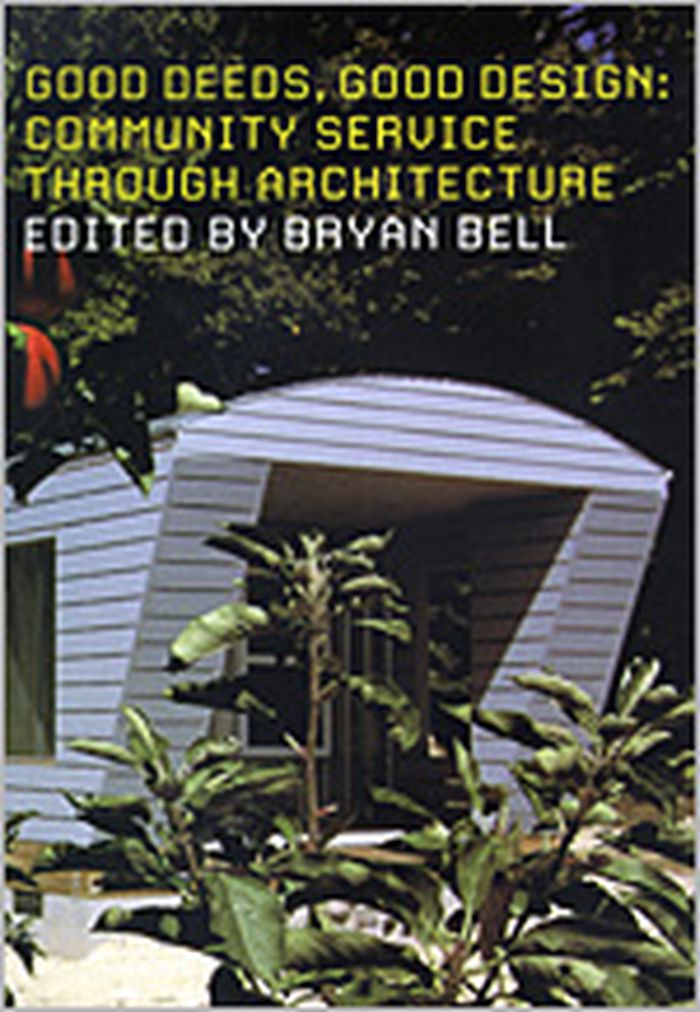
It may come as no surprise that only two percent of new homebuyers work directly with an architect to design the space in which they will live—indeed, architects are usually seen as a luxury most of us, the other ninety-eight percent, can't afford. Yet, why shouldn't more people call on the services of architects? With fierce competition for few commissions, why do architects not seek out other sources of work and income? Now, acting within larger institutions or on their own, many architects are taking local initiatives to address the underserved, particularly the poor. "Good Deeds, Good Design" presents the best new thoughts and practices in this emerging movement toward an architecture that serves a broader population. In this book, architecture firms, community design centers, design/build programs, and service-based organizations offer their plans for buildings for the other ninety-eight percent. Twenty-eight essays and case studies illustrate successes and failures and raise both design and social issues.
Good deeds, good design : community service through architecture
Actions:
Price:
$41.95
(available to order)
Summary:
It may come as no surprise that only two percent of new homebuyers work directly with an architect to design the space in which they will live—indeed, architects are usually seen as a luxury most of us, the other ninety-eight percent, can't afford. Yet, why shouldn't more people call on the services of architects? With fierce competition for few commissions, why do architects not seek out other sources of work and income? Now, acting within larger institutions or on their own, many architects are taking local initiatives to address the underserved, particularly the poor. "Good Deeds, Good Design" presents the best new thoughts and practices in this emerging movement toward an architecture that serves a broader population. In this book, architecture firms, community design centers, design/build programs, and service-based organizations offer their plans for buildings for the other ninety-eight percent. Twenty-eight essays and case studies illustrate successes and failures and raise both design and social issues.
Form:
books
books
Publication:
May 2003, New York
May 2003, New York
Subject:
Architectural Theory
Architectural Theory
Form:
journals and magazines
journals and magazines
Title:
Liberté n.332 : nous vieillirons ensemble, quelle place pour la vieillesse dans notre société ?
Liberté n.332 : nous vieillirons ensemble, quelle place pour la vieillesse dans notre société ?
Actions:
Price:
$15.00
(available in store)
Summary:
Ce numéro de la revue Liberté est né à la fois d'un hasard et d'une évidence. Le hasard, d'abord : au plus creux du confinement de l'hiver 2021, deux collaborateurs ont proposé, coup sur coup et sans se consulter, des textes portant sur les conditions de vie et le traitement des personnes vieillissantes et en perte d'autonomie depuis le début de la pandémie. Ensuite,(...)
$15.00
(available in store)
Summary:
Ce numéro de la revue Liberté est né à la fois d'un hasard et d'une évidence. Le hasard, d'abord : au plus creux du confinement de l'hiver 2021, deux collaborateurs ont proposé, coup sur coup et sans se consulter, des textes portant sur les conditions de vie et le traitement des personnes vieillissantes et en perte d'autonomie depuis le début de la pandémie. Ensuite,(...)
Title:
Liberté n.332 : nous vieillirons ensemble, quelle place pour la vieillesse dans notre société ?
Actions:
Price:
$15.00
(available in store)
Summary:
Ce numéro de la revue Liberté est né à la fois d'un hasard et d'une évidence. Le hasard, d'abord : au plus creux du confinement de l'hiver 2021, deux collaborateurs ont proposé, coup sur coup et sans se consulter, des textes portant sur les conditions de vie et le traitement des personnes vieillissantes et en perte d'autonomie depuis le début de la pandémie. Ensuite, l'évidence : après l’hécatombe causée en CHSLD et dans les résidences privées par la COVID-19, il a semblé à l'équipe de la revue incontournable de réfléchir à la place des aîné.e.s dans notre société. Quel espace de parole et d'existence leur réserve-t-on ? Tentons-nous réellement de les inclure au dialogue entre les générations ? Pourquoi existe-t-il un pareil tabou entourant les inévitables effets du temps sur le corps ? Dans ce dossier, il s’agira d'interroger la violence d'une organisation sociale qui, pour fonctionner, a choisi d'exclure une partie de sa population. Qu'est-ce que ce triste constat révèle de notre société ?
Liberté n.332 : nous vieillirons ensemble, quelle place pour la vieillesse dans notre société ?
Actions:
Price:
$15.00
(available in store)
Summary:
Ce numéro de la revue Liberté est né à la fois d'un hasard et d'une évidence. Le hasard, d'abord : au plus creux du confinement de l'hiver 2021, deux collaborateurs ont proposé, coup sur coup et sans se consulter, des textes portant sur les conditions de vie et le traitement des personnes vieillissantes et en perte d'autonomie depuis le début de la pandémie. Ensuite, l'évidence : après l’hécatombe causée en CHSLD et dans les résidences privées par la COVID-19, il a semblé à l'équipe de la revue incontournable de réfléchir à la place des aîné.e.s dans notre société. Quel espace de parole et d'existence leur réserve-t-on ? Tentons-nous réellement de les inclure au dialogue entre les générations ? Pourquoi existe-t-il un pareil tabou entourant les inévitables effets du temps sur le corps ? Dans ce dossier, il s’agira d'interroger la violence d'une organisation sociale qui, pour fonctionner, a choisi d'exclure une partie de sa population. Qu'est-ce que ce triste constat révèle de notre société ?
Form:
journals and magazines
journals and magazines
Publication:
September 2021
September 2021
Subject:
Magazines
Magazines
Form:
books
books
Actions:
Price:
$50.00
(available to order)
Summary:
Nestled in British Columbia between the Rocky Mountains and the sea, Canada’s Pacific Northwest is home to interior designers and architects with their eyes on the outdoors, a varied population, and the future. In this book, design writer Julia Dilworth talks to them about their motivations and how they work, and showcases their projects, in full-colour photographs and(...)
$50.00
(available to order)
Summary:
Nestled in British Columbia between the Rocky Mountains and the sea, Canada’s Pacific Northwest is home to interior designers and architects with their eyes on the outdoors, a varied population, and the future. In this book, design writer Julia Dilworth talks to them about their motivations and how they work, and showcases their projects, in full-colour photographs and(...)
Title:
West Coast North: Interiors designed for living
Actions:
Price:
$50.00
(available to order)
Summary:
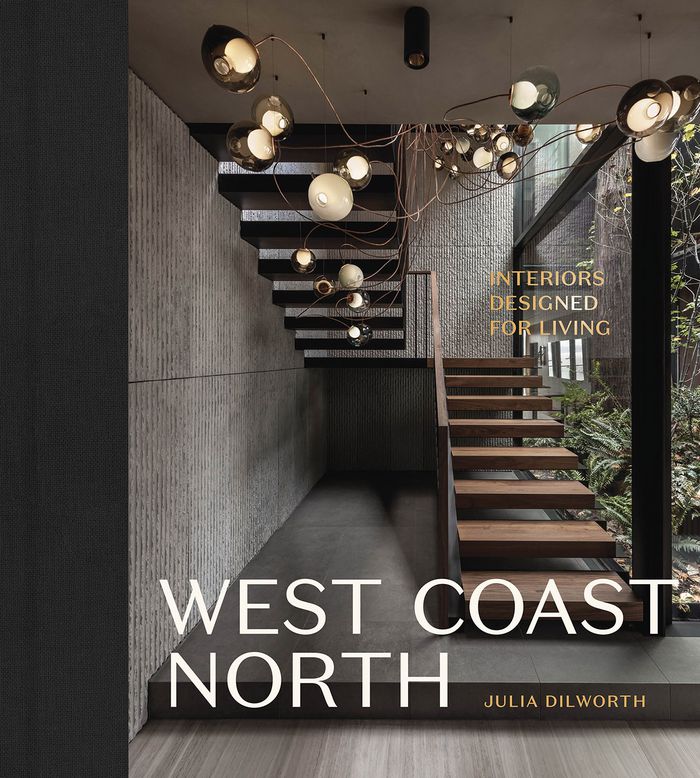
Nestled in British Columbia between the Rocky Mountains and the sea, Canada’s Pacific Northwest is home to interior designers and architects with their eyes on the outdoors, a varied population, and the future. In this book, design writer Julia Dilworth talks to them about their motivations and how they work, and showcases their projects, in full-colour photographs and their own words. The 29 firms profiled bring varied backgrounds and approaches to projects from old-home renos to new builds and from rooms and apartments to breweries, working closely with their clients and other firms. With a characteristic West Coast concern for the environment, they’re keeping old builds out of landfills and bringing the beauty of the outside world inside, through windows, materials, and colour palettes. They’re inspired by local craftspeople and artists and by design from far flung places—the places from which the world has gathered on Canada’s West Coast.
West Coast North: Interiors designed for living
Actions:
Price:
$50.00
(available to order)
Summary:
Nestled in British Columbia between the Rocky Mountains and the sea, Canada’s Pacific Northwest is home to interior designers and architects with their eyes on the outdoors, a varied population, and the future. In this book, design writer Julia Dilworth talks to them about their motivations and how they work, and showcases their projects, in full-colour photographs and their own words. The 29 firms profiled bring varied backgrounds and approaches to projects from old-home renos to new builds and from rooms and apartments to breweries, working closely with their clients and other firms. With a characteristic West Coast concern for the environment, they’re keeping old builds out of landfills and bringing the beauty of the outside world inside, through windows, materials, and colour palettes. They’re inspired by local craftspeople and artists and by design from far flung places—the places from which the world has gathered on Canada’s West Coast.
Form:
books
books
Publication:
October 2022
October 2022
Subject:
Interior Design
Interior Design
Form:
books
books
Actions:
Holdings:
Description:
408 pages : illustrations (some color) ; 29 cm
Description:
408 pages : illustrations (some color) ; 29 cm
Author:
Subject:
Publication:
Washington, D.C. : National Museum of American Art and National Portrait Gallery, Smithsonian Institution ; Hanover : Distributed by the University Press of New England, 1993.
Washington, D.C. : National Museum of American Art and National Portrait Gallery, Smithsonian Institution ; Hanover : Distributed by the University Press of New England, 1993.
Title:
Revisiting the white city : American art at the 1893 World's Fair / organized by Carolyn Kinder Carr and George Gurney ; essays by Robert W. Rydell and Carolyn Kinder Carr ; catalogue of works by Brandon Brame Fortune and Michelle Mead.
Actions:
Holdings:
Description:
408 pages : illustrations (some color) ; 29 cm
Revisiting the white city : American art at the 1893 World's Fair / organized by Carolyn Kinder Carr and George Gurney ; essays by Robert W. Rydell and Carolyn Kinder Carr ; catalogue of works by Brandon Brame Fortune and Michelle Mead.
Actions:
Holdings:
Description:
408 pages : illustrations (some color) ; 29 cm
Form:
books
books
Publication:
Washington, D.C. : National Museum of American Art and National Portrait Gallery, Smithsonian Institution ; Hanover : Distributed by the University Press of New England, 1993.
Washington, D.C. : National Museum of American Art and National Portrait Gallery, Smithsonian Institution ; Hanover : Distributed by the University Press of New England, 1993.
Author:
Subject:
Form:
books
books
Actions:
Holdings:
Description:
xv, 267 pages : illustrations (some color), maps ; 29 cm
Description:
xv, 267 pages : illustrations (some color), maps ; 29 cm
Author:
Subject:
Publication:
Cambridge, U.K. ; New York : Cambridge University Press, 2002.
Cambridge, U.K. ; New York : Cambridge University Press, 2002.
Title:
The monumental tombs of ancient Alexandria : the theater of the dead / Marjorie Susan Venit.
Actions:
Holdings:
Description:
xv, 267 pages : illustrations (some color), maps ; 29 cm
The monumental tombs of ancient Alexandria : the theater of the dead / Marjorie Susan Venit.
Actions:
Holdings:
Description:
xv, 267 pages : illustrations (some color), maps ; 29 cm
Form:
books
books
Publication:
Cambridge, U.K. ; New York : Cambridge University Press, 2002.
Cambridge, U.K. ; New York : Cambridge University Press, 2002.
Author:
Subject:
Form:
books
books
Actions:
Price:
$67.50
(available in store)
Summary:
The first volume is a photographic gallery of Pyongyang buildings divided into major architectural categories--urban planning, residential buildings, cultural venues, education and sport, hotels/department stores, transport infrastructure, and monuments. Volume 2 contains illustrated essays on varied facets of the Pyongyang architecture. In this volume, one finds(...)
$67.50
(available in store)
Summary:
The first volume is a photographic gallery of Pyongyang buildings divided into major architectural categories--urban planning, residential buildings, cultural venues, education and sport, hotels/department stores, transport infrastructure, and monuments. Volume 2 contains illustrated essays on varied facets of the Pyongyang architecture. In this volume, one finds(...)
Title:
Architectural and cultural guide : Pyongyang
Actions:
Price:
$67.50
(available in store)
Summary:
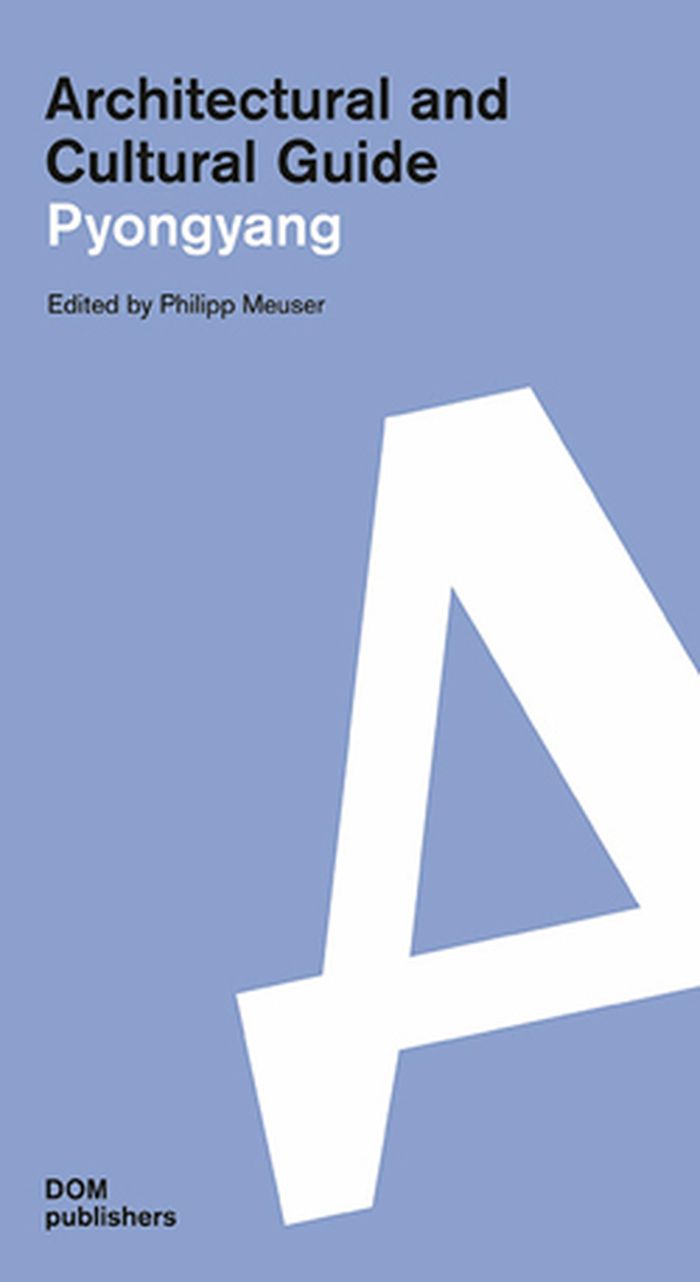
The first volume is a photographic gallery of Pyongyang buildings divided into major architectural categories--urban planning, residential buildings, cultural venues, education and sport, hotels/department stores, transport infrastructure, and monuments. Volume 2 contains illustrated essays on varied facets of the Pyongyang architecture. In this volume, one finds photographs of buildings under construction, photos of North Koreans in other social settings, pictures of leaders and government officials, and posters on the sides of urban buildings or monuments meant to work in conjunction with them in representing the strength of social unity, the relationship between leaders and the population, and other principles of the nation's ideology. Use of the two-volume set as a travel guide is noted by the editor. He also notes that all visitors to North Korea are monitored continually by the authorities, not that this interferes with viewing the architecture. But even if one does not plan travel to North Korea, the set works as a unique informative illustrated study of the architecture of this infamous, closed society. On this subject, it is encyclopedic.
Architectural and cultural guide : Pyongyang
Actions:
Price:
$67.50
(available in store)
Summary:
The first volume is a photographic gallery of Pyongyang buildings divided into major architectural categories--urban planning, residential buildings, cultural venues, education and sport, hotels/department stores, transport infrastructure, and monuments. Volume 2 contains illustrated essays on varied facets of the Pyongyang architecture. In this volume, one finds photographs of buildings under construction, photos of North Koreans in other social settings, pictures of leaders and government officials, and posters on the sides of urban buildings or monuments meant to work in conjunction with them in representing the strength of social unity, the relationship between leaders and the population, and other principles of the nation's ideology. Use of the two-volume set as a travel guide is noted by the editor. He also notes that all visitors to North Korea are monitored continually by the authorities, not that this interferes with viewing the architecture. But even if one does not plan travel to North Korea, the set works as a unique informative illustrated study of the architecture of this infamous, closed society. On this subject, it is encyclopedic.
Form:
books
books
Publication:
March 2012
March 2012
Subject:
Contemporary Asian Architecture
Contemporary Asian Architecture
Form:
books
books
Actions:
Price:
$48.00
(available to order)
Summary:
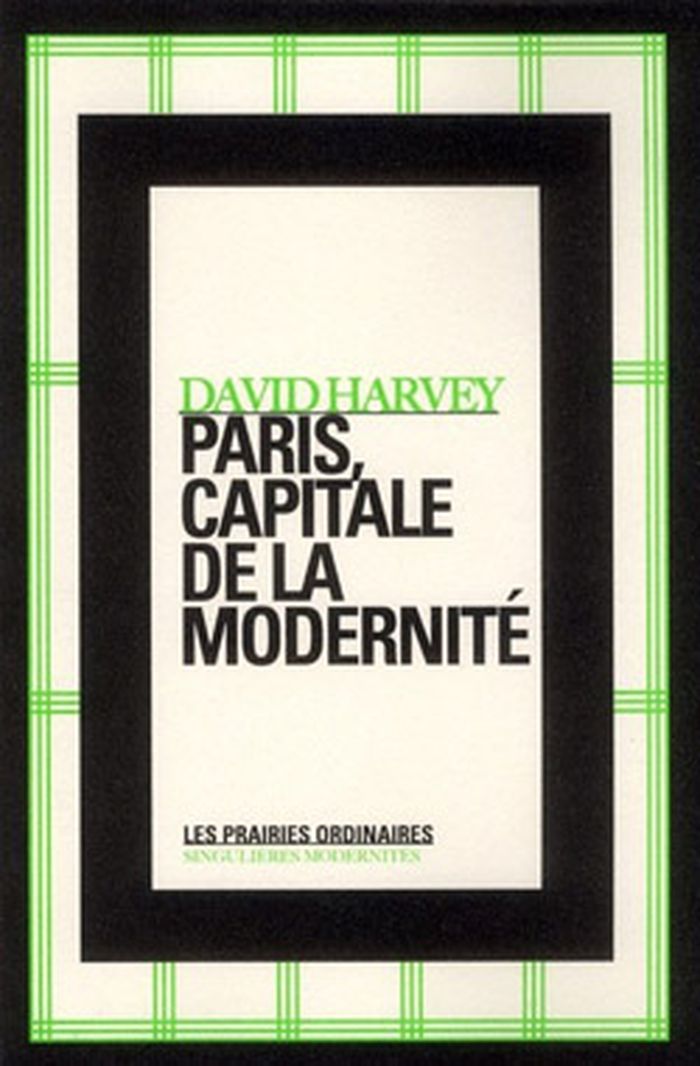
Comment, au milieu du XIXe siècle, Paris a-t-elle pu devenir l’incarnation urbaine de la modernité ? Pour répondre à cette question, David Harvey a exploré les mutations connues par la ville à cette époque : transformation physique, avec les grands projets d’Haussmann, qui remplace le plan médiéval par les grands boulevards ; transformation économique, avec une(...)
$48.00
(available to order)
Summary:
Comment, au milieu du XIXe siècle, Paris a-t-elle pu devenir l’incarnation urbaine de la modernité ? Pour répondre à cette question, David Harvey a exploré les mutations connues par la ville à cette époque : transformation physique, avec les grands projets d’Haussmann, qui remplace le plan médiéval par les grands boulevards ; transformation économique, avec une(...)
Title:
David Harvey : Paris, capitale de la modernité
Actions:
Price:
$48.00
(available to order)
Summary:
Comment, au milieu du XIXe siècle, Paris a-t-elle pu devenir l’incarnation urbaine de la modernité ? Pour répondre à cette question, David Harvey a exploré les mutations connues par la ville à cette époque : transformation physique, avec les grands projets d’Haussmann, qui remplace le plan médiéval par les grands boulevards ; transformation économique, avec une nouvelle forme de capitalisme dominée par les puissances financières et industrielles ; transformation culturelle, avec l’irruption de ce qu’on appellera plus tard le modernisme ; transformation sociale, avec l’émergence de violents antagonismes de classes qui atteignent leur paroxysme dans les révolutions de 1848 et de 1871. En présentant la ville moderne comme le produit instable de forces hétérogènes et contradictoires, David Harvey nous offre une image vivante du fonctionnement de Paris ainsi qu’une vision panoramique de la période décisive que fut le Second Empire. Mais cette analyse de la ville moderne est aussi l’occasion d’une réflexion magistrale sur la ville contemporaine – sur la part de la population dans l’urbanisation, sur son accès aux ressources, en somme sur le «droit à la ville».
David Harvey : Paris, capitale de la modernité
Actions:
Price:
$48.00
(available to order)
Summary:
Comment, au milieu du XIXe siècle, Paris a-t-elle pu devenir l’incarnation urbaine de la modernité ? Pour répondre à cette question, David Harvey a exploré les mutations connues par la ville à cette époque : transformation physique, avec les grands projets d’Haussmann, qui remplace le plan médiéval par les grands boulevards ; transformation économique, avec une nouvelle forme de capitalisme dominée par les puissances financières et industrielles ; transformation culturelle, avec l’irruption de ce qu’on appellera plus tard le modernisme ; transformation sociale, avec l’émergence de violents antagonismes de classes qui atteignent leur paroxysme dans les révolutions de 1848 et de 1871. En présentant la ville moderne comme le produit instable de forces hétérogènes et contradictoires, David Harvey nous offre une image vivante du fonctionnement de Paris ainsi qu’une vision panoramique de la période décisive que fut le Second Empire. Mais cette analyse de la ville moderne est aussi l’occasion d’une réflexion magistrale sur la ville contemporaine – sur la part de la population dans l’urbanisation, sur son accès aux ressources, en somme sur le «droit à la ville».
Form:
books
books
Publication:
July 2012
July 2012
Subject:
History since 1900, Reference Books
History since 1900, Reference Books
Form:
books
books
Title:
Que notre joie demeure
Que notre joie demeure
Actions:
Price:
$28.95
(available to order)
Summary:
Un spectre hante le roman de Kevin Lambert : le spectre du capitalisme. L’éblouissante Céline Wachowski, architecte de renommée internationale, dévoile enfin le Complexe Webuy, un projet ambitieux et structurant; surtout, le premier grand projet public qu’elle réalise pour Montréal, sa ville. Pourtant, les critiques de la population et de groupes militants ne tardent pas(...)
$28.95
(available to order)
Summary:
Un spectre hante le roman de Kevin Lambert : le spectre du capitalisme. L’éblouissante Céline Wachowski, architecte de renommée internationale, dévoile enfin le Complexe Webuy, un projet ambitieux et structurant; surtout, le premier grand projet public qu’elle réalise pour Montréal, sa ville. Pourtant, les critiques de la population et de groupes militants ne tardent pas(...)
Title:
Que notre joie demeure
Actions:
Price:
$28.95
(available to order)
Summary:
Un spectre hante le roman de Kevin Lambert : le spectre du capitalisme. L’éblouissante Céline Wachowski, architecte de renommée internationale, dévoile enfin le Complexe Webuy, un projet ambitieux et structurant; surtout, le premier grand projet public qu’elle réalise pour Montréal, sa ville. Pourtant, les critiques de la population et de groupes militants ne tardent pas à fuser : on accuse Céline de détruire le tissu social, d’accélérer l’embourgeoisement des quartiers, de péchés plus capitaux encore. L’architecte est prise dans la tourmente et sommée de réagir. C’est la classe dirigeante que Kevin Lambert met en scène ici, fouillant la psyché de ces gens au sommet de leur discipline et qui pour la première fois de leur vie risquent de perdre pied. Quelle fiction se racontent-ils pour justifier leurs privilèges, pour asseoir leur place dans un monde qu’ils ont eux-mêmes bâti ? Dans une prose leste et immersive, «Que notre joie demeure» fait entendre les points de vue et pensées secrètes de ses personnages, tout en peignant le portrait clairvoyant du Montréal d’aujourd’hui.
Que notre joie demeure
Actions:
Price:
$28.95
(available to order)
Summary:
Un spectre hante le roman de Kevin Lambert : le spectre du capitalisme. L’éblouissante Céline Wachowski, architecte de renommée internationale, dévoile enfin le Complexe Webuy, un projet ambitieux et structurant; surtout, le premier grand projet public qu’elle réalise pour Montréal, sa ville. Pourtant, les critiques de la population et de groupes militants ne tardent pas à fuser : on accuse Céline de détruire le tissu social, d’accélérer l’embourgeoisement des quartiers, de péchés plus capitaux encore. L’architecte est prise dans la tourmente et sommée de réagir. C’est la classe dirigeante que Kevin Lambert met en scène ici, fouillant la psyché de ces gens au sommet de leur discipline et qui pour la première fois de leur vie risquent de perdre pied. Quelle fiction se racontent-ils pour justifier leurs privilèges, pour asseoir leur place dans un monde qu’ils ont eux-mêmes bâti ? Dans une prose leste et immersive, «Que notre joie demeure» fait entendre les points de vue et pensées secrètes de ses personnages, tout en peignant le portrait clairvoyant du Montréal d’aujourd’hui.
Form:
books
books
Publication:
September 2022
September 2022
Subject:
Literature and poetry
Literature and poetry


