


1902 Results
Form:
books
books
Actions:
Price:
$140.00
(available to order)
Summary:
Bar, surface, body, and space are the fundamental elements of the design process. Every form, however complex, may be understood as a variation of them. And underlying every concrete design is a design methodology that can be analyzed, taught, and learned as a transformation of these four categories. Taking this theory as its starting point, this book is nothing less(...)
$140.00
(available to order)
Summary:
Bar, surface, body, and space are the fundamental elements of the design process. Every form, however complex, may be understood as a variation of them. And underlying every concrete design is a design methodology that can be analyzed, taught, and learned as a transformation of these four categories. Taking this theory as its starting point, this book is nothing less(...)
Title:
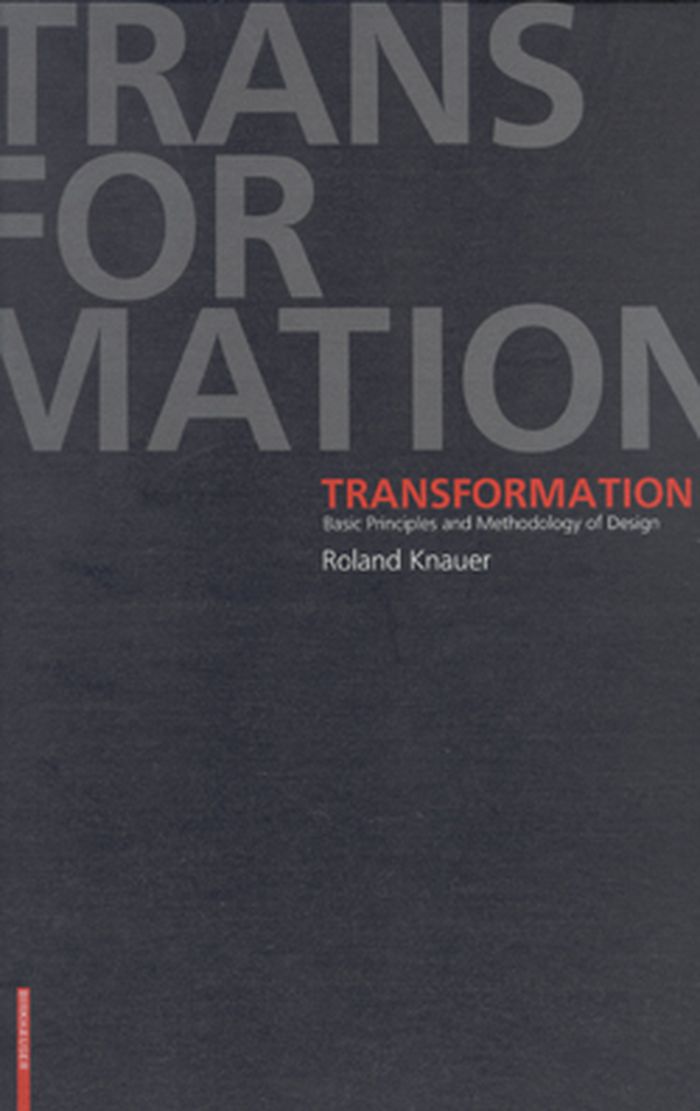
Transformation: basic principles and methodology of design
Actions:
Price:
$140.00
(available to order)
Summary:
Bar, surface, body, and space are the fundamental elements of the design process. Every form, however complex, may be understood as a variation of them. And underlying every concrete design is a design methodology that can be analyzed, taught, and learned as a transformation of these four categories. Taking this theory as its starting point, this book is nothing less than a foundational work for architects, designers, and lay people with an interest in cultural history. It details what could be called the unrivaled grammar of design. With a systematic aim and progressively increasing complexity, it unfolds the creative potential of these categories with succinct texts, uniform drawings, and a broad array of examples from architecture, design, and art. However, the book also occupies an exceptional position as a physical book: the layout makes it especially easy to compare and combine different design steps, and the separate binding of individual groups of pages makes doing so even easier. The result is a kind of construction set that invites the reader to play as well as research.
Transformation: basic principles and methodology of design
Actions:
Price:
$140.00
(available to order)
Summary:
Bar, surface, body, and space are the fundamental elements of the design process. Every form, however complex, may be understood as a variation of them. And underlying every concrete design is a design methodology that can be analyzed, taught, and learned as a transformation of these four categories. Taking this theory as its starting point, this book is nothing less than a foundational work for architects, designers, and lay people with an interest in cultural history. It details what could be called the unrivaled grammar of design. With a systematic aim and progressively increasing complexity, it unfolds the creative potential of these categories with succinct texts, uniform drawings, and a broad array of examples from architecture, design, and art. However, the book also occupies an exceptional position as a physical book: the layout makes it especially easy to compare and combine different design steps, and the separate binding of individual groups of pages makes doing so even easier. The result is a kind of construction set that invites the reader to play as well as research.
Form:
books
books
Publication:
April 2008, Basel, Berlin, Boston
April 2008, Basel, Berlin, Boston
Subject:
Interior Design
Interior Design
Form:
books
books
Price:
$37.50
(available to order)
Summary:
Over the course of a residency at a London gallery, Swiss designer Demian Conrad invited an array of graphic designers and typographers past and present to share the anecdotes, stories and scandals that have marked the international design scene over the course of the last century. The result is an examination of the ways in which the Swiss Style influenced British(...)
$37.50
(available to order)
Summary:
Over the course of a residency at a London gallery, Swiss designer Demian Conrad invited an array of graphic designers and typographers past and present to share the anecdotes, stories and scandals that have marked the international design scene over the course of the last century. The result is an examination of the ways in which the Swiss Style influenced British(...)
Title:
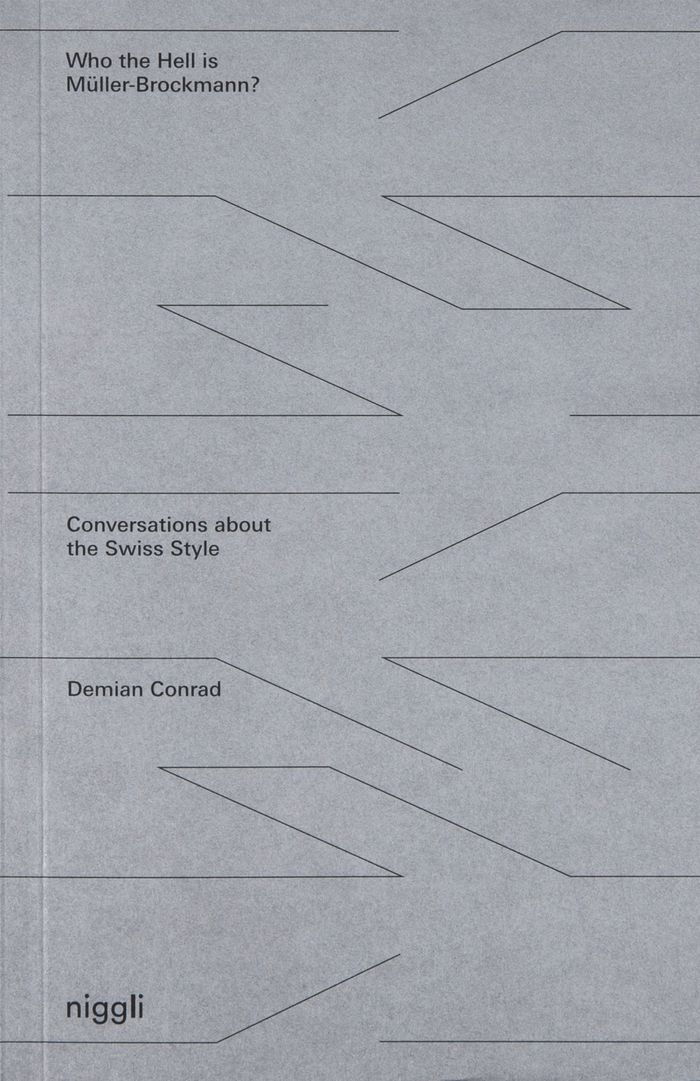
Who the hell is Müller-Brockmann? Conversations about Swiss style
Actions:
Price:
$37.50
(available to order)
Summary:
Over the course of a residency at a London gallery, Swiss designer Demian Conrad invited an array of graphic designers and typographers past and present to share the anecdotes, stories and scandals that have marked the international design scene over the course of the last century. The result is an examination of the ways in which the Swiss Style influenced British graphic design and vice versa. This celebration of the ongoing dialogue and collaboration that has existed between the design traditions of these two countries also lays bare the divergences and conflicts that lie beneath the surface, and examines how such things as a typeface or a layout grid can come to have such an enduring impact on a global community and elicit such strong emotions. Each participant was asked to bring a design-related artefact that represents their personal connection with the Swiss Style, all of which are presented in this volume. These images and the dialogues they generate create a bridge between the typographic traditions and practices of Britain and Switzerland.
Who the hell is Müller-Brockmann? Conversations about Swiss style
Actions:
Price:
$37.50
(available to order)
Summary:
Over the course of a residency at a London gallery, Swiss designer Demian Conrad invited an array of graphic designers and typographers past and present to share the anecdotes, stories and scandals that have marked the international design scene over the course of the last century. The result is an examination of the ways in which the Swiss Style influenced British graphic design and vice versa. This celebration of the ongoing dialogue and collaboration that has existed between the design traditions of these two countries also lays bare the divergences and conflicts that lie beneath the surface, and examines how such things as a typeface or a layout grid can come to have such an enduring impact on a global community and elicit such strong emotions. Each participant was asked to bring a design-related artefact that represents their personal connection with the Swiss Style, all of which are presented in this volume. These images and the dialogues they generate create a bridge between the typographic traditions and practices of Britain and Switzerland.
Form:
books
books
Publication:
October 2021
October 2021
Subject:
Graphic Design and Typography
Graphic Design and Typography
Form:
books
books
Actions:
Price:
$39.99
(available to order)
Summary:
Today we live in a world that can no longer be read as a two-dimensional map, but must now be understood as a series of vertical strata that reach from the satellites that encircle our planet to the tunnels deep within the ground. In "Vertical", Stephen Graham rewrites the city at every level: how the geography of inequality, politics, and identity is determined in terms(...)
$39.99
(available to order)
Summary:
Today we live in a world that can no longer be read as a two-dimensional map, but must now be understood as a series of vertical strata that reach from the satellites that encircle our planet to the tunnels deep within the ground. In "Vertical", Stephen Graham rewrites the city at every level: how the geography of inequality, politics, and identity is determined in terms(...)
Title:
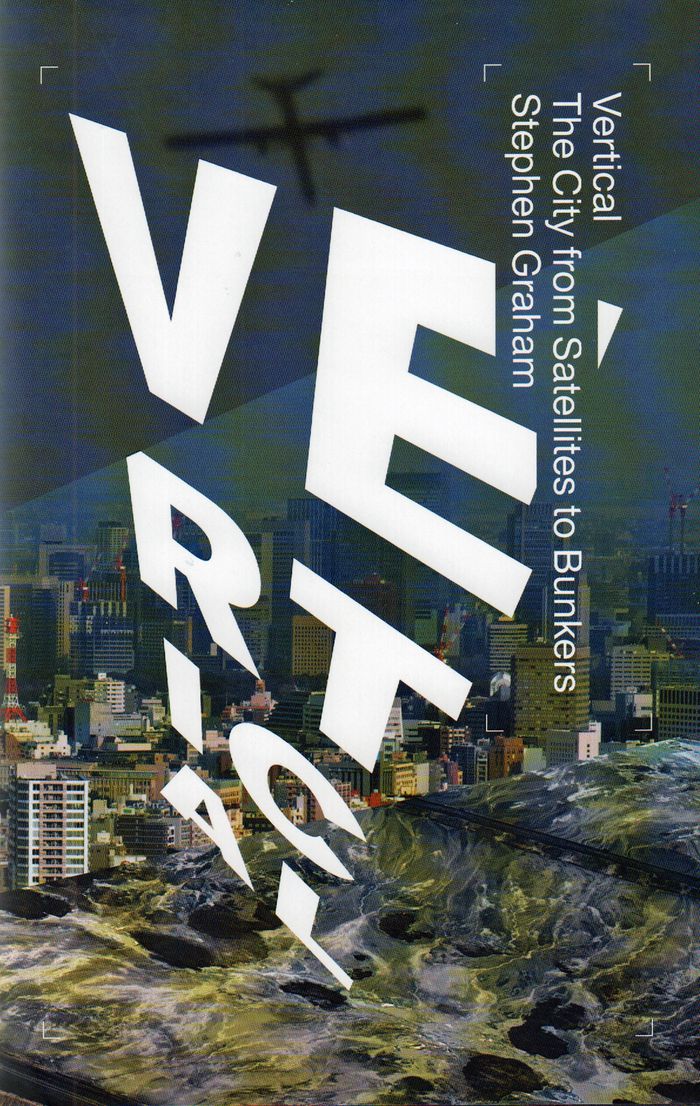
Vertical : the city from satellites to bunkers
Actions:
Price:
$39.99
(available to order)
Summary:
Today we live in a world that can no longer be read as a two-dimensional map, but must now be understood as a series of vertical strata that reach from the satellites that encircle our planet to the tunnels deep within the ground. In "Vertical", Stephen Graham rewrites the city at every level: how the geography of inequality, politics, and identity is determined in terms of above and below. Starting at the edge of earth’s atmosphere and, in a series of riveting studies, descending through each layer, Graham explores the world of drones, the city from the viewpoint of an aerial bomber, the design of sidewalks and the hidden depths of underground bunkers. He asks: why was Dubai built to be seen from Google Earth? How do the super-rich in São Paulo live in their penthouses far above the street? Why do London billionaires build vast subterranean basements? And how do the technology of elevators and subversive urban explorers shape life on the surface and subsurface of the earth?
Vertical : the city from satellites to bunkers
Actions:
Price:
$39.99
(available to order)
Summary:
Today we live in a world that can no longer be read as a two-dimensional map, but must now be understood as a series of vertical strata that reach from the satellites that encircle our planet to the tunnels deep within the ground. In "Vertical", Stephen Graham rewrites the city at every level: how the geography of inequality, politics, and identity is determined in terms of above and below. Starting at the edge of earth’s atmosphere and, in a series of riveting studies, descending through each layer, Graham explores the world of drones, the city from the viewpoint of an aerial bomber, the design of sidewalks and the hidden depths of underground bunkers. He asks: why was Dubai built to be seen from Google Earth? How do the super-rich in São Paulo live in their penthouses far above the street? Why do London billionaires build vast subterranean basements? And how do the technology of elevators and subversive urban explorers shape life on the surface and subsurface of the earth?
Form:
books
books
Publication:
November 2016
November 2016
Subject:
Urban Theory
Urban Theory
Form:
books
books
Actions:
Price:
$49.00
(available to order)
Summary:
The Anatomy of the Architectural Book examines the relationships between book culture and building culture, making visible the axes along which architectural knowledge circulates through books into buildings and back. Using five conceptual tools—texture, surface, rhythm, structure, and scale—Tavares analyzes the material qualities of a wide range of books in order to(...)
$49.00
(available to order)
Summary:
The Anatomy of the Architectural Book examines the relationships between book culture and building culture, making visible the axes along which architectural knowledge circulates through books into buildings and back. Using five conceptual tools—texture, surface, rhythm, structure, and scale—Tavares analyzes the material qualities of a wide range of books in order to(...)
Title:
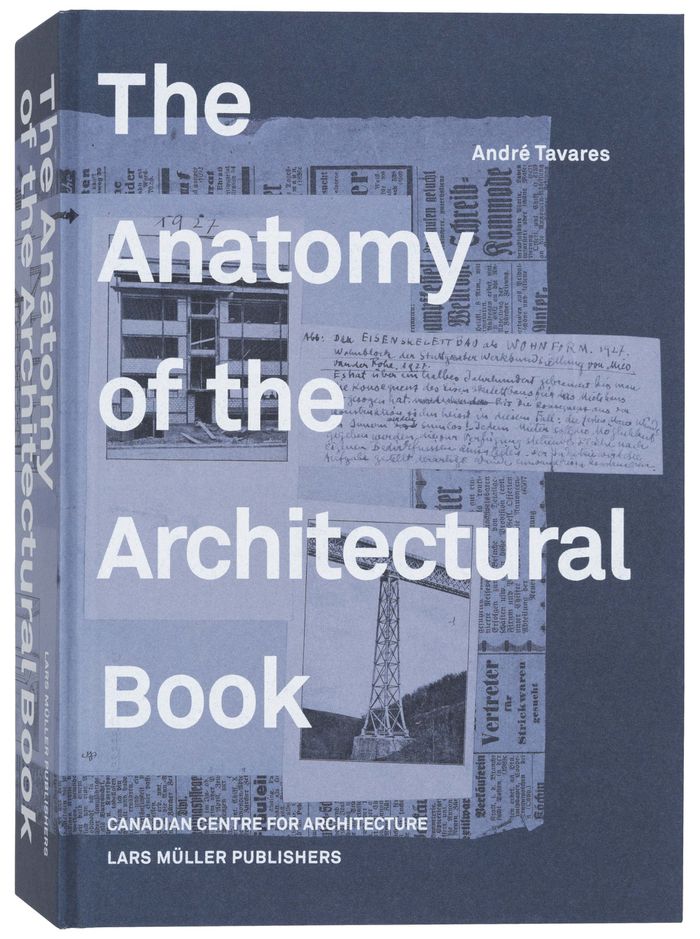
The anatomy of the architectural book
Actions:
Price:
$49.00
(available to order)
Summary:
The Anatomy of the Architectural Book examines the relationships between book culture and building culture, making visible the axes along which architectural knowledge circulates through books into buildings and back. Using five conceptual tools—texture, surface, rhythm, structure, and scale—Tavares analyzes the material qualities of a wide range of books in order to assess these dynamics and intersections. This investigation confronts us with the rise of the industrialized book, and thus of the editor as an important intermediary between the author and the printer, as well as with the configuration of the book as a unique visual device (with the designer taking part in a progressively more complex chain of decision-making). Richly illustrated with samples from the CCA library, the volume discusses work by authors including William Morris, Gottfried Semper, El Lissitzky, Le Corbusier, and Frank Lloyd Wright, among others. A large portion of the research for the book was undertaken while Tavares was a Visiting Scholar at the CCA. It is co-published in English by Lars Müller Publishers and in Portuguese by Dafne Editora.
The anatomy of the architectural book
Actions:
Price:
$49.00
(available to order)
Summary:
The Anatomy of the Architectural Book examines the relationships between book culture and building culture, making visible the axes along which architectural knowledge circulates through books into buildings and back. Using five conceptual tools—texture, surface, rhythm, structure, and scale—Tavares analyzes the material qualities of a wide range of books in order to assess these dynamics and intersections. This investigation confronts us with the rise of the industrialized book, and thus of the editor as an important intermediary between the author and the printer, as well as with the configuration of the book as a unique visual device (with the designer taking part in a progressively more complex chain of decision-making). Richly illustrated with samples from the CCA library, the volume discusses work by authors including William Morris, Gottfried Semper, El Lissitzky, Le Corbusier, and Frank Lloyd Wright, among others. A large portion of the research for the book was undertaken while Tavares was a Visiting Scholar at the CCA. It is co-published in English by Lars Müller Publishers and in Portuguese by Dafne Editora.
Form:
books
books
Publication:
March 2016
March 2016
Form:
books
books
Actions:
Price:
$31.00
(available to order)
Summary:
"Robinson believed that, if he looked at it hard enough, he could cause the surface of the city to reveal to him the molecular basis of historical events, and in this way he hoped to see into the future." In his sequence of films, Patrick Keiller retraces the hidden story of the places where we live, the cities and landscapes of our everyday lives. Now, in this(...)
$31.00
(available to order)
Summary:
"Robinson believed that, if he looked at it hard enough, he could cause the surface of the city to reveal to him the molecular basis of historical events, and in this way he hoped to see into the future." In his sequence of films, Patrick Keiller retraces the hidden story of the places where we live, the cities and landscapes of our everyday lives. Now, in this(...)
Title:
The view from the train : cities and other landscapes
Actions:
Price:
$31.00
(available to order)
Summary:
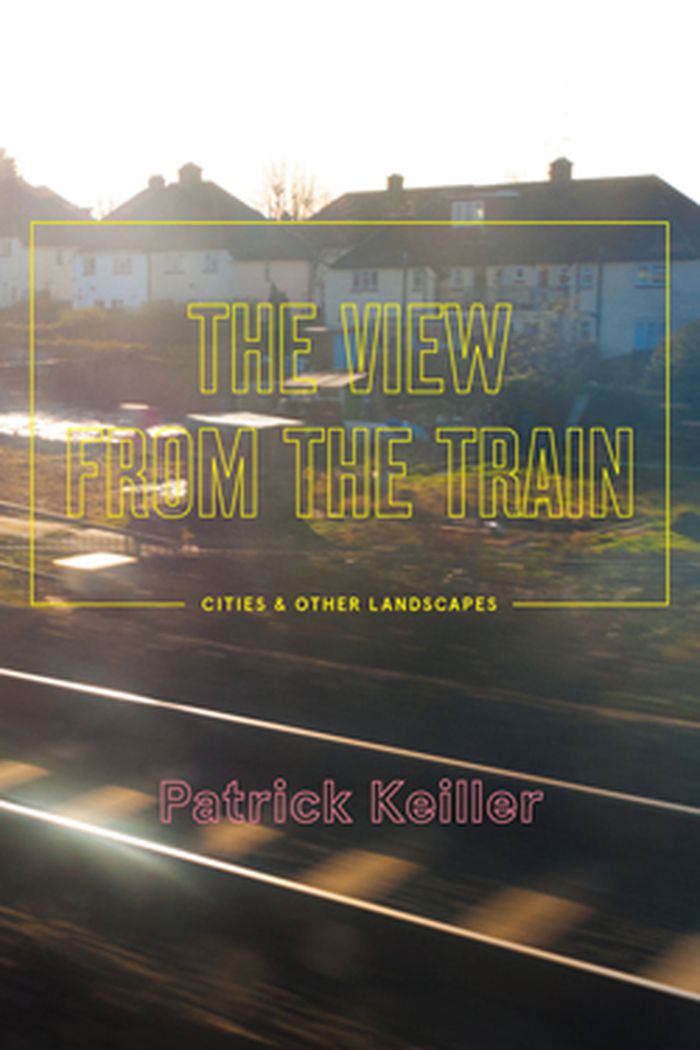
"Robinson believed that, if he looked at it hard enough, he could cause the surface of the city to reveal to him the molecular basis of historical events, and in this way he hoped to see into the future." In his sequence of films, Patrick Keiller retraces the hidden story of the places where we live, the cities and landscapes of our everyday lives. Now, in this brilliant collection of essays, he offers a new perspective on how Britain works and sees itself. He discusses the background to his work and its development – from surrealism to post-2008 economic catastrophe – and expands on what the films reveal. Referencing writers including Benjamin and Lefebvre, the essays follow his career since the late 1970s, exploring themes including the surrealist perception of the city; the relationship of architecture and film; how cities change over time, and how films represent this; as well as accounts of cross-country journeys involving historical figures, unexpected ideas and an urgent portrait of post-crash Britain.
The view from the train : cities and other landscapes
Actions:
Price:
$31.00
(available to order)
Summary:
"Robinson believed that, if he looked at it hard enough, he could cause the surface of the city to reveal to him the molecular basis of historical events, and in this way he hoped to see into the future." In his sequence of films, Patrick Keiller retraces the hidden story of the places where we live, the cities and landscapes of our everyday lives. Now, in this brilliant collection of essays, he offers a new perspective on how Britain works and sees itself. He discusses the background to his work and its development – from surrealism to post-2008 economic catastrophe – and expands on what the films reveal. Referencing writers including Benjamin and Lefebvre, the essays follow his career since the late 1970s, exploring themes including the surrealist perception of the city; the relationship of architecture and film; how cities change over time, and how films represent this; as well as accounts of cross-country journeys involving historical figures, unexpected ideas and an urgent portrait of post-crash Britain.
Form:
books
books
Publication:
November 2013
November 2013
Subject:
Urban Theory
Urban Theory
Form:
books
books

Price:
$35.95
(available to order)
Summary:
Postmodernism stood for everything modernism rejected: fun, exuberance, irresponsibility. But beneath its glitzy surface, postmodernism had a dirty secret: it was the fig leaf for a rapacious new kind of capitalism. It was the forcing ground of ''post truth,'' by means of which western values were turned upside down. But where do these ideas come from and how have they(...)
$35.95
(available to order)
Summary:
Postmodernism stood for everything modernism rejected: fun, exuberance, irresponsibility. But beneath its glitzy surface, postmodernism had a dirty secret: it was the fig leaf for a rapacious new kind of capitalism. It was the forcing ground of ''post truth,'' by means of which western values were turned upside down. But where do these ideas come from and how have they(...)
Title:
Everything all the time, everywhere: How we became Postmodern
Actions:
Price:
$35.95
(available to order)
Summary:
Postmodernism stood for everything modernism rejected: fun, exuberance, irresponsibility. But beneath its glitzy surface, postmodernism had a dirty secret: it was the fig leaf for a rapacious new kind of capitalism. It was the forcing ground of ''post truth,'' by means of which western values were turned upside down. But where do these ideas come from and how have they impacted on the world? In this brilliant history of a dangerous idea, Stuart Jeffries tells a narrative that starts in the early 1970s and still dominates our lives today. He tells this history through a riotous gallery that includes, among others: David Bowie, the iPod, Madonna, Jeff Koons’s the Nixon Shock, Judith Butler, Las Vegas, Margaret Thatcher, Grand Master Flash, I Love Dick, the RAND Corporation, the Sex Pistols, Princess Diana, Grand Theft Auto, Jean Baudrillard, Netflix, and 9/11. We are today scarcely capable of conceiving politics as a communal activity because we have become habituated to being consumers rather than citizens. Politicians treat us as consumers to whom they must deliver. Can we do anything other than suffer from buyer’s remorse?
Everything all the time, everywhere: How we became Postmodern
Actions:
Price:
$35.95
(available to order)
Summary:
Postmodernism stood for everything modernism rejected: fun, exuberance, irresponsibility. But beneath its glitzy surface, postmodernism had a dirty secret: it was the fig leaf for a rapacious new kind of capitalism. It was the forcing ground of ''post truth,'' by means of which western values were turned upside down. But where do these ideas come from and how have they impacted on the world? In this brilliant history of a dangerous idea, Stuart Jeffries tells a narrative that starts in the early 1970s and still dominates our lives today. He tells this history through a riotous gallery that includes, among others: David Bowie, the iPod, Madonna, Jeff Koons’s the Nixon Shock, Judith Butler, Las Vegas, Margaret Thatcher, Grand Master Flash, I Love Dick, the RAND Corporation, the Sex Pistols, Princess Diana, Grand Theft Auto, Jean Baudrillard, Netflix, and 9/11. We are today scarcely capable of conceiving politics as a communal activity because we have become habituated to being consumers rather than citizens. Politicians treat us as consumers to whom they must deliver. Can we do anything other than suffer from buyer’s remorse?
Form:
books
books
Publication:
October 2021
October 2021
Subject:
Social
Social
Form:
books
books
Price:
$25.00
(available to order)
Summary:
Since the 1980s, Colin Sackett, a book artist, designer and printer based in Axminster, has been publishing books which take peripheral information as a source material, and rejuvenate it so as to make it newly intelligible and vital. Sources as diverse as book indexes, Ordnance Survey maps, watercress labels and radio commentaries are singled out. These texts are edited(...)
$25.00
(available to order)
Summary:
Since the 1980s, Colin Sackett, a book artist, designer and printer based in Axminster, has been publishing books which take peripheral information as a source material, and rejuvenate it so as to make it newly intelligible and vital. Sources as diverse as book indexes, Ordnance Survey maps, watercress labels and radio commentaries are singled out. These texts are edited(...)
Title:
Englshpublshing : Colin Sackett writing and readings, 1991-2002
Actions:
Price:
$25.00
(available to order)
Summary:
Since the 1980s, Colin Sackett, a book artist, designer and printer based in Axminster, has been publishing books which take peripheral information as a source material, and rejuvenate it so as to make it newly intelligible and vital. Sources as diverse as book indexes, Ordnance Survey maps, watercress labels and radio commentaries are singled out. These texts are edited and rearranged, sifted and panned and sieved, so that language comes to the surface new and raw and untarnished. The art here is typographical, and the end product of these explorations is a backlist of impeccable publications of simplicity and plainness. Englshpublshing sees a body of work published discretely in the 1990s, with essays, commentaries and unpublished pieces, compiled into a single volume with a standardised format. An opportunity, then, to concentrate on content, rather than product, and what is striking is the consistent wit and audacity charging this assault on an unsuspected hotchpotch of source material. Unrelated words and works strike off each other in counterpoint, building a compelling impression of some coherent whole from the parts, like the variations of a Bach suite.
Englshpublshing : Colin Sackett writing and readings, 1991-2002
Actions:
Price:
$25.00
(available to order)
Summary:
Since the 1980s, Colin Sackett, a book artist, designer and printer based in Axminster, has been publishing books which take peripheral information as a source material, and rejuvenate it so as to make it newly intelligible and vital. Sources as diverse as book indexes, Ordnance Survey maps, watercress labels and radio commentaries are singled out. These texts are edited and rearranged, sifted and panned and sieved, so that language comes to the surface new and raw and untarnished. The art here is typographical, and the end product of these explorations is a backlist of impeccable publications of simplicity and plainness. Englshpublshing sees a body of work published discretely in the 1990s, with essays, commentaries and unpublished pieces, compiled into a single volume with a standardised format. An opportunity, then, to concentrate on content, rather than product, and what is striking is the consistent wit and audacity charging this assault on an unsuspected hotchpotch of source material. Unrelated words and works strike off each other in counterpoint, building a compelling impression of some coherent whole from the parts, like the variations of a Bach suite.
Form:
books
books
Publication:
May 2004, Exeter
May 2004, Exeter
Subject:
Graphic Design and Typography
Graphic Design and Typography
Form:
books
books
Actions:
Price:
$40.50
(available to order)
Summary:
Les Carnets du paysage présentent un dossier autour de la question de l’art écologique, plus précisément de la manière dont certains artistes contemporains en Amérique du Nord ont développé leur travail autour et à partir de la question de la nature et de sa préservation. Les artistes dont on présente le travail dans ce numéro travaillent avec des matériaux naturels,(...)
$40.50
(available to order)
Summary:
Les Carnets du paysage présentent un dossier autour de la question de l’art écologique, plus précisément de la manière dont certains artistes contemporains en Amérique du Nord ont développé leur travail autour et à partir de la question de la nature et de sa préservation. Les artistes dont on présente le travail dans ce numéro travaillent avec des matériaux naturels,(...)
Title:
Bord à bord : Art écologique & art environmental
Actions:
Price:
$40.50
(available to order)
Summary:
Les Carnets du paysage présentent un dossier autour de la question de l’art écologique, plus précisément de la manière dont certains artistes contemporains en Amérique du Nord ont développé leur travail autour et à partir de la question de la nature et de sa préservation. Les artistes dont on présente le travail dans ce numéro travaillent avec des matériaux naturels, comme la terre, les roches, le bois, l’eau. Disposant parfois de vastes espaces, ils essaient d’en explorer les possibilités en prenant la terre elle-même comme élément et comme surface d’inscription. Ce numéro rassemble des analyses et des textes d’artistes, d’intellectuels et d’écrivains qui ont en commun de réfléchir à et d’agir sur ce que nous pouvons appeler notre environnement, notre œkoumène, bref la Terre, que nous ne savons peut-être plus vraiment habiter. Tout n’est pas paysage, mais le paysage est concerné par des questions qui touchent à la nature, à l’espace, à la représentation, à l’écologie, aux usages des éléments et des matières, à la poétique des formes. C’est cette dimension de l’identité du paysage que les Carnets tentent d’explorer dans ce numéro.
Bord à bord : Art écologique & art environmental
Actions:
Price:
$40.50
(available to order)
Summary:
Les Carnets du paysage présentent un dossier autour de la question de l’art écologique, plus précisément de la manière dont certains artistes contemporains en Amérique du Nord ont développé leur travail autour et à partir de la question de la nature et de sa préservation. Les artistes dont on présente le travail dans ce numéro travaillent avec des matériaux naturels, comme la terre, les roches, le bois, l’eau. Disposant parfois de vastes espaces, ils essaient d’en explorer les possibilités en prenant la terre elle-même comme élément et comme surface d’inscription. Ce numéro rassemble des analyses et des textes d’artistes, d’intellectuels et d’écrivains qui ont en commun de réfléchir à et d’agir sur ce que nous pouvons appeler notre environnement, notre œkoumène, bref la Terre, que nous ne savons peut-être plus vraiment habiter. Tout n’est pas paysage, mais le paysage est concerné par des questions qui touchent à la nature, à l’espace, à la représentation, à l’écologie, aux usages des éléments et des matières, à la poétique des formes. C’est cette dimension de l’identité du paysage que les Carnets tentent d’explorer dans ce numéro.
Form:
books
books
Publication:
January 2008, Arles
January 2008, Arles
Subject:
Land Art
Land Art
Form:
books
books
Actions:
Price:
$47.00
(available to order)
Summary:
2x4, 3 Deep Design, A Practice for Everyday Life, Åbäke & Daniel Eatock, Adrian Shaughnessy, Alon Levin, &&&, Andrew Blauvelt, Angela Lorenz, Anna Gerber, Anne Burdick, Base, Bibliothèque, Bluesource, Brighten the Corners, Browns, Build, Cartlidge Levene, Catalogtree, Christos Lialios, COMA, Cornel Windlin, Coup, Cyan, Default, Design Machine, The Designers Republic,(...)
$47.00
(available to order)
Summary:
2x4, 3 Deep Design, A Practice for Everyday Life, Åbäke & Daniel Eatock, Adrian Shaughnessy, Alon Levin, &&&, Andrew Blauvelt, Angela Lorenz, Anna Gerber, Anne Burdick, Base, Bibliothèque, Bluesource, Brighten the Corners, Browns, Build, Cartlidge Levene, Catalogtree, Christos Lialios, COMA, Cornel Windlin, Coup, Cyan, Default, Design Machine, The Designers Republic,(...)
Title:
Idea 316 The conditions of graphic design
Actions:
Price:
$47.00
(available to order)
Summary:
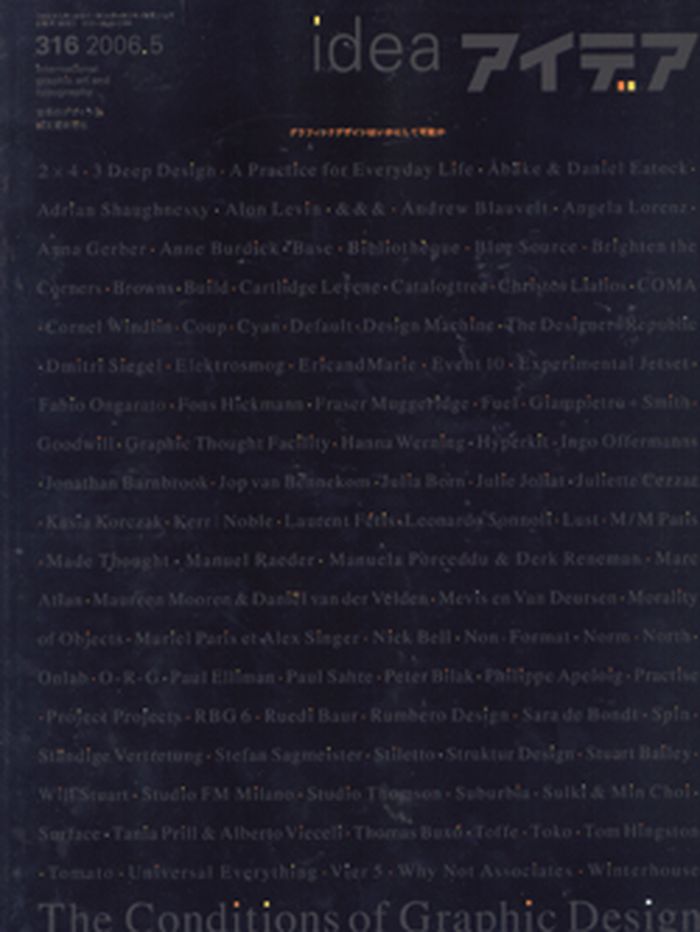
2x4, 3 Deep Design, A Practice for Everyday Life, Åbäke & Daniel Eatock, Adrian Shaughnessy, Alon Levin, &&&, Andrew Blauvelt, Angela Lorenz, Anna Gerber, Anne Burdick, Base, Bibliothèque, Bluesource, Brighten the Corners, Browns, Build, Cartlidge Levene, Catalogtree, Christos Lialios, COMA, Cornel Windlin, Coup, Cyan, Default, Design Machine, The Designers Republic, Dmitri Siegel, Elektrosmog, EricandMarie, Event10, Experimental Jetset, Fabio Ongarato, Fons Hickmann, Fraser Muggeridge, Fuel, Giampietro+Smith, Goodwill, Graphic Thought Facility, Hanna Werning, Hyperkit, Ingo Offermanns, Jonathan Barnbrook, Jop van Bennekom, Julia Born, Julie Joliat, Juliette Cezzar, Kasia Korczak, Kerr|Noble, Laurent Fétis, Leonardo Sonnoli, Lust, M/M Paris, MadeThought, Manuel Raeder, Manuela Porceddu & Derk Reneman, Marc Atlan, Maureen Mooren & Daniël van der Velden, Mevis en Van Deursen, Morality of Objects, Muriel Paris et Alex Singer, Nick Bell, Non-Format, Norm, North, Onlab, O-R-G, Paul Elliman, Paul Sahre, Peter Bilak, Philippe Apeloig, Practise, Project Projects, RBG 6, Ruedi Baur, Rumbero Design, Sara de Bondt, Spin, Ständige Vertretung, Stefan Sagmeister, Stiletto, Struktur Design, Stuart Bailey, Will Stuart, Studio FM milano, Studio Thomson, Suburbia, Sulki & Min Choi, Surface, Tania Prill & Alberto Vieceli, Thomas Buxó, Toffe, Toko, Tom Hingston, Tomato, Universal Everything, Vier5, Why Not Associates, Winterhouse
Idea 316 The conditions of graphic design
Actions:
Price:
$47.00
(available to order)
Summary:
2x4, 3 Deep Design, A Practice for Everyday Life, Åbäke & Daniel Eatock, Adrian Shaughnessy, Alon Levin, &&&, Andrew Blauvelt, Angela Lorenz, Anna Gerber, Anne Burdick, Base, Bibliothèque, Bluesource, Brighten the Corners, Browns, Build, Cartlidge Levene, Catalogtree, Christos Lialios, COMA, Cornel Windlin, Coup, Cyan, Default, Design Machine, The Designers Republic, Dmitri Siegel, Elektrosmog, EricandMarie, Event10, Experimental Jetset, Fabio Ongarato, Fons Hickmann, Fraser Muggeridge, Fuel, Giampietro+Smith, Goodwill, Graphic Thought Facility, Hanna Werning, Hyperkit, Ingo Offermanns, Jonathan Barnbrook, Jop van Bennekom, Julia Born, Julie Joliat, Juliette Cezzar, Kasia Korczak, Kerr|Noble, Laurent Fétis, Leonardo Sonnoli, Lust, M/M Paris, MadeThought, Manuel Raeder, Manuela Porceddu & Derk Reneman, Marc Atlan, Maureen Mooren & Daniël van der Velden, Mevis en Van Deursen, Morality of Objects, Muriel Paris et Alex Singer, Nick Bell, Non-Format, Norm, North, Onlab, O-R-G, Paul Elliman, Paul Sahre, Peter Bilak, Philippe Apeloig, Practise, Project Projects, RBG 6, Ruedi Baur, Rumbero Design, Sara de Bondt, Spin, Ständige Vertretung, Stefan Sagmeister, Stiletto, Struktur Design, Stuart Bailey, Will Stuart, Studio FM milano, Studio Thomson, Suburbia, Sulki & Min Choi, Surface, Tania Prill & Alberto Vieceli, Thomas Buxó, Toffe, Toko, Tom Hingston, Tomato, Universal Everything, Vier5, Why Not Associates, Winterhouse
Form:
books
books
Publication:
May 2006, Tokyo
May 2006, Tokyo
Subject:
Graphic Design and Typography
Graphic Design and Typography
Form:
books
books
Title:
When site lost the plot
When site lost the plot
Actions:
Price:
$37.95
(available to order)
Summary:
The critical concept of site-specificity once seemed to harbour the potential for disruption. But site-specific work has become increasingly assimilated into the capitalist logic of regeneration and value creation. The materialist critique of the art object has been shortcircuited by the franchised idiosyncrasies of international nomad flâneurs. And on a planet whose(...)
$37.95
(available to order)
Summary:
The critical concept of site-specificity once seemed to harbour the potential for disruption. But site-specific work has become increasingly assimilated into the capitalist logic of regeneration and value creation. The materialist critique of the art object has been shortcircuited by the franchised idiosyncrasies of international nomad flâneurs. And on a planet whose(...)
Title:
When site lost the plot
Actions:
Price:
$37.95
(available to order)
Summary:
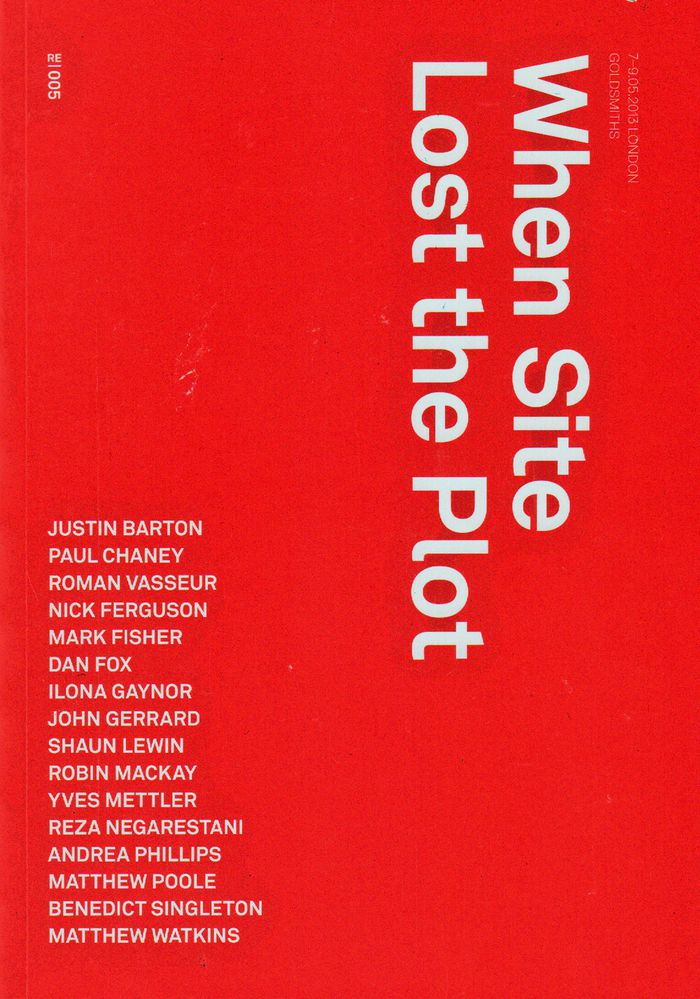
The critical concept of site-specificity once seemed to harbour the potential for disruption. But site-specific work has become increasingly assimilated into the capitalist logic of regeneration and value creation. The materialist critique of the art object has been shortcircuited by the franchised idiosyncrasies of international nomad flâneurs. And on a planet whose entire surface is mapped and apped, the concept of ‘site’ itself becomes ever more problematic. How can we do justice to the particularity of local sites while unearthing their material conditions? What do a contemporary ‘geo-philosophy’ and the historical legacy of site-specific art have to offer each other? Can we develop methods for the controlled unpacking of the local into the global, avoiding trivial reconciliations between local sites and their global conditions? "When site lost the plot" charts some of the ways in which site continues to be a concern for contemporary practice; and introduces the concept of ‘plot’ as an alternative approach. Alongside artists discussing their practice and their approach to site and plot, contributors from various disciplines introduce concepts from cartography, mathematics, film, fiction, design, and philosophy.
When site lost the plot
Actions:
Price:
$37.95
(available to order)
Summary:
The critical concept of site-specificity once seemed to harbour the potential for disruption. But site-specific work has become increasingly assimilated into the capitalist logic of regeneration and value creation. The materialist critique of the art object has been shortcircuited by the franchised idiosyncrasies of international nomad flâneurs. And on a planet whose entire surface is mapped and apped, the concept of ‘site’ itself becomes ever more problematic. How can we do justice to the particularity of local sites while unearthing their material conditions? What do a contemporary ‘geo-philosophy’ and the historical legacy of site-specific art have to offer each other? Can we develop methods for the controlled unpacking of the local into the global, avoiding trivial reconciliations between local sites and their global conditions? "When site lost the plot" charts some of the ways in which site continues to be a concern for contemporary practice; and introduces the concept of ‘plot’ as an alternative approach. Alongside artists discussing their practice and their approach to site and plot, contributors from various disciplines introduce concepts from cartography, mathematics, film, fiction, design, and philosophy.
Form:
books
books
Publication:
March 2015
March 2015
Subject:
Art Theory
Art Theory


