


1914 Results
Form:
books
books
Actions:
Price:
$72.00
(available to order)
Summary:
"Designing Detroit: Wirt Rowland and the Rise of Modern American Architecture" begins with a brief overview of Rowland’s early life and career. Author Michael G. Smith goes on to analyze Rowland’s achievements in building design and as a leader of Detroit’s architectural community throughout both World Wars and the Great Depression. The interdependence of architecture(...)
$72.00
(available to order)
Summary:
"Designing Detroit: Wirt Rowland and the Rise of Modern American Architecture" begins with a brief overview of Rowland’s early life and career. Author Michael G. Smith goes on to analyze Rowland’s achievements in building design and as a leader of Detroit’s architectural community throughout both World Wars and the Great Depression. The interdependence of architecture(...)
Title:
Designing Detroit: Wirt Rowland and the rise of modern American architecture
Actions:
Price:
$72.00
(available to order)
Summary:
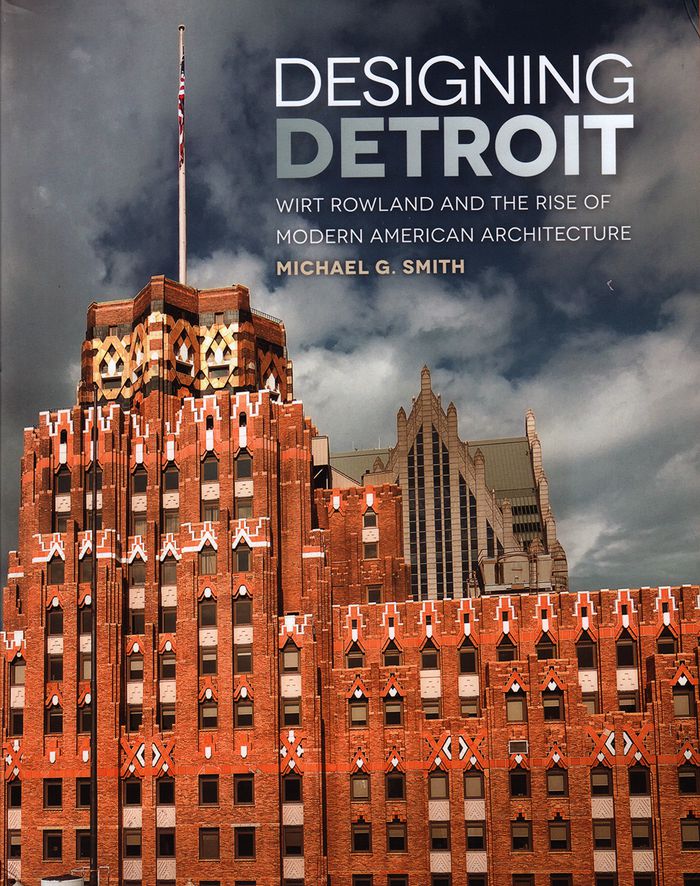
"Designing Detroit: Wirt Rowland and the Rise of Modern American Architecture" begins with a brief overview of Rowland’s early life and career. Author Michael G. Smith goes on to analyze Rowland’s achievements in building design and as a leader of Detroit’s architectural community throughout both World Wars and the Great Depression. The interdependence of architecture with the city’s fluctuating economic prosperity and population growth is explored, illuminating the conditions for good architecture and the arts in general. The author identifies the influence of Jay Hambidge’s "dynamic symmetry" in Rowland’s work and how it allowed him to employ color as a modern replacement for traditional ornamentation, leading to the revolutionary design of the Union Trust (Guardian) Building, for which he receives nearly unanimous praise in national media. This book is concerned primarily with Rowland’s influence on Detroit architecture, but spans beyond his work in Michigan to include the designer’s broad reach from New York to Miami. A comprehensive appendix includes extensive lists of Rowland’s publications, locations he had designed, and jobs taken on by his firm during his tenure. This book represents new research and insights not previously discussed in either scholarly or general audience texts and will be of interest to casual readers of Detroit history, as well as architecture historians.
Designing Detroit: Wirt Rowland and the rise of modern American architecture
Actions:
Price:
$72.00
(available to order)
Summary:
"Designing Detroit: Wirt Rowland and the Rise of Modern American Architecture" begins with a brief overview of Rowland’s early life and career. Author Michael G. Smith goes on to analyze Rowland’s achievements in building design and as a leader of Detroit’s architectural community throughout both World Wars and the Great Depression. The interdependence of architecture with the city’s fluctuating economic prosperity and population growth is explored, illuminating the conditions for good architecture and the arts in general. The author identifies the influence of Jay Hambidge’s "dynamic symmetry" in Rowland’s work and how it allowed him to employ color as a modern replacement for traditional ornamentation, leading to the revolutionary design of the Union Trust (Guardian) Building, for which he receives nearly unanimous praise in national media. This book is concerned primarily with Rowland’s influence on Detroit architecture, but spans beyond his work in Michigan to include the designer’s broad reach from New York to Miami. A comprehensive appendix includes extensive lists of Rowland’s publications, locations he had designed, and jobs taken on by his firm during his tenure. This book represents new research and insights not previously discussed in either scholarly or general audience texts and will be of interest to casual readers of Detroit history, as well as architecture historians.
Form:
books
books
Publication:
April 2017
April 2017
Subject:
Architecture since 1900, Americas
Architecture since 1900, Americas
Form:
books
books
Actions:
Price:
$45.00
(available to order)
Summary:
Nunatsiavut, the Inuit region of Canada that achieved self-government in 2005, produces art that is distinct within the world of Canadian and circumpolar Inuit art. The world's most southerly population of Inuit, the coastal people of Nunatsiavut have always lived both above and below the tree line, and Inuit artists and craftspeople from Nunatsiavut have had access to a(...)
$45.00
(available to order)
Summary:
Nunatsiavut, the Inuit region of Canada that achieved self-government in 2005, produces art that is distinct within the world of Canadian and circumpolar Inuit art. The world's most southerly population of Inuit, the coastal people of Nunatsiavut have always lived both above and below the tree line, and Inuit artists and craftspeople from Nunatsiavut have had access to a(...)
Publication:
February 2017
February 2017
Title:
SakKijâjuk : Art and craft From Nunatsiavut
Actions:
Price:
$45.00
(available to order)
Summary:
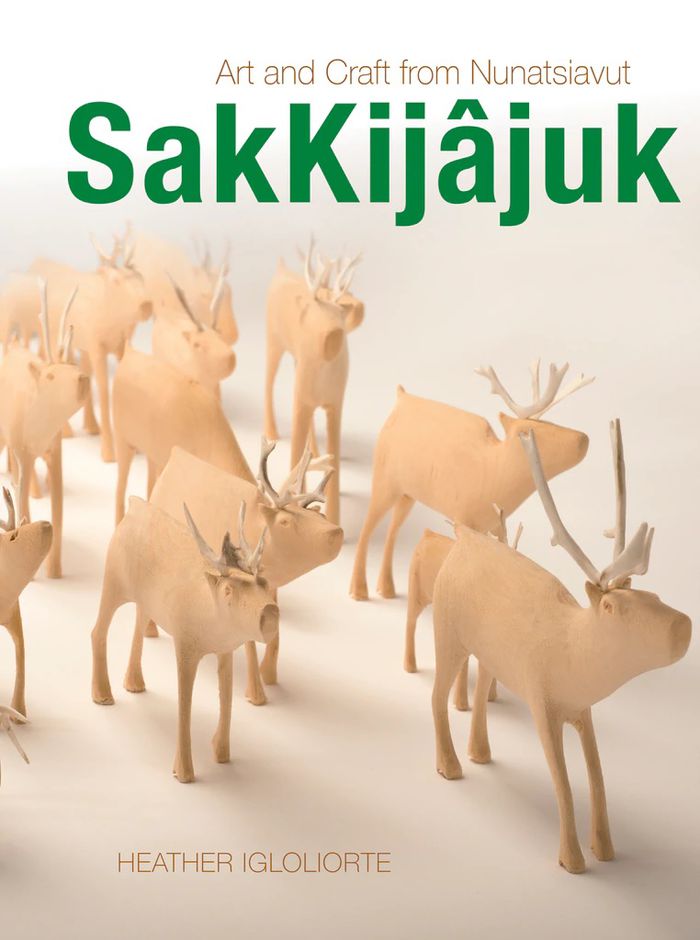
Nunatsiavut, the Inuit region of Canada that achieved self-government in 2005, produces art that is distinct within the world of Canadian and circumpolar Inuit art. The world's most southerly population of Inuit, the coastal people of Nunatsiavut have always lived both above and below the tree line, and Inuit artists and craftspeople from Nunatsiavut have had access to a diverse range of Arctic and Subarctic flora and fauna, from which they have produced a stunningly diverse range of work. Artists from the territory have traditionally used stone and woods for carving; fur, hide, and sealskin for wearable art; and saltwater seagrass for basketry, as well as wool, metal, cloth, beads, and paper. In recent decades, they have produced work in a variety of contemporary art media, including painting, drawing, printmaking, photography, video, and ceramics, while also working with traditional materials in new and unexpected ways. ''SakKijâjuk: Art and craft from Nunatsiavut'' is the first major publication on the art of the Labrador Inuit. Designed to accompany a major touring exhibition organized by The Rooms Provincial Art Gallery of St. John's, the book will feature more than 80 reproductions of work by 45 different artists, profiles of the featured artists, and a major essay on the art of Nunatsiavut by Heather Igloliorte.
SakKijâjuk : Art and craft From Nunatsiavut
Actions:
Price:
$45.00
(available to order)
Summary:
Nunatsiavut, the Inuit region of Canada that achieved self-government in 2005, produces art that is distinct within the world of Canadian and circumpolar Inuit art. The world's most southerly population of Inuit, the coastal people of Nunatsiavut have always lived both above and below the tree line, and Inuit artists and craftspeople from Nunatsiavut have had access to a diverse range of Arctic and Subarctic flora and fauna, from which they have produced a stunningly diverse range of work. Artists from the territory have traditionally used stone and woods for carving; fur, hide, and sealskin for wearable art; and saltwater seagrass for basketry, as well as wool, metal, cloth, beads, and paper. In recent decades, they have produced work in a variety of contemporary art media, including painting, drawing, printmaking, photography, video, and ceramics, while also working with traditional materials in new and unexpected ways. ''SakKijâjuk: Art and craft from Nunatsiavut'' is the first major publication on the art of the Labrador Inuit. Designed to accompany a major touring exhibition organized by The Rooms Provincial Art Gallery of St. John's, the book will feature more than 80 reproductions of work by 45 different artists, profiles of the featured artists, and a major essay on the art of Nunatsiavut by Heather Igloliorte.
Form:
books
books
Publication:
February 2017
February 2017
Form:
books
books
Title:
Inverted world
Inverted world
Actions:
Price:
$16.95
(available to order)
Summary:
The city is winched along tracks through a devastated land full of hostile tribes. Rails must be freshly laid ahead of the city and carefully removed in its wake. Rivers and mountains present nearly insurmountable challenges to the ingenuity of the city’s engineers. But if the city does not move, it will fall farther and farther behind the “optimum” into the crushing(...)
$16.95
(available to order)
Summary:
The city is winched along tracks through a devastated land full of hostile tribes. Rails must be freshly laid ahead of the city and carefully removed in its wake. Rivers and mountains present nearly insurmountable challenges to the ingenuity of the city’s engineers. But if the city does not move, it will fall farther and farther behind the “optimum” into the crushing(...)
Title:
Inverted world
Actions:
Price:
$16.95
(available to order)
Summary:
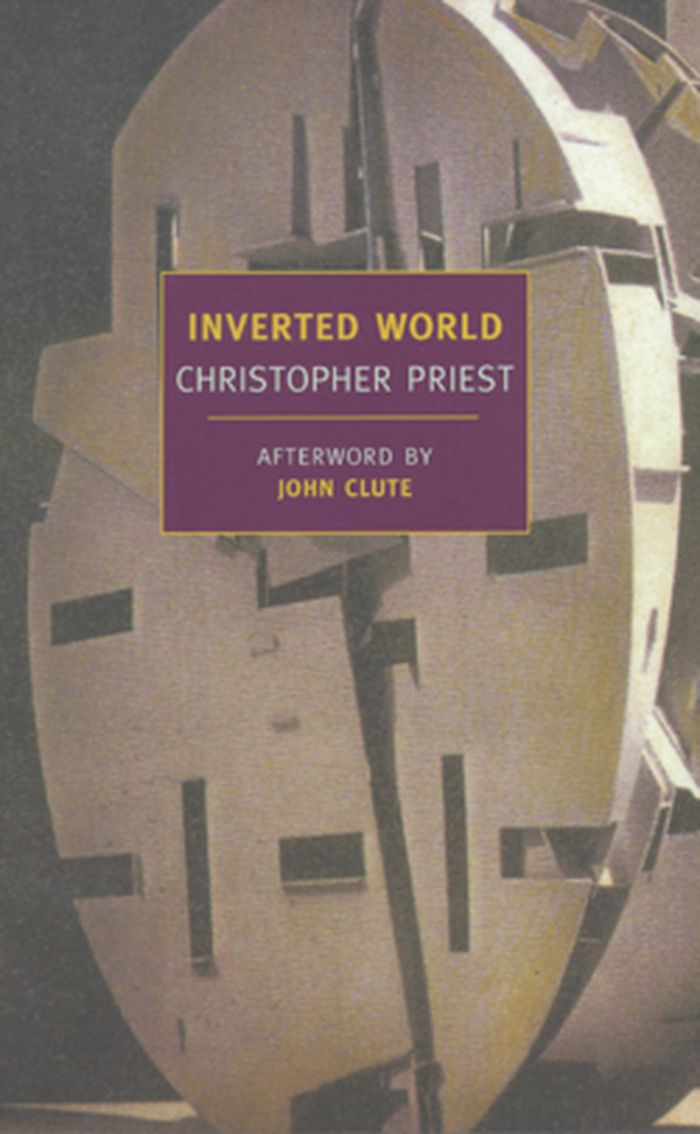
The city is winched along tracks through a devastated land full of hostile tribes. Rails must be freshly laid ahead of the city and carefully removed in its wake. Rivers and mountains present nearly insurmountable challenges to the ingenuity of the city’s engineers. But if the city does not move, it will fall farther and farther behind the “optimum” into the crushing gravitational field that has transformed life on Earth. The only alternative to progress is death. The secret directorate that governs the city makes sure that its inhabitants know nothing of this. Raised in common in crèches, nurtured on synthetic food, prevented above all from venturing outside the closed circuit of the city, they are carefully sheltered from the dire necessities that have come to define human existence. And yet the city is in crisis. The people are growing restive, the population is dwindling, and the rulers know that, for all their efforts, slowly but surely the city is slipping ever farther behind the optimum. Helward Mann is a member of the city’s elite. Better than anyone, he knows how tenuous is the city’s continued existence. But the world—he is about to discover—is infinitely stranger than the strange world he believes he knows so well.
Inverted world
Actions:
Price:
$16.95
(available to order)
Summary:
The city is winched along tracks through a devastated land full of hostile tribes. Rails must be freshly laid ahead of the city and carefully removed in its wake. Rivers and mountains present nearly insurmountable challenges to the ingenuity of the city’s engineers. But if the city does not move, it will fall farther and farther behind the “optimum” into the crushing gravitational field that has transformed life on Earth. The only alternative to progress is death. The secret directorate that governs the city makes sure that its inhabitants know nothing of this. Raised in common in crèches, nurtured on synthetic food, prevented above all from venturing outside the closed circuit of the city, they are carefully sheltered from the dire necessities that have come to define human existence. And yet the city is in crisis. The people are growing restive, the population is dwindling, and the rulers know that, for all their efforts, slowly but surely the city is slipping ever farther behind the optimum. Helward Mann is a member of the city’s elite. Better than anyone, he knows how tenuous is the city’s continued existence. But the world—he is about to discover—is infinitely stranger than the strange world he believes he knows so well.
Form:
books
books
Publication:
July 2008, New York
July 2008, New York
Subject:
Architectural Theory
Architectural Theory
Form:
books
books
Actions:
Price:
$85.00
(available to order)
Summary:
With "Atacama", Jamey Stillings again shares his distinctive aerial perspective to examine dramatic large-scale renewable energy projects, the visual dynamic of enormous mining operations and the stark beauty of the Atacama Desert, so often scarred by human activity. Chile produces a third of the world’s copper and has the largest known lithium reserves, and we utilize(...)
$85.00
(available to order)
Summary:
With "Atacama", Jamey Stillings again shares his distinctive aerial perspective to examine dramatic large-scale renewable energy projects, the visual dynamic of enormous mining operations and the stark beauty of the Atacama Desert, so often scarred by human activity. Chile produces a third of the world’s copper and has the largest known lithium reserves, and we utilize(...)
Title:
Jamey Stillings: Atacama, renewable energy and mining in the high desert of Chile
Actions:
Price:
$85.00
(available to order)
Summary:
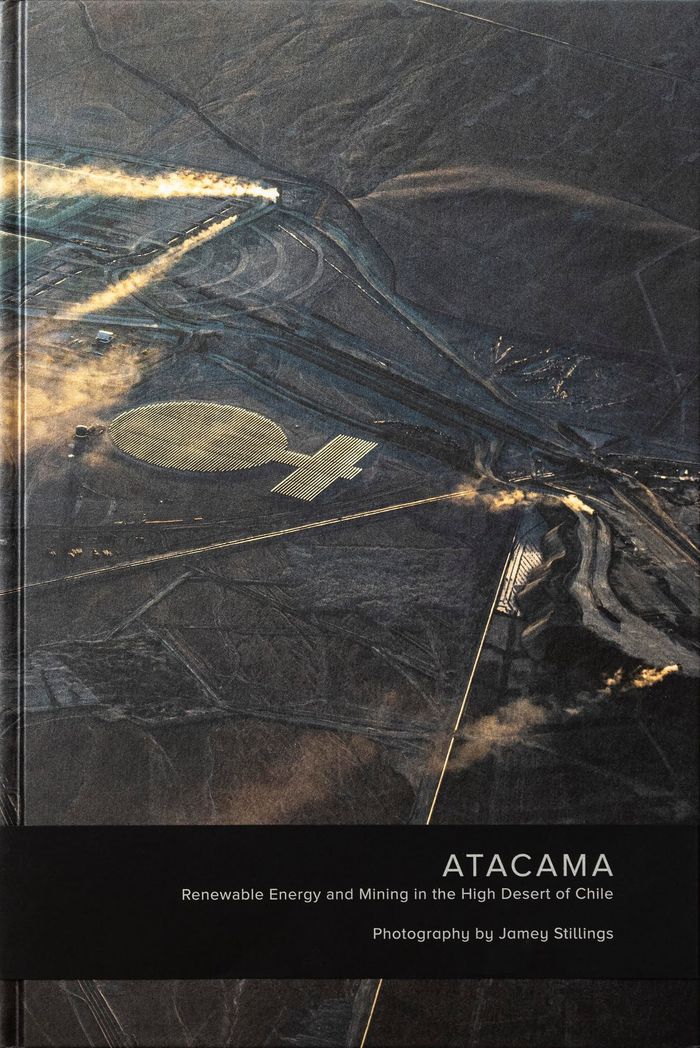
With "Atacama", Jamey Stillings again shares his distinctive aerial perspective to examine dramatic large-scale renewable energy projects, the visual dynamic of enormous mining operations and the stark beauty of the Atacama Desert, so often scarred by human activity. Chile produces a third of the world’s copper and has the largest known lithium reserves, and we utilize these resources daily in our cars, computers and smartphones. The country’s mining industry has traditionally been dependent on imported coal, diesel and natural gas for its energy. Yet the Atacama Desert has excellent solar and wind potential: new renewable energy projects there now supply significant electricity to the northern grid, transmit power to population centers in the south, and are reducing mining’s dependence on fossil fuel. Stillings’ aesthetic interest in the human-altered landscape and concerns for environmental sustainability are principal pillars of his work. His photography elicits a critical dialogue about meeting our needs and desires while seeking equilibrium between nature and human activity. "Atacama," the latest chapter in his ongoing project "Changing perspectives," shows how photography can concurrently be a source of inspiration, motivation and information, and reminds us that a carbon-constrained future is crucial to a responsible approach to life on earth.
Jamey Stillings: Atacama, renewable energy and mining in the high desert of Chile
Actions:
Price:
$85.00
(available to order)
Summary:
With "Atacama", Jamey Stillings again shares his distinctive aerial perspective to examine dramatic large-scale renewable energy projects, the visual dynamic of enormous mining operations and the stark beauty of the Atacama Desert, so often scarred by human activity. Chile produces a third of the world’s copper and has the largest known lithium reserves, and we utilize these resources daily in our cars, computers and smartphones. The country’s mining industry has traditionally been dependent on imported coal, diesel and natural gas for its energy. Yet the Atacama Desert has excellent solar and wind potential: new renewable energy projects there now supply significant electricity to the northern grid, transmit power to population centers in the south, and are reducing mining’s dependence on fossil fuel. Stillings’ aesthetic interest in the human-altered landscape and concerns for environmental sustainability are principal pillars of his work. His photography elicits a critical dialogue about meeting our needs and desires while seeking equilibrium between nature and human activity. "Atacama," the latest chapter in his ongoing project "Changing perspectives," shows how photography can concurrently be a source of inspiration, motivation and information, and reminds us that a carbon-constrained future is crucial to a responsible approach to life on earth.
Form:
books
books
Publication:
June 2020
June 2020
Subject:
Photography monographs
Photography monographs
Form:
books
books
Actions:
Price:
$71.50
(available to order)
Summary:
In Renaissance Rome, ancient ruins were preserved as often as they were mined for their materials. Although the question of what to preserve and how continued to be subject to debate, preservation acquired renewed force and urgency in the fifteenth and sixteenth centuries as the new papal capital rose upon the ruins of the ancient city. Preservation practices became more(...)
$71.50
(available to order)
Summary:
In Renaissance Rome, ancient ruins were preserved as often as they were mined for their materials. Although the question of what to preserve and how continued to be subject to debate, preservation acquired renewed force and urgency in the fifteenth and sixteenth centuries as the new papal capital rose upon the ruins of the ancient city. Preservation practices became more(...)
Title:
The ruin of the eternal city : Antiquity & preservation in renaissance Rome
Actions:
Price:
$71.50
(available to order)
Summary:
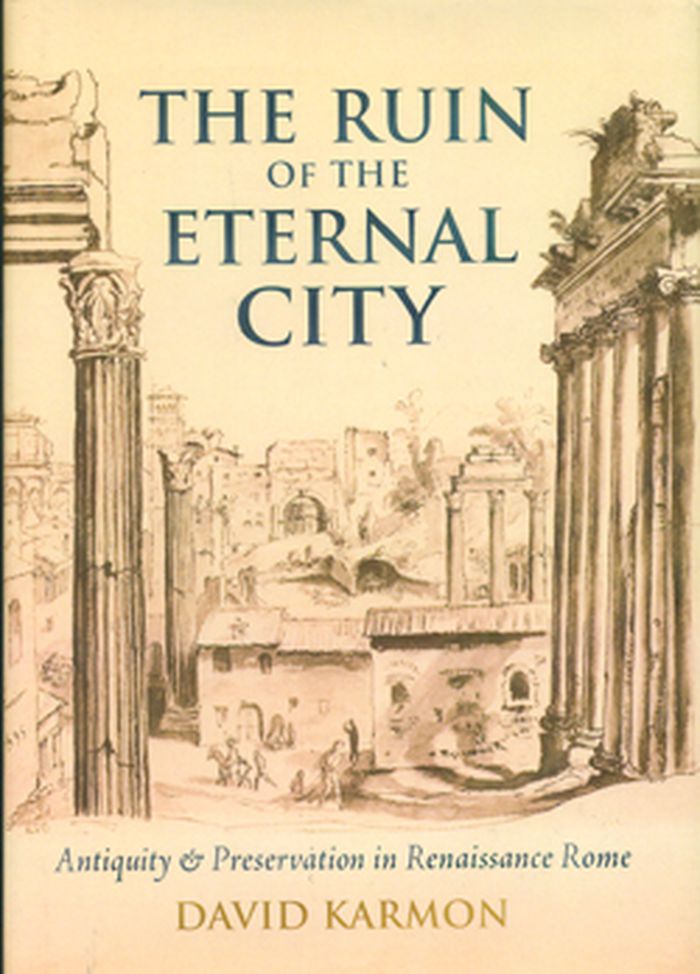
In Renaissance Rome, ancient ruins were preserved as often as they were mined for their materials. Although the question of what to preserve and how continued to be subject to debate, preservation acquired renewed force and urgency in the fifteenth and sixteenth centuries as the new papal capital rose upon the ruins of the ancient city. Preservation practices became more focused and effective in Renaissance Rome than ever before. "The Ruin of the Eternal City" offers a new interpretation of the ongoing life of ancient buildings within the expanding early modern city. While historians and archaeologists have long affirmed that early modern builders disregarded the protection of antiquity, this study provides the first systematic analysis of preservation problems as perceived by the Renaissance popes, the civic magistrates, and ordinary citizens. Based on new evidence and recent conservation theory, this compelling study explores how civic officials balanced the defense of specific sites against the pressing demands imposed by population growth, circulation, and notions of urban decorum. Above all, the preservation of antiquity remained an indispensable tool to advance competing political agendas in the papal capital. A broad range of preservation policies and practices are examined at the half-ruined Colosseum, the intact Pantheon, and the little-known but essential Renaissance bridge known as the Ponte Santa Maria.
The ruin of the eternal city : Antiquity & preservation in renaissance Rome
Actions:
Price:
$71.50
(available to order)
Summary:
In Renaissance Rome, ancient ruins were preserved as often as they were mined for their materials. Although the question of what to preserve and how continued to be subject to debate, preservation acquired renewed force and urgency in the fifteenth and sixteenth centuries as the new papal capital rose upon the ruins of the ancient city. Preservation practices became more focused and effective in Renaissance Rome than ever before. "The Ruin of the Eternal City" offers a new interpretation of the ongoing life of ancient buildings within the expanding early modern city. While historians and archaeologists have long affirmed that early modern builders disregarded the protection of antiquity, this study provides the first systematic analysis of preservation problems as perceived by the Renaissance popes, the civic magistrates, and ordinary citizens. Based on new evidence and recent conservation theory, this compelling study explores how civic officials balanced the defense of specific sites against the pressing demands imposed by population growth, circulation, and notions of urban decorum. Above all, the preservation of antiquity remained an indispensable tool to advance competing political agendas in the papal capital. A broad range of preservation policies and practices are examined at the half-ruined Colosseum, the intact Pantheon, and the little-known but essential Renaissance bridge known as the Ponte Santa Maria.
Form:
books
books
Publication:
April 2011
April 2011
Subject:
History until 1900, Classicism
History until 1900, Classicism
Form:
books
books
Actions:
Price:
$39.95
(available to order)
Summary:
As Art Director for Muji since 2002, Japanese graphic designer Kenya Hara (born 1958) and his aesthetic of pared-back, beautifully functional objects has taken the world by (quiet) storm. With “Kenya Hara: Designing Japan”, the designer presents his vision of how his industry can contribute to the future of his country: a future founded on Hara’s unique philosophy of(...)
$39.95
(available to order)
Summary:
As Art Director for Muji since 2002, Japanese graphic designer Kenya Hara (born 1958) and his aesthetic of pared-back, beautifully functional objects has taken the world by (quiet) storm. With “Kenya Hara: Designing Japan”, the designer presents his vision of how his industry can contribute to the future of his country: a future founded on Hara’s unique philosophy of(...)
Title:
Kenya Hara, designing Japan: a future built on aesthetics
Actions:
Price:
$39.95
(available to order)
Summary:
As Art Director for Muji since 2002, Japanese graphic designer Kenya Hara (born 1958) and his aesthetic of pared-back, beautifully functional objects has taken the world by (quiet) storm. With “Kenya Hara: Designing Japan”, the designer presents his vision of how his industry can contribute to the future of his country: a future founded on Hara’s unique philosophy of beauty as well as crowd-sourced wisdom from around the world. The book spans history, from the beginnings of professional Japanese design in the 16th century to the impact of the 2011 Tohoku earthquake. But Hara's real focus is on the future. A master collaborator, meticulous organizer and globally conscious innovator, Hara draws on more than three decades of work in design and exhibition curating, as well his professional interactions with creators from many fields. “Designing Japan” offers a foundation course on the essence of Japanese aesthetics, while maintaining a practical approach to Japan’s circumstances and future possibilities. Hara reveals the methods by which designers in Japan work with government and industry, and considers how design can propose solutions for this island nation as its population ages, other nations take over manufacturing and technology develops. Illustrations and examples recognize successful problem-solving through design, proving that design is a living, changing industry that remains relevant not in spite of, but as a partner to, advancing technology.
Kenya Hara, designing Japan: a future built on aesthetics
Actions:
Price:
$39.95
(available to order)
Summary:
As Art Director for Muji since 2002, Japanese graphic designer Kenya Hara (born 1958) and his aesthetic of pared-back, beautifully functional objects has taken the world by (quiet) storm. With “Kenya Hara: Designing Japan”, the designer presents his vision of how his industry can contribute to the future of his country: a future founded on Hara’s unique philosophy of beauty as well as crowd-sourced wisdom from around the world. The book spans history, from the beginnings of professional Japanese design in the 16th century to the impact of the 2011 Tohoku earthquake. But Hara's real focus is on the future. A master collaborator, meticulous organizer and globally conscious innovator, Hara draws on more than three decades of work in design and exhibition curating, as well his professional interactions with creators from many fields. “Designing Japan” offers a foundation course on the essence of Japanese aesthetics, while maintaining a practical approach to Japan’s circumstances and future possibilities. Hara reveals the methods by which designers in Japan work with government and industry, and considers how design can propose solutions for this island nation as its population ages, other nations take over manufacturing and technology develops. Illustrations and examples recognize successful problem-solving through design, proving that design is a living, changing industry that remains relevant not in spite of, but as a partner to, advancing technology.
Form:
books
books
Publication:
October 2019
October 2019
Subject:
Graphic Designers, Monographs
Graphic Designers, Monographs
Form:
books
books
Actions:
Price:
$29.95
(available to order)
Summary:
Un architecte n’est pas un artiste, mais l’architecture, elle, peut s’apparenter à un travail d’auteur; un travail qui doit formaliser dans une vision singulière les attentes et les aspirations d’une époque. L’architecte doit construire une œuvre en prise avec le réel et celui-ci est devenu d’une extraordinaire complexité au cours du XXe siècle, entraînant l’architecture(...)
$29.95
(available to order)
Summary:
Un architecte n’est pas un artiste, mais l’architecture, elle, peut s’apparenter à un travail d’auteur; un travail qui doit formaliser dans une vision singulière les attentes et les aspirations d’une époque. L’architecte doit construire une œuvre en prise avec le réel et celui-ci est devenu d’une extraordinaire complexité au cours du XXe siècle, entraînant l’architecture(...)
Title:
La possibilité d'une ville : les cinq sens et l'architecture
Actions:
Price:
$29.95
(available to order)
Summary:
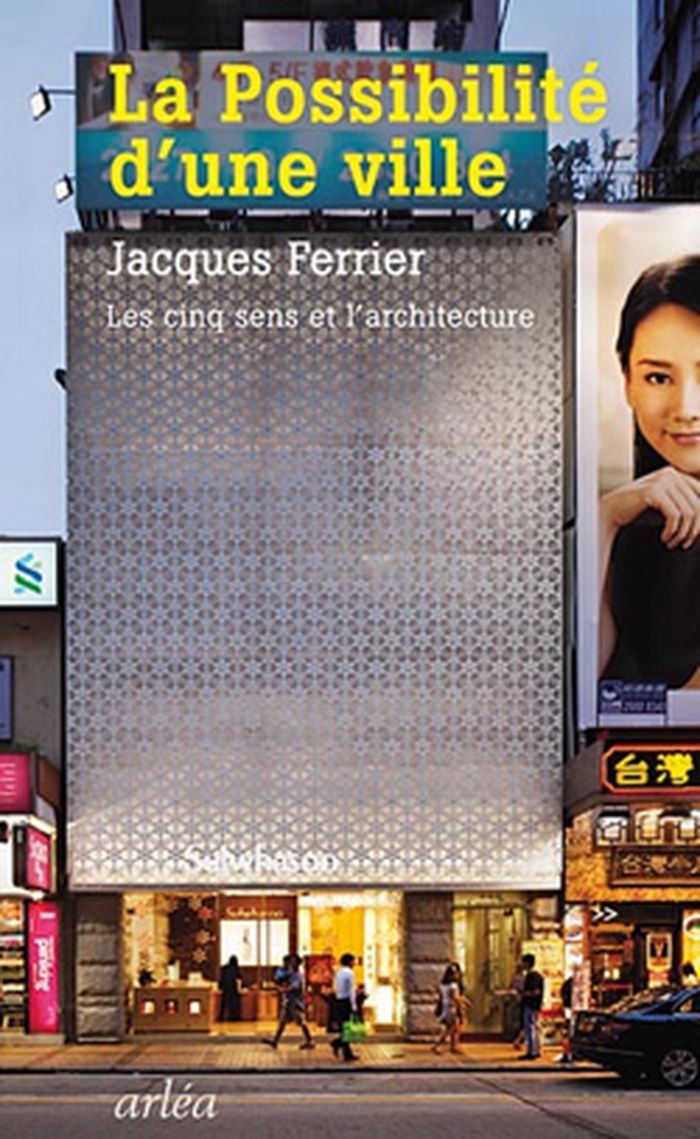
Un architecte n’est pas un artiste, mais l’architecture, elle, peut s’apparenter à un travail d’auteur; un travail qui doit formaliser dans une vision singulière les attentes et les aspirations d’une époque. L’architecte doit construire une œuvre en prise avec le réel et celui-ci est devenu d’une extraordinaire complexité au cours du XXe siècle, entraînant l’architecture loin des bases auxquelles elle a pu se rattacher pendant des siècles. Ce réel est aujourd’hui en crise : nous vivons un profond changement dans le mode de vie urbain, un changement qui concerne donc la majeure partie de la population et la planète toute entière. Ce changement appelle de nouvelles façons de penser la ville et l’architecture; mais, contrairement aux apparences, rien ne bouge vraiment : occupés à concevoir des bâtiments de plus en plus spectaculaires, quelques stars occupent le devant de la scène et occultent le malaise profond de l’architecture. Dans un même temps nous nous sommes condamnés à une architecture générique, prise dans l’engrenage d’une production effrénée ou les critères financiers priment sur les valeurs humaines, créant partout des mondes urbains sans qualités. L’urbanisme de géométrie, séparant le territoire urbain en cases fonctionnelles, s’est imposé comme correspondant le mieux à la rentabilité foncière, détruisant toute possibilité de créer une vie urbaine et collective pour des métropoles où doivent pourtant coexister plusieurs dizaines de millions d’habitants.
La possibilité d'une ville : les cinq sens et l'architecture
Actions:
Price:
$29.95
(available to order)
Summary:
Un architecte n’est pas un artiste, mais l’architecture, elle, peut s’apparenter à un travail d’auteur; un travail qui doit formaliser dans une vision singulière les attentes et les aspirations d’une époque. L’architecte doit construire une œuvre en prise avec le réel et celui-ci est devenu d’une extraordinaire complexité au cours du XXe siècle, entraînant l’architecture loin des bases auxquelles elle a pu se rattacher pendant des siècles. Ce réel est aujourd’hui en crise : nous vivons un profond changement dans le mode de vie urbain, un changement qui concerne donc la majeure partie de la population et la planète toute entière. Ce changement appelle de nouvelles façons de penser la ville et l’architecture; mais, contrairement aux apparences, rien ne bouge vraiment : occupés à concevoir des bâtiments de plus en plus spectaculaires, quelques stars occupent le devant de la scène et occultent le malaise profond de l’architecture. Dans un même temps nous nous sommes condamnés à une architecture générique, prise dans l’engrenage d’une production effrénée ou les critères financiers priment sur les valeurs humaines, créant partout des mondes urbains sans qualités. L’urbanisme de géométrie, séparant le territoire urbain en cases fonctionnelles, s’est imposé comme correspondant le mieux à la rentabilité foncière, détruisant toute possibilité de créer une vie urbaine et collective pour des métropoles où doivent pourtant coexister plusieurs dizaines de millions d’habitants.
Form:
books
books
Publication:
February 2013
February 2013
Subject:
Architectural Theory
Architectural Theory
Form:
books
books
Actions:
Price:
$62.95
(available to order)
Summary:
Les cités-jardins, inspirées du modèle anglais, voient le jour en France au début du XXe siècle. Implantées loin des nuisances des agglomérations industrielles et pour la population ouvrière, ces villes nouvelles avant l'heure ont la particularité d'associer habitat individuel et collectif, équipements (sociaux, culturels, scolaires...) et végétation (jardins privatifs,(...)
$62.95
(available to order)
Summary:
Les cités-jardins, inspirées du modèle anglais, voient le jour en France au début du XXe siècle. Implantées loin des nuisances des agglomérations industrielles et pour la population ouvrière, ces villes nouvelles avant l'heure ont la particularité d'associer habitat individuel et collectif, équipements (sociaux, culturels, scolaires...) et végétation (jardins privatifs,(...)
Subject:
Gardens
Gardens
Publication:
January 2007, Paris
January 2007, Paris
Title:
Les cités-jardins de la banlieu du nord-est parisien
Actions:
Price:
$62.95
(available to order)
Summary:
Les cités-jardins, inspirées du modèle anglais, voient le jour en France au début du XXe siècle. Implantées loin des nuisances des agglomérations industrielles et pour la population ouvrière, ces villes nouvelles avant l'heure ont la particularité d'associer habitat individuel et collectif, équipements (sociaux, culturels, scolaires...) et végétation (jardins privatifs, potagers, aménagement paysager des espaces publics). De Pantin à Stains en passant par Le Pré-Saint-Gervais ou Les Lilas, une vingtaine de ces ensembles, essentiellement situés dans la banlieue nord-est de Paris, sont présentés dans ce livre. Les cités-jardins ont donné lieu à des recherches sur les modes de construction les plus avancés - préfabrication, béton armé - en vue de bâtir vite et moins cher. Elles ont été parfois de véritables laboratoires urbains et architecturaux où s'est aussi élaborée une réflexion, progressiste pour l'époque, sur le logement social. Arborant des styles variés, du pittoresque au moderne, jouant sur des matériaux très différents, de la brique au béton, elles révèlent des qualités architecturales souvent remarquables. Aujourd'hui, alors que la croissance des zones périurbaines suscite des interrogations, la cité-jardin réapparaît dans la production contemporaine; par la mixité qu'elle induit et par l'intégration qu'elle permet des préoccupations liées au développement durable, elle devrait en effet constituer une source d'inspiration pour la conception de nouveaux quartiers d'habitat dense.
Les cités-jardins de la banlieu du nord-est parisien
Actions:
Price:
$62.95
(available to order)
Summary:
Les cités-jardins, inspirées du modèle anglais, voient le jour en France au début du XXe siècle. Implantées loin des nuisances des agglomérations industrielles et pour la population ouvrière, ces villes nouvelles avant l'heure ont la particularité d'associer habitat individuel et collectif, équipements (sociaux, culturels, scolaires...) et végétation (jardins privatifs, potagers, aménagement paysager des espaces publics). De Pantin à Stains en passant par Le Pré-Saint-Gervais ou Les Lilas, une vingtaine de ces ensembles, essentiellement situés dans la banlieue nord-est de Paris, sont présentés dans ce livre. Les cités-jardins ont donné lieu à des recherches sur les modes de construction les plus avancés - préfabrication, béton armé - en vue de bâtir vite et moins cher. Elles ont été parfois de véritables laboratoires urbains et architecturaux où s'est aussi élaborée une réflexion, progressiste pour l'époque, sur le logement social. Arborant des styles variés, du pittoresque au moderne, jouant sur des matériaux très différents, de la brique au béton, elles révèlent des qualités architecturales souvent remarquables. Aujourd'hui, alors que la croissance des zones périurbaines suscite des interrogations, la cité-jardin réapparaît dans la production contemporaine; par la mixité qu'elle induit et par l'intégration qu'elle permet des préoccupations liées au développement durable, elle devrait en effet constituer une source d'inspiration pour la conception de nouveaux quartiers d'habitat dense.
Form:
books
books
Publication:
January 2007, Paris
January 2007, Paris
Subject:
Gardens
Gardens
Form:
books
books
Actions:
Price:
$60.00
(available to order)
Summary:
In 1892 seventeen Haida artists were commissioned to carve a model of HlGaagilda Llnagaay (the village of Skidegate on Haida Gwaii, British Columbia) for the 1893 World’s Fair in Chicago. The Skidegate model, featuring twenty-nine large houses and forty-two poles, is the only known model village in North America carved by nineteenth-century Indigenous residents of the(...)
$60.00
(available to order)
Summary:
In 1892 seventeen Haida artists were commissioned to carve a model of HlGaagilda Llnagaay (the village of Skidegate on Haida Gwaii, British Columbia) for the 1893 World’s Fair in Chicago. The Skidegate model, featuring twenty-nine large houses and forty-two poles, is the only known model village in North America carved by nineteenth-century Indigenous residents of the(...)
Title:
Skidegate House Models: From Haida Gwaii to the Chicago World's Fair and Beyond
Actions:
Price:
$60.00
(available to order)
Summary:
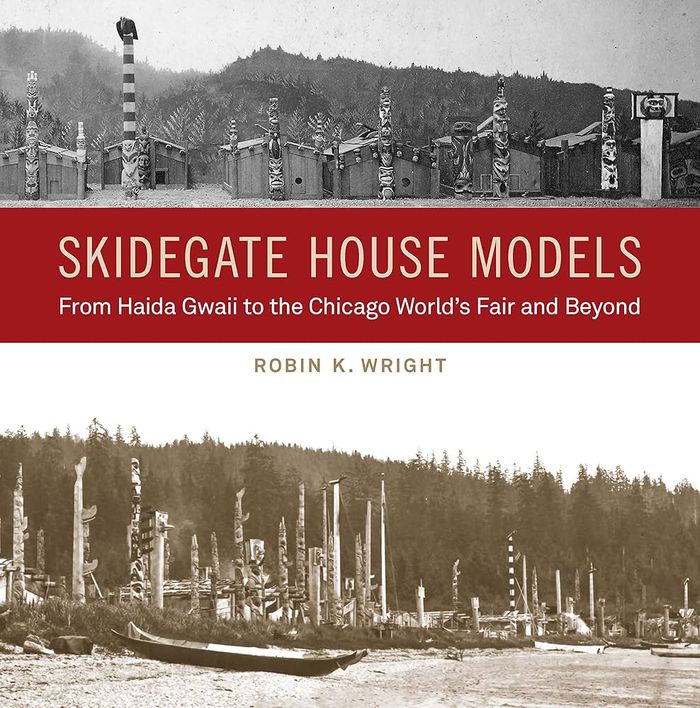
In 1892 seventeen Haida artists were commissioned to carve a model of HlGaagilda Llnagaay (the village of Skidegate on Haida Gwaii, British Columbia) for the 1893 World’s Fair in Chicago. The Skidegate model, featuring twenty-nine large houses and forty-two poles, is the only known model village in North America carved by nineteenth-century Indigenous residents of the village it portrayed. Based on over twenty years of collaborative research with the Skidegate Haida community, the book features vital cultural context. Robin K. Wright explores how Haida people represented their culture to the outside world at a time when they were suffering from devastating population loss due to introduced diseases and from ongoing attempts by the settler government to suppress their culture by making the potlatch illegal. While promoters of the Chicago World’s Fair used the village to celebrate the perceived “progress” of the dominant society, for Skidegate residents it provided a means to preserve their history and culture. After the exposition, many models were dispersed to the Field Museum of Natural History and other collections, but fourteen of the model houses have not yet been located. The book provides extensive archival information and photographs that contextualize the model village and might help locate the missing houses. Wright’s community-engaged research offers valuable insights into Northwest Coast art history.
Skidegate House Models: From Haida Gwaii to the Chicago World's Fair and Beyond
Actions:
Price:
$60.00
(available to order)
Summary:
In 1892 seventeen Haida artists were commissioned to carve a model of HlGaagilda Llnagaay (the village of Skidegate on Haida Gwaii, British Columbia) for the 1893 World’s Fair in Chicago. The Skidegate model, featuring twenty-nine large houses and forty-two poles, is the only known model village in North America carved by nineteenth-century Indigenous residents of the village it portrayed. Based on over twenty years of collaborative research with the Skidegate Haida community, the book features vital cultural context. Robin K. Wright explores how Haida people represented their culture to the outside world at a time when they were suffering from devastating population loss due to introduced diseases and from ongoing attempts by the settler government to suppress their culture by making the potlatch illegal. While promoters of the Chicago World’s Fair used the village to celebrate the perceived “progress” of the dominant society, for Skidegate residents it provided a means to preserve their history and culture. After the exposition, many models were dispersed to the Field Museum of Natural History and other collections, but fourteen of the model houses have not yet been located. The book provides extensive archival information and photographs that contextualize the model village and might help locate the missing houses. Wright’s community-engaged research offers valuable insights into Northwest Coast art history.
Form:
books
books
Publication:
April 2024
April 2024
Subject:
Indigenous architecture
Indigenous architecture
Form:
books
books
Price:
$36.95
(available to order)
Summary:
By United Nations estimates, 60 percent of the world's population will be urban by 2030. With the increasing speed of urbanization, especially in the developing world, scholars are now rethinking standard concepts and histories of modern cities. "The Spaces of the Modern City" historicizes the contemporary discussion of urbanism, highlighting the local and global breadth(...)
$36.95
(available to order)
Summary:
By United Nations estimates, 60 percent of the world's population will be urban by 2030. With the increasing speed of urbanization, especially in the developing world, scholars are now rethinking standard concepts and histories of modern cities. "The Spaces of the Modern City" historicizes the contemporary discussion of urbanism, highlighting the local and global breadth(...)
Subject:
Urban Theory
Urban Theory
Publication:
February 2008, Princeton, Oxford
February 2008, Princeton, Oxford
Title:
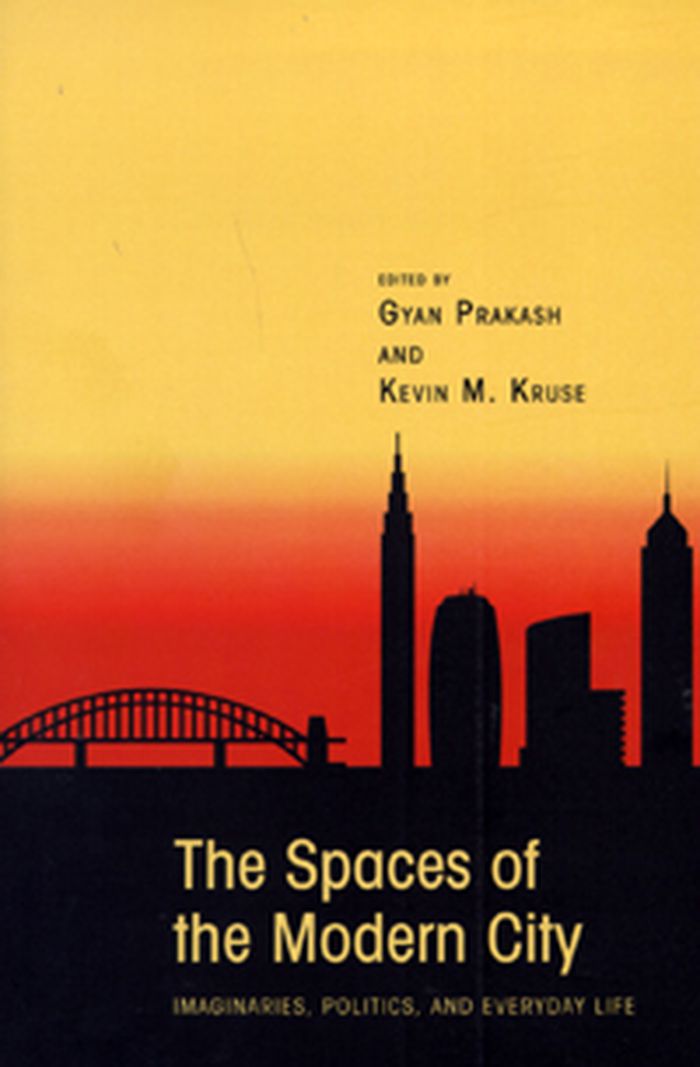
The Spaces of the Modern city : imaginaries, politics, and everyday life
Actions:
Price:
$36.95
(available to order)
Summary:
By United Nations estimates, 60 percent of the world's population will be urban by 2030. With the increasing speed of urbanization, especially in the developing world, scholars are now rethinking standard concepts and histories of modern cities. "The Spaces of the Modern City" historicizes the contemporary discussion of urbanism, highlighting the local and global breadth of the city landscape. This interdisciplinary collection examines how the city develops in the interactions of space and imagination. The essays focus on issues such as street design in Vienna, the motion picture industry in Los Angeles, architecture in Marseilles and Algiers, and the kaleidoscopic paradox of post-apartheid Johannesburg. They explore the nature of spatial politics, examining the disparate worlds of eighteenth-century Baghdad, nineteenth-century Morelia, Cold War-era West Berlin, and postwar Los Angeles. They also show the meaning of everyday spaces to urban life, illuminating issues such as crime in metropolitan London, youth culture in Dakar, "memory projects" in Tokyo, and Bombay cinema. Informed by a range of theoretical writings, this collection offers a fresh and truly global perspective on the nature of the modern city. The contributors are Sheila Crane, Belinda Davis, Mamadou Diouf, Philip J. Ethington, David Frisby, Christina M. Jiménez, Dina Rizk Khoury, Ranjani Mazumdar, Frank Mort, Martin Murray, Jordan Sand, and Sarah Schrank.
The Spaces of the Modern city : imaginaries, politics, and everyday life
Actions:
Price:
$36.95
(available to order)
Summary:
By United Nations estimates, 60 percent of the world's population will be urban by 2030. With the increasing speed of urbanization, especially in the developing world, scholars are now rethinking standard concepts and histories of modern cities. "The Spaces of the Modern City" historicizes the contemporary discussion of urbanism, highlighting the local and global breadth of the city landscape. This interdisciplinary collection examines how the city develops in the interactions of space and imagination. The essays focus on issues such as street design in Vienna, the motion picture industry in Los Angeles, architecture in Marseilles and Algiers, and the kaleidoscopic paradox of post-apartheid Johannesburg. They explore the nature of spatial politics, examining the disparate worlds of eighteenth-century Baghdad, nineteenth-century Morelia, Cold War-era West Berlin, and postwar Los Angeles. They also show the meaning of everyday spaces to urban life, illuminating issues such as crime in metropolitan London, youth culture in Dakar, "memory projects" in Tokyo, and Bombay cinema. Informed by a range of theoretical writings, this collection offers a fresh and truly global perspective on the nature of the modern city. The contributors are Sheila Crane, Belinda Davis, Mamadou Diouf, Philip J. Ethington, David Frisby, Christina M. Jiménez, Dina Rizk Khoury, Ranjani Mazumdar, Frank Mort, Martin Murray, Jordan Sand, and Sarah Schrank.
Form:
books
books
Publication:
February 2008, Princeton, Oxford
February 2008, Princeton, Oxford
Subject:
Urban Theory
Urban Theory


