


1902 Results
Form:
books
books
Title:
Dubuffet as architect
Dubuffet as architect
Actions:
Price:
$49.95
(available to order)
Summary:
As the champion of "Art Brut," the artist Jean Dubuffet (1901-1985) is remembered foremost as a painter. Yet his creative instinct extended far beyond the parameters of paint. Later in his life, in 1965, his interest in architecture was sparked by a commission for two large-scale paintings for the University of Nanterre in Paris. Although he ultimately abandoned that(...)
$49.95
(available to order)
Summary:
As the champion of "Art Brut," the artist Jean Dubuffet (1901-1985) is remembered foremost as a painter. Yet his creative instinct extended far beyond the parameters of paint. Later in his life, in 1965, his interest in architecture was sparked by a commission for two large-scale paintings for the University of Nanterre in Paris. Although he ultimately abandoned that(...)
Title:
Dubuffet as architect
Actions:
Price:
$49.95
(available to order)
Summary:
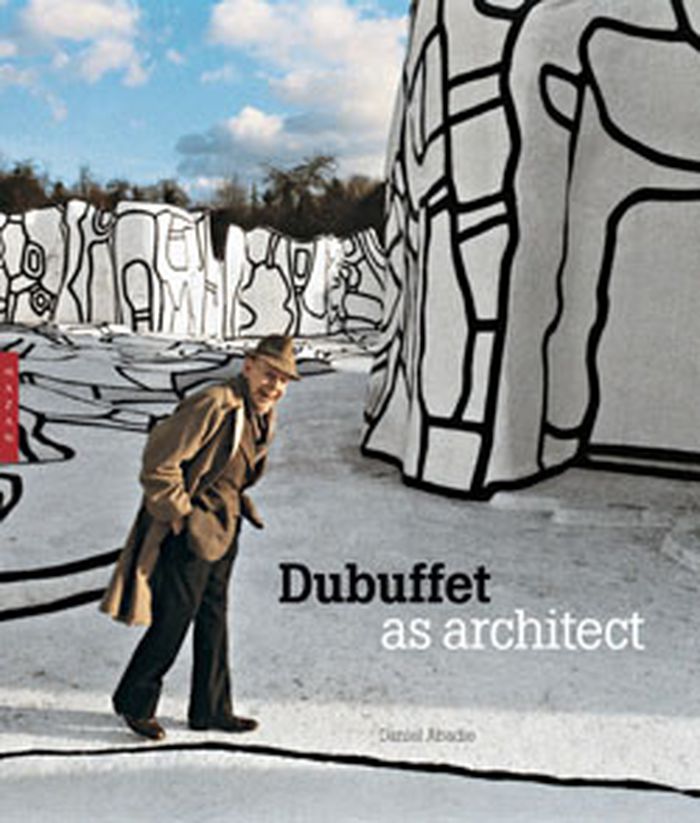
As the champion of "Art Brut," the artist Jean Dubuffet (1901-1985) is remembered foremost as a painter. Yet his creative instinct extended far beyond the parameters of paint. Later in his life, in 1965, his interest in architecture was sparked by a commission for two large-scale paintings for the University of Nanterre in Paris. Although he ultimately abandoned that project, he became intrigued by the idea of producing large works in a more enduring format, capable of withstanding the elements. He experimented with different media in search of a solution, producing works in ceramic, concrete, and eventually plastic resin. The large size and relief surface of his 1967 Mur Bleu (Blue Wall) catapulted his painting into the third dimension in a big way. Many commissions followed, and today Dubuffet's massive architectural forms grace several cities across the globe. The artist did not intend for these structures to be mere supports for his paintings; he meant for them to give his work architectural space. His efforts in this area earned him the medal of the American Institute of Architects in 1982. These stunningly inventive and playful works stand as a testament to Dubuffet's desire to expand his practice through new materials and techniques—and even into new dimensions. This publication is the first published account of this little-known aspect of this artist's work.
Dubuffet as architect
Actions:
Price:
$49.95
(available to order)
Summary:
As the champion of "Art Brut," the artist Jean Dubuffet (1901-1985) is remembered foremost as a painter. Yet his creative instinct extended far beyond the parameters of paint. Later in his life, in 1965, his interest in architecture was sparked by a commission for two large-scale paintings for the University of Nanterre in Paris. Although he ultimately abandoned that project, he became intrigued by the idea of producing large works in a more enduring format, capable of withstanding the elements. He experimented with different media in search of a solution, producing works in ceramic, concrete, and eventually plastic resin. The large size and relief surface of his 1967 Mur Bleu (Blue Wall) catapulted his painting into the third dimension in a big way. Many commissions followed, and today Dubuffet's massive architectural forms grace several cities across the globe. The artist did not intend for these structures to be mere supports for his paintings; he meant for them to give his work architectural space. His efforts in this area earned him the medal of the American Institute of Architects in 1982. These stunningly inventive and playful works stand as a testament to Dubuffet's desire to expand his practice through new materials and techniques—and even into new dimensions. This publication is the first published account of this little-known aspect of this artist's work.
Form:
books
books
Publication:
August 2011
August 2011
Subject:
Architecture Monographs
Architecture Monographs
Form:
books
books
Price:
$41.99
(available in store)
Summary:
Americans spend, on average, 90 percent of their lives indoors, with two-thirds of that time spent in their homes. Globally, the construction and maintenance of residential buildings account for a staggering portion of carbon emissions. In this timely and fascinating work, architect and urban-planning scholar Stefan Al deftly weaves together archaeology, engineering,(...)
$41.99
(available in store)
Summary:
Americans spend, on average, 90 percent of their lives indoors, with two-thirds of that time spent in their homes. Globally, the construction and maintenance of residential buildings account for a staggering portion of carbon emissions. In this timely and fascinating work, architect and urban-planning scholar Stefan Al deftly weaves together archaeology, engineering,(...)
Title:
Dwelling on Earth: the past and future of the places we call home
Actions:
Price:
$41.99
(available in store)
Summary:
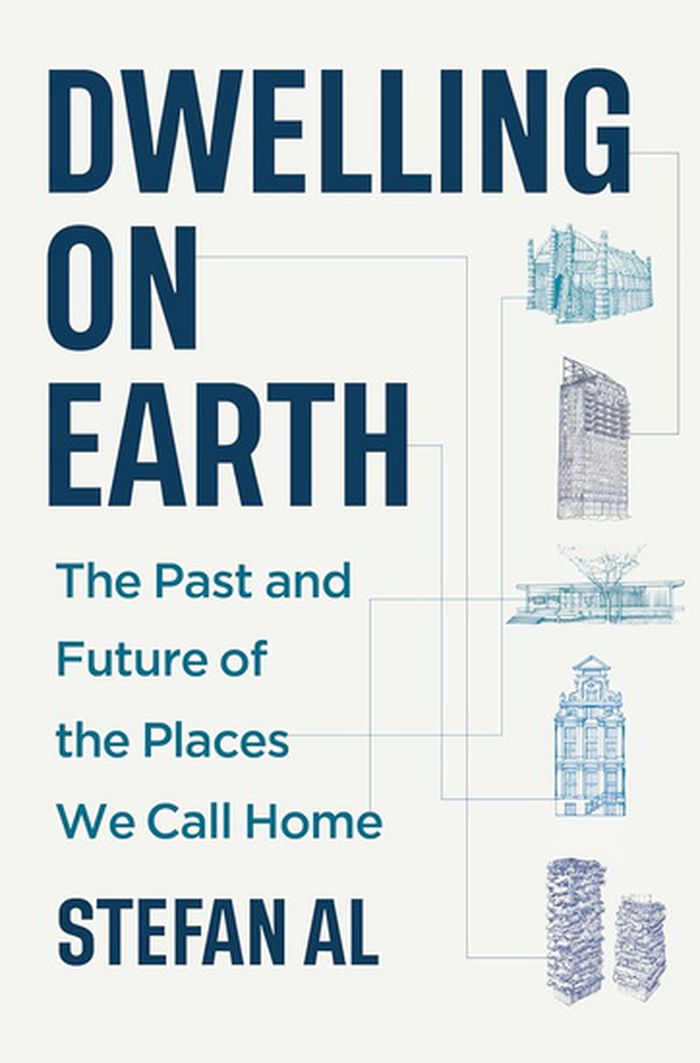
Americans spend, on average, 90 percent of their lives indoors, with two-thirds of that time spent in their homes. Globally, the construction and maintenance of residential buildings account for a staggering portion of carbon emissions. In this timely and fascinating work, architect and urban-planning scholar Stefan Al deftly weaves together archaeology, engineering, social history, and environmental science to explain how our homes have developed through the ages and in turn shaped civilization and the planet itself. From tiny pit-houses in the Levant and Mesoamerica thousands of years ago to soaring skyscrapers in Dubai, New York, and Shanghai today, ''Dwelling on Earth'' takes readers on a swift and absorbing tour of the evolution of human habitation. Whisking readers from ancient Pompeii to contemporary Hong Kong, industrial-age Liverpool to postwar Levittown, Al shows how our choices in housing have both reflected and affected ideas about gender roles, privacy, and comfort. Discover how seemingly mundane elements—like door-knockers and corridors—have altered everyday interactions, and how material choices have remade the planet's surface. He also confronts the darker side of domesticity, exposing the unintended consequences of our architectural choices across millennia, including smoke-filled Neolithic dwellings, deadly fires in crowded Roman apartment buildings, and worsening social isolation in car-dependent suburbs. Finally, he examines the myths and reality of future housing, including 3D-printed homes and space architecture built by robots.
Dwelling on Earth: the past and future of the places we call home
Actions:
Price:
$41.99
(available in store)
Summary:
Americans spend, on average, 90 percent of their lives indoors, with two-thirds of that time spent in their homes. Globally, the construction and maintenance of residential buildings account for a staggering portion of carbon emissions. In this timely and fascinating work, architect and urban-planning scholar Stefan Al deftly weaves together archaeology, engineering, social history, and environmental science to explain how our homes have developed through the ages and in turn shaped civilization and the planet itself. From tiny pit-houses in the Levant and Mesoamerica thousands of years ago to soaring skyscrapers in Dubai, New York, and Shanghai today, ''Dwelling on Earth'' takes readers on a swift and absorbing tour of the evolution of human habitation. Whisking readers from ancient Pompeii to contemporary Hong Kong, industrial-age Liverpool to postwar Levittown, Al shows how our choices in housing have both reflected and affected ideas about gender roles, privacy, and comfort. Discover how seemingly mundane elements—like door-knockers and corridors—have altered everyday interactions, and how material choices have remade the planet's surface. He also confronts the darker side of domesticity, exposing the unintended consequences of our architectural choices across millennia, including smoke-filled Neolithic dwellings, deadly fires in crowded Roman apartment buildings, and worsening social isolation in car-dependent suburbs. Finally, he examines the myths and reality of future housing, including 3D-printed homes and space architecture built by robots.
Form:
books
books
Publication:
April 2026
April 2026
Subject:
Social
Social
Form:
books
books
Price:
$72.50
(available in store)
Summary:
This publication introduces the untold story of German artist and poet Anneliese Hager. Active from the 1930s to the 1960s, Hager began her photographic experimentation in Germany during the Nazi censure of modern art. Her preferred medium was the cameraless photograph, or photogram—an image made by placing objects directly on (or in close proximity to) a light-sensitive(...)
$72.50
(available in store)
Summary:
This publication introduces the untold story of German artist and poet Anneliese Hager. Active from the 1930s to the 1960s, Hager began her photographic experimentation in Germany during the Nazi censure of modern art. Her preferred medium was the cameraless photograph, or photogram—an image made by placing objects directly on (or in close proximity to) a light-sensitive(...)
Title:
White shadows: Anneliese Hager and the camera-less photograph
Actions:
Price:
$72.50
(available in store)
Summary:
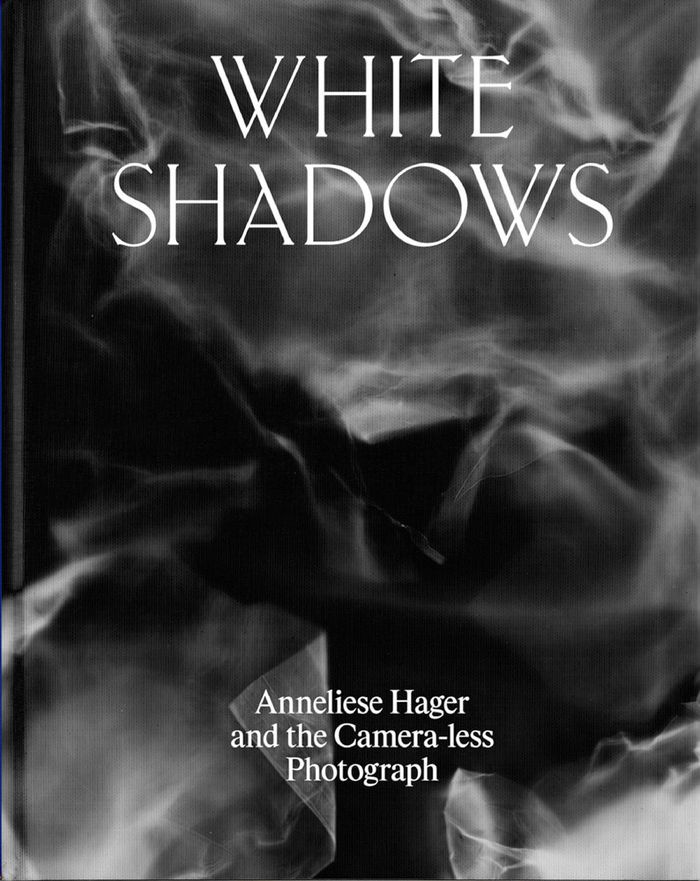
This publication introduces the untold story of German artist and poet Anneliese Hager. Active from the 1930s to the 1960s, Hager began her photographic experimentation in Germany during the Nazi censure of modern art. Her preferred medium was the cameraless photograph, or photogram—an image made by placing objects directly on (or in close proximity to) a light-sensitive surface and exposing the assembled material to light. In its final form, a photogram is a one-of-a-kind work that reverses light and dark: the longer the paper is covered, and hence unexposed, the brighter the covered parts will be, and vice versa. Hager called these bright areas "white shadows." Hager’s photograms offer a more inclusive history of the medium, synthesizing the technique’s 20th-century avant-garde trajectory (best known in the work of László Moholy-Nagy and Man Ray) and its 19th-century prehistories in the realm of science and in practices such as the making of silhouettes, collage and textile arts—pursuits often coded feminine. In 1945, all Hager’s existing artwork was destroyed in the bombing of Dresden during World War II. This book offers an unprecedented reconstruction of her development and postwar creation of otherworldly, Surrealist visions in photograms and poems, a selection of which appear here in English for the first time. For Hager, the photogram was significant for its provocative tonal inversions and surprising chance effects, but also for what emerges from the dark.
White shadows: Anneliese Hager and the camera-less photograph
Actions:
Price:
$72.50
(available in store)
Summary:
This publication introduces the untold story of German artist and poet Anneliese Hager. Active from the 1930s to the 1960s, Hager began her photographic experimentation in Germany during the Nazi censure of modern art. Her preferred medium was the cameraless photograph, or photogram—an image made by placing objects directly on (or in close proximity to) a light-sensitive surface and exposing the assembled material to light. In its final form, a photogram is a one-of-a-kind work that reverses light and dark: the longer the paper is covered, and hence unexposed, the brighter the covered parts will be, and vice versa. Hager called these bright areas "white shadows." Hager’s photograms offer a more inclusive history of the medium, synthesizing the technique’s 20th-century avant-garde trajectory (best known in the work of László Moholy-Nagy and Man Ray) and its 19th-century prehistories in the realm of science and in practices such as the making of silhouettes, collage and textile arts—pursuits often coded feminine. In 1945, all Hager’s existing artwork was destroyed in the bombing of Dresden during World War II. This book offers an unprecedented reconstruction of her development and postwar creation of otherworldly, Surrealist visions in photograms and poems, a selection of which appear here in English for the first time. For Hager, the photogram was significant for its provocative tonal inversions and surprising chance effects, but also for what emerges from the dark.
Form:
books
books
Publication:
November 2023
November 2023
Subject:
Photography monographs
Photography monographs
Form:
books
books
Price:
$67.95
(available to order)
Summary:
Des légumes en hiver est un manuel pratique destiné aux jardiniers amateurs comme aux professionnels du maraichage. En vingt chapitres illustrés, Eliot Coleman, cultivateur américain et pionnier de l'agriculture biologique, dévoile les méthodes qu'il développe au coeur de son exploitation de petite surface, selon trois principes primordiaux : diminuer l'impact(...)
$67.95
(available to order)
Summary:
Des légumes en hiver est un manuel pratique destiné aux jardiniers amateurs comme aux professionnels du maraichage. En vingt chapitres illustrés, Eliot Coleman, cultivateur américain et pionnier de l'agriculture biologique, dévoile les méthodes qu'il développe au coeur de son exploitation de petite surface, selon trois principes primordiaux : diminuer l'impact(...)
Title:
Des légumes en hiver : produire en abondance même sous la neige
Actions:
Price:
$67.95
(available to order)
Summary:
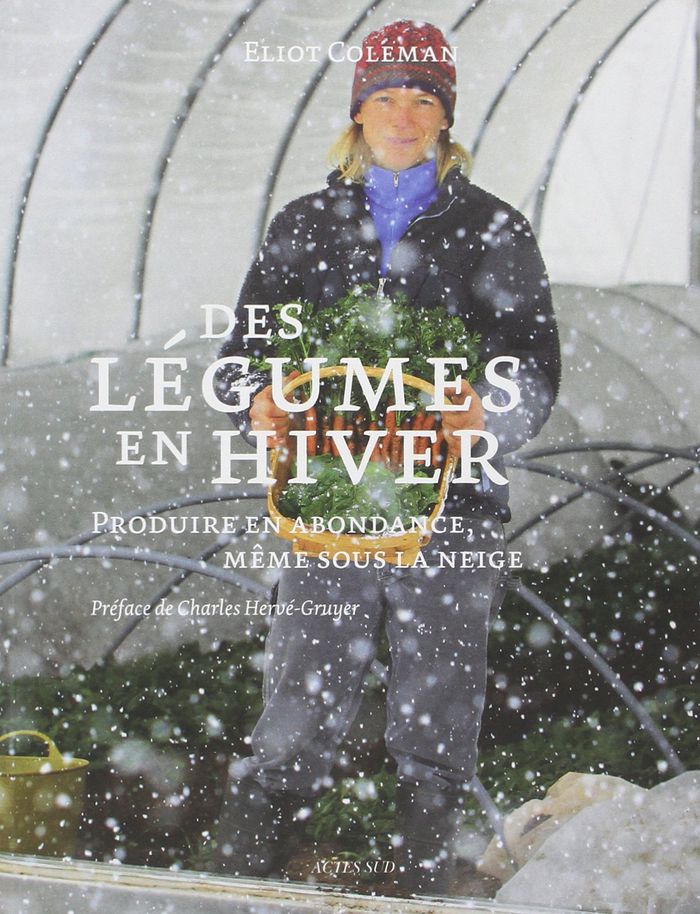
Des légumes en hiver est un manuel pratique destiné aux jardiniers amateurs comme aux professionnels du maraichage. En vingt chapitres illustrés, Eliot Coleman, cultivateur américain et pionnier de l'agriculture biologique, dévoile les méthodes qu'il développe au coeur de son exploitation de petite surface, selon trois principes primordiaux : diminuer l'impact environnemental, densifier les cultures et réduire le coût financier de son exploitation. Particulièrement connu pour ses techniques de culture hivernales et respectueuses de l'environnement, ce producteur explique comment parvenir à récolter des légumes variés et de qualité, quelle que soit la saison. Il défend l'utilité des serres mobiles et des tunnels, encore inexploités en France, l'une des clés du succès pour les récoltes de primeurs tout au long de l'année. Le lecteur apprend pas à pas à préparer un sol, puis à semer et à récolter à l'aide d'un équipement modeste et peu mécanisé évitant au maximum le recours aux énergies polluantes. Schémas et planning explicatifs jalonnent l'ouvrage afin d'aider chacun à cultiver des légumes, même lorsque les conditions climatiques ne s'y prêtent pas. Les conseils de l'auteur accompagnent les producteurs en herbe à chaque étape de leur apprentissage en leur permettant notamment de faire face aux questions et difficultés qu'ils peuvent rencontrer dans la mise en oeuvre de cultures saines ou encore en abordant la question des outils nécessaires à ce travail de la terre. Des légumes en hiver se présente comme un plaidoyer pour une relocalisation des productions agricoles.
Des légumes en hiver : produire en abondance même sous la neige
Actions:
Price:
$67.95
(available to order)
Summary:
Des légumes en hiver est un manuel pratique destiné aux jardiniers amateurs comme aux professionnels du maraichage. En vingt chapitres illustrés, Eliot Coleman, cultivateur américain et pionnier de l'agriculture biologique, dévoile les méthodes qu'il développe au coeur de son exploitation de petite surface, selon trois principes primordiaux : diminuer l'impact environnemental, densifier les cultures et réduire le coût financier de son exploitation. Particulièrement connu pour ses techniques de culture hivernales et respectueuses de l'environnement, ce producteur explique comment parvenir à récolter des légumes variés et de qualité, quelle que soit la saison. Il défend l'utilité des serres mobiles et des tunnels, encore inexploités en France, l'une des clés du succès pour les récoltes de primeurs tout au long de l'année. Le lecteur apprend pas à pas à préparer un sol, puis à semer et à récolter à l'aide d'un équipement modeste et peu mécanisé évitant au maximum le recours aux énergies polluantes. Schémas et planning explicatifs jalonnent l'ouvrage afin d'aider chacun à cultiver des légumes, même lorsque les conditions climatiques ne s'y prêtent pas. Les conseils de l'auteur accompagnent les producteurs en herbe à chaque étape de leur apprentissage en leur permettant notamment de faire face aux questions et difficultés qu'ils peuvent rencontrer dans la mise en oeuvre de cultures saines ou encore en abordant la question des outils nécessaires à ce travail de la terre. Des légumes en hiver se présente comme un plaidoyer pour une relocalisation des productions agricoles.
Form:
books
books
Publication:
November 2013
November 2013
Subject:
Food
Food
Form:
books
books

Actions:
Price:
$55.00
(available in store)
Summary:
The oldest churches shown in this book were built as early as in the 15th century, most of those still standing were built in the 18th and 19th centuries, and quite a few are still being built today. Many were destroyed in the two world wars, many fell victim to ethnic cleansing after 1945, some fell into disrepair during the Soviet era, others were burnt down by(...)
$55.00
(available in store)
Summary:
The oldest churches shown in this book were built as early as in the 15th century, most of those still standing were built in the 18th and 19th centuries, and quite a few are still being built today. Many were destroyed in the two world wars, many fell victim to ethnic cleansing after 1945, some fell into disrepair during the Soviet era, others were burnt down by(...)
Title:
Wooden churches in Eastern Europe
Actions:
Price:
$55.00
(available in store)
Summary:
The oldest churches shown in this book were built as early as in the 15th century, most of those still standing were built in the 18th and 19th centuries, and quite a few are still being built today. Many were destroyed in the two world wars, many fell victim to ethnic cleansing after 1945, some fell into disrepair during the Soviet era, others were burnt down by lightning or short circuits, and quite a few simply gave way to the more "representative" stone churches as early as the 19th century. But a large number are still standing, consecrated, and believers gather in them. In fact almost of them in the various Carpathian countries are protected monuments, and many have been lovingly restored in recent times. More than the architectural-historical value, the question arises here of the aesthetic assessment of these small buildings. It is not a refined canon of forms of great architecture that can be derived and proven from the history of architecture that inspires us so much. Ba-sically, they are not overly sophisticated constructions in terms of craftsmanship, they are safe and beautiful in their simplicity. Their aesthetic appeal, however, also includes the surface-weathered material, deformed structures, colour improvisations, recently ornamented sheet metal, inside wall paintings, altar and iconostasis furnishings derived from Renaissance and Baroque periods, but above all their location in the village, mostly isolated, often elevated, surrounded by old trees, enclosures and graves without cemetery order.
Wooden churches in Eastern Europe
Actions:
Price:
$55.00
(available in store)
Summary:
The oldest churches shown in this book were built as early as in the 15th century, most of those still standing were built in the 18th and 19th centuries, and quite a few are still being built today. Many were destroyed in the two world wars, many fell victim to ethnic cleansing after 1945, some fell into disrepair during the Soviet era, others were burnt down by lightning or short circuits, and quite a few simply gave way to the more "representative" stone churches as early as the 19th century. But a large number are still standing, consecrated, and believers gather in them. In fact almost of them in the various Carpathian countries are protected monuments, and many have been lovingly restored in recent times. More than the architectural-historical value, the question arises here of the aesthetic assessment of these small buildings. It is not a refined canon of forms of great architecture that can be derived and proven from the history of architecture that inspires us so much. Ba-sically, they are not overly sophisticated constructions in terms of craftsmanship, they are safe and beautiful in their simplicity. Their aesthetic appeal, however, also includes the surface-weathered material, deformed structures, colour improvisations, recently ornamented sheet metal, inside wall paintings, altar and iconostasis furnishings derived from Renaissance and Baroque periods, but above all their location in the village, mostly isolated, often elevated, surrounded by old trees, enclosures and graves without cemetery order.
Form:
books
books
Publication:
April 2024
April 2024
Subject:
Commercial interiors, Building types
Commercial interiors, Building types
Form:
books
books
Actions:
Price:
$64.95
(available in store)
Summary:
«Pour Aldo Rossi l’architecture se déploie comme un rite: les signes architecturaux qui se répètent, les différents types qui sont repris d’un projet à l’autre, reproduisent la corporalité qui est à leur origine. Dans ce rituel, le monde des sensations et des impulsions obscures que la rationalité moderne avait rejeté refont surface de manière inattendue. À travers(...)
$64.95
(available in store)
Summary:
«Pour Aldo Rossi l’architecture se déploie comme un rite: les signes architecturaux qui se répètent, les différents types qui sont repris d’un projet à l’autre, reproduisent la corporalité qui est à leur origine. Dans ce rituel, le monde des sensations et des impulsions obscures que la rationalité moderne avait rejeté refont surface de manière inattendue. À travers(...)
Title:
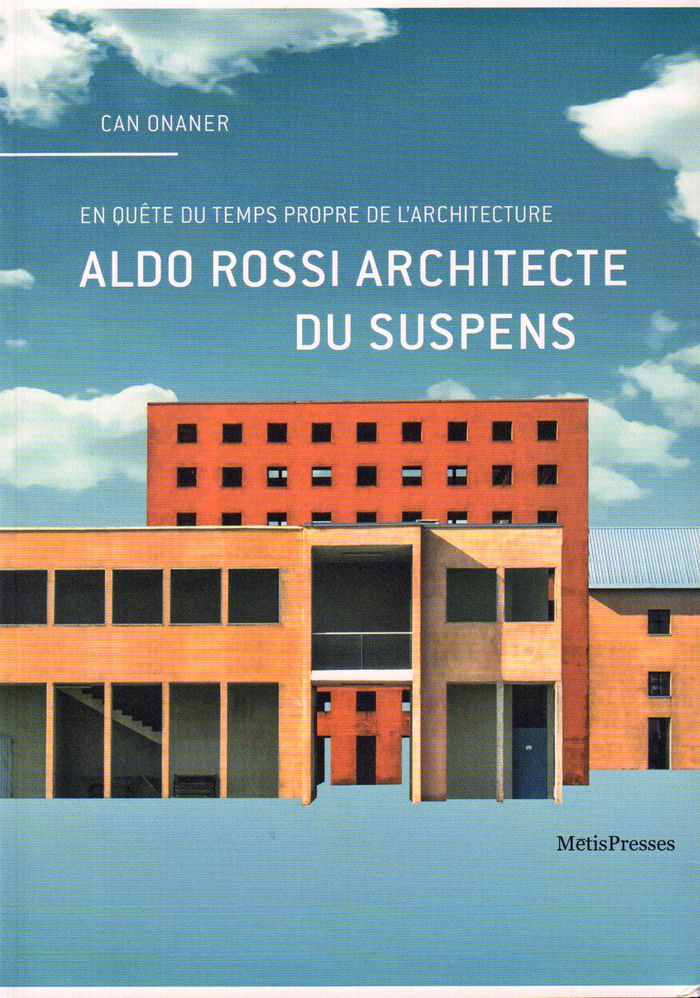
Aldo Rossi architecte du suspens
Actions:
Price:
$64.95
(available in store)
Summary:
«Pour Aldo Rossi l’architecture se déploie comme un rite: les signes architecturaux qui se répètent, les différents types qui sont repris d’un projet à l’autre, reproduisent la corporalité qui est à leur origine. Dans ce rituel, le monde des sensations et des impulsions obscures que la rationalité moderne avait rejeté refont surface de manière inattendue. À travers l’identification de l’architecture au corps animal ou humain, le désir qui était mis à l’écart de toute création est réintroduit dans l’architecture. Il s’agit d’un désir latent, inquiet de sa propre mort, un désir qui ne saurait s’exprimer autrement qu’à travers la répétition d’une typologie architecturale invariable. Parler de suspens en architecture revient ainsi, dans un premier temps, à évoquer un état de figement dont la finalité serait d’accéder à une temporalité anhistorique où la fixité domine. Toutefois, parler de suspens c’est aussi suggérer qu’il existe une attente et une latence au sein de cette fixité. C’est dire que le temps du suspens est corporel et inquiet.» Nous entraînant dans une enquête subtile qui traverse les écrits, projets et dessins réalisés entre 1959 et 1982 par l’architecte italien, l’ouvrage de Can Onaner permet de dévoiler sous un jour nouveau les notions et thèmes fondamentaux de l’œuvre d’Aldo Rossi: le type, la répétition, la permanence. Mais aussi de fonder le concept de suspens comme une nouvelle approche théorique de l’architecture, emblème de tout projet architectural inquiet de sa pérennité et mythe nécessaire, sinon fondateur, de toute urbanité.
Aldo Rossi architecte du suspens
Actions:
Price:
$64.95
(available in store)
Summary:
«Pour Aldo Rossi l’architecture se déploie comme un rite: les signes architecturaux qui se répètent, les différents types qui sont repris d’un projet à l’autre, reproduisent la corporalité qui est à leur origine. Dans ce rituel, le monde des sensations et des impulsions obscures que la rationalité moderne avait rejeté refont surface de manière inattendue. À travers l’identification de l’architecture au corps animal ou humain, le désir qui était mis à l’écart de toute création est réintroduit dans l’architecture. Il s’agit d’un désir latent, inquiet de sa propre mort, un désir qui ne saurait s’exprimer autrement qu’à travers la répétition d’une typologie architecturale invariable. Parler de suspens en architecture revient ainsi, dans un premier temps, à évoquer un état de figement dont la finalité serait d’accéder à une temporalité anhistorique où la fixité domine. Toutefois, parler de suspens c’est aussi suggérer qu’il existe une attente et une latence au sein de cette fixité. C’est dire que le temps du suspens est corporel et inquiet.» Nous entraînant dans une enquête subtile qui traverse les écrits, projets et dessins réalisés entre 1959 et 1982 par l’architecte italien, l’ouvrage de Can Onaner permet de dévoiler sous un jour nouveau les notions et thèmes fondamentaux de l’œuvre d’Aldo Rossi: le type, la répétition, la permanence. Mais aussi de fonder le concept de suspens comme une nouvelle approche théorique de l’architecture, emblème de tout projet architectural inquiet de sa pérennité et mythe nécessaire, sinon fondateur, de toute urbanité.
Form:
books
books
Publication:
October 2016
October 2016
Subject:
Current Exhibitions
Current Exhibitions
Form:
books
books
Actions:
Price:
$45.95
(available to order)
Summary:
First published in 1917, On Growth and Form was at once revolutionary and conservative. Scottish embryologist D'Arcy Wentworth Thompson (1860-1948) grew up in the newly cast shadow of Darwinism, and he took issue with some of the orthodoxies of the day--not because they were necessarily wrong, he said, but because they violated the spirit of Occam's razor, in which simple(...)
$45.95
(available to order)
Summary:
First published in 1917, On Growth and Form was at once revolutionary and conservative. Scottish embryologist D'Arcy Wentworth Thompson (1860-1948) grew up in the newly cast shadow of Darwinism, and he took issue with some of the orthodoxies of the day--not because they were necessarily wrong, he said, but because they violated the spirit of Occam's razor, in which simple(...)
Subject:
Natural Forms in Architecture
Natural Forms in Architecture
Publication:
January 1900, New York
January 1900, New York
Title:
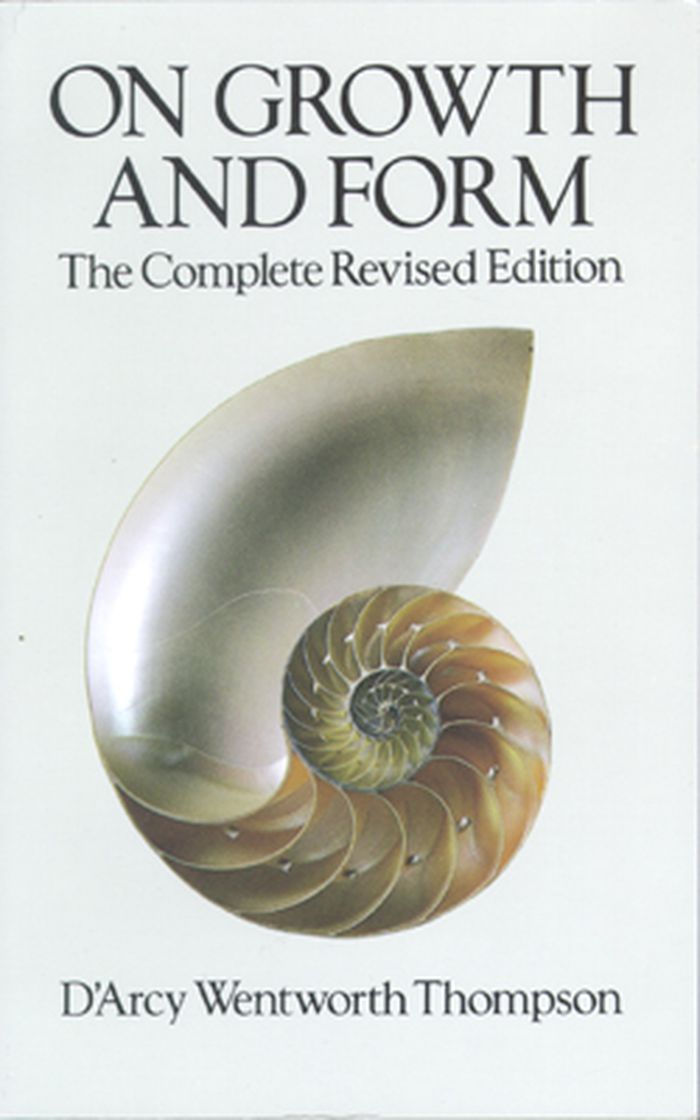
On growth and form: the complete revised edition
Actions:
Price:
$45.95
(available to order)
Summary:
First published in 1917, On Growth and Form was at once revolutionary and conservative. Scottish embryologist D'Arcy Wentworth Thompson (1860-1948) grew up in the newly cast shadow of Darwinism, and he took issue with some of the orthodoxies of the day--not because they were necessarily wrong, he said, but because they violated the spirit of Occam's razor, in which simple explanations are preferable to complex ones. In the case of such subjects as the growth of eggs, skeletons, and crystals, Thompson cited mathematical authority: these were matters of "economy and transformation," and they could be explained by laws governing surface tension and the like. (He doubtless would have enjoyed the study of fractals, which came after his time.) In On Growth and Form, he examines such matters as the curve of frequency or bell curve (which explains variations in height among 10-year-old schoolboys, the florets of a daisy, the distribution of darts on a cork board, the thickness of stripes along a zebra's flanks, the shape of mountain ranges and sand dunes) and spirals (which turn up everywhere in nature you look: in the curve of a seashell, the swirl of water boiling in a saucepan, the sweep of faraway nebulae, the twist of a strand of DNA, the turns of the labyrinth in which the legendary Minotaur lived out its days). The result is an astonishingly varied book that repays skimming and close reading alike.
On growth and form: the complete revised edition
Actions:
Price:
$45.95
(available to order)
Summary:
First published in 1917, On Growth and Form was at once revolutionary and conservative. Scottish embryologist D'Arcy Wentworth Thompson (1860-1948) grew up in the newly cast shadow of Darwinism, and he took issue with some of the orthodoxies of the day--not because they were necessarily wrong, he said, but because they violated the spirit of Occam's razor, in which simple explanations are preferable to complex ones. In the case of such subjects as the growth of eggs, skeletons, and crystals, Thompson cited mathematical authority: these were matters of "economy and transformation," and they could be explained by laws governing surface tension and the like. (He doubtless would have enjoyed the study of fractals, which came after his time.) In On Growth and Form, he examines such matters as the curve of frequency or bell curve (which explains variations in height among 10-year-old schoolboys, the florets of a daisy, the distribution of darts on a cork board, the thickness of stripes along a zebra's flanks, the shape of mountain ranges and sand dunes) and spirals (which turn up everywhere in nature you look: in the curve of a seashell, the swirl of water boiling in a saucepan, the sweep of faraway nebulae, the twist of a strand of DNA, the turns of the labyrinth in which the legendary Minotaur lived out its days). The result is an astonishingly varied book that repays skimming and close reading alike.
Form:
books
books
Publication:
January 1900, New York
January 1900, New York
Subject:
Natural Forms in Architecture
Natural Forms in Architecture
Form:
books
books
Actions:
Price:
$24.00
(available to order)
Summary:
In recent years, Marcel Dzama (born 1974) has expanded his widely acclaimed drawing practice to incorporate theatrical realizations of his magical, myth-laden cosmology in three-dimensional dioramas and films. This publication provides a kind of sketchbook companion or dossier on the making of his latest film, A Game of Chess . This work draws on the importance of chess(...)
$24.00
(available to order)
Summary:
In recent years, Marcel Dzama (born 1974) has expanded his widely acclaimed drawing practice to incorporate theatrical realizations of his magical, myth-laden cosmology in three-dimensional dioramas and films. This publication provides a kind of sketchbook companion or dossier on the making of his latest film, A Game of Chess . This work draws on the importance of chess(...)
Title:
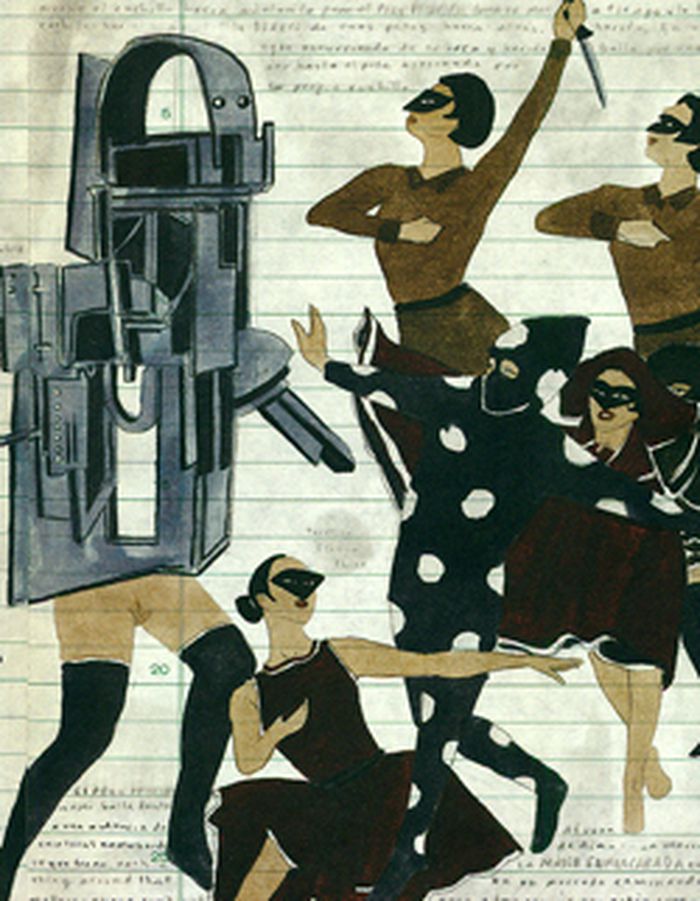
Marcel Dzama : behind every curtain
Actions:
Price:
$24.00
(available to order)
Summary:
In recent years, Marcel Dzama (born 1974) has expanded his widely acclaimed drawing practice to incorporate theatrical realizations of his magical, myth-laden cosmology in three-dimensional dioramas and films. This publication provides a kind of sketchbook companion or dossier on the making of his latest film, A Game of Chess . This work draws on the importance of chess for the early twentieth-century avant-garde (Man Ray, Duchamp, Picabia) and the game's curious overlap with dance, in films and ballets by René Clair and - of especial significance for Dzama - Oskar Schlemmer, whose 1922 Triadic Ballet included puppet-like masked figures performing on a checkered surface. In Dzama's film, characters based on chess pieces, clad in costumes made from papier-mâché, plaster and fiberglass and wearing elaborate masks, dance across a checkered board to engage their opponents in fatal skirmishes. Distinctions between reality and fiction collapse as both costumed and “real-life” characters in the film are killed. The filming and the creation of the costumes for A Game of Chess were carried out in Guadalajara, Mexico, and the influence of local crafts and religious traditions can also be felt throughout this body of work. Published on the occasion of Dzama's sixth solo exhibition at David Zwirner, this artist's book is packed with full-bleed drawings, sculptures, dioramas and film and production stills that give vivid testimony to the craft and thoroughness of his immensely popular art.
Marcel Dzama : behind every curtain
Actions:
Price:
$24.00
(available to order)
Summary:
In recent years, Marcel Dzama (born 1974) has expanded his widely acclaimed drawing practice to incorporate theatrical realizations of his magical, myth-laden cosmology in three-dimensional dioramas and films. This publication provides a kind of sketchbook companion or dossier on the making of his latest film, A Game of Chess . This work draws on the importance of chess for the early twentieth-century avant-garde (Man Ray, Duchamp, Picabia) and the game's curious overlap with dance, in films and ballets by René Clair and - of especial significance for Dzama - Oskar Schlemmer, whose 1922 Triadic Ballet included puppet-like masked figures performing on a checkered surface. In Dzama's film, characters based on chess pieces, clad in costumes made from papier-mâché, plaster and fiberglass and wearing elaborate masks, dance across a checkered board to engage their opponents in fatal skirmishes. Distinctions between reality and fiction collapse as both costumed and “real-life” characters in the film are killed. The filming and the creation of the costumes for A Game of Chess were carried out in Guadalajara, Mexico, and the influence of local crafts and religious traditions can also be felt throughout this body of work. Published on the occasion of Dzama's sixth solo exhibition at David Zwirner, this artist's book is packed with full-bleed drawings, sculptures, dioramas and film and production stills that give vivid testimony to the craft and thoroughness of his immensely popular art.
Form:
books
books
Publication:
July 2011
July 2011
Subject:
Contemporary Art Monographs
Contemporary Art Monographs
Form:
books
books
Price:
$55.00
(available to order)
Summary:
People in trouble laughing pushed to the ground. Soldiers leaning, pointing, reaching. Woman sweeping. Balloons escaping. Coffin descending. Boys standing. Grieving. Chair balancing. Children smoking. Embracing. Creatures barking. Cars burning. Helicopters hovering. Faces. Human figures. Shapes. Birds. Structures left standing and falling... The Belfast Exposed Archive(...)
$55.00
(available to order)
Summary:
People in trouble laughing pushed to the ground. Soldiers leaning, pointing, reaching. Woman sweeping. Balloons escaping. Coffin descending. Boys standing. Grieving. Chair balancing. Children smoking. Embracing. Creatures barking. Cars burning. Helicopters hovering. Faces. Human figures. Shapes. Birds. Structures left standing and falling... The Belfast Exposed Archive(...)
Title:
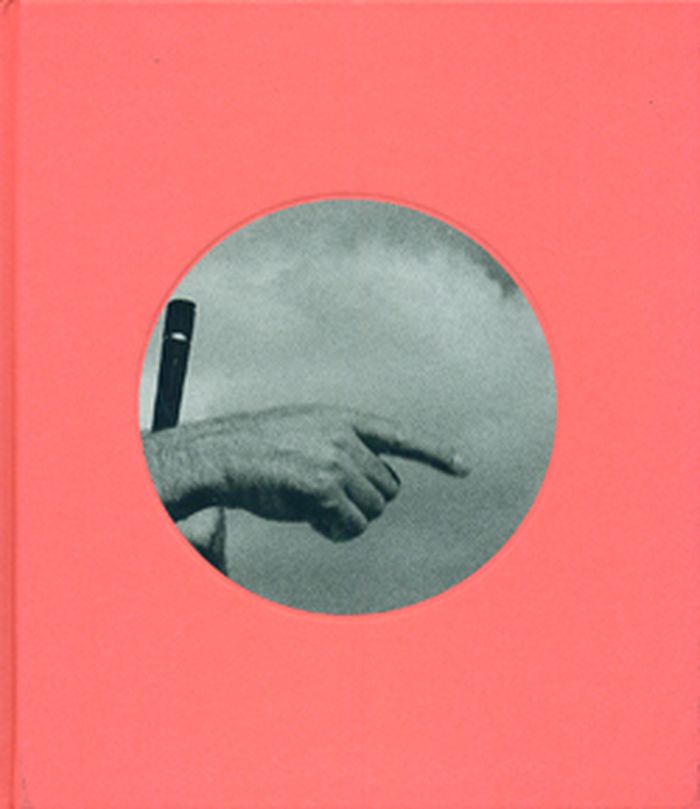
Adam Broomberg & Oliver Chanarin : people in trouble pushed to the ground
Actions:
Price:
$55.00
(available to order)
Summary:
People in trouble laughing pushed to the ground. Soldiers leaning, pointing, reaching. Woman sweeping. Balloons escaping. Coffin descending. Boys standing. Grieving. Chair balancing. Children smoking. Embracing. Creatures barking. Cars burning. Helicopters hovering. Faces. Human figures. Shapes. Birds. Structures left standing and falling... The Belfast Exposed Archive occupies a small room on the first floor at 23 Donegal Street and contains over 14,000 black-and-white contact sheets, documenting the Troubles in Northern Ireland. These are photographs taken by professional photo-journalists and 'civilian' photographers, chronicling protests, funerals and acts of terrorism as well as the more ordinary stuff of life: drinking tea; kissing girls; watching trains. Belfast Exposed was founded in 1983 as a response to concern over the careful control of images depicting British military activity during the Troubles. The marks on the surface of the contact strips – across the image itself – allude to the presence of many visitors. These include successive archivists, who have ordered, catalogued and re-catalogued this jumble of images. For many years the archive was also made available to members of the public, and sometimes they would deface their own image with a marker pen, ink or scissors. So, in addition to the marks made by generations of archivists, photo editors, legal aides and activists, the traces of these very personal obliterations are also visible. They are the gestures of those who wished to remain anonymous.
Adam Broomberg & Oliver Chanarin : people in trouble pushed to the ground
Actions:
Price:
$55.00
(available to order)
Summary:
People in trouble laughing pushed to the ground. Soldiers leaning, pointing, reaching. Woman sweeping. Balloons escaping. Coffin descending. Boys standing. Grieving. Chair balancing. Children smoking. Embracing. Creatures barking. Cars burning. Helicopters hovering. Faces. Human figures. Shapes. Birds. Structures left standing and falling... The Belfast Exposed Archive occupies a small room on the first floor at 23 Donegal Street and contains over 14,000 black-and-white contact sheets, documenting the Troubles in Northern Ireland. These are photographs taken by professional photo-journalists and 'civilian' photographers, chronicling protests, funerals and acts of terrorism as well as the more ordinary stuff of life: drinking tea; kissing girls; watching trains. Belfast Exposed was founded in 1983 as a response to concern over the careful control of images depicting British military activity during the Troubles. The marks on the surface of the contact strips – across the image itself – allude to the presence of many visitors. These include successive archivists, who have ordered, catalogued and re-catalogued this jumble of images. For many years the archive was also made available to members of the public, and sometimes they would deface their own image with a marker pen, ink or scissors. So, in addition to the marks made by generations of archivists, photo editors, legal aides and activists, the traces of these very personal obliterations are also visible. They are the gestures of those who wished to remain anonymous.
Form:
books
books
Publication:
June 2012
June 2012
Subject:
Photography Collections
Photography Collections
Form:
books
books
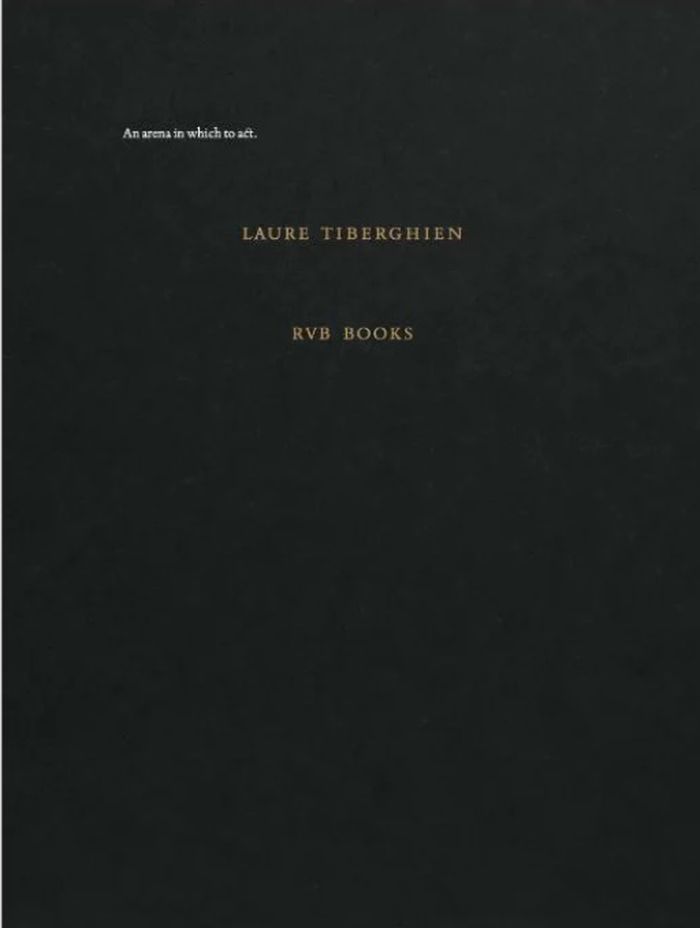
Title:
Laure Tiberghien
Laure Tiberghien
Actions:
Price:
$65.00
(available in store)
Summary:
This book is the first monograph to be published on the artist Laure Tiberghien. It brings together 84 prints, allowing the reader to gain an appreciation of 10 years of work and experimentation. Tiberghien is intrigued by the visual and plastic aspects of photography and enjoys exploring the inventive potential of this medium. She has developed a process avoiding the use(...)
$65.00
(available in store)
Summary:
This book is the first monograph to be published on the artist Laure Tiberghien. It brings together 84 prints, allowing the reader to gain an appreciation of 10 years of work and experimentation. Tiberghien is intrigued by the visual and plastic aspects of photography and enjoys exploring the inventive potential of this medium. She has developed a process avoiding the use(...)
Title:
Laure Tiberghien
Actions:
Price:
$65.00
(available in store)
Summary:
This book is the first monograph to be published on the artist Laure Tiberghien. It brings together 84 prints, allowing the reader to gain an appreciation of 10 years of work and experimentation. Tiberghien is intrigued by the visual and plastic aspects of photography and enjoys exploring the inventive potential of this medium. She has developed a process avoiding the use of the camera that takes its place within a long lineage of experimentation in photography, which has notably given rise to Anna Atkins’ cyanotypes and Man Ray’s Rayographs. Produced through the combination of chemistry, light and time, her ''abstract'' photographs emerge from a masterful approach to composition, whereby colours are organized after having been tested first to obtain the desired tone relationships. The surface, in this case the type of paper selected, also plays a primordial role. For example, Cibachrome results in a ''wet'' effect and very dense colours whereas a metallic paper offers a more electric result. If at times she may leave things open to accident or chance, while giving life to shapes and colours Tiberghien has put in place a procedure, through her constant testing, that although far from mechanical affords her control over the result. All the pieces she produces in this manner are necessarily unique, another feature her art shares with painting. The book’s design, by the studio SP Millot, arrays the text of the essay by Erik Verhagen across its pages, in a way that punctuates the images just as the images propel the text.
Laure Tiberghien
Actions:
Price:
$65.00
(available in store)
Summary:
This book is the first monograph to be published on the artist Laure Tiberghien. It brings together 84 prints, allowing the reader to gain an appreciation of 10 years of work and experimentation. Tiberghien is intrigued by the visual and plastic aspects of photography and enjoys exploring the inventive potential of this medium. She has developed a process avoiding the use of the camera that takes its place within a long lineage of experimentation in photography, which has notably given rise to Anna Atkins’ cyanotypes and Man Ray’s Rayographs. Produced through the combination of chemistry, light and time, her ''abstract'' photographs emerge from a masterful approach to composition, whereby colours are organized after having been tested first to obtain the desired tone relationships. The surface, in this case the type of paper selected, also plays a primordial role. For example, Cibachrome results in a ''wet'' effect and very dense colours whereas a metallic paper offers a more electric result. If at times she may leave things open to accident or chance, while giving life to shapes and colours Tiberghien has put in place a procedure, through her constant testing, that although far from mechanical affords her control over the result. All the pieces she produces in this manner are necessarily unique, another feature her art shares with painting. The book’s design, by the studio SP Millot, arrays the text of the essay by Erik Verhagen across its pages, in a way that punctuates the images just as the images propel the text.
Form:
books
books
Publication:
September 2023
September 2023
Subject:
Photography monographs
Photography monographs


