


16899 Results
Form:
events
events
Form:
events
events
Date:
27 May 2018
11am to 4pm
27 May 2018
11am to 4pm
Location:
Shaughnessy House
Shaughnessy House
Form:
archives
Level of archival description:
Fonds
archives
Level of archival description:
Fonds
Reference number:
AP181
Synopsis:
The COOP HIMMELB(L)AU BMW Welt project records, 1994-2007, document the design of the firm’s BMW Welt project, also known as BMW World, in Munich, Germany. The archive consists of approximately 52, 400 born-digital files representing the greater part of the digital archive of the project, as well as 52 of the study models made in the earlier stages of the project.
AP181
Synopsis:
The COOP HIMMELB(L)AU BMW Welt project records, 1994-2007, document the design of the firm’s BMW Welt project, also known as BMW World, in Munich, Germany. The archive consists of approximately 52, 400 born-digital files representing the greater part of the digital archive of the project, as well as 52 of the study models made in the earlier stages of the project.
People:
Date:
1994-2015
1994-2015
Title:
COOP HIMMELB(L)AU BMW Welt project records
Actions:
AP181
Synopsis:
The COOP HIMMELB(L)AU BMW Welt project records, 1994-2007, document the design of the firm’s BMW Welt project, also known as BMW World, in Munich, Germany. The archive consists of approximately 52, 400 born-digital files representing the greater part of the digital archive of the project, as well as 52 of the study models made in the earlier stages of the project.
COOP HIMMELB(L)AU BMW Welt project records
Actions:
AP181
Synopsis:
The COOP HIMMELB(L)AU BMW Welt project records, 1994-2007, document the design of the firm’s BMW Welt project, also known as BMW World, in Munich, Germany. The archive consists of approximately 52, 400 born-digital files representing the greater part of the digital archive of the project, as well as 52 of the study models made in the earlier stages of the project.
Form:
archives
Level of archival description:
Fonds
archives
Level of archival description:
Fonds
Date:
1994-2015
1994-2015
People:
Form:
textual records
textual records
Actions:
Reference number:
ARCH260032
Description:
Proposals in the United States and Canada, including correspondence, concerning: Suffolk County Courthouse; North Carolina State University; Philadelphia World Forum Project (Harborplace Square); Pittsburgh evolving space project; Diker residence, Cannecticut; Rockville, Maryville Treatment Centres; Lincoln Performing Center for the Arts, New York; New York State Urban Development Corporation; 60 Wall Street, New York; New York Trump Tower; West Palm Beach, Florida, Center for the Performing Arts; Russell House, Tacoma Washington (includes colour photos); Tampa, Florida, University Library; Hotel, Vail, Colorado; Addition to Corcoran Gallery, Washington, DC; State Office Building, Columbus, Ohio. Canada: city of Oshawa interior design review; General Motors Head office, Oshawa; Robert McLaughlin Gallery, Oshawa; Roy Thompson Hall; Bank of Canada, Ottawa; National Museum of Man, Ottawa; Saudi Arabian Embassy, Ottawa; Saint Peter's Lutheran Church, Ottawa; Mosque (Saudi Embassy), Ottawa.
ARCH260032
Description:
Proposals in the United States and Canada, including correspondence, concerning: Suffolk County Courthouse; North Carolina State University; Philadelphia World Forum Project (Harborplace Square); Pittsburgh evolving space project; Diker residence, Cannecticut; Rockville, Maryville Treatment Centres; Lincoln Performing Center for the Arts, New York; New York State Urban Development Corporation; 60 Wall Street, New York; New York Trump Tower; West Palm Beach, Florida, Center for the Performing Arts; Russell House, Tacoma Washington (includes colour photos); Tampa, Florida, University Library; Hotel, Vail, Colorado; Addition to Corcoran Gallery, Washington, DC; State Office Building, Columbus, Ohio. Canada: city of Oshawa interior design review; General Motors Head office, Oshawa; Robert McLaughlin Gallery, Oshawa; Roy Thompson Hall; Bank of Canada, Ottawa; National Museum of Man, Ottawa; Saudi Arabian Embassy, Ottawa; Saint Peter's Lutheran Church, Ottawa; Mosque (Saudi Embassy), Ottawa.
People:
Date:
1980-1986
1980-1986
Title:
Proposals in the United States and Canada, including correspondence
Actions:
ARCH260032
Description:
Proposals in the United States and Canada, including correspondence, concerning: Suffolk County Courthouse; North Carolina State University; Philadelphia World Forum Project (Harborplace Square); Pittsburgh evolving space project; Diker residence, Cannecticut; Rockville, Maryville Treatment Centres; Lincoln Performing Center for the Arts, New York; New York State Urban Development Corporation; 60 Wall Street, New York; New York Trump Tower; West Palm Beach, Florida, Center for the Performing Arts; Russell House, Tacoma Washington (includes colour photos); Tampa, Florida, University Library; Hotel, Vail, Colorado; Addition to Corcoran Gallery, Washington, DC; State Office Building, Columbus, Ohio. Canada: city of Oshawa interior design review; General Motors Head office, Oshawa; Robert McLaughlin Gallery, Oshawa; Roy Thompson Hall; Bank of Canada, Ottawa; National Museum of Man, Ottawa; Saudi Arabian Embassy, Ottawa; Saint Peter's Lutheran Church, Ottawa; Mosque (Saudi Embassy), Ottawa.
Proposals in the United States and Canada, including correspondence
Actions:
ARCH260032
Description:
Proposals in the United States and Canada, including correspondence, concerning: Suffolk County Courthouse; North Carolina State University; Philadelphia World Forum Project (Harborplace Square); Pittsburgh evolving space project; Diker residence, Cannecticut; Rockville, Maryville Treatment Centres; Lincoln Performing Center for the Arts, New York; New York State Urban Development Corporation; 60 Wall Street, New York; New York Trump Tower; West Palm Beach, Florida, Center for the Performing Arts; Russell House, Tacoma Washington (includes colour photos); Tampa, Florida, University Library; Hotel, Vail, Colorado; Addition to Corcoran Gallery, Washington, DC; State Office Building, Columbus, Ohio. Canada: city of Oshawa interior design review; General Motors Head office, Oshawa; Robert McLaughlin Gallery, Oshawa; Roy Thompson Hall; Bank of Canada, Ottawa; National Museum of Man, Ottawa; Saudi Arabian Embassy, Ottawa; Saint Peter's Lutheran Church, Ottawa; Mosque (Saudi Embassy), Ottawa.
Form:
textual records
textual records
Date:
1980-1986
1980-1986
People:
Form:
exhibitions
exhibitions
Description:
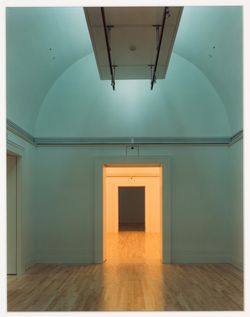
Celebrating the opening of the CCAs new building, Canadian Centre for Architecture: Building and Gardens reveals the potential of a museum of architecture as a statement: about the nature of the works it collects and exhibits; about its role in the life of a culture or a city; and about architecture itself. Both the restoration of the nineteenth-century Shaughnessy House(...)
Celebrating the opening of the CCAs new building, Canadian Centre for Architecture: Building and Gardens reveals the potential of a museum of architecture as a statement: about the nature of the works it collects and exhibits; about its role in the life of a culture or a city; and about architecture itself. Both the restoration of the nineteenth-century Shaughnessy House(...)
Location:
Octagonal gallery
Octagonal gallery
Date:
7 May 1989 to 25 March 1990
7 May 1989 to 25 March 1990
Title:
Canadian Centre for Architecture: Building and Gardens
Actions:
Description:
Celebrating the opening of the CCAs new building, Canadian Centre for Architecture: Building and Gardens reveals the potential of a museum of architecture as a statement: about the nature of the works it collects and exhibits; about its role in the life of a culture or a city; and about architecture itself. Both the restoration of the nineteenth-century Shaughnessy House(...)
Canadian Centre for Architecture: Building and Gardens
Actions:
Description:
Celebrating the opening of the CCAs new building, Canadian Centre for Architecture: Building and Gardens reveals the potential of a museum of architecture as a statement: about the nature of the works it collects and exhibits; about its role in the life of a culture or a city; and about architecture itself. Both the restoration of the nineteenth-century Shaughnessy House(...)
Form:
exhibitions
exhibitions
Date:
7 May 1989 to
25 March 1990
7 May 1989 to
25 March 1990
Location:
Octagonal gallery
Octagonal gallery
Level of archival description:
Project
Project
Actions:
Reference number:
AP198.S1.1997.PR02
Description:
Project records document the design process for OCEAN North’s competition entry for the Jyväskylä Music and Arts Centre in 1997. The project was titled Terra Cultura by OCEAN North. The international competition called to create a multi-usage space that would include a venue for the symphonic orchestra, a music school, exhibition spaces, and the possibility to host a variety of small cultural events in the Finnish city of Jyväskylä. The proposed site is in the center of the town, across the street from the Jyväskylä city church and its park, and nearby buildings designed by Alvar Aalto. OCEAN North’s concept presents a topological surface as an extension of the surrounding urban scape with two masses that would host the formal functions of the building (concert hall, music school, exhibition halls). The two volumes, or raised blocks, are divided along a diagonal elevated space, which is the extension of the ground’s topological surface filled and dubbed “Liquid Flow Space” by the design team. In their interview with Greg Lynn, Johan Bettum and Kivi Sotamaa mentioned that the idea for Jyväskylä was that it was a cloud. Digital files, in particular, show the process to achieve the projected design. Drawings provide views of streamed particles and of resulting peels. They also include plans, elevations and axonometric views of the structure. Most files are raster or vector images, likely saved from CAD software. A few files are in CAD formats such as Microstation, 3D Studio and form*Z. Digital files also present sine wave analysis and resulting charts for each component of the program. The analysis and charts present the relationships between various components of the building’s program such as the Art Museum, the Concert Halls, the technical space, and the Common facilities. These files are raster images and spreadsheets. Photographs of the site in Jyväskylä and of models built by OCEAN North were digitized and are included with the digital working files. Physical drawings are chiefly floor plans for the building, but also include sections and sketches. Finally, project files include photographic prints of two built models. One of these models, a small model of the conceptual masses of the building structure, is itself in the archive. Photographs show the model in the context of a city scape model. The second model, not part of the archive at CCA, was built at a bigger scale and was an intricate cardboard and wooden stick structure. Sources: Softspace: from a representation of form to a simulation of space, Edited by Sean Lally and Jessica Young. London, New York: Routledge, 2007. Greg Lynn, ed. Archaeology of the Digital 17: OCEAN North, Jyväskylä Music and Arts Centre, Montréal: Canadian Centre for Architecture, 2017. ePub.
AP198.S1.1997.PR02
Description:
Project records document the design process for OCEAN North’s competition entry for the Jyväskylä Music and Arts Centre in 1997. The project was titled Terra Cultura by OCEAN North. The international competition called to create a multi-usage space that would include a venue for the symphonic orchestra, a music school, exhibition spaces, and the possibility to host a variety of small cultural events in the Finnish city of Jyväskylä. The proposed site is in the center of the town, across the street from the Jyväskylä city church and its park, and nearby buildings designed by Alvar Aalto. OCEAN North’s concept presents a topological surface as an extension of the surrounding urban scape with two masses that would host the formal functions of the building (concert hall, music school, exhibition halls). The two volumes, or raised blocks, are divided along a diagonal elevated space, which is the extension of the ground’s topological surface filled and dubbed “Liquid Flow Space” by the design team. In their interview with Greg Lynn, Johan Bettum and Kivi Sotamaa mentioned that the idea for Jyväskylä was that it was a cloud. Digital files, in particular, show the process to achieve the projected design. Drawings provide views of streamed particles and of resulting peels. They also include plans, elevations and axonometric views of the structure. Most files are raster or vector images, likely saved from CAD software. A few files are in CAD formats such as Microstation, 3D Studio and form*Z. Digital files also present sine wave analysis and resulting charts for each component of the program. The analysis and charts present the relationships between various components of the building’s program such as the Art Museum, the Concert Halls, the technical space, and the Common facilities. These files are raster images and spreadsheets. Photographs of the site in Jyväskylä and of models built by OCEAN North were digitized and are included with the digital working files. Physical drawings are chiefly floor plans for the building, but also include sections and sketches. Finally, project files include photographic prints of two built models. One of these models, a small model of the conceptual masses of the building structure, is itself in the archive. Photographs show the model in the context of a city scape model. The second model, not part of the archive at CCA, was built at a bigger scale and was an intricate cardboard and wooden stick structure. Sources: Softspace: from a representation of form to a simulation of space, Edited by Sean Lally and Jessica Young. London, New York: Routledge, 2007. Greg Lynn, ed. Archaeology of the Digital 17: OCEAN North, Jyväskylä Music and Arts Centre, Montréal: Canadian Centre for Architecture, 2017. ePub.
People:
Date:
1997
1997
Title:
Terra Cultura – Jyväskylä Music and Arts Centre, international competition entry
Actions:
AP198.S1.1997.PR02
Description:
Project records document the design process for OCEAN North’s competition entry for the Jyväskylä Music and Arts Centre in 1997. The project was titled Terra Cultura by OCEAN North. The international competition called to create a multi-usage space that would include a venue for the symphonic orchestra, a music school, exhibition spaces, and the possibility to host a variety of small cultural events in the Finnish city of Jyväskylä. The proposed site is in the center of the town, across the street from the Jyväskylä city church and its park, and nearby buildings designed by Alvar Aalto. OCEAN North’s concept presents a topological surface as an extension of the surrounding urban scape with two masses that would host the formal functions of the building (concert hall, music school, exhibition halls). The two volumes, or raised blocks, are divided along a diagonal elevated space, which is the extension of the ground’s topological surface filled and dubbed “Liquid Flow Space” by the design team. In their interview with Greg Lynn, Johan Bettum and Kivi Sotamaa mentioned that the idea for Jyväskylä was that it was a cloud. Digital files, in particular, show the process to achieve the projected design. Drawings provide views of streamed particles and of resulting peels. They also include plans, elevations and axonometric views of the structure. Most files are raster or vector images, likely saved from CAD software. A few files are in CAD formats such as Microstation, 3D Studio and form*Z. Digital files also present sine wave analysis and resulting charts for each component of the program. The analysis and charts present the relationships between various components of the building’s program such as the Art Museum, the Concert Halls, the technical space, and the Common facilities. These files are raster images and spreadsheets. Photographs of the site in Jyväskylä and of models built by OCEAN North were digitized and are included with the digital working files. Physical drawings are chiefly floor plans for the building, but also include sections and sketches. Finally, project files include photographic prints of two built models. One of these models, a small model of the conceptual masses of the building structure, is itself in the archive. Photographs show the model in the context of a city scape model. The second model, not part of the archive at CCA, was built at a bigger scale and was an intricate cardboard and wooden stick structure. Sources: Softspace: from a representation of form to a simulation of space, Edited by Sean Lally and Jessica Young. London, New York: Routledge, 2007. Greg Lynn, ed. Archaeology of the Digital 17: OCEAN North, Jyväskylä Music and Arts Centre, Montréal: Canadian Centre for Architecture, 2017. ePub.
Terra Cultura – Jyväskylä Music and Arts Centre, international competition entry
Actions:
AP198.S1.1997.PR02
Description:
Project records document the design process for OCEAN North’s competition entry for the Jyväskylä Music and Arts Centre in 1997. The project was titled Terra Cultura by OCEAN North. The international competition called to create a multi-usage space that would include a venue for the symphonic orchestra, a music school, exhibition spaces, and the possibility to host a variety of small cultural events in the Finnish city of Jyväskylä. The proposed site is in the center of the town, across the street from the Jyväskylä city church and its park, and nearby buildings designed by Alvar Aalto. OCEAN North’s concept presents a topological surface as an extension of the surrounding urban scape with two masses that would host the formal functions of the building (concert hall, music school, exhibition halls). The two volumes, or raised blocks, are divided along a diagonal elevated space, which is the extension of the ground’s topological surface filled and dubbed “Liquid Flow Space” by the design team. In their interview with Greg Lynn, Johan Bettum and Kivi Sotamaa mentioned that the idea for Jyväskylä was that it was a cloud. Digital files, in particular, show the process to achieve the projected design. Drawings provide views of streamed particles and of resulting peels. They also include plans, elevations and axonometric views of the structure. Most files are raster or vector images, likely saved from CAD software. A few files are in CAD formats such as Microstation, 3D Studio and form*Z. Digital files also present sine wave analysis and resulting charts for each component of the program. The analysis and charts present the relationships between various components of the building’s program such as the Art Museum, the Concert Halls, the technical space, and the Common facilities. These files are raster images and spreadsheets. Photographs of the site in Jyväskylä and of models built by OCEAN North were digitized and are included with the digital working files. Physical drawings are chiefly floor plans for the building, but also include sections and sketches. Finally, project files include photographic prints of two built models. One of these models, a small model of the conceptual masses of the building structure, is itself in the archive. Photographs show the model in the context of a city scape model. The second model, not part of the archive at CCA, was built at a bigger scale and was an intricate cardboard and wooden stick structure. Sources: Softspace: from a representation of form to a simulation of space, Edited by Sean Lally and Jessica Young. London, New York: Routledge, 2007. Greg Lynn, ed. Archaeology of the Digital 17: OCEAN North, Jyväskylä Music and Arts Centre, Montréal: Canadian Centre for Architecture, 2017. ePub.
Level of archival description:
Project
Project
Date:
1997
1997
People:
Form:
photographs
photographs
Actions:
Reference number:
PH1978:0021:001-030
Description:
Album of 30 photographs of historical maps, prints and photographs showing views of Montreal : buildings, houses, maps (Carte historique de l'Ile de Montréal/Historial map of the Island of Montreal, Iroquois territories), churches (Notre-Dame, Notre-Dame de Victoire, Cote Street Free Church), towers, streets (St. James, St. Amable), Leber's Mill, Seminary of Montreal, stone building (La Friponne), demographical lists : 'Liste de l'Augmentation de la population de Montréal de 1673 à 1687' and 'Liste des Habitants de Montréal de 1650 à 1672', and other general views of Montreal (Montreal Canada East). Original works in the McCord Museum: .002 : (after Robert Auchmuty Sproule) Place d'Armes, Montreal .007 : (by John Murray) Great St. James Street, Montreal, 1843-44 .012 : (by John Murray) North East View, Notre Dame Street, Montreal .015 : (by John Murray) South West view, Notre Dame Street, Montreal, 1843-44
PH1978:0021:001-030
Description:
Album of 30 photographs of historical maps, prints and photographs showing views of Montreal : buildings, houses, maps (Carte historique de l'Ile de Montréal/Historial map of the Island of Montreal, Iroquois territories), churches (Notre-Dame, Notre-Dame de Victoire, Cote Street Free Church), towers, streets (St. James, St. Amable), Leber's Mill, Seminary of Montreal, stone building (La Friponne), demographical lists : 'Liste de l'Augmentation de la population de Montréal de 1673 à 1687' and 'Liste des Habitants de Montréal de 1650 à 1672', and other general views of Montreal (Montreal Canada East). Original works in the McCord Museum: .002 : (after Robert Auchmuty Sproule) Place d'Armes, Montreal .007 : (by John Murray) Great St. James Street, Montreal, 1843-44 .012 : (by John Murray) North East View, Notre Dame Street, Montreal .015 : (by John Murray) South West view, Notre Dame Street, Montreal, 1843-44
People:
Subject:
architecture, topographic
architecture, topographic
Date:
ca. 1930
ca. 1930
Title:
Album of photographs of maps, prints and photographs of Montreal, Québec
Actions:
PH1978:0021:001-030
Description:
Album of 30 photographs of historical maps, prints and photographs showing views of Montreal : buildings, houses, maps (Carte historique de l'Ile de Montréal/Historial map of the Island of Montreal, Iroquois territories), churches (Notre-Dame, Notre-Dame de Victoire, Cote Street Free Church), towers, streets (St. James, St. Amable), Leber's Mill, Seminary of Montreal, stone building (La Friponne), demographical lists : 'Liste de l'Augmentation de la population de Montréal de 1673 à 1687' and 'Liste des Habitants de Montréal de 1650 à 1672', and other general views of Montreal (Montreal Canada East). Original works in the McCord Museum: .002 : (after Robert Auchmuty Sproule) Place d'Armes, Montreal .007 : (by John Murray) Great St. James Street, Montreal, 1843-44 .012 : (by John Murray) North East View, Notre Dame Street, Montreal .015 : (by John Murray) South West view, Notre Dame Street, Montreal, 1843-44
Album of photographs of maps, prints and photographs of Montreal, Québec
Actions:
PH1978:0021:001-030
Description:
Album of 30 photographs of historical maps, prints and photographs showing views of Montreal : buildings, houses, maps (Carte historique de l'Ile de Montréal/Historial map of the Island of Montreal, Iroquois territories), churches (Notre-Dame, Notre-Dame de Victoire, Cote Street Free Church), towers, streets (St. James, St. Amable), Leber's Mill, Seminary of Montreal, stone building (La Friponne), demographical lists : 'Liste de l'Augmentation de la population de Montréal de 1673 à 1687' and 'Liste des Habitants de Montréal de 1650 à 1672', and other general views of Montreal (Montreal Canada East). Original works in the McCord Museum: .002 : (after Robert Auchmuty Sproule) Place d'Armes, Montreal .007 : (by John Murray) Great St. James Street, Montreal, 1843-44 .012 : (by John Murray) North East View, Notre Dame Street, Montreal .015 : (by John Murray) South West view, Notre Dame Street, Montreal, 1843-44
Form:
photographs
photographs
Date:
ca. 1930
ca. 1930
People:
Subject:
architecture, topographic
architecture, topographic
Form:
textual records, photographs
textual records, photographs
Actions:
Reference number:
AP197.S2.027
Description:
The box contains various research files organized in alphabetical order by either author's last name or subject, from L-N. This box also includes writings by or about Le Corbusier. Other files contain writings by and about Raphael Moneo, Erich Mendelosohn, Gunter Nitschke as well as writings about the architecture of museums.
AP197.S2.027
Description:
The box contains various research files organized in alphabetical order by either author's last name or subject, from L-N. This box also includes writings by or about Le Corbusier. Other files contain writings by and about Raphael Moneo, Erich Mendelosohn, Gunter Nitschke as well as writings about the architecture of museums.
People:
Date:
1965-2005
1965-2005
Title:
Research files organized by author's last name or subject from L-N
Actions:
AP197.S2.027
Description:
The box contains various research files organized in alphabetical order by either author's last name or subject, from L-N. This box also includes writings by or about Le Corbusier. Other files contain writings by and about Raphael Moneo, Erich Mendelosohn, Gunter Nitschke as well as writings about the architecture of museums.
Research files organized by author's last name or subject from L-N
Actions:
AP197.S2.027
Description:
The box contains various research files organized in alphabetical order by either author's last name or subject, from L-N. This box also includes writings by or about Le Corbusier. Other files contain writings by and about Raphael Moneo, Erich Mendelosohn, Gunter Nitschke as well as writings about the architecture of museums.
Form:
textual records, photographs
textual records, photographs
Date:
1965-2005
1965-2005
People:
Level of archival description:
Project
Project
Actions:
Reference number:
AP143.S4.D108
Description:
The project series documents the executed project for Cites of Artificial Excavation, Madrid, Spain. Material in was produced between 1994 and 1995. In 1993, the CCA invited Peter Eisenman to design an installation for the exhibition 'Cities of Artificial Excavation: The Work of Peter Eisenman, 1978-1988'. The exhibition was presented at the CCA from 2 March to 29 May 1994. The drawings and models in this project series document the development of Eisenman's installation design from late 1993 through March 1994, as well as the various processes used by the architect in his investigation of the 'Cities of Artificial Excavation'. Eisenman uses a computer to superimpose, distort and multiply a Greek cross, while simultaneously modifying its plan and section. The computer enables the architect to generate geometric figures that are extremely difficult to produce by traditional means. It also constitutes a new phase in Eisenman's research into the depersonalization of the creative process, a central concern of his 'Cities of Artificial Excavation' (1978-1988). The Greek cross was one of the elements of the grid developed for the 'Museum of Artifical Excavation', and part of the project he submitted for the Internationale Bauausstellung in Berlin (1980-1986). The project series contains material by Eisenman's office including material for schemes A and B, the first and second proposals for the installation, as well as material for the exhibition installation. Material for scheme A includes conceptual drawings (DR1994:0030:001-005), hardline design development drawings (DR1994:0030:006-011), design development computer-aided drawings (DR1994:0030:012-027), and fully developed drawings (DR1994:0030:028-034). Material for scheme B, a design which is closer to the final project, includes hardline drawings (DR1994:0030:035-044) and computer-aided drawings (DR1994:0030:045-069). Material for the exhibition installation includes: computer-aided drawings (DR1994:0030:070-196) which were generated to construct models for the installation, notably a preliminary model (DR1994:0035) and the final model (DR1994:0036) which was used for planning the exhibition layout; hardline drawings which are the final drawings for the installation (DR1994:0030:262-265); a preliminary exhibition layout (DR1994:0030:280); and Iris colour prints of computer-aided conceptual axonometrics (DR1994:0030:281-282). Three working models show different stages of the design development (DR1994:0031 - DR1994:0034). Also included are photographs of the completed installation by Richard Pare (DR1994:0037:001-028), fragments of the installation preserved after its demolition (DR1994:0038:001-0028), and paint samples (DR1994:0038:035-037). The project series contains design development drawings, working drawings, photographic materials, publication drawings, reference drawings, textual records, and models.
AP143.S4.D108
Description:
The project series documents the executed project for Cites of Artificial Excavation, Madrid, Spain. Material in was produced between 1994 and 1995. In 1993, the CCA invited Peter Eisenman to design an installation for the exhibition 'Cities of Artificial Excavation: The Work of Peter Eisenman, 1978-1988'. The exhibition was presented at the CCA from 2 March to 29 May 1994. The drawings and models in this project series document the development of Eisenman's installation design from late 1993 through March 1994, as well as the various processes used by the architect in his investigation of the 'Cities of Artificial Excavation'. Eisenman uses a computer to superimpose, distort and multiply a Greek cross, while simultaneously modifying its plan and section. The computer enables the architect to generate geometric figures that are extremely difficult to produce by traditional means. It also constitutes a new phase in Eisenman's research into the depersonalization of the creative process, a central concern of his 'Cities of Artificial Excavation' (1978-1988). The Greek cross was one of the elements of the grid developed for the 'Museum of Artifical Excavation', and part of the project he submitted for the Internationale Bauausstellung in Berlin (1980-1986). The project series contains material by Eisenman's office including material for schemes A and B, the first and second proposals for the installation, as well as material for the exhibition installation. Material for scheme A includes conceptual drawings (DR1994:0030:001-005), hardline design development drawings (DR1994:0030:006-011), design development computer-aided drawings (DR1994:0030:012-027), and fully developed drawings (DR1994:0030:028-034). Material for scheme B, a design which is closer to the final project, includes hardline drawings (DR1994:0030:035-044) and computer-aided drawings (DR1994:0030:045-069). Material for the exhibition installation includes: computer-aided drawings (DR1994:0030:070-196) which were generated to construct models for the installation, notably a preliminary model (DR1994:0035) and the final model (DR1994:0036) which was used for planning the exhibition layout; hardline drawings which are the final drawings for the installation (DR1994:0030:262-265); a preliminary exhibition layout (DR1994:0030:280); and Iris colour prints of computer-aided conceptual axonometrics (DR1994:0030:281-282). Three working models show different stages of the design development (DR1994:0031 - DR1994:0034). Also included are photographs of the completed installation by Richard Pare (DR1994:0037:001-028), fragments of the installation preserved after its demolition (DR1994:0038:001-0028), and paint samples (DR1994:0038:035-037). The project series contains design development drawings, working drawings, photographic materials, publication drawings, reference drawings, textual records, and models.
People:
Date:
1994-1995
1994-1995
Title:
Cities of Artificial Excavation, Madrid
Actions:
AP143.S4.D108
Description:
The project series documents the executed project for Cites of Artificial Excavation, Madrid, Spain. Material in was produced between 1994 and 1995. In 1993, the CCA invited Peter Eisenman to design an installation for the exhibition 'Cities of Artificial Excavation: The Work of Peter Eisenman, 1978-1988'. The exhibition was presented at the CCA from 2 March to 29 May 1994. The drawings and models in this project series document the development of Eisenman's installation design from late 1993 through March 1994, as well as the various processes used by the architect in his investigation of the 'Cities of Artificial Excavation'. Eisenman uses a computer to superimpose, distort and multiply a Greek cross, while simultaneously modifying its plan and section. The computer enables the architect to generate geometric figures that are extremely difficult to produce by traditional means. It also constitutes a new phase in Eisenman's research into the depersonalization of the creative process, a central concern of his 'Cities of Artificial Excavation' (1978-1988). The Greek cross was one of the elements of the grid developed for the 'Museum of Artifical Excavation', and part of the project he submitted for the Internationale Bauausstellung in Berlin (1980-1986). The project series contains material by Eisenman's office including material for schemes A and B, the first and second proposals for the installation, as well as material for the exhibition installation. Material for scheme A includes conceptual drawings (DR1994:0030:001-005), hardline design development drawings (DR1994:0030:006-011), design development computer-aided drawings (DR1994:0030:012-027), and fully developed drawings (DR1994:0030:028-034). Material for scheme B, a design which is closer to the final project, includes hardline drawings (DR1994:0030:035-044) and computer-aided drawings (DR1994:0030:045-069). Material for the exhibition installation includes: computer-aided drawings (DR1994:0030:070-196) which were generated to construct models for the installation, notably a preliminary model (DR1994:0035) and the final model (DR1994:0036) which was used for planning the exhibition layout; hardline drawings which are the final drawings for the installation (DR1994:0030:262-265); a preliminary exhibition layout (DR1994:0030:280); and Iris colour prints of computer-aided conceptual axonometrics (DR1994:0030:281-282). Three working models show different stages of the design development (DR1994:0031 - DR1994:0034). Also included are photographs of the completed installation by Richard Pare (DR1994:0037:001-028), fragments of the installation preserved after its demolition (DR1994:0038:001-0028), and paint samples (DR1994:0038:035-037). The project series contains design development drawings, working drawings, photographic materials, publication drawings, reference drawings, textual records, and models.
Cities of Artificial Excavation, Madrid
Actions:
AP143.S4.D108
Description:
The project series documents the executed project for Cites of Artificial Excavation, Madrid, Spain. Material in was produced between 1994 and 1995. In 1993, the CCA invited Peter Eisenman to design an installation for the exhibition 'Cities of Artificial Excavation: The Work of Peter Eisenman, 1978-1988'. The exhibition was presented at the CCA from 2 March to 29 May 1994. The drawings and models in this project series document the development of Eisenman's installation design from late 1993 through March 1994, as well as the various processes used by the architect in his investigation of the 'Cities of Artificial Excavation'. Eisenman uses a computer to superimpose, distort and multiply a Greek cross, while simultaneously modifying its plan and section. The computer enables the architect to generate geometric figures that are extremely difficult to produce by traditional means. It also constitutes a new phase in Eisenman's research into the depersonalization of the creative process, a central concern of his 'Cities of Artificial Excavation' (1978-1988). The Greek cross was one of the elements of the grid developed for the 'Museum of Artifical Excavation', and part of the project he submitted for the Internationale Bauausstellung in Berlin (1980-1986). The project series contains material by Eisenman's office including material for schemes A and B, the first and second proposals for the installation, as well as material for the exhibition installation. Material for scheme A includes conceptual drawings (DR1994:0030:001-005), hardline design development drawings (DR1994:0030:006-011), design development computer-aided drawings (DR1994:0030:012-027), and fully developed drawings (DR1994:0030:028-034). Material for scheme B, a design which is closer to the final project, includes hardline drawings (DR1994:0030:035-044) and computer-aided drawings (DR1994:0030:045-069). Material for the exhibition installation includes: computer-aided drawings (DR1994:0030:070-196) which were generated to construct models for the installation, notably a preliminary model (DR1994:0035) and the final model (DR1994:0036) which was used for planning the exhibition layout; hardline drawings which are the final drawings for the installation (DR1994:0030:262-265); a preliminary exhibition layout (DR1994:0030:280); and Iris colour prints of computer-aided conceptual axonometrics (DR1994:0030:281-282). Three working models show different stages of the design development (DR1994:0031 - DR1994:0034). Also included are photographs of the completed installation by Richard Pare (DR1994:0037:001-028), fragments of the installation preserved after its demolition (DR1994:0038:001-0028), and paint samples (DR1994:0038:035-037). The project series contains design development drawings, working drawings, photographic materials, publication drawings, reference drawings, textual records, and models.
Level of archival description:
File 108
File 108
Date:
1994-1995
1994-1995
People:
Form:
exhibitions
exhibitions
Actions:
Description:
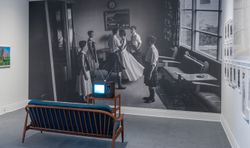
In an age of unprecedented human impact on the planet, certain countries stand out for their privileged positions and the complexity of their relationships with the land. Stories about Canada closely follow the discovery and appropriation of vast and varied natural resources as well as changing ideas of the proper relationship between people and their environment.(...)
In an age of unprecedented human impact on the planet, certain countries stand out for their privileged positions and the complexity of their relationships with the land. Stories about Canada closely follow the discovery and appropriation of vast and varied natural resources as well as changing ideas of the proper relationship between people and their environment.(...)
Date:
16 November 2016 to 9 April 2017
16 November 2016 to 9 April 2017
Title:
It’s All Happening So Fast
Actions:
Description:
In an age of unprecedented human impact on the planet, certain countries stand out for their privileged positions and the complexity of their relationships with the land. Stories about Canada closely follow the discovery and appropriation of vast and varied natural resources as well as changing ideas of the proper relationship between people and their environment.(...)
It’s All Happening So Fast
Actions:
Description:
In an age of unprecedented human impact on the planet, certain countries stand out for their privileged positions and the complexity of their relationships with the land. Stories about Canada closely follow the discovery and appropriation of vast and varied natural resources as well as changing ideas of the proper relationship between people and their environment.(...)
Form:
exhibitions
exhibitions
Date:
16 November 2016 to
9 April 2017
16 November 2016 to
9 April 2017
Form:
textual records
textual records
Actions:
Reference number:
AP197.S2.018
Description:
The box includes writings about culture, style, science, proportions, geometry, ecology/environment, landscape/gardens, and design. More specifically, the subjects explored in these files include the Gothic revival to functional form, modernism and post modernism, cultural history, Richard Wagner, Angelo Rizzuto, museums, expressionism, modular and alchemy, and the avant garde.
AP197.S2.018
Description:
The box includes writings about culture, style, science, proportions, geometry, ecology/environment, landscape/gardens, and design. More specifically, the subjects explored in these files include the Gothic revival to functional form, modernism and post modernism, cultural history, Richard Wagner, Angelo Rizzuto, museums, expressionism, modular and alchemy, and the avant garde.
People:
Date:
circa 1963- 1990
circa 1963- 1990
Title:
Various research files on culture, style, science, proportions, geometry, ecology/environment, landscape/gardens, and design
Actions:
AP197.S2.018
Description:
The box includes writings about culture, style, science, proportions, geometry, ecology/environment, landscape/gardens, and design. More specifically, the subjects explored in these files include the Gothic revival to functional form, modernism and post modernism, cultural history, Richard Wagner, Angelo Rizzuto, museums, expressionism, modular and alchemy, and the avant garde.
Various research files on culture, style, science, proportions, geometry, ecology/environment, landscape/gardens, and design
Actions:
AP197.S2.018
Description:
The box includes writings about culture, style, science, proportions, geometry, ecology/environment, landscape/gardens, and design. More specifically, the subjects explored in these files include the Gothic revival to functional form, modernism and post modernism, cultural history, Richard Wagner, Angelo Rizzuto, museums, expressionism, modular and alchemy, and the avant garde.
Form:
textual records
textual records
Date:
circa 1963- 1990
circa 1963- 1990
People:


