


1914 Results
Form:
books
books
Actions:
Price:
$30.00
(available to order)
Summary:
Amidst city concrete and suburban sprawl, Americans are discovering new ways to reconnect with the natural world. From community gardens in New York's Lower East Side to homeless shelters in California, the search for a more sustainable future has led grassroots groups to a profound reconnection to place and to the natural world. Studies of the health consequences of(...)
$30.00
(available to order)
Summary:
Amidst city concrete and suburban sprawl, Americans are discovering new ways to reconnect with the natural world. From community gardens in New York's Lower East Side to homeless shelters in California, the search for a more sustainable future has led grassroots groups to a profound reconnection to place and to the natural world. Studies of the health consequences of(...)
Title:
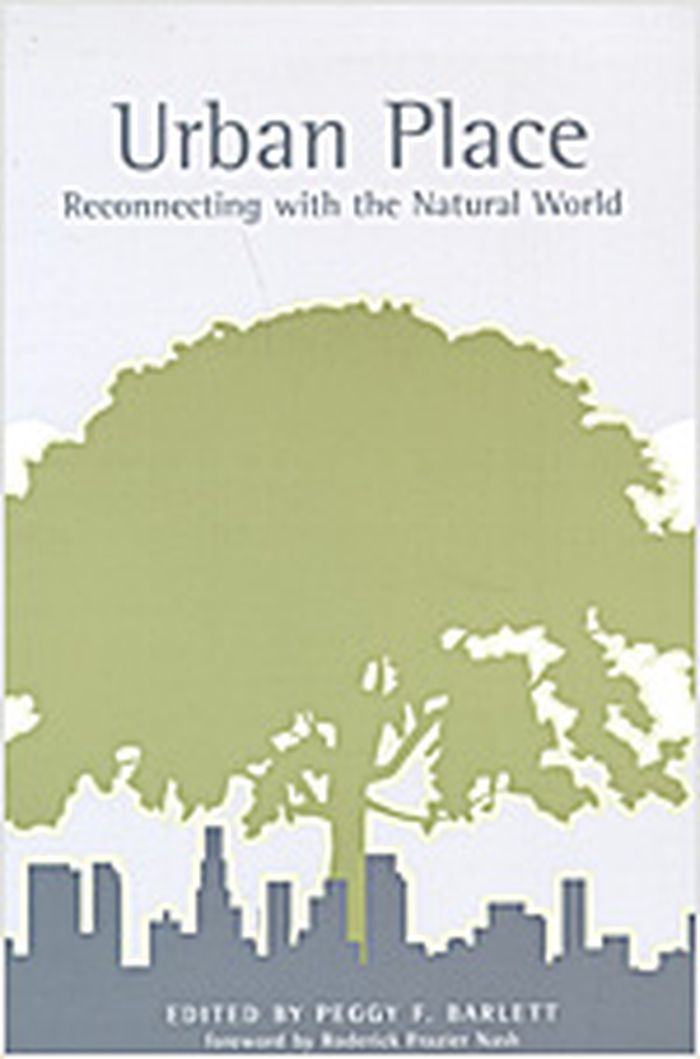
Urban place : reconnecting with the natural world
Actions:
Price:
$30.00
(available to order)
Summary:
Amidst city concrete and suburban sprawl, Americans are discovering new ways to reconnect with the natural world. From community gardens in New York's Lower East Side to homeless shelters in California, the search for a more sustainable future has led grassroots groups to a profound reconnection to place and to the natural world. Studies of the health consequences of renewing a connection with nature support the urgency of providing green surroundings as cities expand and the majority of the earth's population lives in urban areas. Medical research results, from groups as diverse as healthy volunteers, surgery patients, and heart attack survivors, suggest that contact with nature may improve health and well-being. Engagement with nearby natural places also provides restoration from mental fatigue and support for more resilient and cooperative behavior. Aspects of stronger community life are fostered by access to nature, suggesting that there are significant social as well as physical and psychological benefits from connection with the natural world. This volume brings together research from anthropology, sociology, public health, psychology, and landscape architecture to highlight how awareness of locale and a meaningful renewal of attachment with the earth are connected to delight in learning about nature as well as to civic action and new forms of community. Community garden coalitions, organic market advocates, and greenspace preservationists resist the power of global forces, enacting visions of a different future. Their creative efforts tell a story of a constructive and dynamic middle ground between private plots and public action, between human health and ecosystem health, between individual attachment and urban sustainability.
Urban place : reconnecting with the natural world
Actions:
Price:
$30.00
(available to order)
Summary:
Amidst city concrete and suburban sprawl, Americans are discovering new ways to reconnect with the natural world. From community gardens in New York's Lower East Side to homeless shelters in California, the search for a more sustainable future has led grassroots groups to a profound reconnection to place and to the natural world. Studies of the health consequences of renewing a connection with nature support the urgency of providing green surroundings as cities expand and the majority of the earth's population lives in urban areas. Medical research results, from groups as diverse as healthy volunteers, surgery patients, and heart attack survivors, suggest that contact with nature may improve health and well-being. Engagement with nearby natural places also provides restoration from mental fatigue and support for more resilient and cooperative behavior. Aspects of stronger community life are fostered by access to nature, suggesting that there are significant social as well as physical and psychological benefits from connection with the natural world. This volume brings together research from anthropology, sociology, public health, psychology, and landscape architecture to highlight how awareness of locale and a meaningful renewal of attachment with the earth are connected to delight in learning about nature as well as to civic action and new forms of community. Community garden coalitions, organic market advocates, and greenspace preservationists resist the power of global forces, enacting visions of a different future. Their creative efforts tell a story of a constructive and dynamic middle ground between private plots and public action, between human health and ecosystem health, between individual attachment and urban sustainability.
Form:
books
books
Publication:
January 1900, Cambridge, London
January 1900, Cambridge, London
Subject:
Urban Theory
Urban Theory
Form:
books
books

Title:
Antarctic resolution
Antarctic resolution
Actions:
Price:
$110.00
(available to order)
Summary:
Accounting for approximately 10% of the land mass of Planet Earth, the Antarctic is a global commons we collectively neglect. Far from being a pristine natural landscape, the continent is a contested territory which conceals resources that might prove irresistible in a world with ever-increasing population growth. The 26 quadrillion tons of ice accumulated on its bedrock,(...)
$110.00
(available to order)
Summary:
Accounting for approximately 10% of the land mass of Planet Earth, the Antarctic is a global commons we collectively neglect. Far from being a pristine natural landscape, the continent is a contested territory which conceals resources that might prove irresistible in a world with ever-increasing population growth. The 26 quadrillion tons of ice accumulated on its bedrock,(...)
Title:
Antarctic resolution
Actions:
Price:
$110.00
(available to order)
Summary:
Accounting for approximately 10% of the land mass of Planet Earth, the Antarctic is a global commons we collectively neglect. Far from being a pristine natural landscape, the continent is a contested territory which conceals resources that might prove irresistible in a world with ever-increasing population growth. The 26 quadrillion tons of ice accumulated on its bedrock, equivalent to around 70% of the fresh water on our planet, represent at once the most significant repository of scientific data available, providing crucial information for future environmental policies, and the greatest menace to global coastal settlements threatened by the rise in sea levels induced by anthropogenic global warming. ''Antarctic Resolution'' advocates the rejection of the pixelated view of Antarctica offered to us by big data companies and urges the construction of a high-resolution image focusing on the continent’s unique geography, unparalleled scientific potential, contemporary geopolitical significance, experimental governance system and its extreme inhabitation model. Only the concerted determination of a transnational network of multidisciplinary polar experts—represented here in the form of authored texts, photographic essays and data-based visual portfolios—could construct such an image and reveal the intricate web of growing economic and strategic interests, tensions and international rivalries, which are enveloped in darkness, as is the continent for six months of the year. Learning from Antarctica’s spirit of cooperation, ''Antarctic Resolution'' aspires to launch a platform, an agency for change, where citizens can undertake a true Antarctic resolution and engage in a unanimous effort—independent of nation—to shape the future of the Antarctic and, in turn, of our planet.
Antarctic resolution
Actions:
Price:
$110.00
(available to order)
Summary:
Accounting for approximately 10% of the land mass of Planet Earth, the Antarctic is a global commons we collectively neglect. Far from being a pristine natural landscape, the continent is a contested territory which conceals resources that might prove irresistible in a world with ever-increasing population growth. The 26 quadrillion tons of ice accumulated on its bedrock, equivalent to around 70% of the fresh water on our planet, represent at once the most significant repository of scientific data available, providing crucial information for future environmental policies, and the greatest menace to global coastal settlements threatened by the rise in sea levels induced by anthropogenic global warming. ''Antarctic Resolution'' advocates the rejection of the pixelated view of Antarctica offered to us by big data companies and urges the construction of a high-resolution image focusing on the continent’s unique geography, unparalleled scientific potential, contemporary geopolitical significance, experimental governance system and its extreme inhabitation model. Only the concerted determination of a transnational network of multidisciplinary polar experts—represented here in the form of authored texts, photographic essays and data-based visual portfolios—could construct such an image and reveal the intricate web of growing economic and strategic interests, tensions and international rivalries, which are enveloped in darkness, as is the continent for six months of the year. Learning from Antarctica’s spirit of cooperation, ''Antarctic Resolution'' aspires to launch a platform, an agency for change, where citizens can undertake a true Antarctic resolution and engage in a unanimous effort—independent of nation—to shape the future of the Antarctic and, in turn, of our planet.
Form:
books
books
Publication:
August 2021
August 2021
Subject:
Contemporary Architecture
Contemporary Architecture
Form:
books
books

Actions:
Price:
$32.50
(available to order)
Summary:
Who are you? And how can you prove it? How were individuals described and identified by people who had never seen them before, in the centuries before photography and fingerprinting, in a world without centralized administrations, where names and addresses were constantly changing? In "Who are you?", Valentin Groebner traces the early modern European history of(...)
$32.50
(available to order)
Summary:
Who are you? And how can you prove it? How were individuals described and identified by people who had never seen them before, in the centuries before photography and fingerprinting, in a world without centralized administrations, where names and addresses were constantly changing? In "Who are you?", Valentin Groebner traces the early modern European history of(...)
Title:
Who are you? : identification, deception, and surveillance in early modern Europe
Actions:
Price:
$32.50
(available to order)
Summary:
Who are you? And how can you prove it? How were individuals described and identified by people who had never seen them before, in the centuries before photography and fingerprinting, in a world without centralized administrations, where names and addresses were constantly changing? In "Who are you?", Valentin Groebner traces the early modern European history of identification practices and identity papers. The documents, seals, stamps, and signatures were — and are — powerful tools that created the double of a person in writ and bore the indelible signs of bureaucratic authenticity. Ultimately, as Groebner lucidly explains, they revealed as much about their makers’ illustory fantasies as they did about their bearers’ actual identity. The bureaucratic desire to register and control the population created, from the sixteenth century onward, an intricate administrative system for tracking individual identities. Most important, the proof of one’s identity was intimately linked and determined by the identification papers the authorities demanded and endlessly supplied. At the same time, these papers and practices gave birth to two uncanny doppelgängers of administrative identity procedures : the spy who craftily forged official documents and passports, and the impostor who dissimulated and mimed any individual he so disired. Through careful research and powerful narrative, Groebner recounts the complicated and bizarre stories of the many ways in which identities were stolen, created, and doubled. Groebner argues that identity papers cannot be interpreted literally as pure and simple documents. They are themselves pieces of history, histories of individuals and individuality, papers that both document and transform their owner’s identity — from Renaissance vagrants and gypsies to the illegal immigrants of today who remain "sans papiers", without papers.
Who are you? : identification, deception, and surveillance in early modern Europe
Actions:
Price:
$32.50
(available to order)
Summary:
Who are you? And how can you prove it? How were individuals described and identified by people who had never seen them before, in the centuries before photography and fingerprinting, in a world without centralized administrations, where names and addresses were constantly changing? In "Who are you?", Valentin Groebner traces the early modern European history of identification practices and identity papers. The documents, seals, stamps, and signatures were — and are — powerful tools that created the double of a person in writ and bore the indelible signs of bureaucratic authenticity. Ultimately, as Groebner lucidly explains, they revealed as much about their makers’ illustory fantasies as they did about their bearers’ actual identity. The bureaucratic desire to register and control the population created, from the sixteenth century onward, an intricate administrative system for tracking individual identities. Most important, the proof of one’s identity was intimately linked and determined by the identification papers the authorities demanded and endlessly supplied. At the same time, these papers and practices gave birth to two uncanny doppelgängers of administrative identity procedures : the spy who craftily forged official documents and passports, and the impostor who dissimulated and mimed any individual he so disired. Through careful research and powerful narrative, Groebner recounts the complicated and bizarre stories of the many ways in which identities were stolen, created, and doubled. Groebner argues that identity papers cannot be interpreted literally as pure and simple documents. They are themselves pieces of history, histories of individuals and individuality, papers that both document and transform their owner’s identity — from Renaissance vagrants and gypsies to the illegal immigrants of today who remain "sans papiers", without papers.
Form:
books
books
Publication:
March 2007, New York
March 2007, New York
Subject:
Architectural Theory
Architectural Theory
Form:
books
books
Actions:
Price:
$39.95
(available to order)
Summary:
Ce livre a un personnage et un seul. Ce personnage est une ville, ce qui n'est pas si fréquent pour un livre : Montpellier, ancestrale cité du Languedoc, huitième ville française, dynamique pôle méditerranéen, référence scientifique de niveau mondial. Montpellier est allée plus loin et plus vite que ne l'espéraient ceux qui la favorisèrent dans les années 1960. Car sa(...)
$39.95
(available to order)
Summary:
Ce livre a un personnage et un seul. Ce personnage est une ville, ce qui n'est pas si fréquent pour un livre : Montpellier, ancestrale cité du Languedoc, huitième ville française, dynamique pôle méditerranéen, référence scientifique de niveau mondial. Montpellier est allée plus loin et plus vite que ne l'espéraient ceux qui la favorisèrent dans les années 1960. Car sa(...)
Subject:
Architecture since 1900, Europe
Architecture since 1900, Europe
Publication:
February 2007, La Tour d'Aigues
February 2007, La Tour d'Aigues
Title:
Montpellier, une ville au coeur qui bat
Actions:
Price:
$39.95
(available to order)
Summary:
Ce livre a un personnage et un seul. Ce personnage est une ville, ce qui n'est pas si fréquent pour un livre : Montpellier, ancestrale cité du Languedoc, huitième ville française, dynamique pôle méditerranéen, référence scientifique de niveau mondial. Montpellier est allée plus loin et plus vite que ne l'espéraient ceux qui la favorisèrent dans les années 1960. Car sa vieille culture de la diversité et de la tolérance, son savoir - lier entreprises et sciences, son cadre architectural et naturel, tout concourt, avec une gestion municipale ambitieuse et portée vers l'avenir, à ce que la cité prenne en main sa propre transformation. La ville depuis croît en hommes mais aussi en savoir et en capacité à faire rêver. Ce livre est écrit pour les jeunes et les moins jeunes, ceux qui sont nés ici, ceux qui viennent d'ailleurs, les arrivants anciens ou récents qui chaque année migrent par milliers. Un livre aussi pour les estivants fidèles et les exilés qui voudraient revenir, et peut-être un peu aussi pour les vacanciers, ne serait-ce que les touristes d'une nuit, et pour ce gros tiers de la population française qui prétend vouloir vivre un jour à Montpellier, parfois sans même avoir visité une seule fois la ville. Ce livre est écrit pour tous ceux qui aiment Montpellier, qu'ils y vivent ou qu'ils en rêvent. Il dresse un portrait de la ville, cherche à en saisir l'histoire, le peuplement, la morphologie, les enjeux, mais aussi l'esprit, car je crois qu'on peut parler, ici particulièrement, d'un singulier esprit des lieux. A partir de là, on pourra essayer de saisir une part de l'avenir, si on peut le prévoir.
Montpellier, une ville au coeur qui bat
Actions:
Price:
$39.95
(available to order)
Summary:
Ce livre a un personnage et un seul. Ce personnage est une ville, ce qui n'est pas si fréquent pour un livre : Montpellier, ancestrale cité du Languedoc, huitième ville française, dynamique pôle méditerranéen, référence scientifique de niveau mondial. Montpellier est allée plus loin et plus vite que ne l'espéraient ceux qui la favorisèrent dans les années 1960. Car sa vieille culture de la diversité et de la tolérance, son savoir - lier entreprises et sciences, son cadre architectural et naturel, tout concourt, avec une gestion municipale ambitieuse et portée vers l'avenir, à ce que la cité prenne en main sa propre transformation. La ville depuis croît en hommes mais aussi en savoir et en capacité à faire rêver. Ce livre est écrit pour les jeunes et les moins jeunes, ceux qui sont nés ici, ceux qui viennent d'ailleurs, les arrivants anciens ou récents qui chaque année migrent par milliers. Un livre aussi pour les estivants fidèles et les exilés qui voudraient revenir, et peut-être un peu aussi pour les vacanciers, ne serait-ce que les touristes d'une nuit, et pour ce gros tiers de la population française qui prétend vouloir vivre un jour à Montpellier, parfois sans même avoir visité une seule fois la ville. Ce livre est écrit pour tous ceux qui aiment Montpellier, qu'ils y vivent ou qu'ils en rêvent. Il dresse un portrait de la ville, cherche à en saisir l'histoire, le peuplement, la morphologie, les enjeux, mais aussi l'esprit, car je crois qu'on peut parler, ici particulièrement, d'un singulier esprit des lieux. A partir de là, on pourra essayer de saisir une part de l'avenir, si on peut le prévoir.
Form:
books
books
Publication:
February 2007, La Tour d'Aigues
February 2007, La Tour d'Aigues
Subject:
Architecture since 1900, Europe
Architecture since 1900, Europe
Form:
books
books
Actions:
Price:
$28.00
(available in store)
Summary:
La crise du logement frappe durement la population du Québec. Et dès qu’il est question de cet enjeu, le nom du FRAPRU vient immédiatement en tête. Depuis sa création en 1978, le Front d’action populaire en réaménagement urbain est un acteur incontournable des luttes citoyennes en matière d’habitation. Entre la construction d’un bidonville devant l’Assemblée nationale, un(...)
$28.00
(available in store)
Summary:
La crise du logement frappe durement la population du Québec. Et dès qu’il est question de cet enjeu, le nom du FRAPRU vient immédiatement en tête. Depuis sa création en 1978, le Front d’action populaire en réaménagement urbain est un acteur incontournable des luttes citoyennes en matière d’habitation. Entre la construction d’un bidonville devant l’Assemblée nationale, un(...)
Title:
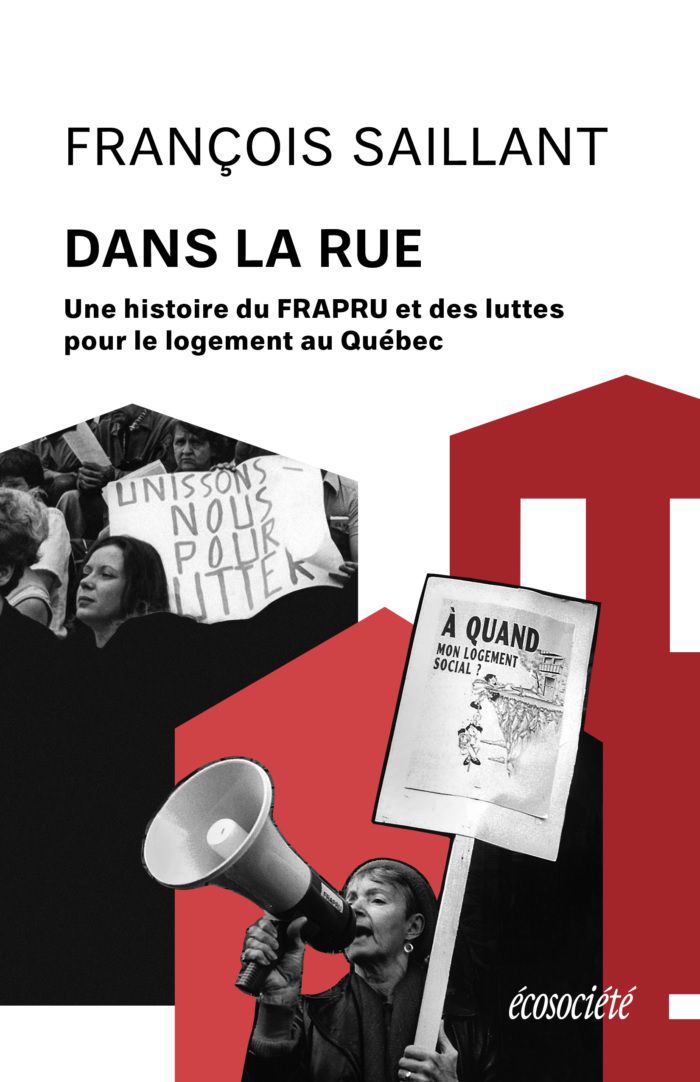
Dans la rue : Une histoire du FRAPRU et des luttes pour le logement au Québec
Actions:
Price:
$28.00
(available in store)
Summary:
La crise du logement frappe durement la population du Québec. Et dès qu’il est question de cet enjeu, le nom du FRAPRU vient immédiatement en tête. Depuis sa création en 1978, le Front d’action populaire en réaménagement urbain est un acteur incontournable des luttes citoyennes en matière d’habitation. Entre la construction d’un bidonville devant l’Assemblée nationale, un campement sur la rivière des Outaouais en hiver, les manifestations, les occupations et les spectacles, les actions du FRAPRU ne laissent jamais indifférents. Le FRAPRU est issu des premiers comités citoyens nés dans les années 1960?–?1970 en réaction aux projets de rénovation urbaine qui éventraient les centres-villes et en chassaient les classes populaires au nom du progrès. Aujourd’hui, il est actif sur le front du logement et de la défense des droits sociaux, comme la lutte contre la pauvreté ou le financement des services publics. François Saillant, qui en a été le porte-parole pendant près de 38 ans, raconte ici l’histoire de ce regroupement qui est parvenu, malgré des moyens modestes, à influencer certaines politiques publiques afin d’éviter des reculs majeurs en matière de droit au logement et de justice sociale. Cette plongée historique permet de mesurer l’impact des décisions politiques passées sur la crise actuelle du logement. Récit d’une aventure collective, Dans la rue est l’histoire de « tant et tant de personnes qui, au fil des ans, se sont impliquées dans leurs groupes locaux […] pour poursuivre sans relâche la lutte pour le droit au logement et la justice sociale ». À la fois témoignage de l’intérieur et exercice de mémoire militante, ce livre leur est dédié.
Dans la rue : Une histoire du FRAPRU et des luttes pour le logement au Québec
Actions:
Price:
$28.00
(available in store)
Summary:
La crise du logement frappe durement la population du Québec. Et dès qu’il est question de cet enjeu, le nom du FRAPRU vient immédiatement en tête. Depuis sa création en 1978, le Front d’action populaire en réaménagement urbain est un acteur incontournable des luttes citoyennes en matière d’habitation. Entre la construction d’un bidonville devant l’Assemblée nationale, un campement sur la rivière des Outaouais en hiver, les manifestations, les occupations et les spectacles, les actions du FRAPRU ne laissent jamais indifférents. Le FRAPRU est issu des premiers comités citoyens nés dans les années 1960?–?1970 en réaction aux projets de rénovation urbaine qui éventraient les centres-villes et en chassaient les classes populaires au nom du progrès. Aujourd’hui, il est actif sur le front du logement et de la défense des droits sociaux, comme la lutte contre la pauvreté ou le financement des services publics. François Saillant, qui en a été le porte-parole pendant près de 38 ans, raconte ici l’histoire de ce regroupement qui est parvenu, malgré des moyens modestes, à influencer certaines politiques publiques afin d’éviter des reculs majeurs en matière de droit au logement et de justice sociale. Cette plongée historique permet de mesurer l’impact des décisions politiques passées sur la crise actuelle du logement. Récit d’une aventure collective, Dans la rue est l’histoire de « tant et tant de personnes qui, au fil des ans, se sont impliquées dans leurs groupes locaux […] pour poursuivre sans relâche la lutte pour le droit au logement et la justice sociale ». À la fois témoignage de l’intérieur et exercice de mémoire militante, ce livre leur est dédié.
Form:
books
books
Publication:
January 2024
January 2024
Subject:
Humans and cities
Humans and cities
Form:
video
video
Title:
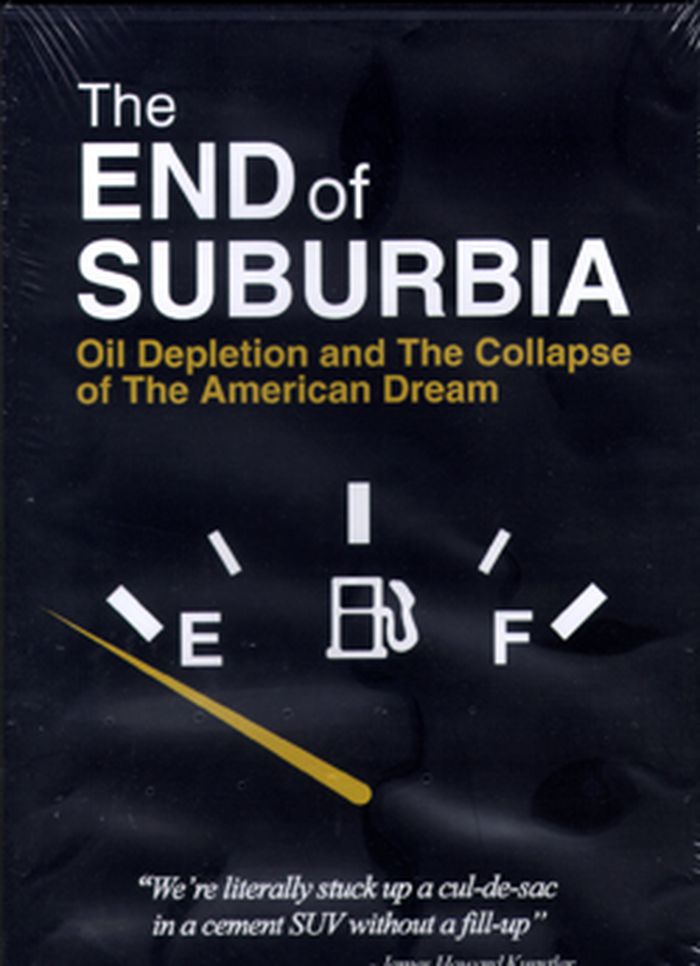
The end of suburbia
The end of suburbia
Actions:
Price:
$25.00
(available to order)
Summary:
Since World War II North Americans have invested much of their newfound wealth in suburbia. It has promised a sense of space, affordability, family life and upward mobility. As the population of suburban sprawl has exploded in the past 50 years, so too has the suburban way of life become embedded in the American consciousness. Suburbia, and all it promises, has become(...)
$25.00
(available to order)
Summary:
Since World War II North Americans have invested much of their newfound wealth in suburbia. It has promised a sense of space, affordability, family life and upward mobility. As the population of suburban sprawl has exploded in the past 50 years, so too has the suburban way of life become embedded in the American consciousness. Suburbia, and all it promises, has become(...)
Title:
The end of suburbia
Actions:
Price:
$25.00
(available to order)
Summary:
Since World War II North Americans have invested much of their newfound wealth in suburbia. It has promised a sense of space, affordability, family life and upward mobility. As the population of suburban sprawl has exploded in the past 50 years, so too has the suburban way of life become embedded in the American consciousness. Suburbia, and all it promises, has become the American Dream. But as we enter the 21st century, serious questions are beginning to emerge about the sustainability of this way of life. With brutal honesty and a touch of irony, "The End of Suburbia" explores the American Way of Life and its prospects as the planet approaches a critical era, as global demand for fossil fuels begins to outstrip supply. World Oil Peak and the inevitable decline of fossil fuels are upon us now, some scientists and policy makers argue in this documentary. The consequences of inaction in the face of this global crisis are enormous. What does Oil Peak mean for North America? As energy prices skyrocket in the coming years, how will the populations of suburbia react to the collapse of their dream? Are today's suburbs destined to become the slums of tomorrow? And what can be done NOW, individually and collectively, to avoid The End of Suburbia ? Hosted by Barrie Zwicker. Featuring James Howard Kunstler, Peter Calthorpe, Michael Klare, Richard Heinberg, Matthew Simmons, Michael C. Ruppert, Julian Darley, Colin Campbell, Kenneth Deffeyes, Ali Samsam Bakhtiari and Steve Andrews. Directed by Gregory Greene. Produced by Barry Silverthorn. Duration: 78 minutes DVD BONUS: Includes the vintage short films, "In the Suburbs" and "Destination Earth", and producer/director commentary.
The end of suburbia
Actions:
Price:
$25.00
(available to order)
Summary:
Since World War II North Americans have invested much of their newfound wealth in suburbia. It has promised a sense of space, affordability, family life and upward mobility. As the population of suburban sprawl has exploded in the past 50 years, so too has the suburban way of life become embedded in the American consciousness. Suburbia, and all it promises, has become the American Dream. But as we enter the 21st century, serious questions are beginning to emerge about the sustainability of this way of life. With brutal honesty and a touch of irony, "The End of Suburbia" explores the American Way of Life and its prospects as the planet approaches a critical era, as global demand for fossil fuels begins to outstrip supply. World Oil Peak and the inevitable decline of fossil fuels are upon us now, some scientists and policy makers argue in this documentary. The consequences of inaction in the face of this global crisis are enormous. What does Oil Peak mean for North America? As energy prices skyrocket in the coming years, how will the populations of suburbia react to the collapse of their dream? Are today's suburbs destined to become the slums of tomorrow? And what can be done NOW, individually and collectively, to avoid The End of Suburbia ? Hosted by Barrie Zwicker. Featuring James Howard Kunstler, Peter Calthorpe, Michael Klare, Richard Heinberg, Matthew Simmons, Michael C. Ruppert, Julian Darley, Colin Campbell, Kenneth Deffeyes, Ali Samsam Bakhtiari and Steve Andrews. Directed by Gregory Greene. Produced by Barry Silverthorn. Duration: 78 minutes DVD BONUS: Includes the vintage short films, "In the Suburbs" and "Destination Earth", and producer/director commentary.
Form:
video
video
Publication:
November 2007, Toronto
November 2007, Toronto
Subject:
DVDs
DVDs
Form:
books
books
Actions:
Price:
$27.50
(available to order)
Summary:
The American suburban dream house-a single-family, detached dwelling, frequently clustered in tight rows and cul-de-sacs-has been attacked for some time as homogeneous and barren, yet the suburbs are home to half of the American population. Architectural historian John Archer suggests the endurance of the ideal house is deeply rooted in the notions of privacy, property,(...)
$27.50
(available to order)
Summary:
The American suburban dream house-a single-family, detached dwelling, frequently clustered in tight rows and cul-de-sacs-has been attacked for some time as homogeneous and barren, yet the suburbs are home to half of the American population. Architectural historian John Archer suggests the endurance of the ideal house is deeply rooted in the notions of privacy, property,(...)
Title:
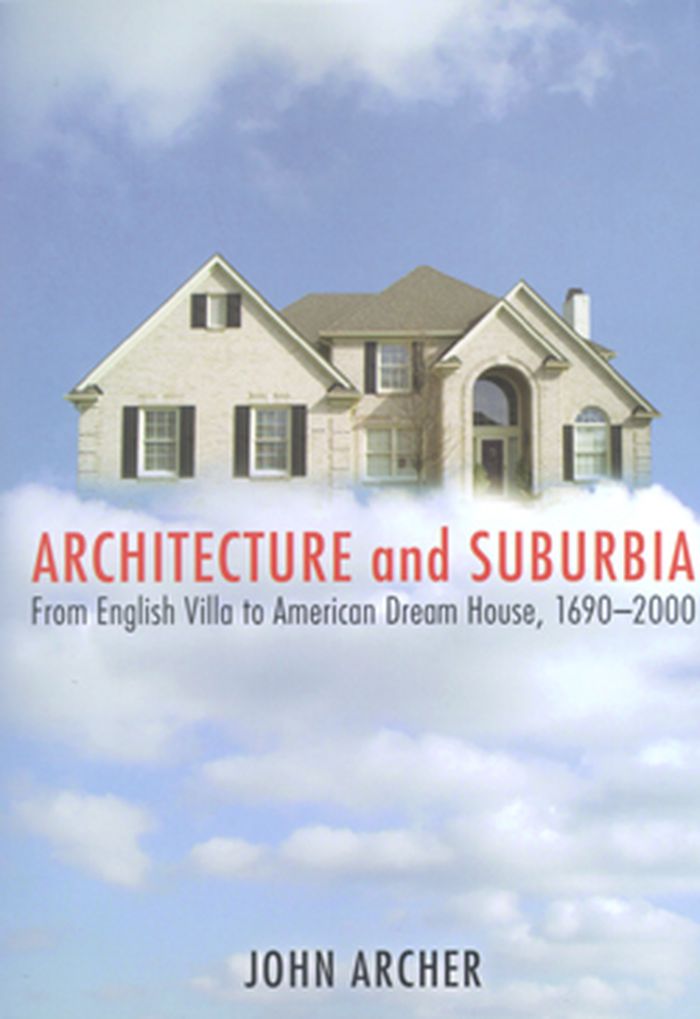
Architecture and suburbia: from english villa to American dream house, 1690-2000
Actions:
Price:
$27.50
(available to order)
Summary:
The American suburban dream house-a single-family, detached dwelling, frequently clustered in tight rows and cul-de-sacs-has been attacked for some time as homogeneous and barren, yet the suburbs are home to half of the American population. Architectural historian John Archer suggests the endurance of the ideal house is deeply rooted in the notions of privacy, property, and selfhood that were introduced in late seventeenth-century England and became the foundation of the American nation and identity. Spanning four centuries, Architecture and Suburbia explores phenomena ranging from household furnishings and routines to the proliferation of the dream house in parallel with Cold War politics. Beginning with John Locke, whose Enlightenment philosophy imagined individuals capable of self-fulfillment, Archer examines the eighteenth-century British bourgeois villa and the earliest London suburbs. He recounts how early American homeowners used houses to establish social status and how twentieth-century Americans continued to flock to single-family houses in the suburbs, encouraged by patriotism, fueled by consumerism, and resisting disdain by disaffected youths, designers, and intellectuals. Finally, he recognizes “hybridized” or increasingly diverse American suburbs as the dynamic basis for a strengthened social fabric. From Enlightenment philosophy to rap lyrics, from the rise of a mercantile economy to discussions over neighborhoods, sprawl, and gated communities, Archer addresses the past, present, and future of the American dream house. John Archer is professor of cultural studies and comparative literature at the University of Minnesota. His book The Literature of British Domestic Architecture, 1715-1842, is the standard reference on the subject, and he also contributed to the Encyclopedia of Urban America and the Encyclopedia of Twentieth-Century Architecture.
Architecture and suburbia: from english villa to American dream house, 1690-2000
Actions:
Price:
$27.50
(available to order)
Summary:
The American suburban dream house-a single-family, detached dwelling, frequently clustered in tight rows and cul-de-sacs-has been attacked for some time as homogeneous and barren, yet the suburbs are home to half of the American population. Architectural historian John Archer suggests the endurance of the ideal house is deeply rooted in the notions of privacy, property, and selfhood that were introduced in late seventeenth-century England and became the foundation of the American nation and identity. Spanning four centuries, Architecture and Suburbia explores phenomena ranging from household furnishings and routines to the proliferation of the dream house in parallel with Cold War politics. Beginning with John Locke, whose Enlightenment philosophy imagined individuals capable of self-fulfillment, Archer examines the eighteenth-century British bourgeois villa and the earliest London suburbs. He recounts how early American homeowners used houses to establish social status and how twentieth-century Americans continued to flock to single-family houses in the suburbs, encouraged by patriotism, fueled by consumerism, and resisting disdain by disaffected youths, designers, and intellectuals. Finally, he recognizes “hybridized” or increasingly diverse American suburbs as the dynamic basis for a strengthened social fabric. From Enlightenment philosophy to rap lyrics, from the rise of a mercantile economy to discussions over neighborhoods, sprawl, and gated communities, Archer addresses the past, present, and future of the American dream house. John Archer is professor of cultural studies and comparative literature at the University of Minnesota. His book The Literature of British Domestic Architecture, 1715-1842, is the standard reference on the subject, and he also contributed to the Encyclopedia of Urban America and the Encyclopedia of Twentieth-Century Architecture.
Form:
books
books
Publication:
February 2008, Minneapolis, London
February 2008, Minneapolis, London
Subject:
Suburbs
Suburbs
Form:
books
books
Actions:
Price:
$26.95
(available to order)
Summary:
Rapid urban growth and suburban sprawl have heightened concern in many quarters about sustainable development. Are economic growth and environmental health always mutually exclusive goals? Nearly everyone would choose to pursue both given the chance, but many believe that it would be overly optimistic — perhaps naïve — to expect both. "Green city" proponents, however, do(...)
$26.95
(available to order)
Summary:
Rapid urban growth and suburban sprawl have heightened concern in many quarters about sustainable development. Are economic growth and environmental health always mutually exclusive goals? Nearly everyone would choose to pursue both given the chance, but many believe that it would be overly optimistic — perhaps naïve — to expect both. "Green city" proponents, however, do(...)
Title:
Green cities : urban growth and the environment
Actions:
Price:
$26.95
(available to order)
Summary:
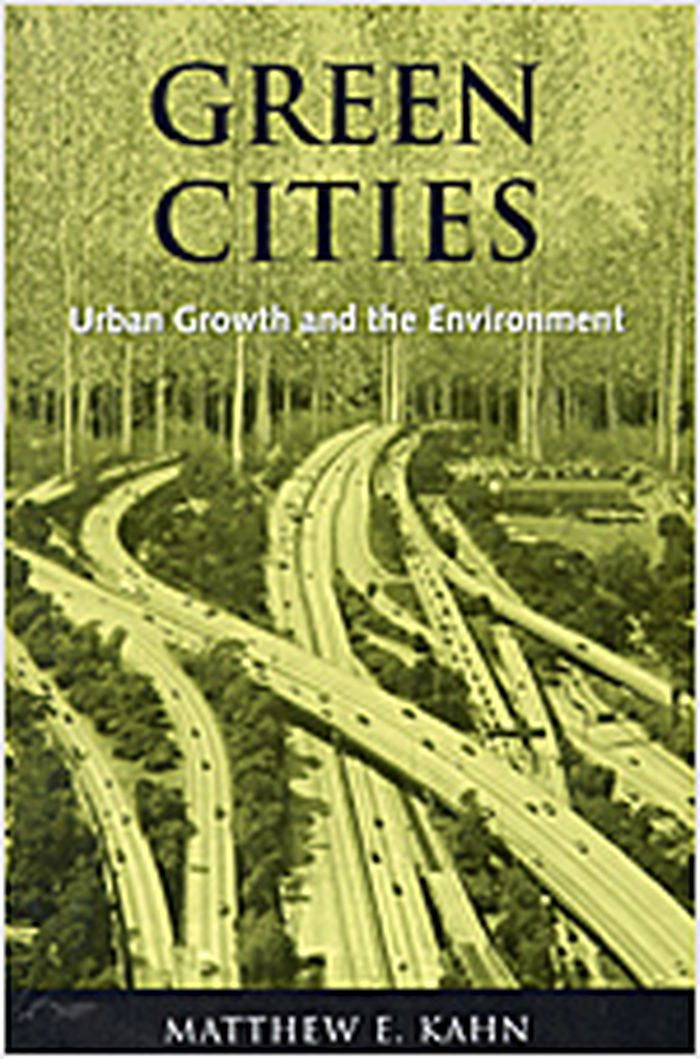
Rapid urban growth and suburban sprawl have heightened concern in many quarters about sustainable development. Are economic growth and environmental health always mutually exclusive goals? Nearly everyone would choose to pursue both given the chance, but many believe that it would be overly optimistic — perhaps naïve — to expect both. "Green city" proponents, however, do hope to realize both ambitions. What exactly is a green city? What does it mean to say that San Francisco is greener than Houston, or that Vancouver is a green city while Beijing is not? When does urban growth lower environmental quality, and when does it produce environmental gains? These are the questions that drive this smart and engaging book. In "Green cities", Matthew Kahn surveys the burgeoning economic literature on the environmental consequences of urban growth. He discusses the environmental Kuznets curve, which theorizes that the relationship between environmental quality and per capita income follows a bell-shaped curve. The heart of the book unpacks and expands this notion by tracing the environmental effects of economic growth, population growth, and suburban sprawl. Kahn considers how cities can deal with the environmental challenges produced by growth. His concluding chapter addresses the role of cities in promoting climate change and asks how cities in turn are likely to be affected by this trend. Kahn considers the evidence for and against rival perspectives throughout the book. Despite being labeled as purveyors of a "dismal science," economists are often quite optimistic about the relationship between urban development and the environment. In contrast, many ecologists remain wary of the environmental consequences of free-market growth. "Green cities" does not try to settle this dispute. Instead, it marshals data and arguments to convey the excitement of an ongoing debate, enabling readers to formulate well-informed opinions and priorities on this critically important issue.
Green cities : urban growth and the environment
Actions:
Price:
$26.95
(available to order)
Summary:
Rapid urban growth and suburban sprawl have heightened concern in many quarters about sustainable development. Are economic growth and environmental health always mutually exclusive goals? Nearly everyone would choose to pursue both given the chance, but many believe that it would be overly optimistic — perhaps naïve — to expect both. "Green city" proponents, however, do hope to realize both ambitions. What exactly is a green city? What does it mean to say that San Francisco is greener than Houston, or that Vancouver is a green city while Beijing is not? When does urban growth lower environmental quality, and when does it produce environmental gains? These are the questions that drive this smart and engaging book. In "Green cities", Matthew Kahn surveys the burgeoning economic literature on the environmental consequences of urban growth. He discusses the environmental Kuznets curve, which theorizes that the relationship between environmental quality and per capita income follows a bell-shaped curve. The heart of the book unpacks and expands this notion by tracing the environmental effects of economic growth, population growth, and suburban sprawl. Kahn considers how cities can deal with the environmental challenges produced by growth. His concluding chapter addresses the role of cities in promoting climate change and asks how cities in turn are likely to be affected by this trend. Kahn considers the evidence for and against rival perspectives throughout the book. Despite being labeled as purveyors of a "dismal science," economists are often quite optimistic about the relationship between urban development and the environment. In contrast, many ecologists remain wary of the environmental consequences of free-market growth. "Green cities" does not try to settle this dispute. Instead, it marshals data and arguments to convey the excitement of an ongoing debate, enabling readers to formulate well-informed opinions and priorities on this critically important issue.
Form:
books
books
Publication:
August 2006, Washington, D.C.
August 2006, Washington, D.C.
Subject:
Urban Theory
Urban Theory
Form:
books
books
Actions:
Price:
$37.50
(available to order)
Summary:
Despite Bill Brandt’s fame and considerable influence on the development of modern photography, the photographs in this book are a little known body of work. The work was carried out between 1939 and 1943 when Brandt worked on a commercial assignment for the Bournville Village Trust. The prints and negatives have been with BVT for some 60 years and the work has never(...)
$37.50
(available to order)
Summary:
Despite Bill Brandt’s fame and considerable influence on the development of modern photography, the photographs in this book are a little known body of work. The work was carried out between 1939 and 1943 when Brandt worked on a commercial assignment for the Bournville Village Trust. The prints and negatives have been with BVT for some 60 years and the work has never(...)
Subject:
Photography monographs
Photography monographs
Publication:
November 2004, Birmingham
November 2004, Birmingham
Title:
Homes fit for heroes : photographs by Bill Brandt, 1939-1943
Actions:
Price:
$37.50
(available to order)
Summary:
Despite Bill Brandt’s fame and considerable influence on the development of modern photography, the photographs in this book are a little known body of work. The work was carried out between 1939 and 1943 when Brandt worked on a commercial assignment for the Bournville Village Trust. The prints and negatives have been with BVT for some 60 years and the work has never been previously published. The photographs illustrate the living conditions in a range of housing types. For example, the back-to-back slums built in the nineteenth century through to modern municipal housing built in the 1930s. The majority of the photographs were taken in Birmingham but also some in London where he looked at ‘old residential’ properties near to his own home in Camden Hill. London was undoubtedly one of Brandt’s favourite subjects and these photographs, taken around 1943, are amongst a much larger body of work Brandt shot in the capital city during the war-years. The Bourneville Village Trust was set up by George Cadbury in 1900 to manage the Bournville Estate, the model housing development which he created near his factory on the outskirts of Birmingham. The objects of the trust included: “the amelioration of the conditions of the working class population of Birmingham and elsewhere in Great Britain”. Many books and articles published around this time sought to address the issue of the living conditions of the working classes and photography played a key role. The images form distinct picture stories where direct contrasts are made between slum and municipal housing. Brandt also uses light very carefully within these images to emphasise these contrasts. A number of the stories follow a distinct narrative sequence – through the idea of ‘a day in the life’ – a device frequently used in the influential magazine, "Picture Post", for which Brandt often worked.
Homes fit for heroes : photographs by Bill Brandt, 1939-1943
Actions:
Price:
$37.50
(available to order)
Summary:
Despite Bill Brandt’s fame and considerable influence on the development of modern photography, the photographs in this book are a little known body of work. The work was carried out between 1939 and 1943 when Brandt worked on a commercial assignment for the Bournville Village Trust. The prints and negatives have been with BVT for some 60 years and the work has never been previously published. The photographs illustrate the living conditions in a range of housing types. For example, the back-to-back slums built in the nineteenth century through to modern municipal housing built in the 1930s. The majority of the photographs were taken in Birmingham but also some in London where he looked at ‘old residential’ properties near to his own home in Camden Hill. London was undoubtedly one of Brandt’s favourite subjects and these photographs, taken around 1943, are amongst a much larger body of work Brandt shot in the capital city during the war-years. The Bourneville Village Trust was set up by George Cadbury in 1900 to manage the Bournville Estate, the model housing development which he created near his factory on the outskirts of Birmingham. The objects of the trust included: “the amelioration of the conditions of the working class population of Birmingham and elsewhere in Great Britain”. Many books and articles published around this time sought to address the issue of the living conditions of the working classes and photography played a key role. The images form distinct picture stories where direct contrasts are made between slum and municipal housing. Brandt also uses light very carefully within these images to emphasise these contrasts. A number of the stories follow a distinct narrative sequence – through the idea of ‘a day in the life’ – a device frequently used in the influential magazine, "Picture Post", for which Brandt often worked.
Form:
books
books
Publication:
November 2004, Birmingham
November 2004, Birmingham
Subject:
Photography monographs
Photography monographs
Form:
books
books
Actions:
Price:
$49.95
(available to order)
Summary:
Aujourd'hui le Marais est un secteur sauvegardé et jouit d'une forte attractivité touristique et commerciale alors qu'il était au coeur d'un Paris industrieux et populaire jusque dans les années 1980. Sa partie sud, au bord de la Seine, est l'un des dix-sept îlots insalubres parisiens délimités en 1920. Sous la dénomination «îlot 16», il focalise l'attention des pouvoirs(...)
$49.95
(available to order)
Summary:
Aujourd'hui le Marais est un secteur sauvegardé et jouit d'une forte attractivité touristique et commerciale alors qu'il était au coeur d'un Paris industrieux et populaire jusque dans les années 1980. Sa partie sud, au bord de la Seine, est l'un des dix-sept îlots insalubres parisiens délimités en 1920. Sous la dénomination «îlot 16», il focalise l'attention des pouvoirs(...)
Title:
Paris transformé : le Marais, 1900-1980
Actions:
Price:
$49.95
(available to order)
Summary:
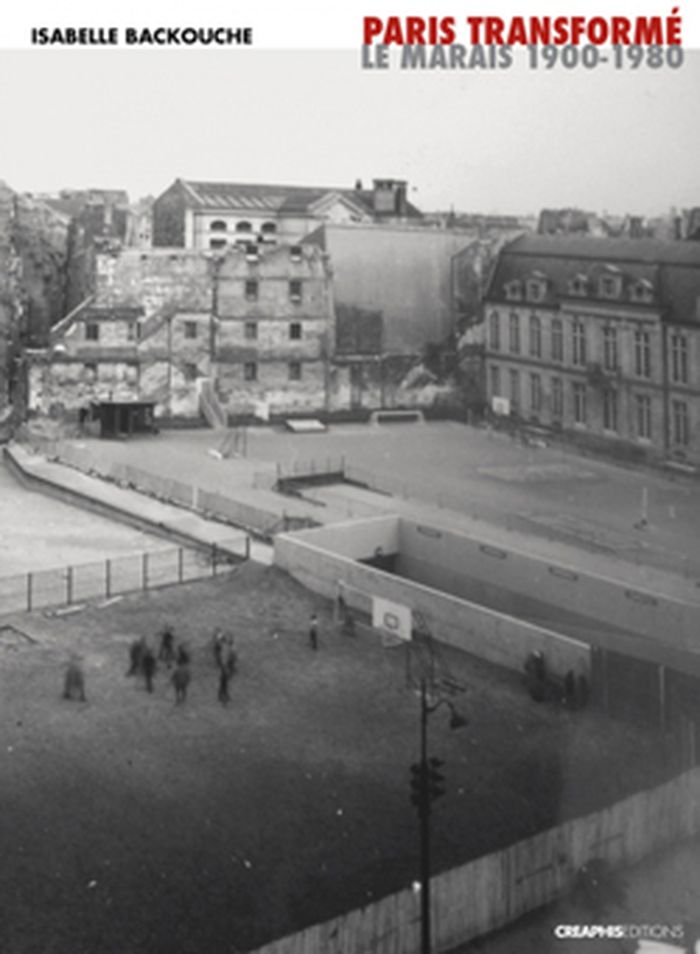
Aujourd'hui le Marais est un secteur sauvegardé et jouit d'une forte attractivité touristique et commerciale alors qu'il était au coeur d'un Paris industrieux et populaire jusque dans les années 1980. Sa partie sud, au bord de la Seine, est l'un des dix-sept îlots insalubres parisiens délimités en 1920. Sous la dénomination «îlot 16», il focalise l'attention des pouvoirs publics tout au long du XXe siècle. Son destin témoigne des liens complexes entre la réputation d'insalubrité, la stigmatisation d'un ghetto et la réflexion sur les conditions de préservation d'un quartier de Paris. Emblématique du Paris historique, il a suscité de nombreux programmes, projets, débats et combats avant et après la décision de sa sauvegarde au titre de la loi Malraux de 1962. Que sait-on de cette transformation urbaine ? Comment et à quel rythme a-t-elle abouti au renouvellement de la population ? L'aménagement de l'îlot 16 a été bloqué, dans l'entre-deux-guerres, par l'épineuse question du relogement et le coût des indemnités. Il est brusquement réactivé en 1941 dans un Paris occupé : Vichy et la préfecture de la Seine, profitant de la persécution antisémite exercée à partir de 1940, lancent une opération édilitaire de grande ampleur, inédite depuis les travaux d'Haussmann. L'historienne Isabelle Backouche observe à la loupe cette transformation urbaine à l'échelle de la capitale en réunissant tous les acteurs impliqués (pouvoirs politiques, administration, architectes, propriétaires, locataires, commerçants, associations, hommes de lettres et savants). Au cours de ce voyage dans les archives, elle a mené une enquête sans précédent. Sa proposition d'histoire aborde l'aménagement de la capitale en mettant en valeur la diversité de ses temporalités, les expériences de tous les Parisiens, du plus modeste au plus influent, et les résistances qui ont accompagné la genèse du Paris du XXIe siècle.
Paris transformé : le Marais, 1900-1980
Actions:
Price:
$49.95
(available to order)
Summary:
Aujourd'hui le Marais est un secteur sauvegardé et jouit d'une forte attractivité touristique et commerciale alors qu'il était au coeur d'un Paris industrieux et populaire jusque dans les années 1980. Sa partie sud, au bord de la Seine, est l'un des dix-sept îlots insalubres parisiens délimités en 1920. Sous la dénomination «îlot 16», il focalise l'attention des pouvoirs publics tout au long du XXe siècle. Son destin témoigne des liens complexes entre la réputation d'insalubrité, la stigmatisation d'un ghetto et la réflexion sur les conditions de préservation d'un quartier de Paris. Emblématique du Paris historique, il a suscité de nombreux programmes, projets, débats et combats avant et après la décision de sa sauvegarde au titre de la loi Malraux de 1962. Que sait-on de cette transformation urbaine ? Comment et à quel rythme a-t-elle abouti au renouvellement de la population ? L'aménagement de l'îlot 16 a été bloqué, dans l'entre-deux-guerres, par l'épineuse question du relogement et le coût des indemnités. Il est brusquement réactivé en 1941 dans un Paris occupé : Vichy et la préfecture de la Seine, profitant de la persécution antisémite exercée à partir de 1940, lancent une opération édilitaire de grande ampleur, inédite depuis les travaux d'Haussmann. L'historienne Isabelle Backouche observe à la loupe cette transformation urbaine à l'échelle de la capitale en réunissant tous les acteurs impliqués (pouvoirs politiques, administration, architectes, propriétaires, locataires, commerçants, associations, hommes de lettres et savants). Au cours de ce voyage dans les archives, elle a mené une enquête sans précédent. Sa proposition d'histoire aborde l'aménagement de la capitale en mettant en valeur la diversité de ses temporalités, les expériences de tous les Parisiens, du plus modeste au plus influent, et les résistances qui ont accompagné la genèse du Paris du XXIe siècle.
Form:
books
books
Publication:
April 2016
April 2016
Subject:
History until 1900, France
History until 1900, France


