


44160 Results
Level of archival description:
Project
Project
Actions:
Reference number:
AP075.S1.1988.PR03
Description:
Project series documents Cornelia Hahn Oberlander's landscape project for Les Terraces, an apartment tower located on Bellevue Avenue in West Vancouver, British Columbia. Oberlander worked on this project in 1988-1991 with architectural firm Matsuzaki Wright Architects. The project consisted in a landscape design for the looped drive and parking area in front of the appartment building entrance. The project series contains sketches, design development drawings, including proposed landscape designs, preliminary landscape plans, planting plans, and working drawings, such as irrigation plans, landscape plans and details for trellis, and building plans used as reference. The project series also comprises concept notes by Oberlander, correspondence with client and architects, minutes of meetings, financial document, landscape specifications and plant lists.
AP075.S1.1988.PR03
Description:
Project series documents Cornelia Hahn Oberlander's landscape project for Les Terraces, an apartment tower located on Bellevue Avenue in West Vancouver, British Columbia. Oberlander worked on this project in 1988-1991 with architectural firm Matsuzaki Wright Architects. The project consisted in a landscape design for the looped drive and parking area in front of the appartment building entrance. The project series contains sketches, design development drawings, including proposed landscape designs, preliminary landscape plans, planting plans, and working drawings, such as irrigation plans, landscape plans and details for trellis, and building plans used as reference. The project series also comprises concept notes by Oberlander, correspondence with client and architects, minutes of meetings, financial document, landscape specifications and plant lists.
People:
Date:
1988-1992
1988-1992
Title:
Les Terraces, West Vancouver, British Columbia (1988)
Actions:
AP075.S1.1988.PR03
Description:
Project series documents Cornelia Hahn Oberlander's landscape project for Les Terraces, an apartment tower located on Bellevue Avenue in West Vancouver, British Columbia. Oberlander worked on this project in 1988-1991 with architectural firm Matsuzaki Wright Architects. The project consisted in a landscape design for the looped drive and parking area in front of the appartment building entrance. The project series contains sketches, design development drawings, including proposed landscape designs, preliminary landscape plans, planting plans, and working drawings, such as irrigation plans, landscape plans and details for trellis, and building plans used as reference. The project series also comprises concept notes by Oberlander, correspondence with client and architects, minutes of meetings, financial document, landscape specifications and plant lists.
Les Terraces, West Vancouver, British Columbia (1988)
Actions:
AP075.S1.1988.PR03
Description:
Project series documents Cornelia Hahn Oberlander's landscape project for Les Terraces, an apartment tower located on Bellevue Avenue in West Vancouver, British Columbia. Oberlander worked on this project in 1988-1991 with architectural firm Matsuzaki Wright Architects. The project consisted in a landscape design for the looped drive and parking area in front of the appartment building entrance. The project series contains sketches, design development drawings, including proposed landscape designs, preliminary landscape plans, planting plans, and working drawings, such as irrigation plans, landscape plans and details for trellis, and building plans used as reference. The project series also comprises concept notes by Oberlander, correspondence with client and architects, minutes of meetings, financial document, landscape specifications and plant lists.
Level of archival description:
Project
Project
Date:
1988-1992
1988-1992
People:
Form:
photographs
photographs
Reference number:
AP207.S4.009
Description:
Includes reference slides on history of architecture, including slides on radical architecture, slides on Aldo Rossi's works, and Ettore Sottsass Senior's works.
AP207.S4.009
Description:
Includes reference slides on history of architecture, including slides on radical architecture, slides on Aldo Rossi's works, and Ettore Sottsass Senior's works.
People:
Date:
1970s-1990s
1970s-1990s
Title:
References slides used as teaching material
Actions:
AP207.S4.009
Description:
Includes reference slides on history of architecture, including slides on radical architecture, slides on Aldo Rossi's works, and Ettore Sottsass Senior's works.
References slides used as teaching material
Actions:
AP207.S4.009
Description:
Includes reference slides on history of architecture, including slides on radical architecture, slides on Aldo Rossi's works, and Ettore Sottsass Senior's works.
Form:
photographs
photographs
Date:
1970s-1990s
1970s-1990s
People:
Form:
works of art
works of art
Actions:
Reference number:
DR1987:0026
Description:
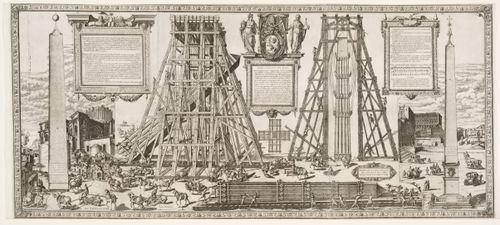
- During the moving of the obelisk, Fontana issued two prints, DR1987:0026 & DR1987:0027. The first (this print), was published in March 1586 just prior to the lowering, and distributed with a companion tract by Filippo Pigafetta. It shows both the original and final positions of the obelisk as well as the device proposed by Fontana for its transportation. This involved the use of a twin timber tower (the castello, as it was called, is seen in the central portion of the print) that was erected on either side of the obelisk and was used for lowering and raising the monolith. The second print (DR1987:0027) appeared in August, during the raising, and showed the lowering of the obelisk, as it had occured in late April, with a detailed inventory of all the men and horses involved in the operation. The transportation was begun on 30 April and was completed on 10 September, according to Fontana's description of the process in his book, 'Della trasportione dell'obelisco vaticano' of 1590, a work illustrated by Bonifazio and Guerra, the two artists responsible for the execution of these prints.
DR1987:0026
Description:
- During the moving of the obelisk, Fontana issued two prints, DR1987:0026 & DR1987:0027. The first (this print), was published in March 1586 just prior to the lowering, and distributed with a companion tract by Filippo Pigafetta. It shows both the original and final positions of the obelisk as well as the device proposed by Fontana for its transportation. This involved the use of a twin timber tower (the castello, as it was called, is seen in the central portion of the print) that was erected on either side of the obelisk and was used for lowering and raising the monolith. The second print (DR1987:0027) appeared in August, during the raising, and showed the lowering of the obelisk, as it had occured in late April, with a detailed inventory of all the men and horses involved in the operation. The transportation was begun on 30 April and was completed on 10 September, according to Fontana's description of the process in his book, 'Della trasportione dell'obelisco vaticano' of 1590, a work illustrated by Bonifazio and Guerra, the two artists responsible for the execution of these prints.
People:
Subject:
architecture, engineering
architecture, engineering
Date:
March 1586
March 1586
Title:
Plan, Elevation, and Perspective of the Castello Used in the Transportation of the Vatican Obelisk; and Views of the Original and Final Location of the Obelisk
Actions:
DR1987:0026
Description:
- During the moving of the obelisk, Fontana issued two prints, DR1987:0026 & DR1987:0027. The first (this print), was published in March 1586 just prior to the lowering, and distributed with a companion tract by Filippo Pigafetta. It shows both the original and final positions of the obelisk as well as the device proposed by Fontana for its transportation. This involved the use of a twin timber tower (the castello, as it was called, is seen in the central portion of the print) that was erected on either side of the obelisk and was used for lowering and raising the monolith. The second print (DR1987:0027) appeared in August, during the raising, and showed the lowering of the obelisk, as it had occured in late April, with a detailed inventory of all the men and horses involved in the operation. The transportation was begun on 30 April and was completed on 10 September, according to Fontana's description of the process in his book, 'Della trasportione dell'obelisco vaticano' of 1590, a work illustrated by Bonifazio and Guerra, the two artists responsible for the execution of these prints.
Plan, Elevation, and Perspective of the Castello Used in the Transportation of the Vatican Obelisk; and Views of the Original and Final Location of the Obelisk
Actions:
DR1987:0026
Description:
- During the moving of the obelisk, Fontana issued two prints, DR1987:0026 & DR1987:0027. The first (this print), was published in March 1586 just prior to the lowering, and distributed with a companion tract by Filippo Pigafetta. It shows both the original and final positions of the obelisk as well as the device proposed by Fontana for its transportation. This involved the use of a twin timber tower (the castello, as it was called, is seen in the central portion of the print) that was erected on either side of the obelisk and was used for lowering and raising the monolith. The second print (DR1987:0027) appeared in August, during the raising, and showed the lowering of the obelisk, as it had occured in late April, with a detailed inventory of all the men and horses involved in the operation. The transportation was begun on 30 April and was completed on 10 September, according to Fontana's description of the process in his book, 'Della trasportione dell'obelisco vaticano' of 1590, a work illustrated by Bonifazio and Guerra, the two artists responsible for the execution of these prints.
Form:
works of art
works of art
Date:
March 1586
March 1586
People:
Subject:
architecture, engineering
architecture, engineering
Form:
events
events

Actions:
Description:
The CCA hosts a second afternoon of discussion on the work of Cedric Price, with the participation of Samantha Hardingham, Whitney Moon, Molly Wright Steenson, Kathy Velikov, and Mark Wigley. As Price’s archive is one of the most consulted at the CCA, we have invited scholars, mostly from North America, to present their individual motivations and methodologies for(...)
The CCA hosts a second afternoon of discussion on the work of Cedric Price, with the participation of Samantha Hardingham, Whitney Moon, Molly Wright Steenson, Kathy Velikov, and Mark Wigley. As Price’s archive is one of the most consulted at the CCA, we have invited scholars, mostly from North America, to present their individual motivations and methodologies for(...)
Date:
9 February 2017
9 February 2017
Title:
An Afternoon with Cedric Price no. 2
Actions:
Description:
The CCA hosts a second afternoon of discussion on the work of Cedric Price, with the participation of Samantha Hardingham, Whitney Moon, Molly Wright Steenson, Kathy Velikov, and Mark Wigley. As Price’s archive is one of the most consulted at the CCA, we have invited scholars, mostly from North America, to present their individual motivations and methodologies for(...)
An Afternoon with Cedric Price no. 2
Actions:
Description:
The CCA hosts a second afternoon of discussion on the work of Cedric Price, with the participation of Samantha Hardingham, Whitney Moon, Molly Wright Steenson, Kathy Velikov, and Mark Wigley. As Price’s archive is one of the most consulted at the CCA, we have invited scholars, mostly from North America, to present their individual motivations and methodologies for(...)
Form:
events
events
Date:
9 February 2017
9 February 2017
Form:
events
events
Actions:
Description:
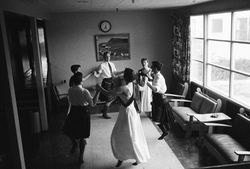
While we wait for the climate crisis to convince us that it is real, what is the right attitude to take? Should we panic, start saving food, or just lie down and try to relax? Join us in a temporary tv studio for a live recording of diverse thinkers presenting their work and reflecting on how it suggests different ways forward. To mark the opening of It’s All Happening(...)
While we wait for the climate crisis to convince us that it is real, what is the right attitude to take? Should we panic, start saving food, or just lie down and try to relax? Join us in a temporary tv studio for a live recording of diverse thinkers presenting their work and reflecting on how it suggests different ways forward. To mark the opening of It’s All Happening(...)
Date:
16 November 2016
16 November 2016
Title:
Hostile or docile?
Actions:
Description:
While we wait for the climate crisis to convince us that it is real, what is the right attitude to take? Should we panic, start saving food, or just lie down and try to relax? Join us in a temporary tv studio for a live recording of diverse thinkers presenting their work and reflecting on how it suggests different ways forward. To mark the opening of It’s All Happening(...)
Hostile or docile?
Actions:
Description:
While we wait for the climate crisis to convince us that it is real, what is the right attitude to take? Should we panic, start saving food, or just lie down and try to relax? Join us in a temporary tv studio for a live recording of diverse thinkers presenting their work and reflecting on how it suggests different ways forward. To mark the opening of It’s All Happening(...)
Form:
events
events
Date:
16 November 2016
16 November 2016
Form:
articles
articles
Title:
Documenting Inuit Life
Documenting Inuit Life
Actions:
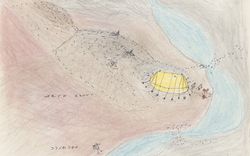
Olivia Lya Thomassie explores the drawings of Tuumasi Kudluk
Form:
photographs
photographs
Reference number:
AP207.S4.021
Description:
Includes reference slides of Mœbius's (Jean Giraud) works, designs by Memphis' groups (including Ettore Sotsass Senior) and Angiolo Mazzoni's works.
AP207.S4.021
Description:
Includes reference slides of Mœbius's (Jean Giraud) works, designs by Memphis' groups (including Ettore Sotsass Senior) and Angiolo Mazzoni's works.
People:
Date:
1970s-1990s
1970s-1990s
Title:
References slides used as teaching material
Actions:
AP207.S4.021
Description:
Includes reference slides of Mœbius's (Jean Giraud) works, designs by Memphis' groups (including Ettore Sotsass Senior) and Angiolo Mazzoni's works.
References slides used as teaching material
Actions:
AP207.S4.021
Description:
Includes reference slides of Mœbius's (Jean Giraud) works, designs by Memphis' groups (including Ettore Sotsass Senior) and Angiolo Mazzoni's works.
Form:
photographs
photographs
Date:
1970s-1990s
1970s-1990s
People:
Actions:
Reference number:
PHCON2002:0016:002:056
Description:
Lists works of art and prices.
PHCON2002:0016:002:056
Description:
Lists works of art and prices.
People:
Date:
24 January 1973
24 January 1973
Title:
Inventory of works by Gordon Matta-Clark at Galleria Form
Actions:
PHCON2002:0016:002:056
Description:
Lists works of art and prices.
Inventory of works by Gordon Matta-Clark at Galleria Form
Actions:
PHCON2002:0016:002:056
Description:
Lists works of art and prices.
Date:
24 January 1973
24 January 1973
People:
Form:
events
events
Actions:
Description:
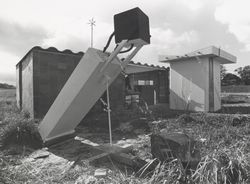
In the Yesterday Today lecture series, Canadian architect and author Witold Rybczynski discusses the roots of Ecol House, a prototype for an autonomous dwelling for use in developing countries. The project was created in Montréal in 1972 by Ecol Operation, a group of architects and students of which he was a member that became an international point of reference for(...)
In the Yesterday Today lecture series, Canadian architect and author Witold Rybczynski discusses the roots of Ecol House, a prototype for an autonomous dwelling for use in developing countries. The project was created in Montréal in 1972 by Ecol Operation, a group of architects and students of which he was a member that became an international point of reference for(...)
Location:
Paul-Desmarais Theatre
Paul-Desmarais Theatre
Date:
29 November 2007
29 November 2007
Title:
Witold Rybczynski: Green Before Green
Actions:
Description:
In the Yesterday Today lecture series, Canadian architect and author Witold Rybczynski discusses the roots of Ecol House, a prototype for an autonomous dwelling for use in developing countries. The project was created in Montréal in 1972 by Ecol Operation, a group of architects and students of which he was a member that became an international point of reference for(...)
Witold Rybczynski: Green Before Green
Actions:
Description:
In the Yesterday Today lecture series, Canadian architect and author Witold Rybczynski discusses the roots of Ecol House, a prototype for an autonomous dwelling for use in developing countries. The project was created in Montréal in 1972 by Ecol Operation, a group of architects and students of which he was a member that became an international point of reference for(...)
Form:
events
events
Date:
29 November 2007
29 November 2007
Location:
Paul-Desmarais Theatre
Paul-Desmarais Theatre
Form:
drawings
drawings
Actions:
Reference number:
DR1989:0015:066
Description:
- This work is part of a group of drawings and reprographic prints of drawings for St. Peter's Home, Woking, and St. Peter's Convent, Woking, from the offices of John Loughborough Pearson and Frank Loughborough Pearson (DR1989:0015:011 - DR1989:0015:085 R/V). Composed of contract and working drawings including plans, site plans, sections, and elevations dated between 1881 and 1936, these drawings were sold at auction by the convent along with those for the older institution of St. Peter's Home, Kilburn (DR1989:0015:001 - DR1989:0015:010). Both St. Peter's Home, Kilburn, and St. Peter's Home, Woking were commissioned from John Loughborough Pearson by Benjamin Lancaster. The alterations to the Home at Kilburn were commissioned on behalf of Lancaster's wife, who founded the home and a lay nursing order which ran it. The institution at Woking was founded by Lancaster as a home for incurables in 1882 and dedicated to the memory of his deceased wife (Quiney 67-68, 254-255, and 284). It was probably first known as St. Peter's Home, Woking, not becoming a convent until ca. 1934.
DR1989:0015:066
Description:
- This work is part of a group of drawings and reprographic prints of drawings for St. Peter's Home, Woking, and St. Peter's Convent, Woking, from the offices of John Loughborough Pearson and Frank Loughborough Pearson (DR1989:0015:011 - DR1989:0015:085 R/V). Composed of contract and working drawings including plans, site plans, sections, and elevations dated between 1881 and 1936, these drawings were sold at auction by the convent along with those for the older institution of St. Peter's Home, Kilburn (DR1989:0015:001 - DR1989:0015:010). Both St. Peter's Home, Kilburn, and St. Peter's Home, Woking were commissioned from John Loughborough Pearson by Benjamin Lancaster. The alterations to the Home at Kilburn were commissioned on behalf of Lancaster's wife, who founded the home and a lay nursing order which ran it. The institution at Woking was founded by Lancaster as a home for incurables in 1882 and dedicated to the memory of his deceased wife (Quiney 67-68, 254-255, and 284). It was probably first known as St. Peter's Home, Woking, not becoming a convent until ca. 1934.
People:
Subject:
architecture
architecture
Date:
1934-1935 ?
1934-1935 ?
Title:
St. Peter's Convent, Woking: Plans for the two lowest floors of the dormitory, those for the novices and the lay Sisters
Actions:
DR1989:0015:066
Description:
- This work is part of a group of drawings and reprographic prints of drawings for St. Peter's Home, Woking, and St. Peter's Convent, Woking, from the offices of John Loughborough Pearson and Frank Loughborough Pearson (DR1989:0015:011 - DR1989:0015:085 R/V). Composed of contract and working drawings including plans, site plans, sections, and elevations dated between 1881 and 1936, these drawings were sold at auction by the convent along with those for the older institution of St. Peter's Home, Kilburn (DR1989:0015:001 - DR1989:0015:010). Both St. Peter's Home, Kilburn, and St. Peter's Home, Woking were commissioned from John Loughborough Pearson by Benjamin Lancaster. The alterations to the Home at Kilburn were commissioned on behalf of Lancaster's wife, who founded the home and a lay nursing order which ran it. The institution at Woking was founded by Lancaster as a home for incurables in 1882 and dedicated to the memory of his deceased wife (Quiney 67-68, 254-255, and 284). It was probably first known as St. Peter's Home, Woking, not becoming a convent until ca. 1934.
St. Peter's Convent, Woking: Plans for the two lowest floors of the dormitory, those for the novices and the lay Sisters
Actions:
DR1989:0015:066
Description:
- This work is part of a group of drawings and reprographic prints of drawings for St. Peter's Home, Woking, and St. Peter's Convent, Woking, from the offices of John Loughborough Pearson and Frank Loughborough Pearson (DR1989:0015:011 - DR1989:0015:085 R/V). Composed of contract and working drawings including plans, site plans, sections, and elevations dated between 1881 and 1936, these drawings were sold at auction by the convent along with those for the older institution of St. Peter's Home, Kilburn (DR1989:0015:001 - DR1989:0015:010). Both St. Peter's Home, Kilburn, and St. Peter's Home, Woking were commissioned from John Loughborough Pearson by Benjamin Lancaster. The alterations to the Home at Kilburn were commissioned on behalf of Lancaster's wife, who founded the home and a lay nursing order which ran it. The institution at Woking was founded by Lancaster as a home for incurables in 1882 and dedicated to the memory of his deceased wife (Quiney 67-68, 254-255, and 284). It was probably first known as St. Peter's Home, Woking, not becoming a convent until ca. 1934.
Form:
drawings
drawings
Date:
1934-1935 ?
1934-1935 ?
People:
Subject:
architecture
architecture


