


21490 Results
Actions:
Reference number:
ARCH265116:008
Description:
Le tapuscrit traite, entre autres, d'urbanisme, de construction et de protection contre le soleil et la chaleur à Chandigarh. La France est mentionnée dans le tapuscrit.
ARCH265116:008
Description:
Le tapuscrit traite, entre autres, d'urbanisme, de construction et de protection contre le soleil et la chaleur à Chandigarh. La France est mentionnée dans le tapuscrit.
People:
Date:
s.d.
s.d.
Title:
Manuscrit relatif à la construction et à l'urbanisme à Chandigarh, Inde
Actions:
ARCH265116:008
Description:
Le tapuscrit traite, entre autres, d'urbanisme, de construction et de protection contre le soleil et la chaleur à Chandigarh. La France est mentionnée dans le tapuscrit.
Manuscrit relatif à la construction et à l'urbanisme à Chandigarh, Inde
Actions:
ARCH265116:008
Description:
Le tapuscrit traite, entre autres, d'urbanisme, de construction et de protection contre le soleil et la chaleur à Chandigarh. La France est mentionnée dans le tapuscrit.
Date:
s.d.
s.d.
People:
Title:
Fragment d'un brouillon d'une lettre de Pierre Jeanneret à Le Corbusier relatif à Chandigarh, Inde
Fragment d'un brouillon d'une lettre de Pierre Jeanneret à Le Corbusier relatif à Chandigarh, Inde
Actions:
Reference number:
ARCH264081
Description:
La lettre traite d'architecture et d'urbanisme. La lettre contient des références à Chandigarh, en Inde. Parmeshwari Lal Varma est mentionné dans la lettre.
ARCH264081
Description:
La lettre traite d'architecture et d'urbanisme. La lettre contient des références à Chandigarh, en Inde. Parmeshwari Lal Varma est mentionné dans la lettre.
People:
Date:
s.d.
s.d.
Title:
Fragment d'un brouillon d'une lettre de Pierre Jeanneret à Le Corbusier relatif à Chandigarh, Inde
Actions:
ARCH264081
Description:
La lettre traite d'architecture et d'urbanisme. La lettre contient des références à Chandigarh, en Inde. Parmeshwari Lal Varma est mentionné dans la lettre.
Fragment d'un brouillon d'une lettre de Pierre Jeanneret à Le Corbusier relatif à Chandigarh, Inde
Actions:
ARCH264081
Description:
La lettre traite d'architecture et d'urbanisme. La lettre contient des références à Chandigarh, en Inde. Parmeshwari Lal Varma est mentionné dans la lettre.
Date:
s.d.
s.d.
People:
Level of archival description:
Sub-series
Sub-series
Reference number:
AP156.S3.SS3
Description:
La sous-série documente les projets d'architecture et d'urbanisme de Pierre Jeanneret, de Le Corbusier et d'autres architectes à Chandigarh, Inde. La sous-série comprend des documents sur des projets comme les résidences gouvernementaux ou privées, certains des bâtiments du Capitol et de l'Université du Punjab. Le matériel dans ce dossier a probablement été produit entre 1945 et 1972. Le sous-série contient des dessins et des reprographies d'études, de dessin conceptuel, de dessin de développement du design, de dessin d'exécution et de dessins de présentation. Il y a aussi 2 albums de plans, l'un contenant des divers plans signés par Pierre Jeanneret de logements et l'autres contenant des plans pour la Musée de la Connaissance de Le Corbusier. La sous-série comprend aussi des documents textuels et quelques photographies reliées à des projets. Sub-series documents architectural and urban planning projects of Pierre Jeanneret, Le Corbusier and other architects in Chandigarh, India. The sub-series contains documents on projects like government or private residences, some of the Capitol's or Punjab University's buildings. Material in this sub-series was produced between 1945 and 1972. The sub-series contains drawings and reprographic copies of studies, conceptual drawings, design developement drawings, working drawings and presentation drawings. There is also 2 albums of plans, one containing various plans signed by Pierre Jeanneret of various dwellings and the other containing plans for the Museum of Knowledge by Le Corbusier. The sub-series contains also textual records and some photographs related to projects.
AP156.S3.SS3
Description:
La sous-série documente les projets d'architecture et d'urbanisme de Pierre Jeanneret, de Le Corbusier et d'autres architectes à Chandigarh, Inde. La sous-série comprend des documents sur des projets comme les résidences gouvernementaux ou privées, certains des bâtiments du Capitol et de l'Université du Punjab. Le matériel dans ce dossier a probablement été produit entre 1945 et 1972. Le sous-série contient des dessins et des reprographies d'études, de dessin conceptuel, de dessin de développement du design, de dessin d'exécution et de dessins de présentation. Il y a aussi 2 albums de plans, l'un contenant des divers plans signés par Pierre Jeanneret de logements et l'autres contenant des plans pour la Musée de la Connaissance de Le Corbusier. La sous-série comprend aussi des documents textuels et quelques photographies reliées à des projets. Sub-series documents architectural and urban planning projects of Pierre Jeanneret, Le Corbusier and other architects in Chandigarh, India. The sub-series contains documents on projects like government or private residences, some of the Capitol's or Punjab University's buildings. Material in this sub-series was produced between 1945 and 1972. The sub-series contains drawings and reprographic copies of studies, conceptual drawings, design developement drawings, working drawings and presentation drawings. There is also 2 albums of plans, one containing various plans signed by Pierre Jeanneret of various dwellings and the other containing plans for the Museum of Knowledge by Le Corbusier. The sub-series contains also textual records and some photographs related to projects.
People:
Date:
1945-1975
1945-1975
Title:
Chandigarh, Inde = Chandigarh, India
Actions:
AP156.S3.SS3
Description:
La sous-série documente les projets d'architecture et d'urbanisme de Pierre Jeanneret, de Le Corbusier et d'autres architectes à Chandigarh, Inde. La sous-série comprend des documents sur des projets comme les résidences gouvernementaux ou privées, certains des bâtiments du Capitol et de l'Université du Punjab. Le matériel dans ce dossier a probablement été produit entre 1945 et 1972. Le sous-série contient des dessins et des reprographies d'études, de dessin conceptuel, de dessin de développement du design, de dessin d'exécution et de dessins de présentation. Il y a aussi 2 albums de plans, l'un contenant des divers plans signés par Pierre Jeanneret de logements et l'autres contenant des plans pour la Musée de la Connaissance de Le Corbusier. La sous-série comprend aussi des documents textuels et quelques photographies reliées à des projets. Sub-series documents architectural and urban planning projects of Pierre Jeanneret, Le Corbusier and other architects in Chandigarh, India. The sub-series contains documents on projects like government or private residences, some of the Capitol's or Punjab University's buildings. Material in this sub-series was produced between 1945 and 1972. The sub-series contains drawings and reprographic copies of studies, conceptual drawings, design developement drawings, working drawings and presentation drawings. There is also 2 albums of plans, one containing various plans signed by Pierre Jeanneret of various dwellings and the other containing plans for the Museum of Knowledge by Le Corbusier. The sub-series contains also textual records and some photographs related to projects.
Chandigarh, Inde = Chandigarh, India
Actions:
AP156.S3.SS3
Description:
La sous-série documente les projets d'architecture et d'urbanisme de Pierre Jeanneret, de Le Corbusier et d'autres architectes à Chandigarh, Inde. La sous-série comprend des documents sur des projets comme les résidences gouvernementaux ou privées, certains des bâtiments du Capitol et de l'Université du Punjab. Le matériel dans ce dossier a probablement été produit entre 1945 et 1972. Le sous-série contient des dessins et des reprographies d'études, de dessin conceptuel, de dessin de développement du design, de dessin d'exécution et de dessins de présentation. Il y a aussi 2 albums de plans, l'un contenant des divers plans signés par Pierre Jeanneret de logements et l'autres contenant des plans pour la Musée de la Connaissance de Le Corbusier. La sous-série comprend aussi des documents textuels et quelques photographies reliées à des projets. Sub-series documents architectural and urban planning projects of Pierre Jeanneret, Le Corbusier and other architects in Chandigarh, India. The sub-series contains documents on projects like government or private residences, some of the Capitol's or Punjab University's buildings. Material in this sub-series was produced between 1945 and 1972. The sub-series contains drawings and reprographic copies of studies, conceptual drawings, design developement drawings, working drawings and presentation drawings. There is also 2 albums of plans, one containing various plans signed by Pierre Jeanneret of various dwellings and the other containing plans for the Museum of Knowledge by Le Corbusier. The sub-series contains also textual records and some photographs related to projects.
Level of archival description:
Sous-série 3
Sous-série 3
Date:
1945-1975
1945-1975
People:
Form:
articles
articles
Actions:
Issue:
Let us assure you
Let us assure you
Keyword(s):
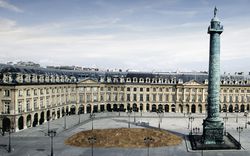
Vendôme, mound of Vendôme, Commune de Paris, Paris, revolution, landscape, dirt, column, Napoleon, destruction, urban symbols, urban imaginary
Vendôme, mound of Vendôme, Commune de Paris, Paris, revolution, landscape, dirt, column, Napoleon, destruction, urban symbols, urban imaginary
Published:
28 February 2016
28 February 2016
Issue:
Let us assure you
Let us assure you
Level of archival description:
Project
Project
Reference number:
AP207.S1.1971.PR05
Description:
The project series documents the performance "Falsa Curva D'Autostrada", also know in English as Fake Expressway Bend. The performance was undertaken with a group of Pettena's students from the Minneapolis College of Art and Design in Minneapolis, in 1971. It consisted of hanging a large tarp from the overpass of an expressway under construction. The tarp extended to the road underneath and was used to create a fake bend in the overpass. The performance was targeting "the excess of uniformity in urban design" by reimagining the linearity of the overpass into a fake curve. The project series contains two photographs of the fake expressway bend, two sketches for the installation, and project descriptions in English and in Italian. Source: [1] Gianni Pettena website, https://www.giannipettena.it/italiano/opere-1/ff-intens-1971-1/ (last accessed 4 November 2019)
AP207.S1.1971.PR05
Description:
The project series documents the performance "Falsa Curva D'Autostrada", also know in English as Fake Expressway Bend. The performance was undertaken with a group of Pettena's students from the Minneapolis College of Art and Design in Minneapolis, in 1971. It consisted of hanging a large tarp from the overpass of an expressway under construction. The tarp extended to the road underneath and was used to create a fake bend in the overpass. The performance was targeting "the excess of uniformity in urban design" by reimagining the linearity of the overpass into a fake curve. The project series contains two photographs of the fake expressway bend, two sketches for the installation, and project descriptions in English and in Italian. Source: [1] Gianni Pettena website, https://www.giannipettena.it/italiano/opere-1/ff-intens-1971-1/ (last accessed 4 November 2019)
People:
Date:
circa 1971-2015
circa 1971-2015
Title:
Falsa Curva D'Autostrada [Fake Expressway Bend] (1971)
Actions:
AP207.S1.1971.PR05
Description:
The project series documents the performance "Falsa Curva D'Autostrada", also know in English as Fake Expressway Bend. The performance was undertaken with a group of Pettena's students from the Minneapolis College of Art and Design in Minneapolis, in 1971. It consisted of hanging a large tarp from the overpass of an expressway under construction. The tarp extended to the road underneath and was used to create a fake bend in the overpass. The performance was targeting "the excess of uniformity in urban design" by reimagining the linearity of the overpass into a fake curve. The project series contains two photographs of the fake expressway bend, two sketches for the installation, and project descriptions in English and in Italian. Source: [1] Gianni Pettena website, https://www.giannipettena.it/italiano/opere-1/ff-intens-1971-1/ (last accessed 4 November 2019)
Falsa Curva D'Autostrada [Fake Expressway Bend] (1971)
Actions:
AP207.S1.1971.PR05
Description:
The project series documents the performance "Falsa Curva D'Autostrada", also know in English as Fake Expressway Bend. The performance was undertaken with a group of Pettena's students from the Minneapolis College of Art and Design in Minneapolis, in 1971. It consisted of hanging a large tarp from the overpass of an expressway under construction. The tarp extended to the road underneath and was used to create a fake bend in the overpass. The performance was targeting "the excess of uniformity in urban design" by reimagining the linearity of the overpass into a fake curve. The project series contains two photographs of the fake expressway bend, two sketches for the installation, and project descriptions in English and in Italian. Source: [1] Gianni Pettena website, https://www.giannipettena.it/italiano/opere-1/ff-intens-1971-1/ (last accessed 4 November 2019)
Level of archival description:
Project
Project
Date:
circa 1971-2015
circa 1971-2015
People:
Level of archival description:
Project
Project
Actions:
Reference number:
AP178.S1.1998.PR09
Description:
This project series documents the Câmara Municipal de Penafiel in Penafiel, Portugal. While the records were held in the office’s archives this project was assigned the number 104/90. The office assigned the date 1998 for this project. The project site was located on 21,643 square metres of land, between Avenida Guedes and Rua Abilio Miranda. The building program included two distinct buildings. The first was a U-shaped building for the Town Hall with a three-storey underground parking lot. The second was a two-storey rectangular building with a five-storey tower and a courtyard, for the administrative department, finance department, urban planning department and environement department. The project was not realized. Documenting this project are sketches, studies, plans, and working drawings. Textual material includes project documentation, competition documentation, and correspondence. Photographic materials document the project site.
AP178.S1.1998.PR09
Description:
This project series documents the Câmara Municipal de Penafiel in Penafiel, Portugal. While the records were held in the office’s archives this project was assigned the number 104/90. The office assigned the date 1998 for this project. The project site was located on 21,643 square metres of land, between Avenida Guedes and Rua Abilio Miranda. The building program included two distinct buildings. The first was a U-shaped building for the Town Hall with a three-storey underground parking lot. The second was a two-storey rectangular building with a five-storey tower and a courtyard, for the administrative department, finance department, urban planning department and environement department. The project was not realized. Documenting this project are sketches, studies, plans, and working drawings. Textual material includes project documentation, competition documentation, and correspondence. Photographic materials document the project site.
People:
Date:
1998-2003
1998-2003
Title:
Câmara Municipal de Penafiel [Penafiel Town Hall], Penafiel, Portugal (1998)
Actions:
AP178.S1.1998.PR09
Description:
This project series documents the Câmara Municipal de Penafiel in Penafiel, Portugal. While the records were held in the office’s archives this project was assigned the number 104/90. The office assigned the date 1998 for this project. The project site was located on 21,643 square metres of land, between Avenida Guedes and Rua Abilio Miranda. The building program included two distinct buildings. The first was a U-shaped building for the Town Hall with a three-storey underground parking lot. The second was a two-storey rectangular building with a five-storey tower and a courtyard, for the administrative department, finance department, urban planning department and environement department. The project was not realized. Documenting this project are sketches, studies, plans, and working drawings. Textual material includes project documentation, competition documentation, and correspondence. Photographic materials document the project site.
Câmara Municipal de Penafiel [Penafiel Town Hall], Penafiel, Portugal (1998)
Actions:
AP178.S1.1998.PR09
Description:
This project series documents the Câmara Municipal de Penafiel in Penafiel, Portugal. While the records were held in the office’s archives this project was assigned the number 104/90. The office assigned the date 1998 for this project. The project site was located on 21,643 square metres of land, between Avenida Guedes and Rua Abilio Miranda. The building program included two distinct buildings. The first was a U-shaped building for the Town Hall with a three-storey underground parking lot. The second was a two-storey rectangular building with a five-storey tower and a courtyard, for the administrative department, finance department, urban planning department and environement department. The project was not realized. Documenting this project are sketches, studies, plans, and working drawings. Textual material includes project documentation, competition documentation, and correspondence. Photographic materials document the project site.
Level of archival description:
Project
Project
Date:
1998-2003
1998-2003
People:
Form:
events
events
Actions:
Description:
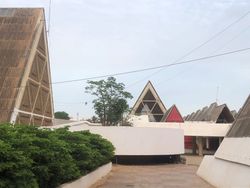
This seminar presented by Oulimata Gueye looks at projects that were to be developed in the middle of the twentieth century, using the African continent as a laboratory for architectural and urban research and innovation. It also considers African initiatives aimed at giving Africans back control over their vision of housing, technology, and economic and social(...)
This seminar presented by Oulimata Gueye looks at projects that were to be developed in the middle of the twentieth century, using the African continent as a laboratory for architectural and urban research and innovation. It also considers African initiatives aimed at giving Africans back control over their vision of housing, technology, and economic and social(...)
Date:
27 July 2023, 6pm to 7:30pm
27 July 2023, 6pm to 7:30pm
Title:
UFA, Université des Futurs Africains 2. It Matters What Stories We Tell to Tell Other Stories of the Future
Actions:
Description:
This seminar presented by Oulimata Gueye looks at projects that were to be developed in the middle of the twentieth century, using the African continent as a laboratory for architectural and urban research and innovation. It also considers African initiatives aimed at giving Africans back control over their vision of housing, technology, and economic and social(...)
UFA, Université des Futurs Africains 2. It Matters What Stories We Tell to Tell Other Stories of the Future
Actions:
Description:
This seminar presented by Oulimata Gueye looks at projects that were to be developed in the middle of the twentieth century, using the African continent as a laboratory for architectural and urban research and innovation. It also considers African initiatives aimed at giving Africans back control over their vision of housing, technology, and economic and social(...)
Form:
events
events
Date:
27 July 2023
6pm to 7:30pm
27 July 2023
6pm to 7:30pm
Form:
events
events
Actions:
Description:
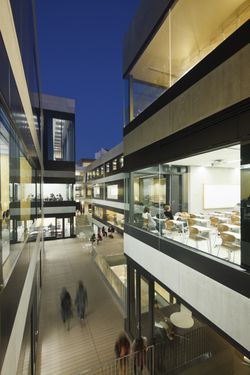
In this talk, titled Design the place for people to meet, Manabu Chiba will explain his approach to design with an emphasis on realizing architecture as a facilitator for new place-to-place, person-to-person and people-to-place interactions. His work attempts to reveal the context of a site and create formal simplicity, in order to nurture relationships among(...)
In this talk, titled Design the place for people to meet, Manabu Chiba will explain his approach to design with an emphasis on realizing architecture as a facilitator for new place-to-place, person-to-person and people-to-place interactions. His work attempts to reveal the context of a site and create formal simplicity, in order to nurture relationships among(...)
Date:
11 February 2016
11 February 2016
Title:
Manabu Chiba wants to speak with you
Actions:
Description:
In this talk, titled Design the place for people to meet, Manabu Chiba will explain his approach to design with an emphasis on realizing architecture as a facilitator for new place-to-place, person-to-person and people-to-place interactions. His work attempts to reveal the context of a site and create formal simplicity, in order to nurture relationships among(...)
Manabu Chiba wants to speak with you
Actions:
Description:
In this talk, titled Design the place for people to meet, Manabu Chiba will explain his approach to design with an emphasis on realizing architecture as a facilitator for new place-to-place, person-to-person and people-to-place interactions. His work attempts to reveal the context of a site and create formal simplicity, in order to nurture relationships among(...)
Form:
events
events
Date:
11 February 2016
11 February 2016
Form:
events
events

Form:
events
events
Date:
24 May 2012
24 May 2012
Level of archival description:
Project
Project
Reference number:
AP178.S1.1968.PR02
Description:
This project series documents the Edifício de Escritórios na Av. D. Afonso Henriques, in Porto, also referred to as Avenida da Ponte I. While the records were held in the office’s archives this project was assigned the number 31/60. In the past the office identified the project as number 121. The office assigned the dates 1968-1974 for this project. The Edifício de Escritórios na Av. D. Afonso Henriques consisted of a building with offices, stores, and parking. Located on a historic site, the intention for the Edifício de Escritórios was to integrate the building into the existing urban landscape. The building was never realized. This project was done in relation to the Arranjo Urbanístico para a Av. D. Afonso Henriques, which was an urban renewal program in Porto. In the 1940s, waves of demolition in the old town created a rupture with the remaining buildings, including the Porto Cathedral. Since the 1950s, there have been several studies and proposals to revitalize this part of the city. Siza’s plan was the first to be accepted by the city council in 1968. Please see project series AP178.S1.1968.PR03, also described in this fonds, for further documentation. Siza also proposed a new design in 2001 for the site across the avenue from this one, known as Avenida da Ponte II. This included a museum, library, stores, parking, and houses. This project related to the building Casa Dos 24 Fernando Távora. The scheme was not realized. Documenting this project series are drawings, photographic materials and textual documentation. Among the drawings are plans, profiles, elevations, sections, cadastral maps and working details. Photographic materials document the model, site and residents of the neighborhood. Textual materials include project documentation, as well as correspondence with the city of Porto and suppliers. Note that materials related to the Arranjo Urbanístico para a Av. D. Afonso Henriques (project series AP178.S1.1968.PR03 in this fonds) are also found among these materials.
AP178.S1.1968.PR02
Description:
This project series documents the Edifício de Escritórios na Av. D. Afonso Henriques, in Porto, also referred to as Avenida da Ponte I. While the records were held in the office’s archives this project was assigned the number 31/60. In the past the office identified the project as number 121. The office assigned the dates 1968-1974 for this project. The Edifício de Escritórios na Av. D. Afonso Henriques consisted of a building with offices, stores, and parking. Located on a historic site, the intention for the Edifício de Escritórios was to integrate the building into the existing urban landscape. The building was never realized. This project was done in relation to the Arranjo Urbanístico para a Av. D. Afonso Henriques, which was an urban renewal program in Porto. In the 1940s, waves of demolition in the old town created a rupture with the remaining buildings, including the Porto Cathedral. Since the 1950s, there have been several studies and proposals to revitalize this part of the city. Siza’s plan was the first to be accepted by the city council in 1968. Please see project series AP178.S1.1968.PR03, also described in this fonds, for further documentation. Siza also proposed a new design in 2001 for the site across the avenue from this one, known as Avenida da Ponte II. This included a museum, library, stores, parking, and houses. This project related to the building Casa Dos 24 Fernando Távora. The scheme was not realized. Documenting this project series are drawings, photographic materials and textual documentation. Among the drawings are plans, profiles, elevations, sections, cadastral maps and working details. Photographic materials document the model, site and residents of the neighborhood. Textual materials include project documentation, as well as correspondence with the city of Porto and suppliers. Note that materials related to the Arranjo Urbanístico para a Av. D. Afonso Henriques (project series AP178.S1.1968.PR03 in this fonds) are also found among these materials.
People:
Date:
1968-1981
1968-1981
Title:
Edifício de Escritórios na Av. D. Afonso Henriques, Avenida da Ponte [Office building, Av. D. Afonso Henriques], Porto, Portugal (1968-1981)
Actions:
AP178.S1.1968.PR02
Description:
This project series documents the Edifício de Escritórios na Av. D. Afonso Henriques, in Porto, also referred to as Avenida da Ponte I. While the records were held in the office’s archives this project was assigned the number 31/60. In the past the office identified the project as number 121. The office assigned the dates 1968-1974 for this project. The Edifício de Escritórios na Av. D. Afonso Henriques consisted of a building with offices, stores, and parking. Located on a historic site, the intention for the Edifício de Escritórios was to integrate the building into the existing urban landscape. The building was never realized. This project was done in relation to the Arranjo Urbanístico para a Av. D. Afonso Henriques, which was an urban renewal program in Porto. In the 1940s, waves of demolition in the old town created a rupture with the remaining buildings, including the Porto Cathedral. Since the 1950s, there have been several studies and proposals to revitalize this part of the city. Siza’s plan was the first to be accepted by the city council in 1968. Please see project series AP178.S1.1968.PR03, also described in this fonds, for further documentation. Siza also proposed a new design in 2001 for the site across the avenue from this one, known as Avenida da Ponte II. This included a museum, library, stores, parking, and houses. This project related to the building Casa Dos 24 Fernando Távora. The scheme was not realized. Documenting this project series are drawings, photographic materials and textual documentation. Among the drawings are plans, profiles, elevations, sections, cadastral maps and working details. Photographic materials document the model, site and residents of the neighborhood. Textual materials include project documentation, as well as correspondence with the city of Porto and suppliers. Note that materials related to the Arranjo Urbanístico para a Av. D. Afonso Henriques (project series AP178.S1.1968.PR03 in this fonds) are also found among these materials.
Edifício de Escritórios na Av. D. Afonso Henriques, Avenida da Ponte [Office building, Av. D. Afonso Henriques], Porto, Portugal (1968-1981)
Actions:
AP178.S1.1968.PR02
Description:
This project series documents the Edifício de Escritórios na Av. D. Afonso Henriques, in Porto, also referred to as Avenida da Ponte I. While the records were held in the office’s archives this project was assigned the number 31/60. In the past the office identified the project as number 121. The office assigned the dates 1968-1974 for this project. The Edifício de Escritórios na Av. D. Afonso Henriques consisted of a building with offices, stores, and parking. Located on a historic site, the intention for the Edifício de Escritórios was to integrate the building into the existing urban landscape. The building was never realized. This project was done in relation to the Arranjo Urbanístico para a Av. D. Afonso Henriques, which was an urban renewal program in Porto. In the 1940s, waves of demolition in the old town created a rupture with the remaining buildings, including the Porto Cathedral. Since the 1950s, there have been several studies and proposals to revitalize this part of the city. Siza’s plan was the first to be accepted by the city council in 1968. Please see project series AP178.S1.1968.PR03, also described in this fonds, for further documentation. Siza also proposed a new design in 2001 for the site across the avenue from this one, known as Avenida da Ponte II. This included a museum, library, stores, parking, and houses. This project related to the building Casa Dos 24 Fernando Távora. The scheme was not realized. Documenting this project series are drawings, photographic materials and textual documentation. Among the drawings are plans, profiles, elevations, sections, cadastral maps and working details. Photographic materials document the model, site and residents of the neighborhood. Textual materials include project documentation, as well as correspondence with the city of Porto and suppliers. Note that materials related to the Arranjo Urbanístico para a Av. D. Afonso Henriques (project series AP178.S1.1968.PR03 in this fonds) are also found among these materials.
Level of archival description:
Project
Project
Date:
1968-1981
1968-1981
People:


