


2048 Results
Form:
books
books
Actions:
Holdings:
Description:
xi, 623 pages : illustrations ; 25 cm
Description:
xi, 623 pages : illustrations ; 25 cm
Author:
Subject:
Publication:
Ithaca, N.Y. : Cornell University Press, 1992.
Ithaca, N.Y. : Cornell University Press, 1992.
Title:
The park and the people : a history of Central Park / Roy Rosenzweig, Elizabeth Blackmar.
Actions:
Holdings:
Description:
xi, 623 pages : illustrations ; 25 cm
The park and the people : a history of Central Park / Roy Rosenzweig, Elizabeth Blackmar.
Actions:
Holdings:
Description:
xi, 623 pages : illustrations ; 25 cm
Form:
books
books
Publication:
Ithaca, N.Y. : Cornell University Press, 1992.
Ithaca, N.Y. : Cornell University Press, 1992.
Author:
Subject:
Form:
books
books
Holdings:
Description:
387 pages : illustrations (some color) ; 23 x 29 cm
Description:
387 pages : illustrations (some color) ; 23 x 29 cm
Author:
Subject:
Publication:
Köln : Taschen GmbH, [2014], ©2014
Köln : Taschen GmbH, [2014], ©2014
Title:
Prefab houses / Arnt Cobbers, Oliver Jahn ; edited by Peter Gössel.
Actions:
Holdings:
Description:
387 pages : illustrations (some color) ; 23 x 29 cm
Prefab houses / Arnt Cobbers, Oliver Jahn ; edited by Peter Gössel.
Actions:
Holdings:
Description:
387 pages : illustrations (some color) ; 23 x 29 cm
Form:
books
books
Publication:
Köln : Taschen GmbH, [2014], ©2014
Köln : Taschen GmbH, [2014], ©2014
Author:
Subject:
Form:
books
books
Actions:
Price:
$76.95
(available to order)
Summary:
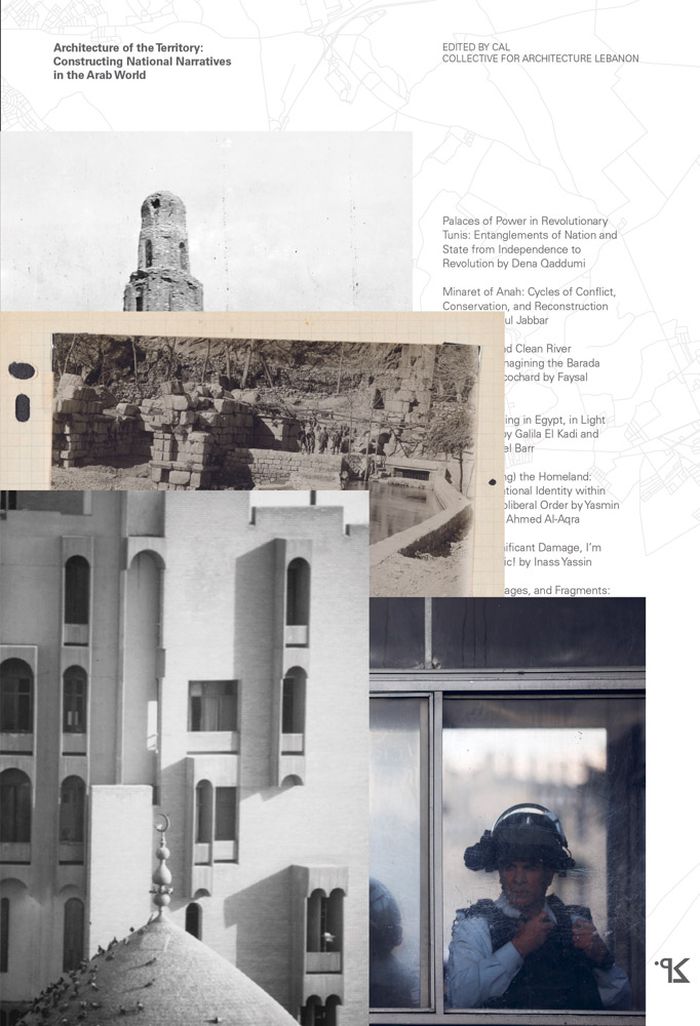
This publication examines the role of national narratives in defining the Arab territory through the strategic implementation of architecture and urban planning. The Arab region, home to 423,000,000 inhabitants, is almost twice the size of the United States but still lacks sufficient and accessible research. "Architecture of the territory" uncovers the mechanisms that(...)
$76.95
(available to order)
Summary:
This publication examines the role of national narratives in defining the Arab territory through the strategic implementation of architecture and urban planning. The Arab region, home to 423,000,000 inhabitants, is almost twice the size of the United States but still lacks sufficient and accessible research. "Architecture of the territory" uncovers the mechanisms that(...)
Title:
Architecture of the territory: Constructing national narratives in the arab world
Actions:
Price:
$76.95
(available to order)
Summary:
This publication examines the role of national narratives in defining the Arab territory through the strategic implementation of architecture and urban planning. The Arab region, home to 423,000,000 inhabitants, is almost twice the size of the United States but still lacks sufficient and accessible research. "Architecture of the territory" uncovers the mechanisms that have shaped this distinct territory, providing a critically overdue examination of the dichotomy between the overplanned cities of autocratic governments and the post-conflict urban sprawls of precarious states in the Arab world, where national narratives have acted as a vehicle to implement the development of these territories. The book opens a dialogue between young Arab researchers and professionals covering, among other subjects, tensions inherited from colonial borders; agricultural strategies; and imported housing typologies and narratives. The content draws a parallel to similar issues found in the global architectural discourse of today.
Architecture of the territory: Constructing national narratives in the arab world
Actions:
Price:
$76.95
(available to order)
Summary:
This publication examines the role of national narratives in defining the Arab territory through the strategic implementation of architecture and urban planning. The Arab region, home to 423,000,000 inhabitants, is almost twice the size of the United States but still lacks sufficient and accessible research. "Architecture of the territory" uncovers the mechanisms that have shaped this distinct territory, providing a critically overdue examination of the dichotomy between the overplanned cities of autocratic governments and the post-conflict urban sprawls of precarious states in the Arab world, where national narratives have acted as a vehicle to implement the development of these territories. The book opens a dialogue between young Arab researchers and professionals covering, among other subjects, tensions inherited from colonial borders; agricultural strategies; and imported housing typologies and narratives. The content draws a parallel to similar issues found in the global architectural discourse of today.
Form:
books
books
Publication:
April 2023
April 2023
Subject:
Arch Southwest Asia & North Africa
Arch Southwest Asia & North Africa
Form:
books
books
Actions:
Price:
$83.90
(available to order)
Summary:
Diversity among Architects presents a series of essays questioning the homogeneity of architecture practitioners, who remain overwhelmingly male and Caucasian, to help you create a field more representative of the population you serve. The book is the collected work of author Craig L. Wilkins, an African American scholar and practitioner, and discusses music, education,(...)
$83.90
(available to order)
Summary:
Diversity among Architects presents a series of essays questioning the homogeneity of architecture practitioners, who remain overwhelmingly male and Caucasian, to help you create a field more representative of the population you serve. The book is the collected work of author Craig L. Wilkins, an African American scholar and practitioner, and discusses music, education,(...)
Title:
Diversity among architects: from margin to center
Actions:
Price:
$83.90
(available to order)
Summary:
Diversity among Architects presents a series of essays questioning the homogeneity of architecture practitioners, who remain overwhelmingly male and Caucasian, to help you create a field more representative of the population you serve. The book is the collected work of author Craig L. Wilkins, an African American scholar and practitioner, and discusses music, education, urban geography, social justice, community design centers, race-space identity, shared landscape, and many more topics.
Diversity among architects: from margin to center
Actions:
Price:
$83.90
(available to order)
Summary:
Diversity among Architects presents a series of essays questioning the homogeneity of architecture practitioners, who remain overwhelmingly male and Caucasian, to help you create a field more representative of the population you serve. The book is the collected work of author Craig L. Wilkins, an African American scholar and practitioner, and discusses music, education, urban geography, social justice, community design centers, race-space identity, shared landscape, and many more topics.
Form:
books
books
Publication:
March 2016
March 2016
Subject:
Architectural Theory
Architectural Theory
Form:
books
books
Actions:
Holdings:
Description:
175 pages : illustrations (some color), facsimiles ; 15 cm
Description:
175 pages : illustrations (some color), facsimiles ; 15 cm
Author:
Subject:
Publication:
Leipzig : Spector Books, 2019., [United States] : [Distribution, USA, Canada, Central and South America, Africa, Asia, ARTBOOK/ D.A.P., Leipzig : Printed by Pöge Druck
Leipzig : Spector Books, 2019., [United States] : [Distribution, USA, Canada, Central and South America, Africa, Asia, ARTBOOK/ D.A.P., Leipzig : Printed by Pöge Druck
Title:
Handle with care : unpacking a bulky table / edited by Lisa Andreani, Hanan Kataw, Simon Mitchell ; [proofreading and translation, Rebecca Philipps Williams ; graphic design, Anne Meyer].
Actions:
Holdings:
Description:
175 pages : illustrations (some color), facsimiles ; 15 cm
Handle with care : unpacking a bulky table / edited by Lisa Andreani, Hanan Kataw, Simon Mitchell ; [proofreading and translation, Rebecca Philipps Williams ; graphic design, Anne Meyer].
Actions:
Holdings:
Description:
175 pages : illustrations (some color), facsimiles ; 15 cm
Form:
books
books
Publication:
Leipzig : Spector Books, 2019., [United States] : [Distribution, USA, Canada, Central and South America, Africa, Asia, ARTBOOK/ D.A.P., Leipzig : Printed by Pöge Druck
Leipzig : Spector Books, 2019., [United States] : [Distribution, USA, Canada, Central and South America, Africa, Asia, ARTBOOK/ D.A.P., Leipzig : Printed by Pöge Druck
Author:
Subject:
Form:
books
books
Actions:
Holdings:
Description:
169 pages : color illustrations, color maps ; 29 cm
Description:
169 pages : color illustrations, color maps ; 29 cm
Author:
Subject:
Publication:
Los Angeles : J. Paul Getty Museum, ©2004.
Los Angeles : J. Paul Getty Museum, ©2004.
Title:
Gardens of the Roman world / Patrick Bowe.
Actions:
Holdings:
Description:
169 pages : color illustrations, color maps ; 29 cm
Gardens of the Roman world / Patrick Bowe.
Actions:
Holdings:
Description:
169 pages : color illustrations, color maps ; 29 cm
Form:
books
books
Publication:
Los Angeles : J. Paul Getty Museum, ©2004.
Los Angeles : J. Paul Getty Museum, ©2004.
Author:
Subject:
Form:
books
books

Actions:
Price:
$63.00
(available to order)
Summary:
This book is a comprehensive investigation into photographic works by artists from the African continent and its diaspora. Taking the politics of the “colonial gaze” as its starting point, Events of the Social looks at the diverse complexity of the nineteenth-century archive through a selection of vintage portraits, cartes de visite, postcards and album pages. Three(...)
$63.00
(available to order)
Summary:
This book is a comprehensive investigation into photographic works by artists from the African continent and its diaspora. Taking the politics of the “colonial gaze” as its starting point, Events of the Social looks at the diverse complexity of the nineteenth-century archive through a selection of vintage portraits, cartes de visite, postcards and album pages. Three(...)
Title:
Events of the social: portraiture and collective agency
Actions:
Price:
$63.00
(available to order)
Summary:
This book is a comprehensive investigation into photographic works by artists from the African continent and its diaspora. Taking the politics of the “colonial gaze” as its starting point, Events of the Social looks at the diverse complexity of the nineteenth-century archive through a selection of vintage portraits, cartes de visite, postcards and album pages. Three generations of African artists from the 1940s till now then chart the changing features of African societies through portraiture, exploring notions of the self, gender, sexuality, race, social status and politics. The book also examines landscape and the built environment, showing how architecture and spatial planning convey social order and ideology while reflecting experiences of migration, colonialism, war and industrialization. Another group of artists, born after the mid-1970s, explores issues of social identity, lineage, questions of belonging and personal experiences.
Events of the social: portraiture and collective agency
Actions:
Price:
$63.00
(available to order)
Summary:
This book is a comprehensive investigation into photographic works by artists from the African continent and its diaspora. Taking the politics of the “colonial gaze” as its starting point, Events of the Social looks at the diverse complexity of the nineteenth-century archive through a selection of vintage portraits, cartes de visite, postcards and album pages. Three generations of African artists from the 1940s till now then chart the changing features of African societies through portraiture, exploring notions of the self, gender, sexuality, race, social status and politics. The book also examines landscape and the built environment, showing how architecture and spatial planning convey social order and ideology while reflecting experiences of migration, colonialism, war and industrialization. Another group of artists, born after the mid-1970s, explores issues of social identity, lineage, questions of belonging and personal experiences.
Form:
books
books
Publication:
February 2023
February 2023
Subject:
Photography Collections
Photography Collections
Form:
books
books
Actions:
Price:
$26.00
(available to order)
Summary:
A rich yet fragile architectural and artistic legacy is explored, from world-famous sites such as Angkor Wat and Preah Vihear to a wealth of lesser-known buildings and complexes buried deep in the jungle.
$26.00
(available to order)
Summary:
A rich yet fragile architectural and artistic legacy is explored, from world-famous sites such as Angkor Wat and Preah Vihear to a wealth of lesser-known buildings and complexes buried deep in the jungle.
Subject:
Arch Southwest Asia & North Africa
Arch Southwest Asia & North Africa
Publication:
April 2004, London
April 2004, London
Title:
Art and architecture of Cambodia
Actions:
Price:
$26.00
(available to order)
Summary:
A rich yet fragile architectural and artistic legacy is explored, from world-famous sites such as Angkor Wat and Preah Vihear to a wealth of lesser-known buildings and complexes buried deep in the jungle.
Art and architecture of Cambodia
Actions:
Price:
$26.00
(available to order)
Summary:
A rich yet fragile architectural and artistic legacy is explored, from world-famous sites such as Angkor Wat and Preah Vihear to a wealth of lesser-known buildings and complexes buried deep in the jungle.
Form:
books
books
Publication:
April 2004, London
April 2004, London
Subject:
Arch Southwest Asia & North Africa
Arch Southwest Asia & North Africa
Form:
books
books
Actions:
Price:
$38.50
(available to order)
Summary:
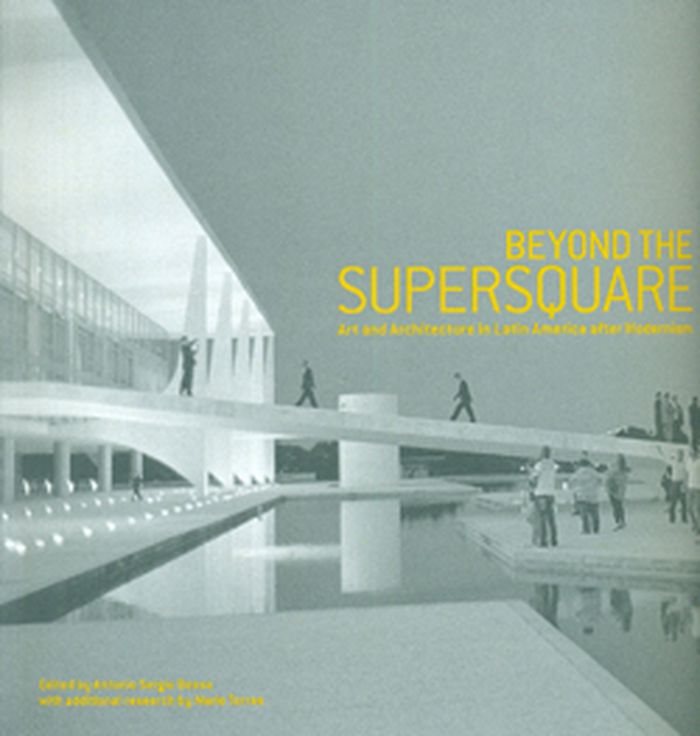
Beyond the Super-Square: Art and Architecture in Latin America After Modernism, which developed from a symposium presented by The Bronx Museum of the Arts in 2011, showcases original essays by distinguished Latin American architects, historians, and curators, whose research examines architecture and urban design practices in the region during a significant period of the(...)
$38.50
(available to order)
Summary:
Beyond the Super-Square: Art and Architecture in Latin America After Modernism, which developed from a symposium presented by The Bronx Museum of the Arts in 2011, showcases original essays by distinguished Latin American architects, historians, and curators, whose research examines architecture and urban design practices in the region during a significant period of the(...)
Subject:
Arch Southwest Asia & North Africa
Arch Southwest Asia & North Africa
Publication:
May 2014
May 2014
Title:
Beyond the supersquare: art and architecture in Latin America after Modernisme
Actions:
Price:
$38.50
(available to order)
Summary:
Beyond the Super-Square: Art and Architecture in Latin America After Modernism, which developed from a symposium presented by The Bronx Museum of the Arts in 2011, showcases original essays by distinguished Latin American architects, historians, and curators, whose research examines architecture and urban design practices in the region during a significant period of the twentieth century. Drawing from the exuberant architectural projects of the 1940s to the 1960s, as well as from socially engaged artistic practices of the present day, the essays in this collection reveal how the heroic visions and utopian ideals popular in architectural discourse during the modernist era bore complicated legacies for Latin America - the consequences of which are evident in such vastly uneven economic conditions and socially disparate societies found throughout the region today.
Beyond the supersquare: art and architecture in Latin America after Modernisme
Actions:
Price:
$38.50
(available to order)
Summary:
Beyond the Super-Square: Art and Architecture in Latin America After Modernism, which developed from a symposium presented by The Bronx Museum of the Arts in 2011, showcases original essays by distinguished Latin American architects, historians, and curators, whose research examines architecture and urban design practices in the region during a significant period of the twentieth century. Drawing from the exuberant architectural projects of the 1940s to the 1960s, as well as from socially engaged artistic practices of the present day, the essays in this collection reveal how the heroic visions and utopian ideals popular in architectural discourse during the modernist era bore complicated legacies for Latin America - the consequences of which are evident in such vastly uneven economic conditions and socially disparate societies found throughout the region today.
Form:
books
books
Publication:
May 2014
May 2014
Subject:
Arch Southwest Asia & North Africa
Arch Southwest Asia & North Africa
Form:
books
books
Actions:
Price:
$119.00
(available to order)
Summary:
Acclaimed architect David Adjaye is known for his artistic sensitivity and deft use of space and inexpensive, unexpected materials. With the hindsight of almost twenty years of practice and a raft of high-profile projects around the world? perhaps best symbolized by the National Museum for African American History and Culture in Washington, DC?this book looks back on the(...)
$119.00
(available to order)
Summary:
Acclaimed architect David Adjaye is known for his artistic sensitivity and deft use of space and inexpensive, unexpected materials. With the hindsight of almost twenty years of practice and a raft of high-profile projects around the world? perhaps best symbolized by the National Museum for African American History and Culture in Washington, DC?this book looks back on the(...)
Title:
David Adjaye: Works 1995 - 2007
Actions:
Price:
$119.00
(available to order)
Summary:
Acclaimed architect David Adjaye is known for his artistic sensitivity and deft use of space and inexpensive, unexpected materials. With the hindsight of almost twenty years of practice and a raft of high-profile projects around the world? perhaps best symbolized by the National Museum for African American History and Culture in Washington, DC?this book looks back on the houses and buildings of his early career. Adjaye’s early commissions were the test sites for what would become his unique, celebrated, and highly sought-after brand of “critical regionalism.” From London to Brooklyn, in private houses and public buildings, his clever urban interventions abound: roof-level living space is added to a factory-turned-studio, a sunken courtyard encases a tower-like house, and basalt stone extends a basement dining area to a roofless gazebo. ''David Adjaye- Works'' brings together all of these early projects and more and presents them with new analyses and recently uncovered archival material, testifying to the originality of an architect at the height of his talents who is changing the face of our built world.
David Adjaye: Works 1995 - 2007
Actions:
Price:
$119.00
(available to order)
Summary:
Acclaimed architect David Adjaye is known for his artistic sensitivity and deft use of space and inexpensive, unexpected materials. With the hindsight of almost twenty years of practice and a raft of high-profile projects around the world? perhaps best symbolized by the National Museum for African American History and Culture in Washington, DC?this book looks back on the houses and buildings of his early career. Adjaye’s early commissions were the test sites for what would become his unique, celebrated, and highly sought-after brand of “critical regionalism.” From London to Brooklyn, in private houses and public buildings, his clever urban interventions abound: roof-level living space is added to a factory-turned-studio, a sunken courtyard encases a tower-like house, and basalt stone extends a basement dining area to a roofless gazebo. ''David Adjaye- Works'' brings together all of these early projects and more and presents them with new analyses and recently uncovered archival material, testifying to the originality of an architect at the height of his talents who is changing the face of our built world.
Form:
books
books
Publication:
June 2020
June 2020
Subject:
Architecture Monographs
Architecture Monographs


