


2092 Results
Form:
books
books
Actions:
Price:
$48.95
(available to order)
Summary:
Existing at the margins of life, lichens are the result of symbiotic relationships between fungi and photosynthesizing partners in the form of algae or cyanobacteria. Comprising more than twenty thousand species, lichens are pioneers in diverse ecosystems, colonizing virtually any surface and growing at almost any altitude. Found in rainforests, polar regions, deserts,(...)
$48.95
(available to order)
Summary:
Existing at the margins of life, lichens are the result of symbiotic relationships between fungi and photosynthesizing partners in the form of algae or cyanobacteria. Comprising more than twenty thousand species, lichens are pioneers in diverse ecosystems, colonizing virtually any surface and growing at almost any altitude. Found in rainforests, polar regions, deserts,(...)
Title:
The lives of lichens: A natural history
Actions:
Price:
$48.95
(available to order)
Summary:
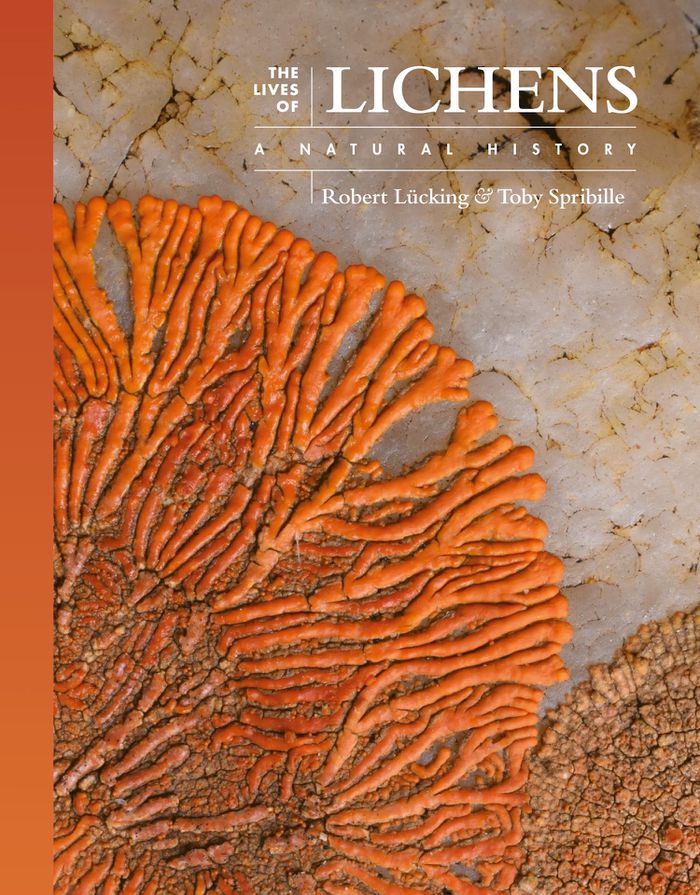
Existing at the margins of life, lichens are the result of symbiotic relationships between fungi and photosynthesizing partners in the form of algae or cyanobacteria. Comprising more than twenty thousand species, lichens are pioneers in diverse ecosystems, colonizing virtually any surface and growing at almost any altitude. Found in rainforests, polar regions, deserts, and your backyard, lichens embody a paradox of toughness and sensitivity, surviving trips to space yet endangered by even the slightest environmental changes from industrial pollution here on Earth. Lichens grow everywhere, but only on their own terms: no one has ever fully assembled a lichen in the lab from its component parts. "The lives of lichens" explores all facets of these peculiar organisms, blending stunning macrophotography and graphics with in-depth coverage of profiled species to provide an unforgettable tour of the marvelous world of lichens.
The lives of lichens: A natural history
Actions:
Price:
$48.95
(available to order)
Summary:
Existing at the margins of life, lichens are the result of symbiotic relationships between fungi and photosynthesizing partners in the form of algae or cyanobacteria. Comprising more than twenty thousand species, lichens are pioneers in diverse ecosystems, colonizing virtually any surface and growing at almost any altitude. Found in rainforests, polar regions, deserts, and your backyard, lichens embody a paradox of toughness and sensitivity, surviving trips to space yet endangered by even the slightest environmental changes from industrial pollution here on Earth. Lichens grow everywhere, but only on their own terms: no one has ever fully assembled a lichen in the lab from its component parts. "The lives of lichens" explores all facets of these peculiar organisms, blending stunning macrophotography and graphics with in-depth coverage of profiled species to provide an unforgettable tour of the marvelous world of lichens.
Form:
books
books
Publication:
June 2024
June 2024
Subject:
Fauna and flora
Fauna and flora
Form:
books
books
Actions:
Price:
$60.95
(available in store)
Summary:
A world without plants is a world without life, both literally and figuratively. Besides forming the very basis of human survival on Earth, they are also an important source of creative inspiration, ingenuity, and expression. From scientific explorers like Sir Joseph Banks who travelled across the globe in search of never-seen before species to impressionist painters like(...)
$60.95
(available in store)
Summary:
A world without plants is a world without life, both literally and figuratively. Besides forming the very basis of human survival on Earth, they are also an important source of creative inspiration, ingenuity, and expression. From scientific explorers like Sir Joseph Banks who travelled across the globe in search of never-seen before species to impressionist painters like(...)
Title:
Botanical inspiration: Nature in art and illustration
Actions:
Price:
$60.95
(available in store)
Summary:
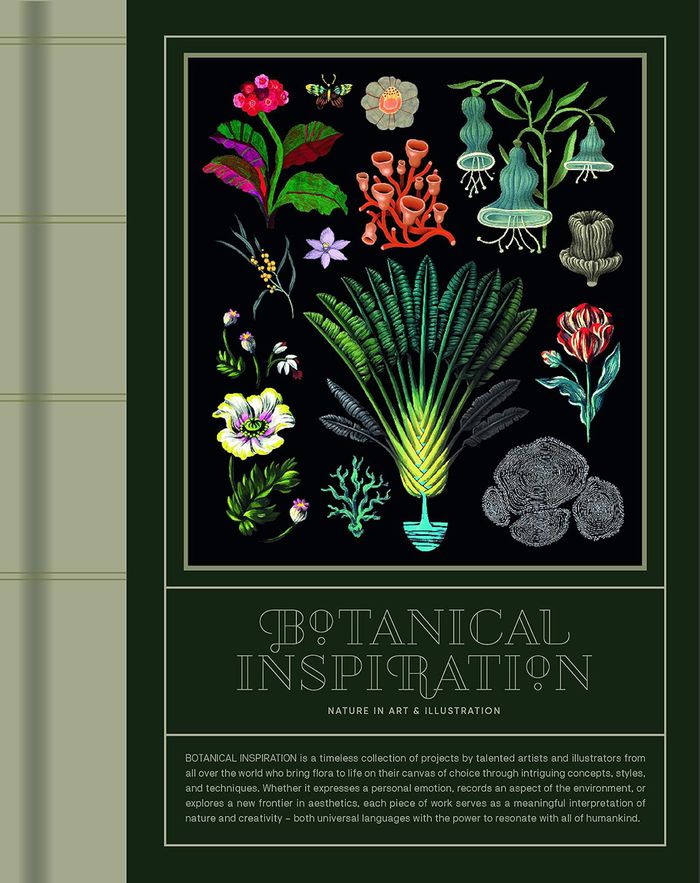
A world without plants is a world without life, both literally and figuratively. Besides forming the very basis of human survival on Earth, they are also an important source of creative inspiration, ingenuity, and expression. From scientific explorers like Sir Joseph Banks who travelled across the globe in search of never-seen before species to impressionist painters like Édouard Manet who sought to capture the subtle beauty of everyday objects, many artists and illustrators have used flora as a powerful means to convey the essence of our very existence. "Botanical inspiration" is a timeless collection of artwork and illustrations that feature flora and its many facets through a variety of visual concepts, styles, and techniques. It speaks to lovers of both nature and creativity as a universal language in itself, thoughtfully interpreted by some of today’s most intriguing and interesting talents.
Botanical inspiration: Nature in art and illustration
Actions:
Price:
$60.95
(available in store)
Summary:
A world without plants is a world without life, both literally and figuratively. Besides forming the very basis of human survival on Earth, they are also an important source of creative inspiration, ingenuity, and expression. From scientific explorers like Sir Joseph Banks who travelled across the globe in search of never-seen before species to impressionist painters like Édouard Manet who sought to capture the subtle beauty of everyday objects, many artists and illustrators have used flora as a powerful means to convey the essence of our very existence. "Botanical inspiration" is a timeless collection of artwork and illustrations that feature flora and its many facets through a variety of visual concepts, styles, and techniques. It speaks to lovers of both nature and creativity as a universal language in itself, thoughtfully interpreted by some of today’s most intriguing and interesting talents.
Form:
books
books
Publication:
June 2020
June 2020
Subject:
Fauna and flora
Fauna and flora
Form:
books
books
Actions:
Price:
$37.95
(available to order)
Summary:
In ''Camera Geologica'' Siobhan Angus tells the history of photography through the minerals upon which the medium depends. Challenging the emphasis on immateriality in discourses on photography, Angus focuses on the inextricable links between image-making and resource extraction, revealing how the mining of bitumen, silver, platinum, iron, uranium, and rare earth elements(...)
$37.95
(available to order)
Summary:
In ''Camera Geologica'' Siobhan Angus tells the history of photography through the minerals upon which the medium depends. Challenging the emphasis on immateriality in discourses on photography, Angus focuses on the inextricable links between image-making and resource extraction, revealing how the mining of bitumen, silver, platinum, iron, uranium, and rare earth elements(...)
Title:
Camera Geologica: An Elemental History of Photography
Actions:
Price:
$37.95
(available to order)
Summary:
In ''Camera Geologica'' Siobhan Angus tells the history of photography through the minerals upon which the medium depends. Challenging the emphasis on immateriality in discourses on photography, Angus focuses on the inextricable links between image-making and resource extraction, revealing how the mining of bitumen, silver, platinum, iron, uranium, and rare earth elements is a precondition of photography. Photography, Angus contends, begins underground and, in photographs of mines and mining, frequently returns there. Through a materials-driven analysis of visual culture, she illustrates histories of colonization, labor, and environmental degradation to expose the ways in which photography is enmeshed within and enables global extractive capitalism. Angus places nineteenth-century photography in dialogue with digital photography and its own entangled economies of extraction, demonstrating the importance of understanding photography’s complicity in the economic, geopolitical, and social systems that order the world.
Camera Geologica: An Elemental History of Photography
Actions:
Price:
$37.95
(available to order)
Summary:
In ''Camera Geologica'' Siobhan Angus tells the history of photography through the minerals upon which the medium depends. Challenging the emphasis on immateriality in discourses on photography, Angus focuses on the inextricable links between image-making and resource extraction, revealing how the mining of bitumen, silver, platinum, iron, uranium, and rare earth elements is a precondition of photography. Photography, Angus contends, begins underground and, in photographs of mines and mining, frequently returns there. Through a materials-driven analysis of visual culture, she illustrates histories of colonization, labor, and environmental degradation to expose the ways in which photography is enmeshed within and enables global extractive capitalism. Angus places nineteenth-century photography in dialogue with digital photography and its own entangled economies of extraction, demonstrating the importance of understanding photography’s complicity in the economic, geopolitical, and social systems that order the world.
Form:
books
books
Publication:
July 2024
July 2024
Subject:
Theory of Photography
Theory of Photography
Form:
books
books

Title:
A short history of progress
A short history of progress
Actions:
Price:
$19.95
(available to order)
Summary:
Each time history repeats itself, so it's said, the price goes up. The twentieth century was a time of runaway growth in human population, consumption, and technology, placing a colossal load on all natural systems, especially earth, air, and water -- the very elements of life. The most urgent questions of the twenty-first century are: where will this growth lead? can it(...)
$19.95
(available to order)
Summary:
Each time history repeats itself, so it's said, the price goes up. The twentieth century was a time of runaway growth in human population, consumption, and technology, placing a colossal load on all natural systems, especially earth, air, and water -- the very elements of life. The most urgent questions of the twenty-first century are: where will this growth lead? can it(...)
Title:
A short history of progress
Actions:
Price:
$19.95
(available to order)
Summary:
Each time history repeats itself, so it's said, the price goes up. The twentieth century was a time of runaway growth in human population, consumption, and technology, placing a colossal load on all natural systems, especially earth, air, and water -- the very elements of life. The most urgent questions of the twenty-first century are: where will this growth lead? can it be consolidated or sustained? and what kind of world is our present bequeathing to our future? In "A short history of progress" Ronald Wright argues that our modern predicament is as old as civilization, a 10,000-year experiment we have participated in but seldom controlled. Only by understanding the patterns of triumph and disaster that humanity has repeated around the world since the Stone Age can we recognize the experiment's inherent dangers, and, with luck and wisdom, shape its outcome.
A short history of progress
Actions:
Price:
$19.95
(available to order)
Summary:
Each time history repeats itself, so it's said, the price goes up. The twentieth century was a time of runaway growth in human population, consumption, and technology, placing a colossal load on all natural systems, especially earth, air, and water -- the very elements of life. The most urgent questions of the twenty-first century are: where will this growth lead? can it be consolidated or sustained? and what kind of world is our present bequeathing to our future? In "A short history of progress" Ronald Wright argues that our modern predicament is as old as civilization, a 10,000-year experiment we have participated in but seldom controlled. Only by understanding the patterns of triumph and disaster that humanity has repeated around the world since the Stone Age can we recognize the experiment's inherent dangers, and, with luck and wisdom, shape its outcome.
Form:
books
books
Publication:
October 2004
October 2004
Subject:
Environment and environmental theory
Environment and environmental theory
Form:
books
books
Title:
Unfinished: ideas, images, and projects from the Spanish pavilion at the 15th Venice Biennale
Unfinished: ideas, images, and projects from the Spanish pavilion at the 15th Venice Biennale
Actions:
Price:
$51.95
(available to order)
Summary:
Spain was one of the countries where the practice of architecture has been most affected by the economic crisis. There are few places on earth where such large numbers of buildings were built in such a short period of time. The lack of reflection over whether these projects were necessary or valid resulted in the subsequent abandonment of many buildings when their(...)
$51.95
(available to order)
Summary:
Spain was one of the countries where the practice of architecture has been most affected by the economic crisis. There are few places on earth where such large numbers of buildings were built in such a short period of time. The lack of reflection over whether these projects were necessary or valid resulted in the subsequent abandonment of many buildings when their(...)
Title:
Unfinished: ideas, images, and projects from the Spanish pavilion at the 15th Venice Biennale
Actions:
Price:
$51.95
(available to order)
Summary:
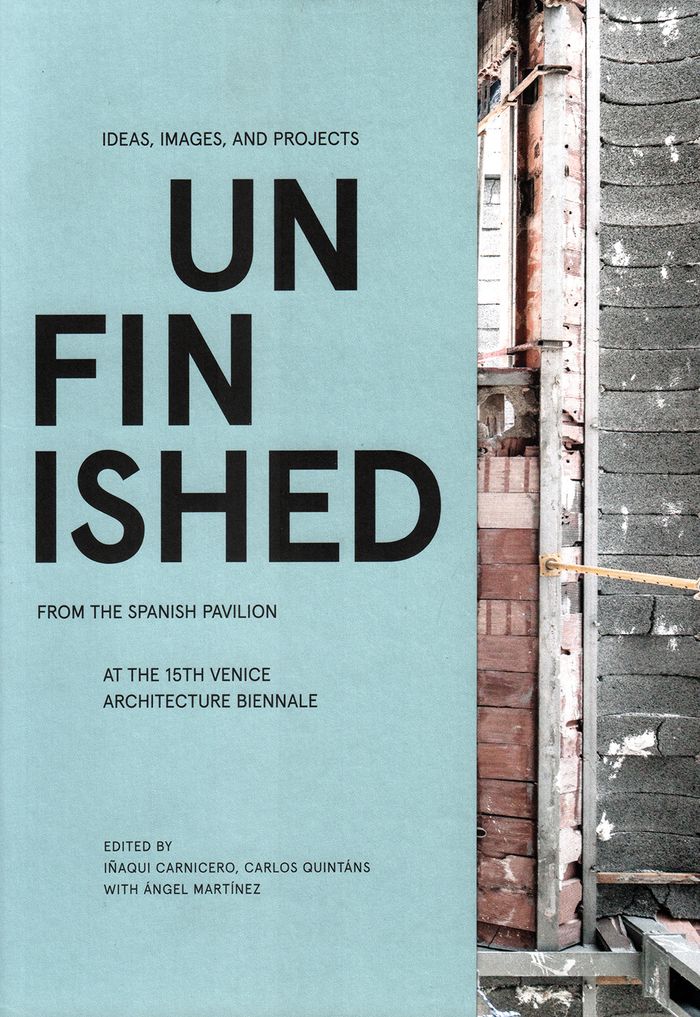
Spain was one of the countries where the practice of architecture has been most affected by the economic crisis. There are few places on earth where such large numbers of buildings were built in such a short period of time. The lack of reflection over whether these projects were necessary or valid resulted in the subsequent abandonment of many buildings when their completion or maintenance was discovered not to be economically viable. Their appearance throughout Spanish territories has generated a collection of unfinished buildings where the factor of time was eliminated from the formula for making architecture. The publication gathers examples of architecture produced during the past few years, born out of renunciation and economy of means, designed to evolve and adapt to future necessities and trusting in the beauty conferred by the passage of time.
Unfinished: ideas, images, and projects from the Spanish pavilion at the 15th Venice Biennale
Actions:
Price:
$51.95
(available to order)
Summary:
Spain was one of the countries where the practice of architecture has been most affected by the economic crisis. There are few places on earth where such large numbers of buildings were built in such a short period of time. The lack of reflection over whether these projects were necessary or valid resulted in the subsequent abandonment of many buildings when their completion or maintenance was discovered not to be economically viable. Their appearance throughout Spanish territories has generated a collection of unfinished buildings where the factor of time was eliminated from the formula for making architecture. The publication gathers examples of architecture produced during the past few years, born out of renunciation and economy of means, designed to evolve and adapt to future necessities and trusting in the beauty conferred by the passage of time.
Form:
books
books
Publication:
August 2018
August 2018
Subject:
Contemporary Architecture
Contemporary Architecture
Form:
books
books
Title:
Maya Lin : boundaries
Maya Lin : boundaries
Actions:
Price:
$63.95
(available to order)
Summary:
Maya Lin is the designer of the starkly symbolic Vietnam Veterans Memorial in Washington, D.C., done when she was still an undergraduate. In "Boundaries", Lin's lucid, soft-spoken collection of writings, she discusses how her work evolves, after a lengthy gestation, as a way of heightening viewers' awareness of a specific environment and perception of the passage of(...)
$63.95
(available to order)
Summary:
Maya Lin is the designer of the starkly symbolic Vietnam Veterans Memorial in Washington, D.C., done when she was still an undergraduate. In "Boundaries", Lin's lucid, soft-spoken collection of writings, she discusses how her work evolves, after a lengthy gestation, as a way of heightening viewers' awareness of a specific environment and perception of the passage of(...)
Title:
Maya Lin : boundaries
Actions:
Price:
$63.95
(available to order)
Summary:
Maya Lin is the designer of the starkly symbolic Vietnam Veterans Memorial in Washington, D.C., done when she was still an undergraduate. In "Boundaries", Lin's lucid, soft-spoken collection of writings, she discusses how her work evolves, after a lengthy gestation, as a way of heightening viewers' awareness of a specific environment and perception of the passage of time. This temporal aspect can be a sequence of historical events (as in the Civil Rights Memorial in Montgomery, Alabama) or a purely aesthetic quality, like the shifting play of light over a grassy field of sculpted earth (Wave Field at the University of Michigan, Ann Arbor). "I like to think of my work as creating a private conversation with each person," Lin writes, "no matter how public each work is and no matter how many people are present."
Maya Lin : boundaries
Actions:
Price:
$63.95
(available to order)
Summary:
Maya Lin is the designer of the starkly symbolic Vietnam Veterans Memorial in Washington, D.C., done when she was still an undergraduate. In "Boundaries", Lin's lucid, soft-spoken collection of writings, she discusses how her work evolves, after a lengthy gestation, as a way of heightening viewers' awareness of a specific environment and perception of the passage of time. This temporal aspect can be a sequence of historical events (as in the Civil Rights Memorial in Montgomery, Alabama) or a purely aesthetic quality, like the shifting play of light over a grassy field of sculpted earth (Wave Field at the University of Michigan, Ann Arbor). "I like to think of my work as creating a private conversation with each person," Lin writes, "no matter how public each work is and no matter how many people are present."
Form:
books
books
Publication:
January 1900, New York
January 1900, New York
Subject:
Contemporary Art Monographs
Contemporary Art Monographs
Form:
books
books
Actions:
Price:
$28.00
(available in store)
Summary:
While the largest parts of icebergs — or islands — remain beneath the sea surface, often unmapped and perilous, a myriad of creatures and non-organic matter connect them to other lands. Nowadays, in the era of the climate crisis, what is hidden in the depths of the sea exponentially manifests the impact of anthropogenic activity on the planet. Plastic waste and pollution,(...)
$28.00
(available in store)
Summary:
While the largest parts of icebergs — or islands — remain beneath the sea surface, often unmapped and perilous, a myriad of creatures and non-organic matter connect them to other lands. Nowadays, in the era of the climate crisis, what is hidden in the depths of the sea exponentially manifests the impact of anthropogenic activity on the planet. Plastic waste and pollution,(...)
Title:
Mediterranean icebergs: Invisible connections underwater
Actions:
Price:
$28.00
(available in store)
Summary:
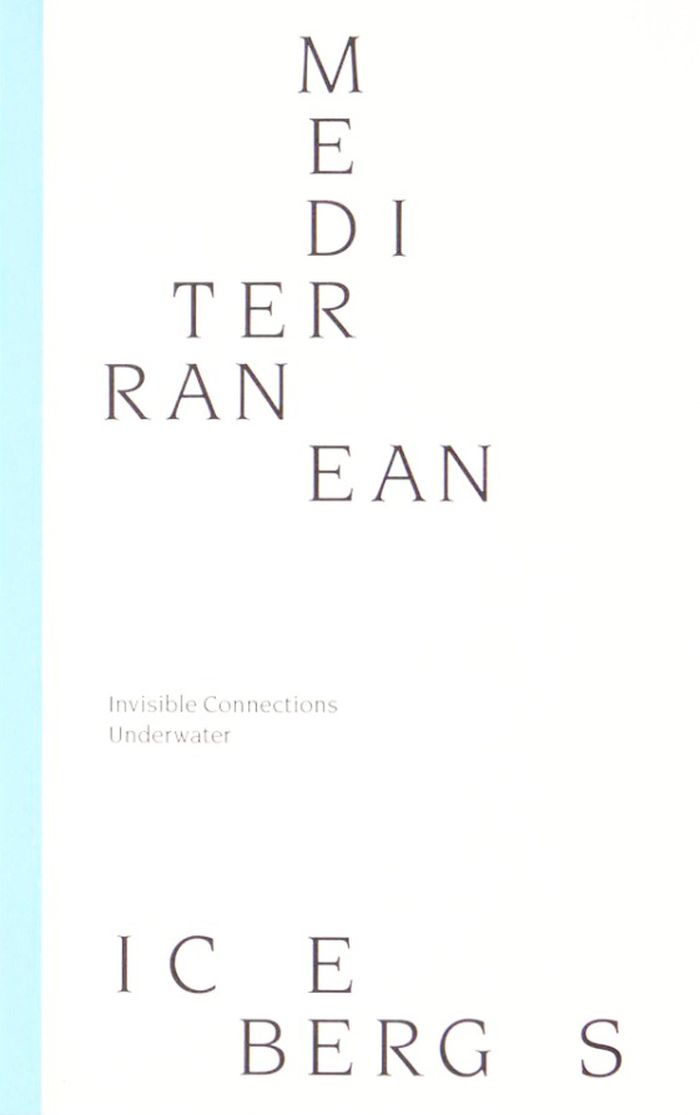
While the largest parts of icebergs — or islands — remain beneath the sea surface, often unmapped and perilous, a myriad of creatures and non-organic matter connect them to other lands. Nowadays, in the era of the climate crisis, what is hidden in the depths of the sea exponentially manifests the impact of anthropogenic activity on the planet. Plastic waste and pollution, deep sea mining, and undersea network infrastructures affect marine biodiversity and life on Earth at large. Mediterranean Icebergs sheds light on forms of agency, be it human, more-than-human, or machinic, that operate in marine environments, paying attention to their entanglements, encounters, and asymmetries. Addressing the interconnectedness of environmental, political, and legal issues, this book takes the Mediterranean as a starting point to discuss what is at stake for all lives depending on the planet’s seas and oceans.
Mediterranean icebergs: Invisible connections underwater
Actions:
Price:
$28.00
(available in store)
Summary:
While the largest parts of icebergs — or islands — remain beneath the sea surface, often unmapped and perilous, a myriad of creatures and non-organic matter connect them to other lands. Nowadays, in the era of the climate crisis, what is hidden in the depths of the sea exponentially manifests the impact of anthropogenic activity on the planet. Plastic waste and pollution, deep sea mining, and undersea network infrastructures affect marine biodiversity and life on Earth at large. Mediterranean Icebergs sheds light on forms of agency, be it human, more-than-human, or machinic, that operate in marine environments, paying attention to their entanglements, encounters, and asymmetries. Addressing the interconnectedness of environmental, political, and legal issues, this book takes the Mediterranean as a starting point to discuss what is at stake for all lives depending on the planet’s seas and oceans.
Form:
books
books
Publication:
March 2025
March 2025
Subject:
Landscape Theory
Landscape Theory
Form:
books
books
Title:
Ando Tadao
Ando Tadao
Actions:
Price:
$12.00
(available to order)
Summary:
Philippe Starck describes him as a "mystic in a country which is no longer mystic." Drew Philip calls his buildings "land art" that "struggle to emerge from the earth." He is the only architect to have won the discipline`s four most prestigious prizes: the Pritzker, Carlsberg, Praemium Imperiale, and Kyoto Prize. His name is Tadao Ando, and he is one of the world`s(...)
$12.00
(available to order)
Summary:
Philippe Starck describes him as a "mystic in a country which is no longer mystic." Drew Philip calls his buildings "land art" that "struggle to emerge from the earth." He is the only architect to have won the discipline`s four most prestigious prizes: the Pritzker, Carlsberg, Praemium Imperiale, and Kyoto Prize. His name is Tadao Ando, and he is one of the world`s(...)
Subject:
Architecture Monographs
Architecture Monographs
Publication:
January 1900, Hong Kong, Köln, London, Los Angeles, Madrid
January 1900, Hong Kong, Köln, London, Los Angeles, Madrid
Title:
Ando Tadao
Actions:
Price:
$12.00
(available to order)
Summary:
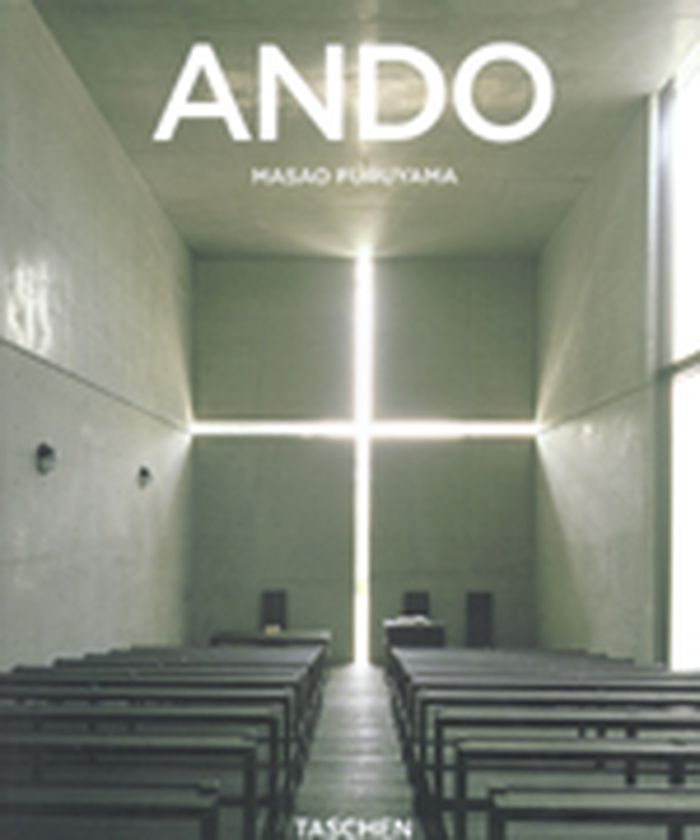
Philippe Starck describes him as a "mystic in a country which is no longer mystic." Drew Philip calls his buildings "land art" that "struggle to emerge from the earth." He is the only architect to have won the discipline`s four most prestigious prizes: the Pritzker, Carlsberg, Praemium Imperiale, and Kyoto Prize. His name is Tadao Ando, and he is one of the world`s greatest living architects. Combining influences from Japanese tradition with the best of Modernism, Ando has developed a completely unique building aesthetic that makes use of concrete, wood, water, light, space, and nature in a way that has never been witnessed elsewhere in architecture. This book provides the perfect introduction to Ando`s work, including private homes, churches, museums, apartment complexes, and cultural spaces throughout Japan, and in France, Italy, Spain, and the USA.
Ando Tadao
Actions:
Price:
$12.00
(available to order)
Summary:
Philippe Starck describes him as a "mystic in a country which is no longer mystic." Drew Philip calls his buildings "land art" that "struggle to emerge from the earth." He is the only architect to have won the discipline`s four most prestigious prizes: the Pritzker, Carlsberg, Praemium Imperiale, and Kyoto Prize. His name is Tadao Ando, and he is one of the world`s greatest living architects. Combining influences from Japanese tradition with the best of Modernism, Ando has developed a completely unique building aesthetic that makes use of concrete, wood, water, light, space, and nature in a way that has never been witnessed elsewhere in architecture. This book provides the perfect introduction to Ando`s work, including private homes, churches, museums, apartment complexes, and cultural spaces throughout Japan, and in France, Italy, Spain, and the USA.
Form:
books
books
Publication:
January 1900, Hong Kong, Köln, London, Los Angeles, Madrid
January 1900, Hong Kong, Köln, London, Los Angeles, Madrid
Subject:
Architecture Monographs
Architecture Monographs
Form:
books
books
Actions:
Price:
$70.00
(available to order)
Summary:
For 30 years, David T. Hanson (born 1948) has made photographs that are widely celebrated for their powerful depictions of the American landscape and its dramatic transformation and despoilment by humans. His newest collection, Wilderness to Wasteland, presents four series of previously unpublished and unexhibited photographs from Hanson’s early work, made between 1982(...)
$70.00
(available to order)
Summary:
For 30 years, David T. Hanson (born 1948) has made photographs that are widely celebrated for their powerful depictions of the American landscape and its dramatic transformation and despoilment by humans. His newest collection, Wilderness to Wasteland, presents four series of previously unpublished and unexhibited photographs from Hanson’s early work, made between 1982(...)
Subject:
Photography monographs
Photography monographs
Publication:
February 2016
February 2016
Title:
David T. Hanson: Wilderness to Wasteland
Actions:
Price:
$70.00
(available to order)
Summary:
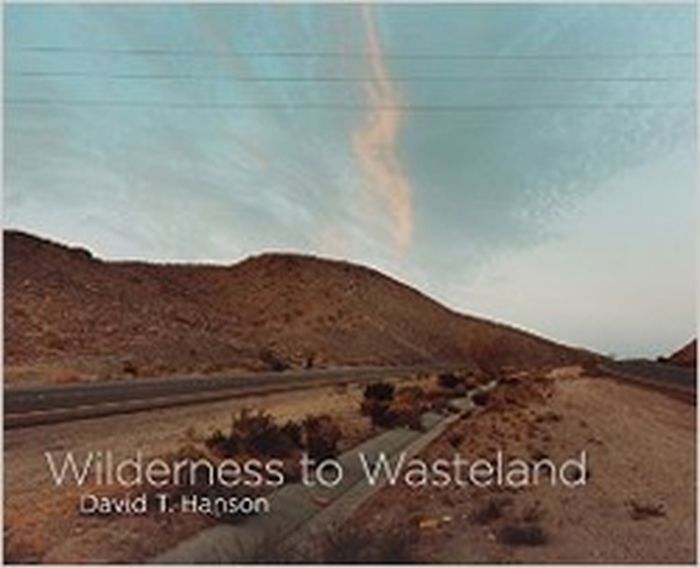
For 30 years, David T. Hanson (born 1948) has made photographs that are widely celebrated for their powerful depictions of the American landscape and its dramatic transformation and despoilment by humans. His newest collection, Wilderness to Wasteland, presents four series of previously unpublished and unexhibited photographs from Hanson’s early work, made between 1982 and 1987. Atomic City documents the former nuclear boomtown in Idaho, site of the world’s first nuclear power plant and first reactor meltdown. The Richest Hill on Earth is a study of the vast copper mines, housing and surrounding wasteland of Butte, Montana. The eponymous series is a dynamic group of aerial and ground-view photographs of hazardous waste sites, while the final series, Twilight in the Wilderness, comprises spectacular night views of industrial sites for power production. Together, these photographs constitute a haunting meditation on a ravaged landscape.
David T. Hanson: Wilderness to Wasteland
Actions:
Price:
$70.00
(available to order)
Summary:
For 30 years, David T. Hanson (born 1948) has made photographs that are widely celebrated for their powerful depictions of the American landscape and its dramatic transformation and despoilment by humans. His newest collection, Wilderness to Wasteland, presents four series of previously unpublished and unexhibited photographs from Hanson’s early work, made between 1982 and 1987. Atomic City documents the former nuclear boomtown in Idaho, site of the world’s first nuclear power plant and first reactor meltdown. The Richest Hill on Earth is a study of the vast copper mines, housing and surrounding wasteland of Butte, Montana. The eponymous series is a dynamic group of aerial and ground-view photographs of hazardous waste sites, while the final series, Twilight in the Wilderness, comprises spectacular night views of industrial sites for power production. Together, these photographs constitute a haunting meditation on a ravaged landscape.
Form:
books
books
Publication:
February 2016
February 2016
Subject:
Photography monographs
Photography monographs
Form:
books
books
Actions:
Price:
$28.95
(available to order)
Summary:
For readers of ''The Sixth Extinction'' and ''The Uninhabitable Earth,'' ''Concrete'' explores the history of a material that has been central to architecture and design for thousands of years-and what its future looks like in a world experiencing rapid climate change. Imagine a world without concrete: there'd be no skyscrapers, no grand irrigation projects, no out of(...)
$28.95
(available to order)
Summary:
For readers of ''The Sixth Extinction'' and ''The Uninhabitable Earth,'' ''Concrete'' explores the history of a material that has been central to architecture and design for thousands of years-and what its future looks like in a world experiencing rapid climate change. Imagine a world without concrete: there'd be no skyscrapers, no grand irrigation projects, no out of(...)
Title:
Concrete: from ancient origins to a problematic future
Actions:
Price:
$28.95
(available to order)
Summary:
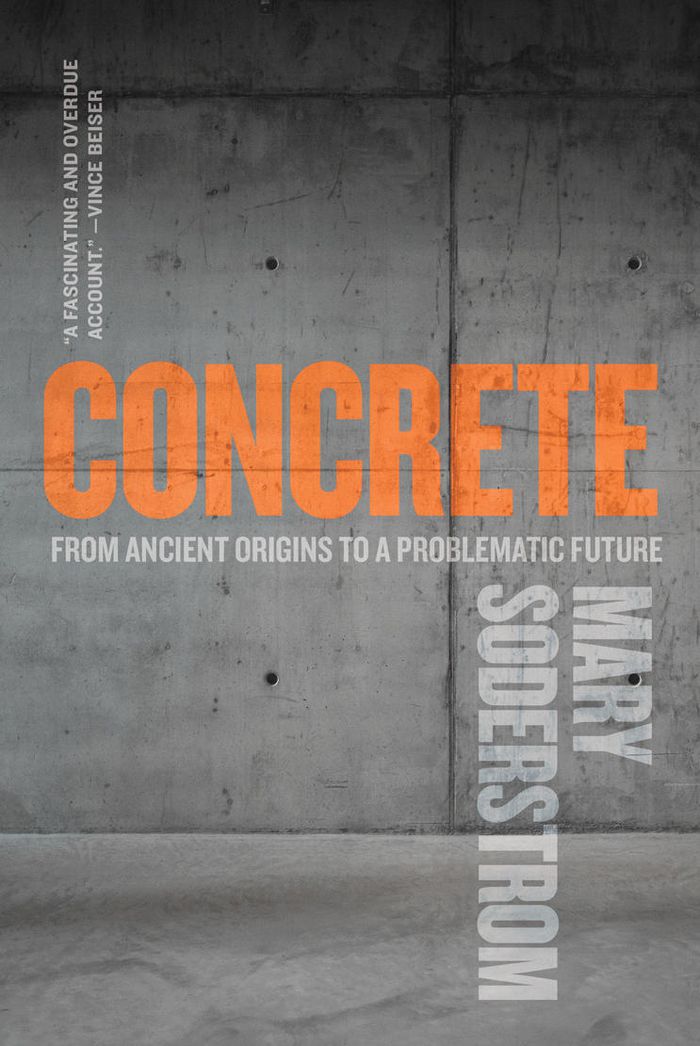
For readers of ''The Sixth Extinction'' and ''The Uninhabitable Earth,'' ''Concrete'' explores the history of a material that has been central to architecture and design for thousands of years-and what its future looks like in a world experiencing rapid climate change. Imagine a world without concrete: there'd be no skyscrapers, no grand irrigation projects, no out of season vegetables, no highways. There would be a shortage of electricity, more mud in some places, more solitude in others. But because of the fossil fuels and other resources required to make concrete, there also would also be less carbon dioxide in the atmosphere and less dramatic climate change. In ''Concrete: From ancient origins to a problematic future,'' Mary Soderstrom tells the story of concrete's surprising past, extravagant present, and uncertain future with careful research, lively anecdotes, and thoughtful reflection.
Concrete: from ancient origins to a problematic future
Actions:
Price:
$28.95
(available to order)
Summary:
For readers of ''The Sixth Extinction'' and ''The Uninhabitable Earth,'' ''Concrete'' explores the history of a material that has been central to architecture and design for thousands of years-and what its future looks like in a world experiencing rapid climate change. Imagine a world without concrete: there'd be no skyscrapers, no grand irrigation projects, no out of season vegetables, no highways. There would be a shortage of electricity, more mud in some places, more solitude in others. But because of the fossil fuels and other resources required to make concrete, there also would also be less carbon dioxide in the atmosphere and less dramatic climate change. In ''Concrete: From ancient origins to a problematic future,'' Mary Soderstrom tells the story of concrete's surprising past, extravagant present, and uncertain future with careful research, lively anecdotes, and thoughtful reflection.
Form:
books
books
Publication:
October 2020
October 2020
Subject:
Architectural Theory
Architectural Theory


