


44174 Results
Form:
events
events
Title:
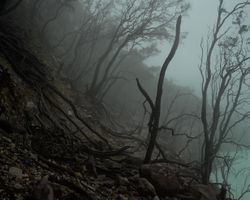
Bas Princen: Volcano Walks
Bas Princen: Volcano Walks
Actions:
Description:
In this artist’s talk, Bas Princen will discuss the current status of the 17 Volcanoes project and explore the resonances between the works of Franz Wilhelm Junghuhn, works by early-twentieth-century Dutch photographers in Java (like van Nieuwenhuis), and his own practice. Although discovering new places seems impossible today, the talk takes as a point of departure the(...)
In this artist’s talk, Bas Princen will discuss the current status of the 17 Volcanoes project and explore the resonances between the works of Franz Wilhelm Junghuhn, works by early-twentieth-century Dutch photographers in Java (like van Nieuwenhuis), and his own practice. Although discovering new places seems impossible today, the talk takes as a point of departure the(...)
Date:
15 October 2016, 3pm
15 October 2016, 3pm
Title:
Bas Princen: Volcano Walks
Actions:
Description:
In this artist’s talk, Bas Princen will discuss the current status of the 17 Volcanoes project and explore the resonances between the works of Franz Wilhelm Junghuhn, works by early-twentieth-century Dutch photographers in Java (like van Nieuwenhuis), and his own practice. Although discovering new places seems impossible today, the talk takes as a point of departure the(...)
Bas Princen: Volcano Walks
Actions:
Description:
In this artist’s talk, Bas Princen will discuss the current status of the 17 Volcanoes project and explore the resonances between the works of Franz Wilhelm Junghuhn, works by early-twentieth-century Dutch photographers in Java (like van Nieuwenhuis), and his own practice. Although discovering new places seems impossible today, the talk takes as a point of departure the(...)
Form:
events
events
Date:
15 October 2016
3pm
15 October 2016
3pm
Form:
events
events
Actions:
Description:
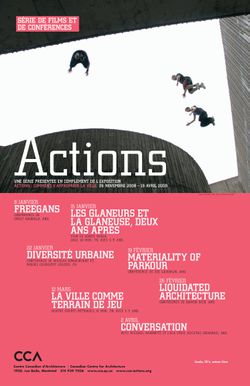
Chicago-based artist Michael Rakowitz speaks with Luca Stasi of Recetas Urbanas about their various projects. Rakowitz’s work explores the concepts of nomadic habitat and urban appropriation, while Recetas Urbanas uses strategies of urban intervention that take advantage of legal loopholes, opening up opportunities for autonomous architecture. The conversation is part of(...)
Chicago-based artist Michael Rakowitz speaks with Luca Stasi of Recetas Urbanas about their various projects. Rakowitz’s work explores the concepts of nomadic habitat and urban appropriation, while Recetas Urbanas uses strategies of urban intervention that take advantage of legal loopholes, opening up opportunities for autonomous architecture. The conversation is part of(...)
Location:
Paul Desmarais Theatre
Paul Desmarais Theatre
Date:
2 April 2009
2 April 2009
Title:
Michael Rakowitz and Luca Stasi of Recetas Urbanas
Actions:
Description:
Chicago-based artist Michael Rakowitz speaks with Luca Stasi of Recetas Urbanas about their various projects. Rakowitz’s work explores the concepts of nomadic habitat and urban appropriation, while Recetas Urbanas uses strategies of urban intervention that take advantage of legal loopholes, opening up opportunities for autonomous architecture. The conversation is part of(...)
Michael Rakowitz and Luca Stasi of Recetas Urbanas
Actions:
Description:
Chicago-based artist Michael Rakowitz speaks with Luca Stasi of Recetas Urbanas about their various projects. Rakowitz’s work explores the concepts of nomadic habitat and urban appropriation, while Recetas Urbanas uses strategies of urban intervention that take advantage of legal loopholes, opening up opportunities for autonomous architecture. The conversation is part of(...)
Form:
events
events
Date:
2 April 2009
2 April 2009
Location:
Paul Desmarais Theatre
Paul Desmarais Theatre
Form:
drawings, photographs
drawings, photographs
Actions:
Reference number:
DR2012:0011:032
Description:
Ring binder containing drawings, photographs, reprographic copies, stats of architectural, art, and graphic design work, and a watercolour related to Melvin Charney's activities as a student at McGill University, and include the following early projects: - Kitchen details for Mr. and Mrs. A. Zion (1 stat); - Design of vol. 2, no. 2 of YES: A Creative Quarterly (1 copy); - Small weekend house (3 stats); - Curb-service restaurant, for summer use only, on a Laurentian road (2 stat); - Studio-house in the Laurentian mountains (2 stats); - Apartment house to complete an existing pattern of older garden apartments (3 stats); - Community library for the Town of Mount Royal (6 stats); - Motel near the St. Lawrence River (2 stats); - Child centre (3 stats); - Building for the Province of Quebec Architects Association (4 stats); - Cloverdale shopping centre (1 stat); - Morse Jewellers (4 stats); - Steinberg's supermarket, Montreal North; - Reinforced concrete canopy, Molson Stadium (1 sketch, 1 photograph, 1 stat); - Town of Dorval subdivision proposal (1 stat); - Ottawa City Hall, study of lighting of areas in the building (1 stat); - Entrance vestibule, 1552 St. Matthew Street, Montreal (1 stat).
DR2012:0011:032
Description:
Ring binder containing drawings, photographs, reprographic copies, stats of architectural, art, and graphic design work, and a watercolour related to Melvin Charney's activities as a student at McGill University, and include the following early projects: - Kitchen details for Mr. and Mrs. A. Zion (1 stat); - Design of vol. 2, no. 2 of YES: A Creative Quarterly (1 copy); - Small weekend house (3 stats); - Curb-service restaurant, for summer use only, on a Laurentian road (2 stat); - Studio-house in the Laurentian mountains (2 stats); - Apartment house to complete an existing pattern of older garden apartments (3 stats); - Community library for the Town of Mount Royal (6 stats); - Motel near the St. Lawrence River (2 stats); - Child centre (3 stats); - Building for the Province of Quebec Architects Association (4 stats); - Cloverdale shopping centre (1 stat); - Morse Jewellers (4 stats); - Steinberg's supermarket, Montreal North; - Reinforced concrete canopy, Molson Stadium (1 sketch, 1 photograph, 1 stat); - Town of Dorval subdivision proposal (1 stat); - Ottawa City Hall, study of lighting of areas in the building (1 stat); - Entrance vestibule, 1552 St. Matthew Street, Montreal (1 stat).
People:
Date:
1955-1957
1955-1957
Title:
Portfolio for application to the graduate program at Yale University
Actions:
DR2012:0011:032
Description:
Ring binder containing drawings, photographs, reprographic copies, stats of architectural, art, and graphic design work, and a watercolour related to Melvin Charney's activities as a student at McGill University, and include the following early projects: - Kitchen details for Mr. and Mrs. A. Zion (1 stat); - Design of vol. 2, no. 2 of YES: A Creative Quarterly (1 copy); - Small weekend house (3 stats); - Curb-service restaurant, for summer use only, on a Laurentian road (2 stat); - Studio-house in the Laurentian mountains (2 stats); - Apartment house to complete an existing pattern of older garden apartments (3 stats); - Community library for the Town of Mount Royal (6 stats); - Motel near the St. Lawrence River (2 stats); - Child centre (3 stats); - Building for the Province of Quebec Architects Association (4 stats); - Cloverdale shopping centre (1 stat); - Morse Jewellers (4 stats); - Steinberg's supermarket, Montreal North; - Reinforced concrete canopy, Molson Stadium (1 sketch, 1 photograph, 1 stat); - Town of Dorval subdivision proposal (1 stat); - Ottawa City Hall, study of lighting of areas in the building (1 stat); - Entrance vestibule, 1552 St. Matthew Street, Montreal (1 stat).
Portfolio for application to the graduate program at Yale University
Actions:
DR2012:0011:032
Description:
Ring binder containing drawings, photographs, reprographic copies, stats of architectural, art, and graphic design work, and a watercolour related to Melvin Charney's activities as a student at McGill University, and include the following early projects: - Kitchen details for Mr. and Mrs. A. Zion (1 stat); - Design of vol. 2, no. 2 of YES: A Creative Quarterly (1 copy); - Small weekend house (3 stats); - Curb-service restaurant, for summer use only, on a Laurentian road (2 stat); - Studio-house in the Laurentian mountains (2 stats); - Apartment house to complete an existing pattern of older garden apartments (3 stats); - Community library for the Town of Mount Royal (6 stats); - Motel near the St. Lawrence River (2 stats); - Child centre (3 stats); - Building for the Province of Quebec Architects Association (4 stats); - Cloverdale shopping centre (1 stat); - Morse Jewellers (4 stats); - Steinberg's supermarket, Montreal North; - Reinforced concrete canopy, Molson Stadium (1 sketch, 1 photograph, 1 stat); - Town of Dorval subdivision proposal (1 stat); - Ottawa City Hall, study of lighting of areas in the building (1 stat); - Entrance vestibule, 1552 St. Matthew Street, Montreal (1 stat).
Form:
drawings, photographs
drawings, photographs
Date:
1955-1957
1955-1957
People:
Actions:
Reference number:
PH1979:0548
Description:
This album bears a title page as follows (glued to the inside cover): Grand Architectural Panorama of London. Regent Street to Westminster Abbey. From original drawings made expressly for the work by R. Sandeman, architect, and executed on wood by George C. Leighton. London: published by I. Writelaw, 188, Fleet Street; Sold by Simpkin, Marshall, & Co. Stationers' Hall Court; and to be had of all booksellers. Printed by Leightons and Taylor, 10, Lamb's Conduit Street, 1849. A folded panoramic engraved view begins at left with St. Margaret Church and Westminster Abbey and continues to All Soul's Church. In between, are depicted monuments, buildings, shops, companies, streets, horses, carriages and people, through the following streets : Great George Street; Upper Class Street; Parliament Street; Downing Street; Spring Gardens/Charing Cross; Trafalgar Square/Spring Gardens; Warwick Street; Cockspur Street; Duke of York's Monument, Waterloo Place; Charles Street; Jermyn Street; Piccadilly Regent Circus; Vine Street; Swallow Street; Vigo Street; Leicester Street; New Burlington Street; Conduit Street; Madox Street; Hanover Street; Princes' Street; Oxford Street; Great Castle Street; Margaret Street; Mortimer Street; Langham Place and Portland Place.
PH1979:0548
Description:
This album bears a title page as follows (glued to the inside cover): Grand Architectural Panorama of London. Regent Street to Westminster Abbey. From original drawings made expressly for the work by R. Sandeman, architect, and executed on wood by George C. Leighton. London: published by I. Writelaw, 188, Fleet Street; Sold by Simpkin, Marshall, & Co. Stationers' Hall Court; and to be had of all booksellers. Printed by Leightons and Taylor, 10, Lamb's Conduit Street, 1849. A folded panoramic engraved view begins at left with St. Margaret Church and Westminster Abbey and continues to All Soul's Church. In between, are depicted monuments, buildings, shops, companies, streets, horses, carriages and people, through the following streets : Great George Street; Upper Class Street; Parliament Street; Downing Street; Spring Gardens/Charing Cross; Trafalgar Square/Spring Gardens; Warwick Street; Cockspur Street; Duke of York's Monument, Waterloo Place; Charles Street; Jermyn Street; Piccadilly Regent Circus; Vine Street; Swallow Street; Vigo Street; Leicester Street; New Burlington Street; Conduit Street; Madox Street; Hanover Street; Princes' Street; Oxford Street; Great Castle Street; Margaret Street; Mortimer Street; Langham Place and Portland Place.
People:
Subject:
architecture, topographic, urban planning
architecture, topographic, urban planning
Date:
1849
1849
Title:
Grand Architectural Panorama of London. Regent Street to Westminster Abbey
Actions:
PH1979:0548
Description:
This album bears a title page as follows (glued to the inside cover): Grand Architectural Panorama of London. Regent Street to Westminster Abbey. From original drawings made expressly for the work by R. Sandeman, architect, and executed on wood by George C. Leighton. London: published by I. Writelaw, 188, Fleet Street; Sold by Simpkin, Marshall, & Co. Stationers' Hall Court; and to be had of all booksellers. Printed by Leightons and Taylor, 10, Lamb's Conduit Street, 1849. A folded panoramic engraved view begins at left with St. Margaret Church and Westminster Abbey and continues to All Soul's Church. In between, are depicted monuments, buildings, shops, companies, streets, horses, carriages and people, through the following streets : Great George Street; Upper Class Street; Parliament Street; Downing Street; Spring Gardens/Charing Cross; Trafalgar Square/Spring Gardens; Warwick Street; Cockspur Street; Duke of York's Monument, Waterloo Place; Charles Street; Jermyn Street; Piccadilly Regent Circus; Vine Street; Swallow Street; Vigo Street; Leicester Street; New Burlington Street; Conduit Street; Madox Street; Hanover Street; Princes' Street; Oxford Street; Great Castle Street; Margaret Street; Mortimer Street; Langham Place and Portland Place.
Grand Architectural Panorama of London. Regent Street to Westminster Abbey
Actions:
PH1979:0548
Description:
This album bears a title page as follows (glued to the inside cover): Grand Architectural Panorama of London. Regent Street to Westminster Abbey. From original drawings made expressly for the work by R. Sandeman, architect, and executed on wood by George C. Leighton. London: published by I. Writelaw, 188, Fleet Street; Sold by Simpkin, Marshall, & Co. Stationers' Hall Court; and to be had of all booksellers. Printed by Leightons and Taylor, 10, Lamb's Conduit Street, 1849. A folded panoramic engraved view begins at left with St. Margaret Church and Westminster Abbey and continues to All Soul's Church. In between, are depicted monuments, buildings, shops, companies, streets, horses, carriages and people, through the following streets : Great George Street; Upper Class Street; Parliament Street; Downing Street; Spring Gardens/Charing Cross; Trafalgar Square/Spring Gardens; Warwick Street; Cockspur Street; Duke of York's Monument, Waterloo Place; Charles Street; Jermyn Street; Piccadilly Regent Circus; Vine Street; Swallow Street; Vigo Street; Leicester Street; New Burlington Street; Conduit Street; Madox Street; Hanover Street; Princes' Street; Oxford Street; Great Castle Street; Margaret Street; Mortimer Street; Langham Place and Portland Place.
Date:
1849
1849
People:
Subject:
architecture, topographic, urban planning
architecture, topographic, urban planning
Form:
drawings, textual records, photographs
drawings, textual records, photographs
Reference number:
DR1988:0015:001-029
Description:
Part of a miscellaneous group of visual and textual documents collected by Oswald Mathias Ungers, apparently to represent the work of artists/architects in Die gläserne Kette. Primarily formal studies and other material relating to projects for buildings but also includes biographical material. Includes 17 drawings, 12 photographs, 9 prints, and 4 sheets of text. Most of the drawings are studies of architectonic massing of forms, a few are identified by project name, such as "Das Maler Haus" (the Painter's house) and the Christian Science Cathedral. Design of the subject of the photograph, drawing, or reproduction is attributed to Carl Krayl, following Ungers's attributions, unless otherwise stated. Many of the works in this group are inscribed with the name "Krayl" in blue ball-point pen; this might be the hand-writing of Frau L. Krayl who wrote the note on DR1988:0015:026 R/V. The photographs DR1988:0015:001 to DR1988:0015:006 are of the same model. Tim Benson has suggested that the model is a competition entry for changes to Alexanderplatz, Berlin (Shubert). DR1988:0015:007 to DR1988:0015:009 illustrate different views of the same plaster model. DR1988:0015:010 appears to be a photograph of a model for "Das Maler Haus", which is represented by the prints DR1988:0015:024 and DR1988:0015:025.
DR1988:0015:001-029
Description:
Part of a miscellaneous group of visual and textual documents collected by Oswald Mathias Ungers, apparently to represent the work of artists/architects in Die gläserne Kette. Primarily formal studies and other material relating to projects for buildings but also includes biographical material. Includes 17 drawings, 12 photographs, 9 prints, and 4 sheets of text. Most of the drawings are studies of architectonic massing of forms, a few are identified by project name, such as "Das Maler Haus" (the Painter's house) and the Christian Science Cathedral. Design of the subject of the photograph, drawing, or reproduction is attributed to Carl Krayl, following Ungers's attributions, unless otherwise stated. Many of the works in this group are inscribed with the name "Krayl" in blue ball-point pen; this might be the hand-writing of Frau L. Krayl who wrote the note on DR1988:0015:026 R/V. The photographs DR1988:0015:001 to DR1988:0015:006 are of the same model. Tim Benson has suggested that the model is a competition entry for changes to Alexanderplatz, Berlin (Shubert). DR1988:0015:007 to DR1988:0015:009 illustrate different views of the same plaster model. DR1988:0015:010 appears to be a photograph of a model for "Das Maler Haus", which is represented by the prints DR1988:0015:024 and DR1988:0015:025.
People:
Date:
circa 1918-1945
circa 1918-1945
Title:
Material from Carl Krayl mostly for Die gläserne Kette
Actions:
DR1988:0015:001-029
Description:
Part of a miscellaneous group of visual and textual documents collected by Oswald Mathias Ungers, apparently to represent the work of artists/architects in Die gläserne Kette. Primarily formal studies and other material relating to projects for buildings but also includes biographical material. Includes 17 drawings, 12 photographs, 9 prints, and 4 sheets of text. Most of the drawings are studies of architectonic massing of forms, a few are identified by project name, such as "Das Maler Haus" (the Painter's house) and the Christian Science Cathedral. Design of the subject of the photograph, drawing, or reproduction is attributed to Carl Krayl, following Ungers's attributions, unless otherwise stated. Many of the works in this group are inscribed with the name "Krayl" in blue ball-point pen; this might be the hand-writing of Frau L. Krayl who wrote the note on DR1988:0015:026 R/V. The photographs DR1988:0015:001 to DR1988:0015:006 are of the same model. Tim Benson has suggested that the model is a competition entry for changes to Alexanderplatz, Berlin (Shubert). DR1988:0015:007 to DR1988:0015:009 illustrate different views of the same plaster model. DR1988:0015:010 appears to be a photograph of a model for "Das Maler Haus", which is represented by the prints DR1988:0015:024 and DR1988:0015:025.
Material from Carl Krayl mostly for Die gläserne Kette
Actions:
DR1988:0015:001-029
Description:
Part of a miscellaneous group of visual and textual documents collected by Oswald Mathias Ungers, apparently to represent the work of artists/architects in Die gläserne Kette. Primarily formal studies and other material relating to projects for buildings but also includes biographical material. Includes 17 drawings, 12 photographs, 9 prints, and 4 sheets of text. Most of the drawings are studies of architectonic massing of forms, a few are identified by project name, such as "Das Maler Haus" (the Painter's house) and the Christian Science Cathedral. Design of the subject of the photograph, drawing, or reproduction is attributed to Carl Krayl, following Ungers's attributions, unless otherwise stated. Many of the works in this group are inscribed with the name "Krayl" in blue ball-point pen; this might be the hand-writing of Frau L. Krayl who wrote the note on DR1988:0015:026 R/V. The photographs DR1988:0015:001 to DR1988:0015:006 are of the same model. Tim Benson has suggested that the model is a competition entry for changes to Alexanderplatz, Berlin (Shubert). DR1988:0015:007 to DR1988:0015:009 illustrate different views of the same plaster model. DR1988:0015:010 appears to be a photograph of a model for "Das Maler Haus", which is represented by the prints DR1988:0015:024 and DR1988:0015:025.
Form:
drawings, textual records, photographs
drawings, textual records, photographs
Date:
circa 1918-1945
circa 1918-1945
People:
Level of archival description:
Project
Project
Actions:
Reference number:
AP206.S1.2000.PR01
Description:
This project series documents buildings for the Guru Jambheshwar University of Science and Technology in Hisar, India around 2000. The project consisted of the design of many new campus buildings, including the Administrative Block, offices, Health Centre, student and employee hostels, professors' houses and VIP houses, the Teaching Block, cafeteria, library, and University Works buildings. The University, previously known as Punjab Agricultural University, was established in 1995 by the Haryana state government and had a campus that sprawled over 372 acres. By 2007, around 200 acres had been developed with buildings and landscaping. Prakash had previously worked on projects for this campus, formerly known as the Punjab Agricultural University, in the 1960s. This project series contains the records for three buildings: the library, the Health Centre, and the Sports Hall. The library was notable for it's round shape, large entrance arch and domed skylight ceiling. The materials also emphasize the development of a large mural in the library depicting the astrological signs. The Health Centre was a diamond shaped building with an outdoor courtyard at its centre. The Sports Hall was a rectangular building with a trussed roof consisting primarily of an open, multipurpose space. This project is recorded through drawings, photographs of the finished buildings, and textual records dating from 2000-2007. The drawings are largely originals and include plans, sections, elevations, perspectives and details. The textual records consist of correspondence and a brochure on the campus construction program.
AP206.S1.2000.PR01
Description:
This project series documents buildings for the Guru Jambheshwar University of Science and Technology in Hisar, India around 2000. The project consisted of the design of many new campus buildings, including the Administrative Block, offices, Health Centre, student and employee hostels, professors' houses and VIP houses, the Teaching Block, cafeteria, library, and University Works buildings. The University, previously known as Punjab Agricultural University, was established in 1995 by the Haryana state government and had a campus that sprawled over 372 acres. By 2007, around 200 acres had been developed with buildings and landscaping. Prakash had previously worked on projects for this campus, formerly known as the Punjab Agricultural University, in the 1960s. This project series contains the records for three buildings: the library, the Health Centre, and the Sports Hall. The library was notable for it's round shape, large entrance arch and domed skylight ceiling. The materials also emphasize the development of a large mural in the library depicting the astrological signs. The Health Centre was a diamond shaped building with an outdoor courtyard at its centre. The Sports Hall was a rectangular building with a trussed roof consisting primarily of an open, multipurpose space. This project is recorded through drawings, photographs of the finished buildings, and textual records dating from 2000-2007. The drawings are largely originals and include plans, sections, elevations, perspectives and details. The textual records consist of correspondence and a brochure on the campus construction program.
People:
Date:
2000-2007
2000-2007
Title:
Guru Jambheshwar University of Science and Technology, Hisar, India (2000-2004)
Actions:
AP206.S1.2000.PR01
Description:
This project series documents buildings for the Guru Jambheshwar University of Science and Technology in Hisar, India around 2000. The project consisted of the design of many new campus buildings, including the Administrative Block, offices, Health Centre, student and employee hostels, professors' houses and VIP houses, the Teaching Block, cafeteria, library, and University Works buildings. The University, previously known as Punjab Agricultural University, was established in 1995 by the Haryana state government and had a campus that sprawled over 372 acres. By 2007, around 200 acres had been developed with buildings and landscaping. Prakash had previously worked on projects for this campus, formerly known as the Punjab Agricultural University, in the 1960s. This project series contains the records for three buildings: the library, the Health Centre, and the Sports Hall. The library was notable for it's round shape, large entrance arch and domed skylight ceiling. The materials also emphasize the development of a large mural in the library depicting the astrological signs. The Health Centre was a diamond shaped building with an outdoor courtyard at its centre. The Sports Hall was a rectangular building with a trussed roof consisting primarily of an open, multipurpose space. This project is recorded through drawings, photographs of the finished buildings, and textual records dating from 2000-2007. The drawings are largely originals and include plans, sections, elevations, perspectives and details. The textual records consist of correspondence and a brochure on the campus construction program.
Guru Jambheshwar University of Science and Technology, Hisar, India (2000-2004)
Actions:
AP206.S1.2000.PR01
Description:
This project series documents buildings for the Guru Jambheshwar University of Science and Technology in Hisar, India around 2000. The project consisted of the design of many new campus buildings, including the Administrative Block, offices, Health Centre, student and employee hostels, professors' houses and VIP houses, the Teaching Block, cafeteria, library, and University Works buildings. The University, previously known as Punjab Agricultural University, was established in 1995 by the Haryana state government and had a campus that sprawled over 372 acres. By 2007, around 200 acres had been developed with buildings and landscaping. Prakash had previously worked on projects for this campus, formerly known as the Punjab Agricultural University, in the 1960s. This project series contains the records for three buildings: the library, the Health Centre, and the Sports Hall. The library was notable for it's round shape, large entrance arch and domed skylight ceiling. The materials also emphasize the development of a large mural in the library depicting the astrological signs. The Health Centre was a diamond shaped building with an outdoor courtyard at its centre. The Sports Hall was a rectangular building with a trussed roof consisting primarily of an open, multipurpose space. This project is recorded through drawings, photographs of the finished buildings, and textual records dating from 2000-2007. The drawings are largely originals and include plans, sections, elevations, perspectives and details. The textual records consist of correspondence and a brochure on the campus construction program.
Level of archival description:
Project
Project
Date:
2000-2007
2000-2007
People:
Form:
exhibitions
exhibitions
Description:
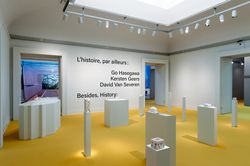
What role can history play in contemporary architecture practice? Rather than adopting a postmodern attitude or evoking past discussions and historical architectural forms, Go Hasegawa, Kersten Geers, and David Van Severen address contemporary issues in their work while remaining in dialogue with history. Even with distinct pasts and contexts, affinities emerge in shared(...)
What role can history play in contemporary architecture practice? Rather than adopting a postmodern attitude or evoking past discussions and historical architectural forms, Go Hasegawa, Kersten Geers, and David Van Severen address contemporary issues in their work while remaining in dialogue with history. Even with distinct pasts and contexts, affinities emerge in shared(...)
Location:
Main galleries Keyword(s):
Besides, History, Go Hasegawa, Kersten Geers, David Van Severen, Office, KGDVS, Bas Princen
Main galleries Keyword(s):
Besides, History, Go Hasegawa, Kersten Geers, David Van Severen, Office, KGDVS, Bas Princen
Date:
10 May 2017 to 15 October 2017
10 May 2017 to 15 October 2017
Title:
Besides, History: Go Hasegawa, Kersten Geers, David Van Severen
Actions:
Description:
What role can history play in contemporary architecture practice? Rather than adopting a postmodern attitude or evoking past discussions and historical architectural forms, Go Hasegawa, Kersten Geers, and David Van Severen address contemporary issues in their work while remaining in dialogue with history. Even with distinct pasts and contexts, affinities emerge in shared(...)
Besides, History: Go Hasegawa, Kersten Geers, David Van Severen
Actions:
Description:
What role can history play in contemporary architecture practice? Rather than adopting a postmodern attitude or evoking past discussions and historical architectural forms, Go Hasegawa, Kersten Geers, and David Van Severen address contemporary issues in their work while remaining in dialogue with history. Even with distinct pasts and contexts, affinities emerge in shared(...)
Form:
exhibitions
exhibitions
Date:
10 May 2017 to
15 October 2017
10 May 2017 to
15 October 2017
Location:
Main galleries Keyword(s):
Besides, History, Go Hasegawa, Kersten Geers, David Van Severen, Office, KGDVS, Bas Princen
Main galleries Keyword(s):
Besides, History, Go Hasegawa, Kersten Geers, David Van Severen, Office, KGDVS, Bas Princen
Form:
exhibitions
exhibitions
Description:
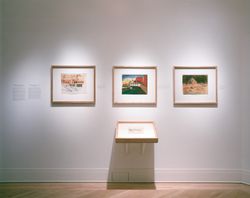
A look at Louis Kahn’s graphic work shows that his search for abstract monumentality, which culminated in his works of the 1960s, began decades earlier in his abundant drawings, travel sketches, and landscapes. The studies, travel sketches, and landscapes shown in the exhibition—such as Kahns intimate landscapes from Gaspé, where he regularly vacationed during the 1930s(...)
A look at Louis Kahn’s graphic work shows that his search for abstract monumentality, which culminated in his works of the 1960s, began decades earlier in his abundant drawings, travel sketches, and landscapes. The studies, travel sketches, and landscapes shown in the exhibition—such as Kahns intimate landscapes from Gaspé, where he regularly vacationed during the 1930s(...)
Location:
Octagonal gallery
Octagonal gallery
Date:
19 May 1993 to 29 August 1993
19 May 1993 to 29 August 1993
Title:
An Architectural Odyssey: The Travel Sketches of Louis I. Kahn
Actions:
Description:
A look at Louis Kahn’s graphic work shows that his search for abstract monumentality, which culminated in his works of the 1960s, began decades earlier in his abundant drawings, travel sketches, and landscapes. The studies, travel sketches, and landscapes shown in the exhibition—such as Kahns intimate landscapes from Gaspé, where he regularly vacationed during the 1930s(...)
An Architectural Odyssey: The Travel Sketches of Louis I. Kahn
Actions:
Description:
A look at Louis Kahn’s graphic work shows that his search for abstract monumentality, which culminated in his works of the 1960s, began decades earlier in his abundant drawings, travel sketches, and landscapes. The studies, travel sketches, and landscapes shown in the exhibition—such as Kahns intimate landscapes from Gaspé, where he regularly vacationed during the 1930s(...)
Form:
exhibitions
exhibitions
Date:
19 May 1993 to
29 August 1993
19 May 1993 to
29 August 1993
Location:
Octagonal gallery
Octagonal gallery
Form:
archives
Level of archival description:
Fonds
archives
Level of archival description:
Fonds
Title:
Paul-Philippe Cret fonds
Paul-Philippe Cret fonds
Actions:
Reference number:
AP031
Synopsis:
Paul-Philippe Cret fonds, 1907-1950, documents Cret’s project for the International Bureau of American Republics (Pan American Union Building) in Washington D.C. (1907 – 1950). The fond is comprised of drawings showing plans, elevations, wiring and plumbing diagrams, and furniture layout.
AP031
Synopsis:
Paul-Philippe Cret fonds, 1907-1950, documents Cret’s project for the International Bureau of American Republics (Pan American Union Building) in Washington D.C. (1907 – 1950). The fond is comprised of drawings showing plans, elevations, wiring and plumbing diagrams, and furniture layout.
People:
Date:
circa 1907-1950
circa 1907-1950
Title:
Paul-Philippe Cret fonds
Actions:
AP031
Synopsis:
Paul-Philippe Cret fonds, 1907-1950, documents Cret’s project for the International Bureau of American Republics (Pan American Union Building) in Washington D.C. (1907 – 1950). The fond is comprised of drawings showing plans, elevations, wiring and plumbing diagrams, and furniture layout.
Paul-Philippe Cret fonds
Actions:
AP031
Synopsis:
Paul-Philippe Cret fonds, 1907-1950, documents Cret’s project for the International Bureau of American Republics (Pan American Union Building) in Washington D.C. (1907 – 1950). The fond is comprised of drawings showing plans, elevations, wiring and plumbing diagrams, and furniture layout.
Form:
archives
Level of archival description:
Fonds
archives
Level of archival description:
Fonds
Date:
circa 1907-1950
circa 1907-1950
People:
Form:
photographs
photographs
Actions:
Reference number:
AP075.S4.SS2.005
Description:
Original folder entitled "PHILADELPHIA (COLLECTED WORKS) / 1947-1951".
AP075.S4.SS2.005
Description:
Original folder entitled "PHILADELPHIA (COLLECTED WORKS) / 1947-1951".
People:
Date:
1947-1951
1947-1951
Title:
Research documentation on urbanisme and planning in Philadelphia
Actions:
AP075.S4.SS2.005
Description:
Original folder entitled "PHILADELPHIA (COLLECTED WORKS) / 1947-1951".
Research documentation on urbanisme and planning in Philadelphia
Actions:
AP075.S4.SS2.005
Description:
Original folder entitled "PHILADELPHIA (COLLECTED WORKS) / 1947-1951".
Form:
photographs
photographs
Date:
1947-1951
1947-1951
People:


