


2059 Results
Form:
books
books
Actions:
Price:
$99.95
(available to order)
Summary:
Craig Ellwood was one of the finest California architects of the postwar era. By the time he was thirty he had already contributed three of the seminal Case Study Houses and received the São Paulo Award for his Courtyard Apartments. Subsequently influenced by Mies, he went on to design a lengthy series of stark minimalist structures, peaking with the Pasadena Art Center.(...)
$99.95
(available to order)
Summary:
Craig Ellwood was one of the finest California architects of the postwar era. By the time he was thirty he had already contributed three of the seminal Case Study Houses and received the São Paulo Award for his Courtyard Apartments. Subsequently influenced by Mies, he went on to design a lengthy series of stark minimalist structures, peaking with the Pasadena Art Center.(...)
Title:
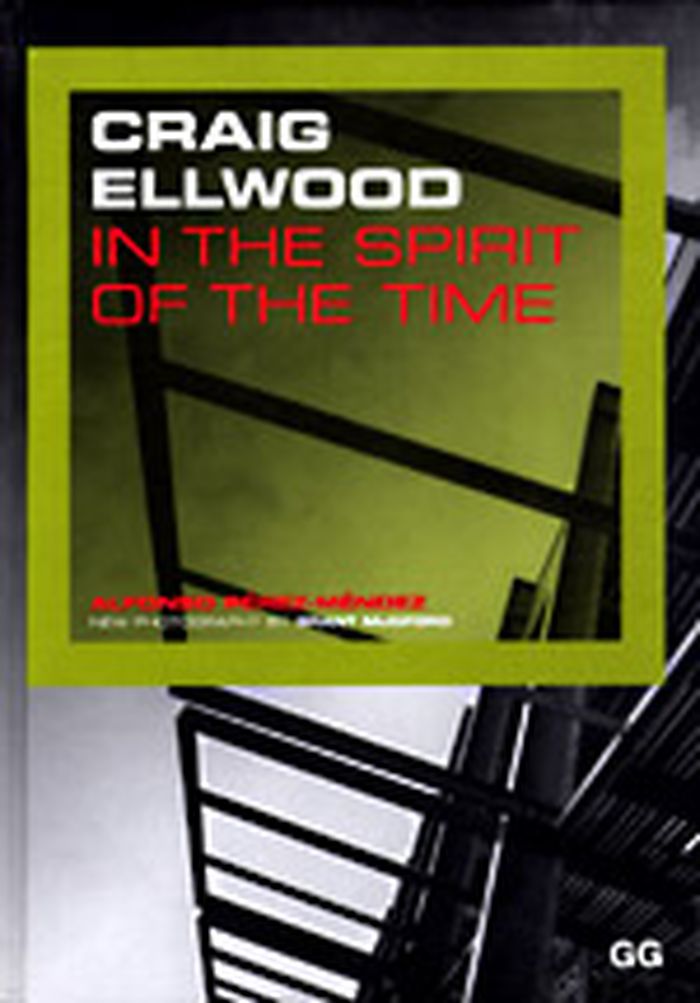
Craig Ellwood : in the spirit of the time
Actions:
Price:
$99.95
(available to order)
Summary:
Craig Ellwood was one of the finest California architects of the postwar era. By the time he was thirty he had already contributed three of the seminal Case Study Houses and received the São Paulo Award for his Courtyard Apartments. Subsequently influenced by Mies, he went on to design a lengthy series of stark minimalist structures, peaking with the Pasadena Art Center. With the support of John Entenza, editor of the influential magazine Arts & Architecture, Ellwood was, until the late 1960s, widely considered to be one of the most innovative American architects of the period. This book documents all the Ellwood buildings that remain on the records, a total of some ninety structures. Its 600 illustrations include comprehensive archival photography (including Ellwood’s own pictures and others by Julius Shulman), original drawings, and, for those buildings that remain in good condition, recent images. Due to the loss of most of the original drawings, 80 floor plans have been redrawn for this publication, making this book as close a record of Ellwood’s complete works as is possible today.
Craig Ellwood : in the spirit of the time
Actions:
Price:
$99.95
(available to order)
Summary:
Craig Ellwood was one of the finest California architects of the postwar era. By the time he was thirty he had already contributed three of the seminal Case Study Houses and received the São Paulo Award for his Courtyard Apartments. Subsequently influenced by Mies, he went on to design a lengthy series of stark minimalist structures, peaking with the Pasadena Art Center. With the support of John Entenza, editor of the influential magazine Arts & Architecture, Ellwood was, until the late 1960s, widely considered to be one of the most innovative American architects of the period. This book documents all the Ellwood buildings that remain on the records, a total of some ninety structures. Its 600 illustrations include comprehensive archival photography (including Ellwood’s own pictures and others by Julius Shulman), original drawings, and, for those buildings that remain in good condition, recent images. Due to the loss of most of the original drawings, 80 floor plans have been redrawn for this publication, making this book as close a record of Ellwood’s complete works as is possible today.
Form:
books
books
Publication:
October 1999, Barcelona
October 1999, Barcelona
Subject:
Architecture Monographs
Architecture Monographs
Form:
archives
archives
Holdings:
Description:
[22] leaves, bound : Whatman paper dated 1944 ; 32 cm
Description:
[22] leaves, bound : Whatman paper dated 1944 ; 32 cm
Title:
[Album prepared for presentation to Arthur Thomas Bolton]. 1944.
Actions:
Holdings:
Description:
[22] leaves, bound : Whatman paper dated 1944 ; 32 cm
[Album prepared for presentation to Arthur Thomas Bolton]. 1944.
Actions:
Holdings:
Description:
[22] leaves, bound : Whatman paper dated 1944 ; 32 cm
Form:
archives
archives
Form:
books
books
Title:
Comfort, cleanliness and convenience : the social organization of normality / Elizabeth Shove.
Comfort, cleanliness and convenience : the social organization of normality / Elizabeth Shove.
Actions:
Holdings:
Description:
xiii, 221 pages : illustrations ; 24 cm.
Description:
xiii, 221 pages : illustrations ; 24 cm.
Subject:
- Lifestyles.,
- Health behavior.,
- Consumption (Economics) Social aspects.,
- Consumers Psychology.,
- Hygiene.,
- Sanitation.,
- Life Style,
- Socioeconomic Factors,
- Technology trends,
- Health Behavior,
- Style de vie.,
- Habitudes sanitaires.,
- Consommation (Économie politique) Aspect social.,
- Consommateurs Psychologie.,
- Hygiène.,
- Salubrité publique.,
- Gesundheitsverhalten,
- Lebensstil,
- Verbraucherverhalten,
- Kulturwandel,
- Alltag,
- Konsumgesellschaft
(See more)
Publication:
Oxford ; New York : Berg, 2003., ©2003
Oxford ; New York : Berg, 2003., ©2003
Title:
Comfort, cleanliness and convenience : the social organization of normality / Elizabeth Shove.
Actions:
Holdings:
Description:
xiii, 221 pages : illustrations ; 24 cm.
Comfort, cleanliness and convenience : the social organization of normality / Elizabeth Shove.
Actions:
Holdings:
Description:
xiii, 221 pages : illustrations ; 24 cm.
Form:
books
books
Publication:
Oxford ; New York : Berg, 2003., ©2003
Oxford ; New York : Berg, 2003., ©2003
Subject:
- Lifestyles.,
- Health behavior.,
- Consumption (Economics) Social aspects.,
- Consumers Psychology.,
- Hygiene.,
- Sanitation.,
- Life Style,
- Socioeconomic Factors,
- Technology trends,
- Health Behavior,
- Style de vie.,
- Habitudes sanitaires.,
- Consommation (Économie politique) Aspect social.,
- Consommateurs Psychologie.,
- Hygiène.,
- Salubrité publique.,
- Gesundheitsverhalten,
- Lebensstil,
- Verbraucherverhalten,
- Kulturwandel,
- Alltag,
- Konsumgesellschaft
(See more)
Form:
books
books
Actions:
Holdings:
Description:
xxviii, 563 pages : illustrations ; 29 cm
Description:
xxviii, 563 pages : illustrations ; 29 cm
Subject:
- Architecture South Asia.,
- Hindu architecture South Asia.,
- Buddhist architecture South Asia.,
- Architecture Southeast Asia.,
- Hindu architecture Southeast Asia.,
- Buddhist architecture Southeast Asia.,
- Architecture Asie méridionale.,
- Architecture hindoue Asie méridionale.,
- Architecture bouddhique Asie méridionale.,
- Architecture Asie du Sud-Est.,
- Architecture hindoue Asie du Sud-Est.,
- Architecture bouddhique Asie du Sud-Est.,
- 21.70 religious architecture.,
- Architecture,
- Buddhist architecture,
- Hindu architecture,
- Architektur,
- Grundriss,
- Buddhistische Kunst,
- Hinduistische Kunst,
- Architectuurtheorieën.,
- Iconografie.,
- Hindoeïsme.,
- Boeddhisme.,
- South Asia,
- Southeast Asia,
- Südasien,
- Südostasien
(See more)
Publication:
New Delhi : D.K. Printworld, 2002.
New Delhi : D.K. Printworld, 2002.
Title:
The iconography of architectural plans : a study of the influence of Buddhism and Hinduism on plans of South and Southeast Asia / Fredrick W. Bunce.
Actions:
Holdings:
Description:
xxviii, 563 pages : illustrations ; 29 cm
The iconography of architectural plans : a study of the influence of Buddhism and Hinduism on plans of South and Southeast Asia / Fredrick W. Bunce.
Actions:
Holdings:
Description:
xxviii, 563 pages : illustrations ; 29 cm
Form:
books
books
Publication:
New Delhi : D.K. Printworld, 2002.
New Delhi : D.K. Printworld, 2002.
Subject:
- Architecture South Asia.,
- Hindu architecture South Asia.,
- Buddhist architecture South Asia.,
- Architecture Southeast Asia.,
- Hindu architecture Southeast Asia.,
- Buddhist architecture Southeast Asia.,
- Architecture Asie méridionale.,
- Architecture hindoue Asie méridionale.,
- Architecture bouddhique Asie méridionale.,
- Architecture Asie du Sud-Est.,
- Architecture hindoue Asie du Sud-Est.,
- Architecture bouddhique Asie du Sud-Est.,
- 21.70 religious architecture.,
- Architecture,
- Buddhist architecture,
- Hindu architecture,
- Architektur,
- Grundriss,
- Buddhistische Kunst,
- Hinduistische Kunst,
- Architectuurtheorieën.,
- Iconografie.,
- Hindoeïsme.,
- Boeddhisme.,
- South Asia,
- Southeast Asia,
- Südasien,
- Südostasien
(See more)
Form:
books
books
Holdings:
Description:
xviii, 201 pages ; 24 cm
Description:
xviii, 201 pages ; 24 cm
Subject:
- Library administration Social aspects.,
- Privacy, Right of.,
- Data protection.,
- Bibliothèques Administration Aspect social.,
- Protection de l'information (Informatique),
- Protection de l'information (informatique) Droit européen.,
- Protection de l'information (informatique),
- Droit à la vie privée.
(See more)
Publication:
London : Facet Publishing, 2020, ©2020
London : Facet Publishing, 2020, ©2020
Title:
A practical guide to privacy in libraries / Paul Pedley.
Actions:
Holdings:
Description:
xviii, 201 pages ; 24 cm
A practical guide to privacy in libraries / Paul Pedley.
Actions:
Holdings:
Description:
xviii, 201 pages ; 24 cm
Form:
books
books
Publication:
London : Facet Publishing, 2020, ©2020
London : Facet Publishing, 2020, ©2020
Subject:
- Library administration Social aspects.,
- Privacy, Right of.,
- Data protection.,
- Bibliothèques Administration Aspect social.,
- Protection de l'information (Informatique),
- Protection de l'information (informatique) Droit européen.,
- Protection de l'information (informatique),
- Droit à la vie privée.
(See more)
Form:
audio
audio
Actions:
Description:
1 online resource.
Subject:
Publication:
[Place of publication not identified] : XX|LA, 2020.
[Place of publication not identified] : XX|LA, 2020.
Form:
audio
audio
Publication:
[Place of publication not identified] : XX|LA, 2020.
[Place of publication not identified] : XX|LA, 2020.
Form:
books
books
Title:
Resource radicals : from petro-nationalism to post-extractivism in Ecuador / Thea Riofrancos.
Resource radicals : from petro-nationalism to post-extractivism in Ecuador / Thea Riofrancos.
Actions:
Holdings:
Description:
xi, 252 pages : illustrations ; 24 cm.
Description:
xi, 252 pages : illustrations ; 24 cm.
Subject:
- Mineral industries Political aspects Ecuador.,
- Mineral industries Government policy Ecuador.,
- Economic development Environmental aspects Ecuador.,
- Natural resources Political aspects Ecuador.,
- Energy policy Ecuador.,
- Environmental policy Ecuador.,
- Mines Industrie Aspect politique Équateur.,
- Mines Industrie Politique gouvernementale Équateur.,
- Développement économique Aspect de l'environnement Équateur.,
- Ressources naturelles Aspect politique Équateur.,
- Politique énergétique Équateur.,
- Environnement Politique gouvernementale Équateur.,
- Economic development Environmental aspects.,
- Energy policy.,
- Environmental policy.,
- Mineral industries Government policy.,
- Mineral industries Political aspects.,
- Natural resources Political aspects.,
- Ecuador.
(See more)
Publication:
Durham : Duke University Press, 2020., ©2020
Durham : Duke University Press, 2020., ©2020
Title:
Resource radicals : from petro-nationalism to post-extractivism in Ecuador / Thea Riofrancos.
Actions:
Holdings:
Description:
xi, 252 pages : illustrations ; 24 cm.
Resource radicals : from petro-nationalism to post-extractivism in Ecuador / Thea Riofrancos.
Actions:
Holdings:
Description:
xi, 252 pages : illustrations ; 24 cm.
Form:
books
books
Publication:
Durham : Duke University Press, 2020., ©2020
Durham : Duke University Press, 2020., ©2020
Subject:
- Mineral industries Political aspects Ecuador.,
- Mineral industries Government policy Ecuador.,
- Economic development Environmental aspects Ecuador.,
- Natural resources Political aspects Ecuador.,
- Energy policy Ecuador.,
- Environmental policy Ecuador.,
- Mines Industrie Aspect politique Équateur.,
- Mines Industrie Politique gouvernementale Équateur.,
- Développement économique Aspect de l'environnement Équateur.,
- Ressources naturelles Aspect politique Équateur.,
- Politique énergétique Équateur.,
- Environnement Politique gouvernementale Équateur.,
- Economic development Environmental aspects.,
- Energy policy.,
- Environmental policy.,
- Mineral industries Government policy.,
- Mineral industries Political aspects.,
- Natural resources Political aspects.,
- Ecuador.
(See more)
Form:
books
books
Actions:
Price:
$57.75
(available to order)
Summary:
Providing hard data for trends that many perceive only vaguely and some deny altogether, "Designing for diversity" reveals a profession rife with gender and racial discrimination and examines the aspects of architectural practice that hinder or support the full participation of women and persons of color. Drawing on interviews and surveys of hundreds of architects,(...)
$57.75
(available to order)
Summary:
Providing hard data for trends that many perceive only vaguely and some deny altogether, "Designing for diversity" reveals a profession rife with gender and racial discrimination and examines the aspects of architectural practice that hinder or support the full participation of women and persons of color. Drawing on interviews and surveys of hundreds of architects,(...)
Subject:
Architectural Theory
Architectural Theory
Publication:
April 2002, Urbana and Chicago
April 2002, Urbana and Chicago
Title:
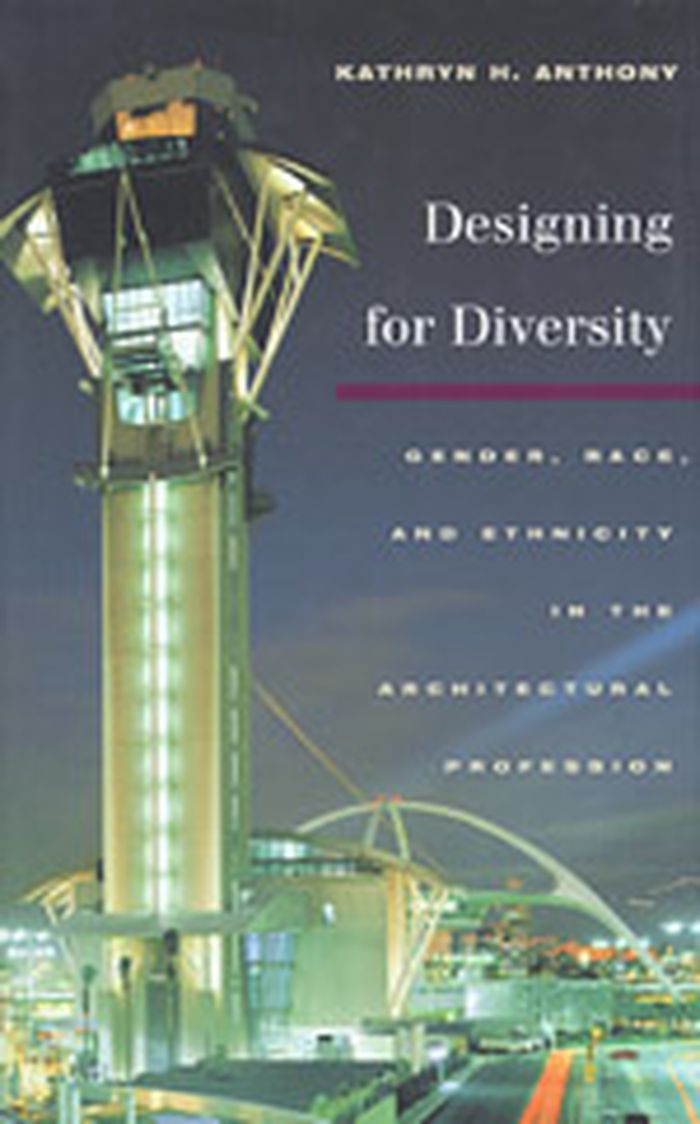
Designing for diversity : gender, race. and ethnicity in the architectural profession
Actions:
Price:
$57.75
(available to order)
Summary:
Providing hard data for trends that many perceive only vaguely and some deny altogether, "Designing for diversity" reveals a profession rife with gender and racial discrimination and examines the aspects of architectural practice that hinder or support the full participation of women and persons of color. Drawing on interviews and surveys of hundreds of architects, Kathryn H. Anthony outlines some of the forms of discrimination that recur in architecture, such as being confined to certain kinds of positions, typically interior design for women, government work for African Americans, and computer-aided design for Asian-American architects. Anthony discusses the profession's attitude toward flexible schedules and part-time contracts and identifies strategies that have helped underrepresented individuals advance in the profession. Given the traditional mismatch between diverse consumers and predominantly white male producers of the built environment, plus the shifting population balance toward communities of color, Anthony contends that the architectural profession staves off true diversity at its own peril. Through her book, practicing architects, managers of firms, and educators will learn how to create conditions more welcoming to a diversity of users as well as designers of the built environment.
Designing for diversity : gender, race. and ethnicity in the architectural profession
Actions:
Price:
$57.75
(available to order)
Summary:
Providing hard data for trends that many perceive only vaguely and some deny altogether, "Designing for diversity" reveals a profession rife with gender and racial discrimination and examines the aspects of architectural practice that hinder or support the full participation of women and persons of color. Drawing on interviews and surveys of hundreds of architects, Kathryn H. Anthony outlines some of the forms of discrimination that recur in architecture, such as being confined to certain kinds of positions, typically interior design for women, government work for African Americans, and computer-aided design for Asian-American architects. Anthony discusses the profession's attitude toward flexible schedules and part-time contracts and identifies strategies that have helped underrepresented individuals advance in the profession. Given the traditional mismatch between diverse consumers and predominantly white male producers of the built environment, plus the shifting population balance toward communities of color, Anthony contends that the architectural profession staves off true diversity at its own peril. Through her book, practicing architects, managers of firms, and educators will learn how to create conditions more welcoming to a diversity of users as well as designers of the built environment.
Form:
books
books
Publication:
April 2002, Urbana and Chicago
April 2002, Urbana and Chicago
Subject:
Architectural Theory
Architectural Theory
Form:
books
books
Actions:
Price:
$41.95
(available to order)
Summary:
"Prenant appui sur les politiques institutionnelles, l'auteur montre comment le musée virtuel résulte en fait d'une interprétation du support numérique qui en hypostasie la portée spectaculaire au lieu d'en favoriser l'appréhension documentaire. Le musée virtuel réaliserait ainsi la parfaite concrétisation des objectifs économiques et éducatifs du musée, en parfaite(...)
$41.95
(available to order)
Summary:
"Prenant appui sur les politiques institutionnelles, l'auteur montre comment le musée virtuel résulte en fait d'une interprétation du support numérique qui en hypostasie la portée spectaculaire au lieu d'en favoriser l'appréhension documentaire. Le musée virtuel réaliserait ainsi la parfaite concrétisation des objectifs économiques et éducatifs du musée, en parfaite(...)
Subject:
Museums and Universal Exhibitions
Museums and Universal Exhibitions
Publication:
January 2002, Paris
January 2002, Paris
Title:
Le patrimoine à l'ère du document numérique : du musée virtuel au musée médiathèque
Actions:
Price:
$41.95
(available to order)
Summary:
"Prenant appui sur les politiques institutionnelles, l'auteur montre comment le musée virtuel résulte en fait d'une interprétation du support numérique qui en hypostasie la portée spectaculaire au lieu d'en favoriser l'appréhension documentaire. Le musée virtuel réaliserait ainsi la parfaite concrétisation des objectifs économiques et éducatifs du musée, en parfaite résonnance avec le régime d'industrialisation culturelle qui règle la fréquentation du patrimoine. Mais au-delà, c'est bien du devenir de l'institution muséale dont il est question. Plutôt que de prédire la disparition de l'institution au profit de son avatar virtuel, on choisit d'ancrer ici l'interrogation dans l'histoire des relations qui unissent l'oeuvre d'art et le musée, depuis deux siècles. L'extrême plasticité du musée est mise à jour : ne serait-il pas apte à conserver et légitimer les propositions d'un art numérique aussi délocalisé soit-il? Déjà rôdé à l'absorption d'oeuvres reproductibles, de traces ou d'intentions, le musée d'art contemporain déjoue perpétuellement sa fin prévisible. Cette fois-ci la métamorphose le porte du côté de la médiathèque. Le devenir du musée se nourrit d'une perception essentiellement documentaire du patrimoine artistique. Incorporé aux industries de la mémoire, le musée nous projette désormais dans un passé actualisé et un présent pérenne."
Le patrimoine à l'ère du document numérique : du musée virtuel au musée médiathèque
Actions:
Price:
$41.95
(available to order)
Summary:
"Prenant appui sur les politiques institutionnelles, l'auteur montre comment le musée virtuel résulte en fait d'une interprétation du support numérique qui en hypostasie la portée spectaculaire au lieu d'en favoriser l'appréhension documentaire. Le musée virtuel réaliserait ainsi la parfaite concrétisation des objectifs économiques et éducatifs du musée, en parfaite résonnance avec le régime d'industrialisation culturelle qui règle la fréquentation du patrimoine. Mais au-delà, c'est bien du devenir de l'institution muséale dont il est question. Plutôt que de prédire la disparition de l'institution au profit de son avatar virtuel, on choisit d'ancrer ici l'interrogation dans l'histoire des relations qui unissent l'oeuvre d'art et le musée, depuis deux siècles. L'extrême plasticité du musée est mise à jour : ne serait-il pas apte à conserver et légitimer les propositions d'un art numérique aussi délocalisé soit-il? Déjà rôdé à l'absorption d'oeuvres reproductibles, de traces ou d'intentions, le musée d'art contemporain déjoue perpétuellement sa fin prévisible. Cette fois-ci la métamorphose le porte du côté de la médiathèque. Le devenir du musée se nourrit d'une perception essentiellement documentaire du patrimoine artistique. Incorporé aux industries de la mémoire, le musée nous projette désormais dans un passé actualisé et un présent pérenne."
Form:
books
books
Publication:
January 2002, Paris
January 2002, Paris
Subject:
Museums and Universal Exhibitions
Museums and Universal Exhibitions
Form:
books
books
Actions:
Price:
$68.00
(available in store)
Summary:
Drawing is a form of research, a means to investigate, explore and gain a better understanding of an idea, a condition or a phenomenon. Drawing is a practice of representation, one that inquires, explores materiality, and establishes its own time and dialogue. This book brings together 23 authors who represent 18 critical and reflexive practices of drawing in design. The(...)
$68.00
(available in store)
Summary:
Drawing is a form of research, a means to investigate, explore and gain a better understanding of an idea, a condition or a phenomenon. Drawing is a practice of representation, one that inquires, explores materiality, and establishes its own time and dialogue. This book brings together 23 authors who represent 18 critical and reflexive practices of drawing in design. The(...)
Title:
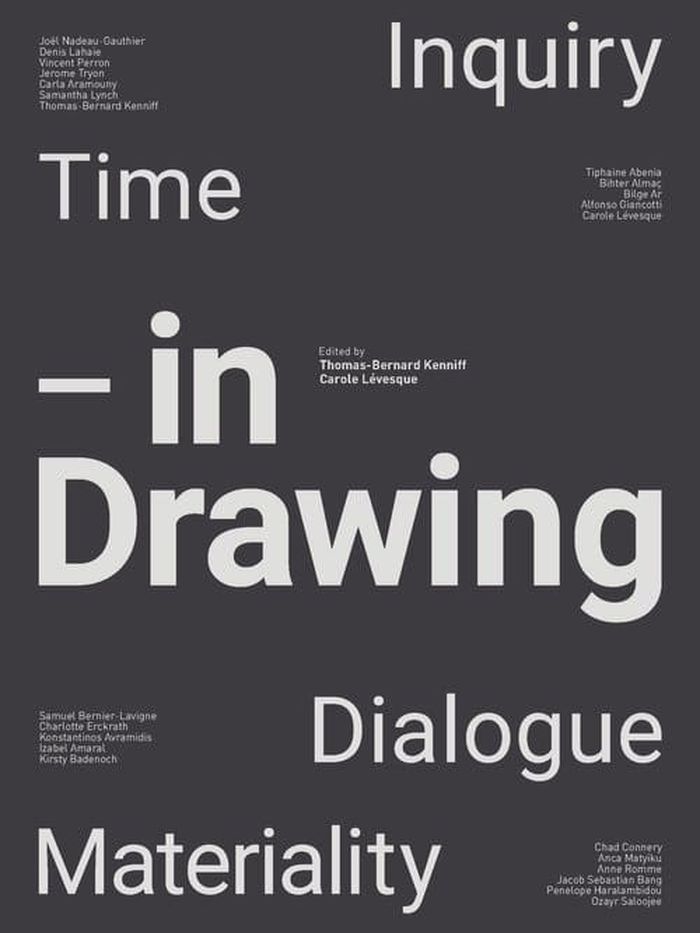
—in drawing: Inquiry, time, dialogue, materiality
Actions:
Price:
$68.00
(available in store)
Summary:
Drawing is a form of research, a means to investigate, explore and gain a better understanding of an idea, a condition or a phenomenon. Drawing is a practice of representation, one that inquires, explores materiality, and establishes its own time and dialogue. This book brings together 23 authors who represent 18 critical and reflexive practices of drawing in design. The assembled texts engage drawing aesthetics (spatial, temporal, and material) and drawing ethics (investigating and making sense together) as well as four overarching themes: inquiry, time, dialogue and materiality —in drawing. Taken as a collective conversation on drawing practice, this book offers a shared reflection on the agency of drawing, on its potential to explore issues raised by our built and cultural environment, and on the ability of drawing to support and contribute to design research. It farmes drawing as a research practice, one that is both deeply rooted in its disciplinary context and openly challenging its limits and conventions. "—in drawing" adds to a continuing conversation on design research methods and the ethics and aesthetics of representation. It seeks to further establish the significance of drawing as a legitimate mode of inquiry across design disciplines and beyond.
—in drawing: Inquiry, time, dialogue, materiality
Actions:
Price:
$68.00
(available in store)
Summary:
Drawing is a form of research, a means to investigate, explore and gain a better understanding of an idea, a condition or a phenomenon. Drawing is a practice of representation, one that inquires, explores materiality, and establishes its own time and dialogue. This book brings together 23 authors who represent 18 critical and reflexive practices of drawing in design. The assembled texts engage drawing aesthetics (spatial, temporal, and material) and drawing ethics (investigating and making sense together) as well as four overarching themes: inquiry, time, dialogue and materiality —in drawing. Taken as a collective conversation on drawing practice, this book offers a shared reflection on the agency of drawing, on its potential to explore issues raised by our built and cultural environment, and on the ability of drawing to support and contribute to design research. It farmes drawing as a research practice, one that is both deeply rooted in its disciplinary context and openly challenging its limits and conventions. "—in drawing" adds to a continuing conversation on design research methods and the ethics and aesthetics of representation. It seeks to further establish the significance of drawing as a legitimate mode of inquiry across design disciplines and beyond.
Form:
books
books
Publication:
January 2025
January 2025
Subject:
Design Theory
Design Theory


