


10910 Results
Form:
exhibitions
exhibitions
Actions:
Description:
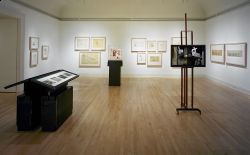
The exhibition addresses a central and timely aspect of the work of Carlo Scarpa: its distinctive approach to contending with the layers of history that mark the fabric of a city and a building. In addressing Scarpa’s ability to weave new work into, and often out of, the disparate fragments of the old, Carlo Scarpa, Architect: Intervening with History begins to unravel(...)
The exhibition addresses a central and timely aspect of the work of Carlo Scarpa: its distinctive approach to contending with the layers of history that mark the fabric of a city and a building. In addressing Scarpa’s ability to weave new work into, and often out of, the disparate fragments of the old, Carlo Scarpa, Architect: Intervening with History begins to unravel(...)
Location:
Main galleries
Main galleries
Date:
26 May 1999 to 31 October 1999
26 May 1999 to 31 October 1999
Title:
Carlo Scarpa, Architect: Intervening with History
Actions:
Description:
The exhibition addresses a central and timely aspect of the work of Carlo Scarpa: its distinctive approach to contending with the layers of history that mark the fabric of a city and a building. In addressing Scarpa’s ability to weave new work into, and often out of, the disparate fragments of the old, Carlo Scarpa, Architect: Intervening with History begins to unravel(...)
Carlo Scarpa, Architect: Intervening with History
Actions:
Description:
The exhibition addresses a central and timely aspect of the work of Carlo Scarpa: its distinctive approach to contending with the layers of history that mark the fabric of a city and a building. In addressing Scarpa’s ability to weave new work into, and often out of, the disparate fragments of the old, Carlo Scarpa, Architect: Intervening with History begins to unravel(...)
Form:
exhibitions
exhibitions
Date:
26 May 1999 to
31 October 1999
26 May 1999 to
31 October 1999
Location:
Main galleries
Main galleries
Form:
drawings, textual records, works of art
drawings, textual records, works of art
Actions:
Reference number:
DR1974:0002:008:001-077
Description:
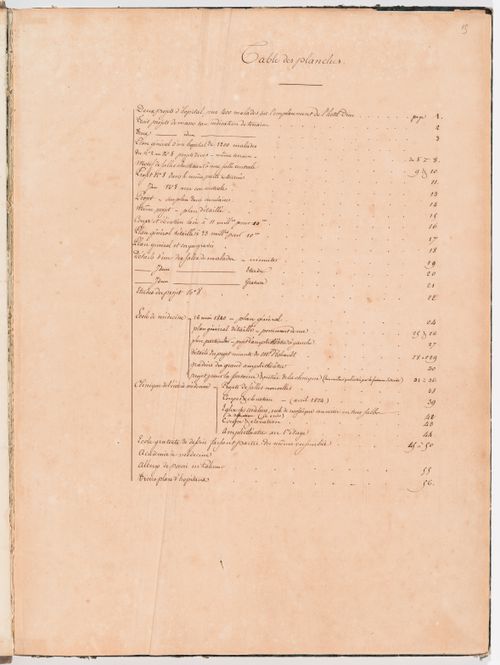
- This album contains prints and drawings - primarily design development and presentation drawings - mainly for projects for ideal hospitals and for the unexecuted redevelopment of the École de médecine and the surrounding area in Paris by Hubert Rohault de Fleury. Projects for ideal hospitals include: two block plans for hospitals for 400 patients on the site of Hôtel-Dieu (DR1974:0002:008:002 - DR1974:0002:008:003); nine site plans coloured with wash for hospitals for varying numbers of patients, eight of which are for a site near the barrière de Monceau (DR1974:0002:008:010 - DR1974:0002:008:014 and DR1974:0002:008:017 - DR1974:0002:008:020); five block plans for hospitals with no site indicated (DR1974:0002:008:004 - DR1974:0002:008:008); and plans, sections and elevations, most coloured with wash or watercolour, for a more developed project for an ideal hospital for 1000 to 1200 patients with no site indicated (DR1974:0002:008:022 - DR1974:0002:008:025, DR1974:0002:008:027 - DR1974:0002:008:028). The five other drawings for hospitals included in this album are apparently related to the nine site plans (DR1974:0002:008:015, DR1974:0002:008:016, DR1974:0002:008:021, DR1974:0002:008:029, and DR1974:0002:008:030). Plans, elevations and sections for the redevelopment of the area surrounding the École de médecine include the addition of a second amphitheatre to the École de médecine, an addition to the Clinique de l'École de médecine, the alteration of the École de mosaïque for use as a salle de dissection, and alterations to the École royale gratuite de dessin (DR1974:0002:008:031 - DR1974:0002:008:064). Also included are several designs for a classically-inspired fountain to be located at the entrance to the Clinique de l'École de médecine (DR1974:0002:008:042 - DR1974:0002:008:049), and drawings for the Académie de médecine, an institution which was probably housed at the École de médecine during this period (DR1974:0002:008:065 - DR1974:0002:008:068). The album includes record drawings of medical buildings by other architects: a presentation drawing of the Albergo dei poveri in Palermo, designed by Orazio Foretto Palermitano; tracings from drawings of a project for Hôtel-Dieu in Paris, designed by Charles-François Viel de Saint-Maux; the 1775 Grand Prix project for an École de médecine designed by Paul Guillaume Lemoine; prints of the the Hospice de la charité in Lyon, designed by Jean Pollet, and two hospital projects in Dijon designed by Paul P. Petit (DR1974:0002:008:069 - DR1974:0002:008:077).
DR1974:0002:008:001-077
Description:
- This album contains prints and drawings - primarily design development and presentation drawings - mainly for projects for ideal hospitals and for the unexecuted redevelopment of the École de médecine and the surrounding area in Paris by Hubert Rohault de Fleury. Projects for ideal hospitals include: two block plans for hospitals for 400 patients on the site of Hôtel-Dieu (DR1974:0002:008:002 - DR1974:0002:008:003); nine site plans coloured with wash for hospitals for varying numbers of patients, eight of which are for a site near the barrière de Monceau (DR1974:0002:008:010 - DR1974:0002:008:014 and DR1974:0002:008:017 - DR1974:0002:008:020); five block plans for hospitals with no site indicated (DR1974:0002:008:004 - DR1974:0002:008:008); and plans, sections and elevations, most coloured with wash or watercolour, for a more developed project for an ideal hospital for 1000 to 1200 patients with no site indicated (DR1974:0002:008:022 - DR1974:0002:008:025, DR1974:0002:008:027 - DR1974:0002:008:028). The five other drawings for hospitals included in this album are apparently related to the nine site plans (DR1974:0002:008:015, DR1974:0002:008:016, DR1974:0002:008:021, DR1974:0002:008:029, and DR1974:0002:008:030). Plans, elevations and sections for the redevelopment of the area surrounding the École de médecine include the addition of a second amphitheatre to the École de médecine, an addition to the Clinique de l'École de médecine, the alteration of the École de mosaïque for use as a salle de dissection, and alterations to the École royale gratuite de dessin (DR1974:0002:008:031 - DR1974:0002:008:064). Also included are several designs for a classically-inspired fountain to be located at the entrance to the Clinique de l'École de médecine (DR1974:0002:008:042 - DR1974:0002:008:049), and drawings for the Académie de médecine, an institution which was probably housed at the École de médecine during this period (DR1974:0002:008:065 - DR1974:0002:008:068). The album includes record drawings of medical buildings by other architects: a presentation drawing of the Albergo dei poveri in Palermo, designed by Orazio Foretto Palermitano; tracings from drawings of a project for Hôtel-Dieu in Paris, designed by Charles-François Viel de Saint-Maux; the 1775 Grand Prix project for an École de médecine designed by Paul Guillaume Lemoine; prints of the the Hospice de la charité in Lyon, designed by Jean Pollet, and two hospital projects in Dijon designed by Paul P. Petit (DR1974:0002:008:069 - DR1974:0002:008:077).
People:
Subject:
architecture, topographic
architecture, topographic
Date:
first half of the 19th century
first half of the 19th century
Title:
Album of drawings and prints for ideal hospitals, drawings for the redevelopment of the École de médecine and the surrounding area, Paris, and record drawings of medical buildings by French and Italian architects
Actions:
DR1974:0002:008:001-077
Description:
- This album contains prints and drawings - primarily design development and presentation drawings - mainly for projects for ideal hospitals and for the unexecuted redevelopment of the École de médecine and the surrounding area in Paris by Hubert Rohault de Fleury. Projects for ideal hospitals include: two block plans for hospitals for 400 patients on the site of Hôtel-Dieu (DR1974:0002:008:002 - DR1974:0002:008:003); nine site plans coloured with wash for hospitals for varying numbers of patients, eight of which are for a site near the barrière de Monceau (DR1974:0002:008:010 - DR1974:0002:008:014 and DR1974:0002:008:017 - DR1974:0002:008:020); five block plans for hospitals with no site indicated (DR1974:0002:008:004 - DR1974:0002:008:008); and plans, sections and elevations, most coloured with wash or watercolour, for a more developed project for an ideal hospital for 1000 to 1200 patients with no site indicated (DR1974:0002:008:022 - DR1974:0002:008:025, DR1974:0002:008:027 - DR1974:0002:008:028). The five other drawings for hospitals included in this album are apparently related to the nine site plans (DR1974:0002:008:015, DR1974:0002:008:016, DR1974:0002:008:021, DR1974:0002:008:029, and DR1974:0002:008:030). Plans, elevations and sections for the redevelopment of the area surrounding the École de médecine include the addition of a second amphitheatre to the École de médecine, an addition to the Clinique de l'École de médecine, the alteration of the École de mosaïque for use as a salle de dissection, and alterations to the École royale gratuite de dessin (DR1974:0002:008:031 - DR1974:0002:008:064). Also included are several designs for a classically-inspired fountain to be located at the entrance to the Clinique de l'École de médecine (DR1974:0002:008:042 - DR1974:0002:008:049), and drawings for the Académie de médecine, an institution which was probably housed at the École de médecine during this period (DR1974:0002:008:065 - DR1974:0002:008:068). The album includes record drawings of medical buildings by other architects: a presentation drawing of the Albergo dei poveri in Palermo, designed by Orazio Foretto Palermitano; tracings from drawings of a project for Hôtel-Dieu in Paris, designed by Charles-François Viel de Saint-Maux; the 1775 Grand Prix project for an École de médecine designed by Paul Guillaume Lemoine; prints of the the Hospice de la charité in Lyon, designed by Jean Pollet, and two hospital projects in Dijon designed by Paul P. Petit (DR1974:0002:008:069 - DR1974:0002:008:077).
Album of drawings and prints for ideal hospitals, drawings for the redevelopment of the École de médecine and the surrounding area, Paris, and record drawings of medical buildings by French and Italian architects
Actions:
DR1974:0002:008:001-077
Description:
- This album contains prints and drawings - primarily design development and presentation drawings - mainly for projects for ideal hospitals and for the unexecuted redevelopment of the École de médecine and the surrounding area in Paris by Hubert Rohault de Fleury. Projects for ideal hospitals include: two block plans for hospitals for 400 patients on the site of Hôtel-Dieu (DR1974:0002:008:002 - DR1974:0002:008:003); nine site plans coloured with wash for hospitals for varying numbers of patients, eight of which are for a site near the barrière de Monceau (DR1974:0002:008:010 - DR1974:0002:008:014 and DR1974:0002:008:017 - DR1974:0002:008:020); five block plans for hospitals with no site indicated (DR1974:0002:008:004 - DR1974:0002:008:008); and plans, sections and elevations, most coloured with wash or watercolour, for a more developed project for an ideal hospital for 1000 to 1200 patients with no site indicated (DR1974:0002:008:022 - DR1974:0002:008:025, DR1974:0002:008:027 - DR1974:0002:008:028). The five other drawings for hospitals included in this album are apparently related to the nine site plans (DR1974:0002:008:015, DR1974:0002:008:016, DR1974:0002:008:021, DR1974:0002:008:029, and DR1974:0002:008:030). Plans, elevations and sections for the redevelopment of the area surrounding the École de médecine include the addition of a second amphitheatre to the École de médecine, an addition to the Clinique de l'École de médecine, the alteration of the École de mosaïque for use as a salle de dissection, and alterations to the École royale gratuite de dessin (DR1974:0002:008:031 - DR1974:0002:008:064). Also included are several designs for a classically-inspired fountain to be located at the entrance to the Clinique de l'École de médecine (DR1974:0002:008:042 - DR1974:0002:008:049), and drawings for the Académie de médecine, an institution which was probably housed at the École de médecine during this period (DR1974:0002:008:065 - DR1974:0002:008:068). The album includes record drawings of medical buildings by other architects: a presentation drawing of the Albergo dei poveri in Palermo, designed by Orazio Foretto Palermitano; tracings from drawings of a project for Hôtel-Dieu in Paris, designed by Charles-François Viel de Saint-Maux; the 1775 Grand Prix project for an École de médecine designed by Paul Guillaume Lemoine; prints of the the Hospice de la charité in Lyon, designed by Jean Pollet, and two hospital projects in Dijon designed by Paul P. Petit (DR1974:0002:008:069 - DR1974:0002:008:077).
Form:
drawings, textual records, works of art
drawings, textual records, works of art
Date:
first half of the 19th century
first half of the 19th century
People:
Subject:
architecture, topographic
architecture, topographic
Form:
events
events
Title:
Building Knowledge
Building Knowledge
Actions:
Description:
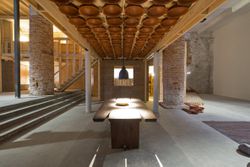
This lecture discusses a range of projects from Anupama Kundoo’s practice, research, and teaching. In these distinct but complementary areas of her work, she attempts to build collective knowledge in collaboration with engineers, masons, craftsmen, infrastructure providers, residents, material suppliers, and all other stakeholders involved in constructing and occupying(...)
This lecture discusses a range of projects from Anupama Kundoo’s practice, research, and teaching. In these distinct but complementary areas of her work, she attempts to build collective knowledge in collaboration with engineers, masons, craftsmen, infrastructure providers, residents, material suppliers, and all other stakeholders involved in constructing and occupying(...)
Location:
Paul-Desmarais Theatre
Paul-Desmarais Theatre
Date:
16 April 2015 , 6pm
16 April 2015 , 6pm
Title:
Building Knowledge
Actions:
Description:
This lecture discusses a range of projects from Anupama Kundoo’s practice, research, and teaching. In these distinct but complementary areas of her work, she attempts to build collective knowledge in collaboration with engineers, masons, craftsmen, infrastructure providers, residents, material suppliers, and all other stakeholders involved in constructing and occupying(...)
Building Knowledge
Actions:
Description:
This lecture discusses a range of projects from Anupama Kundoo’s practice, research, and teaching. In these distinct but complementary areas of her work, she attempts to build collective knowledge in collaboration with engineers, masons, craftsmen, infrastructure providers, residents, material suppliers, and all other stakeholders involved in constructing and occupying(...)
Form:
events
events
Date:
16 April 2015
6pm
16 April 2015
6pm
Location:
Paul-Desmarais Theatre
Paul-Desmarais Theatre
Form:
exhibitions
exhibitions
Description:
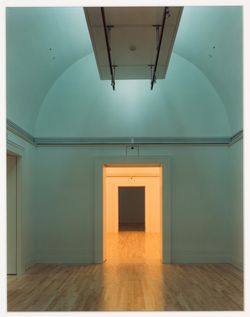
Celebrating the opening of the CCAs new building, Canadian Centre for Architecture: Building and Gardens reveals the potential of a museum of architecture as a statement: about the nature of the works it collects and exhibits; about its role in the life of a culture or a city; and about architecture itself. Both the restoration of the nineteenth-century Shaughnessy House(...)
Celebrating the opening of the CCAs new building, Canadian Centre for Architecture: Building and Gardens reveals the potential of a museum of architecture as a statement: about the nature of the works it collects and exhibits; about its role in the life of a culture or a city; and about architecture itself. Both the restoration of the nineteenth-century Shaughnessy House(...)
Location:
Octagonal gallery
Octagonal gallery
Date:
7 May 1989 to 25 March 1990
7 May 1989 to 25 March 1990
Title:
Canadian Centre for Architecture: Building and Gardens
Actions:
Description:
Celebrating the opening of the CCAs new building, Canadian Centre for Architecture: Building and Gardens reveals the potential of a museum of architecture as a statement: about the nature of the works it collects and exhibits; about its role in the life of a culture or a city; and about architecture itself. Both the restoration of the nineteenth-century Shaughnessy House(...)
Canadian Centre for Architecture: Building and Gardens
Actions:
Description:
Celebrating the opening of the CCAs new building, Canadian Centre for Architecture: Building and Gardens reveals the potential of a museum of architecture as a statement: about the nature of the works it collects and exhibits; about its role in the life of a culture or a city; and about architecture itself. Both the restoration of the nineteenth-century Shaughnessy House(...)
Form:
exhibitions
exhibitions
Date:
7 May 1989 to
25 March 1990
7 May 1989 to
25 March 1990
Location:
Octagonal gallery
Octagonal gallery
Form:
exhibitions
exhibitions
Title:
Starting From... The Bubble
Starting From... The Bubble
Actions:
Description:
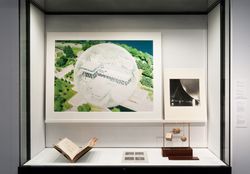
The bubble is a wonder of surface tension. In its architectural interpretation, the bubble can be understood as a feat of engineering or as a metaphor for an enclosed hermetic environment. As such, the bubble emerges, in the architect Cedric Price’s words, “in any shape or any size” as a powerful symbol of the future, or becomes synonymous with the condition of isolation(...)
The bubble is a wonder of surface tension. In its architectural interpretation, the bubble can be understood as a feat of engineering or as a metaphor for an enclosed hermetic environment. As such, the bubble emerges, in the architect Cedric Price’s words, “in any shape or any size” as a powerful symbol of the future, or becomes synonymous with the condition of isolation(...)
Location:
Hall cases
Hall cases
Date:
26 November 2009 to 17 January 2010
26 November 2009 to 17 January 2010
Title:
Starting From... The Bubble
Actions:
Description:
The bubble is a wonder of surface tension. In its architectural interpretation, the bubble can be understood as a feat of engineering or as a metaphor for an enclosed hermetic environment. As such, the bubble emerges, in the architect Cedric Price’s words, “in any shape or any size” as a powerful symbol of the future, or becomes synonymous with the condition of isolation(...)
Starting From... The Bubble
Actions:
Description:
The bubble is a wonder of surface tension. In its architectural interpretation, the bubble can be understood as a feat of engineering or as a metaphor for an enclosed hermetic environment. As such, the bubble emerges, in the architect Cedric Price’s words, “in any shape or any size” as a powerful symbol of the future, or becomes synonymous with the condition of isolation(...)
Form:
exhibitions
exhibitions
Date:
26 November 2009 to
17 January 2010
26 November 2009 to
17 January 2010
Location:
Hall cases
Hall cases
Form:
exhibitions
exhibitions
Title:
Starting From... Travel
Starting From... Travel
Actions:
Description:
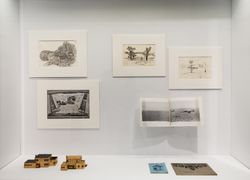
Interpreting the subject of travel to distant places, the exhibition charts an expanded notion of travel that spans imaginary journeys, strange sites, vanishing points, floating and portable houses, endless caves, swirling diamond domes, tombs, crypts and catacombs, tunnel adventures, formal studies, technical innovation, cultural imagination, and experimental(...)
Interpreting the subject of travel to distant places, the exhibition charts an expanded notion of travel that spans imaginary journeys, strange sites, vanishing points, floating and portable houses, endless caves, swirling diamond domes, tombs, crypts and catacombs, tunnel adventures, formal studies, technical innovation, cultural imagination, and experimental(...)
Location:
Hall cases
Hall cases
Date:
3 December 2008 to 1 May 2009
3 December 2008 to 1 May 2009
Title:
Starting From... Travel
Actions:
Description:
Interpreting the subject of travel to distant places, the exhibition charts an expanded notion of travel that spans imaginary journeys, strange sites, vanishing points, floating and portable houses, endless caves, swirling diamond domes, tombs, crypts and catacombs, tunnel adventures, formal studies, technical innovation, cultural imagination, and experimental(...)
Starting From... Travel
Actions:
Description:
Interpreting the subject of travel to distant places, the exhibition charts an expanded notion of travel that spans imaginary journeys, strange sites, vanishing points, floating and portable houses, endless caves, swirling diamond domes, tombs, crypts and catacombs, tunnel adventures, formal studies, technical innovation, cultural imagination, and experimental(...)
Form:
exhibitions
exhibitions
Date:
3 December 2008 to
1 May 2009
3 December 2008 to
1 May 2009
Location:
Hall cases
Hall cases
Form:
exhibitions
exhibitions
Actions:
Description:
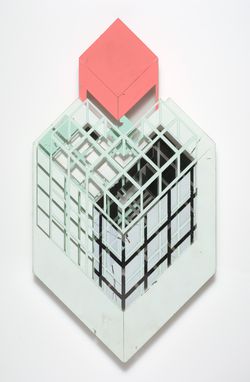
Through the work of internationally renowned architects, this exhibition reveals the presence of utopian modernist ideas thought to have been discarded with the advent of the postmodern era. According to the exhibition’s lead curator Reinhold Martin, much of the architectural production of the last half-century has been haunted by the ghosts of modernist utopias: “The(...)
Through the work of internationally renowned architects, this exhibition reveals the presence of utopian modernist ideas thought to have been discarded with the advent of the postmodern era. According to the exhibition’s lead curator Reinhold Martin, much of the architectural production of the last half-century has been haunted by the ghosts of modernist utopias: “The(...)
Location:
Octagonal gallery
Octagonal gallery
Date:
28 February 2008 to 25 May 2008
28 February 2008 to 25 May 2008
Title:
Utopia's Ghost: Postmodernism Reconsidered
Actions:
Description:
Through the work of internationally renowned architects, this exhibition reveals the presence of utopian modernist ideas thought to have been discarded with the advent of the postmodern era. According to the exhibition’s lead curator Reinhold Martin, much of the architectural production of the last half-century has been haunted by the ghosts of modernist utopias: “The(...)
Utopia's Ghost: Postmodernism Reconsidered
Actions:
Description:
Through the work of internationally renowned architects, this exhibition reveals the presence of utopian modernist ideas thought to have been discarded with the advent of the postmodern era. According to the exhibition’s lead curator Reinhold Martin, much of the architectural production of the last half-century has been haunted by the ghosts of modernist utopias: “The(...)
Form:
exhibitions
exhibitions
Date:
28 February 2008 to
25 May 2008
28 February 2008 to
25 May 2008
Location:
Octagonal gallery
Octagonal gallery
Form:
events
events

Title:
Learning from... Ordos
Learning from... Ordos
Actions:
Description:
The coal- and gas-rich city of Ordos in northern China boasts a new central district devoid of people. The contemporary city centre was built from scratch on the arid Mongolian steppe at a cost of over $161 billion, and was projected to house over 1 million people. Currently, the government claims that 28,000 reside in the new area. Despite the lack of residents, property(...)
The coal- and gas-rich city of Ordos in northern China boasts a new central district devoid of people. The contemporary city centre was built from scratch on the arid Mongolian steppe at a cost of over $161 billion, and was projected to house over 1 million people. Currently, the government claims that 28,000 reside in the new area. Despite the lack of residents, property(...)
Location:
Paul-Desmarais Theatre
Paul-Desmarais Theatre
Date:
8 November 2012 , 7pm
8 November 2012 , 7pm
Title:
Learning from... Ordos
Actions:
Description:
The coal- and gas-rich city of Ordos in northern China boasts a new central district devoid of people. The contemporary city centre was built from scratch on the arid Mongolian steppe at a cost of over $161 billion, and was projected to house over 1 million people. Currently, the government claims that 28,000 reside in the new area. Despite the lack of residents, property(...)
Learning from... Ordos
Actions:
Description:
The coal- and gas-rich city of Ordos in northern China boasts a new central district devoid of people. The contemporary city centre was built from scratch on the arid Mongolian steppe at a cost of over $161 billion, and was projected to house over 1 million people. Currently, the government claims that 28,000 reside in the new area. Despite the lack of residents, property(...)
Form:
events
events
Date:
8 November 2012
7pm
8 November 2012
7pm
Location:
Paul-Desmarais Theatre
Paul-Desmarais Theatre
Form:
exhibitions
exhibitions
Title:
Mies in America
Mies in America
Actions:
Description:
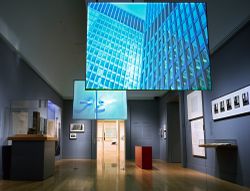
A profound thinker, painstaking artist, and one of the greatest architects in history, Ludwig Mies van der Rohe emigrated from Germany to the United States in 1938, when he was already in his fifties and one of the recognized masters of his profession. Transplanted from the Bauhaus (of which he was the last director) to a technical institute in Chicago, from the European(...)
A profound thinker, painstaking artist, and one of the greatest architects in history, Ludwig Mies van der Rohe emigrated from Germany to the United States in 1938, when he was already in his fifties and one of the recognized masters of his profession. Transplanted from the Bauhaus (of which he was the last director) to a technical institute in Chicago, from the European(...)
Location:
Main galleries
Main galleries
Date:
17 October 2001 to 20 January 2002
17 October 2001 to 20 January 2002
Title:
Mies in America
Actions:
Description:
A profound thinker, painstaking artist, and one of the greatest architects in history, Ludwig Mies van der Rohe emigrated from Germany to the United States in 1938, when he was already in his fifties and one of the recognized masters of his profession. Transplanted from the Bauhaus (of which he was the last director) to a technical institute in Chicago, from the European(...)
Mies in America
Actions:
Description:
A profound thinker, painstaking artist, and one of the greatest architects in history, Ludwig Mies van der Rohe emigrated from Germany to the United States in 1938, when he was already in his fifties and one of the recognized masters of his profession. Transplanted from the Bauhaus (of which he was the last director) to a technical institute in Chicago, from the European(...)
Form:
exhibitions
exhibitions
Date:
17 October 2001 to
20 January 2002
17 October 2001 to
20 January 2002
Location:
Main galleries
Main galleries
Form:
exhibitions
exhibitions
Actions:
Description:
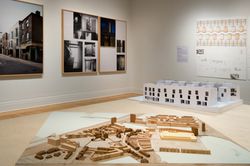
As part of the CCA’s ongoing exploration of key issues in contemporary architecture with a specific focus on urban, social, and environmental concerns, Some Ideas on Living in London and Tokyo by Stephen Taylor and Ryue Nishizawa features recent architectural projects that propose new solutions to the challenges of building homes in dense urban environments. London and(...)
As part of the CCA’s ongoing exploration of key issues in contemporary architecture with a specific focus on urban, social, and environmental concerns, Some Ideas on Living in London and Tokyo by Stephen Taylor and Ryue Nishizawa features recent architectural projects that propose new solutions to the challenges of building homes in dense urban environments. London and(...)
Location:
Main galleries
Main galleries
Date:
14 May 2008 to 26 October 2008
14 May 2008 to 26 October 2008
Title:
Some Ideas on Living in London and Tokyo by Stephen Taylor and Ryue Nishizawa
Actions:
Description:
As part of the CCA’s ongoing exploration of key issues in contemporary architecture with a specific focus on urban, social, and environmental concerns, Some Ideas on Living in London and Tokyo by Stephen Taylor and Ryue Nishizawa features recent architectural projects that propose new solutions to the challenges of building homes in dense urban environments. London and(...)
Some Ideas on Living in London and Tokyo by Stephen Taylor and Ryue Nishizawa
Actions:
Description:
As part of the CCA’s ongoing exploration of key issues in contemporary architecture with a specific focus on urban, social, and environmental concerns, Some Ideas on Living in London and Tokyo by Stephen Taylor and Ryue Nishizawa features recent architectural projects that propose new solutions to the challenges of building homes in dense urban environments. London and(...)
Form:
exhibitions
exhibitions
Date:
14 May 2008 to
26 October 2008
14 May 2008 to
26 October 2008
Location:
Main galleries
Main galleries


