


2059 Results
Form:
books
books
Actions:
Holdings:
Description:
xv, 225 pages : illustrations (black and white) ; 24 cm
Description:
xv, 225 pages : illustrations (black and white) ; 24 cm
Subject:
- Maple Leaf Gardens Ltd. History 20th century.,
- Maple Leaf Gardens Ltd. Histoire 20e siècle.,
- Maple Leaf Gardens Ltd.,
- Arenas Ontario Toronto History 20th century.,
- Hockey fans Ontario Toronto History 20th century.,
- Hockey Social aspects Ontario Toronto History 20th century.,
- Middle class Ontario Toronto History 20th century.,
- Salles omnisports Ontario Toronto Histoire 20e siècle.,
- Hockey Supporters Ontario Toronto Histoire 20e siècle.,
- Hockey Aspect social Ontario Toronto Histoire 20e siècle.,
- Classes moyennes Ontario Toronto Histoire 20e siècle.,
- HISTORY / Canada / Post-Confederation (1867-),
- Arenas,
- Buildings,
- Hockey fans,
- Hockey Social aspects,
- Middle class,
- Toronto (Ont.) Buildings, structures, etc. History 20th century.,
- Toronto (Ont.) Constructions Histoire 20e siècle.,
- Ontario Toronto,
- History
(See more)
Publication:
Toronto ; Buffalo ; London : University of Toronto Press, [2023], ©2023
Toronto ; Buffalo ; London : University of Toronto Press, [2023], ©2023
Title:
A night at the Gardens : class, gender, and respectability in 1930s Toronto / Russell Field.
Actions:
Holdings:
Description:
xv, 225 pages : illustrations (black and white) ; 24 cm
A night at the Gardens : class, gender, and respectability in 1930s Toronto / Russell Field.
Actions:
Holdings:
Description:
xv, 225 pages : illustrations (black and white) ; 24 cm
Form:
books
books
Publication:
Toronto ; Buffalo ; London : University of Toronto Press, [2023], ©2023
Toronto ; Buffalo ; London : University of Toronto Press, [2023], ©2023
Subject:
- Maple Leaf Gardens Ltd. History 20th century.,
- Maple Leaf Gardens Ltd. Histoire 20e siècle.,
- Maple Leaf Gardens Ltd.,
- Arenas Ontario Toronto History 20th century.,
- Hockey fans Ontario Toronto History 20th century.,
- Hockey Social aspects Ontario Toronto History 20th century.,
- Middle class Ontario Toronto History 20th century.,
- Salles omnisports Ontario Toronto Histoire 20e siècle.,
- Hockey Supporters Ontario Toronto Histoire 20e siècle.,
- Hockey Aspect social Ontario Toronto Histoire 20e siècle.,
- Classes moyennes Ontario Toronto Histoire 20e siècle.,
- HISTORY / Canada / Post-Confederation (1867-),
- Arenas,
- Buildings,
- Hockey fans,
- Hockey Social aspects,
- Middle class,
- Toronto (Ont.) Buildings, structures, etc. History 20th century.,
- Toronto (Ont.) Constructions Histoire 20e siècle.,
- Ontario Toronto,
- History
(See more)
Form:
books
books
Actions:
Holdings:
Description:
179 pages : color illustrations; 28 cm
Description:
179 pages : color illustrations; 28 cm
Author:
Subject:
- MADWORKSHOP (Organization),
- University of Southern California. School of Architecture.,
- Shelters for the homeless California Los Angeles Design and construction.,
- Homeless persons Dwellings California Los Angeles.,
- Homeless persons Housing California Los Angeles.,
- Emergency housing California Los Angeles Design and construction.,
- Small houses California Los Angeles Design and construction.,
- Personnes sans-abri Logement Californie Los Angeles.,
- Shelters for the homeless Design and construction,
- Homeless persons Housing,
- Emergency housing Design and construction,
- Homeless persons,
- California Los Angeles
(See more)
Publication:
[Novato, California] : ORO Editions, [2018], ©2018
[Novato, California] : ORO Editions, [2018], ©2018
Title:
Give me shelter : architecture takes on the homeless crisis / edited by Sofia Borges, R. Scott Mitchell ; forward by Mayor Eric Garcetti ; MADWORKSHOP.
Actions:
Holdings:
Description:
179 pages : color illustrations; 28 cm
Give me shelter : architecture takes on the homeless crisis / edited by Sofia Borges, R. Scott Mitchell ; forward by Mayor Eric Garcetti ; MADWORKSHOP.
Actions:
Holdings:
Description:
179 pages : color illustrations; 28 cm
Form:
books
books
Publication:
[Novato, California] : ORO Editions, [2018], ©2018
[Novato, California] : ORO Editions, [2018], ©2018
Subject:
- MADWORKSHOP (Organization),
- University of Southern California. School of Architecture.,
- Shelters for the homeless California Los Angeles Design and construction.,
- Homeless persons Dwellings California Los Angeles.,
- Homeless persons Housing California Los Angeles.,
- Emergency housing California Los Angeles Design and construction.,
- Small houses California Los Angeles Design and construction.,
- Personnes sans-abri Logement Californie Los Angeles.,
- Shelters for the homeless Design and construction,
- Homeless persons Housing,
- Emergency housing Design and construction,
- Homeless persons,
- California Los Angeles
(See more)
Form:
books
books
Actions:
Holdings:
Description:
x, 180, 46, 21 pages, 4 unnumbered pages : color illustrations, facsimiles, portraits ; 26 cm
Description:
x, 180, 46, 21 pages, 4 unnumbered pages : color illustrations, facsimiles, portraits ; 26 cm
Author:
- Ed Roberson -- Makeda Best -- Abrahm Lustgarten -- Picturing to protect : photography and environmental law in the United States, 1960-present / Katherine Mintie -- Steven Hoelscher -- Makeda Best -- Will Wilson -- Courtney J. Martin -- Ed Roberson.,
- Best, Makeda, 1975-,
- Bright, Sheila Pree,,
- Evans, Terry, 1944-,
- Gilbertson, Ashley,,
- Hanson, David T.,,
- Kranitz, Stacy, 1976-,
- Lee, Jin,,
- Misrach, Richard, 1949-,
- Norfleet, Barbara P.,,
- Palacio, Oscar,,
- Harvard Art Museums,
(See more)
Subject:
- Landscape photography United States History Exhibitions.,
- War Environmental aspects United States Pictorial works Exhibitions.,
- Military bases Environmental aspects United States Pictorial works Exhibitions.,
- Art and war Exhibitions.,
- Peace movements United States History Pictorial works Exhibitions.,
- Environmentalism United States History Pictorial works Exhibitions.,
- Photographers United States Interviews.,
- Artists United States Interviews.,
- Photographie de paysages États-Unis Histoire Expositions.,
- Guerre Aspect de l'environnement États-Unis Ouvrages illustrés Expositions.,
- Bases militaires Aspect de l'environnement États-Unis Ouvrages illustrés Expositions.,
- Art et guerre Expositions.,
- Photographes États-Unis Entretiens.,
- Artistes États-Unis Entretiens.,
- Mouvements pacifistes États-Unis Histoire Ouvrages illustrés Expositions.,
- PHOTOGRAPHY General.,
- Photographers,
- Peace movements,
- Artists,
- War Environmental aspects,
- Art and war,
- Environmentalism,
- Landscape photography,
- Military bases Environmental aspects,
- United States,
- Exhibition catalogs.,
- exhibition catalogs.,
- interviews.,
- Interviews,
- Exhibition, pictorial works,
- History,
- Catalogues d'exposition.
(See more)
Publication:
Cambridge, Mass. : Harvard Art Museums, [2021], New Haven, CT ; London : Yale University Press., ©2021
Cambridge, Mass. : Harvard Art Museums, [2021], New Haven, CT ; London : Yale University Press., ©2021
Title:
Devour the land : war and American landscape photography since 1970 / edited by Makeda Best ; with contributions by Makeda Best, Steven Hoelscher, Abrahm Lustgarten, Courtney J. Martin, Katherine Mintie, Ed Roberson, and Will Wilson ; interviews with Sheila Pree Bright, Terry Evans, Ashley Gilbertson, David T. Hanson, Stacy Kranitz, Jin Lee, Richard Misrach, Barbara Norfleet, and Oscar Palacio.
Actions:
Holdings:
Description:
x, 180, 46, 21 pages, 4 unnumbered pages : color illustrations, facsimiles, portraits ; 26 cm
Devour the land : war and American landscape photography since 1970 / edited by Makeda Best ; with contributions by Makeda Best, Steven Hoelscher, Abrahm Lustgarten, Courtney J. Martin, Katherine Mintie, Ed Roberson, and Will Wilson ; interviews with Sheila Pree Bright, Terry Evans, Ashley Gilbertson, David T. Hanson, Stacy Kranitz, Jin Lee, Richard Misrach, Barbara Norfleet, and Oscar Palacio.
Actions:
Holdings:
Description:
x, 180, 46, 21 pages, 4 unnumbered pages : color illustrations, facsimiles, portraits ; 26 cm
Form:
books
books
Publication:
Cambridge, Mass. : Harvard Art Museums, [2021], New Haven, CT ; London : Yale University Press., ©2021
Cambridge, Mass. : Harvard Art Museums, [2021], New Haven, CT ; London : Yale University Press., ©2021
Author:
- Ed Roberson -- Makeda Best -- Abrahm Lustgarten -- Picturing to protect : photography and environmental law in the United States, 1960-present / Katherine Mintie -- Steven Hoelscher -- Makeda Best -- Will Wilson -- Courtney J. Martin -- Ed Roberson.,
- Best, Makeda, 1975-,
- Bright, Sheila Pree,,
- Evans, Terry, 1944-,
- Gilbertson, Ashley,,
- Hanson, David T.,,
- Kranitz, Stacy, 1976-,
- Lee, Jin,,
- Misrach, Richard, 1949-,
- Norfleet, Barbara P.,,
- Palacio, Oscar,,
- Harvard Art Museums,
(See more)
Subject:
- Landscape photography United States History Exhibitions.,
- War Environmental aspects United States Pictorial works Exhibitions.,
- Military bases Environmental aspects United States Pictorial works Exhibitions.,
- Art and war Exhibitions.,
- Peace movements United States History Pictorial works Exhibitions.,
- Environmentalism United States History Pictorial works Exhibitions.,
- Photographers United States Interviews.,
- Artists United States Interviews.,
- Photographie de paysages États-Unis Histoire Expositions.,
- Guerre Aspect de l'environnement États-Unis Ouvrages illustrés Expositions.,
- Bases militaires Aspect de l'environnement États-Unis Ouvrages illustrés Expositions.,
- Art et guerre Expositions.,
- Photographes États-Unis Entretiens.,
- Artistes États-Unis Entretiens.,
- Mouvements pacifistes États-Unis Histoire Ouvrages illustrés Expositions.,
- PHOTOGRAPHY General.,
- Photographers,
- Peace movements,
- Artists,
- War Environmental aspects,
- Art and war,
- Environmentalism,
- Landscape photography,
- Military bases Environmental aspects,
- United States,
- Exhibition catalogs.,
- exhibition catalogs.,
- interviews.,
- Interviews,
- Exhibition, pictorial works,
- History,
- Catalogues d'exposition.
(See more)
Form:
books
books
Actions:
Holdings:
Description:
xii, 513 pages : illustrations (some color) ; 26 cm
Description:
xii, 513 pages : illustrations (some color) ; 26 cm
Subject:
- Galilei, Galileo, 1564-1642.,
- Cesi, Federico, 1585-1630.,
- Cesi, Federico 1585-1630,
- Dal Pozzo, Cassiano 1588-1657,
- Galilei, Galileo 1564-1642,
- Cesi, Federico,
- Galilei, Galileo,
- Accademia nazionale dei Lincei History.,
- Accademia nazionale dei Lincei.,
- Academy of Linceans History.,
- Windsor Royal Library Dal Pozzo-Albani Collection.,
- Bauhaus Dessau 1986-1994 Bereich Architektur und Sammlungen,
- Rom / Accademia Nazionale dei Lincei.,
- Science Italy History.,
- Natural history.,
- Natural History history,
- Natural History,
- Sciences Italie Histoire.,
- Sciences naturelles.,
- natural sciences.,
- Science,
- Illustration,
- Naturwissenschaften,
- Tekeningen.,
- Sterrenkunde.,
- Natuurlijke historie.,
- Visualisatie.,
- Accademia Nazionale dei Lincei.,
- Scientific illustration History.,
- Italy,
- Italien,
- History,
- Natural history illustration.
(See more)
Publication:
Chicago : University of Chicago Press, 2002.
Chicago : University of Chicago Press, 2002.
Title:
The eye of the Lynx : Galileo, his friends, and the beginnings of modern natural history / David Freedberg.
Actions:
Holdings:
Description:
xii, 513 pages : illustrations (some color) ; 26 cm
The eye of the Lynx : Galileo, his friends, and the beginnings of modern natural history / David Freedberg.
Actions:
Holdings:
Description:
xii, 513 pages : illustrations (some color) ; 26 cm
Form:
books
books
Publication:
Chicago : University of Chicago Press, 2002.
Chicago : University of Chicago Press, 2002.
Subject:
- Galilei, Galileo, 1564-1642.,
- Cesi, Federico, 1585-1630.,
- Cesi, Federico 1585-1630,
- Dal Pozzo, Cassiano 1588-1657,
- Galilei, Galileo 1564-1642,
- Cesi, Federico,
- Galilei, Galileo,
- Accademia nazionale dei Lincei History.,
- Accademia nazionale dei Lincei.,
- Academy of Linceans History.,
- Windsor Royal Library Dal Pozzo-Albani Collection.,
- Bauhaus Dessau 1986-1994 Bereich Architektur und Sammlungen,
- Rom / Accademia Nazionale dei Lincei.,
- Science Italy History.,
- Natural history.,
- Natural History history,
- Natural History,
- Sciences Italie Histoire.,
- Sciences naturelles.,
- natural sciences.,
- Science,
- Illustration,
- Naturwissenschaften,
- Tekeningen.,
- Sterrenkunde.,
- Natuurlijke historie.,
- Visualisatie.,
- Accademia Nazionale dei Lincei.,
- Scientific illustration History.,
- Italy,
- Italien,
- History,
- Natural history illustration.
(See more)
Form:
books
books
Actions:
Holdings:
Description:
271 pages : color illustrations, maps, plans ; 30 cm
Description:
271 pages : color illustrations, maps, plans ; 30 cm
Subject:
- Hamburg Internationale Bauausstellung (2007-2013),
- IBA Hamburg.,
- Internationale Bauausstellung 2006-2013 Hamburg,
- Sustainable architecture.,
- City planning Germany Hamburg Catalogs.,
- Cities and towns Germany Hamburg Catalogs.,
- Architecture durable.,
- Villes Catalogues Allemagne Hambourg.,
- Cities and towns.,
- City planning.,
- Bauvorhaben,
- Germany Hamburg.,
- Urban planning Germany Hamburg.,
- Catalogs.
(See more)
Publication:
Berlin : Jovis, ©2010.
Berlin : Jovis, ©2010.
Title:
IBA Hamburg : projekte und konzepte, katalog zur zwischenpräsentation 2010 = IBA Hamburg : projects and concepts, catalogue for the interim presentation 2010 / Internationale Bauausstellung Hamburg (Hg./ed.) ; redaktion/editorial staff: Oliver G. Hamm, unterstützt von/supported by Olaf Bartels.
Actions:
Holdings:
Description:
271 pages : color illustrations, maps, plans ; 30 cm
IBA Hamburg : projekte und konzepte, katalog zur zwischenpräsentation 2010 = IBA Hamburg : projects and concepts, catalogue for the interim presentation 2010 / Internationale Bauausstellung Hamburg (Hg./ed.) ; redaktion/editorial staff: Oliver G. Hamm, unterstützt von/supported by Olaf Bartels.
Actions:
Holdings:
Description:
271 pages : color illustrations, maps, plans ; 30 cm
Form:
books
books
Publication:
Berlin : Jovis, ©2010.
Berlin : Jovis, ©2010.
Subject:
- Hamburg Internationale Bauausstellung (2007-2013),
- IBA Hamburg.,
- Internationale Bauausstellung 2006-2013 Hamburg,
- Sustainable architecture.,
- City planning Germany Hamburg Catalogs.,
- Cities and towns Germany Hamburg Catalogs.,
- Architecture durable.,
- Villes Catalogues Allemagne Hambourg.,
- Cities and towns.,
- City planning.,
- Bauvorhaben,
- Germany Hamburg.,
- Urban planning Germany Hamburg.,
- Catalogs.
(See more)
Form:
books
books
Title:
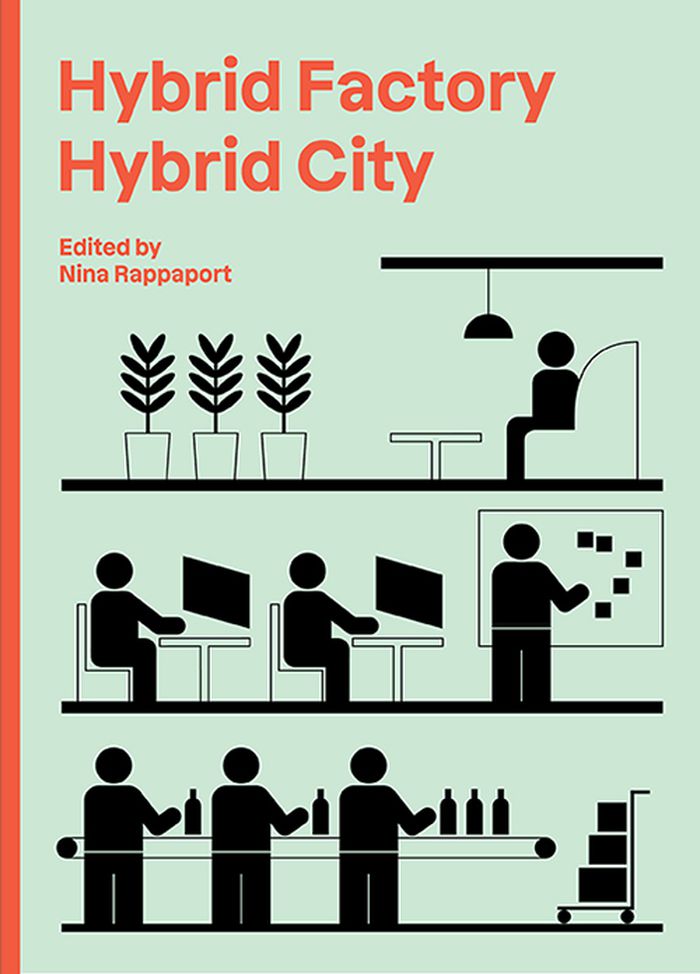
Hybrid factory, hybrid city
Hybrid factory, hybrid city
Actions:
Price:
$54.95
(available to order)
Summary:
Now that urban industry is often clean, green, small, and quiet it can be integrated at the city and building scale with other uses. Although little explored as of yet, we don’t yet know what this new hybrid will look like and how can it support new entrepreneurs, equitable jobs, and vital urban forms? How can hybrid models change with new technologies, sustainable(...)
$54.95
(available to order)
Summary:
Now that urban industry is often clean, green, small, and quiet it can be integrated at the city and building scale with other uses. Although little explored as of yet, we don’t yet know what this new hybrid will look like and how can it support new entrepreneurs, equitable jobs, and vital urban forms? How can hybrid models change with new technologies, sustainable(...)
Title:
Hybrid factory, hybrid city
Actions:
Price:
$54.95
(available to order)
Summary:
Now that urban industry is often clean, green, small, and quiet it can be integrated at the city and building scale with other uses. Although little explored as of yet, we don’t yet know what this new hybrid will look like and how can it support new entrepreneurs, equitable jobs, and vital urban forms? How can hybrid models change with new technologies, sustainable manufacturing, and advanced production systems to create new open city? Can we break the planning and land-use patterns of segregated zoning by class and function and encourage mixed-use zoning that transforms new building and zoning codes and this the mix in the city? These questions and more are addressed in Hybrid Factory / Hybrid City, through a collection of essays by participants in the eponymous symposium organized by Nina Rappaport at the Future Urban Legacy Lab of the Politecnico di Torino. Divided into two sections, the essays describes projects and research by architects and urbanists regarding the aura of industry and its smells, its place in relationship to the body, building structures, logistics centers, reused factory buildings, and their current and future potential for mixed-use. Social and economic equity can be integrated through light manufacturing jobs, community uses, and affordable housing.
Hybrid factory, hybrid city
Actions:
Price:
$54.95
(available to order)
Summary:
Now that urban industry is often clean, green, small, and quiet it can be integrated at the city and building scale with other uses. Although little explored as of yet, we don’t yet know what this new hybrid will look like and how can it support new entrepreneurs, equitable jobs, and vital urban forms? How can hybrid models change with new technologies, sustainable manufacturing, and advanced production systems to create new open city? Can we break the planning and land-use patterns of segregated zoning by class and function and encourage mixed-use zoning that transforms new building and zoning codes and this the mix in the city? These questions and more are addressed in Hybrid Factory / Hybrid City, through a collection of essays by participants in the eponymous symposium organized by Nina Rappaport at the Future Urban Legacy Lab of the Politecnico di Torino. Divided into two sections, the essays describes projects and research by architects and urbanists regarding the aura of industry and its smells, its place in relationship to the body, building structures, logistics centers, reused factory buildings, and their current and future potential for mixed-use. Social and economic equity can be integrated through light manufacturing jobs, community uses, and affordable housing.
Form:
books
books
Publication:
March 2023
March 2023
Subject:
Urban Theory
Urban Theory
Form:
books
books
Actions:
Price:
$140.00
(available in store)
Summary:
The past seventy-five years have been a time of extreme social and cultural transformations worldwide. Political and social upheaval, often contentious, disorienting and polarizing, is now a daily reality. Whether migration crises, territorial disputes, gender inequity, class divisions, racism, war, gun violence or environmental concerns, we live in a world rife with(...)
$140.00
(available in store)
Summary:
The past seventy-five years have been a time of extreme social and cultural transformations worldwide. Political and social upheaval, often contentious, disorienting and polarizing, is now a daily reality. Whether migration crises, territorial disputes, gender inequity, class divisions, racism, war, gun violence or environmental concerns, we live in a world rife with(...)
Title:
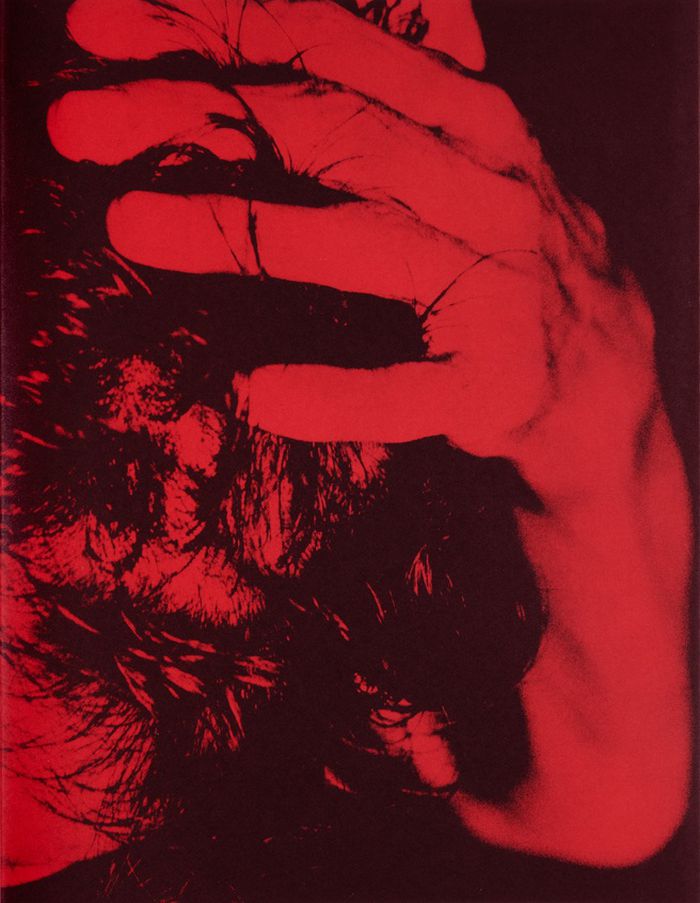
Flashpoint! Protest photography in print, 1950-present
Actions:
Price:
$140.00
(available in store)
Summary:
The past seventy-five years have been a time of extreme social and cultural transformations worldwide. Political and social upheaval, often contentious, disorienting and polarizing, is now a daily reality. Whether migration crises, territorial disputes, gender inequity, class divisions, racism, war, gun violence or environmental concerns, we live in a world rife with ideological and tribal conflicts. Since its inception, photography has captured defining historical moments, serving as either a tool or a document of protest—or both. In placing photobooks next to posters, DIY zines and independent journals, ''Flashpoint!'' explores the diverse roles and varying aesthetics that photography in print undertakes in its support of protest and resistance. Is it a “tool” conceived through an “aesthetic of urgency” to be used during events as they unfold, as in an anonymously designed poster or ink-stained fliers plastered on street walls? Or an elegantly designed photobook, published a year or more later, often with the help of well-known photographers, writers and designers, to document a past uprising? Whether outright rage or a more subtle artist-driven commentary, protest photography in print covers all of these formats and sometimes transcends rigid media definitions, as it blurs the lines between what constitutes a book, zine, journal, poster or newspaper.
Flashpoint! Protest photography in print, 1950-present
Actions:
Price:
$140.00
(available in store)
Summary:
The past seventy-five years have been a time of extreme social and cultural transformations worldwide. Political and social upheaval, often contentious, disorienting and polarizing, is now a daily reality. Whether migration crises, territorial disputes, gender inequity, class divisions, racism, war, gun violence or environmental concerns, we live in a world rife with ideological and tribal conflicts. Since its inception, photography has captured defining historical moments, serving as either a tool or a document of protest—or both. In placing photobooks next to posters, DIY zines and independent journals, ''Flashpoint!'' explores the diverse roles and varying aesthetics that photography in print undertakes in its support of protest and resistance. Is it a “tool” conceived through an “aesthetic of urgency” to be used during events as they unfold, as in an anonymously designed poster or ink-stained fliers plastered on street walls? Or an elegantly designed photobook, published a year or more later, often with the help of well-known photographers, writers and designers, to document a past uprising? Whether outright rage or a more subtle artist-driven commentary, protest photography in print covers all of these formats and sometimes transcends rigid media definitions, as it blurs the lines between what constitutes a book, zine, journal, poster or newspaper.
Form:
books
books
Publication:
April 2025
April 2025
Subject:
Photography Collections
Photography Collections
Form:
books
books
Actions:
Price:
$28.95
(available to order)
Summary:
In this volume of the Critical Spatial Practice series, Dennis Pohl locates the origin of Europe's dependency on carbon and nuclear power in the postwar architectural designs and energy policies of the European Community. Since the 1950s, architects have proposed territorial, regional, and urban development plans that served the European political project. They(...)
$28.95
(available to order)
Summary:
In this volume of the Critical Spatial Practice series, Dennis Pohl locates the origin of Europe's dependency on carbon and nuclear power in the postwar architectural designs and energy policies of the European Community. Since the 1950s, architects have proposed territorial, regional, and urban development plans that served the European political project. They(...)
Title:
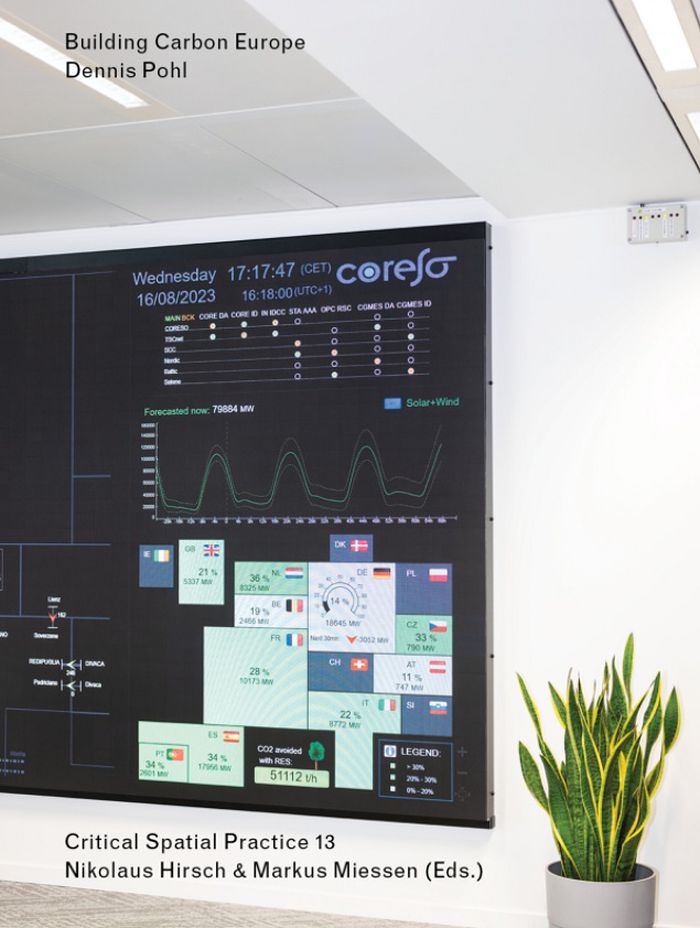
Building carbon europe: Coal, steel and nuclear power. Critical spatial practice
Actions:
Price:
$28.95
(available to order)
Summary:
In this volume of the Critical Spatial Practice series, Dennis Pohl locates the origin of Europe's dependency on carbon and nuclear power in the postwar architectural designs and energy policies of the European Community. Since the 1950s, architects have proposed territorial, regional, and urban development plans that served the European political project. They collaborated with the European Coal and Steel Community in an effort to render the steel building industry as efficient as the car industry; they incorporated the ideas of infinite nuclear energy, as promoted by the European Atomic Energy Community, into their designs. This book demonstrates how architecture served the political economy of postwar Europe as a means of turning coal, steel, and radioactivity into tools of European governance. Architectural design enabled EU institutions to support social policies and worker housing within the coal and steel industry as well as to promote a new pan-European lifestyle based on nuclear energy. In other words, architecture powered Europe's larger infrastructural, economic, and cultural network. Pohl's work not only sheds light on how architecture has contributed to the carbonization of Europe, it also highlights the environmental issue, which challenges both architectural criticism and historiography in the era of the Anthropocene.
Building carbon europe: Coal, steel and nuclear power. Critical spatial practice
Actions:
Price:
$28.95
(available to order)
Summary:
In this volume of the Critical Spatial Practice series, Dennis Pohl locates the origin of Europe's dependency on carbon and nuclear power in the postwar architectural designs and energy policies of the European Community. Since the 1950s, architects have proposed territorial, regional, and urban development plans that served the European political project. They collaborated with the European Coal and Steel Community in an effort to render the steel building industry as efficient as the car industry; they incorporated the ideas of infinite nuclear energy, as promoted by the European Atomic Energy Community, into their designs. This book demonstrates how architecture served the political economy of postwar Europe as a means of turning coal, steel, and radioactivity into tools of European governance. Architectural design enabled EU institutions to support social policies and worker housing within the coal and steel industry as well as to promote a new pan-European lifestyle based on nuclear energy. In other words, architecture powered Europe's larger infrastructural, economic, and cultural network. Pohl's work not only sheds light on how architecture has contributed to the carbonization of Europe, it also highlights the environmental issue, which challenges both architectural criticism and historiography in the era of the Anthropocene.
Form:
books
books
Publication:
April 2024
April 2024
Subject:
Architectural Theory
Architectural Theory
Form:
books
books
Actions:
Price:
$170.00
(available to order)
Summary:
With cover artwork specially created by Ruscha, this book documents hundreds of projects and miscellaneous ephemera produced by the artist alongside his main oeuvre—including installations, films, painted book covers, contour gauge profiles, and more. Introducing readers to the stunning breadth of Edward Ruscha’s (b. 1937) creative output over the course of his entire(...)
$170.00
(available to order)
Summary:
With cover artwork specially created by Ruscha, this book documents hundreds of projects and miscellaneous ephemera produced by the artist alongside his main oeuvre—including installations, films, painted book covers, contour gauge profiles, and more. Introducing readers to the stunning breadth of Edward Ruscha’s (b. 1937) creative output over the course of his entire(...)
Title:
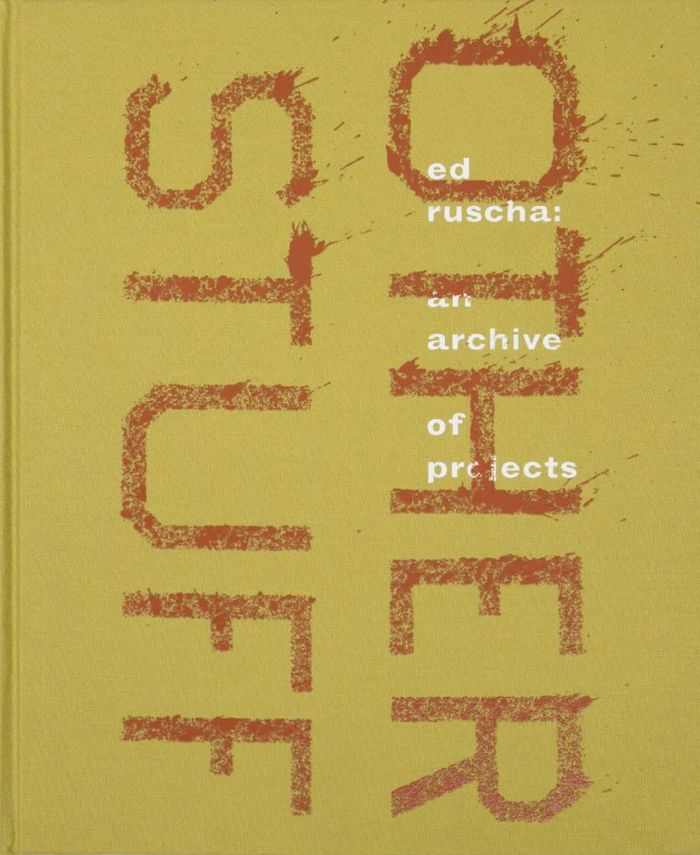
Ed Ruscha: An archive of projects
Actions:
Price:
$170.00
(available to order)
Summary:
With cover artwork specially created by Ruscha, this book documents hundreds of projects and miscellaneous ephemera produced by the artist alongside his main oeuvre—including installations, films, painted book covers, contour gauge profiles, and more. Introducing readers to the stunning breadth of Edward Ruscha’s (b. 1937) creative output over the course of his entire life, this book includes materials dating back to his childhood and extending to his present-day output. The projects featured here fall outside Ruscha’s production of paintings, drawings, prints, and artists’ books. Many of these are unknown and most are reproduced here for the first time. Composed of three sections—Projects and Ephemera; Contour Gauge Profiles; and Painted Book Covers—the book offers Ruscha enthusiasts and scholars a hitherto unknown aspect of Ruscha’s practice, while also showing how these projects coincide with, and sometimes even prefigure, the artistic work for which he is best known. The approximately 270 painted book covers, begun in 1990, utilize found books as support for small paintings and drawings. The 57 contour gauge profiles are silhouette-like profiles made using a mechanical device for reproducing contours. The largest section, Projects and Ephemera, consists of installations, sculpture and objects, films, book and poster design, utilitarian works, and more.
Ed Ruscha: An archive of projects
Actions:
Price:
$170.00
(available to order)
Summary:
With cover artwork specially created by Ruscha, this book documents hundreds of projects and miscellaneous ephemera produced by the artist alongside his main oeuvre—including installations, films, painted book covers, contour gauge profiles, and more. Introducing readers to the stunning breadth of Edward Ruscha’s (b. 1937) creative output over the course of his entire life, this book includes materials dating back to his childhood and extending to his present-day output. The projects featured here fall outside Ruscha’s production of paintings, drawings, prints, and artists’ books. Many of these are unknown and most are reproduced here for the first time. Composed of three sections—Projects and Ephemera; Contour Gauge Profiles; and Painted Book Covers—the book offers Ruscha enthusiasts and scholars a hitherto unknown aspect of Ruscha’s practice, while also showing how these projects coincide with, and sometimes even prefigure, the artistic work for which he is best known. The approximately 270 painted book covers, begun in 1990, utilize found books as support for small paintings and drawings. The 57 contour gauge profiles are silhouette-like profiles made using a mechanical device for reproducing contours. The largest section, Projects and Ephemera, consists of installations, sculpture and objects, films, book and poster design, utilitarian works, and more.
Form:
books
books
Publication:
January 2023
January 2023
Subject:
Contemporary Art Monographs
Contemporary Art Monographs
Form:
books
books
Actions:
Price:
$28.95
(available to order)
Summary:
“Propositions for Non-Fascist Living” begins from the urgent need to model a world decidedly void of fascisms during a time when the rise of contemporary fascisms threatens the very foundations of a possibility for common life. Borrowing from Michel Foucault's notion of “non-fascist living” as an “art of living counter to all forms of fascism,” including that “in us all…(...)
$28.95
(available to order)
Summary:
“Propositions for Non-Fascist Living” begins from the urgent need to model a world decidedly void of fascisms during a time when the rise of contemporary fascisms threatens the very foundations of a possibility for common life. Borrowing from Michel Foucault's notion of “non-fascist living” as an “art of living counter to all forms of fascism,” including that “in us all…(...)
Title:
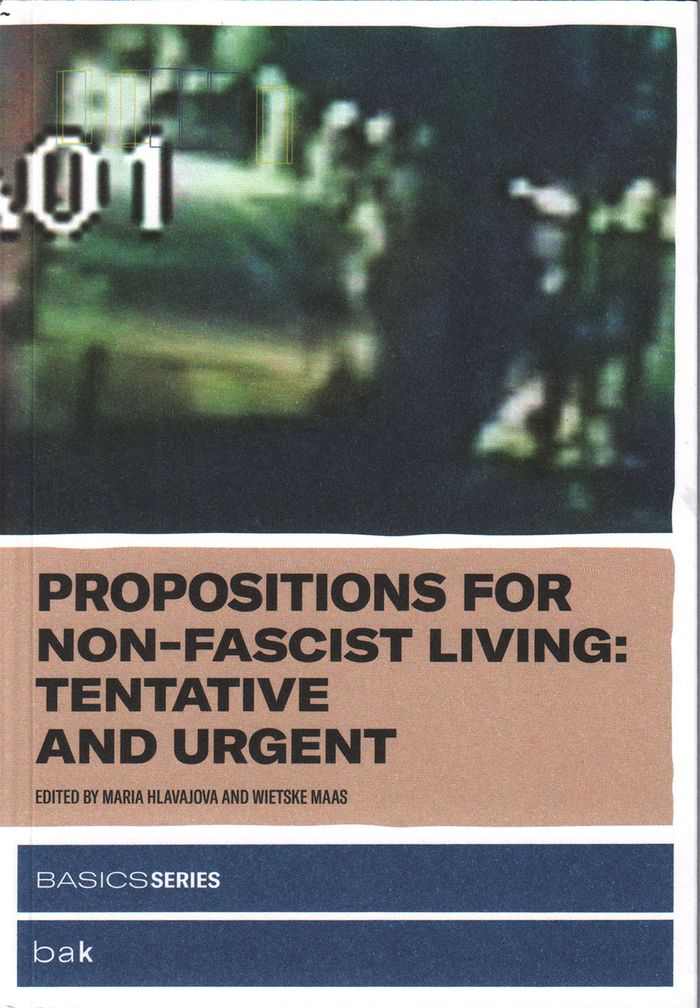
Propositions for non-fascist living: tentative and urgent
Actions:
Price:
$28.95
(available to order)
Summary:
“Propositions for Non-Fascist Living” begins from the urgent need to model a world decidedly void of fascisms during a time when the rise of contemporary fascisms threatens the very foundations of a possibility for common life. Borrowing from Michel Foucault's notion of “non-fascist living” as an “art of living counter to all forms of fascism,” including that “in us all… the fascism that causes us to love power, to desire the very thing that dominates and exploits us,” the book addresses the practice of “living” rather than the mere object of life. Artists, theorists, activists, and scholars offer texts and visual essays that engage varied perspectives on practicing life and articulate methods that support multiplicity and difference rather than vaunting power and hierarchy. Architectural theorist Eyal Weizman, for example, describes an “unlikely common” in gathering evidence against false narratives; art historian and critic Sven Lütticken develops a non-fascist proposition drawn from the intersection of art, technology, and law; philosopher Rosi Braidotti explores an ethics of affirmation and the practices of dying. “Propositions for Non-Fascist Living” is the first in a BASICS series of readers from BAK, “basis voor actuele kunst”, Utrecht, engaging some of the most urgent problems of our time through theoretically informed and politically driven artistic research and practice.
Propositions for non-fascist living: tentative and urgent
Actions:
Price:
$28.95
(available to order)
Summary:
“Propositions for Non-Fascist Living” begins from the urgent need to model a world decidedly void of fascisms during a time when the rise of contemporary fascisms threatens the very foundations of a possibility for common life. Borrowing from Michel Foucault's notion of “non-fascist living” as an “art of living counter to all forms of fascism,” including that “in us all… the fascism that causes us to love power, to desire the very thing that dominates and exploits us,” the book addresses the practice of “living” rather than the mere object of life. Artists, theorists, activists, and scholars offer texts and visual essays that engage varied perspectives on practicing life and articulate methods that support multiplicity and difference rather than vaunting power and hierarchy. Architectural theorist Eyal Weizman, for example, describes an “unlikely common” in gathering evidence against false narratives; art historian and critic Sven Lütticken develops a non-fascist proposition drawn from the intersection of art, technology, and law; philosopher Rosi Braidotti explores an ethics of affirmation and the practices of dying. “Propositions for Non-Fascist Living” is the first in a BASICS series of readers from BAK, “basis voor actuele kunst”, Utrecht, engaging some of the most urgent problems of our time through theoretically informed and politically driven artistic research and practice.
Form:
books
books
Publication:
December 2019
December 2019
Subject:
Critical Theory
Critical Theory


