


2059 Results
Form:
books
books

Actions:
Price:
$63.50
(available to order)
Summary:
From its invention in Europe at the end of the nineteenth century, the automobile crisscrossed the world, completely took over the cities, and became a feature of daily life. Considered basic to the American lifestyle, the car reflected individualism, pragmatism, comfort, and above all modernity. In Latin America, it served as a symbol of distinction, similar to jewelry(...)
$63.50
(available to order)
Summary:
From its invention in Europe at the end of the nineteenth century, the automobile crisscrossed the world, completely took over the cities, and became a feature of daily life. Considered basic to the American lifestyle, the car reflected individualism, pragmatism, comfort, and above all modernity. In Latin America, it served as a symbol of distinction, similar to jewelry(...)
Title:
The cultural life of the automobile: roads to modernity
Actions:
Price:
$63.50
(available to order)
Summary:
From its invention in Europe at the end of the nineteenth century, the automobile crisscrossed the world, completely took over the cities, and became a feature of daily life. Considered basic to the American lifestyle, the car reflected individualism, pragmatism, comfort, and above all modernity. In Latin America, it served as a symbol of distinction, similar to jewelry or fine clothing. In The Cultural Life of the Automobile, Guillermo Giucci focuses on the automobile as an instrument of social change through its "kinetic modernity" and as an embodiment of the tremendous social impact of technology on cultural life. Material culture--how certain objects generate a wide array of cultural responses--has been the focus of much scholarly discussion in recent years. The automobile wrought major changes and inspired images in language, literature, and popular culture. Focusing primarily on Latin America but also covering the United States, Europe, Asia, and Africa, Giucci examines how the automobile was variously adapted by different cultures and how its use shaped and changed social and economic relationships within them. At the same time, he shows how the "automobilization" of society became an essential support for the development of modern individualism, and the automobile its clearest material manifestation.
The cultural life of the automobile: roads to modernity
Actions:
Price:
$63.50
(available to order)
Summary:
From its invention in Europe at the end of the nineteenth century, the automobile crisscrossed the world, completely took over the cities, and became a feature of daily life. Considered basic to the American lifestyle, the car reflected individualism, pragmatism, comfort, and above all modernity. In Latin America, it served as a symbol of distinction, similar to jewelry or fine clothing. In The Cultural Life of the Automobile, Guillermo Giucci focuses on the automobile as an instrument of social change through its "kinetic modernity" and as an embodiment of the tremendous social impact of technology on cultural life. Material culture--how certain objects generate a wide array of cultural responses--has been the focus of much scholarly discussion in recent years. The automobile wrought major changes and inspired images in language, literature, and popular culture. Focusing primarily on Latin America but also covering the United States, Europe, Asia, and Africa, Giucci examines how the automobile was variously adapted by different cultures and how its use shaped and changed social and economic relationships within them. At the same time, he shows how the "automobilization" of society became an essential support for the development of modern individualism, and the automobile its clearest material manifestation.
Form:
books
books
Publication:
August 2012
August 2012
Subject:
Transportation, Tourism, Migration
Transportation, Tourism, Migration
Form:
books
books
Actions:
Holdings:
Description:
272 pages : illustrations, maps ; 29 cm
Description:
272 pages : illustrations, maps ; 29 cm
Author:
Subject:
Publication:
Philadelphia : Casemate, 2010, ©2010.
Philadelphia : Casemate, 2010, ©2010.
Title:
Hitler's engineers : Fritz Todt and Albert Speer : master builders of the Third Reich / Blaine Taylor.
Actions:
Holdings:
Description:
272 pages : illustrations, maps ; 29 cm
Hitler's engineers : Fritz Todt and Albert Speer : master builders of the Third Reich / Blaine Taylor.
Actions:
Holdings:
Description:
272 pages : illustrations, maps ; 29 cm
Form:
books
books
Publication:
Philadelphia : Casemate, 2010, ©2010.
Philadelphia : Casemate, 2010, ©2010.
Author:
Subject:
Form:
books
books
Holdings:
Description:
508 pages : illustrations (chiefly color), portraits ; 30 cm
Description:
508 pages : illustrations (chiefly color), portraits ; 30 cm
Author:
Subject:
Publication:
Berlin : Hatje Cantz Verlag, [2025], ©2025
Berlin : Hatje Cantz Verlag, [2025], ©2025
Title:
Why WHY? : where architecture loves people / writer, Katya Tylevich.
Actions:
Holdings:
Description:
508 pages : illustrations (chiefly color), portraits ; 30 cm
Why WHY? : where architecture loves people / writer, Katya Tylevich.
Actions:
Holdings:
Description:
508 pages : illustrations (chiefly color), portraits ; 30 cm
Form:
books
books
Publication:
Berlin : Hatje Cantz Verlag, [2025], ©2025
Berlin : Hatje Cantz Verlag, [2025], ©2025
Author:
Subject:
Form:
books
books
Price:
$72.00
(available to order)
Summary:
From the Gothic to the contemporary, glass has transformed the structural, formal, and philosophical principles of architecture. In The "Glass state", Annette Fierro views the many meanings of transparency in architecture. Specifically, she analyzes the transparent monumental buildings that were built in Paris between 1981 and 1998 as part of François Mitterrand’s(...)
$72.00
(available to order)
Summary:
From the Gothic to the contemporary, glass has transformed the structural, formal, and philosophical principles of architecture. In The "Glass state", Annette Fierro views the many meanings of transparency in architecture. Specifically, she analyzes the transparent monumental buildings that were built in Paris between 1981 and 1998 as part of François Mitterrand’s(...)
Subject:
Architecture since 1900, Europe
Architecture since 1900, Europe
Publication:
December 2002, Cambridge / London
December 2002, Cambridge / London
Title:
The glass state : the technology of the spectacle - Paris, 1981-1998
Actions:
Price:
$72.00
(available to order)
Summary:
From the Gothic to the contemporary, glass has transformed the structural, formal, and philosophical principles of architecture. In The "Glass state", Annette Fierro views the many meanings of transparency in architecture. Specifically, she analyzes the transparent monumental buildings that were built in Paris between 1981 and 1998 as part of François Mitterrand’s program of Grands Projets. The Grands Projets provide a rare opportunity to study a finite set of buildings constructed of similar materials, in the same time period, in a specific urban landscape, and with related ideological missions. Fierro employs a "discourse of the detail," in which the smallest architectural detail manifests the political, theoretical, and urban contexts of the building’s design and construction. She examines the paradox of the most pared down architectural configurations being used to support the most complex meanings. Intrinsic to Mitterrand’s glass buildings in Paris, for example, is a political concept: the metaphor of accessibility as a means of breaking open cultural institutions previously closed to the public. In addition to the structures of the Grands Projets--the Institut du Monde Arabe, the Grande and Petite Pyramides du Louvre, the glass greenhouses at utopian park projects at La Villette and Andre Citroën, and the Bibliothèque nationale de France--Fierro discusses the Fondation Cartier and two precedent structures, the Centre Georges Pompidou and the Eiffel Tower.
The glass state : the technology of the spectacle - Paris, 1981-1998
Actions:
Price:
$72.00
(available to order)
Summary:
From the Gothic to the contemporary, glass has transformed the structural, formal, and philosophical principles of architecture. In The "Glass state", Annette Fierro views the many meanings of transparency in architecture. Specifically, she analyzes the transparent monumental buildings that were built in Paris between 1981 and 1998 as part of François Mitterrand’s program of Grands Projets. The Grands Projets provide a rare opportunity to study a finite set of buildings constructed of similar materials, in the same time period, in a specific urban landscape, and with related ideological missions. Fierro employs a "discourse of the detail," in which the smallest architectural detail manifests the political, theoretical, and urban contexts of the building’s design and construction. She examines the paradox of the most pared down architectural configurations being used to support the most complex meanings. Intrinsic to Mitterrand’s glass buildings in Paris, for example, is a political concept: the metaphor of accessibility as a means of breaking open cultural institutions previously closed to the public. In addition to the structures of the Grands Projets--the Institut du Monde Arabe, the Grande and Petite Pyramides du Louvre, the glass greenhouses at utopian park projects at La Villette and Andre Citroën, and the Bibliothèque nationale de France--Fierro discusses the Fondation Cartier and two precedent structures, the Centre Georges Pompidou and the Eiffel Tower.
Form:
books
books
Publication:
December 2002, Cambridge / London
December 2002, Cambridge / London
Subject:
Architecture since 1900, Europe
Architecture since 1900, Europe
Form:
books
books
Price:
$50.00
(available to order)
Summary:
They are places we fear to tread, monuments to the principles of our forebears, awe-inspiring towers of achievement : public institutions that sustain and support our lives are all around us. Scott Fortino investigates these enduring pillars of public life in "Institutional", a striking visual essay that documents the diverse architectural structures that house the(...)
$50.00
(available to order)
Summary:
They are places we fear to tread, monuments to the principles of our forebears, awe-inspiring towers of achievement : public institutions that sustain and support our lives are all around us. Scott Fortino investigates these enduring pillars of public life in "Institutional", a striking visual essay that documents the diverse architectural structures that house the(...)
Subject:
Photography monographs
Photography monographs
Publication:
September 2005, Santa Fe
September 2005, Santa Fe
Title:
Institutional : photographs of jails, schools, and other Chicago buildings
Actions:
Price:
$50.00
(available to order)
Summary:
They are places we fear to tread, monuments to the principles of our forebears, awe-inspiring towers of achievement : public institutions that sustain and support our lives are all around us. Scott Fortino investigates these enduring pillars of public life in "Institutional", a striking visual essay that documents the diverse architectural structures that house the foundations of civic life in the city of Chicago. From schools to churches to prisons, Fortino transforms these worn, familiar edifices into compelling symbols of long-lost ideals and communitarian spirit. Fortino coaxes out the subtle warmth and depths of these often overwhelming and pitiless public spaces in his photographs, as his camera reveals the hidden characters of both high-profile works by renowned designers such as Rem Koolhaas, Helmut Jahn, and Mies van der Rohe as well as the stolid structures designed by long-forgotten architects. Light, colour, and composition work together in Fortino's images to produce provocative new perspectives on the interiors of public buildings, revealing how their cultural and social roles as places of worship, education, punishment, or entertainment cast long and complex shadows over our lives. Fortino challenges us in "Institutional" to rethink our view of the public spaces we pass through every day by offering an original and fascinating photographic study of the settings in which the important events of human life unfold.
Institutional : photographs of jails, schools, and other Chicago buildings
Actions:
Price:
$50.00
(available to order)
Summary:
They are places we fear to tread, monuments to the principles of our forebears, awe-inspiring towers of achievement : public institutions that sustain and support our lives are all around us. Scott Fortino investigates these enduring pillars of public life in "Institutional", a striking visual essay that documents the diverse architectural structures that house the foundations of civic life in the city of Chicago. From schools to churches to prisons, Fortino transforms these worn, familiar edifices into compelling symbols of long-lost ideals and communitarian spirit. Fortino coaxes out the subtle warmth and depths of these often overwhelming and pitiless public spaces in his photographs, as his camera reveals the hidden characters of both high-profile works by renowned designers such as Rem Koolhaas, Helmut Jahn, and Mies van der Rohe as well as the stolid structures designed by long-forgotten architects. Light, colour, and composition work together in Fortino's images to produce provocative new perspectives on the interiors of public buildings, revealing how their cultural and social roles as places of worship, education, punishment, or entertainment cast long and complex shadows over our lives. Fortino challenges us in "Institutional" to rethink our view of the public spaces we pass through every day by offering an original and fascinating photographic study of the settings in which the important events of human life unfold.
Form:
books
books
Publication:
September 2005, Santa Fe
September 2005, Santa Fe
Subject:
Photography monographs
Photography monographs
Form:
books
books
Title:
Sprawl and suburbia
Sprawl and suburbia
Actions:
Price:
$28.95
(available to order)
Summary:
Sprawl is the single most significant and urgent issue in American land use at the turn of the twenty-first century. Efforts to limit and reform sprawl through legislative “Smart Growth” initiatives have been enacted around the country while the neotraditionalist New Urbanism has been embraced by many architects and urban planners. Yet most Americans persist in their(...)
$28.95
(available to order)
Summary:
Sprawl is the single most significant and urgent issue in American land use at the turn of the twenty-first century. Efforts to limit and reform sprawl through legislative “Smart Growth” initiatives have been enacted around the country while the neotraditionalist New Urbanism has been embraced by many architects and urban planners. Yet most Americans persist in their(...)
Title:
Sprawl and suburbia
Actions:
Price:
$28.95
(available to order)
Summary:
Sprawl is the single most significant and urgent issue in American land use at the turn of the twenty-first century. Efforts to limit and reform sprawl through legislative “Smart Growth” initiatives have been enacted around the country while the neotraditionalist New Urbanism has been embraced by many architects and urban planners. Yet most Americans persist in their desire to live farther and farther away from urban centers, moving to exurbs made up almost entirely of single-family residential houses and stand-alone shopping areas. "Sprawl and suburbia" brings together some of the foremost thinkers in the field to present in-depth diagnosis and critical analysis of the physical and social realities of exurban sprawl. Along with an introduction by Robert Fishman, these essays call for architects, urban planners, and landscape designers to work at mitigating the impact of sprawl on land and resources and improving the residential and commercial built environment as a whole. In place of vast residential exurbs, these writers offer visions of a fresh urbanism—appealing and persuasive models of life at greater density, with greater diversity, and within genuine communities. With sprawl losing the support of suburban citizens themselves as economic, environmental, and social costs are being paid, "Sprawl and suburbia" appears at a moment when design might achieve some critical influence over development—if architects and planners accept the challenge.
Sprawl and suburbia
Actions:
Price:
$28.95
(available to order)
Summary:
Sprawl is the single most significant and urgent issue in American land use at the turn of the twenty-first century. Efforts to limit and reform sprawl through legislative “Smart Growth” initiatives have been enacted around the country while the neotraditionalist New Urbanism has been embraced by many architects and urban planners. Yet most Americans persist in their desire to live farther and farther away from urban centers, moving to exurbs made up almost entirely of single-family residential houses and stand-alone shopping areas. "Sprawl and suburbia" brings together some of the foremost thinkers in the field to present in-depth diagnosis and critical analysis of the physical and social realities of exurban sprawl. Along with an introduction by Robert Fishman, these essays call for architects, urban planners, and landscape designers to work at mitigating the impact of sprawl on land and resources and improving the residential and commercial built environment as a whole. In place of vast residential exurbs, these writers offer visions of a fresh urbanism—appealing and persuasive models of life at greater density, with greater diversity, and within genuine communities. With sprawl losing the support of suburban citizens themselves as economic, environmental, and social costs are being paid, "Sprawl and suburbia" appears at a moment when design might achieve some critical influence over development—if architects and planners accept the challenge.
Form:
books
books
Publication:
November 2005, Minneapolis
November 2005, Minneapolis
Subject:
Suburbs
Suburbs
Form:
books
books
Price:
$55.90
(available to order)
Summary:
"Inhabitable infrastructures: science fiction or urban future?", the follow up to "Food city and smartcities and eco-warriors", from one of the world’s leading urban design and architectural thinkers, explores the potential of climate change-related multi-use infrastructures that address the fundamental human requirements to protect, to provide and to participate. The(...)
$55.90
(available to order)
Summary:
"Inhabitable infrastructures: science fiction or urban future?", the follow up to "Food city and smartcities and eco-warriors", from one of the world’s leading urban design and architectural thinkers, explores the potential of climate change-related multi-use infrastructures that address the fundamental human requirements to protect, to provide and to participate. The(...)
Title:
Inhabitable infrastructures: urban future or science fiction?
Actions:
Price:
$55.90
(available to order)
Summary:
"Inhabitable infrastructures: science fiction or urban future?", the follow up to "Food city and smartcities and eco-warriors", from one of the world’s leading urban design and architectural thinkers, explores the potential of climate change-related multi-use infrastructures that address the fundamental human requirements to protect, to provide and to participate. The stimulus for the infrastructures derives from postulated scenarios and processes gleaned from science fiction and futurology as well as the current body of scientific knowledge regarding changing environmental impacts on cities. Science fiction is interdisciplinary by nature, aggregates the past and present, and evaluates both lay opinions and professional strategies in an attempt to develop foresight and to map possible futures. The research culminates in the creation of innovative multi-use infrastructures and integrated self-sustaining support systems that meet the challenges posed through climate change and overpopulation, and the reciprocal benefits of simultaneously addressing the threat and the shaping of cities. J. G. Ballard has written that the psychological realm of science fiction is most valuable in its predictive function, and in projecting emotions into the future. The knowledge from the book is widely transferable, constituting both solutions and speculative visions of future urban environments. The book is indispensable reading for professionals and students in the fields of urban design, architecture, engineering and environmental socio-politics.
Inhabitable infrastructures: urban future or science fiction?
Actions:
Price:
$55.90
(available to order)
Summary:
"Inhabitable infrastructures: science fiction or urban future?", the follow up to "Food city and smartcities and eco-warriors", from one of the world’s leading urban design and architectural thinkers, explores the potential of climate change-related multi-use infrastructures that address the fundamental human requirements to protect, to provide and to participate. The stimulus for the infrastructures derives from postulated scenarios and processes gleaned from science fiction and futurology as well as the current body of scientific knowledge regarding changing environmental impacts on cities. Science fiction is interdisciplinary by nature, aggregates the past and present, and evaluates both lay opinions and professional strategies in an attempt to develop foresight and to map possible futures. The research culminates in the creation of innovative multi-use infrastructures and integrated self-sustaining support systems that meet the challenges posed through climate change and overpopulation, and the reciprocal benefits of simultaneously addressing the threat and the shaping of cities. J. G. Ballard has written that the psychological realm of science fiction is most valuable in its predictive function, and in projecting emotions into the future. The knowledge from the book is widely transferable, constituting both solutions and speculative visions of future urban environments. The book is indispensable reading for professionals and students in the fields of urban design, architecture, engineering and environmental socio-politics.
Form:
books
books
Publication:
May 2017
May 2017
Subject:
Architectural Theory
Architectural Theory
Form:
books
books
Actions:
Price:
$111.50
(available to order)
Summary:
Si les guerres et la Révolution ont anéanti certains grands chefs-d'oeuvre qui avaient été édifiés dans ces régions (ceux, telles les cathédrales d'Arras et de Cambrai, qui ont joué un rôle majeur dans l'évolution de l'art gothique sont évoqués dans cet ouvrage), il y subsite néanmoins beaucoup d'oeuvres très intéressantes et une sélection obligatoirement quelque peu(...)
$111.50
(available to order)
Summary:
Si les guerres et la Révolution ont anéanti certains grands chefs-d'oeuvre qui avaient été édifiés dans ces régions (ceux, telles les cathédrales d'Arras et de Cambrai, qui ont joué un rôle majeur dans l'évolution de l'art gothique sont évoqués dans cet ouvrage), il y subsite néanmoins beaucoup d'oeuvres très intéressantes et une sélection obligatoirement quelque peu(...)
Title:
Nord gothique : Picardie, Artois, Flandre, Hainaut - les édifices religieux
Actions:
Price:
$111.50
(available to order)
Summary:
Si les guerres et la Révolution ont anéanti certains grands chefs-d'oeuvre qui avaient été édifiés dans ces régions (ceux, telles les cathédrales d'Arras et de Cambrai, qui ont joué un rôle majeur dans l'évolution de l'art gothique sont évoqués dans cet ouvrage), il y subsite néanmoins beaucoup d'oeuvres très intéressantes et une sélection obligatoirement quelque peu arbitraire a dû être faite. La majorité d'entre elles relèvent de l'art de la fin du Moyen Âge. Ici, pour les grands monuments, on est demeuré fidèle à l'élévation à trois niveaux (grandes arcades, triforium, fenêtres hautes); pour de simples paroissiales on a retenu le parti de l'église-halle c'est-à-dire celui où l'édifice ne présente que le seul niveau des grandes arcades, l'éclairage étant fourni par les fenêtres des collatéraux; malgré la simplicité de la formule, les maîtres d'oeuvres ont su en présenter plusieurs variantes, en jouant sur les rapports de proportions entre les diverses composantes de l'édifice; sur les types de support ou de couvertures retenus (par exemple, les églises du Vimeu ou du Hainaut sont couvertes de charpentes lambrissées présentant des sablières et des blochets sculptés); dans l'ensemble, ces édifices ont étés traités somptueusement. Ce volume invite donc à découvrir de belles oeuvres ignorées ou méconnues qui ont su aussi emprunter ou offrir des thèmes aux pays voisins.
Nord gothique : Picardie, Artois, Flandre, Hainaut - les édifices religieux
Actions:
Price:
$111.50
(available to order)
Summary:
Si les guerres et la Révolution ont anéanti certains grands chefs-d'oeuvre qui avaient été édifiés dans ces régions (ceux, telles les cathédrales d'Arras et de Cambrai, qui ont joué un rôle majeur dans l'évolution de l'art gothique sont évoqués dans cet ouvrage), il y subsite néanmoins beaucoup d'oeuvres très intéressantes et une sélection obligatoirement quelque peu arbitraire a dû être faite. La majorité d'entre elles relèvent de l'art de la fin du Moyen Âge. Ici, pour les grands monuments, on est demeuré fidèle à l'élévation à trois niveaux (grandes arcades, triforium, fenêtres hautes); pour de simples paroissiales on a retenu le parti de l'église-halle c'est-à-dire celui où l'édifice ne présente que le seul niveau des grandes arcades, l'éclairage étant fourni par les fenêtres des collatéraux; malgré la simplicité de la formule, les maîtres d'oeuvres ont su en présenter plusieurs variantes, en jouant sur les rapports de proportions entre les diverses composantes de l'édifice; sur les types de support ou de couvertures retenus (par exemple, les églises du Vimeu ou du Hainaut sont couvertes de charpentes lambrissées présentant des sablières et des blochets sculptés); dans l'ensemble, ces édifices ont étés traités somptueusement. Ce volume invite donc à découvrir de belles oeuvres ignorées ou méconnues qui ont su aussi emprunter ou offrir des thèmes aux pays voisins.
Form:
books
books
Publication:
January 2007, Paris
January 2007, Paris
Subject:
History until 1900
History until 1900
Form:
books
books
Price:
$25.95
(available to order)
Summary:
From the Gothic to the contemporary, glass has transformed the structural, formal, and philosophical principles of architecture. In "The glass state", Annette Fierro views the many meanings of transparency in architecture. Specifically, she analyzes the transparent monumental buildings that were built in Paris between 1981 and 1998 as part of Francois Mitterrand's program(...)
$25.95
(available to order)
Summary:
From the Gothic to the contemporary, glass has transformed the structural, formal, and philosophical principles of architecture. In "The glass state", Annette Fierro views the many meanings of transparency in architecture. Specifically, she analyzes the transparent monumental buildings that were built in Paris between 1981 and 1998 as part of Francois Mitterrand's program(...)
Publication:
April 2009
April 2009
Title:
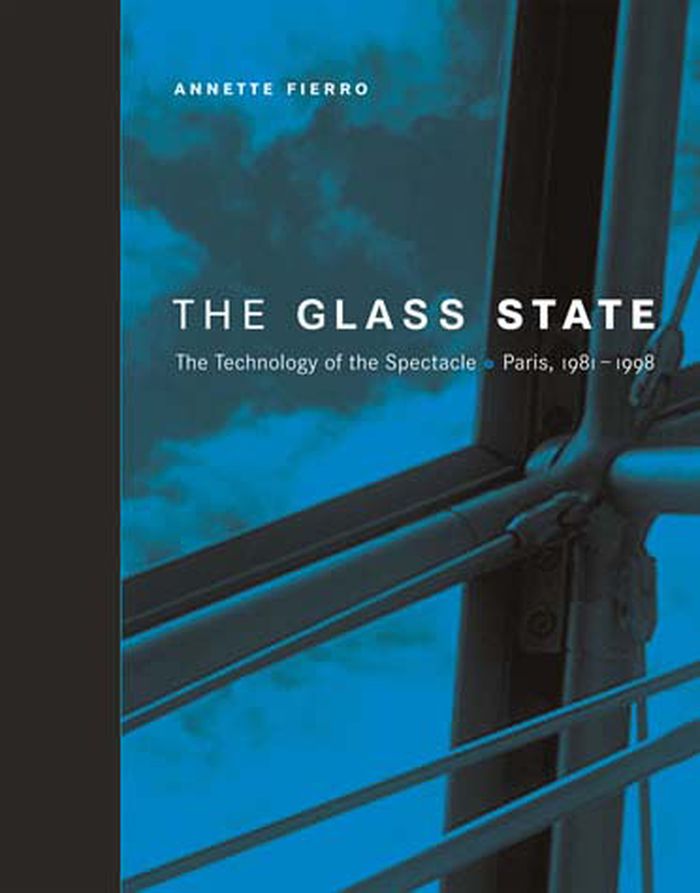
The glass state: the technology of the spectacle, Paris 1981-1998
Actions:
Price:
$25.95
(available to order)
Summary:
From the Gothic to the contemporary, glass has transformed the structural, formal, and philosophical principles of architecture. In "The glass state", Annette Fierro views the many meanings of transparency in architecture. Specifically, she analyzes the transparent monumental buildings that were built in Paris between 1981 and 1998 as part of Francois Mitterrand's program of Grands Projets. The Grands Projets provide a rare opportunity to study a finite set of buildings constructed of similar materials, in the same time period, in a specific urban landscape, and with related ideological missions. Fierro employs a "discourse of the detail," in which the smallest architectural detail manifests the political, theoretical, and urban contexts of the building's design and construction. She examines the paradox of the most pared down architectural configurations being used to support the most complex meanings. Intrinsic to Mitterrand's glass buildings in Paris, for example, is a political concept: the metaphor of accessibility as a means of breaking open cultural institutions previously closed to the public. In addition to the structures of the Grands Projets - the Institut du Monde Arabe, the Grande and Petite Pyramides du Louvre, the glass greenhouses at utopian park projects at La Villette and André Citroën and the Bibliotheque nationale de France - Fierro discusses the Fondation Cartier and two precedent structures, the Centre Georges Pompidou and the Eiffel Tower.
The glass state: the technology of the spectacle, Paris 1981-1998
Actions:
Price:
$25.95
(available to order)
Summary:
From the Gothic to the contemporary, glass has transformed the structural, formal, and philosophical principles of architecture. In "The glass state", Annette Fierro views the many meanings of transparency in architecture. Specifically, she analyzes the transparent monumental buildings that were built in Paris between 1981 and 1998 as part of Francois Mitterrand's program of Grands Projets. The Grands Projets provide a rare opportunity to study a finite set of buildings constructed of similar materials, in the same time period, in a specific urban landscape, and with related ideological missions. Fierro employs a "discourse of the detail," in which the smallest architectural detail manifests the political, theoretical, and urban contexts of the building's design and construction. She examines the paradox of the most pared down architectural configurations being used to support the most complex meanings. Intrinsic to Mitterrand's glass buildings in Paris, for example, is a political concept: the metaphor of accessibility as a means of breaking open cultural institutions previously closed to the public. In addition to the structures of the Grands Projets - the Institut du Monde Arabe, the Grande and Petite Pyramides du Louvre, the glass greenhouses at utopian park projects at La Villette and André Citroën and the Bibliotheque nationale de France - Fierro discusses the Fondation Cartier and two precedent structures, the Centre Georges Pompidou and the Eiffel Tower.
Form:
books
books
Publication:
April 2009
April 2009
Form:
books
books

Title:
Prisons must fall
Prisons must fall
Actions:
Price:
$29.50
(available to order)
Summary:
From Mariame Kaba, New York Times-bestselling author of "We do this ‘til we free us," and social worker Jane Ball comes a powerful book showing the harm that prisons cause and exploring alternatives, illustrated by Olly Costello. On a moonlit road, tucked away from prying eyes, a child sees a prison complex-- cinder blocks, watch towers, barbed wire. Page by page, we come(...)
$29.50
(available to order)
Summary:
From Mariame Kaba, New York Times-bestselling author of "We do this ‘til we free us," and social worker Jane Ball comes a powerful book showing the harm that prisons cause and exploring alternatives, illustrated by Olly Costello. On a moonlit road, tucked away from prying eyes, a child sees a prison complex-- cinder blocks, watch towers, barbed wire. Page by page, we come(...)
Title:
Prisons must fall
Actions:
Price:
$29.50
(available to order)
Summary:
From Mariame Kaba, New York Times-bestselling author of "We do this ‘til we free us," and social worker Jane Ball comes a powerful book showing the harm that prisons cause and exploring alternatives, illustrated by Olly Costello. On a moonlit road, tucked away from prying eyes, a child sees a prison complex-- cinder blocks, watch towers, barbed wire. Page by page, we come to see the prison as a child sees it. Prisons hurt people and leave them lonely, without loved ones to comfort them or lend a listening ear. As dandelion stars float up in the air, this dreamscape becomes a hope-scape, where love transcends the prison walls. All the families and friends of the people in the prison march and protest in beautiful song, march together to a new way and a new dawn-- in this case a cooperative housing and community center, next to a neighborhood greenhouse for restoration and healing. A new world, where connection and repair are fundamental, and even tangible, as people around a table quilt messages, “I hear you. I’m sorry for what I did. How can I make it better?” In "Prisons must fall," Mariame Kaba, a longtime activist, together with co-author Jane Ball, present solutions that do not involve incarceration, such as meeting people’s basic needs, restorative justice, and community support-- seeds for a safe world.
Prisons must fall
Actions:
Price:
$29.50
(available to order)
Summary:
From Mariame Kaba, New York Times-bestselling author of "We do this ‘til we free us," and social worker Jane Ball comes a powerful book showing the harm that prisons cause and exploring alternatives, illustrated by Olly Costello. On a moonlit road, tucked away from prying eyes, a child sees a prison complex-- cinder blocks, watch towers, barbed wire. Page by page, we come to see the prison as a child sees it. Prisons hurt people and leave them lonely, without loved ones to comfort them or lend a listening ear. As dandelion stars float up in the air, this dreamscape becomes a hope-scape, where love transcends the prison walls. All the families and friends of the people in the prison march and protest in beautiful song, march together to a new way and a new dawn-- in this case a cooperative housing and community center, next to a neighborhood greenhouse for restoration and healing. A new world, where connection and repair are fundamental, and even tangible, as people around a table quilt messages, “I hear you. I’m sorry for what I did. How can I make it better?” In "Prisons must fall," Mariame Kaba, a longtime activist, together with co-author Jane Ball, present solutions that do not involve incarceration, such as meeting people’s basic needs, restorative justice, and community support-- seeds for a safe world.
Form:
books
books
Publication:
April 2025
April 2025
Subject:
Children's Books
Children's Books


