


27 Results
Form:
books
books
Description:
1 online resource
Author:
Subject:
Publication:
[Place of publication not identified] : Institute of Network Cultures, 2020., [Place of publication not identified] : transmediale, 2020.
[Place of publication not identified] : Institute of Network Cultures, 2020., [Place of publication not identified] : transmediale, 2020.
Title:
The Eternal Network : The Ends and Becomings of Network Culture.
Actions:
Description:
1 online resource
The Eternal Network : The Ends and Becomings of Network Culture.
Actions:
Description:
1 online resource
Form:
books
books
Publication:
[Place of publication not identified] : Institute of Network Cultures, 2020., [Place of publication not identified] : transmediale, 2020.
[Place of publication not identified] : Institute of Network Cultures, 2020., [Place of publication not identified] : transmediale, 2020.
Author:
Subject:
Form:
books
books
Actions:
Holdings:
Description:
xx, 349 pages : illustrations, plans ; 24 cm
Description:
xx, 349 pages : illustrations, plans ; 24 cm
Author:
Subject:
Publication:
Cambridge, Mass. : MIT Press, ©2006.
Cambridge, Mass. : MIT Press, ©2006.
Title:
Japan-ness in architecture / Arata Isozaki ; translated by Sabu Kohso ; edited by David B. Stewart ; foreword by Toshiko Mori.
Actions:
Holdings:
Description:
xx, 349 pages : illustrations, plans ; 24 cm
Japan-ness in architecture / Arata Isozaki ; translated by Sabu Kohso ; edited by David B. Stewart ; foreword by Toshiko Mori.
Actions:
Holdings:
Description:
xx, 349 pages : illustrations, plans ; 24 cm
Form:
books
books
Publication:
Cambridge, Mass. : MIT Press, ©2006.
Cambridge, Mass. : MIT Press, ©2006.
Author:
Subject:
Form:
books
books
Title:
The architecture of patterns
The architecture of patterns
Actions:
Price:
$31.00
(available to order)
Summary:
This book tracks the definitions and applications of patterns in a number of fields, and suggests how contemporary patterns might be used in design. Drawing on historical material and recent case studies, it gives shape to patterns’ emerging potential. The Architecture of Patterns provides an updated definition of patterns that is at once precise and expansive—one that(...)
$31.00
(available to order)
Summary:
This book tracks the definitions and applications of patterns in a number of fields, and suggests how contemporary patterns might be used in design. Drawing on historical material and recent case studies, it gives shape to patterns’ emerging potential. The Architecture of Patterns provides an updated definition of patterns that is at once precise and expansive—one that(...)
Subject:
History since 1900, Reference Books
History since 1900, Reference Books
Publication:
August 2010
August 2010
Title:
The architecture of patterns
Actions:
Price:
$31.00
(available to order)
Summary:
This book tracks the definitions and applications of patterns in a number of fields, and suggests how contemporary patterns might be used in design. Drawing on historical material and recent case studies, it gives shape to patterns’ emerging potential. The Architecture of Patterns provides an updated definition of patterns that is at once precise and expansive—one that allows their sensory, ephemeral, and iterative traits to be taken as seriously as their functional, everlasting, and essential ones.
The architecture of patterns
Actions:
Price:
$31.00
(available to order)
Summary:
This book tracks the definitions and applications of patterns in a number of fields, and suggests how contemporary patterns might be used in design. Drawing on historical material and recent case studies, it gives shape to patterns’ emerging potential. The Architecture of Patterns provides an updated definition of patterns that is at once precise and expansive—one that allows their sensory, ephemeral, and iterative traits to be taken as seriously as their functional, everlasting, and essential ones.
Form:
books
books
Publication:
August 2010
August 2010
Subject:
History since 1900, Reference Books
History since 1900, Reference Books
Form:
audio
audio
Title:
Falsetto.
Falsetto.
Actions:
Description:
1 online resource.
Author:
Subject:
Publication:
[Place of publication not identified] : Lateral Addition, 2017.
[Place of publication not identified] : Lateral Addition, 2017.
Form:
audio
audio
Publication:
[Place of publication not identified] : Lateral Addition, 2017.
[Place of publication not identified] : Lateral Addition, 2017.
Author:
Subject:
Form:
books
books
Actions:
Price:
$29.95
(available to order)
Summary:
When architecture and fashion meet in the creation of ephemeral spaces for the immediate presentation of new collections, for example, these temporary but real spaces are brought into the realm of the everlasting digital space as they are shared and re-shared on platforms like Instagram. Fashion spaces can best be defined, then, as co-created, ever changing and prevailing(...)
$29.95
(available to order)
Summary:
When architecture and fashion meet in the creation of ephemeral spaces for the immediate presentation of new collections, for example, these temporary but real spaces are brought into the realm of the everlasting digital space as they are shared and re-shared on platforms like Instagram. Fashion spaces can best be defined, then, as co-created, ever changing and prevailing(...)
Publication:
February 2021
February 2021
Title:
Fashion spaces: a theoretical view
Actions:
Price:
$29.95
(available to order)
Summary:
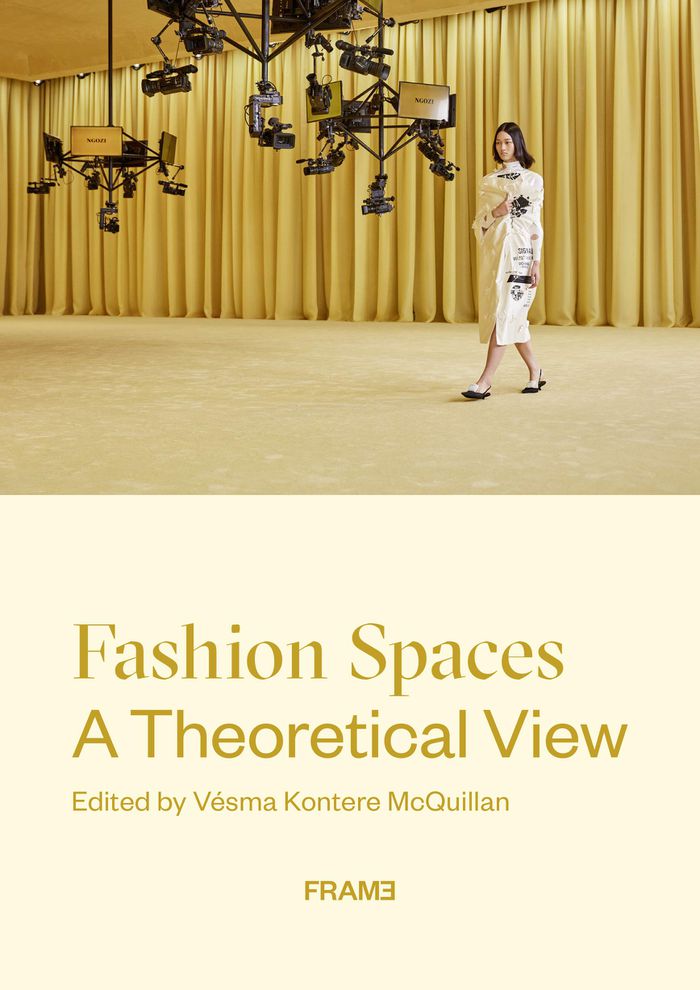
When architecture and fashion meet in the creation of ephemeral spaces for the immediate presentation of new collections, for example, these temporary but real spaces are brought into the realm of the everlasting digital space as they are shared and re-shared on platforms like Instagram. Fashion spaces can best be defined, then, as co-created, ever changing and prevailing metaspaces where the dialogue amongst designers, consumers and industry leaders continues well after the real space has vanished. Can these fashion spaces have a bigger impact on consumers than real-time experience of space? How may the dialogues developing within and as result of fashion spaces influence physical retail design? Can designers use fashion spaces as sites for new cultural production?
Fashion spaces: a theoretical view
Actions:
Price:
$29.95
(available to order)
Summary:
When architecture and fashion meet in the creation of ephemeral spaces for the immediate presentation of new collections, for example, these temporary but real spaces are brought into the realm of the everlasting digital space as they are shared and re-shared on platforms like Instagram. Fashion spaces can best be defined, then, as co-created, ever changing and prevailing metaspaces where the dialogue amongst designers, consumers and industry leaders continues well after the real space has vanished. Can these fashion spaces have a bigger impact on consumers than real-time experience of space? How may the dialogues developing within and as result of fashion spaces influence physical retail design? Can designers use fashion spaces as sites for new cultural production?
Form:
books
books
Publication:
February 2021
February 2021
Form:
books
books

Actions:
Price:
$30.00
(available in store)
Summary:
Defining darkness can be an impossible exercise to explain absence, nothingness, and the absolute all at once. Darkness falls within a system of symbolic values where colours are ascribed to meanings that are related to one another. The relationship between darkness and the North is as ancient as that between the North and whiteness. The circumpolar day-night cycle,(...)
$30.00
(available in store)
Summary:
Defining darkness can be an impossible exercise to explain absence, nothingness, and the absolute all at once. Darkness falls within a system of symbolic values where colours are ascribed to meanings that are related to one another. The relationship between darkness and the North is as ancient as that between the North and whiteness. The circumpolar day-night cycle,(...)
Subject:
Architecture in Canada
Architecture in Canada
Publication:
November 2021
November 2021
Title:
Darkness : the dynamics of darkness in the North
Actions:
Price:
$30.00
(available in store)
Summary:
Defining darkness can be an impossible exercise to explain absence, nothingness, and the absolute all at once. Darkness falls within a system of symbolic values where colours are ascribed to meanings that are related to one another. The relationship between darkness and the North is as ancient as that between the North and whiteness. The circumpolar day-night cycle, alternating between summer and winter, introduces the idea of a duality, between blinding brightness and everlasting night. The ten chapters of this book explore the dynamics of darkness in social science, humanities and art, and attest to the diverse range of contributions by the various authors and their disciplinary and cultural perspectives. Together, they shed light on the meaning and use of darkness, its position and role in the worldview of cultures, the scientific struggle with darkness, and not least the effects of this interplay on people's lives and their understanding of self and other.
Darkness : the dynamics of darkness in the North
Actions:
Price:
$30.00
(available in store)
Summary:
Defining darkness can be an impossible exercise to explain absence, nothingness, and the absolute all at once. Darkness falls within a system of symbolic values where colours are ascribed to meanings that are related to one another. The relationship between darkness and the North is as ancient as that between the North and whiteness. The circumpolar day-night cycle, alternating between summer and winter, introduces the idea of a duality, between blinding brightness and everlasting night. The ten chapters of this book explore the dynamics of darkness in social science, humanities and art, and attest to the diverse range of contributions by the various authors and their disciplinary and cultural perspectives. Together, they shed light on the meaning and use of darkness, its position and role in the worldview of cultures, the scientific struggle with darkness, and not least the effects of this interplay on people's lives and their understanding of self and other.
Form:
books
books
Publication:
November 2021
November 2021
Subject:
Architecture in Canada
Architecture in Canada
Form:
books
books
Title:
Japan-ness in architecture
Japan-ness in architecture
Actions:
Price:
$35.95
(available to order)
Summary:
Japanese architect Arata Isozaki sees buildings not as dead objects but as events that encompass the social and historical context -- not to be defined forever by their "everlasting materiality" but as texts to be interpreted and reread continually. In "Japan-ness in architecture", he identifies what is essentially Japanese in architecture from the seventh to the(...)
$35.95
(available to order)
Summary:
Japanese architect Arata Isozaki sees buildings not as dead objects but as events that encompass the social and historical context -- not to be defined forever by their "everlasting materiality" but as texts to be interpreted and reread continually. In "Japan-ness in architecture", he identifies what is essentially Japanese in architecture from the seventh to the(...)
Subject:
History until 1900, Asia
History until 1900, Asia
Publication:
January 1900, Cambridge / London
January 1900, Cambridge / London
Title:
Japan-ness in architecture
Actions:
Price:
$35.95
(available to order)
Summary:
Japanese architect Arata Isozaki sees buildings not as dead objects but as events that encompass the social and historical context -- not to be defined forever by their "everlasting materiality" but as texts to be interpreted and reread continually. In "Japan-ness in architecture", he identifies what is essentially Japanese in architecture from the seventh to the twentieth century. In the opening essay, Isozaki analyzes the struggles of modern Japanese architects, including himself, to create something uniquely Japanese out of modernity. He then circles back in history to find what he calls Japan-ness in the seventh-century Ise shrine, reconstruction of the twelfth-century Todai-ji Temple, and the seventeenth-century Katsura Imperial Villa. He finds the periodic ritual relocation of Ise's precincts a counter to the West's concept of architectural permanence, and the repetition of the ritual an alternative to modernity's anxious quest for origins. He traces the "constructive power" of the Todai-ji Temple to the vision of the director of its reconstruction, the monk Chogen, whose imaginative power he sees as corresponding to the revolutionary turmoil of the times. The Katsura Imperial Villa, with its chimerical spaces, achieved its own Japan-ness as it reinvented the traditional shoin style. And yet, writes Isozaki, what others consider to be the Japanese aesthetic is often the opposite of that essential Japan-ness born in moments of historic self-definition; the purified stylization -- what Isozaki calls "Japanesquization" -- lacks the energy of cultural transformation and reflects an island retrenchment in response to the pressure of other cultures. Combining historical survey, critical analysis, theoretical reflection, and autobiographical account, these essays, written over a period of twenty years, demonstrate Isozaki's standing as one of the world's leading architects and preeminent architectural thinkers. Arata Isosaki is a leading Japanese architect. His works include the Museum of Contemporary Art, Los Angeles, the Olympic Stadium in Barcelona, the Volksbank Center am Postdamer Platz in Berlin, the Team Disney Building in Orlando, and the Tokyo University of Art and Design. Translated by Sabu Kohso. Foreword by Toshiko Mori.
Japan-ness in architecture
Actions:
Price:
$35.95
(available to order)
Summary:
Japanese architect Arata Isozaki sees buildings not as dead objects but as events that encompass the social and historical context -- not to be defined forever by their "everlasting materiality" but as texts to be interpreted and reread continually. In "Japan-ness in architecture", he identifies what is essentially Japanese in architecture from the seventh to the twentieth century. In the opening essay, Isozaki analyzes the struggles of modern Japanese architects, including himself, to create something uniquely Japanese out of modernity. He then circles back in history to find what he calls Japan-ness in the seventh-century Ise shrine, reconstruction of the twelfth-century Todai-ji Temple, and the seventeenth-century Katsura Imperial Villa. He finds the periodic ritual relocation of Ise's precincts a counter to the West's concept of architectural permanence, and the repetition of the ritual an alternative to modernity's anxious quest for origins. He traces the "constructive power" of the Todai-ji Temple to the vision of the director of its reconstruction, the monk Chogen, whose imaginative power he sees as corresponding to the revolutionary turmoil of the times. The Katsura Imperial Villa, with its chimerical spaces, achieved its own Japan-ness as it reinvented the traditional shoin style. And yet, writes Isozaki, what others consider to be the Japanese aesthetic is often the opposite of that essential Japan-ness born in moments of historic self-definition; the purified stylization -- what Isozaki calls "Japanesquization" -- lacks the energy of cultural transformation and reflects an island retrenchment in response to the pressure of other cultures. Combining historical survey, critical analysis, theoretical reflection, and autobiographical account, these essays, written over a period of twenty years, demonstrate Isozaki's standing as one of the world's leading architects and preeminent architectural thinkers. Arata Isosaki is a leading Japanese architect. His works include the Museum of Contemporary Art, Los Angeles, the Olympic Stadium in Barcelona, the Volksbank Center am Postdamer Platz in Berlin, the Team Disney Building in Orlando, and the Tokyo University of Art and Design. Translated by Sabu Kohso. Foreword by Toshiko Mori.
Form:
books
books
Publication:
January 1900, Cambridge / London
January 1900, Cambridge / London
Subject:
History until 1900, Asia
History until 1900, Asia


