


6412 Results
Level of archival description:
Project
Project
Title:
Maison Coloniale
Maison Coloniale
Reference number:
AP066.S2.D19
Description:
Le dossier documente le projet de construction de la Maison Coloniale, une habitation associée à un atelier d'architecture et un hall d'exposition, situé au 4333 avenue Coloniale, à Montréal, Québec. Les matériaux utilisés pour réaliser cette construction sont le béton armé, l'acier et le bois. Le budget alloué pour ce projet était de 300 000$ et la superficie est de 340 mètres carrés. Aussi, le projet s'est mérité le Prix d'architecture du Gouverneur général du Canada. Le dossier contient des dessins, des reprographies, des photographies, des documents textuels, des maquettes et un négatif. Description du projet par l'architecte: "En concevant la Maison Coloniale, entre autres choses qui s'y trouvent inscrites, j'ai pensé à l'état des métiers. La solidarité qui nous lie est tellement ténue, les savoir-faire se déplacent, les langages s'autonomisent. Ici la structure de béton n'aura pour but structural que de survivre à sa peine : le squelette est dehors, qu'est-ce que cela veut nous dire? Partout la division, la séparation des éléments. La juxtaposition, la superposition et la répétition forment un langage dans le langage. Tout y est contact de points et de surface, d'appuis et d'ancrages. Le squelette est dehors, le corps est dedans. Qu'est-ce que cela veut nous dire? La Maison nous dit la nature de notre côtoiement. Elle nous rappelle nos liens possibles et nous apprend qu'à force de séparation, tout s'unit. Elle nous indique la distance qu'il nous reste à franchir pour se toucher et s'émouvoir. Elle est comme vous et moi, un peu résistante et prête à tout donner. Elle nous dit la convivialité et nous rappelle nos moyens d'humains. Elle nous rappelle que c'est nous qui l'avons faite!" Jacques Rousseau, "Éthique et tact", dans Architecture, éthique et technologie, édité par Louise Pelletier et Alberto Pérez-Gómez, McGill-Queen's University Press, Montréal, 1994, p. 137-150.
AP066.S2.D19
Description:
Le dossier documente le projet de construction de la Maison Coloniale, une habitation associée à un atelier d'architecture et un hall d'exposition, situé au 4333 avenue Coloniale, à Montréal, Québec. Les matériaux utilisés pour réaliser cette construction sont le béton armé, l'acier et le bois. Le budget alloué pour ce projet était de 300 000$ et la superficie est de 340 mètres carrés. Aussi, le projet s'est mérité le Prix d'architecture du Gouverneur général du Canada. Le dossier contient des dessins, des reprographies, des photographies, des documents textuels, des maquettes et un négatif. Description du projet par l'architecte: "En concevant la Maison Coloniale, entre autres choses qui s'y trouvent inscrites, j'ai pensé à l'état des métiers. La solidarité qui nous lie est tellement ténue, les savoir-faire se déplacent, les langages s'autonomisent. Ici la structure de béton n'aura pour but structural que de survivre à sa peine : le squelette est dehors, qu'est-ce que cela veut nous dire? Partout la division, la séparation des éléments. La juxtaposition, la superposition et la répétition forment un langage dans le langage. Tout y est contact de points et de surface, d'appuis et d'ancrages. Le squelette est dehors, le corps est dedans. Qu'est-ce que cela veut nous dire? La Maison nous dit la nature de notre côtoiement. Elle nous rappelle nos liens possibles et nous apprend qu'à force de séparation, tout s'unit. Elle nous indique la distance qu'il nous reste à franchir pour se toucher et s'émouvoir. Elle est comme vous et moi, un peu résistante et prête à tout donner. Elle nous dit la convivialité et nous rappelle nos moyens d'humains. Elle nous rappelle que c'est nous qui l'avons faite!" Jacques Rousseau, "Éthique et tact", dans Architecture, éthique et technologie, édité par Louise Pelletier et Alberto Pérez-Gómez, McGill-Queen's University Press, Montréal, 1994, p. 137-150.
People:
Date:
1986-1990
1986-1990
Title:
Maison Coloniale
Actions:
AP066.S2.D19
Description:
Le dossier documente le projet de construction de la Maison Coloniale, une habitation associée à un atelier d'architecture et un hall d'exposition, situé au 4333 avenue Coloniale, à Montréal, Québec. Les matériaux utilisés pour réaliser cette construction sont le béton armé, l'acier et le bois. Le budget alloué pour ce projet était de 300 000$ et la superficie est de 340 mètres carrés. Aussi, le projet s'est mérité le Prix d'architecture du Gouverneur général du Canada. Le dossier contient des dessins, des reprographies, des photographies, des documents textuels, des maquettes et un négatif. Description du projet par l'architecte: "En concevant la Maison Coloniale, entre autres choses qui s'y trouvent inscrites, j'ai pensé à l'état des métiers. La solidarité qui nous lie est tellement ténue, les savoir-faire se déplacent, les langages s'autonomisent. Ici la structure de béton n'aura pour but structural que de survivre à sa peine : le squelette est dehors, qu'est-ce que cela veut nous dire? Partout la division, la séparation des éléments. La juxtaposition, la superposition et la répétition forment un langage dans le langage. Tout y est contact de points et de surface, d'appuis et d'ancrages. Le squelette est dehors, le corps est dedans. Qu'est-ce que cela veut nous dire? La Maison nous dit la nature de notre côtoiement. Elle nous rappelle nos liens possibles et nous apprend qu'à force de séparation, tout s'unit. Elle nous indique la distance qu'il nous reste à franchir pour se toucher et s'émouvoir. Elle est comme vous et moi, un peu résistante et prête à tout donner. Elle nous dit la convivialité et nous rappelle nos moyens d'humains. Elle nous rappelle que c'est nous qui l'avons faite!" Jacques Rousseau, "Éthique et tact", dans Architecture, éthique et technologie, édité par Louise Pelletier et Alberto Pérez-Gómez, McGill-Queen's University Press, Montréal, 1994, p. 137-150.
Maison Coloniale
Actions:
AP066.S2.D19
Description:
Le dossier documente le projet de construction de la Maison Coloniale, une habitation associée à un atelier d'architecture et un hall d'exposition, situé au 4333 avenue Coloniale, à Montréal, Québec. Les matériaux utilisés pour réaliser cette construction sont le béton armé, l'acier et le bois. Le budget alloué pour ce projet était de 300 000$ et la superficie est de 340 mètres carrés. Aussi, le projet s'est mérité le Prix d'architecture du Gouverneur général du Canada. Le dossier contient des dessins, des reprographies, des photographies, des documents textuels, des maquettes et un négatif. Description du projet par l'architecte: "En concevant la Maison Coloniale, entre autres choses qui s'y trouvent inscrites, j'ai pensé à l'état des métiers. La solidarité qui nous lie est tellement ténue, les savoir-faire se déplacent, les langages s'autonomisent. Ici la structure de béton n'aura pour but structural que de survivre à sa peine : le squelette est dehors, qu'est-ce que cela veut nous dire? Partout la division, la séparation des éléments. La juxtaposition, la superposition et la répétition forment un langage dans le langage. Tout y est contact de points et de surface, d'appuis et d'ancrages. Le squelette est dehors, le corps est dedans. Qu'est-ce que cela veut nous dire? La Maison nous dit la nature de notre côtoiement. Elle nous rappelle nos liens possibles et nous apprend qu'à force de séparation, tout s'unit. Elle nous indique la distance qu'il nous reste à franchir pour se toucher et s'émouvoir. Elle est comme vous et moi, un peu résistante et prête à tout donner. Elle nous dit la convivialité et nous rappelle nos moyens d'humains. Elle nous rappelle que c'est nous qui l'avons faite!" Jacques Rousseau, "Éthique et tact", dans Architecture, éthique et technologie, édité par Louise Pelletier et Alberto Pérez-Gómez, McGill-Queen's University Press, Montréal, 1994, p. 137-150.
Level of archival description:
Projet
Projet
Date:
1986-1990
1986-1990
People:
Level of archival description:
Project
Project
Title:
Quinta da Bela Flor, Lisboa
Quinta da Bela Flor, Lisboa
Actions:
Reference number:
CD034.S1.1976.PR01
Description:
This project series contains one reproduction of a photograph displayed in the exhibit to document the Quinta da Bela Flor neighbourhood, in Lisbon, Portugal. The exhibit text explained that: Artur Rosa's project in the neighbourhood grew out of a shanty town, built on a difficult site, dating back to the 19th century, with reports of families living in hillside caves that today flank the entrance to a nearby highway. The process was based on voluntary work, and its ending presented a huge disappointment to the local brigade. In 1976 and 1977, Artur Rosa, also a practicing artist, produced three works that reflected on SAAL, its failure and the subsequent sense of persecution felt by many brigade leaders. The decision not to present the project but rather the artistic interventions aims at revealing the performative nature of the process, its poetic intensity and the way it related to its protagonists. In 1977 the architect presented a performance at the Fine Arts Society in Lisbon in which he closed the documentation of the project in a darkened room. The following year, he presented a structure with the documentation closed inside, and finally he used the project drawings in a collage with photographs on the occasion of the first public tap in Quinta da Bela-Flor. Those poetic artistic interventions are his form of publicly mourning the end of the SAAL process. (The SAAL Process, Housing in Portugal 1974–76) Artur Rosa worked for SAAL/Lisbon and Central South with Etelvina José, Hélio Oliveira, José Luís Teles Rebolo, José Miguel Fonseca, Luís Pereira, Manuel Coutinho Raposo, Maria Fernanda Carvalho, Maria Isabel Rodrigues Lobo, Nuno Blanco Bártolo, Nuno Martins and the residents' association Cooperativa de Habitação Económica Bela Flor, that was founded on February 13th, 1976. The project included 288 dwellings. The operation began in September 1976, with a construction date in December 1976. This project series contains a reproduction of a photograph of a model. The original photograph was produced around 1976 and was reproduced in 2015 for the exhibit.
CD034.S1.1976.PR01
Description:
This project series contains one reproduction of a photograph displayed in the exhibit to document the Quinta da Bela Flor neighbourhood, in Lisbon, Portugal. The exhibit text explained that: Artur Rosa's project in the neighbourhood grew out of a shanty town, built on a difficult site, dating back to the 19th century, with reports of families living in hillside caves that today flank the entrance to a nearby highway. The process was based on voluntary work, and its ending presented a huge disappointment to the local brigade. In 1976 and 1977, Artur Rosa, also a practicing artist, produced three works that reflected on SAAL, its failure and the subsequent sense of persecution felt by many brigade leaders. The decision not to present the project but rather the artistic interventions aims at revealing the performative nature of the process, its poetic intensity and the way it related to its protagonists. In 1977 the architect presented a performance at the Fine Arts Society in Lisbon in which he closed the documentation of the project in a darkened room. The following year, he presented a structure with the documentation closed inside, and finally he used the project drawings in a collage with photographs on the occasion of the first public tap in Quinta da Bela-Flor. Those poetic artistic interventions are his form of publicly mourning the end of the SAAL process. (The SAAL Process, Housing in Portugal 1974–76) Artur Rosa worked for SAAL/Lisbon and Central South with Etelvina José, Hélio Oliveira, José Luís Teles Rebolo, José Miguel Fonseca, Luís Pereira, Manuel Coutinho Raposo, Maria Fernanda Carvalho, Maria Isabel Rodrigues Lobo, Nuno Blanco Bártolo, Nuno Martins and the residents' association Cooperativa de Habitação Económica Bela Flor, that was founded on February 13th, 1976. The project included 288 dwellings. The operation began in September 1976, with a construction date in December 1976. This project series contains a reproduction of a photograph of a model. The original photograph was produced around 1976 and was reproduced in 2015 for the exhibit.
People:
Date:
circa 1976
circa 1976
Title:
Quinta da Bela Flor, Lisboa
Actions:
CD034.S1.1976.PR01
Description:
This project series contains one reproduction of a photograph displayed in the exhibit to document the Quinta da Bela Flor neighbourhood, in Lisbon, Portugal. The exhibit text explained that: Artur Rosa's project in the neighbourhood grew out of a shanty town, built on a difficult site, dating back to the 19th century, with reports of families living in hillside caves that today flank the entrance to a nearby highway. The process was based on voluntary work, and its ending presented a huge disappointment to the local brigade. In 1976 and 1977, Artur Rosa, also a practicing artist, produced three works that reflected on SAAL, its failure and the subsequent sense of persecution felt by many brigade leaders. The decision not to present the project but rather the artistic interventions aims at revealing the performative nature of the process, its poetic intensity and the way it related to its protagonists. In 1977 the architect presented a performance at the Fine Arts Society in Lisbon in which he closed the documentation of the project in a darkened room. The following year, he presented a structure with the documentation closed inside, and finally he used the project drawings in a collage with photographs on the occasion of the first public tap in Quinta da Bela-Flor. Those poetic artistic interventions are his form of publicly mourning the end of the SAAL process. (The SAAL Process, Housing in Portugal 1974–76) Artur Rosa worked for SAAL/Lisbon and Central South with Etelvina José, Hélio Oliveira, José Luís Teles Rebolo, José Miguel Fonseca, Luís Pereira, Manuel Coutinho Raposo, Maria Fernanda Carvalho, Maria Isabel Rodrigues Lobo, Nuno Blanco Bártolo, Nuno Martins and the residents' association Cooperativa de Habitação Económica Bela Flor, that was founded on February 13th, 1976. The project included 288 dwellings. The operation began in September 1976, with a construction date in December 1976. This project series contains a reproduction of a photograph of a model. The original photograph was produced around 1976 and was reproduced in 2015 for the exhibit.
Quinta da Bela Flor, Lisboa
Actions:
CD034.S1.1976.PR01
Description:
This project series contains one reproduction of a photograph displayed in the exhibit to document the Quinta da Bela Flor neighbourhood, in Lisbon, Portugal. The exhibit text explained that: Artur Rosa's project in the neighbourhood grew out of a shanty town, built on a difficult site, dating back to the 19th century, with reports of families living in hillside caves that today flank the entrance to a nearby highway. The process was based on voluntary work, and its ending presented a huge disappointment to the local brigade. In 1976 and 1977, Artur Rosa, also a practicing artist, produced three works that reflected on SAAL, its failure and the subsequent sense of persecution felt by many brigade leaders. The decision not to present the project but rather the artistic interventions aims at revealing the performative nature of the process, its poetic intensity and the way it related to its protagonists. In 1977 the architect presented a performance at the Fine Arts Society in Lisbon in which he closed the documentation of the project in a darkened room. The following year, he presented a structure with the documentation closed inside, and finally he used the project drawings in a collage with photographs on the occasion of the first public tap in Quinta da Bela-Flor. Those poetic artistic interventions are his form of publicly mourning the end of the SAAL process. (The SAAL Process, Housing in Portugal 1974–76) Artur Rosa worked for SAAL/Lisbon and Central South with Etelvina José, Hélio Oliveira, José Luís Teles Rebolo, José Miguel Fonseca, Luís Pereira, Manuel Coutinho Raposo, Maria Fernanda Carvalho, Maria Isabel Rodrigues Lobo, Nuno Blanco Bártolo, Nuno Martins and the residents' association Cooperativa de Habitação Económica Bela Flor, that was founded on February 13th, 1976. The project included 288 dwellings. The operation began in September 1976, with a construction date in December 1976. This project series contains a reproduction of a photograph of a model. The original photograph was produced around 1976 and was reproduced in 2015 for the exhibit.
Level of archival description:
Project
Project
Date:
circa 1976
circa 1976
People:
Level of archival description:
Project
Project
Reference number:
AP178.S1.2002.PR05
Description:
This project series documents the Parque de Vidago in Vidago, Portugal. While the records were held in the office’s archives this project was assigned the number 49/00. The office assigned the dates 2002-2010 to this project. This project consisted of extensive modifications to the spa resort Parque de Vidago Palace Hotel for owner VMPS - Águas & Turismo, S.A, part of Unicer (now Super Bock Group). The Palace Hotel and its surrounding nature park were originally proposed by King Carlos I at the beginning of the 20th century in order to create a luxurious resort around the famous Vidago mineral springs. In 2006, the resort was temporarily closed for the work to begin. For Siza, this primarily consisted of the construction of a new thermal spa, the conversion of rural buildings into vacation homes, and the building of a new clubhouse for the golf course. These three aspects of the project were divided as three subprojects by the office and have been arranged under AP178.S1.2002.PR05.SS1, AP178.S1.2002.PR05.SS2 and AP178.S1.2002.PR05.SS3, respectively. While the spa and clubhouse were both built, the vacation homes were not realized. The resort reopened in 2010. Several smaller buildings were also realized as part of this project including the Fonte Salus (spring), the Fonte de Vidago (spring) and the Portaria (gatehouse). Materials for these three building are arranged in AP178.S1.2002.PR05.SS1. Also included were several buildings that were not realized such as the Academia de golfe and the Edifício da manutenção (arranged in AP178.S1.2002.PR05.SS3), and the Espaço Serralves (arranged in AP178.S1.2002.PR05.SS1). This project was realized in tandem with another similar project by Siza, the Parque de Pedras Salgadas (AP178.S1.2002.PR06), also owned by Unicer. For this reason, the materials for both projects are mixed together. Files in this project series that contain materials for the Pedras Salgadas project have been identified at the file level.
AP178.S1.2002.PR05
Description:
This project series documents the Parque de Vidago in Vidago, Portugal. While the records were held in the office’s archives this project was assigned the number 49/00. The office assigned the dates 2002-2010 to this project. This project consisted of extensive modifications to the spa resort Parque de Vidago Palace Hotel for owner VMPS - Águas & Turismo, S.A, part of Unicer (now Super Bock Group). The Palace Hotel and its surrounding nature park were originally proposed by King Carlos I at the beginning of the 20th century in order to create a luxurious resort around the famous Vidago mineral springs. In 2006, the resort was temporarily closed for the work to begin. For Siza, this primarily consisted of the construction of a new thermal spa, the conversion of rural buildings into vacation homes, and the building of a new clubhouse for the golf course. These three aspects of the project were divided as three subprojects by the office and have been arranged under AP178.S1.2002.PR05.SS1, AP178.S1.2002.PR05.SS2 and AP178.S1.2002.PR05.SS3, respectively. While the spa and clubhouse were both built, the vacation homes were not realized. The resort reopened in 2010. Several smaller buildings were also realized as part of this project including the Fonte Salus (spring), the Fonte de Vidago (spring) and the Portaria (gatehouse). Materials for these three building are arranged in AP178.S1.2002.PR05.SS1. Also included were several buildings that were not realized such as the Academia de golfe and the Edifício da manutenção (arranged in AP178.S1.2002.PR05.SS3), and the Espaço Serralves (arranged in AP178.S1.2002.PR05.SS1). This project was realized in tandem with another similar project by Siza, the Parque de Pedras Salgadas (AP178.S1.2002.PR06), also owned by Unicer. For this reason, the materials for both projects are mixed together. Files in this project series that contain materials for the Pedras Salgadas project have been identified at the file level.
People:
Date:
2002-2012
2002-2012
Title:
Parque de Vidago [Vidago Palace], Vidago, Portugal (2002-2010)
Actions:
AP178.S1.2002.PR05
Description:
This project series documents the Parque de Vidago in Vidago, Portugal. While the records were held in the office’s archives this project was assigned the number 49/00. The office assigned the dates 2002-2010 to this project. This project consisted of extensive modifications to the spa resort Parque de Vidago Palace Hotel for owner VMPS - Águas & Turismo, S.A, part of Unicer (now Super Bock Group). The Palace Hotel and its surrounding nature park were originally proposed by King Carlos I at the beginning of the 20th century in order to create a luxurious resort around the famous Vidago mineral springs. In 2006, the resort was temporarily closed for the work to begin. For Siza, this primarily consisted of the construction of a new thermal spa, the conversion of rural buildings into vacation homes, and the building of a new clubhouse for the golf course. These three aspects of the project were divided as three subprojects by the office and have been arranged under AP178.S1.2002.PR05.SS1, AP178.S1.2002.PR05.SS2 and AP178.S1.2002.PR05.SS3, respectively. While the spa and clubhouse were both built, the vacation homes were not realized. The resort reopened in 2010. Several smaller buildings were also realized as part of this project including the Fonte Salus (spring), the Fonte de Vidago (spring) and the Portaria (gatehouse). Materials for these three building are arranged in AP178.S1.2002.PR05.SS1. Also included were several buildings that were not realized such as the Academia de golfe and the Edifício da manutenção (arranged in AP178.S1.2002.PR05.SS3), and the Espaço Serralves (arranged in AP178.S1.2002.PR05.SS1). This project was realized in tandem with another similar project by Siza, the Parque de Pedras Salgadas (AP178.S1.2002.PR06), also owned by Unicer. For this reason, the materials for both projects are mixed together. Files in this project series that contain materials for the Pedras Salgadas project have been identified at the file level.
Parque de Vidago [Vidago Palace], Vidago, Portugal (2002-2010)
Actions:
AP178.S1.2002.PR05
Description:
This project series documents the Parque de Vidago in Vidago, Portugal. While the records were held in the office’s archives this project was assigned the number 49/00. The office assigned the dates 2002-2010 to this project. This project consisted of extensive modifications to the spa resort Parque de Vidago Palace Hotel for owner VMPS - Águas & Turismo, S.A, part of Unicer (now Super Bock Group). The Palace Hotel and its surrounding nature park were originally proposed by King Carlos I at the beginning of the 20th century in order to create a luxurious resort around the famous Vidago mineral springs. In 2006, the resort was temporarily closed for the work to begin. For Siza, this primarily consisted of the construction of a new thermal spa, the conversion of rural buildings into vacation homes, and the building of a new clubhouse for the golf course. These three aspects of the project were divided as three subprojects by the office and have been arranged under AP178.S1.2002.PR05.SS1, AP178.S1.2002.PR05.SS2 and AP178.S1.2002.PR05.SS3, respectively. While the spa and clubhouse were both built, the vacation homes were not realized. The resort reopened in 2010. Several smaller buildings were also realized as part of this project including the Fonte Salus (spring), the Fonte de Vidago (spring) and the Portaria (gatehouse). Materials for these three building are arranged in AP178.S1.2002.PR05.SS1. Also included were several buildings that were not realized such as the Academia de golfe and the Edifício da manutenção (arranged in AP178.S1.2002.PR05.SS3), and the Espaço Serralves (arranged in AP178.S1.2002.PR05.SS1). This project was realized in tandem with another similar project by Siza, the Parque de Pedras Salgadas (AP178.S1.2002.PR06), also owned by Unicer. For this reason, the materials for both projects are mixed together. Files in this project series that contain materials for the Pedras Salgadas project have been identified at the file level.
Level of archival description:
Project
Project
Date:
2002-2012
2002-2012
People:
Form:
exhibitions
exhibitions
Actions:
Description:
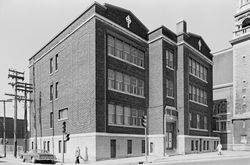
Trois Architectes, Trois Quartiers focuses on three Montréal-based architects whose work had a strong presence in a specific area of the city during the first half of the twentieth century: Ludger Lemieux (1872–1953) in St-Henri, Ernest lsbell Barott (1884–1966) in St-Antoine on the southern and western slopes of Mount Royal, and Ernest Cormier (1885–1980) at the(...)
Trois Architectes, Trois Quartiers focuses on three Montréal-based architects whose work had a strong presence in a specific area of the city during the first half of the twentieth century: Ludger Lemieux (1872–1953) in St-Henri, Ernest lsbell Barott (1884–1966) in St-Antoine on the southern and western slopes of Mount Royal, and Ernest Cormier (1885–1980) at the(...)
Location:
1440 rue Sainte-Catherine Ouest
1440 rue Sainte-Catherine Ouest
Date:
20 May 1983 to 19 August 1983
20 May 1983 to 19 August 1983
Title:
Trois architectes, trois quartiers : Ludger Lemieux (St. Henri), Ernest Cormier (Cité universitaire), Ernest Isbell Barott (St. Antoine)
Actions:
Description:
Trois Architectes, Trois Quartiers focuses on three Montréal-based architects whose work had a strong presence in a specific area of the city during the first half of the twentieth century: Ludger Lemieux (1872–1953) in St-Henri, Ernest lsbell Barott (1884–1966) in St-Antoine on the southern and western slopes of Mount Royal, and Ernest Cormier (1885–1980) at the(...)
Trois architectes, trois quartiers : Ludger Lemieux (St. Henri), Ernest Cormier (Cité universitaire), Ernest Isbell Barott (St. Antoine)
Actions:
Description:
Trois Architectes, Trois Quartiers focuses on three Montréal-based architects whose work had a strong presence in a specific area of the city during the first half of the twentieth century: Ludger Lemieux (1872–1953) in St-Henri, Ernest lsbell Barott (1884–1966) in St-Antoine on the southern and western slopes of Mount Royal, and Ernest Cormier (1885–1980) at the(...)
Form:
exhibitions
exhibitions
Date:
20 May 1983 to
19 August 1983
20 May 1983 to
19 August 1983
Location:
1440 rue Sainte-Catherine Ouest
1440 rue Sainte-Catherine Ouest
Form:
exhibitions
exhibitions
Description:
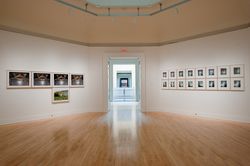
This exhibition features Italian photographer Guido Guidis photographs of the Brion family mausoleum in Italy, considered to be architect Carlo Scarpa’s masterpiece. The artist’s 54 colour photographs reveal the beauty of the funerary complex, its clean architectural lines, and the poetic nature of Scarpa’s work. By concentrating on particular architectural features,(...)
This exhibition features Italian photographer Guido Guidis photographs of the Brion family mausoleum in Italy, considered to be architect Carlo Scarpa’s masterpiece. The artist’s 54 colour photographs reveal the beauty of the funerary complex, its clean architectural lines, and the poetic nature of Scarpa’s work. By concentrating on particular architectural features,(...)
Location:
Octagonal gallery
Octagonal gallery
Date:
11 September 2009 to 10 January 2010
11 September 2009 to 10 January 2010
Title:
Carlo Scarpa's Tomba Brion: Photographs by Guido Guidi, 1997-2007
Actions:
Description:
This exhibition features Italian photographer Guido Guidis photographs of the Brion family mausoleum in Italy, considered to be architect Carlo Scarpa’s masterpiece. The artist’s 54 colour photographs reveal the beauty of the funerary complex, its clean architectural lines, and the poetic nature of Scarpa’s work. By concentrating on particular architectural features,(...)
Carlo Scarpa's Tomba Brion: Photographs by Guido Guidi, 1997-2007
Actions:
Description:
This exhibition features Italian photographer Guido Guidis photographs of the Brion family mausoleum in Italy, considered to be architect Carlo Scarpa’s masterpiece. The artist’s 54 colour photographs reveal the beauty of the funerary complex, its clean architectural lines, and the poetic nature of Scarpa’s work. By concentrating on particular architectural features,(...)
Form:
exhibitions
exhibitions
Date:
11 September 2009 to
10 January 2010
11 September 2009 to
10 January 2010
Location:
Octagonal gallery
Octagonal gallery
Level of archival description:
Project
Project
Reference number:
AP207.S1.1971.PR02
Description:
This project series documents five of the fifteen proposals submitted by Pettena for the Trigon competition in Graz, Austria, in 1971. The proposals documented in this project series are the following: Proposal n° 7 "Imprisonment" and "Architectural project #2 (Planes crossing)"; Proposal n° 11 "Instantaneous birth"; Proposal n° 12 "Conservazione"; Proposal n° 13 "Sedie e tavolo d’erba"; and Proposal n° 14 "Grass Architecture" I, II, and III. Pettena won the first prize for both his proposal "Imprisonment" and "Architectural Project #2" (Proposal n° 7) and for "Grass Architecture" I and II (Proposal n° 14). In these proposals, Pettena "questioned the temporal dimension of architecture as well as its relationship with nature." [1] The proposal "Grass Architecture" consists of shapes of grass rising from the ground, creating a perishable form of architecture coming from within and becoming part of the territory. The "Imprisonment" and "Architectural Project #2" proposals are a variation of Pettena's previous performance project "Cancellazione di uno stato" in 1970. These proposals consist of "trails of passing airplanes crisscrossing? the sky, creating the outlines of a grid of clouds. Here, the legacy of the grid in modern architecture is rendered formless, as if “naturalized” by the evaporation of the clouds, subject to chance and the freely drifting trails left by the airplanes." [2] The project series contains presentation drawings (five original drawings, seventeen reprographic copies, and four photographic reproductions), for Pettena's proposals "Imprisonment" and "Architectural project #2 (Planes crossing)", "Instantaneous birth", "Conservazione", "Sedie e tavolo d’erba", and "Grass Architecture" I, II, and III. The project series also includes photographs of models for the "Grass Architecture" proposal. Sources: [1] FRAC Centre-Val de Loire, http://www.frac-centre.fr/_en/art-and-architecture-collection/pettena-gianni/grass-architecture-317.html?authID=148&ensembleID=454 (last accessed 11 November 2019) [2] FRAC Centre-Val de Loire, http://www.frac-centre.fr/_en/art-and-architecture-collection/pettena-gianni/imprisonment-317.html?authID=148&ensembleID=115 (last accessed 11 November 2019)
AP207.S1.1971.PR02
Description:
This project series documents five of the fifteen proposals submitted by Pettena for the Trigon competition in Graz, Austria, in 1971. The proposals documented in this project series are the following: Proposal n° 7 "Imprisonment" and "Architectural project #2 (Planes crossing)"; Proposal n° 11 "Instantaneous birth"; Proposal n° 12 "Conservazione"; Proposal n° 13 "Sedie e tavolo d’erba"; and Proposal n° 14 "Grass Architecture" I, II, and III. Pettena won the first prize for both his proposal "Imprisonment" and "Architectural Project #2" (Proposal n° 7) and for "Grass Architecture" I and II (Proposal n° 14). In these proposals, Pettena "questioned the temporal dimension of architecture as well as its relationship with nature." [1] The proposal "Grass Architecture" consists of shapes of grass rising from the ground, creating a perishable form of architecture coming from within and becoming part of the territory. The "Imprisonment" and "Architectural Project #2" proposals are a variation of Pettena's previous performance project "Cancellazione di uno stato" in 1970. These proposals consist of "trails of passing airplanes crisscrossing? the sky, creating the outlines of a grid of clouds. Here, the legacy of the grid in modern architecture is rendered formless, as if “naturalized” by the evaporation of the clouds, subject to chance and the freely drifting trails left by the airplanes." [2] The project series contains presentation drawings (five original drawings, seventeen reprographic copies, and four photographic reproductions), for Pettena's proposals "Imprisonment" and "Architectural project #2 (Planes crossing)", "Instantaneous birth", "Conservazione", "Sedie e tavolo d’erba", and "Grass Architecture" I, II, and III. The project series also includes photographs of models for the "Grass Architecture" proposal. Sources: [1] FRAC Centre-Val de Loire, http://www.frac-centre.fr/_en/art-and-architecture-collection/pettena-gianni/grass-architecture-317.html?authID=148&ensembleID=454 (last accessed 11 November 2019) [2] FRAC Centre-Val de Loire, http://www.frac-centre.fr/_en/art-and-architecture-collection/pettena-gianni/imprisonment-317.html?authID=148&ensembleID=115 (last accessed 11 November 2019)
People:
Date:
1971-2017
1971-2017
Title:
Proposte per il concorso Trigon [Proposals for the Trigon competition] (1971)
Actions:
AP207.S1.1971.PR02
Description:
This project series documents five of the fifteen proposals submitted by Pettena for the Trigon competition in Graz, Austria, in 1971. The proposals documented in this project series are the following: Proposal n° 7 "Imprisonment" and "Architectural project #2 (Planes crossing)"; Proposal n° 11 "Instantaneous birth"; Proposal n° 12 "Conservazione"; Proposal n° 13 "Sedie e tavolo d’erba"; and Proposal n° 14 "Grass Architecture" I, II, and III. Pettena won the first prize for both his proposal "Imprisonment" and "Architectural Project #2" (Proposal n° 7) and for "Grass Architecture" I and II (Proposal n° 14). In these proposals, Pettena "questioned the temporal dimension of architecture as well as its relationship with nature." [1] The proposal "Grass Architecture" consists of shapes of grass rising from the ground, creating a perishable form of architecture coming from within and becoming part of the territory. The "Imprisonment" and "Architectural Project #2" proposals are a variation of Pettena's previous performance project "Cancellazione di uno stato" in 1970. These proposals consist of "trails of passing airplanes crisscrossing? the sky, creating the outlines of a grid of clouds. Here, the legacy of the grid in modern architecture is rendered formless, as if “naturalized” by the evaporation of the clouds, subject to chance and the freely drifting trails left by the airplanes." [2] The project series contains presentation drawings (five original drawings, seventeen reprographic copies, and four photographic reproductions), for Pettena's proposals "Imprisonment" and "Architectural project #2 (Planes crossing)", "Instantaneous birth", "Conservazione", "Sedie e tavolo d’erba", and "Grass Architecture" I, II, and III. The project series also includes photographs of models for the "Grass Architecture" proposal. Sources: [1] FRAC Centre-Val de Loire, http://www.frac-centre.fr/_en/art-and-architecture-collection/pettena-gianni/grass-architecture-317.html?authID=148&ensembleID=454 (last accessed 11 November 2019) [2] FRAC Centre-Val de Loire, http://www.frac-centre.fr/_en/art-and-architecture-collection/pettena-gianni/imprisonment-317.html?authID=148&ensembleID=115 (last accessed 11 November 2019)
Proposte per il concorso Trigon [Proposals for the Trigon competition] (1971)
Actions:
AP207.S1.1971.PR02
Description:
This project series documents five of the fifteen proposals submitted by Pettena for the Trigon competition in Graz, Austria, in 1971. The proposals documented in this project series are the following: Proposal n° 7 "Imprisonment" and "Architectural project #2 (Planes crossing)"; Proposal n° 11 "Instantaneous birth"; Proposal n° 12 "Conservazione"; Proposal n° 13 "Sedie e tavolo d’erba"; and Proposal n° 14 "Grass Architecture" I, II, and III. Pettena won the first prize for both his proposal "Imprisonment" and "Architectural Project #2" (Proposal n° 7) and for "Grass Architecture" I and II (Proposal n° 14). In these proposals, Pettena "questioned the temporal dimension of architecture as well as its relationship with nature." [1] The proposal "Grass Architecture" consists of shapes of grass rising from the ground, creating a perishable form of architecture coming from within and becoming part of the territory. The "Imprisonment" and "Architectural Project #2" proposals are a variation of Pettena's previous performance project "Cancellazione di uno stato" in 1970. These proposals consist of "trails of passing airplanes crisscrossing? the sky, creating the outlines of a grid of clouds. Here, the legacy of the grid in modern architecture is rendered formless, as if “naturalized” by the evaporation of the clouds, subject to chance and the freely drifting trails left by the airplanes." [2] The project series contains presentation drawings (five original drawings, seventeen reprographic copies, and four photographic reproductions), for Pettena's proposals "Imprisonment" and "Architectural project #2 (Planes crossing)", "Instantaneous birth", "Conservazione", "Sedie e tavolo d’erba", and "Grass Architecture" I, II, and III. The project series also includes photographs of models for the "Grass Architecture" proposal. Sources: [1] FRAC Centre-Val de Loire, http://www.frac-centre.fr/_en/art-and-architecture-collection/pettena-gianni/grass-architecture-317.html?authID=148&ensembleID=454 (last accessed 11 November 2019) [2] FRAC Centre-Val de Loire, http://www.frac-centre.fr/_en/art-and-architecture-collection/pettena-gianni/imprisonment-317.html?authID=148&ensembleID=115 (last accessed 11 November 2019)
Level of archival description:
Project
Project
Date:
1971-2017
1971-2017
People:
Form:
events
events
Description:
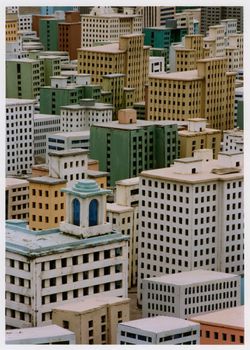
A conversation between Japanese photographer Naoya Hatakeyama and CCA visiting curator Hubertus von Amelunxen on the exhibition Naoya Hatakeyama: Scales. Commissioned by the CCA, Naoya Hatakeyama created three photographic series of architectural models that challenge notions of scale and the perception of reality. He speaks about the series in the context of his work,(...)
A conversation between Japanese photographer Naoya Hatakeyama and CCA visiting curator Hubertus von Amelunxen on the exhibition Naoya Hatakeyama: Scales. Commissioned by the CCA, Naoya Hatakeyama created three photographic series of architectural models that challenge notions of scale and the perception of reality. He speaks about the series in the context of his work,(...)
Location:
Paul Desmarais Theatre
Paul Desmarais Theatre
Date:
27 September 2007
27 September 2007
Title:
Naoya Hatakeyama and Hubertus von Amelunxen in Conversation
Actions:
Description:
A conversation between Japanese photographer Naoya Hatakeyama and CCA visiting curator Hubertus von Amelunxen on the exhibition Naoya Hatakeyama: Scales. Commissioned by the CCA, Naoya Hatakeyama created three photographic series of architectural models that challenge notions of scale and the perception of reality. He speaks about the series in the context of his work,(...)
Naoya Hatakeyama and Hubertus von Amelunxen in Conversation
Actions:
Description:
A conversation between Japanese photographer Naoya Hatakeyama and CCA visiting curator Hubertus von Amelunxen on the exhibition Naoya Hatakeyama: Scales. Commissioned by the CCA, Naoya Hatakeyama created three photographic series of architectural models that challenge notions of scale and the perception of reality. He speaks about the series in the context of his work,(...)
Form:
events
events
Date:
27 September 2007
27 September 2007
Location:
Paul Desmarais Theatre
Paul Desmarais Theatre
Form:
exhibitions
exhibitions
Actions:
Description:
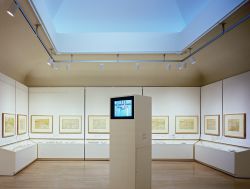
*Opening the Gates of Eighteenth-Century Montréal* explores the development of the city during the eighteenth century, when Montréal was a fortified town. The exhibition provides a unique opportunity to consider the building of the eighteenth-century military and commercial town, the nucleus from which Montréal grew. The product of nearly fifteen years of research and(...)
*Opening the Gates of Eighteenth-Century Montréal* explores the development of the city during the eighteenth century, when Montréal was a fortified town. The exhibition provides a unique opportunity to consider the building of the eighteenth-century military and commercial town, the nucleus from which Montréal grew. The product of nearly fifteen years of research and(...)
Location:
Main galleries
Main galleries
Date:
8 September 1992 to 28 February 1993
8 September 1992 to 28 February 1993
Title:
Opening the Gates of Eighteenth-Century Montréal
Actions:
Description:
*Opening the Gates of Eighteenth-Century Montréal* explores the development of the city during the eighteenth century, when Montréal was a fortified town. The exhibition provides a unique opportunity to consider the building of the eighteenth-century military and commercial town, the nucleus from which Montréal grew. The product of nearly fifteen years of research and(...)
Opening the Gates of Eighteenth-Century Montréal
Actions:
Description:
*Opening the Gates of Eighteenth-Century Montréal* explores the development of the city during the eighteenth century, when Montréal was a fortified town. The exhibition provides a unique opportunity to consider the building of the eighteenth-century military and commercial town, the nucleus from which Montréal grew. The product of nearly fifteen years of research and(...)
Form:
exhibitions
exhibitions
Date:
8 September 1992 to
28 February 1993
8 September 1992 to
28 February 1993
Location:
Main galleries
Main galleries
Form:
exhibitions
exhibitions
Title:
Mel Ziegler: Growing Concern
Mel Ziegler: Growing Concern
Actions:
Description:
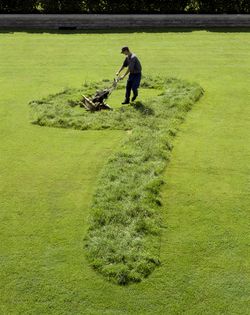
The front garden is a sign, a place both public and private, conveying the convictions and values of the households they frame. Growing Concern, a grass relief in Baile Park by American artist Mel Ziegler (b.1956), represents the North American obsession with the lawn. The artist considers the cultural obsession with the growth of our lawns to be symbolic of the taming(...)
The front garden is a sign, a place both public and private, conveying the convictions and values of the households they frame. Growing Concern, a grass relief in Baile Park by American artist Mel Ziegler (b.1956), represents the North American obsession with the lawn. The artist considers the cultural obsession with the growth of our lawns to be symbolic of the taming(...)
Location:
Baile Park
Baile Park
Date:
16 June 1998 to 8 November 1998
16 June 1998 to 8 November 1998
Title:
Mel Ziegler: Growing Concern
Actions:
Description:
The front garden is a sign, a place both public and private, conveying the convictions and values of the households they frame. Growing Concern, a grass relief in Baile Park by American artist Mel Ziegler (b.1956), represents the North American obsession with the lawn. The artist considers the cultural obsession with the growth of our lawns to be symbolic of the taming(...)
Mel Ziegler: Growing Concern
Actions:
Description:
The front garden is a sign, a place both public and private, conveying the convictions and values of the households they frame. Growing Concern, a grass relief in Baile Park by American artist Mel Ziegler (b.1956), represents the North American obsession with the lawn. The artist considers the cultural obsession with the growth of our lawns to be symbolic of the taming(...)
Form:
exhibitions
exhibitions
Date:
16 June 1998 to
8 November 1998
16 June 1998 to
8 November 1998
Location:
Baile Park
Baile Park
Form:
events
events
Title:
Learning from... Calgary
Learning from... Calgary
Actions:
Description:
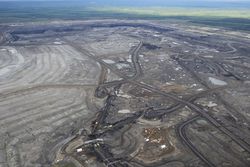
Andrew Nikiforuk presents a talk entitled The political architecture of extreme oil, on the rapid development of bitumen in northern Alberta and its effects on the character of the region, and the country. Although the problems of oil exporting countries are well studied, Canada has yet to consider them or prepare for future oil price shocks. A journalist, Andrew(...)
Andrew Nikiforuk presents a talk entitled The political architecture of extreme oil, on the rapid development of bitumen in northern Alberta and its effects on the character of the region, and the country. Although the problems of oil exporting countries are well studied, Canada has yet to consider them or prepare for future oil price shocks. A journalist, Andrew(...)
Location:
Théâtre Paul-Desmarais
Théâtre Paul-Desmarais
Date:
17 March 2011 , 7pm
17 March 2011 , 7pm
Title:
Learning from... Calgary
Actions:
Description:
Andrew Nikiforuk presents a talk entitled The political architecture of extreme oil, on the rapid development of bitumen in northern Alberta and its effects on the character of the region, and the country. Although the problems of oil exporting countries are well studied, Canada has yet to consider them or prepare for future oil price shocks. A journalist, Andrew(...)
Learning from... Calgary
Actions:
Description:
Andrew Nikiforuk presents a talk entitled The political architecture of extreme oil, on the rapid development of bitumen in northern Alberta and its effects on the character of the region, and the country. Although the problems of oil exporting countries are well studied, Canada has yet to consider them or prepare for future oil price shocks. A journalist, Andrew(...)
Form:
events
events
Date:
17 March 2011
7pm
17 March 2011
7pm
Location:
Théâtre Paul-Desmarais
Théâtre Paul-Desmarais


