


209 Results
Form:
journals and magazines
journals and magazines
Actions:
Price:
$21.95
(available to order)
Summary:
This edition of Perspecta, the oldest and most distinguished student-edited architectural journal in America, investigates the transformation of capital cities in the era of globalization. This redevelopment, renewal, and recycling of the urban landscape--termed by the editors as "Re_Urbanism"--takes place as capital cities try both to cater to an influx of global capital(...)
$21.95
(available to order)
Summary:
This edition of Perspecta, the oldest and most distinguished student-edited architectural journal in America, investigates the transformation of capital cities in the era of globalization. This redevelopment, renewal, and recycling of the urban landscape--termed by the editors as "Re_Urbanism"--takes place as capital cities try both to cater to an influx of global capital(...)
Title:
Perspecta 39 Re_urbanism : Transforming capitals
Actions:
Price:
$21.95
(available to order)
Summary:
This edition of Perspecta, the oldest and most distinguished student-edited architectural journal in America, investigates the transformation of capital cities in the era of globalization. This redevelopment, renewal, and recycling of the urban landscape--termed by the editors as "Re_Urbanism"--takes place as capital cities try both to cater to an influx of global capital and to reassert their roles as symbols of national sovereignty. Re_Urbanism investigates this process from an architectural perspective. The contributors explore the various ways capital cities struggle to assert their vitality and continuing relevance, examining capitals that compete internally with their own global counterparts (Abu Dhabi vs. Dubai), capitals that must be rebuilt after periods of destruction (Belgrade and Baghdad), and capital cities that are responding to hyperbolic development (Beijing, New Delhi, Kuwait City). Some cities are examined for their impact on border politics (Washington D.C.) while others reveal mythologies parallel to their modernist origins (Brasilia).
Perspecta 39 Re_urbanism : Transforming capitals
Actions:
Price:
$21.95
(available to order)
Summary:
This edition of Perspecta, the oldest and most distinguished student-edited architectural journal in America, investigates the transformation of capital cities in the era of globalization. This redevelopment, renewal, and recycling of the urban landscape--termed by the editors as "Re_Urbanism"--takes place as capital cities try both to cater to an influx of global capital and to reassert their roles as symbols of national sovereignty. Re_Urbanism investigates this process from an architectural perspective. The contributors explore the various ways capital cities struggle to assert their vitality and continuing relevance, examining capitals that compete internally with their own global counterparts (Abu Dhabi vs. Dubai), capitals that must be rebuilt after periods of destruction (Belgrade and Baghdad), and capital cities that are responding to hyperbolic development (Beijing, New Delhi, Kuwait City). Some cities are examined for their impact on border politics (Washington D.C.) while others reveal mythologies parallel to their modernist origins (Brasilia).
Form:
journals and magazines
journals and magazines
Publication:
September 2007, Cambridge
September 2007, Cambridge
Subject:
Magazines
Magazines
Form:
books
books

Title:
This house is not a home
This house is not a home
Actions:
Price:
$24.00
(available to order)
Summary:
After a hunting trip one fall, a family in the far reaches of so-called Canada’s north return to nothing but an empty space where their home once stood. Finding themselves suddenly homeless, they have no choice but to assimilate into settler-colonial society in a mining town that has encroached on their freedom.This intergenerational coming-of-age novel follows Ko`, a(...)
$24.00
(available to order)
Summary:
After a hunting trip one fall, a family in the far reaches of so-called Canada’s north return to nothing but an empty space where their home once stood. Finding themselves suddenly homeless, they have no choice but to assimilate into settler-colonial society in a mining town that has encroached on their freedom.This intergenerational coming-of-age novel follows Ko`, a(...)
Title:
This house is not a home
Actions:
Price:
$24.00
(available to order)
Summary:
After a hunting trip one fall, a family in the far reaches of so-called Canada’s north return to nothing but an empty space where their home once stood. Finding themselves suddenly homeless, they have no choice but to assimilate into settler-colonial society in a mining town that has encroached on their freedom.This intergenerational coming-of-age novel follows Ko`, a Dene man who grew up entirely on the land before being taken to residential school. When he finally returns home, he struggles to connect with his family: his younger brother whom he has never met, his mother because he has lost his language, and an absent father whose disappearance he is too afraid to question. The third book from acclaimed Dene, Cree and Metis writer Katlià, this is a fictional story based on true events, presenting a clear trajectory of how settlers dispossessed Indigenous Peoples of their land — and how Indigenous communities, with dignity and resilience, continue to live and honour their culture, values, inherent knowledge systems, and Indigenous rights towards re-establishing sovereignty.
This house is not a home
Actions:
Price:
$24.00
(available to order)
Summary:
After a hunting trip one fall, a family in the far reaches of so-called Canada’s north return to nothing but an empty space where their home once stood. Finding themselves suddenly homeless, they have no choice but to assimilate into settler-colonial society in a mining town that has encroached on their freedom.This intergenerational coming-of-age novel follows Ko`, a Dene man who grew up entirely on the land before being taken to residential school. When he finally returns home, he struggles to connect with his family: his younger brother whom he has never met, his mother because he has lost his language, and an absent father whose disappearance he is too afraid to question. The third book from acclaimed Dene, Cree and Metis writer Katlià, this is a fictional story based on true events, presenting a clear trajectory of how settlers dispossessed Indigenous Peoples of their land — and how Indigenous communities, with dignity and resilience, continue to live and honour their culture, values, inherent knowledge systems, and Indigenous rights towards re-establishing sovereignty.
Form:
books
books
Publication:
September 2022
September 2022
Subject:
indigenous
indigenous
Form:
books
books
Actions:
Price:
$35.95
(available to order)
Summary:
In 2016, a small protest encampment at the Standing Rock reservation in North Dakota, initially established to block construction of the Dakota Access oil pipeline, grew to be the largest Indigenous protest movement in the twenty-first century, attracting tens of thousands of Indigenous and non-Native allies from around the world. Its slogan ''Mni Wiconi''—Water is(...)
$35.95
(available to order)
Summary:
In 2016, a small protest encampment at the Standing Rock reservation in North Dakota, initially established to block construction of the Dakota Access oil pipeline, grew to be the largest Indigenous protest movement in the twenty-first century, attracting tens of thousands of Indigenous and non-Native allies from around the world. Its slogan ''Mni Wiconi''—Water is(...)
Title:
Our history is the future: Standing Rock versus the Dakota Access Pipeline, and the long tradition of indigenous resistance
Actions:
Price:
$35.95
(available to order)
Summary:
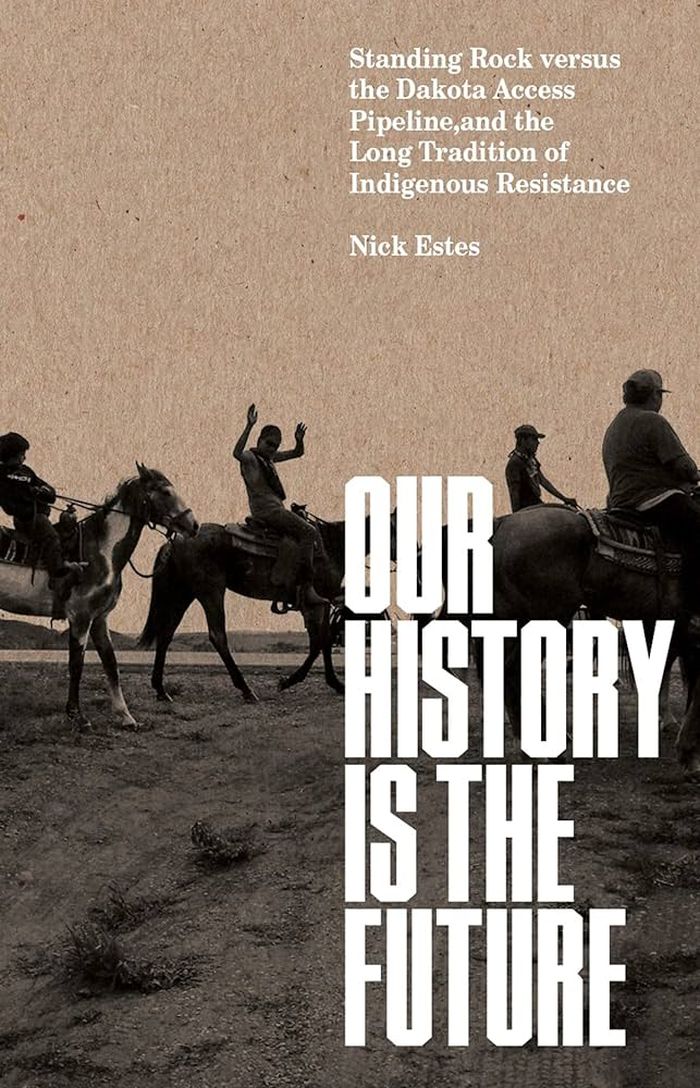
In 2016, a small protest encampment at the Standing Rock reservation in North Dakota, initially established to block construction of the Dakota Access oil pipeline, grew to be the largest Indigenous protest movement in the twenty-first century, attracting tens of thousands of Indigenous and non-Native allies from around the world. Its slogan ''Mni Wiconi''—Water is Life—was about more than just a pipeline. Water Protectors knew this battle for Native sovereignty had already been fought many times before, and that, even after the encampment was gone, their anti-colonial struggle would continue. In ''Our history is the future'', Nick Estes traces traditions of Indigenous resistance leading to the #NoDAPL movement from the days of the Missouri River trading forts through the Indian Wars, the Pick-Sloan dams, the American Indian Movement, and the campaign for Indigenous rights at the United Nations. While a historian by trade, Estes also draws on observations from the encampments and from growing up as a citizen of the Oceti Sakowin (the Nation of the Seven Council Fires), making Our History is the Future at once a work of history, a personal story, and a manifesto.
Our history is the future: Standing Rock versus the Dakota Access Pipeline, and the long tradition of indigenous resistance
Actions:
Price:
$35.95
(available to order)
Summary:
In 2016, a small protest encampment at the Standing Rock reservation in North Dakota, initially established to block construction of the Dakota Access oil pipeline, grew to be the largest Indigenous protest movement in the twenty-first century, attracting tens of thousands of Indigenous and non-Native allies from around the world. Its slogan ''Mni Wiconi''—Water is Life—was about more than just a pipeline. Water Protectors knew this battle for Native sovereignty had already been fought many times before, and that, even after the encampment was gone, their anti-colonial struggle would continue. In ''Our history is the future'', Nick Estes traces traditions of Indigenous resistance leading to the #NoDAPL movement from the days of the Missouri River trading forts through the Indian Wars, the Pick-Sloan dams, the American Indian Movement, and the campaign for Indigenous rights at the United Nations. While a historian by trade, Estes also draws on observations from the encampments and from growing up as a citizen of the Oceti Sakowin (the Nation of the Seven Council Fires), making Our History is the Future at once a work of history, a personal story, and a manifesto.
Form:
books
books
Publication:
October 2023
October 2023
Subject:
indigenous
indigenous
Form:
books
books
Price:
$32.95
(available to order)
Summary:
In "Enduring innocence", Keller Easterling tells the stories of outlaw "spatial products" -resorts, information technology campuses, retail chains, golf courses, ports, and other hybrid spaces that exist outside normal constituencies and jurisdictions, in difficult political situations around the world. These spaces -familiar commercial formulas of retail, business, and(...)
$32.95
(available to order)
Summary:
In "Enduring innocence", Keller Easterling tells the stories of outlaw "spatial products" -resorts, information technology campuses, retail chains, golf courses, ports, and other hybrid spaces that exist outside normal constituencies and jurisdictions, in difficult political situations around the world. These spaces -familiar commercial formulas of retail, business, and(...)
Subject:
Architectural Theory
Architectural Theory
Publication:
October 2007, Cambridge (MA), London
October 2007, Cambridge (MA), London
Title:
Enduring innocence : global archtitecture and its political masquerades
Actions:
Price:
$32.95
(available to order)
Summary:
In "Enduring innocence", Keller Easterling tells the stories of outlaw "spatial products" -resorts, information technology campuses, retail chains, golf courses, ports, and other hybrid spaces that exist outside normal constituencies and jurisdictions, in difficult political situations around the world. These spaces -familiar commercial formulas of retail, business, and trade - aspire to be worlds unto themselves, self-reflexive and innocent of politics. But as Easterling shows, these enclaves can become political pawns and objects of contention. Jurisdictionally ambiguous, they are imbued with myths, desires, and symbolic capital. Their hilarious and dangerous masquerades often mix quite easily with the cunning of political platforms. Easterling argues that the study of such "real estate cocktails" provides vivid evidence of the market's weakness, resilience, or violence. These regimes of nonnational sovereignty, she writes, "move around the world like weather fronts"; Easterling focuses not on their blending - their global connectivity - but on their segregation and the cultural collisions that ensue. "Enduring innocence" resists the dream of one globally legible world found in many architectural discourses on globalization. Instead, Easterling's consideration of these segregated worlds provides new tools for practitioners sensitive to the political composition of urban landscapes.
Enduring innocence : global archtitecture and its political masquerades
Actions:
Price:
$32.95
(available to order)
Summary:
In "Enduring innocence", Keller Easterling tells the stories of outlaw "spatial products" -resorts, information technology campuses, retail chains, golf courses, ports, and other hybrid spaces that exist outside normal constituencies and jurisdictions, in difficult political situations around the world. These spaces -familiar commercial formulas of retail, business, and trade - aspire to be worlds unto themselves, self-reflexive and innocent of politics. But as Easterling shows, these enclaves can become political pawns and objects of contention. Jurisdictionally ambiguous, they are imbued with myths, desires, and symbolic capital. Their hilarious and dangerous masquerades often mix quite easily with the cunning of political platforms. Easterling argues that the study of such "real estate cocktails" provides vivid evidence of the market's weakness, resilience, or violence. These regimes of nonnational sovereignty, she writes, "move around the world like weather fronts"; Easterling focuses not on their blending - their global connectivity - but on their segregation and the cultural collisions that ensue. "Enduring innocence" resists the dream of one globally legible world found in many architectural discourses on globalization. Instead, Easterling's consideration of these segregated worlds provides new tools for practitioners sensitive to the political composition of urban landscapes.
Form:
books
books
Publication:
October 2007, Cambridge (MA), London
October 2007, Cambridge (MA), London
Subject:
Architectural Theory
Architectural Theory
Form:
books
books

Actions:
Price:
$30.00
(available to order)
Summary:
In the guise of diva Miss Chief Eagle Testikle, Kenneth Monkman takes camp aesthetics to new extremes of political disturbance. Setting queer against straight, and both these against his dual identity as a Canadian of Cree descent, Monkman aka Miss Chief revisits the way key events in North American history have been represented. Recent performances and installations(...)
$30.00
(available to order)
Summary:
In the guise of diva Miss Chief Eagle Testikle, Kenneth Monkman takes camp aesthetics to new extremes of political disturbance. Setting queer against straight, and both these against his dual identity as a Canadian of Cree descent, Monkman aka Miss Chief revisits the way key events in North American history have been represented. Recent performances and installations(...)
Title:
Interpellations: three essays on Kent Monkman
Actions:
Price:
$30.00
(available to order)
Summary:
In the guise of diva Miss Chief Eagle Testikle, Kenneth Monkman takes camp aesthetics to new extremes of political disturbance. Setting queer against straight, and both these against his dual identity as a Canadian of Cree descent, Monkman aka Miss Chief revisits the way key events in North American history have been represented. Recent performances and installations featured outlandish versions of objects like Indian moccasins in museum displays, videos with tragicomic takes on Indians' as the other to colonists, and Monkman's own extraordinary paintings. Based on masterpieces of landscape and history art, these expose the repressions and fantasies grounding narratives of the winning of the West. Interpellations will be of exceptional interest to art historians and all those concerned with North American aboriginal civilization. Essays from acclaimed art historians Richard Hill, Jonathan Katz, and Todd Porterfield address issues central to Monkman's activity: among others, absurdist tactics, alternative models of time and history, the interplay of identity, sexuality, and sovereignty. A camp design with gilt-edge pages and ultra-rich color illustrations makes this book an ideal vehicle for presenting Miss Chief's rampages through art history.
Interpellations: three essays on Kent Monkman
Actions:
Price:
$30.00
(available to order)
Summary:
In the guise of diva Miss Chief Eagle Testikle, Kenneth Monkman takes camp aesthetics to new extremes of political disturbance. Setting queer against straight, and both these against his dual identity as a Canadian of Cree descent, Monkman aka Miss Chief revisits the way key events in North American history have been represented. Recent performances and installations featured outlandish versions of objects like Indian moccasins in museum displays, videos with tragicomic takes on Indians' as the other to colonists, and Monkman's own extraordinary paintings. Based on masterpieces of landscape and history art, these expose the repressions and fantasies grounding narratives of the winning of the West. Interpellations will be of exceptional interest to art historians and all those concerned with North American aboriginal civilization. Essays from acclaimed art historians Richard Hill, Jonathan Katz, and Todd Porterfield address issues central to Monkman's activity: among others, absurdist tactics, alternative models of time and history, the interplay of identity, sexuality, and sovereignty. A camp design with gilt-edge pages and ultra-rich color illustrations makes this book an ideal vehicle for presenting Miss Chief's rampages through art history.
Form:
books
books
Publication:
November 2012
November 2012
Subject:
Canadian art
Canadian art
Form:
books
books
Title:
Mapping Malcolm
Mapping Malcolm
Actions:
Price:
$38.00
(available in store)
Summary:
"For Harlem is where he worked and where he struggled and fought—his home of homes, where his heart was, and where his people are." Nearly sixty years since the martyrdom of Malcolm X, these words from Ossie Davis’s eulogy remind us that Malcolm’s political and religious beliefs and conceptions of culture have profoundly shaped and been shaped by Harlem. "Mapping Malcolm"(...)
$38.00
(available in store)
Summary:
"For Harlem is where he worked and where he struggled and fought—his home of homes, where his heart was, and where his people are." Nearly sixty years since the martyrdom of Malcolm X, these words from Ossie Davis’s eulogy remind us that Malcolm’s political and religious beliefs and conceptions of culture have profoundly shaped and been shaped by Harlem. "Mapping Malcolm"(...)
Title:
Mapping Malcolm
Actions:
Price:
$38.00
(available in store)
Summary:
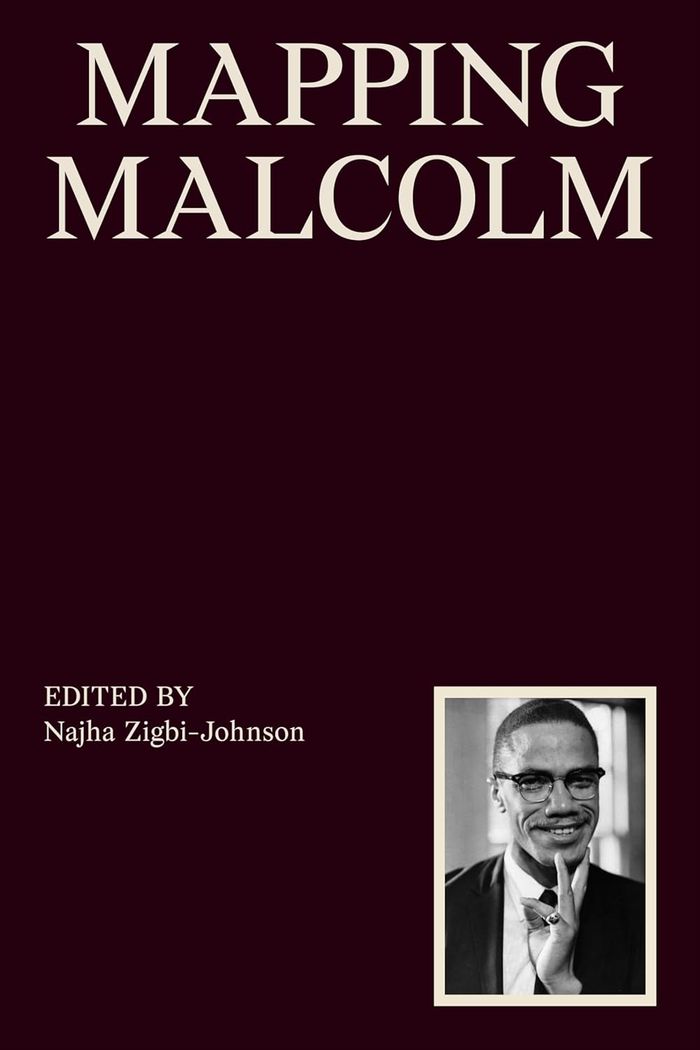
"For Harlem is where he worked and where he struggled and fought—his home of homes, where his heart was, and where his people are." Nearly sixty years since the martyrdom of Malcolm X, these words from Ossie Davis’s eulogy remind us that Malcolm’s political and religious beliefs and conceptions of culture have profoundly shaped and been shaped by Harlem. "Mapping Malcolm" continues the project of reinscribing Malcolm X’s memory and legacy in the present by exploring his commitment to community building and his articulation of a global power analysis as it continues to manifest across New York City today. More specifically, the book explores the limits and possibilities of the archive, the political, material, and philosophical legacy of the Black radical tradition, the Black diaspora, and the state. Oriented toward sovereignty and liberation, ''Mapping Malcolm'' brings together artists, community organizers, and scholars to consider the politics of Black space-making in Harlem through a range of historical, cultural, and anti-imperialist worldviews designed to offer new, reparatory pedagogical possibilities. Together, they reconfigure how we understand, employ, and carry forward Malcolm X’s sociopolitical, cross-cultural analyses of justice and power as an everyday praxis in the built environment and beyond.
Mapping Malcolm
Actions:
Price:
$38.00
(available in store)
Summary:
"For Harlem is where he worked and where he struggled and fought—his home of homes, where his heart was, and where his people are." Nearly sixty years since the martyrdom of Malcolm X, these words from Ossie Davis’s eulogy remind us that Malcolm’s political and religious beliefs and conceptions of culture have profoundly shaped and been shaped by Harlem. "Mapping Malcolm" continues the project of reinscribing Malcolm X’s memory and legacy in the present by exploring his commitment to community building and his articulation of a global power analysis as it continues to manifest across New York City today. More specifically, the book explores the limits and possibilities of the archive, the political, material, and philosophical legacy of the Black radical tradition, the Black diaspora, and the state. Oriented toward sovereignty and liberation, ''Mapping Malcolm'' brings together artists, community organizers, and scholars to consider the politics of Black space-making in Harlem through a range of historical, cultural, and anti-imperialist worldviews designed to offer new, reparatory pedagogical possibilities. Together, they reconfigure how we understand, employ, and carry forward Malcolm X’s sociopolitical, cross-cultural analyses of justice and power as an everyday praxis in the built environment and beyond.
Form:
books
books
Publication:
May 2024
May 2024
Subject:
Social
Social
Form:
books
books
Actions:
Price:
$37.99
(available in store)
Summary:
In "The effluent eye," Rosemary J. Jolly argues for the decolonization of human rights, attributing their failure not simply to state and institutional malfeasance but to the very concept of human rights as anthropocentric-and, therefore, fatally shortsighted. In an engaging mix of literary and cultural criticism, Indigenous and Black critique, and substantive forays into(...)
$37.99
(available in store)
Summary:
In "The effluent eye," Rosemary J. Jolly argues for the decolonization of human rights, attributing their failure not simply to state and institutional malfeasance but to the very concept of human rights as anthropocentric-and, therefore, fatally shortsighted. In an engaging mix of literary and cultural criticism, Indigenous and Black critique, and substantive forays into(...)
Title:
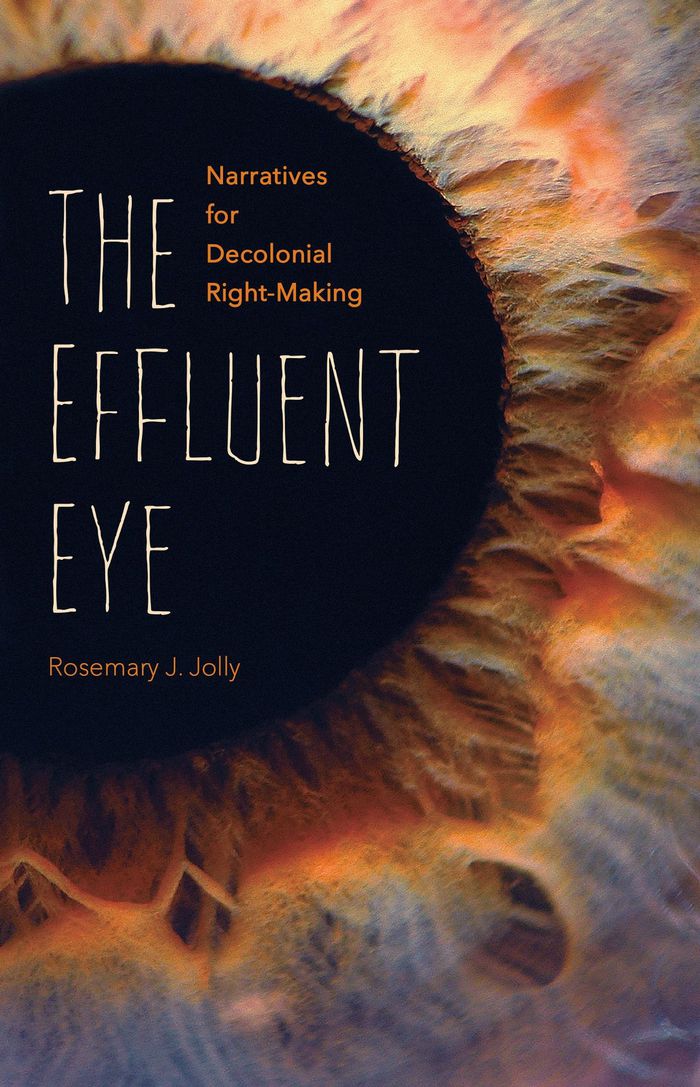
The effluent eye: Narratives for decolonial right-making
Actions:
Price:
$37.99
(available in store)
Summary:
In "The effluent eye," Rosemary J. Jolly argues for the decolonization of human rights, attributing their failure not simply to state and institutional malfeasance but to the very concept of human rights as anthropocentric-and, therefore, fatally shortsighted. In an engaging mix of literary and cultural criticism, Indigenous and Black critique, and substantive forays into the medical humanities, Jolly proposes right-making in the demise of human rights. Using what she calls an "effluent eye," Jolly draws on "Fifth Wave" structural public health to confront the concept of human rights-one of the most powerful and widely entrenched liberal ideas. She builds on Indigenous sovereignty work from authors such as Robin Wall Kimmerer, Leanne Betasamosake Simpson, and Mark Rifkin as well as the littoral development in Black studies from Christine Sharpe, Saidiya Hartman, and Tiffany Lethabo King to engage decolonial thinking on a range of urgent topics such as pandemic history and grief; gender-based violence and sexual assault; and the connections between colonial capitalism and substance abuse, the Anthropocene, and climate change. Combining witnessed experience with an array of decolonial texts, Jolly argues for an effluent form of reading that begins with the understanding that the granting of "rights" to individuals is meaningless in a world compromised by pollution, poverty, and successive pandemics.
The effluent eye: Narratives for decolonial right-making
Actions:
Price:
$37.99
(available in store)
Summary:
In "The effluent eye," Rosemary J. Jolly argues for the decolonization of human rights, attributing their failure not simply to state and institutional malfeasance but to the very concept of human rights as anthropocentric-and, therefore, fatally shortsighted. In an engaging mix of literary and cultural criticism, Indigenous and Black critique, and substantive forays into the medical humanities, Jolly proposes right-making in the demise of human rights. Using what she calls an "effluent eye," Jolly draws on "Fifth Wave" structural public health to confront the concept of human rights-one of the most powerful and widely entrenched liberal ideas. She builds on Indigenous sovereignty work from authors such as Robin Wall Kimmerer, Leanne Betasamosake Simpson, and Mark Rifkin as well as the littoral development in Black studies from Christine Sharpe, Saidiya Hartman, and Tiffany Lethabo King to engage decolonial thinking on a range of urgent topics such as pandemic history and grief; gender-based violence and sexual assault; and the connections between colonial capitalism and substance abuse, the Anthropocene, and climate change. Combining witnessed experience with an array of decolonial texts, Jolly argues for an effluent form of reading that begins with the understanding that the granting of "rights" to individuals is meaningless in a world compromised by pollution, poverty, and successive pandemics.
Form:
books
books
Publication:
January 2024
January 2024
Subject:
Critical Theory
Critical Theory
Form:
journals and magazines
journals and magazines

Actions:
Price:
$33.00
(available to order)
Summary:
In July, Melbourne experienced a second wave of the virus and the introduction of further restrictions forced the city to a standstill. Workplaces, student accommodation and universities remained empty as local businesses were also required to close their premises. During this period, we witnessed public housing residents forcibly contained to several inner-city housing(...)
$33.00
(available to order)
Summary:
In July, Melbourne experienced a second wave of the virus and the introduction of further restrictions forced the city to a standstill. Workplaces, student accommodation and universities remained empty as local businesses were also required to close their premises. During this period, we witnessed public housing residents forcibly contained to several inner-city housing(...)
Title:
Politics of public space, Volume 3
Actions:
Price:
$33.00
(available to order)
Summary:
In July, Melbourne experienced a second wave of the virus and the introduction of further restrictions forced the city to a standstill. Workplaces, student accommodation and universities remained empty as local businesses were also required to close their premises. During this period, we witnessed public housing residents forcibly contained to several inner-city housing towers, and a small minority of anti-lockdown protestors used the Shrine of Remembrance as the backdrop for a supposed symbol of individual freedom. The structures of the state, city and its residents were again laid bare. This volume addresses many of these issues by gathering talks held prior to the pandemic alongside recent interviews. Kate Shaw shows how the recent lockdown of the housing towers in Flemington and North Melbourne reveals the government's underlying attitude towards public housing tenants. Tony Birch used the Shrine of Remembrance as the site for his talk on the Indigenous protest movement Camp Sovereignty and the significance of monuments in shaping collective values. Nicole Kalms outlines the experiences of women in Melbourne's public spaces through data gathered by XYX Lab. Sarah Lynn Rees discusses the complexities of engaging and working respectfully with Traditional Owners when intervening in the built environment. Andy Fergus & Brighid Sammon expose the failings of planning in the modern development of Melbourne, and Philip Brophy declares the general failings of the built environment profession at large.
Politics of public space, Volume 3
Actions:
Price:
$33.00
(available to order)
Summary:
In July, Melbourne experienced a second wave of the virus and the introduction of further restrictions forced the city to a standstill. Workplaces, student accommodation and universities remained empty as local businesses were also required to close their premises. During this period, we witnessed public housing residents forcibly contained to several inner-city housing towers, and a small minority of anti-lockdown protestors used the Shrine of Remembrance as the backdrop for a supposed symbol of individual freedom. The structures of the state, city and its residents were again laid bare. This volume addresses many of these issues by gathering talks held prior to the pandemic alongside recent interviews. Kate Shaw shows how the recent lockdown of the housing towers in Flemington and North Melbourne reveals the government's underlying attitude towards public housing tenants. Tony Birch used the Shrine of Remembrance as the site for his talk on the Indigenous protest movement Camp Sovereignty and the significance of monuments in shaping collective values. Nicole Kalms outlines the experiences of women in Melbourne's public spaces through data gathered by XYX Lab. Sarah Lynn Rees discusses the complexities of engaging and working respectfully with Traditional Owners when intervening in the built environment. Andy Fergus & Brighid Sammon expose the failings of planning in the modern development of Melbourne, and Philip Brophy declares the general failings of the built environment profession at large.
Form:
journals and magazines
journals and magazines
Publication:
June 2021
June 2021
Subject:
Magazines
Magazines
Form:
books
books
Price:
$67.95
(available to order)
Summary:
The dream of the twentieth century was the construction of mass utopia. As the century closes, this dream is being left behind; the belief that industrial modernization can bring about the good society by overcoming material scarcity for all has been challenged by the disintegration(...)
$67.95
(available to order)
Summary:
The dream of the twentieth century was the construction of mass utopia. As the century closes, this dream is being left behind; the belief that industrial modernization can bring about the good society by overcoming material scarcity for all has been challenged by the disintegration(...)
Title:
Dreamworld and catastrophe : the passing of mass utopia in East and West
Actions:
Price:
$67.95
(available to order)
Summary:
The dream of the twentieth century was the construction of mass utopia. As the century closes, this dream is being left behind; the belief that industrial modernization can bring about the good society by overcoming material scarcity for all has been challenged by the disintegration of European socialism, capitalist restructuring, and ecological constraints. The larger social vision has given way to private dreams of material happiness and to political cynicism. Developing the notion of dreamworld as both a poetic description of a collective mental state and an analytical concept, Susan Buck-Morss attempts to come to terms with mass dreamworlds at the moment of their passing. She shows how dreamworlds became dangerous when their energy was used by the structures of power as an instrument of force against the masses. Stressing the similarities between the East and West and using the end of the Cold War as her point of departure, she examines both extremes of mass utopia, dreamworld and catastrophe. The book is in four parts. "Dreamworlds of Democracy" asks whether collective sovereignty can ever be democratic. "Dreamworlds of History" calls for a rethinking of revolution by political and artistic avant-gardes. "Dreamworlds of Mass Culture" explores the affinities between mass culture's socialist and capitalist forms. An "Afterward" places the book in the historical context of the author's collaboration with a group of Moscow philosophers and artists over the past two tumultuous decades. The book is an experiment in visual culture, using images as philosophy, presenting, literally, a way of seeing the past. Its pictorial narratives rescue historical data that with the end of the Cold War are threatened with oblivion and challenge common conceptions of what this century was all about.
Dreamworld and catastrophe : the passing of mass utopia in East and West
Actions:
Price:
$67.95
(available to order)
Summary:
The dream of the twentieth century was the construction of mass utopia. As the century closes, this dream is being left behind; the belief that industrial modernization can bring about the good society by overcoming material scarcity for all has been challenged by the disintegration of European socialism, capitalist restructuring, and ecological constraints. The larger social vision has given way to private dreams of material happiness and to political cynicism. Developing the notion of dreamworld as both a poetic description of a collective mental state and an analytical concept, Susan Buck-Morss attempts to come to terms with mass dreamworlds at the moment of their passing. She shows how dreamworlds became dangerous when their energy was used by the structures of power as an instrument of force against the masses. Stressing the similarities between the East and West and using the end of the Cold War as her point of departure, she examines both extremes of mass utopia, dreamworld and catastrophe. The book is in four parts. "Dreamworlds of Democracy" asks whether collective sovereignty can ever be democratic. "Dreamworlds of History" calls for a rethinking of revolution by political and artistic avant-gardes. "Dreamworlds of Mass Culture" explores the affinities between mass culture's socialist and capitalist forms. An "Afterward" places the book in the historical context of the author's collaboration with a group of Moscow philosophers and artists over the past two tumultuous decades. The book is an experiment in visual culture, using images as philosophy, presenting, literally, a way of seeing the past. Its pictorial narratives rescue historical data that with the end of the Cold War are threatened with oblivion and challenge common conceptions of what this century was all about.
Form:
books
books
Publication:
January 1900, Cambridge
January 1900, Cambridge
Subject:
Architectural Theory
Architectural Theory


