


2091 Results
Form:
books
books
Actions:
Price:
$49.95
(available to order)
Summary:
Under the unforgiving sun of southern California's Colorado Desert lies Slab City, a community of squatters, artists, snowbirds, migrants, survivalists, and homeless people. Called by some “the last free place” and by others “an enclave of anarchy,” Slab City is also the end of the road for many. Without official electricity, running water, sewers, or trash pickup, Slab(...)
$49.95
(available to order)
Summary:
Under the unforgiving sun of southern California's Colorado Desert lies Slab City, a community of squatters, artists, snowbirds, migrants, survivalists, and homeless people. Called by some “the last free place” and by others “an enclave of anarchy,” Slab City is also the end of the road for many. Without official electricity, running water, sewers, or trash pickup, Slab(...)
Title:
Slab city: dispatches from the last free place
Actions:
Price:
$49.95
(available to order)
Summary:
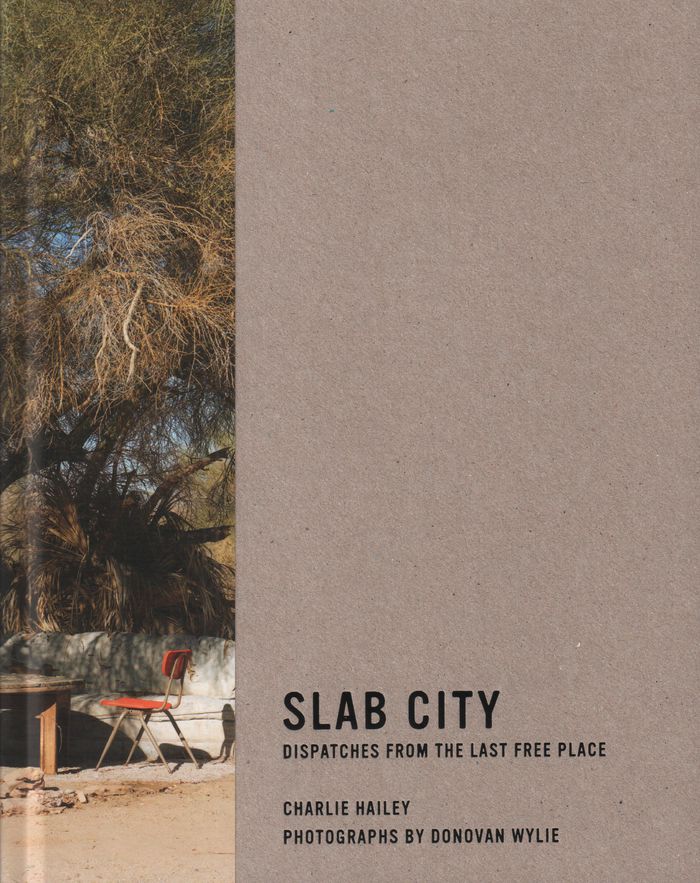
Under the unforgiving sun of southern California's Colorado Desert lies Slab City, a community of squatters, artists, snowbirds, migrants, survivalists, and homeless people. Called by some “the last free place” and by others “an enclave of anarchy,” Slab City is also the end of the road for many. Without official electricity, running water, sewers, or trash pickup, Slab City dwellers also live without law enforcement, taxation, or administration. Built on the concrete slabs of Camp Dunlap, an abandoned Marine training base, the settlement maintains its off-grid aspirations within the site's residual military perimeters and gridded street layout; off-grid is really in-grid. In this book, architect Charlie Hailey and photographer Donovan Wylie explore the contradictions of Slab City.
Slab city: dispatches from the last free place
Actions:
Price:
$49.95
(available to order)
Summary:
Under the unforgiving sun of southern California's Colorado Desert lies Slab City, a community of squatters, artists, snowbirds, migrants, survivalists, and homeless people. Called by some “the last free place” and by others “an enclave of anarchy,” Slab City is also the end of the road for many. Without official electricity, running water, sewers, or trash pickup, Slab City dwellers also live without law enforcement, taxation, or administration. Built on the concrete slabs of Camp Dunlap, an abandoned Marine training base, the settlement maintains its off-grid aspirations within the site's residual military perimeters and gridded street layout; off-grid is really in-grid. In this book, architect Charlie Hailey and photographer Donovan Wylie explore the contradictions of Slab City.
Form:
books
books
Publication:
October 2018
October 2018
Subject:
Urban Theory
Urban Theory
Form:
books
books
Title:
The Curious Map Book
The Curious Map Book
Actions:
Price:
$54.95
(available to order)
Summary:
Over the centuries, maps have served many varied purposes; far from mere guides for reaching a destination, they are unique artistic forms, aides in planning commercial routes, literary devices for illuminating a story. Accuracy—or inaccuracy—of maps has been the make-or-break factor in countless military battles throughout history. They have graced the walls of homes,(...)
$54.95
(available to order)
Summary:
Over the centuries, maps have served many varied purposes; far from mere guides for reaching a destination, they are unique artistic forms, aides in planning commercial routes, literary devices for illuminating a story. Accuracy—or inaccuracy—of maps has been the make-or-break factor in countless military battles throughout history. They have graced the walls of homes,(...)
Subject:
Architectural Plans and Cartography
Architectural Plans and Cartography
Publication:
October 2015
October 2015
Title:
The Curious Map Book
Actions:
Price:
$54.95
(available to order)
Summary:
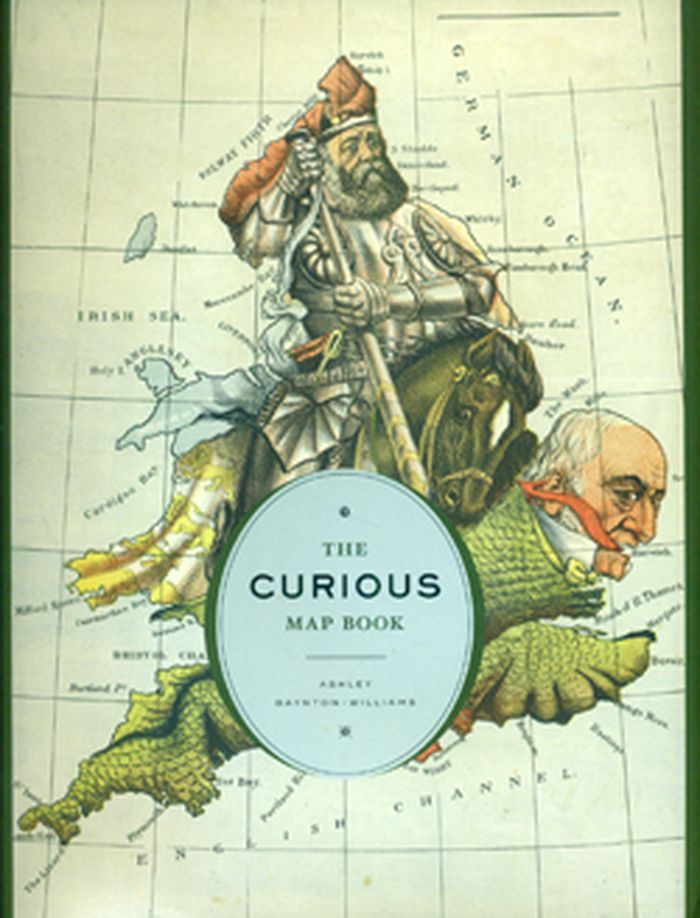
Over the centuries, maps have served many varied purposes; far from mere guides for reaching a destination, they are unique artistic forms, aides in planning commercial routes, literary devices for illuminating a story. Accuracy—or inaccuracy—of maps has been the make-or-break factor in countless military battles throughout history. They have graced the walls of homes, bringing prestige and elegance to their owners. They track the mountains, oceans, and stars of our existence. Maps help us make sense of our worlds both real and imaginary—they bring order to the seeming chaos of our surroundings. With The Curious Map Book, Ashley Baynton-Williams gathers a chronologically ordered variety of cartographic gems, mainly from the vast collection of the British Library
The Curious Map Book
Actions:
Price:
$54.95
(available to order)
Summary:
Over the centuries, maps have served many varied purposes; far from mere guides for reaching a destination, they are unique artistic forms, aides in planning commercial routes, literary devices for illuminating a story. Accuracy—or inaccuracy—of maps has been the make-or-break factor in countless military battles throughout history. They have graced the walls of homes, bringing prestige and elegance to their owners. They track the mountains, oceans, and stars of our existence. Maps help us make sense of our worlds both real and imaginary—they bring order to the seeming chaos of our surroundings. With The Curious Map Book, Ashley Baynton-Williams gathers a chronologically ordered variety of cartographic gems, mainly from the vast collection of the British Library
Form:
books
books
Publication:
October 2015
October 2015
Subject:
Architectural Plans and Cartography
Architectural Plans and Cartography
Form:
books
books
Actions:
Price:
$16.99
(available to order)
Summary:
This diverse, literary patchwork of Rio de Janeiro contains 10 short stories set in varied quarters of the city drawing on its inhabitants' experiences of recent historical and cultural changes. From Copacabana's thriving LGBT scene in the 1960s where the military dictatorship simultaneously terrorizes and represses politically-minded citizens, to the exhausted labourers(...)
$16.99
(available to order)
Summary:
This diverse, literary patchwork of Rio de Janeiro contains 10 short stories set in varied quarters of the city drawing on its inhabitants' experiences of recent historical and cultural changes. From Copacabana's thriving LGBT scene in the 1960s where the military dictatorship simultaneously terrorizes and represses politically-minded citizens, to the exhausted labourers(...)
Title:
The book of Rio: a city in short fiction
Actions:
Price:
$16.99
(available to order)
Summary:
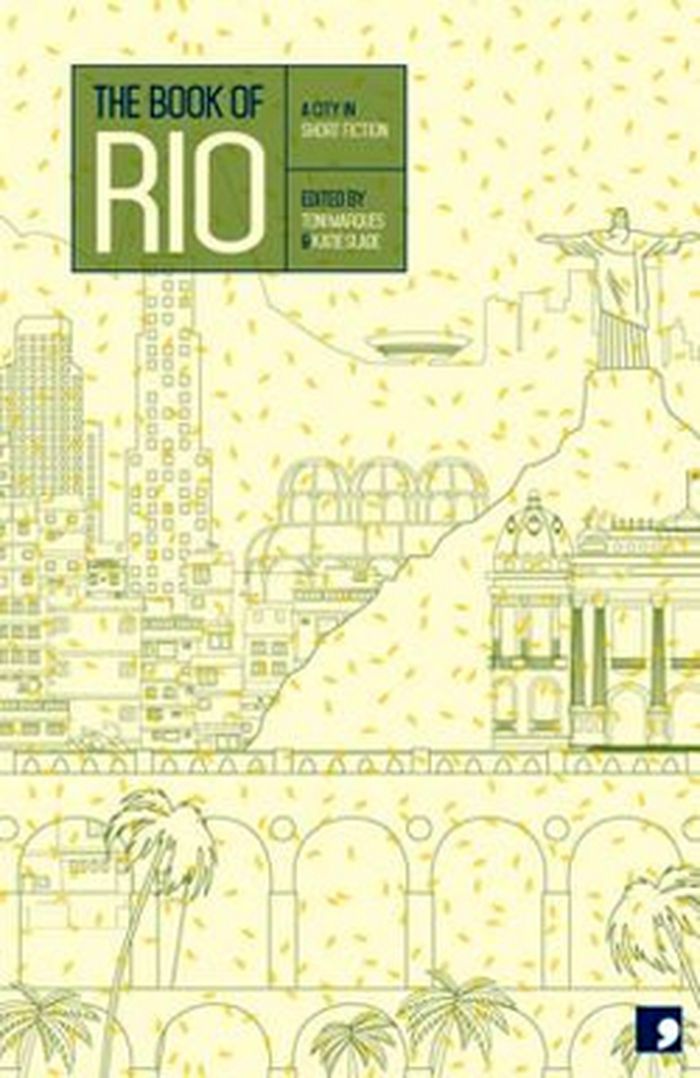
This diverse, literary patchwork of Rio de Janeiro contains 10 short stories set in varied quarters of the city drawing on its inhabitants' experiences of recent historical and cultural changes. From Copacabana's thriving LGBT scene in the 1960s where the military dictatorship simultaneously terrorizes and represses politically-minded citizens, to the exhausted labourers constructing the Rio-Niteroi bridge - 'the pride of Brazil' - at gunpoint in 1974, to contemporary life in the neighbourhood of Leblon, where a call girl trying to get to a party reluctantly accepts a very strange job for the evening. The ten stories in this anthology bring to life the complex and ever-changing face of Rio de Janeiro behind the images of slums, carnivals and the sex trade.
The book of Rio: a city in short fiction
Actions:
Price:
$16.99
(available to order)
Summary:
This diverse, literary patchwork of Rio de Janeiro contains 10 short stories set in varied quarters of the city drawing on its inhabitants' experiences of recent historical and cultural changes. From Copacabana's thriving LGBT scene in the 1960s where the military dictatorship simultaneously terrorizes and represses politically-minded citizens, to the exhausted labourers constructing the Rio-Niteroi bridge - 'the pride of Brazil' - at gunpoint in 1974, to contemporary life in the neighbourhood of Leblon, where a call girl trying to get to a party reluctantly accepts a very strange job for the evening. The ten stories in this anthology bring to life the complex and ever-changing face of Rio de Janeiro behind the images of slums, carnivals and the sex trade.
Form:
books
books
Publication:
May 2014
May 2014
Subject:
City Guides
City Guides
Form:
books
books
Actions:
Price:
$42.95
(available to order)
Summary:
The maps in this book are drawn with satellites, assembled with pixels radioed from outer space, and constructed from statistics; they record situations of intense conflict and express fundamental transformations in our ways of seeing and of experiencing space. These maps are built with GPS, remote sensing satellites,or GIS: digital spatial hardware and software designed(...)
$42.95
(available to order)
Summary:
The maps in this book are drawn with satellites, assembled with pixels radioed from outer space, and constructed from statistics; they record situations of intense conflict and express fundamental transformations in our ways of seeing and of experiencing space. These maps are built with GPS, remote sensing satellites,or GIS: digital spatial hardware and software designed(...)
Title:
Close up at a distance: mapping, technology and politics
Actions:
Price:
$42.95
(available to order)
Summary:
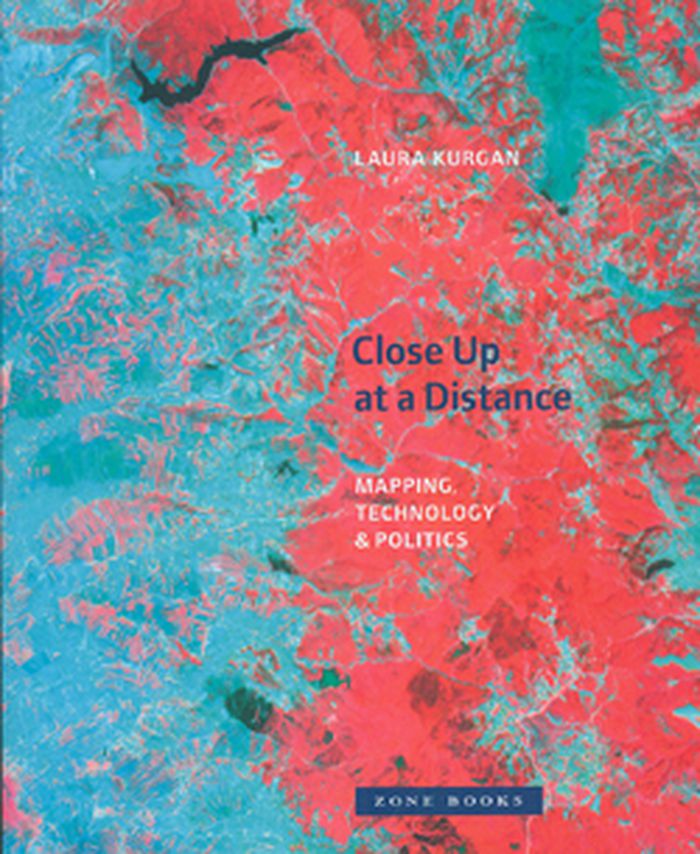
The maps in this book are drawn with satellites, assembled with pixels radioed from outer space, and constructed from statistics; they record situations of intense conflict and express fundamental transformations in our ways of seeing and of experiencing space. These maps are built with GPS, remote sensing satellites,or GIS: digital spatial hardware and software designed for such military and governmental uses as reconnaissance, secrecy, monitoring, ballistics, the census, and national security. Rather than shying away from the politics and complexities of their intended uses, Laura Kurgan attempts to illuminate them. Poised at the intersection of art, architecture, activism, and geography, her analysis uncovers the implicit biases of the new views, the means of recording information they present, and the new spaces they have opened up.
Close up at a distance: mapping, technology and politics
Actions:
Price:
$42.95
(available to order)
Summary:
The maps in this book are drawn with satellites, assembled with pixels radioed from outer space, and constructed from statistics; they record situations of intense conflict and express fundamental transformations in our ways of seeing and of experiencing space. These maps are built with GPS, remote sensing satellites,or GIS: digital spatial hardware and software designed for such military and governmental uses as reconnaissance, secrecy, monitoring, ballistics, the census, and national security. Rather than shying away from the politics and complexities of their intended uses, Laura Kurgan attempts to illuminate them. Poised at the intersection of art, architecture, activism, and geography, her analysis uncovers the implicit biases of the new views, the means of recording information they present, and the new spaces they have opened up.
Form:
books
books
Publication:
March 2013
March 2013
Subject:
Architectural Plans and Cartography
Architectural Plans and Cartography
Form:
books
books
Actions:
Price:
$29.95
(available to order)
Summary:
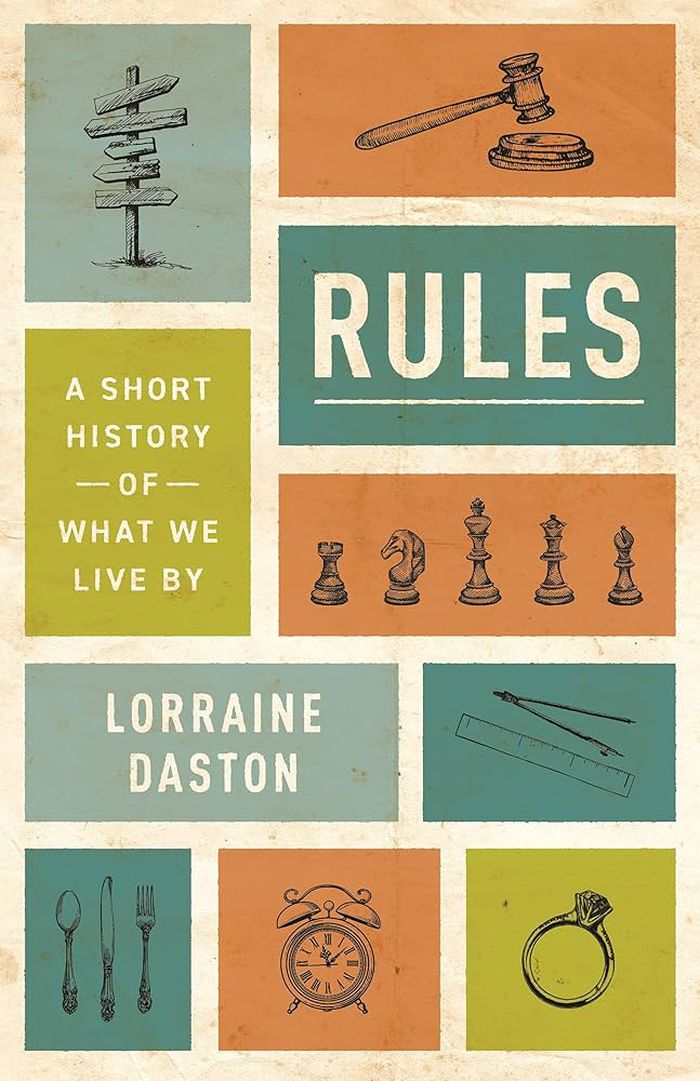
In this book, historian Lorraine Daston traces the development of rules in the Western tradition and shows how they have evolved from ancient to modern times. Drawing on a rich trove of examples, including legal treatises, cookbooks, military manuals, traffic regulations, and game handbooks, Daston demonstrates that while the content of rules is dazzlingly diverse, the(...)
$29.95
(available to order)
Summary:
In this book, historian Lorraine Daston traces the development of rules in the Western tradition and shows how they have evolved from ancient to modern times. Drawing on a rich trove of examples, including legal treatises, cookbooks, military manuals, traffic regulations, and game handbooks, Daston demonstrates that while the content of rules is dazzlingly diverse, the(...)
Title:
Rules: A short history of what we live by
Actions:
Price:
$29.95
(available to order)
Summary:
In this book, historian Lorraine Daston traces the development of rules in the Western tradition and shows how they have evolved from ancient to modern times. Drawing on a rich trove of examples, including legal treatises, cookbooks, military manuals, traffic regulations, and game handbooks, Daston demonstrates that while the content of rules is dazzlingly diverse, the forms that they take are surprisingly few and long-lived. Rules have been devised for almost every imaginable activity and range from meticulous regulations to the laws of nature. Daston probes beneath this variety to investigate when rules work and when they don’t, and why some philosophical problems about rules are as ancient as philosophy itself while others are as modern as calculating machines.
Rules: A short history of what we live by
Actions:
Price:
$29.95
(available to order)
Summary:
In this book, historian Lorraine Daston traces the development of rules in the Western tradition and shows how they have evolved from ancient to modern times. Drawing on a rich trove of examples, including legal treatises, cookbooks, military manuals, traffic regulations, and game handbooks, Daston demonstrates that while the content of rules is dazzlingly diverse, the forms that they take are surprisingly few and long-lived. Rules have been devised for almost every imaginable activity and range from meticulous regulations to the laws of nature. Daston probes beneath this variety to investigate when rules work and when they don’t, and why some philosophical problems about rules are as ancient as philosophy itself while others are as modern as calculating machines.
Form:
books
books
Publication:
August 2023
August 2023
Subject:
Social
Social
Form:
books
books
Actions:
Price:
$37.50
(available to order)
Summary:
The twelve new essays in this volume use a contemporary context to think through and with Deleuze. Engaging the here and now, the contributors use the Deleuzian theoretical apparatus to think about issues such as military activity in the Middle East, refugees, terrorism, information and communication, and the State. The book is aimed both at specialists of Deleuze and(...)
$37.50
(available to order)
Summary:
The twelve new essays in this volume use a contemporary context to think through and with Deleuze. Engaging the here and now, the contributors use the Deleuzian theoretical apparatus to think about issues such as military activity in the Middle East, refugees, terrorism, information and communication, and the State. The book is aimed both at specialists of Deleuze and(...)
Title:
Deleuze and the contemporary world
Actions:
Price:
$37.50
(available to order)
Summary:
The twelve new essays in this volume use a contemporary context to think through and with Deleuze. Engaging the here and now, the contributors use the Deleuzian theoretical apparatus to think about issues such as military activity in the Middle East, refugees, terrorism, information and communication, and the State. The book is aimed both at specialists of Deleuze and those who are unfamiliar with his work but who are interested in current affairs. Incorporating political theory and philosophy, culture studies, sociology, international studies, and Middle Eastern studies, the book is designed to appeal to a wide audience. Contributors include: Rosi Braidotti, Claire Colebrook, Verena Conley, Eugene Holland, John Marks, Paul Patton, Patricia Pisters, Laurence J. Silberstein, Kenneth Surin and Nicholas Thoburn.
Deleuze and the contemporary world
Actions:
Price:
$37.50
(available to order)
Summary:
The twelve new essays in this volume use a contemporary context to think through and with Deleuze. Engaging the here and now, the contributors use the Deleuzian theoretical apparatus to think about issues such as military activity in the Middle East, refugees, terrorism, information and communication, and the State. The book is aimed both at specialists of Deleuze and those who are unfamiliar with his work but who are interested in current affairs. Incorporating political theory and philosophy, culture studies, sociology, international studies, and Middle Eastern studies, the book is designed to appeal to a wide audience. Contributors include: Rosi Braidotti, Claire Colebrook, Verena Conley, Eugene Holland, John Marks, Paul Patton, Patricia Pisters, Laurence J. Silberstein, Kenneth Surin and Nicholas Thoburn.
Form:
books
books
Publication:
September 2006, Edinburgh
September 2006, Edinburgh
Subject:
Critical Theory
Critical Theory
Form:
books
books
Price:
$27.95
(available to order)
Summary:
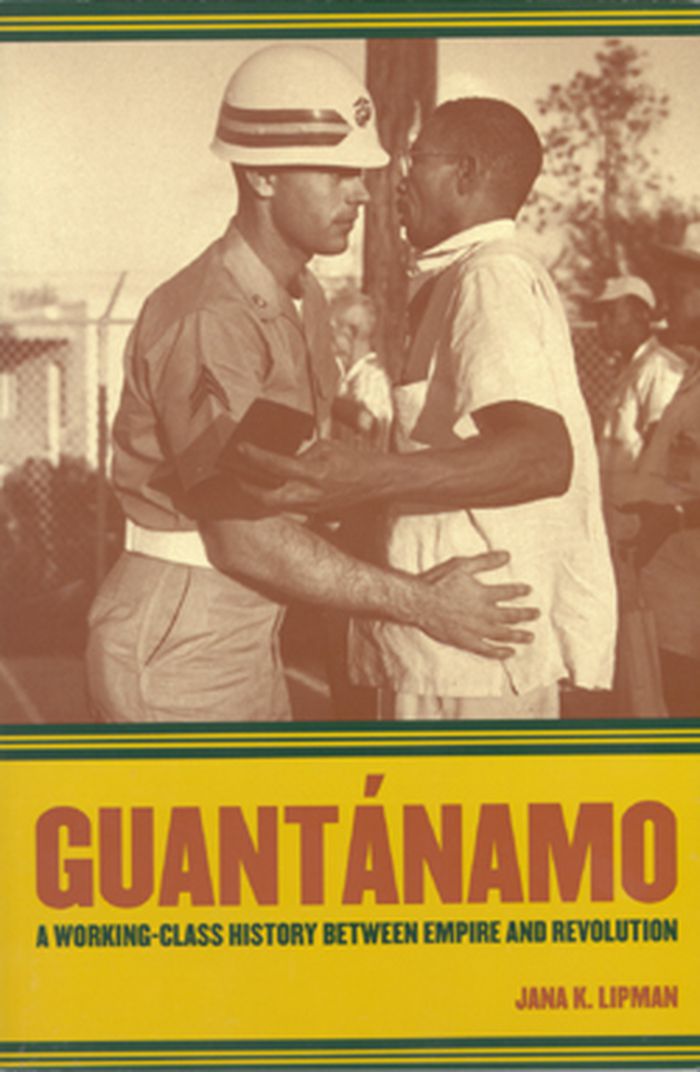
Guantánamo has become a symbol of what has gone wrong in the War on Terror. Yet Guantánamo is more than a U.S. naval base and prison in Cuba, it is a town, and our military occupation there has required more than soldiers and sailors--it has required workers. This revealing history of the women and men who worked on the U.S. naval base in Guantánamo Bay tells the story of(...)
$27.95
(available to order)
Summary:
Guantánamo has become a symbol of what has gone wrong in the War on Terror. Yet Guantánamo is more than a U.S. naval base and prison in Cuba, it is a town, and our military occupation there has required more than soldiers and sailors--it has required workers. This revealing history of the women and men who worked on the U.S. naval base in Guantánamo Bay tells the story of(...)
Title:
Guantanamo: a working-class history between empire and revolution
Actions:
Price:
$27.95
(available to order)
Summary:
Guantánamo has become a symbol of what has gone wrong in the War on Terror. Yet Guantánamo is more than a U.S. naval base and prison in Cuba, it is a town, and our military occupation there has required more than soldiers and sailors--it has required workers. This revealing history of the women and men who worked on the U.S. naval base in Guantánamo Bay tells the story of U.S.-Cuban relations from a new perspective, and at the same time, shows how neocolonialism, empire, and revolution transformed the lives of everyday people. Drawing from rich oral histories and little-explored Cuban archives, Jana K. Lipman analyzes how the Cold War and the Cuban revolution made the naval base a place devoid of law and accountability.
Guantanamo: a working-class history between empire and revolution
Actions:
Price:
$27.95
(available to order)
Summary:
Guantánamo has become a symbol of what has gone wrong in the War on Terror. Yet Guantánamo is more than a U.S. naval base and prison in Cuba, it is a town, and our military occupation there has required more than soldiers and sailors--it has required workers. This revealing history of the women and men who worked on the U.S. naval base in Guantánamo Bay tells the story of U.S.-Cuban relations from a new perspective, and at the same time, shows how neocolonialism, empire, and revolution transformed the lives of everyday people. Drawing from rich oral histories and little-explored Cuban archives, Jana K. Lipman analyzes how the Cold War and the Cuban revolution made the naval base a place devoid of law and accountability.
Form:
books
books
Publication:
December 2008, Berkeley, Los Angeles
December 2008, Berkeley, Los Angeles
Subject:
Critical Theory
Critical Theory
Form:
books
books
Actions:
Price:
$59.95
(available to order)
Summary:
Plywood is arguably the most modern design artifact: it is a material born of natural wood and formed by vigorous industrial processes that can assume the most organic of shapes through bending, laminating, and molding. This book consists of two parts: the first, an illustrated history of plywood (tracing its origins to ancient Egypt, circa 2900 BC); the second, an(...)
$59.95
(available to order)
Summary:
Plywood is arguably the most modern design artifact: it is a material born of natural wood and formed by vigorous industrial processes that can assume the most organic of shapes through bending, laminating, and molding. This book consists of two parts: the first, an illustrated history of plywood (tracing its origins to ancient Egypt, circa 2900 BC); the second, an(...)
Title:
Bent ply : the art of plywood furniture
Actions:
Price:
$59.95
(available to order)
Summary:
Plywood is arguably the most modern design artifact: it is a material born of natural wood and formed by vigorous industrial processes that can assume the most organic of shapes through bending, laminating, and molding. This book consists of two parts: the first, an illustrated history of plywood (tracing its origins to ancient Egypt, circa 2900 BC); the second, an annotated journal of the making of a piece of bent plywood furniture, from the forest to the showroom. "Bent Ply" contains numerous illustrations of the classics of bent ply design, including furniture from Alvar Aalto, Michael Thonet, and Charles and Ray Eames, and examples of its appropriation by the military: John F. Kennedy's PT109 boat and the DeHavilland "Mosquito" were both fabricated from plywood.
Bent ply : the art of plywood furniture
Actions:
Price:
$59.95
(available to order)
Summary:
Plywood is arguably the most modern design artifact: it is a material born of natural wood and formed by vigorous industrial processes that can assume the most organic of shapes through bending, laminating, and molding. This book consists of two parts: the first, an illustrated history of plywood (tracing its origins to ancient Egypt, circa 2900 BC); the second, an annotated journal of the making of a piece of bent plywood furniture, from the forest to the showroom. "Bent Ply" contains numerous illustrations of the classics of bent ply design, including furniture from Alvar Aalto, Michael Thonet, and Charles and Ray Eames, and examples of its appropriation by the military: John F. Kennedy's PT109 boat and the DeHavilland "Mosquito" were both fabricated from plywood.
Form:
books
books
Publication:
July 2003, New York
July 2003, New York
Subject:
Interior Design
Interior Design
Form:
books
books
Actions:
Price:
$27.95
(available to order)
Summary:
By painstakingly combing through unpublished archival records of the seventeenth, eighteenth and nineteenth centuries, Marcel Trudel gives a human face to the over 4,000 Aboriginal and Black slaves bought, sold and exploited in colonial Canada. He reveals the identities of the slave owners, who ranged from governors, seigneurs, and military officers to bishops, priests,(...)
$27.95
(available to order)
Summary:
By painstakingly combing through unpublished archival records of the seventeenth, eighteenth and nineteenth centuries, Marcel Trudel gives a human face to the over 4,000 Aboriginal and Black slaves bought, sold and exploited in colonial Canada. He reveals the identities of the slave owners, who ranged from governors, seigneurs, and military officers to bishops, priests,(...)
Title:
Canada's forgotten slaves: two hundred years of bondage
Actions:
Price:
$27.95
(available to order)
Summary:
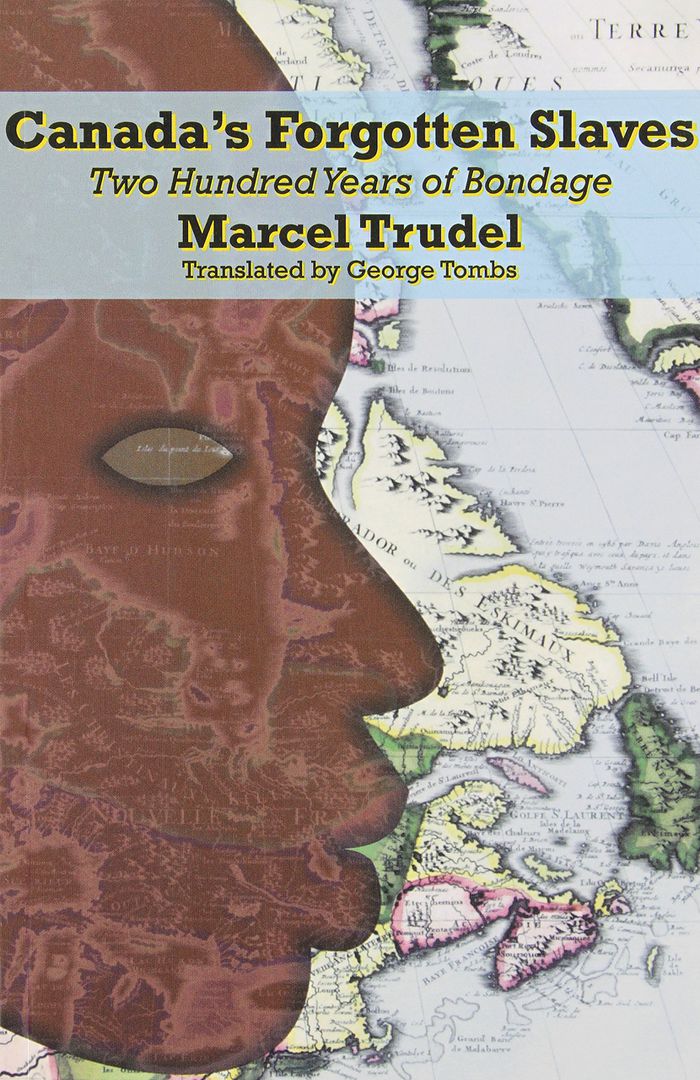
By painstakingly combing through unpublished archival records of the seventeenth, eighteenth and nineteenth centuries, Marcel Trudel gives a human face to the over 4,000 Aboriginal and Black slaves bought, sold and exploited in colonial Canada. He reveals the identities of the slave owners, who ranged from governors, seigneurs, and military officers to bishops, priests, nuns, judges, and merchants. Trudel describes the plight of slaves-the joys and sorrows of their daily existence. Trudel also recounts how some slaves struggled to gain their liberty. He documents Canadian politicians, historians and ecclesiastics who deliberately falsified the record, glorifying their own colonial-era heroes, in order to remove any trace of the thousands of Aboriginal and Black slaves held in bondage for two centuries in Canada.
Canada's forgotten slaves: two hundred years of bondage
Actions:
Price:
$27.95
(available to order)
Summary:
By painstakingly combing through unpublished archival records of the seventeenth, eighteenth and nineteenth centuries, Marcel Trudel gives a human face to the over 4,000 Aboriginal and Black slaves bought, sold and exploited in colonial Canada. He reveals the identities of the slave owners, who ranged from governors, seigneurs, and military officers to bishops, priests, nuns, judges, and merchants. Trudel describes the plight of slaves-the joys and sorrows of their daily existence. Trudel also recounts how some slaves struggled to gain their liberty. He documents Canadian politicians, historians and ecclesiastics who deliberately falsified the record, glorifying their own colonial-era heroes, in order to remove any trace of the thousands of Aboriginal and Black slaves held in bondage for two centuries in Canada.
Form:
books
books
Publication:
May 2013
May 2013
Subject:
Architecture in Canada
Architecture in Canada
Form:
books
books
Actions:
Price:
$63.50
(available to order)
Summary:
In this book, sociologist John Hannigan travels back in time to the 1950s. Unfairly stereotyped as ‘the tranquillized decade’, America at mid-century hosted an escalating proliferation and conjunction of ‘spectacular’ events, spaces, and technologies. Spectacularization was collectively defined by five features. It reflected and legitimated a dramatic increase in scale(...)
$63.50
(available to order)
Summary:
In this book, sociologist John Hannigan travels back in time to the 1950s. Unfairly stereotyped as ‘the tranquillized decade’, America at mid-century hosted an escalating proliferation and conjunction of ‘spectacular’ events, spaces, and technologies. Spectacularization was collectively defined by five features. It reflected and legitimated a dramatic increase in scale(...)
Title:
Rise of the spectacular: America in the 1950s
Actions:
Price:
$63.50
(available to order)
Summary:
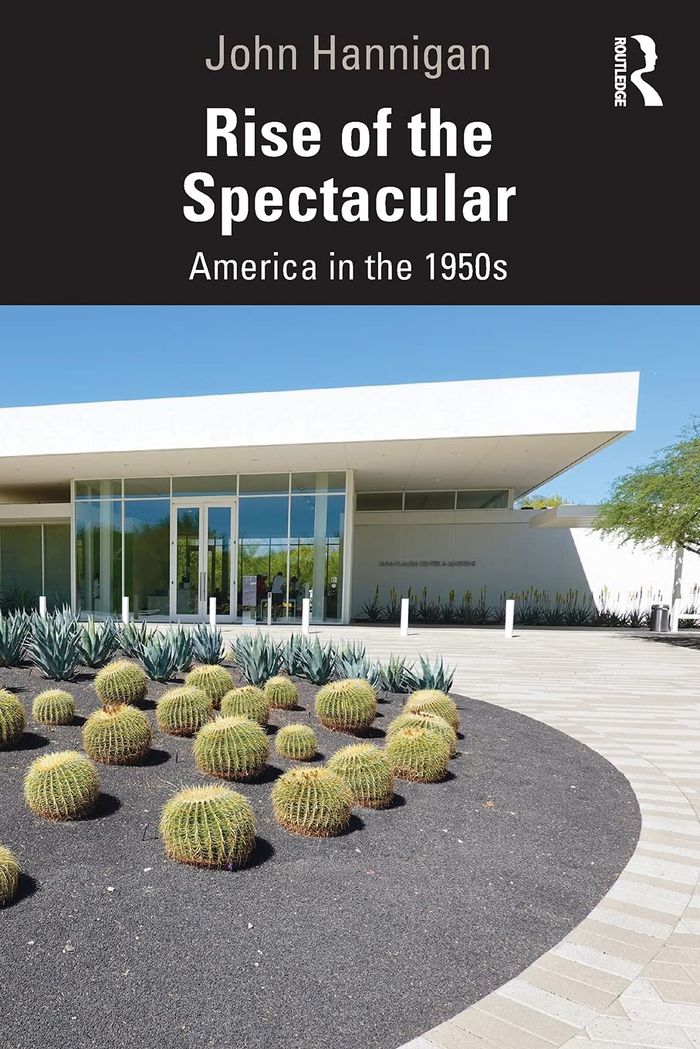
In this book, sociologist John Hannigan travels back in time to the 1950s. Unfairly stereotyped as ‘the tranquillized decade’, America at mid-century hosted an escalating proliferation and conjunction of ‘spectacular’ events, spaces, and technologies. Spectacularization was collectively defined by five features. It reflected and legitimated a dramatic increase in scale from the local/regional to the national. It was mediated by the increasingly popular medium of television. It exploited middle-class tension between comfortable conformity and desire for safe adventure. It celebrated technological progress, boosterism and military power. It was orchestrated and marketed by a constellation, sometimes a coalition, of entrepreneurs and dream merchants. In this wide-ranging odyssey across mid-century America, Hannigan visits leisure parks, parades, mega-events, architectural styles, innovations and everyday wonders.
Rise of the spectacular: America in the 1950s
Actions:
Price:
$63.50
(available to order)
Summary:
In this book, sociologist John Hannigan travels back in time to the 1950s. Unfairly stereotyped as ‘the tranquillized decade’, America at mid-century hosted an escalating proliferation and conjunction of ‘spectacular’ events, spaces, and technologies. Spectacularization was collectively defined by five features. It reflected and legitimated a dramatic increase in scale from the local/regional to the national. It was mediated by the increasingly popular medium of television. It exploited middle-class tension between comfortable conformity and desire for safe adventure. It celebrated technological progress, boosterism and military power. It was orchestrated and marketed by a constellation, sometimes a coalition, of entrepreneurs and dream merchants. In this wide-ranging odyssey across mid-century America, Hannigan visits leisure parks, parades, mega-events, architectural styles, innovations and everyday wonders.
Form:
books
books
Publication:
August 2021
August 2021
Subject:
Architectural Theory
Architectural Theory


