


2092 Results
Form:
books
books
Actions:
Price:
$55.95
(available in store)
Summary:
If participation has been an ideal in politics since ancient democracy, in art it became central only with the avant-gardes emerging from WWI and the Russian Revolution. Politics and aesthetics are still catching up with each other. In the 21st century, since the revolutionary unrest of the 1960s, participation in art and architecture has lost its utopian glow and become(...)
$55.95
(available in store)
Summary:
If participation has been an ideal in politics since ancient democracy, in art it became central only with the avant-gardes emerging from WWI and the Russian Revolution. Politics and aesthetics are still catching up with each other. In the 21st century, since the revolutionary unrest of the 1960s, participation in art and architecture has lost its utopian glow and become(...)
Title:
Participation in art and architecture: Spaces of interaction and occupation
Actions:
Price:
$55.95
(available in store)
Summary:
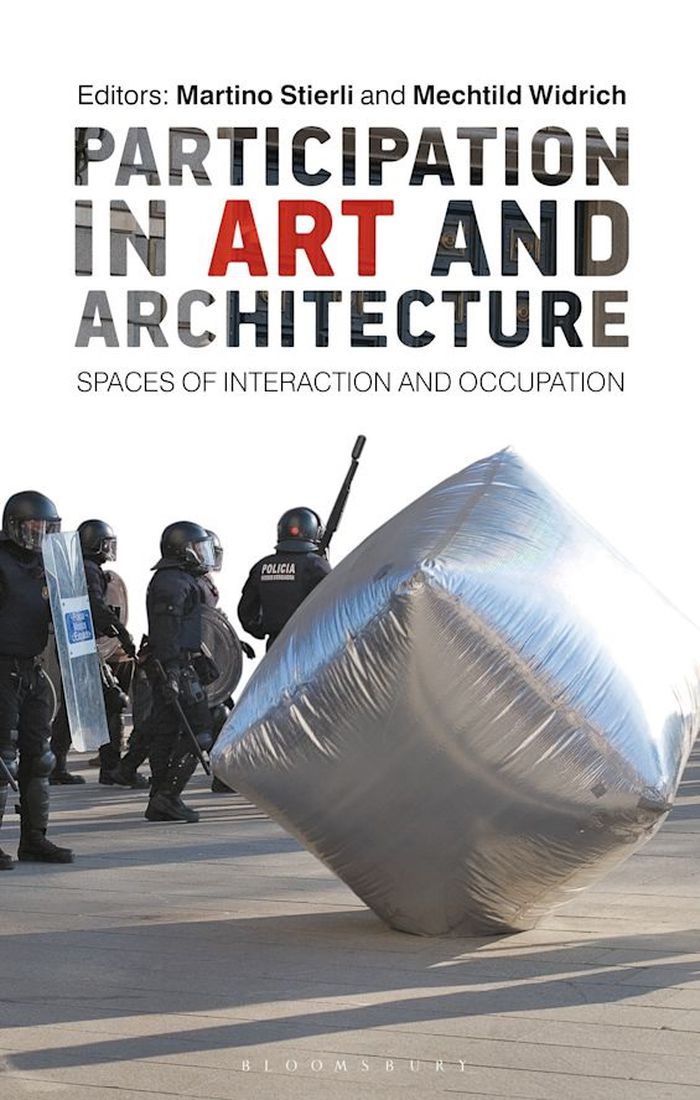
If participation has been an ideal in politics since ancient democracy, in art it became central only with the avant-gardes emerging from WWI and the Russian Revolution. Politics and aesthetics are still catching up with each other. In the 21st century, since the revolutionary unrest of the 1960s, participation in art and architecture has lost its utopian glow and become the focus of a fierce debate: does 'participatory' art and architecture shape social reality, or is it shaped by it? Contemporary critics see in participation only technocratic control, while others embrace it as a viable politics in an era of global capitalism. This innovative book breaks the impasse by looking at how participants themselves exert power, rather than being victimized or liberated from it. From artists hijacking Google Earth to protesters setting up a museum of the revolution in Cairo, art, architecture and daily life are explored in their participatory dimension.
Participation in art and architecture: Spaces of interaction and occupation
Actions:
Price:
$55.95
(available in store)
Summary:
If participation has been an ideal in politics since ancient democracy, in art it became central only with the avant-gardes emerging from WWI and the Russian Revolution. Politics and aesthetics are still catching up with each other. In the 21st century, since the revolutionary unrest of the 1960s, participation in art and architecture has lost its utopian glow and become the focus of a fierce debate: does 'participatory' art and architecture shape social reality, or is it shaped by it? Contemporary critics see in participation only technocratic control, while others embrace it as a viable politics in an era of global capitalism. This innovative book breaks the impasse by looking at how participants themselves exert power, rather than being victimized or liberated from it. From artists hijacking Google Earth to protesters setting up a museum of the revolution in Cairo, art, architecture and daily life are explored in their participatory dimension.
Form:
books
books
Publication:
July 2022
July 2022
Form:
books
books
Actions:
Price:
$32.00
(available to order)
Summary:
The goal of landing a man on the Moon and returning him safely to Earth required the development of three things: spacecraft, launch vehicles, and protective clothing. Spacesuits: Within the Collections of the Smithsonian National Air and Space Museum takes the reader through the development of the last category, the spacesuits used during this venture. Highlighting the(...)
$32.00
(available to order)
Summary:
The goal of landing a man on the Moon and returning him safely to Earth required the development of three things: spacecraft, launch vehicles, and protective clothing. Spacesuits: Within the Collections of the Smithsonian National Air and Space Museum takes the reader through the development of the last category, the spacesuits used during this venture. Highlighting the(...)
Publication:
June 2009
June 2009
Title:
Spacesuits: within the collection of the Smithsonian
Actions:
Price:
$32.00
(available to order)
Summary:
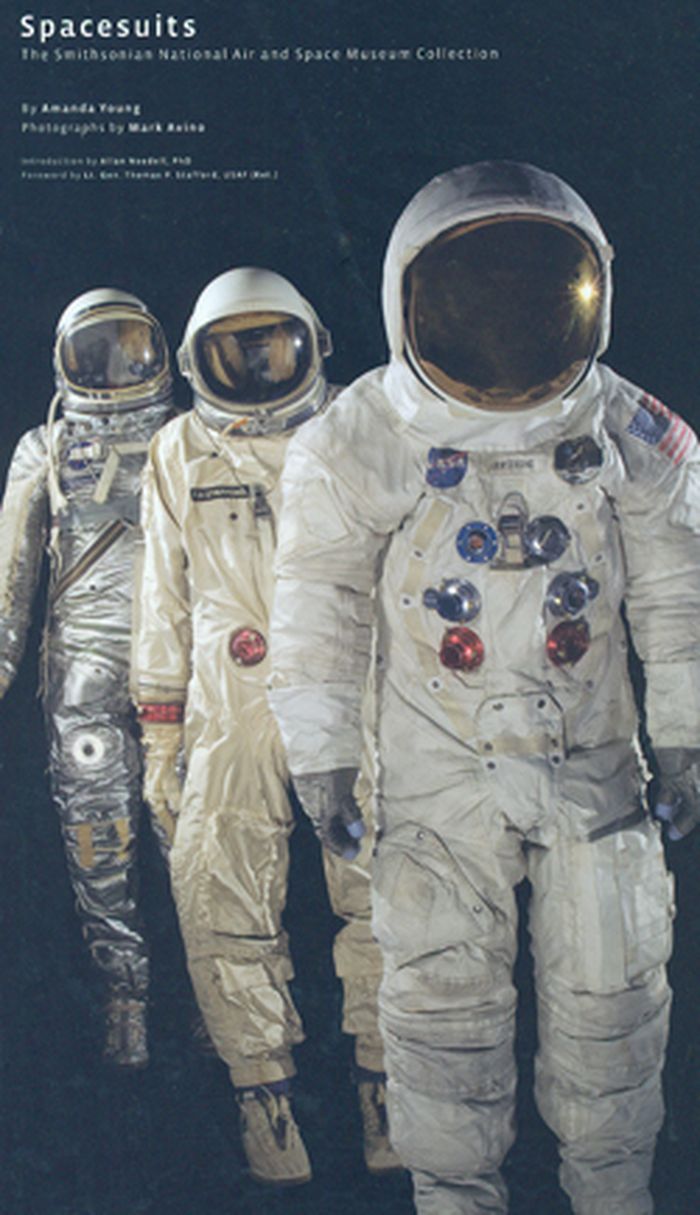
The goal of landing a man on the Moon and returning him safely to Earth required the development of three things: spacecraft, launch vehicles, and protective clothing. Spacesuits: Within the Collections of the Smithsonian National Air and Space Museum takes the reader through the development of the last category, the spacesuits used during this venture. Highlighting the pressure suits created during the years leading up to the lunar missions and beyond, this book features dramatic photographs of the Smithsonian’s collection, as well as never-before-published historical images of spacesuit development and testing—range-of-motion studies, for example, in which researchers wore spacesuits while playing baseball and football. The book also includes a group of advanced spacesuits, which, though never used on a mission, are in many respects the most exciting suits ever created. One suit glove has steel fingernails and sharkskin pads, in an attempt to harness the abilities of the human hand.
Spacesuits: within the collection of the Smithsonian
Actions:
Price:
$32.00
(available to order)
Summary:
The goal of landing a man on the Moon and returning him safely to Earth required the development of three things: spacecraft, launch vehicles, and protective clothing. Spacesuits: Within the Collections of the Smithsonian National Air and Space Museum takes the reader through the development of the last category, the spacesuits used during this venture. Highlighting the pressure suits created during the years leading up to the lunar missions and beyond, this book features dramatic photographs of the Smithsonian’s collection, as well as never-before-published historical images of spacesuit development and testing—range-of-motion studies, for example, in which researchers wore spacesuits while playing baseball and football. The book also includes a group of advanced spacesuits, which, though never used on a mission, are in many respects the most exciting suits ever created. One suit glove has steel fingernails and sharkskin pads, in an attempt to harness the abilities of the human hand.
Form:
books
books
Publication:
June 2009
June 2009
Form:
books
books
Actions:
Price:
$30.00
(available to order)
Summary:
Nye looks at America's development of its electrical grid, which made large-scale power failures possible; military blackouts before and during World War II ("The silence was the big surprise of the blackout, the darkness discounted," wrote Harold Ross in The New Yorker in 1942); New York City's contrasting 1965 and 1977 blackout experiences (the first characterized by(...)
$30.00
(available to order)
Summary:
Nye looks at America's development of its electrical grid, which made large-scale power failures possible; military blackouts before and during World War II ("The silence was the big surprise of the blackout, the darkness discounted," wrote Harold Ross in The New Yorker in 1942); New York City's contrasting 1965 and 1977 blackout experiences (the first characterized by(...)
Title:
When the lights went out, a history of blackouts in America
Actions:
Price:
$30.00
(available to order)
Summary:
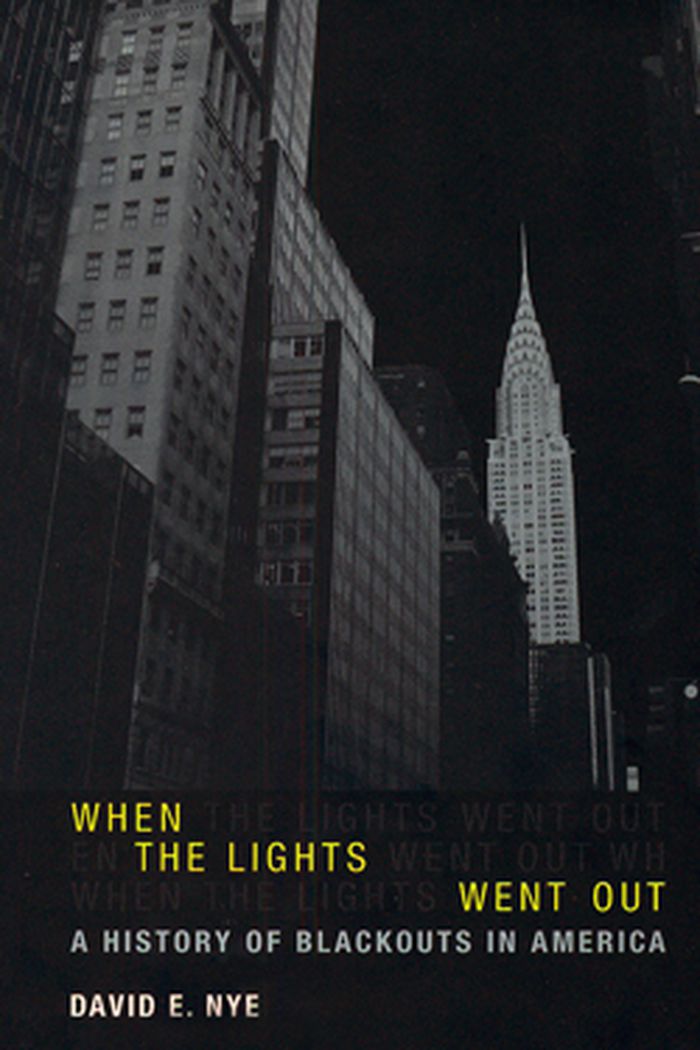
Nye looks at America's development of its electrical grid, which made large-scale power failures possible; military blackouts before and during World War II ("The silence was the big surprise of the blackout, the darkness discounted," wrote Harold Ross in The New Yorker in 1942); New York City's contrasting 1965 and 1977 blackout experiences (the first characterized by cooperation, the second by looting and disorder); the growth in consumer demand that led to rolling blackouts made worse by energy traders' market manipulations; blackouts caused by terrorist attacks and sabotage; and, finally, the "greenout" (exemplified by the new tradition of "Earth Hour"), a voluntary reduction organized by environmental organizations. Blackouts, writes Nye, are breaks in the flow of social time that reveal much about the trajectory of American history. Each time one occurs, Americans confront their essential condition—not as isolated individuals, but as a community that increasingly binds itself together with electrical wires and signals.
When the lights went out, a history of blackouts in America
Actions:
Price:
$30.00
(available to order)
Summary:
Nye looks at America's development of its electrical grid, which made large-scale power failures possible; military blackouts before and during World War II ("The silence was the big surprise of the blackout, the darkness discounted," wrote Harold Ross in The New Yorker in 1942); New York City's contrasting 1965 and 1977 blackout experiences (the first characterized by cooperation, the second by looting and disorder); the growth in consumer demand that led to rolling blackouts made worse by energy traders' market manipulations; blackouts caused by terrorist attacks and sabotage; and, finally, the "greenout" (exemplified by the new tradition of "Earth Hour"), a voluntary reduction organized by environmental organizations. Blackouts, writes Nye, are breaks in the flow of social time that reveal much about the trajectory of American history. Each time one occurs, Americans confront their essential condition—not as isolated individuals, but as a community that increasingly binds itself together with electrical wires and signals.
Form:
books
books
Publication:
March 2010
March 2010
Subject:
Urban Theory
Urban Theory
Form:
books
books
Title:
Tree houses
Tree houses
Actions:
Price:
$74.95
(available to order)
Summary:
Childhood fantasy meets grown-up savoir faire The idea of climbing a tree for shelter, or just to see the earth from another perspective, is surely as old as humanity. Tree houses are chronicled in ancient civilizations and their lore crosses through the history of every part of the world where trees grow. This illustrated study offers a tour of the best tree houses in(...)
$74.95
(available to order)
Summary:
Childhood fantasy meets grown-up savoir faire The idea of climbing a tree for shelter, or just to see the earth from another perspective, is surely as old as humanity. Tree houses are chronicled in ancient civilizations and their lore crosses through the history of every part of the world where trees grow. This illustrated study offers a tour of the best tree houses in(...)
Title:
Tree houses
Actions:
Price:
$74.95
(available to order)
Summary:
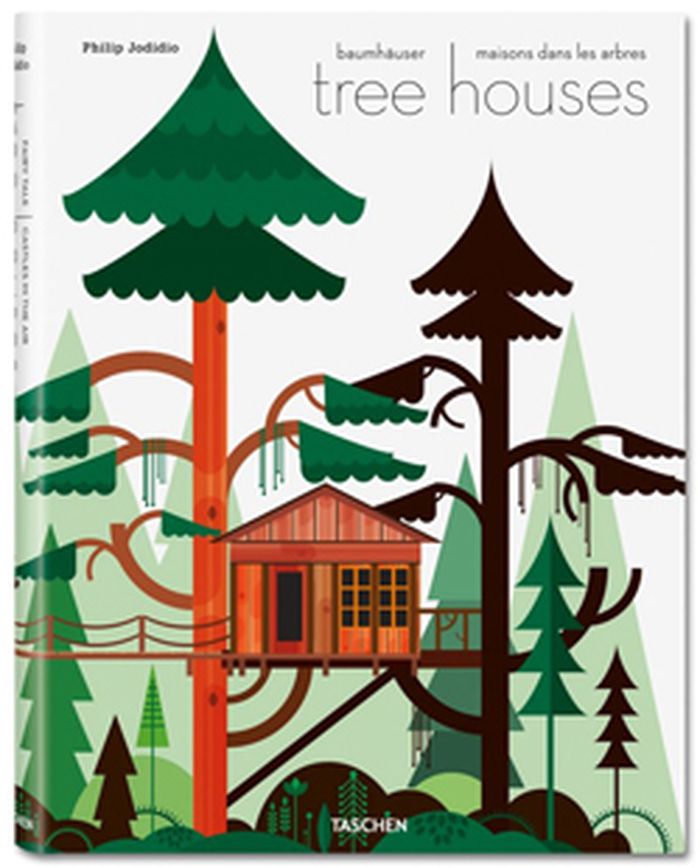
Childhood fantasy meets grown-up savoir faire The idea of climbing a tree for shelter, or just to see the earth from another perspective, is surely as old as humanity. Tree houses are chronicled in ancient civilizations and their lore crosses through the history of every part of the world where trees grow. This illustrated study offers a tour of the best tree houses in the world, some designed by architects, others the work of unknown craftsmen. A teahouse, a restaurant, a hotel, a playhouse for children, or a perch from which to contemplate life—the tree house can take as many forms as the imagination can offer. In times of concern for sustainability and ecological responsibility, the tree house may also be the ultimate symbol of life in symbiosis with nature. Whether rustic or contemporary in style, tree houses make the most of space. Climb into this trove of tree houses and enjoy a new perspective on the world.
Tree houses
Actions:
Price:
$74.95
(available to order)
Summary:
Childhood fantasy meets grown-up savoir faire The idea of climbing a tree for shelter, or just to see the earth from another perspective, is surely as old as humanity. Tree houses are chronicled in ancient civilizations and their lore crosses through the history of every part of the world where trees grow. This illustrated study offers a tour of the best tree houses in the world, some designed by architects, others the work of unknown craftsmen. A teahouse, a restaurant, a hotel, a playhouse for children, or a perch from which to contemplate life—the tree house can take as many forms as the imagination can offer. In times of concern for sustainability and ecological responsibility, the tree house may also be the ultimate symbol of life in symbiosis with nature. Whether rustic or contemporary in style, tree houses make the most of space. Climb into this trove of tree houses and enjoy a new perspective on the world.
Form:
books
books
Publication:
October 2012
October 2012
Subject:
Timber Construction
Timber Construction
Form:
books
books
Actions:
Price:
$75.00
(available to order)
Summary:
Ever since the discovery of the cave, humans have made use of nature’s geological formations. Only recently, however, have developments in structural engineering made it possible to engage the earth’s surface as a building element in its own right. With an increasing awareness of our planet’s limited natural resources, the most acclaimed architectural practices from(...)
$75.00
(available to order)
Summary:
Ever since the discovery of the cave, humans have made use of nature’s geological formations. Only recently, however, have developments in structural engineering made it possible to engage the earth’s surface as a building element in its own right. With an increasing awareness of our planet’s limited natural resources, the most acclaimed architectural practices from(...)
Title:
Landscrapers : building with the land
Actions:
Price:
$75.00
(available to order)
Summary:
Ever since the discovery of the cave, humans have made use of nature’s geological formations. Only recently, however, have developments in structural engineering made it possible to engage the earth’s surface as a building element in its own right. With an increasing awareness of our planet’s limited natural resources, the most acclaimed architectural practices from around the world are building into the earth and merging man-made forms with the contours of the land. The results are at once preternatural and breathtaking. From Zaha Hadid’s Tram Terminal in France to Snøhetta’s Bibliotheca Alexandrina in Egypt, from Future System’s hill-burrowing house in Wales to Antoine Predock’s Spencer Theater in the United States, over fifty projects displayed here expose the breadth and depth of this new direction in architecture. Aaron Betsky first considers our historical preoccupation with communing with the land through building, then four central chapters – ‘Engineered Utopias’, ‘Caves and Caverns’, ‘Unfolding the Land’ and ‘A New Nature’ – explore the ways in which ‘geotecture’ responds to, becomes a part of and yet remains distinctive within our natural landscape.
Landscrapers : building with the land
Actions:
Price:
$75.00
(available to order)
Summary:
Ever since the discovery of the cave, humans have made use of nature’s geological formations. Only recently, however, have developments in structural engineering made it possible to engage the earth’s surface as a building element in its own right. With an increasing awareness of our planet’s limited natural resources, the most acclaimed architectural practices from around the world are building into the earth and merging man-made forms with the contours of the land. The results are at once preternatural and breathtaking. From Zaha Hadid’s Tram Terminal in France to Snøhetta’s Bibliotheca Alexandrina in Egypt, from Future System’s hill-burrowing house in Wales to Antoine Predock’s Spencer Theater in the United States, over fifty projects displayed here expose the breadth and depth of this new direction in architecture. Aaron Betsky first considers our historical preoccupation with communing with the land through building, then four central chapters – ‘Engineered Utopias’, ‘Caves and Caverns’, ‘Unfolding the Land’ and ‘A New Nature’ – explore the ways in which ‘geotecture’ responds to, becomes a part of and yet remains distinctive within our natural landscape.
Form:
books
books
Publication:
October 2002, New York
October 2002, New York
Subject:
Architecture since 1900, Europe
Architecture since 1900, Europe
Form:
books
books
Actions:
Price:
$49.00
(available to order)
Summary:
Ever since the discovery of the cave, humans have made use of nature’s geological formations. Only recently, however, have developments in structural engineering made it possible to engage the earth’s surface as a building element in its own right. With an increasing awareness of our planet’s limited natural resources, the most acclaimed architectural practices from(...)
$49.00
(available to order)
Summary:
Ever since the discovery of the cave, humans have made use of nature’s geological formations. Only recently, however, have developments in structural engineering made it possible to engage the earth’s surface as a building element in its own right. With an increasing awareness of our planet’s limited natural resources, the most acclaimed architectural practices from(...)
Title:
Landscrapers : building with the land
Actions:
Price:
$49.00
(available to order)
Summary:
Ever since the discovery of the cave, humans have made use of nature’s geological formations. Only recently, however, have developments in structural engineering made it possible to engage the earth’s surface as a building element in its own right. With an increasing awareness of our planet’s limited natural resources, the most acclaimed architectural practices from around the world are building into the earth and merging man-made forms with the contours of the land. The results are at once preternatural and breathtaking. From Zaha Hadid’s Tram Terminal in France to Snøhetta’s Bibliotheca Alexandrina in Egypt, from Future System’s hill-burrowing house in Wales to Antoine Predock’s Spencer Theater in the United States, over fifty projects displayed here expose the breadth and depth of this new direction in architecture. Aaron Betsky first considers our historical preoccupation with communing with the land through building, then four central chapters – ‘Engineered Utopias’, ‘Caves and Caverns’, ‘Unfolding the Land’ and ‘A New Nature’ – explore the ways in which ‘geotecture’ responds to, becomes a part of and yet remains distinctive within our natural landscape.
Landscrapers : building with the land
Actions:
Price:
$49.00
(available to order)
Summary:
Ever since the discovery of the cave, humans have made use of nature’s geological formations. Only recently, however, have developments in structural engineering made it possible to engage the earth’s surface as a building element in its own right. With an increasing awareness of our planet’s limited natural resources, the most acclaimed architectural practices from around the world are building into the earth and merging man-made forms with the contours of the land. The results are at once preternatural and breathtaking. From Zaha Hadid’s Tram Terminal in France to Snøhetta’s Bibliotheca Alexandrina in Egypt, from Future System’s hill-burrowing house in Wales to Antoine Predock’s Spencer Theater in the United States, over fifty projects displayed here expose the breadth and depth of this new direction in architecture. Aaron Betsky first considers our historical preoccupation with communing with the land through building, then four central chapters – ‘Engineered Utopias’, ‘Caves and Caverns’, ‘Unfolding the Land’ and ‘A New Nature’ – explore the ways in which ‘geotecture’ responds to, becomes a part of and yet remains distinctive within our natural landscape.
Form:
books
books
Publication:
March 2006, New York
March 2006, New York
Subject:
Green Architecture
Green Architecture
Form:
books
books

Price:
$38.95
(available in store)
Summary:
We spray them, pluck them, and bury them under mulch; and we curse their resilience when they spring back into place. To most of us, weeds are a nuisance, not worth the dirt they are growing in. But the fact is weeds are a plant just like any other, and it is only we who designate them as a weed or not, as a plant we will dote over or one we will tear out of the earth(...)
$38.95
(available in store)
Summary:
We spray them, pluck them, and bury them under mulch; and we curse their resilience when they spring back into place. To most of us, weeds are a nuisance, not worth the dirt they are growing in. But the fact is weeds are a plant just like any other, and it is only we who designate them as a weed or not, as a plant we will dote over or one we will tear out of the earth(...)
Title:
Weeds
Actions:
Price:
$38.95
(available in store)
Summary:
We spray them, pluck them, and bury them under mulch; and we curse their resilience when they spring back into place. To most of us, weeds are a nuisance, not worth the dirt they are growing in. But the fact is weeds are a plant just like any other, and it is only we who designate them as a weed or not, as a plant we will dote over or one we will tear out of the earth with abandon. And as Nina Edwards shows in this history, that designation is constantly changing. Balancing popular history with botanical science, she tells the story of the lowly, but proud, weed. Sprinkled with personal anecdotes and loads of useful information, Weeds sketches history after history of the fashions and attitudes that have shaped our gardens, showing us that it is just as important what we keep out of them as what we put in, and that just because we despise one species does not mean that there haven’t been others whose very lives have depended on it.
Weeds
Actions:
Price:
$38.95
(available in store)
Summary:
We spray them, pluck them, and bury them under mulch; and we curse their resilience when they spring back into place. To most of us, weeds are a nuisance, not worth the dirt they are growing in. But the fact is weeds are a plant just like any other, and it is only we who designate them as a weed or not, as a plant we will dote over or one we will tear out of the earth with abandon. And as Nina Edwards shows in this history, that designation is constantly changing. Balancing popular history with botanical science, she tells the story of the lowly, but proud, weed. Sprinkled with personal anecdotes and loads of useful information, Weeds sketches history after history of the fashions and attitudes that have shaped our gardens, showing us that it is just as important what we keep out of them as what we put in, and that just because we despise one species does not mean that there haven’t been others whose very lives have depended on it.
Form:
books
books
Publication:
December 2024
December 2024
Subject:
Fauna and flora
Fauna and flora
Form:
books
books
Price:
$52.00
(available to order)
Summary:
Traditional Japanese architecture is characterized by the working of natural materials such as wood, earth, and rock into remarkable structures. This precious cultural heritage has been preserved over the years in the form not only of the buildings themselves, but also of scale models created during repairs and other occasions. This book turns to those astoundingly(...)
$52.00
(available to order)
Summary:
Traditional Japanese architecture is characterized by the working of natural materials such as wood, earth, and rock into remarkable structures. This precious cultural heritage has been preserved over the years in the form not only of the buildings themselves, but also of scale models created during repairs and other occasions. This book turns to those astoundingly(...)
Title:
Japanese architecture: traditional skills and natural materials
Actions:
Price:
$52.00
(available to order)
Summary:
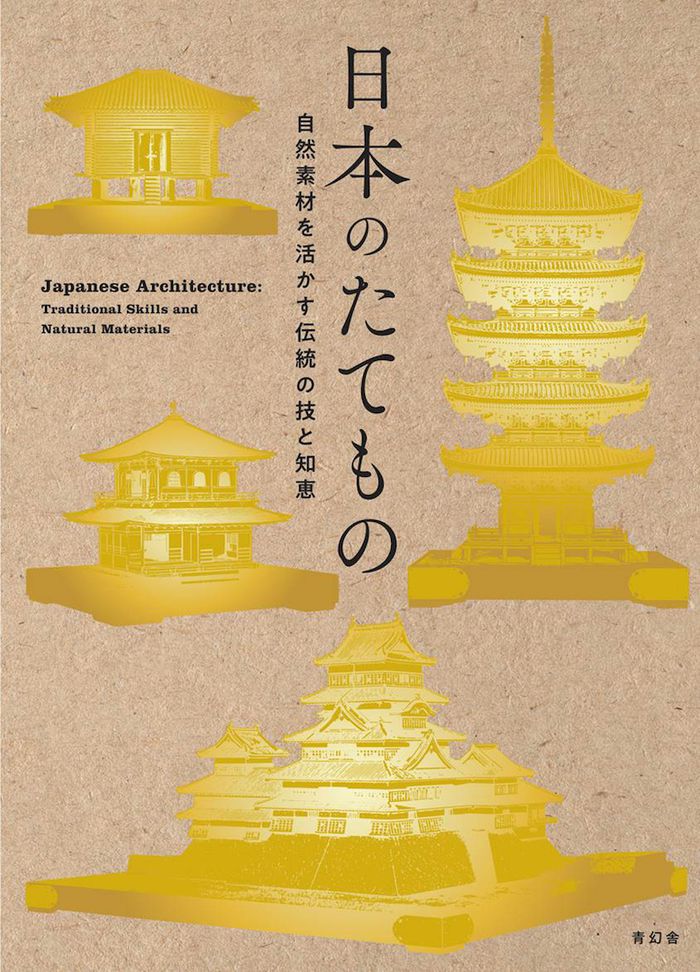
Traditional Japanese architecture is characterized by the working of natural materials such as wood, earth, and rock into remarkable structures. This precious cultural heritage has been preserved over the years in the form not only of the buildings themselves, but also of scale models created during repairs and other occasions. This book turns to those astoundingly precise models to give a historical overview of the artistry and craftsmanship handed down through the generations in buildings of wide-ranging styles and techniques, from the seventh-century five-storied pagoda at Horyuji temple in Nara to the 1933 Nihombashi Takashimaya department store in Tokyo. Also included is a chapter on architectural plans, tools, and other materials illustrating the “traditional skills, techniques and knowledge of the conservation and transmission of wooden architecture in Japan,” which was inscribed on the UNESCO Intangible Cultural Heritage list in 2020. The accompanying discussion details efforts to overcome today’s challenges in passing Japan’s architectural heritage on to the next generation, including attracting and training new artisans, furthering skills, and securing tools and raw materials.
Japanese architecture: traditional skills and natural materials
Actions:
Price:
$52.00
(available to order)
Summary:
Traditional Japanese architecture is characterized by the working of natural materials such as wood, earth, and rock into remarkable structures. This precious cultural heritage has been preserved over the years in the form not only of the buildings themselves, but also of scale models created during repairs and other occasions. This book turns to those astoundingly precise models to give a historical overview of the artistry and craftsmanship handed down through the generations in buildings of wide-ranging styles and techniques, from the seventh-century five-storied pagoda at Horyuji temple in Nara to the 1933 Nihombashi Takashimaya department store in Tokyo. Also included is a chapter on architectural plans, tools, and other materials illustrating the “traditional skills, techniques and knowledge of the conservation and transmission of wooden architecture in Japan,” which was inscribed on the UNESCO Intangible Cultural Heritage list in 2020. The accompanying discussion details efforts to overcome today’s challenges in passing Japan’s architectural heritage on to the next generation, including attracting and training new artisans, furthering skills, and securing tools and raw materials.
Form:
books
books
Publication:
November 2022
November 2022
Subject:
History until 1900, Asia
History until 1900, Asia
Form:
books
books
Actions:
Price:
$84.00
(available to order)
Summary:
Since 1974, when his very first built house, which he designed as a student, was honored with the most important Belgian architecture award, Jo Crepain has developed an impressive body of work. Most of these structures can be found in Belgium, especially the earlier ones; later assignments have ranged throughout the Netherlands. The large diversity and continuous(...)
$84.00
(available to order)
Summary:
Since 1974, when his very first built house, which he designed as a student, was honored with the most important Belgian architecture award, Jo Crepain has developed an impressive body of work. Most of these structures can be found in Belgium, especially the earlier ones; later assignments have ranged throughout the Netherlands. The large diversity and continuous(...)
Subject:
Architecture Monographs
Architecture Monographs
Publication:
August 2004, Oostkamp
August 2004, Oostkamp
Title:
Jo Crepain : architect '73 - '03
Actions:
Price:
$84.00
(available to order)
Summary:
Since 1974, when his very first built house, which he designed as a student, was honored with the most important Belgian architecture award, Jo Crepain has developed an impressive body of work. Most of these structures can be found in Belgium, especially the earlier ones; later assignments have ranged throughout the Netherlands. The large diversity and continuous innovation evident in his architectural oeuvre can be understood as a consequence of an incessant search--and one which has yielded some of the most striking structures in recent Belgian architectural history. For Crepain, building is in the first place a psychological phenomenon, and a house is the last place left on earth where we can hope to recover a piece of paradise lost--not only for an elite few, but for as many people as possible. This hefty monograph considers a lifetime of work, from 1973 to 2003, presenting dozens of individual projects through textual descriptions, photographs, and floor plans, as well as extended essays on different periods of Crepain's output.
Jo Crepain : architect '73 - '03
Actions:
Price:
$84.00
(available to order)
Summary:
Since 1974, when his very first built house, which he designed as a student, was honored with the most important Belgian architecture award, Jo Crepain has developed an impressive body of work. Most of these structures can be found in Belgium, especially the earlier ones; later assignments have ranged throughout the Netherlands. The large diversity and continuous innovation evident in his architectural oeuvre can be understood as a consequence of an incessant search--and one which has yielded some of the most striking structures in recent Belgian architectural history. For Crepain, building is in the first place a psychological phenomenon, and a house is the last place left on earth where we can hope to recover a piece of paradise lost--not only for an elite few, but for as many people as possible. This hefty monograph considers a lifetime of work, from 1973 to 2003, presenting dozens of individual projects through textual descriptions, photographs, and floor plans, as well as extended essays on different periods of Crepain's output.
Form:
books
books
Publication:
August 2004, Oostkamp
August 2004, Oostkamp
Subject:
Architecture Monographs
Architecture Monographs
Form:
books
books
Actions:
Price:
$84.50
(available to order)
Summary:
Produced at a rate of five billion cubic yards per year, concrete is the second most widely consumed substance on earth, after water. It is ubiquitous and easily taken for granted as the stuff of sidewalks and roads, power plants and parking garages. Concrete is also, however, a favored material of cutting- edge architects and engineers, who value not only its versatility(...)
$84.50
(available to order)
Summary:
Produced at a rate of five billion cubic yards per year, concrete is the second most widely consumed substance on earth, after water. It is ubiquitous and easily taken for granted as the stuff of sidewalks and roads, power plants and parking garages. Concrete is also, however, a favored material of cutting- edge architects and engineers, who value not only its versatility(...)
Subject:
Materials and Lighting
Materials and Lighting
Publication:
March 2006, New York
March 2006, New York
Title:
Liquid stone : new architecture in concrete
Actions:
Price:
$84.50
(available to order)
Summary:
Produced at a rate of five billion cubic yards per year, concrete is the second most widely consumed substance on earth, after water. It is ubiquitous and easily taken for granted as the stuff of sidewalks and roads, power plants and parking garages. Concrete is also, however, a favored material of cutting- edge architects and engineers, who value not only its versatility and strength but its unlimited potential for imaginative expression. A hybrid substance made from cement, water, sand, and mineral aggregates, concrete–or liquid stone–has no intrinsic form. In the hands of talented designers, its ultimate appearance is dictated by the framework into which it is poured and the color, texture, or pattern applied to its surface. In a series of essays by top architects, engineers, and scholars, " Liquid stone " explores the nature of concrete, its past and future, from technical, artistic, and historical perspectives. Over thirty buildings by leading international architects including Jean Nouvel, Herzog – de Meuron, Zaha Hadid, Steven Holl, Norman Foster, and Santiago Calatrava are presented through detailed descriptions, photographs, and technical drawings.
Liquid stone : new architecture in concrete
Actions:
Price:
$84.50
(available to order)
Summary:
Produced at a rate of five billion cubic yards per year, concrete is the second most widely consumed substance on earth, after water. It is ubiquitous and easily taken for granted as the stuff of sidewalks and roads, power plants and parking garages. Concrete is also, however, a favored material of cutting- edge architects and engineers, who value not only its versatility and strength but its unlimited potential for imaginative expression. A hybrid substance made from cement, water, sand, and mineral aggregates, concrete–or liquid stone–has no intrinsic form. In the hands of talented designers, its ultimate appearance is dictated by the framework into which it is poured and the color, texture, or pattern applied to its surface. In a series of essays by top architects, engineers, and scholars, " Liquid stone " explores the nature of concrete, its past and future, from technical, artistic, and historical perspectives. Over thirty buildings by leading international architects including Jean Nouvel, Herzog – de Meuron, Zaha Hadid, Steven Holl, Norman Foster, and Santiago Calatrava are presented through detailed descriptions, photographs, and technical drawings.
Form:
books
books
Publication:
March 2006, New York
March 2006, New York
Subject:
Materials and Lighting
Materials and Lighting


