


2036 Results
Form:
books
books
Actions:
Price:
$37.99
(available in store)
Summary:
Digital tools have launched architecture into a dizzying new era, one in which wood, stone, metal, glass, and other traditional materials are augmented by pixels and code. In this ambitious exploration, an eminent thinker examines what, exactly, the building blocks of architecture have meant over the centuries and how technology may-or may not-be changing how we think(...)
$37.99
(available in store)
Summary:
Digital tools have launched architecture into a dizzying new era, one in which wood, stone, metal, glass, and other traditional materials are augmented by pixels and code. In this ambitious exploration, an eminent thinker examines what, exactly, the building blocks of architecture have meant over the centuries and how technology may-or may not-be changing how we think(...)
Title:
The materiality of architecture
Actions:
Price:
$37.99
(available in store)
Summary:
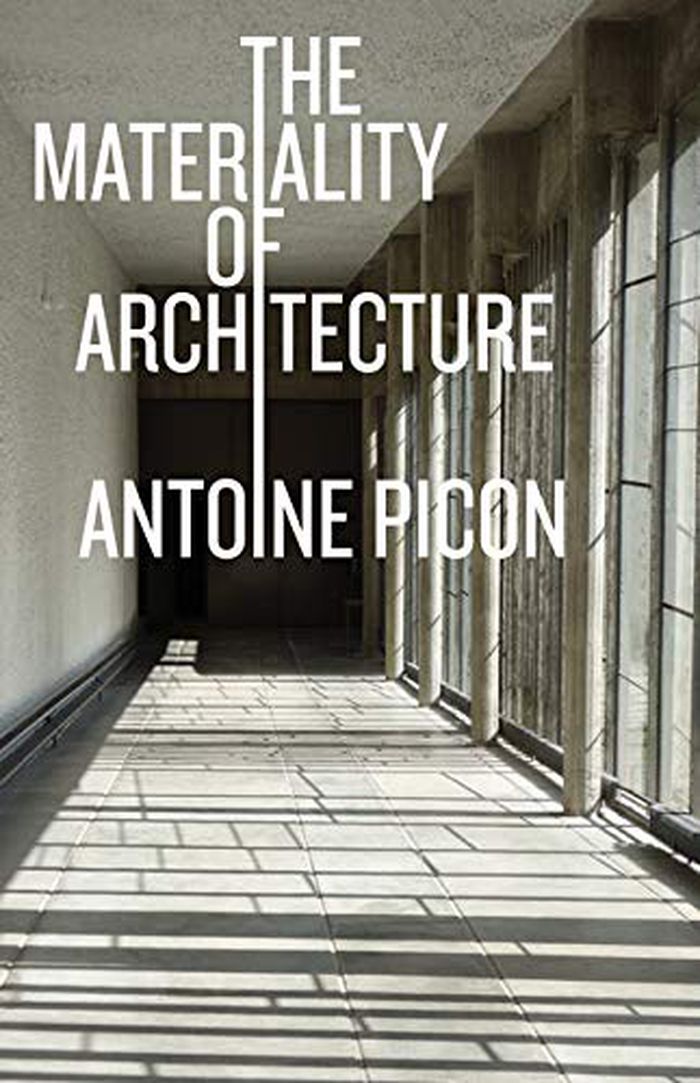
Digital tools have launched architecture into a dizzying new era, one in which wood, stone, metal, glass, and other traditional materials are augmented by pixels and code. In this ambitious exploration, an eminent thinker examines what, exactly, the building blocks of architecture have meant over the centuries and how technology may-or may not-be changing how we think about them. Antoine Picon argues that materiality is not only about matter and that the silence and inscrutability-the otherness-of raw materials work against humanity's need to live in a meaningful world. He describes how people define who they are, in part, through their specific physical experience of architectural materials and spaces. Indeed, Picon asserts, the entire paradox of the architectural discipline consists in its desire to render matter expressive to human beings. Through a retrospective review of canonical moments in Western European architecture, Picon offers an original perspective on the ways materiality has varied throughout centuries, demonstrating how experiences of the physical world have changed in relation to the evolution of human subjectivity. Ultimately, Picon concludes that computer-based design methods are not an abrupt departure from previous architectural traditions but rather a new way for architects to control material resources. The result reinforces the fundamentally humanistic nature of architectural endeavor with an increasing sense of design freedom and a release from material constraint in the digital era.
The materiality of architecture
Actions:
Price:
$37.99
(available in store)
Summary:
Digital tools have launched architecture into a dizzying new era, one in which wood, stone, metal, glass, and other traditional materials are augmented by pixels and code. In this ambitious exploration, an eminent thinker examines what, exactly, the building blocks of architecture have meant over the centuries and how technology may-or may not-be changing how we think about them. Antoine Picon argues that materiality is not only about matter and that the silence and inscrutability-the otherness-of raw materials work against humanity's need to live in a meaningful world. He describes how people define who they are, in part, through their specific physical experience of architectural materials and spaces. Indeed, Picon asserts, the entire paradox of the architectural discipline consists in its desire to render matter expressive to human beings. Through a retrospective review of canonical moments in Western European architecture, Picon offers an original perspective on the ways materiality has varied throughout centuries, demonstrating how experiences of the physical world have changed in relation to the evolution of human subjectivity. Ultimately, Picon concludes that computer-based design methods are not an abrupt departure from previous architectural traditions but rather a new way for architects to control material resources. The result reinforces the fundamentally humanistic nature of architectural endeavor with an increasing sense of design freedom and a release from material constraint in the digital era.
Form:
books
books
Publication:
January 2021
January 2021
Subject:
Architectural Theory
Architectural Theory
Form:
books
books
Actions:
Price:
$45.00
(available to order)
Summary:
Contemporary artist Roni Horn first visited Iceland in 1975 at the age of nineteen, and since then, the island’s treeless expanse has had an enduring hold on Horn’s creative work. Through a series of remarkable and poetic reflections, vignettes, episodes, and illustrated essays, ''Island zombie'' distills the artist’s lifelong experience of Iceland’s natural environment.(...)
$45.00
(available to order)
Summary:
Contemporary artist Roni Horn first visited Iceland in 1975 at the age of nineteen, and since then, the island’s treeless expanse has had an enduring hold on Horn’s creative work. Through a series of remarkable and poetic reflections, vignettes, episodes, and illustrated essays, ''Island zombie'' distills the artist’s lifelong experience of Iceland’s natural environment.(...)
Title:
Island zombie: Iceland writings
Actions:
Price:
$45.00
(available to order)
Summary:
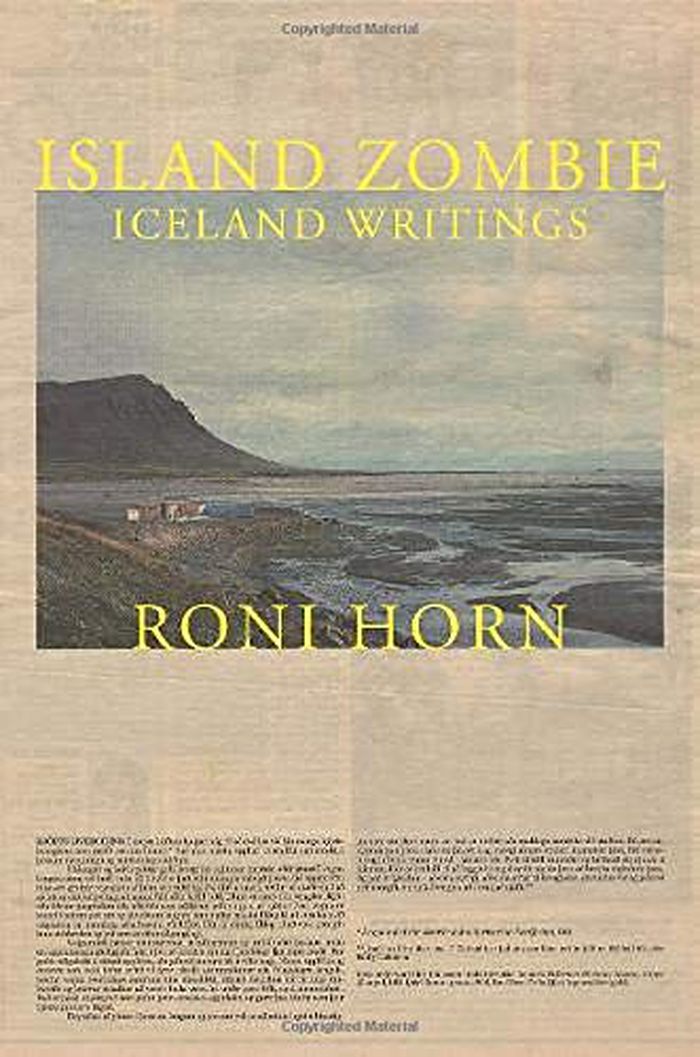
Contemporary artist Roni Horn first visited Iceland in 1975 at the age of nineteen, and since then, the island’s treeless expanse has had an enduring hold on Horn’s creative work. Through a series of remarkable and poetic reflections, vignettes, episodes, and illustrated essays, ''Island zombie'' distills the artist’s lifelong experience of Iceland’s natural environment. Together, these pieces offer an unforgettable exploration of the indefinable and inescapable force of remote, elemental places, and provide a sustained look at how an island and its atmosphere can take possession of the innermost self. ''Island zombie'' is a meditation on being present. It vividly conveys Horn’s experiences, from the deeply profound to the joyful and absurd. Through powerful evocations of the changing weather and other natural phenomena- the violence of the wind, the often aggressive birds, the imposing influence of glaciers, and the ubiquitous presence of water in all its variety- we come to understand the author’s abiding need for Iceland, a place uniquely essential to Horn’s creative and spiritual life. The dramatic surroundings provoke examinations of self-sufficiency and isolation, and these ruminations summon a range of cultural companions, including El Greco, Emily Dickinson, Judy Garland, Wallace Stevens, Edgar Allan Poe, William Morris, and Rachel Carson. While brilliantly portraying nature’s sublime energy, Horn also confronts issues of consumption, destruction, and loss, as the industrial and man-made encroach on Icelandic wilderness.
Island zombie: Iceland writings
Actions:
Price:
$45.00
(available to order)
Summary:
Contemporary artist Roni Horn first visited Iceland in 1975 at the age of nineteen, and since then, the island’s treeless expanse has had an enduring hold on Horn’s creative work. Through a series of remarkable and poetic reflections, vignettes, episodes, and illustrated essays, ''Island zombie'' distills the artist’s lifelong experience of Iceland’s natural environment. Together, these pieces offer an unforgettable exploration of the indefinable and inescapable force of remote, elemental places, and provide a sustained look at how an island and its atmosphere can take possession of the innermost self. ''Island zombie'' is a meditation on being present. It vividly conveys Horn’s experiences, from the deeply profound to the joyful and absurd. Through powerful evocations of the changing weather and other natural phenomena- the violence of the wind, the often aggressive birds, the imposing influence of glaciers, and the ubiquitous presence of water in all its variety- we come to understand the author’s abiding need for Iceland, a place uniquely essential to Horn’s creative and spiritual life. The dramatic surroundings provoke examinations of self-sufficiency and isolation, and these ruminations summon a range of cultural companions, including El Greco, Emily Dickinson, Judy Garland, Wallace Stevens, Edgar Allan Poe, William Morris, and Rachel Carson. While brilliantly portraying nature’s sublime energy, Horn also confronts issues of consumption, destruction, and loss, as the industrial and man-made encroach on Icelandic wilderness.
Form:
books
books
Publication:
December 2020
December 2020
Form:
books
books

Actions:
Price:
$37.95
(available to order)
Summary:
People are key elements of wild places. At the same time, human entanglements with wild ecologies involve extractivism, the growth of resource-based economies, and imperial-colonial expansion, activities that are wreaking havoc on our planet. Through an ethnographic exploration of Canada’s ten UNESCO Natural World Heritage sites, ''Inhabited'' reflects on the meanings(...)
$37.95
(available to order)
Summary:
People are key elements of wild places. At the same time, human entanglements with wild ecologies involve extractivism, the growth of resource-based economies, and imperial-colonial expansion, activities that are wreaking havoc on our planet. Through an ethnographic exploration of Canada’s ten UNESCO Natural World Heritage sites, ''Inhabited'' reflects on the meanings(...)
Subject:
Environment and environmental theory
Environment and environmental theory
Publication:
November 2021
November 2021
Title:
Inhabited: Wildness and the vitality of the land
Actions:
Price:
$37.95
(available to order)
Summary:
People are key elements of wild places. At the same time, human entanglements with wild ecologies involve extractivism, the growth of resource-based economies, and imperial-colonial expansion, activities that are wreaking havoc on our planet. Through an ethnographic exploration of Canada’s ten UNESCO Natural World Heritage sites, ''Inhabited'' reflects on the meanings of wildness, wilderness, and natural heritage. As we are introduced to local inhabitants and their perspectives, Phillip Vannini and April Vannini ask us to reflect on the colonial and dualist assumptions behind the received meaning of wild, challenging us to reimagine wildness as relational and rooted in vitality. Over the three years they spent in and around these sites, they learned from Indigenous and non-Indigenous peoples about their entanglements with each other and with non-human animals, rocks, plants, trees, sky, water, and spirits. The stories, actions, and experiences they encountered challenge conventional narratives of wild places as uninhabited by people and disconnected from culture and society. While it might be tempting to dismiss the idea of wildness as outdated in the Anthropocene era, ''Inhabited'' suggests that rethinking wildness offers a better – if messier – way forward. Part geography and anthropology, part environmental and cultural studies, and part politics and ecology, ''Inhabited'' balances a genuine love of nature’s vitality with a culturally responsible understanding of its interconnectedness with more-than-human ways of life.
Inhabited: Wildness and the vitality of the land
Actions:
Price:
$37.95
(available to order)
Summary:
People are key elements of wild places. At the same time, human entanglements with wild ecologies involve extractivism, the growth of resource-based economies, and imperial-colonial expansion, activities that are wreaking havoc on our planet. Through an ethnographic exploration of Canada’s ten UNESCO Natural World Heritage sites, ''Inhabited'' reflects on the meanings of wildness, wilderness, and natural heritage. As we are introduced to local inhabitants and their perspectives, Phillip Vannini and April Vannini ask us to reflect on the colonial and dualist assumptions behind the received meaning of wild, challenging us to reimagine wildness as relational and rooted in vitality. Over the three years they spent in and around these sites, they learned from Indigenous and non-Indigenous peoples about their entanglements with each other and with non-human animals, rocks, plants, trees, sky, water, and spirits. The stories, actions, and experiences they encountered challenge conventional narratives of wild places as uninhabited by people and disconnected from culture and society. While it might be tempting to dismiss the idea of wildness as outdated in the Anthropocene era, ''Inhabited'' suggests that rethinking wildness offers a better – if messier – way forward. Part geography and anthropology, part environmental and cultural studies, and part politics and ecology, ''Inhabited'' balances a genuine love of nature’s vitality with a culturally responsible understanding of its interconnectedness with more-than-human ways of life.
Form:
books
books
Publication:
November 2021
November 2021
Subject:
Environment and environmental theory
Environment and environmental theory
Form:
books
books

Actions:
Price:
$49.95
(available to order)
Summary:
Seduced by Modernity is the first book devoted to the life and work of Canadian-born modernist photographer Margaret Watkins. Best known for art and advertising photography executed in New York in the 1920s, Watkins was active in the Clarence White school of photography and a participant in the shift from pictorialism to modernism. Mary O'Connor and Katherine Tweedie tell(...)
$49.95
(available to order)
Summary:
Seduced by Modernity is the first book devoted to the life and work of Canadian-born modernist photographer Margaret Watkins. Best known for art and advertising photography executed in New York in the 1920s, Watkins was active in the Clarence White school of photography and a participant in the shift from pictorialism to modernism. Mary O'Connor and Katherine Tweedie tell(...)
Subject:
Photography monographs
Photography monographs
Publication:
September 2007, Montreal Kingston London Ithica
September 2007, Montreal Kingston London Ithica
Title:
Seduced by modernity : The photography of Margaret Watkins
Actions:
Price:
$49.95
(available to order)
Summary:
Seduced by Modernity is the first book devoted to the life and work of Canadian-born modernist photographer Margaret Watkins. Best known for art and advertising photography executed in New York in the 1920s, Watkins was active in the Clarence White school of photography and a participant in the shift from pictorialism to modernism. Mary O'Connor and Katherine Tweedie tell the story of a dedicated artist in difficult circumstances whose working life spanned a Victorian upbringing in Hamilton, Ontario, and the witnessing of the first Soviet Five-Year Plan. The authors use feminist and historical questions as well as close readings of the photographs to relate Watkins' work to questions of gender, modernity, and visual culture. Watkins' modernism, which involved experimentation and a radical focus on form, transgressed boundaries of conventional, high-art subject matter. Her focus was daily life and her photographs, whether an exploration of the objects in her New York kitchen or the public and industrial spaces of Glasgow, Paris, Cologne, Moscow, and Leningrad in the 1930s, strike a balance between abstraction and an evocation of the everyday, offering a unique gendered perspective on modernism and modernity. Seduced by Modernity makes available for the first time an extensive representation of Watkins' work in high-quality reproduction as part of an exemplary interdisciplinary study that honours an intrepid Canadian artist who refused to be confined by borders, convention, or gender.
Seduced by modernity : The photography of Margaret Watkins
Actions:
Price:
$49.95
(available to order)
Summary:
Seduced by Modernity is the first book devoted to the life and work of Canadian-born modernist photographer Margaret Watkins. Best known for art and advertising photography executed in New York in the 1920s, Watkins was active in the Clarence White school of photography and a participant in the shift from pictorialism to modernism. Mary O'Connor and Katherine Tweedie tell the story of a dedicated artist in difficult circumstances whose working life spanned a Victorian upbringing in Hamilton, Ontario, and the witnessing of the first Soviet Five-Year Plan. The authors use feminist and historical questions as well as close readings of the photographs to relate Watkins' work to questions of gender, modernity, and visual culture. Watkins' modernism, which involved experimentation and a radical focus on form, transgressed boundaries of conventional, high-art subject matter. Her focus was daily life and her photographs, whether an exploration of the objects in her New York kitchen or the public and industrial spaces of Glasgow, Paris, Cologne, Moscow, and Leningrad in the 1930s, strike a balance between abstraction and an evocation of the everyday, offering a unique gendered perspective on modernism and modernity. Seduced by Modernity makes available for the first time an extensive representation of Watkins' work in high-quality reproduction as part of an exemplary interdisciplinary study that honours an intrepid Canadian artist who refused to be confined by borders, convention, or gender.
Form:
books
books
Publication:
September 2007, Montreal Kingston London Ithica
September 2007, Montreal Kingston London Ithica
Subject:
Photography monographs
Photography monographs
Form:
books
books
Actions:
Price:
$44.95
(available to order)
Summary:
"Worldchanging : a User's guide for the 21st century " proposes innovative solutions, ideas and inventions emerging today for building a sustainable, livable, prosperous future. From consumer consciousness to a new vision for industry; non-toxic homes to refugee shelters; microfinance to effective philanthropy; socially responsible investing to starting a green business;(...)
$44.95
(available to order)
Summary:
"Worldchanging : a User's guide for the 21st century " proposes innovative solutions, ideas and inventions emerging today for building a sustainable, livable, prosperous future. From consumer consciousness to a new vision for industry; non-toxic homes to refugee shelters; microfinance to effective philanthropy; socially responsible investing to starting a green business;(...)
Title:
Worldchanging : a user's guide for the 21st century
Actions:
Price:
$44.95
(available to order)
Summary:
"Worldchanging : a User's guide for the 21st century " proposes innovative solutions, ideas and inventions emerging today for building a sustainable, livable, prosperous future. From consumer consciousness to a new vision for industry; non-toxic homes to refugee shelters; microfinance to effective philanthropy; socially responsible investing to starting a green business; citizen media to human rights; ecological economics to climate change, this is a comprehensive, cutting-edge overview. The book contains 7 sections which include those topics - from eco-building to responsible shopping, political action to humanitarian relief : stuff : green design, biomimicry, sustainable food, clothing, trade and technology ; shelter : green building and landscaping, clean energy, water, disaster relief and humanitarian design ; cities : smart growth, sustainable communities, transportation, greening infrastructure, product-service systems, leapfrogging and megacity challenges ; community : education, women's rights, public health, holistic approaches to community development, South-South science, social entrepreneurship and micro-lending, and philanthropy ; business : socially responsible investment, worldchanging start-ups, ecological economics, corporate social responsibility and green business ; politics : networked politics, new media, transparency, human rights, non-violent revolution and peacemaking ; planet : big picture -- everything from placing oneself in a bioregion to climate foresight to environmental history to green space exploration. Brought together by Alex Steffen, co-founder of the web site Worldchanging.com, this team of writers includes Cameron Sinclair, founder of Architecture for Humanity, Geekcorps founder Ethan Zuckerman, sustainable food expert Anna Lappé, and many others. With foreword by Al Gore. Design by Sagmeister.
Worldchanging : a user's guide for the 21st century
Actions:
Price:
$44.95
(available to order)
Summary:
"Worldchanging : a User's guide for the 21st century " proposes innovative solutions, ideas and inventions emerging today for building a sustainable, livable, prosperous future. From consumer consciousness to a new vision for industry; non-toxic homes to refugee shelters; microfinance to effective philanthropy; socially responsible investing to starting a green business; citizen media to human rights; ecological economics to climate change, this is a comprehensive, cutting-edge overview. The book contains 7 sections which include those topics - from eco-building to responsible shopping, political action to humanitarian relief : stuff : green design, biomimicry, sustainable food, clothing, trade and technology ; shelter : green building and landscaping, clean energy, water, disaster relief and humanitarian design ; cities : smart growth, sustainable communities, transportation, greening infrastructure, product-service systems, leapfrogging and megacity challenges ; community : education, women's rights, public health, holistic approaches to community development, South-South science, social entrepreneurship and micro-lending, and philanthropy ; business : socially responsible investment, worldchanging start-ups, ecological economics, corporate social responsibility and green business ; politics : networked politics, new media, transparency, human rights, non-violent revolution and peacemaking ; planet : big picture -- everything from placing oneself in a bioregion to climate foresight to environmental history to green space exploration. Brought together by Alex Steffen, co-founder of the web site Worldchanging.com, this team of writers includes Cameron Sinclair, founder of Architecture for Humanity, Geekcorps founder Ethan Zuckerman, sustainable food expert Anna Lappé, and many others. With foreword by Al Gore. Design by Sagmeister.
Form:
books
books
Publication:
January 2007, New York
January 2007, New York
Subject:
Green Architecture
Green Architecture
Form:
books
books
Actions:
Price:
$99.00
(available to order)
Summary:
''Magic Architecture'' was the architect Frederick Kiesler’s most ambitious book project, an epoch-spanning history of human housing from prehistory to the atomic era, submitted to editors after World War II but left unpublished. In its holistic view of habitation through the lens of anthropology, ecology, and the life sciences, ''Magic Architecture'' is one of the most(...)
$99.00
(available to order)
Summary:
''Magic Architecture'' was the architect Frederick Kiesler’s most ambitious book project, an epoch-spanning history of human housing from prehistory to the atomic era, submitted to editors after World War II but left unpublished. In its holistic view of habitation through the lens of anthropology, ecology, and the life sciences, ''Magic Architecture'' is one of the most(...)
Title:
Magic architecture: The story of human housing
Actions:
Price:
$99.00
(available to order)
Summary:
''Magic Architecture'' was the architect Frederick Kiesler’s most ambitious book project, an epoch-spanning history of human housing from prehistory to the atomic era, submitted to editors after World War II but left unpublished. In its holistic view of habitation through the lens of anthropology, ecology, and the life sciences, ''Magic Architecture'' is one of the most extraordinary texts on architecture written in the twentieth century, now at last published in the twenty-first. Kiesler’s exploration of the effects of modern technology in combination with the alternative epistemology of “magical” practices associated with cave drawings and the first artifacts of human industry reflects his profoundly interdisciplinary perspective on the development of art, architecture, and design. This critical edition preserves Kiesler’s conception of the book as a neo-Vitruvian treatise divided into ten parts that narrate an alternative history and theory of architecture. Also included are more than seventy composite plate illustrations consisting of images cut and pasted from books and popular science journals, with elaborate captions, as well as Kiesler’s own line drawings made specifically for this project. The editors have reassembled the book’s text and illustrations from archival documents, supplementing them with notes that trace the copious development of the work. Introductory essays provide an interpretation of key themes and bibliographic sources, as well as a chronological context of the architect’s research. Appendixes offer additional textual and visual material gathered by Kiesler for the project.
Magic architecture: The story of human housing
Actions:
Price:
$99.00
(available to order)
Summary:
''Magic Architecture'' was the architect Frederick Kiesler’s most ambitious book project, an epoch-spanning history of human housing from prehistory to the atomic era, submitted to editors after World War II but left unpublished. In its holistic view of habitation through the lens of anthropology, ecology, and the life sciences, ''Magic Architecture'' is one of the most extraordinary texts on architecture written in the twentieth century, now at last published in the twenty-first. Kiesler’s exploration of the effects of modern technology in combination with the alternative epistemology of “magical” practices associated with cave drawings and the first artifacts of human industry reflects his profoundly interdisciplinary perspective on the development of art, architecture, and design. This critical edition preserves Kiesler’s conception of the book as a neo-Vitruvian treatise divided into ten parts that narrate an alternative history and theory of architecture. Also included are more than seventy composite plate illustrations consisting of images cut and pasted from books and popular science journals, with elaborate captions, as well as Kiesler’s own line drawings made specifically for this project. The editors have reassembled the book’s text and illustrations from archival documents, supplementing them with notes that trace the copious development of the work. Introductory essays provide an interpretation of key themes and bibliographic sources, as well as a chronological context of the architect’s research. Appendixes offer additional textual and visual material gathered by Kiesler for the project.
Form:
books
books
Publication:
April 2025
April 2025
Subject:
Architecture Monographs
Architecture Monographs
Form:
books
books
Actions:
Price:
$34.95
(available to order)
Summary:
For as long as humans have gathered in cities, those cities have had their shining—or shadowy—counterparts. Imaginary cities, potential cities, future cities, perfect cities. It is as if the city itself, its inescapable gritty reality and elbow-to-elbow nature, demands we call into being some alternative, yearned-for better place. This book is about those cities. It’s(...)
$34.95
(available to order)
Summary:
For as long as humans have gathered in cities, those cities have had their shining—or shadowy—counterparts. Imaginary cities, potential cities, future cities, perfect cities. It is as if the city itself, its inescapable gritty reality and elbow-to-elbow nature, demands we call into being some alternative, yearned-for better place. This book is about those cities. It’s(...)
Title:
Imaginary cities: a tour of dream cities, nightmare cities and everywhere in between
Actions:
Price:
$34.95
(available to order)
Summary:
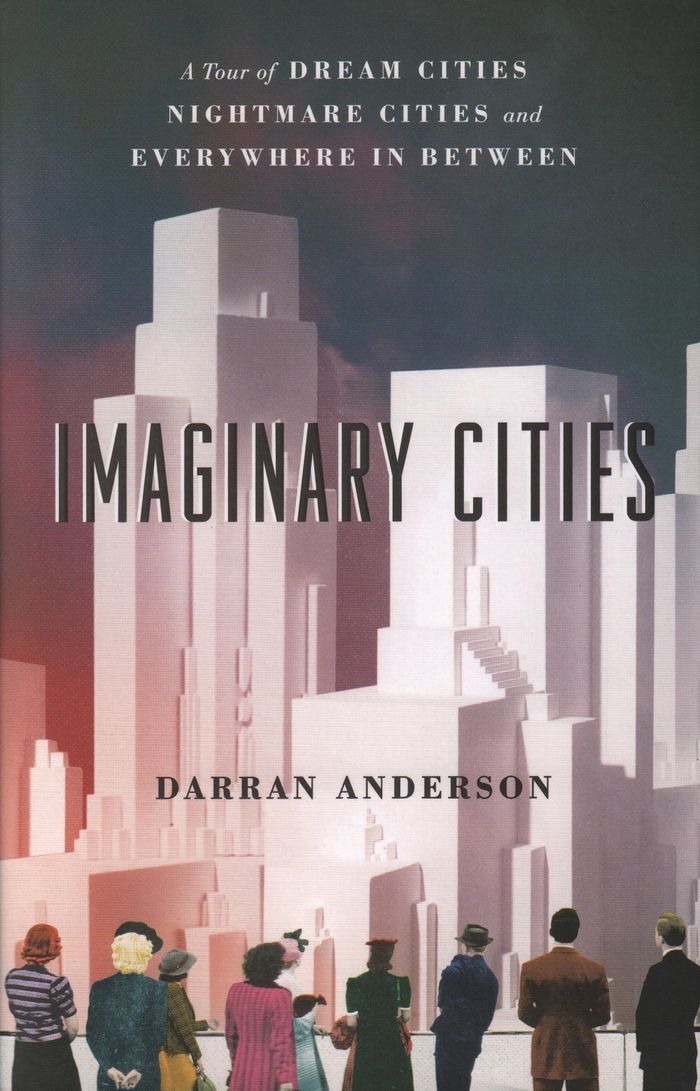
For as long as humans have gathered in cities, those cities have had their shining—or shadowy—counterparts. Imaginary cities, potential cities, future cities, perfect cities. It is as if the city itself, its inescapable gritty reality and elbow-to-elbow nature, demands we call into being some alternative, yearned-for better place. This book is about those cities. It’s neither a history of grand plans nor a literary exploration of the utopian impulse, but rather something different, hybrid, idiosyncratic. It’s a magpie’s book, full of characters and incidents and ideas drawn from cities real and imagined around the globe and throughout history. Thomas More’s allegorical island shares space with Soviet mega-planning; Marco Polo links up with James Joyce’s meticulously imagined Dublin; the medieval land of Cockaigne meets the hopeful future of Star Trek. With Darran Anderson as our guide, we find common themes and recurring dreams, tied to the seemingly ineluctable problems of our actual cities, of poverty and exclusion and waste and destruction. And that’s where Imaginary Cities becomes more than a mere—if ecstatically entertaining—intellectual exercise: for, as Anderson says, “If a city can be imagined into being, it can be re-imagined.” Every architect, philosopher, artist, writer, planner, or citizen who dreams up an imaginary city offers lessons for our real ones; harnessing those flights of hopeful fancy can help us improve the streets where we live.
Imaginary cities: a tour of dream cities, nightmare cities and everywhere in between
Actions:
Price:
$34.95
(available to order)
Summary:
For as long as humans have gathered in cities, those cities have had their shining—or shadowy—counterparts. Imaginary cities, potential cities, future cities, perfect cities. It is as if the city itself, its inescapable gritty reality and elbow-to-elbow nature, demands we call into being some alternative, yearned-for better place. This book is about those cities. It’s neither a history of grand plans nor a literary exploration of the utopian impulse, but rather something different, hybrid, idiosyncratic. It’s a magpie’s book, full of characters and incidents and ideas drawn from cities real and imagined around the globe and throughout history. Thomas More’s allegorical island shares space with Soviet mega-planning; Marco Polo links up with James Joyce’s meticulously imagined Dublin; the medieval land of Cockaigne meets the hopeful future of Star Trek. With Darran Anderson as our guide, we find common themes and recurring dreams, tied to the seemingly ineluctable problems of our actual cities, of poverty and exclusion and waste and destruction. And that’s where Imaginary Cities becomes more than a mere—if ecstatically entertaining—intellectual exercise: for, as Anderson says, “If a city can be imagined into being, it can be re-imagined.” Every architect, philosopher, artist, writer, planner, or citizen who dreams up an imaginary city offers lessons for our real ones; harnessing those flights of hopeful fancy can help us improve the streets where we live.
Form:
books
books
Publication:
April 2017
April 2017
Subject:
Urban Theory
Urban Theory
Form:
books
books
Price:
$63.95
(available to order)
Summary:
Polaroid instant photography revolutionized the taking and making of pictures, and the story of its beginnings is a simple one. In 1943, after being asked by his daughter why she couldn’t immediately see the photograph he had just taken, American inventor and scientist Edwin H. Land conceived of the technology required to make this seemingly impossible demand a(...)
$63.95
(available to order)
Summary:
Polaroid instant photography revolutionized the taking and making of pictures, and the story of its beginnings is a simple one. In 1943, after being asked by his daughter why she couldn’t immediately see the photograph he had just taken, American inventor and scientist Edwin H. Land conceived of the technology required to make this seemingly impossible demand a(...)
Title:
The Polaroid project: at the intersection of art and technology
Actions:
Price:
$63.95
(available to order)
Summary:
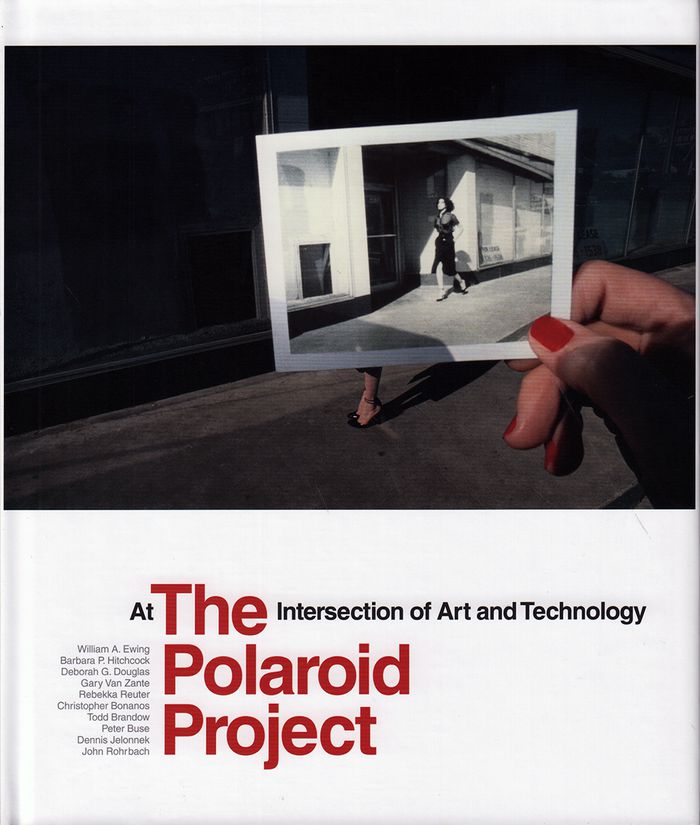
Polaroid instant photography revolutionized the taking and making of pictures, and the story of its beginnings is a simple one. In 1943, after being asked by his daughter why she couldn’t immediately see the photograph he had just taken, American inventor and scientist Edwin H. Land conceived of the technology required to make this seemingly impossible demand a reality—within an hour. Land’s creation was a groundbreaking scientific accomplishment that also heralded an exciting new chapter of artistic expression. Through the efforts of thousands of photographers the world over, as well as the corporation’s own artist support program, which provided many with materials, Polaroid would help shape the artistic landscape of the late twentieth century. Published to accompany a major traveling exhibition, "The Polaroid project" is a creative exploration of the relationship between Polaroid’s many technological innovations and the art that was created with their help. Richly designed with over 300 illustrations, this impressive volume showcases not only the myriad and often idiosyncratic approaches taken by such photographers as Ansel Adams, Robert Mapplethorpe, Ellen Carey, and Chuck Close, but also a fascinating selection of the technical objects and artifacts that speak to the sheer ingenuity that lay behind the art. With essays by the exhibition’s curators and leading photographic writers and historians, "The Polaroid project" provides a unique perspective on the Polaroid phenomenon—a technology, an art form, a convergence of both—and its enduring cultural legacy.
The Polaroid project: at the intersection of art and technology
Actions:
Price:
$63.95
(available to order)
Summary:
Polaroid instant photography revolutionized the taking and making of pictures, and the story of its beginnings is a simple one. In 1943, after being asked by his daughter why she couldn’t immediately see the photograph he had just taken, American inventor and scientist Edwin H. Land conceived of the technology required to make this seemingly impossible demand a reality—within an hour. Land’s creation was a groundbreaking scientific accomplishment that also heralded an exciting new chapter of artistic expression. Through the efforts of thousands of photographers the world over, as well as the corporation’s own artist support program, which provided many with materials, Polaroid would help shape the artistic landscape of the late twentieth century. Published to accompany a major traveling exhibition, "The Polaroid project" is a creative exploration of the relationship between Polaroid’s many technological innovations and the art that was created with their help. Richly designed with over 300 illustrations, this impressive volume showcases not only the myriad and often idiosyncratic approaches taken by such photographers as Ansel Adams, Robert Mapplethorpe, Ellen Carey, and Chuck Close, but also a fascinating selection of the technical objects and artifacts that speak to the sheer ingenuity that lay behind the art. With essays by the exhibition’s curators and leading photographic writers and historians, "The Polaroid project" provides a unique perspective on the Polaroid phenomenon—a technology, an art form, a convergence of both—and its enduring cultural legacy.
Form:
books
books
Publication:
June 2017
June 2017
Subject:
Theory of Photography
Theory of Photography
Form:
books
books
Price:
$33.95
(available to order)
Summary:
Increasingly we live through our personal screens; we work, play, socialize, and learn digitally. The shift to remote everything during the pandemic was another step in a decades-long march toward the digitization of everyday life made possible by innovations in media, information, and communication technology. In "The Digital Environment," Pablo Boczkowski and Eugenia(...)
$33.95
(available to order)
Summary:
Increasingly we live through our personal screens; we work, play, socialize, and learn digitally. The shift to remote everything during the pandemic was another step in a decades-long march toward the digitization of everyday life made possible by innovations in media, information, and communication technology. In "The Digital Environment," Pablo Boczkowski and Eugenia(...)
Title:
The digital environment: How we live, learn, work and play now
Actions:
Price:
$33.95
(available to order)
Summary:
Increasingly we live through our personal screens; we work, play, socialize, and learn digitally. The shift to remote everything during the pandemic was another step in a decades-long march toward the digitization of everyday life made possible by innovations in media, information, and communication technology. In "The Digital Environment," Pablo Boczkowski and Eugenia Mitchelstein offer a new way to understand the role of the digital in our daily lives, calling on us to turn our attention from our discrete devices and apps to the array of artifacts and practices that make up the digital environment that envelops every aspect of our social experience. Boczkowski and Mitchelstein explore a series of issues raised by the digital takeover of everyday life, drawing on interviews with a variety of experts. They show how existing inequities of gender, race, ethnicity, education, and class are baked into the design and deployment of technology, and describe emancipatory practices that counter this–including the use of Twitter as a platform for activism through such hashtags as #BlackLivesMatter and #MeToo. They discuss the digitization of parenting, schooling, and dating–noting, among other things, that today we can both begin and end relationships online. They describe how digital media shape our consumption of sports, entertainment, and news, and consider the dynamics of political campaigns, disinformation, and social activism. Finally, they report on developments in three areas that will be key to our digital future: data science, virtual reality, and space exploration.
The digital environment: How we live, learn, work and play now
Actions:
Price:
$33.95
(available to order)
Summary:
Increasingly we live through our personal screens; we work, play, socialize, and learn digitally. The shift to remote everything during the pandemic was another step in a decades-long march toward the digitization of everyday life made possible by innovations in media, information, and communication technology. In "The Digital Environment," Pablo Boczkowski and Eugenia Mitchelstein offer a new way to understand the role of the digital in our daily lives, calling on us to turn our attention from our discrete devices and apps to the array of artifacts and practices that make up the digital environment that envelops every aspect of our social experience. Boczkowski and Mitchelstein explore a series of issues raised by the digital takeover of everyday life, drawing on interviews with a variety of experts. They show how existing inequities of gender, race, ethnicity, education, and class are baked into the design and deployment of technology, and describe emancipatory practices that counter this–including the use of Twitter as a platform for activism through such hashtags as #BlackLivesMatter and #MeToo. They discuss the digitization of parenting, schooling, and dating–noting, among other things, that today we can both begin and end relationships online. They describe how digital media shape our consumption of sports, entertainment, and news, and consider the dynamics of political campaigns, disinformation, and social activism. Finally, they report on developments in three areas that will be key to our digital future: data science, virtual reality, and space exploration.
Form:
books
books
Publication:
August 2021
August 2021
Subject:
Social
Social
Form:
books
books
Actions:
Price:
$44.95
(available to order)
Summary:
Based on the popular online photo series and now published in print for the first time, ''The debt project'' collects 99 portraits of debt across the United States, featuring people of all different backgrounds and stories, to recontextualize an often stigmatized experience. In 2013, Brittany Powell made the difficult decision to file for bankruptcy for her photography(...)
$44.95
(available to order)
Summary:
Based on the popular online photo series and now published in print for the first time, ''The debt project'' collects 99 portraits of debt across the United States, featuring people of all different backgrounds and stories, to recontextualize an often stigmatized experience. In 2013, Brittany Powell made the difficult decision to file for bankruptcy for her photography(...)
Title:
The debt project: 99 portraits across America
Actions:
Price:
$44.95
(available to order)
Summary:
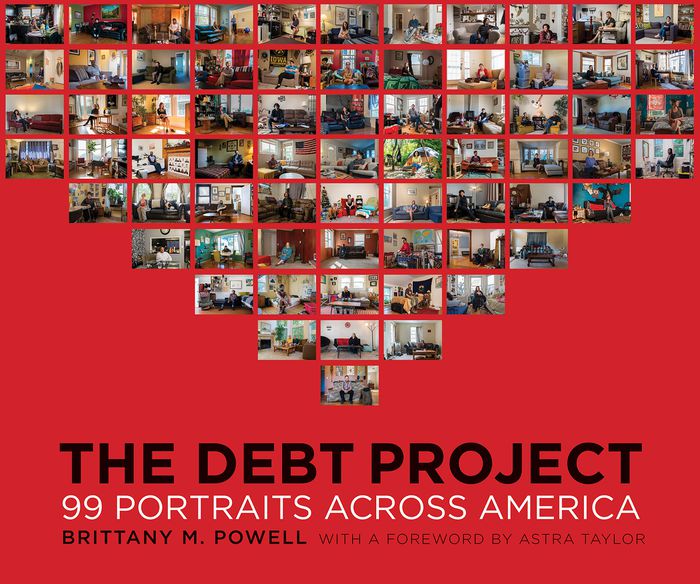
Based on the popular online photo series and now published in print for the first time, ''The debt project'' collects 99 portraits of debt across the United States, featuring people of all different backgrounds and stories, to recontextualize an often stigmatized experience. In 2013, Brittany Powell made the difficult decision to file for bankruptcy for her photography business. In the years following the 2008 economic collapse, she found herself in a significant amount of debt, a position many Americans across the country still share, a common yet isolating and private experience often steeped in shame. Her personal experience, bolstered by the We Are the 99% slogan that came out of the Occupy movement, brought her to start The Debt Project, an exploration of the role debt and finance plays in our personal identity and social structure. This book presents an intimate look into 99 different lives: each shares an arrestingly honest portrait in the person’s home, surrounded by all their belongings, accompanied by a handwritten note of the amount of debt that person is in and the story behind the numbers. ''The debt project,'' with a foreword by writer and filmmaker Astra Taylor plus resources at the back of the book to support people in debt, examines the social and personal hold financial debt has on us and invites others into a private world, while at the same empowering people to share their stories and overcome the shame they may feel.
The debt project: 99 portraits across America
Actions:
Price:
$44.95
(available to order)
Summary:
Based on the popular online photo series and now published in print for the first time, ''The debt project'' collects 99 portraits of debt across the United States, featuring people of all different backgrounds and stories, to recontextualize an often stigmatized experience. In 2013, Brittany Powell made the difficult decision to file for bankruptcy for her photography business. In the years following the 2008 economic collapse, she found herself in a significant amount of debt, a position many Americans across the country still share, a common yet isolating and private experience often steeped in shame. Her personal experience, bolstered by the We Are the 99% slogan that came out of the Occupy movement, brought her to start The Debt Project, an exploration of the role debt and finance plays in our personal identity and social structure. This book presents an intimate look into 99 different lives: each shares an arrestingly honest portrait in the person’s home, surrounded by all their belongings, accompanied by a handwritten note of the amount of debt that person is in and the story behind the numbers. ''The debt project,'' with a foreword by writer and filmmaker Astra Taylor plus resources at the back of the book to support people in debt, examines the social and personal hold financial debt has on us and invites others into a private world, while at the same empowering people to share their stories and overcome the shame they may feel.
Form:
books
books
Publication:
October 2020
October 2020
Subject:
Photography monographs
Photography monographs


