


2091 Results
Form:
books
books
Actions:
Price:
$39.95
(available to order)
Summary:
In this book, historian Lorraine Daston traces the development of rules in the Western tradition and shows how they have evolved from ancient to modern times. Drawing on a rich trove of examples, including legal treatises, cookbooks, military manuals, traffic regulations, and game handbooks, Daston demonstrates that while the content of rules is dazzlingly diverse, the(...)
$39.95
(available to order)
Summary:
In this book, historian Lorraine Daston traces the development of rules in the Western tradition and shows how they have evolved from ancient to modern times. Drawing on a rich trove of examples, including legal treatises, cookbooks, military manuals, traffic regulations, and game handbooks, Daston demonstrates that while the content of rules is dazzlingly diverse, the(...)
Title:
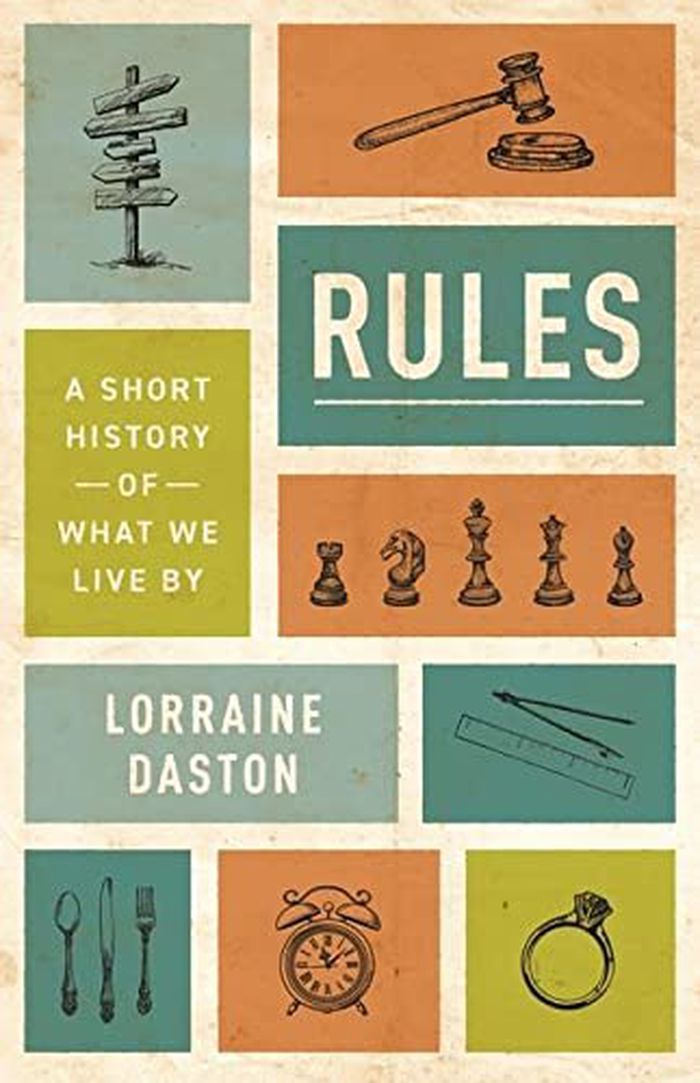
Rules: A short history of what we live by
Actions:
Price:
$39.95
(available to order)
Summary:
In this book, historian Lorraine Daston traces the development of rules in the Western tradition and shows how they have evolved from ancient to modern times. Drawing on a rich trove of examples, including legal treatises, cookbooks, military manuals, traffic regulations, and game handbooks, Daston demonstrates that while the content of rules is dazzlingly diverse, the forms that they take are surprisingly few and long-lived. Rules have been devised for almost every imaginable activity and range from meticulous regulations to the laws of nature. Daston probes beneath this variety to investigate when rules work and when they don’t, and why some philosophical problems about rules are as ancient as philosophy itself while others are as modern as calculating machines.
Rules: A short history of what we live by
Actions:
Price:
$39.95
(available to order)
Summary:
In this book, historian Lorraine Daston traces the development of rules in the Western tradition and shows how they have evolved from ancient to modern times. Drawing on a rich trove of examples, including legal treatises, cookbooks, military manuals, traffic regulations, and game handbooks, Daston demonstrates that while the content of rules is dazzlingly diverse, the forms that they take are surprisingly few and long-lived. Rules have been devised for almost every imaginable activity and range from meticulous regulations to the laws of nature. Daston probes beneath this variety to investigate when rules work and when they don’t, and why some philosophical problems about rules are as ancient as philosophy itself while others are as modern as calculating machines.
Form:
books
books
Publication:
July 2022
July 2022
Subject:
Social
Social
Form:
books
books
Actions:
Holdings:
Description:
viii, 376 pages : illustrations ; 24 cm
Description:
viii, 376 pages : illustrations ; 24 cm
Author:
Subject:
Publication:
Philadelphia : University of Pennsylvania Press, [2016]
Philadelphia : University of Pennsylvania Press, [2016]
Title:
Ideas of Chinese gardens : Western accounts, 1300-1860 / edited by Bianca Maria Rinaldi.
Actions:
Holdings:
Description:
viii, 376 pages : illustrations ; 24 cm
Ideas of Chinese gardens : Western accounts, 1300-1860 / edited by Bianca Maria Rinaldi.
Actions:
Holdings:
Description:
viii, 376 pages : illustrations ; 24 cm
Form:
books
books
Publication:
Philadelphia : University of Pennsylvania Press, [2016]
Philadelphia : University of Pennsylvania Press, [2016]
Author:
Subject:
Form:
books
books
Actions:
Holdings:
Description:
xii, 196 pages : illustrations, maps ; 24 cm
Description:
xii, 196 pages : illustrations, maps ; 24 cm
Author:
Subject:
Publication:
New York, NY : Routledge, 2010.
New York, NY : Routledge, 2010.
Title:
Disrupted cities : when infrastructure fails / edited by Stephen Graham.
Actions:
Holdings:
Description:
xii, 196 pages : illustrations, maps ; 24 cm
Disrupted cities : when infrastructure fails / edited by Stephen Graham.
Actions:
Holdings:
Description:
xii, 196 pages : illustrations, maps ; 24 cm
Form:
books
books
Publication:
New York, NY : Routledge, 2010.
New York, NY : Routledge, 2010.
Author:
Subject:
Form:
books
books
Actions:
Price:
$78.95
(available to order)
Summary:
Founded by Eyal Weizman at Goldsmiths College in London in 2010, the research agency Forensic Architecture has investigated dozens of incidents of state violence—military intervention, environmental destruction, border violence and police murder. Working at the intersection of architecture, law, journalism, human rights and ecology, Forensic Architecture researches(...)
$78.95
(available to order)
Summary:
Founded by Eyal Weizman at Goldsmiths College in London in 2010, the research agency Forensic Architecture has investigated dozens of incidents of state violence—military intervention, environmental destruction, border violence and police murder. Working at the intersection of architecture, law, journalism, human rights and ecology, Forensic Architecture researches(...)
Subject:
Architecture Monographs
Architecture Monographs
Publication:
December 2022
December 2022
Title:
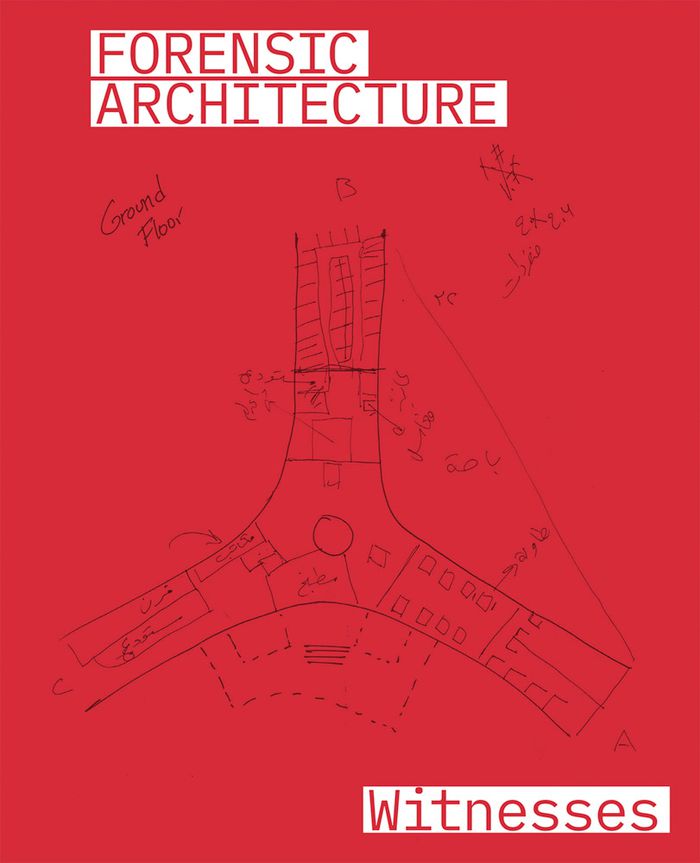
Forensic architecture: Witnesses
Actions:
Price:
$78.95
(available to order)
Summary:
Founded by Eyal Weizman at Goldsmiths College in London in 2010, the research agency Forensic Architecture has investigated dozens of incidents of state violence—military intervention, environmental destruction, border violence and police murder. Working at the intersection of architecture, law, journalism, human rights and ecology, Forensic Architecture researches conflicts and crimes around the world, using architectural tools and methods to conduct spatial and architectural analyses of particular incidents. They do not design new buildings, but like other architects, they examine and model spaces, with the aim of shedding light on events. This catalog focuses on the witnesses at the core of Forensic Architecture’s work. Featuring texts by Weizman, Christina Varvia and a roundtable discussion between members of the current team, this richly illustrated book opens a window into Forensic Architecture’s working methods and projects.
Forensic architecture: Witnesses
Actions:
Price:
$78.95
(available to order)
Summary:
Founded by Eyal Weizman at Goldsmiths College in London in 2010, the research agency Forensic Architecture has investigated dozens of incidents of state violence—military intervention, environmental destruction, border violence and police murder. Working at the intersection of architecture, law, journalism, human rights and ecology, Forensic Architecture researches conflicts and crimes around the world, using architectural tools and methods to conduct spatial and architectural analyses of particular incidents. They do not design new buildings, but like other architects, they examine and model spaces, with the aim of shedding light on events. This catalog focuses on the witnesses at the core of Forensic Architecture’s work. Featuring texts by Weizman, Christina Varvia and a roundtable discussion between members of the current team, this richly illustrated book opens a window into Forensic Architecture’s working methods and projects.
Form:
books
books
Publication:
December 2022
December 2022
Subject:
Architecture Monographs
Architecture Monographs
Form:
books
books
Actions:
Price:
$54.00
(available to order)
Summary:
This is the latest of Donovan Wylie's (born 1971) books that explore the architecture of the Northern Ireland conflict. While Wylie's earlier publications document disappearing military structures, ''Housing Plans for the Future'' focuses on the legacy of architectural containment in urban areas today. Wylie took these photos during walks through a number of(...)
$54.00
(available to order)
Summary:
This is the latest of Donovan Wylie's (born 1971) books that explore the architecture of the Northern Ireland conflict. While Wylie's earlier publications document disappearing military structures, ''Housing Plans for the Future'' focuses on the legacy of architectural containment in urban areas today. Wylie took these photos during walks through a number of(...)
Title:
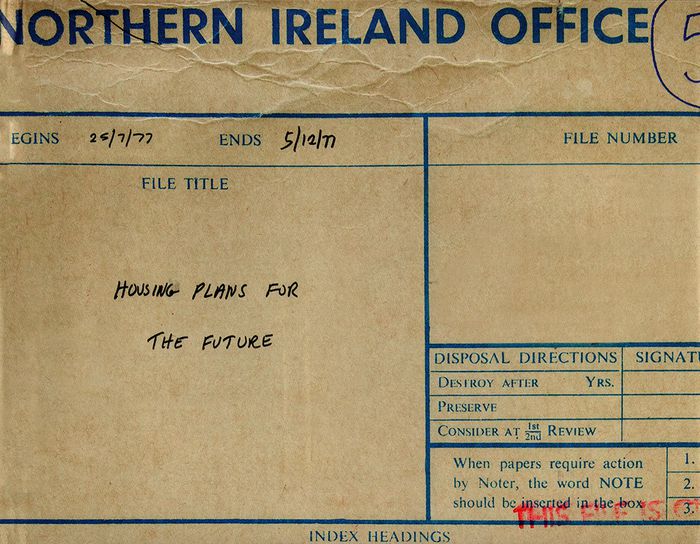
Donovan Wylie: housing plans for the future
Actions:
Price:
$54.00
(available to order)
Summary:
This is the latest of Donovan Wylie's (born 1971) books that explore the architecture of the Northern Ireland conflict. While Wylie's earlier publications document disappearing military structures, ''Housing Plans for the Future'' focuses on the legacy of architectural containment in urban areas today. Wylie took these photos during walks through a number of social-housing neighborhoods in inner-city Belfast, which look eerily similar. While the built environments at first appear benign, even mundane, sustained looking reveals how they purposely control vision and movement. Walls block vehicle access, houses are inverted to face away from neighboring communities and minimize potential antagonism, and excessive street lighting ensures visibility. These defensive structures, built in the 1970s and '80s and still populated today, are a powerful and largely unrecognized legacy of the Northern Ireland conflict.
Donovan Wylie: housing plans for the future
Actions:
Price:
$54.00
(available to order)
Summary:
This is the latest of Donovan Wylie's (born 1971) books that explore the architecture of the Northern Ireland conflict. While Wylie's earlier publications document disappearing military structures, ''Housing Plans for the Future'' focuses on the legacy of architectural containment in urban areas today. Wylie took these photos during walks through a number of social-housing neighborhoods in inner-city Belfast, which look eerily similar. While the built environments at first appear benign, even mundane, sustained looking reveals how they purposely control vision and movement. Walls block vehicle access, houses are inverted to face away from neighboring communities and minimize potential antagonism, and excessive street lighting ensures visibility. These defensive structures, built in the 1970s and '80s and still populated today, are a powerful and largely unrecognized legacy of the Northern Ireland conflict.
Form:
books
books
Publication:
September 2018
September 2018
Subject:
Photography monographs
Photography monographs
Form:
books
books
Actions:
Price:
$39.95
(available to order)
Summary:
Islandology is a fast-paced, fact-filled comparative essay in critical topography and cultural geography that cuts across different cultures and argues for a world of islands. The book explores the logical consequences of geographic place for the development of philosophy and the study of limits (Greece) and for the establishment of North Sea democracy (England and(...)
$39.95
(available to order)
Summary:
Islandology is a fast-paced, fact-filled comparative essay in critical topography and cultural geography that cuts across different cultures and argues for a world of islands. The book explores the logical consequences of geographic place for the development of philosophy and the study of limits (Greece) and for the establishment of North Sea democracy (England and(...)
Title:
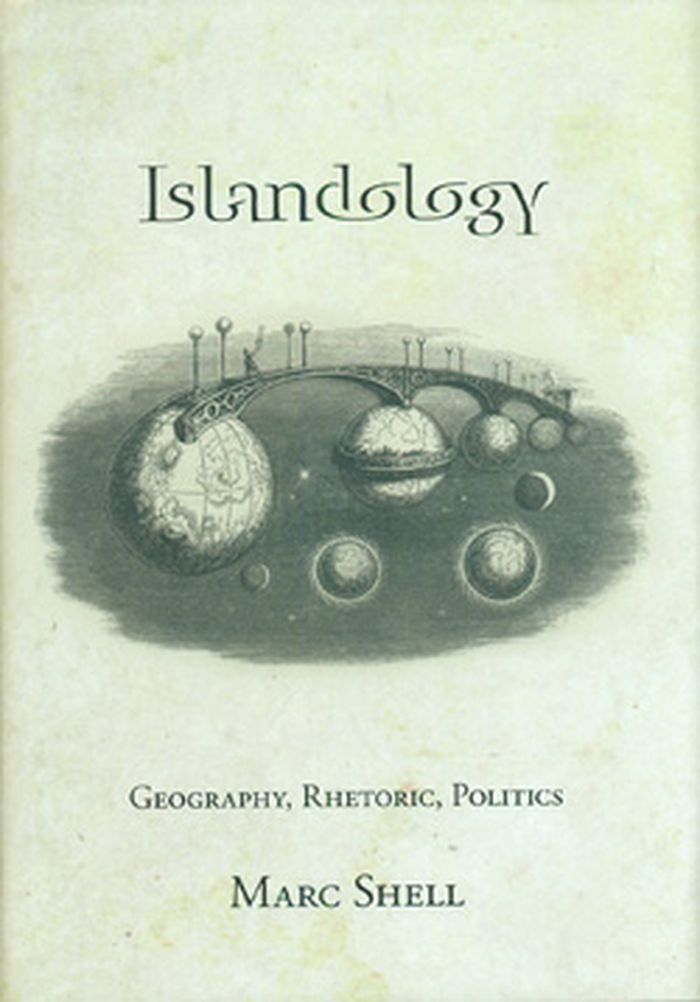
Islandology : geography, rhetoric, politics
Actions:
Price:
$39.95
(available to order)
Summary:
Islandology is a fast-paced, fact-filled comparative essay in critical topography and cultural geography that cuts across different cultures and argues for a world of islands. The book explores the logical consequences of geographic place for the development of philosophy and the study of limits (Greece) and for the establishment of North Sea democracy (England and Iceland), explains the location of military hot-spots and great cities (Hormuz and Manhattan), and sheds new light on dozens of world-historical productions whose motivating islandic aspect has not heretofore been recognized (Shakespeare's Hamlet and Wagner's Ring of the Nibelung). Written by Shell in view of the melting of the world's great ice islands,Islandology shows not only new ways that we think about islands but also why and how we think by means of them.
Islandology : geography, rhetoric, politics
Actions:
Price:
$39.95
(available to order)
Summary:
Islandology is a fast-paced, fact-filled comparative essay in critical topography and cultural geography that cuts across different cultures and argues for a world of islands. The book explores the logical consequences of geographic place for the development of philosophy and the study of limits (Greece) and for the establishment of North Sea democracy (England and Iceland), explains the location of military hot-spots and great cities (Hormuz and Manhattan), and sheds new light on dozens of world-historical productions whose motivating islandic aspect has not heretofore been recognized (Shakespeare's Hamlet and Wagner's Ring of the Nibelung). Written by Shell in view of the melting of the world's great ice islands,Islandology shows not only new ways that we think about islands but also why and how we think by means of them.
Form:
books
books
Publication:
February 2014
February 2014
Subject:
Architectural Theory
Architectural Theory
Form:
books
books
Actions:
Price:
$56.95
(available to order)
Summary:
Games like America’s Army, World of Warcraft and Grand Theft Auto and the music of Snoop 'Doggy' Dogg, Dizzee Rascal and Juan Atkins are fuelling the engines of globalization. As a result, popular culture is taking an ever firmer grip on our living environment and on our lives. In Mediapolis the authors sound out an urban environment pulsing to the rhythm of the popular(...)
$56.95
(available to order)
Summary:
Games like America’s Army, World of Warcraft and Grand Theft Auto and the music of Snoop 'Doggy' Dogg, Dizzee Rascal and Juan Atkins are fuelling the engines of globalization. As a result, popular culture is taking an ever firmer grip on our living environment and on our lives. In Mediapolis the authors sound out an urban environment pulsing to the rhythm of the popular(...)
Title:
Mediapolis : popular culture and the city
Actions:
Price:
$56.95
(available to order)
Summary:
Games like America’s Army, World of Warcraft and Grand Theft Auto and the music of Snoop 'Doggy' Dogg, Dizzee Rascal and Juan Atkins are fuelling the engines of globalization. As a result, popular culture is taking an ever firmer grip on our living environment and on our lives. In Mediapolis the authors sound out an urban environment pulsing to the rhythm of the popular media. They introduce a pop philosophy whose concepts include the Urban Container, 'scenius', sonic communities and nodal urbanity. Here technological, political, cultural, economic and even military developments meet head-on. Mediapolis makes clear what urban pop culture is and how it has influenced our notion of city. The words of the Italian Futurist Antonio Sant’Elia are as true today as in 1914 : "Every generation must build its own city".
Mediapolis : popular culture and the city
Actions:
Price:
$56.95
(available to order)
Summary:
Games like America’s Army, World of Warcraft and Grand Theft Auto and the music of Snoop 'Doggy' Dogg, Dizzee Rascal and Juan Atkins are fuelling the engines of globalization. As a result, popular culture is taking an ever firmer grip on our living environment and on our lives. In Mediapolis the authors sound out an urban environment pulsing to the rhythm of the popular media. They introduce a pop philosophy whose concepts include the Urban Container, 'scenius', sonic communities and nodal urbanity. Here technological, political, cultural, economic and even military developments meet head-on. Mediapolis makes clear what urban pop culture is and how it has influenced our notion of city. The words of the Italian Futurist Antonio Sant’Elia are as true today as in 1914 : "Every generation must build its own city".
Form:
books
books
Publication:
June 2006, Rotterdam
June 2006, Rotterdam
Subject:
Urban Theory
Urban Theory
Form:
books
books
Actions:
Price:
$32.00
(available in store)
Summary:
This book travels back and forth in time through scenes of erasure at three primary locations—Southwest, Washington DC (displacement); North St Louis (demolition), and South Los Angeles (extraction). "Erasure by design" shares first person narratives of growing up in the wake of slum clearance—that is, "urban renewal"—in Southwest, Washington DC, while assembling archival(...)
$32.00
(available in store)
Summary:
This book travels back and forth in time through scenes of erasure at three primary locations—Southwest, Washington DC (displacement); North St Louis (demolition), and South Los Angeles (extraction). "Erasure by design" shares first person narratives of growing up in the wake of slum clearance—that is, "urban renewal"—in Southwest, Washington DC, while assembling archival(...)
Title:
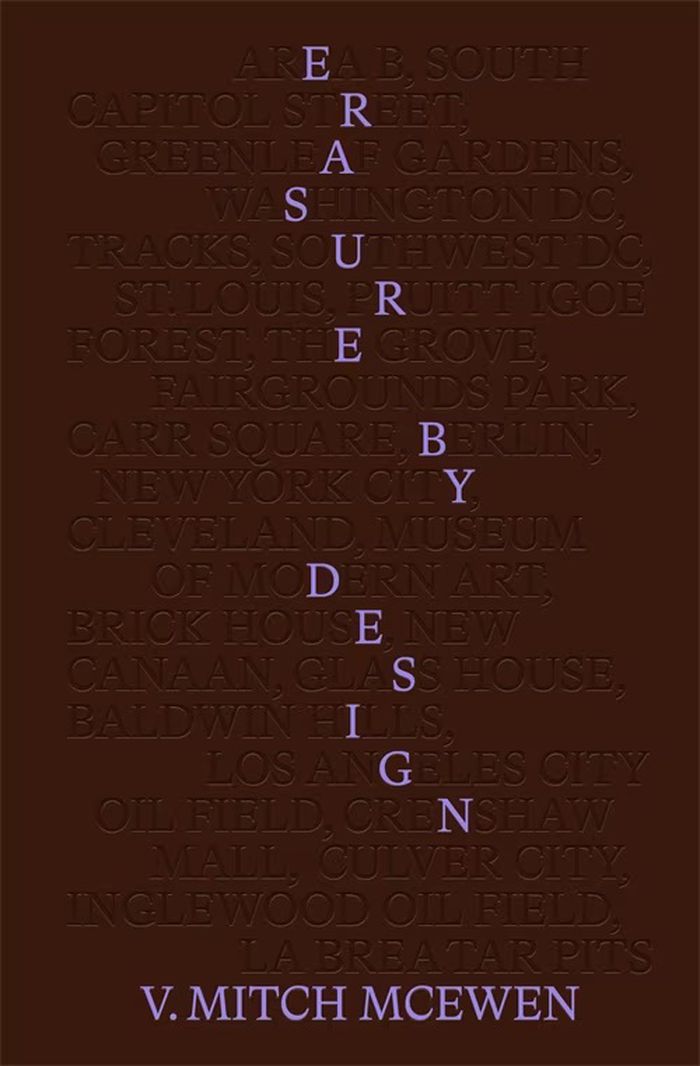
Erasure by design: Racial protocols of displacement, demolition, and extraction
Actions:
Price:
$32.00
(available in store)
Summary:
This book travels back and forth in time through scenes of erasure at three primary locations—Southwest, Washington DC (displacement); North St Louis (demolition), and South Los Angeles (extraction). "Erasure by design" shares first person narratives of growing up in the wake of slum clearance—that is, "urban renewal"—in Southwest, Washington DC, while assembling archival references that narrate racialized erasure and its legal and spatial precedents. It traces a military complex under construction, where St Louis’s cleared grounds and blacked out sites are also defined by satellites, body experiments, explosions, and emptiness. It moves through specific grounds in Los Angeles—dirt walls, hills, oil fields, gas lines, and houses in the forest—to trace how those grounds matter and how their holding intersects with maps that plan erasure, inhabitation, and extraction.
Erasure by design: Racial protocols of displacement, demolition, and extraction
Actions:
Price:
$32.00
(available in store)
Summary:
This book travels back and forth in time through scenes of erasure at three primary locations—Southwest, Washington DC (displacement); North St Louis (demolition), and South Los Angeles (extraction). "Erasure by design" shares first person narratives of growing up in the wake of slum clearance—that is, "urban renewal"—in Southwest, Washington DC, while assembling archival references that narrate racialized erasure and its legal and spatial precedents. It traces a military complex under construction, where St Louis’s cleared grounds and blacked out sites are also defined by satellites, body experiments, explosions, and emptiness. It moves through specific grounds in Los Angeles—dirt walls, hills, oil fields, gas lines, and houses in the forest—to trace how those grounds matter and how their holding intersects with maps that plan erasure, inhabitation, and extraction.
Form:
books
books
Publication:
March 2026
March 2026
Subject:
Humans and cities
Humans and cities
Form:
books
books
Title:
Mosca 1962
Mosca 1962
Actions:
Price:
$36.95
(available to order)
Summary:
In the summer of 1962, while still a university student of architecture, Andrea Branzi went to visit his brother Piergiorgio in Moscow, where he was working as a Rai correspondent. This was the world of the Cold War, but the "thaw" heralded by Nikita Khrushchev had somewhat loosened the grip of the Soviet regime. The young Branzi took the chance to wander around the city,(...)
$36.95
(available to order)
Summary:
In the summer of 1962, while still a university student of architecture, Andrea Branzi went to visit his brother Piergiorgio in Moscow, where he was working as a Rai correspondent. This was the world of the Cold War, but the "thaw" heralded by Nikita Khrushchev had somewhat loosened the grip of the Soviet regime. The young Branzi took the chance to wander around the city,(...)
Title:
Mosca 1962
Actions:
Price:
$36.95
(available to order)
Summary:
In the summer of 1962, while still a university student of architecture, Andrea Branzi went to visit his brother Piergiorgio in Moscow, where he was working as a Rai correspondent. This was the world of the Cold War, but the "thaw" heralded by Nikita Khrushchev had somewhat loosened the grip of the Soviet regime. The young Branzi took the chance to wander around the city, exploring it from top to bottom. With a curiosity for everything, he was struck by the immense size of the capital, by its new neighbourhoods, by the signs of communism and its history, by the omnipresence of the military, but also by the relaxed outlook of the youth, the department stores, the Russians' carefree relationship with nature, the innocence of the children and the widespread love of chess.
Mosca 1962
Actions:
Price:
$36.95
(available to order)
Summary:
In the summer of 1962, while still a university student of architecture, Andrea Branzi went to visit his brother Piergiorgio in Moscow, where he was working as a Rai correspondent. This was the world of the Cold War, but the "thaw" heralded by Nikita Khrushchev had somewhat loosened the grip of the Soviet regime. The young Branzi took the chance to wander around the city, exploring it from top to bottom. With a curiosity for everything, he was struck by the immense size of the capital, by its new neighbourhoods, by the signs of communism and its history, by the omnipresence of the military, but also by the relaxed outlook of the youth, the department stores, the Russians' carefree relationship with nature, the innocence of the children and the widespread love of chess.
Form:
books
books
Publication:
October 2025
October 2025
Subject:
Photography monographs
Photography monographs
Form:
journals and magazines
journals and magazines
Actions:
Price:
$17.95
(available to order)
Summary:
The tenth issue of "The Funambulist" operates somehow in continuity with issue 9 Islands (January-February 2017), which offered the words of indigenous and anticolonial struggles from various islands of the world. Voices from Kanaky, Mayotte, Hawai’i, and Puerto Rico resonate therefore here with those from Libya, Kenya, Palestine, and Java, in the colonial situations they(...)
$17.95
(available to order)
Summary:
The tenth issue of "The Funambulist" operates somehow in continuity with issue 9 Islands (January-February 2017), which offered the words of indigenous and anticolonial struggles from various islands of the world. Voices from Kanaky, Mayotte, Hawai’i, and Puerto Rico resonate therefore here with those from Libya, Kenya, Palestine, and Java, in the colonial situations they(...)
Title:
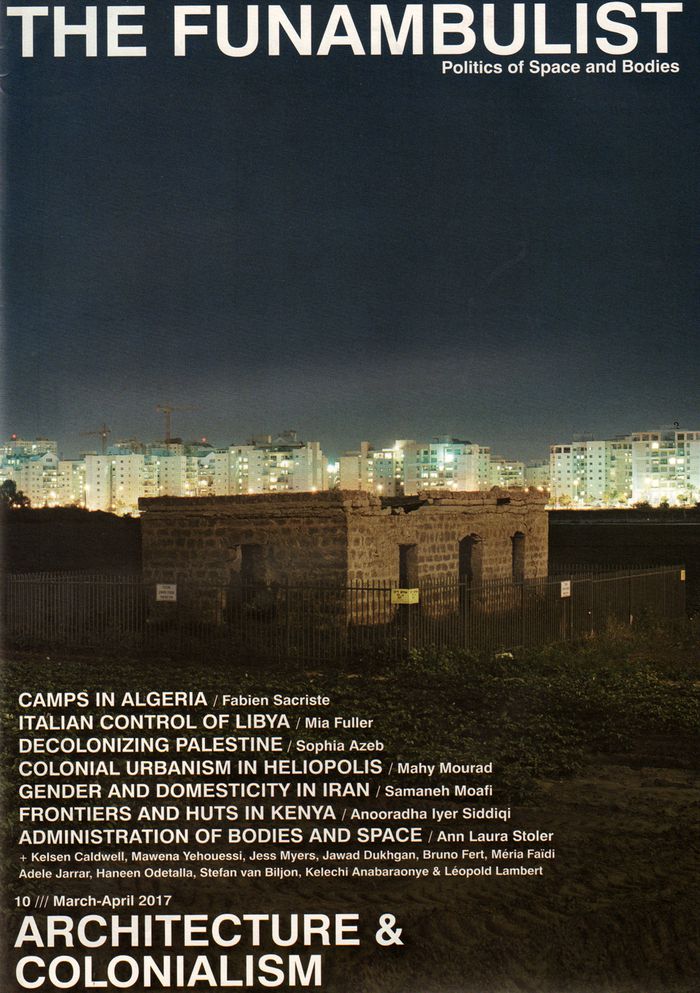
The Funambulist 10: Architecture and colonialism
Actions:
Price:
$17.95
(available to order)
Summary:
The tenth issue of "The Funambulist" operates somehow in continuity with issue 9 Islands (January-February 2017), which offered the words of indigenous and anticolonial struggles from various islands of the world. Voices from Kanaky, Mayotte, Hawai’i, and Puerto Rico resonate therefore here with those from Libya, Kenya, Palestine, and Java, in the colonial situations they all describe. While the last issue was dedicated to the seminal work of Édouard Glissant, inscribed throughout the pages of this present one is the influence of another Martiniquais: Frantz Fanon. The two editorial arguments of this issue are simple: colonialism is not an era, it is a system of military/police, legal, administrative, social, and cultural system of domination; and, architecture is not (only) an aesthetic vessel, it is an apparatus organizing and hierarchizing bodies in space.
The Funambulist 10: Architecture and colonialism
Actions:
Price:
$17.95
(available to order)
Summary:
The tenth issue of "The Funambulist" operates somehow in continuity with issue 9 Islands (January-February 2017), which offered the words of indigenous and anticolonial struggles from various islands of the world. Voices from Kanaky, Mayotte, Hawai’i, and Puerto Rico resonate therefore here with those from Libya, Kenya, Palestine, and Java, in the colonial situations they all describe. While the last issue was dedicated to the seminal work of Édouard Glissant, inscribed throughout the pages of this present one is the influence of another Martiniquais: Frantz Fanon. The two editorial arguments of this issue are simple: colonialism is not an era, it is a system of military/police, legal, administrative, social, and cultural system of domination; and, architecture is not (only) an aesthetic vessel, it is an apparatus organizing and hierarchizing bodies in space.
Form:
journals and magazines
journals and magazines
Publication:
March 2017
March 2017


