


44174 Results
Level of archival description:
Series
Series
Actions:
Reference number:
AP184.S1
Description:
Series 1, Three Dimensional Trading Floor, 1990 - 2009, relates to Asymptote Architecture’s design of a virtualized NYSE Trading Floor that visualized real-time numerical and statistical data. This series includes textual, born-digital, and audiovisual components, as well as digital artefacts, and chiefly dates from 1997 to 2002. The intent of the New York Stock Exchange Three Dimensional Trading Floor (3DTF) was to detect suspicious trading activity, track the impact of global news events on the market and potentially predict a crash before it happened. In order to achieve this technically, Asymptote worked with Silicon Graphics Incorporated (SGI) RealityEngine hardware which had been built specifically for these visualization-intensive applications. They also worked with Softimage and Alias software for modeling, rendering and animating, and VRML (Virtual Reality Markup Language) and Macromedia Flash in order to integrate real-time data into a navigable three-dimensional environment. The main elements of the virtual environment include posts, containers, and back wall. The two container types, Index Container (IC) and Group Container (GC), allow for visualization and comparison of stock histories and behaviors. The posts display stock information, corresponding heat maps on floors, and alerts. The back wall integrates live news broadcasts. Materials in this series are largely digital and primarily include still raster images and video demonstrating 3DTF functionality. There is also a small body of CAD material in Maya, Alias, Microstation, and Form-Z formats. Other digital materials include Virtual Reality Markup Language (VRML) files, HTML files, Silicon Graphics Images databases, research material, press kits, presentations, and handout files. The textual records are largely materials that were handed out at presentation meetings for each phase of the project. These typically illustrate major virtual components of 3DTF, like the heat maps and posts, and overlap significantly with the related digital files. There is also one VHS tape which compiles nearly twenty minutes of animated renderings. Finally, this series includes 43 CDs. The CDs were processed and are included as part of the digital records; the CDs themselves were kept in instances where they may have artefactual value, especially if they were visually interesting or informationally important.
AP184.S1
Description:
Series 1, Three Dimensional Trading Floor, 1990 - 2009, relates to Asymptote Architecture’s design of a virtualized NYSE Trading Floor that visualized real-time numerical and statistical data. This series includes textual, born-digital, and audiovisual components, as well as digital artefacts, and chiefly dates from 1997 to 2002. The intent of the New York Stock Exchange Three Dimensional Trading Floor (3DTF) was to detect suspicious trading activity, track the impact of global news events on the market and potentially predict a crash before it happened. In order to achieve this technically, Asymptote worked with Silicon Graphics Incorporated (SGI) RealityEngine hardware which had been built specifically for these visualization-intensive applications. They also worked with Softimage and Alias software for modeling, rendering and animating, and VRML (Virtual Reality Markup Language) and Macromedia Flash in order to integrate real-time data into a navigable three-dimensional environment. The main elements of the virtual environment include posts, containers, and back wall. The two container types, Index Container (IC) and Group Container (GC), allow for visualization and comparison of stock histories and behaviors. The posts display stock information, corresponding heat maps on floors, and alerts. The back wall integrates live news broadcasts. Materials in this series are largely digital and primarily include still raster images and video demonstrating 3DTF functionality. There is also a small body of CAD material in Maya, Alias, Microstation, and Form-Z formats. Other digital materials include Virtual Reality Markup Language (VRML) files, HTML files, Silicon Graphics Images databases, research material, press kits, presentations, and handout files. The textual records are largely materials that were handed out at presentation meetings for each phase of the project. These typically illustrate major virtual components of 3DTF, like the heat maps and posts, and overlap significantly with the related digital files. There is also one VHS tape which compiles nearly twenty minutes of animated renderings. Finally, this series includes 43 CDs. The CDs were processed and are included as part of the digital records; the CDs themselves were kept in instances where they may have artefactual value, especially if they were visually interesting or informationally important.
People:
Date:
1990-2009
1990-2009
Title:
Three Dimensional Trading Floor
Actions:
AP184.S1
Description:
Series 1, Three Dimensional Trading Floor, 1990 - 2009, relates to Asymptote Architecture’s design of a virtualized NYSE Trading Floor that visualized real-time numerical and statistical data. This series includes textual, born-digital, and audiovisual components, as well as digital artefacts, and chiefly dates from 1997 to 2002. The intent of the New York Stock Exchange Three Dimensional Trading Floor (3DTF) was to detect suspicious trading activity, track the impact of global news events on the market and potentially predict a crash before it happened. In order to achieve this technically, Asymptote worked with Silicon Graphics Incorporated (SGI) RealityEngine hardware which had been built specifically for these visualization-intensive applications. They also worked with Softimage and Alias software for modeling, rendering and animating, and VRML (Virtual Reality Markup Language) and Macromedia Flash in order to integrate real-time data into a navigable three-dimensional environment. The main elements of the virtual environment include posts, containers, and back wall. The two container types, Index Container (IC) and Group Container (GC), allow for visualization and comparison of stock histories and behaviors. The posts display stock information, corresponding heat maps on floors, and alerts. The back wall integrates live news broadcasts. Materials in this series are largely digital and primarily include still raster images and video demonstrating 3DTF functionality. There is also a small body of CAD material in Maya, Alias, Microstation, and Form-Z formats. Other digital materials include Virtual Reality Markup Language (VRML) files, HTML files, Silicon Graphics Images databases, research material, press kits, presentations, and handout files. The textual records are largely materials that were handed out at presentation meetings for each phase of the project. These typically illustrate major virtual components of 3DTF, like the heat maps and posts, and overlap significantly with the related digital files. There is also one VHS tape which compiles nearly twenty minutes of animated renderings. Finally, this series includes 43 CDs. The CDs were processed and are included as part of the digital records; the CDs themselves were kept in instances where they may have artefactual value, especially if they were visually interesting or informationally important.
Three Dimensional Trading Floor
Actions:
AP184.S1
Description:
Series 1, Three Dimensional Trading Floor, 1990 - 2009, relates to Asymptote Architecture’s design of a virtualized NYSE Trading Floor that visualized real-time numerical and statistical data. This series includes textual, born-digital, and audiovisual components, as well as digital artefacts, and chiefly dates from 1997 to 2002. The intent of the New York Stock Exchange Three Dimensional Trading Floor (3DTF) was to detect suspicious trading activity, track the impact of global news events on the market and potentially predict a crash before it happened. In order to achieve this technically, Asymptote worked with Silicon Graphics Incorporated (SGI) RealityEngine hardware which had been built specifically for these visualization-intensive applications. They also worked with Softimage and Alias software for modeling, rendering and animating, and VRML (Virtual Reality Markup Language) and Macromedia Flash in order to integrate real-time data into a navigable three-dimensional environment. The main elements of the virtual environment include posts, containers, and back wall. The two container types, Index Container (IC) and Group Container (GC), allow for visualization and comparison of stock histories and behaviors. The posts display stock information, corresponding heat maps on floors, and alerts. The back wall integrates live news broadcasts. Materials in this series are largely digital and primarily include still raster images and video demonstrating 3DTF functionality. There is also a small body of CAD material in Maya, Alias, Microstation, and Form-Z formats. Other digital materials include Virtual Reality Markup Language (VRML) files, HTML files, Silicon Graphics Images databases, research material, press kits, presentations, and handout files. The textual records are largely materials that were handed out at presentation meetings for each phase of the project. These typically illustrate major virtual components of 3DTF, like the heat maps and posts, and overlap significantly with the related digital files. There is also one VHS tape which compiles nearly twenty minutes of animated renderings. Finally, this series includes 43 CDs. The CDs were processed and are included as part of the digital records; the CDs themselves were kept in instances where they may have artefactual value, especially if they were visually interesting or informationally important.
Level of archival description:
Series
Series
Date:
1990-2009
1990-2009
People:
Form:
exhibitions
exhibitions
Title:
Naoya Hatakeyama: Scales
Naoya Hatakeyama: Scales
Actions:
Description:
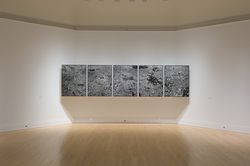
The work of Japanese artist Naoya Hatakeyama is concerned largely with the relationship between nature and cities. Comissioned by the CCA, the three series of photographs comprising Scales capture existing architectural models of New York City and Tokyo in a way that challenges notions of scale and the perception of reality. Naoya Hatakeyama: Scales is the fourth and(...)
The work of Japanese artist Naoya Hatakeyama is concerned largely with the relationship between nature and cities. Comissioned by the CCA, the three series of photographs comprising Scales capture existing architectural models of New York City and Tokyo in a way that challenges notions of scale and the perception of reality. Naoya Hatakeyama: Scales is the fourth and(...)
Location:
Octagonal gallery
Octagonal gallery
Date:
27 September 2007 to 3 February 2008
27 September 2007 to 3 February 2008
Title:
Naoya Hatakeyama: Scales
Actions:
Description:
The work of Japanese artist Naoya Hatakeyama is concerned largely with the relationship between nature and cities. Comissioned by the CCA, the three series of photographs comprising Scales capture existing architectural models of New York City and Tokyo in a way that challenges notions of scale and the perception of reality. Naoya Hatakeyama: Scales is the fourth and(...)
Naoya Hatakeyama: Scales
Actions:
Description:
The work of Japanese artist Naoya Hatakeyama is concerned largely with the relationship between nature and cities. Comissioned by the CCA, the three series of photographs comprising Scales capture existing architectural models of New York City and Tokyo in a way that challenges notions of scale and the perception of reality. Naoya Hatakeyama: Scales is the fourth and(...)
Form:
exhibitions
exhibitions
Date:
27 September 2007 to
3 February 2008
27 September 2007 to
3 February 2008
Location:
Octagonal gallery
Octagonal gallery
Form:
drawings
drawings
Actions:
Reference number:
DR1989:0015:062
Description:
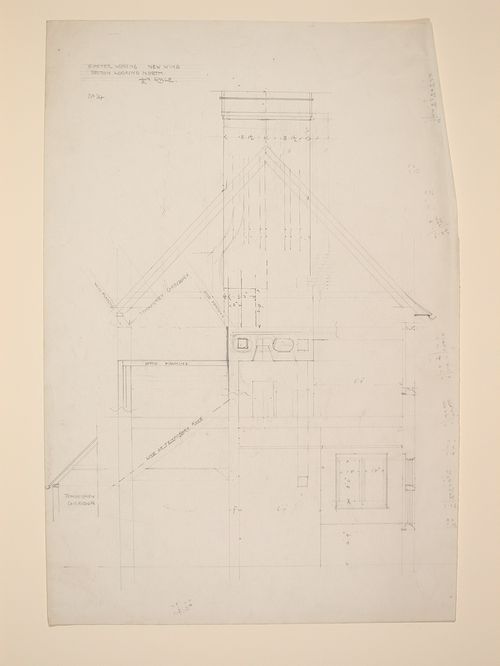
- This drawing shows a section through the kitchen of the main building for the new wing, identified in comparison with the plan DR1989:0015:049. This drawing also shows a superimposed plan for the chimney at the first-floor level, c. and temporary corridors for use during the construction, l.l. - This work is part of a group of drawings and reprographic prints of drawings for St. Peter's Home, Woking, and St. Peter's Convent, Woking, from the offices of John Loughborough Pearson and Frank Loughborough Pearson (DR1989:0015:011 - DR1989:0015:085 R/V). Composed of contract and working drawings including plans, site plans, sections, and elevations dated between 1881 and 1936, these drawings were sold at auction by the convent along with those for the older institution of St. Peter's Home, Kilburn (DR1989:0015:001 - DR1989:0015:010). Both St. Peter's Home, Kilburn, and St. Peter's Home, Woking were commissioned from John Loughborough Pearson by Benjamin Lancaster. The alterations to the Home at Kilburn were commissioned on behalf of Lancaster's wife, who founded the home and a lay nursing order which ran it. The institution at Woking was founded by Lancaster as a home for incurables in 1882 and dedicated to the memory of his deceased wife (Quiney 67-68, 254-255, and 284). It was probably first known as St. Peter's Home, Woking, not becoming a convent until ca. 1934.
DR1989:0015:062
Description:
- This drawing shows a section through the kitchen of the main building for the new wing, identified in comparison with the plan DR1989:0015:049. This drawing also shows a superimposed plan for the chimney at the first-floor level, c. and temporary corridors for use during the construction, l.l. - This work is part of a group of drawings and reprographic prints of drawings for St. Peter's Home, Woking, and St. Peter's Convent, Woking, from the offices of John Loughborough Pearson and Frank Loughborough Pearson (DR1989:0015:011 - DR1989:0015:085 R/V). Composed of contract and working drawings including plans, site plans, sections, and elevations dated between 1881 and 1936, these drawings were sold at auction by the convent along with those for the older institution of St. Peter's Home, Kilburn (DR1989:0015:001 - DR1989:0015:010). Both St. Peter's Home, Kilburn, and St. Peter's Home, Woking were commissioned from John Loughborough Pearson by Benjamin Lancaster. The alterations to the Home at Kilburn were commissioned on behalf of Lancaster's wife, who founded the home and a lay nursing order which ran it. The institution at Woking was founded by Lancaster as a home for incurables in 1882 and dedicated to the memory of his deceased wife (Quiney 67-68, 254-255, and 284). It was probably first known as St. Peter's Home, Woking, not becoming a convent until ca. 1934.
People:
Subject:
architecture
architecture
Date:
1926 ?
1926 ?
Title:
St. Peter's Home, Woking: Section for the main portion of the new wing, looking north, with a plan for the chimney flues
Actions:
DR1989:0015:062
Description:
- This drawing shows a section through the kitchen of the main building for the new wing, identified in comparison with the plan DR1989:0015:049. This drawing also shows a superimposed plan for the chimney at the first-floor level, c. and temporary corridors for use during the construction, l.l. - This work is part of a group of drawings and reprographic prints of drawings for St. Peter's Home, Woking, and St. Peter's Convent, Woking, from the offices of John Loughborough Pearson and Frank Loughborough Pearson (DR1989:0015:011 - DR1989:0015:085 R/V). Composed of contract and working drawings including plans, site plans, sections, and elevations dated between 1881 and 1936, these drawings were sold at auction by the convent along with those for the older institution of St. Peter's Home, Kilburn (DR1989:0015:001 - DR1989:0015:010). Both St. Peter's Home, Kilburn, and St. Peter's Home, Woking were commissioned from John Loughborough Pearson by Benjamin Lancaster. The alterations to the Home at Kilburn were commissioned on behalf of Lancaster's wife, who founded the home and a lay nursing order which ran it. The institution at Woking was founded by Lancaster as a home for incurables in 1882 and dedicated to the memory of his deceased wife (Quiney 67-68, 254-255, and 284). It was probably first known as St. Peter's Home, Woking, not becoming a convent until ca. 1934.
St. Peter's Home, Woking: Section for the main portion of the new wing, looking north, with a plan for the chimney flues
Actions:
DR1989:0015:062
Description:
- This drawing shows a section through the kitchen of the main building for the new wing, identified in comparison with the plan DR1989:0015:049. This drawing also shows a superimposed plan for the chimney at the first-floor level, c. and temporary corridors for use during the construction, l.l. - This work is part of a group of drawings and reprographic prints of drawings for St. Peter's Home, Woking, and St. Peter's Convent, Woking, from the offices of John Loughborough Pearson and Frank Loughborough Pearson (DR1989:0015:011 - DR1989:0015:085 R/V). Composed of contract and working drawings including plans, site plans, sections, and elevations dated between 1881 and 1936, these drawings were sold at auction by the convent along with those for the older institution of St. Peter's Home, Kilburn (DR1989:0015:001 - DR1989:0015:010). Both St. Peter's Home, Kilburn, and St. Peter's Home, Woking were commissioned from John Loughborough Pearson by Benjamin Lancaster. The alterations to the Home at Kilburn were commissioned on behalf of Lancaster's wife, who founded the home and a lay nursing order which ran it. The institution at Woking was founded by Lancaster as a home for incurables in 1882 and dedicated to the memory of his deceased wife (Quiney 67-68, 254-255, and 284). It was probably first known as St. Peter's Home, Woking, not becoming a convent until ca. 1934.
Form:
drawings
drawings
Date:
1926 ?
1926 ?
People:
Subject:
architecture
architecture
Form:
drawings
drawings
Actions:
Reference number:
AP018.S1.1974.PR24.006
Description:
These materials document the office tower in which the executive offices were located. Bregman & Hamann and Craig, Zeidler and Strong worked on the office tower project.
AP018.S1.1974.PR24.006
Description:
These materials document the office tower in which the executive offices were located. Bregman & Hamann and Craig, Zeidler and Strong worked on the office tower project.
People:
Date:
1975-1976
1975-1976
Title:
Mechanical and electrical drawings, plans, details, and shop drawings from Bregman & Hamann and Craig, Zeidler and Strong, Eaton's of Canada Limited Executive Offices, One Dundas Street West, Toronto
Actions:
AP018.S1.1974.PR24.006
Description:
These materials document the office tower in which the executive offices were located. Bregman & Hamann and Craig, Zeidler and Strong worked on the office tower project.
Mechanical and electrical drawings, plans, details, and shop drawings from Bregman & Hamann and Craig, Zeidler and Strong, Eaton's of Canada Limited Executive Offices, One Dundas Street West, Toronto
Actions:
AP018.S1.1974.PR24.006
Description:
These materials document the office tower in which the executive offices were located. Bregman & Hamann and Craig, Zeidler and Strong worked on the office tower project.
Form:
drawings
drawings
Date:
1975-1976
1975-1976
People:
Form:
photographs
photographs
Actions:
Reference number:
ARCH269002
Description:
Group consists of photographs of workers and inhabitants during the construction of Chandigarh, India.
ARCH269002
Description:
Group consists of photographs of workers and inhabitants during the construction of Chandigarh, India.
People:
Date:
s.d.
s.d.
Title:
Photographs of workers and inhabitants at Chandigarh, India
Actions:
ARCH269002
Description:
Group consists of photographs of workers and inhabitants during the construction of Chandigarh, India.
Photographs of workers and inhabitants at Chandigarh, India
Actions:
ARCH269002
Description:
Group consists of photographs of workers and inhabitants during the construction of Chandigarh, India.
Form:
photographs
photographs
Date:
s.d.
s.d.
People:
Form:
exhibitions
exhibitions
Actions:
Description:
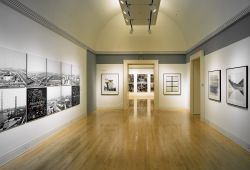
The decay and neglect of polluted industrial sites on the edges of cities became a worldwide phenomenon by the end of the twentieth century. The industrial site of Marghera lies on the waterfront overlooking the historical city of Venice, confronting La Serenissima as its titanic alter ego. This exhibition presents the complex and changing reality of Marghera through the(...)
The decay and neglect of polluted industrial sites on the edges of cities became a worldwide phenomenon by the end of the twentieth century. The industrial site of Marghera lies on the waterfront overlooking the historical city of Venice, confronting La Serenissima as its titanic alter ego. This exhibition presents the complex and changing reality of Marghera through the(...)
Location:
Main galleries
Main galleries
Date:
9 December 1998 to 25 April 1999
9 December 1998 to 25 April 1999
Title:
Photography and Transformations of the Contemporary City: Venezia – Marghera
Actions:
Description:
The decay and neglect of polluted industrial sites on the edges of cities became a worldwide phenomenon by the end of the twentieth century. The industrial site of Marghera lies on the waterfront overlooking the historical city of Venice, confronting La Serenissima as its titanic alter ego. This exhibition presents the complex and changing reality of Marghera through the(...)
Photography and Transformations of the Contemporary City: Venezia – Marghera
Actions:
Description:
The decay and neglect of polluted industrial sites on the edges of cities became a worldwide phenomenon by the end of the twentieth century. The industrial site of Marghera lies on the waterfront overlooking the historical city of Venice, confronting La Serenissima as its titanic alter ego. This exhibition presents the complex and changing reality of Marghera through the(...)
Form:
exhibitions
exhibitions
Date:
9 December 1998 to
25 April 1999
9 December 1998 to
25 April 1999
Location:
Main galleries
Main galleries
Form:
exhibitions
exhibitions
Description:
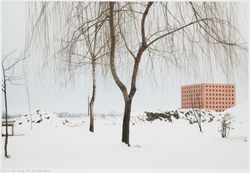
Luigi Ghirri / Aldo Rossi: Things Which Are Only Themselves presents a visual dialogue between two leading figures in contemporary Italian art and culture. Their discussion is based on a sympathy between photographer and architect that is grounded in a shared fascination for a region—the Padana of northern Italy—and a common belief both in the autonomous eye of the(...)
Luigi Ghirri / Aldo Rossi: Things Which Are Only Themselves presents a visual dialogue between two leading figures in contemporary Italian art and culture. Their discussion is based on a sympathy between photographer and architect that is grounded in a shared fascination for a region—the Padana of northern Italy—and a common belief both in the autonomous eye of the(...)
Location:
Octagonal gallery
Octagonal gallery
Date:
21 August 1996 to 24 November 1996
21 August 1996 to 24 November 1996
Title:
Luigi Ghirri/Aldo Rossi: Things Which Are Only Themselves
Actions:
Description:
Luigi Ghirri / Aldo Rossi: Things Which Are Only Themselves presents a visual dialogue between two leading figures in contemporary Italian art and culture. Their discussion is based on a sympathy between photographer and architect that is grounded in a shared fascination for a region—the Padana of northern Italy—and a common belief both in the autonomous eye of the(...)
Luigi Ghirri/Aldo Rossi: Things Which Are Only Themselves
Actions:
Description:
Luigi Ghirri / Aldo Rossi: Things Which Are Only Themselves presents a visual dialogue between two leading figures in contemporary Italian art and culture. Their discussion is based on a sympathy between photographer and architect that is grounded in a shared fascination for a region—the Padana of northern Italy—and a common belief both in the autonomous eye of the(...)
Form:
exhibitions
exhibitions
Date:
21 August 1996 to
24 November 1996
21 August 1996 to
24 November 1996
Location:
Octagonal gallery
Octagonal gallery
Level of archival description:
Project
Project
Title:
Edificio de servicios generales para la Universidad de Extremadura, Mérida, Spain (1999-2001)
Edificio de servicios generales para la Universidad de Extremadura, Mérida, Spain (1999-2001)
Actions:
Reference number:
AP164.S1.1999.D4
Description:
The project series documents the design and construction of the general services building for the Universidad de Extremadura. In 1999, Abalos & Herreros in collaboration with Fomento won first prize at a competition held for enterprises. The firm identified this project as number 117. “Giving the hard climatic conditions, the building is wrapped in an artificial and natural dual filter of adjustable lattices surrounded by a ring a trees (Ginkos Bilobas) […] On the roof, two turrets house relaxation rooms for the teaching staff, rooms that open onto a garden surrounded by a training track, thus creating an open-air area with views over the lowlands of the [River] Guadiana and the city” (ARCH270971). In the documentation, the project is often referred to as “Edificio administrativo y de nuevas titulaciones de la Universidad de Extremadura” or “Administration building and new graduate facilities for the University of Extremadura”. The firm worked with Ángel Jaramillo, Uriel Fogué, Renata Sentkiewicz, Jacob Hense and Obiol y Moya for the account of the Consejería de Educación, Ciencia y Tecnología, Junta de Extremadura. Documenting the project are presentation and working drawings, and photographic materials.
AP164.S1.1999.D4
Description:
The project series documents the design and construction of the general services building for the Universidad de Extremadura. In 1999, Abalos & Herreros in collaboration with Fomento won first prize at a competition held for enterprises. The firm identified this project as number 117. “Giving the hard climatic conditions, the building is wrapped in an artificial and natural dual filter of adjustable lattices surrounded by a ring a trees (Ginkos Bilobas) […] On the roof, two turrets house relaxation rooms for the teaching staff, rooms that open onto a garden surrounded by a training track, thus creating an open-air area with views over the lowlands of the [River] Guadiana and the city” (ARCH270971). In the documentation, the project is often referred to as “Edificio administrativo y de nuevas titulaciones de la Universidad de Extremadura” or “Administration building and new graduate facilities for the University of Extremadura”. The firm worked with Ángel Jaramillo, Uriel Fogué, Renata Sentkiewicz, Jacob Hense and Obiol y Moya for the account of the Consejería de Educación, Ciencia y Tecnología, Junta de Extremadura. Documenting the project are presentation and working drawings, and photographic materials.
People:
Date:
1999, 2001
1999, 2001
Title:
Edificio de servicios generales para la Universidad de Extremadura, Mérida, Spain (1999-2001)
Actions:
AP164.S1.1999.D4
Description:
The project series documents the design and construction of the general services building for the Universidad de Extremadura. In 1999, Abalos & Herreros in collaboration with Fomento won first prize at a competition held for enterprises. The firm identified this project as number 117. “Giving the hard climatic conditions, the building is wrapped in an artificial and natural dual filter of adjustable lattices surrounded by a ring a trees (Ginkos Bilobas) […] On the roof, two turrets house relaxation rooms for the teaching staff, rooms that open onto a garden surrounded by a training track, thus creating an open-air area with views over the lowlands of the [River] Guadiana and the city” (ARCH270971). In the documentation, the project is often referred to as “Edificio administrativo y de nuevas titulaciones de la Universidad de Extremadura” or “Administration building and new graduate facilities for the University of Extremadura”. The firm worked with Ángel Jaramillo, Uriel Fogué, Renata Sentkiewicz, Jacob Hense and Obiol y Moya for the account of the Consejería de Educación, Ciencia y Tecnología, Junta de Extremadura. Documenting the project are presentation and working drawings, and photographic materials.
Edificio de servicios generales para la Universidad de Extremadura, Mérida, Spain (1999-2001)
Actions:
AP164.S1.1999.D4
Description:
The project series documents the design and construction of the general services building for the Universidad de Extremadura. In 1999, Abalos & Herreros in collaboration with Fomento won first prize at a competition held for enterprises. The firm identified this project as number 117. “Giving the hard climatic conditions, the building is wrapped in an artificial and natural dual filter of adjustable lattices surrounded by a ring a trees (Ginkos Bilobas) […] On the roof, two turrets house relaxation rooms for the teaching staff, rooms that open onto a garden surrounded by a training track, thus creating an open-air area with views over the lowlands of the [River] Guadiana and the city” (ARCH270971). In the documentation, the project is often referred to as “Edificio administrativo y de nuevas titulaciones de la Universidad de Extremadura” or “Administration building and new graduate facilities for the University of Extremadura”. The firm worked with Ángel Jaramillo, Uriel Fogué, Renata Sentkiewicz, Jacob Hense and Obiol y Moya for the account of the Consejería de Educación, Ciencia y Tecnología, Junta de Extremadura. Documenting the project are presentation and working drawings, and photographic materials.
Level of archival description:
Project
Project
Date:
1999, 2001
1999, 2001
People:
Level of archival description:
Project
Project
Actions:
Reference number:
AP164.S1.2004.D9
Description:
The project series documents the entry for a competition organised by the École Polytechnique Fédérale de Lausanne. The firm identified this project as number 187. “The Learning Center occupies the closest point to the two existing pedestrian accesses and distributes its programme in two large pieces: the green platform which puts in relation the different levels of mobility and houses the active program and the helix which defines the library as a huge ascending space which winds around itself at the interior as well as exterior culminating in an observatory which contains a restaurant. An isolated pavilion emerges over the green platform as a scenic counterpoint. […] Three materials: water, lawn and show form the base of the choice of materials and chromatic proposal supported by a regular structure of white concrete.” (ARCH270975) Abalos & Herreros and Renata Sentkiewicz worked with Olivia de Oliveira, Blaise Sahy, Verónica Meléndez, Juanju González Castellón, Rubén Briongos and Teresa Galí. Documenting the project are conceptual, design development and presentation drawings, cartographic, graphic, photographic and reference materials, correspondence, and presentation documents.
AP164.S1.2004.D9
Description:
The project series documents the entry for a competition organised by the École Polytechnique Fédérale de Lausanne. The firm identified this project as number 187. “The Learning Center occupies the closest point to the two existing pedestrian accesses and distributes its programme in two large pieces: the green platform which puts in relation the different levels of mobility and houses the active program and the helix which defines the library as a huge ascending space which winds around itself at the interior as well as exterior culminating in an observatory which contains a restaurant. An isolated pavilion emerges over the green platform as a scenic counterpoint. […] Three materials: water, lawn and show form the base of the choice of materials and chromatic proposal supported by a regular structure of white concrete.” (ARCH270975) Abalos & Herreros and Renata Sentkiewicz worked with Olivia de Oliveira, Blaise Sahy, Verónica Meléndez, Juanju González Castellón, Rubén Briongos and Teresa Galí. Documenting the project are conceptual, design development and presentation drawings, cartographic, graphic, photographic and reference materials, correspondence, and presentation documents.
People:
Date:
1986, 2003-2004, predominant 2004
1986, 2003-2004, predominant 2004
Title:
EPFL learning center, Lausanne, Switzerland (2004)
Actions:
AP164.S1.2004.D9
Description:
The project series documents the entry for a competition organised by the École Polytechnique Fédérale de Lausanne. The firm identified this project as number 187. “The Learning Center occupies the closest point to the two existing pedestrian accesses and distributes its programme in two large pieces: the green platform which puts in relation the different levels of mobility and houses the active program and the helix which defines the library as a huge ascending space which winds around itself at the interior as well as exterior culminating in an observatory which contains a restaurant. An isolated pavilion emerges over the green platform as a scenic counterpoint. […] Three materials: water, lawn and show form the base of the choice of materials and chromatic proposal supported by a regular structure of white concrete.” (ARCH270975) Abalos & Herreros and Renata Sentkiewicz worked with Olivia de Oliveira, Blaise Sahy, Verónica Meléndez, Juanju González Castellón, Rubén Briongos and Teresa Galí. Documenting the project are conceptual, design development and presentation drawings, cartographic, graphic, photographic and reference materials, correspondence, and presentation documents.
EPFL learning center, Lausanne, Switzerland (2004)
Actions:
AP164.S1.2004.D9
Description:
The project series documents the entry for a competition organised by the École Polytechnique Fédérale de Lausanne. The firm identified this project as number 187. “The Learning Center occupies the closest point to the two existing pedestrian accesses and distributes its programme in two large pieces: the green platform which puts in relation the different levels of mobility and houses the active program and the helix which defines the library as a huge ascending space which winds around itself at the interior as well as exterior culminating in an observatory which contains a restaurant. An isolated pavilion emerges over the green platform as a scenic counterpoint. […] Three materials: water, lawn and show form the base of the choice of materials and chromatic proposal supported by a regular structure of white concrete.” (ARCH270975) Abalos & Herreros and Renata Sentkiewicz worked with Olivia de Oliveira, Blaise Sahy, Verónica Meléndez, Juanju González Castellón, Rubén Briongos and Teresa Galí. Documenting the project are conceptual, design development and presentation drawings, cartographic, graphic, photographic and reference materials, correspondence, and presentation documents.
Level of archival description:
Project
Project
Date:
1986, 2003-2004, predominant 2004
1986, 2003-2004, predominant 2004
People:
Level of archival description:
Series
Series
Title:
Paul Goesch
Paul Goesch
Reference number:
AP162.S2
Description:
Series documents the contribution of architect Paul Goesch to the correspondence circle of Die gläserne Kette. Goesch participated using the pseudonym Tancred. Born in Schwerin, Germany in 1985, Goesch studied architecture at the Technische Hochschule at Berlin-Charlottenburg. After his studies, he worked as a civil servant in Kulm and started producing his first drawings and watercolours between 1914 and 1916. He joined the Novembergruppe, an exhibiting group of painters, sculptors, architects and musicians that later merged with the Arbeitsrat für Kunst group led by Bruno Taut. He collaborated with Bruno Taut on the coloured-architecture program in Magdeburg, Germany in 1921, but was later hospitalized for mental illness, first in Göttingen, then in the Teupitz Hospital near Berlin in 1933 or 1934. In 1940, he was taken by the SS to Hartheim Euthanasia Centre where he was murdered on 6 September the same year. (Source: Ian Boyd Whyte, Bruno Taut and the Architecture of Activism. Cambridge: Cambridge University Press, 1982) The series comprises a letter of Paul Goesch to the Die gläserne Kette circle, as well as portraits, including a carte-de-visite, and a diploma.
AP162.S2
Description:
Series documents the contribution of architect Paul Goesch to the correspondence circle of Die gläserne Kette. Goesch participated using the pseudonym Tancred. Born in Schwerin, Germany in 1985, Goesch studied architecture at the Technische Hochschule at Berlin-Charlottenburg. After his studies, he worked as a civil servant in Kulm and started producing his first drawings and watercolours between 1914 and 1916. He joined the Novembergruppe, an exhibiting group of painters, sculptors, architects and musicians that later merged with the Arbeitsrat für Kunst group led by Bruno Taut. He collaborated with Bruno Taut on the coloured-architecture program in Magdeburg, Germany in 1921, but was later hospitalized for mental illness, first in Göttingen, then in the Teupitz Hospital near Berlin in 1933 or 1934. In 1940, he was taken by the SS to Hartheim Euthanasia Centre where he was murdered on 6 September the same year. (Source: Ian Boyd Whyte, Bruno Taut and the Architecture of Activism. Cambridge: Cambridge University Press, 1982) The series comprises a letter of Paul Goesch to the Die gläserne Kette circle, as well as portraits, including a carte-de-visite, and a diploma.
People:
Date:
1890-1911
1890-1911
Title:
Paul Goesch
Actions:
AP162.S2
Description:
Series documents the contribution of architect Paul Goesch to the correspondence circle of Die gläserne Kette. Goesch participated using the pseudonym Tancred. Born in Schwerin, Germany in 1985, Goesch studied architecture at the Technische Hochschule at Berlin-Charlottenburg. After his studies, he worked as a civil servant in Kulm and started producing his first drawings and watercolours between 1914 and 1916. He joined the Novembergruppe, an exhibiting group of painters, sculptors, architects and musicians that later merged with the Arbeitsrat für Kunst group led by Bruno Taut. He collaborated with Bruno Taut on the coloured-architecture program in Magdeburg, Germany in 1921, but was later hospitalized for mental illness, first in Göttingen, then in the Teupitz Hospital near Berlin in 1933 or 1934. In 1940, he was taken by the SS to Hartheim Euthanasia Centre where he was murdered on 6 September the same year. (Source: Ian Boyd Whyte, Bruno Taut and the Architecture of Activism. Cambridge: Cambridge University Press, 1982) The series comprises a letter of Paul Goesch to the Die gläserne Kette circle, as well as portraits, including a carte-de-visite, and a diploma.
Paul Goesch
Actions:
AP162.S2
Description:
Series documents the contribution of architect Paul Goesch to the correspondence circle of Die gläserne Kette. Goesch participated using the pseudonym Tancred. Born in Schwerin, Germany in 1985, Goesch studied architecture at the Technische Hochschule at Berlin-Charlottenburg. After his studies, he worked as a civil servant in Kulm and started producing his first drawings and watercolours between 1914 and 1916. He joined the Novembergruppe, an exhibiting group of painters, sculptors, architects and musicians that later merged with the Arbeitsrat für Kunst group led by Bruno Taut. He collaborated with Bruno Taut on the coloured-architecture program in Magdeburg, Germany in 1921, but was later hospitalized for mental illness, first in Göttingen, then in the Teupitz Hospital near Berlin in 1933 or 1934. In 1940, he was taken by the SS to Hartheim Euthanasia Centre where he was murdered on 6 September the same year. (Source: Ian Boyd Whyte, Bruno Taut and the Architecture of Activism. Cambridge: Cambridge University Press, 1982) The series comprises a letter of Paul Goesch to the Die gläserne Kette circle, as well as portraits, including a carte-de-visite, and a diploma.
Level of archival description:
series
series
Date:
1890-1911
1890-1911
People:


