


2074 Results
Form:
books
books
Title:
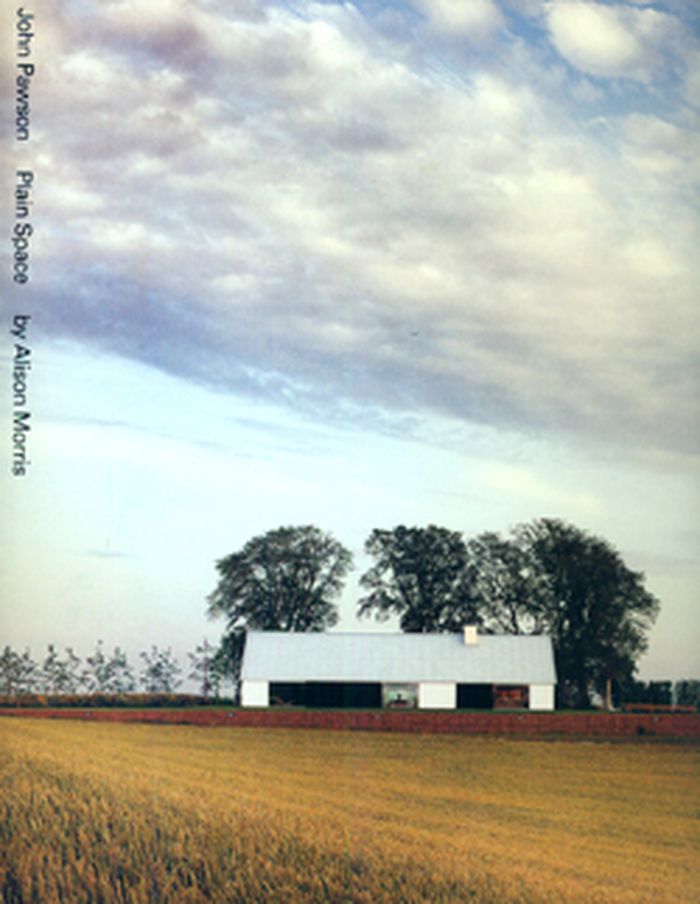
John Pawson: Plain space
John Pawson: Plain space
Actions:
Price:
$79.95
(available to order)
Summary:
John Pawson's work combines an essential simplicity with a keen attention to the details of everyday life and human experience. His pared-down yet luxurious houses and art galleries were his first projects to gain international attention, and his work has since included Calvin Klein's flagship store in New York, airport lounges for Cathay Pacific, and a kitchen for(...)
$79.95
(available to order)
Summary:
John Pawson's work combines an essential simplicity with a keen attention to the details of everyday life and human experience. His pared-down yet luxurious houses and art galleries were his first projects to gain international attention, and his work has since included Calvin Klein's flagship store in New York, airport lounges for Cathay Pacific, and a kitchen for(...)
Subject:
Architecture Monographs
Architecture Monographs
Publication:
September 2010
September 2010
Title:
John Pawson: Plain space
Actions:
Price:
$79.95
(available to order)
Summary:
John Pawson's work combines an essential simplicity with a keen attention to the details of everyday life and human experience. His pared-down yet luxurious houses and art galleries were his first projects to gain international attention, and his work has since included Calvin Klein's flagship store in New York, airport lounges for Cathay Pacific, and a kitchen for Obumex. In the last decade, the scope of his designs has broadened from objects and interiors to include houses, monasteries, pavilions and boats. This change in scale has given his office the opportunity to refine its minimalist aesthetic and further develop its ideas of a fundamental architecture based on the qualities of space, proportion, light and materials. Frequently these projects intervene in existing conditions to create spaces that are simultaneously simple and complex, timeless and contemporary: in the Novy Dvur Monastery in the Czech Republic, elements of the original baroque complex are combined with entirely new architecture to create a mysterious and beautiful sequence of spaces, and in the Baron House in Sweden the vernacular language of the area is refined and abstracted to create a truly modern home. Plain Space presents both this recent body of work and earlier projects from the perspective of someone who has had unique access to the work and archives of the office.
John Pawson: Plain space
Actions:
Price:
$79.95
(available to order)
Summary:
John Pawson's work combines an essential simplicity with a keen attention to the details of everyday life and human experience. His pared-down yet luxurious houses and art galleries were his first projects to gain international attention, and his work has since included Calvin Klein's flagship store in New York, airport lounges for Cathay Pacific, and a kitchen for Obumex. In the last decade, the scope of his designs has broadened from objects and interiors to include houses, monasteries, pavilions and boats. This change in scale has given his office the opportunity to refine its minimalist aesthetic and further develop its ideas of a fundamental architecture based on the qualities of space, proportion, light and materials. Frequently these projects intervene in existing conditions to create spaces that are simultaneously simple and complex, timeless and contemporary: in the Novy Dvur Monastery in the Czech Republic, elements of the original baroque complex are combined with entirely new architecture to create a mysterious and beautiful sequence of spaces, and in the Baron House in Sweden the vernacular language of the area is refined and abstracted to create a truly modern home. Plain Space presents both this recent body of work and earlier projects from the perspective of someone who has had unique access to the work and archives of the office.
Form:
books
books
Publication:
September 2010
September 2010
Subject:
Architecture Monographs
Architecture Monographs
Form:
books
books
Actions:
Price:
$55.00
(available in store)
Summary:
The oldest churches shown in this book were built as early as in the 15th century, most of those still standing were built in the 18th and 19th centuries, and quite a few are still being built today. Many were destroyed in the two world wars, many fell victim to ethnic cleansing after 1945, some fell into disrepair during the Soviet era, others were burnt down by(...)
$55.00
(available in store)
Summary:
The oldest churches shown in this book were built as early as in the 15th century, most of those still standing were built in the 18th and 19th centuries, and quite a few are still being built today. Many were destroyed in the two world wars, many fell victim to ethnic cleansing after 1945, some fell into disrepair during the Soviet era, others were burnt down by(...)
Title:
Wooden churches in Eastern Europe
Actions:
Price:
$55.00
(available in store)
Summary:
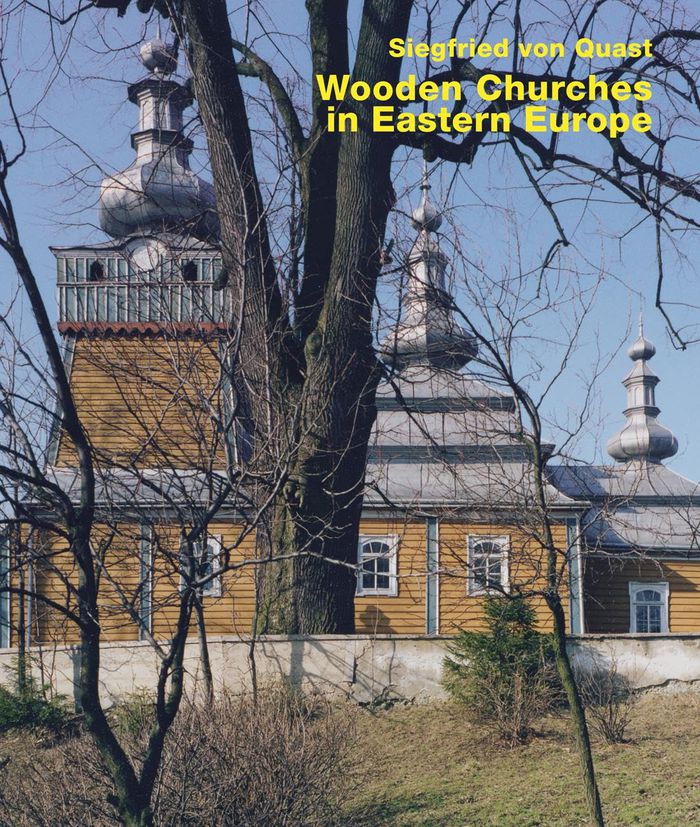
The oldest churches shown in this book were built as early as in the 15th century, most of those still standing were built in the 18th and 19th centuries, and quite a few are still being built today. Many were destroyed in the two world wars, many fell victim to ethnic cleansing after 1945, some fell into disrepair during the Soviet era, others were burnt down by lightning or short circuits, and quite a few simply gave way to the more "representative" stone churches as early as the 19th century. But a large number are still standing, consecrated, and believers gather in them. In fact almost of them in the various Carpathian countries are protected monuments, and many have been lovingly restored in recent times. More than the architectural-historical value, the question arises here of the aesthetic assessment of these small buildings. It is not a refined canon of forms of great architecture that can be derived and proven from the history of architecture that inspires us so much. Ba-sically, they are not overly sophisticated constructions in terms of craftsmanship, they are safe and beautiful in their simplicity. Their aesthetic appeal, however, also includes the surface-weathered material, deformed structures, colour improvisations, recently ornamented sheet metal, inside wall paintings, altar and iconostasis furnishings derived from Renaissance and Baroque periods, but above all their location in the village, mostly isolated, often elevated, surrounded by old trees, enclosures and graves without cemetery order.
Wooden churches in Eastern Europe
Actions:
Price:
$55.00
(available in store)
Summary:
The oldest churches shown in this book were built as early as in the 15th century, most of those still standing were built in the 18th and 19th centuries, and quite a few are still being built today. Many were destroyed in the two world wars, many fell victim to ethnic cleansing after 1945, some fell into disrepair during the Soviet era, others were burnt down by lightning or short circuits, and quite a few simply gave way to the more "representative" stone churches as early as the 19th century. But a large number are still standing, consecrated, and believers gather in them. In fact almost of them in the various Carpathian countries are protected monuments, and many have been lovingly restored in recent times. More than the architectural-historical value, the question arises here of the aesthetic assessment of these small buildings. It is not a refined canon of forms of great architecture that can be derived and proven from the history of architecture that inspires us so much. Ba-sically, they are not overly sophisticated constructions in terms of craftsmanship, they are safe and beautiful in their simplicity. Their aesthetic appeal, however, also includes the surface-weathered material, deformed structures, colour improvisations, recently ornamented sheet metal, inside wall paintings, altar and iconostasis furnishings derived from Renaissance and Baroque periods, but above all their location in the village, mostly isolated, often elevated, surrounded by old trees, enclosures and graves without cemetery order.
Form:
books
books
Publication:
April 2024
April 2024
Subject:
Commercial interiors, Building types
Commercial interiors, Building types
Form:
books
books
Title:
L'imaginaire émergeant
L'imaginaire émergeant
Actions:
Price:
$44.95
(available to order)
Summary:
Au début des années soixante, des revues internationales d’art et d’architecture consacraient plusieurs articles aux travaux du jeune architecte André Jacqmain. Sous le titre "Une maison pour des tableaux", L’Œil d’avril 1962 présentait la maison du couple de collectionneurs d’art moderne Bertie et Gigi Urvater. Demeure baroque conçue comme un parcours labyrinthique qui(...)
$44.95
(available to order)
Summary:
Au début des années soixante, des revues internationales d’art et d’architecture consacraient plusieurs articles aux travaux du jeune architecte André Jacqmain. Sous le titre "Une maison pour des tableaux", L’Œil d’avril 1962 présentait la maison du couple de collectionneurs d’art moderne Bertie et Gigi Urvater. Demeure baroque conçue comme un parcours labyrinthique qui(...)
Title:
L'imaginaire émergeant
Actions:
Price:
$44.95
(available to order)
Summary:
Au début des années soixante, des revues internationales d’art et d’architecture consacraient plusieurs articles aux travaux du jeune architecte André Jacqmain. Sous le titre "Une maison pour des tableaux", L’Œil d’avril 1962 présentait la maison du couple de collectionneurs d’art moderne Bertie et Gigi Urvater. Demeure baroque conçue comme un parcours labyrinthique qui égrenait sur ses murs les Magritte, Ernst, Klee, Matta, Bacon, Riopelle… "Une maison", écrit l’auteur du texte, "qui ne ressemble à aucune autre", mettant ainsi le doigt sur ce qui caractérise l’originalité de Jacqmain. Toujours produire, au risque de ne pas faire école, des œuvres différentes nées de son imaginaire de latin du Nord et souvent soulignées par un tréfonds stylistique : réminiscences des élancements gothiques, des pagodes chinoises, de l’art déco... Après des études à l’Académie des beaux-arts de Bruxelles pendant les années de guerre, on le retrouve en 1950 aux Ateliers du Marais où il côtoie Pierre Alechinsky et Christian Dotremont. À 46 ans, en 1967, il fonde l’Atelier d’architecture de Genval, s’entoure d’une équipe, une pépinière d’idées qui fouettent l’imagination, qui lui permet d’aborder la grande échelle. Ce solitaire qui n’aime pas la solitude a toujours su s’entourer d’amis fidèles et d’artistes comme le créateur de meubles Jules Wabbes, les frères Strebelle, les photographes Gilles Ehrmann et Fabien de Cugnac, l’architecte Nicole Beeckmans qui l’a assisté dans la réalisation de ce livre où il retrace à travers des dessins son parcours, de sa naissance à aujourd’hui.
L'imaginaire émergeant
Actions:
Price:
$44.95
(available to order)
Summary:
Au début des années soixante, des revues internationales d’art et d’architecture consacraient plusieurs articles aux travaux du jeune architecte André Jacqmain. Sous le titre "Une maison pour des tableaux", L’Œil d’avril 1962 présentait la maison du couple de collectionneurs d’art moderne Bertie et Gigi Urvater. Demeure baroque conçue comme un parcours labyrinthique qui égrenait sur ses murs les Magritte, Ernst, Klee, Matta, Bacon, Riopelle… "Une maison", écrit l’auteur du texte, "qui ne ressemble à aucune autre", mettant ainsi le doigt sur ce qui caractérise l’originalité de Jacqmain. Toujours produire, au risque de ne pas faire école, des œuvres différentes nées de son imaginaire de latin du Nord et souvent soulignées par un tréfonds stylistique : réminiscences des élancements gothiques, des pagodes chinoises, de l’art déco... Après des études à l’Académie des beaux-arts de Bruxelles pendant les années de guerre, on le retrouve en 1950 aux Ateliers du Marais où il côtoie Pierre Alechinsky et Christian Dotremont. À 46 ans, en 1967, il fonde l’Atelier d’architecture de Genval, s’entoure d’une équipe, une pépinière d’idées qui fouettent l’imagination, qui lui permet d’aborder la grande échelle. Ce solitaire qui n’aime pas la solitude a toujours su s’entourer d’amis fidèles et d’artistes comme le créateur de meubles Jules Wabbes, les frères Strebelle, les photographes Gilles Ehrmann et Fabien de Cugnac, l’architecte Nicole Beeckmans qui l’a assisté dans la réalisation de ce livre où il retrace à travers des dessins son parcours, de sa naissance à aujourd’hui.
Form:
books
books
Publication:
January 2005, Bruxelles
January 2005, Bruxelles
Subject:
Architecture Monographs
Architecture Monographs
Form:
books
books
Actions:
Price:
$88.00
(available in store)
Summary:
Large bunk beds line the walls of a luminous all-white basement; "elephant drum" tables double as dancing podiums; a huge bed (for 45 people) fills the "Bed Baroque" room: this is the Supperclub nightclub and restaurant in Rome, designed by the Dutch design firm Concrete. The group's design concept has been a success in Amsterdam, Rome and San Francisco, and will land(...)
$88.00
(available in store)
Summary:
Large bunk beds line the walls of a luminous all-white basement; "elephant drum" tables double as dancing podiums; a huge bed (for 45 people) fills the "Bed Baroque" room: this is the Supperclub nightclub and restaurant in Rome, designed by the Dutch design firm Concrete. The group's design concept has been a success in Amsterdam, Rome and San Francisco, and will land(...)
Subject:
Architecture Monographs
Architecture Monographs
Publication:
July 2007, Rotterdam
July 2007, Rotterdam
Title:
The world according to concrete
Actions:
Price:
$88.00
(available in store)
Summary:
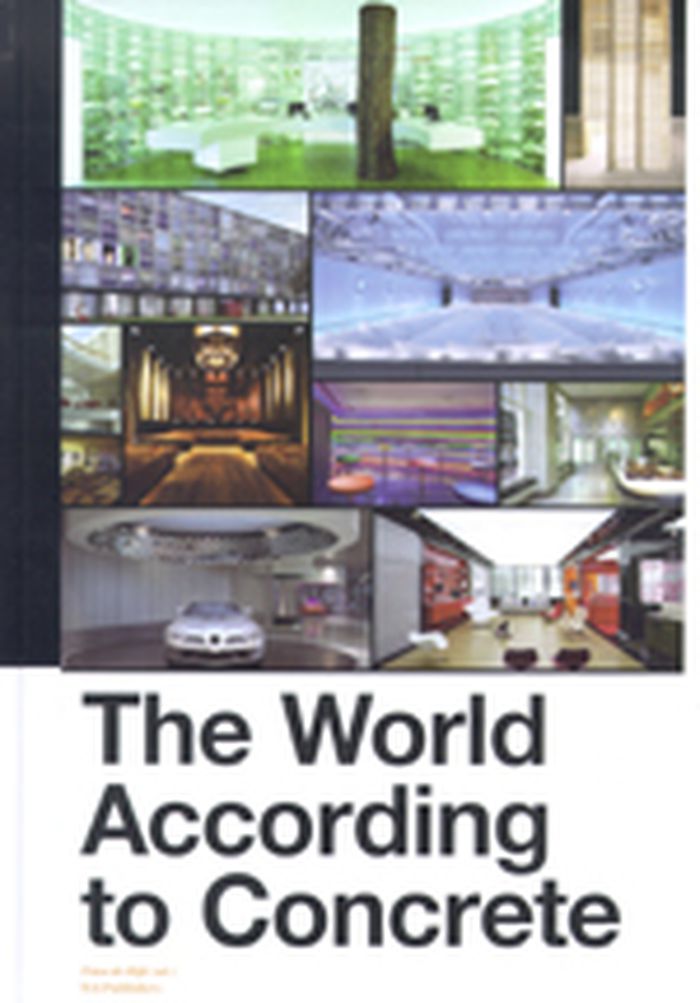
Large bunk beds line the walls of a luminous all-white basement; "elephant drum" tables double as dancing podiums; a huge bed (for 45 people) fills the "Bed Baroque" room: this is the Supperclub nightclub and restaurant in Rome, designed by the Dutch design firm Concrete. The group's design concept has been a success in Amsterdam, Rome and San Francisco, and will land soon in New York City. It has also mutated into Supperclub on Location and the Supperclub Cruise. Over the past decade, Concrete has set tongues wagging with their subtle amalgamation of architecture, advertising, fashion and product design for clients including De Lairesse Pharmacy in Amsterdam (winner, along with Supperclub, of the Lensvelt-de Architect Interior Prize), Rituals Home & Body Cosmetics, Australian Homemade, The Coffee Company, London's Laundry Industry, the Centraal Museum in Utrecht and the Van Gogh Museum, Amsterdam. It has also made its mark with projects for Hyundai in Seoul, the UberFluss design hotel in Bremen and the recently completed designs for the restaurants and shops at the Mercedes-Benz Museum Stuttgart (a building designed by UN Studio architects), which have already garnered much critical admiration. The World According to Concrete examines this chic young bureau's working methods and its position within the world of (interior) architecture. Featuring 300 color images and essays by esteemed design critic Timo de Rijk among others, it provides a timely appraisal of one of the boldest and most innovative design companies on the international scene.
The world according to concrete
Actions:
Price:
$88.00
(available in store)
Summary:
Large bunk beds line the walls of a luminous all-white basement; "elephant drum" tables double as dancing podiums; a huge bed (for 45 people) fills the "Bed Baroque" room: this is the Supperclub nightclub and restaurant in Rome, designed by the Dutch design firm Concrete. The group's design concept has been a success in Amsterdam, Rome and San Francisco, and will land soon in New York City. It has also mutated into Supperclub on Location and the Supperclub Cruise. Over the past decade, Concrete has set tongues wagging with their subtle amalgamation of architecture, advertising, fashion and product design for clients including De Lairesse Pharmacy in Amsterdam (winner, along with Supperclub, of the Lensvelt-de Architect Interior Prize), Rituals Home & Body Cosmetics, Australian Homemade, The Coffee Company, London's Laundry Industry, the Centraal Museum in Utrecht and the Van Gogh Museum, Amsterdam. It has also made its mark with projects for Hyundai in Seoul, the UberFluss design hotel in Bremen and the recently completed designs for the restaurants and shops at the Mercedes-Benz Museum Stuttgart (a building designed by UN Studio architects), which have already garnered much critical admiration. The World According to Concrete examines this chic young bureau's working methods and its position within the world of (interior) architecture. Featuring 300 color images and essays by esteemed design critic Timo de Rijk among others, it provides a timely appraisal of one of the boldest and most innovative design companies on the international scene.
Form:
books
books
Publication:
July 2007, Rotterdam
July 2007, Rotterdam
Subject:
Architecture Monographs
Architecture Monographs
Form:
books
books
Actions:
Price:
$40.00
(available to order)
Summary:
One of Spain’s most prominent and innovative artists, Joan Fontcuberta is best known for exploring the interstices between art, science, and illusion. Where science reaches its limits in his works, the imagination frequently finds a creative space in which to flourish. In "Landscapes without memory", Fontcuberta has co-opted a piece of computer software originally(...)
$40.00
(available to order)
Summary:
One of Spain’s most prominent and innovative artists, Joan Fontcuberta is best known for exploring the interstices between art, science, and illusion. Where science reaches its limits in his works, the imagination frequently finds a creative space in which to flourish. In "Landscapes without memory", Fontcuberta has co-opted a piece of computer software originally(...)
Subject:
Photography monographs
Photography monographs
Publication:
January 1900, New York
January 1900, New York
Title:
Joan Fontcuberta : landscapes without memory
Actions:
Price:
$40.00
(available to order)
Summary:
One of Spain’s most prominent and innovative artists, Joan Fontcuberta is best known for exploring the interstices between art, science, and illusion. Where science reaches its limits in his works, the imagination frequently finds a creative space in which to flourish. In "Landscapes without memory", Fontcuberta has co-opted a piece of computer software originally designed for military or scientific use in rendering three-dimensional images of landscapes. The software enables the user to build photo-realistic models based on information scanned from two-dimensional sources—usually satellite surveys or cartographic data. The result gives the user the illusion of navigating in three dimensions which had previously been visualized only as a flat image. With this widely available “freeware” as his starting point, Fontcuberta has created the two series that constitute his "Landscapes without memory". In the “Landscapes of landscapes” series, Fontcuberta feeds the software fragments of pictures by Turner, Cézanne, Dalí, Stieglitz, Weston, and others, forcing the program to interpret a variety of landscape masterworks as “real.” The contours and tones of these painted and photographic landscapes are transformed into three-dimensional mountains, rivers, valleys, and clouds. The vocabulary of art is thus transmuted into that of cartography. In the “Bodyscapes” series, Fontcuberta uses the same software to reinterpret photographs depicting fragments of his own body. The result? A wild, baroque, virtual- fantasy world. While referring to the contemporary exchange between illusion, nature, culture, and technology, "Landscapes without memory" also makes a pointed gesture aimed at fooling that epitome of machine rationalism: the computer.
Joan Fontcuberta : landscapes without memory
Actions:
Price:
$40.00
(available to order)
Summary:
One of Spain’s most prominent and innovative artists, Joan Fontcuberta is best known for exploring the interstices between art, science, and illusion. Where science reaches its limits in his works, the imagination frequently finds a creative space in which to flourish. In "Landscapes without memory", Fontcuberta has co-opted a piece of computer software originally designed for military or scientific use in rendering three-dimensional images of landscapes. The software enables the user to build photo-realistic models based on information scanned from two-dimensional sources—usually satellite surveys or cartographic data. The result gives the user the illusion of navigating in three dimensions which had previously been visualized only as a flat image. With this widely available “freeware” as his starting point, Fontcuberta has created the two series that constitute his "Landscapes without memory". In the “Landscapes of landscapes” series, Fontcuberta feeds the software fragments of pictures by Turner, Cézanne, Dalí, Stieglitz, Weston, and others, forcing the program to interpret a variety of landscape masterworks as “real.” The contours and tones of these painted and photographic landscapes are transformed into three-dimensional mountains, rivers, valleys, and clouds. The vocabulary of art is thus transmuted into that of cartography. In the “Bodyscapes” series, Fontcuberta uses the same software to reinterpret photographs depicting fragments of his own body. The result? A wild, baroque, virtual- fantasy world. While referring to the contemporary exchange between illusion, nature, culture, and technology, "Landscapes without memory" also makes a pointed gesture aimed at fooling that epitome of machine rationalism: the computer.
Form:
books
books
Publication:
January 1900, New York
January 1900, New York
Subject:
Photography monographs
Photography monographs
Form:
books
books
Actions:
Price:
$32.95
(available in store)
Summary:
The extraordinary architectural heritage of Prague has meant that the city is now regarded as one of the artistic and cultural capitals of the world. The turbulent history of the city is reflected in the range and diversity of buildings discussed in this book: from its baroque (...)
$32.95
(available in store)
Summary:
The extraordinary architectural heritage of Prague has meant that the city is now regarded as one of the artistic and cultural capitals of the world. The turbulent history of the city is reflected in the range and diversity of buildings discussed in this book: from its baroque (...)
Title:
Prague : the buildings of Europe
Actions:
Price:
$32.95
(available in store)
Summary:
The extraordinary architectural heritage of Prague has meant that the city is now regarded as one of the artistic and cultural capitals of the world. The turbulent history of the city is reflected in the range and diversity of buildings discussed in this book: from its baroque churches and palaces to the state offices and housing projects of the post-1945 communist era. The guide covers all aspects of Prague's development since its early years, through its periods of both power and decline from the fifteenth to the twentieth century. Particular attention is paid to the architecture of the last one hundred years. Since the democratic revolution of 1989, the city has once again become a place of pilgrimage for those interested in architecture and design. This book covers some of the most recent architectural projects to be planned in the city. There are over one hundred and fifty entries on individual buildings and architectural projects, sub-divided into historical sections. Each entry provides both historical and technical information on the building, as well as precise details on its location and how to get there. The selection includes the well known landmarks of Prague as well as some less familiar and out-of-the-way buildings. Maps of the city and its environs are also provided. This guide will appeal to those with a general interest in architecture and design, as well as architects, art and architectural historians. It provides practical information for the visitor to Prague, and also serves as an essential architectural history of the city.
Prague : the buildings of Europe
Actions:
Price:
$32.95
(available in store)
Summary:
The extraordinary architectural heritage of Prague has meant that the city is now regarded as one of the artistic and cultural capitals of the world. The turbulent history of the city is reflected in the range and diversity of buildings discussed in this book: from its baroque churches and palaces to the state offices and housing projects of the post-1945 communist era. The guide covers all aspects of Prague's development since its early years, through its periods of both power and decline from the fifteenth to the twentieth century. Particular attention is paid to the architecture of the last one hundred years. Since the democratic revolution of 1989, the city has once again become a place of pilgrimage for those interested in architecture and design. This book covers some of the most recent architectural projects to be planned in the city. There are over one hundred and fifty entries on individual buildings and architectural projects, sub-divided into historical sections. Each entry provides both historical and technical information on the building, as well as precise details on its location and how to get there. The selection includes the well known landmarks of Prague as well as some less familiar and out-of-the-way buildings. Maps of the city and its environs are also provided. This guide will appeal to those with a general interest in architecture and design, as well as architects, art and architectural historians. It provides practical information for the visitor to Prague, and also serves as an essential architectural history of the city.
Form:
books
books
Publication:
July 2000, Manchester
July 2000, Manchester
Subject:
City Guides
City Guides
Form:
books
books
Title:
The minimum dwelling
The minimum dwelling
Actions:
Price:
$96.00
(available in store)
Summary:
Karel Teige (1900–1951), one of the most important figures of avant-garde modernism of the 1920s and 1930s, influenced virtually every area of art, design, and urban thinking in his native Czechoslovakia. His "Minimum dwelling", originally published in Czech in 1932, and appearing now for the first time in English, is one of the landmark architectural books of the(...)
$96.00
(available in store)
Summary:
Karel Teige (1900–1951), one of the most important figures of avant-garde modernism of the 1920s and 1930s, influenced virtually every area of art, design, and urban thinking in his native Czechoslovakia. His "Minimum dwelling", originally published in Czech in 1932, and appearing now for the first time in English, is one of the landmark architectural books of the(...)
Title:
The minimum dwelling
Actions:
Price:
$96.00
(available in store)
Summary:
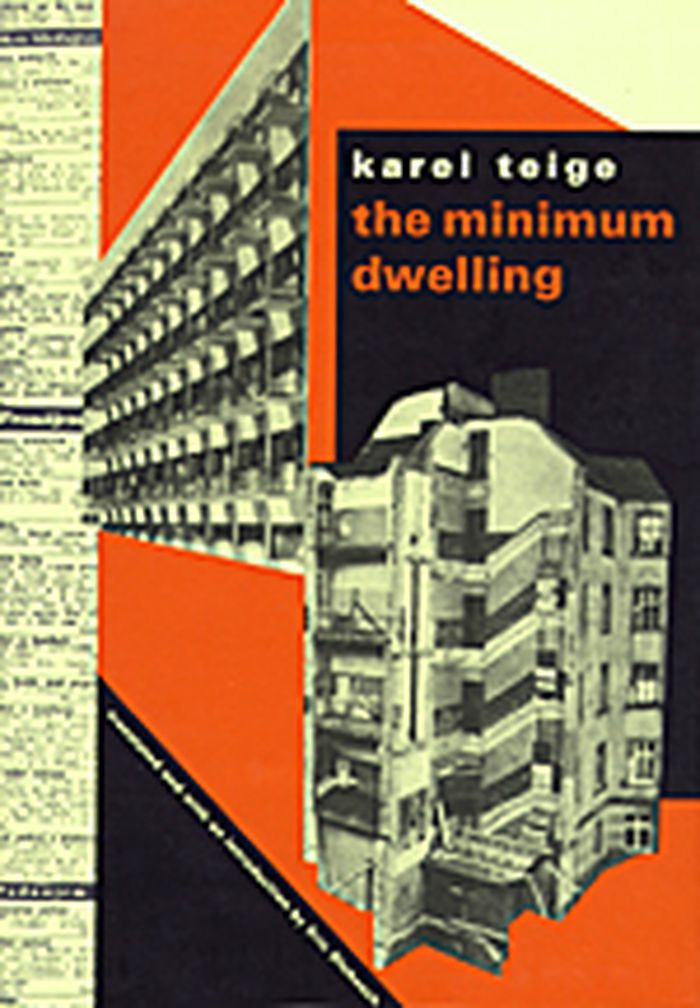
Karel Teige (1900–1951), one of the most important figures of avant-garde modernism of the 1920s and 1930s, influenced virtually every area of art, design, and urban thinking in his native Czechoslovakia. His "Minimum dwelling", originally published in Czech in 1932, and appearing now for the first time in English, is one of the landmark architectural books of the twentieth century. "The minimum dwelling" is not just a book on architecture, but also a blueprint for a new way of living. It calls for a radical rethinking of domestic space and of the role of modern architecture in the planning, design, and construction of new dwelling types for the proletariat. Teige shows how Gropius, Le Corbusier, Mies van der Rohe, and others designed little more than new versions of baroque palaces, mainly for the new financial aristocracy. Teige envisioned the minimum dwelling not as a reduced version of a bourgeois apartment or rural cottage, but as a wholly new dwelling type built on the cooperation of architects, sociologists, economists, health officials, physicians, social workers, politicians, and trade unionists. The book covers many subjects that are still of great relevance. Of particular interest are Teige’s rejection of traditional notions of the kitchen as the core of family-centered plans and of marriage as the foundation of modern cohabitation. He describes alternative lifestyles and new ways of cohabitation of sexes, generations, and classes. The detailed programmatic chapters on collective housing remain far ahead of current thinking, and his comments on collective dwelling presage communal living experiments of the 1960s and 1970s, as well as the communal facilities in contemporary condominium buildings and retirement communities. Translated and introduced by Eric Dluhosch.
The minimum dwelling
Actions:
Price:
$96.00
(available in store)
Summary:
Karel Teige (1900–1951), one of the most important figures of avant-garde modernism of the 1920s and 1930s, influenced virtually every area of art, design, and urban thinking in his native Czechoslovakia. His "Minimum dwelling", originally published in Czech in 1932, and appearing now for the first time in English, is one of the landmark architectural books of the twentieth century. "The minimum dwelling" is not just a book on architecture, but also a blueprint for a new way of living. It calls for a radical rethinking of domestic space and of the role of modern architecture in the planning, design, and construction of new dwelling types for the proletariat. Teige shows how Gropius, Le Corbusier, Mies van der Rohe, and others designed little more than new versions of baroque palaces, mainly for the new financial aristocracy. Teige envisioned the minimum dwelling not as a reduced version of a bourgeois apartment or rural cottage, but as a wholly new dwelling type built on the cooperation of architects, sociologists, economists, health officials, physicians, social workers, politicians, and trade unionists. The book covers many subjects that are still of great relevance. Of particular interest are Teige’s rejection of traditional notions of the kitchen as the core of family-centered plans and of marriage as the foundation of modern cohabitation. He describes alternative lifestyles and new ways of cohabitation of sexes, generations, and classes. The detailed programmatic chapters on collective housing remain far ahead of current thinking, and his comments on collective dwelling presage communal living experiments of the 1960s and 1970s, as well as the communal facilities in contemporary condominium buildings and retirement communities. Translated and introduced by Eric Dluhosch.
Form:
books
books
Publication:
May 2002, Cambridge, Mass.
May 2002, Cambridge, Mass.
Subject:
Architectural Theory
Architectural Theory
Form:
books
books
Actions:
Price:
$62.50
(available to order)
Summary:
Dalibor Vesely proposes an alternative to the narrow vision of contemporary architecture as a discipline that can be treated as an instrument or commodity. In doing so, he offers nothing less than an account of the ontological and cultural foundations of modern architecture and, consequently, of the nature and cultural role of architecture through history. Vesely's(...)
$62.50
(available to order)
Summary:
Dalibor Vesely proposes an alternative to the narrow vision of contemporary architecture as a discipline that can be treated as an instrument or commodity. In doing so, he offers nothing less than an account of the ontological and cultural foundations of modern architecture and, consequently, of the nature and cultural role of architecture through history. Vesely's(...)
Title:
Architecture in the age of divided representation : the question of creativity in the shadow of production
Actions:
Price:
$62.50
(available to order)
Summary:
Dalibor Vesely proposes an alternative to the narrow vision of contemporary architecture as a discipline that can be treated as an instrument or commodity. In doing so, he offers nothing less than an account of the ontological and cultural foundations of modern architecture and, consequently, of the nature and cultural role of architecture through history. Vesely's argument, structured as a critical dialogue, discovers the first plausible anticipation of modernity in the formation of Renaissance perspective. Understanding this notion of perspective against the background of the medieval philosophy of light, he argues, leads to an understanding of architectural space as formed by typical human situations and by light before it is structured geometrically. The central part of the book addresses the question of divided representation - the tension between the instrumental and the communicative roles of architecture - in the period of the baroque, when architectural thinking was seriously challenged by the emergence of modern science. Vesely argues that to resolve the dilemma of modernity - reconciling the inventions and achievements of modern technology with the human condition and the natural world - we can turn to architecture and its latent capacity to reconcile different levels of reality, its ability to relate abstract ideas and conceptual structures to the concrete situations of everyday life. Vesely sees the restoration of this communicative role of architecture as the key to the restoration of architecture as the topological and corporeal foundation of culture; what the book is to our literacy, he argues, architecture is to culture as a whole. He concludes by proposing a new poetics of architecture that will serve as a framework for the restoration of the humanistic role of architecture in the age of technology.
Architecture in the age of divided representation : the question of creativity in the shadow of production
Actions:
Price:
$62.50
(available to order)
Summary:
Dalibor Vesely proposes an alternative to the narrow vision of contemporary architecture as a discipline that can be treated as an instrument or commodity. In doing so, he offers nothing less than an account of the ontological and cultural foundations of modern architecture and, consequently, of the nature and cultural role of architecture through history. Vesely's argument, structured as a critical dialogue, discovers the first plausible anticipation of modernity in the formation of Renaissance perspective. Understanding this notion of perspective against the background of the medieval philosophy of light, he argues, leads to an understanding of architectural space as formed by typical human situations and by light before it is structured geometrically. The central part of the book addresses the question of divided representation - the tension between the instrumental and the communicative roles of architecture - in the period of the baroque, when architectural thinking was seriously challenged by the emergence of modern science. Vesely argues that to resolve the dilemma of modernity - reconciling the inventions and achievements of modern technology with the human condition and the natural world - we can turn to architecture and its latent capacity to reconcile different levels of reality, its ability to relate abstract ideas and conceptual structures to the concrete situations of everyday life. Vesely sees the restoration of this communicative role of architecture as the key to the restoration of architecture as the topological and corporeal foundation of culture; what the book is to our literacy, he argues, architecture is to culture as a whole. He concludes by proposing a new poetics of architecture that will serve as a framework for the restoration of the humanistic role of architecture in the age of technology.
Form:
books
books
Publication:
June 2004, Cambridge, Mass.
June 2004, Cambridge, Mass.
Subject:
Architectural Theory
Architectural Theory
Form:
books
books
Actions:
Price:
$31.50
(available to order)
Summary:
In this long-awaited work, Dalibor Vesely proposes an alternative to the narrow vision of contemporary architecture as a discipline that can be treated as an instrument or commodity. In doing so, he offers an account of the ontological and cultural foundations of modern architecture and, consequently, of the nature and cultural role of architecture through history.(...)
$31.50
(available to order)
Summary:
In this long-awaited work, Dalibor Vesely proposes an alternative to the narrow vision of contemporary architecture as a discipline that can be treated as an instrument or commodity. In doing so, he offers an account of the ontological and cultural foundations of modern architecture and, consequently, of the nature and cultural role of architecture through history.(...)
Subject:
Architectural Theory
Architectural Theory
Publication:
October 2006, Cambridge (MA), London
October 2006, Cambridge (MA), London
Title:
Architecture in the age of divided representation : the question of creativity in the shadow of production
Actions:
Price:
$31.50
(available to order)
Summary:
In this long-awaited work, Dalibor Vesely proposes an alternative to the narrow vision of contemporary architecture as a discipline that can be treated as an instrument or commodity. In doing so, he offers an account of the ontological and cultural foundations of modern architecture and, consequently, of the nature and cultural role of architecture through history. Vesely's argument, structured as a critical dialogue, discovers the first plausible anticipation of modernity in the formation of Renaissance perspective. Understanding this notion of perspective against the background of the medieval philosophy of light, he argues, leads to an understanding of architectural space as formed by typical human situations and by light before it is structured geometrically. The central part of the book addresses the question of divided representation - the tension between the instrumental and the communicative roles of architecture - in the period of the baroque, when architectural thinking was seriously challenged by the emergence of modern science. Vesely argues that to resolve the dilemma of modernity - reconciling the inventions and achievements of modern technology with the human condition and the natural world - we can turn to architecture and its latent capacity to reconcile different levels of reality, its ability to relate abstract ideas and conceptual structures to the concrete situations of everyday life. Vesely sees the restoration of this communicative role of architecture as the key to the restoration of architecture as the topological and corporeal foundation of culture; what the book is to our literacy, he argues, architecture is to culture as a whole. He concludes by proposing a new poetics of architecture that will serve as a framework for the restoration of the humanistic role of architecture in the age of technology.
Architecture in the age of divided representation : the question of creativity in the shadow of production
Actions:
Price:
$31.50
(available to order)
Summary:
In this long-awaited work, Dalibor Vesely proposes an alternative to the narrow vision of contemporary architecture as a discipline that can be treated as an instrument or commodity. In doing so, he offers an account of the ontological and cultural foundations of modern architecture and, consequently, of the nature and cultural role of architecture through history. Vesely's argument, structured as a critical dialogue, discovers the first plausible anticipation of modernity in the formation of Renaissance perspective. Understanding this notion of perspective against the background of the medieval philosophy of light, he argues, leads to an understanding of architectural space as formed by typical human situations and by light before it is structured geometrically. The central part of the book addresses the question of divided representation - the tension between the instrumental and the communicative roles of architecture - in the period of the baroque, when architectural thinking was seriously challenged by the emergence of modern science. Vesely argues that to resolve the dilemma of modernity - reconciling the inventions and achievements of modern technology with the human condition and the natural world - we can turn to architecture and its latent capacity to reconcile different levels of reality, its ability to relate abstract ideas and conceptual structures to the concrete situations of everyday life. Vesely sees the restoration of this communicative role of architecture as the key to the restoration of architecture as the topological and corporeal foundation of culture; what the book is to our literacy, he argues, architecture is to culture as a whole. He concludes by proposing a new poetics of architecture that will serve as a framework for the restoration of the humanistic role of architecture in the age of technology.
Form:
books
books
Publication:
October 2006, Cambridge (MA), London
October 2006, Cambridge (MA), London
Subject:
Architectural Theory
Architectural Theory
Form:
books
books
Actions:
Price:
$71.95
(available to order)
Summary:
Although many people view virtual reality as a totally new phenomenon, it has its foundations in an unrecognized history of immersive images. Indeed, the search for illusionary visual space can be traced back to antiquity. In this book Oliver Grau shows how virtual art fits into the art history of illusion and immersion. He describes the metamorphosis of the concepts of(...)
$71.95
(available to order)
Summary:
Although many people view virtual reality as a totally new phenomenon, it has its foundations in an unrecognized history of immersive images. Indeed, the search for illusionary visual space can be traced back to antiquity. In this book Oliver Grau shows how virtual art fits into the art history of illusion and immersion. He describes the metamorphosis of the concepts of(...)
Title:
Virtual art from illusion to immersion
Actions:
Price:
$71.95
(available to order)
Summary:
Although many people view virtual reality as a totally new phenomenon, it has its foundations in an unrecognized history of immersive images. Indeed, the search for illusionary visual space can be traced back to antiquity. In this book Oliver Grau shows how virtual art fits into the art history of illusion and immersion. He describes the metamorphosis of the concepts of art and the image and relates those concepts to interactive art, interface design, agents, telepresence, and image evolution. Grau retells art history as media history, helping us to understand the phenomenon of virtual reality beyond the hype. Grau shows how each epoch used the technical means available to produce maximum illusion. He discusses frescoes such as those in the Villa dei Misteri in Pompeii and the gardens of the Villa Livia near Primaporta, Renaissance and Baroque illusion spaces, and panoramas, which were the most developed form of illusion achieved through traditional methods of painting and the mass image medium before film. Through a detailed analysis of perhaps the most important German panorama, Anton von Werner's 1883 The Battle of Sedan, Grau shows how immersion produced emotional responses. He traces immersive cinema through Cinerama, Sensorama, Expanded Cinema, 3-D, Omnimax and IMAX, and the head mounted display with its military origins. He also examines those characteristics of virtual reality that distinguish it from earlier forms of illusionary art. His analysis draws on the work of contemporary artists and groups ART+COM, Maurice Benayoun, Charlotte Davies, Monika Fleischmann, Ken Goldberg, Agnes Hegedues, Eduardo Kac, Knowbotic Research, Laurent Mignonneau, Michael Naimark, Simon Penny, Daniela Plewe, Paul Sermon, Jeffrey Shaw, Karl Sims, Christa Sommerer, and Wolfgang Strauss. Grau offers not just a history of illusionary space but also a theoretical framework for analyzing its phenomenologies, functions, and strategies throughout history and into the future.
Virtual art from illusion to immersion
Actions:
Price:
$71.95
(available to order)
Summary:
Although many people view virtual reality as a totally new phenomenon, it has its foundations in an unrecognized history of immersive images. Indeed, the search for illusionary visual space can be traced back to antiquity. In this book Oliver Grau shows how virtual art fits into the art history of illusion and immersion. He describes the metamorphosis of the concepts of art and the image and relates those concepts to interactive art, interface design, agents, telepresence, and image evolution. Grau retells art history as media history, helping us to understand the phenomenon of virtual reality beyond the hype. Grau shows how each epoch used the technical means available to produce maximum illusion. He discusses frescoes such as those in the Villa dei Misteri in Pompeii and the gardens of the Villa Livia near Primaporta, Renaissance and Baroque illusion spaces, and panoramas, which were the most developed form of illusion achieved through traditional methods of painting and the mass image medium before film. Through a detailed analysis of perhaps the most important German panorama, Anton von Werner's 1883 The Battle of Sedan, Grau shows how immersion produced emotional responses. He traces immersive cinema through Cinerama, Sensorama, Expanded Cinema, 3-D, Omnimax and IMAX, and the head mounted display with its military origins. He also examines those characteristics of virtual reality that distinguish it from earlier forms of illusionary art. His analysis draws on the work of contemporary artists and groups ART+COM, Maurice Benayoun, Charlotte Davies, Monika Fleischmann, Ken Goldberg, Agnes Hegedues, Eduardo Kac, Knowbotic Research, Laurent Mignonneau, Michael Naimark, Simon Penny, Daniela Plewe, Paul Sermon, Jeffrey Shaw, Karl Sims, Christa Sommerer, and Wolfgang Strauss. Grau offers not just a history of illusionary space but also a theoretical framework for analyzing its phenomenologies, functions, and strategies throughout history and into the future.
Form:
books
books
Publication:
January 1900, Cambridge, Mass.
January 1900, Cambridge, Mass.
Subject:
Epistemology
Epistemology


