


29901 Results
Form:
textual records
textual records
Actions:
Reference number:
DR2004:0172
Description:
promotional material, brochures, clippings, Ministry of Defence reports on portable shelters, exhibition programme, and publications, including one on 1972 Delft 'International Symposium: Pneumatic Structures'
DR2004:0172
Description:
promotional material, brochures, clippings, Ministry of Defence reports on portable shelters, exhibition programme, and publications, including one on 1972 Delft 'International Symposium: Pneumatic Structures'
People:
Title:
Promotional material, brochures, clippings, Ministry of Defence reports on portable shelters
Actions:
DR2004:0172
Description:
promotional material, brochures, clippings, Ministry of Defence reports on portable shelters, exhibition programme, and publications, including one on 1972 Delft 'International Symposium: Pneumatic Structures'
Promotional material, brochures, clippings, Ministry of Defence reports on portable shelters
Actions:
DR2004:0172
Description:
promotional material, brochures, clippings, Ministry of Defence reports on portable shelters, exhibition programme, and publications, including one on 1972 Delft 'International Symposium: Pneumatic Structures'
Form:
textual records
textual records
People:
Form:
archives
Level of archival description:
Collection
archives
Level of archival description:
Collection
Title:
Futurecasting collection
Futurecasting collection
Actions:
Reference number:
CD048
Synopsis:
This collection documents the activities of the “Futurecasting: Indigenous-led Architecture and Design in the Arctic” group formed by Jenni Hakovirta, Naomi Ratte, Nicole Luke, Magnus Antaris Tuolja, Andrea McIntosh, Robyn Adams, Berit Kristine Andersen Guvsám, Laila Susanna Kuhmunen, Johanna Minde, and Reanna Merasty. It contains materials related to the planning of seminars and workshops, and the creative process and projects created by its participants in 2022-2023 that were later presented in the Canadian Centre for Architecture’s exhibition and related publication “ᐊᖏᕐᕋᒧᑦ / Ruovttu Guvlui / Towards home” (2022-2023).
CD048
Synopsis:
This collection documents the activities of the “Futurecasting: Indigenous-led Architecture and Design in the Arctic” group formed by Jenni Hakovirta, Naomi Ratte, Nicole Luke, Magnus Antaris Tuolja, Andrea McIntosh, Robyn Adams, Berit Kristine Andersen Guvsám, Laila Susanna Kuhmunen, Johanna Minde, and Reanna Merasty. It contains materials related to the planning of seminars and workshops, and the creative process and projects created by its participants in 2022-2023 that were later presented in the Canadian Centre for Architecture’s exhibition and related publication “ᐊᖏᕐᕋᒧᑦ / Ruovttu Guvlui / Towards home” (2022-2023).
People:
Date:
2008-2023
2008-2023
Title:
Futurecasting collection
Actions:
CD048
Synopsis:
This collection documents the activities of the “Futurecasting: Indigenous-led Architecture and Design in the Arctic” group formed by Jenni Hakovirta, Naomi Ratte, Nicole Luke, Magnus Antaris Tuolja, Andrea McIntosh, Robyn Adams, Berit Kristine Andersen Guvsám, Laila Susanna Kuhmunen, Johanna Minde, and Reanna Merasty. It contains materials related to the planning of seminars and workshops, and the creative process and projects created by its participants in 2022-2023 that were later presented in the Canadian Centre for Architecture’s exhibition and related publication “ᐊᖏᕐᕋᒧᑦ / Ruovttu Guvlui / Towards home” (2022-2023).
Futurecasting collection
Actions:
CD048
Synopsis:
This collection documents the activities of the “Futurecasting: Indigenous-led Architecture and Design in the Arctic” group formed by Jenni Hakovirta, Naomi Ratte, Nicole Luke, Magnus Antaris Tuolja, Andrea McIntosh, Robyn Adams, Berit Kristine Andersen Guvsám, Laila Susanna Kuhmunen, Johanna Minde, and Reanna Merasty. It contains materials related to the planning of seminars and workshops, and the creative process and projects created by its participants in 2022-2023 that were later presented in the Canadian Centre for Architecture’s exhibition and related publication “ᐊᖏᕐᕋᒧᑦ / Ruovttu Guvlui / Towards home” (2022-2023).
Form:
archives
Level of archival description:
Collection
archives
Level of archival description:
Collection
Date:
2008-2023
2008-2023
People:
Level of archival description:
Project
Project
Actions:
Reference number:
CI005.S1.1949.PR1
Description:
Vredenburg Square – originally designed by H.P. Berlage in 1919 – had become problematic for traffic congestion; the problem was compounded by the erection of the Jaarbeurs Exhibition Complex. Utrecht city council commissioned Oud to design a square with architect C. Wegener Sleeswijk. Oud modified Sleeswijk's original expansion plan to create a design for a twelve-storey tower block that would take up less space and open up the southeast side of the square. In addition to the Jaarbeurs tower, Oud suggested placing more emphasis on the square's entrance. Oud also modified the traffic routes and created a semi-circular facade across from a secretariat. Although the city council approved Oud's plan in 1951, his design was unrealized as the council ultimately commissioned another architectural firm's design (Taverne et al. 2001, 472-473). Project series includes plans for the Vredenburg development.
CI005.S1.1949.PR1
Description:
Vredenburg Square – originally designed by H.P. Berlage in 1919 – had become problematic for traffic congestion; the problem was compounded by the erection of the Jaarbeurs Exhibition Complex. Utrecht city council commissioned Oud to design a square with architect C. Wegener Sleeswijk. Oud modified Sleeswijk's original expansion plan to create a design for a twelve-storey tower block that would take up less space and open up the southeast side of the square. In addition to the Jaarbeurs tower, Oud suggested placing more emphasis on the square's entrance. Oud also modified the traffic routes and created a semi-circular facade across from a secretariat. Although the city council approved Oud's plan in 1951, his design was unrealized as the council ultimately commissioned another architectural firm's design (Taverne et al. 2001, 472-473). Project series includes plans for the Vredenburg development.
People:
Date:
1949-1961
1949-1961
Title:
Urban Design, Vredenburg Mixed-Use Development, Utrecht, Netherlands (1949-1961)
Actions:
CI005.S1.1949.PR1
Description:
Vredenburg Square – originally designed by H.P. Berlage in 1919 – had become problematic for traffic congestion; the problem was compounded by the erection of the Jaarbeurs Exhibition Complex. Utrecht city council commissioned Oud to design a square with architect C. Wegener Sleeswijk. Oud modified Sleeswijk's original expansion plan to create a design for a twelve-storey tower block that would take up less space and open up the southeast side of the square. In addition to the Jaarbeurs tower, Oud suggested placing more emphasis on the square's entrance. Oud also modified the traffic routes and created a semi-circular facade across from a secretariat. Although the city council approved Oud's plan in 1951, his design was unrealized as the council ultimately commissioned another architectural firm's design (Taverne et al. 2001, 472-473). Project series includes plans for the Vredenburg development.
Urban Design, Vredenburg Mixed-Use Development, Utrecht, Netherlands (1949-1961)
Actions:
CI005.S1.1949.PR1
Description:
Vredenburg Square – originally designed by H.P. Berlage in 1919 – had become problematic for traffic congestion; the problem was compounded by the erection of the Jaarbeurs Exhibition Complex. Utrecht city council commissioned Oud to design a square with architect C. Wegener Sleeswijk. Oud modified Sleeswijk's original expansion plan to create a design for a twelve-storey tower block that would take up less space and open up the southeast side of the square. In addition to the Jaarbeurs tower, Oud suggested placing more emphasis on the square's entrance. Oud also modified the traffic routes and created a semi-circular facade across from a secretariat. Although the city council approved Oud's plan in 1951, his design was unrealized as the council ultimately commissioned another architectural firm's design (Taverne et al. 2001, 472-473). Project series includes plans for the Vredenburg development.
Level of archival description:
project
project
Date:
1949-1961
1949-1961
People:
Level of archival description:
Project
Project
Actions:
Reference number:
AP207.S1.2014.PR05
Description:
The project series documents the installation "Architecture Ondoyante", designed by Pettena and presented at the FRAC Lorraine in Metz, in 2014. The installation consists of hanging long strips of white plastic on the facades of the FRAC building "to confuse the well-defined and somewhat austere space of the building that hosts the FRAC, wrapping it in light and movement would have overturned the grain of static, centuries-old architecture." [1] A similar installation, "Forgiving Architecture" was realized in 2009 at the Athens Biennale. Another edition of the installation was presented in the exhibition "Gianni Pettena. About non conscious architecture" at the Galleria Giovanni Bonelli in Milan, in 2017. The project series contains three sketches, a drawing, and photographs and videos of the installation. Source: [1] Gianni Pettena website, https://www.giannipettena.it/italiano/opere-1/inst-ondoyante-2014-1/ (last accessed 28 January 2020)
AP207.S1.2014.PR05
Description:
The project series documents the installation "Architecture Ondoyante", designed by Pettena and presented at the FRAC Lorraine in Metz, in 2014. The installation consists of hanging long strips of white plastic on the facades of the FRAC building "to confuse the well-defined and somewhat austere space of the building that hosts the FRAC, wrapping it in light and movement would have overturned the grain of static, centuries-old architecture." [1] A similar installation, "Forgiving Architecture" was realized in 2009 at the Athens Biennale. Another edition of the installation was presented in the exhibition "Gianni Pettena. About non conscious architecture" at the Galleria Giovanni Bonelli in Milan, in 2017. The project series contains three sketches, a drawing, and photographs and videos of the installation. Source: [1] Gianni Pettena website, https://www.giannipettena.it/italiano/opere-1/inst-ondoyante-2014-1/ (last accessed 28 January 2020)
People:
Date:
2013-2015
2013-2015
Title:
Architecture Ondoyante (2014)
Actions:
AP207.S1.2014.PR05
Description:
The project series documents the installation "Architecture Ondoyante", designed by Pettena and presented at the FRAC Lorraine in Metz, in 2014. The installation consists of hanging long strips of white plastic on the facades of the FRAC building "to confuse the well-defined and somewhat austere space of the building that hosts the FRAC, wrapping it in light and movement would have overturned the grain of static, centuries-old architecture." [1] A similar installation, "Forgiving Architecture" was realized in 2009 at the Athens Biennale. Another edition of the installation was presented in the exhibition "Gianni Pettena. About non conscious architecture" at the Galleria Giovanni Bonelli in Milan, in 2017. The project series contains three sketches, a drawing, and photographs and videos of the installation. Source: [1] Gianni Pettena website, https://www.giannipettena.it/italiano/opere-1/inst-ondoyante-2014-1/ (last accessed 28 January 2020)
Architecture Ondoyante (2014)
Actions:
AP207.S1.2014.PR05
Description:
The project series documents the installation "Architecture Ondoyante", designed by Pettena and presented at the FRAC Lorraine in Metz, in 2014. The installation consists of hanging long strips of white plastic on the facades of the FRAC building "to confuse the well-defined and somewhat austere space of the building that hosts the FRAC, wrapping it in light and movement would have overturned the grain of static, centuries-old architecture." [1] A similar installation, "Forgiving Architecture" was realized in 2009 at the Athens Biennale. Another edition of the installation was presented in the exhibition "Gianni Pettena. About non conscious architecture" at the Galleria Giovanni Bonelli in Milan, in 2017. The project series contains three sketches, a drawing, and photographs and videos of the installation. Source: [1] Gianni Pettena website, https://www.giannipettena.it/italiano/opere-1/inst-ondoyante-2014-1/ (last accessed 28 January 2020)
Level of archival description:
Project
Project
Date:
2013-2015
2013-2015
People:
Form:
models
models
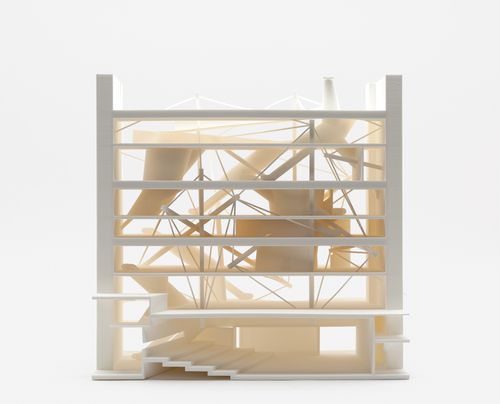
Reference number:
DR2017:0019
Description:
Model reproduced by CCA from STL files in the Preston Scott Cohen Eyebeam project records (AP190) for the exhibition Archaeology of the Digital: Complexity and Convention, 2016.
DR2017:0019
Description:
Model reproduced by CCA from STL files in the Preston Scott Cohen Eyebeam project records (AP190) for the exhibition Archaeology of the Digital: Complexity and Convention, 2016.
People:
Date:
2016
2016
Title:
3D printed model of Preston Scott Cohen Eyebeam competition entry
Actions:
DR2017:0019
Description:
Model reproduced by CCA from STL files in the Preston Scott Cohen Eyebeam project records (AP190) for the exhibition Archaeology of the Digital: Complexity and Convention, 2016.
3D printed model of Preston Scott Cohen Eyebeam competition entry
Actions:
DR2017:0019
Description:
Model reproduced by CCA from STL files in the Preston Scott Cohen Eyebeam project records (AP190) for the exhibition Archaeology of the Digital: Complexity and Convention, 2016.
Form:
models
models
Date:
2016
2016
People:
Form:
drawings
drawings
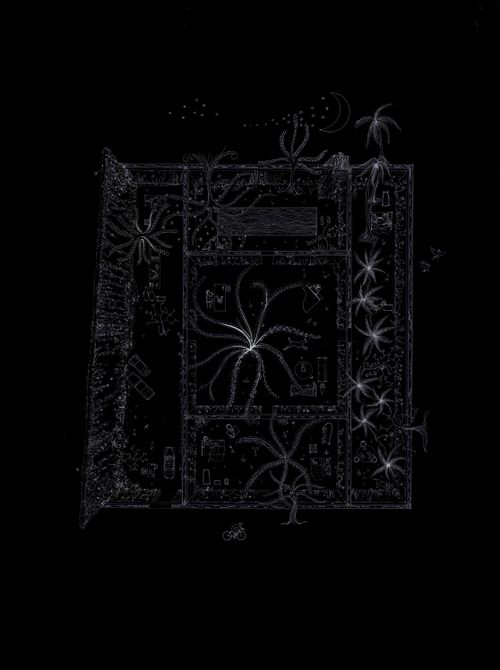
Actions:
Reference number:
ARCH276537
Description:
Reproduced by the CCA from digital scans (ARCH276501) for the exhibition Rooms You May Have Missed, held at the CCA November 4, 2014-April 19, 2015.
ARCH276537
Description:
Reproduced by the CCA from digital scans (ARCH276501) for the exhibition Rooms You May Have Missed, held at the CCA November 4, 2014-April 19, 2015.
People:
Date:
October 2014
October 2014
Title:
House in Chennai : plan sketch showing aqueducts and vegetation at night
Actions:
ARCH276537
Description:
Reproduced by the CCA from digital scans (ARCH276501) for the exhibition Rooms You May Have Missed, held at the CCA November 4, 2014-April 19, 2015.
House in Chennai : plan sketch showing aqueducts and vegetation at night
Actions:
ARCH276537
Description:
Reproduced by the CCA from digital scans (ARCH276501) for the exhibition Rooms You May Have Missed, held at the CCA November 4, 2014-April 19, 2015.
Form:
drawings
drawings
Date:
October 2014
October 2014
People:
Form:
textual records
textual records
Reference number:
PHCON2002:0016:005:061
Description:
Letter includes copies of clippings for the exhibition "Open to New Ideas: A Collection of New Art for Jimmy Carter", held at the Georgia Museum of Art.
PHCON2002:0016:005:061
Description:
Letter includes copies of clippings for the exhibition "Open to New Ideas: A Collection of New Art for Jimmy Carter", held at the Georgia Museum of Art.
People:
Date:
1 June 1977
1 June 1977
Title:
Letter from Judy W. Pace to Gordon Matta-Clark
Actions:
PHCON2002:0016:005:061
Description:
Letter includes copies of clippings for the exhibition "Open to New Ideas: A Collection of New Art for Jimmy Carter", held at the Georgia Museum of Art.
Letter from Judy W. Pace to Gordon Matta-Clark
Actions:
PHCON2002:0016:005:061
Description:
Letter includes copies of clippings for the exhibition "Open to New Ideas: A Collection of New Art for Jimmy Carter", held at the Georgia Museum of Art.
Form:
textual records
textual records
Date:
1 June 1977
1 June 1977
People:
Level of archival description:
Project
Project
Title:
Auditorium, Claverton Bath
Auditorium, Claverton Bath
Reference number:
AP144.S2.D41
Description:
File documents an unexecuted project for a domed auditorium at Claverton in Bath, England, for the American Museum in Britain. Adapted from Buckmister Fuller's design for the Radome it was to serve as a multipurpose auditorium and exhibition space. The 250-seat auditorium was enclosed by a double dome construction which could be raised and lowered by hydraulic jacks. Design development sketches and perspective studies show various layouts for seating, and diagrams contain directions for erecting the stage and positioning the dome. A section shows the major components: the dome, both lowered and raised; the location of the hydraulic jacks, screens, and baffles; and the seating layout. Two interior perspectives show the dome both raised and lowered. Material in this file was produced between 1962 and 1964. Some perspective diagrams in the file are attributed to M. Haxworth. File contains design development drawings, photographic materials, and textual records.
AP144.S2.D41
Description:
File documents an unexecuted project for a domed auditorium at Claverton in Bath, England, for the American Museum in Britain. Adapted from Buckmister Fuller's design for the Radome it was to serve as a multipurpose auditorium and exhibition space. The 250-seat auditorium was enclosed by a double dome construction which could be raised and lowered by hydraulic jacks. Design development sketches and perspective studies show various layouts for seating, and diagrams contain directions for erecting the stage and positioning the dome. A section shows the major components: the dome, both lowered and raised; the location of the hydraulic jacks, screens, and baffles; and the seating layout. Two interior perspectives show the dome both raised and lowered. Material in this file was produced between 1962 and 1964. Some perspective diagrams in the file are attributed to M. Haxworth. File contains design development drawings, photographic materials, and textual records.
People:
Date:
1962-1964
1962-1964
Title:
Auditorium, Claverton Bath
Actions:
AP144.S2.D41
Description:
File documents an unexecuted project for a domed auditorium at Claverton in Bath, England, for the American Museum in Britain. Adapted from Buckmister Fuller's design for the Radome it was to serve as a multipurpose auditorium and exhibition space. The 250-seat auditorium was enclosed by a double dome construction which could be raised and lowered by hydraulic jacks. Design development sketches and perspective studies show various layouts for seating, and diagrams contain directions for erecting the stage and positioning the dome. A section shows the major components: the dome, both lowered and raised; the location of the hydraulic jacks, screens, and baffles; and the seating layout. Two interior perspectives show the dome both raised and lowered. Material in this file was produced between 1962 and 1964. Some perspective diagrams in the file are attributed to M. Haxworth. File contains design development drawings, photographic materials, and textual records.
Auditorium, Claverton Bath
Actions:
AP144.S2.D41
Description:
File documents an unexecuted project for a domed auditorium at Claverton in Bath, England, for the American Museum in Britain. Adapted from Buckmister Fuller's design for the Radome it was to serve as a multipurpose auditorium and exhibition space. The 250-seat auditorium was enclosed by a double dome construction which could be raised and lowered by hydraulic jacks. Design development sketches and perspective studies show various layouts for seating, and diagrams contain directions for erecting the stage and positioning the dome. A section shows the major components: the dome, both lowered and raised; the location of the hydraulic jacks, screens, and baffles; and the seating layout. Two interior perspectives show the dome both raised and lowered. Material in this file was produced between 1962 and 1964. Some perspective diagrams in the file are attributed to M. Haxworth. File contains design development drawings, photographic materials, and textual records.
Level of archival description:
File 41
File 41
Date:
1962-1964
1962-1964
People:
Form:
textual records
textual records
Actions:
Reference number:
ARCH278247
Description:
The file was found in a box labelled for the exhibition and publication "Reciclando Madrid". The relation to the present materials has to be provided. Further investigation is required.
ARCH278247
Description:
The file was found in a box labelled for the exhibition and publication "Reciclando Madrid". The relation to the present materials has to be provided. Further investigation is required.
People:
Date:
2000
2000
Title:
Correspondence from Jazz Telecom
Actions:
ARCH278247
Description:
The file was found in a box labelled for the exhibition and publication "Reciclando Madrid". The relation to the present materials has to be provided. Further investigation is required.
Correspondence from Jazz Telecom
Actions:
ARCH278247
Description:
The file was found in a box labelled for the exhibition and publication "Reciclando Madrid". The relation to the present materials has to be provided. Further investigation is required.
Form:
textual records
textual records
Date:
2000
2000
People:
Form:
born digital
born digital
Title:
CD-ROM from Jazz Telecom
CD-ROM from Jazz Telecom
Actions:
Reference number:
ARCH283731
Description:
The file was found in a box labelled for the exhibition and publication "Reciclando Madrid". The relation to the present materials has to be provided. Further investigation is required.
ARCH283731
Description:
The file was found in a box labelled for the exhibition and publication "Reciclando Madrid". The relation to the present materials has to be provided. Further investigation is required.
People:
Date:
circa 2000
circa 2000
Title:
CD-ROM from Jazz Telecom
Actions:
ARCH283731
Description:
The file was found in a box labelled for the exhibition and publication "Reciclando Madrid". The relation to the present materials has to be provided. Further investigation is required.
CD-ROM from Jazz Telecom
Actions:
ARCH283731
Description:
The file was found in a box labelled for the exhibition and publication "Reciclando Madrid". The relation to the present materials has to be provided. Further investigation is required.
Form:
born digital
born digital
Date:
circa 2000
circa 2000
People:


