


2095 Results
Form:
books
books
Actions:
Price:
$25.95
(available in store)
Summary:
The crackling of a campfire. The scratch, hiss, and pop of a vinyl record. The first glug of wine as it is poured from a bottle. These are just a few of writer Caspar Henderson’s favorite sounds. In ''A book of noises,'' Henderson invites readers to use their ears a little better—to tune in to the world in all its surprising noisiness. Describing sounds from around(...)
$25.95
(available in store)
Summary:
The crackling of a campfire. The scratch, hiss, and pop of a vinyl record. The first glug of wine as it is poured from a bottle. These are just a few of writer Caspar Henderson’s favorite sounds. In ''A book of noises,'' Henderson invites readers to use their ears a little better—to tune in to the world in all its surprising noisiness. Describing sounds from around(...)
Title:
A book of noises: notes on the auraculous
Actions:
Price:
$25.95
(available in store)
Summary:
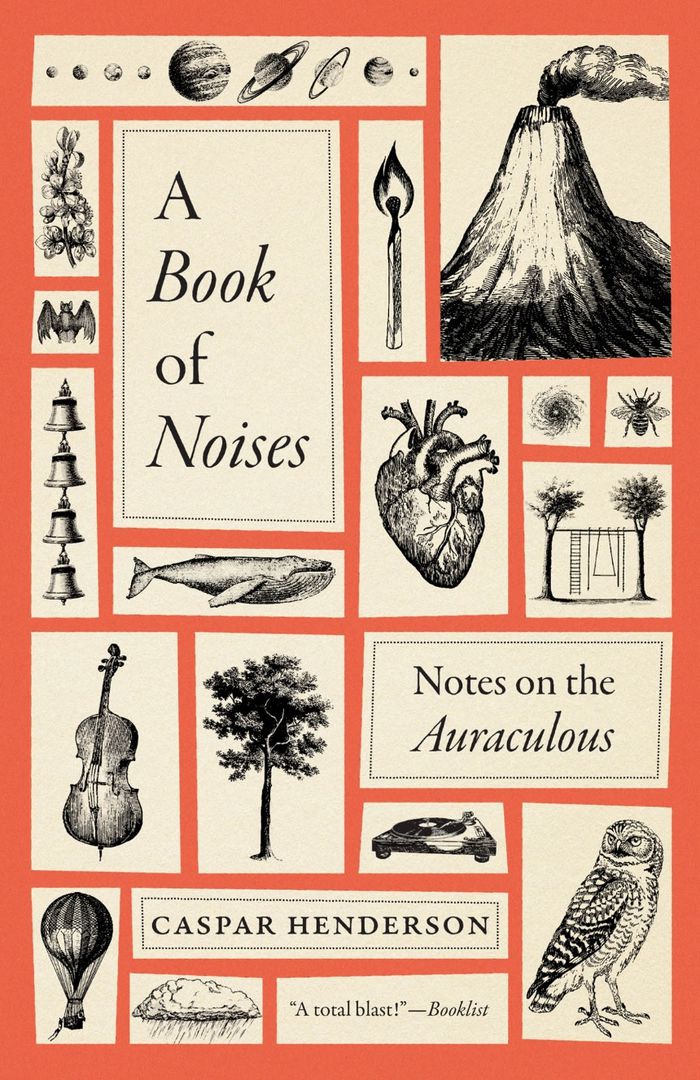
The crackling of a campfire. The scratch, hiss, and pop of a vinyl record. The first glug of wine as it is poured from a bottle. These are just a few of writer Caspar Henderson’s favorite sounds. In ''A book of noises,'' Henderson invites readers to use their ears a little better—to tune in to the world in all its surprising noisiness. Describing sounds from around the natural and human world, the forty-eight essays that make up A Book of Noises are a celebration of all things ''auraculous.'' Henderson calls on his characteristic curiosity to explore sounds related to humans (anthropophony), other life (biophony), the planet (geophony), and space (cosmophony). Henderson finds the beauty in everyday sounds, like the ringing of a bell, the buzz of a bee, or the ''earworm'' songs that get stuck in our heads.''A book of noises'' also explores the marvelous, miraculous sounds we may never get the chance to hear, like the deep boom of a volcano or the quiet, rustling sound of the Northern Lights. ''A book of noises'' will teach readers to really listen to the sounds of the world around them, to broaden and deepen their appreciation of the humans, animals, rocks, and trees simultaneously broadcasting across the whole spectrum of sentience.
A book of noises: notes on the auraculous
Actions:
Price:
$25.95
(available in store)
Summary:
The crackling of a campfire. The scratch, hiss, and pop of a vinyl record. The first glug of wine as it is poured from a bottle. These are just a few of writer Caspar Henderson’s favorite sounds. In ''A book of noises,'' Henderson invites readers to use their ears a little better—to tune in to the world in all its surprising noisiness. Describing sounds from around the natural and human world, the forty-eight essays that make up A Book of Noises are a celebration of all things ''auraculous.'' Henderson calls on his characteristic curiosity to explore sounds related to humans (anthropophony), other life (biophony), the planet (geophony), and space (cosmophony). Henderson finds the beauty in everyday sounds, like the ringing of a bell, the buzz of a bee, or the ''earworm'' songs that get stuck in our heads.''A book of noises'' also explores the marvelous, miraculous sounds we may never get the chance to hear, like the deep boom of a volcano or the quiet, rustling sound of the Northern Lights. ''A book of noises'' will teach readers to really listen to the sounds of the world around them, to broaden and deepen their appreciation of the humans, animals, rocks, and trees simultaneously broadcasting across the whole spectrum of sentience.
Form:
books
books
Publication:
May 2025
May 2025
Form:
books
books
Actions:
Price:
$47.95
(available to order)
Summary:
Plastiglomerates, surveillance robot dogs, fordite, artificial grass, antenna trees, COVID-19, decapitated mountains, drone-fighting eagles, standardized bananas: all of these specimens—some more familiar than others—are examples of the hybridity that shapes the current landscapes of science, technology and everyday life. Inspired by medieval bestiaries and the(...)
$47.95
(available to order)
Summary:
Plastiglomerates, surveillance robot dogs, fordite, artificial grass, antenna trees, COVID-19, decapitated mountains, drone-fighting eagles, standardized bananas: all of these specimens—some more familiar than others—are examples of the hybridity that shapes the current landscapes of science, technology and everyday life. Inspired by medieval bestiaries and the(...)
Title:
A bestiary of the Anthropocene. Hybrid plants, animals, minerals, fungi, and other specimens
Actions:
Price:
$47.95
(available to order)
Summary:
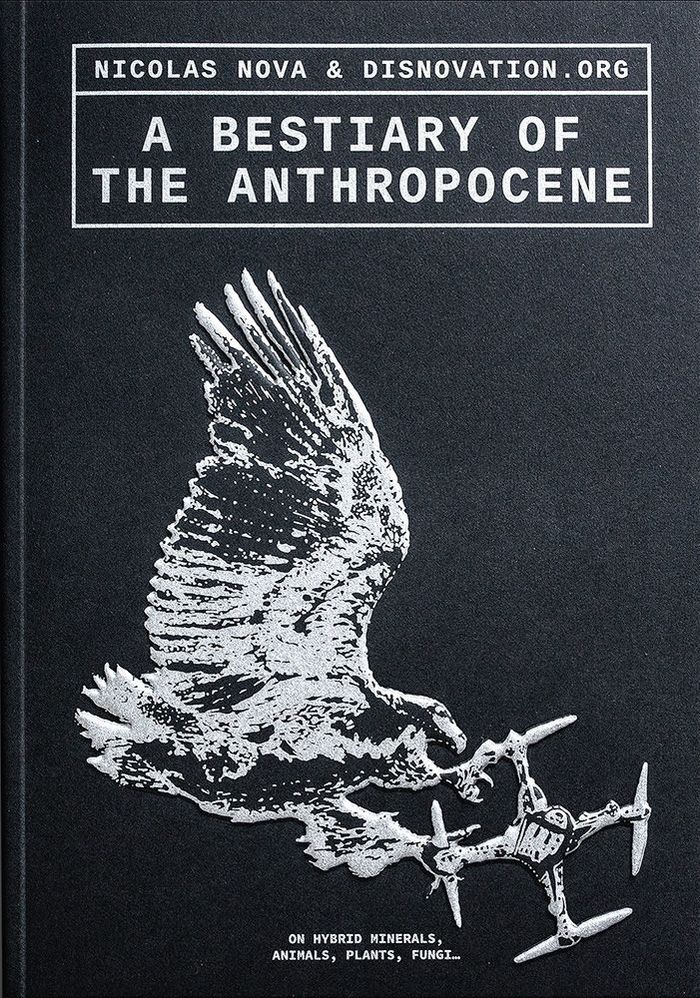
Plastiglomerates, surveillance robot dogs, fordite, artificial grass, antenna trees, COVID-19, decapitated mountains, drone-fighting eagles, standardized bananas: all of these specimens—some more familiar than others—are examples of the hybridity that shapes the current landscapes of science, technology and everyday life. Inspired by medieval bestiaries and the increasingly visible effects of climate change on the planet, French researcher Nicolas Nova & art collective DISNOVATION.ORG provide an ethnographic guide to the ''post-natural'' era in which we live, highlighting the amalgamations of nature and artifice that already co-exist in the 21st century. A sort of field handbook, ''A bestiary of the Anthropocene'' aims to help us orient ourselves within the technosphere and the biosphere. What happens when technologies and their unintended consequences become so ubiquitous that it is difficult to define what is “natural” or not? What does it mean to live in a hybrid environment made of organic and synthetic matter? In order to answer such questions, Nova & DISNOVATION.ORG bring their own research together with contributions from collectives such as the Center for Genomic Gastronomy and Aliens in Green as well as text by scholars and researchers from around the world. Polish graphic designer Maria Roszkowska provides illustrations.
A bestiary of the Anthropocene. Hybrid plants, animals, minerals, fungi, and other specimens
Actions:
Price:
$47.95
(available to order)
Summary:
Plastiglomerates, surveillance robot dogs, fordite, artificial grass, antenna trees, COVID-19, decapitated mountains, drone-fighting eagles, standardized bananas: all of these specimens—some more familiar than others—are examples of the hybridity that shapes the current landscapes of science, technology and everyday life. Inspired by medieval bestiaries and the increasingly visible effects of climate change on the planet, French researcher Nicolas Nova & art collective DISNOVATION.ORG provide an ethnographic guide to the ''post-natural'' era in which we live, highlighting the amalgamations of nature and artifice that already co-exist in the 21st century. A sort of field handbook, ''A bestiary of the Anthropocene'' aims to help us orient ourselves within the technosphere and the biosphere. What happens when technologies and their unintended consequences become so ubiquitous that it is difficult to define what is “natural” or not? What does it mean to live in a hybrid environment made of organic and synthetic matter? In order to answer such questions, Nova & DISNOVATION.ORG bring their own research together with contributions from collectives such as the Center for Genomic Gastronomy and Aliens in Green as well as text by scholars and researchers from around the world. Polish graphic designer Maria Roszkowska provides illustrations.
Form:
books
books
Publication:
May 2021
May 2021
Subject:
Environment and environmental theory
Environment and environmental theory
Form:
books
books
Actions:
Price:
$26.95
(available to order)
Summary:
Matsutake is the most valuable mushroom in the world—and a weed that grows in human-disturbed forests across the northern hemisphere. Through its ability to nurture trees, matsutake helps forests to grow in daunting places. It is also an edible delicacy in Japan, where it sometimes commands astronomical prices. In all its contradictions, matsutake offers insights into(...)
$26.95
(available to order)
Summary:
Matsutake is the most valuable mushroom in the world—and a weed that grows in human-disturbed forests across the northern hemisphere. Through its ability to nurture trees, matsutake helps forests to grow in daunting places. It is also an edible delicacy in Japan, where it sometimes commands astronomical prices. In all its contradictions, matsutake offers insights into(...)
Publication:
September 2017
September 2017
Title:
The mushroom at the end of the world: on the possiblity of life in capitalist ruins
Actions:
Price:
$26.95
(available to order)
Summary:
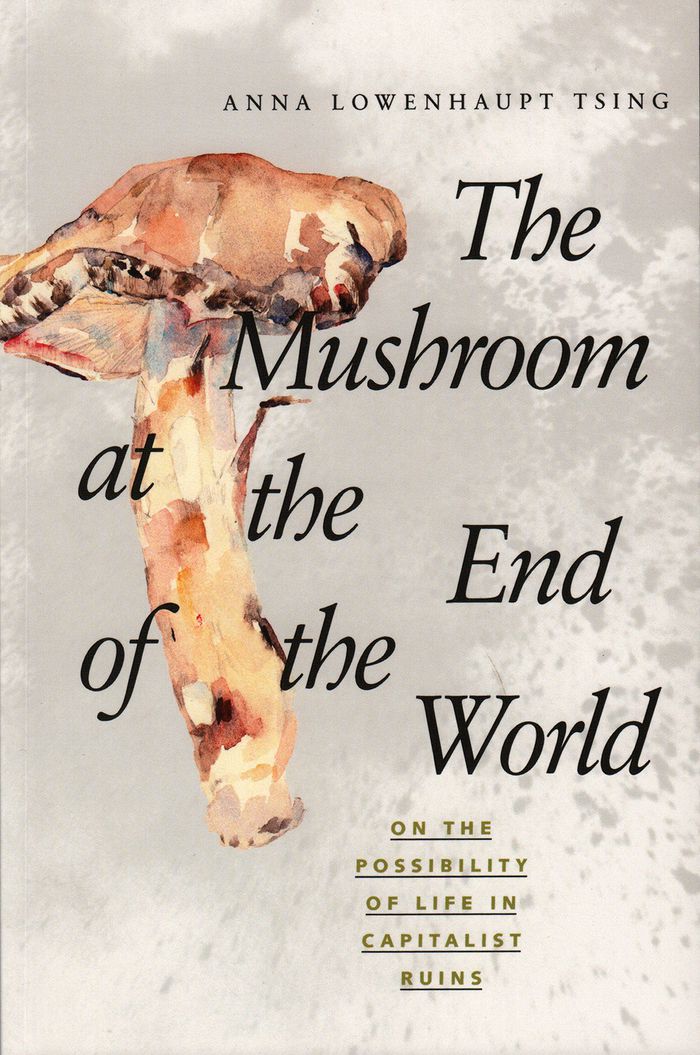
Matsutake is the most valuable mushroom in the world—and a weed that grows in human-disturbed forests across the northern hemisphere. Through its ability to nurture trees, matsutake helps forests to grow in daunting places. It is also an edible delicacy in Japan, where it sometimes commands astronomical prices. In all its contradictions, matsutake offers insights into areas far beyond just mushrooms and addresses a crucial question: what manages to live in the ruins we have made? A tale of diversity within our damaged landscapes, "The mushroom at the end of the world" follows one of the strangest commodity chains of our times to explore the unexpected corners of capitalism. Here, we witness the varied and peculiar worlds of matsutake commerce: the worlds of Japanese gourmets, capitalist traders, Hmong jungle fighters, industrial forests, Yi Chinese goat herders, Finnish nature guides, and more. These companions also lead us into fungal ecologies and forest histories to better understand the promise of cohabitation in a time of massive human destruction. By investigating one of the world's most sought-after fungi, The Mushroom at the End of the World presents an original examination into the relation between capitalist destruction and collaborative survival within multispecies landscapes, the prerequisite for continuing life on earth.
The mushroom at the end of the world: on the possiblity of life in capitalist ruins
Actions:
Price:
$26.95
(available to order)
Summary:
Matsutake is the most valuable mushroom in the world—and a weed that grows in human-disturbed forests across the northern hemisphere. Through its ability to nurture trees, matsutake helps forests to grow in daunting places. It is also an edible delicacy in Japan, where it sometimes commands astronomical prices. In all its contradictions, matsutake offers insights into areas far beyond just mushrooms and addresses a crucial question: what manages to live in the ruins we have made? A tale of diversity within our damaged landscapes, "The mushroom at the end of the world" follows one of the strangest commodity chains of our times to explore the unexpected corners of capitalism. Here, we witness the varied and peculiar worlds of matsutake commerce: the worlds of Japanese gourmets, capitalist traders, Hmong jungle fighters, industrial forests, Yi Chinese goat herders, Finnish nature guides, and more. These companions also lead us into fungal ecologies and forest histories to better understand the promise of cohabitation in a time of massive human destruction. By investigating one of the world's most sought-after fungi, The Mushroom at the End of the World presents an original examination into the relation between capitalist destruction and collaborative survival within multispecies landscapes, the prerequisite for continuing life on earth.
Form:
books
books
Publication:
September 2017
September 2017
Form:
books
books
Price:
$24.95
(available to order)
Summary:
During the two hundred millennia we've been on the planet, nothing has shaped us more profoundly than the city. In a fascinating narrative that ranges through cities famous and forgotten, acclaimed historian Ben Wilson tells the glorious story of how urban living has allowed human culture to flourish. Beginning with Uruk, the world's first city, he shows that cities(...)
$24.95
(available to order)
Summary:
During the two hundred millennia we've been on the planet, nothing has shaped us more profoundly than the city. In a fascinating narrative that ranges through cities famous and forgotten, acclaimed historian Ben Wilson tells the glorious story of how urban living has allowed human culture to flourish. Beginning with Uruk, the world's first city, he shows that cities(...)
Title:
Metropolis: a history of the city, mankind's greatest invention
Actions:
Price:
$24.95
(available to order)
Summary:
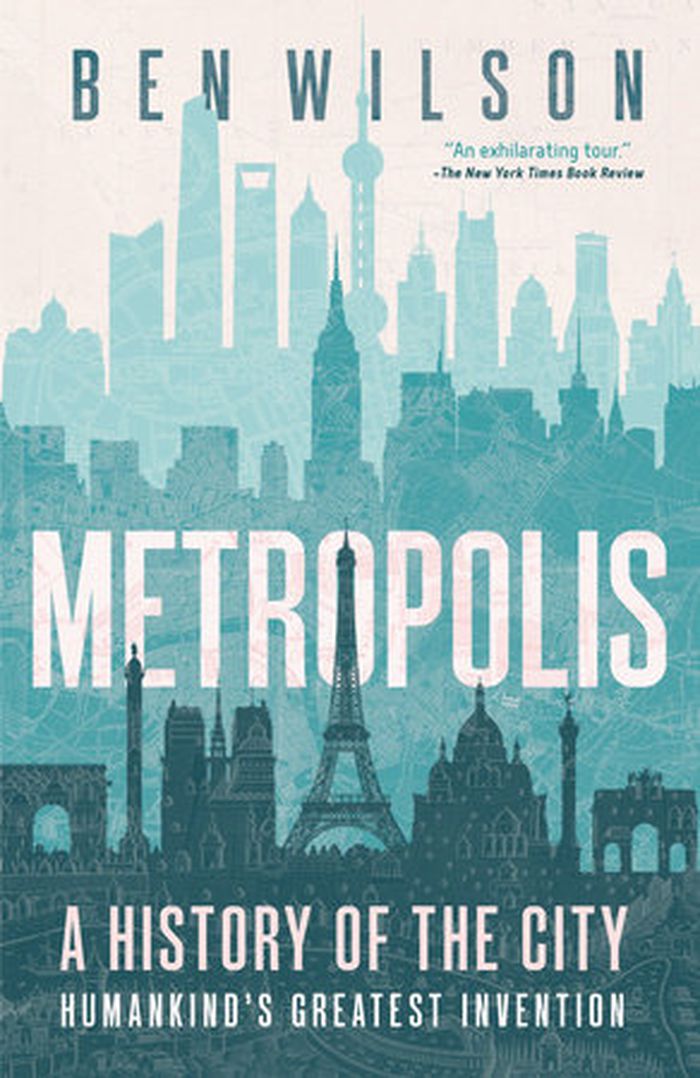
During the two hundred millennia we've been on the planet, nothing has shaped us more profoundly than the city. In a fascinating narrative that ranges through cities famous and forgotten, acclaimed historian Ben Wilson tells the glorious story of how urban living has allowed human culture to flourish. Beginning with Uruk, the world's first city, he shows that cities created such a blossoming of human endeavor--new professions, new forms of art, worship, and trade--that they kick-started civilization itself. Despite outbreaks of plague and war, and outlasting empires, the city endured and new cities sprang up to capture the inimitable energy of human beings together. Wilson reveals the innovations nurturned amid the density of urban centers over the centuries: civics in the agora of Athens, global trade in ninth-century Baghdad, finance in the coffeehouses of London, domestic comforts in the heart of Amsterdam, peacocking in Belle Epoque Paris. In the modern age, the skyscrapers of New York City inspired utopian visions of community design, while the trees of twenty-first-century Seattle and Shanghai point to a sustainable future in the age of climate change. Page turning and irresistible, ''Metropolis'' is a history of cities that is also a history of how humanity lives.
Metropolis: a history of the city, mankind's greatest invention
Actions:
Price:
$24.95
(available to order)
Summary:
During the two hundred millennia we've been on the planet, nothing has shaped us more profoundly than the city. In a fascinating narrative that ranges through cities famous and forgotten, acclaimed historian Ben Wilson tells the glorious story of how urban living has allowed human culture to flourish. Beginning with Uruk, the world's first city, he shows that cities created such a blossoming of human endeavor--new professions, new forms of art, worship, and trade--that they kick-started civilization itself. Despite outbreaks of plague and war, and outlasting empires, the city endured and new cities sprang up to capture the inimitable energy of human beings together. Wilson reveals the innovations nurturned amid the density of urban centers over the centuries: civics in the agora of Athens, global trade in ninth-century Baghdad, finance in the coffeehouses of London, domestic comforts in the heart of Amsterdam, peacocking in Belle Epoque Paris. In the modern age, the skyscrapers of New York City inspired utopian visions of community design, while the trees of twenty-first-century Seattle and Shanghai point to a sustainable future in the age of climate change. Page turning and irresistible, ''Metropolis'' is a history of cities that is also a history of how humanity lives.
Form:
books
books
Publication:
October 2021
October 2021
Subject:
Urban Theory
Urban Theory
Form:
books
books
Price:
$29.95
(available to order)
Summary:
'' Imagine feeling 100% alive every moment of every minute of the day! Maybe that’s how animals live. Or trees, even. I sometimes stare at the plastic bag tree visible from my apartment window and marvel that both it and I are equally alive and that there’s no sliding scale of life. You’re either alive, or you’re not. Or you’re dead or you’re not.'' Thirty years after(...)
$29.95
(available to order)
Summary:
'' Imagine feeling 100% alive every moment of every minute of the day! Maybe that’s how animals live. Or trees, even. I sometimes stare at the plastic bag tree visible from my apartment window and marvel that both it and I are equally alive and that there’s no sliding scale of life. You’re either alive, or you’re not. Or you’re dead or you’re not.'' Thirty years after(...)
Title:
Binge
Actions:
Price:
$29.95
(available to order)
Summary:
'' Imagine feeling 100% alive every moment of every minute of the day! Maybe that’s how animals live. Or trees, even. I sometimes stare at the plastic bag tree visible from my apartment window and marvel that both it and I are equally alive and that there’s no sliding scale of life. You’re either alive, or you’re not. Or you’re dead or you’re not.'' Thirty years after Douglas Coupland broke the fiction mould and defined a generation with ''Generation X,'' he is back with ''Binge,'' 60 stories laced with his observational profundity about the way we live and his existential worry about how we should be living: the very things that have made him such an influential and bestselling writer. Not to mention that he can also be really funny. Here the narrators vary from story to story as Doug catches what he calls “the voice of the people,” inspired by the way we write about ourselves and our experiences in online forums. The characters, of course, are Doug’s own: crackpots, cranks and sweetie-pies, dad dancers and perpetrators of carbecues. People in the grip of unconscionable urges; lonely people; dying people; silly people. If you love Doug’s fiction, this collection is like rain on the desert.
Binge
Actions:
Price:
$29.95
(available to order)
Summary:
'' Imagine feeling 100% alive every moment of every minute of the day! Maybe that’s how animals live. Or trees, even. I sometimes stare at the plastic bag tree visible from my apartment window and marvel that both it and I are equally alive and that there’s no sliding scale of life. You’re either alive, or you’re not. Or you’re dead or you’re not.'' Thirty years after Douglas Coupland broke the fiction mould and defined a generation with ''Generation X,'' he is back with ''Binge,'' 60 stories laced with his observational profundity about the way we live and his existential worry about how we should be living: the very things that have made him such an influential and bestselling writer. Not to mention that he can also be really funny. Here the narrators vary from story to story as Doug catches what he calls “the voice of the people,” inspired by the way we write about ourselves and our experiences in online forums. The characters, of course, are Doug’s own: crackpots, cranks and sweetie-pies, dad dancers and perpetrators of carbecues. People in the grip of unconscionable urges; lonely people; dying people; silly people. If you love Doug’s fiction, this collection is like rain on the desert.
Form:
books
books
Publication:
October 2021
October 2021
Subject:
Current Exhibitions
Current Exhibitions
Form:
books
books
Actions:
Price:
$31.95
(available to order)
Summary:
Given an ideal situation to work with, the Zurich architects Marcel Meili and Markus Peter designed and built a new training and meeting center for Swiss Re in Rüschlikon. Backed by an ambitious client and a substantial budget, they developed an expansive park complex overlooking Lake Zurich and the Bodmer mansion, a protected historical monument, into a setting in which(...)
$31.95
(available to order)
Summary:
Given an ideal situation to work with, the Zurich architects Marcel Meili and Markus Peter designed and built a new training and meeting center for Swiss Re in Rüschlikon. Backed by an ambitious client and a substantial budget, they developed an expansive park complex overlooking Lake Zurich and the Bodmer mansion, a protected historical monument, into a setting in which(...)
Subject:
small format
small format
Publication:
February 2002, Ostfildern
February 2002, Ostfildern
Title:
Swiss Re Rüschilkon : centre for global dialogue
Actions:
Price:
$31.95
(available to order)
Summary:
Given an ideal situation to work with, the Zurich architects Marcel Meili and Markus Peter designed and built a new training and meeting center for Swiss Re in Rüschlikon. Backed by an ambitious client and a substantial budget, they developed an expansive park complex overlooking Lake Zurich and the Bodmer mansion, a protected historical monument, into a setting in which architecture and art, landscape and interior space, old and new combine to form a complex whole. The result is not a manifesto of a particular style but the equally perfect and subtle interpretation of a real place and the programmatic vision it inspires. The Art Commission of Swiss Re chose a "strategy of systematic artistic interventions in existing space". The design of all furniture and interiors was entrusted to the hands of renowned artists and architects. Adolf Krischanitz and Hermann Czech designed the furniture and the "Red Bar" in the Gardener's Lodge. Gilbert Bretterbauer supervised the design and selection of textiles. Artist Günther Förg handled the color design for all of the interiors in the old mansion. The old grounds had been preserved almost entirely in their original condition. The existing stands of trees served as a framework for the detailed design of the park complex by landscape architects Kienast Vogt and Partner. With photographs by Margherita Spiluttini
Swiss Re Rüschilkon : centre for global dialogue
Actions:
Price:
$31.95
(available to order)
Summary:
Given an ideal situation to work with, the Zurich architects Marcel Meili and Markus Peter designed and built a new training and meeting center for Swiss Re in Rüschlikon. Backed by an ambitious client and a substantial budget, they developed an expansive park complex overlooking Lake Zurich and the Bodmer mansion, a protected historical monument, into a setting in which architecture and art, landscape and interior space, old and new combine to form a complex whole. The result is not a manifesto of a particular style but the equally perfect and subtle interpretation of a real place and the programmatic vision it inspires. The Art Commission of Swiss Re chose a "strategy of systematic artistic interventions in existing space". The design of all furniture and interiors was entrusted to the hands of renowned artists and architects. Adolf Krischanitz and Hermann Czech designed the furniture and the "Red Bar" in the Gardener's Lodge. Gilbert Bretterbauer supervised the design and selection of textiles. Artist Günther Förg handled the color design for all of the interiors in the old mansion. The old grounds had been preserved almost entirely in their original condition. The existing stands of trees served as a framework for the detailed design of the park complex by landscape architects Kienast Vogt and Partner. With photographs by Margherita Spiluttini
Form:
books
books
Publication:
February 2002, Ostfildern
February 2002, Ostfildern
Subject:
small format
small format
Form:
books
books
Title:
Tools n° 05 : To Spin
Tools n° 05 : To Spin
Actions:
Price:
$49.95
(available in store)
Summary:
Le cinquième numéro de la revue annuelle qui s'attache à valoriser les savoir-faire et la technique dans le design, l'artisanat ou l'industrie, se penche sur le geste de tourner. Le monde tourne, et avec lui, tout ce qui est à sa surface : vous, moi, les arbres, la mer, les montagnes. On a beau se bercer de l'illusion que tout est immobile, la réalité, c'est qu'on est(...)
$49.95
(available in store)
Summary:
Le cinquième numéro de la revue annuelle qui s'attache à valoriser les savoir-faire et la technique dans le design, l'artisanat ou l'industrie, se penche sur le geste de tourner. Le monde tourne, et avec lui, tout ce qui est à sa surface : vous, moi, les arbres, la mer, les montagnes. On a beau se bercer de l'illusion que tout est immobile, la réalité, c'est qu'on est(...)
Title:
Tools n° 05 : To Spin
Actions:
Price:
$49.95
(available in store)
Summary:
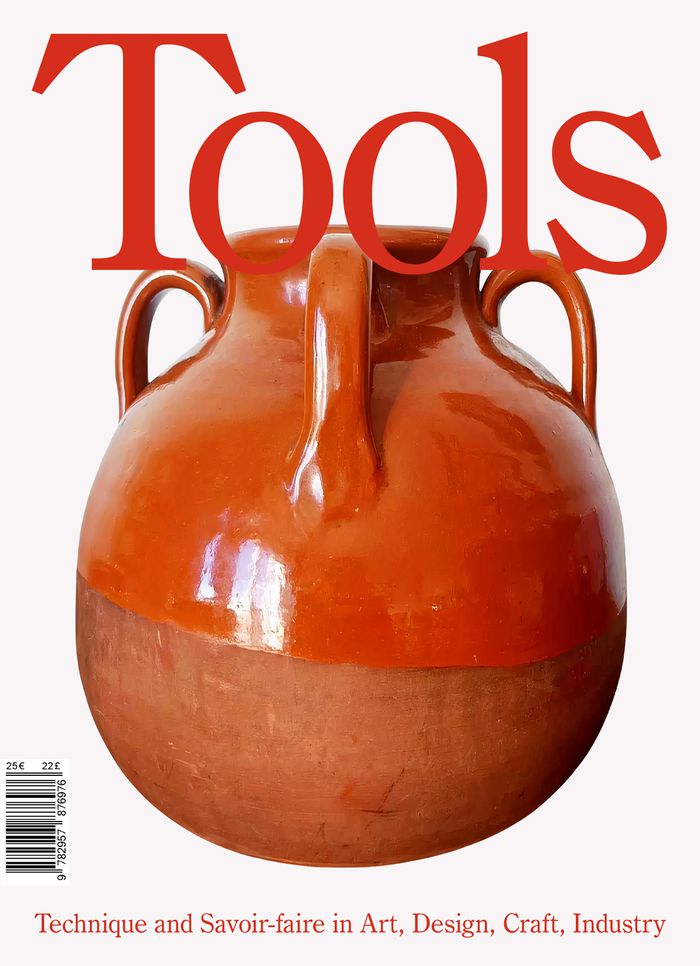
Le cinquième numéro de la revue annuelle qui s'attache à valoriser les savoir-faire et la technique dans le design, l'artisanat ou l'industrie, se penche sur le geste de tourner. Le monde tourne, et avec lui, tout ce qui est à sa surface : vous, moi, les arbres, la mer, les montagnes. On a beau se bercer de l'illusion que tout est immobile, la réalité, c'est qu'on est perpétuellement en mouvement. La planète fait des tours sur elle-même, elle tourne autour du soleil, et nous, là, au moment où je vous parle, on est en quelque sorte le produit de cette rotation : c'est grâce au cycle des jours, des saisons et des années que notre planète offre les conditions favorables à la vie. / The fifth issue of the annual magazine that promotes know-how and technique in design, craft or industry looks at the act of spinning. The world is spinning, and so is everything on it: you and me, the trees, the oceans, and the mountains. We may have deluded ourselves into thinking everything is stationary, but the reality is that we're perpetually in motion. The planet is spinning around its axis and orbiting around the sun, and in a way, at this very moment, we are all products of rotation: life on Earth is only possible because of the cycles of days, seasons, and years.
Tools n° 05 : To Spin
Actions:
Price:
$49.95
(available in store)
Summary:
Le cinquième numéro de la revue annuelle qui s'attache à valoriser les savoir-faire et la technique dans le design, l'artisanat ou l'industrie, se penche sur le geste de tourner. Le monde tourne, et avec lui, tout ce qui est à sa surface : vous, moi, les arbres, la mer, les montagnes. On a beau se bercer de l'illusion que tout est immobile, la réalité, c'est qu'on est perpétuellement en mouvement. La planète fait des tours sur elle-même, elle tourne autour du soleil, et nous, là, au moment où je vous parle, on est en quelque sorte le produit de cette rotation : c'est grâce au cycle des jours, des saisons et des années que notre planète offre les conditions favorables à la vie. / The fifth issue of the annual magazine that promotes know-how and technique in design, craft or industry looks at the act of spinning. The world is spinning, and so is everything on it: you and me, the trees, the oceans, and the mountains. We may have deluded ourselves into thinking everything is stationary, but the reality is that we're perpetually in motion. The planet is spinning around its axis and orbiting around the sun, and in a way, at this very moment, we are all products of rotation: life on Earth is only possible because of the cycles of days, seasons, and years.
Form:
books
books
Publication:
February 2025
February 2025
Subject:
Magazines
Magazines
Form:
books
books
Price:
$34.95
(available to order)
Summary:
The story of the Adam Joseph Lewis Center at Oberlin College - the first substantially green building to be built on a college campus -encompasses more than the particulars of one building. In "Design on the edge", David Orr writes about the planning and design of Oberlin's environmental studies building as part of a larger story about the art and science of ecological(...)
$34.95
(available to order)
Summary:
The story of the Adam Joseph Lewis Center at Oberlin College - the first substantially green building to be built on a college campus -encompasses more than the particulars of one building. In "Design on the edge", David Orr writes about the planning and design of Oberlin's environmental studies building as part of a larger story about the art and science of ecological(...)
Title:
Design on the edge : the making of a high-performance building
Actions:
Price:
$34.95
(available to order)
Summary:
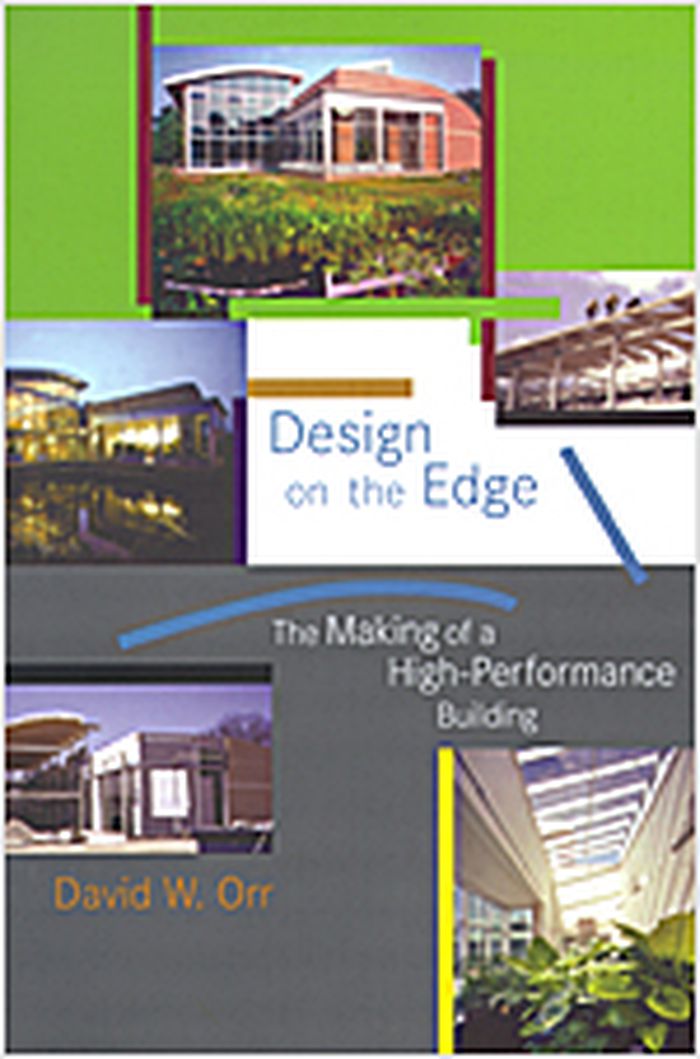
The story of the Adam Joseph Lewis Center at Oberlin College - the first substantially green building to be built on a college campus -encompasses more than the particulars of one building. In "Design on the edge", David Orr writes about the planning and design of Oberlin's environmental studies building as part of a larger story about the art and science of ecological design and the ability of institutions of higher learning themselves to learn. The Lewis Center, which has attracted worldwide attention as a model of ecological design, operates according to environmental principles. It is powered entirely by solar energy, features landscaping with fruit trees and vegetable gardens, and houses a Living Machine, which processes all wastewater for reuse in the building or landscape. Orr puts the Lewis Center into historical design context and describes the obstacles and successes he encountered in obtaining funds and college approval, interweaving the particulars of the center with thoughts on the larger environmental and societal issues the building process illustrates. Equal parts analysis, personal reflection, and call to action, "Design on the edge" illustrates the process of institutional change, institutional learning, and the political economy of design. It describes how the idea of the Lewis Center originated and was translated into reality with the help of such environmental visionaries as William McDonough and John Todd, and how the building has performed since its completion.
Design on the edge : the making of a high-performance building
Actions:
Price:
$34.95
(available to order)
Summary:
The story of the Adam Joseph Lewis Center at Oberlin College - the first substantially green building to be built on a college campus -encompasses more than the particulars of one building. In "Design on the edge", David Orr writes about the planning and design of Oberlin's environmental studies building as part of a larger story about the art and science of ecological design and the ability of institutions of higher learning themselves to learn. The Lewis Center, which has attracted worldwide attention as a model of ecological design, operates according to environmental principles. It is powered entirely by solar energy, features landscaping with fruit trees and vegetable gardens, and houses a Living Machine, which processes all wastewater for reuse in the building or landscape. Orr puts the Lewis Center into historical design context and describes the obstacles and successes he encountered in obtaining funds and college approval, interweaving the particulars of the center with thoughts on the larger environmental and societal issues the building process illustrates. Equal parts analysis, personal reflection, and call to action, "Design on the edge" illustrates the process of institutional change, institutional learning, and the political economy of design. It describes how the idea of the Lewis Center originated and was translated into reality with the help of such environmental visionaries as William McDonough and John Todd, and how the building has performed since its completion.
Form:
books
books
Publication:
October 2006, Cambridge (MA), London
October 2006, Cambridge (MA), London
Subject:
Green Architecture
Green Architecture
Form:
books
books
Actions:
Price:
$37.95
(available to order)
Summary:
People are key elements of wild places. At the same time, human entanglements with wild ecologies involve extractivism, the growth of resource-based economies, and imperial-colonial expansion, activities that are wreaking havoc on our planet. Through an ethnographic exploration of Canada’s ten UNESCO Natural World Heritage sites, ''Inhabited'' reflects on the meanings(...)
$37.95
(available to order)
Summary:
People are key elements of wild places. At the same time, human entanglements with wild ecologies involve extractivism, the growth of resource-based economies, and imperial-colonial expansion, activities that are wreaking havoc on our planet. Through an ethnographic exploration of Canada’s ten UNESCO Natural World Heritage sites, ''Inhabited'' reflects on the meanings(...)
Subject:
Environment and environmental theory
Environment and environmental theory
Publication:
November 2021
November 2021
Title:
Inhabited: Wildness and the vitality of the land
Actions:
Price:
$37.95
(available to order)
Summary:
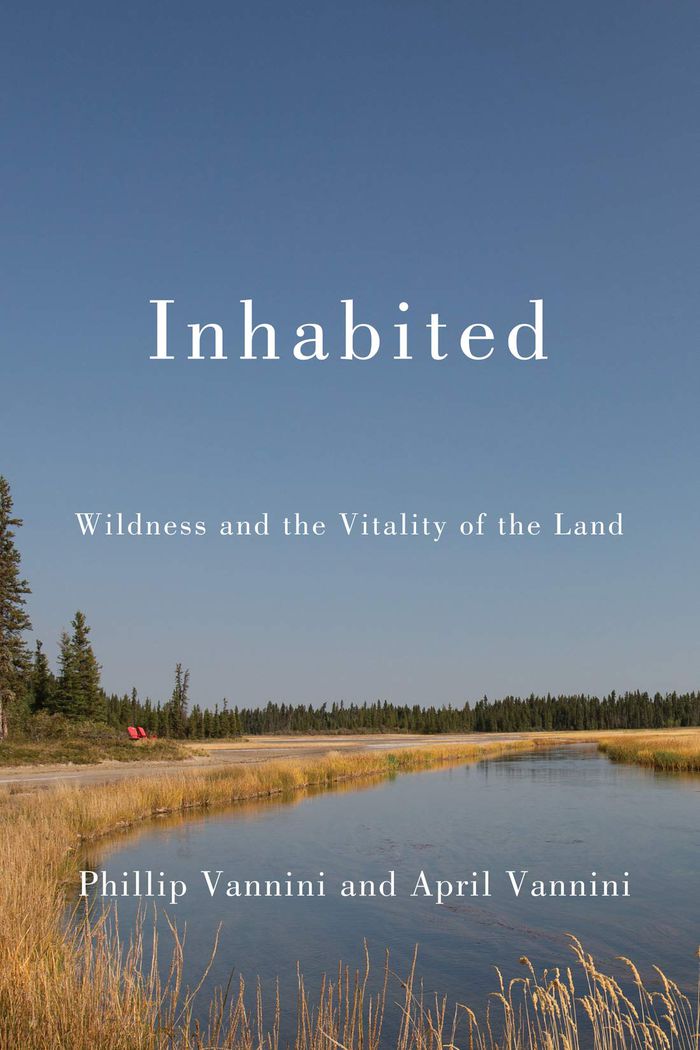
People are key elements of wild places. At the same time, human entanglements with wild ecologies involve extractivism, the growth of resource-based economies, and imperial-colonial expansion, activities that are wreaking havoc on our planet. Through an ethnographic exploration of Canada’s ten UNESCO Natural World Heritage sites, ''Inhabited'' reflects on the meanings of wildness, wilderness, and natural heritage. As we are introduced to local inhabitants and their perspectives, Phillip Vannini and April Vannini ask us to reflect on the colonial and dualist assumptions behind the received meaning of wild, challenging us to reimagine wildness as relational and rooted in vitality. Over the three years they spent in and around these sites, they learned from Indigenous and non-Indigenous peoples about their entanglements with each other and with non-human animals, rocks, plants, trees, sky, water, and spirits. The stories, actions, and experiences they encountered challenge conventional narratives of wild places as uninhabited by people and disconnected from culture and society. While it might be tempting to dismiss the idea of wildness as outdated in the Anthropocene era, ''Inhabited'' suggests that rethinking wildness offers a better – if messier – way forward. Part geography and anthropology, part environmental and cultural studies, and part politics and ecology, ''Inhabited'' balances a genuine love of nature’s vitality with a culturally responsible understanding of its interconnectedness with more-than-human ways of life.
Inhabited: Wildness and the vitality of the land
Actions:
Price:
$37.95
(available to order)
Summary:
People are key elements of wild places. At the same time, human entanglements with wild ecologies involve extractivism, the growth of resource-based economies, and imperial-colonial expansion, activities that are wreaking havoc on our planet. Through an ethnographic exploration of Canada’s ten UNESCO Natural World Heritage sites, ''Inhabited'' reflects on the meanings of wildness, wilderness, and natural heritage. As we are introduced to local inhabitants and their perspectives, Phillip Vannini and April Vannini ask us to reflect on the colonial and dualist assumptions behind the received meaning of wild, challenging us to reimagine wildness as relational and rooted in vitality. Over the three years they spent in and around these sites, they learned from Indigenous and non-Indigenous peoples about their entanglements with each other and with non-human animals, rocks, plants, trees, sky, water, and spirits. The stories, actions, and experiences they encountered challenge conventional narratives of wild places as uninhabited by people and disconnected from culture and society. While it might be tempting to dismiss the idea of wildness as outdated in the Anthropocene era, ''Inhabited'' suggests that rethinking wildness offers a better – if messier – way forward. Part geography and anthropology, part environmental and cultural studies, and part politics and ecology, ''Inhabited'' balances a genuine love of nature’s vitality with a culturally responsible understanding of its interconnectedness with more-than-human ways of life.
Form:
books
books
Publication:
November 2021
November 2021
Subject:
Environment and environmental theory
Environment and environmental theory
Form:
books
books
Actions:
Price:
$78.00
(available to order)
Summary:
For centuries, the cardinals, popes, and rulers of Italy have devoted themselves to creating vast villa gardens that represent their wealth and power, provide a calm refuge from city life, and showcase lavish plantings and rare flowers. Here, in over two hundred photographs — taken during the Edwardian era when these historic gardens were at their peak — twenty-two of(...)
$78.00
(available to order)
Summary:
For centuries, the cardinals, popes, and rulers of Italy have devoted themselves to creating vast villa gardens that represent their wealth and power, provide a calm refuge from city life, and showcase lavish plantings and rare flowers. Here, in over two hundred photographs — taken during the Edwardian era when these historic gardens were at their peak — twenty-two of(...)
Title:
Italian gardens : romantic splendor in the Edwardian age
Actions:
Price:
$78.00
(available to order)
Summary:
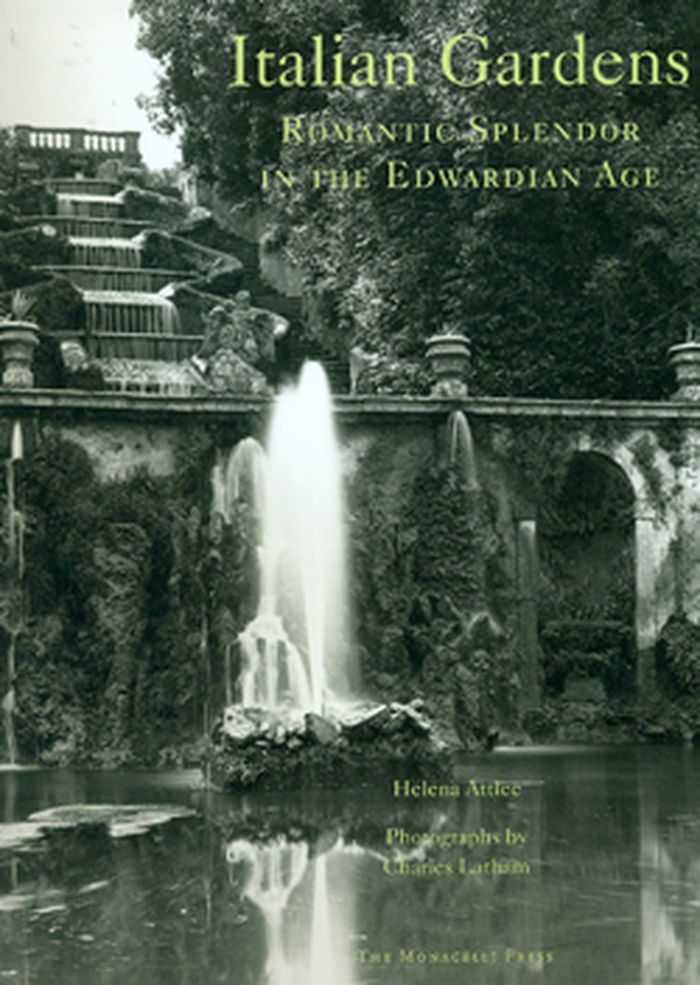
For centuries, the cardinals, popes, and rulers of Italy have devoted themselves to creating vast villa gardens that represent their wealth and power, provide a calm refuge from city life, and showcase lavish plantings and rare flowers. Here, in over two hundred photographs — taken during the Edwardian era when these historic gardens were at their peak — twenty-two of central Italy's most ornate and spectacular palace gardens are presented. This publication reveals the vanished magnificence of the aristocracy's landscapes in images from the archives of Britain's Country Life magazine. Classic photographs display patterned grottoes, elaborate terraces, sophisticated fountains, antique statuary, and sun-dappled arbors to provide an important record of these gardens at a nostalgic moment in time, before the two World Wars provoked irrevocable changes in Italy's political and economic climate and many gardens fell into neglect. Discussing the history and design of each garden, author Helena Attlee brings to life the personalities responsible for such extravagant creations as the Alley of a Hundred Fountains at the Villa d'Este in Tivoli, the swirling parterres de broderie of Villa Doria Pamphili in Rome, the broad terraces and majestic staircases of the Vatican Gardens, the frescoed loggia of the Villa Medici in Fiesole, and the border of innumerable citrus trees circling the Isolotto in Florence's famous Boboli Gardens.
Italian gardens : romantic splendor in the Edwardian age
Actions:
Price:
$78.00
(available to order)
Summary:
For centuries, the cardinals, popes, and rulers of Italy have devoted themselves to creating vast villa gardens that represent their wealth and power, provide a calm refuge from city life, and showcase lavish plantings and rare flowers. Here, in over two hundred photographs — taken during the Edwardian era when these historic gardens were at their peak — twenty-two of central Italy's most ornate and spectacular palace gardens are presented. This publication reveals the vanished magnificence of the aristocracy's landscapes in images from the archives of Britain's Country Life magazine. Classic photographs display patterned grottoes, elaborate terraces, sophisticated fountains, antique statuary, and sun-dappled arbors to provide an important record of these gardens at a nostalgic moment in time, before the two World Wars provoked irrevocable changes in Italy's political and economic climate and many gardens fell into neglect. Discussing the history and design of each garden, author Helena Attlee brings to life the personalities responsible for such extravagant creations as the Alley of a Hundred Fountains at the Villa d'Este in Tivoli, the swirling parterres de broderie of Villa Doria Pamphili in Rome, the broad terraces and majestic staircases of the Vatican Gardens, the frescoed loggia of the Villa Medici in Fiesole, and the border of innumerable citrus trees circling the Isolotto in Florence's famous Boboli Gardens.
Form:
books
books
Publication:
August 2009
August 2009
Subject:
Gardens
Gardens


