


2142 Results
Form:
books
books
Actions:
Price:
$37.99
(available to order)
Summary:
Urban trauma describes a condition where conflict or catastrophe has disrupted and damaged not only the physical environment and infrastructure of a city, but also the social and cultural networks. Cities experiencing trauma dominate the daily news. But how is this trauma to be understood in its aftermath, and in urban terms? What is the response of the discipline to the(...)
$37.99
(available to order)
Summary:
Urban trauma describes a condition where conflict or catastrophe has disrupted and damaged not only the physical environment and infrastructure of a city, but also the social and cultural networks. Cities experiencing trauma dominate the daily news. But how is this trauma to be understood in its aftermath, and in urban terms? What is the response of the discipline to the(...)
Title:
AD 80:05 Post-traumatic urbanism
Actions:
Price:
$37.99
(available to order)
Summary:
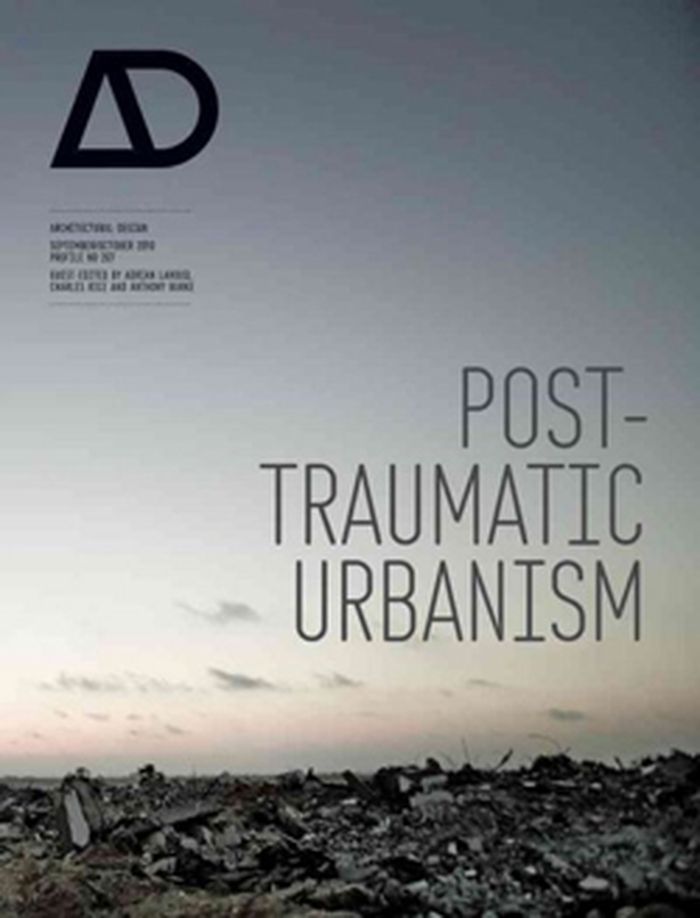
Urban trauma describes a condition where conflict or catastrophe has disrupted and damaged not only the physical environment and infrastructure of a city, but also the social and cultural networks. Cities experiencing trauma dominate the daily news. But how is this trauma to be understood in its aftermath, and in urban terms? What is the response of the discipline to the post-traumatic condition? On the one hand, one can try to restore and recover everything that has passed, or otherwise see the post-traumatic city as a resilient space poised on the cusp of new potentialities. While repair and reconstruction are automatic reflexes, the knowledge and practices of the disciplines need to be imbued with a deeper understanding of the effect of trauma on cities and their contingent realities. This issue will pursue this latter approach, using examples of post-traumatic urban conditions to rethink the agency of architecture and urbanism in the contemporary world.
AD 80:05 Post-traumatic urbanism
Actions:
Price:
$37.99
(available to order)
Summary:
Urban trauma describes a condition where conflict or catastrophe has disrupted and damaged not only the physical environment and infrastructure of a city, but also the social and cultural networks. Cities experiencing trauma dominate the daily news. But how is this trauma to be understood in its aftermath, and in urban terms? What is the response of the discipline to the post-traumatic condition? On the one hand, one can try to restore and recover everything that has passed, or otherwise see the post-traumatic city as a resilient space poised on the cusp of new potentialities. While repair and reconstruction are automatic reflexes, the knowledge and practices of the disciplines need to be imbued with a deeper understanding of the effect of trauma on cities and their contingent realities. This issue will pursue this latter approach, using examples of post-traumatic urban conditions to rethink the agency of architecture and urbanism in the contemporary world.
Form:
books
books
Publication:
December 2010
December 2010
Subject:
Magazines
Magazines
Form:
books
books
Actions:
Price:
$54.95
(available to order)
Summary:
En 1945, la France en ruine peine à se relever. Quatre millions de personnes sont sans logement ; on manque d’acier, de ciment, de bois ; des villes, des ports, des réseaux ont été entièrement détruits. La région parisienne n’a pas été épargnée. Le ministère de la Reconstruction et de l’Urbanisme va s’atteler à reconstruire, mais aussi à construire, innover, expérimenter(...)
$54.95
(available to order)
Summary:
En 1945, la France en ruine peine à se relever. Quatre millions de personnes sont sans logement ; on manque d’acier, de ciment, de bois ; des villes, des ports, des réseaux ont été entièrement détruits. La région parisienne n’a pas été épargnée. Le ministère de la Reconstruction et de l’Urbanisme va s’atteler à reconstruire, mais aussi à construire, innover, expérimenter(...)
Title:
Réinventer la maison individuelle en 1945: la cité expérimentale de Noisy-le-Sec
Actions:
Price:
$54.95
(available to order)
Summary:
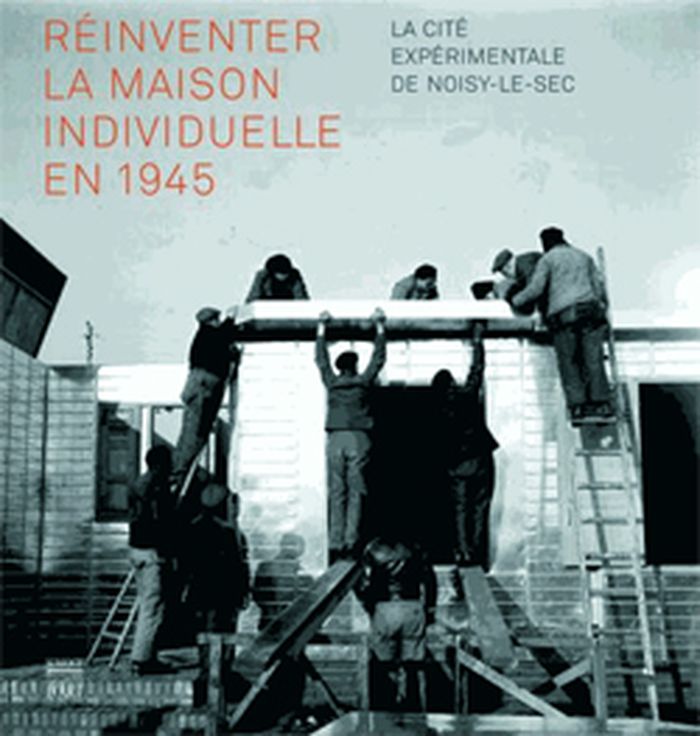
En 1945, la France en ruine peine à se relever. Quatre millions de personnes sont sans logement ; on manque d’acier, de ciment, de bois ; des villes, des ports, des réseaux ont été entièrement détruits. La région parisienne n’a pas été épargnée. Le ministère de la Reconstruction et de l’Urbanisme va s’atteler à reconstruire, mais aussi à construire, innover, expérimenter et réinventer. La maison individuelle a son rôle à jouer, les Français y sont attachés, les chantiers expérimentaux d’Athis-Mons, d’Argenteuil et davantage encore celui de Noisy-le-Sec en sont les sites majeurs. La cité expérimentale de Merlan, à Noisy-le-Sec, se tourne au sortir de la guerre vers l’avenir : « maison montée de l’intérieur vers l’extérieur », « canon à ciment », « acier inoxydable »… C’est cette histoire technique, architecturale et sociale que retrace cet ouvrage, illustré d’images du chantier et de photographies contemporaines de ce quartier protégé au titre des Monuments historiques en 2000.
Réinventer la maison individuelle en 1945: la cité expérimentale de Noisy-le-Sec
Actions:
Price:
$54.95
(available to order)
Summary:
En 1945, la France en ruine peine à se relever. Quatre millions de personnes sont sans logement ; on manque d’acier, de ciment, de bois ; des villes, des ports, des réseaux ont été entièrement détruits. La région parisienne n’a pas été épargnée. Le ministère de la Reconstruction et de l’Urbanisme va s’atteler à reconstruire, mais aussi à construire, innover, expérimenter et réinventer. La maison individuelle a son rôle à jouer, les Français y sont attachés, les chantiers expérimentaux d’Athis-Mons, d’Argenteuil et davantage encore celui de Noisy-le-Sec en sont les sites majeurs. La cité expérimentale de Merlan, à Noisy-le-Sec, se tourne au sortir de la guerre vers l’avenir : « maison montée de l’intérieur vers l’extérieur », « canon à ciment », « acier inoxydable »… C’est cette histoire technique, architecturale et sociale que retrace cet ouvrage, illustré d’images du chantier et de photographies contemporaines de ce quartier protégé au titre des Monuments historiques en 2000.
Form:
books
books
Publication:
May 2013
May 2013
Subject:
Architecture since 1900, Europe
Architecture since 1900, Europe
Form:
books
books
Title:
Two squares
Two squares
Actions:
Price:
$20.95
(available to order)
Summary:
Through a series of essays by urban historians and designers, Two Squares examines the changing role of public space in the cities of Beirut and Istanbul as they undergo major urban redevelopment. The study of Beirut looks at the redesign of Martyrs' Square, the city's primary public space, in the aftermath of the civil war and the ongoing reconstruction efforts to(...)
$20.95
(available to order)
Summary:
Through a series of essays by urban historians and designers, Two Squares examines the changing role of public space in the cities of Beirut and Istanbul as they undergo major urban redevelopment. The study of Beirut looks at the redesign of Martyrs' Square, the city's primary public space, in the aftermath of the civil war and the ongoing reconstruction efforts to(...)
Title:
Two squares
Actions:
Price:
$20.95
(available to order)
Summary:
Through a series of essays by urban historians and designers, Two Squares examines the changing role of public space in the cities of Beirut and Istanbul as they undergo major urban redevelopment. The study of Beirut looks at the redesign of Martyrs' Square, the city's primary public space, in the aftermath of the civil war and the ongoing reconstruction efforts to rebuild the center. In Istanbul, the focus is on Sirkeci Square, one of the main intermodal hubs in the historic peninsula, as it readies itself to host a new station for the first under-Bosphorus train tunnel. The two urban transformations are taken as opportunities to examine the nature of public space in the 21st-century city, the history and evolution of public life in Beirut and Istanbul, and the possibilities of using these vital transportation nodes as opportunities for new landscape, urban, and architectural design strategies. The book also includes a series of hypothetical design projects for these two squares.
Two squares
Actions:
Price:
$20.95
(available to order)
Summary:
Through a series of essays by urban historians and designers, Two Squares examines the changing role of public space in the cities of Beirut and Istanbul as they undergo major urban redevelopment. The study of Beirut looks at the redesign of Martyrs' Square, the city's primary public space, in the aftermath of the civil war and the ongoing reconstruction efforts to rebuild the center. In Istanbul, the focus is on Sirkeci Square, one of the main intermodal hubs in the historic peninsula, as it readies itself to host a new station for the first under-Bosphorus train tunnel. The two urban transformations are taken as opportunities to examine the nature of public space in the 21st-century city, the history and evolution of public life in Beirut and Istanbul, and the possibilities of using these vital transportation nodes as opportunities for new landscape, urban, and architectural design strategies. The book also includes a series of hypothetical design projects for these two squares.
Form:
books
books
Publication:
October 2006, Boston
October 2006, Boston
Subject:
History until 1900, Asia
History until 1900, Asia
Form:
books
books
Price:
$30.95
(available in store)
Summary:
Volume number 10 in the Conversation Series with the influential museum director, curator, writer and conversationalist Hans Ulrich Obrist, is given over to an intensive talk with the important German conceptual artist, Thomas Demand, who constructs precise environments out of paper maquettes, which are then photographed to haunting effect. Topics include concepts and(...)
$30.95
(available in store)
Summary:
Volume number 10 in the Conversation Series with the influential museum director, curator, writer and conversationalist Hans Ulrich Obrist, is given over to an intensive talk with the important German conceptual artist, Thomas Demand, who constructs precise environments out of paper maquettes, which are then photographed to haunting effect. Topics include concepts and(...)
Title:
Thomas Demand / Hans Ulrich Obrist : the conversation series 10
Actions:
Price:
$30.95
(available in store)
Summary:
Volume number 10 in the Conversation Series with the influential museum director, curator, writer and conversationalist Hans Ulrich Obrist, is given over to an intensive talk with the important German conceptual artist, Thomas Demand, who constructs precise environments out of paper maquettes, which are then photographed to haunting effect. Topics include concepts and rules of operation, the reconstruction and reverberation of history, work processes, studio realities and significant exhibitions of recent years. This wide-ranging conversation, modestly illustrated with black-and-white images, is as intelligent as it is revealing, giving the reader an unprecedented glimpse into the minds of two of the most brilliant players on the international art scene. Demand lives between Berlin and New York, where a retrospective of his work was shown at The Museum of Modern Art in 2005. Hans Ulrich Obrist is the Co-Director of the Musee d'Art Moderne de la Ville de Paris, as well as the Serpentine Gallery, London, where he lives and works.
Thomas Demand / Hans Ulrich Obrist : the conversation series 10
Actions:
Price:
$30.95
(available in store)
Summary:
Volume number 10 in the Conversation Series with the influential museum director, curator, writer and conversationalist Hans Ulrich Obrist, is given over to an intensive talk with the important German conceptual artist, Thomas Demand, who constructs precise environments out of paper maquettes, which are then photographed to haunting effect. Topics include concepts and rules of operation, the reconstruction and reverberation of history, work processes, studio realities and significant exhibitions of recent years. This wide-ranging conversation, modestly illustrated with black-and-white images, is as intelligent as it is revealing, giving the reader an unprecedented glimpse into the minds of two of the most brilliant players on the international art scene. Demand lives between Berlin and New York, where a retrospective of his work was shown at The Museum of Modern Art in 2005. Hans Ulrich Obrist is the Co-Director of the Musee d'Art Moderne de la Ville de Paris, as well as the Serpentine Gallery, London, where he lives and works.
Form:
books
books
Publication:
July 2007, Köln
July 2007, Köln
Subject:
Contemporary Art Monographs
Contemporary Art Monographs
Form:
books
books
Actions:
Price:
$65.00
(available in store)
Summary:
''Constructive Clarity: Max Bill and His Time, 1940–1952'', the second installment of art historian Angela Thomas’s multivolume biography, continues her meticulous exploration of the life and work of the influential artist. Max Bill was undoubtedly one of the most versatile artists of the twentieth century––a designer, painter, sculptor, architect, graphic designer,(...)
$65.00
(available in store)
Summary:
''Constructive Clarity: Max Bill and His Time, 1940–1952'', the second installment of art historian Angela Thomas’s multivolume biography, continues her meticulous exploration of the life and work of the influential artist. Max Bill was undoubtedly one of the most versatile artists of the twentieth century––a designer, painter, sculptor, architect, graphic designer,(...)
Title:
Constructive clarity: Max Bill and his time
Actions:
Price:
$65.00
(available in store)
Summary:
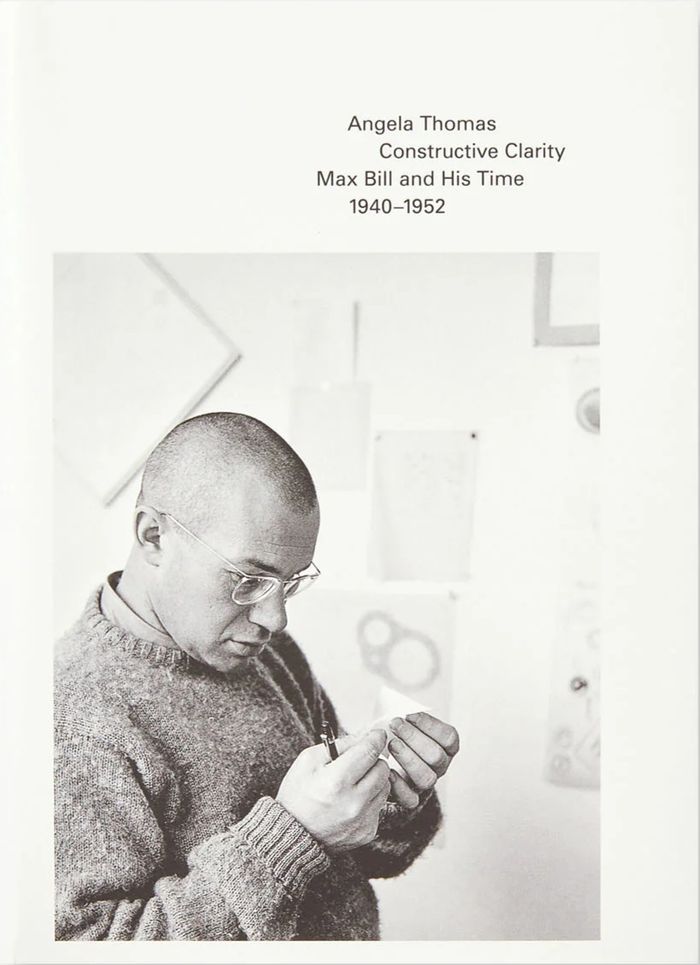
''Constructive Clarity: Max Bill and His Time, 1940–1952'', the second installment of art historian Angela Thomas’s multivolume biography, continues her meticulous exploration of the life and work of the influential artist. Max Bill was undoubtedly one of the most versatile artists of the twentieth century––a designer, painter, sculptor, architect, graphic designer, typographer, writer, curator, teacher, and politician––who influenced generations of artists. Picking up where the first volume left off,Thomas turns her attention to Bill’s life during World War II, exploring the ground-breaking artistic and intellectual networks to which Bill belonged: from his time at the Bauhaus in Dessau to his connections with the Parisian avant-garde and his lifelong friendship with Georges Vantongerloo. His importance as a writer, publisher, and exhibition organizer comes to the fore in this volume, as does his crucial influence on the development of Concrete art in South America and his active interest in urban planning and postwar reconstruction. contexts in which he worked.
Constructive clarity: Max Bill and his time
Actions:
Price:
$65.00
(available in store)
Summary:
''Constructive Clarity: Max Bill and His Time, 1940–1952'', the second installment of art historian Angela Thomas’s multivolume biography, continues her meticulous exploration of the life and work of the influential artist. Max Bill was undoubtedly one of the most versatile artists of the twentieth century––a designer, painter, sculptor, architect, graphic designer, typographer, writer, curator, teacher, and politician––who influenced generations of artists. Picking up where the first volume left off,Thomas turns her attention to Bill’s life during World War II, exploring the ground-breaking artistic and intellectual networks to which Bill belonged: from his time at the Bauhaus in Dessau to his connections with the Parisian avant-garde and his lifelong friendship with Georges Vantongerloo. His importance as a writer, publisher, and exhibition organizer comes to the fore in this volume, as does his crucial influence on the development of Concrete art in South America and his active interest in urban planning and postwar reconstruction. contexts in which he worked.
Form:
books
books
Publication:
October 2024
October 2024
Subject:
Graphic Designers, Monographs
Graphic Designers, Monographs
Form:
books
books
Title:
Hitoshi Fugo: Kami
Hitoshi Fugo: Kami
Actions:
Price:
$88.00
(available in store)
Summary:
''Kami'' is a deeply personal and meditative project by Japanese photographer Hitoshi Fugo. Conceived across nearly three decades, the work explores the tension between destruction and transformation, between what is lost and what remains. The series juxtaposes two distinct bodies of images: photographs taken in the aftermath of the 1995 Great Hanshin Earthquake in(...)
$88.00
(available in store)
Summary:
''Kami'' is a deeply personal and meditative project by Japanese photographer Hitoshi Fugo. Conceived across nearly three decades, the work explores the tension between destruction and transformation, between what is lost and what remains. The series juxtaposes two distinct bodies of images: photographs taken in the aftermath of the 1995 Great Hanshin Earthquake in(...)
Subject:
Photography monographs
Photography monographs
Publication:
April 2026
April 2026
Title:
Hitoshi Fugo: Kami
Actions:
Price:
$88.00
(available in store)
Summary:
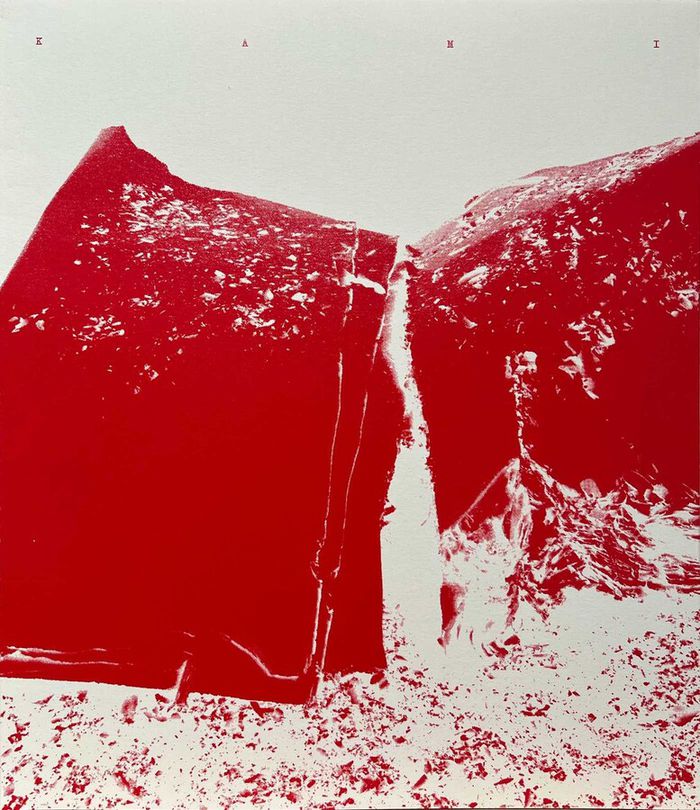
''Kami'' is a deeply personal and meditative project by Japanese photographer Hitoshi Fugo. Conceived across nearly three decades, the work explores the tension between destruction and transformation, between what is lost and what remains. The series juxtaposes two distinct bodies of images: photographs taken in the aftermath of the 1995 Great Hanshin Earthquake in Kobe, and close studies of a partially burned industrial paper roll that Fugo found outside a fire-ravaged printing factory in Tokyo. In both, he searches for unexpected beauty in the ruins, forms that have been stripped of their function, worn by time or trauma, yet still resonate with presence. The Japanese word ''kamo'' means both ''god'' and ''paper'' and this ambiguity forms the philosophical core of the work. In the face of natural disaster and human-made destruction, ''Kami'' reflects on the fragility of matter, the absence of divinity, and the possibility of poetic reconstruction through photographic seeing.
Hitoshi Fugo: Kami
Actions:
Price:
$88.00
(available in store)
Summary:
''Kami'' is a deeply personal and meditative project by Japanese photographer Hitoshi Fugo. Conceived across nearly three decades, the work explores the tension between destruction and transformation, between what is lost and what remains. The series juxtaposes two distinct bodies of images: photographs taken in the aftermath of the 1995 Great Hanshin Earthquake in Kobe, and close studies of a partially burned industrial paper roll that Fugo found outside a fire-ravaged printing factory in Tokyo. In both, he searches for unexpected beauty in the ruins, forms that have been stripped of their function, worn by time or trauma, yet still resonate with presence. The Japanese word ''kamo'' means both ''god'' and ''paper'' and this ambiguity forms the philosophical core of the work. In the face of natural disaster and human-made destruction, ''Kami'' reflects on the fragility of matter, the absence of divinity, and the possibility of poetic reconstruction through photographic seeing.
Form:
books
books
Publication:
April 2026
April 2026
Subject:
Photography monographs
Photography monographs
Form:
books
books
Price:
$66.95
(available to order)
Summary:
“Landscape Architecture and Town Planning in The Netherlands 01-03” offers a critical survey of current landscape architectonic and urban planning projects, and enables professional colleagues, clients and other interested parties to keep abreast of the 'state of the art' in landscape architecture and town planning in The Netherlands. The 2001-2003 edition is the fifth(...)
$66.95
(available to order)
Summary:
“Landscape Architecture and Town Planning in The Netherlands 01-03” offers a critical survey of current landscape architectonic and urban planning projects, and enables professional colleagues, clients and other interested parties to keep abreast of the 'state of the art' in landscape architecture and town planning in The Netherlands. The 2001-2003 edition is the fifth(...)
Title:
Landscape architecture and town planning in the Netherlands 01-03
Actions:
Price:
$66.95
(available to order)
Summary:
“Landscape Architecture and Town Planning in The Netherlands 01-03” offers a critical survey of current landscape architectonic and urban planning projects, and enables professional colleagues, clients and other interested parties to keep abreast of the 'state of the art' in landscape architecture and town planning in The Netherlands. The 2001-2003 edition is the fifth in a series of biannual publications. A commission under the leadership of Tineke Blok, comprised of Ruud Brouwers, Ton Hartman, Sylvia Karres, Martin Knuijt and Frits Palmboom, selected over 40 projects which are exemplary in one manner or another. Important themes this time are reconstruction of centres, neighbourhoods and parks, and what is being called the 'new collectivity' in town expansions and city centre projects. A number of analytic essays and opinion pieces by Ivan Nio, Rudi van Ettinger and Frans de Josselin de Jong, among others, precede the selection. The selection is accompanied by a commentary by Ruud Brouwers. Peter Paul Witsen wrote the project descriptions.
Landscape architecture and town planning in the Netherlands 01-03
Actions:
Price:
$66.95
(available to order)
Summary:
“Landscape Architecture and Town Planning in The Netherlands 01-03” offers a critical survey of current landscape architectonic and urban planning projects, and enables professional colleagues, clients and other interested parties to keep abreast of the 'state of the art' in landscape architecture and town planning in The Netherlands. The 2001-2003 edition is the fifth in a series of biannual publications. A commission under the leadership of Tineke Blok, comprised of Ruud Brouwers, Ton Hartman, Sylvia Karres, Martin Knuijt and Frits Palmboom, selected over 40 projects which are exemplary in one manner or another. Important themes this time are reconstruction of centres, neighbourhoods and parks, and what is being called the 'new collectivity' in town expansions and city centre projects. A number of analytic essays and opinion pieces by Ivan Nio, Rudi van Ettinger and Frans de Josselin de Jong, among others, precede the selection. The selection is accompanied by a commentary by Ruud Brouwers. Peter Paul Witsen wrote the project descriptions.
Form:
books
books
Publication:
March 2005, Bussum
March 2005, Bussum
Subject:
Gardens
Gardens
Form:
books
books
Actions:
Price:
$26.95
(available to order)
Summary:
"Chicago's famous buildings - fifth edition", completely updated and revised, covers more than a decade of extraordinary new architecture and takes a fresh look back at the city's classical legacy of Adler, Sullivan, Burnham, Root, Wright, and Mies van der Rohe. The authors have added many new descriptions and images of the most important projects in Chicago since the(...)
$26.95
(available to order)
Summary:
"Chicago's famous buildings - fifth edition", completely updated and revised, covers more than a decade of extraordinary new architecture and takes a fresh look back at the city's classical legacy of Adler, Sullivan, Burnham, Root, Wright, and Mies van der Rohe. The authors have added many new descriptions and images of the most important projects in Chicago since the(...)
Title:
Chicago's famous buildings - fifth edition
Actions:
Price:
$26.95
(available to order)
Summary:
"Chicago's famous buildings - fifth edition", completely updated and revised, covers more than a decade of extraordinary new architecture and takes a fresh look back at the city's classical legacy of Adler, Sullivan, Burnham, Root, Wright, and Mies van der Rohe. The authors have added many new descriptions and images of the most important projects in Chicago since the fourth edition, including the massive reconstruction of Grant Park around Frank Gehry's Music Pavilion, and they cover as well the current status of older buildings--some destroyed, others, such as Burnham's Reliance Building, restored and brought back to life. This book also includes expanded sections on the city's future and the development of its diverse neighborhoods, presented with new maps to serve as an even more effective walking guide. A glossary of architectural terms, an extensive index, and more than sixty new photographs of both old and new buildings bring this guide completely up-to-date.
Chicago's famous buildings - fifth edition
Actions:
Price:
$26.95
(available to order)
Summary:
"Chicago's famous buildings - fifth edition", completely updated and revised, covers more than a decade of extraordinary new architecture and takes a fresh look back at the city's classical legacy of Adler, Sullivan, Burnham, Root, Wright, and Mies van der Rohe. The authors have added many new descriptions and images of the most important projects in Chicago since the fourth edition, including the massive reconstruction of Grant Park around Frank Gehry's Music Pavilion, and they cover as well the current status of older buildings--some destroyed, others, such as Burnham's Reliance Building, restored and brought back to life. This book also includes expanded sections on the city's future and the development of its diverse neighborhoods, presented with new maps to serve as an even more effective walking guide. A glossary of architectural terms, an extensive index, and more than sixty new photographs of both old and new buildings bring this guide completely up-to-date.
Form:
books
books
Publication:
November 2003, Chicago
November 2003, Chicago
Subject:
City Guides
City Guides
Form:
books
books
Title:
Madrid architectural guide
Madrid architectural guide
Actions:
Price:
$39.95
(available to order)
Summary:
This guidebook showcases 150 buildings from the past 100 years starting with one of the most influential urban projects ever: the Gran Vía. This main avenue marked a milestone for Madrid which went from being a historic city to the modern capital that it is today. This intervention had been ongoing for almost two decades with the initial phase of construction reaching(...)
$39.95
(available to order)
Summary:
This guidebook showcases 150 buildings from the past 100 years starting with one of the most influential urban projects ever: the Gran Vía. This main avenue marked a milestone for Madrid which went from being a historic city to the modern capital that it is today. This intervention had been ongoing for almost two decades with the initial phase of construction reaching(...)
Title:
Madrid architectural guide
Actions:
Price:
$39.95
(available to order)
Summary:
This guidebook showcases 150 buildings from the past 100 years starting with one of the most influential urban projects ever: the Gran Vía. This main avenue marked a milestone for Madrid which went from being a historic city to the modern capital that it is today. This intervention had been ongoing for almost two decades with the initial phase of construction reaching completion circa. 1917. A selection of the most relevant buildings thereafter until the present day sheds light on Madrid’s architecture in relation to its inherent historical context, including the need for the reconstruction of built heritage after the Spanish Civil War, the influence of the Franco dictatorship lasting for almost forty years, and the new materials and collaborative architecture that have arisen during the current economic crisis, among other aspects. Seven proposed routes lead us through the different districts that make up the city, as well as those historic epochs that have made Madrid the city it is today.
Madrid architectural guide
Actions:
Price:
$39.95
(available to order)
Summary:
This guidebook showcases 150 buildings from the past 100 years starting with one of the most influential urban projects ever: the Gran Vía. This main avenue marked a milestone for Madrid which went from being a historic city to the modern capital that it is today. This intervention had been ongoing for almost two decades with the initial phase of construction reaching completion circa. 1917. A selection of the most relevant buildings thereafter until the present day sheds light on Madrid’s architecture in relation to its inherent historical context, including the need for the reconstruction of built heritage after the Spanish Civil War, the influence of the Franco dictatorship lasting for almost forty years, and the new materials and collaborative architecture that have arisen during the current economic crisis, among other aspects. Seven proposed routes lead us through the different districts that make up the city, as well as those historic epochs that have made Madrid the city it is today.
Form:
books
books
Publication:
March 2017
March 2017
Subject:
City Guides
City Guides
Form:
books
books
Actions:
Price:
$57.50
(available in store)
Summary:
Edition Bauhaus 46 When Dessau was bombed in early 1945, the Director’s House and Moholy-Nagy’s Master House were reduced to rubble as well. After the Dessau Masters’ Houses – epitome of the 20th-century artists’ colony – had been restored to their original state in the 1990s, a debate began on the reconstruction of the two houses destroyed in the war. In 2010, after(...)
$57.50
(available in store)
Summary:
Edition Bauhaus 46 When Dessau was bombed in early 1945, the Director’s House and Moholy-Nagy’s Master House were reduced to rubble as well. After the Dessau Masters’ Houses – epitome of the 20th-century artists’ colony – had been restored to their original state in the 1990s, a debate began on the reconstruction of the two houses destroyed in the war. In 2010, after(...)
Title:
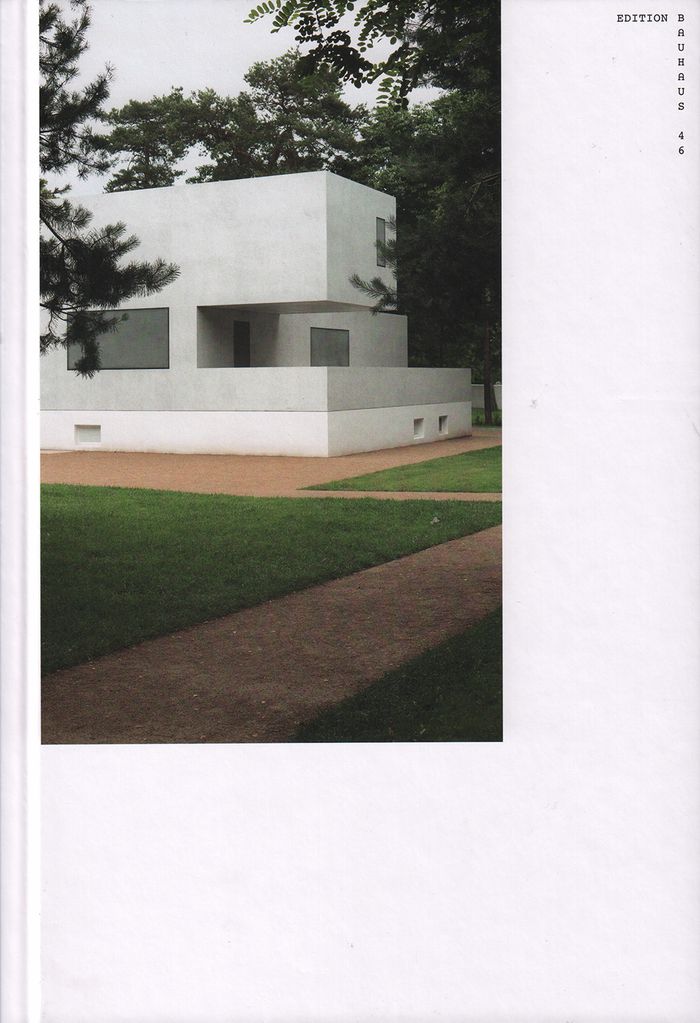
The new masters’ houses in Dessau, 1925–2014
Actions:
Price:
$57.50
(available in store)
Summary:
Edition Bauhaus 46 When Dessau was bombed in early 1945, the Director’s House and Moholy-Nagy’s Master House were reduced to rubble as well. After the Dessau Masters’ Houses – epitome of the 20th-century artists’ colony – had been restored to their original state in the 1990s, a debate began on the reconstruction of the two houses destroyed in the war. In 2010, after consultation with the British star architect David Chipperfield, the decision was made to recreate the Master Houses of Gropius and Moholy-Nagy using contemporary means, rather than rebuilding them 1:1. And so they have now been reconstructed on the basis of designs by the Berlin firm Bruno-Fioretti-Marquez, as innovative reductions and abstractions of the original houses. This volume describes the chequered history of the Dessau Masters’ Houses, presenting the reconstructed buildings for the first time in book form, with photographs by Armin Linke and Heidi Specker.
The new masters’ houses in Dessau, 1925–2014
Actions:
Price:
$57.50
(available in store)
Summary:
Edition Bauhaus 46 When Dessau was bombed in early 1945, the Director’s House and Moholy-Nagy’s Master House were reduced to rubble as well. After the Dessau Masters’ Houses – epitome of the 20th-century artists’ colony – had been restored to their original state in the 1990s, a debate began on the reconstruction of the two houses destroyed in the war. In 2010, after consultation with the British star architect David Chipperfield, the decision was made to recreate the Master Houses of Gropius and Moholy-Nagy using contemporary means, rather than rebuilding them 1:1. And so they have now been reconstructed on the basis of designs by the Berlin firm Bruno-Fioretti-Marquez, as innovative reductions and abstractions of the original houses. This volume describes the chequered history of the Dessau Masters’ Houses, presenting the reconstructed buildings for the first time in book form, with photographs by Armin Linke and Heidi Specker.
Form:
books
books
Publication:
March 2017
March 2017
Subject:
Modernism
Modernism


