


2142 Results
Form:
books
books
Actions:
Price:
$52.50
(available to order)
Summary:
The urban and cultural climate of Rotterdam changed radically between 1970 and 2000. Opinions differ about what the most important changes were, and when they occurred. "Imagine a metropolis" shows that it was first and foremost a new perspective on Rotterdam that stimulated the development of the city during this period. If the Rotterdam of 1970 was still a city with an(...)
$52.50
(available to order)
Summary:
The urban and cultural climate of Rotterdam changed radically between 1970 and 2000. Opinions differ about what the most important changes were, and when they occurred. "Imagine a metropolis" shows that it was first and foremost a new perspective on Rotterdam that stimulated the development of the city during this period. If the Rotterdam of 1970 was still a city with an(...)
Subject:
Architecture since 1900, Europe
Architecture since 1900, Europe
Publication:
October 2007, Rotterdam
October 2007, Rotterdam
Title:
Imagine a metropolis : Rotterdam's creative class, 1970-2000
Actions:
Price:
$52.50
(available to order)
Summary:
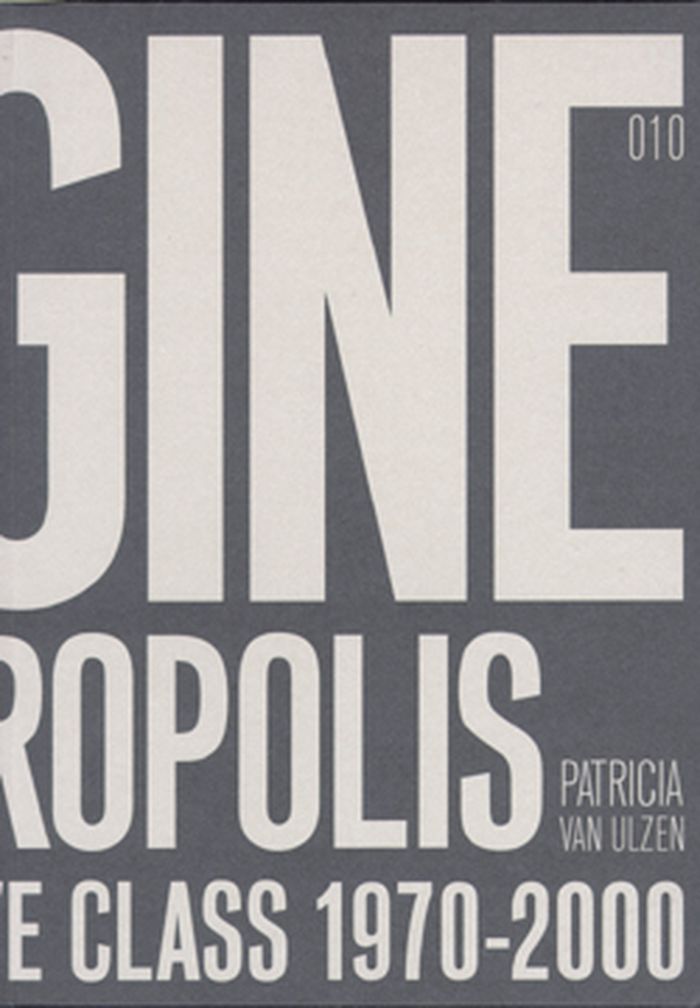
The urban and cultural climate of Rotterdam changed radically between 1970 and 2000. Opinions differ about what the most important changes were, and when they occurred. "Imagine a metropolis" shows that it was first and foremost a new perspective on Rotterdam that stimulated the development of the city during this period. If the Rotterdam of 1970 was still a city with an identity crises that wanted to be small rather than large and cosy rather than commercial, by 2000 Rotterdam had the image of the most metropolitan of all Dutch cities. Artists and other cultural practitioners – a group these days termed the ‘creative class’ – were the first to advance this metropolitan vision, thereby paving the way for the New Rotterdam that would begin to take concrete shape at the end of the 1980s. "Imagine a metropolis" goes on to show that this New Rotterdam is returning to its nineteenth-century identity and the developments of the inter-war years and the period of post-war reconstruction.
Imagine a metropolis : Rotterdam's creative class, 1970-2000
Actions:
Price:
$52.50
(available to order)
Summary:
The urban and cultural climate of Rotterdam changed radically between 1970 and 2000. Opinions differ about what the most important changes were, and when they occurred. "Imagine a metropolis" shows that it was first and foremost a new perspective on Rotterdam that stimulated the development of the city during this period. If the Rotterdam of 1970 was still a city with an identity crises that wanted to be small rather than large and cosy rather than commercial, by 2000 Rotterdam had the image of the most metropolitan of all Dutch cities. Artists and other cultural practitioners – a group these days termed the ‘creative class’ – were the first to advance this metropolitan vision, thereby paving the way for the New Rotterdam that would begin to take concrete shape at the end of the 1980s. "Imagine a metropolis" goes on to show that this New Rotterdam is returning to its nineteenth-century identity and the developments of the inter-war years and the period of post-war reconstruction.
Form:
books
books
Publication:
October 2007, Rotterdam
October 2007, Rotterdam
Subject:
Architecture since 1900, Europe
Architecture since 1900, Europe
Form:
books
books
Price:
$74.95
(available to order)
Summary:
While this book is primarily devoted to the historical reconstruction of the formal and horticultural characteristics of "theatrical" shrubberies and flower beds, it also aims to animate the world of the eighteenth-century pleasure ground. Mark Laird shows how the unwritten lore of planting design was(...)
$74.95
(available to order)
Summary:
While this book is primarily devoted to the historical reconstruction of the formal and horticultural characteristics of "theatrical" shrubberies and flower beds, it also aims to animate the world of the eighteenth-century pleasure ground. Mark Laird shows how the unwritten lore of planting design was(...)
Title:
The flowering of the landscape garden : English pleasure grounds 1720-1800
Actions:
Price:
$74.95
(available to order)
Summary:
While this book is primarily devoted to the historical reconstruction of the formal and horticultural characteristics of "theatrical" shrubberies and flower beds, it also aims to animate the world of the eighteenth-century pleasure ground. Mark Laird shows how the unwritten lore of planting design was passed down by generation after generation of gardeners and discusses the interaction of landscape designer, client, nurseryman, land agent, and gardener in modifying and transforming the geometric layouts of previous generations. He traces the development of planting design theory and practice from Batty Langley to Capability Brown and William Chambers, and demonstrates how an English mania for flowering shrubs and conifers from eastern North America helped create the distinctive planting forms of the Georgian pleasure ground. Laird offers readers a wealth of visual and literary materials - from contemporary paintings, engravings, poetry, essays, and letters to more prosaic household accounts and nursery bills - to revolutionize our understanding of the English landscape garden as a powerful cultural expression.
The flowering of the landscape garden : English pleasure grounds 1720-1800
Actions:
Price:
$74.95
(available to order)
Summary:
While this book is primarily devoted to the historical reconstruction of the formal and horticultural characteristics of "theatrical" shrubberies and flower beds, it also aims to animate the world of the eighteenth-century pleasure ground. Mark Laird shows how the unwritten lore of planting design was passed down by generation after generation of gardeners and discusses the interaction of landscape designer, client, nurseryman, land agent, and gardener in modifying and transforming the geometric layouts of previous generations. He traces the development of planting design theory and practice from Batty Langley to Capability Brown and William Chambers, and demonstrates how an English mania for flowering shrubs and conifers from eastern North America helped create the distinctive planting forms of the Georgian pleasure ground. Laird offers readers a wealth of visual and literary materials - from contemporary paintings, engravings, poetry, essays, and letters to more prosaic household accounts and nursery bills - to revolutionize our understanding of the English landscape garden as a powerful cultural expression.
Form:
books
books
Publication:
January 1900, Philadelphia
January 1900, Philadelphia
Subject:
Gardens
Gardens
Form:
books
books
Actions:
Price:
$36.00
(available to order)
Summary:
Une vague de morosité s'abattit sur les villes françaises au cours des années 1970. En fait, depuis dix ans déjà, l'incertitude avait gagné les milieux de l'architecture et de l'urbanisme, laissant désemparés ceux qui s'étaient ralliés d'enthousiasme au Mouvement moderne et constataient brutalement que ses charmes s'étiolaient. Les vieilles villes y trouvèrent une(...)
$36.00
(available to order)
Summary:
Une vague de morosité s'abattit sur les villes françaises au cours des années 1970. En fait, depuis dix ans déjà, l'incertitude avait gagné les milieux de l'architecture et de l'urbanisme, laissant désemparés ceux qui s'étaient ralliés d'enthousiasme au Mouvement moderne et constataient brutalement que ses charmes s'étiolaient. Les vieilles villes y trouvèrent une(...)
Publication:
January 2008, Rennes
January 2008, Rennes
Title:
Art public et projet urbain: Brest, 1970-2000
Actions:
Price:
$36.00
(available to order)
Summary:
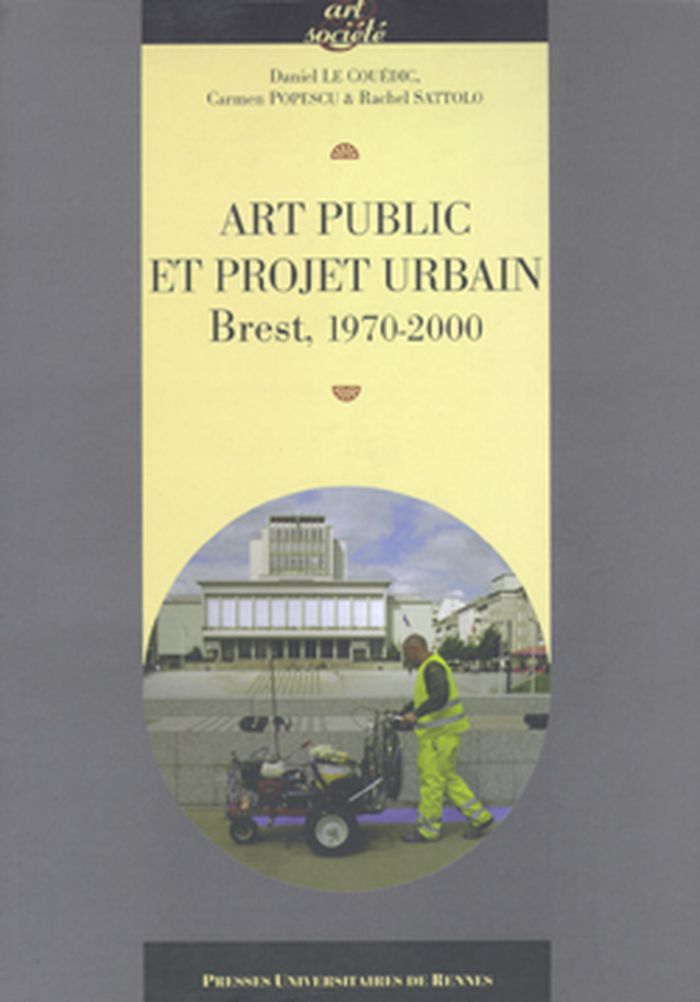
Une vague de morosité s'abattit sur les villes françaises au cours des années 1970. En fait, depuis dix ans déjà, l'incertitude avait gagné les milieux de l'architecture et de l'urbanisme, laissant désemparés ceux qui s'étaient ralliés d'enthousiasme au Mouvement moderne et constataient brutalement que ses charmes s'étiolaient. Les vieilles villes y trouvèrent une rédemption. Mais cette brutale révision doctrinale, qui glorifiait la longue durée et proclamait que l'histoire garantissait l'avenir, compliquait évidemment la tâche de ceux qui ne pouvaient s'en prévaloir. Elle rendait spécialement angoissante la situation des villes qui avaient connu une brutale interruption de leur destinée et qu'il avait fallu reconstruire. Déjà, pour d'obscures raisons, leur souvenir était remisé dans la médiocre catégorie des réalisations de l'urgence, dépourvues d'inspiration et de ressources. Elles rencontraient même la défiance de leurs habitants taraudés par la nostalgie ou le regret et la critique des spécialistes dépités que leur relèvement rient manifesté plus d'audace. Pourtant, ces villes sans mérite apparent constituaient un remarquable laboratoire pour interroger les raisons mêmes de l'urbain et leur relation au passé. Surtout, leur incapacité hâtivement proclamée à offrir des conditions propices à l'épanouissement d'un espace public satisfaisant rejoignait l'actualité d'une question qui ne pouvait espérer un plus vaste champ d'élucidation. Brest fut alors pionnière. On y conduisit des recherches originales ponctuées d'hypothèses qui justifièrent des expérimentations inédites et à très grande échelle. La plus ambitieuse d'entre elles, la plus spectaculaire et la plus commentée, la plus polémique aussi, mit à contribution des artistes parmi les plus en vue de l'époque ou à l'aube de leur œuvre, invités ou surgis spontanément. Bien loin en l'occurrence du rôle " d'enlumineurs " de la ville qu'on leur concédait parfois, ils furent promus acteurs principaux de sa transfiguration morale. A la reconstruction architecturale, jugée responsable de bien des maux réels ou psychosomatiques, on opposait ainsi une " reconstruction mentale " capable pensait-on d'apporter un supplément d'âme et de conduire à l'apaisement. En relatant et commentant les trois décennies de cette saga brestoise, l'intention est bien d'éclairer quelques questions universelles, auxquelles l'urbanisme se trouve confronté, et d'apprécier le secours que l'art et les artistes peuvent lui apporter.
Art public et projet urbain: Brest, 1970-2000
Actions:
Price:
$36.00
(available to order)
Summary:
Une vague de morosité s'abattit sur les villes françaises au cours des années 1970. En fait, depuis dix ans déjà, l'incertitude avait gagné les milieux de l'architecture et de l'urbanisme, laissant désemparés ceux qui s'étaient ralliés d'enthousiasme au Mouvement moderne et constataient brutalement que ses charmes s'étiolaient. Les vieilles villes y trouvèrent une rédemption. Mais cette brutale révision doctrinale, qui glorifiait la longue durée et proclamait que l'histoire garantissait l'avenir, compliquait évidemment la tâche de ceux qui ne pouvaient s'en prévaloir. Elle rendait spécialement angoissante la situation des villes qui avaient connu une brutale interruption de leur destinée et qu'il avait fallu reconstruire. Déjà, pour d'obscures raisons, leur souvenir était remisé dans la médiocre catégorie des réalisations de l'urgence, dépourvues d'inspiration et de ressources. Elles rencontraient même la défiance de leurs habitants taraudés par la nostalgie ou le regret et la critique des spécialistes dépités que leur relèvement rient manifesté plus d'audace. Pourtant, ces villes sans mérite apparent constituaient un remarquable laboratoire pour interroger les raisons mêmes de l'urbain et leur relation au passé. Surtout, leur incapacité hâtivement proclamée à offrir des conditions propices à l'épanouissement d'un espace public satisfaisant rejoignait l'actualité d'une question qui ne pouvait espérer un plus vaste champ d'élucidation. Brest fut alors pionnière. On y conduisit des recherches originales ponctuées d'hypothèses qui justifièrent des expérimentations inédites et à très grande échelle. La plus ambitieuse d'entre elles, la plus spectaculaire et la plus commentée, la plus polémique aussi, mit à contribution des artistes parmi les plus en vue de l'époque ou à l'aube de leur œuvre, invités ou surgis spontanément. Bien loin en l'occurrence du rôle " d'enlumineurs " de la ville qu'on leur concédait parfois, ils furent promus acteurs principaux de sa transfiguration morale. A la reconstruction architecturale, jugée responsable de bien des maux réels ou psychosomatiques, on opposait ainsi une " reconstruction mentale " capable pensait-on d'apporter un supplément d'âme et de conduire à l'apaisement. En relatant et commentant les trois décennies de cette saga brestoise, l'intention est bien d'éclairer quelques questions universelles, auxquelles l'urbanisme se trouve confronté, et d'apprécier le secours que l'art et les artistes peuvent lui apporter.
Form:
books
books
Publication:
January 2008, Rennes
January 2008, Rennes
Form:
books
books
Title:
Austrian phenomenon
Austrian phenomenon
Actions:
Price:
$140.00
(available to order)
Summary:
In the Austria of the 1960s, the visionary designs of architects and artists garnered international attention. Described as the "Austrian phenomenon," these projects and installations contained the concentrated creativity of the Austrian architectural neo-avant-garde between 1956 and 1973. In Vienna, these avant-garde dreams came to be symbolized by Hans Hollein’s Retti(...)
$140.00
(available to order)
Summary:
In the Austria of the 1960s, the visionary designs of architects and artists garnered international attention. Described as the "Austrian phenomenon," these projects and installations contained the concentrated creativity of the Austrian architectural neo-avant-garde between 1956 and 1973. In Vienna, these avant-garde dreams came to be symbolized by Hans Hollein’s Retti(...)
Title:
Austrian phenomenon
Actions:
Price:
$140.00
(available to order)
Summary:
In the Austria of the 1960s, the visionary designs of architects and artists garnered international attention. Described as the "Austrian phenomenon," these projects and installations contained the concentrated creativity of the Austrian architectural neo-avant-garde between 1956 and 1973. In Vienna, these avant-garde dreams came to be symbolized by Hans Hollein’s Retti Candle Shop and Hermann Czech’s many cafés and bars, which are still successful today, including the Kleines Café (Little Café), Wunderbar, and Salzamt. The best-known protagonists of this scene include Hans Hollein, Walter Pichler, Raimund Abraham, Coop Himmelblau, Haus-Rucker-Co, Missing Link, and others. The book consists of two parts. The first contains "Documentation" of important publications from the years 1958–1973 in international trade journals like Archigram, Domus, Architectural Record, and Casabella, in which the young architects sought attention for their programs. The second is "Reconstruction," a cross-section of images and texts from publications on the "Austrian phenomenon," elucidated and situated in the context of international architectural history by authors such as Friedrich Achleitner, Bart Lootsma, Stanislaus von Moos, Joseph Rykwert, Anthony Vidler, and others.
Austrian phenomenon
Actions:
Price:
$140.00
(available to order)
Summary:
In the Austria of the 1960s, the visionary designs of architects and artists garnered international attention. Described as the "Austrian phenomenon," these projects and installations contained the concentrated creativity of the Austrian architectural neo-avant-garde between 1956 and 1973. In Vienna, these avant-garde dreams came to be symbolized by Hans Hollein’s Retti Candle Shop and Hermann Czech’s many cafés and bars, which are still successful today, including the Kleines Café (Little Café), Wunderbar, and Salzamt. The best-known protagonists of this scene include Hans Hollein, Walter Pichler, Raimund Abraham, Coop Himmelblau, Haus-Rucker-Co, Missing Link, and others. The book consists of two parts. The first contains "Documentation" of important publications from the years 1958–1973 in international trade journals like Archigram, Domus, Architectural Record, and Casabella, in which the young architects sought attention for their programs. The second is "Reconstruction," a cross-section of images and texts from publications on the "Austrian phenomenon," elucidated and situated in the context of international architectural history by authors such as Friedrich Achleitner, Bart Lootsma, Stanislaus von Moos, Joseph Rykwert, Anthony Vidler, and others.
Form:
books
books
Publication:
December 2009
December 2009
Subject:
Architecture since 1900, Europe
Architecture since 1900, Europe
Form:
books
books

Actions:
Price:
$25.95
(available to order)
Summary:
Larry Bennett calls contemporary Chicago the third city to distinguish it from its two predecessors: the first city, a sprawling industrial center whose historical arc ran from the Civil War to the Great Depression; and the second city, the Rustbelt exemplar of the period from around 1950 to 1990. The third city features a dramatically revitalized urban core, a shifting(...)
$25.95
(available to order)
Summary:
Larry Bennett calls contemporary Chicago the third city to distinguish it from its two predecessors: the first city, a sprawling industrial center whose historical arc ran from the Civil War to the Great Depression; and the second city, the Rustbelt exemplar of the period from around 1950 to 1990. The third city features a dramatically revitalized urban core, a shifting(...)
Title:
The third city: Chicago and American urbanism
Actions:
Price:
$25.95
(available to order)
Summary:
Larry Bennett calls contemporary Chicago the third city to distinguish it from its two predecessors: the first city, a sprawling industrial center whose historical arc ran from the Civil War to the Great Depression; and the second city, the Rustbelt exemplar of the period from around 1950 to 1990. The third city features a dramatically revitalized urban core, a shifting population mix that includes new immigrant streams, and a growing number of middle-class professionals working in new economy sectors. It is also a city utterly transformed by the top-to-bottom reconstruction of public housing developments and the ambitious provision of public works like Millennium Park. It is, according to Bennett, a work in progress spearheaded by Richard M. Daley, a self-consciously innovative mayor whose strategy of neighborhood revitalization and urban renewal is a prototype of city governance for the twenty-first century. The Third City ultimately contends that to understand Chicago under Daley’s charge is to understand what metropolitan life across North America may well look like in the coming decades.
The third city: Chicago and American urbanism
Actions:
Price:
$25.95
(available to order)
Summary:
Larry Bennett calls contemporary Chicago the third city to distinguish it from its two predecessors: the first city, a sprawling industrial center whose historical arc ran from the Civil War to the Great Depression; and the second city, the Rustbelt exemplar of the period from around 1950 to 1990. The third city features a dramatically revitalized urban core, a shifting population mix that includes new immigrant streams, and a growing number of middle-class professionals working in new economy sectors. It is also a city utterly transformed by the top-to-bottom reconstruction of public housing developments and the ambitious provision of public works like Millennium Park. It is, according to Bennett, a work in progress spearheaded by Richard M. Daley, a self-consciously innovative mayor whose strategy of neighborhood revitalization and urban renewal is a prototype of city governance for the twenty-first century. The Third City ultimately contends that to understand Chicago under Daley’s charge is to understand what metropolitan life across North America may well look like in the coming decades.
Form:
books
books
Publication:
September 2010
September 2010
Subject:
History since 1900, Reference Books
History since 1900, Reference Books
Form:
books
books
Actions:
Price:
$48.95
(available to order)
Summary:
What is it about ruins that are so alluring, so puzzling, that they can hold some of us in endless wonder over the half-erased story they tell? In this elegant book, Robert Harbison explores the captivating hold these remains and broken pieces—from architecture, art, and literature—have on us. He guides us through ruins and fragments, both ancient and modern, visual and(...)
$48.95
(available to order)
Summary:
What is it about ruins that are so alluring, so puzzling, that they can hold some of us in endless wonder over the half-erased story they tell? In this elegant book, Robert Harbison explores the captivating hold these remains and broken pieces—from architecture, art, and literature—have on us. He guides us through ruins and fragments, both ancient and modern, visual and(...)
Title:
Ruins and fragments: tales of loss and rediscovery
Actions:
Price:
$48.95
(available to order)
Summary:
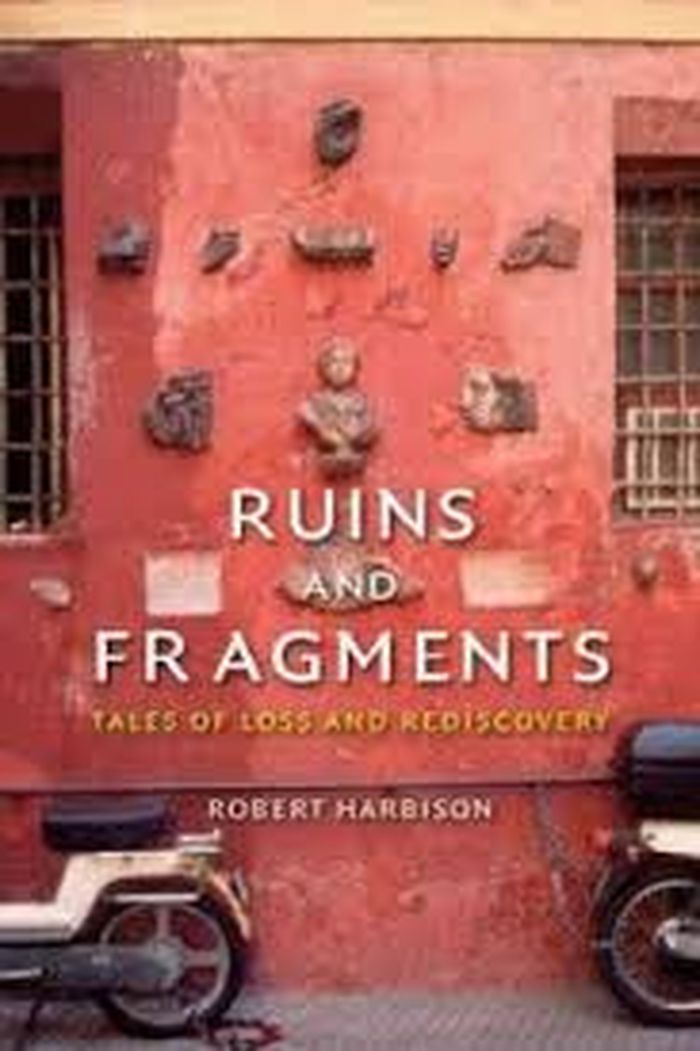
What is it about ruins that are so alluring, so puzzling, that they can hold some of us in endless wonder over the half-erased story they tell? In this elegant book, Robert Harbison explores the captivating hold these remains and broken pieces—from architecture, art, and literature—have on us. He guides us through ruins and fragments, both ancient and modern, visual and textual, showing us how they are crucial to understanding our current mindset and how we arrived here. First looking at ancient fragments, he examines the ways we have recovered, restored, and exhibited them as artworks. Then he moves on to modernist architecture and the ways that it seeks a fragmentary form, examining modern projects that have been designed into existing ruins, such as the Castelvecchio in Verona, Italy and the reconstruction of the Neues Museum in Berlin. From there he explores literature and the works of T. S. Eliot, Montaigne, Coleridge, Joyce, and Sterne, and how they have used fragments as the foundation for creating new work.
Ruins and fragments: tales of loss and rediscovery
Actions:
Price:
$48.95
(available to order)
Summary:
What is it about ruins that are so alluring, so puzzling, that they can hold some of us in endless wonder over the half-erased story they tell? In this elegant book, Robert Harbison explores the captivating hold these remains and broken pieces—from architecture, art, and literature—have on us. He guides us through ruins and fragments, both ancient and modern, visual and textual, showing us how they are crucial to understanding our current mindset and how we arrived here. First looking at ancient fragments, he examines the ways we have recovered, restored, and exhibited them as artworks. Then he moves on to modernist architecture and the ways that it seeks a fragmentary form, examining modern projects that have been designed into existing ruins, such as the Castelvecchio in Verona, Italy and the reconstruction of the Neues Museum in Berlin. From there he explores literature and the works of T. S. Eliot, Montaigne, Coleridge, Joyce, and Sterne, and how they have used fragments as the foundation for creating new work.
Form:
books
books
Publication:
June 2015
June 2015
Subject:
Architectural Theory
Architectural Theory
Form:
books
books
Actions:
Price:
$28.00
(available in store)
Summary:
Catastrophes, bombed-out cities, large-scale political transformations: “Image complexes” of humanitarian and ecological upheaval document the world as a sequence of catastrophes. But who decides how events are presented, determines the resolution of our visual worlds, and controls the circulation or censorship of images? Eyal and Ines Weizman trace the history of the(...)
$28.00
(available in store)
Summary:
Catastrophes, bombed-out cities, large-scale political transformations: “Image complexes” of humanitarian and ecological upheaval document the world as a sequence of catastrophes. But who decides how events are presented, determines the resolution of our visual worlds, and controls the circulation or censorship of images? Eyal and Ines Weizman trace the history of the(...)
Title:
Before & After: The architecture of disaster
Actions:
Price:
$28.00
(available in store)
Summary:
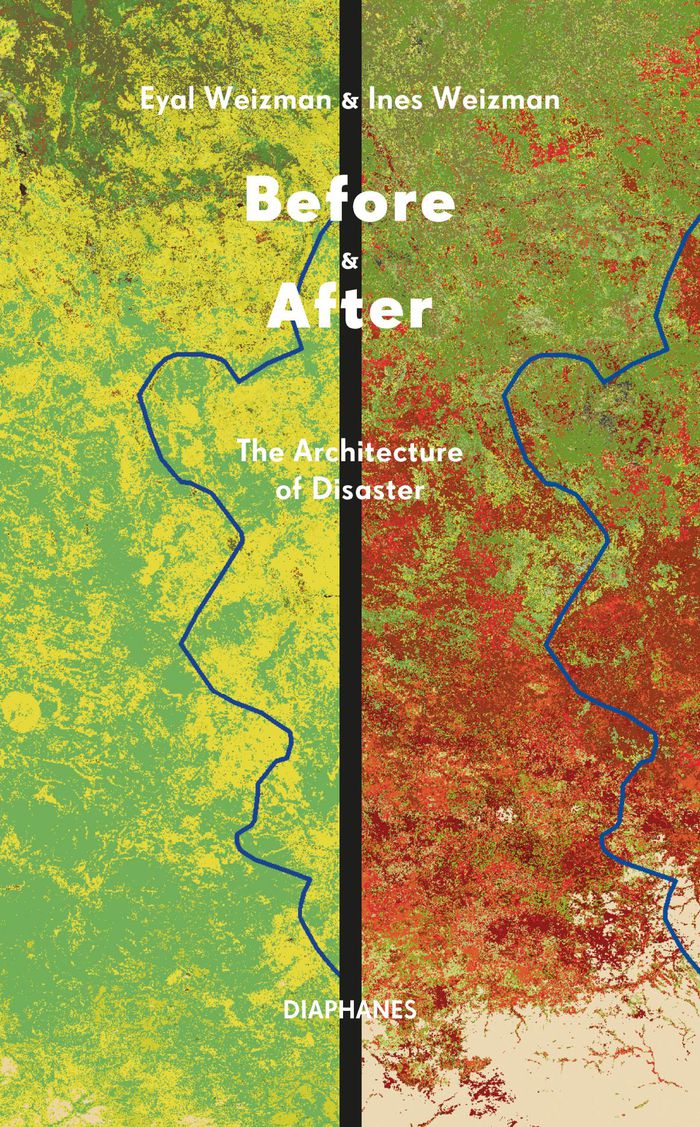
Catastrophes, bombed-out cities, large-scale political transformations: “Image complexes” of humanitarian and ecological upheaval document the world as a sequence of catastrophes. But who decides how events are presented, determines the resolution of our visual worlds, and controls the circulation or censorship of images? Eyal and Ines Weizman trace the history of the before-and-after image from nineteenth-century photography to contemporary satellite images and discover a gap that not only conceals the devastating event: it is the human subject itself that is in danger of disappearing from the images. Does humanitarian work, the documentation and reconstruction of war crimes, in which people’s fates and rights should be at the center of attention, paradoxically enter a post-human phase? How can the gap between images become a site of critical counter-reading rather than a symbol of erasure? In the context of their current research, Eyal and Ines Weizman discuss the history, present, and future of the paradigm of the before-and-after image in an exclusive conversation with Marie Glassl.
Before & After: The architecture of disaster
Actions:
Price:
$28.00
(available in store)
Summary:
Catastrophes, bombed-out cities, large-scale political transformations: “Image complexes” of humanitarian and ecological upheaval document the world as a sequence of catastrophes. But who decides how events are presented, determines the resolution of our visual worlds, and controls the circulation or censorship of images? Eyal and Ines Weizman trace the history of the before-and-after image from nineteenth-century photography to contemporary satellite images and discover a gap that not only conceals the devastating event: it is the human subject itself that is in danger of disappearing from the images. Does humanitarian work, the documentation and reconstruction of war crimes, in which people’s fates and rights should be at the center of attention, paradoxically enter a post-human phase? How can the gap between images become a site of critical counter-reading rather than a symbol of erasure? In the context of their current research, Eyal and Ines Weizman discuss the history, present, and future of the paradigm of the before-and-after image in an exclusive conversation with Marie Glassl.
Form:
books
books
Publication:
August 2025
August 2025
Subject:
Architectural Theory
Architectural Theory
Form:
books
books
Title:
Pierre Cruège
Pierre Cruège
Actions:
Price:
$83.95
(available in store)
Summary:
Artiste décorateur, architecte d'intérieur, créateur de modèles de série, Pierre Cruège (1913-2003) fait partie de la génération de designers français formée à l'Ecole des Beaux Arts - dont il sort major à Bordeaux - dans les années 30. Initialement formé par René Buthaud (peintre et céramiste), il intègre en 1935 l'atelier de René Prou, à Paris, où il entame une carrière(...)
$83.95
(available in store)
Summary:
Artiste décorateur, architecte d'intérieur, créateur de modèles de série, Pierre Cruège (1913-2003) fait partie de la génération de designers français formée à l'Ecole des Beaux Arts - dont il sort major à Bordeaux - dans les années 30. Initialement formé par René Buthaud (peintre et céramiste), il intègre en 1935 l'atelier de René Prou, à Paris, où il entame une carrière(...)
Title:
Pierre Cruège
Actions:
Price:
$83.95
(available in store)
Summary:
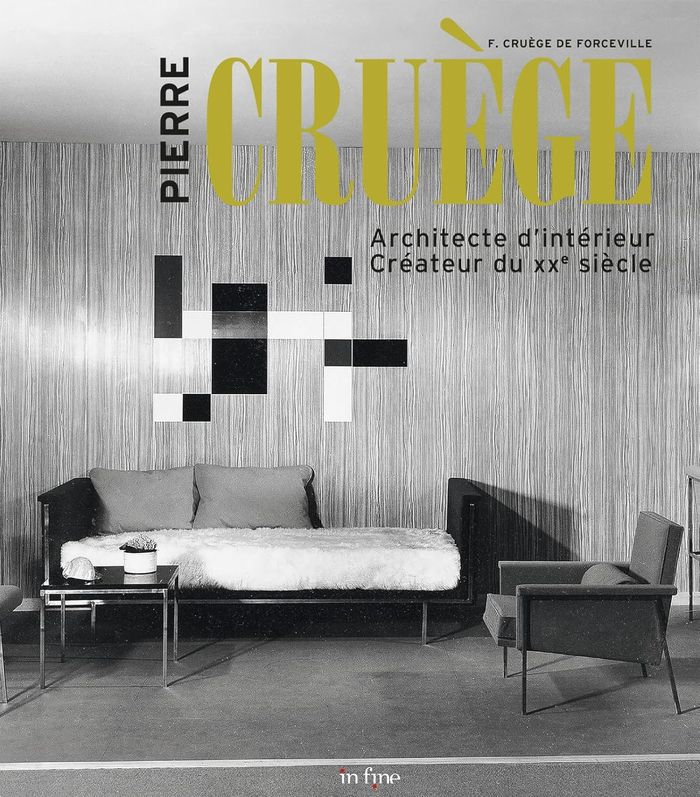
Artiste décorateur, architecte d'intérieur, créateur de modèles de série, Pierre Cruège (1913-2003) fait partie de la génération de designers français formée à l'Ecole des Beaux Arts - dont il sort major à Bordeaux - dans les années 30. Initialement formé par René Buthaud (peintre et céramiste), il intègre en 1935 l'atelier de René Prou, à Paris, où il entame une carrière parisienne en collaborant à ses côtés aux stands de l'Exposition universelle de 1937. Imprégné par cette culture décorative, Pierre Cruège adopte les valeurs du Style 1940 consistant à réconcilier la stricte rigueur du Mouvement moderne avec l'individualisme plus léger du décorateur qui "orchestre le tout en ce sens qu'il harmonise l'ensemble, en tenant compte tout à la fois des lignes, des volumes et des couleurs" . Quand il quitte l'atelier Prou en 1938 pour s'installer à son compte, il signe ses premiers décors dans ce goût. Après guerre, parallèlement à l'élitisme de son métier de décorateur, il s'intéresse à des approches plus démocratiques, s'impliquant dans la production industrielle et la reconstruction.
Pierre Cruège
Actions:
Price:
$83.95
(available in store)
Summary:
Artiste décorateur, architecte d'intérieur, créateur de modèles de série, Pierre Cruège (1913-2003) fait partie de la génération de designers français formée à l'Ecole des Beaux Arts - dont il sort major à Bordeaux - dans les années 30. Initialement formé par René Buthaud (peintre et céramiste), il intègre en 1935 l'atelier de René Prou, à Paris, où il entame une carrière parisienne en collaborant à ses côtés aux stands de l'Exposition universelle de 1937. Imprégné par cette culture décorative, Pierre Cruège adopte les valeurs du Style 1940 consistant à réconcilier la stricte rigueur du Mouvement moderne avec l'individualisme plus léger du décorateur qui "orchestre le tout en ce sens qu'il harmonise l'ensemble, en tenant compte tout à la fois des lignes, des volumes et des couleurs" . Quand il quitte l'atelier Prou en 1938 pour s'installer à son compte, il signe ses premiers décors dans ce goût. Après guerre, parallèlement à l'élitisme de son métier de décorateur, il s'intéresse à des approches plus démocratiques, s'impliquant dans la production industrielle et la reconstruction.
Form:
books
books
Publication:
November 2020
November 2020
Subject:
Design Monographs
Design Monographs
Form:
books
books
Title:
Rievaulx Abbey
Rievaulx Abbey
Actions:
Price:
$135.00
(available to order)
Summary:
Set in a beautiful tree-sided valley in England’s North York moors, the ruins of 800-year-old Rievaulx Abbey evoke a medieval world of Cistercian monks living and working, worshipping and seeking spiritual growth. This book provides an unprecedented account of Rievaulx, its 400 years as a monastery and its next 400 years, forsaken and deteriorating. Peter Fergusson(...)
$135.00
(available to order)
Summary:
Set in a beautiful tree-sided valley in England’s North York moors, the ruins of 800-year-old Rievaulx Abbey evoke a medieval world of Cistercian monks living and working, worshipping and seeking spiritual growth. This book provides an unprecedented account of Rievaulx, its 400 years as a monastery and its next 400 years, forsaken and deteriorating. Peter Fergusson(...)
Subject:
History until 1900
History until 1900
Publication:
January 1900, New Haven/London
January 1900, New Haven/London
Title:
Rievaulx Abbey
Actions:
Price:
$135.00
(available to order)
Summary:
Set in a beautiful tree-sided valley in England’s North York moors, the ruins of 800-year-old Rievaulx Abbey evoke a medieval world of Cistercian monks living and working, worshipping and seeking spiritual growth. This book provides an unprecedented account of Rievaulx, its 400 years as a monastery and its next 400 years, forsaken and deteriorating. Peter Fergusson and Stuart Harrison present the first comprehensive archaeological and architectural analysis of Rievaulx and the other buildings within its 92-acre walled precinct. They include extensive reconstruction drawings that bring to life the abbey and its infirmary, service buildings, water meadows, mills, and workshops. The authors describe Rievaulx’s remarkable architectural development from its early decades as home to a community of 650 men to its desertion after Henry VIII's Suppression. Fergusson and Harrison consider the buildings' context, architectural significance, iconography, and social and economic influences. Then, tracing the suppression of the monastery and changing perceptions of the ruin from the sixteenth through the twentieth centuries, the authors complete their portrait of the spectacular abbey and its meanings across time.
Rievaulx Abbey
Actions:
Price:
$135.00
(available to order)
Summary:
Set in a beautiful tree-sided valley in England’s North York moors, the ruins of 800-year-old Rievaulx Abbey evoke a medieval world of Cistercian monks living and working, worshipping and seeking spiritual growth. This book provides an unprecedented account of Rievaulx, its 400 years as a monastery and its next 400 years, forsaken and deteriorating. Peter Fergusson and Stuart Harrison present the first comprehensive archaeological and architectural analysis of Rievaulx and the other buildings within its 92-acre walled precinct. They include extensive reconstruction drawings that bring to life the abbey and its infirmary, service buildings, water meadows, mills, and workshops. The authors describe Rievaulx’s remarkable architectural development from its early decades as home to a community of 650 men to its desertion after Henry VIII's Suppression. Fergusson and Harrison consider the buildings' context, architectural significance, iconography, and social and economic influences. Then, tracing the suppression of the monastery and changing perceptions of the ruin from the sixteenth through the twentieth centuries, the authors complete their portrait of the spectacular abbey and its meanings across time.
Form:
books
books
Publication:
January 1900, New Haven/London
January 1900, New Haven/London
Subject:
History until 1900
History until 1900
Form:
books
books
Actions:
Price:
$99.95
(available to order)
Summary:
La ville du Havre, présente une histoire faite de ruptures. Leure, le port d’origine, se trouva comme effacé par la guerre de Cent Ans. Le Havre proprement dit a été fondé par François Ier, qui voulait un port pour faciliter les échanges rouennais, notamment avec l’Amérique. A la fin du XIXe siècle et au début du XXe, le Havre connaît un développement des plus rapides.(...)
$99.95
(available to order)
Summary:
La ville du Havre, présente une histoire faite de ruptures. Leure, le port d’origine, se trouva comme effacé par la guerre de Cent Ans. Le Havre proprement dit a été fondé par François Ier, qui voulait un port pour faciliter les échanges rouennais, notamment avec l’Amérique. A la fin du XIXe siècle et au début du XXe, le Havre connaît un développement des plus rapides.(...)
Title:
Le Havre : un port, des villes neuves
Actions:
Price:
$99.95
(available to order)
Summary:
La ville du Havre, présente une histoire faite de ruptures. Leure, le port d’origine, se trouva comme effacé par la guerre de Cent Ans. Le Havre proprement dit a été fondé par François Ier, qui voulait un port pour faciliter les échanges rouennais, notamment avec l’Amérique. A la fin du XIXe siècle et au début du XXe, le Havre connaît un développement des plus rapides. Les bombardements de la Seconde Guerre mondiale, en feront une des villes d’Europe les plus sinistrées. Sa reconstruction selon les plans de l’équipe Perret se posera en exemple et chef-d’œuvre d’architecture rationaliste. Dès l’après-guerre, l’expansion urbaine reprendra à une rythme effréné jusqu'à la fin du XXe siècle. Le livre aborde la ville par sa réalité physique et met en évidence les rapports du port et de la ville. Il restitue toute la richesse de cette ville au passé détruit, mais dont la qualité architecturale contemporaine lui vaut d’être proposée par la France pour une inscription sur la liste du patrimoine mondial de l’humanité.
Le Havre : un port, des villes neuves
Actions:
Price:
$99.95
(available to order)
Summary:
La ville du Havre, présente une histoire faite de ruptures. Leure, le port d’origine, se trouva comme effacé par la guerre de Cent Ans. Le Havre proprement dit a été fondé par François Ier, qui voulait un port pour faciliter les échanges rouennais, notamment avec l’Amérique. A la fin du XIXe siècle et au début du XXe, le Havre connaît un développement des plus rapides. Les bombardements de la Seconde Guerre mondiale, en feront une des villes d’Europe les plus sinistrées. Sa reconstruction selon les plans de l’équipe Perret se posera en exemple et chef-d’œuvre d’architecture rationaliste. Dès l’après-guerre, l’expansion urbaine reprendra à une rythme effréné jusqu'à la fin du XXe siècle. Le livre aborde la ville par sa réalité physique et met en évidence les rapports du port et de la ville. Il restitue toute la richesse de cette ville au passé détruit, mais dont la qualité architecturale contemporaine lui vaut d’être proposée par la France pour une inscription sur la liste du patrimoine mondial de l’humanité.
Form:
books
books
Publication:
January 2006, Paris
January 2006, Paris
Subject:
History until 1900
History until 1900


