


12071 Results
Form:
books
books
Title:
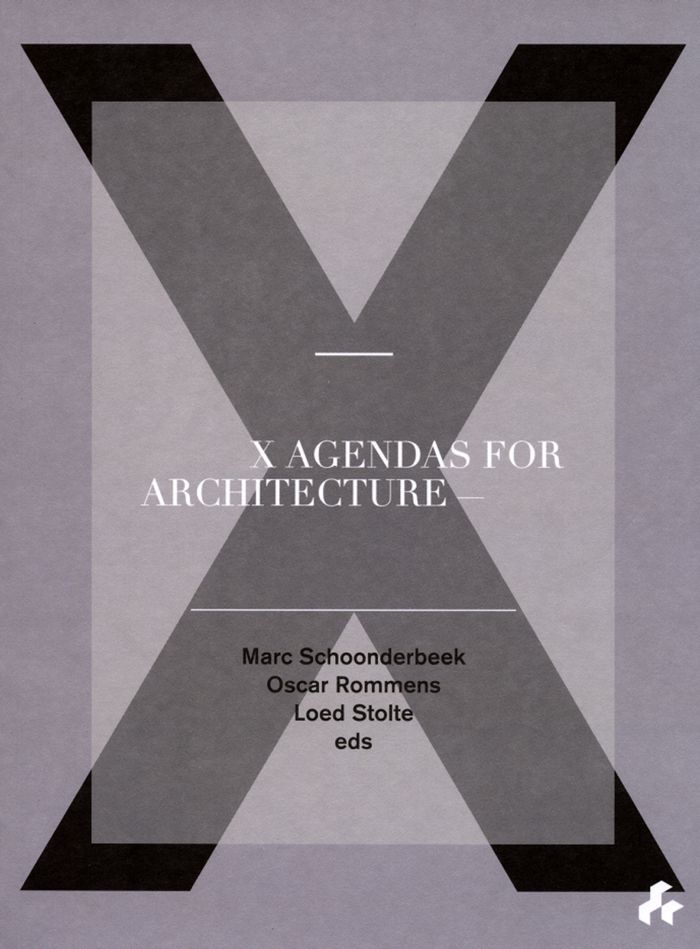
X agendas for architecture
X agendas for architecture
Actions:
Price:
$39.95
(available in store)
Summary:
''X Agendas for Architecture'' considers the recent developments in the agendas for architecture, inviting a range of contributors into a structured discourse to highlight issues and extend questions on the necessity of architectural agendas. Considering the recent developments on this topic, this speculative publication hopes to collate ideas from architectural(...)
$39.95
(available in store)
Summary:
''X Agendas for Architecture'' considers the recent developments in the agendas for architecture, inviting a range of contributors into a structured discourse to highlight issues and extend questions on the necessity of architectural agendas. Considering the recent developments on this topic, this speculative publication hopes to collate ideas from architectural(...)
Subject:
Contemporary Architecture
Contemporary Architecture
Publication:
August 2016
August 2016
Title:
X agendas for architecture
Actions:
Price:
$39.95
(available in store)
Summary:
''X Agendas for Architecture'' considers the recent developments in the agendas for architecture, inviting a range of contributors into a structured discourse to highlight issues and extend questions on the necessity of architectural agendas. Considering the recent developments on this topic, this speculative publication hopes to collate ideas from architectural professionals to the up-and-coming generation of agenda-makers and use their knowledge over these current issues of agenda to create a book of seminal discourse for any architecture enthusiast.
X agendas for architecture
Actions:
Price:
$39.95
(available in store)
Summary:
''X Agendas for Architecture'' considers the recent developments in the agendas for architecture, inviting a range of contributors into a structured discourse to highlight issues and extend questions on the necessity of architectural agendas. Considering the recent developments on this topic, this speculative publication hopes to collate ideas from architectural professionals to the up-and-coming generation of agenda-makers and use their knowledge over these current issues of agenda to create a book of seminal discourse for any architecture enthusiast.
Form:
books
books
Publication:
August 2016
August 2016
Subject:
Contemporary Architecture
Contemporary Architecture
Form:
books
books
Actions:
Price:
$18.95
(available in store)
Summary:
The creative forms of literature and architecture appear to be distinct, one constructing a world on the page, the other producing the world in which we live. It is a conscious act to read literature, but the effects of architecture can pass by unnoticed. Yet, despite such obvious differences, writers and architects share a dynamic with their readers and visitors that is(...)
$18.95
(available in store)
Summary:
The creative forms of literature and architecture appear to be distinct, one constructing a world on the page, the other producing the world in which we live. It is a conscious act to read literature, but the effects of architecture can pass by unnoticed. Yet, despite such obvious differences, writers and architects share a dynamic with their readers and visitors that is(...)
Subject:
Architectural Theory
Architectural Theory
Publication:
April 2008, Minneapolis
April 2008, Minneapolis
Title:
Writing and seeing architecture
Actions:
Price:
$18.95
(available in store)
Summary:
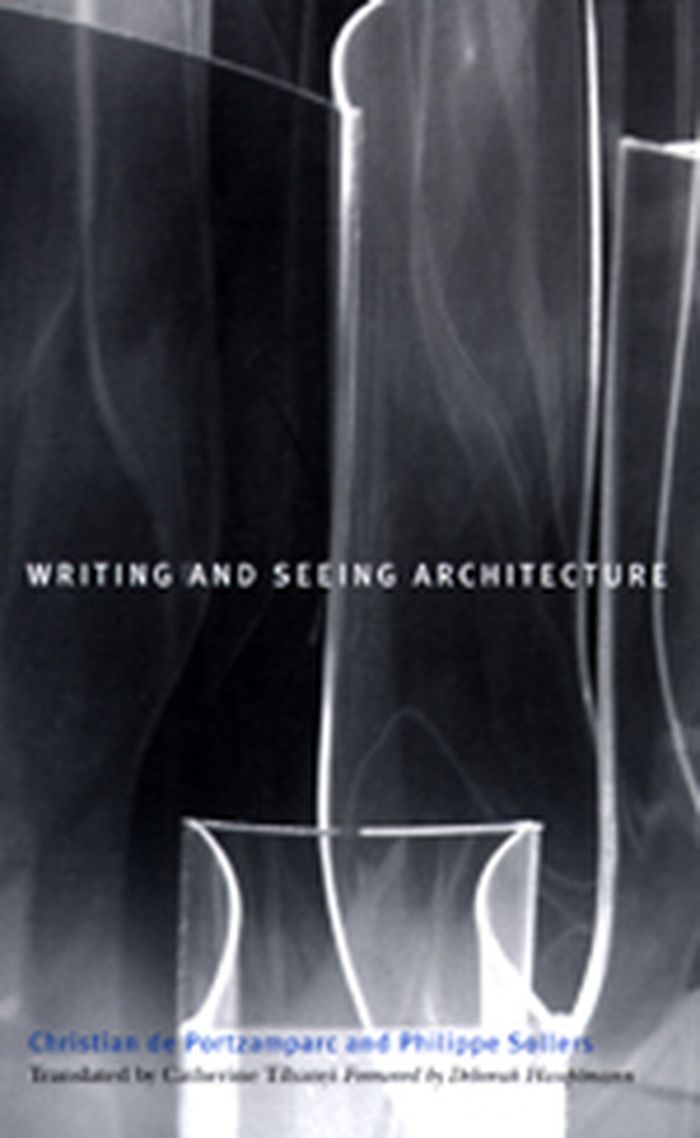
The creative forms of literature and architecture appear to be distinct, one constructing a world on the page, the other producing the world in which we live. It is a conscious act to read literature, but the effects of architecture can pass by unnoticed. Yet, despite such obvious differences, writers and architects share a dynamic with their readers and visitors that is unpredictably similar. Writing and Seeing Architecture unveils a candid conversation between Christian de Portzamparc, celebrated French architect, and influential theorist Philippe Sollers that challenges us to see the analogous nature of writing and architecture. Their fascinating discussion offers a renewal of visionary architectural thinking by invoking past literary ideals that sought to liberate society through the reinvention of writing itself. Urging that new rules be set for each creation rather than resorting to limitations of the capitalist society, the authors’ daring confrontation of the interactions between writing and designing a space forcefully demonstrates the importance of intellectuals and practitioners intervening in the public sphere.
Writing and seeing architecture
Actions:
Price:
$18.95
(available in store)
Summary:
The creative forms of literature and architecture appear to be distinct, one constructing a world on the page, the other producing the world in which we live. It is a conscious act to read literature, but the effects of architecture can pass by unnoticed. Yet, despite such obvious differences, writers and architects share a dynamic with their readers and visitors that is unpredictably similar. Writing and Seeing Architecture unveils a candid conversation between Christian de Portzamparc, celebrated French architect, and influential theorist Philippe Sollers that challenges us to see the analogous nature of writing and architecture. Their fascinating discussion offers a renewal of visionary architectural thinking by invoking past literary ideals that sought to liberate society through the reinvention of writing itself. Urging that new rules be set for each creation rather than resorting to limitations of the capitalist society, the authors’ daring confrontation of the interactions between writing and designing a space forcefully demonstrates the importance of intellectuals and practitioners intervening in the public sphere.
Form:
books
books
Publication:
April 2008, Minneapolis
April 2008, Minneapolis
Subject:
Architectural Theory
Architectural Theory
Form:
books
books
Actions:
Price:
$24.95
(available to order)
Summary:
This series provides a survey of the vast body of theoretical work produced by modern and contemporary architects and examines the major projects and themes of international architecture. The written word thus becomes a useful means of studying and analysing planning processes and questions relating to the modern city and urban and spatial design. These publications(...)
$24.95
(available to order)
Summary:
This series provides a survey of the vast body of theoretical work produced by modern and contemporary architects and examines the major projects and themes of international architecture. The written word thus becomes a useful means of studying and analysing planning processes and questions relating to the modern city and urban and spatial design. These publications(...)
Subject:
Architecture Monographs
Architecture Monographs
Publication:
January 1900, London
January 1900, London
Title:
James Stirling : writings on architecture
Actions:
Price:
$24.95
(available to order)
Summary:
This series provides a survey of the vast body of theoretical work produced by modern and contemporary architects and examines the major projects and themes of international architecture. The written word thus becomes a useful means of studying and analysing planning processes and questions relating to the modern city and urban and spatial design. These publications are not just systematic collections of writings or transcripts of conferences and public statements but are also attempts by the architects themselves to reformulate their oeuvre and to produce new, unpublished work. The texts are accompanied by original illustrations, often produced specifically for these publications, and by critiques and biliograhies of the architects' work.
James Stirling : writings on architecture
Actions:
Price:
$24.95
(available to order)
Summary:
This series provides a survey of the vast body of theoretical work produced by modern and contemporary architects and examines the major projects and themes of international architecture. The written word thus becomes a useful means of studying and analysing planning processes and questions relating to the modern city and urban and spatial design. These publications are not just systematic collections of writings or transcripts of conferences and public statements but are also attempts by the architects themselves to reformulate their oeuvre and to produce new, unpublished work. The texts are accompanied by original illustrations, often produced specifically for these publications, and by critiques and biliograhies of the architects' work.
Form:
books
books
Publication:
January 1900, London
January 1900, London
Subject:
Architecture Monographs
Architecture Monographs
Form:
books
books
Title:
Architecture of the everyday
Architecture of the everyday
Actions:
Price:
$32.50
(available to order)
Summary:
A collection of writings, photo-essays, and projects that describes an architecture which draws strength from simplicity, a use of common materials, and its relationship to other fields of study. Contributors include Margaret Crawford, Deborah Fausch, Ben Gianni, Mary-Ann Ray, and Mark Robbins.
$32.50
(available to order)
Summary:
A collection of writings, photo-essays, and projects that describes an architecture which draws strength from simplicity, a use of common materials, and its relationship to other fields of study. Contributors include Margaret Crawford, Deborah Fausch, Ben Gianni, Mary-Ann Ray, and Mark Robbins.
Subject:
Architectural Theory
Architectural Theory
Publication:
August 1997, New York
August 1997, New York
Title:
Architecture of the everyday
Actions:
Price:
$32.50
(available to order)
Summary:
A collection of writings, photo-essays, and projects that describes an architecture which draws strength from simplicity, a use of common materials, and its relationship to other fields of study. Contributors include Margaret Crawford, Deborah Fausch, Ben Gianni, Mary-Ann Ray, and Mark Robbins.
Architecture of the everyday
Actions:
Price:
$32.50
(available to order)
Summary:
A collection of writings, photo-essays, and projects that describes an architecture which draws strength from simplicity, a use of common materials, and its relationship to other fields of study. Contributors include Margaret Crawford, Deborah Fausch, Ben Gianni, Mary-Ann Ray, and Mark Robbins.
Form:
books
books
Publication:
August 1997, New York
August 1997, New York
Subject:
Architectural Theory
Architectural Theory
Form:
books
books
Actions:
Price:
$34.95
(available to order)
Summary:
A collection of essays that uses Adolf Loos' 1898 essay "Plumbers" as a point of departure for its examination of architecture through the multiple meanings inherent in plumbing. Essays by Victor Burgin, Xavier Costa, Marco Frascari, Harry Francis Mallgrave, among others.
$34.95
(available to order)
Summary:
A collection of essays that uses Adolf Loos' 1898 essay "Plumbers" as a point of departure for its examination of architecture through the multiple meanings inherent in plumbing. Essays by Victor Burgin, Xavier Costa, Marco Frascari, Harry Francis Mallgrave, among others.
Title:
Plumbing : sounding modern architecture
Actions:
Price:
$34.95
(available to order)
Summary:
A collection of essays that uses Adolf Loos' 1898 essay "Plumbers" as a point of departure for its examination of architecture through the multiple meanings inherent in plumbing. Essays by Victor Burgin, Xavier Costa, Marco Frascari, Harry Francis Mallgrave, among others.
Plumbing : sounding modern architecture
Actions:
Price:
$34.95
(available to order)
Summary:
A collection of essays that uses Adolf Loos' 1898 essay "Plumbers" as a point of departure for its examination of architecture through the multiple meanings inherent in plumbing. Essays by Victor Burgin, Xavier Costa, Marco Frascari, Harry Francis Mallgrave, among others.
Form:
books
books
Publication:
July 1997, New York
July 1997, New York
Subject:
Architectural Theory
Architectural Theory
Form:
books
books
Actions:
Price:
$47.95
(available to order)
Summary:
À l'occasion de son trentième, le manifeste Architecture Principe réédite l'intégrale des neuf numéros parus en 1966 et lance son dixième et tout dernier numéro, sous le titre ''Désorientation ou Dislocation''. Avec des essais de CoopHimmelb(l)au, Daniel Libeskind, Jean Nouvel, François Seigneur, Bernard Tschumi et Frédéric Migayrou.
$47.95
(available to order)
Summary:
À l'occasion de son trentième, le manifeste Architecture Principe réédite l'intégrale des neuf numéros parus en 1966 et lance son dixième et tout dernier numéro, sous le titre ''Désorientation ou Dislocation''. Avec des essais de CoopHimmelb(l)au, Daniel Libeskind, Jean Nouvel, François Seigneur, Bernard Tschumi et Frédéric Migayrou.
Subject:
Architectural Theory
Architectural Theory
Publication:
October 1996, Besançon
October 1996, Besançon
Title:
Architecture principe 1966 et 1996
Actions:
Price:
$47.95
(available to order)
Summary:
À l'occasion de son trentième, le manifeste Architecture Principe réédite l'intégrale des neuf numéros parus en 1966 et lance son dixième et tout dernier numéro, sous le titre ''Désorientation ou Dislocation''. Avec des essais de CoopHimmelb(l)au, Daniel Libeskind, Jean Nouvel, François Seigneur, Bernard Tschumi et Frédéric Migayrou.
Architecture principe 1966 et 1996
Actions:
Price:
$47.95
(available to order)
Summary:
À l'occasion de son trentième, le manifeste Architecture Principe réédite l'intégrale des neuf numéros parus en 1966 et lance son dixième et tout dernier numéro, sous le titre ''Désorientation ou Dislocation''. Avec des essais de CoopHimmelb(l)au, Daniel Libeskind, Jean Nouvel, François Seigneur, Bernard Tschumi et Frédéric Migayrou.
Form:
books
books
Publication:
October 1996, Besançon
October 1996, Besançon
Subject:
Architectural Theory
Architectural Theory
Form:
books
books
Actions:
Price:
$63.00
(available to order)
Summary:
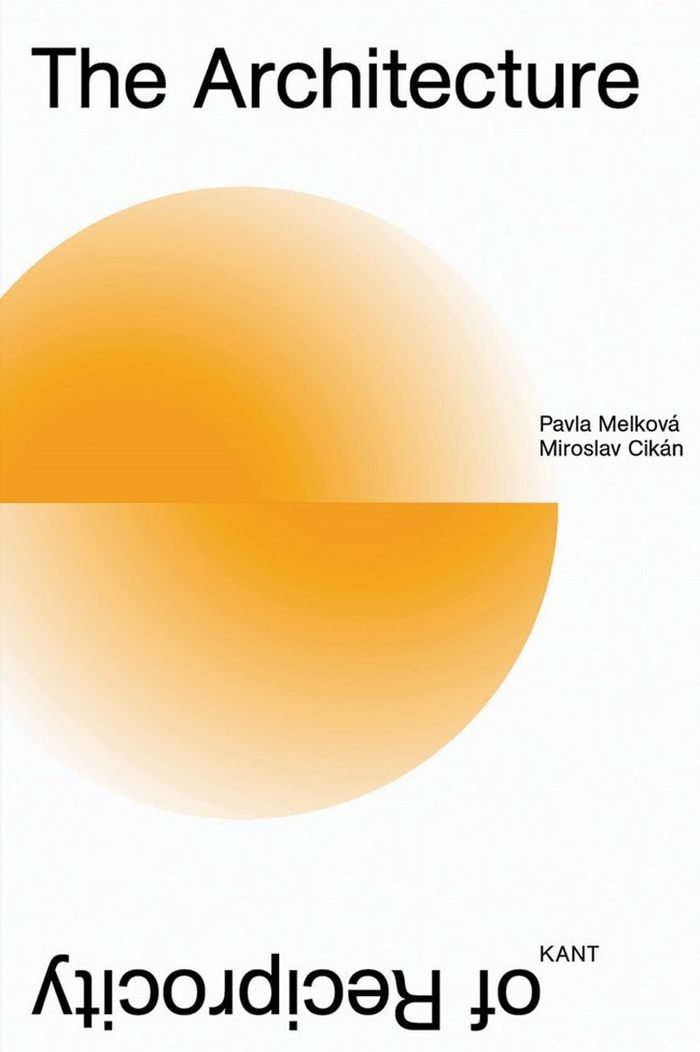
This volume responds to current thinking on the built environment, foregrounding the ways in which architecture fosters relations between people and to nature, and asking: what forms of social life does architecture cause, after it's built?
$63.00
(available to order)
Summary:
This volume responds to current thinking on the built environment, foregrounding the ways in which architecture fosters relations between people and to nature, and asking: what forms of social life does architecture cause, after it's built?
Title:
The architecture of reciprocity
Actions:
Price:
$63.00
(available to order)
Summary:
This volume responds to current thinking on the built environment, foregrounding the ways in which architecture fosters relations between people and to nature, and asking: what forms of social life does architecture cause, after it's built?
The architecture of reciprocity
Actions:
Price:
$63.00
(available to order)
Summary:
This volume responds to current thinking on the built environment, foregrounding the ways in which architecture fosters relations between people and to nature, and asking: what forms of social life does architecture cause, after it's built?
Form:
books
books
Publication:
April 2021
April 2021
Subject:
Architectural Theory
Architectural Theory
Form:
books
books
Actions:
Price:
$49.95
(available to order)
Summary:
L'architecture est tout à la fois l'art le mieux partagé et le plus imposé qui soit. Omniprésente, à portée d'oeil et de main et pourtant souvent indéchiffrable, l'architecture est avant tout écriture, rythme, expression, poésie, création. À cet art se superposent des techniques et des matériaux, des savoirs et des pratiques d'une grande complexité. Création et(...)
$49.95
(available to order)
Summary:
L'architecture est tout à la fois l'art le mieux partagé et le plus imposé qui soit. Omniprésente, à portée d'oeil et de main et pourtant souvent indéchiffrable, l'architecture est avant tout écriture, rythme, expression, poésie, création. À cet art se superposent des techniques et des matériaux, des savoirs et des pratiques d'une grande complexité. Création et(...)
Publication:
November 2009
November 2009
Title:
Architecture contemporaine, mode d'emploi
Actions:
Price:
$49.95
(available to order)
Summary:
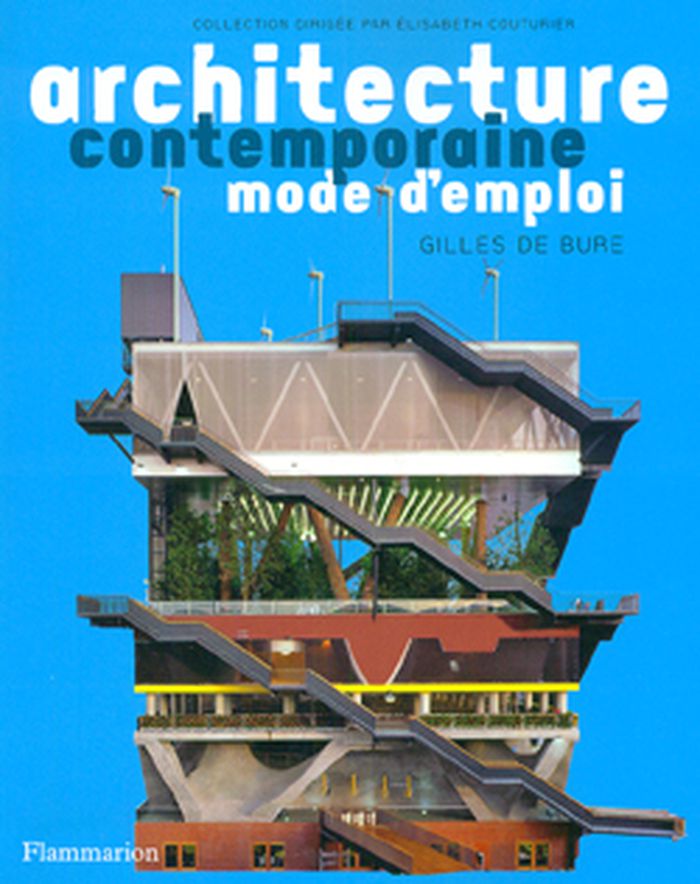
L'architecture est tout à la fois l'art le mieux partagé et le plus imposé qui soit. Omniprésente, à portée d'oeil et de main et pourtant souvent indéchiffrable, l'architecture est avant tout écriture, rythme, expression, poésie, création. À cet art se superposent des techniques et des matériaux, des savoirs et des pratiques d'une grande complexité. Création et maîtrise qui, conjuguées, débouchent sur des fonctions et des usages essentiels. Mais ce qui distingue l'architecture de la construction, c'est sa dimension créative, qui en fait un art en perpétuelle évolution, lié aux avancées technologiques, économiques, sociologiques, politiques, philosophiques.
Architecture contemporaine, mode d'emploi
Actions:
Price:
$49.95
(available to order)
Summary:
L'architecture est tout à la fois l'art le mieux partagé et le plus imposé qui soit. Omniprésente, à portée d'oeil et de main et pourtant souvent indéchiffrable, l'architecture est avant tout écriture, rythme, expression, poésie, création. À cet art se superposent des techniques et des matériaux, des savoirs et des pratiques d'une grande complexité. Création et maîtrise qui, conjuguées, débouchent sur des fonctions et des usages essentiels. Mais ce qui distingue l'architecture de la construction, c'est sa dimension créative, qui en fait un art en perpétuelle évolution, lié aux avancées technologiques, économiques, sociologiques, politiques, philosophiques.
Form:
books
books
Publication:
November 2009
November 2009
Form:
books
books
Actions:
Price:
$18.95
(available to order)
Summary:
Ces 10 clefs abordent l'architecture non par une accroche spectaculaire, mais par une voie plus subjective. Elles tentent d'éviter l'écueil consistant à présenter ce domaine aux yeux du grand public comme une valeur culturelle fondée soit sur la dimension patrimoniale, soit sur les prouesses techniques des grands ouvrages d'art, ou encore sur la dimension événementielle(...)
$18.95
(available to order)
Summary:
Ces 10 clefs abordent l'architecture non par une accroche spectaculaire, mais par une voie plus subjective. Elles tentent d'éviter l'écueil consistant à présenter ce domaine aux yeux du grand public comme une valeur culturelle fondée soit sur la dimension patrimoniale, soit sur les prouesses techniques des grands ouvrages d'art, ou encore sur la dimension événementielle(...)
Publication:
January 2017
January 2017
Title:
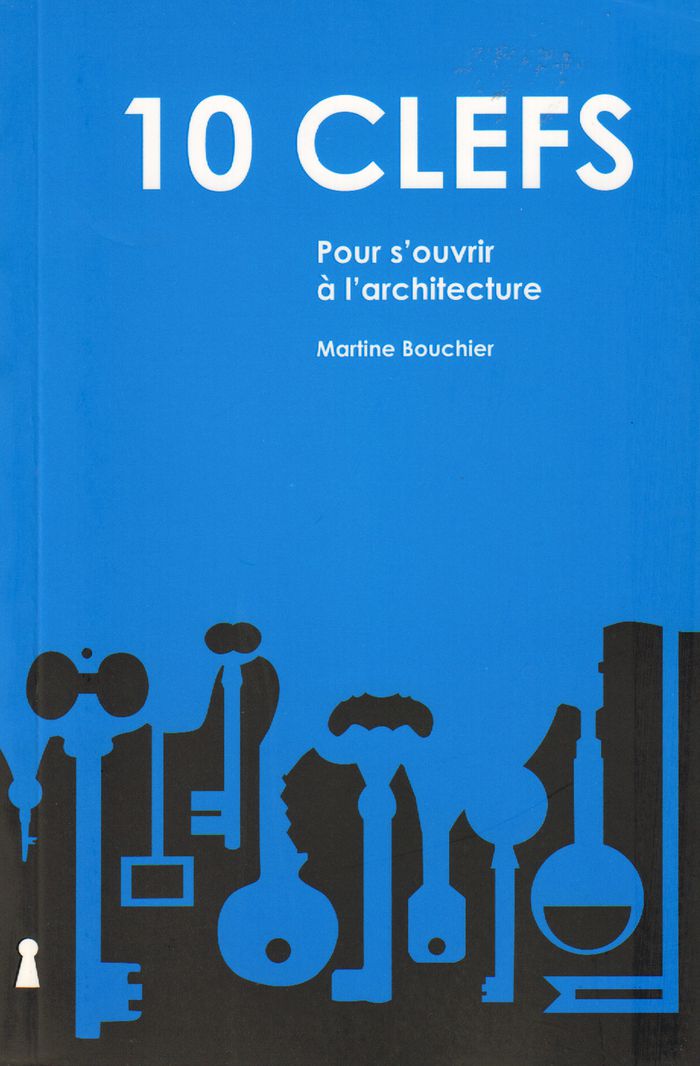
10 clefs pour s'ouvrir à l'architecture
Actions:
Price:
$18.95
(available to order)
Summary:
Ces 10 clefs abordent l'architecture non par une accroche spectaculaire, mais par une voie plus subjective. Elles tentent d'éviter l'écueil consistant à présenter ce domaine aux yeux du grand public comme une valeur culturelle fondée soit sur la dimension patrimoniale, soit sur les prouesses techniques des grands ouvrages d'art, ou encore sur la dimension événementielle de certaines réalisations qui se prêtent aux jeux des caméras et deviennent de parfaits décors pour le fond d'écran des journaux télévisés. Ce texte est destiné à initier une démarche personnelle, à stimuler la curiosité du lecteur en introduisant l'architecture par son versant sensible et émotionnel. Il s'adresse aux curieux, amoureux des villes, des parcs et des jardins, à ceux qui aiment le paysage, ceux qui n'hésitent pas à quitter leur espace domestique pour se perdre dans l'espace urbain.
10 clefs pour s'ouvrir à l'architecture
Actions:
Price:
$18.95
(available to order)
Summary:
Ces 10 clefs abordent l'architecture non par une accroche spectaculaire, mais par une voie plus subjective. Elles tentent d'éviter l'écueil consistant à présenter ce domaine aux yeux du grand public comme une valeur culturelle fondée soit sur la dimension patrimoniale, soit sur les prouesses techniques des grands ouvrages d'art, ou encore sur la dimension événementielle de certaines réalisations qui se prêtent aux jeux des caméras et deviennent de parfaits décors pour le fond d'écran des journaux télévisés. Ce texte est destiné à initier une démarche personnelle, à stimuler la curiosité du lecteur en introduisant l'architecture par son versant sensible et émotionnel. Il s'adresse aux curieux, amoureux des villes, des parcs et des jardins, à ceux qui aiment le paysage, ceux qui n'hésitent pas à quitter leur espace domestique pour se perdre dans l'espace urbain.
Form:
books
books
Publication:
January 2017
January 2017
Form:
books
books
Actions:
Price:
$40.00
(available to order)
Summary:
In 2030, the world's population will be a staggering eight billion people. Of these, two-thirds will live in cities; most will be poor. With limited resources, this unbalanced growth will be one of the greatest challenges faced by societies across the globe. In the coming years, city authorities, urban planners, designers, economists and others will have to join forces to(...)
$40.00
(available to order)
Summary:
In 2030, the world's population will be a staggering eight billion people. Of these, two-thirds will live in cities; most will be poor. With limited resources, this unbalanced growth will be one of the greatest challenges faced by societies across the globe. In the coming years, city authorities, urban planners, designers, economists and others will have to join forces to(...)
Title:
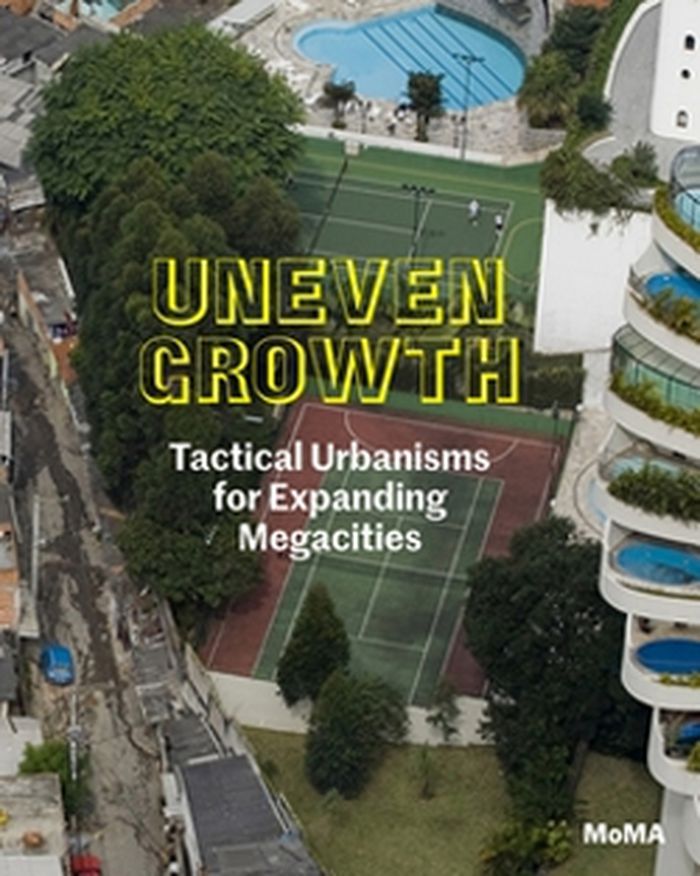
Uneven growth: tactical urbanisms for expanding megacities
Actions:
Price:
$40.00
(available to order)
Summary:
In 2030, the world's population will be a staggering eight billion people. Of these, two-thirds will live in cities; most will be poor. With limited resources, this unbalanced growth will be one of the greatest challenges faced by societies across the globe. In the coming years, city authorities, urban planners, designers, economists and others will have to join forces to avoid a major social and economic catastrophe and to ensure that these expanding megacities will be habitable. Exploring how emergent forms of tactical urbanism could address rapid and uneven urban growth around the globe, The Museum of Modern Art presents Uneven Growth: Tactical Urbanisms for Expanding Megacities, its third iteration of the Issues in Contemporary Architecture series. Uneven Growth is a combination of workshop, exhibition and publication that brings together ideas from an international group of scholars, practitioners and other experts on architecture and urbanism. Featuring proposals for six cities on five continents-New York, Mumbai, Rio de Janeiro, Istanbul, Hong Kong and Lagos, each developed by a pair of teams (one local to the host city and one abroad)-Uneven Growth also documents the brainstorming processes and the workshops. Contributions from each of the teams and essays by leading scholars on the issue make the publication a rich resource for students and professionals alike. Participating teams include Cohabitation Strategies with Situ Studio, POP Lab with URBZ, MAS Urban Design ETH with Rua Arquitetos, Atelier d'Architecture Autogérée with Superpool, Network Architecture Lab with MAP Office and Inteligencias Colectivas with NLÉ Architects.
Uneven growth: tactical urbanisms for expanding megacities
Actions:
Price:
$40.00
(available to order)
Summary:
In 2030, the world's population will be a staggering eight billion people. Of these, two-thirds will live in cities; most will be poor. With limited resources, this unbalanced growth will be one of the greatest challenges faced by societies across the globe. In the coming years, city authorities, urban planners, designers, economists and others will have to join forces to avoid a major social and economic catastrophe and to ensure that these expanding megacities will be habitable. Exploring how emergent forms of tactical urbanism could address rapid and uneven urban growth around the globe, The Museum of Modern Art presents Uneven Growth: Tactical Urbanisms for Expanding Megacities, its third iteration of the Issues in Contemporary Architecture series. Uneven Growth is a combination of workshop, exhibition and publication that brings together ideas from an international group of scholars, practitioners and other experts on architecture and urbanism. Featuring proposals for six cities on five continents-New York, Mumbai, Rio de Janeiro, Istanbul, Hong Kong and Lagos, each developed by a pair of teams (one local to the host city and one abroad)-Uneven Growth also documents the brainstorming processes and the workshops. Contributions from each of the teams and essays by leading scholars on the issue make the publication a rich resource for students and professionals alike. Participating teams include Cohabitation Strategies with Situ Studio, POP Lab with URBZ, MAS Urban Design ETH with Rua Arquitetos, Atelier d'Architecture Autogérée with Superpool, Network Architecture Lab with MAP Office and Inteligencias Colectivas with NLÉ Architects.
Form:
books
books
Publication:
August 2014
August 2014
Subject:
Urban Theory
Urban Theory


