


257 Results
Form:
books
books
Actions:
Price:
$54.00
(available in store)
Summary:
In ''Vitruvius: Writing the body of architecture,'' Indra Kagis McEwen argued that Vitruvius's first-century BCE treatise ''De architectura'' was informed by imperial ideology, giving architecture a role in the imperial Roman project of world rule. In her sequel, ''All the King's Horses,'' McEwen focuses on the early Renaissance reception of Vitruvius's thought beginning(...)
$54.00
(available in store)
Summary:
In ''Vitruvius: Writing the body of architecture,'' Indra Kagis McEwen argued that Vitruvius's first-century BCE treatise ''De architectura'' was informed by imperial ideology, giving architecture a role in the imperial Roman project of world rule. In her sequel, ''All the King's Horses,'' McEwen focuses on the early Renaissance reception of Vitruvius's thought beginning(...)
Title:
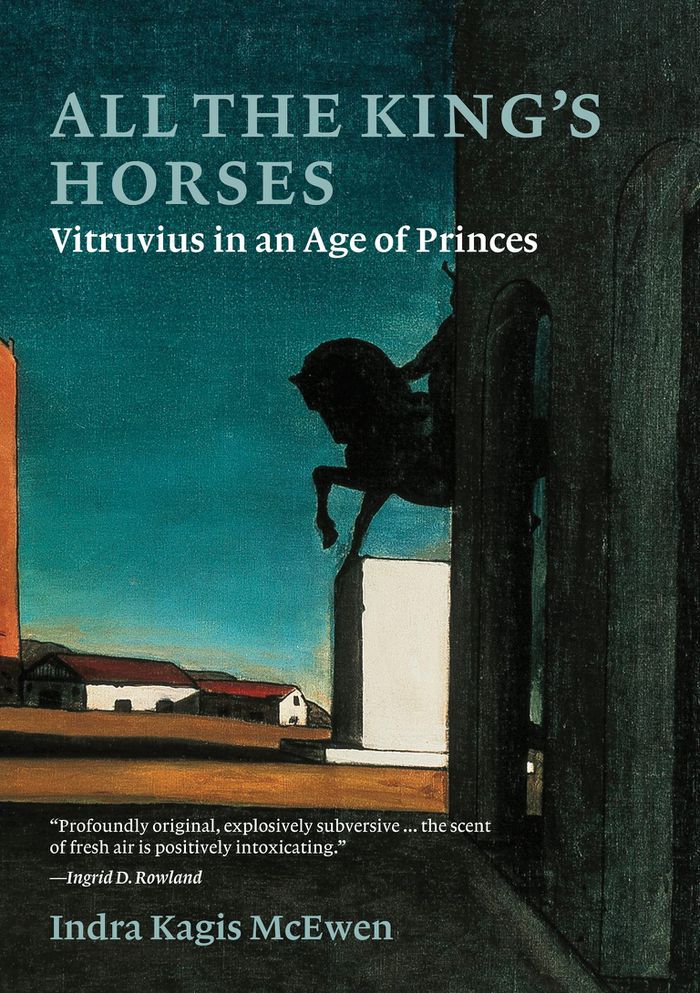
All the king's horses: Vitruvius in an age of princes
Actions:
Price:
$54.00
(available in store)
Summary:
In ''Vitruvius: Writing the body of architecture,'' Indra Kagis McEwen argued that Vitruvius's first-century BCE treatise ''De architectura'' was informed by imperial ideology, giving architecture a role in the imperial Roman project of world rule. In her sequel, ''All the King's Horses,'' McEwen focuses on the early Renaissance reception of Vitruvius's thought beginning with Petrarch—a political reception preoccupied with legitimating existing power structures. During this ''age of princes'' various signori took over Italian towns and cities, displacing independent communes and their avowed ideal of the common good. Architects, taking up Vitruvius's mantle, designed buildings and other structures for these princes with the intent of celebrating and making their power manifest. Through meticulous descriptions of the work of architects and artists from Alberti to Leonardo, McEwen explains how architecture became an instrument of control in the early Italian Renaissance. She shows how architectural magnificence supported claims to power, a phenomenon best displayed in one of the era's most prominent monumental themes: the equestrian statue of a prince, in which the horse became an emanation of the will of the rider, its strength the expression of his strength.
All the king's horses: Vitruvius in an age of princes
Actions:
Price:
$54.00
(available in store)
Summary:
In ''Vitruvius: Writing the body of architecture,'' Indra Kagis McEwen argued that Vitruvius's first-century BCE treatise ''De architectura'' was informed by imperial ideology, giving architecture a role in the imperial Roman project of world rule. In her sequel, ''All the King's Horses,'' McEwen focuses on the early Renaissance reception of Vitruvius's thought beginning with Petrarch—a political reception preoccupied with legitimating existing power structures. During this ''age of princes'' various signori took over Italian towns and cities, displacing independent communes and their avowed ideal of the common good. Architects, taking up Vitruvius's mantle, designed buildings and other structures for these princes with the intent of celebrating and making their power manifest. Through meticulous descriptions of the work of architects and artists from Alberti to Leonardo, McEwen explains how architecture became an instrument of control in the early Italian Renaissance. She shows how architectural magnificence supported claims to power, a phenomenon best displayed in one of the era's most prominent monumental themes: the equestrian statue of a prince, in which the horse became an emanation of the will of the rider, its strength the expression of his strength.
Form:
books
books
Publication:
April 2023
April 2023
Subject:
Architectural Theory
Architectural Theory
Form:
books
books
Price:
$20.00
(available to order)
Summary:
Interior architecture today operates at the intersection between physical and mediated spaces, such as those of mass communications, digital platforms or visual arts. Considering any form of representation as potentially architectural, from writing to photography, drawing to cinema, Javier Fernández Contreras traces the origins of this process of hybridisation between(...)
$20.00
(available to order)
Summary:
Interior architecture today operates at the intersection between physical and mediated spaces, such as those of mass communications, digital platforms or visual arts. Considering any form of representation as potentially architectural, from writing to photography, drawing to cinema, Javier Fernández Contreras traces the origins of this process of hybridisation between(...)
Title:
Manifestes 1: Manifesto of interiors, thinking in the expanded media
Actions:
Price:
$20.00
(available to order)
Summary:
Interior architecture today operates at the intersection between physical and mediated spaces, such as those of mass communications, digital platforms or visual arts. Considering any form of representation as potentially architectural, from writing to photography, drawing to cinema, Javier Fernández Contreras traces the origins of this process of hybridisation between space and media back to the Renaissance and addresses the role of interiors as an experimental laboratory of late modernity. Combining historic scholarship with bold hypotheses, his essay explores contemporary interiors as platforms of ‘expanded media’, examining their belonging to different places and temporalities, whether physical or virtual, close or distant, ultimately reasserting the role of interior architecture in the construction of contemporaneity.
Manifestes 1: Manifesto of interiors, thinking in the expanded media
Actions:
Price:
$20.00
(available to order)
Summary:
Interior architecture today operates at the intersection between physical and mediated spaces, such as those of mass communications, digital platforms or visual arts. Considering any form of representation as potentially architectural, from writing to photography, drawing to cinema, Javier Fernández Contreras traces the origins of this process of hybridisation between space and media back to the Renaissance and addresses the role of interiors as an experimental laboratory of late modernity. Combining historic scholarship with bold hypotheses, his essay explores contemporary interiors as platforms of ‘expanded media’, examining their belonging to different places and temporalities, whether physical or virtual, close or distant, ultimately reasserting the role of interior architecture in the construction of contemporaneity.
Form:
books
books
Publication:
January 2022
January 2022
Subject:
Architectural Theory
Architectural Theory
Form:
books
books
Actions:
Price:
$66.00
(available to order)
Summary:
How does the experience of turning a door handle, opening a door from one space into another, affect us? It is no wonder that the door, one of the most elemental architectural forms, has such metaphorical richness. But even on a purely physical human level, the cold touch of a brass handle or the swish of a sliding screen gives rise to an emotional reaction, sometimes(...)
$66.00
(available to order)
Summary:
How does the experience of turning a door handle, opening a door from one space into another, affect us? It is no wonder that the door, one of the most elemental architectural forms, has such metaphorical richness. But even on a purely physical human level, the cold touch of a brass handle or the swish of a sliding screen gives rise to an emotional reaction, sometimes(...)
Title:
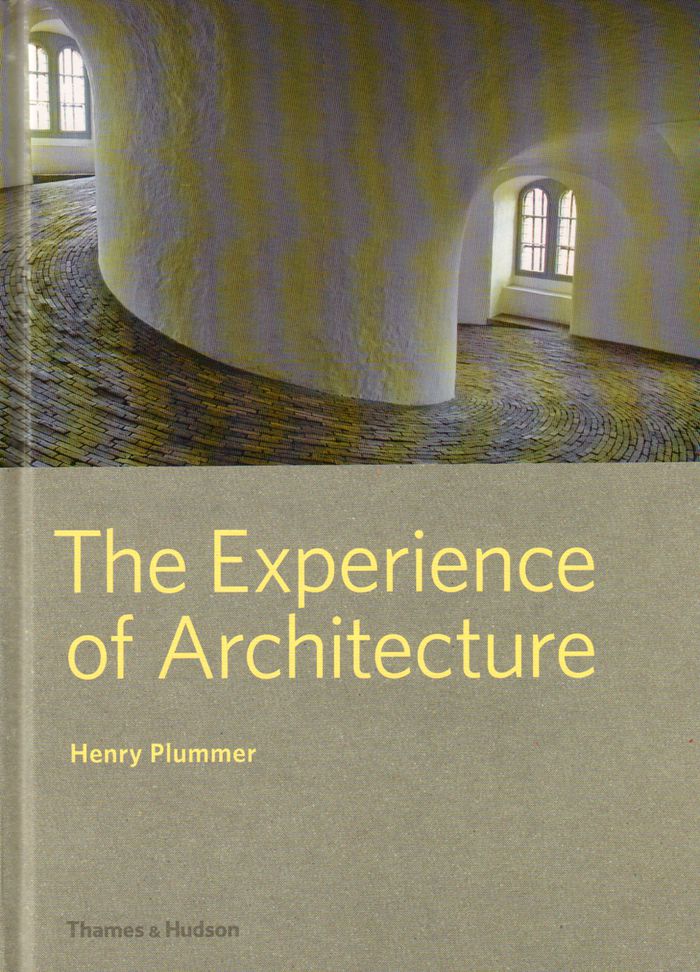
The experience of architecture
Actions:
Price:
$66.00
(available to order)
Summary:
How does the experience of turning a door handle, opening a door from one space into another, affect us? It is no wonder that the door, one of the most elemental architectural forms, has such metaphorical richness. But even on a purely physical human level, the cold touch of a brass handle or the swish of a sliding screen gives rise to an emotional reaction, sometimes modest, occasionally profound. This book aims to understand how these everyday acts are influenced by architectural form, a concept that is vital for all architects to grasp. It considers how specifically built elements and volumes, taken from a wide array of buildings and settings around the world, can affect our powers of decision. From hand-carved stairs in Greek villages to free-floating catwalks, from the elegant processional steps of Renaissance Italy to Frank Lloyd Wright’s masterly manipulation of form, all provide very different experiences of stepping from one level to the next, and all affect our experience of that space.
The experience of architecture
Actions:
Price:
$66.00
(available to order)
Summary:
How does the experience of turning a door handle, opening a door from one space into another, affect us? It is no wonder that the door, one of the most elemental architectural forms, has such metaphorical richness. But even on a purely physical human level, the cold touch of a brass handle or the swish of a sliding screen gives rise to an emotional reaction, sometimes modest, occasionally profound. This book aims to understand how these everyday acts are influenced by architectural form, a concept that is vital for all architects to grasp. It considers how specifically built elements and volumes, taken from a wide array of buildings and settings around the world, can affect our powers of decision. From hand-carved stairs in Greek villages to free-floating catwalks, from the elegant processional steps of Renaissance Italy to Frank Lloyd Wright’s masterly manipulation of form, all provide very different experiences of stepping from one level to the next, and all affect our experience of that space.
Form:
books
books
Publication:
November 2016
November 2016
Subject:
Architectural Theory
Architectural Theory
Form:
books
books
Price:
$119.95
(available in store)
Summary:
Christopher Tadgell covers the major architectural traditions of the Middle Ages, from the Romanesque architecture of the 9th and 10th centuries, built on the legacy of ancient Rome and including elements from Carolingian, Ottonian, Byzantine and northern European traditions, through to the evolution of the Gothic which heralded new, structurally daring architecture. The(...)
$119.95
(available in store)
Summary:
Christopher Tadgell covers the major architectural traditions of the Middle Ages, from the Romanesque architecture of the 9th and 10th centuries, built on the legacy of ancient Rome and including elements from Carolingian, Ottonian, Byzantine and northern European traditions, through to the evolution of the Gothic which heralded new, structurally daring architecture. The(...)
Title:
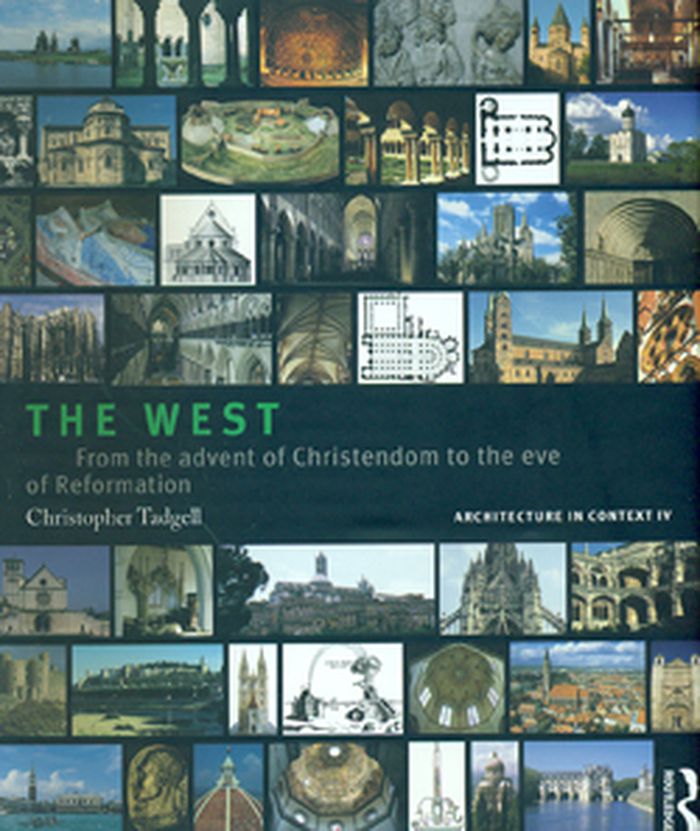
The West: from the advent of Christendom to the eve of Reformation
Actions:
Price:
$119.95
(available in store)
Summary:
Christopher Tadgell covers the major architectural traditions of the Middle Ages, from the Romanesque architecture of the 9th and 10th centuries, built on the legacy of ancient Rome and including elements from Carolingian, Ottonian, Byzantine and northern European traditions, through to the evolution of the Gothic which heralded new, structurally daring architecture. The book ends with the Italian rediscovery of Classical ideas and ideals and the emergence of the great Renaissance theorists and architects, including Brunelleschi, Alberti, and Bramante. As well as the palazzos, villas and churches of Renaissance Italy, this period saw the building of great chateaux in France, palaces in Germany and the golden-domed cathedrals of Russia.
The West: from the advent of Christendom to the eve of Reformation
Actions:
Price:
$119.95
(available in store)
Summary:
Christopher Tadgell covers the major architectural traditions of the Middle Ages, from the Romanesque architecture of the 9th and 10th centuries, built on the legacy of ancient Rome and including elements from Carolingian, Ottonian, Byzantine and northern European traditions, through to the evolution of the Gothic which heralded new, structurally daring architecture. The book ends with the Italian rediscovery of Classical ideas and ideals and the emergence of the great Renaissance theorists and architects, including Brunelleschi, Alberti, and Bramante. As well as the palazzos, villas and churches of Renaissance Italy, this period saw the building of great chateaux in France, palaces in Germany and the golden-domed cathedrals of Russia.
Form:
books
books
Publication:
April 2009
April 2009
Form:
books
books
Actions:
Price:
$34.95
(available to order)
Summary:
In this second volume in the Chora series, contributing authors take an interdisciplinary approach to architecture and other cultural concerns, challenging readers to consider alternatives to conventional aesthetic and technological reductions. Karsten Harris provides a new and long-overdue reading of Martin Heidegger's well-known(...)
$34.95
(available to order)
Summary:
In this second volume in the Chora series, contributing authors take an interdisciplinary approach to architecture and other cultural concerns, challenging readers to consider alternatives to conventional aesthetic and technological reductions. Karsten Harris provides a new and long-overdue reading of Martin Heidegger's well-known(...)
Subject:
Architectural Theory
Architectural Theory
Publication:
September 1996, Montréal
September 1996, Montréal
Title:
Chora 2 : intervals in the philosophy of architecture
Actions:
Price:
$34.95
(available to order)
Summary:
In this second volume in the Chora series, contributing authors take an interdisciplinary approach to architecture and other cultural concerns, challenging readers to consider alternatives to conventional aesthetic and technological reductions. Karsten Harris provides a new and long-overdue reading of Martin Heidegger's well-known essay "Building Dwelling Thinking." Donald Kunze and Stephen Parcell consider possibilities of meaningful architectural space for a visual culture, continuing themes they addressed in Chora 1. Further reflections on the spaces of literature, cinema, and architecture include an interview with French writer and film maker Alain Robbe-Grillet and articles by Dagmar Motycka Weston on the surrealist city, Tracey Eve Winton on the museum as a paradigmatic modern building, and Terrance Galvin on spiritual space in the works of Jean Cocteau. Jean-Pierre Chupin and Bram Ratner explore historical themes in their essays on French Renaissance architect Philibert de l'Orme and the Jewish myth of the Golem. Gregory Caicco addresses ethical questions in his essay on the Greek agora and the death of Socrates, as does Lily Chi in her meditation on the critical issue of use in architectural works. A concern with architectural representation and generative strategies for the making of architecture is present throughout, especially in the essay by Joanna Merwood on the provocative House by British artist Rachel Whiteread.
Chora 2 : intervals in the philosophy of architecture
Actions:
Price:
$34.95
(available to order)
Summary:
In this second volume in the Chora series, contributing authors take an interdisciplinary approach to architecture and other cultural concerns, challenging readers to consider alternatives to conventional aesthetic and technological reductions. Karsten Harris provides a new and long-overdue reading of Martin Heidegger's well-known essay "Building Dwelling Thinking." Donald Kunze and Stephen Parcell consider possibilities of meaningful architectural space for a visual culture, continuing themes they addressed in Chora 1. Further reflections on the spaces of literature, cinema, and architecture include an interview with French writer and film maker Alain Robbe-Grillet and articles by Dagmar Motycka Weston on the surrealist city, Tracey Eve Winton on the museum as a paradigmatic modern building, and Terrance Galvin on spiritual space in the works of Jean Cocteau. Jean-Pierre Chupin and Bram Ratner explore historical themes in their essays on French Renaissance architect Philibert de l'Orme and the Jewish myth of the Golem. Gregory Caicco addresses ethical questions in his essay on the Greek agora and the death of Socrates, as does Lily Chi in her meditation on the critical issue of use in architectural works. A concern with architectural representation and generative strategies for the making of architecture is present throughout, especially in the essay by Joanna Merwood on the provocative House by British artist Rachel Whiteread.
Form:
books
books
Publication:
September 1996, Montréal
September 1996, Montréal
Subject:
Architectural Theory
Architectural Theory
Form:
books
books
Actions:
Price:
$65.95
(available to order)
Summary:
Buildings tell stories. Castles, country homes, churches, and monasteries are "documents" of the people who built them, owned them, lived and died in them, inherited and saved or destroyed them, and recorded their histories. Literature and Architecture in Early Modern England examines the relationship between sixteenth and seventeenth-century architectural and literary(...)
$65.95
(available to order)
Summary:
Buildings tell stories. Castles, country homes, churches, and monasteries are "documents" of the people who built them, owned them, lived and died in them, inherited and saved or destroyed them, and recorded their histories. Literature and Architecture in Early Modern England examines the relationship between sixteenth and seventeenth-century architectural and literary(...)
Title:
Literature and architecture in early Modern England
Actions:
Price:
$65.95
(available to order)
Summary:
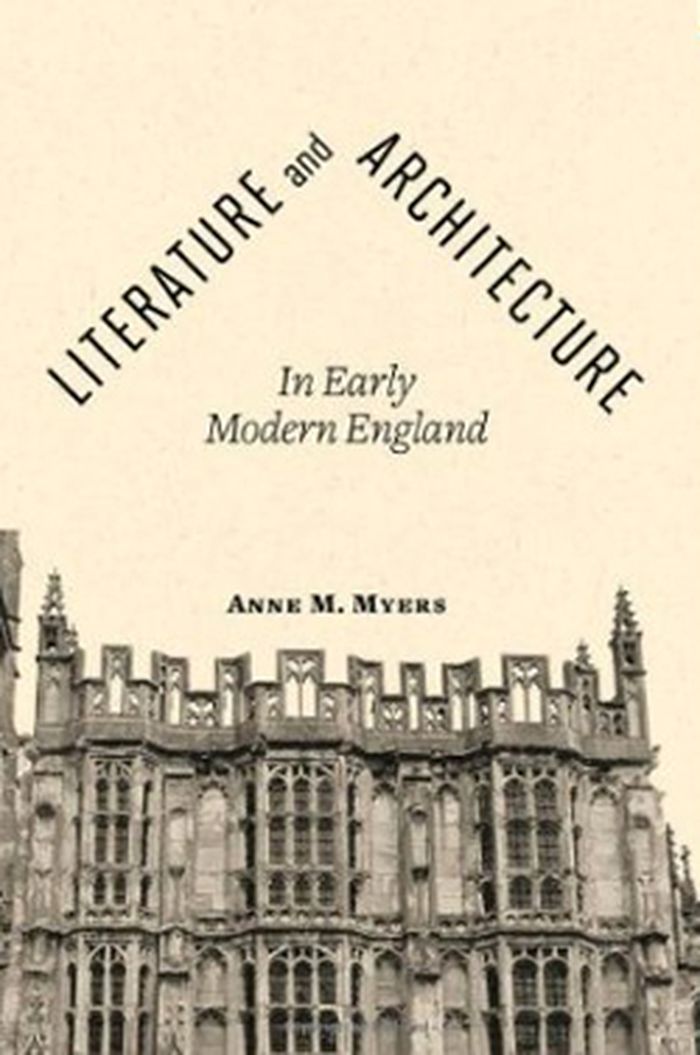
Buildings tell stories. Castles, country homes, churches, and monasteries are "documents" of the people who built them, owned them, lived and died in them, inherited and saved or destroyed them, and recorded their histories. Literature and Architecture in Early Modern England examines the relationship between sixteenth and seventeenth-century architectural and literary works. By becoming more sensitive to the narrative functions of architecture, Anne M. Myers argues, we begin to understand how a range of writers viewed and made use of the material built environment that surrounded the production of early modern texts in England. Scholars have long found themselves in the position of excusing or explaining England's failure to achieve the equivalent of the Italian Renaissance in the visual arts. Myers proposes that architecture inspired an unusual amount of historiographic and literary production, including poetry, drama, architectural treatises, and diaries. Works by William Camden, Henry Wotton, Ben Jonson, Andrew Marvell, George Herbert, Anne Clifford, and John Evelyn, when considered as a group, are texts that overturn the engrained critical notion that a Protestant fear of idolatry sentenced the visual arts and architecture in England to a state of suspicion and neglect.
Literature and architecture in early Modern England
Actions:
Price:
$65.95
(available to order)
Summary:
Buildings tell stories. Castles, country homes, churches, and monasteries are "documents" of the people who built them, owned them, lived and died in them, inherited and saved or destroyed them, and recorded their histories. Literature and Architecture in Early Modern England examines the relationship between sixteenth and seventeenth-century architectural and literary works. By becoming more sensitive to the narrative functions of architecture, Anne M. Myers argues, we begin to understand how a range of writers viewed and made use of the material built environment that surrounded the production of early modern texts in England. Scholars have long found themselves in the position of excusing or explaining England's failure to achieve the equivalent of the Italian Renaissance in the visual arts. Myers proposes that architecture inspired an unusual amount of historiographic and literary production, including poetry, drama, architectural treatises, and diaries. Works by William Camden, Henry Wotton, Ben Jonson, Andrew Marvell, George Herbert, Anne Clifford, and John Evelyn, when considered as a group, are texts that overturn the engrained critical notion that a Protestant fear of idolatry sentenced the visual arts and architecture in England to a state of suspicion and neglect.
Form:
books
books
Publication:
August 2012
August 2012
Subject:
Architectural Theory
Architectural Theory
Form:
books
books
Actions:
Price:
$67.95
(available to order)
Summary:
Where is the space for dreaming in the twenty-first century? Lofty thoughts, like dreams, are born and live overhead, just as they have been represented in Renaissance paintings and modern cartoons. Ceilings are often repositories of stories, events and otherwise invisible oneiric narratives. Yet environments that inspire innovative thinking are dwindling as our world(...)
$67.95
(available to order)
Summary:
Where is the space for dreaming in the twenty-first century? Lofty thoughts, like dreams, are born and live overhead, just as they have been represented in Renaissance paintings and modern cartoons. Ceilings are often repositories of stories, events and otherwise invisible oneiric narratives. Yet environments that inspire innovative thinking are dwindling as our world(...)
Subject:
Architectural Theory
Architectural Theory
Publication:
August 2019
August 2019
Title:
Ceilings and dreams: the architecture of levity
Actions:
Price:
$67.95
(available to order)
Summary:
Where is the space for dreaming in the twenty-first century? Lofty thoughts, like dreams, are born and live overhead, just as they have been represented in Renaissance paintings and modern cartoons. Ceilings are often repositories of stories, events and otherwise invisible oneiric narratives. Yet environments that inspire innovative thinking are dwindling as our world confronts enormous challenges, and almost all of our thinking, debating and decision-making takes place under endless ceiling grids. Quantitative research establishes that spaces with taller ceilings elicit broader, more creative thoughts. Today, ceilings are usually squat conduits of technology: they have become the blind spot of modern architecture. The twenty essays in this book look across cultures, places and ceilings over time to discover their potential to uplift the human spirit. Not just one building element among many, the ceiling is a key to unlock the architectural imagination.
Ceilings and dreams: the architecture of levity
Actions:
Price:
$67.95
(available to order)
Summary:
Where is the space for dreaming in the twenty-first century? Lofty thoughts, like dreams, are born and live overhead, just as they have been represented in Renaissance paintings and modern cartoons. Ceilings are often repositories of stories, events and otherwise invisible oneiric narratives. Yet environments that inspire innovative thinking are dwindling as our world confronts enormous challenges, and almost all of our thinking, debating and decision-making takes place under endless ceiling grids. Quantitative research establishes that spaces with taller ceilings elicit broader, more creative thoughts. Today, ceilings are usually squat conduits of technology: they have become the blind spot of modern architecture. The twenty essays in this book look across cultures, places and ceilings over time to discover their potential to uplift the human spirit. Not just one building element among many, the ceiling is a key to unlock the architectural imagination.
Form:
books
books
Publication:
August 2019
August 2019
Subject:
Architectural Theory
Architectural Theory
Form:
books
books

Title:
Le livre et l'architecte
Le livre et l'architecte
Actions:
Price:
$65.00
(available in store)
Summary:
Dédié aux liens complexes depuis la Renaissance entre l'architecture et le livre, cet ouvrage propose une réflexion sur la médiatisation de l'architecture. En rassemblant une quarantaine d'essais rédigés par des spécialistes de différents domaines, ce livre présente le rapport entre l'architecture et les ouvrages, tantôt pratiques, tantôt artistiques, qu'il produit et qu'il utilise.
$65.00
(available in store)
Summary:
Dédié aux liens complexes depuis la Renaissance entre l'architecture et le livre, cet ouvrage propose une réflexion sur la médiatisation de l'architecture. En rassemblant une quarantaine d'essais rédigés par des spécialistes de différents domaines, ce livre présente le rapport entre l'architecture et les ouvrages, tantôt pratiques, tantôt artistiques, qu'il produit et qu'il utilise.
Subject:
Architectural Theory
Architectural Theory
Publication:
July 2011
July 2011
Title:
Le livre et l'architecte
Actions:
Price:
$65.00
(available in store)
Summary:
Dédié aux liens complexes depuis la Renaissance entre l'architecture et le livre, cet ouvrage propose une réflexion sur la médiatisation de l'architecture. En rassemblant une quarantaine d'essais rédigés par des spécialistes de différents domaines, ce livre présente le rapport entre l'architecture et les ouvrages, tantôt pratiques, tantôt artistiques, qu'il produit et qu'il utilise.
Le livre et l'architecte
Actions:
Price:
$65.00
(available in store)
Summary:
Dédié aux liens complexes depuis la Renaissance entre l'architecture et le livre, cet ouvrage propose une réflexion sur la médiatisation de l'architecture. En rassemblant une quarantaine d'essais rédigés par des spécialistes de différents domaines, ce livre présente le rapport entre l'architecture et les ouvrages, tantôt pratiques, tantôt artistiques, qu'il produit et qu'il utilise.
Form:
books
books
Publication:
July 2011
July 2011
Subject:
Architectural Theory
Architectural Theory
Form:
books
books
Actions:
Price:
$60.00
(available to order)
Summary:
In "Picturing Space, Displacing Bodies", Lyle Massey argues that we can only learn how and why certain kinds of spatial representation prevailed over others by carefully considering how Renaissance artists and theorists interpreted perspective. Combining detailed historical studies with broad theoretical and philosophical investigations, this book challenges basic(...)
$60.00
(available to order)
Summary:
In "Picturing Space, Displacing Bodies", Lyle Massey argues that we can only learn how and why certain kinds of spatial representation prevailed over others by carefully considering how Renaissance artists and theorists interpreted perspective. Combining detailed historical studies with broad theoretical and philosophical investigations, this book challenges basic(...)
Title:
Picturing spaces, displacing bodies : anamorphosis in early Modern theories of perspective
Actions:
Price:
$60.00
(available to order)
Summary:
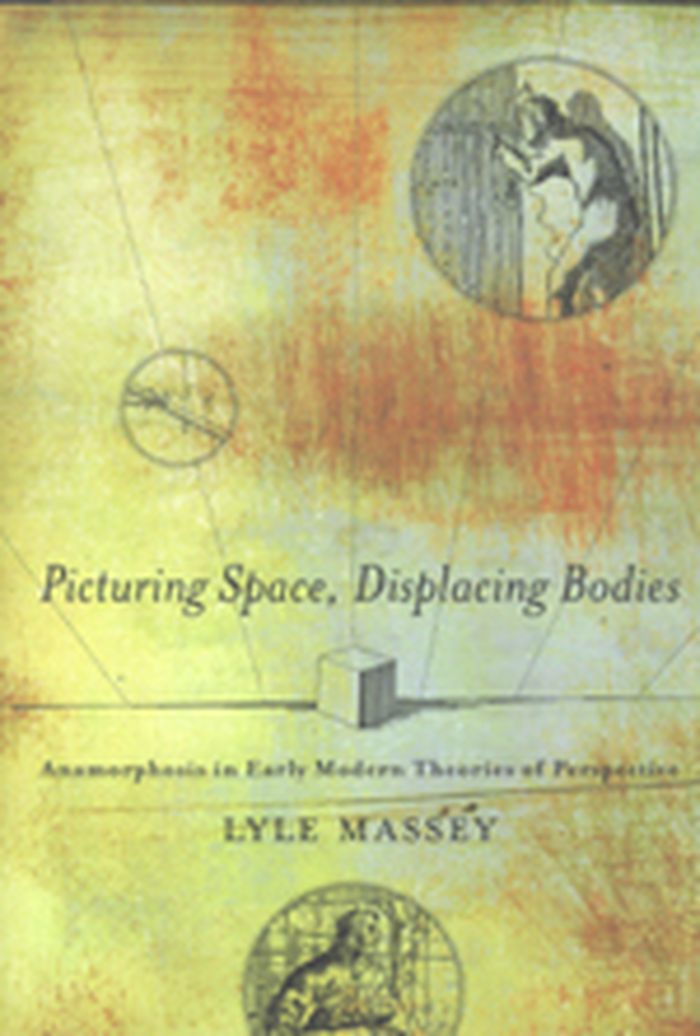
In "Picturing Space, Displacing Bodies", Lyle Massey argues that we can only learn how and why certain kinds of spatial representation prevailed over others by carefully considering how Renaissance artists and theorists interpreted perspective. Combining detailed historical studies with broad theoretical and philosophical investigations, this book challenges basic assumptions about the way early modern artists and theorists represented their relationship to the visible world and how they understood these representations. By analyzing technical feats such as anamorphosis (the perspectival distortion of an object to make it viewable only from a certain angle), drawing machines, and printed diagrams, each chapter highlights the moments when perspective theorists failed to unite a singular, ideal viewpoint with the artist’s or viewer’s viewpoint or were unsuccessful at conjoining fictive and lived space. Showing how these "failures" were subsequently incorporated rather than rejected by perspective theorists, the book presents an important reassessment of the standard view of Renaissance perspective. While many scholars have maintained that perspective rationalized the relationships among optics, space, and painting, "Picturing Space, Displacing Bodies" asserts instead that Renaissance and early modern theorists often revealed a disjunction between geometrical ideals and practical applications. In some cases, they not only identified but also exploited these discrepancies. This discussion of perspective shows that the painter’s geometry did not always conform to the explicitly rational, Cartesian formula that so many have assumed, nor did it historically unfold according to a standard account of scientific development.
Picturing spaces, displacing bodies : anamorphosis in early Modern theories of perspective
Actions:
Price:
$60.00
(available to order)
Summary:
In "Picturing Space, Displacing Bodies", Lyle Massey argues that we can only learn how and why certain kinds of spatial representation prevailed over others by carefully considering how Renaissance artists and theorists interpreted perspective. Combining detailed historical studies with broad theoretical and philosophical investigations, this book challenges basic assumptions about the way early modern artists and theorists represented their relationship to the visible world and how they understood these representations. By analyzing technical feats such as anamorphosis (the perspectival distortion of an object to make it viewable only from a certain angle), drawing machines, and printed diagrams, each chapter highlights the moments when perspective theorists failed to unite a singular, ideal viewpoint with the artist’s or viewer’s viewpoint or were unsuccessful at conjoining fictive and lived space. Showing how these "failures" were subsequently incorporated rather than rejected by perspective theorists, the book presents an important reassessment of the standard view of Renaissance perspective. While many scholars have maintained that perspective rationalized the relationships among optics, space, and painting, "Picturing Space, Displacing Bodies" asserts instead that Renaissance and early modern theorists often revealed a disjunction between geometrical ideals and practical applications. In some cases, they not only identified but also exploited these discrepancies. This discussion of perspective shows that the painter’s geometry did not always conform to the explicitly rational, Cartesian formula that so many have assumed, nor did it historically unfold according to a standard account of scientific development.
Form:
books
books
Publication:
October 2007, University Park
October 2007, University Park
Subject:
Architectural Theory
Architectural Theory
Form:
books
books
Actions:
Price:
$23.95
(available to order)
Summary:
Enoncées il y a vingt siècles puis réactualisées à la Renaissance, les catégories de Vitruve, reformulées par Alberti, se présentent comme des cadres mentaux propres à l'architecture occidentale, suffisamment souples pour intégrer les expériences accumulées dans son histoire, et ouvertes aux évolutions de chaque époque comme aux apports des architectes qui ont marqué leur(...)
$23.95
(available to order)
Summary:
Enoncées il y a vingt siècles puis réactualisées à la Renaissance, les catégories de Vitruve, reformulées par Alberti, se présentent comme des cadres mentaux propres à l'architecture occidentale, suffisamment souples pour intégrer les expériences accumulées dans son histoire, et ouvertes aux évolutions de chaque époque comme aux apports des architectes qui ont marqué leur(...)
Title:
Architecture, t.07 : mettre en forme et composer (planches)
Actions:
Price:
$23.95
(available to order)
Summary:
Enoncées il y a vingt siècles puis réactualisées à la Renaissance, les catégories de Vitruve, reformulées par Alberti, se présentent comme des cadres mentaux propres à l'architecture occidentale, suffisamment souples pour intégrer les expériences accumulées dans son histoire, et ouvertes aux évolutions de chaque époque comme aux apports des architectes qui ont marqué leur temps de façon significative.
Architecture, t.07 : mettre en forme et composer (planches)
Actions:
Price:
$23.95
(available to order)
Summary:
Enoncées il y a vingt siècles puis réactualisées à la Renaissance, les catégories de Vitruve, reformulées par Alberti, se présentent comme des cadres mentaux propres à l'architecture occidentale, suffisamment souples pour intégrer les expériences accumulées dans son histoire, et ouvertes aux évolutions de chaque époque comme aux apports des architectes qui ont marqué leur temps de façon significative.
Form:
books
books
Publication:
January 2019
January 2019
Subject:
Architectural Theory
Architectural Theory


