


221 Results
Form:
books
books
Title:
Landscape theory in design
Landscape theory in design
Actions:
Price:
$90.90
(available to order)
Summary:
Phenomenology, Materiality, Cybernetics, Palimpsest, Cyborgs, Landscape Urbanism, Typology, Semiotics, Deconstruction - the minefield of theoretical ideas that students must navigate today can be utterly confusing, and how do these theories translate to the design studio? "Landscape theory in design" introduces theoretical ideas to students without the use of jargon or an(...)
$90.90
(available to order)
Summary:
Phenomenology, Materiality, Cybernetics, Palimpsest, Cyborgs, Landscape Urbanism, Typology, Semiotics, Deconstruction - the minefield of theoretical ideas that students must navigate today can be utterly confusing, and how do these theories translate to the design studio? "Landscape theory in design" introduces theoretical ideas to students without the use of jargon or an(...)
Title:
Landscape theory in design
Actions:
Price:
$90.90
(available to order)
Summary:
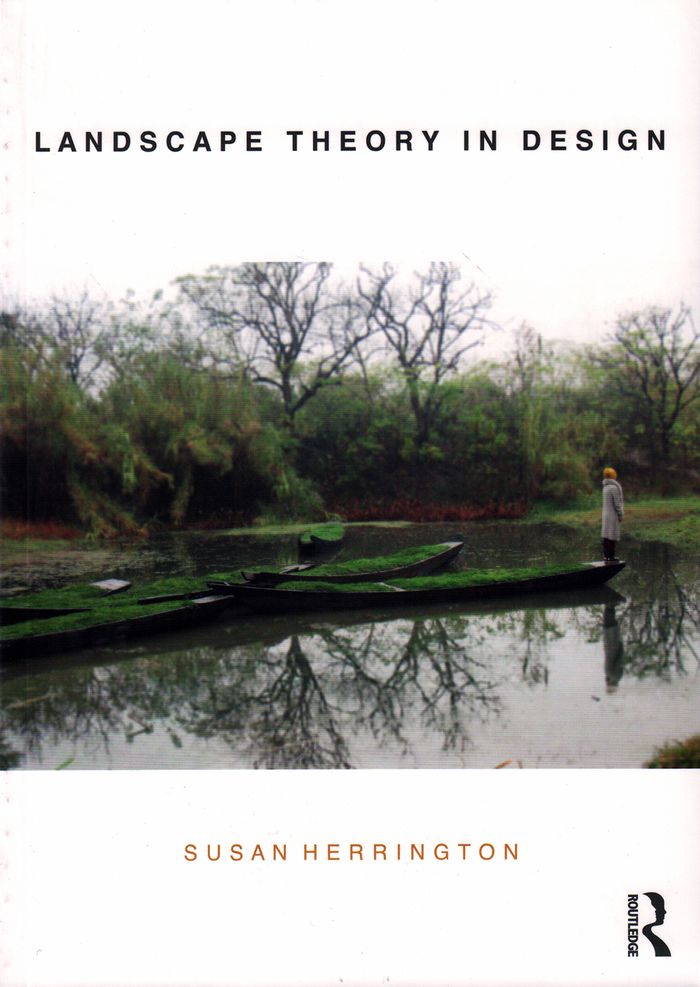
Phenomenology, Materiality, Cybernetics, Palimpsest, Cyborgs, Landscape Urbanism, Typology, Semiotics, Deconstruction - the minefield of theoretical ideas that students must navigate today can be utterly confusing, and how do these theories translate to the design studio? "Landscape theory in design" introduces theoretical ideas to students without the use of jargon or an assumption of extensive knowledge in other fields, and in doing so, links these ideas to the processes of design. In five thematic chapters Susan Herrington explains: the theoretic groundings of the theory of philosophy, why it matters to design, an example of the theory in a work of landscape architecture from the twentieth and twenty-first centuries, debates surrounding the theory (particularly as they elaborate modern and postmodern thought) and primary readings that can be read as companions to her text. An extensive glossary of theoretical terms also adds a vital contribution to students’ comprehension of theories relevant to the design of landscapes and gardens.
Landscape theory in design
Actions:
Price:
$90.90
(available to order)
Summary:
Phenomenology, Materiality, Cybernetics, Palimpsest, Cyborgs, Landscape Urbanism, Typology, Semiotics, Deconstruction - the minefield of theoretical ideas that students must navigate today can be utterly confusing, and how do these theories translate to the design studio? "Landscape theory in design" introduces theoretical ideas to students without the use of jargon or an assumption of extensive knowledge in other fields, and in doing so, links these ideas to the processes of design. In five thematic chapters Susan Herrington explains: the theoretic groundings of the theory of philosophy, why it matters to design, an example of the theory in a work of landscape architecture from the twentieth and twenty-first centuries, debates surrounding the theory (particularly as they elaborate modern and postmodern thought) and primary readings that can be read as companions to her text. An extensive glossary of theoretical terms also adds a vital contribution to students’ comprehension of theories relevant to the design of landscapes and gardens.
Form:
books
books
Publication:
January 2017
January 2017
Subject:
Landscape Theory
Landscape Theory
Form:
books
books
Title:
CCRU: Writings 1997–2003
CCRU: Writings 1997–2003
Actions:
Price:
$33.95
(available to order)
Summary:
Meshing together fiction, number theory, voodoo, philosophy, anthropology, palate tectonics, information science, semiotics, geotraumatics, occultism, and other nameless knowledges, in these pages the incomplete evidence gathered by explorers including Burroughs, Blavatsky, Lovecraft, Jung, Barker, J.G. Ballard, William Gibson, and Octavia Butler, but also the testimony(...)
$33.95
(available to order)
Summary:
Meshing together fiction, number theory, voodoo, philosophy, anthropology, palate tectonics, information science, semiotics, geotraumatics, occultism, and other nameless knowledges, in these pages the incomplete evidence gathered by explorers including Burroughs, Blavatsky, Lovecraft, Jung, Barker, J.G. Ballard, William Gibson, and Octavia Butler, but also the testimony(...)
Title:
CCRU: Writings 1997–2003
Actions:
Price:
$33.95
(available to order)
Summary:
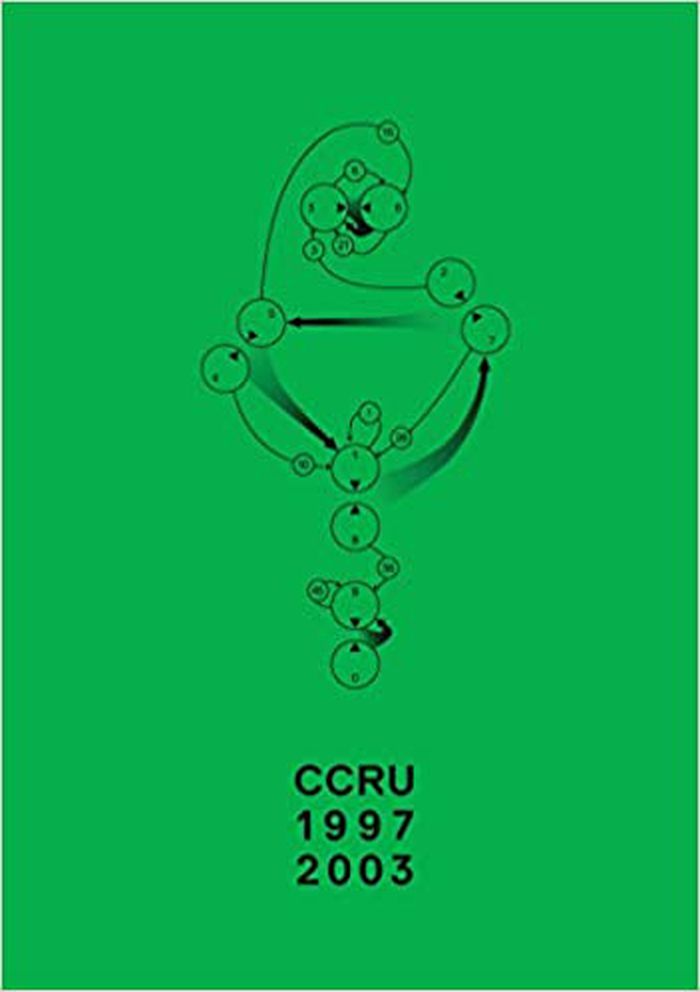
Meshing together fiction, number theory, voodoo, philosophy, anthropology, palate tectonics, information science, semiotics, geotraumatics, occultism, and other nameless knowledges, in these pages the incomplete evidence gathered by explorers including Burroughs, Blavatsky, Lovecraft, Jung, Barker, J.G. Ballard, William Gibson, and Octavia Butler, but also the testimony of more obscure luminaries such as Echidna Stillwell, Oskar Sarkon, and Madame Centauri, are clarified and subjected to systematic investigation, comparison, and assessment so as to gauge the real stakes of the Time-War still raging behind the collapsing facade of reality. One of the most compelling and unnerving collective research enterprises to have surfaced in the twentieth century, the real pertinence of the CCRU's work is only now beginning to reveal itself to an unbelieving world. To plunge into the tangled mesh of these conspiracies, weird tales, numerical plagues, and suggestive coincidences is to test your sense of reality beyond the limits of reasonable tolerance-to enter the sphere of unbelief, where demonic currents prowl, where fictions make themselves real. Hyperstition.
CCRU: Writings 1997–2003
Actions:
Price:
$33.95
(available to order)
Summary:
Meshing together fiction, number theory, voodoo, philosophy, anthropology, palate tectonics, information science, semiotics, geotraumatics, occultism, and other nameless knowledges, in these pages the incomplete evidence gathered by explorers including Burroughs, Blavatsky, Lovecraft, Jung, Barker, J.G. Ballard, William Gibson, and Octavia Butler, but also the testimony of more obscure luminaries such as Echidna Stillwell, Oskar Sarkon, and Madame Centauri, are clarified and subjected to systematic investigation, comparison, and assessment so as to gauge the real stakes of the Time-War still raging behind the collapsing facade of reality. One of the most compelling and unnerving collective research enterprises to have surfaced in the twentieth century, the real pertinence of the CCRU's work is only now beginning to reveal itself to an unbelieving world. To plunge into the tangled mesh of these conspiracies, weird tales, numerical plagues, and suggestive coincidences is to test your sense of reality beyond the limits of reasonable tolerance-to enter the sphere of unbelief, where demonic currents prowl, where fictions make themselves real. Hyperstition.
Form:
books
books
Publication:
October 2017
October 2017
Subject:
Art Theory
Art Theory
Form:
books
books
Actions:
Price:
$80.00
(available to order)
Summary:
This series of precisely-crafted images began in 2016, with Hayden's move to Europe. Photographing instinctively, Hayden touches the well-worn grooves of contemporary image culture: from the intersection of photography with semiotics, the inferred distortion of narrative through sequencing photographs together, and how everyday objects can become icons simply by being(...)
$80.00
(available to order)
Summary:
This series of precisely-crafted images began in 2016, with Hayden's move to Europe. Photographing instinctively, Hayden touches the well-worn grooves of contemporary image culture: from the intersection of photography with semiotics, the inferred distortion of narrative through sequencing photographs together, and how everyday objects can become icons simply by being(...)
Title:
Hudson Hayden: Notwithstanding
Actions:
Price:
$80.00
(available to order)
Summary:
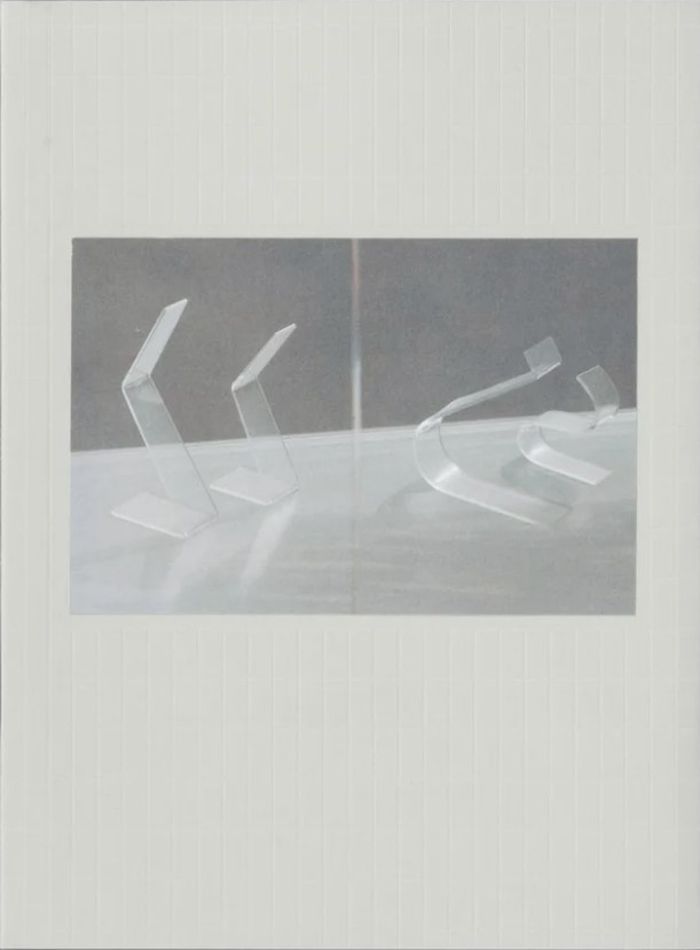
This series of precisely-crafted images began in 2016, with Hayden's move to Europe. Photographing instinctively, Hayden touches the well-worn grooves of contemporary image culture: from the intersection of photography with semiotics, the inferred distortion of narrative through sequencing photographs together, and how everyday objects can become icons simply by being photographed. Hayden's visual lexicon is akin to one of design; forms and their thingness are collapsed in on the photographic plane, becoming shapes that dance, as much a game of memory and fun as a loftier space of visual poetry. Hayden's title, ''Notwithstanding'', also speaks to the indeterminate and the inarticulable within his photographs. Images that often describe something simple – a dog, a ball, a boat on a lake, or an orange in a bowl – can feel curiously other, despite themselves, or in spite of their clear referents. Hayden quotes photographic genres with a laconic wit: from the Ghirrian coolness of early postmodern colour photography, to the sanitised language of advertising and commercial image-making, and through compositions that harmonise in both their immediate accessibility and their inherent unknowability.
Hudson Hayden: Notwithstanding
Actions:
Price:
$80.00
(available to order)
Summary:
This series of precisely-crafted images began in 2016, with Hayden's move to Europe. Photographing instinctively, Hayden touches the well-worn grooves of contemporary image culture: from the intersection of photography with semiotics, the inferred distortion of narrative through sequencing photographs together, and how everyday objects can become icons simply by being photographed. Hayden's visual lexicon is akin to one of design; forms and their thingness are collapsed in on the photographic plane, becoming shapes that dance, as much a game of memory and fun as a loftier space of visual poetry. Hayden's title, ''Notwithstanding'', also speaks to the indeterminate and the inarticulable within his photographs. Images that often describe something simple – a dog, a ball, a boat on a lake, or an orange in a bowl – can feel curiously other, despite themselves, or in spite of their clear referents. Hayden quotes photographic genres with a laconic wit: from the Ghirrian coolness of early postmodern colour photography, to the sanitised language of advertising and commercial image-making, and through compositions that harmonise in both their immediate accessibility and their inherent unknowability.
Form:
books
books
Publication:
October 2023
October 2023
Subject:
Photography monographs
Photography monographs
Form:
books
books
Actions:
Price:
$20.00
(available to order)
Summary:
The gesture of pointing is the perfect embodiment of photography’s function as a visual document: an injunction to look at this. In this textual and visual essay, artist Joan Fontcuberta takes the index finger as his point of departure for an insightful and irreverent consideration of photography’s relation to indexicality. He refutes, as well as draws on, Roland(...)
$20.00
(available to order)
Summary:
The gesture of pointing is the perfect embodiment of photography’s function as a visual document: an injunction to look at this. In this textual and visual essay, artist Joan Fontcuberta takes the index finger as his point of departure for an insightful and irreverent consideration of photography’s relation to indexicality. He refutes, as well as draws on, Roland(...)
Title:
Against Barthes: The eye and the index
Actions:
Price:
$20.00
(available to order)
Summary:
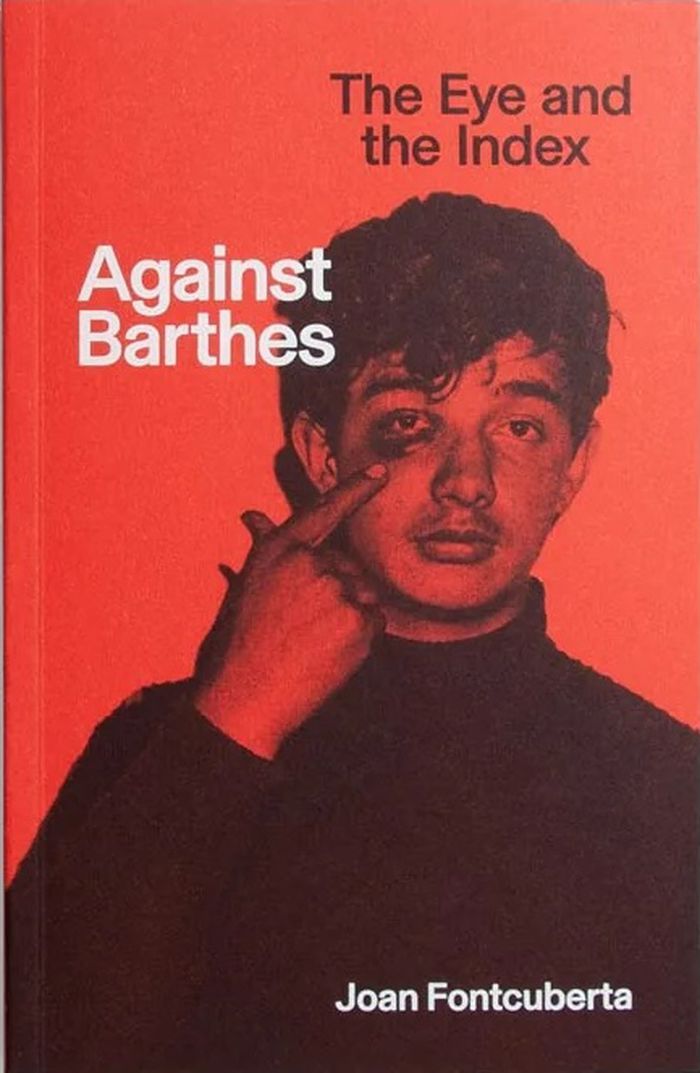
The gesture of pointing is the perfect embodiment of photography’s function as a visual document: an injunction to look at this. In this textual and visual essay, artist Joan Fontcuberta takes the index finger as his point of departure for an insightful and irreverent consideration of photography’s relation to indexicality. He refutes, as well as draws on, Roland Barthes’s suggestion that every photograph tells us ‘'this has been'’ (‘ça a été’), reckoning with the inconvenient multiplicity of thises in any given image. If a photograph constitutes such a statement – as made explicit in images that include a pointing finger – does the camera witness reality or performance? These existential issues are further complicated by the emergence of post-photography and generative AI. In this typically engaging and iconoclastic essay, Fontcuberta destabilises our ideas about the authority and authoriality of images, drawing on psychoanalysis, semiotics, and his own autobiography. His text is interleaved between two compelling visual essays formed of images from the archive of Mexican tabloid Alerta from the 1960s to 1980s, in which the pointing index finger forms a haunting and often humorous through-line.
Against Barthes: The eye and the index
Actions:
Price:
$20.00
(available to order)
Summary:
The gesture of pointing is the perfect embodiment of photography’s function as a visual document: an injunction to look at this. In this textual and visual essay, artist Joan Fontcuberta takes the index finger as his point of departure for an insightful and irreverent consideration of photography’s relation to indexicality. He refutes, as well as draws on, Roland Barthes’s suggestion that every photograph tells us ‘'this has been'’ (‘ça a été’), reckoning with the inconvenient multiplicity of thises in any given image. If a photograph constitutes such a statement – as made explicit in images that include a pointing finger – does the camera witness reality or performance? These existential issues are further complicated by the emergence of post-photography and generative AI. In this typically engaging and iconoclastic essay, Fontcuberta destabilises our ideas about the authority and authoriality of images, drawing on psychoanalysis, semiotics, and his own autobiography. His text is interleaved between two compelling visual essays formed of images from the archive of Mexican tabloid Alerta from the 1960s to 1980s, in which the pointing index finger forms a haunting and often humorous through-line.
Form:
books
books
Publication:
August 2025
August 2025
Subject:
Theory of Photography
Theory of Photography
Form:
journals and magazines
journals and magazines
Title:
Real Review 16 Autumn 2024
Real Review 16 Autumn 2024
Actions:
Price:
$26.00
(available in store)
Summary:
There is no snow on Mount Fuji. Any hack will tell you the phase change is here, the restructuring of the world is underway. That would be a relief, like a broken fever. But they are wrong. We are still waiting. This period is merely the static on the skin, the rising pressure and building tension before the impending climax of a deluge. We live under a lavender sky,(...)
$26.00
(available in store)
Summary:
There is no snow on Mount Fuji. Any hack will tell you the phase change is here, the restructuring of the world is underway. That would be a relief, like a broken fever. But they are wrong. We are still waiting. This period is merely the static on the skin, the rising pressure and building tension before the impending climax of a deluge. We live under a lavender sky,(...)
Title:
Real Review 16 Autumn 2024
Actions:
Price:
$26.00
(available in store)
Summary:
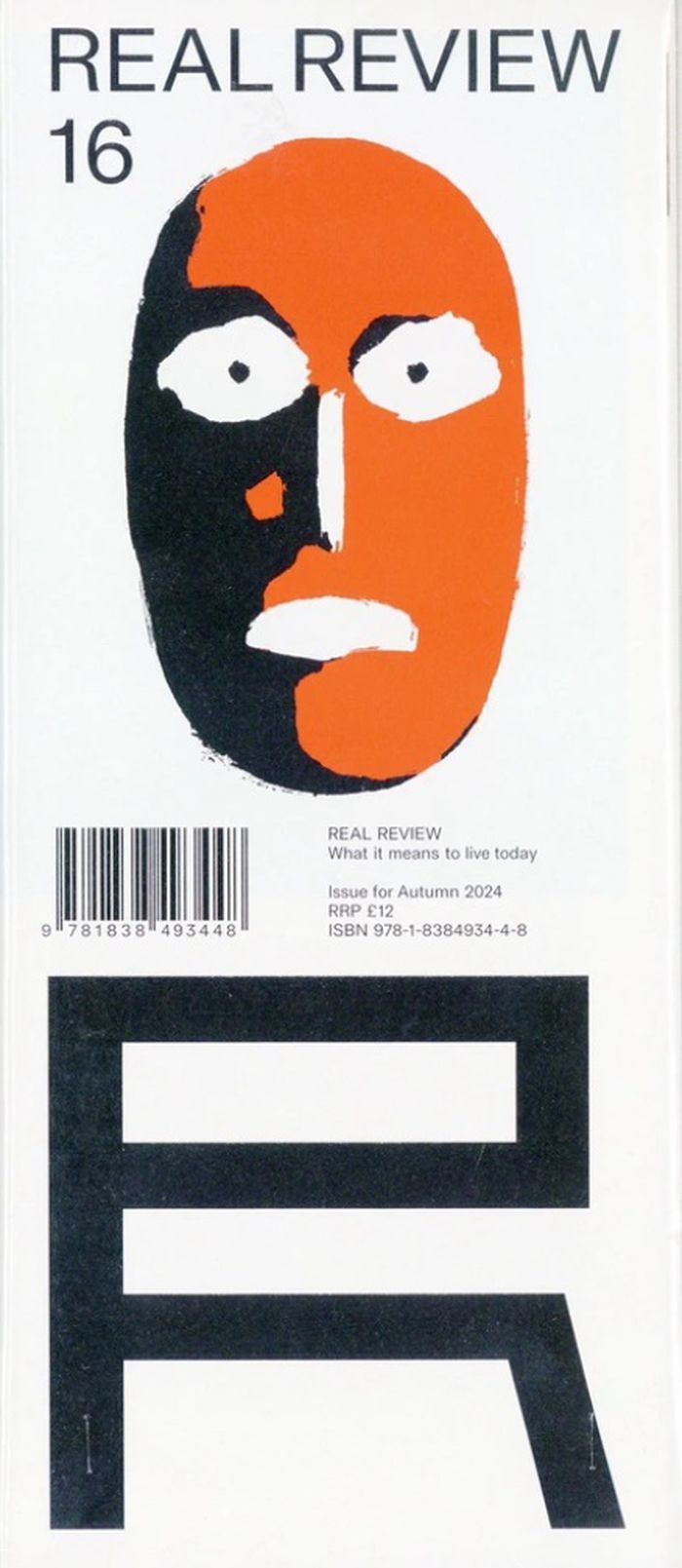
There is no snow on Mount Fuji. Any hack will tell you the phase change is here, the restructuring of the world is underway. That would be a relief, like a broken fever. But they are wrong. We are still waiting. This period is merely the static on the skin, the rising pressure and building tension before the impending climax of a deluge. We live under a lavender sky, silver and green; this is the time of unsettled air, heavy with that metallic smell of the earth. Soon the wind will awake, driving the rain forward like a cloud of smoke. The tremendous powers by which our lives are encompassed are stirring. How can we prepare for this transformation? We interview professor Jonathan White on the future as a political idea. Artist Dozie Kanu presents a flyer for higher education, while Opioid Crisis Lookbook speculates on semiotics. Peter Saville reviews the mood with Jack Self, who reviews voice notes, moral killing, and the Star Trek universe. Isabelle Bucklow binge-watches tech demos. Satoshi Fujiwara captures law enforcement hardware. Ruba Al-Sweel reviews the non-commercial image, while Martina Rocca and Izzy Farmiloe review the production of culture. Carmen Winant documents the last safe abortion, Felix Mcnamara writes notes on minutiae, John Sunyer attends a run club, plus much more.
Real Review 16 Autumn 2024
Actions:
Price:
$26.00
(available in store)
Summary:
There is no snow on Mount Fuji. Any hack will tell you the phase change is here, the restructuring of the world is underway. That would be a relief, like a broken fever. But they are wrong. We are still waiting. This period is merely the static on the skin, the rising pressure and building tension before the impending climax of a deluge. We live under a lavender sky, silver and green; this is the time of unsettled air, heavy with that metallic smell of the earth. Soon the wind will awake, driving the rain forward like a cloud of smoke. The tremendous powers by which our lives are encompassed are stirring. How can we prepare for this transformation? We interview professor Jonathan White on the future as a political idea. Artist Dozie Kanu presents a flyer for higher education, while Opioid Crisis Lookbook speculates on semiotics. Peter Saville reviews the mood with Jack Self, who reviews voice notes, moral killing, and the Star Trek universe. Isabelle Bucklow binge-watches tech demos. Satoshi Fujiwara captures law enforcement hardware. Ruba Al-Sweel reviews the non-commercial image, while Martina Rocca and Izzy Farmiloe review the production of culture. Carmen Winant documents the last safe abortion, Felix Mcnamara writes notes on minutiae, John Sunyer attends a run club, plus much more.
Form:
journals and magazines
journals and magazines
Publication:
March 2025
March 2025
Subject:
Magazines
Magazines
Form:
books
books
Actions:
Description:
1 online resource (274 pages) : illustrations
Author:
Subject:
Publication:
Amsterdam : Amsterdam University Press, [2008], ©2008
Amsterdam : Amsterdam University Press, [2008], ©2008
Title:
Transfigurations : violence, death and masculinity in American cinema / Asbjørn Grønstad.
Actions:
Description:
1 online resource (274 pages) : illustrations
Transfigurations : violence, death and masculinity in American cinema / Asbjørn Grønstad.
Actions:
Description:
1 online resource (274 pages) : illustrations
Form:
books
books
Publication:
Amsterdam : Amsterdam University Press, [2008], ©2008
Amsterdam : Amsterdam University Press, [2008], ©2008
Author:
Subject:
Form:
books
books
Actions:
Price:
$27.00
(available to order)
Summary:
Imagine a world without things. There would be nothing to describe, nothing to explain, remark, interpret, or complain about. Without things, we would stop speaking; we would become as mute as things are alleged to be. In nine original essays, internationally renowned historians of art and of science seek to understand how objects become charged with significance without(...)
$27.00
(available to order)
Summary:
Imagine a world without things. There would be nothing to describe, nothing to explain, remark, interpret, or complain about. Without things, we would stop speaking; we would become as mute as things are alleged to be. In nine original essays, internationally renowned historians of art and of science seek to understand how objects become charged with significance without(...)
Title:
Things that talk : Object lessons from art and science
Actions:
Price:
$27.00
(available to order)
Summary:
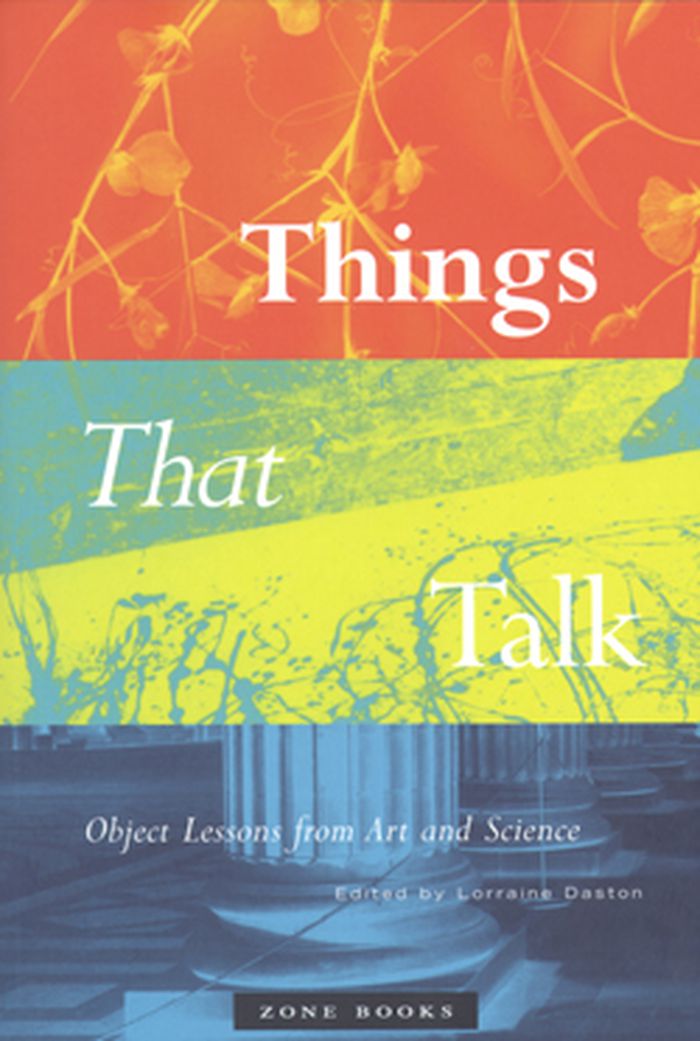
Imagine a world without things. There would be nothing to describe, nothing to explain, remark, interpret, or complain about. Without things, we would stop speaking; we would become as mute as things are alleged to be. In nine original essays, internationally renowned historians of art and of science seek to understand how objects become charged with significance without losing their gritty materiality. True to the particularity of things, each of the essays singles out one object for close attention: a Bosch drawing, the freestanding column, a Prussian island, soap bubbles, early photographs, glass flowers, Rorschach blots, newspaper clippings, paintings by Jackson Pollock. Each is revealed to be a node around which meanings accrete thickly. But not just any meanings: what these things are made of and how they are made shape what they can mean. Neither the pure texts of semiotics nor the brute objects of positivism, these things are saturated with cultural significance. Things become talkative when they fuse matter and meaning; they lapse into speechlessness when their matter and meanings no longer mesh. Each of the nine objects examined in this book had its historical moment, when the match of this thing to that thought seemed irresistible. At these junctures, certain things become objects of fascination, association, and endless consideration; they begin to talk. Things that talk fleetingly realize the dream of a perfect language, in which words and world merge.
Things that talk : Object lessons from art and science
Actions:
Price:
$27.00
(available to order)
Summary:
Imagine a world without things. There would be nothing to describe, nothing to explain, remark, interpret, or complain about. Without things, we would stop speaking; we would become as mute as things are alleged to be. In nine original essays, internationally renowned historians of art and of science seek to understand how objects become charged with significance without losing their gritty materiality. True to the particularity of things, each of the essays singles out one object for close attention: a Bosch drawing, the freestanding column, a Prussian island, soap bubbles, early photographs, glass flowers, Rorschach blots, newspaper clippings, paintings by Jackson Pollock. Each is revealed to be a node around which meanings accrete thickly. But not just any meanings: what these things are made of and how they are made shape what they can mean. Neither the pure texts of semiotics nor the brute objects of positivism, these things are saturated with cultural significance. Things become talkative when they fuse matter and meaning; they lapse into speechlessness when their matter and meanings no longer mesh. Each of the nine objects examined in this book had its historical moment, when the match of this thing to that thought seemed irresistible. At these junctures, certain things become objects of fascination, association, and endless consideration; they begin to talk. Things that talk fleetingly realize the dream of a perfect language, in which words and world merge.
Form:
books
books
Publication:
November 2007, New York
November 2007, New York
Subject:
Critical Theory
Critical Theory
Form:
books
books
Title:
One-way street
One-way street
Actions:
Price:
$19.95
(available to order)
Summary:
One-Way Street is a thoroughfare unlike anything else in literature?by turns exhilarating and bewildering, requiring mental agility and a special kind of urban literacy. Presented here in a new edition with expanded notes, this genre-defying meditation on the semiotics of late-1920s Weimar culture offers a fresh opportunity to encounter Walter Benjamin at his most(...)
$19.95
(available to order)
Summary:
One-Way Street is a thoroughfare unlike anything else in literature?by turns exhilarating and bewildering, requiring mental agility and a special kind of urban literacy. Presented here in a new edition with expanded notes, this genre-defying meditation on the semiotics of late-1920s Weimar culture offers a fresh opportunity to encounter Walter Benjamin at his most(...)
Title:
One-way street
Actions:
Price:
$19.95
(available to order)
Summary:
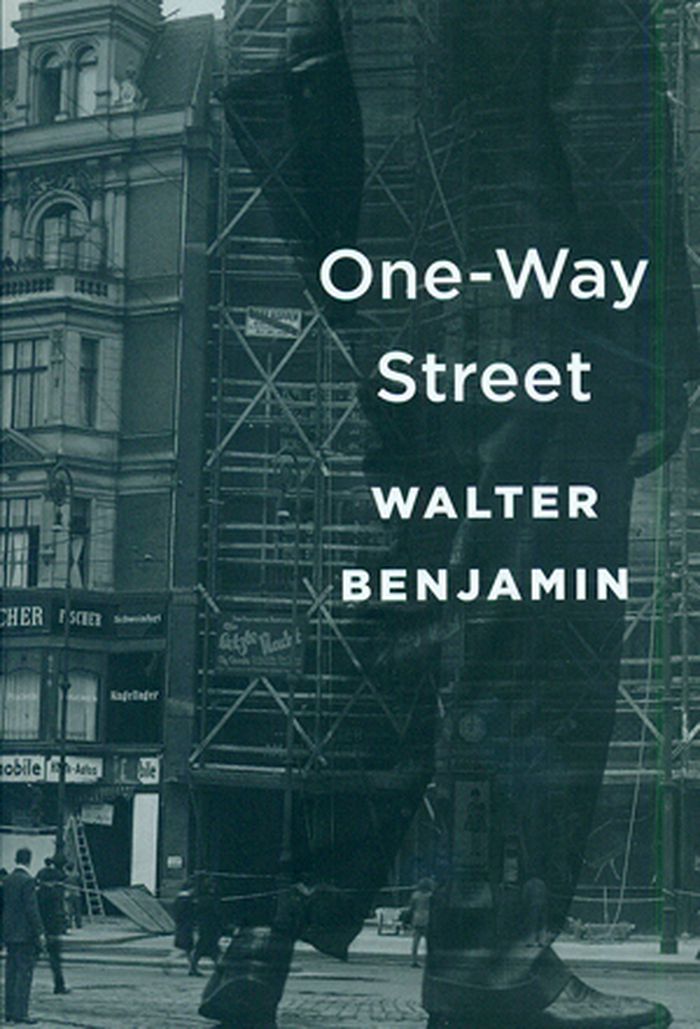
One-Way Street is a thoroughfare unlike anything else in literature?by turns exhilarating and bewildering, requiring mental agility and a special kind of urban literacy. Presented here in a new edition with expanded notes, this genre-defying meditation on the semiotics of late-1920s Weimar culture offers a fresh opportunity to encounter Walter Benjamin at his most virtuosic and experimental, writing in a vein that anticipates later masterpieces such as “On the Concept of History” and The Arcades Project. Composed of sixty short prose pieces that vary wildly in style and theme, One-Way Street evokes a dense cityscape of shops, cafes, and apartments, alive with the hubbub of social interactions and papered over with public inscriptions of all kinds: advertisements, signs, posters, slogans. Benjamin avoids all semblance of linear narrative, enticing readers with a seemingly random sequence of aphorisms, reminiscences, jokes, off-the-cuff observations, dreamlike fantasias, serious philosophical inquiries, apparently unserious philosophical parodies, and trenchant political commentaries. Providing remarkable insight into the occluded meanings of everyday things, Benjamin time and again proves himself the unrivalled interpreter of what he called “the soul of the commodity.” Despite the diversity of its individual sections, Benjamin’s text is far from formless. Drawing on the avant-garde aesthetics of Dada, Constructivism, and Surrealism, its unusual construction implies a practice of reading that cannot be reduced to simple formulas. Still refractory, still radical, One-Way Street is a work in perpetual progress.
One-way street
Actions:
Price:
$19.95
(available to order)
Summary:
One-Way Street is a thoroughfare unlike anything else in literature?by turns exhilarating and bewildering, requiring mental agility and a special kind of urban literacy. Presented here in a new edition with expanded notes, this genre-defying meditation on the semiotics of late-1920s Weimar culture offers a fresh opportunity to encounter Walter Benjamin at his most virtuosic and experimental, writing in a vein that anticipates later masterpieces such as “On the Concept of History” and The Arcades Project. Composed of sixty short prose pieces that vary wildly in style and theme, One-Way Street evokes a dense cityscape of shops, cafes, and apartments, alive with the hubbub of social interactions and papered over with public inscriptions of all kinds: advertisements, signs, posters, slogans. Benjamin avoids all semblance of linear narrative, enticing readers with a seemingly random sequence of aphorisms, reminiscences, jokes, off-the-cuff observations, dreamlike fantasias, serious philosophical inquiries, apparently unserious philosophical parodies, and trenchant political commentaries. Providing remarkable insight into the occluded meanings of everyday things, Benjamin time and again proves himself the unrivalled interpreter of what he called “the soul of the commodity.” Despite the diversity of its individual sections, Benjamin’s text is far from formless. Drawing on the avant-garde aesthetics of Dada, Constructivism, and Surrealism, its unusual construction implies a practice of reading that cannot be reduced to simple formulas. Still refractory, still radical, One-Way Street is a work in perpetual progress.
Form:
books
books
Publication:
May 2016
May 2016
Subject:
Critical Theory
Critical Theory
Form:
books
books
Actions:
Description:
1 online resource
Author:
Subject:
Publication:
[Place of publication not identified] : Minor Compositions, 2026.
[Place of publication not identified] : Minor Compositions, 2026.
Title:
CERFI: Analysis Everywhere. Militancy, Research, Architecture and Psychiatry.
Actions:
Description:
1 online resource
CERFI: Analysis Everywhere. Militancy, Research, Architecture and Psychiatry.
Actions:
Description:
1 online resource
Form:
books
books
Publication:
[Place of publication not identified] : Minor Compositions, 2026.
[Place of publication not identified] : Minor Compositions, 2026.
Author:
Subject:
Form:
books
books
Actions:
Price:
$33.95
(available to order)
Summary:
Intrigued and inspired by the neon beer signs on shopfronts in his San Francisco neighborhood, Bruce Nauman created his first neon piece, "Window or wall sign", in 1967. He wanted, he said, to achieve "an art that would kind of disappear - that was supposed to not quite look like art." Light offered Nauman a medium both elusive and effervescent, but one that could also(...)
$33.95
(available to order)
Summary:
Intrigued and inspired by the neon beer signs on shopfronts in his San Francisco neighborhood, Bruce Nauman created his first neon piece, "Window or wall sign", in 1967. He wanted, he said, to achieve "an art that would kind of disappear - that was supposed to not quite look like art." Light offered Nauman a medium both elusive and effervescent, but one that could also(...)
Subject:
Contemporary Art Monographs
Contemporary Art Monographs
Publication:
January 2006, Milwaukee
January 2006, Milwaukee
Title:
Elusive signs : Bruce Nauman works with light
Actions:
Price:
$33.95
(available to order)
Summary:
Intrigued and inspired by the neon beer signs on shopfronts in his San Francisco neighborhood, Bruce Nauman created his first neon piece, "Window or wall sign", in 1967. He wanted, he said, to achieve "an art that would kind of disappear - that was supposed to not quite look like art." Light offered Nauman a medium both elusive and effervescent, but one that could also aggressively convey a message. Over the first three decades of his career, Nauman used the medium of light to explore the twists and turns of perception, logic, and meaning with the earnest playfulness that characterizes all his art. "Elusive signs" focuses on the discrete body of Nauman's work that uses neon and fluorescent light in signs and room installations, and includes images of nearly all Nauman's work with light. After "Window or wall sign", Nauman embarked on a series of neons that grappled with the semiotics of body and identity, and with "My name as though it were written on the surface of the moon" (1968), he forces the viewer to contemplate the role of naming in forming identity. Language - signs and symbols - plays an important role in Nauman's art. His later neon works emphasize the neon as a sign, presenting provocative twists of language and offering harsh and humorous sociopolitical commentary in such pieces as "Run from fear, fun from rear" (1972). This series culminates in the monumental, billboard-size "One hundred live and die" (1984), which employs overwhelming scale to bombard the viewer with sardonic aphorisms. In the essays that accompany the images of Nauman's work, Joseph Ketner II of the Milwaukee Art Museum (which originated the exhibit this book accompanies) and critics Janet Kraynak and Gregory Volk analyze the works in light both as a body of work and as an access point to Nauman's entire career.
Elusive signs : Bruce Nauman works with light
Actions:
Price:
$33.95
(available to order)
Summary:
Intrigued and inspired by the neon beer signs on shopfronts in his San Francisco neighborhood, Bruce Nauman created his first neon piece, "Window or wall sign", in 1967. He wanted, he said, to achieve "an art that would kind of disappear - that was supposed to not quite look like art." Light offered Nauman a medium both elusive and effervescent, but one that could also aggressively convey a message. Over the first three decades of his career, Nauman used the medium of light to explore the twists and turns of perception, logic, and meaning with the earnest playfulness that characterizes all his art. "Elusive signs" focuses on the discrete body of Nauman's work that uses neon and fluorescent light in signs and room installations, and includes images of nearly all Nauman's work with light. After "Window or wall sign", Nauman embarked on a series of neons that grappled with the semiotics of body and identity, and with "My name as though it were written on the surface of the moon" (1968), he forces the viewer to contemplate the role of naming in forming identity. Language - signs and symbols - plays an important role in Nauman's art. His later neon works emphasize the neon as a sign, presenting provocative twists of language and offering harsh and humorous sociopolitical commentary in such pieces as "Run from fear, fun from rear" (1972). This series culminates in the monumental, billboard-size "One hundred live and die" (1984), which employs overwhelming scale to bombard the viewer with sardonic aphorisms. In the essays that accompany the images of Nauman's work, Joseph Ketner II of the Milwaukee Art Museum (which originated the exhibit this book accompanies) and critics Janet Kraynak and Gregory Volk analyze the works in light both as a body of work and as an access point to Nauman's entire career.
Form:
books
books
Publication:
January 2006, Milwaukee
January 2006, Milwaukee
Subject:
Contemporary Art Monographs
Contemporary Art Monographs


