


217 Results
Form:
books
books
Actions:
Price:
$40.00
(available to order)
Summary:
''Humane ecology: Eight positions'' features a group of contemporary artists who consider the intertwined natural and social dimensions of environmental questions: Eddie Rodolfo Aparicio, Korakrit Arunanondchai, Carolina Caycedo, Allison Janae Hamilton, Juan Antonio Olivares, Christine Howard Sandoval, Pallavi Sen, and Kandis Williams. These artists—through their work in(...)
$40.00
(available to order)
Summary:
''Humane ecology: Eight positions'' features a group of contemporary artists who consider the intertwined natural and social dimensions of environmental questions: Eddie Rodolfo Aparicio, Korakrit Arunanondchai, Carolina Caycedo, Allison Janae Hamilton, Juan Antonio Olivares, Christine Howard Sandoval, Pallavi Sen, and Kandis Williams. These artists—through their work in(...)
Publication:
September 2023
September 2023
Title:
Humane ecology: Eight positions
Actions:
Price:
$40.00
(available to order)
Summary:
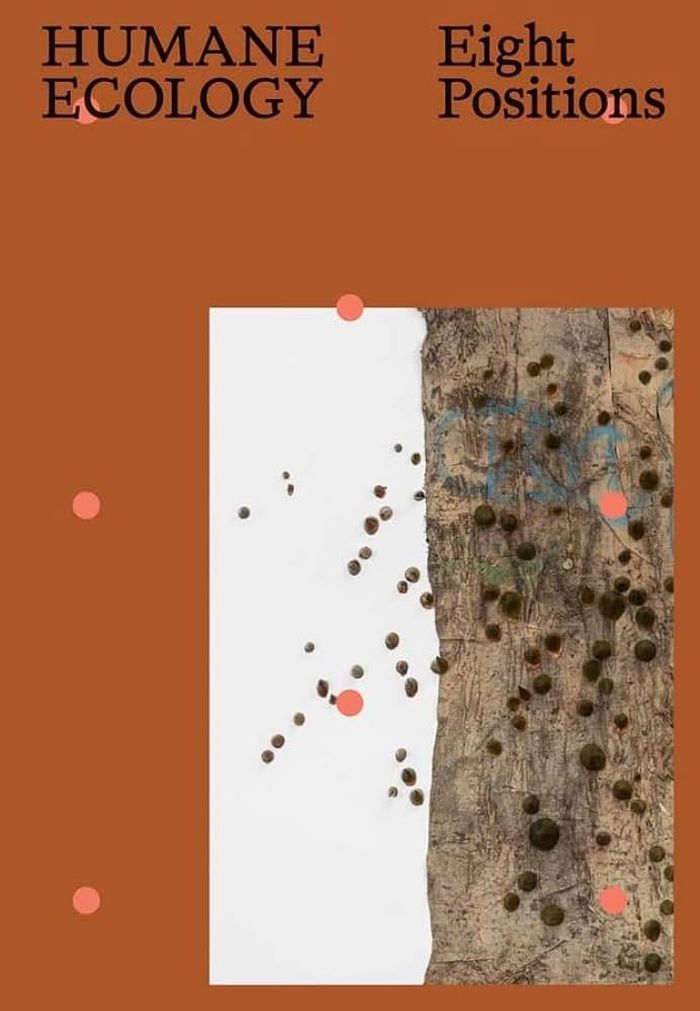
''Humane ecology: Eight positions'' features a group of contemporary artists who consider the intertwined natural and social dimensions of environmental questions: Eddie Rodolfo Aparicio, Korakrit Arunanondchai, Carolina Caycedo, Allison Janae Hamilton, Juan Antonio Olivares, Christine Howard Sandoval, Pallavi Sen, and Kandis Williams. These artists—through their work in sculpture, video, sound installation, and plantings—think in the relational terms implied by ecology, the study of how organisms relate to one another and their environment. They explore themes such as the extraction and exploitation of both places and people, kinships with the more-than-human world, and ancient traditions of relation to the land that take on new urgency and form. Against posthumanist tendencies to “decenter” the human, these artists center different humans, ones routinely excluded from dominant discourses of environmentalism. The publication presents entries on each artist in addition to scholarly essays on the exhibition concept, genealogies of land art, and settler colonial histories of the Berkshires.
Humane ecology: Eight positions
Actions:
Price:
$40.00
(available to order)
Summary:
''Humane ecology: Eight positions'' features a group of contemporary artists who consider the intertwined natural and social dimensions of environmental questions: Eddie Rodolfo Aparicio, Korakrit Arunanondchai, Carolina Caycedo, Allison Janae Hamilton, Juan Antonio Olivares, Christine Howard Sandoval, Pallavi Sen, and Kandis Williams. These artists—through their work in sculpture, video, sound installation, and plantings—think in the relational terms implied by ecology, the study of how organisms relate to one another and their environment. They explore themes such as the extraction and exploitation of both places and people, kinships with the more-than-human world, and ancient traditions of relation to the land that take on new urgency and form. Against posthumanist tendencies to “decenter” the human, these artists center different humans, ones routinely excluded from dominant discourses of environmentalism. The publication presents entries on each artist in addition to scholarly essays on the exhibition concept, genealogies of land art, and settler colonial histories of the Berkshires.
Form:
books
books
Publication:
September 2023
September 2023
Form:
journals and magazines
journals and magazines
Title:
Scapegoat 12/13: c\a\n\a\d\a
Scapegoat 12/13: c\a\n\a\d\a
Actions:
Price:
$30.00
(available to order)
Summary:
This issue aims to connect two critical discourses about space that have so far been disassociated: architectural theories that point to the importance of real property as the fundamental unit of urban morphology and architectural typology, and Indigenous land claims which point to the violence of colonial land dispossession, through which this property was originally(...)
$30.00
(available to order)
Summary:
This issue aims to connect two critical discourses about space that have so far been disassociated: architectural theories that point to the importance of real property as the fundamental unit of urban morphology and architectural typology, and Indigenous land claims which point to the violence of colonial land dispossession, through which this property was originally(...)
Title:
Scapegoat 12/13: c\a\n\a\d\a
Actions:
Price:
$30.00
(available to order)
Summary:
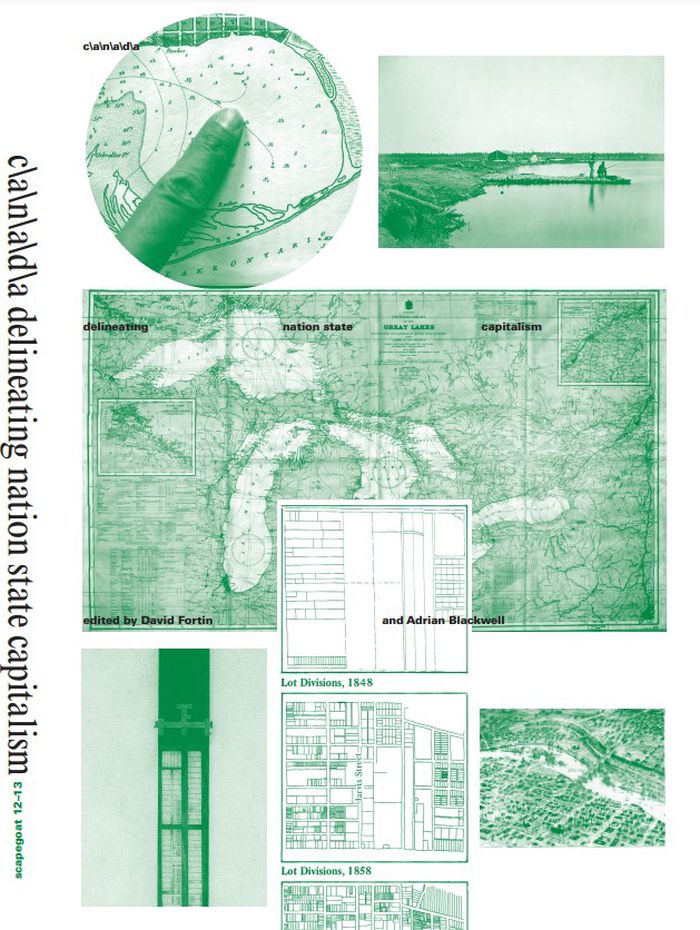
This issue aims to connect two critical discourses about space that have so far been disassociated: architectural theories that point to the importance of real property as the fundamental unit of urban morphology and architectural typology, and Indigenous land claims which point to the violence of colonial land dispossession, through which this property was originally invented and formed. This research sees property delineation as a fundamental grammatical logic of the production of the space of nation, state and capital. The editors and contributors to this volume approach the intersection of Indigenous and settler viewpoints, as well as the interdisciplinary perspectives of both spatial delineators and critical commentators, in order to understand the deep connections between Indigenous dispossession and urban pathologies of gentrification, homelessness, systemically biased planning and urban alienation. The issue also addresses this connection in order to rethink and redraw land relations as a foundation for undoing this alienation and creating spaces that cultivate a caring relation with land, kin and strangers.
Scapegoat 12/13: c\a\n\a\d\a
Actions:
Price:
$30.00
(available to order)
Summary:
This issue aims to connect two critical discourses about space that have so far been disassociated: architectural theories that point to the importance of real property as the fundamental unit of urban morphology and architectural typology, and Indigenous land claims which point to the violence of colonial land dispossession, through which this property was originally invented and formed. This research sees property delineation as a fundamental grammatical logic of the production of the space of nation, state and capital. The editors and contributors to this volume approach the intersection of Indigenous and settler viewpoints, as well as the interdisciplinary perspectives of both spatial delineators and critical commentators, in order to understand the deep connections between Indigenous dispossession and urban pathologies of gentrification, homelessness, systemically biased planning and urban alienation. The issue also addresses this connection in order to rethink and redraw land relations as a foundation for undoing this alienation and creating spaces that cultivate a caring relation with land, kin and strangers.
Form:
journals and magazines
journals and magazines
Publication:
May 2022
May 2022
Subject:
Magazines
Magazines
Form:
books
books
Actions:
Price:
$35.00
(available to order)
Summary:
The iconic architecture of the brutalist modernist megastructure of Simon Fraser University in Vancouver, Canada built by architect Arthur Erickson in the 1960s is the site of the artistic research project into the history of this "radical campus" and its built environment by Vancouver and Vienna based artists Sabine Bitter and Helmut Weber. The collaborative research(...)
$35.00
(available to order)
Summary:
The iconic architecture of the brutalist modernist megastructure of Simon Fraser University in Vancouver, Canada built by architect Arthur Erickson in the 1960s is the site of the artistic research project into the history of this "radical campus" and its built environment by Vancouver and Vienna based artists Sabine Bitter and Helmut Weber. The collaborative research(...)
Title:
Unsettling educational modernism: Simon Fraser University
Actions:
Price:
$35.00
(available to order)
Summary:
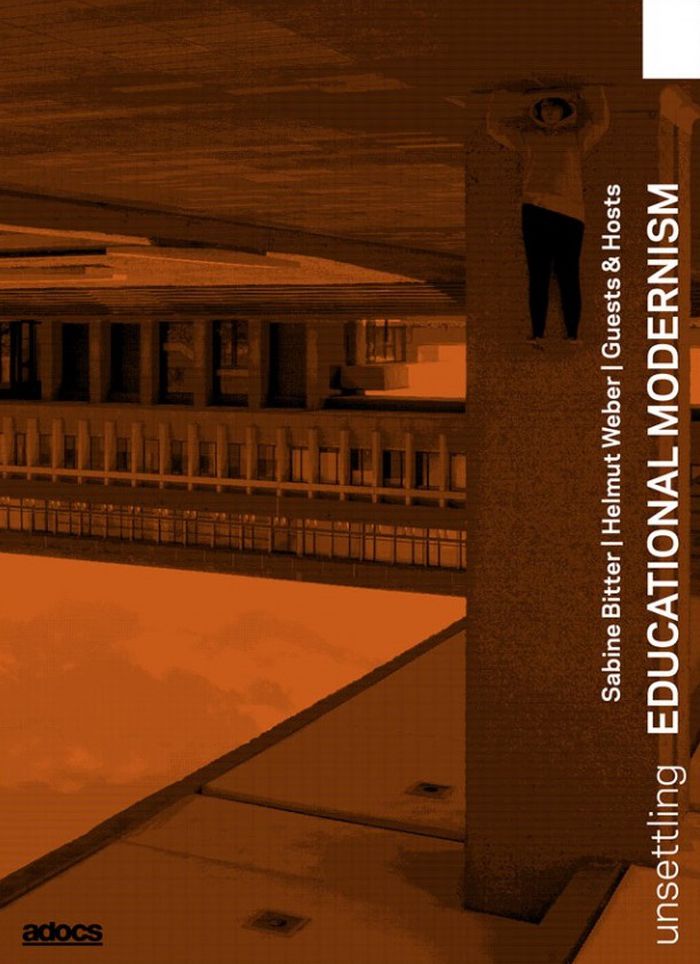
The iconic architecture of the brutalist modernist megastructure of Simon Fraser University in Vancouver, Canada built by architect Arthur Erickson in the 1960s is the site of the artistic research project into the history of this "radical campus" and its built environment by Vancouver and Vienna based artists Sabine Bitter and Helmut Weber. The collaborative research group, "Guests and Hosts", formed by Bitter & Weber and Métis scholar June Scudeler including Métis scholar and student Treena Chambers, Kanien’kehá:ka Mohawk student Toni-Leah Yake, as well as Rachel Warwick and Hannah Campbell, has challenged the narrative of the radical campus, so called because it was informed by experimental concepts of learning and teaching. Using the spaces of a settler colonial institution, the project shifts perspectives by unsettling and challenging western- based concepts of pedagogy and knowledge. Combining archival photographic material, architectural photographs by the artists, and interventions into the institutional spaces by Guests and Hosts, the project performs the claim for places rather than spaces for Indigenous ways of knowing and learning.
Unsettling educational modernism: Simon Fraser University
Actions:
Price:
$35.00
(available to order)
Summary:
The iconic architecture of the brutalist modernist megastructure of Simon Fraser University in Vancouver, Canada built by architect Arthur Erickson in the 1960s is the site of the artistic research project into the history of this "radical campus" and its built environment by Vancouver and Vienna based artists Sabine Bitter and Helmut Weber. The collaborative research group, "Guests and Hosts", formed by Bitter & Weber and Métis scholar June Scudeler including Métis scholar and student Treena Chambers, Kanien’kehá:ka Mohawk student Toni-Leah Yake, as well as Rachel Warwick and Hannah Campbell, has challenged the narrative of the radical campus, so called because it was informed by experimental concepts of learning and teaching. Using the spaces of a settler colonial institution, the project shifts perspectives by unsettling and challenging western- based concepts of pedagogy and knowledge. Combining archival photographic material, architectural photographs by the artists, and interventions into the institutional spaces by Guests and Hosts, the project performs the claim for places rather than spaces for Indigenous ways of knowing and learning.
Form:
books
books
Publication:
October 2021
October 2021
Subject:
Canadian Architects
Canadian Architects
Form:
books
books

Title:
This house is not a home
This house is not a home
Actions:
Price:
$24.00
(available to order)
Summary:
After a hunting trip one fall, a family in the far reaches of so-called Canada’s north return to nothing but an empty space where their home once stood. Finding themselves suddenly homeless, they have no choice but to assimilate into settler-colonial society in a mining town that has encroached on their freedom.This intergenerational coming-of-age novel follows Ko`, a(...)
$24.00
(available to order)
Summary:
After a hunting trip one fall, a family in the far reaches of so-called Canada’s north return to nothing but an empty space where their home once stood. Finding themselves suddenly homeless, they have no choice but to assimilate into settler-colonial society in a mining town that has encroached on their freedom.This intergenerational coming-of-age novel follows Ko`, a(...)
Title:
This house is not a home
Actions:
Price:
$24.00
(available to order)
Summary:
After a hunting trip one fall, a family in the far reaches of so-called Canada’s north return to nothing but an empty space where their home once stood. Finding themselves suddenly homeless, they have no choice but to assimilate into settler-colonial society in a mining town that has encroached on their freedom.This intergenerational coming-of-age novel follows Ko`, a Dene man who grew up entirely on the land before being taken to residential school. When he finally returns home, he struggles to connect with his family: his younger brother whom he has never met, his mother because he has lost his language, and an absent father whose disappearance he is too afraid to question. The third book from acclaimed Dene, Cree and Metis writer Katlià, this is a fictional story based on true events, presenting a clear trajectory of how settlers dispossessed Indigenous Peoples of their land — and how Indigenous communities, with dignity and resilience, continue to live and honour their culture, values, inherent knowledge systems, and Indigenous rights towards re-establishing sovereignty.
This house is not a home
Actions:
Price:
$24.00
(available to order)
Summary:
After a hunting trip one fall, a family in the far reaches of so-called Canada’s north return to nothing but an empty space where their home once stood. Finding themselves suddenly homeless, they have no choice but to assimilate into settler-colonial society in a mining town that has encroached on their freedom.This intergenerational coming-of-age novel follows Ko`, a Dene man who grew up entirely on the land before being taken to residential school. When he finally returns home, he struggles to connect with his family: his younger brother whom he has never met, his mother because he has lost his language, and an absent father whose disappearance he is too afraid to question. The third book from acclaimed Dene, Cree and Metis writer Katlià, this is a fictional story based on true events, presenting a clear trajectory of how settlers dispossessed Indigenous Peoples of their land — and how Indigenous communities, with dignity and resilience, continue to live and honour their culture, values, inherent knowledge systems, and Indigenous rights towards re-establishing sovereignty.
Form:
books
books
Publication:
September 2022
September 2022
Subject:
indigenous
indigenous
Form:
books
books
Title:
Decolonize multiculturalism
Decolonize multiculturalism
Actions:
Price:
$24.95
(available to order)
Summary:
For those interested in continuing the struggle for decolonization, the word "multiculturalism" can seem like a sad joke. After all, institutionalized multiculturalism today is a muck of buzzwords, branding strategies, and virtue signaling that has nothing to do with real struggles against racism and colonialism. But "Decolonize multiculturalism" unearths a buried(...)
$24.95
(available to order)
Summary:
For those interested in continuing the struggle for decolonization, the word "multiculturalism" can seem like a sad joke. After all, institutionalized multiculturalism today is a muck of buzzwords, branding strategies, and virtue signaling that has nothing to do with real struggles against racism and colonialism. But "Decolonize multiculturalism" unearths a buried(...)
Title:
Decolonize multiculturalism
Actions:
Price:
$24.95
(available to order)
Summary:
For those interested in continuing the struggle for decolonization, the word "multiculturalism" can seem like a sad joke. After all, institutionalized multiculturalism today is a muck of buzzwords, branding strategies, and virtue signaling that has nothing to do with real struggles against racism and colonialism. But "Decolonize multiculturalism" unearths a buried history. The book focuses on the student and youth movements of the 1960s and 1970s, inspired by global movements for decolonization and anti-racism, which aimed to fundamentally transform their society, as well as the fierce repression of these movements by the state, corporations, and university administrations. Part of the response has been sheer violence—campus policing, for example, only began in the ’70s, paving the way for the militarized campuses of today—with institutionalized multiculturalism acting like the velvet glove around the iron fist of state violence. And yet today’s multiculturalism also contains residues of the original radical demands of the student and youth movements that it aims to repress: to open up the university, to wrench it from its settler colonial, white supremacist, and patriarchal capitalist origins, and to transform it into a place of radical democratic possibility.
Decolonize multiculturalism
Actions:
Price:
$24.95
(available to order)
Summary:
For those interested in continuing the struggle for decolonization, the word "multiculturalism" can seem like a sad joke. After all, institutionalized multiculturalism today is a muck of buzzwords, branding strategies, and virtue signaling that has nothing to do with real struggles against racism and colonialism. But "Decolonize multiculturalism" unearths a buried history. The book focuses on the student and youth movements of the 1960s and 1970s, inspired by global movements for decolonization and anti-racism, which aimed to fundamentally transform their society, as well as the fierce repression of these movements by the state, corporations, and university administrations. Part of the response has been sheer violence—campus policing, for example, only began in the ’70s, paving the way for the militarized campuses of today—with institutionalized multiculturalism acting like the velvet glove around the iron fist of state violence. And yet today’s multiculturalism also contains residues of the original radical demands of the student and youth movements that it aims to repress: to open up the university, to wrench it from its settler colonial, white supremacist, and patriarchal capitalist origins, and to transform it into a place of radical democratic possibility.
Form:
books
books
Publication:
May 2023
May 2023
Subject:
Social
Social
Form:
books
books
Price:
$30.00
(available to order)
Summary:
Parks are importantly fertile places to talk about land. Whether its big national parks, provincial campgrounds, isolated conservation areas, destination parks, or humble urban patches of grass, we tend to speak of parks as unqualified goods. People think of parks as public or common land, and it is a common belief that parks are the best uses of land and are good for(...)
$30.00
(available to order)
Summary:
Parks are importantly fertile places to talk about land. Whether its big national parks, provincial campgrounds, isolated conservation areas, destination parks, or humble urban patches of grass, we tend to speak of parks as unqualified goods. People think of parks as public or common land, and it is a common belief that parks are the best uses of land and are good for(...)
Title:
On this patch of grass: city parks and the politics of occupied land
Actions:
Price:
$30.00
(available to order)
Summary:
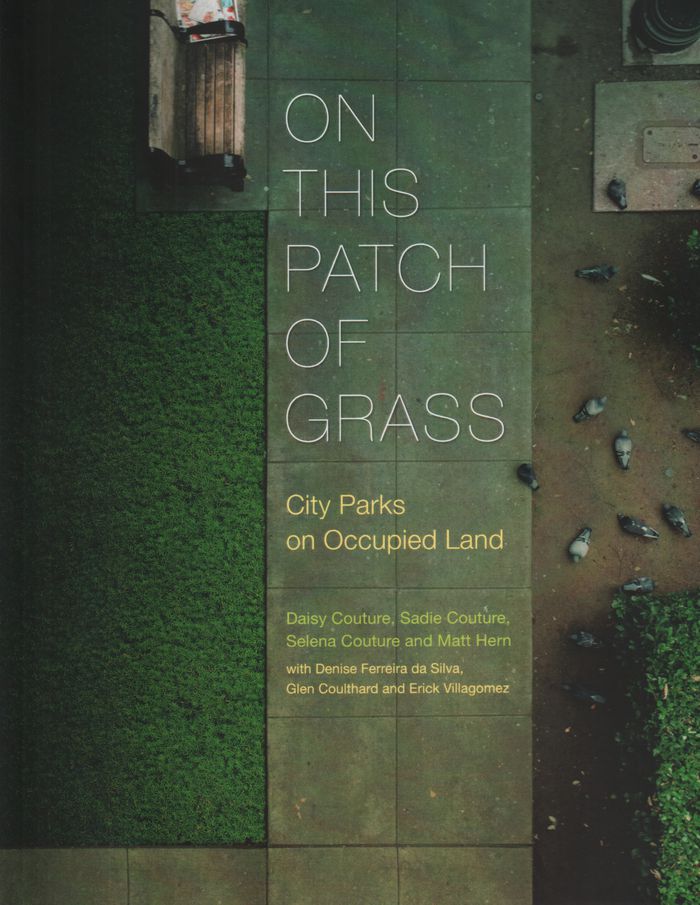
Parks are importantly fertile places to talk about land. Whether its big national parks, provincial campgrounds, isolated conservation areas, destination parks, or humble urban patches of grass, we tend to speak of parks as unqualified goods. People think of parks as public or common land, and it is a common belief that parks are the best uses of land and are good for everyone. But no park is innocent. Parks are lionized as "natural oases," and urban parks as "pure nature" in the midst of the city -- but that's absurd. Parks are as "natural" as the roads or buildings around them, and just as political. Every park in North America is performing modernity and settler colonialism everyday. Furthermore, parks are not private property, but while they are called ''public'', they are highly regulated spaces that normatively demand and closely control behaviours. Parks are a certain kind of property, and thus creations of law, and they are subject to all kinds of presumptions about what parks are for, and what kinds of people should be doing what kinds of things in them. Parks- as they are currently constituted- are colonial enterprises.
On this patch of grass: city parks and the politics of occupied land
Actions:
Price:
$30.00
(available to order)
Summary:
Parks are importantly fertile places to talk about land. Whether its big national parks, provincial campgrounds, isolated conservation areas, destination parks, or humble urban patches of grass, we tend to speak of parks as unqualified goods. People think of parks as public or common land, and it is a common belief that parks are the best uses of land and are good for everyone. But no park is innocent. Parks are lionized as "natural oases," and urban parks as "pure nature" in the midst of the city -- but that's absurd. Parks are as "natural" as the roads or buildings around them, and just as political. Every park in North America is performing modernity and settler colonialism everyday. Furthermore, parks are not private property, but while they are called ''public'', they are highly regulated spaces that normatively demand and closely control behaviours. Parks are a certain kind of property, and thus creations of law, and they are subject to all kinds of presumptions about what parks are for, and what kinds of people should be doing what kinds of things in them. Parks- as they are currently constituted- are colonial enterprises.
Form:
books
books
Publication:
November 2018
November 2018
Subject:
Landscape Theory
Landscape Theory
Form:
journals and magazines
journals and magazines
Actions:
Price:
$16.95
(available in store)
Summary:
With this issue, the funambulist offers a critique of their own framework of knowledge production. The concept of “Global South” has been turned into a handy word to lazily designate two-thirds of the world’s earthly area and 90% of its population, thus flattening the millions of specificities that characterize this grouping. It also often embodies an entity that only(...)
$16.95
(available in store)
Summary:
With this issue, the funambulist offers a critique of their own framework of knowledge production. The concept of “Global South” has been turned into a handy word to lazily designate two-thirds of the world’s earthly area and 90% of its population, thus flattening the millions of specificities that characterize this grouping. It also often embodies an entity that only(...)
Title:
The Funambulist 66: Beyond the global South
Actions:
Price:
$16.95
(available in store)
Summary:
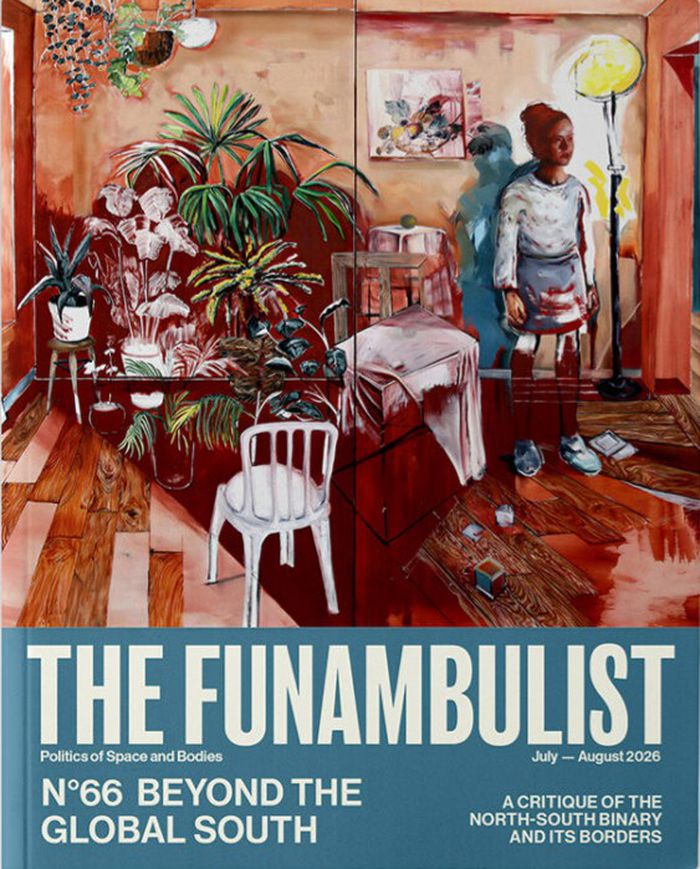
With this issue, the funambulist offers a critique of their own framework of knowledge production. The concept of “Global South” has been turned into a handy word to lazily designate two-thirds of the world’s earthly area and 90% of its population, thus flattening the millions of specificities that characterize this grouping. It also often embodies an entity that only exists dependent on its alter ego, the Global North. As such, it denies any form of agency to the peoples designated as “the South” independently from their relationship to the “North,” as we examine in the case of the war in the eastern Congo (Josaphat Musamba). The South/North binary also designates borders as lines (rather than as regimes operating on both sides of these lines) and essentializes the difference between sides. Can Blackness and Indigeneity in Abya Yala be read without a fundamental split at the settler colonial line that separates North and Central-South Americas (Ashley Ngozi Agbasoga)? Can 20th century Korea’s history show us that the line that currently separates the north (usually presented as part of the Global South) and the south (usually presented as part of the Global North) particularly illustrates the North/South framework’s lack of complexity (Lina Eunji Chang and Andrei-Sergei Kim)? What kind of colonial violence the Non-Aligned Movement invisibilizes in West Papua (Quito Swan), in Kashmir (Choakkeladd) or Western Sahara (Buhari Lehbib) and, in contrast, what kind of solidarities it allowed from Yugoslavia (Dubravka Sekulic and Sanja Horvatincic)? And, crucially, how can we honor the complexity of politics by being able to hold two contradictory truths together as Micol Meghnagi reminds us in the context of Gaddafi’s Libya and Pan-Arabism.
The Funambulist 66: Beyond the global South
Actions:
Price:
$16.95
(available in store)
Summary:
With this issue, the funambulist offers a critique of their own framework of knowledge production. The concept of “Global South” has been turned into a handy word to lazily designate two-thirds of the world’s earthly area and 90% of its population, thus flattening the millions of specificities that characterize this grouping. It also often embodies an entity that only exists dependent on its alter ego, the Global North. As such, it denies any form of agency to the peoples designated as “the South” independently from their relationship to the “North,” as we examine in the case of the war in the eastern Congo (Josaphat Musamba). The South/North binary also designates borders as lines (rather than as regimes operating on both sides of these lines) and essentializes the difference between sides. Can Blackness and Indigeneity in Abya Yala be read without a fundamental split at the settler colonial line that separates North and Central-South Americas (Ashley Ngozi Agbasoga)? Can 20th century Korea’s history show us that the line that currently separates the north (usually presented as part of the Global South) and the south (usually presented as part of the Global North) particularly illustrates the North/South framework’s lack of complexity (Lina Eunji Chang and Andrei-Sergei Kim)? What kind of colonial violence the Non-Aligned Movement invisibilizes in West Papua (Quito Swan), in Kashmir (Choakkeladd) or Western Sahara (Buhari Lehbib) and, in contrast, what kind of solidarities it allowed from Yugoslavia (Dubravka Sekulic and Sanja Horvatincic)? And, crucially, how can we honor the complexity of politics by being able to hold two contradictory truths together as Micol Meghnagi reminds us in the context of Gaddafi’s Libya and Pan-Arabism.
Form:
journals and magazines
journals and magazines
Publication:
July 2026
July 2026
Subject:
Magazines
Magazines


