


2140 Results
Form:
books
books
Title:
Why the museum matters
Why the museum matters
Actions:
Price:
$37.95
(available to order)
Summary:
Art museums have played a vital role in our culture, drawing on Enlightenment ideals in shaping ideas, advancing learning, fostering community, and providing spaces of beauty and permanence. In this thoughtful and often personal volume, Daniel H. Weiss contemplates the idea of the universal art museum alongside broad considerations about the role of art in society and(...)
$37.95
(available to order)
Summary:
Art museums have played a vital role in our culture, drawing on Enlightenment ideals in shaping ideas, advancing learning, fostering community, and providing spaces of beauty and permanence. In this thoughtful and often personal volume, Daniel H. Weiss contemplates the idea of the universal art museum alongside broad considerations about the role of art in society and(...)
Title:
Why the museum matters
Actions:
Price:
$37.95
(available to order)
Summary:
Art museums have played a vital role in our culture, drawing on Enlightenment ideals in shaping ideas, advancing learning, fostering community, and providing spaces of beauty and permanence. In this thoughtful and often personal volume, Daniel H. Weiss contemplates the idea of the universal art museum alongside broad considerations about the role of art in society and what defines a cultural experience. The future of art museums is far from secure, and Weiss reflects on many of the difficulties these institutions face, from their financial health to their collecting practices to the audiences they engage to ensuring freedom of expression on the part of artists and curators. In grappling with these challenges, Weiss sees a solution in shared governance. His tone is one of optimism as he looks to a future where the museum will serve a greater public while continuing to be a steward of culture and a place of discovery, discourse, inspiration, and pleasure. This poignant questioning and affirmation of the museum explores our enduring values while embracing the need for change in a rapidly evolving world.
Why the museum matters
Actions:
Price:
$37.95
(available to order)
Summary:
Art museums have played a vital role in our culture, drawing on Enlightenment ideals in shaping ideas, advancing learning, fostering community, and providing spaces of beauty and permanence. In this thoughtful and often personal volume, Daniel H. Weiss contemplates the idea of the universal art museum alongside broad considerations about the role of art in society and what defines a cultural experience. The future of art museums is far from secure, and Weiss reflects on many of the difficulties these institutions face, from their financial health to their collecting practices to the audiences they engage to ensuring freedom of expression on the part of artists and curators. In grappling with these challenges, Weiss sees a solution in shared governance. His tone is one of optimism as he looks to a future where the museum will serve a greater public while continuing to be a steward of culture and a place of discovery, discourse, inspiration, and pleasure. This poignant questioning and affirmation of the museum explores our enduring values while embracing the need for change in a rapidly evolving world.
Form:
books
books
Publication:
November 2022
November 2022
Subject:
Museology
Museology
Form:
books
books
Actions:
Price:
$81.95
(available to order)
Summary:
Ensuring that buildings are healthy and comfortable for their occupants is a primary concern of all architects and building engineers. This highly practical handbook will help make that process more efficient and effective. It begins with a guide to how the human body and senses react to different indoor environmental conditions, together with basic information on the(...)
$81.95
(available to order)
Summary:
Ensuring that buildings are healthy and comfortable for their occupants is a primary concern of all architects and building engineers. This highly practical handbook will help make that process more efficient and effective. It begins with a guide to how the human body and senses react to different indoor environmental conditions, together with basic information on the(...)
Title:
The indoor environment handbook
Actions:
Price:
$81.95
(available to order)
Summary:
Ensuring that buildings are healthy and comfortable for their occupants is a primary concern of all architects and building engineers. This highly practical handbook will help make that process more efficient and effective. It begins with a guide to how the human body and senses react to different indoor environmental conditions, together with basic information on the parameters of the indoor environment and problems that can occur. It then moves on to give a background to the development of the study and control of the indoor environment, examining the main considerations (including thermal, lighting, indoor air and sound-related aspects) for a healthy and comfortable indoor environment and discussing the drivers for change in the field. The final section presents a new approach towards health and comfort in the indoor environment, where meeting the wishes and demands of the occupants with a holistic strategy becomes the over-riding priority. The book is filled with useful facts, figures and analysis, and practical methods that designers who are keen to assess and improve the user experience of their buildings will find invaluable.
The indoor environment handbook
Actions:
Price:
$81.95
(available to order)
Summary:
Ensuring that buildings are healthy and comfortable for their occupants is a primary concern of all architects and building engineers. This highly practical handbook will help make that process more efficient and effective. It begins with a guide to how the human body and senses react to different indoor environmental conditions, together with basic information on the parameters of the indoor environment and problems that can occur. It then moves on to give a background to the development of the study and control of the indoor environment, examining the main considerations (including thermal, lighting, indoor air and sound-related aspects) for a healthy and comfortable indoor environment and discussing the drivers for change in the field. The final section presents a new approach towards health and comfort in the indoor environment, where meeting the wishes and demands of the occupants with a holistic strategy becomes the over-riding priority. The book is filled with useful facts, figures and analysis, and practical methods that designers who are keen to assess and improve the user experience of their buildings will find invaluable.
Form:
books
books
Publication:
October 2009
October 2009
Subject:
Green Architecture
Green Architecture
Form:
books
books
Actions:
Price:
$102.00
(available to order)
Summary:
Edward Burtynsky’s imagery explores the intricate link between industry and nature, combining the raw elements of mining, quarrying, shipping, oil production, and recycling into eloquent, highly expressive visions that find beauty and humanity in the most unlikely places. These images are metaphors for the dilemma of our modern existence: we are drawn by desire-the desire(...)
$102.00
(available to order)
Summary:
Edward Burtynsky’s imagery explores the intricate link between industry and nature, combining the raw elements of mining, quarrying, shipping, oil production, and recycling into eloquent, highly expressive visions that find beauty and humanity in the most unlikely places. These images are metaphors for the dilemma of our modern existence: we are drawn by desire-the desire(...)
Subject:
Photography monographs
Photography monographs
Publication:
January 2006, Göttingen
January 2006, Göttingen
Title:
Burtynsky - China : the photographs of Edward Burtynsky
Actions:
Price:
$102.00
(available to order)
Summary:
Edward Burtynsky’s imagery explores the intricate link between industry and nature, combining the raw elements of mining, quarrying, shipping, oil production, and recycling into eloquent, highly expressive visions that find beauty and humanity in the most unlikely places. These images are metaphors for the dilemma of our modern existence: we are drawn by desire-the desire to live well and in comfort-yet we all know that the world is suffering to meet those demands. Our dependence on nature to provide the materials for our consumption and our concern for the health of our planet sets us into uneasy contradiction and feeds the dialogue in Burtynsky’s images between attraction and repulsion, seduction and fear. Burtysnky’s latest body of work gives visual form to the industrial and urban transformation of China, a place where industrial forces are gathering on a scale that the world has never experienced before. If the earth’s resources were up to now under siege through western colonialism and technological progress, then China is on the brink of a sweeping assault on the planet’s ecosystem that is only just forming and is nowhere close to expressing its full impact.
Burtynsky - China : the photographs of Edward Burtynsky
Actions:
Price:
$102.00
(available to order)
Summary:
Edward Burtynsky’s imagery explores the intricate link between industry and nature, combining the raw elements of mining, quarrying, shipping, oil production, and recycling into eloquent, highly expressive visions that find beauty and humanity in the most unlikely places. These images are metaphors for the dilemma of our modern existence: we are drawn by desire-the desire to live well and in comfort-yet we all know that the world is suffering to meet those demands. Our dependence on nature to provide the materials for our consumption and our concern for the health of our planet sets us into uneasy contradiction and feeds the dialogue in Burtynsky’s images between attraction and repulsion, seduction and fear. Burtysnky’s latest body of work gives visual form to the industrial and urban transformation of China, a place where industrial forces are gathering on a scale that the world has never experienced before. If the earth’s resources were up to now under siege through western colonialism and technological progress, then China is on the brink of a sweeping assault on the planet’s ecosystem that is only just forming and is nowhere close to expressing its full impact.
Form:
books
books
Publication:
January 2006, Göttingen
January 2006, Göttingen
Subject:
Photography monographs
Photography monographs
Form:
books
books
Price:
$42.00
(available in store)
Summary:
Western society is being terrorized by fear. Whether concerning national security, road safety or the protection of public health, every form of risk is meant to be spread, accounted for or eradicated. The safety and security obsession is leaving behind ever more visible traces, especially in public space. Speed bumps, smoke-free zones and surveillance cameras serve a(...)
$42.00
(available in store)
Summary:
Western society is being terrorized by fear. Whether concerning national security, road safety or the protection of public health, every form of risk is meant to be spread, accounted for or eradicated. The safety and security obsession is leaving behind ever more visible traces, especially in public space. Speed bumps, smoke-free zones and surveillance cameras serve a(...)
Title:
Fear & space : the view of young designers in the Netherlands
Actions:
Price:
$42.00
(available in store)
Summary:
Western society is being terrorized by fear. Whether concerning national security, road safety or the protection of public health, every form of risk is meant to be spread, accounted for or eradicated. The safety and security obsession is leaving behind ever more visible traces, especially in public space. Speed bumps, smoke-free zones and surveillance cameras serve a society where prevention is the order of the day. This second book in the Group portraits series -a collaboration between the Netherlands architecture fund and the Netherlands foundation for visual arts, design and architecture (Fonds BKVB) - once again brings together four groups of young designers around a highly topical theme. As a sequel to the successful "City branding" book, this publication explores the various aspects of fear and prevention and considers the impact on contemporary urban space in four chapters. All the stops are pulled out: text, photography, research and design alternate in a thought-provoking sequence. This publication is the result of intensive research into the presence of fear in our Western society and the role that architecture might play herein. It is therefore an instrument for students, researchers, architects and policy-makers who are concerned with security issues.
Fear & space : the view of young designers in the Netherlands
Actions:
Price:
$42.00
(available in store)
Summary:
Western society is being terrorized by fear. Whether concerning national security, road safety or the protection of public health, every form of risk is meant to be spread, accounted for or eradicated. The safety and security obsession is leaving behind ever more visible traces, especially in public space. Speed bumps, smoke-free zones and surveillance cameras serve a society where prevention is the order of the day. This second book in the Group portraits series -a collaboration between the Netherlands architecture fund and the Netherlands foundation for visual arts, design and architecture (Fonds BKVB) - once again brings together four groups of young designers around a highly topical theme. As a sequel to the successful "City branding" book, this publication explores the various aspects of fear and prevention and considers the impact on contemporary urban space in four chapters. All the stops are pulled out: text, photography, research and design alternate in a thought-provoking sequence. This publication is the result of intensive research into the presence of fear in our Western society and the role that architecture might play herein. It is therefore an instrument for students, researchers, architects and policy-makers who are concerned with security issues.
Form:
books
books
Publication:
January 2005, Rotterdam
January 2005, Rotterdam
Subject:
Architectural Theory
Architectural Theory
Form:
books
books
Actions:
Price:
$38.95
(available to order)
Summary:
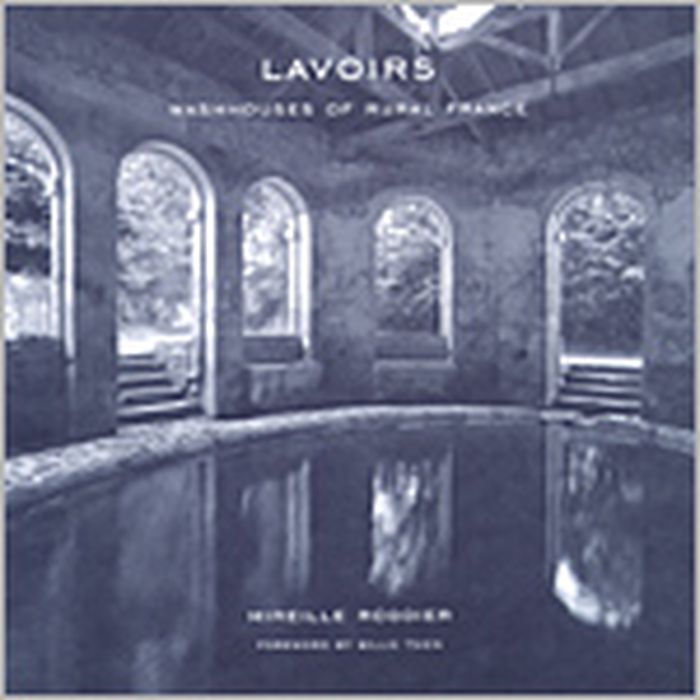
No building better embodies the ineffable qualities of rural France than the lavoir, the communal washhouse that, until a few decades ago, was the central gathering place for women in many small villages across the French countryside—as much a part of communal life as the market. These open-air laundry rooms first appeared for the private use of the social elite in(...)
$38.95
(available to order)
Summary:
No building better embodies the ineffable qualities of rural France than the lavoir, the communal washhouse that, until a few decades ago, was the central gathering place for women in many small villages across the French countryside—as much a part of communal life as the market. These open-air laundry rooms first appeared for the private use of the social elite in(...)
Title:
Lavoirs : washhouses of rural France
Actions:
Price:
$38.95
(available to order)
Summary:
No building better embodies the ineffable qualities of rural France than the lavoir, the communal washhouse that, until a few decades ago, was the central gathering place for women in many small villages across the French countryside—as much a part of communal life as the market. These open-air laundry rooms first appeared for the private use of the social elite in the seventeenth century, but flourished as public spaces after the Revolution. Later, they became architectural monuments of regional styles and local materials, often hand-cut stone and hewn timbers, revealing centuries of masonry and woodworking tradition. As running water and modern appliances became standard in French homes after World War II, the lavoirs were abandoned, and with them three hundred years of women's gathering and conversation. In spite of the efforts of preservationists, hundreds of them have faced abandonment, vandalism, and decay. Through duotone photographs, thoughtful sketches, and detailed watercolors, Mireille Roddier safeguards these places. Her text outlines the history, politics, health, water technology, and social background of the buildings and unveils them as an important architectural type worthy of our study, admiration, and protection.
Lavoirs : washhouses of rural France
Actions:
Price:
$38.95
(available to order)
Summary:
No building better embodies the ineffable qualities of rural France than the lavoir, the communal washhouse that, until a few decades ago, was the central gathering place for women in many small villages across the French countryside—as much a part of communal life as the market. These open-air laundry rooms first appeared for the private use of the social elite in the seventeenth century, but flourished as public spaces after the Revolution. Later, they became architectural monuments of regional styles and local materials, often hand-cut stone and hewn timbers, revealing centuries of masonry and woodworking tradition. As running water and modern appliances became standard in French homes after World War II, the lavoirs were abandoned, and with them three hundred years of women's gathering and conversation. In spite of the efforts of preservationists, hundreds of them have faced abandonment, vandalism, and decay. Through duotone photographs, thoughtful sketches, and detailed watercolors, Mireille Roddier safeguards these places. Her text outlines the history, politics, health, water technology, and social background of the buildings and unveils them as an important architectural type worthy of our study, admiration, and protection.
Form:
books
books
Publication:
July 2003, New York
July 2003, New York
Subject:
History until 1900, France
History until 1900, France
Form:
journals and magazines
journals and magazines
Title:
Cabinet 27 : mountains
Cabinet 27 : mountains
Actions:
Price:
$12.00
(available to order)
Summary:
Looming large in both geological fact and sociocultural significance, mountains promise grandeur, picturesque natural beauty, good health and the chance to literally rise above the everyday - yet they also menace our imaginations with their harsh conditions, dangerous terrain and deep sense of isolation. These multivalent moods have proved an enticement to sportsmen,(...)
$12.00
(available to order)
Summary:
Looming large in both geological fact and sociocultural significance, mountains promise grandeur, picturesque natural beauty, good health and the chance to literally rise above the everyday - yet they also menace our imaginations with their harsh conditions, dangerous terrain and deep sense of isolation. These multivalent moods have proved an enticement to sportsmen,(...)
Title:
Cabinet 27 : mountains
Actions:
Price:
$12.00
(available to order)
Summary:
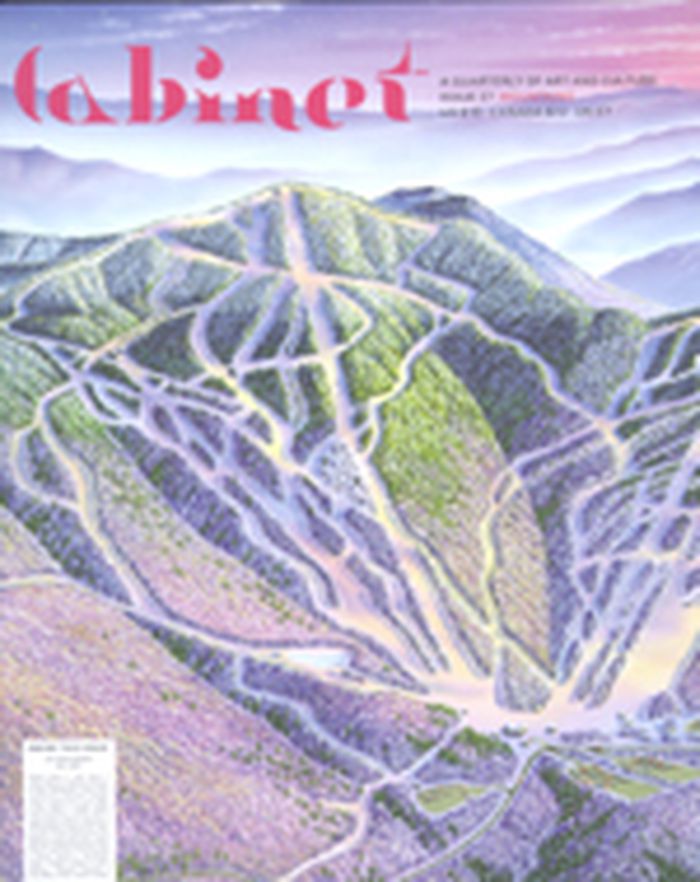
Looming large in both geological fact and sociocultural significance, mountains promise grandeur, picturesque natural beauty, good health and the chance to literally rise above the everyday - yet they also menace our imaginations with their harsh conditions, dangerous terrain and deep sense of isolation. These multivalent moods have proved an enticement to sportsmen, scientists, poets and philosophers. Indeed, our modern notion of the "sublime" was born in the Alps - where, as the English critic John Dennis wrote in 1693, nature was revealed as not solely a "delight that is consistent with reason," but also an experience "mingled with Horrours, and sometimes almost with despair." Cabinet 27 features Brian Dillon on the Cold War fact and Faustian fiction of Germany's Brocken; Allen S. Weiss on Petrarch and the winds of Mount Ventoux; and Jeffrey Kastner on the eighteenth-century Alpine panoramas of Hans Conrad Escher von der Linth. It also features Christopher Turner on the "lunar photographs" of James Nasmyth; Viktoria Tkaczyk on scientist Robert Hooke; biologist J.S.B. Haldane on being the right size; artist projects by Casey Logan and Walead Beshty; and Peter Lamborn Wilson's examination of the alchemical properties of building materials.
Cabinet 27 : mountains
Actions:
Price:
$12.00
(available to order)
Summary:
Looming large in both geological fact and sociocultural significance, mountains promise grandeur, picturesque natural beauty, good health and the chance to literally rise above the everyday - yet they also menace our imaginations with their harsh conditions, dangerous terrain and deep sense of isolation. These multivalent moods have proved an enticement to sportsmen, scientists, poets and philosophers. Indeed, our modern notion of the "sublime" was born in the Alps - where, as the English critic John Dennis wrote in 1693, nature was revealed as not solely a "delight that is consistent with reason," but also an experience "mingled with Horrours, and sometimes almost with despair." Cabinet 27 features Brian Dillon on the Cold War fact and Faustian fiction of Germany's Brocken; Allen S. Weiss on Petrarch and the winds of Mount Ventoux; and Jeffrey Kastner on the eighteenth-century Alpine panoramas of Hans Conrad Escher von der Linth. It also features Christopher Turner on the "lunar photographs" of James Nasmyth; Viktoria Tkaczyk on scientist Robert Hooke; biologist J.S.B. Haldane on being the right size; artist projects by Casey Logan and Walead Beshty; and Peter Lamborn Wilson's examination of the alchemical properties of building materials.
Form:
journals and magazines
journals and magazines
Publication:
October 2007, Brooklyn
October 2007, Brooklyn
Subject:
Magazines
Magazines
Form:
books
books
Actions:
Price:
$35.95
(available in store)
Summary:
From the late nineteenth through most of the twentieth century, the evangelical Protestant Grenfell Mission in Newfoundland and Labrador, Canada, created a network of hospitals, schools, orphanages, stores, and industries with the goal of bringing health and organized society to settler fisherfolk and Indigenous populations. This infrastructure also served to support(...)
$35.95
(available in store)
Summary:
From the late nineteenth through most of the twentieth century, the evangelical Protestant Grenfell Mission in Newfoundland and Labrador, Canada, created a network of hospitals, schools, orphanages, stores, and industries with the goal of bringing health and organized society to settler fisherfolk and Indigenous populations. This infrastructure also served to support(...)
Title:
Slow disturbance: infrastructural mediation on the settler colonial resource frontier
Actions:
Price:
$35.95
(available in store)
Summary:
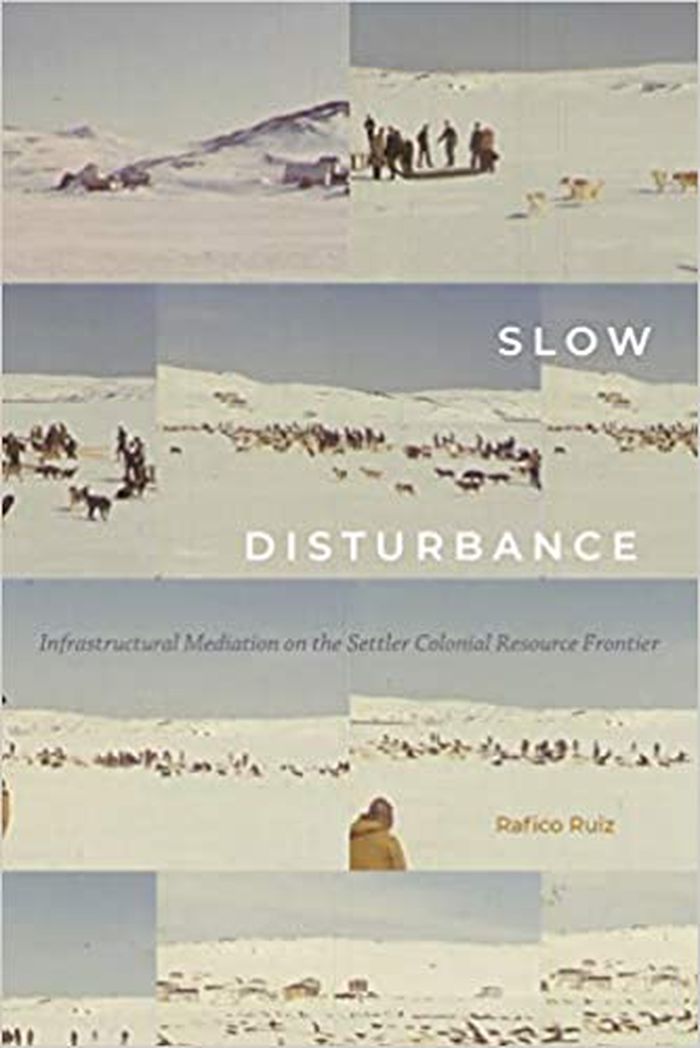
From the late nineteenth through most of the twentieth century, the evangelical Protestant Grenfell Mission in Newfoundland and Labrador, Canada, created a network of hospitals, schools, orphanages, stores, and industries with the goal of bringing health and organized society to settler fisherfolk and Indigenous populations. This infrastructure also served to support resource extraction of fisheries off Labrador's coast. In 'Slow Disturbance' Rafico Ruiz engages with the Grenfell Mission to theorize how settler colonialism establishes itself through what he calls infrastructural mediation—the ways in which colonial lifeworlds, subjectivities, and affects come into being through the creation and maintenance of infrastructures. Drawing on archival documents, maps, interviews with municipal officials, teachers, and residents, as well as his field photography, Ruiz shows how the mission's infrastructural mediation—from its attempts to restructure the local economy to the aerial surveying and mapping of the coastline—responded to the colony's environmental conditions in ways that expanded the bounds of the settler frontier. By tracing the mission's history and the mechanisms that enabled its functioning, Ruiz complicates understandings of mediation and infrastructure while expanding current debates surrounding settler colonialism and extractive capitalism.
Slow disturbance: infrastructural mediation on the settler colonial resource frontier
Actions:
Price:
$35.95
(available in store)
Summary:
From the late nineteenth through most of the twentieth century, the evangelical Protestant Grenfell Mission in Newfoundland and Labrador, Canada, created a network of hospitals, schools, orphanages, stores, and industries with the goal of bringing health and organized society to settler fisherfolk and Indigenous populations. This infrastructure also served to support resource extraction of fisheries off Labrador's coast. In 'Slow Disturbance' Rafico Ruiz engages with the Grenfell Mission to theorize how settler colonialism establishes itself through what he calls infrastructural mediation—the ways in which colonial lifeworlds, subjectivities, and affects come into being through the creation and maintenance of infrastructures. Drawing on archival documents, maps, interviews with municipal officials, teachers, and residents, as well as his field photography, Ruiz shows how the mission's infrastructural mediation—from its attempts to restructure the local economy to the aerial surveying and mapping of the coastline—responded to the colony's environmental conditions in ways that expanded the bounds of the settler frontier. By tracing the mission's history and the mechanisms that enabled its functioning, Ruiz complicates understandings of mediation and infrastructure while expanding current debates surrounding settler colonialism and extractive capitalism.
Form:
books
books
Publication:
April 2021
April 2021
Subject:
Architecture ecologies
Architecture ecologies
Form:
books
books
Title:
The well-tempered city
The well-tempered city
Actions:
Price:
$21.99
(available to order)
Summary:
Cities are birthplaces of civilization; centers of culture, trade, and progress; cauldrons of opportunity—and the home of eighty percent of the world’s population by 2050. As the 21st century progresses, metropolitan areas will bear the brunt of global megatrends such as climate change, natural resource depletion, population growth, income inequality, mass migrations,(...)
$21.99
(available to order)
Summary:
Cities are birthplaces of civilization; centers of culture, trade, and progress; cauldrons of opportunity—and the home of eighty percent of the world’s population by 2050. As the 21st century progresses, metropolitan areas will bear the brunt of global megatrends such as climate change, natural resource depletion, population growth, income inequality, mass migrations,(...)
Title:
The well-tempered city
Actions:
Price:
$21.99
(available to order)
Summary:
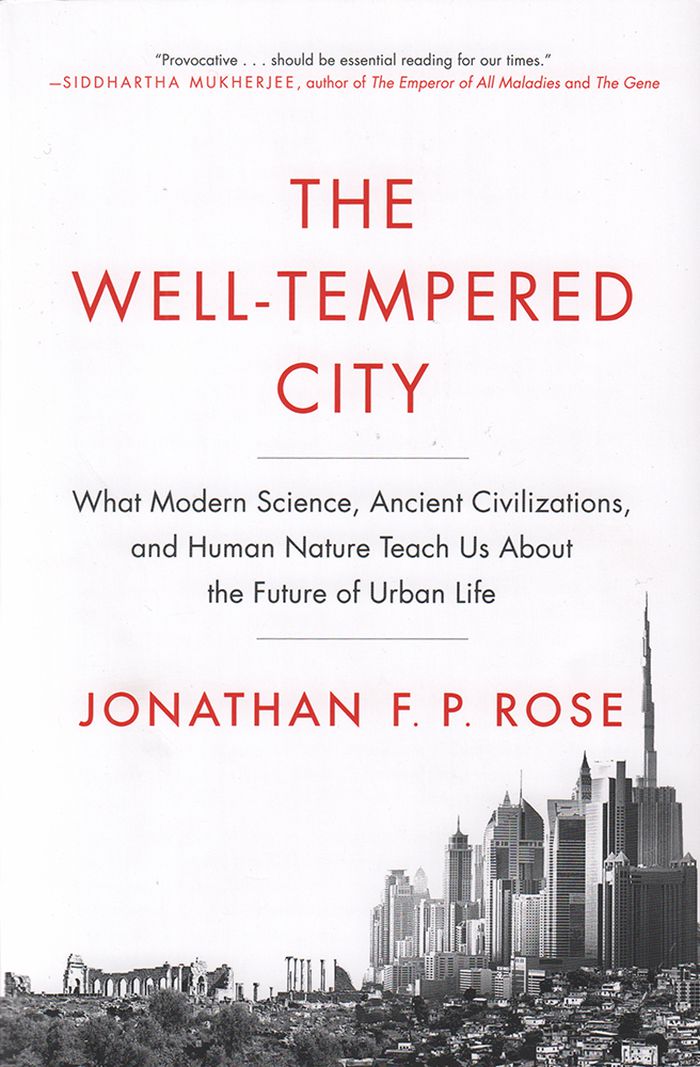
Cities are birthplaces of civilization; centers of culture, trade, and progress; cauldrons of opportunity—and the home of eighty percent of the world’s population by 2050. As the 21st century progresses, metropolitan areas will bear the brunt of global megatrends such as climate change, natural resource depletion, population growth, income inequality, mass migrations, education and health disparities, among many others. In The Well-Tempered City, Jonathan F. P. Rose—the man who “repairs the fabric of cities”—distills a lifetime of interdisciplinary research and firsthand experience into a five-pronged model for how to design and reshape our cities with the goal of equalizing their landscape of opportunity. Drawing from the musical concept of “temperament” as a way to achieve harmony, Rose argues that well-tempered cities can be infused with systems that bend the arc of their development toward equality, resilience, adaptability, well-being, and the ever-unfolding harmony between civilization and nature. These goals may never be fully achieved, but our cities will be richer and happier if we aspire to them, and if we infuse our every plan and constructive step with this intention.
The well-tempered city
Actions:
Price:
$21.99
(available to order)
Summary:
Cities are birthplaces of civilization; centers of culture, trade, and progress; cauldrons of opportunity—and the home of eighty percent of the world’s population by 2050. As the 21st century progresses, metropolitan areas will bear the brunt of global megatrends such as climate change, natural resource depletion, population growth, income inequality, mass migrations, education and health disparities, among many others. In The Well-Tempered City, Jonathan F. P. Rose—the man who “repairs the fabric of cities”—distills a lifetime of interdisciplinary research and firsthand experience into a five-pronged model for how to design and reshape our cities with the goal of equalizing their landscape of opportunity. Drawing from the musical concept of “temperament” as a way to achieve harmony, Rose argues that well-tempered cities can be infused with systems that bend the arc of their development toward equality, resilience, adaptability, well-being, and the ever-unfolding harmony between civilization and nature. These goals may never be fully achieved, but our cities will be richer and happier if we aspire to them, and if we infuse our every plan and constructive step with this intention.
Form:
books
books
Publication:
October 2017
October 2017
Subject:
Urban Theory
Urban Theory
Form:
books
books
Price:
$23.95
(available to order)
Summary:
For some people, their lawn is a source of pride, and for others, caring for their lawn is a chore. Yet for an increasing number of people, turf care is a cause of ecological anxiety. In Lawn People, author Paul Robbins, asks, "How did the needs of the grass come to be my own?" In his goal to get a clearer picture of why people and grasses do what they do, Robbins(...)
$23.95
(available to order)
Summary:
For some people, their lawn is a source of pride, and for others, caring for their lawn is a chore. Yet for an increasing number of people, turf care is a cause of ecological anxiety. In Lawn People, author Paul Robbins, asks, "How did the needs of the grass come to be my own?" In his goal to get a clearer picture of why people and grasses do what they do, Robbins(...)
Title:
Lawn People: how grasses, weeds and chemicals make us who we are
Actions:
Price:
$23.95
(available to order)
Summary:
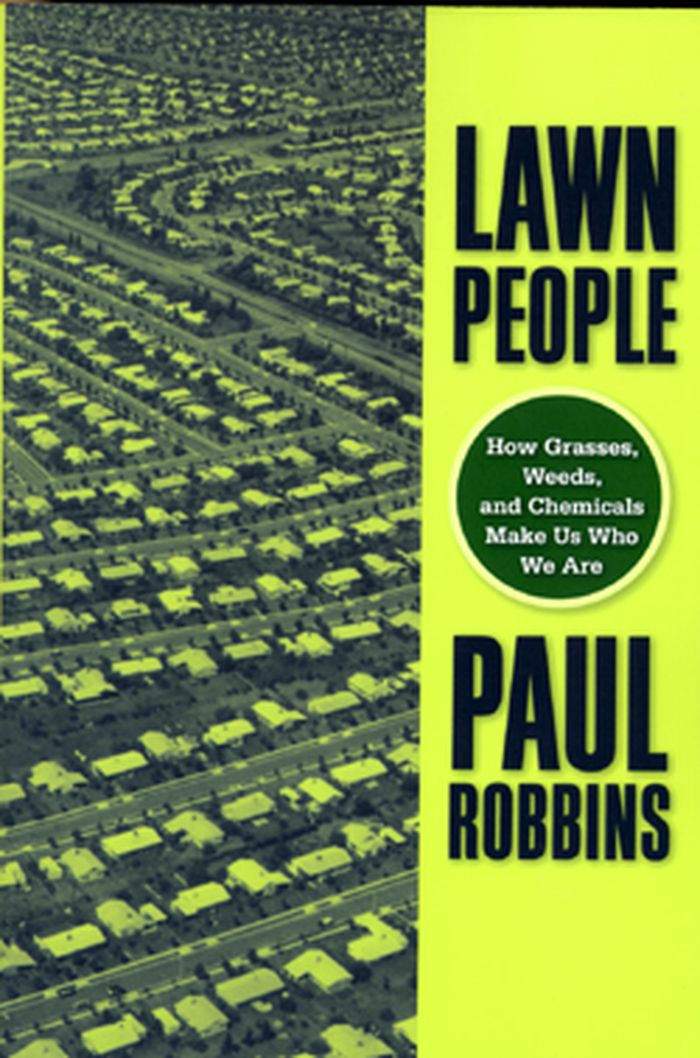
For some people, their lawn is a source of pride, and for others, caring for their lawn is a chore. Yet for an increasing number of people, turf care is a cause of ecological anxiety. In Lawn People, author Paul Robbins, asks, "How did the needs of the grass come to be my own?" In his goal to get a clearer picture of why people and grasses do what they do, Robbins interviews homeowners about their lawns, and uses national surveys, analysis from aerial photographs, and economic data to determine what people really feel about-and how they treat-their lawns. Lawn People places the lawn in its ecological, economic, and social context. Robbins considers the attention we pay our turfgrass-the chemicals we use to grow lawns, the hazards of turf care to our urban ecology, and its potential impact on water quality and household health. He also shows how the ecology of cities creates certain kinds of citizens, deftly contrasting man's control of the lawn with the lawn's control of man. Lawn People provides an intriguing examination of nature's influence on landscape management and on the ecosystem.
Lawn People: how grasses, weeds and chemicals make us who we are
Actions:
Price:
$23.95
(available to order)
Summary:
For some people, their lawn is a source of pride, and for others, caring for their lawn is a chore. Yet for an increasing number of people, turf care is a cause of ecological anxiety. In Lawn People, author Paul Robbins, asks, "How did the needs of the grass come to be my own?" In his goal to get a clearer picture of why people and grasses do what they do, Robbins interviews homeowners about their lawns, and uses national surveys, analysis from aerial photographs, and economic data to determine what people really feel about-and how they treat-their lawns. Lawn People places the lawn in its ecological, economic, and social context. Robbins considers the attention we pay our turfgrass-the chemicals we use to grow lawns, the hazards of turf care to our urban ecology, and its potential impact on water quality and household health. He also shows how the ecology of cities creates certain kinds of citizens, deftly contrasting man's control of the lawn with the lawn's control of man. Lawn People provides an intriguing examination of nature's influence on landscape management and on the ecosystem.
Form:
books
books
Publication:
June 2007, Philadelphie
June 2007, Philadelphie
Subject:
Green Architecture
Green Architecture
Form:
books
books
Actions:
Price:
$20.00
(available to order)
Summary:
Nature and communities in the global south is being overwhelmed at a shocking rate. In many places this is due to ventures such as large-scale open-pit mining, oil extraction in tropical areas, and the spread of monocultures. These and other such forms of natural resource appropriation are usually known as extractivisms. This introductory book on the one hand adopts an(...)
$20.00
(available to order)
Summary:
Nature and communities in the global south is being overwhelmed at a shocking rate. In many places this is due to ventures such as large-scale open-pit mining, oil extraction in tropical areas, and the spread of monocultures. These and other such forms of natural resource appropriation are usually known as extractivisms. This introductory book on the one hand adopts an(...)
Title:
Extractivisms: politics, economy and ecology
Actions:
Price:
$20.00
(available to order)
Summary:
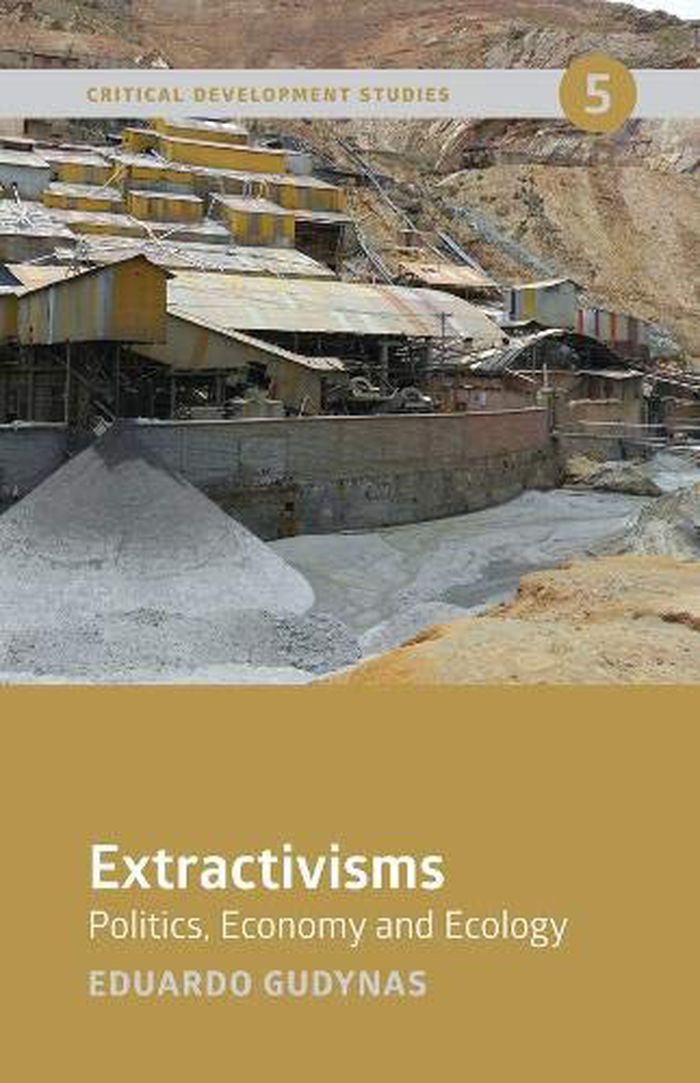
Nature and communities in the global south is being overwhelmed at a shocking rate. In many places this is due to ventures such as large-scale open-pit mining, oil extraction in tropical areas, and the spread of monocultures. These and other such forms of natural resource appropriation are usually known as extractivisms. This introductory book on the one hand adopts an interdisciplinary and critical perspective, incorporating contributions from economics, politics, ecology, and more. On the other hand it is an exercise in the politics among humans and with the environment. Eduardo Gudnyas explores negative local impacts such as ecological and health degradation or violence, along with spillover effects that redefines democracy and justice. Significantly, presented for the first time in English is a comprehensive overview of the theoretical innovations currently being discussed in the South, such as the distinction between appropriation and production modes and a redefinition of surplus to include social and economic features or new understandings on conflict dynamics. Furthermore, Gudynas discusses the Latin American peculiarities of extractivisms produced both by conservative and new-left governments, making clear that it has very deep roots in culture and ideologies, and offers solutions for the future.
Extractivisms: politics, economy and ecology
Actions:
Price:
$20.00
(available to order)
Summary:
Nature and communities in the global south is being overwhelmed at a shocking rate. In many places this is due to ventures such as large-scale open-pit mining, oil extraction in tropical areas, and the spread of monocultures. These and other such forms of natural resource appropriation are usually known as extractivisms. This introductory book on the one hand adopts an interdisciplinary and critical perspective, incorporating contributions from economics, politics, ecology, and more. On the other hand it is an exercise in the politics among humans and with the environment. Eduardo Gudnyas explores negative local impacts such as ecological and health degradation or violence, along with spillover effects that redefines democracy and justice. Significantly, presented for the first time in English is a comprehensive overview of the theoretical innovations currently being discussed in the South, such as the distinction between appropriation and production modes and a redefinition of surplus to include social and economic features or new understandings on conflict dynamics. Furthermore, Gudynas discusses the Latin American peculiarities of extractivisms produced both by conservative and new-left governments, making clear that it has very deep roots in culture and ideologies, and offers solutions for the future.
Form:
books
books
Publication:
September 2021
September 2021
Subject:
Environment and environmental theory
Environment and environmental theory


