


2140 Results
Form:
books
books
Actions:
Price:
$33.00
(available in store)
Summary:
Paul Goesch produced one of the most inventive, peculiar, and poignant bodies of work to emerge from Weimar Germany. An artist and architect, he made both fanciful figurative drawings and visionary architectural designs. The latter, from the extensive holdings of the Centre for Canadian Architecture in Montreal, are the focus of this publication, the first in English(...)
$33.00
(available in store)
Summary:
Paul Goesch produced one of the most inventive, peculiar, and poignant bodies of work to emerge from Weimar Germany. An artist and architect, he made both fanciful figurative drawings and visionary architectural designs. The latter, from the extensive holdings of the Centre for Canadian Architecture in Montreal, are the focus of this publication, the first in English(...)
Title:
Portals: the visionary architecture of Paul Goesch
Actions:
Price:
$33.00
(available in store)
Summary:
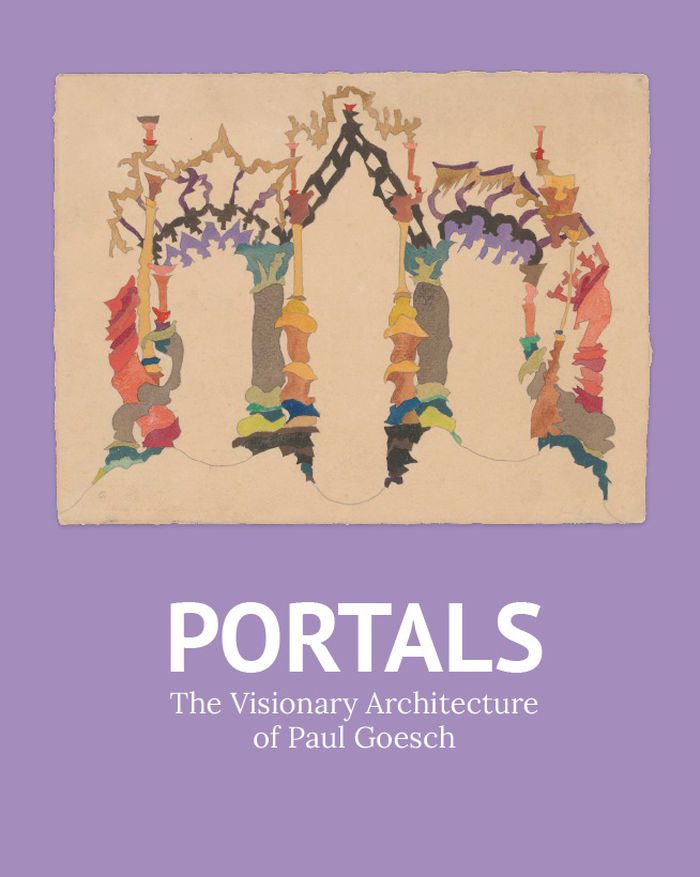
Paul Goesch produced one of the most inventive, peculiar, and poignant bodies of work to emerge from Weimar Germany. An artist and architect, he made both fanciful figurative drawings and visionary architectural designs. The latter, from the extensive holdings of the Centre for Canadian Architecture in Montreal, are the focus of this publication, the first in English dedicated to Goesch. Amid the aftermath of First World War, a generation of young architects sketched their visions for utopia. Goesch stands out among them for his formal range, his kaleidoscopic color sense, and his playful and pluralistic embrace of architectural history, as well as for his long struggles with schizophrenia, a condition for which he was institutionalized and ultimately murdered by the Nazis. This publication highlights the decorative portals and archways that predominate in Goesch’s work. These represent the artist’s metaphysical passages, as a spiritualist steeped in diverse religious and esoteric beliefs, and his altered psychological states. They also suggest Goesch’s liminal status between art and architecture, “sanity” and “madness,” the trained insider and the institutionalized “outsider.” Celebrated in his time and since forgotten, Goesch is presented here in the context of period discussions on art, architecture, and mental health.
Portals: the visionary architecture of Paul Goesch
Actions:
Price:
$33.00
(available in store)
Summary:
Paul Goesch produced one of the most inventive, peculiar, and poignant bodies of work to emerge from Weimar Germany. An artist and architect, he made both fanciful figurative drawings and visionary architectural designs. The latter, from the extensive holdings of the Centre for Canadian Architecture in Montreal, are the focus of this publication, the first in English dedicated to Goesch. Amid the aftermath of First World War, a generation of young architects sketched their visions for utopia. Goesch stands out among them for his formal range, his kaleidoscopic color sense, and his playful and pluralistic embrace of architectural history, as well as for his long struggles with schizophrenia, a condition for which he was institutionalized and ultimately murdered by the Nazis. This publication highlights the decorative portals and archways that predominate in Goesch’s work. These represent the artist’s metaphysical passages, as a spiritualist steeped in diverse religious and esoteric beliefs, and his altered psychological states. They also suggest Goesch’s liminal status between art and architecture, “sanity” and “madness,” the trained insider and the institutionalized “outsider.” Celebrated in his time and since forgotten, Goesch is presented here in the context of period discussions on art, architecture, and mental health.
Form:
books
books
Publication:
April 2023
April 2023
Subject:
Architecture Monographs
Architecture Monographs
Form:
books
books
Actions:
Price:
$37.99
(available in store)
Summary:
In "The effluent eye," Rosemary J. Jolly argues for the decolonization of human rights, attributing their failure not simply to state and institutional malfeasance but to the very concept of human rights as anthropocentric-and, therefore, fatally shortsighted. In an engaging mix of literary and cultural criticism, Indigenous and Black critique, and substantive forays into(...)
$37.99
(available in store)
Summary:
In "The effluent eye," Rosemary J. Jolly argues for the decolonization of human rights, attributing their failure not simply to state and institutional malfeasance but to the very concept of human rights as anthropocentric-and, therefore, fatally shortsighted. In an engaging mix of literary and cultural criticism, Indigenous and Black critique, and substantive forays into(...)
Title:
The effluent eye: Narratives for decolonial right-making
Actions:
Price:
$37.99
(available in store)
Summary:
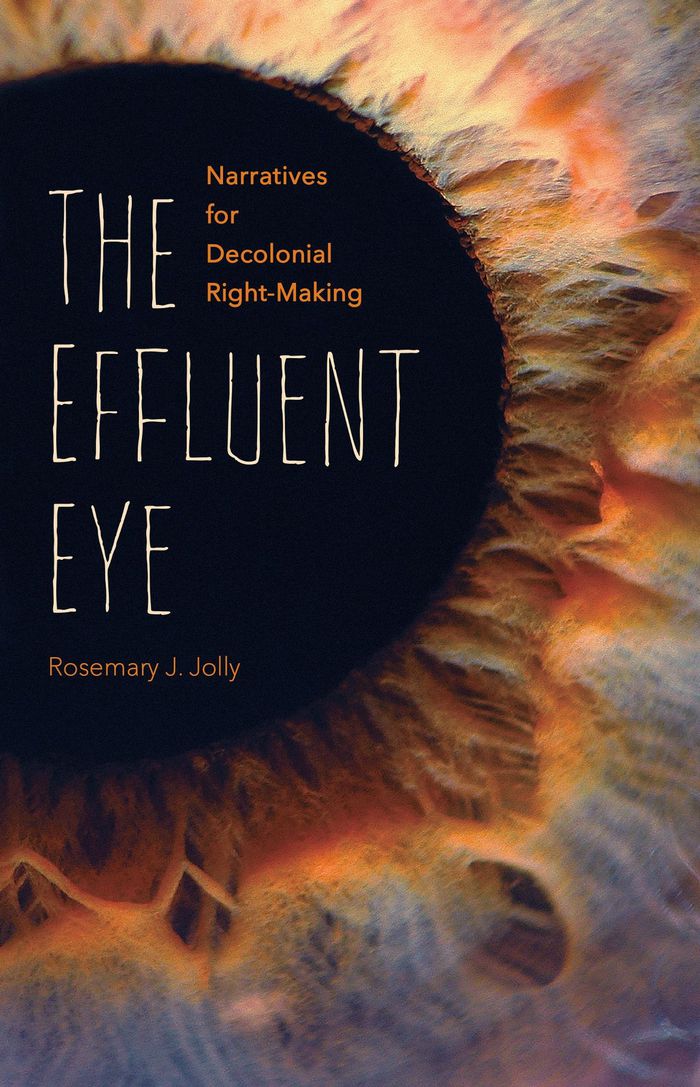
In "The effluent eye," Rosemary J. Jolly argues for the decolonization of human rights, attributing their failure not simply to state and institutional malfeasance but to the very concept of human rights as anthropocentric-and, therefore, fatally shortsighted. In an engaging mix of literary and cultural criticism, Indigenous and Black critique, and substantive forays into the medical humanities, Jolly proposes right-making in the demise of human rights. Using what she calls an "effluent eye," Jolly draws on "Fifth Wave" structural public health to confront the concept of human rights-one of the most powerful and widely entrenched liberal ideas. She builds on Indigenous sovereignty work from authors such as Robin Wall Kimmerer, Leanne Betasamosake Simpson, and Mark Rifkin as well as the littoral development in Black studies from Christine Sharpe, Saidiya Hartman, and Tiffany Lethabo King to engage decolonial thinking on a range of urgent topics such as pandemic history and grief; gender-based violence and sexual assault; and the connections between colonial capitalism and substance abuse, the Anthropocene, and climate change. Combining witnessed experience with an array of decolonial texts, Jolly argues for an effluent form of reading that begins with the understanding that the granting of "rights" to individuals is meaningless in a world compromised by pollution, poverty, and successive pandemics.
The effluent eye: Narratives for decolonial right-making
Actions:
Price:
$37.99
(available in store)
Summary:
In "The effluent eye," Rosemary J. Jolly argues for the decolonization of human rights, attributing their failure not simply to state and institutional malfeasance but to the very concept of human rights as anthropocentric-and, therefore, fatally shortsighted. In an engaging mix of literary and cultural criticism, Indigenous and Black critique, and substantive forays into the medical humanities, Jolly proposes right-making in the demise of human rights. Using what she calls an "effluent eye," Jolly draws on "Fifth Wave" structural public health to confront the concept of human rights-one of the most powerful and widely entrenched liberal ideas. She builds on Indigenous sovereignty work from authors such as Robin Wall Kimmerer, Leanne Betasamosake Simpson, and Mark Rifkin as well as the littoral development in Black studies from Christine Sharpe, Saidiya Hartman, and Tiffany Lethabo King to engage decolonial thinking on a range of urgent topics such as pandemic history and grief; gender-based violence and sexual assault; and the connections between colonial capitalism and substance abuse, the Anthropocene, and climate change. Combining witnessed experience with an array of decolonial texts, Jolly argues for an effluent form of reading that begins with the understanding that the granting of "rights" to individuals is meaningless in a world compromised by pollution, poverty, and successive pandemics.
Form:
books
books
Publication:
January 2024
January 2024
Subject:
Critical Theory
Critical Theory
Form:
books
books
Title:
Radical intimacy
Radical intimacy
Actions:
Price:
$29.95
(available in store)
Summary:
Capitalist ideology wants us to believe that there is an optimal way to live. 'Making connections' means networking for work. Our emotional needs are to be fulfilled by a single romantic partner, and self-care equates to taking personal responsibility for our suffering. We must be productive and heterosexual, we must have babies and buy a house. But the kicker is most(...)
$29.95
(available in store)
Summary:
Capitalist ideology wants us to believe that there is an optimal way to live. 'Making connections' means networking for work. Our emotional needs are to be fulfilled by a single romantic partner, and self-care equates to taking personal responsibility for our suffering. We must be productive and heterosexual, we must have babies and buy a house. But the kicker is most(...)
Title:
Radical intimacy
Actions:
Price:
$29.95
(available in store)
Summary:
Capitalist ideology wants us to believe that there is an optimal way to live. 'Making connections' means networking for work. Our emotional needs are to be fulfilled by a single romantic partner, and self-care equates to taking personal responsibility for our suffering. We must be productive and heterosexual, we must have babies and buy a house. But the kicker is most people cannot and do not want to achieve all, or any of these life goals. Instead we are left feeling atomised, exhausted and disempowered. ''Radical intimacy'' shows that it doesn't need to be this way. A punchy and impassioned account of inspiring ideas about alternative ways to live, Sophie K Rosa demands we use our radical imagination to discover a new form of intimacy and to transform our personal lives and in turn society as a whole. Including critiques of the 'wellness' industry that ignores rising poverty rates, the mental health crisis and racist and misogynist state violence; transcending love and sex under capitalism to move towards feminist, decolonial and queer thinking; asking whether we should abolish the family; interrogating the framing of ageing and death and much more, ''Radical intimacy'' is the compassionate antidote to a callous society.
Radical intimacy
Actions:
Price:
$29.95
(available in store)
Summary:
Capitalist ideology wants us to believe that there is an optimal way to live. 'Making connections' means networking for work. Our emotional needs are to be fulfilled by a single romantic partner, and self-care equates to taking personal responsibility for our suffering. We must be productive and heterosexual, we must have babies and buy a house. But the kicker is most people cannot and do not want to achieve all, or any of these life goals. Instead we are left feeling atomised, exhausted and disempowered. ''Radical intimacy'' shows that it doesn't need to be this way. A punchy and impassioned account of inspiring ideas about alternative ways to live, Sophie K Rosa demands we use our radical imagination to discover a new form of intimacy and to transform our personal lives and in turn society as a whole. Including critiques of the 'wellness' industry that ignores rising poverty rates, the mental health crisis and racist and misogynist state violence; transcending love and sex under capitalism to move towards feminist, decolonial and queer thinking; asking whether we should abolish the family; interrogating the framing of ageing and death and much more, ''Radical intimacy'' is the compassionate antidote to a callous society.
Form:
books
books
Publication:
April 2023
April 2023
Subject:
Social
Social
Form:
books
books
Actions:
Price:
$49.95
(available in store)
Summary:
If you were asked to close your eyes and envision where you are happiest, would you picture somewhere inside a building? North Americans are inside buildings for more than 90% of the day. Meanwhile, the indoors are stifling us, sometimes even killing us. Buildings, and the materials that make them up, expose us to materials linked to negative health impacts. The(...)
$49.95
(available in store)
Summary:
If you were asked to close your eyes and envision where you are happiest, would you picture somewhere inside a building? North Americans are inside buildings for more than 90% of the day. Meanwhile, the indoors are stifling us, sometimes even killing us. Buildings, and the materials that make them up, expose us to materials linked to negative health impacts. The(...)
Title:
People, planet, design: A practical guide to realizing architecture's potential
Actions:
Price:
$49.95
(available in store)
Summary:
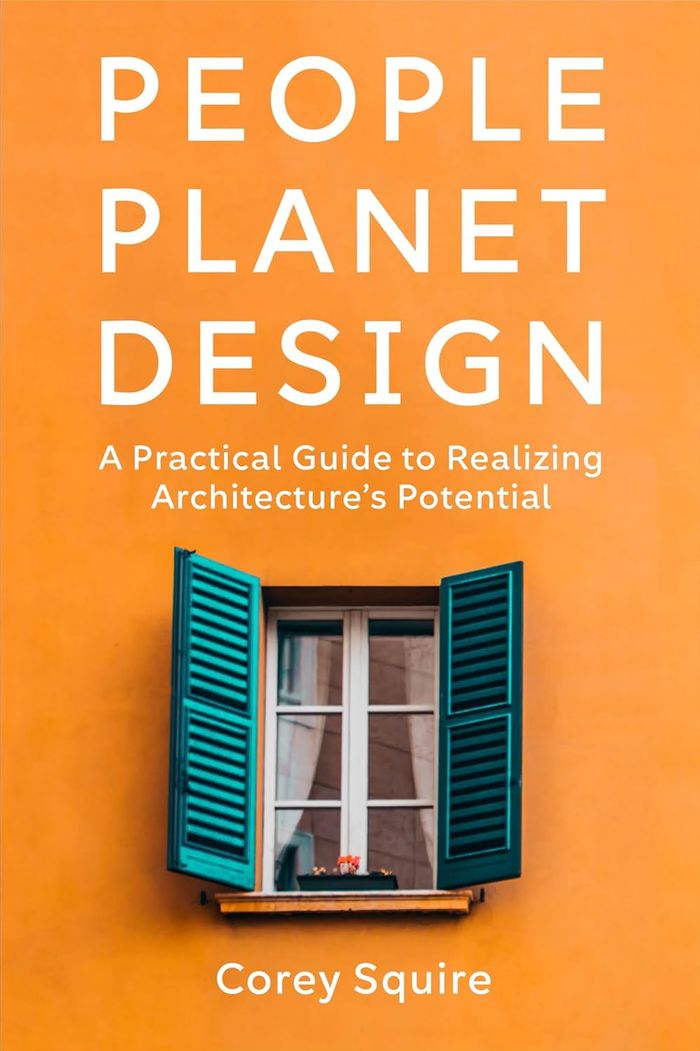
If you were asked to close your eyes and envision where you are happiest, would you picture somewhere inside a building? North Americans are inside buildings for more than 90% of the day. Meanwhile, the indoors are stifling us, sometimes even killing us. Buildings, and the materials that make them up, expose us to materials linked to negative health impacts. The construction and operation of buildings is responsible for 40% of climate-changing carbon emissions. In the US, the design choices made by the typical architecture firm employee each year can reduce emissions by about 300 times that of an average American. But the promise of sustainable architecture will not be realized if sustainability remains a secondary consideration for architects. What if great design were defined by its ability to cool the planet, heal communities, enhance ecological functioning, and advance justice? In "People, planet, design," architect Corey Squire builds the case, provides the data, and lays out the practical tools for a transformative human-centered architecture. This approach integrates beauty and delight with an awareness of how every design choice impacts the community, the planet, and the people who will use the building. Outcome-focused with a deep dive into practical design strategies, the book showcases ten building systems that embody design excellence.
People, planet, design: A practical guide to realizing architecture's potential
Actions:
Price:
$49.95
(available in store)
Summary:
If you were asked to close your eyes and envision where you are happiest, would you picture somewhere inside a building? North Americans are inside buildings for more than 90% of the day. Meanwhile, the indoors are stifling us, sometimes even killing us. Buildings, and the materials that make them up, expose us to materials linked to negative health impacts. The construction and operation of buildings is responsible for 40% of climate-changing carbon emissions. In the US, the design choices made by the typical architecture firm employee each year can reduce emissions by about 300 times that of an average American. But the promise of sustainable architecture will not be realized if sustainability remains a secondary consideration for architects. What if great design were defined by its ability to cool the planet, heal communities, enhance ecological functioning, and advance justice? In "People, planet, design," architect Corey Squire builds the case, provides the data, and lays out the practical tools for a transformative human-centered architecture. This approach integrates beauty and delight with an awareness of how every design choice impacts the community, the planet, and the people who will use the building. Outcome-focused with a deep dive into practical design strategies, the book showcases ten building systems that embody design excellence.
Form:
books
books
Publication:
November 2023
November 2023
Subject:
Green Architecture
Green Architecture
Form:
books
books
Title:
Plundering the North: A history of settler colonialism, corporate welfare, and food insecurity
Plundering the North: A history of settler colonialism, corporate welfare, and food insecurity
Actions:
Price:
$27.95
(available to order)
Summary:
Food insecurity in the North is one of Canada’s most shameful public health and human rights crises. In ''Plundering the North,'' Kristin Burnett and Travis Hay examine the disturbing mechanics behind the origins of this crisis: state and corporate intervention in northern Indigenous foodways. Despite claims to the contrary by governments, the Hudson’s Bay Company (HBC),(...)
$27.95
(available to order)
Summary:
Food insecurity in the North is one of Canada’s most shameful public health and human rights crises. In ''Plundering the North,'' Kristin Burnett and Travis Hay examine the disturbing mechanics behind the origins of this crisis: state and corporate intervention in northern Indigenous foodways. Despite claims to the contrary by governments, the Hudson’s Bay Company (HBC),(...)
Title:
Plundering the North: A history of settler colonialism, corporate welfare, and food insecurity
Actions:
Price:
$27.95
(available to order)
Summary:
Food insecurity in the North is one of Canada’s most shameful public health and human rights crises. In ''Plundering the North,'' Kristin Burnett and Travis Hay examine the disturbing mechanics behind the origins of this crisis: state and corporate intervention in northern Indigenous foodways. Despite claims to the contrary by governments, the Hudson’s Bay Company (HBC), and the contemporary North West Company (NWC), the exorbitant cost of food in the North is neither a naturally occurring phenomenon nor the result of free-market forces. Rather, inflated food prices are the direct result of government policies and corporate monopolies. Using food as a lens to track the institutional presence of the Canadian state in the North, Burnett and Hay chart the social, economic, and political changes that have taken place in northern Ontario since the 1950s. They explore the roles of state food policy and the HBC and NWC in setting up, perpetuating, and profiting from food insecurity while undermining Indigenous food sovereignties and self-determination. ''Plundering the North'' provides fresh insight into Canada’s settler colonial project by re-evaluating northern food policy and laying bare the governmental and corporate processes behind the chronic food insecurity experienced by northern Indigenous communities.
Plundering the North: A history of settler colonialism, corporate welfare, and food insecurity
Actions:
Price:
$27.95
(available to order)
Summary:
Food insecurity in the North is one of Canada’s most shameful public health and human rights crises. In ''Plundering the North,'' Kristin Burnett and Travis Hay examine the disturbing mechanics behind the origins of this crisis: state and corporate intervention in northern Indigenous foodways. Despite claims to the contrary by governments, the Hudson’s Bay Company (HBC), and the contemporary North West Company (NWC), the exorbitant cost of food in the North is neither a naturally occurring phenomenon nor the result of free-market forces. Rather, inflated food prices are the direct result of government policies and corporate monopolies. Using food as a lens to track the institutional presence of the Canadian state in the North, Burnett and Hay chart the social, economic, and political changes that have taken place in northern Ontario since the 1950s. They explore the roles of state food policy and the HBC and NWC in setting up, perpetuating, and profiting from food insecurity while undermining Indigenous food sovereignties and self-determination. ''Plundering the North'' provides fresh insight into Canada’s settler colonial project by re-evaluating northern food policy and laying bare the governmental and corporate processes behind the chronic food insecurity experienced by northern Indigenous communities.
Form:
books
books
Publication:
October 2023
October 2023
Subject:
Social
Social
Form:
books
books
Price:
$28.95
(available to order)
Summary:
Most of the world's population now lives in cities. So if we are to address the problems of environmental deterioration and peak oil adequately, the city has to be a major focus of attention. EcoCities is about re-building cities and towns based on ecological principles for the long term sustainability, cultural vitality and health of the Earth's biosphere. Unique in(...)
$28.95
(available to order)
Summary:
Most of the world's population now lives in cities. So if we are to address the problems of environmental deterioration and peak oil adequately, the city has to be a major focus of attention. EcoCities is about re-building cities and towns based on ecological principles for the long term sustainability, cultural vitality and health of the Earth's biosphere. Unique in(...)
Title:
Ecocities
Actions:
Price:
$28.95
(available to order)
Summary:
Most of the world's population now lives in cities. So if we are to address the problems of environmental deterioration and peak oil adequately, the city has to be a major focus of attention. EcoCities is about re-building cities and towns based on ecological principles for the long term sustainability, cultural vitality and health of the Earth's biosphere. Unique in the literature is the book's insight that the form of the city really matters - and that it is within our ability to change it, and crucial that we do. Further, that the ecocity within its bioregion is comprehensible and do-able, and can produce a healthy and potentially happy future. EcoCities describes the place of the city in evolution, nature and history. It pays special attention to the key question of accessibility and transportation, and outlines design principles for the ecocity. The reader is encouraged to plunge in to its economics and politics: the kinds of businesses, planning and leadership required. The book then outlines the tools by which a gradual transition to the ecocity could be accomplished. Throughout, this new edition is generously illustrated with the author's own inspired visions of what such rebuilt cities might actually look like.
Ecocities
Actions:
Price:
$28.95
(available to order)
Summary:
Most of the world's population now lives in cities. So if we are to address the problems of environmental deterioration and peak oil adequately, the city has to be a major focus of attention. EcoCities is about re-building cities and towns based on ecological principles for the long term sustainability, cultural vitality and health of the Earth's biosphere. Unique in the literature is the book's insight that the form of the city really matters - and that it is within our ability to change it, and crucial that we do. Further, that the ecocity within its bioregion is comprehensible and do-able, and can produce a healthy and potentially happy future. EcoCities describes the place of the city in evolution, nature and history. It pays special attention to the key question of accessibility and transportation, and outlines design principles for the ecocity. The reader is encouraged to plunge in to its economics and politics: the kinds of businesses, planning and leadership required. The book then outlines the tools by which a gradual transition to the ecocity could be accomplished. Throughout, this new edition is generously illustrated with the author's own inspired visions of what such rebuilt cities might actually look like.
Form:
books
books
Publication:
April 2006, Gabriola Island
April 2006, Gabriola Island
Subject:
Green Architecture
Green Architecture
Form:
books
books
Actions:
Price:
$33.00
(available to order)
Summary:
The Politics of Public Space is a quarterly publication of transcripts that speak directly to the city and the way we read it. The second volume addresses the effects of COVID-19, including the sudden changes in the way we interact and view our public spaces. It contains excerpts from Myria Georgiou, Saskia Sassen, Jack Self, Brooke Holmes, Ian Strange and Alfredo(...)
$33.00
(available to order)
Summary:
The Politics of Public Space is a quarterly publication of transcripts that speak directly to the city and the way we read it. The second volume addresses the effects of COVID-19, including the sudden changes in the way we interact and view our public spaces. It contains excerpts from Myria Georgiou, Saskia Sassen, Jack Self, Brooke Holmes, Ian Strange and Alfredo(...)
Title:
Politics of Public Space, Volume 2
Actions:
Price:
$33.00
(available to order)
Summary:
The Politics of Public Space is a quarterly publication of transcripts that speak directly to the city and the way we read it. The second volume addresses the effects of COVID-19, including the sudden changes in the way we interact and view our public spaces. It contains excerpts from Myria Georgiou, Saskia Sassen, Jack Self, Brooke Holmes, Ian Strange and Alfredo Brillembourg. This publication curates a series of global perspectives as we all come to terms with a new way of life due to the virus. Myria Georgiou observes the emergence of digital solidarity groups throughout the UK as inequalities and vulnerabilities are foregrounded. World-renowned sociologist Saskia Sassen reveals the pervasiveness of power as the fragility of our global connectedness is further disclosed. The true publicness of our cities is revealed in Jack Self’s account of protest and opposition to the political structures. Brooke Holmes depicts an interconnectedness between the health of the city and it’s citizens traced back to antiquity. Australian artist Ian Strange unpacks his understanding of the home as he recounts a decade of practice into the subject. And Venezuelan architect Alfredo Brillembourg calls to arms the architecture profession to deal directly with issues of injustice within the built environment.
Politics of Public Space, Volume 2
Actions:
Price:
$33.00
(available to order)
Summary:
The Politics of Public Space is a quarterly publication of transcripts that speak directly to the city and the way we read it. The second volume addresses the effects of COVID-19, including the sudden changes in the way we interact and view our public spaces. It contains excerpts from Myria Georgiou, Saskia Sassen, Jack Self, Brooke Holmes, Ian Strange and Alfredo Brillembourg. This publication curates a series of global perspectives as we all come to terms with a new way of life due to the virus. Myria Georgiou observes the emergence of digital solidarity groups throughout the UK as inequalities and vulnerabilities are foregrounded. World-renowned sociologist Saskia Sassen reveals the pervasiveness of power as the fragility of our global connectedness is further disclosed. The true publicness of our cities is revealed in Jack Self’s account of protest and opposition to the political structures. Brooke Holmes depicts an interconnectedness between the health of the city and it’s citizens traced back to antiquity. Australian artist Ian Strange unpacks his understanding of the home as he recounts a decade of practice into the subject. And Venezuelan architect Alfredo Brillembourg calls to arms the architecture profession to deal directly with issues of injustice within the built environment.
Form:
books
books
Publication:
August 2020
August 2020
Subject:
Urban Theory
Urban Theory
Form:
books
books

Actions:
Price:
$42.50
(available to order)
Summary:
Visiting a Soviet sanatorium is like stepping back in time. Originally built in the 1920s, they afforded workers a place to holiday, courtesy of a state-funded voucher system. At their peak they were visited by millions of citizens across the USSR every year. A combination of medical institution and spa, the era’s sanatoriums are among the most innovative buildings of(...)
$42.50
(available to order)
Summary:
Visiting a Soviet sanatorium is like stepping back in time. Originally built in the 1920s, they afforded workers a place to holiday, courtesy of a state-funded voucher system. At their peak they were visited by millions of citizens across the USSR every year. A combination of medical institution and spa, the era’s sanatoriums are among the most innovative buildings of(...)
Title:
Holidays in soviet sanatoriums
Actions:
Price:
$42.50
(available to order)
Summary:
Visiting a Soviet sanatorium is like stepping back in time. Originally built in the 1920s, they afforded workers a place to holiday, courtesy of a state-funded voucher system. At their peak they were visited by millions of citizens across the USSR every year. A combination of medical institution and spa, the era’s sanatoriums are among the most innovative buildings of their time. Although aesthetically diverse, Soviet utopian values permeated every aspect of these structures; Western holidays were perceived as decadent. By contrast, sanatorium breaks were intended to edify and strengthen visitors: health professionals carefully monitored guests throughout their stay, so they could return to work with renewed vigor. Certain sanatoriums became known for their specialist treatments, such as crude-oil baths, radon water douches and stints in underground salt caves. While today some sanatoriums are in critical states of decline, many are still fully operational and continue to offer their Soviet-era treatments to visitors. Using specially commissioned photographs by leading photographers of the post-Soviet territories, and texts by sanatorium expert Maryam Omidi, this book documents over 45 sanatoriums and their unconventional treatments. From Armenia to Uzbekistan, it represents the most comprehensive survey to date of this fascinating and previously overlooked Soviet institution.
Holidays in soviet sanatoriums
Actions:
Price:
$42.50
(available to order)
Summary:
Visiting a Soviet sanatorium is like stepping back in time. Originally built in the 1920s, they afforded workers a place to holiday, courtesy of a state-funded voucher system. At their peak they were visited by millions of citizens across the USSR every year. A combination of medical institution and spa, the era’s sanatoriums are among the most innovative buildings of their time. Although aesthetically diverse, Soviet utopian values permeated every aspect of these structures; Western holidays were perceived as decadent. By contrast, sanatorium breaks were intended to edify and strengthen visitors: health professionals carefully monitored guests throughout their stay, so they could return to work with renewed vigor. Certain sanatoriums became known for their specialist treatments, such as crude-oil baths, radon water douches and stints in underground salt caves. While today some sanatoriums are in critical states of decline, many are still fully operational and continue to offer their Soviet-era treatments to visitors. Using specially commissioned photographs by leading photographers of the post-Soviet territories, and texts by sanatorium expert Maryam Omidi, this book documents over 45 sanatoriums and their unconventional treatments. From Armenia to Uzbekistan, it represents the most comprehensive survey to date of this fascinating and previously overlooked Soviet institution.
Form:
books
books
Publication:
October 2017
October 2017
Subject:
Photography monographs
Photography monographs
Form:
books
books

Title:
Whole earth field guide
Whole earth field guide
Actions:
Price:
$46.95
(available to order)
Summary:
The Whole Earth Catalog was a cultural touchstone of the 1960s and 1970s. Between 1968 and 1971, almost two million copies of its various editions were sold, and not just to commune-dwellers and hippies. Millions of mainstream readers turned to the Whole Earth Catalog for practical advice and intellectual stimulation, finding everything from a review of Buckminster Fuller(...)
$46.95
(available to order)
Summary:
The Whole Earth Catalog was a cultural touchstone of the 1960s and 1970s. Between 1968 and 1971, almost two million copies of its various editions were sold, and not just to commune-dwellers and hippies. Millions of mainstream readers turned to the Whole Earth Catalog for practical advice and intellectual stimulation, finding everything from a review of Buckminster Fuller(...)
Publication:
October 2016
October 2016
Title:
Whole earth field guide
Actions:
Price:
$46.95
(available to order)
Summary:
The Whole Earth Catalog was a cultural touchstone of the 1960s and 1970s. Between 1968 and 1971, almost two million copies of its various editions were sold, and not just to commune-dwellers and hippies. Millions of mainstream readers turned to the Whole Earth Catalog for practical advice and intellectual stimulation, finding everything from a review of Buckminster Fuller to recommendations for juicers. This book offers selections from eighty texts from the nearly 1,000 items of "suggested reading" in the Last Whole Earth Catalog. Illustrated and meticulously documented, this fascinating selection of texts cited as 'suggested reading' in the Whole Earth Catalog gives us a fresh, new look at this bible of a generation. Wonderful juxtapositions abound: Buckminster Fuller and Wendell Berry; Timothy Leary and Lao-Tzu; Thoreau and Marshall McLuhan; the Boston Women's Health Collective and Norbert Wiener; Nicholas Negroponte and Kakuzo Okakura; and Margaret Mead and James Baldwin (their A Rap on Race). At once libertarian and communitarian, practical and mystical, scientific and hands-on, Whole Earth Field Guide reveals the astonishing energy and spirit that motivated thousands of young people to challenge the status quo and to grapple, with remarkable prescience, with issues such as ecology and information technology that still confront us today.
Whole earth field guide
Actions:
Price:
$46.95
(available to order)
Summary:
The Whole Earth Catalog was a cultural touchstone of the 1960s and 1970s. Between 1968 and 1971, almost two million copies of its various editions were sold, and not just to commune-dwellers and hippies. Millions of mainstream readers turned to the Whole Earth Catalog for practical advice and intellectual stimulation, finding everything from a review of Buckminster Fuller to recommendations for juicers. This book offers selections from eighty texts from the nearly 1,000 items of "suggested reading" in the Last Whole Earth Catalog. Illustrated and meticulously documented, this fascinating selection of texts cited as 'suggested reading' in the Whole Earth Catalog gives us a fresh, new look at this bible of a generation. Wonderful juxtapositions abound: Buckminster Fuller and Wendell Berry; Timothy Leary and Lao-Tzu; Thoreau and Marshall McLuhan; the Boston Women's Health Collective and Norbert Wiener; Nicholas Negroponte and Kakuzo Okakura; and Margaret Mead and James Baldwin (their A Rap on Race). At once libertarian and communitarian, practical and mystical, scientific and hands-on, Whole Earth Field Guide reveals the astonishing energy and spirit that motivated thousands of young people to challenge the status quo and to grapple, with remarkable prescience, with issues such as ecology and information technology that still confront us today.
Form:
books
books
Publication:
October 2016
October 2016
Form:
books
books

Price:
$50.00
(available in store)
Summary:
''Ad Astra'' is an artist book created as part of a public art project commissioned for the medical library of the University of Montreal Health Center (CHUM), in Montréal, Quebec. Involving the arts, science, and public participation, ''Ad Astra'' consists of an archive of messages that are poetically sent to the stars and to the future. The messages, collected from the(...)
$50.00
(available in store)
Summary:
''Ad Astra'' is an artist book created as part of a public art project commissioned for the medical library of the University of Montreal Health Center (CHUM), in Montréal, Quebec. Involving the arts, science, and public participation, ''Ad Astra'' consists of an archive of messages that are poetically sent to the stars and to the future. The messages, collected from the(...)
Publication:
September 2021
September 2021
Title:
Ad Astra
Actions:
Price:
$50.00
(available in store)
Summary:
''Ad Astra'' is an artist book created as part of a public art project commissioned for the medical library of the University of Montreal Health Center (CHUM), in Montréal, Quebec. Involving the arts, science, and public participation, ''Ad Astra'' consists of an archive of messages that are poetically sent to the stars and to the future. The messages, collected from the hospital community, are transformed by means of a collaboration between art and neuroscience to generate astral images, and ultimately, a collective artwork representing a collection of prayers, hopes and fears. Rooted in deep human experiences,''Ad Astra'' gives voice to the range of emotions and the cycle of life and death that the hospital context is witness to daily. In compliment to the permanent multimedia artwork installed in the library, the book presents a tightly knit set of relationships among the various elements that compose the project, including messages, portraits, neurological diagrams, video-stills, citations, and texts. An introductory essay by Claire Moeder creatively illuminates the core interests of the project while the graphic design by Criterium echoes the installation with material means. The book is a nomadic archive and tactile object that was created to travel beyond the primary site of medical library, and ultimately towards the stars.
Ad Astra
Actions:
Price:
$50.00
(available in store)
Summary:
''Ad Astra'' is an artist book created as part of a public art project commissioned for the medical library of the University of Montreal Health Center (CHUM), in Montréal, Quebec. Involving the arts, science, and public participation, ''Ad Astra'' consists of an archive of messages that are poetically sent to the stars and to the future. The messages, collected from the hospital community, are transformed by means of a collaboration between art and neuroscience to generate astral images, and ultimately, a collective artwork representing a collection of prayers, hopes and fears. Rooted in deep human experiences,''Ad Astra'' gives voice to the range of emotions and the cycle of life and death that the hospital context is witness to daily. In compliment to the permanent multimedia artwork installed in the library, the book presents a tightly knit set of relationships among the various elements that compose the project, including messages, portraits, neurological diagrams, video-stills, citations, and texts. An introductory essay by Claire Moeder creatively illuminates the core interests of the project while the graphic design by Criterium echoes the installation with material means. The book is a nomadic archive and tactile object that was created to travel beyond the primary site of medical library, and ultimately towards the stars.
Form:
books
books
Publication:
September 2021
September 2021


