


2285 Results
Form:
books
books
Price:
$16.50
(available to order)
Summary:
cube. It's one of nature's purest, most basic forms. We see cubes every day, usually made of elemental materials like sugar and ice. But what if the cube is something altogether more complicated? What happens when cubes are constructed of plywood and bamboo, foam and hay, chopped up telephone books and strands of chicken wire? Cube is a speculative investigation of this(...)
$16.50
(available to order)
Summary:
cube. It's one of nature's purest, most basic forms. We see cubes every day, usually made of elemental materials like sugar and ice. But what if the cube is something altogether more complicated? What happens when cubes are constructed of plywood and bamboo, foam and hay, chopped up telephone books and strands of chicken wire? Cube is a speculative investigation of this(...)
Title:
Cube
Actions:
Price:
$16.50
(available to order)
Summary:
cube. It's one of nature's purest, most basic forms. We see cubes every day, usually made of elemental materials like sugar and ice. But what if the cube is something altogether more complicated? What happens when cubes are constructed of plywood and bamboo, foam and hay, chopped up telephone books and strands of chicken wire? Cube is a speculative investigation of this primal shape, a tactile exploration of the imagination in which unexpected materials create surprisingly beautiful and intriguing objects. Imagine you're asked to create something interesting out of this simplest of forms using whatever materials you can find at hand. That's the design exercise architect David Morrow Guthrie gives his students each year at Rice University, and the results, over 50 of which are presented in this handy little block of a book, will inspire any designer who is looking for ideas and inspiration, whether from elemental forms or innovative ways of using materials.
Cube
Actions:
Price:
$16.50
(available to order)
Summary:
cube. It's one of nature's purest, most basic forms. We see cubes every day, usually made of elemental materials like sugar and ice. But what if the cube is something altogether more complicated? What happens when cubes are constructed of plywood and bamboo, foam and hay, chopped up telephone books and strands of chicken wire? Cube is a speculative investigation of this primal shape, a tactile exploration of the imagination in which unexpected materials create surprisingly beautiful and intriguing objects. Imagine you're asked to create something interesting out of this simplest of forms using whatever materials you can find at hand. That's the design exercise architect David Morrow Guthrie gives his students each year at Rice University, and the results, over 50 of which are presented in this handy little block of a book, will inspire any designer who is looking for ideas and inspiration, whether from elemental forms or innovative ways of using materials.
Form:
books
books
Publication:
March 2005, New York
March 2005, New York
Form:
books
books
Actions:
Price:
$85.00
(available to order)
Summary:
Alexander examines the kinds of process that are capable of generating living structure. The unfolding of living structure in natural systems is first compared to the unfolding of buildings and town plans in traditional society, and then contrasted with present day processes. The comparison reveals deep and shocking problems which pervade the present day planning and(...)
$85.00
(available to order)
Summary:
Alexander examines the kinds of process that are capable of generating living structure. The unfolding of living structure in natural systems is first compared to the unfolding of buildings and town plans in traditional society, and then contrasted with present day processes. The comparison reveals deep and shocking problems which pervade the present day planning and(...)
Title:
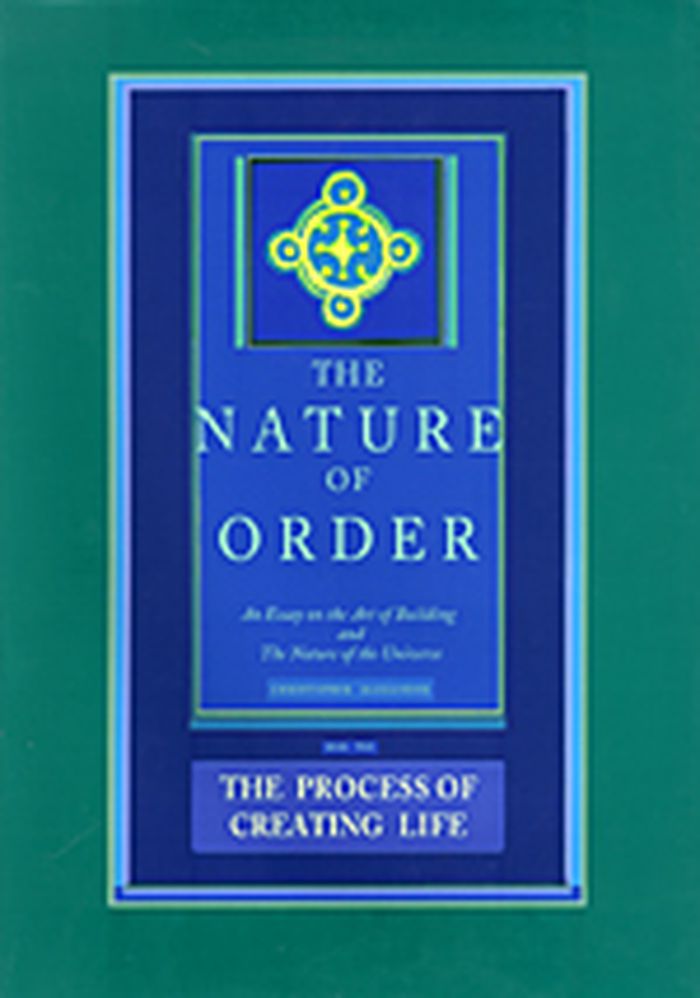
The nature of order - an essay on the art of building and the nature of the universe. Book two : the process of creating life
Actions:
Price:
$85.00
(available to order)
Summary:
Alexander examines the kinds of process that are capable of generating living structure. The unfolding of living structure in natural systems is first compared to the unfolding of buildings and town plans in traditional society, and then contrasted with present day processes. The comparison reveals deep and shocking problems which pervade the present day planning and construction of buildings. He describes the detailed character of living process needed to generate, design, plan, and build buildings with living structure. The character of living process is contrasted, repeatedly, with the character of present-day professional process, which departs, again and again, from present process, in order to meet the necessities inherent in any truly life-creating process. Pervasive changes needed to create a world in which living process – and hence living structure – are attainable only through a transformation of society. The dynamic methods of Book 2, focusing on process, give an entirely different picture of the facts and concepts presented in Book 1.
The nature of order - an essay on the art of building and the nature of the universe. Book two : the process of creating life
Actions:
Price:
$85.00
(available to order)
Summary:
Alexander examines the kinds of process that are capable of generating living structure. The unfolding of living structure in natural systems is first compared to the unfolding of buildings and town plans in traditional society, and then contrasted with present day processes. The comparison reveals deep and shocking problems which pervade the present day planning and construction of buildings. He describes the detailed character of living process needed to generate, design, plan, and build buildings with living structure. The character of living process is contrasted, repeatedly, with the character of present-day professional process, which departs, again and again, from present process, in order to meet the necessities inherent in any truly life-creating process. Pervasive changes needed to create a world in which living process – and hence living structure – are attainable only through a transformation of society. The dynamic methods of Book 2, focusing on process, give an entirely different picture of the facts and concepts presented in Book 1.
Form:
books
books
Publication:
August 2003, Berkeley
August 2003, Berkeley
Subject:
Architectural Theory
Architectural Theory
Form:
books
books
Actions:
Price:
$16.00
(available in store)
Summary:
''Raum'' simply affirms an undefined 'space' and with this work for Angle the Japanese photographer Hayahisa Tomiyasu selects a tiny slice of the richness of public space. An observation of a lizard basking in the sun on a summer’s day in Zürich has led to a photographic sequence in black and white – in portrait as well as landscape format. The demarcation of the(...)
$16.00
(available in store)
Summary:
''Raum'' simply affirms an undefined 'space' and with this work for Angle the Japanese photographer Hayahisa Tomiyasu selects a tiny slice of the richness of public space. An observation of a lizard basking in the sun on a summer’s day in Zürich has led to a photographic sequence in black and white – in portrait as well as landscape format. The demarcation of the(...)
Title:
Angle 26° : Hayahisa Tomiyasu, Raum
Actions:
Price:
$16.00
(available in store)
Summary:
''Raum'' simply affirms an undefined 'space' and with this work for Angle the Japanese photographer Hayahisa Tomiyasu selects a tiny slice of the richness of public space. An observation of a lizard basking in the sun on a summer’s day in Zürich has led to a photographic sequence in black and white – in portrait as well as landscape format. The demarcation of the photographic space – the extremely limited detail – is consistently kept low, around ground level. Through the sequential and the serial, with a point of departure in the close surroundings, Tomiyasu is preoccupied with new views of various territories in the shared space where we are separated from others’ invisible boundaries. Here the animals are subject to an alternative, instinct-driven logic. But humans too operate with distance, marking and ownership. An urge for invisibility and camouflage can appear on the radar at any time, and make us want to scuttle away like a lizard.
Angle 26° : Hayahisa Tomiyasu, Raum
Actions:
Price:
$16.00
(available in store)
Summary:
''Raum'' simply affirms an undefined 'space' and with this work for Angle the Japanese photographer Hayahisa Tomiyasu selects a tiny slice of the richness of public space. An observation of a lizard basking in the sun on a summer’s day in Zürich has led to a photographic sequence in black and white – in portrait as well as landscape format. The demarcation of the photographic space – the extremely limited detail – is consistently kept low, around ground level. Through the sequential and the serial, with a point of departure in the close surroundings, Tomiyasu is preoccupied with new views of various territories in the shared space where we are separated from others’ invisible boundaries. Here the animals are subject to an alternative, instinct-driven logic. But humans too operate with distance, marking and ownership. An urge for invisibility and camouflage can appear on the radar at any time, and make us want to scuttle away like a lizard.
Form:
books
books
Publication:
October 2023
October 2023
Subject:
Photography monographs
Photography monographs
Form:
books
books
Actions:
Price:
$42.00
(available in store)
Summary:
"The Empty Room", in the absence of any visual materials, was a written manifesto composed of RZLBD’s poems and collection of quotes intended to portray the room and the emptiness as the essence of architecture. Now, "100 Rooms" complements our own blurry images of the empty room with a visual guide. Each spread consists of a plan and a physical model of a room, which is(...)
$42.00
(available in store)
Summary:
"The Empty Room", in the absence of any visual materials, was a written manifesto composed of RZLBD’s poems and collection of quotes intended to portray the room and the emptiness as the essence of architecture. Now, "100 Rooms" complements our own blurry images of the empty room with a visual guide. Each spread consists of a plan and a physical model of a room, which is(...)
Title:
100 rooms: Many untold parables of the empty room
Actions:
Price:
$42.00
(available in store)
Summary:
"The Empty Room", in the absence of any visual materials, was a written manifesto composed of RZLBD’s poems and collection of quotes intended to portray the room and the emptiness as the essence of architecture. Now, "100 Rooms" complements our own blurry images of the empty room with a visual guide. Each spread consists of a plan and a physical model of a room, which is an excavation of the geometry and order inherent within the square. It holds no design intention — no scale or function — but simply one of infinite possibilities that emerge from a square. This framework suggests that the formal expression of a room comes from within. With these visual references, one can begin to imagine many approximations to the empty room. A line on paper is always less, as Kahn says, but through these measurable means, the immeasurable idea of the empty room will be formed in one’s mind.
100 rooms: Many untold parables of the empty room
Actions:
Price:
$42.00
(available in store)
Summary:
"The Empty Room", in the absence of any visual materials, was a written manifesto composed of RZLBD’s poems and collection of quotes intended to portray the room and the emptiness as the essence of architecture. Now, "100 Rooms" complements our own blurry images of the empty room with a visual guide. Each spread consists of a plan and a physical model of a room, which is an excavation of the geometry and order inherent within the square. It holds no design intention — no scale or function — but simply one of infinite possibilities that emerge from a square. This framework suggests that the formal expression of a room comes from within. With these visual references, one can begin to imagine many approximations to the empty room. A line on paper is always less, as Kahn says, but through these measurable means, the immeasurable idea of the empty room will be formed in one’s mind.
Form:
books
books
Publication:
May 2024
May 2024
Subject:
Canadian Architects
Canadian Architects
Form:
books
books
Actions:
Price:
$58.95
(available to order)
Summary:
A walk along any London street takes you past a wealth of seemingly ordinary buildings: an Edwardian church, modernist postwar council housing, stuccoed Italianate terraces, a Bauhaus-inspired library. But these buildings are not just functional. They are evidence of London’s rich and diverse history and have shaped people’s experiences, identities, and relationships. In(...)
$58.95
(available to order)
Summary:
A walk along any London street takes you past a wealth of seemingly ordinary buildings: an Edwardian church, modernist postwar council housing, stuccoed Italianate terraces, a Bauhaus-inspired library. But these buildings are not just functional. They are evidence of London’s rich and diverse history and have shaped people’s experiences, identities, and relationships. In(...)
Title:
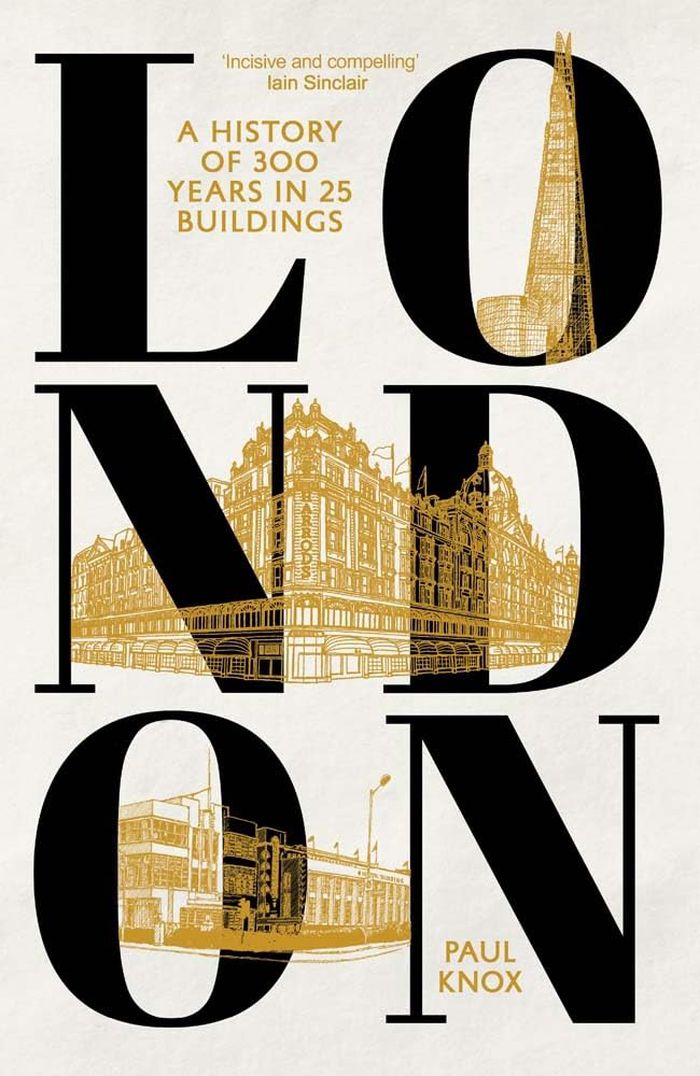
London: A history of 300 years in 25 buildings
Actions:
Price:
$58.95
(available to order)
Summary:
A walk along any London street takes you past a wealth of seemingly ordinary buildings: an Edwardian church, modernist postwar council housing, stuccoed Italianate terraces, a Bauhaus-inspired library. But these buildings are not just functional. They are evidence of London’s rich and diverse history and have shaped people’s experiences, identities, and relationships. In this engaging study, Paul L. Knox traces the history of London from the Georgian era to the present day through twenty-five surviving buildings. Knox explores where people lived and worked, from grand Regency squares to Victorian workshops, and highlights the impact of migration, gentrification, and inequality. We see famous buildings, like Harrods and Abbey Road Studios, and everyday places like Rochelle Street School and Thamesmead. Each historical period has introduced new buildings, and old ones have been repurposed. As Knox shows, it is the living history of these buildings that makes up the vibrant, but exceptionally unequal, city of today.
London: A history of 300 years in 25 buildings
Actions:
Price:
$58.95
(available to order)
Summary:
A walk along any London street takes you past a wealth of seemingly ordinary buildings: an Edwardian church, modernist postwar council housing, stuccoed Italianate terraces, a Bauhaus-inspired library. But these buildings are not just functional. They are evidence of London’s rich and diverse history and have shaped people’s experiences, identities, and relationships. In this engaging study, Paul L. Knox traces the history of London from the Georgian era to the present day through twenty-five surviving buildings. Knox explores where people lived and worked, from grand Regency squares to Victorian workshops, and highlights the impact of migration, gentrification, and inequality. We see famous buildings, like Harrods and Abbey Road Studios, and everyday places like Rochelle Street School and Thamesmead. Each historical period has introduced new buildings, and old ones have been repurposed. As Knox shows, it is the living history of these buildings that makes up the vibrant, but exceptionally unequal, city of today.
Form:
books
books
Publication:
May 2024
May 2024
Form:
books
books
Actions:
Price:
$36.00
(available in store)
Summary:
Upon completing the eponymous Le Corbusier Building in Berlin in 1958, the pioneering Modernist architect Le Corbusier described the building as rising up to, a monumental size without taking from any of its parts their respect for the individual, physical and subjective dimension. Le Corbusier had confronted Berliners, in their divided city, with his concept of communal(...)
$36.00
(available in store)
Summary:
Upon completing the eponymous Le Corbusier Building in Berlin in 1958, the pioneering Modernist architect Le Corbusier described the building as rising up to, a monumental size without taking from any of its parts their respect for the individual, physical and subjective dimension. Le Corbusier had confronted Berliners, in their divided city, with his concept of communal(...)
Title:
Typ Berlin: Le Corbusier's building in Charlottenburg
Actions:
Price:
$36.00
(available in store)
Summary:
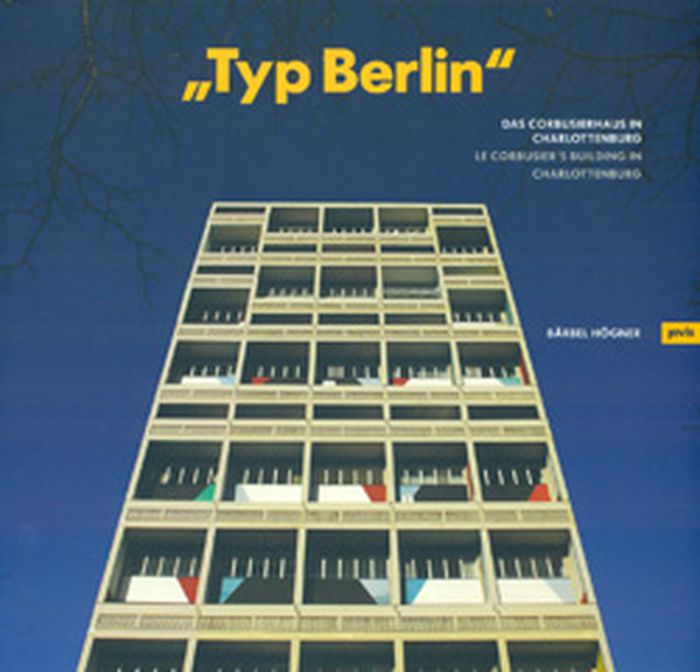
Upon completing the eponymous Le Corbusier Building in Berlin in 1958, the pioneering Modernist architect Le Corbusier described the building as rising up to, a monumental size without taking from any of its parts their respect for the individual, physical and subjective dimension. Le Corbusier had confronted Berliners, in their divided city, with his concept of communal living--a 17-story reinforced-concrete building containing 557 apartments, with only nine corridors to provide access to all of them. Le Corbusier's "machine for living" still influences the inhabitants of the building, yet no matter the architect's intention, it is ultimately the building's residents that give a house its life. Ethnologist and photographer Bärbel Högner was well aware of this when she moved into the Le Corbusier building as artist-in-residence in 2007. Her findings are published in this stunning volume, which features images of the interplay between residents and Le Corbusier's architectural masterwork.
Typ Berlin: Le Corbusier's building in Charlottenburg
Actions:
Price:
$36.00
(available in store)
Summary:
Upon completing the eponymous Le Corbusier Building in Berlin in 1958, the pioneering Modernist architect Le Corbusier described the building as rising up to, a monumental size without taking from any of its parts their respect for the individual, physical and subjective dimension. Le Corbusier had confronted Berliners, in their divided city, with his concept of communal living--a 17-story reinforced-concrete building containing 557 apartments, with only nine corridors to provide access to all of them. Le Corbusier's "machine for living" still influences the inhabitants of the building, yet no matter the architect's intention, it is ultimately the building's residents that give a house its life. Ethnologist and photographer Bärbel Högner was well aware of this when she moved into the Le Corbusier building as artist-in-residence in 2007. Her findings are published in this stunning volume, which features images of the interplay between residents and Le Corbusier's architectural masterwork.
Form:
books
books
Publication:
January 2009, Berlin
January 2009, Berlin
Subject:
Architecture Monographs
Architecture Monographs
Form:
books
books
Actions:
Price:
$57.95
(available to order)
Summary:
Published on the occasion of the exhibition at National Portrait Gallery, Smithsonian Institution, March 27, 2009–August 2, 2009 Foreword by Martin E. Sullivan Although scholars have explored Duchamp's use of aliases, little attention has been paid to how this work played into, and against, existing portrait conventions. Nor has any study yet compared these(...)
$57.95
(available to order)
Summary:
Published on the occasion of the exhibition at National Portrait Gallery, Smithsonian Institution, March 27, 2009–August 2, 2009 Foreword by Martin E. Sullivan Although scholars have explored Duchamp's use of aliases, little attention has been paid to how this work played into, and against, existing portrait conventions. Nor has any study yet compared these(...)
Title:
Inventing Marcel Duchamp: the dynamics of portraiture
Actions:
Price:
$57.95
(available to order)
Summary:
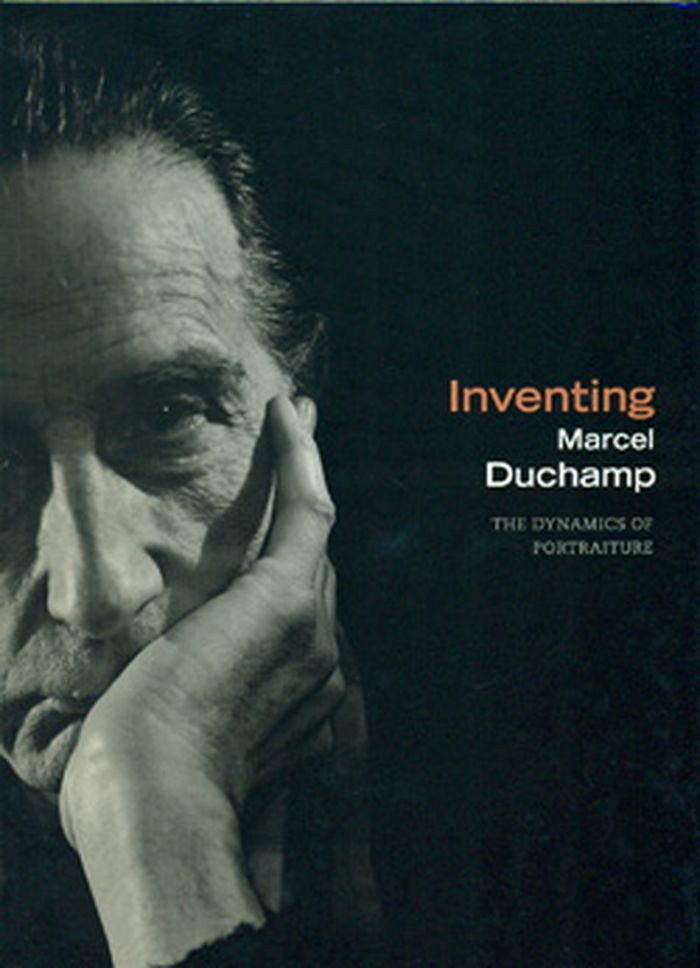
Published on the occasion of the exhibition at National Portrait Gallery, Smithsonian Institution, March 27, 2009–August 2, 2009 Foreword by Martin E. Sullivan Although scholars have explored Duchamp's use of aliases, little attention has been paid to how this work played into, and against, existing portrait conventions. Nor has any study yet compared these explicitly self-constructed projects with the large body of portraits of Duchamp by others. Inventing Marcel Duchamp showcases approximately one hundred never-before-assembled portraits and self-portraits of Duchamp. The (broadly defined) self-portraits and self-representations include the famous autobiographical suitcase Boîte-en-Valise and Self-Portrait in Profile, a torn silhouette that became very influential for future generations of artists. The portraits by other artists include works by Duchamp's contemporaries Man Ray, Alfred Stieglitz, Francis Picabia, Beatrice Wood, and Florine Stettheimer as well as portraits by more recent generations of artists, including Andy Warhol, Jasper Johns, Sturtevant, Yasumasa Morimura, David Hammons, and Douglas Gordon.
Inventing Marcel Duchamp: the dynamics of portraiture
Actions:
Price:
$57.95
(available to order)
Summary:
Published on the occasion of the exhibition at National Portrait Gallery, Smithsonian Institution, March 27, 2009–August 2, 2009 Foreword by Martin E. Sullivan Although scholars have explored Duchamp's use of aliases, little attention has been paid to how this work played into, and against, existing portrait conventions. Nor has any study yet compared these explicitly self-constructed projects with the large body of portraits of Duchamp by others. Inventing Marcel Duchamp showcases approximately one hundred never-before-assembled portraits and self-portraits of Duchamp. The (broadly defined) self-portraits and self-representations include the famous autobiographical suitcase Boîte-en-Valise and Self-Portrait in Profile, a torn silhouette that became very influential for future generations of artists. The portraits by other artists include works by Duchamp's contemporaries Man Ray, Alfred Stieglitz, Francis Picabia, Beatrice Wood, and Florine Stettheimer as well as portraits by more recent generations of artists, including Andy Warhol, Jasper Johns, Sturtevant, Yasumasa Morimura, David Hammons, and Douglas Gordon.
Form:
books
books
Publication:
April 2009
April 2009
Subject:
Contemporary Art Monographs
Contemporary Art Monographs
Form:
books
books
Actions:
Price:
$47.50
(available to order)
Summary:
The importance of protecting significant buildings from decay and destruction would seem to be undeniable. Yet whilst the majority of buildings of merit constructed before the Second World War have been highlighted as worthy of protection there is much indifference, and in some cases hostility towards many important post war buildings. These deserve to receive wider(...)
$47.50
(available to order)
Summary:
The importance of protecting significant buildings from decay and destruction would seem to be undeniable. Yet whilst the majority of buildings of merit constructed before the Second World War have been highlighted as worthy of protection there is much indifference, and in some cases hostility towards many important post war buildings. These deserve to receive wider(...)
Publication:
October 2007, Shaftesbury
October 2007, Shaftesbury
Title:
Conservation of modern architecture
Actions:
Price:
$47.50
(available to order)
Summary:
The importance of protecting significant buildings from decay and destruction would seem to be undeniable. Yet whilst the majority of buildings of merit constructed before the Second World War have been highlighted as worthy of protection there is much indifference, and in some cases hostility towards many important post war buildings. These deserve to receive wider formal recognition but in many cases continue to be mistreated or even demolished. This book examines many of the philosophical and practical issues surrounding the conservation of modern buildings and also the problems faced by building practitioners in dealing with buildings constructed in a wider range of styles and materials than at any other time. Climate change in particular has forced change in the way in which we think about buildings, with the pressures to address issues of energy efficiency becoming more urgent and likely to have consequences that may alter the perceived architectural and historic interest of modern and traditional buildings alike.
Conservation of modern architecture
Actions:
Price:
$47.50
(available to order)
Summary:
The importance of protecting significant buildings from decay and destruction would seem to be undeniable. Yet whilst the majority of buildings of merit constructed before the Second World War have been highlighted as worthy of protection there is much indifference, and in some cases hostility towards many important post war buildings. These deserve to receive wider formal recognition but in many cases continue to be mistreated or even demolished. This book examines many of the philosophical and practical issues surrounding the conservation of modern buildings and also the problems faced by building practitioners in dealing with buildings constructed in a wider range of styles and materials than at any other time. Climate change in particular has forced change in the way in which we think about buildings, with the pressures to address issues of energy efficiency becoming more urgent and likely to have consequences that may alter the perceived architectural and historic interest of modern and traditional buildings alike.
Form:
books
books
Publication:
October 2007, Shaftesbury
October 2007, Shaftesbury
Form:
books
books
Title:
Detail 5 2025 : Facades
Detail 5 2025 : Facades
Actions:
Price:
$55.00
(available in store)
Summary:
The facade is a building’s most outward-facing element. The interplay of materials, textures, colours, and transparent or opaque surfaces defines not only its external character but also its contribution to the urban fabric. While facades in past centuries evolved from traditional construction methods and locally sourced materials, today’s design possibilities are far(...)
$55.00
(available in store)
Summary:
The facade is a building’s most outward-facing element. The interplay of materials, textures, colours, and transparent or opaque surfaces defines not only its external character but also its contribution to the urban fabric. While facades in past centuries evolved from traditional construction methods and locally sourced materials, today’s design possibilities are far(...)
Title:
Detail 5 2025 : Facades
Actions:
Price:
$55.00
(available in store)
Summary:
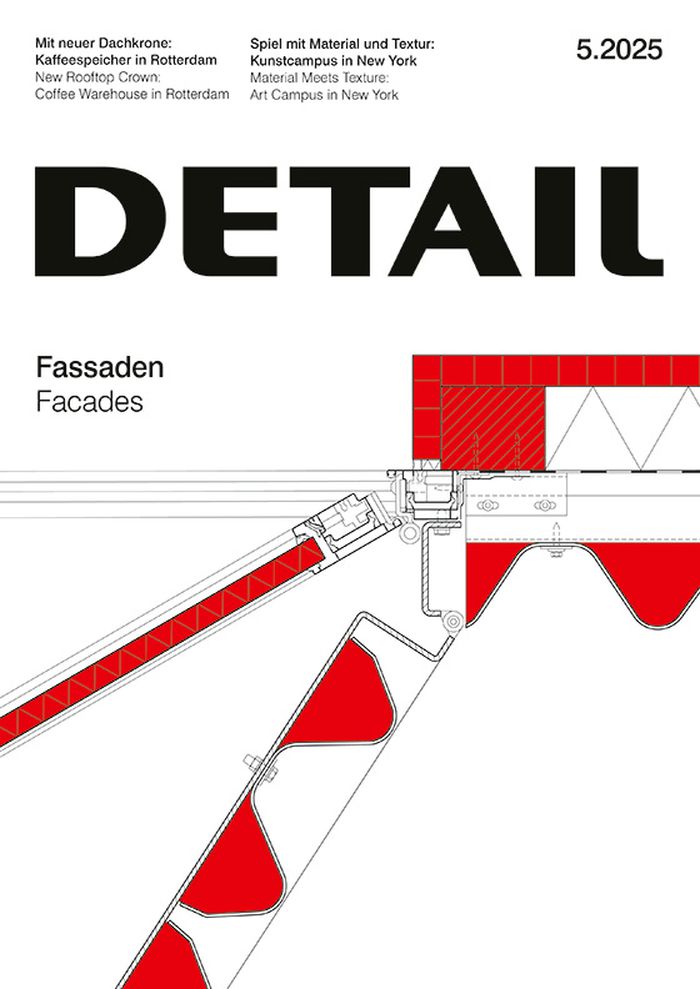
The facade is a building’s most outward-facing element. The interplay of materials, textures, colours, and transparent or opaque surfaces defines not only its external character but also its contribution to the urban fabric. While facades in past centuries evolved from traditional construction methods and locally sourced materials, today’s design possibilities are far more varied. Technical advances have extended the range of materials we can use and combine across various construction systems. Windows can be any size – from fully enclosed to fully transparent, virtually anything is possible. However, stricter regulations on thermal insulation and airtightness have introduced new constraints. Single-skin facade systems are now the exception; in most cases, a double- skin wall structure with a protective outer layer – the cladding – has become the standard. The projects featured in this issue reveal the diverse ways architecture firms approach the art of cladding – from used roadside safety barriers repurposed for a Swiss maintenance depot to a rich mix of textures shaping an art complex in New York.
Detail 5 2025 : Facades
Actions:
Price:
$55.00
(available in store)
Summary:
The facade is a building’s most outward-facing element. The interplay of materials, textures, colours, and transparent or opaque surfaces defines not only its external character but also its contribution to the urban fabric. While facades in past centuries evolved from traditional construction methods and locally sourced materials, today’s design possibilities are far more varied. Technical advances have extended the range of materials we can use and combine across various construction systems. Windows can be any size – from fully enclosed to fully transparent, virtually anything is possible. However, stricter regulations on thermal insulation and airtightness have introduced new constraints. Single-skin facade systems are now the exception; in most cases, a double- skin wall structure with a protective outer layer – the cladding – has become the standard. The projects featured in this issue reveal the diverse ways architecture firms approach the art of cladding – from used roadside safety barriers repurposed for a Swiss maintenance depot to a rich mix of textures shaping an art complex in New York.
Form:
books
books
Publication:
September 2025
September 2025
Subject:
Magazines
Magazines
Form:
books
books
Title:
For a sovereign Europe
For a sovereign Europe
Actions:
Price:
$14.00
(available in store)
Summary:
A specter haunts Europe: the specter of sovereignty. Legacy of a prestigious political tradition, sovereignty has metamorphosed into a monster in the 19th century, with the advent of nationalism and the ensuing catastrophes that tainted the globe in blood. Today, at a time when nationalist passions seem to be back with a vengeance, a renewed call for sovereignty presents(...)
$14.00
(available in store)
Summary:
A specter haunts Europe: the specter of sovereignty. Legacy of a prestigious political tradition, sovereignty has metamorphosed into a monster in the 19th century, with the advent of nationalism and the ensuing catastrophes that tainted the globe in blood. Today, at a time when nationalist passions seem to be back with a vengeance, a renewed call for sovereignty presents(...)
Title:
For a sovereign Europe
Actions:
Price:
$14.00
(available in store)
Summary:
A specter haunts Europe: the specter of sovereignty. Legacy of a prestigious political tradition, sovereignty has metamorphosed into a monster in the 19th century, with the advent of nationalism and the ensuing catastrophes that tainted the globe in blood. Today, at a time when nationalist passions seem to be back with a vengeance, a renewed call for sovereignty presents itself as a return towards populations and territories to be defended. Any project aiming at doing away with nations and finding the route towards a larger political ensembles seems to be barred by what is now presented as a sacred value – the one of a people selecting its own way of being governed. But what if this was wrong? What if sovereignty could designate another horizon than the one of nations? What if Europe could become the place for a new experiment on the meaning and extension of sovereignty and democracy? This would mean a sovereign Europe.
For a sovereign Europe
Actions:
Price:
$14.00
(available in store)
Summary:
A specter haunts Europe: the specter of sovereignty. Legacy of a prestigious political tradition, sovereignty has metamorphosed into a monster in the 19th century, with the advent of nationalism and the ensuing catastrophes that tainted the globe in blood. Today, at a time when nationalist passions seem to be back with a vengeance, a renewed call for sovereignty presents itself as a return towards populations and territories to be defended. Any project aiming at doing away with nations and finding the route towards a larger political ensembles seems to be barred by what is now presented as a sacred value – the one of a people selecting its own way of being governed. But what if this was wrong? What if sovereignty could designate another horizon than the one of nations? What if Europe could become the place for a new experiment on the meaning and extension of sovereignty and democracy? This would mean a sovereign Europe.
Form:
books
books
Publication:
November 2025
November 2025
Subject:
Critical Theory
Critical Theory


