


57161 Results
Form:
exhibitions
exhibitions
Title:
Seagram Plaza
Seagram Plaza
Actions:
Description:
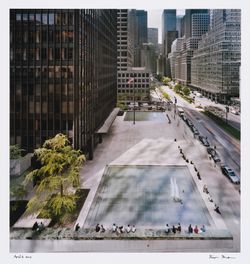
The plaza at the Seagram Building in New York, designed by Ludwig Mies van der Rohe and completed in 1958, was a litmus test of what an open space in the city could be. Raised three steps above the sidewalk along Park Avenue, the plaza is an oasis of calm, distant from the commotion and turbulence of the street. The way in which the plaza has been adopted by New Yorkers(...)
The plaza at the Seagram Building in New York, designed by Ludwig Mies van der Rohe and completed in 1958, was a litmus test of what an open space in the city could be. Raised three steps above the sidewalk along Park Avenue, the plaza is an oasis of calm, distant from the commotion and turbulence of the street. The way in which the plaza has been adopted by New Yorkers(...)
Location:
Hall cases
Hall cases
Date:
1 May 2013 to 18 August 2013
1 May 2013 to 18 August 2013
Title:
Seagram Plaza
Actions:
Description:
The plaza at the Seagram Building in New York, designed by Ludwig Mies van der Rohe and completed in 1958, was a litmus test of what an open space in the city could be. Raised three steps above the sidewalk along Park Avenue, the plaza is an oasis of calm, distant from the commotion and turbulence of the street. The way in which the plaza has been adopted by New Yorkers(...)
Seagram Plaza
Actions:
Description:
The plaza at the Seagram Building in New York, designed by Ludwig Mies van der Rohe and completed in 1958, was a litmus test of what an open space in the city could be. Raised three steps above the sidewalk along Park Avenue, the plaza is an oasis of calm, distant from the commotion and turbulence of the street. The way in which the plaza has been adopted by New Yorkers(...)
Form:
exhibitions
exhibitions
Date:
1 May 2013 to
18 August 2013
1 May 2013 to
18 August 2013
Location:
Hall cases
Hall cases
Form:
graphic materials
Quantity:
89 poster(s)
graphic materials
Quantity:
89 poster(s)
Reference number:
AP140.S2.SS10.D3.P14
Description:
posters mostly for lectures by James Stirling and Michael Wilford, for James Stirling Memorial, for various exhibitions of the projects of the successive firms of James Stirling, including The Rally exhibition at Art Net and the Roma Interrotta exhibition, also screen print by Folon 'Pour James Stirling'
AP140.S2.SS10.D3.P14
Description:
posters mostly for lectures by James Stirling and Michael Wilford, for James Stirling Memorial, for various exhibitions of the projects of the successive firms of James Stirling, including The Rally exhibition at Art Net and the Roma Interrotta exhibition, also screen print by Folon 'Pour James Stirling'
People:
Title:
Posters mostly for lectures by James Stirling and Michael Wilford
Actions:
AP140.S2.SS10.D3.P14
Description:
posters mostly for lectures by James Stirling and Michael Wilford, for James Stirling Memorial, for various exhibitions of the projects of the successive firms of James Stirling, including The Rally exhibition at Art Net and the Roma Interrotta exhibition, also screen print by Folon 'Pour James Stirling'
Posters mostly for lectures by James Stirling and Michael Wilford
Actions:
AP140.S2.SS10.D3.P14
Description:
posters mostly for lectures by James Stirling and Michael Wilford, for James Stirling Memorial, for various exhibitions of the projects of the successive firms of James Stirling, including The Rally exhibition at Art Net and the Roma Interrotta exhibition, also screen print by Folon 'Pour James Stirling'
Form:
graphic materials
Quantity:
89 poster(s)
graphic materials
Quantity:
89 poster(s)
People:
Form:
research
research
Title:
Visiting Scholars 2005
Visiting Scholars 2005
Actions:
Description:
Paolo Amaldi, Université catholique de Louvain (UCL), Louvain-La-Neuve, Belgium Topic: Analyse du rapport entre espace architectural et instrument de représentation dans l’oeuvre de Mies van der Rohe Jean-François Bédard, Paris Program, Columbia University, New York, United States Topic: Honnêteté and the Grotesque: a Study of the Album by Gilles-Marie Oppenord(...)
Paolo Amaldi, Université catholique de Louvain (UCL), Louvain-La-Neuve, Belgium Topic: Analyse du rapport entre espace architectural et instrument de représentation dans l’oeuvre de Mies van der Rohe Jean-François Bédard, Paris Program, Columbia University, New York, United States Topic: Honnêteté and the Grotesque: a Study of the Album by Gilles-Marie Oppenord(...)
Date:
3 January 2005 to 30 September 2005
3 January 2005 to 30 September 2005
Title:
Visiting Scholars 2005
Actions:
Description:
Paolo Amaldi, Université catholique de Louvain (UCL), Louvain-La-Neuve, Belgium Topic: Analyse du rapport entre espace architectural et instrument de représentation dans l’oeuvre de Mies van der Rohe Jean-François Bédard, Paris Program, Columbia University, New York, United States Topic: Honnêteté and the Grotesque: a Study of the Album by Gilles-Marie Oppenord(...)
Visiting Scholars 2005
Actions:
Description:
Paolo Amaldi, Université catholique de Louvain (UCL), Louvain-La-Neuve, Belgium Topic: Analyse du rapport entre espace architectural et instrument de représentation dans l’oeuvre de Mies van der Rohe Jean-François Bédard, Paris Program, Columbia University, New York, United States Topic: Honnêteté and the Grotesque: a Study of the Album by Gilles-Marie Oppenord(...)
Form:
research
research
Date:
3 January 2005 to
30 September 2005
3 January 2005 to
30 September 2005
Form:
drawings
drawings
Actions:
Reference number:
AP178.S2.1999.002
Description:
This sketchbook includes sketches and notes for the Museum of Contemporary Art of the Serralves Foundation in Porto, Portugal, the Stedelijk Museum in Amsterdam, The Netherlands, as well as for the Manzana dei Revellin Cultural Centre in Ceuta, Spain. It also contains working details and sketches of people.
AP178.S2.1999.002
Description:
This sketchbook includes sketches and notes for the Museum of Contemporary Art of the Serralves Foundation in Porto, Portugal, the Stedelijk Museum in Amsterdam, The Netherlands, as well as for the Manzana dei Revellin Cultural Centre in Ceuta, Spain. It also contains working details and sketches of people.
People:
Date:
February 1999
February 1999
Title:
Sketchbook 457: Hannover - Ceuta - Av. Ponte - Serralves
Actions:
AP178.S2.1999.002
Description:
This sketchbook includes sketches and notes for the Museum of Contemporary Art of the Serralves Foundation in Porto, Portugal, the Stedelijk Museum in Amsterdam, The Netherlands, as well as for the Manzana dei Revellin Cultural Centre in Ceuta, Spain. It also contains working details and sketches of people.
Sketchbook 457: Hannover - Ceuta - Av. Ponte - Serralves
Actions:
AP178.S2.1999.002
Description:
This sketchbook includes sketches and notes for the Museum of Contemporary Art of the Serralves Foundation in Porto, Portugal, the Stedelijk Museum in Amsterdam, The Netherlands, as well as for the Manzana dei Revellin Cultural Centre in Ceuta, Spain. It also contains working details and sketches of people.
Form:
drawings
drawings
Date:
February 1999
February 1999
People:
Form:
exhibitions
exhibitions
Actions:
Description:
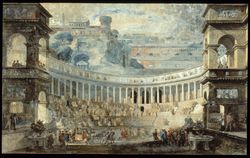
During the eighteenth century, Rome was both an important centre for Italian art and the focal point for the studies of most European artists; all were drawn by the city’s antique art, architecture, and statuary, as well as its Renaissance, Baroque, and eighteenth-century masterpieces. Exploring Rome: Piranesi and His Contemporaries is concerned with eighteenth-century(...)
During the eighteenth century, Rome was both an important centre for Italian art and the focal point for the studies of most European artists; all were drawn by the city’s antique art, architecture, and statuary, as well as its Renaissance, Baroque, and eighteenth-century masterpieces. Exploring Rome: Piranesi and His Contemporaries is concerned with eighteenth-century(...)
Location:
Main galleries
Main galleries
Date:
18 August 1993 to 2 January 1994
18 August 1993 to 2 January 1994
Title:
Exploring Rome: Piranesi and His Contemporaries
Actions:
Description:
During the eighteenth century, Rome was both an important centre for Italian art and the focal point for the studies of most European artists; all were drawn by the city’s antique art, architecture, and statuary, as well as its Renaissance, Baroque, and eighteenth-century masterpieces. Exploring Rome: Piranesi and His Contemporaries is concerned with eighteenth-century(...)
Exploring Rome: Piranesi and His Contemporaries
Actions:
Description:
During the eighteenth century, Rome was both an important centre for Italian art and the focal point for the studies of most European artists; all were drawn by the city’s antique art, architecture, and statuary, as well as its Renaissance, Baroque, and eighteenth-century masterpieces. Exploring Rome: Piranesi and His Contemporaries is concerned with eighteenth-century(...)
Form:
exhibitions
exhibitions
Date:
18 August 1993 to
2 January 1994
18 August 1993 to
2 January 1994
Location:
Main galleries
Main galleries
Level of archival description:
Project
Project
Reference number:
AP148.S1.1996.PR01
Description:
Project series comprises preparatory studies and competition drawings for a redevelopment project in the historical centre of Pontassieve, outside Florence, Italy, and particularly the area around its piazza Vittorio Emanuele. Material in this project series is dated 1996. Alessandro Poli was the project group leader, and collaborated with architect Giannantonio Vannetti, landscape architects Mariella Sgaravatti and Elena Morici, artist Hidetoshi Nagasawa, artistic heritage expert Guiliano Gori, and art historian and critic Lara Vinca Masini. It is unclear whether the project was successful. The studies and project drawings emphasize the teardrop shape of the piazza. Project materials feature sketches and painted studies, including two with cotton materials, as well as presentation drawings and collages, including a large photograph of the site.
AP148.S1.1996.PR01
Description:
Project series comprises preparatory studies and competition drawings for a redevelopment project in the historical centre of Pontassieve, outside Florence, Italy, and particularly the area around its piazza Vittorio Emanuele. Material in this project series is dated 1996. Alessandro Poli was the project group leader, and collaborated with architect Giannantonio Vannetti, landscape architects Mariella Sgaravatti and Elena Morici, artist Hidetoshi Nagasawa, artistic heritage expert Guiliano Gori, and art historian and critic Lara Vinca Masini. It is unclear whether the project was successful. The studies and project drawings emphasize the teardrop shape of the piazza. Project materials feature sketches and painted studies, including two with cotton materials, as well as presentation drawings and collages, including a large photograph of the site.
People:
Date:
1996
1996
Title:
Ideas competition, Riqualificazione centro Storico di Pontassieve [Redevelopment of the historical center of Pontassieve], Florence, Italy (1996)
Actions:
AP148.S1.1996.PR01
Description:
Project series comprises preparatory studies and competition drawings for a redevelopment project in the historical centre of Pontassieve, outside Florence, Italy, and particularly the area around its piazza Vittorio Emanuele. Material in this project series is dated 1996. Alessandro Poli was the project group leader, and collaborated with architect Giannantonio Vannetti, landscape architects Mariella Sgaravatti and Elena Morici, artist Hidetoshi Nagasawa, artistic heritage expert Guiliano Gori, and art historian and critic Lara Vinca Masini. It is unclear whether the project was successful. The studies and project drawings emphasize the teardrop shape of the piazza. Project materials feature sketches and painted studies, including two with cotton materials, as well as presentation drawings and collages, including a large photograph of the site.
Ideas competition, Riqualificazione centro Storico di Pontassieve [Redevelopment of the historical center of Pontassieve], Florence, Italy (1996)
Actions:
AP148.S1.1996.PR01
Description:
Project series comprises preparatory studies and competition drawings for a redevelopment project in the historical centre of Pontassieve, outside Florence, Italy, and particularly the area around its piazza Vittorio Emanuele. Material in this project series is dated 1996. Alessandro Poli was the project group leader, and collaborated with architect Giannantonio Vannetti, landscape architects Mariella Sgaravatti and Elena Morici, artist Hidetoshi Nagasawa, artistic heritage expert Guiliano Gori, and art historian and critic Lara Vinca Masini. It is unclear whether the project was successful. The studies and project drawings emphasize the teardrop shape of the piazza. Project materials feature sketches and painted studies, including two with cotton materials, as well as presentation drawings and collages, including a large photograph of the site.
Level of archival description:
Project
Project
Date:
1996
1996
People:
Actions:
Reference number:
PHCON2003:0005:019
Description:
Inscriptions read: "GMC Estate Original #19"; "20-20 Film Prod."; "5/19/92." Attached sticker reads: "Master."
PHCON2003:0005:019
Description:
Inscriptions read: "GMC Estate Original #19"; "20-20 Film Prod."; "5/19/92." Attached sticker reads: "Master."
People:
Date:
1975
1975
Title:
Video recording of Conical Intersect
Actions:
PHCON2003:0005:019
Description:
Inscriptions read: "GMC Estate Original #19"; "20-20 Film Prod."; "5/19/92." Attached sticker reads: "Master."
Video recording of Conical Intersect
Actions:
PHCON2003:0005:019
Description:
Inscriptions read: "GMC Estate Original #19"; "20-20 Film Prod."; "5/19/92." Attached sticker reads: "Master."
Date:
1975
1975
People:
Actions:
Reference number:
PHCON2003:0005:065
PHCON2003:0005:065
People:
Date:
recorded 1972, transferred 20 April 1992
recorded 1972, transferred 20 April 1992
Date:
recorded 1972, transferred 20 April 1992
recorded 1972, transferred 20 April 1992
People:
Form:
photographs
photographs
Actions:
Reference number:
ARCH280814
Description:
Group consists of photographs of models for various buildings and installations in Chandigarh, India. There are photographs of a model for a temporary exhibition pavilion, a model of a layout plan of the Museum and Art Gallery, a model for the Museum of Knowledge (unrealized) all designed by Le Corbusier.
ARCH280814
Description:
Group consists of photographs of models for various buildings and installations in Chandigarh, India. There are photographs of a model for a temporary exhibition pavilion, a model of a layout plan of the Museum and Art Gallery, a model for the Museum of Knowledge (unrealized) all designed by Le Corbusier.
People:
Date:
1952-c.1970
1952-c.1970
Title:
Photographs of models for miscellaneous buildings and installation in Chandigarh, India
Actions:
ARCH280814
Description:
Group consists of photographs of models for various buildings and installations in Chandigarh, India. There are photographs of a model for a temporary exhibition pavilion, a model of a layout plan of the Museum and Art Gallery, a model for the Museum of Knowledge (unrealized) all designed by Le Corbusier.
Photographs of models for miscellaneous buildings and installation in Chandigarh, India
Actions:
ARCH280814
Description:
Group consists of photographs of models for various buildings and installations in Chandigarh, India. There are photographs of a model for a temporary exhibition pavilion, a model of a layout plan of the Museum and Art Gallery, a model for the Museum of Knowledge (unrealized) all designed by Le Corbusier.
Form:
photographs
photographs
Date:
1952-c.1970
1952-c.1970
People:
Form:
exhibitions
exhibitions
Actions:
Description:
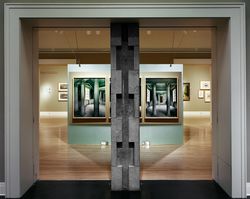
Just as Andrea Palladio’s Villa Rotonda helped to define for future generations the architecture of the Renaissance in Italy, so Chiswick is the locus classicus of the Palladian Revival of the eighteenth century. This exhibition follows a major architect’s thinking as he worked from source to design, from design to representation, in the making of a building which, as the(...)
Just as Andrea Palladio’s Villa Rotonda helped to define for future generations the architecture of the Renaissance in Italy, so Chiswick is the locus classicus of the Palladian Revival of the eighteenth century. This exhibition follows a major architect’s thinking as he worked from source to design, from design to representation, in the making of a building which, as the(...)
Location:
Main galleries
Main galleries
Date:
19 July 1994 to 25 September 1994
19 July 1994 to 25 September 1994
Title:
The Palladian Revival: Lord Burlington, His Villa and Garden at Chiswick
Actions:
Description:
Just as Andrea Palladio’s Villa Rotonda helped to define for future generations the architecture of the Renaissance in Italy, so Chiswick is the locus classicus of the Palladian Revival of the eighteenth century. This exhibition follows a major architect’s thinking as he worked from source to design, from design to representation, in the making of a building which, as the(...)
The Palladian Revival: Lord Burlington, His Villa and Garden at Chiswick
Actions:
Description:
Just as Andrea Palladio’s Villa Rotonda helped to define for future generations the architecture of the Renaissance in Italy, so Chiswick is the locus classicus of the Palladian Revival of the eighteenth century. This exhibition follows a major architect’s thinking as he worked from source to design, from design to representation, in the making of a building which, as the(...)
Form:
exhibitions
exhibitions
Date:
19 July 1994 to
25 September 1994
19 July 1994 to
25 September 1994
Location:
Main galleries
Main galleries


