


2162 Results
Form:
books
books
Actions:
Price:
$61.95
(available to order)
Summary:
Acoustics and protection against noise do not perhaps number among the primary parameters that normally influence the design of a building. Nevertheless, at the very latest when the lecturer in the seminar room cannot be heard, when the noise level in an open-plan office reaches unbearable levels, or when a neighbor’s noise deprives you of sleep, it becomes clear just how(...)
$61.95
(available to order)
Summary:
Acoustics and protection against noise do not perhaps number among the primary parameters that normally influence the design of a building. Nevertheless, at the very latest when the lecturer in the seminar room cannot be heard, when the noise level in an open-plan office reaches unbearable levels, or when a neighbor’s noise deprives you of sleep, it becomes clear just how(...)
Title:
Detail Practice: acoustics and sound insulation, principles, planning, examples
Actions:
Price:
$61.95
(available to order)
Summary:
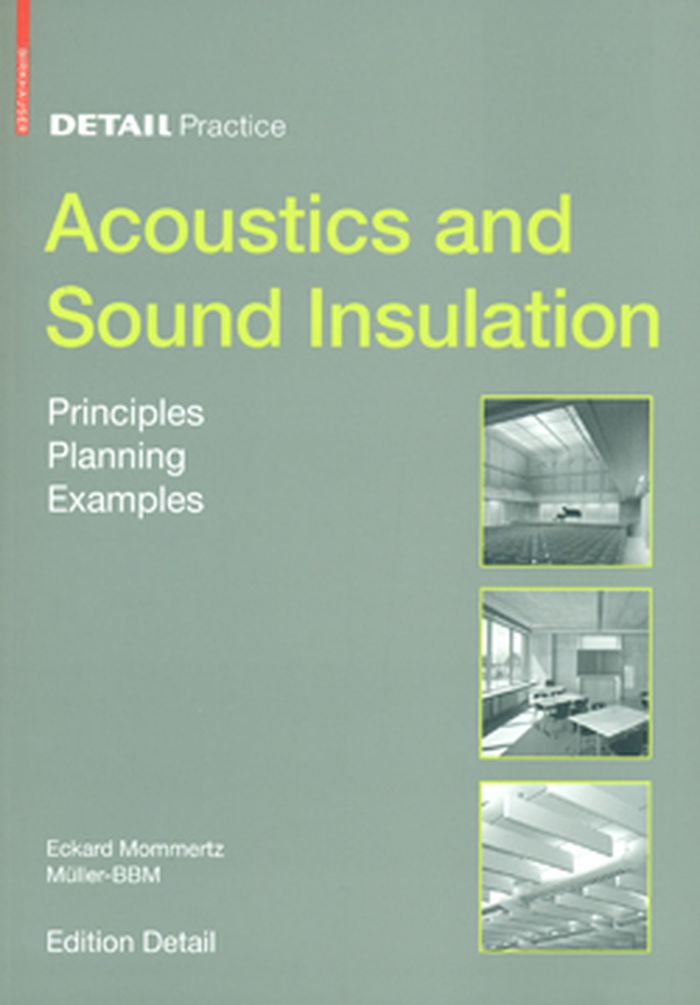
Acoustics and protection against noise do not perhaps number among the primary parameters that normally influence the design of a building. Nevertheless, at the very latest when the lecturer in the seminar room cannot be heard, when the noise level in an open-plan office reaches unbearable levels, or when a neighbor’s noise deprives you of sleep, it becomes clear just how essential acoustic can be to everyday well-being. it is not just concert halls or the amphitheaters of antiquity that call for acoustic quality; rather, every building, indeed every room, has an acoustic dimension that changes according to the nature of its particular requirements. This practice-oriented volume provides expert planners and architects but also interested developers with practical knowledge on the subject of acoustics in high-rise architecture, beginning with standards on methods of planning and prognosis and moving on to the areas of acoustics of rooms and architecture and noise protection in urban planning. Typologically organized chapters comment on proper approaches to the subject with examples of different types of building such as residential and office buildings, schools, kindergartens, lecture halls, event spaces, and so on, because appropriate acoustic conditions make an essential contribution to the success of a project.
Detail Practice: acoustics and sound insulation, principles, planning, examples
Actions:
Price:
$61.95
(available to order)
Summary:
Acoustics and protection against noise do not perhaps number among the primary parameters that normally influence the design of a building. Nevertheless, at the very latest when the lecturer in the seminar room cannot be heard, when the noise level in an open-plan office reaches unbearable levels, or when a neighbor’s noise deprives you of sleep, it becomes clear just how essential acoustic can be to everyday well-being. it is not just concert halls or the amphitheaters of antiquity that call for acoustic quality; rather, every building, indeed every room, has an acoustic dimension that changes according to the nature of its particular requirements. This practice-oriented volume provides expert planners and architects but also interested developers with practical knowledge on the subject of acoustics in high-rise architecture, beginning with standards on methods of planning and prognosis and moving on to the areas of acoustics of rooms and architecture and noise protection in urban planning. Typologically organized chapters comment on proper approaches to the subject with examples of different types of building such as residential and office buildings, schools, kindergartens, lecture halls, event spaces, and so on, because appropriate acoustic conditions make an essential contribution to the success of a project.
Form:
books
books
Publication:
May 2009
May 2009
Subject:
Acoustics
Acoustics
Form:
journals and magazines
journals and magazines
Actions:
Price:
$54.00
(available to order)
Summary:
Multispace exists at the intersection of the physical and digital, and in the blurring of their previously clear dividing lines. Multispace is not a single space, but a hybrid space where, in effect, we occupy multiple spaces simultaneously. We enter it on a Zoom call, when we are in our office and in a meeting with 20 people; when we are cycling down a country lane(...)
$54.00
(available to order)
Summary:
Multispace exists at the intersection of the physical and digital, and in the blurring of their previously clear dividing lines. Multispace is not a single space, but a hybrid space where, in effect, we occupy multiple spaces simultaneously. We enter it on a Zoom call, when we are in our office and in a meeting with 20 people; when we are cycling down a country lane(...)
Title:
AD Multispace: Architecture at the dawn of the metaverse
Actions:
Price:
$54.00
(available to order)
Summary:
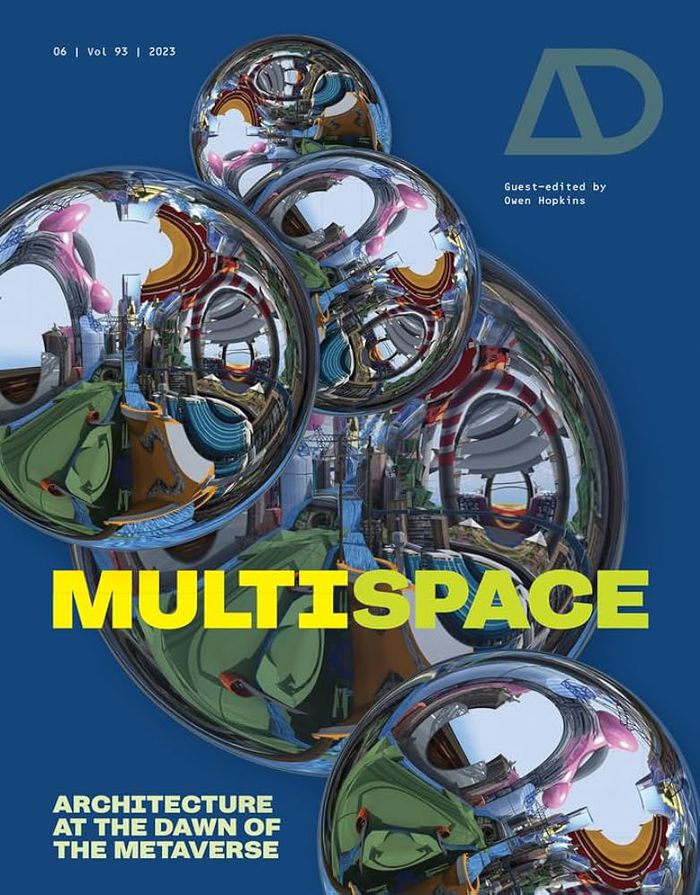
Multispace exists at the intersection of the physical and digital, and in the blurring of their previously clear dividing lines. Multispace is not a single space, but a hybrid space where, in effect, we occupy multiple spaces simultaneously. We enter it on a Zoom call, when we are in our office and in a meeting with 20 people; when we are cycling down a country lane whilst racing against thousands of others who also use the Strava app; when we are watching a TV show while live tweeting; or, perhaps most literally, when wandering around the local park looking for creatures that only appear on a smartphone screen. A fundamental question of this AD is why the phenomena that multispace describes are of concern to architects. The answer is that multispace points to a situation that is at root an architectural one. Offering both a collective and highly personalised experience, static and dynamically customisable, and above all at the same time public and private, multispace lies at the centre of a set of tensions, concerns and preoccupations at the core of our conception of architecture as theory and practice. It is the messy space between, with rough and uneven edges that are constantly shifting.
AD Multispace: Architecture at the dawn of the metaverse
Actions:
Price:
$54.00
(available to order)
Summary:
Multispace exists at the intersection of the physical and digital, and in the blurring of their previously clear dividing lines. Multispace is not a single space, but a hybrid space where, in effect, we occupy multiple spaces simultaneously. We enter it on a Zoom call, when we are in our office and in a meeting with 20 people; when we are cycling down a country lane whilst racing against thousands of others who also use the Strava app; when we are watching a TV show while live tweeting; or, perhaps most literally, when wandering around the local park looking for creatures that only appear on a smartphone screen. A fundamental question of this AD is why the phenomena that multispace describes are of concern to architects. The answer is that multispace points to a situation that is at root an architectural one. Offering both a collective and highly personalised experience, static and dynamically customisable, and above all at the same time public and private, multispace lies at the centre of a set of tensions, concerns and preoccupations at the core of our conception of architecture as theory and practice. It is the messy space between, with rough and uneven edges that are constantly shifting.
Form:
journals and magazines
journals and magazines
Publication:
November 2023
November 2023
Subject:
Magazines
Magazines
Form:
books
books
Actions:
Price:
$37.95
(available to order)
Summary:
Accelerationism is the name of a contemporary political heresy: the insistence that the only radical political response to capitalism is not to protest, disrupt, critique, or détourne it, but to accelerate and exacerbate its uprooting, alienating, decoding, abstractive tendencies. "#Accelerate" presents a genealogy of accelerationism, tracking the impulse through 90s UK(...)
$37.95
(available to order)
Summary:
Accelerationism is the name of a contemporary political heresy: the insistence that the only radical political response to capitalism is not to protest, disrupt, critique, or détourne it, but to accelerate and exacerbate its uprooting, alienating, decoding, abstractive tendencies. "#Accelerate" presents a genealogy of accelerationism, tracking the impulse through 90s UK(...)
Title:
#Accelerate: the accelerationist reader
Actions:
Price:
$37.95
(available to order)
Summary:
Accelerationism is the name of a contemporary political heresy: the insistence that the only radical political response to capitalism is not to protest, disrupt, critique, or détourne it, but to accelerate and exacerbate its uprooting, alienating, decoding, abstractive tendencies. "#Accelerate" presents a genealogy of accelerationism, tracking the impulse through 90s UK darkside cyberculture and the theory-fictions of Nick Land, Sadie Plant, Iain Grant, and CCRU, across the cultural underground of the 80s (rave, acid house, SF cinema) and back to its sources in delirious post-68 ferment, in texts whose searing nihilistic jouissance would later be disavowed by their authors and the marxist and academic establishment alike. On either side of this central sequence, the book includes texts by Marx that call attention to his own ‘Prometheanism’, and key works from recent years document the recent extraordinary emergence of new accelerationisms steeled against the onslaughts of neoliberal capitalist realism, and retooled for the twenty-first century. At the forefront of the energetic contemporary debate around this disputed, problematic term, "#Accelerate" activates a historical conversation about futurality, technology, politics, enjoyment and capital. This is a legacy shot through with contradictions, yet urgently galvanized today by the poverty of ‘reasonable’ contemporary political alternatives.
#Accelerate: the accelerationist reader
Actions:
Price:
$37.95
(available to order)
Summary:
Accelerationism is the name of a contemporary political heresy: the insistence that the only radical political response to capitalism is not to protest, disrupt, critique, or détourne it, but to accelerate and exacerbate its uprooting, alienating, decoding, abstractive tendencies. "#Accelerate" presents a genealogy of accelerationism, tracking the impulse through 90s UK darkside cyberculture and the theory-fictions of Nick Land, Sadie Plant, Iain Grant, and CCRU, across the cultural underground of the 80s (rave, acid house, SF cinema) and back to its sources in delirious post-68 ferment, in texts whose searing nihilistic jouissance would later be disavowed by their authors and the marxist and academic establishment alike. On either side of this central sequence, the book includes texts by Marx that call attention to his own ‘Prometheanism’, and key works from recent years document the recent extraordinary emergence of new accelerationisms steeled against the onslaughts of neoliberal capitalist realism, and retooled for the twenty-first century. At the forefront of the energetic contemporary debate around this disputed, problematic term, "#Accelerate" activates a historical conversation about futurality, technology, politics, enjoyment and capital. This is a legacy shot through with contradictions, yet urgently galvanized today by the poverty of ‘reasonable’ contemporary political alternatives.
Form:
books
books
Publication:
May 2014
May 2014
Subject:
Critical Theory
Critical Theory
Form:
books
books

Actions:
Price:
$33.95
(available to order)
Summary:
Contemporary engagements with documentary are multifaceted and complex, reaching across disciplines to explore the intersections of politics and aesthetics, representation and reality, truth and illusion. Discarding the old notions of “fly on the wall” immediacy or quasi-scientific aspirations to objectivity, critics now understand documentary not as the neutral picturing(...)
$33.95
(available to order)
Summary:
Contemporary engagements with documentary are multifaceted and complex, reaching across disciplines to explore the intersections of politics and aesthetics, representation and reality, truth and illusion. Discarding the old notions of “fly on the wall” immediacy or quasi-scientific aspirations to objectivity, critics now understand documentary not as the neutral picturing(...)
Title:
Documentary Across Disciplines
Actions:
Price:
$33.95
(available to order)
Summary:
Contemporary engagements with documentary are multifaceted and complex, reaching across disciplines to explore the intersections of politics and aesthetics, representation and reality, truth and illusion. Discarding the old notions of “fly on the wall” immediacy or quasi-scientific aspirations to objectivity, critics now understand documentary not as the neutral picturing of reality but as a way of coming to terms with reality through images and narrative. This book collects writings by artists, filmmakers, art historians, poets, literary critics, anthropologists, theorists, and others, to investigate one of the most vital areas of cultural practice: documentary. Their investigations take many forms—essays, personal memoirs, interviews, poetry. Contemporary art turned away from the medium and toward the world, using photography and the moving image to take up global perspectives. Documentary filmmakers, meanwhile, began to work in the gallery context. The contributors consider the hybridization of art and film, and the “documentary turn” of contemporary art. They discuss digital technology and the “crisis of faith” caused by manipulation and generation of images, and the fading of the progressive social mandate that has historically characterized documentary. They consider invisible data and visible evidence; problems of archiving; and surveillance and biometric control, forms of documentation that call for “informatic opacity” as a means of evasion.
Documentary Across Disciplines
Actions:
Price:
$33.95
(available to order)
Summary:
Contemporary engagements with documentary are multifaceted and complex, reaching across disciplines to explore the intersections of politics and aesthetics, representation and reality, truth and illusion. Discarding the old notions of “fly on the wall” immediacy or quasi-scientific aspirations to objectivity, critics now understand documentary not as the neutral picturing of reality but as a way of coming to terms with reality through images and narrative. This book collects writings by artists, filmmakers, art historians, poets, literary critics, anthropologists, theorists, and others, to investigate one of the most vital areas of cultural practice: documentary. Their investigations take many forms—essays, personal memoirs, interviews, poetry. Contemporary art turned away from the medium and toward the world, using photography and the moving image to take up global perspectives. Documentary filmmakers, meanwhile, began to work in the gallery context. The contributors consider the hybridization of art and film, and the “documentary turn” of contemporary art. They discuss digital technology and the “crisis of faith” caused by manipulation and generation of images, and the fading of the progressive social mandate that has historically characterized documentary. They consider invisible data and visible evidence; problems of archiving; and surveillance and biometric control, forms of documentation that call for “informatic opacity” as a means of evasion.
Form:
books
books
Publication:
February 2016
February 2016
Form:
books
books
Actions:
Price:
$45.00
(available in store)
Summary:
In the dazzling global metropolis of Shanghai, what has it meant to call this city home? In this account—part microhistory, part memoir—Jie Li salvages intimate recollections by successive generations of inhabitants of two vibrant, culturally mixed Shanghai alleyways from the Republican, Maoist, and post-Mao eras. Exploring three dimensions of private life—territories,(...)
$45.00
(available in store)
Summary:
In the dazzling global metropolis of Shanghai, what has it meant to call this city home? In this account—part microhistory, part memoir—Jie Li salvages intimate recollections by successive generations of inhabitants of two vibrant, culturally mixed Shanghai alleyways from the Republican, Maoist, and post-Mao eras. Exploring three dimensions of private life—territories,(...)
Publication:
April 2015
April 2015
Title:
Shanghai homes: palimpsests of private life
Actions:
Price:
$45.00
(available in store)
Summary:
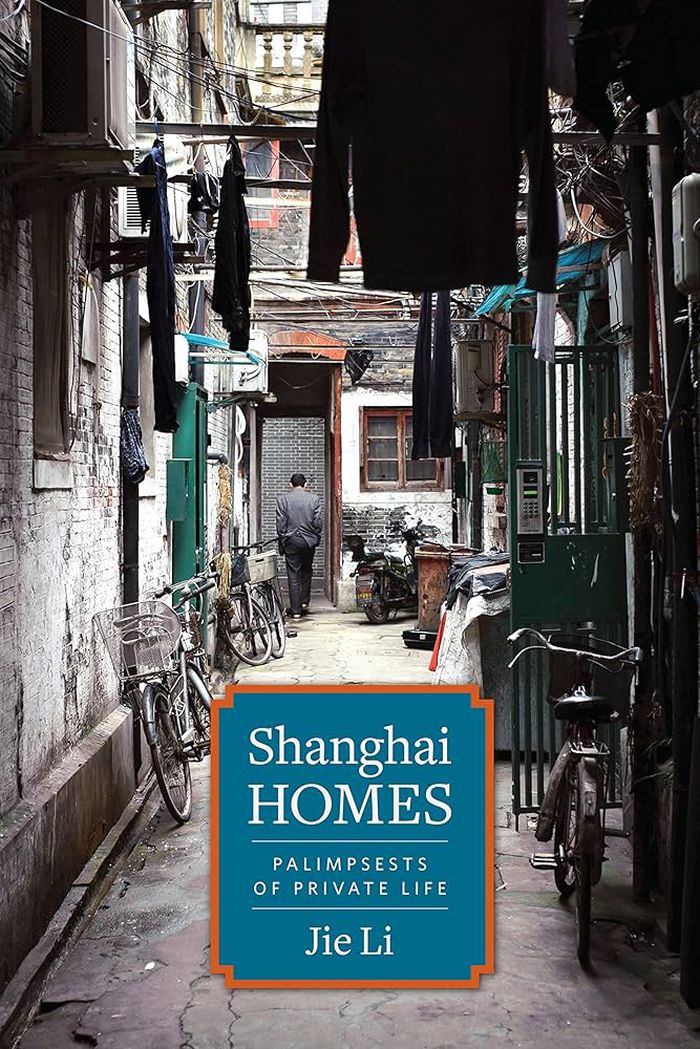
In the dazzling global metropolis of Shanghai, what has it meant to call this city home? In this account—part microhistory, part memoir—Jie Li salvages intimate recollections by successive generations of inhabitants of two vibrant, culturally mixed Shanghai alleyways from the Republican, Maoist, and post-Mao eras. Exploring three dimensions of private life—territories, artifacts, and gossip—Li re-creates the sounds, smells, look, and feel of home over a tumultuous century. First built by British and Japanese companies in 1915 and 1927, the two homes at the center of this narrative were located in an industrial part of the former "International Settlement." Before their recent demolition, they were nestled in Shanghai's labyrinthine alleyways, which housed more than half of the city's population from the Sino-Japanese War to the Cultural Revolution. Through interviews with her own family members as well as their neighbors, classmates, and co-workers, Li weaves a complex social tapestry reflecting the lived experiences of ordinary people struggling to absorb and adapt to major historical change. These voices include workers, intellectuals, Communists, Nationalists, foreigners, compradors, wives, concubines, and children who all fought for a foothold and haven in this city, witnessing spectacles so full of farce and pathos they could only be whispered as secret histories.
Shanghai homes: palimpsests of private life
Actions:
Price:
$45.00
(available in store)
Summary:
In the dazzling global metropolis of Shanghai, what has it meant to call this city home? In this account—part microhistory, part memoir—Jie Li salvages intimate recollections by successive generations of inhabitants of two vibrant, culturally mixed Shanghai alleyways from the Republican, Maoist, and post-Mao eras. Exploring three dimensions of private life—territories, artifacts, and gossip—Li re-creates the sounds, smells, look, and feel of home over a tumultuous century. First built by British and Japanese companies in 1915 and 1927, the two homes at the center of this narrative were located in an industrial part of the former "International Settlement." Before their recent demolition, they were nestled in Shanghai's labyrinthine alleyways, which housed more than half of the city's population from the Sino-Japanese War to the Cultural Revolution. Through interviews with her own family members as well as their neighbors, classmates, and co-workers, Li weaves a complex social tapestry reflecting the lived experiences of ordinary people struggling to absorb and adapt to major historical change. These voices include workers, intellectuals, Communists, Nationalists, foreigners, compradors, wives, concubines, and children who all fought for a foothold and haven in this city, witnessing spectacles so full of farce and pathos they could only be whispered as secret histories.
Form:
books
books
Publication:
April 2015
April 2015
Form:
books
books
Title:
AD : Cities of dispersal
AD : Cities of dispersal
Actions:
Price:
$44.00
(available in store)
Summary:
Questioning the traditional boundaries between cities, suburbs, countryside and wilderness, this issue of AD explores emergent types of public space in low-density environments. It describes this new form of urbanism: decentralised, in a constant process of expansion and contraction, not homogenous or necessarily low-rise, nor guided by one mode of development, typology(...)
$44.00
(available in store)
Summary:
Questioning the traditional boundaries between cities, suburbs, countryside and wilderness, this issue of AD explores emergent types of public space in low-density environments. It describes this new form of urbanism: decentralised, in a constant process of expansion and contraction, not homogenous or necessarily low-rise, nor guided by one mode of development, typology(...)
Title:
AD : Cities of dispersal
Actions:
Price:
$44.00
(available in store)
Summary:
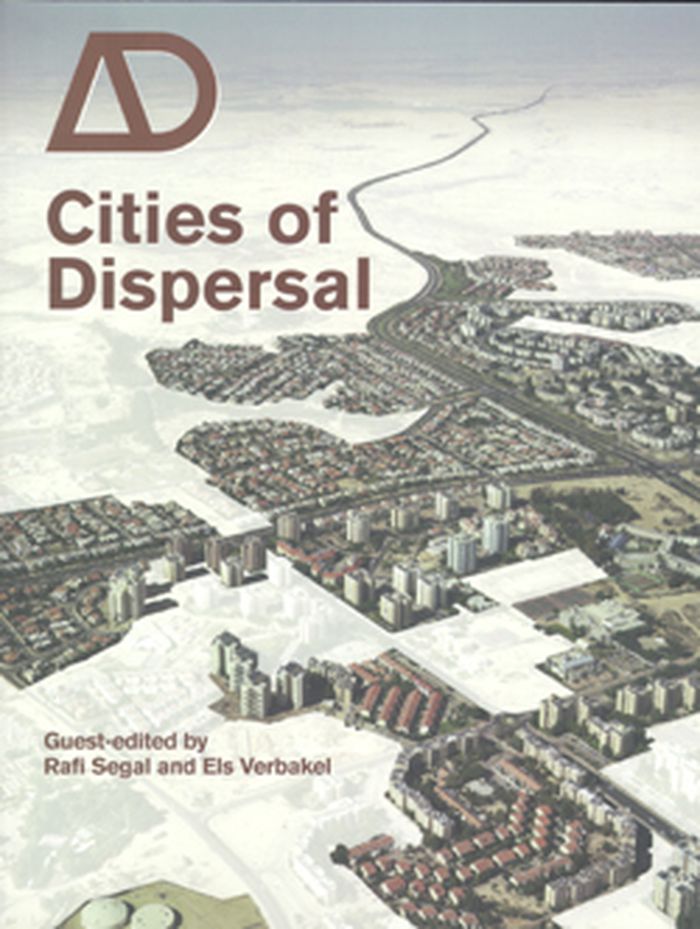
Questioning the traditional boundaries between cities, suburbs, countryside and wilderness, this issue of AD explores emergent types of public space in low-density environments. It describes this new form of urbanism: decentralised, in a constant process of expansion and contraction, not homogenous or necessarily low-rise, nor guided by one mode of development, typology or pattern. While functionally and programmatically dispersed, settlements operate as a form of urbanism; the place of collective spaces within them has yet to be defined and articulated. The physical transformation of the built environment on the one hand, and the change in our notion of the public on the other - due to globalisation, privatisation and segregation - call for renewed interpretations of the nature and character of public space. The concept of public space needs to be examined: replaced, re-created or adapted to fit these conditions. What is the place of the public in this form of urbanism, and how can architecture address the notion of common, collective spaces? What is the current sociopolitical role o such spaces? How does the form and use of these spaces reflect the conception of the public as a political (or non-political) body? And can architecture regain an active role in formulating the notion of the collective? These and other issues are addressed through essays, research projects and built work by distinguished writers such as Bruce Robbins, Albert Pope and Alex Wall, and Practitioners including Zvi Hecker, Vito Acconci, MUTOPIA, Manuel de Sola-Morales, Martha Rosler and Manuel Vicente in a search for new collective architectures within the dispersed city.
AD : Cities of dispersal
Actions:
Price:
$44.00
(available in store)
Summary:
Questioning the traditional boundaries between cities, suburbs, countryside and wilderness, this issue of AD explores emergent types of public space in low-density environments. It describes this new form of urbanism: decentralised, in a constant process of expansion and contraction, not homogenous or necessarily low-rise, nor guided by one mode of development, typology or pattern. While functionally and programmatically dispersed, settlements operate as a form of urbanism; the place of collective spaces within them has yet to be defined and articulated. The physical transformation of the built environment on the one hand, and the change in our notion of the public on the other - due to globalisation, privatisation and segregation - call for renewed interpretations of the nature and character of public space. The concept of public space needs to be examined: replaced, re-created or adapted to fit these conditions. What is the place of the public in this form of urbanism, and how can architecture address the notion of common, collective spaces? What is the current sociopolitical role o such spaces? How does the form and use of these spaces reflect the conception of the public as a political (or non-political) body? And can architecture regain an active role in formulating the notion of the collective? These and other issues are addressed through essays, research projects and built work by distinguished writers such as Bruce Robbins, Albert Pope and Alex Wall, and Practitioners including Zvi Hecker, Vito Acconci, MUTOPIA, Manuel de Sola-Morales, Martha Rosler and Manuel Vicente in a search for new collective architectures within the dispersed city.
Form:
books
books
Publication:
May 2008, West Sussex
May 2008, West Sussex
Subject:
Urban Theory
Urban Theory
Form:
books
books
Title:
Sprawl and suburbia
Sprawl and suburbia
Actions:
Price:
$28.95
(available to order)
Summary:
Sprawl is the single most significant and urgent issue in American land use at the turn of the twenty-first century. Efforts to limit and reform sprawl through legislative “Smart Growth” initiatives have been enacted around the country while the neotraditionalist New Urbanism has been embraced by many architects and urban planners. Yet most Americans persist in their(...)
$28.95
(available to order)
Summary:
Sprawl is the single most significant and urgent issue in American land use at the turn of the twenty-first century. Efforts to limit and reform sprawl through legislative “Smart Growth” initiatives have been enacted around the country while the neotraditionalist New Urbanism has been embraced by many architects and urban planners. Yet most Americans persist in their(...)
Title:
Sprawl and suburbia
Actions:
Price:
$28.95
(available to order)
Summary:
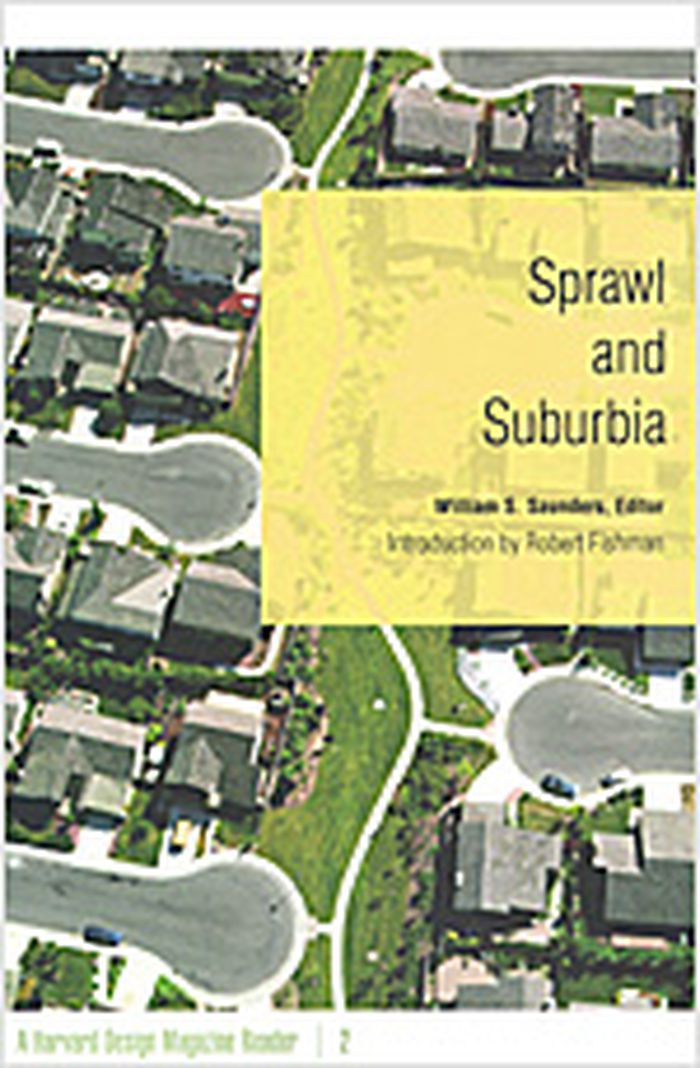
Sprawl is the single most significant and urgent issue in American land use at the turn of the twenty-first century. Efforts to limit and reform sprawl through legislative “Smart Growth” initiatives have been enacted around the country while the neotraditionalist New Urbanism has been embraced by many architects and urban planners. Yet most Americans persist in their desire to live farther and farther away from urban centers, moving to exurbs made up almost entirely of single-family residential houses and stand-alone shopping areas. "Sprawl and suburbia" brings together some of the foremost thinkers in the field to present in-depth diagnosis and critical analysis of the physical and social realities of exurban sprawl. Along with an introduction by Robert Fishman, these essays call for architects, urban planners, and landscape designers to work at mitigating the impact of sprawl on land and resources and improving the residential and commercial built environment as a whole. In place of vast residential exurbs, these writers offer visions of a fresh urbanism—appealing and persuasive models of life at greater density, with greater diversity, and within genuine communities. With sprawl losing the support of suburban citizens themselves as economic, environmental, and social costs are being paid, "Sprawl and suburbia" appears at a moment when design might achieve some critical influence over development—if architects and planners accept the challenge.
Sprawl and suburbia
Actions:
Price:
$28.95
(available to order)
Summary:
Sprawl is the single most significant and urgent issue in American land use at the turn of the twenty-first century. Efforts to limit and reform sprawl through legislative “Smart Growth” initiatives have been enacted around the country while the neotraditionalist New Urbanism has been embraced by many architects and urban planners. Yet most Americans persist in their desire to live farther and farther away from urban centers, moving to exurbs made up almost entirely of single-family residential houses and stand-alone shopping areas. "Sprawl and suburbia" brings together some of the foremost thinkers in the field to present in-depth diagnosis and critical analysis of the physical and social realities of exurban sprawl. Along with an introduction by Robert Fishman, these essays call for architects, urban planners, and landscape designers to work at mitigating the impact of sprawl on land and resources and improving the residential and commercial built environment as a whole. In place of vast residential exurbs, these writers offer visions of a fresh urbanism—appealing and persuasive models of life at greater density, with greater diversity, and within genuine communities. With sprawl losing the support of suburban citizens themselves as economic, environmental, and social costs are being paid, "Sprawl and suburbia" appears at a moment when design might achieve some critical influence over development—if architects and planners accept the challenge.
Form:
books
books
Publication:
November 2005, Minneapolis
November 2005, Minneapolis
Subject:
Suburbs
Suburbs
Form:
books
books
Price:
$34.95
(available to order)
Summary:
The story of the Adam Joseph Lewis Center at Oberlin College - the first substantially green building to be built on a college campus -encompasses more than the particulars of one building. In "Design on the edge", David Orr writes about the planning and design of Oberlin's environmental studies building as part of a larger story about the art and science of ecological(...)
$34.95
(available to order)
Summary:
The story of the Adam Joseph Lewis Center at Oberlin College - the first substantially green building to be built on a college campus -encompasses more than the particulars of one building. In "Design on the edge", David Orr writes about the planning and design of Oberlin's environmental studies building as part of a larger story about the art and science of ecological(...)
Title:
Design on the edge : the making of a high-performance building
Actions:
Price:
$34.95
(available to order)
Summary:
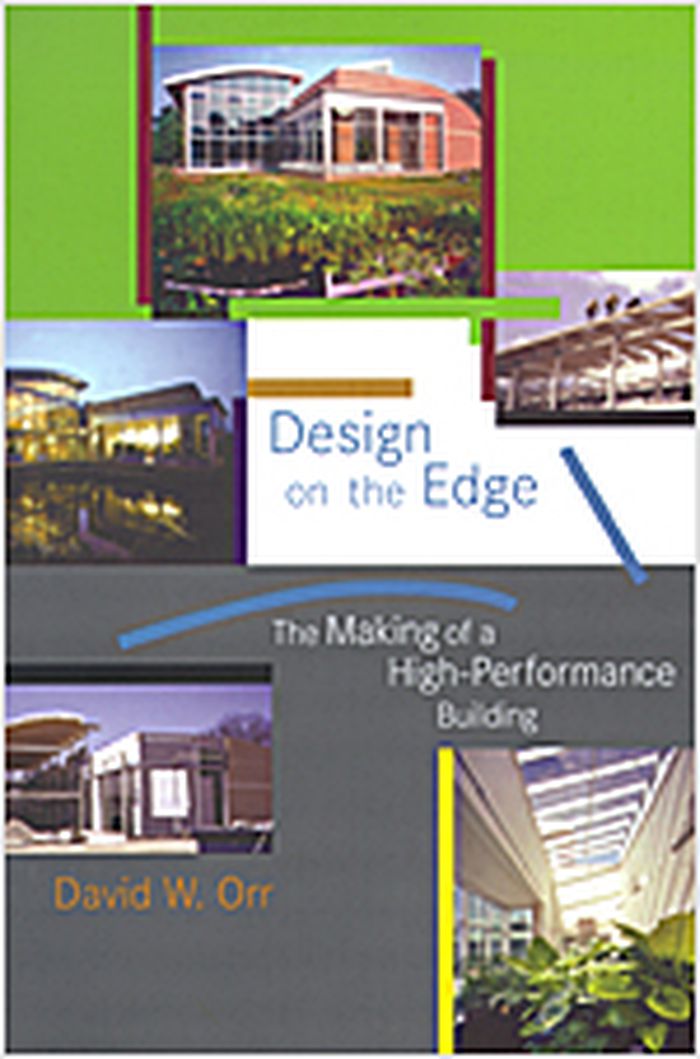
The story of the Adam Joseph Lewis Center at Oberlin College - the first substantially green building to be built on a college campus -encompasses more than the particulars of one building. In "Design on the edge", David Orr writes about the planning and design of Oberlin's environmental studies building as part of a larger story about the art and science of ecological design and the ability of institutions of higher learning themselves to learn. The Lewis Center, which has attracted worldwide attention as a model of ecological design, operates according to environmental principles. It is powered entirely by solar energy, features landscaping with fruit trees and vegetable gardens, and houses a Living Machine, which processes all wastewater for reuse in the building or landscape. Orr puts the Lewis Center into historical design context and describes the obstacles and successes he encountered in obtaining funds and college approval, interweaving the particulars of the center with thoughts on the larger environmental and societal issues the building process illustrates. Equal parts analysis, personal reflection, and call to action, "Design on the edge" illustrates the process of institutional change, institutional learning, and the political economy of design. It describes how the idea of the Lewis Center originated and was translated into reality with the help of such environmental visionaries as William McDonough and John Todd, and how the building has performed since its completion.
Design on the edge : the making of a high-performance building
Actions:
Price:
$34.95
(available to order)
Summary:
The story of the Adam Joseph Lewis Center at Oberlin College - the first substantially green building to be built on a college campus -encompasses more than the particulars of one building. In "Design on the edge", David Orr writes about the planning and design of Oberlin's environmental studies building as part of a larger story about the art and science of ecological design and the ability of institutions of higher learning themselves to learn. The Lewis Center, which has attracted worldwide attention as a model of ecological design, operates according to environmental principles. It is powered entirely by solar energy, features landscaping with fruit trees and vegetable gardens, and houses a Living Machine, which processes all wastewater for reuse in the building or landscape. Orr puts the Lewis Center into historical design context and describes the obstacles and successes he encountered in obtaining funds and college approval, interweaving the particulars of the center with thoughts on the larger environmental and societal issues the building process illustrates. Equal parts analysis, personal reflection, and call to action, "Design on the edge" illustrates the process of institutional change, institutional learning, and the political economy of design. It describes how the idea of the Lewis Center originated and was translated into reality with the help of such environmental visionaries as William McDonough and John Todd, and how the building has performed since its completion.
Form:
books
books
Publication:
October 2006, Cambridge (MA), London
October 2006, Cambridge (MA), London
Subject:
Green Architecture
Green Architecture
Form:
audio
audio
Title:
Popular Songs A.
Popular Songs A.
Actions:
Description:
1 online resource.
Author:
Subject:
Publication:
[Place of publication not identified] : Lateral Addition, 2016.
[Place of publication not identified] : Lateral Addition, 2016.
Form:
audio
audio
Publication:
[Place of publication not identified] : Lateral Addition, 2016.
[Place of publication not identified] : Lateral Addition, 2016.
Author:
Subject:
Form:
books
books
Actions:
Price:
$60.00
(available to order)
Summary:
Robbins and Becher produce work that functions as surreal nonfiction, using documentary images to examine contradictions of place and cultural identity. In the words of the artists, “The primary focus of our work is what we call the transportation of place—situations in which one limited or isolated place strongly resembles another distant one. Everywhere, not only in the(...)
$60.00
(available to order)
Summary:
Robbins and Becher produce work that functions as surreal nonfiction, using documentary images to examine contradictions of place and cultural identity. In the words of the artists, “The primary focus of our work is what we call the transportation of place—situations in which one limited or isolated place strongly resembles another distant one. Everywhere, not only in the(...)
Subject:
Photography monographs
Photography monographs
Publication:
May 2006, New York
May 2006, New York
Title:
The transportation of place : Andrea Robbins & Max Becher
Actions:
Price:
$60.00
(available to order)
Summary:
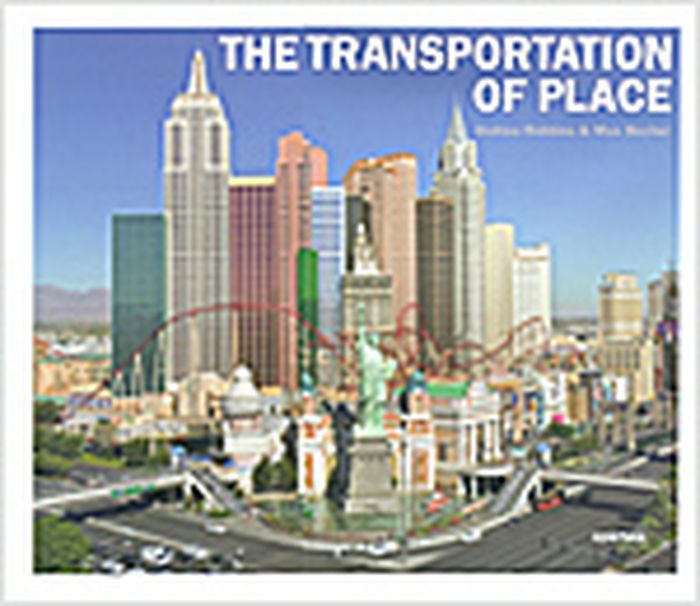
Robbins and Becher produce work that functions as surreal nonfiction, using documentary images to examine contradictions of place and cultural identity. In the words of the artists, “The primary focus of our work is what we call the transportation of place—situations in which one limited or isolated place strongly resembles another distant one. Everywhere, not only in the new world, such situations are accumulating and accepted as genuine locales. Traditional notions of place, in which culture and geographic location neatly coincide, are being challenged by legacies of slavery, colonialism, holocaust, immigration, tourism, and mass-communication. Whether the subject is Germany in Africa, Germans dressing as Native Americans, American towns dressed as Germany, New York in Las Vegas, New York in Cuba, or Cuba in exile, our interest tends to be a place out of place with its various causes and consequences.” The work posits vital questions for a globalized world: What are the larger implications of “ideological passing,” when one culture assumes the skin of another? And what role can photography play as a document in context where cultural signification is entirely fluid? Curator and author Maurice Berger examines the work of Robbins and Becher against the background of race and identity, but also of Surrealism. Lucy Lippard discusses the development of the husband-and-wife team’s work together, as well as looking specifically at the ideas of location, landscape, and manufactured place.
The transportation of place : Andrea Robbins & Max Becher
Actions:
Price:
$60.00
(available to order)
Summary:
Robbins and Becher produce work that functions as surreal nonfiction, using documentary images to examine contradictions of place and cultural identity. In the words of the artists, “The primary focus of our work is what we call the transportation of place—situations in which one limited or isolated place strongly resembles another distant one. Everywhere, not only in the new world, such situations are accumulating and accepted as genuine locales. Traditional notions of place, in which culture and geographic location neatly coincide, are being challenged by legacies of slavery, colonialism, holocaust, immigration, tourism, and mass-communication. Whether the subject is Germany in Africa, Germans dressing as Native Americans, American towns dressed as Germany, New York in Las Vegas, New York in Cuba, or Cuba in exile, our interest tends to be a place out of place with its various causes and consequences.” The work posits vital questions for a globalized world: What are the larger implications of “ideological passing,” when one culture assumes the skin of another? And what role can photography play as a document in context where cultural signification is entirely fluid? Curator and author Maurice Berger examines the work of Robbins and Becher against the background of race and identity, but also of Surrealism. Lucy Lippard discusses the development of the husband-and-wife team’s work together, as well as looking specifically at the ideas of location, landscape, and manufactured place.
Form:
books
books
Publication:
May 2006, New York
May 2006, New York
Subject:
Photography monographs
Photography monographs


