


2310 Results
Form:
books
books
Title:
Notes on the minor character
Notes on the minor character
Actions:
Price:
$12.00
(available in store)
Summary:
In "Notes on the minor character" Bopha Chhay meditates on "the minor" - those secondary characters or objects that populate the background and seemingly only serve to support or surround the area of focus. Through a series of fragments we encounter the minor characters from paintings and novels; the minor anecdotes appended to the overarching ideology of state-hood; and(...)
$12.00
(available in store)
Summary:
In "Notes on the minor character" Bopha Chhay meditates on "the minor" - those secondary characters or objects that populate the background and seemingly only serve to support or surround the area of focus. Through a series of fragments we encounter the minor characters from paintings and novels; the minor anecdotes appended to the overarching ideology of state-hood; and(...)
Title:
Notes on the minor character
Actions:
Price:
$12.00
(available in store)
Summary:
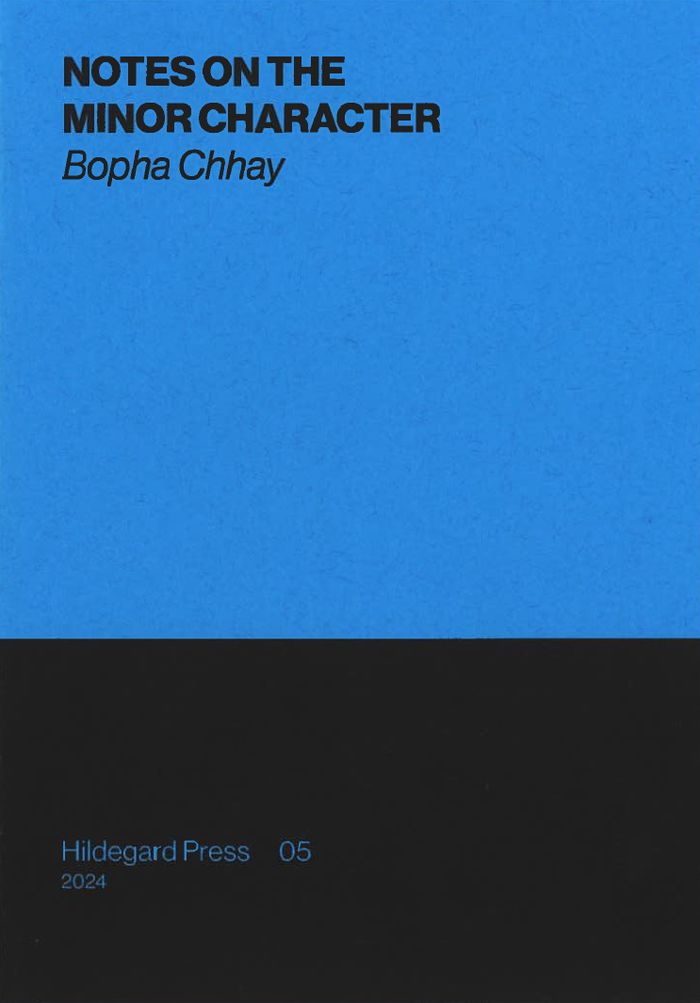
In "Notes on the minor character" Bopha Chhay meditates on "the minor" - those secondary characters or objects that populate the background and seemingly only serve to support or surround the area of focus. Through a series of fragments we encounter the minor characters from paintings and novels; the minor anecdotes appended to the overarching ideology of state-hood; and the minor details, usually overlooked, that can become a great revealer of falsehood. Ranging from Bruegel The Elder to Jane Eyre, Y-Dang Troeung to Dostoevsky, we see 'the minor' played out in multiple ways out of the corner of our eye. Here Chhay proposes 'the minor' to be that which quietly disrupts the main narrative, and as we re-orient our focus to the outskirts we are given the opportunity to think through a different set of stories: the fan fictions, the non-player characters, and the un-heroic gestures.
Notes on the minor character
Actions:
Price:
$12.00
(available in store)
Summary:
In "Notes on the minor character" Bopha Chhay meditates on "the minor" - those secondary characters or objects that populate the background and seemingly only serve to support or surround the area of focus. Through a series of fragments we encounter the minor characters from paintings and novels; the minor anecdotes appended to the overarching ideology of state-hood; and the minor details, usually overlooked, that can become a great revealer of falsehood. Ranging from Bruegel The Elder to Jane Eyre, Y-Dang Troeung to Dostoevsky, we see 'the minor' played out in multiple ways out of the corner of our eye. Here Chhay proposes 'the minor' to be that which quietly disrupts the main narrative, and as we re-orient our focus to the outskirts we are given the opportunity to think through a different set of stories: the fan fictions, the non-player characters, and the un-heroic gestures.
Form:
books
books
Publication:
January 2024
January 2024
Subject:
Zines
Zines
Form:
books
books
Actions:
Price:
$35.00
(available to order)
Summary:
Hélène Cixous’s powerful new book, masterfully translated by Peggy Kamuf, is a vivid journey through fire. From the ashes of wars, wildfires, and upheaval, Cixous traces a dramatic path across time—from the Second World War and the Nazi occupation of Oran to the European wildfires of 2022—weaving a rich, intimate narrative that merges history, autobiography, and myth.(...)
$35.00
(available to order)
Summary:
Hélène Cixous’s powerful new book, masterfully translated by Peggy Kamuf, is a vivid journey through fire. From the ashes of wars, wildfires, and upheaval, Cixous traces a dramatic path across time—from the Second World War and the Nazi occupation of Oran to the European wildfires of 2022—weaving a rich, intimate narrative that merges history, autobiography, and myth.(...)
Title:
Incinarration: What do we carry?
Actions:
Price:
$35.00
(available to order)
Summary:
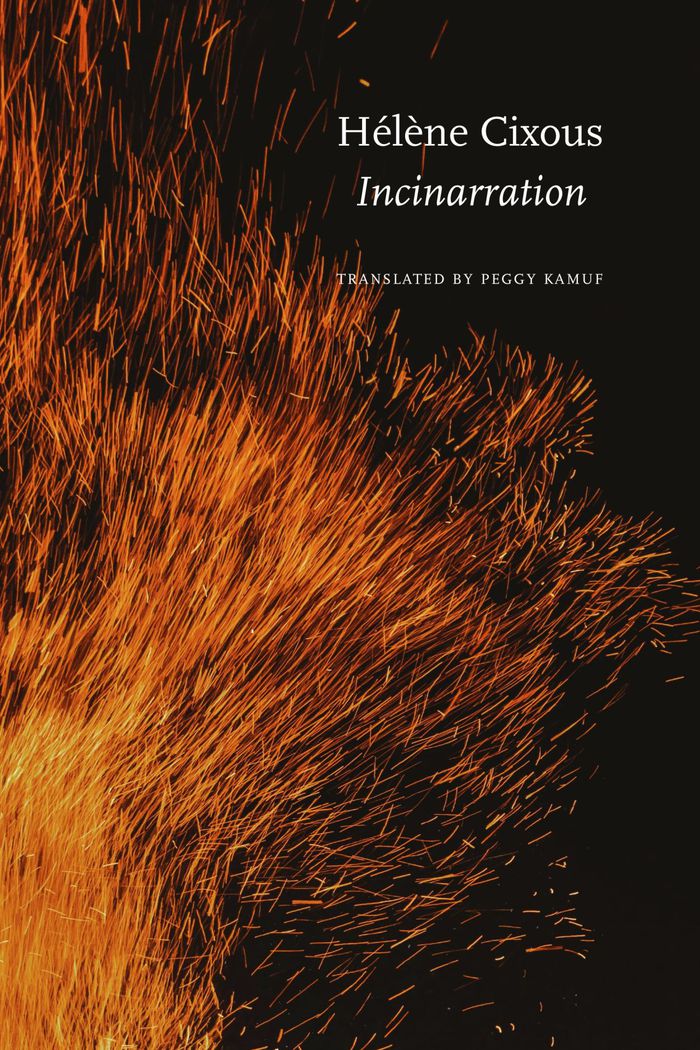
Hélène Cixous’s powerful new book, masterfully translated by Peggy Kamuf, is a vivid journey through fire. From the ashes of wars, wildfires, and upheaval, Cixous traces a dramatic path across time—from the Second World War and the Nazi occupation of Oran to the European wildfires of 2022—weaving a rich, intimate narrative that merges history, autobiography, and myth. With her piercing, lyrical voice, Cixous confronts the human cost of destruction and upheaval, and asks a universal question: What do we carry with us when everything we know is falling to ashes? In ''Incinarration'' Cixous finds hope in the power of words, memory, and imagination to illuminate our darkest moments and redeem the future. As forests burn and regimes collapse, Cixous shows us how stories become a form of resistance—a way to remember, to bear testimony, and to find renewal in the face of oblivion.
Incinarration: What do we carry?
Actions:
Price:
$35.00
(available to order)
Summary:
Hélène Cixous’s powerful new book, masterfully translated by Peggy Kamuf, is a vivid journey through fire. From the ashes of wars, wildfires, and upheaval, Cixous traces a dramatic path across time—from the Second World War and the Nazi occupation of Oran to the European wildfires of 2022—weaving a rich, intimate narrative that merges history, autobiography, and myth. With her piercing, lyrical voice, Cixous confronts the human cost of destruction and upheaval, and asks a universal question: What do we carry with us when everything we know is falling to ashes? In ''Incinarration'' Cixous finds hope in the power of words, memory, and imagination to illuminate our darkest moments and redeem the future. As forests burn and regimes collapse, Cixous shows us how stories become a form of resistance—a way to remember, to bear testimony, and to find renewal in the face of oblivion.
Form:
books
books
Publication:
June 2026
June 2026
Subject:
Critical Theory
Critical Theory
Form:
books
books
Title:
Robert Frank : storylines
Robert Frank : storylines
Actions:
Price:
$49.95
(available to order)
Summary:
Robert Frank is one of the most influential of all post-war photographers. Pioneering a revolutionary approach to photography and filmmaking, he combines autobiographical and poetic elements to produce straight black-and-white images that transcend the specific. Speaking of universal experience, Frank has said, "I'm trying to forget easy photo, trying to make something(...)
$49.95
(available to order)
Summary:
Robert Frank is one of the most influential of all post-war photographers. Pioneering a revolutionary approach to photography and filmmaking, he combines autobiographical and poetic elements to produce straight black-and-white images that transcend the specific. Speaking of universal experience, Frank has said, "I'm trying to forget easy photo, trying to make something(...)
Subject:
Photography monographs
Photography monographs
Publication:
November 2004, Götingen, Germany
November 2004, Götingen, Germany
Title:
Robert Frank : storylines
Actions:
Price:
$49.95
(available to order)
Summary:
Robert Frank is one of the most influential of all post-war photographers. Pioneering a revolutionary approach to photography and filmmaking, he combines autobiographical and poetic elements to produce straight black-and-white images that transcend the specific. Speaking of universal experience, Frank has said, "I'm trying to forget easy photo, trying to make something from within." He adds, "Time moves on and never stops or waits." Often involving a progression through a series of images, his work is structured like a musical sequence, creating storylines that resonate beyond the frozen moment of any single photograph. "Storylines" accompanies an exhibition highlighting Frank's experimental use of narrative in photography and film. The exhibition consists of his films and photographs, including Polaroids, contact sheets, and recent digital stills. Photographs from locations as diverse as Peru, London, Wales, Coney Island, and Chicago, appear along with several artist's books.
Robert Frank : storylines
Actions:
Price:
$49.95
(available to order)
Summary:
Robert Frank is one of the most influential of all post-war photographers. Pioneering a revolutionary approach to photography and filmmaking, he combines autobiographical and poetic elements to produce straight black-and-white images that transcend the specific. Speaking of universal experience, Frank has said, "I'm trying to forget easy photo, trying to make something from within." He adds, "Time moves on and never stops or waits." Often involving a progression through a series of images, his work is structured like a musical sequence, creating storylines that resonate beyond the frozen moment of any single photograph. "Storylines" accompanies an exhibition highlighting Frank's experimental use of narrative in photography and film. The exhibition consists of his films and photographs, including Polaroids, contact sheets, and recent digital stills. Photographs from locations as diverse as Peru, London, Wales, Coney Island, and Chicago, appear along with several artist's books.
Form:
books
books
Publication:
November 2004, Götingen, Germany
November 2004, Götingen, Germany
Subject:
Photography monographs
Photography monographs
Form:
books
books
Actions:
Price:
$80.95
(available in store)
Summary:
Frank Lloyd Wright is known as the architect of an enduring modern American vision, but was himself extremely well-travelled, with journeys to far-flung corners of the world serving as opportunities to develop and promote his globalising ‘organic’ philosophy. Visits to Japan and Germany informed his Prairie House period, his Usonian manifesto was presented in Russia and(...)
$80.95
(available in store)
Summary:
Frank Lloyd Wright is known as the architect of an enduring modern American vision, but was himself extremely well-travelled, with journeys to far-flung corners of the world serving as opportunities to develop and promote his globalising ‘organic’ philosophy. Visits to Japan and Germany informed his Prairie House period, his Usonian manifesto was presented in Russia and(...)
Title:
Travels with Frank lloyd Wright: the first global architect
Actions:
Price:
$80.95
(available in store)
Summary:
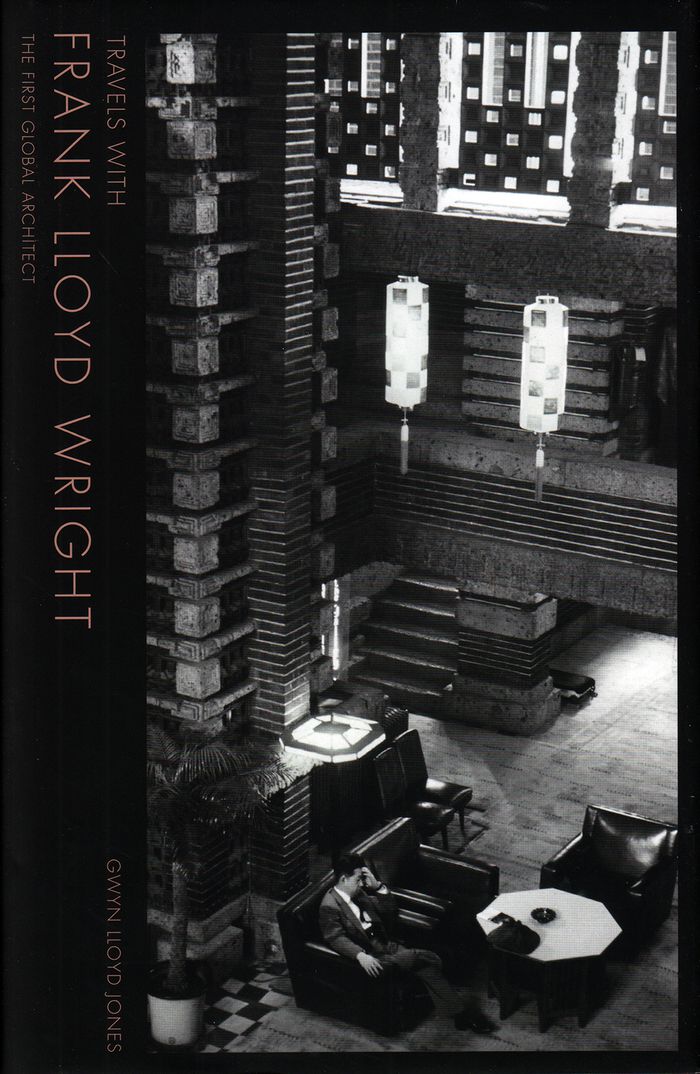
Frank Lloyd Wright is known as the architect of an enduring modern American vision, but was himself extremely well-travelled, with journeys to far-flung corners of the world serving as opportunities to develop and promote his globalising ‘organic’ philosophy. Visits to Japan and Germany informed his Prairie House period, his Usonian manifesto was presented in Russia and the UK, and later he spent time in Italy and the Middle East during his Legacy period. Gwyn Lloyd Jones retraces Lloyd Wright’s footsteps in a fascinating globetrotting narrative that reveals Lloyd Wright’s architectural legacy as having emerged from what was, at the time, a newly globalised era of architectural production. Along the way the author meets the people who are living with and experiencing Lloyd Wright’s ‘organic’ architecture today and asks whether the buildings remain true to Lloyd Wright’s intent and what it is that makes them unique.
Travels with Frank lloyd Wright: the first global architect
Actions:
Price:
$80.95
(available in store)
Summary:
Frank Lloyd Wright is known as the architect of an enduring modern American vision, but was himself extremely well-travelled, with journeys to far-flung corners of the world serving as opportunities to develop and promote his globalising ‘organic’ philosophy. Visits to Japan and Germany informed his Prairie House period, his Usonian manifesto was presented in Russia and the UK, and later he spent time in Italy and the Middle East during his Legacy period. Gwyn Lloyd Jones retraces Lloyd Wright’s footsteps in a fascinating globetrotting narrative that reveals Lloyd Wright’s architectural legacy as having emerged from what was, at the time, a newly globalised era of architectural production. Along the way the author meets the people who are living with and experiencing Lloyd Wright’s ‘organic’ architecture today and asks whether the buildings remain true to Lloyd Wright’s intent and what it is that makes them unique.
Form:
books
books
Publication:
April 2017
April 2017
Subject:
Architecture Monographs
Architecture Monographs
Form:
books
books
Price:
$16.95
(available to order)
Summary:
Joan Jonas approaches video as a drawing tool, a mirror, and a framing device. Since 1968, she has used video and performance to explore ways of seeing, the rhythms of ritual, and the archetypal authority of objects and gestures. With her influential 1976 work, I Want to Live in the Country (And Other Romances) Jonas nimbly structures an elliptical narrative that(...)
$16.95
(available to order)
Summary:
Joan Jonas approaches video as a drawing tool, a mirror, and a framing device. Since 1968, she has used video and performance to explore ways of seeing, the rhythms of ritual, and the archetypal authority of objects and gestures. With her influential 1976 work, I Want to Live in the Country (And Other Romances) Jonas nimbly structures an elliptical narrative that(...)
Title:
Joan Jonas: I want to live in the country (and other romances)
Actions:
Price:
$16.95
(available to order)
Summary:
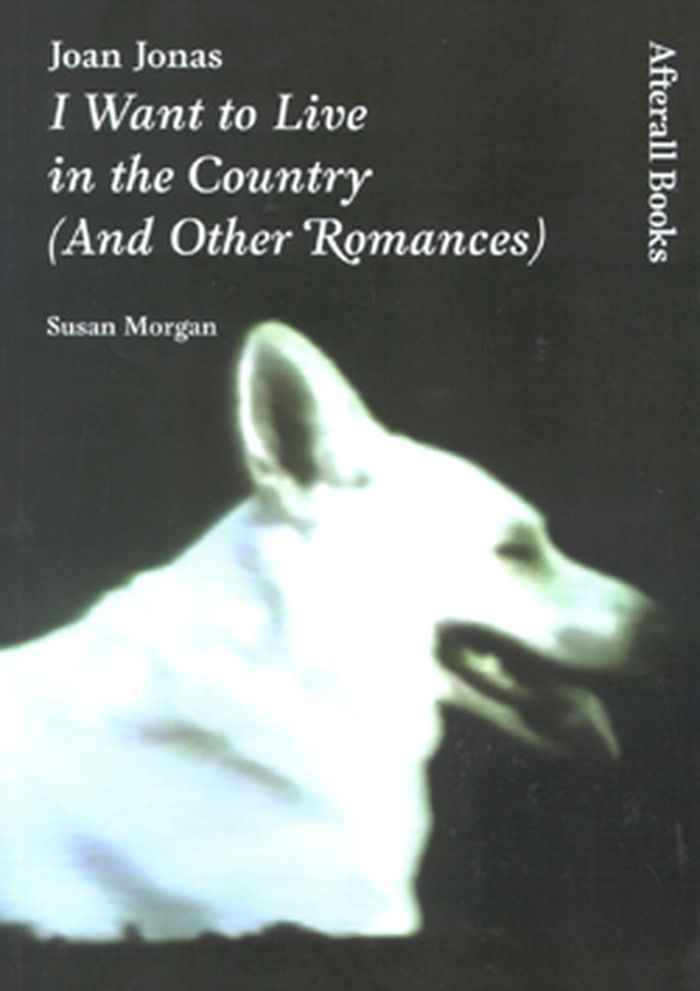
Joan Jonas approaches video as a drawing tool, a mirror, and a framing device. Since 1968, she has used video and performance to explore ways of seeing, the rhythms of ritual, and the archetypal authority of objects and gestures. With her influential 1976 work, I Want to Live in the Country (And Other Romances) Jonas nimbly structures an elliptical narrative that unmistakably establishes her voice and visual lexicon. I Want to Live in the Country features two locations—the untamed landscape of Nova Scotia and a television studio in New York City—as it examines themes of loss, displacement, time, and memory through still life compositions and Super-8 footage. Jonas creates a meditation of frames within frames, monitors within monitors, overlaid with poetic musings—a murmured story of the unconscious. Joan Jonas, Professor of Visual Arts at MIT, is known for her pioneering video and performance art.
Joan Jonas: I want to live in the country (and other romances)
Actions:
Price:
$16.95
(available to order)
Summary:
Joan Jonas approaches video as a drawing tool, a mirror, and a framing device. Since 1968, she has used video and performance to explore ways of seeing, the rhythms of ritual, and the archetypal authority of objects and gestures. With her influential 1976 work, I Want to Live in the Country (And Other Romances) Jonas nimbly structures an elliptical narrative that unmistakably establishes her voice and visual lexicon. I Want to Live in the Country features two locations—the untamed landscape of Nova Scotia and a television studio in New York City—as it examines themes of loss, displacement, time, and memory through still life compositions and Super-8 footage. Jonas creates a meditation of frames within frames, monitors within monitors, overlaid with poetic musings—a murmured story of the unconscious. Joan Jonas, Professor of Visual Arts at MIT, is known for her pioneering video and performance art.
Form:
books
books
Publication:
January 1900, London
January 1900, London
Subject:
Art Theory
Art Theory
Form:
books
books
Price:
$30.00
(available in store)
Summary:
This book accompanies Saying It, an exhibition by artists Mieke Bal & Michelle Williams Gamaker and Renate Ferro at the Freud Museum, London, curated by Joanne Morra. Besides images, and descriptions of the works in the exhibition written by the artists themselves, the book contains new essays by Cathy Caruth, Marjorie Garber, Miguel Á. Hernández-Navarro, Ranjana Khanna(...)
$30.00
(available in store)
Summary:
This book accompanies Saying It, an exhibition by artists Mieke Bal & Michelle Williams Gamaker and Renate Ferro at the Freud Museum, London, curated by Joanne Morra. Besides images, and descriptions of the works in the exhibition written by the artists themselves, the book contains new essays by Cathy Caruth, Marjorie Garber, Miguel Á. Hernández-Navarro, Ranjana Khanna(...)
Publication:
December 2012
December 2012
Title:
Saying it: Mieke Bal, Michelle Williams Gamaker, Renate Ferro
Actions:
Price:
$30.00
(available in store)
Summary:
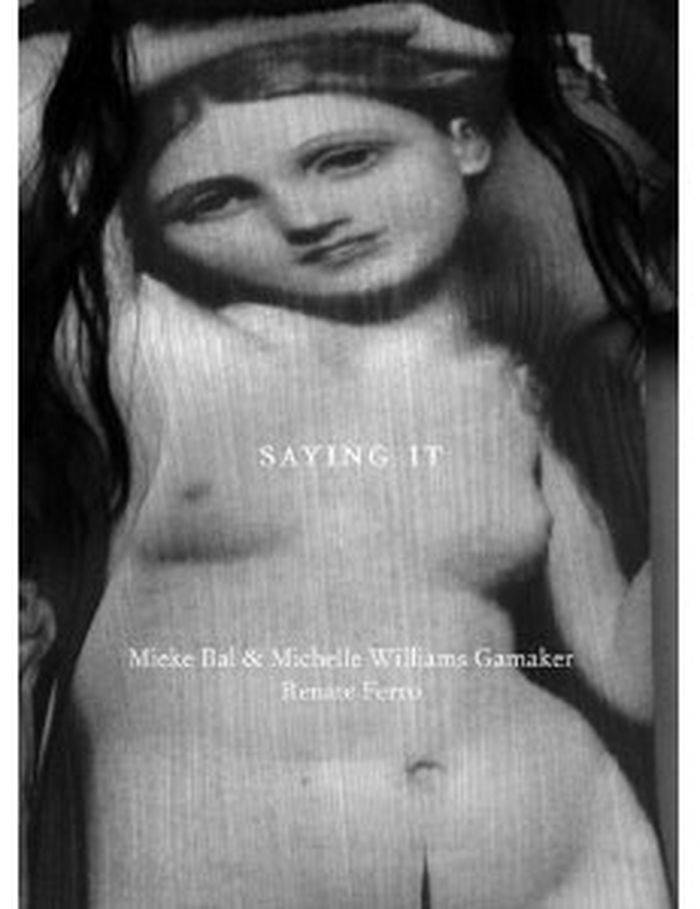
This book accompanies Saying It, an exhibition by artists Mieke Bal & Michelle Williams Gamaker and Renate Ferro at the Freud Museum, London, curated by Joanne Morra. Besides images, and descriptions of the works in the exhibition written by the artists themselves, the book contains new essays by Cathy Caruth, Marjorie Garber, Miguel Á. Hernández-Navarro, Ranjana Khanna and Joanne Morra, as well as a foreword by Carol Seigel, Director of the Freud Museum. Together, the artists’ words and those of the other authors underscore the significance of Saying It as what Morra terms a ‘site-responsive’ exhibition : not only do Bal & Williams Gamaker and Ferro shed light on key concepts of psychoanalysis (psychosis, transference, screen memories), but they reveal new layers of narrative and meaning enfolded in the site where their work is displayed, namely the former home of Anna and Sigmund Freud, now a world-renowned museum and archive.
Saying it: Mieke Bal, Michelle Williams Gamaker, Renate Ferro
Actions:
Price:
$30.00
(available in store)
Summary:
This book accompanies Saying It, an exhibition by artists Mieke Bal & Michelle Williams Gamaker and Renate Ferro at the Freud Museum, London, curated by Joanne Morra. Besides images, and descriptions of the works in the exhibition written by the artists themselves, the book contains new essays by Cathy Caruth, Marjorie Garber, Miguel Á. Hernández-Navarro, Ranjana Khanna and Joanne Morra, as well as a foreword by Carol Seigel, Director of the Freud Museum. Together, the artists’ words and those of the other authors underscore the significance of Saying It as what Morra terms a ‘site-responsive’ exhibition : not only do Bal & Williams Gamaker and Ferro shed light on key concepts of psychoanalysis (psychosis, transference, screen memories), but they reveal new layers of narrative and meaning enfolded in the site where their work is displayed, namely the former home of Anna and Sigmund Freud, now a world-renowned museum and archive.
Form:
books
books
Publication:
December 2012
December 2012
Form:
books
books
Actions:
Price:
$44.00
(available to order)
Summary:
Vancouver photographer and video artist Stan Douglas (born 1960) has been celebrated since the late 1980s for his politically freighted retrievals of obsolete technologies and failed utopias. The emphatically narrative character of his films and photographs has made for comparisons with his Vancouver contemporary Jeff Wall, but Douglas also laces his work with a literary(...)
$44.00
(available to order)
Summary:
Vancouver photographer and video artist Stan Douglas (born 1960) has been celebrated since the late 1980s for his politically freighted retrievals of obsolete technologies and failed utopias. The emphatically narrative character of his films and photographs has made for comparisons with his Vancouver contemporary Jeff Wall, but Douglas also laces his work with a literary(...)
Title:
Stan Douglas: midcentury studio
Actions:
Price:
$44.00
(available to order)
Summary:
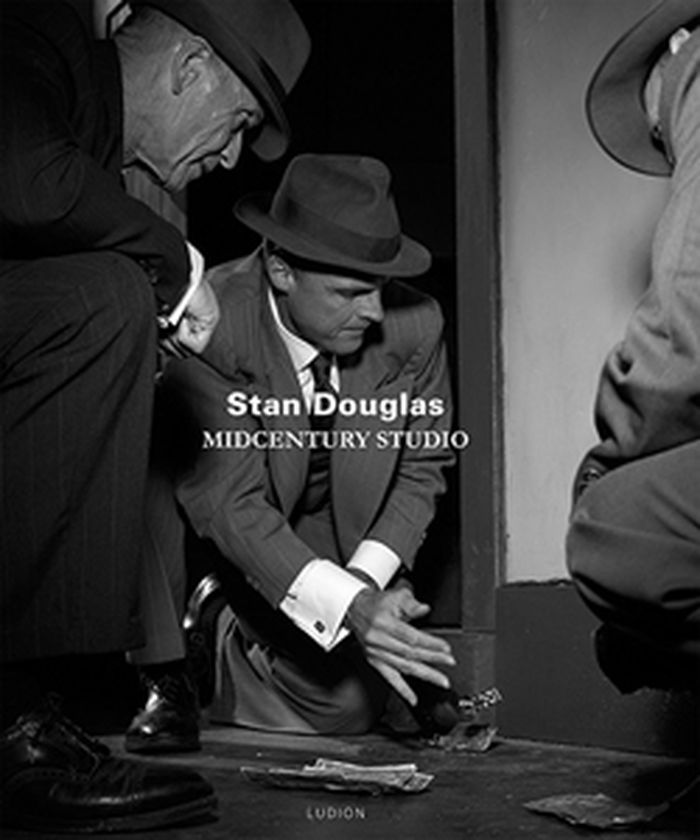
Vancouver photographer and video artist Stan Douglas (born 1960) has been celebrated since the late 1980s for his politically freighted retrievals of obsolete technologies and failed utopias. The emphatically narrative character of his films and photographs has made for comparisons with his Vancouver contemporary Jeff Wall, but Douglas also laces his work with a literary engagement, in references to works by Proust, Beckett and other writers. This publication sees Douglas pursue a new direction. It chronicles the burgeoning discipline of press photography in North America during the postwar period, for which Douglas assumes the role of a fictional photographer, creating a series of images hypothetically produced between 1945-1951. Douglas constructed a “mid-century studio” using authentic equipment as well as actors to produce carefully staged, black-and-white photographs that painstakingly emulate the period's obsession with crime scenes, dance, gambling and technology. This volume juxtaposes actual photographs from the era with Douglas' photo-fictions.
Stan Douglas: midcentury studio
Actions:
Price:
$44.00
(available to order)
Summary:
Vancouver photographer and video artist Stan Douglas (born 1960) has been celebrated since the late 1980s for his politically freighted retrievals of obsolete technologies and failed utopias. The emphatically narrative character of his films and photographs has made for comparisons with his Vancouver contemporary Jeff Wall, but Douglas also laces his work with a literary engagement, in references to works by Proust, Beckett and other writers. This publication sees Douglas pursue a new direction. It chronicles the burgeoning discipline of press photography in North America during the postwar period, for which Douglas assumes the role of a fictional photographer, creating a series of images hypothetically produced between 1945-1951. Douglas constructed a “mid-century studio” using authentic equipment as well as actors to produce carefully staged, black-and-white photographs that painstakingly emulate the period's obsession with crime scenes, dance, gambling and technology. This volume juxtaposes actual photographs from the era with Douglas' photo-fictions.
Form:
books
books
Publication:
July 2011
July 2011
Subject:
Photography monographs
Photography monographs
Form:
books
books
Actions:
Price:
$69.95
(available to order)
Summary:
It should be no surprise that Eskilson's study of the evolution of graphic design from Gutenberg to grunge and beyond is an oft-assigned tome for budding designers. However, one needn't be a student to appreciate Eskilson's ability to hold a narrative thread as art movements, technology, and other influences continue to broaden the scope of his topic as the book(...)
$69.95
(available to order)
Summary:
It should be no surprise that Eskilson's study of the evolution of graphic design from Gutenberg to grunge and beyond is an oft-assigned tome for budding designers. However, one needn't be a student to appreciate Eskilson's ability to hold a narrative thread as art movements, technology, and other influences continue to broaden the scope of his topic as the book(...)
Title:
Graphic design : A new history
Actions:
Price:
$69.95
(available to order)
Summary:
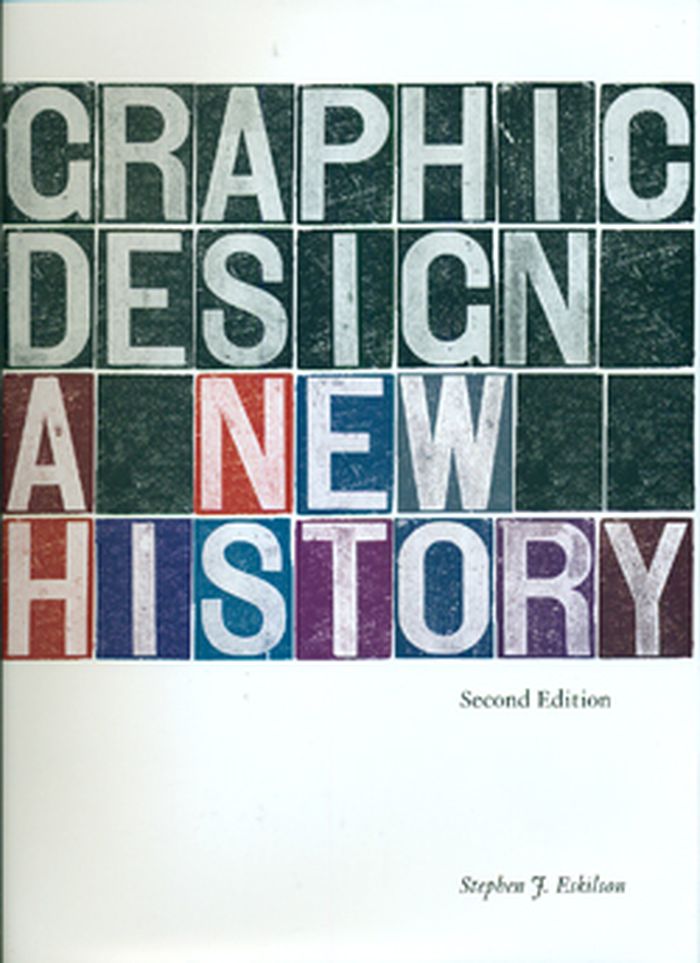
It should be no surprise that Eskilson's study of the evolution of graphic design from Gutenberg to grunge and beyond is an oft-assigned tome for budding designers. However, one needn't be a student to appreciate Eskilson's ability to hold a narrative thread as art movements, technology, and other influences continue to broaden the scope of his topic as the book progresses. Working his way through a dense and diverse melange of media, such as pulp magazines, photography, architecture, typefaces, logos, Nazi propaganda, movie posters, and signage, Eskilson (coauthor, Frames of Reference: Art History and the World) is an enthusiastic and informative guide. The tome is liberally peppered throughout with iconic images such as Currier and Ives prints, James Flagg's I Want YOU for U.S. Army, and Shepard Fairey's Hope, featuring Barack Obama, as well as digressions on key contributors such as Henri de Toulouse-Lautrec, Gustav Klimt, and movements like De Stijl.
Graphic design : A new history
Actions:
Price:
$69.95
(available to order)
Summary:
It should be no surprise that Eskilson's study of the evolution of graphic design from Gutenberg to grunge and beyond is an oft-assigned tome for budding designers. However, one needn't be a student to appreciate Eskilson's ability to hold a narrative thread as art movements, technology, and other influences continue to broaden the scope of his topic as the book progresses. Working his way through a dense and diverse melange of media, such as pulp magazines, photography, architecture, typefaces, logos, Nazi propaganda, movie posters, and signage, Eskilson (coauthor, Frames of Reference: Art History and the World) is an enthusiastic and informative guide. The tome is liberally peppered throughout with iconic images such as Currier and Ives prints, James Flagg's I Want YOU for U.S. Army, and Shepard Fairey's Hope, featuring Barack Obama, as well as digressions on key contributors such as Henri de Toulouse-Lautrec, Gustav Klimt, and movements like De Stijl.
Form:
books
books
Publication:
February 2012
February 2012
Subject:
Graphic Design and Typography
Graphic Design and Typography
Form:
books
books
Actions:
Price:
$25.00
(available to order)
Summary:
Perhaps the only postwar classical composer to invest avant-garde music with overt eroticism, Luc Ferrari (1929-2005) was one of France's leading composers of the twentieth century, relentlessly experimental while always preserving his keen sense of humor. Ferrari was a first-generation exponent of musique concrète, and made brilliant use of field recordings to develop(...)
$25.00
(available to order)
Summary:
Perhaps the only postwar classical composer to invest avant-garde music with overt eroticism, Luc Ferrari (1929-2005) was one of France's leading composers of the twentieth century, relentlessly experimental while always preserving his keen sense of humor. Ferrari was a first-generation exponent of musique concrète, and made brilliant use of field recordings to develop(...)
Title:
Almost nothing with Luc Ferrari
Actions:
Price:
$25.00
(available to order)
Summary:
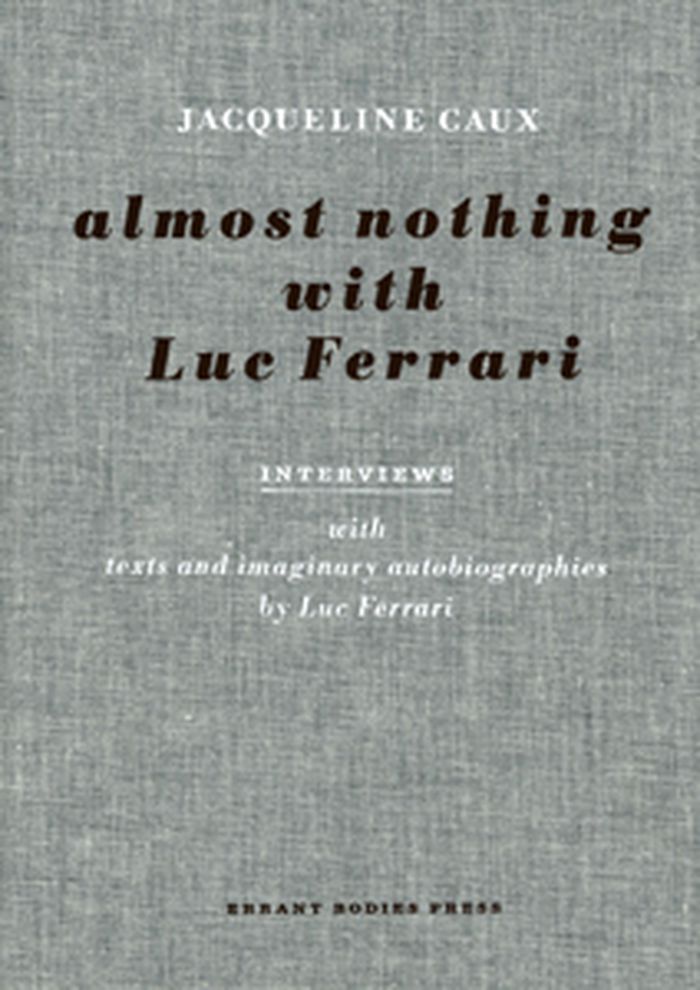
Perhaps the only postwar classical composer to invest avant-garde music with overt eroticism, Luc Ferrari (1929-2005) was one of France's leading composers of the twentieth century, relentlessly experimental while always preserving his keen sense of humor. Ferrari was a first-generation exponent of musique concrète, and made brilliant use of field recordings to develop sensual, proto-ambient narrative that he termed "anecdotal music" or "cinema for the ear." Perhaps the most notorious instance of this approach was Danses Organiques (1973), for which Ferrari recorded the meeting and sexual encounter of two young women, cut with other ambient and music sound. In his final decades Ferrari was championed by David Grubbs (of Gastr del Sol), who brought his music to a postrock audience. Almost Nothing is the first publication on this composer. It alternates Jacqueline Caux's interviews with 14 "imaginary autobiographies" by the composer, offering a lively account of new music's most revolutionary era.
Almost nothing with Luc Ferrari
Actions:
Price:
$25.00
(available to order)
Summary:
Perhaps the only postwar classical composer to invest avant-garde music with overt eroticism, Luc Ferrari (1929-2005) was one of France's leading composers of the twentieth century, relentlessly experimental while always preserving his keen sense of humor. Ferrari was a first-generation exponent of musique concrète, and made brilliant use of field recordings to develop sensual, proto-ambient narrative that he termed "anecdotal music" or "cinema for the ear." Perhaps the most notorious instance of this approach was Danses Organiques (1973), for which Ferrari recorded the meeting and sexual encounter of two young women, cut with other ambient and music sound. In his final decades Ferrari was championed by David Grubbs (of Gastr del Sol), who brought his music to a postrock audience. Almost Nothing is the first publication on this composer. It alternates Jacqueline Caux's interviews with 14 "imaginary autobiographies" by the composer, offering a lively account of new music's most revolutionary era.
Form:
books
books
Publication:
March 2012
March 2012
Subject:
Acoustics
Acoustics
Form:
books
books
Actions:
Price:
$50.00
(available to order)
Summary:
How do we design our cities when our most intimate experiences are incessantly tracked and our feelings become the base of new modes of production that prioritize the immaterial over the material? Since the 2008 financial crisis, lists of well-being indicators, happiness indexes, and quality-of-life rankings have become viral. Concurrently, the emotional data presented in(...)
$50.00
(available to order)
Summary:
How do we design our cities when our most intimate experiences are incessantly tracked and our feelings become the base of new modes of production that prioritize the immaterial over the material? Since the 2008 financial crisis, lists of well-being indicators, happiness indexes, and quality-of-life rankings have become viral. Concurrently, the emotional data presented in(...)
Title:
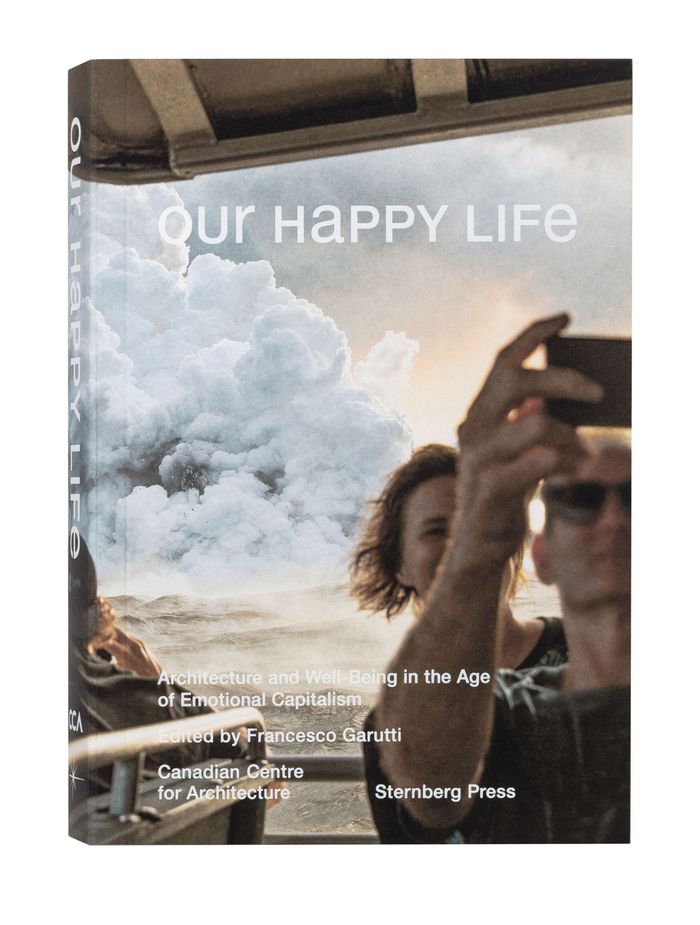
Our happy life: architecture and well-being in the age of emotional capitalism
Actions:
Price:
$50.00
(available to order)
Summary:
How do we design our cities when our most intimate experiences are incessantly tracked and our feelings become the base of new modes of production that prioritize the immaterial over the material? Since the 2008 financial crisis, lists of well-being indicators, happiness indexes, and quality-of-life rankings have become viral. Concurrently, the emotional data presented in these surveys- including perceptions on questions such as loneliness, friendship and intimate fears- feed an expanding political agenda of happiness and a new form of market whose most decisive asset is "affect." 'Our Happy Life' investigates the architectural implications of this trend by dissecting and questioning the political, economic, and emotional conditions that generate space today. Organized as a visual narrative with critical readings by Will Davies, Daniel Fujiwara, Simon Fujiwara, Ingo Niermann, Deane Simpson, and Mirko Zardini, this book reveals architecture, city, and landscape as contested surfaces, caught between the intagible guidelines of happiness indexes, the new marketplace of emotions, and the relentless ideology of positivity.
Our happy life: architecture and well-being in the age of emotional capitalism
Actions:
Price:
$50.00
(available to order)
Summary:
How do we design our cities when our most intimate experiences are incessantly tracked and our feelings become the base of new modes of production that prioritize the immaterial over the material? Since the 2008 financial crisis, lists of well-being indicators, happiness indexes, and quality-of-life rankings have become viral. Concurrently, the emotional data presented in these surveys- including perceptions on questions such as loneliness, friendship and intimate fears- feed an expanding political agenda of happiness and a new form of market whose most decisive asset is "affect." 'Our Happy Life' investigates the architectural implications of this trend by dissecting and questioning the political, economic, and emotional conditions that generate space today. Organized as a visual narrative with critical readings by Will Davies, Daniel Fujiwara, Simon Fujiwara, Ingo Niermann, Deane Simpson, and Mirko Zardini, this book reveals architecture, city, and landscape as contested surfaces, caught between the intagible guidelines of happiness indexes, the new marketplace of emotions, and the relentless ideology of positivity.
Form:
books
books
Publication:
May 2019
May 2019
Subject:
CCA Publications
CCA Publications


