


29901 Results
Level of archival description:
Project
Project
Reference number:
AP164.S1.1999.D2
Description:
The project series documents an open competition. Abalos & Herreros, in collaboration with Queca Ortiz and Empty, S.L., won second place for their design. The firm identified this project as number 115. The intention of their entry was to “[…] answer to the task with an authentic installation, a mellowed and independent equipment independent of the container, which absolutely never provokes a conflict or pretends to improve it, which accepts the value of its configuration and extracts the maximum possibilities of the spatial qualities that the intervention has pretended to enhance. Therefore, it is pretended to develop a program which adds an offer of pedagogic-cultural piece of the town to the basic spaces of the museum. The challenge is to make people live together with the scientific aspects, which interests the cultivated popular-pedagogy visitor, connoisseurs of, and which acts with the intention of excinting, surprising and attracting attention of a mostly youthful and infantile audience. […] The museum’s basic program is completed with temporary exhibition halls, library, lecture room and didactic workshops, assembly hall, café, gift shop and offices.” (ARCH270975) Documenting this project are digital and reference materials, project descriptions, and specifications.
AP164.S1.1999.D2
Description:
The project series documents an open competition. Abalos & Herreros, in collaboration with Queca Ortiz and Empty, S.L., won second place for their design. The firm identified this project as number 115. The intention of their entry was to “[…] answer to the task with an authentic installation, a mellowed and independent equipment independent of the container, which absolutely never provokes a conflict or pretends to improve it, which accepts the value of its configuration and extracts the maximum possibilities of the spatial qualities that the intervention has pretended to enhance. Therefore, it is pretended to develop a program which adds an offer of pedagogic-cultural piece of the town to the basic spaces of the museum. The challenge is to make people live together with the scientific aspects, which interests the cultivated popular-pedagogy visitor, connoisseurs of, and which acts with the intention of excinting, surprising and attracting attention of a mostly youthful and infantile audience. […] The museum’s basic program is completed with temporary exhibition halls, library, lecture room and didactic workshops, assembly hall, café, gift shop and offices.” (ARCH270975) Documenting this project are digital and reference materials, project descriptions, and specifications.
People:
Date:
1996-2009, predominant 1999
1996-2009, predominant 1999
Title:
Museo arqueológico Alicante, Spain (1999)
Actions:
AP164.S1.1999.D2
Description:
The project series documents an open competition. Abalos & Herreros, in collaboration with Queca Ortiz and Empty, S.L., won second place for their design. The firm identified this project as number 115. The intention of their entry was to “[…] answer to the task with an authentic installation, a mellowed and independent equipment independent of the container, which absolutely never provokes a conflict or pretends to improve it, which accepts the value of its configuration and extracts the maximum possibilities of the spatial qualities that the intervention has pretended to enhance. Therefore, it is pretended to develop a program which adds an offer of pedagogic-cultural piece of the town to the basic spaces of the museum. The challenge is to make people live together with the scientific aspects, which interests the cultivated popular-pedagogy visitor, connoisseurs of, and which acts with the intention of excinting, surprising and attracting attention of a mostly youthful and infantile audience. […] The museum’s basic program is completed with temporary exhibition halls, library, lecture room and didactic workshops, assembly hall, café, gift shop and offices.” (ARCH270975) Documenting this project are digital and reference materials, project descriptions, and specifications.
Museo arqueológico Alicante, Spain (1999)
Actions:
AP164.S1.1999.D2
Description:
The project series documents an open competition. Abalos & Herreros, in collaboration with Queca Ortiz and Empty, S.L., won second place for their design. The firm identified this project as number 115. The intention of their entry was to “[…] answer to the task with an authentic installation, a mellowed and independent equipment independent of the container, which absolutely never provokes a conflict or pretends to improve it, which accepts the value of its configuration and extracts the maximum possibilities of the spatial qualities that the intervention has pretended to enhance. Therefore, it is pretended to develop a program which adds an offer of pedagogic-cultural piece of the town to the basic spaces of the museum. The challenge is to make people live together with the scientific aspects, which interests the cultivated popular-pedagogy visitor, connoisseurs of, and which acts with the intention of excinting, surprising and attracting attention of a mostly youthful and infantile audience. […] The museum’s basic program is completed with temporary exhibition halls, library, lecture room and didactic workshops, assembly hall, café, gift shop and offices.” (ARCH270975) Documenting this project are digital and reference materials, project descriptions, and specifications.
Level of archival description:
Project
Project
Date:
1996-2009, predominant 1999
1996-2009, predominant 1999
People:
Form:
video
video
Actions:
Reference number:
PHCON2003:0005:129
Description:
Film was made for the 1989 Musée d'art contemporain de Montréal, Québec showing of the exhibition "Gordon Matta-Clark: A Retrospective", organized by, and also held at, the Museum of Contemporary Art in Chicago, Illinois.
PHCON2003:0005:129
Description:
Film was made for the 1989 Musée d'art contemporain de Montréal, Québec showing of the exhibition "Gordon Matta-Clark: A Retrospective", organized by, and also held at, the Museum of Contemporary Art in Chicago, Illinois.
People:
Date:
recorded 1989
recorded 1989
Title:
Matta-Clark first retrospective: 16mm installation at MAC, Montreal, first reel
Actions:
PHCON2003:0005:129
Description:
Film was made for the 1989 Musée d'art contemporain de Montréal, Québec showing of the exhibition "Gordon Matta-Clark: A Retrospective", organized by, and also held at, the Museum of Contemporary Art in Chicago, Illinois.
Matta-Clark first retrospective: 16mm installation at MAC, Montreal, first reel
Actions:
PHCON2003:0005:129
Description:
Film was made for the 1989 Musée d'art contemporain de Montréal, Québec showing of the exhibition "Gordon Matta-Clark: A Retrospective", organized by, and also held at, the Museum of Contemporary Art in Chicago, Illinois.
Form:
video
video
Date:
recorded 1989
recorded 1989
People:
Form:
exhibitions
exhibitions

Title:
Take Note
Take Note
Actions:
Description:
Take Note presents selected pivotal moments in the ongoing relationship between writing and architecture. This exhibition is the fifth in a series of CCA exhibitions developed in collaboration with universities. Curated by Sylvia Lavin, University of California, Los Angeles.
Take Note presents selected pivotal moments in the ongoing relationship between writing and architecture. This exhibition is the fifth in a series of CCA exhibitions developed in collaboration with universities. Curated by Sylvia Lavin, University of California, Los Angeles.
Location:
Octagonal gallery
Octagonal gallery
Date:
4 February 2010 to 30 May 2010
4 February 2010 to 30 May 2010
Title:
Take Note
Actions:
Description:
Take Note presents selected pivotal moments in the ongoing relationship between writing and architecture. This exhibition is the fifth in a series of CCA exhibitions developed in collaboration with universities. Curated by Sylvia Lavin, University of California, Los Angeles.
Take Note
Actions:
Description:
Take Note presents selected pivotal moments in the ongoing relationship between writing and architecture. This exhibition is the fifth in a series of CCA exhibitions developed in collaboration with universities. Curated by Sylvia Lavin, University of California, Los Angeles.
Form:
exhibitions
exhibitions
Date:
4 February 2010 to
30 May 2010
4 February 2010 to
30 May 2010
Location:
Octagonal gallery
Octagonal gallery
Level of archival description:
Series
Series
Title:
Une architecture des humeurs
Une architecture des humeurs
Actions:
Reference number:
AP193.S4
Description:
Series 4, Une architecture des humeurs, 2008-2011, documents the conception and the presentation of exhibition and project Une architecture des humeurs. Presented at Le laboratoire art gallery in Paris between January and May 2010, Une architecture des humeurs is a conceptual, unbuilt, residential urban structure based on a potential future in which contemporary science reads human physiology and chemical balance. The idea is to acquire a chemistry of the “humors”, or the moods and temperament, of future purchasers. Taken as input, the information generates a diversity of habitable morphologies and relationships between them. With this process, the project attempts to make palpable and graspable, through technologies, the emotions of the participants captured via the chemistry of their body. The goal is to gather information on their capacity of adaptation, their level of sympathy and empathy while confronted to a situation or an environment. This information is then analyzed by computational, mathematical, and machinist procedures. This leads to the design and production of an urban structure submitted to the improbable and uncertain protocols produced by emotions, also creating aggregations and layouts that rearticulate the links between the individual and the collective. These structures are calculated following simultaneously incremental and recursive structural optimization protocols resulting in the physicality and morphology of architecture. The layout of the residential units and the structural trajectories are conceived and developed as posterior to the constructs supporting social life and not as an a priori. The structure of each components of the urban structure is generated by a secretion and weaving machine called Viab02. The machine is the second prototype of VIAB which was developed with Robotics Research Lab of the University of Southern California and takes its name from the terms viability and variability. With a process similar to contour crafting, the machine produces bio-cement, a mix between cement and bio-resin, giving form to the adapted residential structures. The records consist largely of images detailing the creative process of the firm, photographs of the exhibition, and 3D models. It also contains animated renderings representing the machine in action and sequences of the construction of the building or the structure. The records include a video orienting the project into François Roche theoretical stance, research as speculation, that can be summarize as the use of technological tools to take a critical and political position through esthetic in order to open new lines of thoughts. AP193.S2 contains updated previous version of the VIAB machine
AP193.S4
Description:
Series 4, Une architecture des humeurs, 2008-2011, documents the conception and the presentation of exhibition and project Une architecture des humeurs. Presented at Le laboratoire art gallery in Paris between January and May 2010, Une architecture des humeurs is a conceptual, unbuilt, residential urban structure based on a potential future in which contemporary science reads human physiology and chemical balance. The idea is to acquire a chemistry of the “humors”, or the moods and temperament, of future purchasers. Taken as input, the information generates a diversity of habitable morphologies and relationships between them. With this process, the project attempts to make palpable and graspable, through technologies, the emotions of the participants captured via the chemistry of their body. The goal is to gather information on their capacity of adaptation, their level of sympathy and empathy while confronted to a situation or an environment. This information is then analyzed by computational, mathematical, and machinist procedures. This leads to the design and production of an urban structure submitted to the improbable and uncertain protocols produced by emotions, also creating aggregations and layouts that rearticulate the links between the individual and the collective. These structures are calculated following simultaneously incremental and recursive structural optimization protocols resulting in the physicality and morphology of architecture. The layout of the residential units and the structural trajectories are conceived and developed as posterior to the constructs supporting social life and not as an a priori. The structure of each components of the urban structure is generated by a secretion and weaving machine called Viab02. The machine is the second prototype of VIAB which was developed with Robotics Research Lab of the University of Southern California and takes its name from the terms viability and variability. With a process similar to contour crafting, the machine produces bio-cement, a mix between cement and bio-resin, giving form to the adapted residential structures. The records consist largely of images detailing the creative process of the firm, photographs of the exhibition, and 3D models. It also contains animated renderings representing the machine in action and sequences of the construction of the building or the structure. The records include a video orienting the project into François Roche theoretical stance, research as speculation, that can be summarize as the use of technological tools to take a critical and political position through esthetic in order to open new lines of thoughts. AP193.S2 contains updated previous version of the VIAB machine
People:
Date:
2008-2011
2008-2011
Title:
Une architecture des humeurs
Actions:
AP193.S4
Description:
Series 4, Une architecture des humeurs, 2008-2011, documents the conception and the presentation of exhibition and project Une architecture des humeurs. Presented at Le laboratoire art gallery in Paris between January and May 2010, Une architecture des humeurs is a conceptual, unbuilt, residential urban structure based on a potential future in which contemporary science reads human physiology and chemical balance. The idea is to acquire a chemistry of the “humors”, or the moods and temperament, of future purchasers. Taken as input, the information generates a diversity of habitable morphologies and relationships between them. With this process, the project attempts to make palpable and graspable, through technologies, the emotions of the participants captured via the chemistry of their body. The goal is to gather information on their capacity of adaptation, their level of sympathy and empathy while confronted to a situation or an environment. This information is then analyzed by computational, mathematical, and machinist procedures. This leads to the design and production of an urban structure submitted to the improbable and uncertain protocols produced by emotions, also creating aggregations and layouts that rearticulate the links between the individual and the collective. These structures are calculated following simultaneously incremental and recursive structural optimization protocols resulting in the physicality and morphology of architecture. The layout of the residential units and the structural trajectories are conceived and developed as posterior to the constructs supporting social life and not as an a priori. The structure of each components of the urban structure is generated by a secretion and weaving machine called Viab02. The machine is the second prototype of VIAB which was developed with Robotics Research Lab of the University of Southern California and takes its name from the terms viability and variability. With a process similar to contour crafting, the machine produces bio-cement, a mix between cement and bio-resin, giving form to the adapted residential structures. The records consist largely of images detailing the creative process of the firm, photographs of the exhibition, and 3D models. It also contains animated renderings representing the machine in action and sequences of the construction of the building or the structure. The records include a video orienting the project into François Roche theoretical stance, research as speculation, that can be summarize as the use of technological tools to take a critical and political position through esthetic in order to open new lines of thoughts. AP193.S2 contains updated previous version of the VIAB machine
Une architecture des humeurs
Actions:
AP193.S4
Description:
Series 4, Une architecture des humeurs, 2008-2011, documents the conception and the presentation of exhibition and project Une architecture des humeurs. Presented at Le laboratoire art gallery in Paris between January and May 2010, Une architecture des humeurs is a conceptual, unbuilt, residential urban structure based on a potential future in which contemporary science reads human physiology and chemical balance. The idea is to acquire a chemistry of the “humors”, or the moods and temperament, of future purchasers. Taken as input, the information generates a diversity of habitable morphologies and relationships between them. With this process, the project attempts to make palpable and graspable, through technologies, the emotions of the participants captured via the chemistry of their body. The goal is to gather information on their capacity of adaptation, their level of sympathy and empathy while confronted to a situation or an environment. This information is then analyzed by computational, mathematical, and machinist procedures. This leads to the design and production of an urban structure submitted to the improbable and uncertain protocols produced by emotions, also creating aggregations and layouts that rearticulate the links between the individual and the collective. These structures are calculated following simultaneously incremental and recursive structural optimization protocols resulting in the physicality and morphology of architecture. The layout of the residential units and the structural trajectories are conceived and developed as posterior to the constructs supporting social life and not as an a priori. The structure of each components of the urban structure is generated by a secretion and weaving machine called Viab02. The machine is the second prototype of VIAB which was developed with Robotics Research Lab of the University of Southern California and takes its name from the terms viability and variability. With a process similar to contour crafting, the machine produces bio-cement, a mix between cement and bio-resin, giving form to the adapted residential structures. The records consist largely of images detailing the creative process of the firm, photographs of the exhibition, and 3D models. It also contains animated renderings representing the machine in action and sequences of the construction of the building or the structure. The records include a video orienting the project into François Roche theoretical stance, research as speculation, that can be summarize as the use of technological tools to take a critical and political position through esthetic in order to open new lines of thoughts. AP193.S2 contains updated previous version of the VIAB machine
Level of archival description:
Series
Series
Date:
2008-2011
2008-2011
People:
Form:
exhibitions
exhibitions
Actions:
Description:
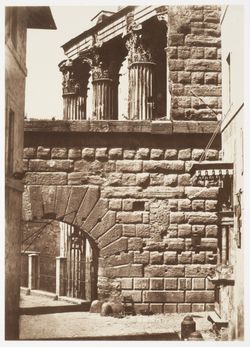
In this exhibition, a selection of contemporary publications and critical investigations lay the groundwork through which to explore the relationship between travel and design today, while selected items from the CCA collection offer a historiography of tourism.
In this exhibition, a selection of contemporary publications and critical investigations lay the groundwork through which to explore the relationship between travel and design today, while selected items from the CCA collection offer a historiography of tourism.
Date:
12 December 2019 to 15 November 2020
12 December 2019 to 15 November 2020
Title:
Detour: Alternative Readings of Travel
Actions:
Description:
In this exhibition, a selection of contemporary publications and critical investigations lay the groundwork through which to explore the relationship between travel and design today, while selected items from the CCA collection offer a historiography of tourism.
Detour: Alternative Readings of Travel
Actions:
Description:
In this exhibition, a selection of contemporary publications and critical investigations lay the groundwork through which to explore the relationship between travel and design today, while selected items from the CCA collection offer a historiography of tourism.
Form:
exhibitions
exhibitions
Date:
12 December 2019 to
15 November 2020
12 December 2019 to
15 November 2020
Reference number:
PH2008:0034
Description:
DVD of installation photographs of the exhibition "Gordon Matta-Clark: You Are the Measure", held at MOCA Los Angeles from the 16 September 2007 to 7 January 2008. Cover contains thumbnails of images.
PH2008:0034
Description:
DVD of installation photographs of the exhibition "Gordon Matta-Clark: You Are the Measure", held at MOCA Los Angeles from the 16 September 2007 to 7 January 2008. Cover contains thumbnails of images.
People:
Date:
2007
2007
Title:
Gordon Matta-Clark "You are the Measure"
Actions:
PH2008:0034
Description:
DVD of installation photographs of the exhibition "Gordon Matta-Clark: You Are the Measure", held at MOCA Los Angeles from the 16 September 2007 to 7 January 2008. Cover contains thumbnails of images.
Gordon Matta-Clark "You are the Measure"
Actions:
PH2008:0034
Description:
DVD of installation photographs of the exhibition "Gordon Matta-Clark: You Are the Measure", held at MOCA Los Angeles from the 16 September 2007 to 7 January 2008. Cover contains thumbnails of images.
Date:
2007
2007
People:
Form:
archives
Level of archival description:
Fonds
archives
Level of archival description:
Fonds
Reference number:
AP195
Synopsis:
The Zaha Hadid Architects Phaeno Science Centre project records, 1996-2015, consist of approximately 43,800 digital files that document the design and construction of an interactive science museum in Wolfsburg, Germany. Materials related to presentations, publications, events, and the press are also represented. Formats include chiefly CAD files, especially plotter files and AutoCAD drawings, though related text documents and images are also represented. The majority of the records date from 2000 to 2006.
AP195
Synopsis:
The Zaha Hadid Architects Phaeno Science Centre project records, 1996-2015, consist of approximately 43,800 digital files that document the design and construction of an interactive science museum in Wolfsburg, Germany. Materials related to presentations, publications, events, and the press are also represented. Formats include chiefly CAD files, especially plotter files and AutoCAD drawings, though related text documents and images are also represented. The majority of the records date from 2000 to 2006.
People:
Date:
1996 - 2015
1996 - 2015
Title:
Zaha Hadid Architects Phaeno Science Centre project records
Actions:
AP195
Synopsis:
The Zaha Hadid Architects Phaeno Science Centre project records, 1996-2015, consist of approximately 43,800 digital files that document the design and construction of an interactive science museum in Wolfsburg, Germany. Materials related to presentations, publications, events, and the press are also represented. Formats include chiefly CAD files, especially plotter files and AutoCAD drawings, though related text documents and images are also represented. The majority of the records date from 2000 to 2006.
Zaha Hadid Architects Phaeno Science Centre project records
Actions:
AP195
Synopsis:
The Zaha Hadid Architects Phaeno Science Centre project records, 1996-2015, consist of approximately 43,800 digital files that document the design and construction of an interactive science museum in Wolfsburg, Germany. Materials related to presentations, publications, events, and the press are also represented. Formats include chiefly CAD files, especially plotter files and AutoCAD drawings, though related text documents and images are also represented. The majority of the records date from 2000 to 2006.
Form:
archives
Level of archival description:
Fonds
archives
Level of archival description:
Fonds
Date:
1996 - 2015
1996 - 2015
People:
Title:
No title
No title
Actions:
Reference number:
DR2019:0011
Description:
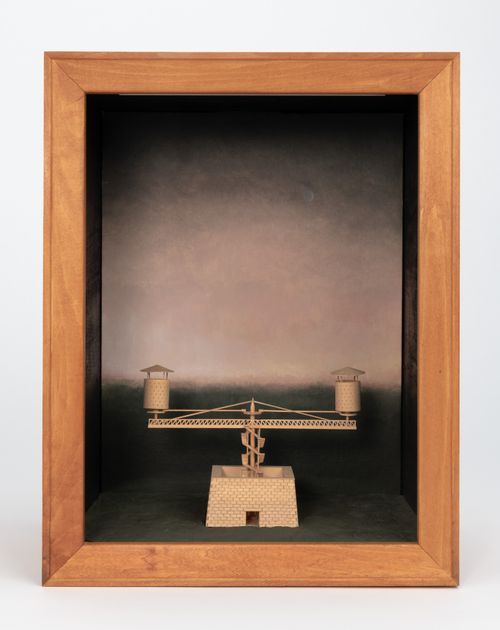
Model for one of four "Folly" projects designed by Agrest and Gandelsonas for the exhibition "Architecture III: Follies: Architecture for the Late Twentieth-Century Landscape" at Leo Castelli Gallery, New York, October 22-November 19, 1983
DR2019:0011
Description:
Model for one of four "Folly" projects designed by Agrest and Gandelsonas for the exhibition "Architecture III: Follies: Architecture for the Late Twentieth-Century Landscape" at Leo Castelli Gallery, New York, October 22-November 19, 1983
People:
Date:
1983?
1983?
Title:
No title
Actions:
DR2019:0011
Description:
Model for one of four "Folly" projects designed by Agrest and Gandelsonas for the exhibition "Architecture III: Follies: Architecture for the Late Twentieth-Century Landscape" at Leo Castelli Gallery, New York, October 22-November 19, 1983
No title
Actions:
DR2019:0011
Description:
Model for one of four "Folly" projects designed by Agrest and Gandelsonas for the exhibition "Architecture III: Follies: Architecture for the Late Twentieth-Century Landscape" at Leo Castelli Gallery, New York, October 22-November 19, 1983
Date:
1983?
1983?
People:
Actions:
Reference number:
DR2019:0012
Description:
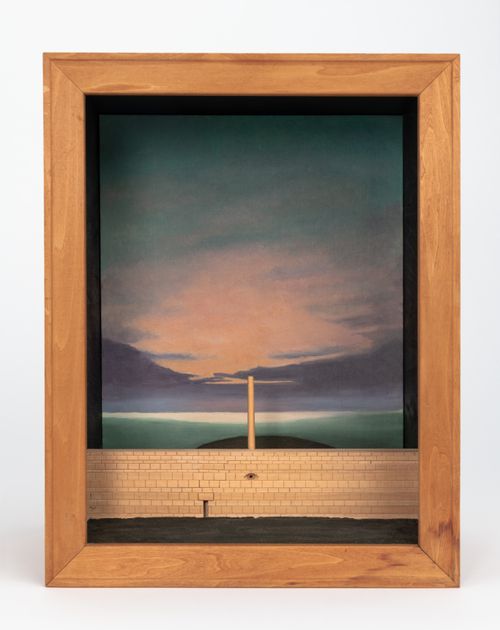
Model for one of four "Folly" projects designed by Agrest and Gandelsonas for the exhibition "Architecture III: Follies: Architecture for the Late Twentieth-Century Landscape" at Leo Castelli Gallery, New York, October 22-November 19, 1983
DR2019:0012
Description:
Model for one of four "Folly" projects designed by Agrest and Gandelsonas for the exhibition "Architecture III: Follies: Architecture for the Late Twentieth-Century Landscape" at Leo Castelli Gallery, New York, October 22-November 19, 1983
People:
Date:
1983?
1983?
Title:
Model for Folly Two: Six Hundred Leagues of Stone
Actions:
DR2019:0012
Description:
Model for one of four "Folly" projects designed by Agrest and Gandelsonas for the exhibition "Architecture III: Follies: Architecture for the Late Twentieth-Century Landscape" at Leo Castelli Gallery, New York, October 22-November 19, 1983
Model for Folly Two: Six Hundred Leagues of Stone
Actions:
DR2019:0012
Description:
Model for one of four "Folly" projects designed by Agrest and Gandelsonas for the exhibition "Architecture III: Follies: Architecture for the Late Twentieth-Century Landscape" at Leo Castelli Gallery, New York, October 22-November 19, 1983
Date:
1983?
1983?
People:
Reference number:
DR2019:0013
Description:
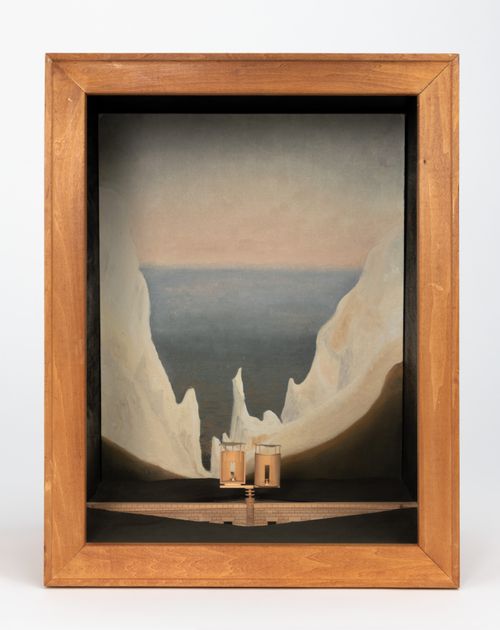
Model for one of four "Folly" projects designed by Agrest and Gandelsonas for the exhibition "Architecture III: Follies: Architecture for the Late Twentieth-Century Landscape" at Leo Castelli Gallery, New York, October 22-November 19, 1983
DR2019:0013
Description:
Model for one of four "Folly" projects designed by Agrest and Gandelsonas for the exhibition "Architecture III: Follies: Architecture for the Late Twentieth-Century Landscape" at Leo Castelli Gallery, New York, October 22-November 19, 1983
People:
Date:
1983?
1983?
Title:
Model for Folly Three: The Rigorous Abolition of History
Actions:
DR2019:0013
Description:
Model for one of four "Folly" projects designed by Agrest and Gandelsonas for the exhibition "Architecture III: Follies: Architecture for the Late Twentieth-Century Landscape" at Leo Castelli Gallery, New York, October 22-November 19, 1983
Model for Folly Three: The Rigorous Abolition of History
Actions:
DR2019:0013
Description:
Model for one of four "Folly" projects designed by Agrest and Gandelsonas for the exhibition "Architecture III: Follies: Architecture for the Late Twentieth-Century Landscape" at Leo Castelli Gallery, New York, October 22-November 19, 1983
Date:
1983?
1983?
People:


