


2310 Results
Form:
books
books
Actions:
Price:
$74.25
(available to order)
Summary:
The art in the Detroit People Mover stations is a world-class collection with a uniquely Detroit sensibility. When the People Mover, Detroit's elevated transit system, was being planned, the stations were designed simply to serve as basic points of entry and departure, but in 1984 Irene Walt and the Downtown Detroit People Mover Art Commission, a volunteer committee also(...)
$74.25
(available to order)
Summary:
The art in the Detroit People Mover stations is a world-class collection with a uniquely Detroit sensibility. When the People Mover, Detroit's elevated transit system, was being planned, the stations were designed simply to serve as basic points of entry and departure, but in 1984 Irene Walt and the Downtown Detroit People Mover Art Commission, a volunteer committee also(...)
Title:
Art in the stations : the Detroit People Mover
Actions:
Price:
$74.25
(available to order)
Summary:
The art in the Detroit People Mover stations is a world-class collection with a uniquely Detroit sensibility. When the People Mover, Detroit's elevated transit system, was being planned, the stations were designed simply to serve as basic points of entry and departure, but in 1984 Irene Walt and the Downtown Detroit People Mover Art Commission, a volunteer committee also known as Art in the Stations, undertook the task of incorporating major works by contemporary American artists into the thirteen People Mover stations. As a result Detroit now has one of the most impressive collections of public art in the country. With lush photographs by Balthazar Korab and accompanying narrative, Art in the Stations examines each of the gorgeous works that grace the People Mover stations. A stunning guide through the city's People Mover art installations, Art in the Stations documents Detroit's rich culture and testifies to the perseverance and hard work that made the display of this art possible.
Art in the stations : the Detroit People Mover
Actions:
Price:
$74.25
(available to order)
Summary:
The art in the Detroit People Mover stations is a world-class collection with a uniquely Detroit sensibility. When the People Mover, Detroit's elevated transit system, was being planned, the stations were designed simply to serve as basic points of entry and departure, but in 1984 Irene Walt and the Downtown Detroit People Mover Art Commission, a volunteer committee also known as Art in the Stations, undertook the task of incorporating major works by contemporary American artists into the thirteen People Mover stations. As a result Detroit now has one of the most impressive collections of public art in the country. With lush photographs by Balthazar Korab and accompanying narrative, Art in the Stations examines each of the gorgeous works that grace the People Mover stations. A stunning guide through the city's People Mover art installations, Art in the Stations documents Detroit's rich culture and testifies to the perseverance and hard work that made the display of this art possible.
Form:
books
books
Publication:
August 2004, Detroit
August 2004, Detroit
Subject:
Contemporary Art Monographs
Contemporary Art Monographs
Form:
books
books
Title:
Work: the last 1000 years
Work: the last 1000 years
Actions:
Price:
$35.99
(available to order)
Summary:
Say the word "work," and most people think of some form of gainful employment. Yet this limited definition has never corresponded to the historical experience of most people—whether in colonies, developing countries, or the industrialized world. That gap between common assumptions and reality grows even more pronounced in the case of women and other groups excluded from(...)
$35.99
(available to order)
Summary:
Say the word "work," and most people think of some form of gainful employment. Yet this limited definition has never corresponded to the historical experience of most people—whether in colonies, developing countries, or the industrialized world. That gap between common assumptions and reality grows even more pronounced in the case of women and other groups excluded from(...)
Title:
Work: the last 1000 years
Actions:
Price:
$35.99
(available to order)
Summary:
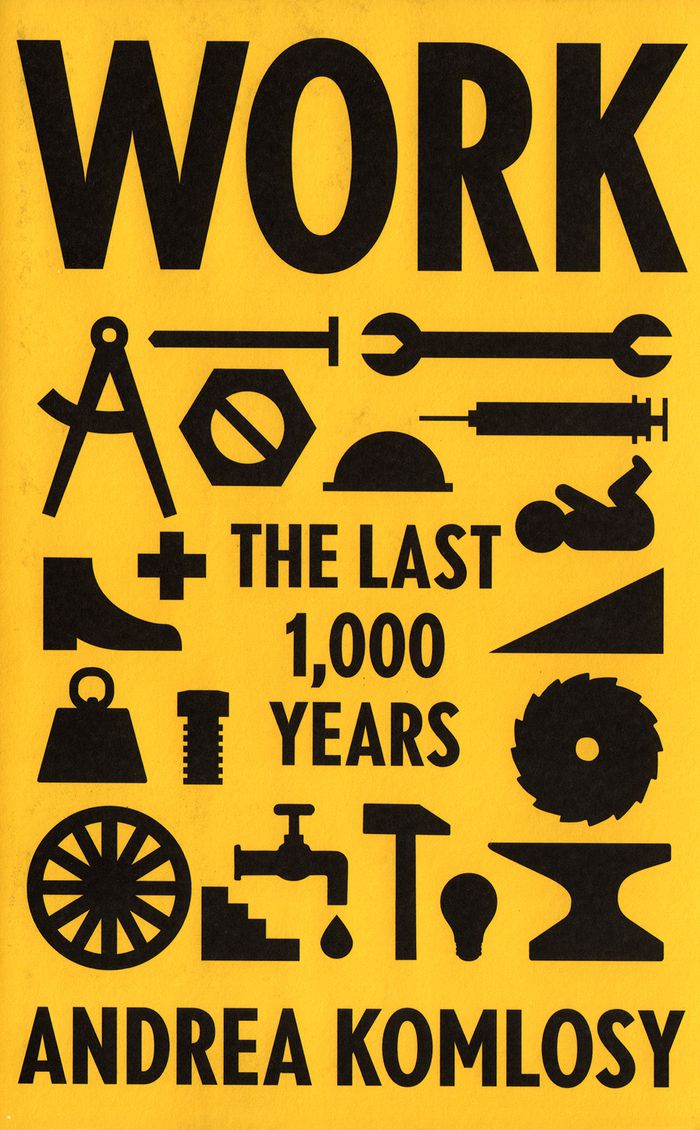
Say the word "work," and most people think of some form of gainful employment. Yet this limited definition has never corresponded to the historical experience of most people—whether in colonies, developing countries, or the industrialized world. That gap between common assumptions and reality grows even more pronounced in the case of women and other groups excluded from the labour market. In this important intervention, Andrea Komlosy demonstrates that popular understandings of work have varied radically in different ages and countries. Looking at labour history around the globe from the 13th to the 21st centuries, Komlosy sheds light on both discursive concepts as well as the concrete coexistence of multiple forms of labour—paid and unpaid, free and unfree. Komlosy’s narrative adopts a distinctly global and feminist approach, revealing the hidden forms of unpaid and hyper-exploited labour which often go ignored, yet are key to the functioning of the capitalist world-system.
Work: the last 1000 years
Actions:
Price:
$35.99
(available to order)
Summary:
Say the word "work," and most people think of some form of gainful employment. Yet this limited definition has never corresponded to the historical experience of most people—whether in colonies, developing countries, or the industrialized world. That gap between common assumptions and reality grows even more pronounced in the case of women and other groups excluded from the labour market. In this important intervention, Andrea Komlosy demonstrates that popular understandings of work have varied radically in different ages and countries. Looking at labour history around the globe from the 13th to the 21st centuries, Komlosy sheds light on both discursive concepts as well as the concrete coexistence of multiple forms of labour—paid and unpaid, free and unfree. Komlosy’s narrative adopts a distinctly global and feminist approach, revealing the hidden forms of unpaid and hyper-exploited labour which often go ignored, yet are key to the functioning of the capitalist world-system.
Form:
books
books
Publication:
February 2018
February 2018
Subject:
Critical Theory
Critical Theory
Form:
books
books
Actions:
Price:
$44.50
(available to order)
Summary:
"Chandigarh rethink" captures the rich, ongoing discourse on radically transforming urbanities within the Global South with specific reference to India's social, historical, economic and cultural repositioning. It examines urban edge 'figures' and their rural 'grounds', relevant not just to Chandigarh, but also to cities in general, while suggesting narrative strategies(...)
$44.50
(available to order)
Summary:
"Chandigarh rethink" captures the rich, ongoing discourse on radically transforming urbanities within the Global South with specific reference to India's social, historical, economic and cultural repositioning. It examines urban edge 'figures' and their rural 'grounds', relevant not just to Chandigarh, but also to cities in general, while suggesting narrative strategies(...)
Title:
Chandigarh rethink: transforming ruralities & edeg(ness) in global urbanities
Actions:
Price:
$44.50
(available to order)
Summary:
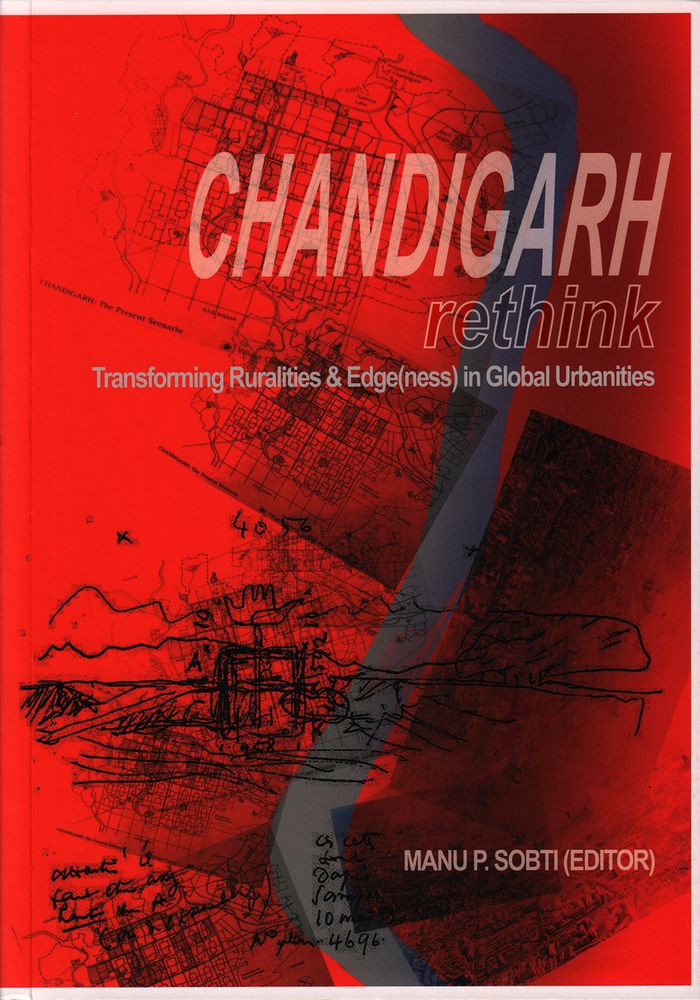
"Chandigarh rethink" captures the rich, ongoing discourse on radically transforming urbanities within the Global South with specific reference to India's social, historical, economic and cultural repositioning. It examines urban edge 'figures' and their rural 'grounds', relevant not just to Chandigarh, but also to cities in general, while suggesting narrative strategies via provocative design studio design work. These introspections are framed within themed contributions from a globally recognized group of scholars who represent the diverse disciplines of architecture, planning, urban design, landscape ecologies and the humanities. As a topical publication on global urbanities transforming a 'signature' urban project, "Chandigarh rethink" anticipates the Buildings-Landscapes-Cultures (blc) program and SARUP's efforts to uniquely aligning urban research, pedagogy and critical design practice towards examining global urbanities that continue to defy normative urban analysis. Beyond serving as an exemplar for globally aware architectural schools nationwide and beyond, it is also directed to serve as an instructive primer for design students and instructors examining global urban sites.
Chandigarh rethink: transforming ruralities & edeg(ness) in global urbanities
Actions:
Price:
$44.50
(available to order)
Summary:
"Chandigarh rethink" captures the rich, ongoing discourse on radically transforming urbanities within the Global South with specific reference to India's social, historical, economic and cultural repositioning. It examines urban edge 'figures' and their rural 'grounds', relevant not just to Chandigarh, but also to cities in general, while suggesting narrative strategies via provocative design studio design work. These introspections are framed within themed contributions from a globally recognized group of scholars who represent the diverse disciplines of architecture, planning, urban design, landscape ecologies and the humanities. As a topical publication on global urbanities transforming a 'signature' urban project, "Chandigarh rethink" anticipates the Buildings-Landscapes-Cultures (blc) program and SARUP's efforts to uniquely aligning urban research, pedagogy and critical design practice towards examining global urbanities that continue to defy normative urban analysis. Beyond serving as an exemplar for globally aware architectural schools nationwide and beyond, it is also directed to serve as an instructive primer for design students and instructors examining global urban sites.
Form:
books
books
Publication:
June 2017
June 2017
Subject:
Arch Southwest Asia & North Africa
Arch Southwest Asia & North Africa
Form:
books
books

Actions:
Price:
$55.90
(available to order)
Summary:
"Food and architecture! is the first book to explore the relationship between these two fields of study and practice. Bringing together leading voices from both food studies and architecture, it provides a ground-breaking, cross-disciplinary analysis of two disciplines which both rely on a combination of creativity, intuition, taste, and science but have rarely been(...)
$55.90
(available to order)
Summary:
"Food and architecture! is the first book to explore the relationship between these two fields of study and practice. Bringing together leading voices from both food studies and architecture, it provides a ground-breaking, cross-disciplinary analysis of two disciplines which both rely on a combination of creativity, intuition, taste, and science but have rarely been(...)
Title:
Food and architecture: at the table
Actions:
Price:
$55.90
(available to order)
Summary:
"Food and architecture! is the first book to explore the relationship between these two fields of study and practice. Bringing together leading voices from both food studies and architecture, it provides a ground-breaking, cross-disciplinary analysis of two disciplines which both rely on a combination of creativity, intuition, taste, and science but have rarely been engaged in direct dialogue. Each of the four sections – Regionalism, Sustainability, Craft, and Authenticity – focuses on a core area of overlap between food and architecture. Structured around a series of 'conversations' between chefs, culinary historians and architects, each theme is explored through a variety of case studies, ranging from pig slaughtering and farmhouses in Greece to authenticity and heritage in American cuisine. Drawing on a range of approaches from both disciplines, methodologies include practice-based research, literary analysis, memoir, and narrative. The end of each section features a commentary by Samantha Martin-McAuliffe which emphasizes key themes and connections.
Food and architecture: at the table
Actions:
Price:
$55.90
(available to order)
Summary:
"Food and architecture! is the first book to explore the relationship between these two fields of study and practice. Bringing together leading voices from both food studies and architecture, it provides a ground-breaking, cross-disciplinary analysis of two disciplines which both rely on a combination of creativity, intuition, taste, and science but have rarely been engaged in direct dialogue. Each of the four sections – Regionalism, Sustainability, Craft, and Authenticity – focuses on a core area of overlap between food and architecture. Structured around a series of 'conversations' between chefs, culinary historians and architects, each theme is explored through a variety of case studies, ranging from pig slaughtering and farmhouses in Greece to authenticity and heritage in American cuisine. Drawing on a range of approaches from both disciplines, methodologies include practice-based research, literary analysis, memoir, and narrative. The end of each section features a commentary by Samantha Martin-McAuliffe which emphasizes key themes and connections.
Form:
books
books
Publication:
September 2016
September 2016
Subject:
Food
Food
Form:
books
books

Actions:
Price:
$37.95
(available to order)
Summary:
"In From Yard to Garden, Christopher Grampp has produced a work of major importance and significant originality. This book will change the way Americans see and understand their homes, yards, and gardens. Grampp provides the first full-length and thoroughly documented history of the American back yard. He takes courageous, new positions that are sure to prompt thinking(...)
$37.95
(available to order)
Summary:
"In From Yard to Garden, Christopher Grampp has produced a work of major importance and significant originality. This book will change the way Americans see and understand their homes, yards, and gardens. Grampp provides the first full-length and thoroughly documented history of the American back yard. He takes courageous, new positions that are sure to prompt thinking(...)
Title:
From yard to garden: the domestication of America's home grounds (Center for American Places - Center Books on American Places)
Actions:
Price:
$37.95
(available to order)
Summary:
"In From Yard to Garden, Christopher Grampp has produced a work of major importance and significant originality. This book will change the way Americans see and understand their homes, yards, and gardens. Grampp provides the first full-length and thoroughly documented history of the American back yard. He takes courageous, new positions that are sure to prompt thinking for all his readers and to suggest further research by his academic readers. The illustrations and captions are absolutely excellent. "Grampp's writing style is direct, clear, personal, and always approachable. He provides enough detail-and so much original new information-that the specialist, academic reader will be intrigued and satisfied; yet the narrative moves forward quickly enough to engage even the general reader who may be entirely new to the subject. Grampp's writing also sparkles with real humor."-Paul Groth, University of California at Berkeley, and author of Living Downtown: The History of Residential Hotels in the United States (Paul Groth 20070901)
From yard to garden: the domestication of America's home grounds (Center for American Places - Center Books on American Places)
Actions:
Price:
$37.95
(available to order)
Summary:
"In From Yard to Garden, Christopher Grampp has produced a work of major importance and significant originality. This book will change the way Americans see and understand their homes, yards, and gardens. Grampp provides the first full-length and thoroughly documented history of the American back yard. He takes courageous, new positions that are sure to prompt thinking for all his readers and to suggest further research by his academic readers. The illustrations and captions are absolutely excellent. "Grampp's writing style is direct, clear, personal, and always approachable. He provides enough detail-and so much original new information-that the specialist, academic reader will be intrigued and satisfied; yet the narrative moves forward quickly enough to engage even the general reader who may be entirely new to the subject. Grampp's writing also sparkles with real humor."-Paul Groth, University of California at Berkeley, and author of Living Downtown: The History of Residential Hotels in the United States (Paul Groth 20070901)
Form:
books
books
Publication:
May 2008, Chicago
May 2008, Chicago
Subject:
Landscape Theory
Landscape Theory
Form:
books
books
Actions:
Price:
$34.50
(available in store)
Summary:
This book offers a comprehensive account of modern Spanish culture, tracing its dramatic and often unexpected development from its beginnings after the Revolution of 1868 to the present day. Specially-commissioned essays by leading experts provide analyses of the historical and political background of modern Spain, the culture of the major autonomous regions (notably(...)
$34.50
(available in store)
Summary:
This book offers a comprehensive account of modern Spanish culture, tracing its dramatic and often unexpected development from its beginnings after the Revolution of 1868 to the present day. Specially-commissioned essays by leading experts provide analyses of the historical and political background of modern Spain, the culture of the major autonomous regions (notably(...)
Title:
The Cambridge companion to modern Spanish culture
Actions:
Price:
$34.50
(available in store)
Summary:
This book offers a comprehensive account of modern Spanish culture, tracing its dramatic and often unexpected development from its beginnings after the Revolution of 1868 to the present day. Specially-commissioned essays by leading experts provide analyses of the historical and political background of modern Spain, the culture of the major autonomous regions (notably Castile, Catalonia, and the Basque Country), and the country’s literature: narrative, poetry, theatre and the essay. Spain’s recent development is divided into three main phases: from 1868 to the outbreak of the Spanish Civil War; the period of the dictatorship of Francisco Franco; and the post-Franco arrival of democracy. The concept of ‘Spanish culture’ is investigated, and there are studies of Spanish painting and sculpture, architecture, cinema, dance, music, and the modern media. A chronology and guides to further reading are provided, making the volume an invaluable introduction to the politics, literature and culture of modern Spain.
The Cambridge companion to modern Spanish culture
Actions:
Price:
$34.50
(available in store)
Summary:
This book offers a comprehensive account of modern Spanish culture, tracing its dramatic and often unexpected development from its beginnings after the Revolution of 1868 to the present day. Specially-commissioned essays by leading experts provide analyses of the historical and political background of modern Spain, the culture of the major autonomous regions (notably Castile, Catalonia, and the Basque Country), and the country’s literature: narrative, poetry, theatre and the essay. Spain’s recent development is divided into three main phases: from 1868 to the outbreak of the Spanish Civil War; the period of the dictatorship of Francisco Franco; and the post-Franco arrival of democracy. The concept of ‘Spanish culture’ is investigated, and there are studies of Spanish painting and sculpture, architecture, cinema, dance, music, and the modern media. A chronology and guides to further reading are provided, making the volume an invaluable introduction to the politics, literature and culture of modern Spain.
Form:
books
books
Publication:
January 1999, Cambridge
January 1999, Cambridge
Subject:
Architecture since 1900, Europe
Architecture since 1900, Europe
Form:
books
books
Title:
Robert Irwin : Getty garden
Robert Irwin : Getty garden
Actions:
Price:
$70.00
(available to order)
Summary:
In the early 1990s the design and creation of the Central Garden at the Getty Center were entrusted to the distinguished contemporary visual artist Robert Irwin. Irwin, a member of California's "light and space" movement, was an unexpected choice for this major commission, and his work has aroused intense interest in the art world and among gardening enthusiasts and(...)
$70.00
(available to order)
Summary:
In the early 1990s the design and creation of the Central Garden at the Getty Center were entrusted to the distinguished contemporary visual artist Robert Irwin. Irwin, a member of California's "light and space" movement, was an unexpected choice for this major commission, and his work has aroused intense interest in the art world and among gardening enthusiasts and(...)
Title:
Robert Irwin : Getty garden
Actions:
Price:
$70.00
(available to order)
Summary:
In the early 1990s the design and creation of the Central Garden at the Getty Center were entrusted to the distinguished contemporary visual artist Robert Irwin. Irwin, a member of California's "light and space" movement, was an unexpected choice for this major commission, and his work has aroused intense interest in the art world and among gardening enthusiasts and visitors to the Getty Center. In "Robert Irwin Getty Garden", Lawrence Weschler offers a lively account of the creation of what Irwin has playfully termed "a sculpture in the form of a garden aspiring to be art." Weschler's narrative is followed by a transcript of conversations in which he and Irwin, in a series of walks through the garden, discuss in detail the decisions, both philosophical and practical, that shaped the making of this major art work in Southern California. The book contains more than 150 colour illustrations, many of them specially commissioned from photographer Becky Cohen.
Robert Irwin : Getty garden
Actions:
Price:
$70.00
(available to order)
Summary:
In the early 1990s the design and creation of the Central Garden at the Getty Center were entrusted to the distinguished contemporary visual artist Robert Irwin. Irwin, a member of California's "light and space" movement, was an unexpected choice for this major commission, and his work has aroused intense interest in the art world and among gardening enthusiasts and visitors to the Getty Center. In "Robert Irwin Getty Garden", Lawrence Weschler offers a lively account of the creation of what Irwin has playfully termed "a sculpture in the form of a garden aspiring to be art." Weschler's narrative is followed by a transcript of conversations in which he and Irwin, in a series of walks through the garden, discuss in detail the decisions, both philosophical and practical, that shaped the making of this major art work in Southern California. The book contains more than 150 colour illustrations, many of them specially commissioned from photographer Becky Cohen.
Form:
books
books
Publication:
September 2002, Los Angeles
September 2002, Los Angeles
Subject:
Gardens
Gardens
Form:
books
books

Actions:
Price:
$66.95
(available to order)
Summary:
Italian photographer Luigi Ghirri (1943–92) made ''Cardboard landscapes'' (''Paesaggi di cartone'') during his travels around Europe, coining the term 'sentimental geography' to describe his unique artistic approach of examining the ordinary to prove it remarkable. The original handmade album features over 100 chromogenic colour prints pasted onto the pages of a blank(...)
$66.95
(available to order)
Summary:
Italian photographer Luigi Ghirri (1943–92) made ''Cardboard landscapes'' (''Paesaggi di cartone'') during his travels around Europe, coining the term 'sentimental geography' to describe his unique artistic approach of examining the ordinary to prove it remarkable. The original handmade album features over 100 chromogenic colour prints pasted onto the pages of a blank(...)
Title:
Luigi Ghirri: Cardboard landscapes
Actions:
Price:
$66.95
(available to order)
Summary:
Italian photographer Luigi Ghirri (1943–92) made ''Cardboard landscapes'' (''Paesaggi di cartone'') during his travels around Europe, coining the term 'sentimental geography' to describe his unique artistic approach of examining the ordinary to prove it remarkable. The original handmade album features over 100 chromogenic colour prints pasted onto the pages of a blank book, and was gifted by Ghirri to John Szarkowski, then the Director of the Department of Photography at the Museum of Modern Art, in the 1970s. A singular work of art, ''Cardboard landscapes'' is now being published for the first time. The collection is an anomaly within Ghirri’s overall oeuvre, as it prioritizes complex composition rather than the sweeping tableaux for which he is best known. In this series of works, he regards the printed image as the subject, framing a kaleidoscope of photographs and advertisements to tell a poetic visual narrative that reflects at once regional, personal and popular culture, revealing a fascinating impulse to investigate his role within his own medium.
Luigi Ghirri: Cardboard landscapes
Actions:
Price:
$66.95
(available to order)
Summary:
Italian photographer Luigi Ghirri (1943–92) made ''Cardboard landscapes'' (''Paesaggi di cartone'') during his travels around Europe, coining the term 'sentimental geography' to describe his unique artistic approach of examining the ordinary to prove it remarkable. The original handmade album features over 100 chromogenic colour prints pasted onto the pages of a blank book, and was gifted by Ghirri to John Szarkowski, then the Director of the Department of Photography at the Museum of Modern Art, in the 1970s. A singular work of art, ''Cardboard landscapes'' is now being published for the first time. The collection is an anomaly within Ghirri’s overall oeuvre, as it prioritizes complex composition rather than the sweeping tableaux for which he is best known. In this series of works, he regards the printed image as the subject, framing a kaleidoscope of photographs and advertisements to tell a poetic visual narrative that reflects at once regional, personal and popular culture, revealing a fascinating impulse to investigate his role within his own medium.
Form:
books
books
Publication:
September 2020
September 2020
Subject:
Photography monographs
Photography monographs
Form:
books
books

Actions:
Price:
$38.50
(available to order)
Summary:
This book is the first in-depth exploration of the revolutionary designers who defined American fashion in its emerging years and helped build an industry with global impact, yet have been largely forgotten. Focusing on female designers, the authors reclaim a place in history for the women who created not only for celebrities and socialites, but for millions of(...)
$38.50
(available to order)
Summary:
This book is the first in-depth exploration of the revolutionary designers who defined American fashion in its emerging years and helped build an industry with global impact, yet have been largely forgotten. Focusing on female designers, the authors reclaim a place in history for the women who created not only for celebrities and socialites, but for millions of(...)
Title:
The hidden history of America fashion: rediscovering 20th century women designers
Actions:
Price:
$38.50
(available to order)
Summary:
This book is the first in-depth exploration of the revolutionary designers who defined American fashion in its emerging years and helped build an industry with global impact, yet have been largely forgotten. Focusing on female designers, the authors reclaim a place in history for the women who created not only for celebrities and socialites, but for millions of fashion-conscious customers across the United States. From one of America's first couturiers, Jessie Franklin Turner, to Zelda Wynn Valdes, the book captures the lost histories of the luminaries who paved the way in the world of American fashion design. This fully illustrated collection takes us from Hollywood to Broadway, from sportswear to sustainable fashion, and explores important crossovers between film, theater, and fashion. Uncovering fascinating histories of the design pioneers we should know about, the book enlarges the prevailing narrative of fashion history and will be an important reference for fashion students, historians, costume curators, and fashion enthusiasts alike.
The hidden history of America fashion: rediscovering 20th century women designers
Actions:
Price:
$38.50
(available to order)
Summary:
This book is the first in-depth exploration of the revolutionary designers who defined American fashion in its emerging years and helped build an industry with global impact, yet have been largely forgotten. Focusing on female designers, the authors reclaim a place in history for the women who created not only for celebrities and socialites, but for millions of fashion-conscious customers across the United States. From one of America's first couturiers, Jessie Franklin Turner, to Zelda Wynn Valdes, the book captures the lost histories of the luminaries who paved the way in the world of American fashion design. This fully illustrated collection takes us from Hollywood to Broadway, from sportswear to sustainable fashion, and explores important crossovers between film, theater, and fashion. Uncovering fascinating histories of the design pioneers we should know about, the book enlarges the prevailing narrative of fashion history and will be an important reference for fashion students, historians, costume curators, and fashion enthusiasts alike.
Form:
books
books
Publication:
May 2019
May 2019
Subject:
Fashion Design
Fashion Design
Form:
books
books
Actions:
Price:
$85.95
(available to order)
Summary:
''Working in Mumbai'' is a critical reflection on thirty years of the practice of RMA Architects. Rahul Mehrotra weaves a narrative to connect his multiple engagements in architectural practice, including teaching, research, documenting, writing and exhibiting since the establishment of the practice in 1990. The book is structured around the subjects of interior(...)
$85.95
(available to order)
Summary:
''Working in Mumbai'' is a critical reflection on thirty years of the practice of RMA Architects. Rahul Mehrotra weaves a narrative to connect his multiple engagements in architectural practice, including teaching, research, documenting, writing and exhibiting since the establishment of the practice in 1990. The book is structured around the subjects of interior(...)
Title:
Working in Mumbai: RMA Architects
Actions:
Price:
$85.95
(available to order)
Summary:
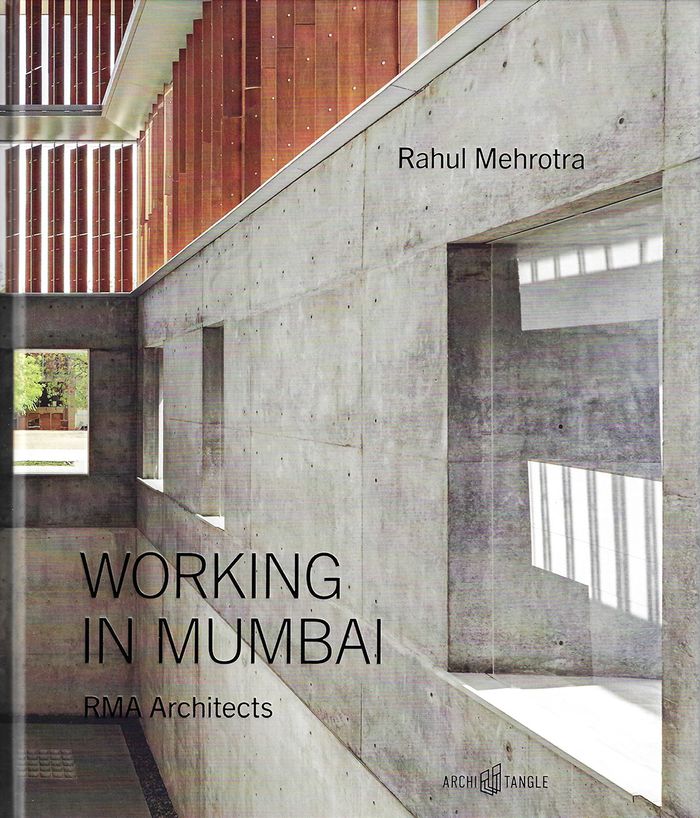
''Working in Mumbai'' is a critical reflection on thirty years of the practice of RMA Architects. Rahul Mehrotra weaves a narrative to connect his multiple engagements in architectural practice, including teaching, research, documenting, writing and exhibiting since the establishment of the practice in 1990. The book is structured around the subjects of interior architecture, critical conservation, and work and living spaces that straddle the binaries of the global and the local as well as the rural and the urban. While the book is a portfolio of the selected works of RMA Architects, the projects are curated so as to unravel and clarify the challenges faced by architects in India and in several parts of the “majority” world where issues related to rapid urbanization and the impacts of global capital are among the many that dispute conventional models of practice. ''Working in Mumbai'' is used emblematically to interrogate the notion of context and understand how the practice evolved through its association with the city of Mumbai.
Working in Mumbai: RMA Architects
Actions:
Price:
$85.95
(available to order)
Summary:
''Working in Mumbai'' is a critical reflection on thirty years of the practice of RMA Architects. Rahul Mehrotra weaves a narrative to connect his multiple engagements in architectural practice, including teaching, research, documenting, writing and exhibiting since the establishment of the practice in 1990. The book is structured around the subjects of interior architecture, critical conservation, and work and living spaces that straddle the binaries of the global and the local as well as the rural and the urban. While the book is a portfolio of the selected works of RMA Architects, the projects are curated so as to unravel and clarify the challenges faced by architects in India and in several parts of the “majority” world where issues related to rapid urbanization and the impacts of global capital are among the many that dispute conventional models of practice. ''Working in Mumbai'' is used emblematically to interrogate the notion of context and understand how the practice evolved through its association with the city of Mumbai.
Form:
books
books
Publication:
November 2020
November 2020
Subject:
Architecture Monographs
Architecture Monographs


