


3938 Results
Form:
photographs
photographs
Actions:
Reference number:
PH1997:0060
Description:
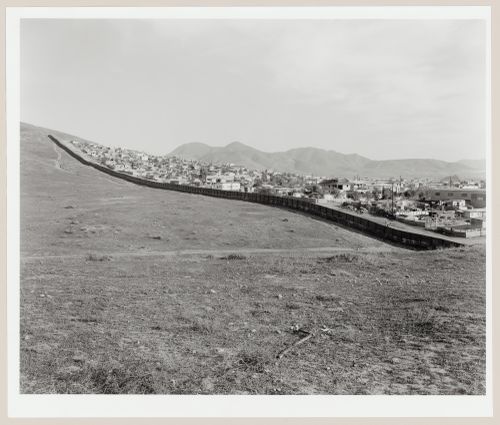
The series "Running Fence 1997" focuses "on the first 14 miles of the border fence that separates the United States and Mexico, beginning at the Pacific Ocean and ending in the Otay Mountains.... [It] analyzes the "idea" of the border and explores its iconography, the border being a subject that is of extreme importance to the public as the world proceeds towards greater globalization. [Geoffrey] James has written of the project: "[The border fence] was built by the US Army Corps of Engineers in 1994, out of recycled metal landing strip - the most visible symbol of what is known as Operation Gatekeeper. Because the steel sheets are placed in the ground so that their ridges run horizontally, a man can hop over the fence with ease; and no Mexican child ever seems to be impeded from retrieving a soccer ball from US territory. The real barrier to illegal immigration from Mexico into the USA is less visible: hundreds of buried sensors linked to a central computer, nightscopes, helicopters and Border Patrol Agents in white Broncos."" (Evans).
PH1997:0060
Description:
The series "Running Fence 1997" focuses "on the first 14 miles of the border fence that separates the United States and Mexico, beginning at the Pacific Ocean and ending in the Otay Mountains.... [It] analyzes the "idea" of the border and explores its iconography, the border being a subject that is of extreme importance to the public as the world proceeds towards greater globalization. [Geoffrey] James has written of the project: "[The border fence] was built by the US Army Corps of Engineers in 1994, out of recycled metal landing strip - the most visible symbol of what is known as Operation Gatekeeper. Because the steel sheets are placed in the ground so that their ridges run horizontally, a man can hop over the fence with ease; and no Mexican child ever seems to be impeded from retrieving a soccer ball from US territory. The real barrier to illegal immigration from Mexico into the USA is less visible: hundreds of buried sensors linked to a central computer, nightscopes, helicopters and Border Patrol Agents in white Broncos."" (Evans).
People:
Subject:
architecture, engineering, topographic
architecture, engineering, topographic
Date:
1997
1997
Title:
View of Otay Mesa, Mexico from San Diego County, California showing the United States-Mexico border fence, from the series "Running Fence"
Actions:
PH1997:0060
Description:
The series "Running Fence 1997" focuses "on the first 14 miles of the border fence that separates the United States and Mexico, beginning at the Pacific Ocean and ending in the Otay Mountains.... [It] analyzes the "idea" of the border and explores its iconography, the border being a subject that is of extreme importance to the public as the world proceeds towards greater globalization. [Geoffrey] James has written of the project: "[The border fence] was built by the US Army Corps of Engineers in 1994, out of recycled metal landing strip - the most visible symbol of what is known as Operation Gatekeeper. Because the steel sheets are placed in the ground so that their ridges run horizontally, a man can hop over the fence with ease; and no Mexican child ever seems to be impeded from retrieving a soccer ball from US territory. The real barrier to illegal immigration from Mexico into the USA is less visible: hundreds of buried sensors linked to a central computer, nightscopes, helicopters and Border Patrol Agents in white Broncos."" (Evans).
View of Otay Mesa, Mexico from San Diego County, California showing the United States-Mexico border fence, from the series "Running Fence"
Actions:
PH1997:0060
Description:
The series "Running Fence 1997" focuses "on the first 14 miles of the border fence that separates the United States and Mexico, beginning at the Pacific Ocean and ending in the Otay Mountains.... [It] analyzes the "idea" of the border and explores its iconography, the border being a subject that is of extreme importance to the public as the world proceeds towards greater globalization. [Geoffrey] James has written of the project: "[The border fence] was built by the US Army Corps of Engineers in 1994, out of recycled metal landing strip - the most visible symbol of what is known as Operation Gatekeeper. Because the steel sheets are placed in the ground so that their ridges run horizontally, a man can hop over the fence with ease; and no Mexican child ever seems to be impeded from retrieving a soccer ball from US territory. The real barrier to illegal immigration from Mexico into the USA is less visible: hundreds of buried sensors linked to a central computer, nightscopes, helicopters and Border Patrol Agents in white Broncos."" (Evans).
Form:
photographs
photographs
Date:
1997
1997
People:
Subject:
architecture, engineering, topographic
architecture, engineering, topographic
Form:
photographs
photographs
Actions:
Reference number:
PH1987:0452.02:022
PH1987:0452.02:022
People:
Subject:
architecture, sculpture
architecture, sculpture
Date:
1901 or before
1901 or before
Title:
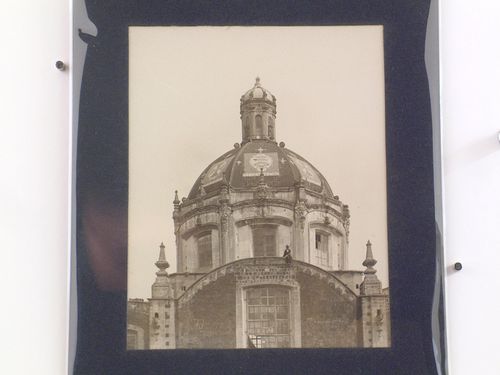
View of the dome of the Iglesia de la Santísima Trinidad with a man sitting on the ledge of a roof, Mexico City, Mexico
Actions:
PH1987:0452.02:022
View of the dome of the Iglesia de la Santísima Trinidad with a man sitting on the ledge of a roof, Mexico City, Mexico
Actions:
PH1987:0452.02:022
Form:
photographs
photographs
Date:
1901 or before
1901 or before
People:
Subject:
architecture, sculpture
architecture, sculpture
Form:
drawings
drawings
Actions:
Reference number:
PH1987:0452.01:036
PH1987:0452.01:036
People:
Subject:
architecture
architecture
Date:
1901 or before
1901 or before
Form:
drawings
drawings
Date:
1901 or before
1901 or before
People:
Subject:
architecture
architecture
Form:
photographs
photographs
Reference number:
PH1987:0452.02:055
PH1987:0452.02:055
People:
Subject:
architecture, sculpture
architecture, sculpture
Date:
1901 or before
1901 or before
Form:
photographs
photographs
Date:
1901 or before
1901 or before
People:
Subject:
architecture, sculpture
architecture, sculpture
Form:
photographs
photographs
Reference number:
PH1987:0452.02:056
PH1987:0452.02:056
People:
Subject:
architecture, sculpture
architecture, sculpture
Date:
1901 or before
1901 or before
Form:
photographs
photographs
Date:
1901 or before
1901 or before
People:
Subject:
architecture, sculpture
architecture, sculpture
Form:
photographs
photographs
Reference number:
PH1997:0069
PH1997:0069
People:
Subject:
architecture
architecture
Date:
ca. 1920
ca. 1920
Form:
photographs
photographs
Date:
ca. 1920
ca. 1920
People:
Subject:
architecture
architecture
Form:
photographs
photographs
Actions:
Reference number:
AP149.S3.SS1.083
AP149.S3.SS1.083
People:
Date:
1990s
1990s
Form:
photographs
photographs
Date:
1990s
1990s
People:
Form:
photographs
photographs
Actions:
Reference number:
PH1999:0118
PH1999:0118
People:
Subject:
architecture
architecture
Date:
1985
1985
Form:
photographs
photographs
Date:
1985
1985
People:
Subject:
architecture
architecture
Form:
drawings
drawings
Actions:
Reference number:
PH1987:0452.01:035
PH1987:0452.01:035
People:
Subject:
architecture, sculpture
architecture, sculpture
Date:
1901 or before
1901 or before
Title:
Close-up view of a door of the southern façade showing a bas-relief of Saint Peter, Sagrario Chapel, Mexico City, Mexico
Actions:
PH1987:0452.01:035
Close-up view of a door of the southern façade showing a bas-relief of Saint Peter, Sagrario Chapel, Mexico City, Mexico
Actions:
PH1987:0452.01:035
Form:
drawings
drawings
Date:
1901 or before
1901 or before
People:
Subject:
architecture, sculpture
architecture, sculpture
Form:
photographs
photographs
Actions:
Reference number:
PH2003:0283
PH2003:0283
People:
Subject:
architecture
architecture
Date:
ca. 1936
ca. 1936
Form:
photographs
photographs
Date:
ca. 1936
ca. 1936
People:
Subject:
architecture
architecture


