


231 Results
Form:
video
video
Price:
$71.50
(available to order)
Summary:
Originally broadcast in April and May of 1998. Hosted by executive producer Tom Hanks, the miniseries tackles the daunting challenge of chronicling the entire history of NASA's Apollo space program from 1961 to 1972. For the most part, it's a rousing success. Some passages are flatly chronological, awkwardly wedging an abundance of factual detail into a routine dramatic(...)
$71.50
(available to order)
Summary:
Originally broadcast in April and May of 1998. Hosted by executive producer Tom Hanks, the miniseries tackles the daunting challenge of chronicling the entire history of NASA's Apollo space program from 1961 to 1972. For the most part, it's a rousing success. Some passages are flatly chronological, awkwardly wedging an abundance of factual detail into a routine dramatic(...)
Publication:
December 2009
December 2009
Title:
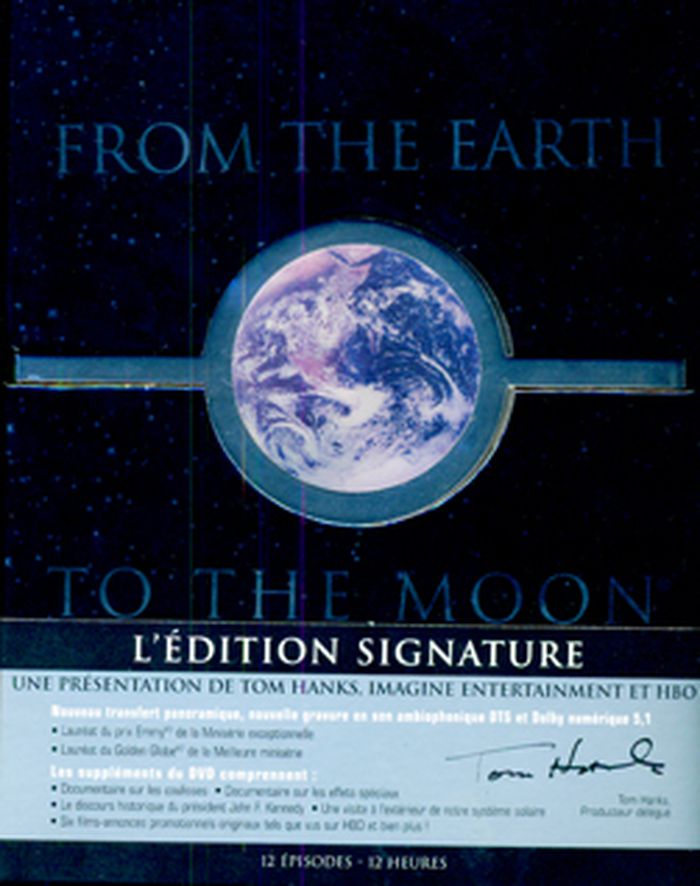
From the earth to the moon, Le voyage dans la lune, édition signature
Actions:
Price:
$71.50
(available to order)
Summary:
Originally broadcast in April and May of 1998. Hosted by executive producer Tom Hanks, the miniseries tackles the daunting challenge of chronicling the entire history of NASA's Apollo space program from 1961 to 1972. For the most part, it's a rousing success. Some passages are flatly chronological, awkwardly wedging an abundance of factual detail into a routine dramatic structure. But each episode is devoted to a crucial aspect of the Apollo program. The cumulative effect is a deep and thorough appreciation of NASA's monumental achievement. With the help of a superlative cast, consistent writing, and a stable of talented directors, Hanks has shared his infectious enthusiasm for space exploration and the inspiring power of conquering the final frontier. 12 épisodes, 12 heures.
From the earth to the moon, Le voyage dans la lune, édition signature
Actions:
Price:
$71.50
(available to order)
Summary:
Originally broadcast in April and May of 1998. Hosted by executive producer Tom Hanks, the miniseries tackles the daunting challenge of chronicling the entire history of NASA's Apollo space program from 1961 to 1972. For the most part, it's a rousing success. Some passages are flatly chronological, awkwardly wedging an abundance of factual detail into a routine dramatic structure. But each episode is devoted to a crucial aspect of the Apollo program. The cumulative effect is a deep and thorough appreciation of NASA's monumental achievement. With the help of a superlative cast, consistent writing, and a stable of talented directors, Hanks has shared his infectious enthusiasm for space exploration and the inspiring power of conquering the final frontier. 12 épisodes, 12 heures.
Form:
video
video
Publication:
December 2009
December 2009
Form:
books
books
Actions:
Price:
$25.95
(available to order)
Summary:
In ''Permanent Red'', John Berger argues that the contemporary artist should strive for a realism that aims for hope, to transform the world. Surveying the work of historical artists as well as that of near contemporaries such as Picasso, Léger and Matisse, he explores the role of the artist, dividing these figures into those that struggle, those that fail, and the true(...)
$25.95
(available to order)
Summary:
In ''Permanent Red'', John Berger argues that the contemporary artist should strive for a realism that aims for hope, to transform the world. Surveying the work of historical artists as well as that of near contemporaries such as Picasso, Léger and Matisse, he explores the role of the artist, dividing these figures into those that struggle, those that fail, and the true(...)
Title:
Permanent red: essays in seeing
Actions:
Price:
$25.95
(available to order)
Summary:
In ''Permanent Red'', John Berger argues that the contemporary artist should strive for a realism that aims for hope, to transform the world. Surveying the work of historical artists as well as that of near contemporaries such as Picasso, Léger and Matisse, he explores the role of the artist, dividing these figures into those that struggle, those that fail, and the true masters. He explains why we should study the work of the past: in order to understand the present and to rethink the future. First published in 1960, ''Permanent Red'' established John Berger as a firebrand critic willing to broadcast controversial opinions on some of the most important British artists of the day, including Henry Moore and Barbara Hepworth.
Permanent red: essays in seeing
Actions:
Price:
$25.95
(available to order)
Summary:
In ''Permanent Red'', John Berger argues that the contemporary artist should strive for a realism that aims for hope, to transform the world. Surveying the work of historical artists as well as that of near contemporaries such as Picasso, Léger and Matisse, he explores the role of the artist, dividing these figures into those that struggle, those that fail, and the true masters. He explains why we should study the work of the past: in order to understand the present and to rethink the future. First published in 1960, ''Permanent Red'' established John Berger as a firebrand critic willing to broadcast controversial opinions on some of the most important British artists of the day, including Henry Moore and Barbara Hepworth.
Form:
books
books
Publication:
April 2025
April 2025
Subject:
Art Theory
Art Theory
Form:
books
books
Price:
$30.00
(available in store)
Summary:
''Credos'' is a series of exhibitions that started off as table-top group mini-exhibitions conceived for church-basement bazaars in Laval and Greater Montreal throughout 2019–20. The first two editions took place in different Armenian congregations in Laval. When the COVID-19 pandemic put subsequent Québec editions on hold, a version was transported to Charlottetown,(...)
$30.00
(available in store)
Summary:
''Credos'' is a series of exhibitions that started off as table-top group mini-exhibitions conceived for church-basement bazaars in Laval and Greater Montreal throughout 2019–20. The first two editions took place in different Armenian congregations in Laval. When the COVID-19 pandemic put subsequent Québec editions on hold, a version was transported to Charlottetown,(...)
Publication:
February 2022
February 2022
Title:
Credos IV
Actions:
Price:
$30.00
(available in store)
Summary:
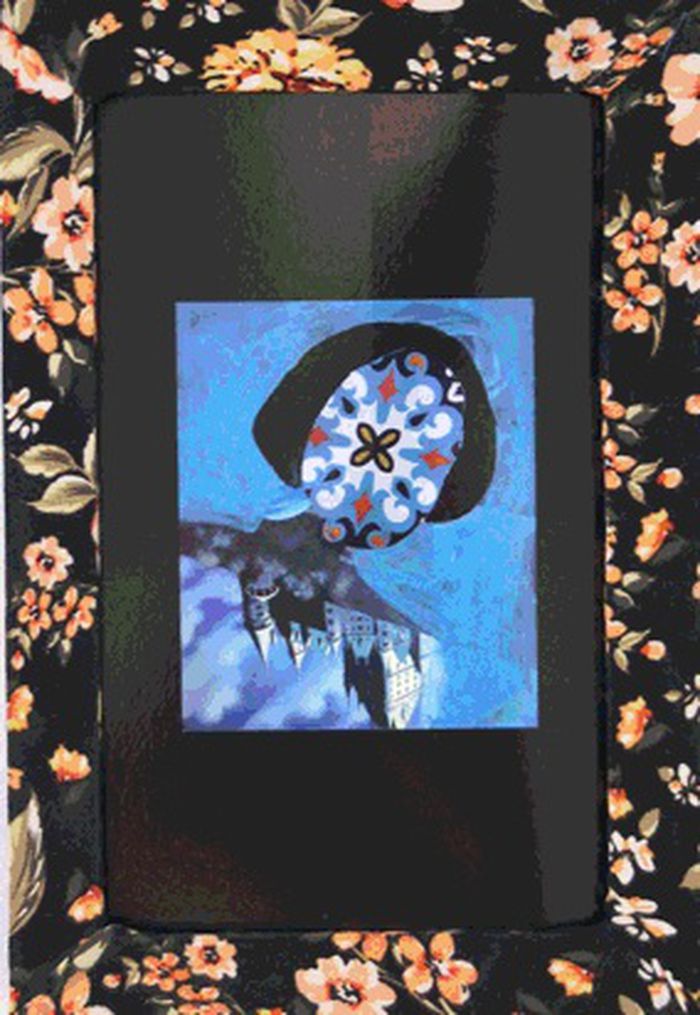
''Credos'' is a series of exhibitions that started off as table-top group mini-exhibitions conceived for church-basement bazaars in Laval and Greater Montreal throughout 2019–20. The first two editions took place in different Armenian congregations in Laval. When the COVID-19 pandemic put subsequent Québec editions on hold, a version was transported to Charlottetown, Prince Edward Island, and shown in the frame of the all-day public art festival ''Art in the Open'' in 2020. An 8-hour online radio program was broadcast alongside the tabletop displays. ''Credos IV'' is also a response to social distance, but at the same time a furthering of an inquiry into the substitutions and translations of an exhibition into non-gallery spaces.
Credos IV
Actions:
Price:
$30.00
(available in store)
Summary:
''Credos'' is a series of exhibitions that started off as table-top group mini-exhibitions conceived for church-basement bazaars in Laval and Greater Montreal throughout 2019–20. The first two editions took place in different Armenian congregations in Laval. When the COVID-19 pandemic put subsequent Québec editions on hold, a version was transported to Charlottetown, Prince Edward Island, and shown in the frame of the all-day public art festival ''Art in the Open'' in 2020. An 8-hour online radio program was broadcast alongside the tabletop displays. ''Credos IV'' is also a response to social distance, but at the same time a furthering of an inquiry into the substitutions and translations of an exhibition into non-gallery spaces.
Form:
books
books
Publication:
February 2022
February 2022
Form:
books
books
Title:
Jacqueline Hassink: unwired
Jacqueline Hassink: unwired
Actions:
Price:
$105.00
(available to order)
Summary:
"Unwired" combines two concurrent projects by Dutch photographer Jacqueline Hassink (born 1966), both of which address our increasingly digitally connected world. In "Unwired Landscapes", she seeks out those few remaining places where it is still impossible to broadcast a network: remote areas like the Japanese island of Yakushima, the Norwegian group of islands Svalbard(...)
$105.00
(available to order)
Summary:
"Unwired" combines two concurrent projects by Dutch photographer Jacqueline Hassink (born 1966), both of which address our increasingly digitally connected world. In "Unwired Landscapes", she seeks out those few remaining places where it is still impossible to broadcast a network: remote areas like the Japanese island of Yakushima, the Norwegian group of islands Svalbard(...)
Title:
Jacqueline Hassink: unwired
Actions:
Price:
$105.00
(available to order)
Summary:
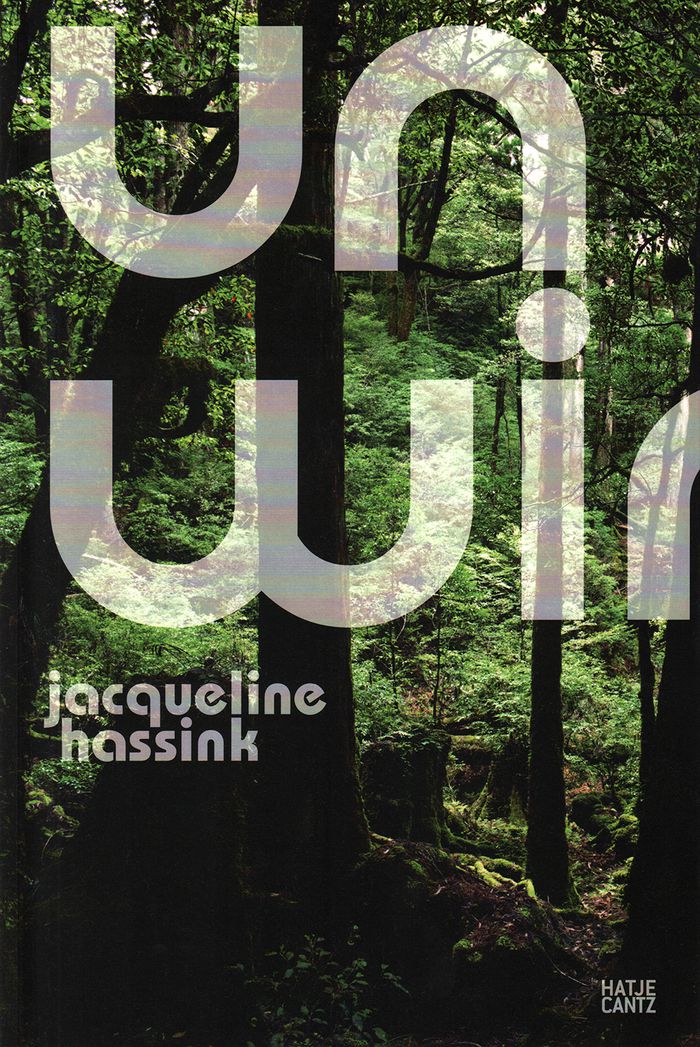
"Unwired" combines two concurrent projects by Dutch photographer Jacqueline Hassink (born 1966), both of which address our increasingly digitally connected world. In "Unwired Landscapes", she seeks out those few remaining places where it is still impossible to broadcast a network: remote areas like the Japanese island of Yakushima, the Norwegian group of islands Svalbard known as Spitsbergen or the uninhabitable volcanic desert of Iceland, or artificially created dead zones in urban spaces, such as a Digital Detox Hotel in Baden Baden. Her second project, "iPortrait", seems to be the exact opposite of her first: it portrays people immersed in their smartphones in the subways of big cities such as New York, Paris, London, Moscow, Shanghai, Seoul and Tokyo. Here, she reveals the other side of digital networking, showing how it intensifies alienation between people.
Jacqueline Hassink: unwired
Actions:
Price:
$105.00
(available to order)
Summary:
"Unwired" combines two concurrent projects by Dutch photographer Jacqueline Hassink (born 1966), both of which address our increasingly digitally connected world. In "Unwired Landscapes", she seeks out those few remaining places where it is still impossible to broadcast a network: remote areas like the Japanese island of Yakushima, the Norwegian group of islands Svalbard known as Spitsbergen or the uninhabitable volcanic desert of Iceland, or artificially created dead zones in urban spaces, such as a Digital Detox Hotel in Baden Baden. Her second project, "iPortrait", seems to be the exact opposite of her first: it portrays people immersed in their smartphones in the subways of big cities such as New York, Paris, London, Moscow, Shanghai, Seoul and Tokyo. Here, she reveals the other side of digital networking, showing how it intensifies alienation between people.
Form:
books
books
Publication:
March 2018
March 2018
Subject:
Photography monographs
Photography monographs
Form:
audio
audio
Title:
Lucky Dip.
Lucky Dip.
Actions:
Description:
1 online resource.
Author:
Subject:
Publication:
[Place of publication not identified] : Lateral Addition, 2021.
[Place of publication not identified] : Lateral Addition, 2021.
Form:
audio
audio
Publication:
[Place of publication not identified] : Lateral Addition, 2021.
[Place of publication not identified] : Lateral Addition, 2021.
Author:
Subject:
Form:
books
books
Title:
Ryoji Ikeda: dataphonics
Ryoji Ikeda: dataphonics
Actions:
Price:
$40.00
(available to order)
Summary:
Japan's leading electronic composer and sound artist Ryoji Ikeda (born 1966) focuses on the building blocks of sound and aural minutiae, often deploying frequencies at the very edges of human hearing. His albums +/- (1997) and Matrix (2001) spread this soundworld of sine waves and ambient glitchery to a wider audience; since then, he has exhibited and collaborated(...)
$40.00
(available to order)
Summary:
Japan's leading electronic composer and sound artist Ryoji Ikeda (born 1966) focuses on the building blocks of sound and aural minutiae, often deploying frequencies at the very edges of human hearing. His albums +/- (1997) and Matrix (2001) spread this soundworld of sine waves and ambient glitchery to a wider audience; since then, he has exhibited and collaborated(...)
Title:
Ryoji Ikeda: dataphonics
Actions:
Price:
$40.00
(available to order)
Summary:
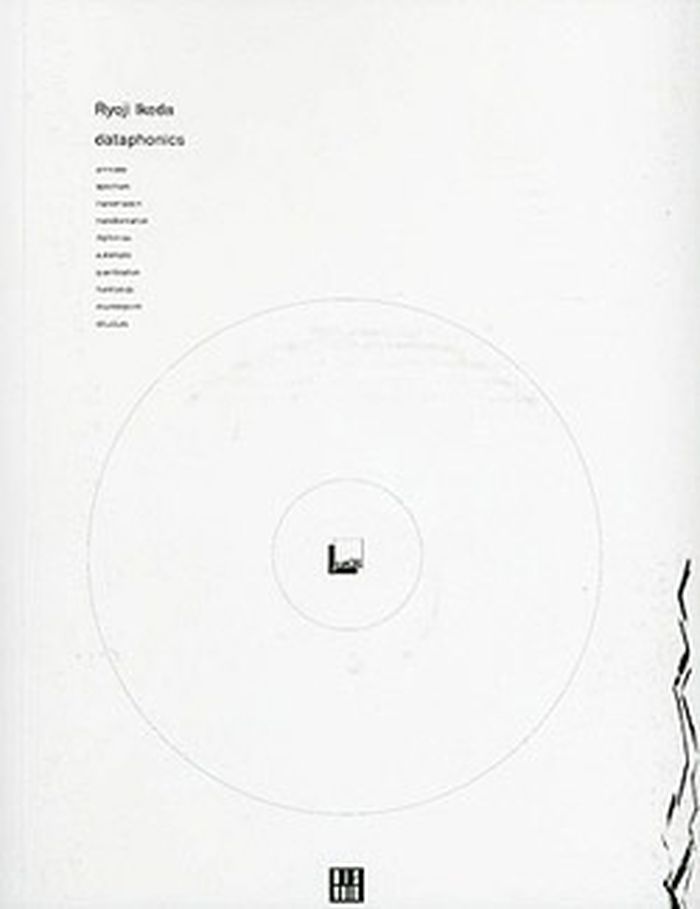
Japan's leading electronic composer and sound artist Ryoji Ikeda (born 1966) focuses on the building blocks of sound and aural minutiae, often deploying frequencies at the very edges of human hearing. His albums +/- (1997) and Matrix (2001) spread this soundworld of sine waves and ambient glitchery to a wider audience; since then, he has exhibited and collaborated (notably with Carsten Nicolai) across the world. A homage to Musique Concrète pioneer Pierre Schaeffer's Solfege de l'objet sonore, Dataphonics began as a monthly broadcast on France culture's Atelier de Création Radiophonique, in which Ikeda created a highly physical auditory experience based on the idea of binary-logic data made audible, “to materialize the invisible domain of ‘totally pure digital data.'” This book and CD includes spreads of graphic scores, codes, symbols and the composition itself, recomposed from the ten segments in which it was originally conceived.
Ryoji Ikeda: dataphonics
Actions:
Price:
$40.00
(available to order)
Summary:
Japan's leading electronic composer and sound artist Ryoji Ikeda (born 1966) focuses on the building blocks of sound and aural minutiae, often deploying frequencies at the very edges of human hearing. His albums +/- (1997) and Matrix (2001) spread this soundworld of sine waves and ambient glitchery to a wider audience; since then, he has exhibited and collaborated (notably with Carsten Nicolai) across the world. A homage to Musique Concrète pioneer Pierre Schaeffer's Solfege de l'objet sonore, Dataphonics began as a monthly broadcast on France culture's Atelier de Création Radiophonique, in which Ikeda created a highly physical auditory experience based on the idea of binary-logic data made audible, “to materialize the invisible domain of ‘totally pure digital data.'” This book and CD includes spreads of graphic scores, codes, symbols and the composition itself, recomposed from the ten segments in which it was originally conceived.
Form:
books
books
Publication:
July 2012
July 2012
Subject:
Acoustics
Acoustics
Form:
books
books
Actions:
Holdings:
Description:
303 pages : illustrations (color, black & white) ; 22 cm
Description:
303 pages : illustrations (color, black & white) ; 22 cm
Author:
Subject:
Publication:
Toronto, ON : Coach House Books, [2021], ©2021
Toronto, ON : Coach House Books, [2021], ©2021
Title:
Indigenous Toronto : stories that carry this place / edited by Denise Bolduc, Mnawaate Gordon-Corbiere, Rebeka Tabobondung, Brian Wright-McLeod.
Actions:
Holdings:
Description:
303 pages : illustrations (color, black & white) ; 22 cm
Indigenous Toronto : stories that carry this place / edited by Denise Bolduc, Mnawaate Gordon-Corbiere, Rebeka Tabobondung, Brian Wright-McLeod.
Actions:
Holdings:
Description:
303 pages : illustrations (color, black & white) ; 22 cm
Form:
books
books
Publication:
Toronto, ON : Coach House Books, [2021], ©2021
Toronto, ON : Coach House Books, [2021], ©2021
Author:
Subject:
Form:
books
books
Title:
Radio territories
Radio territories
Actions:
Price:
$30.00
(available to order)
Summary:
The legacy of radio and the arts has spawned many forms of radical culture over the years, from early Modernist notions of the "Wireless imagination" and its subsequent vernacular tongues to Acoustic Ecology's call for "Radical radio". This contemporary history of radical radio addresses the transformation of this broadcast medium by recent breakthroughs in digital(...)
$30.00
(available to order)
Summary:
The legacy of radio and the arts has spawned many forms of radical culture over the years, from early Modernist notions of the "Wireless imagination" and its subsequent vernacular tongues to Acoustic Ecology's call for "Radical radio". This contemporary history of radical radio addresses the transformation of this broadcast medium by recent breakthroughs in digital(...)
Subject:
Acoustics
Acoustics
Publication:
November 2006, Los Angeles, Copenhagen, New York
November 2006, Los Angeles, Copenhagen, New York
Title:
Radio territories
Actions:
Price:
$30.00
(available to order)
Summary:
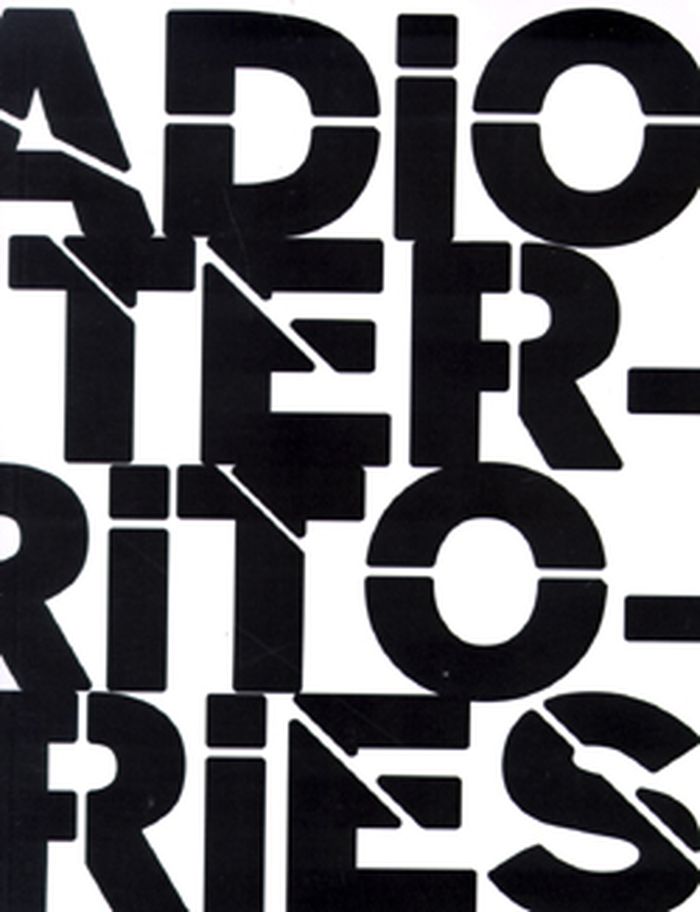
The legacy of radio and the arts has spawned many forms of radical culture over the years, from early Modernist notions of the "Wireless imagination" and its subsequent vernacular tongues to Acoustic Ecology's call for "Radical radio". This contemporary history of radical radio addresses the transformation of this broadcast medium by recent breakthroughs in digital technology - from digital streaming to web radio and podcasting - paying special attention to the "transmission arts" in culture and politics. It includes creative and critical essays by historians, media theorists, radio producers and activists, coupled with artistic and audio projects by current avant-gardists Kabir Carter, Brandon LaBelle, James Sey and others. While "Modern" radio stitched together an electronic network by expanding outward, today's radio may fulfill Marshall McLuhan's idea of the global "extended nervous system" by networking individual lives on more of a cellular level. According to the authors, radio is no longer out there, in the ether, but inside us, transmitting intense stratifications of culture. Comes with audio CD
Radio territories
Actions:
Price:
$30.00
(available to order)
Summary:
The legacy of radio and the arts has spawned many forms of radical culture over the years, from early Modernist notions of the "Wireless imagination" and its subsequent vernacular tongues to Acoustic Ecology's call for "Radical radio". This contemporary history of radical radio addresses the transformation of this broadcast medium by recent breakthroughs in digital technology - from digital streaming to web radio and podcasting - paying special attention to the "transmission arts" in culture and politics. It includes creative and critical essays by historians, media theorists, radio producers and activists, coupled with artistic and audio projects by current avant-gardists Kabir Carter, Brandon LaBelle, James Sey and others. While "Modern" radio stitched together an electronic network by expanding outward, today's radio may fulfill Marshall McLuhan's idea of the global "extended nervous system" by networking individual lives on more of a cellular level. According to the authors, radio is no longer out there, in the ether, but inside us, transmitting intense stratifications of culture. Comes with audio CD
Form:
books
books
Publication:
November 2006, Los Angeles, Copenhagen, New York
November 2006, Los Angeles, Copenhagen, New York
Subject:
Acoustics
Acoustics
Form:
books
books
Title:
The last pictures
The last pictures
Actions:
Price:
$52.00
(available in store)
Summary:
Human civilizations' longest lasting artifacts are not the great Pyramids of Giza, nor the cave paintings at Lascaux, but the communications satellites that circle our planet. In a stationary orbit above the equator, the satellites that broadcast our TV signals, route our phone calls, and process our credit card transactions experience no atmospheric drag. Their inert(...)
$52.00
(available in store)
Summary:
Human civilizations' longest lasting artifacts are not the great Pyramids of Giza, nor the cave paintings at Lascaux, but the communications satellites that circle our planet. In a stationary orbit above the equator, the satellites that broadcast our TV signals, route our phone calls, and process our credit card transactions experience no atmospheric drag. Their inert(...)
Title:
The last pictures
Actions:
Price:
$52.00
(available in store)
Summary:
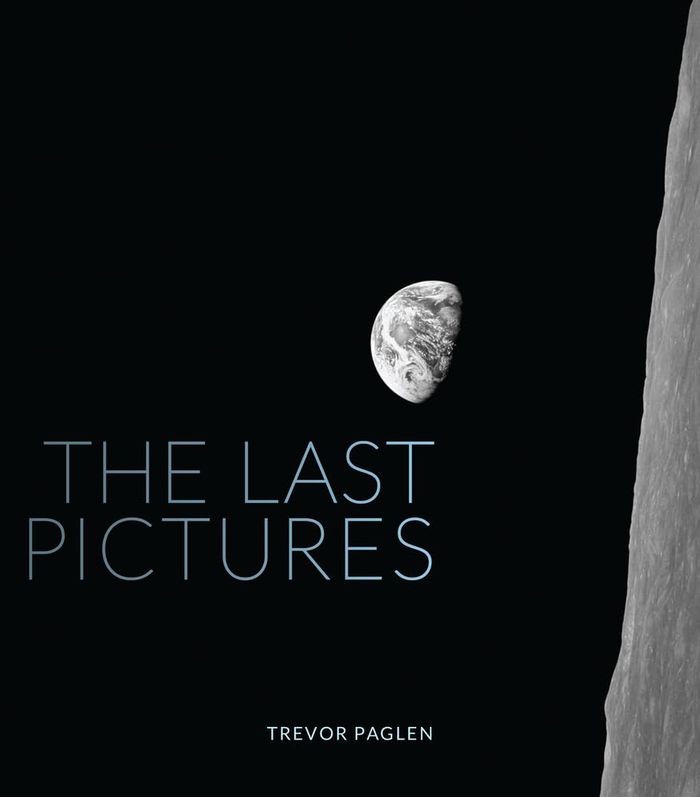
Human civilizations' longest lasting artifacts are not the great Pyramids of Giza, nor the cave paintings at Lascaux, but the communications satellites that circle our planet. In a stationary orbit above the equator, the satellites that broadcast our TV signals, route our phone calls, and process our credit card transactions experience no atmospheric drag. Their inert hulls will continue to drift around Earth until the Sun expands into a red giant and engulfs them about 4.5 billion years from now. he Last Pictures, co-published by Creative Time Books, is rooted in the premise that these communications satellites will ultimately become the cultural and material ruins of the late 20th and early 21st centuries, far outlasting anything else humans have created. Inspired in part by ancient cave paintings, nuclear waste warning signs, and Carl Sagan's Golden Records of the 1970s, artist/geographer and MacArthur "Genius" Fellow Trevor Paglen has developed a collection of one hundred images that will be etched onto an ultra-archival, golden silicon disc.
The last pictures
Actions:
Price:
$52.00
(available in store)
Summary:
Human civilizations' longest lasting artifacts are not the great Pyramids of Giza, nor the cave paintings at Lascaux, but the communications satellites that circle our planet. In a stationary orbit above the equator, the satellites that broadcast our TV signals, route our phone calls, and process our credit card transactions experience no atmospheric drag. Their inert hulls will continue to drift around Earth until the Sun expands into a red giant and engulfs them about 4.5 billion years from now. he Last Pictures, co-published by Creative Time Books, is rooted in the premise that these communications satellites will ultimately become the cultural and material ruins of the late 20th and early 21st centuries, far outlasting anything else humans have created. Inspired in part by ancient cave paintings, nuclear waste warning signs, and Carl Sagan's Golden Records of the 1970s, artist/geographer and MacArthur "Genius" Fellow Trevor Paglen has developed a collection of one hundred images that will be etched onto an ultra-archival, golden silicon disc.
Form:
books
books
Publication:
September 2012
September 2012
Subject:
Art Theory
Art Theory
Form:
books
books
Actions:
Price:
$30.95
(available to order)
Summary:
The rise of a prominent auditory culture, reveals the degree to which sound art is lending definition to the 21st Century. And yet sound art still lacks related literature to compliment, and expand, the realm of practice. Background Noise sets out an historical overview, while at the same time shaping that history according to what sound art reveals - the dynamics of art(...)
$30.95
(available to order)
Summary:
The rise of a prominent auditory culture, reveals the degree to which sound art is lending definition to the 21st Century. And yet sound art still lacks related literature to compliment, and expand, the realm of practice. Background Noise sets out an historical overview, while at the same time shaping that history according to what sound art reveals - the dynamics of art(...)
Title:
Background noise: perspectives on sound art
Actions:
Price:
$30.95
(available to order)
Summary:
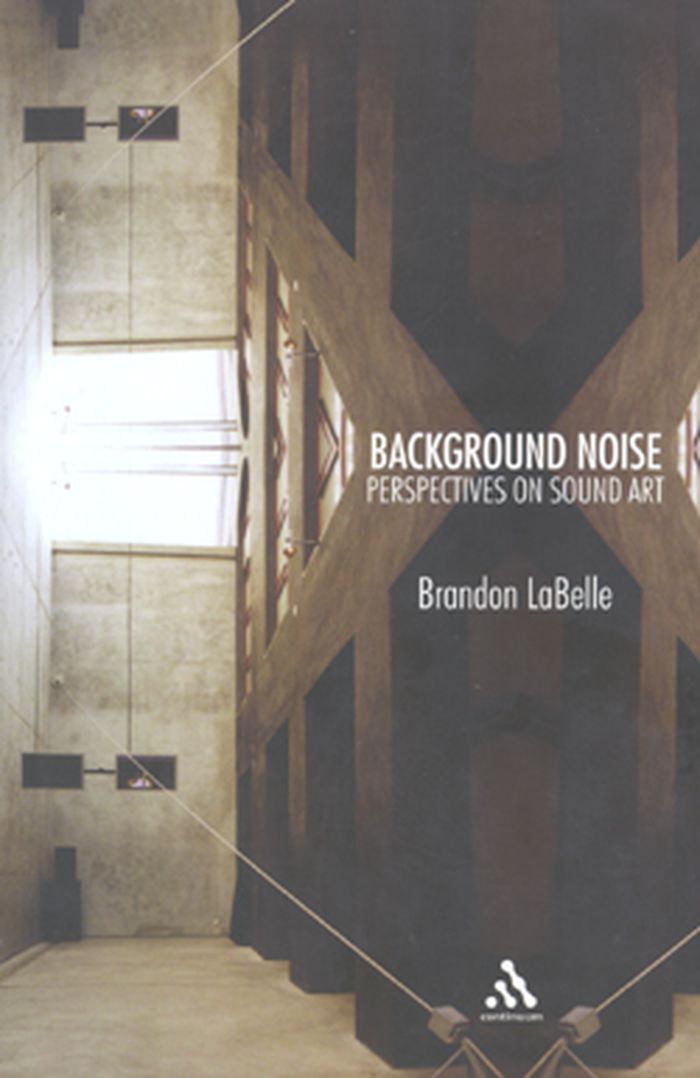
The rise of a prominent auditory culture, reveals the degree to which sound art is lending definition to the 21st Century. And yet sound art still lacks related literature to compliment, and expand, the realm of practice. Background Noise sets out an historical overview, while at the same time shaping that history according to what sound art reveals - the dynamics of art to operate spatially, through media of reproduction and broadcast, and in relation to the intensities of communication and its contextual framework Brandon LaBelle is a writer and curator who currently lives in Denmark. From 1998 to 2002 he developed and curated an international sound art festival in Los Angeles, Beyond Music; in 2001 he developed and organized Social Music, a series of radio works for Kunstradio in Vienna; in 2002 he curated Concrete Feedback, an exhibition of sound installations working with architecture, presented at the Southern California Institute of Architecture; and in 2002-03 he researched and curated the music section to the exhibition, Beyond Geometry: Experiments in Form, 1940s - 1970s for the Los Angeles County Museum of Art.
Background noise: perspectives on sound art
Actions:
Price:
$30.95
(available to order)
Summary:
The rise of a prominent auditory culture, reveals the degree to which sound art is lending definition to the 21st Century. And yet sound art still lacks related literature to compliment, and expand, the realm of practice. Background Noise sets out an historical overview, while at the same time shaping that history according to what sound art reveals - the dynamics of art to operate spatially, through media of reproduction and broadcast, and in relation to the intensities of communication and its contextual framework Brandon LaBelle is a writer and curator who currently lives in Denmark. From 1998 to 2002 he developed and curated an international sound art festival in Los Angeles, Beyond Music; in 2001 he developed and organized Social Music, a series of radio works for Kunstradio in Vienna; in 2002 he curated Concrete Feedback, an exhibition of sound installations working with architecture, presented at the Southern California Institute of Architecture; and in 2002-03 he researched and curated the music section to the exhibition, Beyond Geometry: Experiments in Form, 1940s - 1970s for the Los Angeles County Museum of Art.
Form:
books
books
Publication:
April 2006, New York, London
April 2006, New York, London
Subject:
Acoustics
Acoustics


