


249 Results
Form:
books
books
Actions:
Price:
$25.95
(available to order)
Summary:
Cities around the world are in the midst of a profound transformation as the wealthy price out the remnants of the urban working class, especially people of color. Displacement is neither accidental or inevitable. It happens because a whole range of people and institutions profit handsomely. ''Defying displacement'', focused on the US but informed by global examples,(...)
$25.95
(available to order)
Summary:
Cities around the world are in the midst of a profound transformation as the wealthy price out the remnants of the urban working class, especially people of color. Displacement is neither accidental or inevitable. It happens because a whole range of people and institutions profit handsomely. ''Defying displacement'', focused on the US but informed by global examples,(...)
Title:
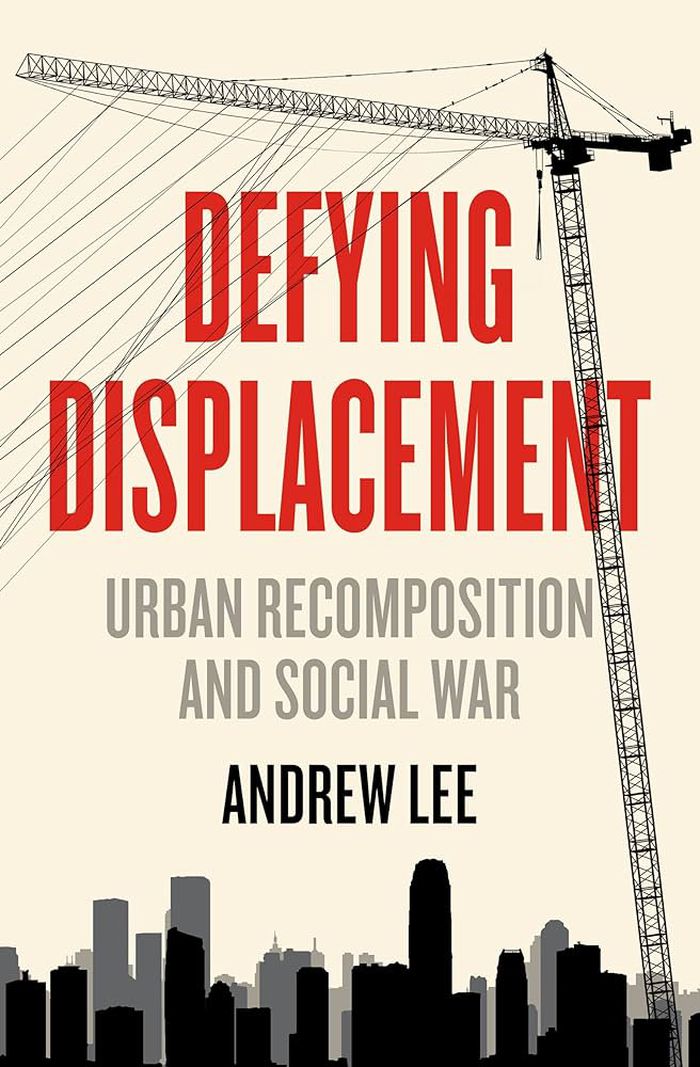
Defying displacement: Urban recomposition and social war
Actions:
Price:
$25.95
(available to order)
Summary:
Cities around the world are in the midst of a profound transformation as the wealthy price out the remnants of the urban working class, especially people of color. Displacement is neither accidental or inevitable. It happens because a whole range of people and institutions profit handsomely. ''Defying displacement'', focused on the US but informed by global examples, investigates gentrification from the perspective of the people fighting it, members of communities whose survival is threatened by some of the most powerful institutions on the planet. Andrew Lee names the names and identifies the actual state and corporate forces that work together to enrich a very specific group of people: property developers and real estate investors who make a killing, politicians who watch their tax bases grow, banks that write profitable loans for new businesses and mortgages for new homeowners. Meanwhile, business districts are planned, tax abatements unveiled, redevelopment schemes dreamed up, corporate and university campuses expanded, and ordinary people are driven from their homes.
Defying displacement: Urban recomposition and social war
Actions:
Price:
$25.95
(available to order)
Summary:
Cities around the world are in the midst of a profound transformation as the wealthy price out the remnants of the urban working class, especially people of color. Displacement is neither accidental or inevitable. It happens because a whole range of people and institutions profit handsomely. ''Defying displacement'', focused on the US but informed by global examples, investigates gentrification from the perspective of the people fighting it, members of communities whose survival is threatened by some of the most powerful institutions on the planet. Andrew Lee names the names and identifies the actual state and corporate forces that work together to enrich a very specific group of people: property developers and real estate investors who make a killing, politicians who watch their tax bases grow, banks that write profitable loans for new businesses and mortgages for new homeowners. Meanwhile, business districts are planned, tax abatements unveiled, redevelopment schemes dreamed up, corporate and university campuses expanded, and ordinary people are driven from their homes.
Form:
books
books
Publication:
February 2024
February 2024
Subject:
Humans and cities
Humans and cities
Form:
books
books
Actions:
Price:
$58.95
(available to order)
Summary:
A walk along any London street takes you past a wealth of seemingly ordinary buildings: an Edwardian church, modernist postwar council housing, stuccoed Italianate terraces, a Bauhaus-inspired library. But these buildings are not just functional. They are evidence of London’s rich and diverse history and have shaped people’s experiences, identities, and relationships. In(...)
$58.95
(available to order)
Summary:
A walk along any London street takes you past a wealth of seemingly ordinary buildings: an Edwardian church, modernist postwar council housing, stuccoed Italianate terraces, a Bauhaus-inspired library. But these buildings are not just functional. They are evidence of London’s rich and diverse history and have shaped people’s experiences, identities, and relationships. In(...)
Title:
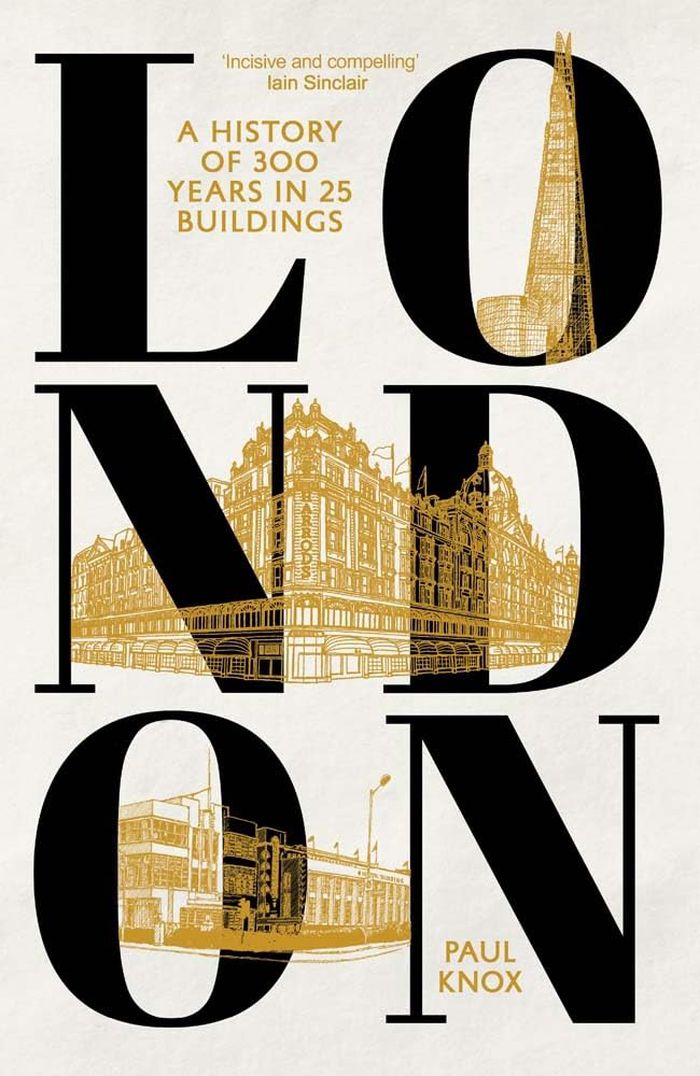
London: A history of 300 years in 25 buildings
Actions:
Price:
$58.95
(available to order)
Summary:
A walk along any London street takes you past a wealth of seemingly ordinary buildings: an Edwardian church, modernist postwar council housing, stuccoed Italianate terraces, a Bauhaus-inspired library. But these buildings are not just functional. They are evidence of London’s rich and diverse history and have shaped people’s experiences, identities, and relationships. In this engaging study, Paul L. Knox traces the history of London from the Georgian era to the present day through twenty-five surviving buildings. Knox explores where people lived and worked, from grand Regency squares to Victorian workshops, and highlights the impact of migration, gentrification, and inequality. We see famous buildings, like Harrods and Abbey Road Studios, and everyday places like Rochelle Street School and Thamesmead. Each historical period has introduced new buildings, and old ones have been repurposed. As Knox shows, it is the living history of these buildings that makes up the vibrant, but exceptionally unequal, city of today.
London: A history of 300 years in 25 buildings
Actions:
Price:
$58.95
(available to order)
Summary:
A walk along any London street takes you past a wealth of seemingly ordinary buildings: an Edwardian church, modernist postwar council housing, stuccoed Italianate terraces, a Bauhaus-inspired library. But these buildings are not just functional. They are evidence of London’s rich and diverse history and have shaped people’s experiences, identities, and relationships. In this engaging study, Paul L. Knox traces the history of London from the Georgian era to the present day through twenty-five surviving buildings. Knox explores where people lived and worked, from grand Regency squares to Victorian workshops, and highlights the impact of migration, gentrification, and inequality. We see famous buildings, like Harrods and Abbey Road Studios, and everyday places like Rochelle Street School and Thamesmead. Each historical period has introduced new buildings, and old ones have been repurposed. As Knox shows, it is the living history of these buildings that makes up the vibrant, but exceptionally unequal, city of today.
Form:
books
books
Publication:
May 2024
May 2024
Form:
books
books
Actions:
Price:
$92.00
(available to order)
Summary:
“Some people find a certain cruelty in parts of our work,” say the rising conceptualist-collaborators Michael Elmgreen and Ingar Dragset, “but they are definitely not more vicious than any real life experiences.” Since 1995, Elmgreen and Dragset have tackled issues of privatization, gentrification, social alienation and the dismantling of social welfare. For their first(...)
$92.00
(available to order)
Summary:
“Some people find a certain cruelty in parts of our work,” say the rising conceptualist-collaborators Michael Elmgreen and Ingar Dragset, “but they are definitely not more vicious than any real life experiences.” Since 1995, Elmgreen and Dragset have tackled issues of privatization, gentrification, social alienation and the dismantling of social welfare. For their first(...)
Title:
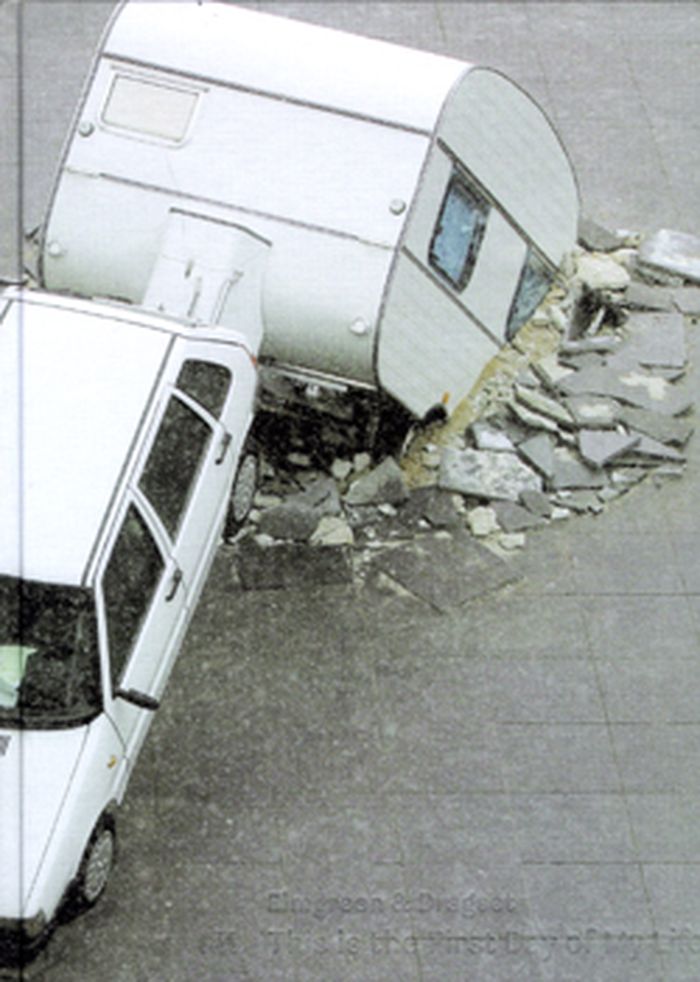
Elmgren & Dragset : this is the first day of my life
Actions:
Price:
$92.00
(available to order)
Summary:
“Some people find a certain cruelty in parts of our work,” say the rising conceptualist-collaborators Michael Elmgreen and Ingar Dragset, “but they are definitely not more vicious than any real life experiences.” Since 1995, Elmgreen and Dragset have tackled issues of privatization, gentrification, social alienation and the dismantling of social welfare. For their first show at Tanya Bonakdar Gallery in 2001 they papered over the windows with the announcement “Opening Soon Prada.” Pursuing and inverting this theme, in 2005 they installed a mocked-up Prada store on a deserted road near Marfa, Texas. They have recreated hospitals and prison cells, and have reconfigured gallery spaces to spatially deter their would-be audience. “Our aim is to investigate some of the power structures that these spaces derive from, and by exchanging and replacing some of these structures, show how fragile they actually are.” This monograph is the first extensive survey of their work to date.
Elmgren & Dragset : this is the first day of my life
Actions:
Price:
$92.00
(available to order)
Summary:
“Some people find a certain cruelty in parts of our work,” say the rising conceptualist-collaborators Michael Elmgreen and Ingar Dragset, “but they are definitely not more vicious than any real life experiences.” Since 1995, Elmgreen and Dragset have tackled issues of privatization, gentrification, social alienation and the dismantling of social welfare. For their first show at Tanya Bonakdar Gallery in 2001 they papered over the windows with the announcement “Opening Soon Prada.” Pursuing and inverting this theme, in 2005 they installed a mocked-up Prada store on a deserted road near Marfa, Texas. They have recreated hospitals and prison cells, and have reconfigured gallery spaces to spatially deter their would-be audience. “Our aim is to investigate some of the power structures that these spaces derive from, and by exchanging and replacing some of these structures, show how fragile they actually are.” This monograph is the first extensive survey of their work to date.
Form:
books
books
Publication:
May 2008, Ostfildern, Berlin
May 2008, Ostfildern, Berlin
Subject:
Contemporary Art Monographs
Contemporary Art Monographs
Form:
books
books

Title:
Undoing property?
Undoing property?
Actions:
Price:
$37.00
(available to order)
Summary:
''Undoing property?'' examines complex relationships inside art, culture, political economy, immaterial production, and the public realm today. In its pages artists and theorists address aspects of computing, curating, economy, ecology, gentrification, music, publishing, piracy, and much more. Property shapes all social relations. Its invisible lines force separations(...)
$37.00
(available to order)
Summary:
''Undoing property?'' examines complex relationships inside art, culture, political economy, immaterial production, and the public realm today. In its pages artists and theorists address aspects of computing, curating, economy, ecology, gentrification, music, publishing, piracy, and much more. Property shapes all social relations. Its invisible lines force separations(...)
Title:
Undoing property?
Actions:
Price:
$37.00
(available to order)
Summary:
''Undoing property?'' examines complex relationships inside art, culture, political economy, immaterial production, and the public realm today. In its pages artists and theorists address aspects of computing, curating, economy, ecology, gentrification, music, publishing, piracy, and much more. Property shapes all social relations. Its invisible lines force separations and create power relations felt through the unequal distribution of what is otherwise collectively produced value. Over the last few years the precise question of what should be privately owned and publicly shared in society has animated intense political struggles and social movements around the world. In this shadow the publication's critical texts, interviews and artistic interventions offer models of practice and interrogate diverse sites, from the body, to the courtroom, to the server, to the museum. The book asks why propertization itself has changed so fundamentally over the last few decades and what might be done to challenge it. The "undoing" of ''Undoing property?'' begins with the recognition that something else is possible.
Undoing property?
Actions:
Price:
$37.00
(available to order)
Summary:
''Undoing property?'' examines complex relationships inside art, culture, political economy, immaterial production, and the public realm today. In its pages artists and theorists address aspects of computing, curating, economy, ecology, gentrification, music, publishing, piracy, and much more. Property shapes all social relations. Its invisible lines force separations and create power relations felt through the unequal distribution of what is otherwise collectively produced value. Over the last few years the precise question of what should be privately owned and publicly shared in society has animated intense political struggles and social movements around the world. In this shadow the publication's critical texts, interviews and artistic interventions offer models of practice and interrogate diverse sites, from the body, to the courtroom, to the server, to the museum. The book asks why propertization itself has changed so fundamentally over the last few decades and what might be done to challenge it. The "undoing" of ''Undoing property?'' begins with the recognition that something else is possible.
Form:
books
books
Publication:
September 2013
September 2013
Subject:
Critical Theory
Critical Theory
Form:
books
books
Actions:
Price:
$25.00
(available in store)
Summary:
''Rights of way: The body as witness in public space'' takes our bodily movements as a departure point to cross into the terrains of art, culture, architecture, sociology, literature, and politics, to envision varied forms of witnessing, and apply them to our direct environments. When many must still campaign to claim their stake in the public realm; when hate crimes and(...)
$25.00
(available in store)
Summary:
''Rights of way: The body as witness in public space'' takes our bodily movements as a departure point to cross into the terrains of art, culture, architecture, sociology, literature, and politics, to envision varied forms of witnessing, and apply them to our direct environments. When many must still campaign to claim their stake in the public realm; when hate crimes and(...)
Title:
Rights of way: The body as witness in public space
Actions:
Price:
$25.00
(available in store)
Summary:
''Rights of way: The body as witness in public space'' takes our bodily movements as a departure point to cross into the terrains of art, culture, architecture, sociology, literature, and politics, to envision varied forms of witnessing, and apply them to our direct environments. When many must still campaign to claim their stake in the public realm; when hate crimes and acts of institutional violence persist in the public sphere; when cities continue to grapple with the effects of mass surveillance, precarious citizenship, widespread gentrification, and divisive body politics, we seek to question, challenge, and re-envision who have the rights of way. This publication comprises a collection of essays, interviews, texts, and images from a range of artists, researchers, academics, architects, and historians. Together, the contributions question our positions of access and in-access in space, and, in doing so, orchestrate the act of witnessing as a vital component in provid- ing meaning to our cities.
Rights of way: The body as witness in public space
Actions:
Price:
$25.00
(available in store)
Summary:
''Rights of way: The body as witness in public space'' takes our bodily movements as a departure point to cross into the terrains of art, culture, architecture, sociology, literature, and politics, to envision varied forms of witnessing, and apply them to our direct environments. When many must still campaign to claim their stake in the public realm; when hate crimes and acts of institutional violence persist in the public sphere; when cities continue to grapple with the effects of mass surveillance, precarious citizenship, widespread gentrification, and divisive body politics, we seek to question, challenge, and re-envision who have the rights of way. This publication comprises a collection of essays, interviews, texts, and images from a range of artists, researchers, academics, architects, and historians. Together, the contributions question our positions of access and in-access in space, and, in doing so, orchestrate the act of witnessing as a vital component in provid- ing meaning to our cities.
Form:
books
books
Publication:
November 2022
November 2022
Subject:
Critical Theory
Critical Theory
Form:
journals and magazines
journals and magazines
Title:
Scapegoat 12/13: c\a\n\a\d\a
Scapegoat 12/13: c\a\n\a\d\a
Actions:
Price:
$30.00
(available to order)
Summary:
This issue aims to connect two critical discourses about space that have so far been disassociated: architectural theories that point to the importance of real property as the fundamental unit of urban morphology and architectural typology, and Indigenous land claims which point to the violence of colonial land dispossession, through which this property was originally(...)
$30.00
(available to order)
Summary:
This issue aims to connect two critical discourses about space that have so far been disassociated: architectural theories that point to the importance of real property as the fundamental unit of urban morphology and architectural typology, and Indigenous land claims which point to the violence of colonial land dispossession, through which this property was originally(...)
Title:
Scapegoat 12/13: c\a\n\a\d\a
Actions:
Price:
$30.00
(available to order)
Summary:
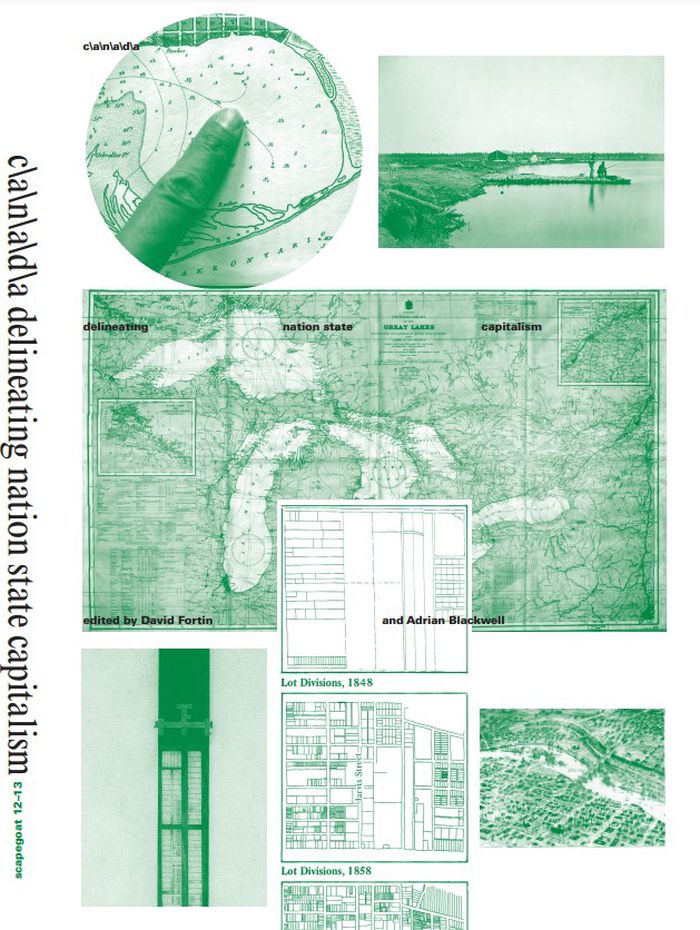
This issue aims to connect two critical discourses about space that have so far been disassociated: architectural theories that point to the importance of real property as the fundamental unit of urban morphology and architectural typology, and Indigenous land claims which point to the violence of colonial land dispossession, through which this property was originally invented and formed. This research sees property delineation as a fundamental grammatical logic of the production of the space of nation, state and capital. The editors and contributors to this volume approach the intersection of Indigenous and settler viewpoints, as well as the interdisciplinary perspectives of both spatial delineators and critical commentators, in order to understand the deep connections between Indigenous dispossession and urban pathologies of gentrification, homelessness, systemically biased planning and urban alienation. The issue also addresses this connection in order to rethink and redraw land relations as a foundation for undoing this alienation and creating spaces that cultivate a caring relation with land, kin and strangers.
Scapegoat 12/13: c\a\n\a\d\a
Actions:
Price:
$30.00
(available to order)
Summary:
This issue aims to connect two critical discourses about space that have so far been disassociated: architectural theories that point to the importance of real property as the fundamental unit of urban morphology and architectural typology, and Indigenous land claims which point to the violence of colonial land dispossession, through which this property was originally invented and formed. This research sees property delineation as a fundamental grammatical logic of the production of the space of nation, state and capital. The editors and contributors to this volume approach the intersection of Indigenous and settler viewpoints, as well as the interdisciplinary perspectives of both spatial delineators and critical commentators, in order to understand the deep connections between Indigenous dispossession and urban pathologies of gentrification, homelessness, systemically biased planning and urban alienation. The issue also addresses this connection in order to rethink and redraw land relations as a foundation for undoing this alienation and creating spaces that cultivate a caring relation with land, kin and strangers.
Form:
journals and magazines
journals and magazines
Publication:
May 2022
May 2022
Subject:
Magazines
Magazines
Form:
books
books
Actions:
Price:
$23.50
(available in store)
Summary:
The Lower East Side has been home to some of the city's most iconic restaurants, shopping venues, and architecture. The neighborhood has also welcomed generations of immigrants, from newly arrived Italians and Jews to today's Latino and Asian newcomers. This history has become somewhat obscured, however, as the Lower East Side can appear more hip than historic, with(...)
$23.50
(available in store)
Summary:
The Lower East Side has been home to some of the city's most iconic restaurants, shopping venues, and architecture. The neighborhood has also welcomed generations of immigrants, from newly arrived Italians and Jews to today's Latino and Asian newcomers. This history has become somewhat obscured, however, as the Lower East Side can appear more hip than historic, with(...)
Title:
The lower east side remebered and revisited
Actions:
Price:
$23.50
(available in store)
Summary:
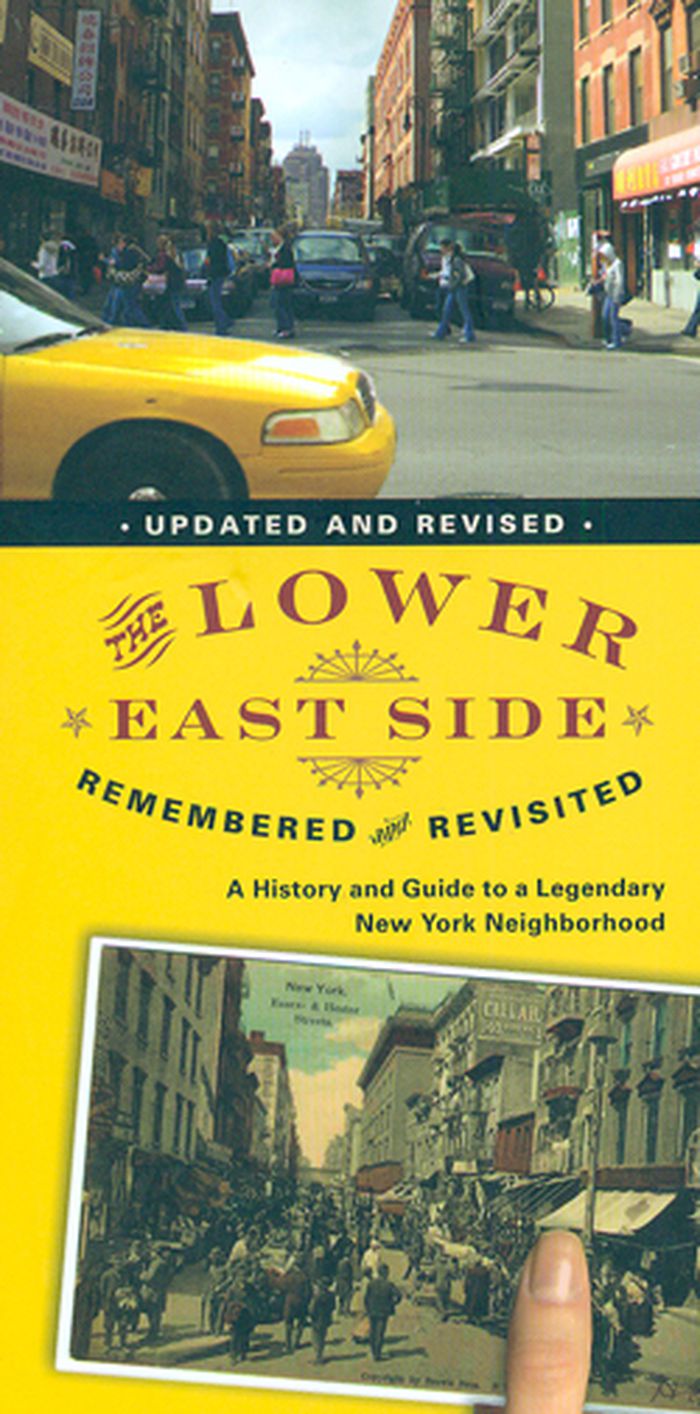
The Lower East Side has been home to some of the city's most iconic restaurants, shopping venues, and architecture. The neighborhood has also welcomed generations of immigrants, from newly arrived Italians and Jews to today's Latino and Asian newcomers. This history has become somewhat obscured, however, as the Lower East Side can appear more hip than historic, with wealth and gentrification changing the character of the neighborhood. Chronicling these developments, along with the hidden gems that still speak of a vibrant immigrant identity, Joyce Mendelsohn provides a complete guide to the Lower East Side of then and now. After an extensive history that stretches back to Manhattan's first settlers, Mendelsohn offers 5 self-guided walking tours, including a new passage through the Bowery, that take the reader to more than 150 sites and highlight the dynamics of a community of contrasts: aged tenements nestled among luxury apartment towers abut historic churches and synagogues.
The lower east side remebered and revisited
Actions:
Price:
$23.50
(available in store)
Summary:
The Lower East Side has been home to some of the city's most iconic restaurants, shopping venues, and architecture. The neighborhood has also welcomed generations of immigrants, from newly arrived Italians and Jews to today's Latino and Asian newcomers. This history has become somewhat obscured, however, as the Lower East Side can appear more hip than historic, with wealth and gentrification changing the character of the neighborhood. Chronicling these developments, along with the hidden gems that still speak of a vibrant immigrant identity, Joyce Mendelsohn provides a complete guide to the Lower East Side of then and now. After an extensive history that stretches back to Manhattan's first settlers, Mendelsohn offers 5 self-guided walking tours, including a new passage through the Bowery, that take the reader to more than 150 sites and highlight the dynamics of a community of contrasts: aged tenements nestled among luxury apartment towers abut historic churches and synagogues.
Form:
books
books
Publication:
September 2009
September 2009
Subject:
History since 1900, Reference Books
History since 1900, Reference Books
Form:
books
books
Price:
$66.00
(available to order)
Summary:
Newtown Creek is a tributary of New York's East River that forms part of the border between the boroughs of Brooklyn and Queens. During the Industrial Revolution, when its volume of commercial shipping traffic exceeded that of the Mississippi River, the creek was widened, deepened, and bulkheaded to accommodate bigger barges, destroying all its freshwater sources. As one(...)
$66.00
(available to order)
Summary:
Newtown Creek is a tributary of New York's East River that forms part of the border between the boroughs of Brooklyn and Queens. During the Industrial Revolution, when its volume of commercial shipping traffic exceeded that of the Mississippi River, the creek was widened, deepened, and bulkheaded to accommodate bigger barges, destroying all its freshwater sources. As one(...)
Title:
Newtown Creek: a photographic survey of New York's industrial waterway
Actions:
Price:
$66.00
(available to order)
Summary:
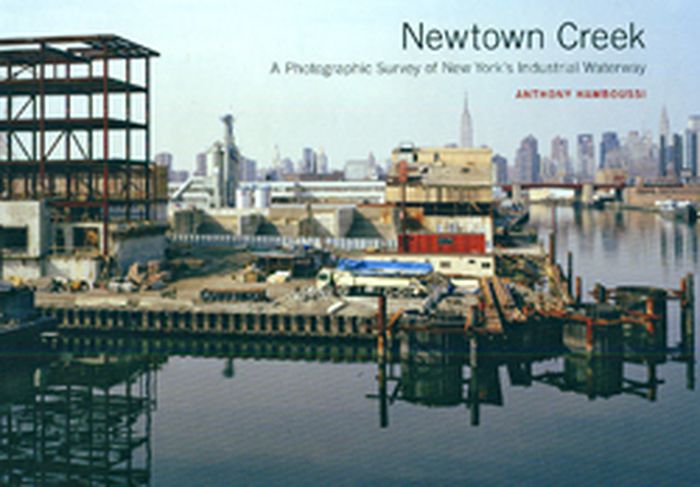
Newtown Creek is a tributary of New York's East River that forms part of the border between the boroughs of Brooklyn and Queens. During the Industrial Revolution, when its volume of commercial shipping traffic exceeded that of the Mississippi River, the creek was widened, deepened, and bulkheaded to accommodate bigger barges, destroying all its freshwater sources. As one of the oldest continuous industrial areas in the nation, it is now one of the most polluted. Newtown Creek is the first extensive documentation of this forgotten landscape. Anthony Hamboussi's five-year photographic survey captures the creek at a critical moment when gentrification and revitalization are just starting to change the area. From the ruins of Morgan Oil Company and the Newtown Metal Corporation to the footprints of the former Maspeth gasholders, Newtown Creek is a lost chapter in the visual history of industrial New York framed at the moment of its disappearance and transformation.
Newtown Creek: a photographic survey of New York's industrial waterway
Actions:
Price:
$66.00
(available to order)
Summary:
Newtown Creek is a tributary of New York's East River that forms part of the border between the boroughs of Brooklyn and Queens. During the Industrial Revolution, when its volume of commercial shipping traffic exceeded that of the Mississippi River, the creek was widened, deepened, and bulkheaded to accommodate bigger barges, destroying all its freshwater sources. As one of the oldest continuous industrial areas in the nation, it is now one of the most polluted. Newtown Creek is the first extensive documentation of this forgotten landscape. Anthony Hamboussi's five-year photographic survey captures the creek at a critical moment when gentrification and revitalization are just starting to change the area. From the ruins of Morgan Oil Company and the Newtown Metal Corporation to the footprints of the former Maspeth gasholders, Newtown Creek is a lost chapter in the visual history of industrial New York framed at the moment of its disappearance and transformation.
Form:
books
books
Publication:
March 2010
March 2010
Subject:
Photography Collections
Photography Collections
Form:
books
books
Actions:
Price:
$34.95
(available to order)
Summary:
Nestled between Santa Monica and Marina del Rey, Venice is a Los Angeles community filled with apparent contradictions. There, people of various races and classes live side by side, a population of astounding diversity bound together by geographic proximity. From street to street, and from block to block, million dollar homes stand near housing projects and homeless(...)
$34.95
(available to order)
Summary:
Nestled between Santa Monica and Marina del Rey, Venice is a Los Angeles community filled with apparent contradictions. There, people of various races and classes live side by side, a population of astounding diversity bound together by geographic proximity. From street to street, and from block to block, million dollar homes stand near housing projects and homeless(...)
Title:
Venice: a contested bohemia in Los Angeles
Actions:
Price:
$34.95
(available to order)
Summary:
Nestled between Santa Monica and Marina del Rey, Venice is a Los Angeles community filled with apparent contradictions. There, people of various races and classes live side by side, a population of astounding diversity bound together by geographic proximity. From street to street, and from block to block, million dollar homes stand near housing projects and homeless encampments; and upscale boutiques are just a short walk from the (in)famous Venice Beach where artists and carnival performers practice their crafts opposite cafes and ragtag tourist shops. In Venice: A Contested Bohemia in Los Angeles Andrew Deener invites the reader on an ethnographic tour of this legendary California beach community and the people who live there. In writing this book, the ethnographer became an insider; Deener lived as a resident of Venice for close to six years. Here, he brings a scholarly eye to bear on the effects of gentrification, homelessness, segregation, and immigration on this community.
Venice: a contested bohemia in Los Angeles
Actions:
Price:
$34.95
(available to order)
Summary:
Nestled between Santa Monica and Marina del Rey, Venice is a Los Angeles community filled with apparent contradictions. There, people of various races and classes live side by side, a population of astounding diversity bound together by geographic proximity. From street to street, and from block to block, million dollar homes stand near housing projects and homeless encampments; and upscale boutiques are just a short walk from the (in)famous Venice Beach where artists and carnival performers practice their crafts opposite cafes and ragtag tourist shops. In Venice: A Contested Bohemia in Los Angeles Andrew Deener invites the reader on an ethnographic tour of this legendary California beach community and the people who live there. In writing this book, the ethnographer became an insider; Deener lived as a resident of Venice for close to six years. Here, he brings a scholarly eye to bear on the effects of gentrification, homelessness, segregation, and immigration on this community.
Form:
books
books
Publication:
July 2012
July 2012
Subject:
Urban Theory
Urban Theory
Form:
books
books
Title:
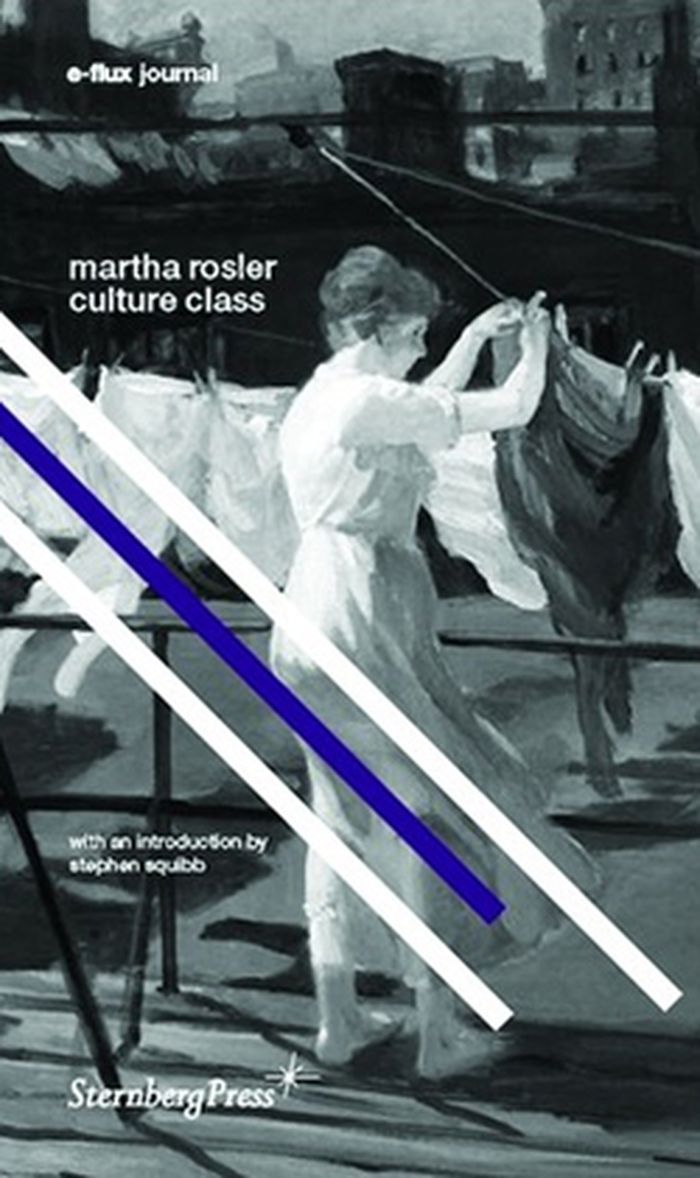
Martha Rosler, Culture class
Martha Rosler, Culture class
Actions:
Price:
$22.00
(available in store)
Summary:
In this collection of essays Martha Rosler embarks on a broad inquiry into the economic and historical precedents for today’s soft ideology of creativity, with special focus on its elaborate retooling of class distinctions. In the creative city, the neutralization or incorporation of subcultural movements, the organic translation of the gritty into the quaint, and the(...)
$22.00
(available in store)
Summary:
In this collection of essays Martha Rosler embarks on a broad inquiry into the economic and historical precedents for today’s soft ideology of creativity, with special focus on its elaborate retooling of class distinctions. In the creative city, the neutralization or incorporation of subcultural movements, the organic translation of the gritty into the quaint, and the(...)
Subject:
Critical Theory
Critical Theory
Publication:
September 2013
September 2013
Title:
Martha Rosler, Culture class
Actions:
Price:
$22.00
(available in store)
Summary:
In this collection of essays Martha Rosler embarks on a broad inquiry into the economic and historical precedents for today’s soft ideology of creativity, with special focus on its elaborate retooling of class distinctions. In the creative city, the neutralization or incorporation of subcultural movements, the organic translation of the gritty into the quaint, and the professionalization of the artist combine with armies of eager freelancers and interns to constitute a new social sphere in which an elaborate retooling of traditional markers of difference has allowed class distinctions to be dissolved or willfully suppressed. The result is a handful of cities selected for revitalization rather than desertion, where artists in search of cheap rent become the avant-garde pioneers of gentrification. And it may be for this reason that, for Rosler, it becomes all the more necessary to locate the functioning of power within this new urban paradigm, to find a position from which to make it accountable to something other than its own logic.
Martha Rosler, Culture class
Actions:
Price:
$22.00
(available in store)
Summary:
In this collection of essays Martha Rosler embarks on a broad inquiry into the economic and historical precedents for today’s soft ideology of creativity, with special focus on its elaborate retooling of class distinctions. In the creative city, the neutralization or incorporation of subcultural movements, the organic translation of the gritty into the quaint, and the professionalization of the artist combine with armies of eager freelancers and interns to constitute a new social sphere in which an elaborate retooling of traditional markers of difference has allowed class distinctions to be dissolved or willfully suppressed. The result is a handful of cities selected for revitalization rather than desertion, where artists in search of cheap rent become the avant-garde pioneers of gentrification. And it may be for this reason that, for Rosler, it becomes all the more necessary to locate the functioning of power within this new urban paradigm, to find a position from which to make it accountable to something other than its own logic.
Form:
books
books
Publication:
September 2013
September 2013
Subject:
Critical Theory
Critical Theory


