


2310 Results
Form:
books
books

Title:
Holocaust memorial, Berlin
Holocaust memorial, Berlin
Actions:
Price:
$58.00
(available to order)
Summary:
Inescapably controversial, the Holocaust Memorial Berlin (or, as it’s formally known, the Memorial to the Murdered Jews of Europe) is now finished, some 16 years after it was first proposed. Architect Peter Eisenman’s design, which filled a four-football-field-size parcel of land in the middle of Berlin with more than 2,700 concrete slabs, or stelae, was itself hotly(...)
$58.00
(available to order)
Summary:
Inescapably controversial, the Holocaust Memorial Berlin (or, as it’s formally known, the Memorial to the Murdered Jews of Europe) is now finished, some 16 years after it was first proposed. Architect Peter Eisenman’s design, which filled a four-football-field-size parcel of land in the middle of Berlin with more than 2,700 concrete slabs, or stelae, was itself hotly(...)
Subject:
Architecture Monographs
Architecture Monographs
Publication:
January 1900, Baden
January 1900, Baden
Title:
Holocaust memorial, Berlin
Actions:
Price:
$58.00
(available to order)
Summary:
Inescapably controversial, the Holocaust Memorial Berlin (or, as it’s formally known, the Memorial to the Murdered Jews of Europe) is now finished, some 16 years after it was first proposed. Architect Peter Eisenman’s design, which filled a four-football-field-size parcel of land in the middle of Berlin with more than 2,700 concrete slabs, or stelae, was itself hotly debated, with some complaining that its abstractness, Eisenman’s trademark, made it a monument that evoked no memories. As the debates give way to accounts of the experience of the space, the readers of this book, produced with Eisenman’s cooperation, will be able to compare how successfully the architect’s conception matches the reality. This volume offers a full picture of the process from conceptual and architectural drawings and digital plans to photographs of construction. It holds the narrative of a difficult task, turning “the place of no meaning,” as Eisenman once referred to the site in the hopes of dispelling fears that he was trying to symbolize the deaths that took place during the Holocaust, into a confrontation with the past. Photographs by Hélène Binet and Lukas Wasserman.
Holocaust memorial, Berlin
Actions:
Price:
$58.00
(available to order)
Summary:
Inescapably controversial, the Holocaust Memorial Berlin (or, as it’s formally known, the Memorial to the Murdered Jews of Europe) is now finished, some 16 years after it was first proposed. Architect Peter Eisenman’s design, which filled a four-football-field-size parcel of land in the middle of Berlin with more than 2,700 concrete slabs, or stelae, was itself hotly debated, with some complaining that its abstractness, Eisenman’s trademark, made it a monument that evoked no memories. As the debates give way to accounts of the experience of the space, the readers of this book, produced with Eisenman’s cooperation, will be able to compare how successfully the architect’s conception matches the reality. This volume offers a full picture of the process from conceptual and architectural drawings and digital plans to photographs of construction. It holds the narrative of a difficult task, turning “the place of no meaning,” as Eisenman once referred to the site in the hopes of dispelling fears that he was trying to symbolize the deaths that took place during the Holocaust, into a confrontation with the past. Photographs by Hélène Binet and Lukas Wasserman.
Form:
books
books
Publication:
January 1900, Baden
January 1900, Baden
Subject:
Architecture Monographs
Architecture Monographs
Form:
books
books
Actions:
Price:
$66.00
(available to order)
Summary:
Fusing urban exploration with her trademark sense of wonder, famed videogame creator Ikumi Nakamura has spent over a decade infiltrating top-secret locations worldwide. Her daring escapades tap into a lost spirit of true adventure, proving that the world is still full of secrets and mystery, just waiting to be revealed. From derelict shipyards and military bases to(...)
$66.00
(available to order)
Summary:
Fusing urban exploration with her trademark sense of wonder, famed videogame creator Ikumi Nakamura has spent over a decade infiltrating top-secret locations worldwide. Her daring escapades tap into a lost spirit of true adventure, proving that the world is still full of secrets and mystery, just waiting to be revealed. From derelict shipyards and military bases to(...)
Title:
Project UrbEx: Adventures in ghost towns, wastelands and other forgtotten worlds
Actions:
Price:
$66.00
(available to order)
Summary:
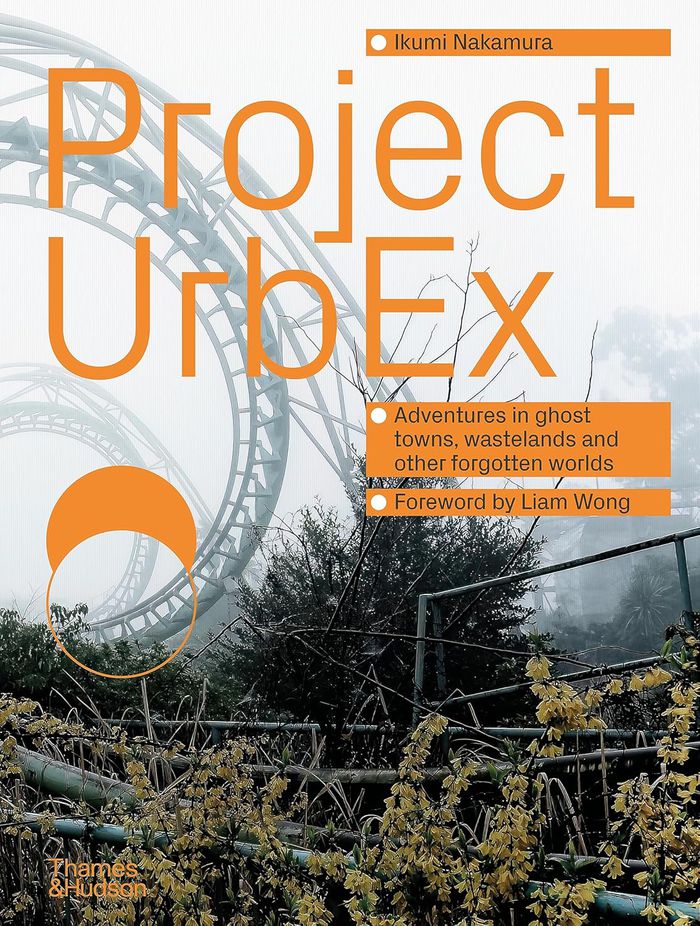
Fusing urban exploration with her trademark sense of wonder, famed videogame creator Ikumi Nakamura has spent over a decade infiltrating top-secret locations worldwide. Her daring escapades tap into a lost spirit of true adventure, proving that the world is still full of secrets and mystery, just waiting to be revealed. From derelict shipyards and military bases to colossal cooling towers, haunted hotels, and mystical islands, this book is packed with places you thought could only exist in videogames. Urban exploration is a way of life for those who choose it as their passion. The secrets and mysteries that disused places incite can be intoxicating and inspiring. As Nakamura has said, "I love breaking boundaries and making people say 'WOW.' As artists, we use our imagination to see the INVISIBLE." With a foreword by videogame designer-turned-photographer Liam Wong, "Project UrbEx" also features sections of Nakamura’s personal travel diaries, printed on pages with a narrower width in a rich Pantone black and illustrated by specially commissioned, exclusive manga—bringing her much-loved sense of humor to the forefront of the narrative and displaying her keen interest in exploring many mediums of creativity.
Project UrbEx: Adventures in ghost towns, wastelands and other forgtotten worlds
Actions:
Price:
$66.00
(available to order)
Summary:
Fusing urban exploration with her trademark sense of wonder, famed videogame creator Ikumi Nakamura has spent over a decade infiltrating top-secret locations worldwide. Her daring escapades tap into a lost spirit of true adventure, proving that the world is still full of secrets and mystery, just waiting to be revealed. From derelict shipyards and military bases to colossal cooling towers, haunted hotels, and mystical islands, this book is packed with places you thought could only exist in videogames. Urban exploration is a way of life for those who choose it as their passion. The secrets and mysteries that disused places incite can be intoxicating and inspiring. As Nakamura has said, "I love breaking boundaries and making people say 'WOW.' As artists, we use our imagination to see the INVISIBLE." With a foreword by videogame designer-turned-photographer Liam Wong, "Project UrbEx" also features sections of Nakamura’s personal travel diaries, printed on pages with a narrower width in a rich Pantone black and illustrated by specially commissioned, exclusive manga—bringing her much-loved sense of humor to the forefront of the narrative and displaying her keen interest in exploring many mediums of creativity.
Form:
books
books
Publication:
February 2025
February 2025
Subject:
Photography monographs
Photography monographs
Form:
books
books

Title:
This is Israel
This is Israel
Actions:
Price:
$22.00
(available to order)
Summary:
Like the other Sasek classics, these are facsimile editions of his original books. The vibrant illustrations have been preserved, remaining true to his vision, and where applicable facts have been updated, appearing on a "This is...Today" page at the back of each book. The charming illustrations, coupled with Sasek’s witty, playful narrative, make for perfect souvenirs(...)
$22.00
(available to order)
Summary:
Like the other Sasek classics, these are facsimile editions of his original books. The vibrant illustrations have been preserved, remaining true to his vision, and where applicable facts have been updated, appearing on a "This is...Today" page at the back of each book. The charming illustrations, coupled with Sasek’s witty, playful narrative, make for perfect souvenirs(...)
Title:
This is Israel
Actions:
Price:
$22.00
(available to order)
Summary:
Like the other Sasek classics, these are facsimile editions of his original books. The vibrant illustrations have been preserved, remaining true to his vision, and where applicable facts have been updated, appearing on a "This is...Today" page at the back of each book. The charming illustrations, coupled with Sasek’s witty, playful narrative, make for perfect souvenirs that will delight both children and their parents, many of whom will remember them from their own childhood. This is Britain, first published in 1974, encompasses the nation’s many facets, from the mystery of Stonehenge to the monuments of the British Isles. Among his stops are the White Cliffs of Dover; Brighton’s Prince Regent’s Royal Pavilion; the castles and Tintern Abbey in Wales; and Scotland’s four Royal Palaces and long lochs. This is Israel, first published in 1962, visits the Promised Land, a sun-drenched panorama of many hues and many traditions. From the Sea of Galilee to the Red Sea (it’s really blue); from modern Tel Aviv to Jerusalem new and old; from Mt. Zion to King Solomon’s mines; Sasek presents the biblical glory of its past and the golden hope of its future.
This is Israel
Actions:
Price:
$22.00
(available to order)
Summary:
Like the other Sasek classics, these are facsimile editions of his original books. The vibrant illustrations have been preserved, remaining true to his vision, and where applicable facts have been updated, appearing on a "This is...Today" page at the back of each book. The charming illustrations, coupled with Sasek’s witty, playful narrative, make for perfect souvenirs that will delight both children and their parents, many of whom will remember them from their own childhood. This is Britain, first published in 1974, encompasses the nation’s many facets, from the mystery of Stonehenge to the monuments of the British Isles. Among his stops are the White Cliffs of Dover; Brighton’s Prince Regent’s Royal Pavilion; the castles and Tintern Abbey in Wales; and Scotland’s four Royal Palaces and long lochs. This is Israel, first published in 1962, visits the Promised Land, a sun-drenched panorama of many hues and many traditions. From the Sea of Galilee to the Red Sea (it’s really blue); from modern Tel Aviv to Jerusalem new and old; from Mt. Zion to King Solomon’s mines; Sasek presents the biblical glory of its past and the golden hope of its future.
Form:
books
books
Publication:
January 2008, New York
January 2008, New York
Subject:
Children's Books
Children's Books
Form:
books
books
Title:
This is Britain
This is Britain
Actions:
Price:
$22.00
(available in store)
Summary:
Like the other Sasek classics, these are facsimile editions of his original books. The vibrant illustrations have been preserved, remaining true to his vision, and where applicable facts have been updated, appearing on a "This is...Today" page at the back of each book. The charming illustrations, coupled with Sasek’s witty, playful narrative, make for perfect souvenirs(...)
$22.00
(available in store)
Summary:
Like the other Sasek classics, these are facsimile editions of his original books. The vibrant illustrations have been preserved, remaining true to his vision, and where applicable facts have been updated, appearing on a "This is...Today" page at the back of each book. The charming illustrations, coupled with Sasek’s witty, playful narrative, make for perfect souvenirs(...)
Title:
This is Britain
Actions:
Price:
$22.00
(available in store)
Summary:
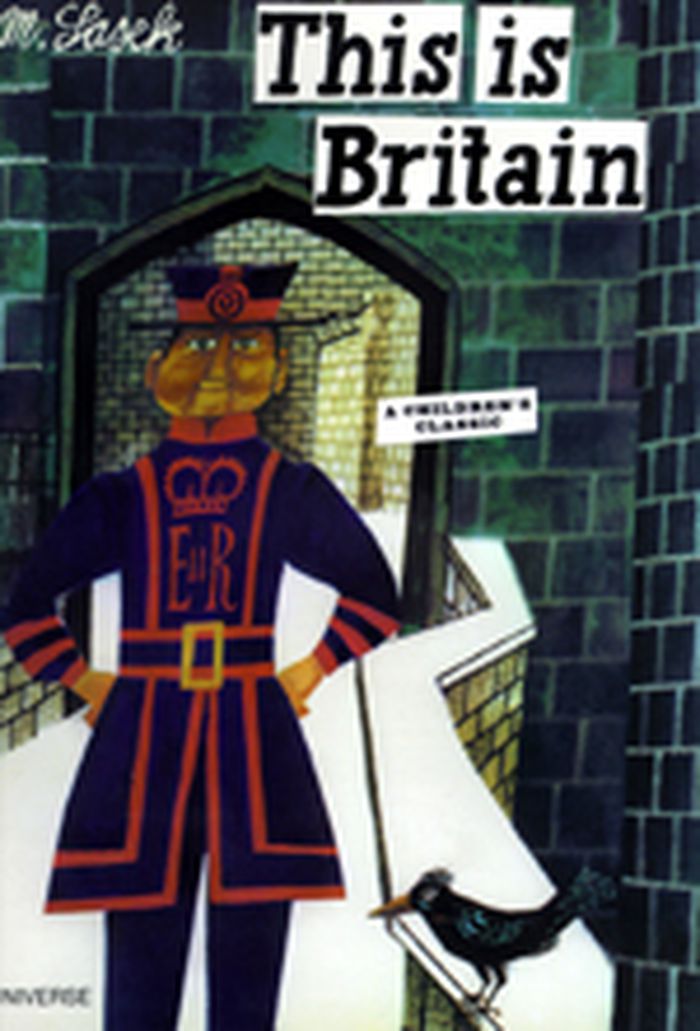
Like the other Sasek classics, these are facsimile editions of his original books. The vibrant illustrations have been preserved, remaining true to his vision, and where applicable facts have been updated, appearing on a "This is...Today" page at the back of each book. The charming illustrations, coupled with Sasek’s witty, playful narrative, make for perfect souvenirs that will delight both children and their parents, many of whom will remember them from their own childhood. This is Britain, first published in 1974, encompasses the nation’s many facets, from the mystery of Stonehenge to the monuments of the British Isles. Among his stops are the White Cliffs of Dover; Brighton’s Prince Regent’s Royal Pavilion; the castles and Tintern Abbey in Wales; and Scotland’s four Royal Palaces and long lochs. This is Israel, first published in 1962, visits the Promised Land, a sun-drenched panorama of many hues and many traditions. From the Sea of Galilee to the Red Sea (it’s really blue); from modern Tel Aviv to Jerusalem new and old; from Mt. Zion to King Solomon’s mines; Sasek presents the biblical glory of its past and the golden hope of its future.
This is Britain
Actions:
Price:
$22.00
(available in store)
Summary:
Like the other Sasek classics, these are facsimile editions of his original books. The vibrant illustrations have been preserved, remaining true to his vision, and where applicable facts have been updated, appearing on a "This is...Today" page at the back of each book. The charming illustrations, coupled with Sasek’s witty, playful narrative, make for perfect souvenirs that will delight both children and their parents, many of whom will remember them from their own childhood. This is Britain, first published in 1974, encompasses the nation’s many facets, from the mystery of Stonehenge to the monuments of the British Isles. Among his stops are the White Cliffs of Dover; Brighton’s Prince Regent’s Royal Pavilion; the castles and Tintern Abbey in Wales; and Scotland’s four Royal Palaces and long lochs. This is Israel, first published in 1962, visits the Promised Land, a sun-drenched panorama of many hues and many traditions. From the Sea of Galilee to the Red Sea (it’s really blue); from modern Tel Aviv to Jerusalem new and old; from Mt. Zion to King Solomon’s mines; Sasek presents the biblical glory of its past and the golden hope of its future.
Form:
books
books
Publication:
January 2008, New York
January 2008, New York
Subject:
Children's Books
Children's Books
Form:
books
books
Actions:
Price:
$23.50
(available in store)
Summary:
One of twentieth-century America’s most influential patrons of the arts, Peggy Guggenheim (1898–1979) brought to wide public attention the work of such modern masters as Jackson Pollock and Man Ray. In her time, there was no stronger advocate for the groundbreaking and the avant-garde. Her midtown gallery was the acknowledged center of the postwar New York art scene, and(...)
$23.50
(available in store)
Summary:
One of twentieth-century America’s most influential patrons of the arts, Peggy Guggenheim (1898–1979) brought to wide public attention the work of such modern masters as Jackson Pollock and Man Ray. In her time, there was no stronger advocate for the groundbreaking and the avant-garde. Her midtown gallery was the acknowledged center of the postwar New York art scene, and(...)
Title:
Peggy Guggenheim: the shock of the modern
Actions:
Price:
$23.50
(available in store)
Summary:
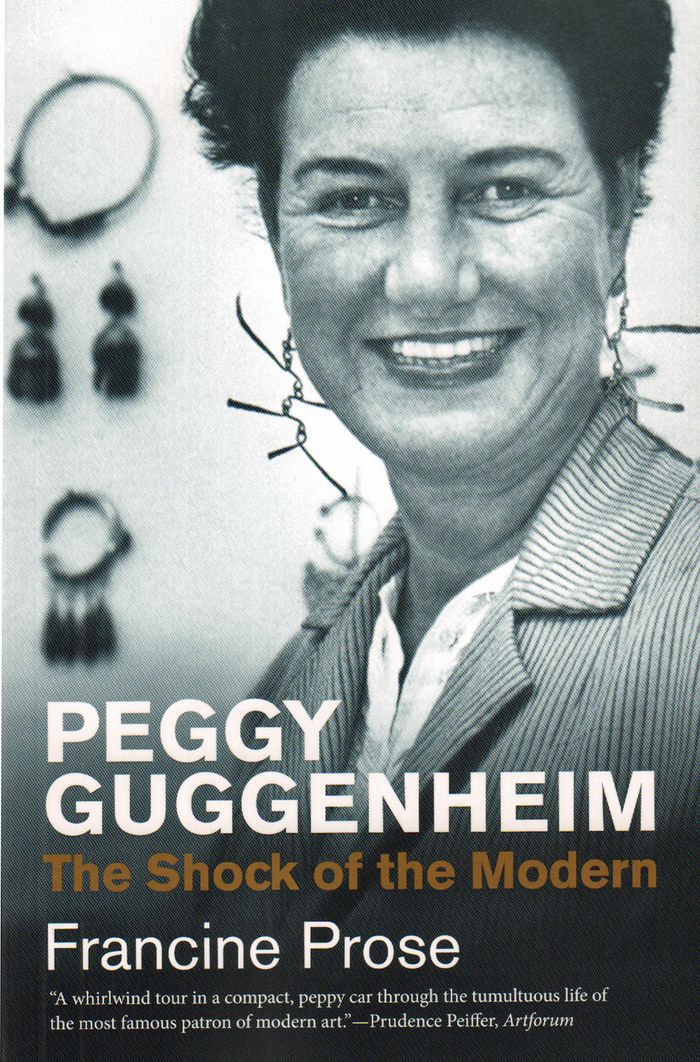
One of twentieth-century America’s most influential patrons of the arts, Peggy Guggenheim (1898–1979) brought to wide public attention the work of such modern masters as Jackson Pollock and Man Ray. In her time, there was no stronger advocate for the groundbreaking and the avant-garde. Her midtown gallery was the acknowledged center of the postwar New York art scene, and her museum on the Grand Canal in Venice remains one of the world’s great collections of modern art. Yet as renowned as she was for the art and artists she so tirelessly championed, Guggenheim was equally famous for her unconventional personal life, and for her ironic, playful desire to shock. Francine Prose offers a singular reading of Guggenheim’s life. The lively and insightful narrative follows Guggenheim through virtually every aspect of her extraordinary life, from her unique collecting habits and paradigm-changing discoveries, to her celebrity friendships, failed marriages, and scandalous affairs, and Prose delivers a colorful portrait of a defiantly uncompromising woman who maintained a powerful upper hand in a male-dominated world. Prose also explores the ways in which Guggenheim’s image was filtered through the lens of insidious antisemitism.
Peggy Guggenheim: the shock of the modern
Actions:
Price:
$23.50
(available in store)
Summary:
One of twentieth-century America’s most influential patrons of the arts, Peggy Guggenheim (1898–1979) brought to wide public attention the work of such modern masters as Jackson Pollock and Man Ray. In her time, there was no stronger advocate for the groundbreaking and the avant-garde. Her midtown gallery was the acknowledged center of the postwar New York art scene, and her museum on the Grand Canal in Venice remains one of the world’s great collections of modern art. Yet as renowned as she was for the art and artists she so tirelessly championed, Guggenheim was equally famous for her unconventional personal life, and for her ironic, playful desire to shock. Francine Prose offers a singular reading of Guggenheim’s life. The lively and insightful narrative follows Guggenheim through virtually every aspect of her extraordinary life, from her unique collecting habits and paradigm-changing discoveries, to her celebrity friendships, failed marriages, and scandalous affairs, and Prose delivers a colorful portrait of a defiantly uncompromising woman who maintained a powerful upper hand in a male-dominated world. Prose also explores the ways in which Guggenheim’s image was filtered through the lens of insidious antisemitism.
Form:
books
books
Publication:
November 2016
November 2016
Subject:
Art Theory
Art Theory
Form:
books
books
Title:
Aernout Mik
Aernout Mik
Actions:
Price:
$30.00
(available to order)
Summary:
Dutch artist Aernout Mik's moving-image installations meld filmmaking, sculpture and architecture into experiences that are at once compelling and unsettling, irrational yet plausible. The artist designs and constructs architectural spaces that hold his moving images, making the viewer's physical relationship to the piece a critical component of the overall experience. By(...)
$30.00
(available to order)
Summary:
Dutch artist Aernout Mik's moving-image installations meld filmmaking, sculpture and architecture into experiences that are at once compelling and unsettling, irrational yet plausible. The artist designs and constructs architectural spaces that hold his moving images, making the viewer's physical relationship to the piece a critical component of the overall experience. By(...)
Title:
Aernout Mik
Actions:
Price:
$30.00
(available to order)
Summary:
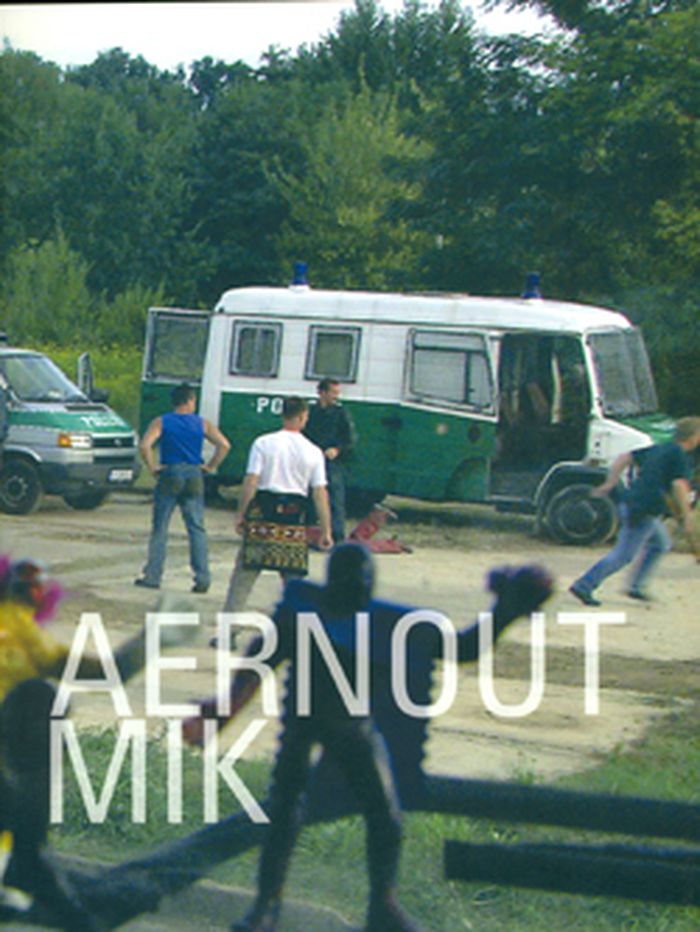
Dutch artist Aernout Mik's moving-image installations meld filmmaking, sculpture and architecture into experiences that are at once compelling and unsettling, irrational yet plausible. The artist designs and constructs architectural spaces that hold his moving images, making the viewer's physical relationship to the piece a critical component of the overall experience. By interrogating the most basic ideas of narrative and reality and rejecting classical cinematic ideals, Mik creates works that are rich in allusion but subversive of codes. Published to accompany the artist's first U.S. retrospective, this volume is a vivid exploration of Mik's work and process. Laurence Kardish, MoMA's Senior Curator in the Department of Film, situates Mik within the history of documentary and nonnarrative cinema, while Michael Taussig, Professor of Anthropology at Columbia University, investigates the ways in which the artist's work changes the way we see reality while simultaneously reinforcing the norms of visual culture. Abundantly illustrated with stills and the artist's own drawings, the book also features detailed descriptions of the installations, an exhibition history and a bibliography, making it the most comprehensive volume on the artist available in English.
Aernout Mik
Actions:
Price:
$30.00
(available to order)
Summary:
Dutch artist Aernout Mik's moving-image installations meld filmmaking, sculpture and architecture into experiences that are at once compelling and unsettling, irrational yet plausible. The artist designs and constructs architectural spaces that hold his moving images, making the viewer's physical relationship to the piece a critical component of the overall experience. By interrogating the most basic ideas of narrative and reality and rejecting classical cinematic ideals, Mik creates works that are rich in allusion but subversive of codes. Published to accompany the artist's first U.S. retrospective, this volume is a vivid exploration of Mik's work and process. Laurence Kardish, MoMA's Senior Curator in the Department of Film, situates Mik within the history of documentary and nonnarrative cinema, while Michael Taussig, Professor of Anthropology at Columbia University, investigates the ways in which the artist's work changes the way we see reality while simultaneously reinforcing the norms of visual culture. Abundantly illustrated with stills and the artist's own drawings, the book also features detailed descriptions of the installations, an exhibition history and a bibliography, making it the most comprehensive volume on the artist available in English.
Form:
books
books
Publication:
June 2009
June 2009
Subject:
Contemporary Art Monographs
Contemporary Art Monographs
Form:
books
books
Title:
Todd Hido: witness number 7
Todd Hido: witness number 7
Actions:
Price:
$52.95
(available to order)
Summary:
As guest editor of Witness Number 7, Todd Hido creates a relationship between his own photographs of vacant interiors of foreclosed homes - the first time this series has been published as a group - with portraits made by Leon Borensztein during the 1980s. Hido's images contain traces and impressions of lives previously having been lived in the now-empty homes. His potent(...)
$52.95
(available to order)
Summary:
As guest editor of Witness Number 7, Todd Hido creates a relationship between his own photographs of vacant interiors of foreclosed homes - the first time this series has been published as a group - with portraits made by Leon Borensztein during the 1980s. Hido's images contain traces and impressions of lives previously having been lived in the now-empty homes. His potent(...)
Title:
Todd Hido: witness number 7
Actions:
Price:
$52.95
(available to order)
Summary:
As guest editor of Witness Number 7, Todd Hido creates a relationship between his own photographs of vacant interiors of foreclosed homes - the first time this series has been published as a group - with portraits made by Leon Borensztein during the 1980s. Hido's images contain traces and impressions of lives previously having been lived in the now-empty homes. His potent and surreal photographs of empty spaces evoke a longing for the time when things were better in those homes. What went wrong? Who used to lived there? Borensztein, an immigrant from Poland, visited homes and businesses in the suburbs of Stockton, Fresno and Bakersfield, photographing his subjects in front of a generic backdrop to create a rich sociological document. In Witness Number 7, Borensztein's subjects stand in metaphorically for the families evicted from Hido's foreclosed homes. The book closes with what Hido describes as a slowly cooked stew of books a 40-page run of images documented off the pages of certain books in his library that have influenced Hido's work during the past 20 years, curated into a narrative of echos and inspirations.
Todd Hido: witness number 7
Actions:
Price:
$52.95
(available to order)
Summary:
As guest editor of Witness Number 7, Todd Hido creates a relationship between his own photographs of vacant interiors of foreclosed homes - the first time this series has been published as a group - with portraits made by Leon Borensztein during the 1980s. Hido's images contain traces and impressions of lives previously having been lived in the now-empty homes. His potent and surreal photographs of empty spaces evoke a longing for the time when things were better in those homes. What went wrong? Who used to lived there? Borensztein, an immigrant from Poland, visited homes and businesses in the suburbs of Stockton, Fresno and Bakersfield, photographing his subjects in front of a generic backdrop to create a rich sociological document. In Witness Number 7, Borensztein's subjects stand in metaphorically for the families evicted from Hido's foreclosed homes. The book closes with what Hido describes as a slowly cooked stew of books a 40-page run of images documented off the pages of certain books in his library that have influenced Hido's work during the past 20 years, curated into a narrative of echos and inspirations.
Form:
books
books
Publication:
January 2009
January 2009
Subject:
Photography monographs
Photography monographs
Form:
books
books
Actions:
Price:
$36.95
(available to order)
Summary:
Over the past two decades, artists and writers have increasingly used science fiction as a lens through which to search for fragments of truth emerging from the past or the future. The proliferation of science fiction in contemporary art practice and discourse reflects an increased understanding of how this narrative field continues to grow in relevance. This book is the(...)
$36.95
(available to order)
Summary:
Over the past two decades, artists and writers have increasingly used science fiction as a lens through which to search for fragments of truth emerging from the past or the future. The proliferation of science fiction in contemporary art practice and discourse reflects an increased understanding of how this narrative field continues to grow in relevance. This book is the(...)
Title:
Science fiction: Documents of contemporary art
Actions:
Price:
$36.95
(available to order)
Summary:
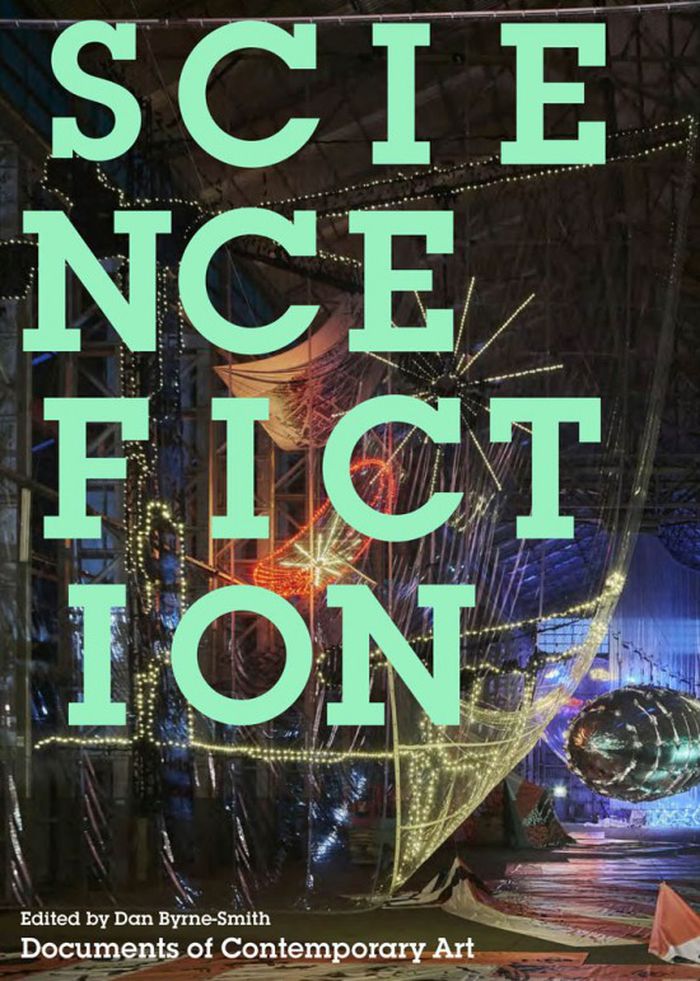
Over the past two decades, artists and writers have increasingly used science fiction as a lens through which to search for fragments of truth emerging from the past or the future. The proliferation of science fiction in contemporary art practice and discourse reflects an increased understanding of how this narrative field continues to grow in relevance. This book is the first major anthology to focus on relationships between science fiction and contemporary art, and offers an essential read for all those exploring this vital genre. Organizing its contributions according to four distinct approaches—"estrangement,” “futures,” “posthumanism,” and “ecologies”—this unique collection gathers key examples of the influence of science fiction in recent cultural development. It considers topics that include the integration and acceleration of technological change, global urbanization and concepts of futurity, the boundaries of social structures and nonhuman life, and the threatening evidence of climate change. Writers include Peio Aguirre, Margaret Atwood, J. G. Ballard, Tiffany E. Barber, Jean Baudrillard, Franco 'Bifo' Beradi, Rosie Braidotti, Rachel Carson, Jeffrey Deitch, Donna Haraway, Cathy Lane, Amna Malik, Tom McCarthy, Alondra Nelson, Gwyneth Shanks, Jan Tumlir, Xin Wang, Gilda Williams
Science fiction: Documents of contemporary art
Actions:
Price:
$36.95
(available to order)
Summary:
Over the past two decades, artists and writers have increasingly used science fiction as a lens through which to search for fragments of truth emerging from the past or the future. The proliferation of science fiction in contemporary art practice and discourse reflects an increased understanding of how this narrative field continues to grow in relevance. This book is the first major anthology to focus on relationships between science fiction and contemporary art, and offers an essential read for all those exploring this vital genre. Organizing its contributions according to four distinct approaches—"estrangement,” “futures,” “posthumanism,” and “ecologies”—this unique collection gathers key examples of the influence of science fiction in recent cultural development. It considers topics that include the integration and acceleration of technological change, global urbanization and concepts of futurity, the boundaries of social structures and nonhuman life, and the threatening evidence of climate change. Writers include Peio Aguirre, Margaret Atwood, J. G. Ballard, Tiffany E. Barber, Jean Baudrillard, Franco 'Bifo' Beradi, Rosie Braidotti, Rachel Carson, Jeffrey Deitch, Donna Haraway, Cathy Lane, Amna Malik, Tom McCarthy, Alondra Nelson, Gwyneth Shanks, Jan Tumlir, Xin Wang, Gilda Williams
Form:
books
books
Publication:
March 2020
March 2020
Subject:
Art Theory
Art Theory
Form:
books
books
Actions:
Price:
$45.00
(available to order)
Summary:
Scott Ruff’s studio, 'Gullah/Geechee Institute', investigated architecture’s role as a cultural signifier in the African-American Gullah–Geechee community off the South Carolina coast. It challenged students to translate cultural ideas into tectonic and spatial strategies for a monument, museum, and memorial that serves as a gateway to the Gullah–Geechee corridor,(...)
$45.00
(available to order)
Summary:
Scott Ruff’s studio, 'Gullah/Geechee Institute', investigated architecture’s role as a cultural signifier in the African-American Gullah–Geechee community off the South Carolina coast. It challenged students to translate cultural ideas into tectonic and spatial strategies for a monument, museum, and memorial that serves as a gateway to the Gullah–Geechee corridor,(...)
Title:
Within or without (Louis I. Kahn assistant professorship)
Actions:
Price:
$45.00
(available to order)
Summary:
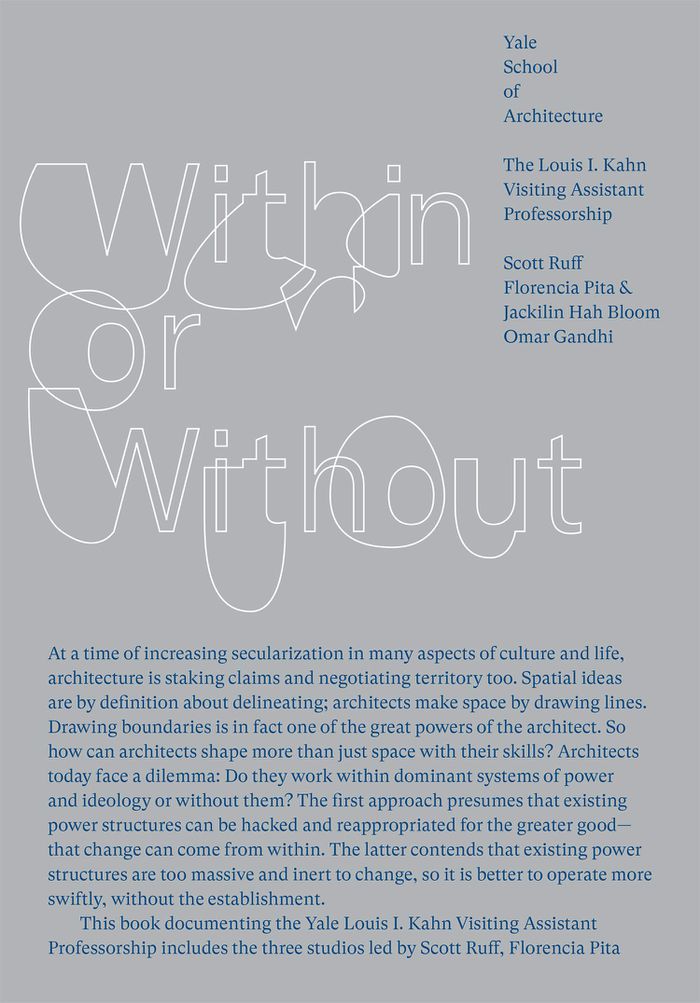
Scott Ruff’s studio, 'Gullah/Geechee Institute', investigated architecture’s role as a cultural signifier in the African-American Gullah–Geechee community off the South Carolina coast. It challenged students to translate cultural ideas into tectonic and spatial strategies for a monument, museum, and memorial that serves as a gateway to the Gullah–Geechee corridor, incorporating public interpretive and historical programs. In Florencia Pita and Jackilin Bloom’s studio, 'Easy Office', students experimented with ways of generating new spatial, formal, material, and narrative ideas through the processes of collecting, collaging, and casting everyday objects. The studio considered notions of the creative office and the workplace based on the unexpected space, form, and materiality that emerged from these processes. Students in Omar Gandhi’s studio, 'Where the Wild Things Are', designed a campus of creatures for Rabbit Snare Gorge on the north coast of Cape Breton Island. They focused on a series of interventions that used vernacular approaches to produce specific functions, develop a process or ideology, and frame sensory experience. The students explored how Nova Scotia’s regional architecture takes advantage of phenomenological opportunities available on the site and inspires new responses to climate and geography.
Within or without (Louis I. Kahn assistant professorship)
Actions:
Price:
$45.00
(available to order)
Summary:
Scott Ruff’s studio, 'Gullah/Geechee Institute', investigated architecture’s role as a cultural signifier in the African-American Gullah–Geechee community off the South Carolina coast. It challenged students to translate cultural ideas into tectonic and spatial strategies for a monument, museum, and memorial that serves as a gateway to the Gullah–Geechee corridor, incorporating public interpretive and historical programs. In Florencia Pita and Jackilin Bloom’s studio, 'Easy Office', students experimented with ways of generating new spatial, formal, material, and narrative ideas through the processes of collecting, collaging, and casting everyday objects. The studio considered notions of the creative office and the workplace based on the unexpected space, form, and materiality that emerged from these processes. Students in Omar Gandhi’s studio, 'Where the Wild Things Are', designed a campus of creatures for Rabbit Snare Gorge on the north coast of Cape Breton Island. They focused on a series of interventions that used vernacular approaches to produce specific functions, develop a process or ideology, and frame sensory experience. The students explored how Nova Scotia’s regional architecture takes advantage of phenomenological opportunities available on the site and inspires new responses to climate and geography.
Form:
books
books
Publication:
January 2020
January 2020
Subject:
Architectural Theory
Architectural Theory
Form:
books
books
Price:
$80.00
(available in store)
Summary:
Aditya Prakash (1924-2008) belonged to the first generation of Indian modernists that came into its own in the Nehruvian era. Built around a multi-disciplinary oeuvre that was unique amongst his peers, Prakash's life was dedicated to finding the 'one continuous line' which linked art - as the search for the beautiful, architecture - as the enabler of life, and planning -(...)
$80.00
(available in store)
Summary:
Aditya Prakash (1924-2008) belonged to the first generation of Indian modernists that came into its own in the Nehruvian era. Built around a multi-disciplinary oeuvre that was unique amongst his peers, Prakash's life was dedicated to finding the 'one continuous line' which linked art - as the search for the beautiful, architecture - as the enabler of life, and planning -(...)
Title:
Onecontinuousline: art, architecture and urbanism of Aditya Prakash
Actions:
Price:
$80.00
(available in store)
Summary:
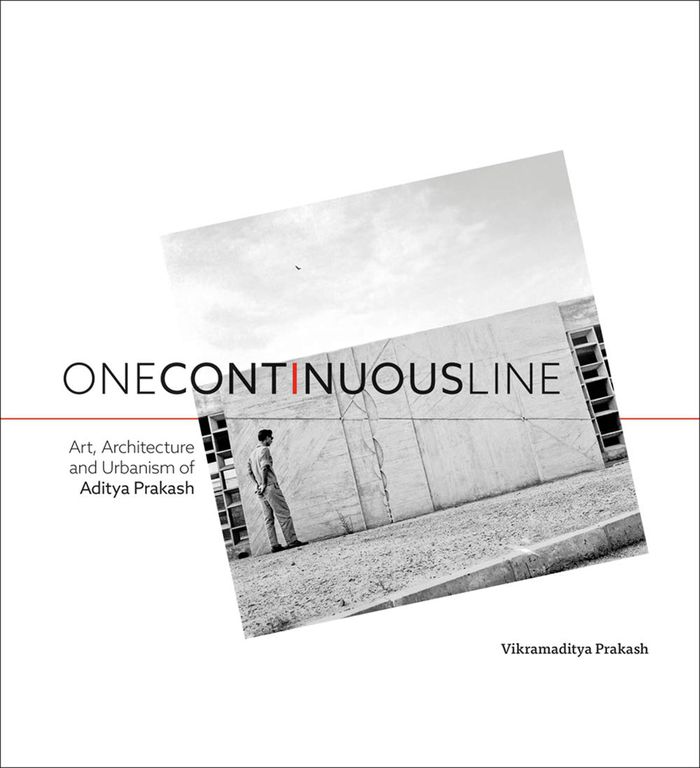
Aditya Prakash (1924-2008) belonged to the first generation of Indian modernists that came into its own in the Nehruvian era. Built around a multi-disciplinary oeuvre that was unique amongst his peers, Prakash's life was dedicated to finding the 'one continuous line' which linked art - as the search for the beautiful, architecture - as the enabler of life, and planning - as the ethic of protecting the interests of poor. nterspersed with a series of visual essays, this book is conceived as an introduction to Prakash's vast body of work. Besides practicing architecture, he was an academic, a prolific painter, sculptor, furniture designer, stage set-designer, poet and public speaker. This volume documents Prakash's education as an architect in Delhi and London, his early modernist works, his deep artistic impulses, his love of theatre, and his efforts to rally a culture of academic inquiry. The narrative describes his successes and failures, his arguments for and against modernism, postmodernism and globalization, and his passion for sustainable urbanism, the animal and the acoustic. The book concludes with an interpretive essay on Prakash's life and legacy, along with illustrations of a portfolio of select works.
Onecontinuousline: art, architecture and urbanism of Aditya Prakash
Actions:
Price:
$80.00
(available in store)
Summary:
Aditya Prakash (1924-2008) belonged to the first generation of Indian modernists that came into its own in the Nehruvian era. Built around a multi-disciplinary oeuvre that was unique amongst his peers, Prakash's life was dedicated to finding the 'one continuous line' which linked art - as the search for the beautiful, architecture - as the enabler of life, and planning - as the ethic of protecting the interests of poor. nterspersed with a series of visual essays, this book is conceived as an introduction to Prakash's vast body of work. Besides practicing architecture, he was an academic, a prolific painter, sculptor, furniture designer, stage set-designer, poet and public speaker. This volume documents Prakash's education as an architect in Delhi and London, his early modernist works, his deep artistic impulses, his love of theatre, and his efforts to rally a culture of academic inquiry. The narrative describes his successes and failures, his arguments for and against modernism, postmodernism and globalization, and his passion for sustainable urbanism, the animal and the acoustic. The book concludes with an interpretive essay on Prakash's life and legacy, along with illustrations of a portfolio of select works.
Form:
books
books
Publication:
January 2021
January 2021
Subject:
Architecture Monographs
Architecture Monographs


