


2310 Results
Form:
books
books
Price:
$10.00
(available in store)
Summary:
Canada is a country whose national narrative is difficult to define, even for Canadians. This question is further complicated when looking at emerging artists who have grown up under intense globalization. In Canada, specific identities are difficult to pinpoint and, when they are, they are often portrayed as problematic stereotypes bound up in a colonialist history. (...)
$10.00
(available in store)
Summary:
Canada is a country whose national narrative is difficult to define, even for Canadians. This question is further complicated when looking at emerging artists who have grown up under intense globalization. In Canada, specific identities are difficult to pinpoint and, when they are, they are often portrayed as problematic stereotypes bound up in a colonialist history. (...)
Title:
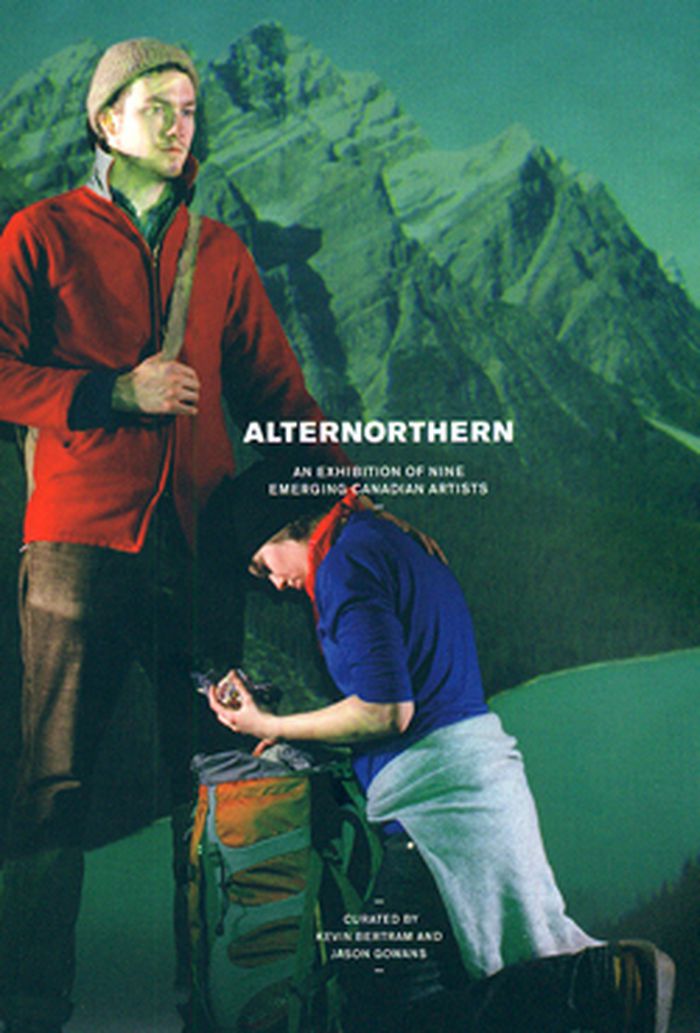
Alternorthern: an exhibition of nine emerging Canadian artists
Actions:
Price:
$10.00
(available in store)
Summary:
Canada is a country whose national narrative is difficult to define, even for Canadians. This question is further complicated when looking at emerging artists who have grown up under intense globalization. In Canada, specific identities are difficult to pinpoint and, when they are, they are often portrayed as problematic stereotypes bound up in a colonialist history. “Alternorthern” was conceived in the tension that exists between nationalism, globalization, and individualism: the exhibition is a product of both cultural values and cultural hybridism. The nine artists in this exhibition function similarly in that they use their own identities to make gestures that transgress time and space. Each artist in the exhibition is Canadian, yet each creates work that speaks to issues pertinent to both Canadian and global geographic and political landscapes. The exhibition will open during the 2010 Olympics, when many of the stereotypes, symbols, themes, and political workings of Canada will be disseminated into the U.S. media. As Canada is in the throes of presenting its tourist identity on the international stage, this exhibition can function as a way of transgressing this identity. Thus, the curators see this exhibition not as a response to the event of the Olympics but as an opportunity to subvert and play with cultural dialogue that will exist during this time.
Alternorthern: an exhibition of nine emerging Canadian artists
Actions:
Price:
$10.00
(available in store)
Summary:
Canada is a country whose national narrative is difficult to define, even for Canadians. This question is further complicated when looking at emerging artists who have grown up under intense globalization. In Canada, specific identities are difficult to pinpoint and, when they are, they are often portrayed as problematic stereotypes bound up in a colonialist history. “Alternorthern” was conceived in the tension that exists between nationalism, globalization, and individualism: the exhibition is a product of both cultural values and cultural hybridism. The nine artists in this exhibition function similarly in that they use their own identities to make gestures that transgress time and space. Each artist in the exhibition is Canadian, yet each creates work that speaks to issues pertinent to both Canadian and global geographic and political landscapes. The exhibition will open during the 2010 Olympics, when many of the stereotypes, symbols, themes, and political workings of Canada will be disseminated into the U.S. media. As Canada is in the throes of presenting its tourist identity on the international stage, this exhibition can function as a way of transgressing this identity. Thus, the curators see this exhibition not as a response to the event of the Olympics but as an opportunity to subvert and play with cultural dialogue that will exist during this time.
Form:
books
books
Publication:
January 2010
January 2010
Form:
books
books
Actions:
Price:
$54.95
(available to order)
Summary:
An early version of the slide projector and an immediate predecessor of narrative cinema, the magic lantern provided the lens through which late-nineteenth century Europe and America viewed and imagined the world. Magic lantern slide shows were a popular, entertaining and educational way for people to learn about the world beyond their own horizons, and from Cairo to(...)
$54.95
(available to order)
Summary:
An early version of the slide projector and an immediate predecessor of narrative cinema, the magic lantern provided the lens through which late-nineteenth century Europe and America viewed and imagined the world. Magic lantern slide shows were a popular, entertaining and educational way for people to learn about the world beyond their own horizons, and from Cairo to(...)
Title:
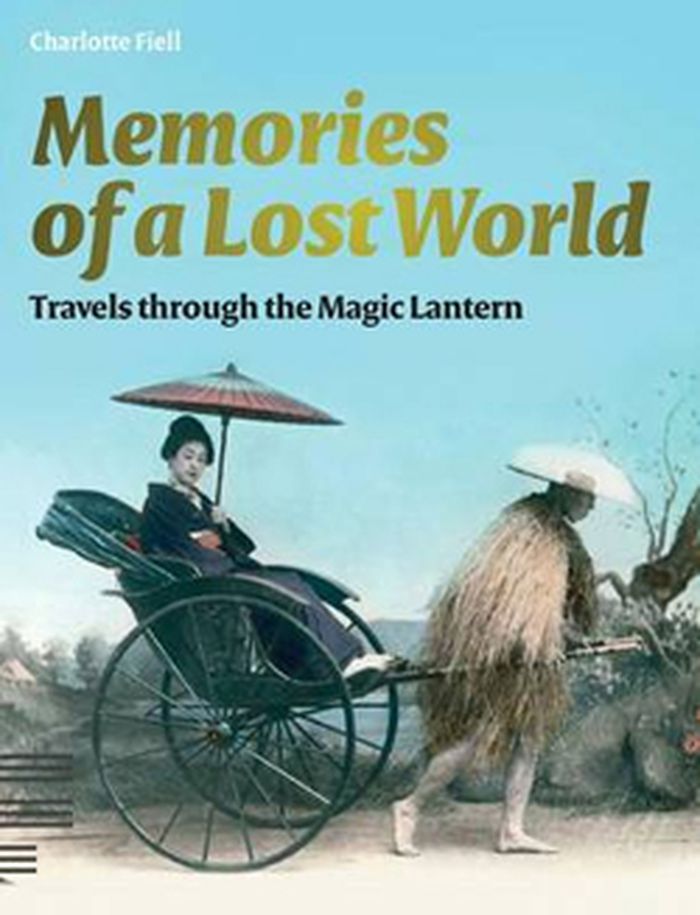
Memories of a lost world : travels through the magic lantern
Actions:
Price:
$54.95
(available to order)
Summary:
An early version of the slide projector and an immediate predecessor of narrative cinema, the magic lantern provided the lens through which late-nineteenth century Europe and America viewed and imagined the world. Magic lantern slide shows were a popular, entertaining and educational way for people to learn about the world beyond their own horizons, and from Cairo to Delhi to Adelaide and Cape Town, intrepid European and American photographers traveled to all corners of the world to document its peoples and customs. Now, for the first time, images of original magic lantern slides have been brought together in a single publication. Memories of a Lost World: Travels through the Magic Latern takes the reader back to a pre-globalised world in which regional customs and national cultures were as distinctive as they were diverse. From the bustling streets of Victorian London and the ruins of ancient Egypt to the temples of Japan and the tribesmen of New Guinea, Memories of a Lost World explores the world through a captivating collection of over 800 magic lantern slide images. This volume is not only an important source of primary historical information, but also conveys something of what the world was like before the advent of television and mass travel.
Memories of a lost world : travels through the magic lantern
Actions:
Price:
$54.95
(available to order)
Summary:
An early version of the slide projector and an immediate predecessor of narrative cinema, the magic lantern provided the lens through which late-nineteenth century Europe and America viewed and imagined the world. Magic lantern slide shows were a popular, entertaining and educational way for people to learn about the world beyond their own horizons, and from Cairo to Delhi to Adelaide and Cape Town, intrepid European and American photographers traveled to all corners of the world to document its peoples and customs. Now, for the first time, images of original magic lantern slides have been brought together in a single publication. Memories of a Lost World: Travels through the Magic Latern takes the reader back to a pre-globalised world in which regional customs and national cultures were as distinctive as they were diverse. From the bustling streets of Victorian London and the ruins of ancient Egypt to the temples of Japan and the tribesmen of New Guinea, Memories of a Lost World explores the world through a captivating collection of over 800 magic lantern slide images. This volume is not only an important source of primary historical information, but also conveys something of what the world was like before the advent of television and mass travel.
Form:
books
books
Publication:
November 2012
November 2012
Subject:
Transportation, Tourism, Migration
Transportation, Tourism, Migration
Form:
books
books
Actions:
Price:
$45.00
(available to order)
Summary:
In the dazzling global metropolis of Shanghai, what has it meant to call this city home? In this account—part microhistory, part memoir—Jie Li salvages intimate recollections by successive generations of inhabitants of two vibrant, culturally mixed Shanghai alleyways from the Republican, Maoist, and post-Mao eras. Exploring three dimensions of private life—territories,(...)
$45.00
(available to order)
Summary:
In the dazzling global metropolis of Shanghai, what has it meant to call this city home? In this account—part microhistory, part memoir—Jie Li salvages intimate recollections by successive generations of inhabitants of two vibrant, culturally mixed Shanghai alleyways from the Republican, Maoist, and post-Mao eras. Exploring three dimensions of private life—territories,(...)
Title:
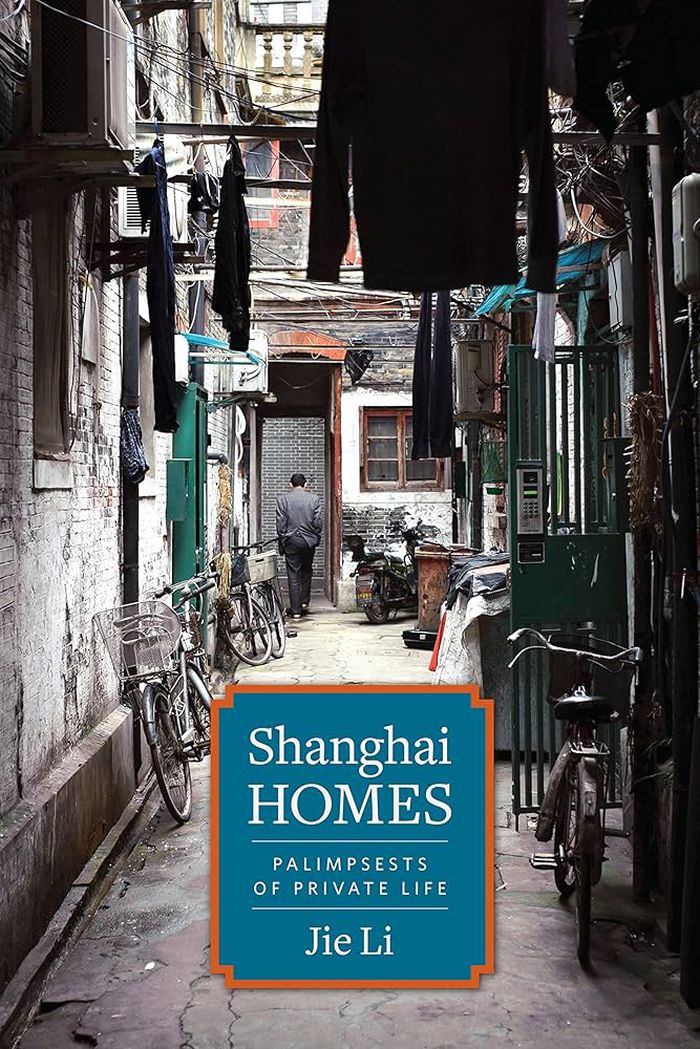
Shanghai homes: palimpsests of private life
Actions:
Price:
$45.00
(available to order)
Summary:
In the dazzling global metropolis of Shanghai, what has it meant to call this city home? In this account—part microhistory, part memoir—Jie Li salvages intimate recollections by successive generations of inhabitants of two vibrant, culturally mixed Shanghai alleyways from the Republican, Maoist, and post-Mao eras. Exploring three dimensions of private life—territories, artifacts, and gossip—Li re-creates the sounds, smells, look, and feel of home over a tumultuous century. First built by British and Japanese companies in 1915 and 1927, the two homes at the center of this narrative were located in an industrial part of the former "International Settlement." Before their recent demolition, they were nestled in Shanghai's labyrinthine alleyways, which housed more than half of the city's population from the Sino-Japanese War to the Cultural Revolution. Through interviews with her own family members as well as their neighbors, classmates, and co-workers, Li weaves a complex social tapestry reflecting the lived experiences of ordinary people struggling to absorb and adapt to major historical change. These voices include workers, intellectuals, Communists, Nationalists, foreigners, compradors, wives, concubines, and children who all fought for a foothold and haven in this city, witnessing spectacles so full of farce and pathos they could only be whispered as secret histories.
Shanghai homes: palimpsests of private life
Actions:
Price:
$45.00
(available to order)
Summary:
In the dazzling global metropolis of Shanghai, what has it meant to call this city home? In this account—part microhistory, part memoir—Jie Li salvages intimate recollections by successive generations of inhabitants of two vibrant, culturally mixed Shanghai alleyways from the Republican, Maoist, and post-Mao eras. Exploring three dimensions of private life—territories, artifacts, and gossip—Li re-creates the sounds, smells, look, and feel of home over a tumultuous century. First built by British and Japanese companies in 1915 and 1927, the two homes at the center of this narrative were located in an industrial part of the former "International Settlement." Before their recent demolition, they were nestled in Shanghai's labyrinthine alleyways, which housed more than half of the city's population from the Sino-Japanese War to the Cultural Revolution. Through interviews with her own family members as well as their neighbors, classmates, and co-workers, Li weaves a complex social tapestry reflecting the lived experiences of ordinary people struggling to absorb and adapt to major historical change. These voices include workers, intellectuals, Communists, Nationalists, foreigners, compradors, wives, concubines, and children who all fought for a foothold and haven in this city, witnessing spectacles so full of farce and pathos they could only be whispered as secret histories.
Form:
books
books
Publication:
April 2015
April 2015
Subject:
Contemporary Asian Architecture
Contemporary Asian Architecture
Form:
books
books
Title:
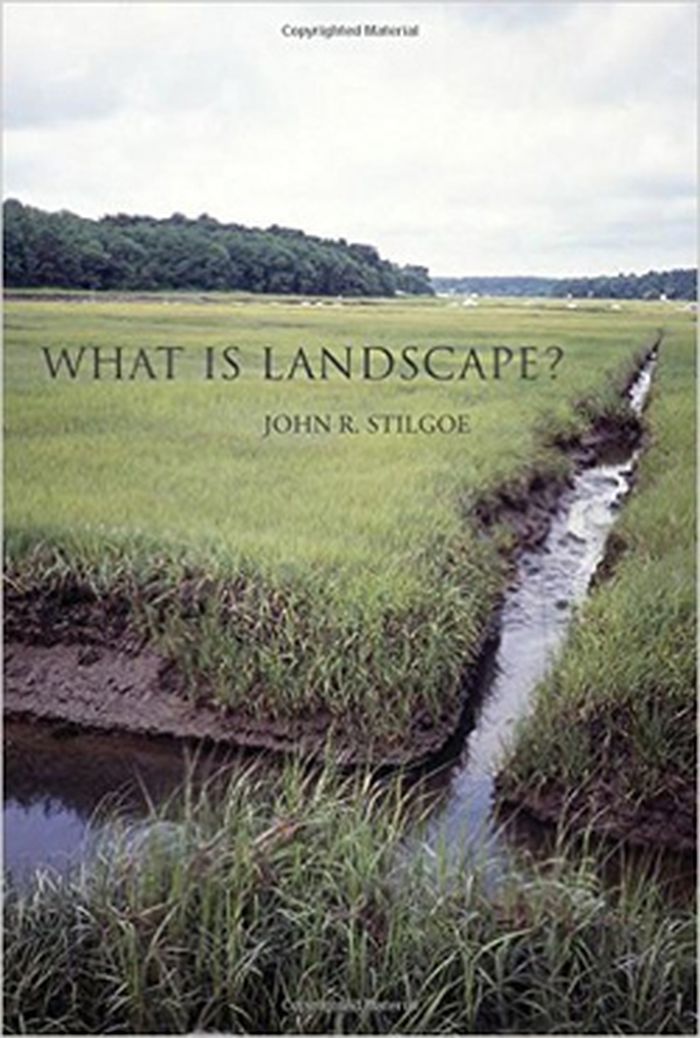
What is landscape?
What is landscape?
Actions:
Price:
$29.50
(available to order)
Summary:
Landscape, John Stilgoe tells us, is a noun. From the old Frisian language (once spoken in coastal parts of the Netherlands and Germany), it meant shoveled land: landschop. Sixteenth-century Englishmen misheard or mispronounced this as landskep, which became landskip, then landscape, designating the surface of the earth shaped for human habitation. In What Is Landscape?(...)
$29.50
(available to order)
Summary:
Landscape, John Stilgoe tells us, is a noun. From the old Frisian language (once spoken in coastal parts of the Netherlands and Germany), it meant shoveled land: landschop. Sixteenth-century Englishmen misheard or mispronounced this as landskep, which became landskip, then landscape, designating the surface of the earth shaped for human habitation. In What Is Landscape?(...)
Title:
What is landscape?
Actions:
Price:
$29.50
(available to order)
Summary:
Landscape, John Stilgoe tells us, is a noun. From the old Frisian language (once spoken in coastal parts of the Netherlands and Germany), it meant shoveled land: landschop. Sixteenth-century Englishmen misheard or mispronounced this as landskep, which became landskip, then landscape, designating the surface of the earth shaped for human habitation. In What Is Landscape? Stilgoe maps the discovery of landscape by putting words to things, zeroing in on landscape’s essence but also leading sideways expeditions through such sources as children’s picture books, folklore, deeds, antique terminology, out-of-print dictionaries, and conversations with locals. (“What is that?” “Well, it’s not really a slough, not really, it’s a bayou . . .”) He offers a written narrative lexicon of landscape as word, concept, and path to discoveries. What Is Landscape? is an invitation to walk, to notice, to ask: to see a sandcastle with a pinwheel at the beach and think of Dutch windmills—icons of triumph, markers of territory won from the sea; to walk in the woods and be amused by the Elizabethans’ misuse of the Latin silvaticus (people of the woods) to coin the word savages; to see in a suburban front lawn a representation of the meadow of a medieval freehold.
What is landscape?
Actions:
Price:
$29.50
(available to order)
Summary:
Landscape, John Stilgoe tells us, is a noun. From the old Frisian language (once spoken in coastal parts of the Netherlands and Germany), it meant shoveled land: landschop. Sixteenth-century Englishmen misheard or mispronounced this as landskep, which became landskip, then landscape, designating the surface of the earth shaped for human habitation. In What Is Landscape? Stilgoe maps the discovery of landscape by putting words to things, zeroing in on landscape’s essence but also leading sideways expeditions through such sources as children’s picture books, folklore, deeds, antique terminology, out-of-print dictionaries, and conversations with locals. (“What is that?” “Well, it’s not really a slough, not really, it’s a bayou . . .”) He offers a written narrative lexicon of landscape as word, concept, and path to discoveries. What Is Landscape? is an invitation to walk, to notice, to ask: to see a sandcastle with a pinwheel at the beach and think of Dutch windmills—icons of triumph, markers of territory won from the sea; to walk in the woods and be amused by the Elizabethans’ misuse of the Latin silvaticus (people of the woods) to coin the word savages; to see in a suburban front lawn a representation of the meadow of a medieval freehold.
Form:
books
books
Publication:
August 2015
August 2015
Subject:
Landscape Theory
Landscape Theory
Form:
books
books
Price:
$45.95
(available to order)
Summary:
Preserving New York: Winning the Right to Protect A Citys Landmarks is the largely unknown inspiring story of the origins of New York Citys nationally acclaimed landmarks law. The decades of struggle behind the law, its intellectual origins, the men and women who fought for it, the forces that shaped it, and the buildings lost and saved on the way to its ultimate passage,(...)
$45.95
(available to order)
Summary:
Preserving New York: Winning the Right to Protect A Citys Landmarks is the largely unknown inspiring story of the origins of New York Citys nationally acclaimed landmarks law. The decades of struggle behind the law, its intellectual origins, the men and women who fought for it, the forces that shaped it, and the buildings lost and saved on the way to its ultimate passage,(...)
Publication:
October 2007, New York, London
October 2007, New York, London
Title:
Preserving New York: winning the right to protect a City's landmark
Actions:
Price:
$45.95
(available to order)
Summary:
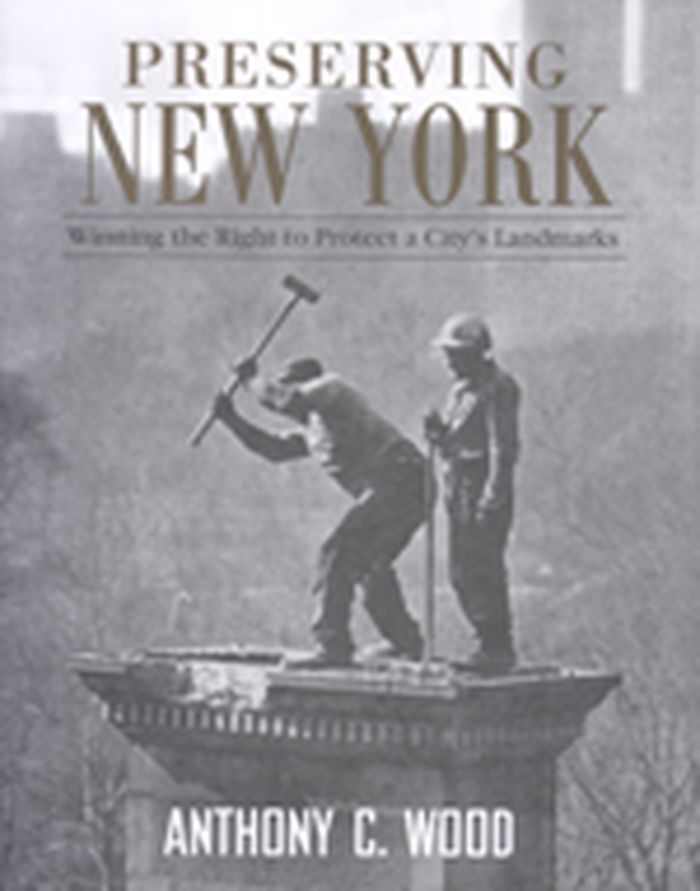
Preserving New York: Winning the Right to Protect A Citys Landmarks is the largely unknown inspiring story of the origins of New York Citys nationally acclaimed landmarks law. The decades of struggle behind the law, its intellectual origins, the men and women who fought for it, the forces that shaped it, and the buildings lost and saved on the way to its ultimate passage, span from 1913 to 1965. Intended for the interested public as well as students of New York City history, architecture, and preservation itself, over 100 illustrations help reveal a history richer and more complex than the accepted myth that the landmarks law sprang from the wreckage of the great Pennsylvania Station. Images include those by noted historic photographers as well as those from newspaper accounts of the time. Forgotten civic leaders such as Albert S. Bard and lost buildings including the Brokaw Mansions, are unveiled in an extensively researched narrative bringing this essential episode in New Yorks history to futuregenerations tasked with protecting the citys landmarks. For the first time, the story of how New York won the right to protect its treasured buildings, neighborhoods and special places is brought together to enjoy, inform, and inspire all who love New York.
Preserving New York: winning the right to protect a City's landmark
Actions:
Price:
$45.95
(available to order)
Summary:
Preserving New York: Winning the Right to Protect A Citys Landmarks is the largely unknown inspiring story of the origins of New York Citys nationally acclaimed landmarks law. The decades of struggle behind the law, its intellectual origins, the men and women who fought for it, the forces that shaped it, and the buildings lost and saved on the way to its ultimate passage, span from 1913 to 1965. Intended for the interested public as well as students of New York City history, architecture, and preservation itself, over 100 illustrations help reveal a history richer and more complex than the accepted myth that the landmarks law sprang from the wreckage of the great Pennsylvania Station. Images include those by noted historic photographers as well as those from newspaper accounts of the time. Forgotten civic leaders such as Albert S. Bard and lost buildings including the Brokaw Mansions, are unveiled in an extensively researched narrative bringing this essential episode in New Yorks history to futuregenerations tasked with protecting the citys landmarks. For the first time, the story of how New York won the right to protect its treasured buildings, neighborhoods and special places is brought together to enjoy, inform, and inspire all who love New York.
Form:
books
books
Publication:
October 2007, New York, London
October 2007, New York, London
Form:
books
books
Title:
World City
World City
Actions:
Price:
$29.99
(available to order)
Summary:
Cities around the world are striving to be global. This book tells the story of one of them, and in so doing raises questions which are essential for all cities. These questions concern identity, place, and political responsibility in the changing geographies of our times. The book also tells the story of the rise of a new class, of deepening inequality, and of the(...)
$29.99
(available to order)
Summary:
Cities around the world are striving to be global. This book tells the story of one of them, and in so doing raises questions which are essential for all cities. These questions concern identity, place, and political responsibility in the changing geographies of our times. The book also tells the story of the rise of a new class, of deepening inequality, and of the(...)
Title:
World City
Actions:
Price:
$29.99
(available to order)
Summary:
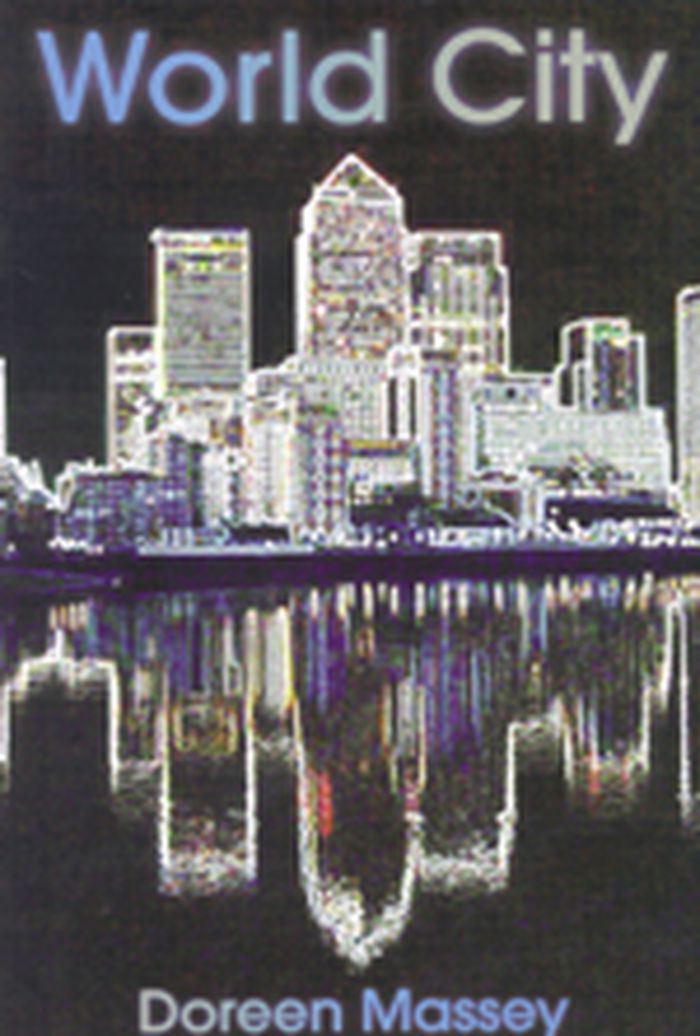
Cities around the world are striving to be global. This book tells the story of one of them, and in so doing raises questions which are essential for all cities. These questions concern identity, place, and political responsibility in the changing geographies of our times. The book also tells the story of the rise of a new class, of deepening inequality, and of the geographical imaginations that are mobilised to legitimate the increasing dominance of these powerful metropoles. In so doing, it sets the global city in its wider geographical and political context. World City focuses its account on London, one of the greatest of these global cities. London is a city of delight and of creativity, of the generation of vast wealth and of acute poverty. It also presides over a country increasingly divided between North and South and over a neo-liberal form of globalisation the deregulation, financialisation and commercialisation of all aspects of life that results in an evermore unequal world.World City explores how we can understand this complex narrative and asks a question that should be asked of any city: what does this place stand for? This book will appeal to students of human geography, politics and sociology as well as to the general reader.
World City
Actions:
Price:
$29.99
(available to order)
Summary:
Cities around the world are striving to be global. This book tells the story of one of them, and in so doing raises questions which are essential for all cities. These questions concern identity, place, and political responsibility in the changing geographies of our times. The book also tells the story of the rise of a new class, of deepening inequality, and of the geographical imaginations that are mobilised to legitimate the increasing dominance of these powerful metropoles. In so doing, it sets the global city in its wider geographical and political context. World City focuses its account on London, one of the greatest of these global cities. London is a city of delight and of creativity, of the generation of vast wealth and of acute poverty. It also presides over a country increasingly divided between North and South and over a neo-liberal form of globalisation the deregulation, financialisation and commercialisation of all aspects of life that results in an evermore unequal world.World City explores how we can understand this complex narrative and asks a question that should be asked of any city: what does this place stand for? This book will appeal to students of human geography, politics and sociology as well as to the general reader.
Form:
books
books
Publication:
September 2007, Cambridge, Malden
September 2007, Cambridge, Malden
Subject:
Architectural Theory
Architectural Theory
Form:
books
books
Actions:
Price:
$30.00
(available to order)
Summary:
The 12 artists in Phantasmagoria: Specters of Absence--Christian Boltanski, Jim Campbell, Michel Delacroix, Laurent Grasso, Jeppe Hein, William Kentridge, Rafael Lozano-Hemmer, Teresa Margolles, Oscar Munoz, Julie Nord, Rosangela Renno and Regina Silveira--draw on forms of representation associated with phantasmagoria and reframe them around contemporary notions of(...)
$30.00
(available to order)
Summary:
The 12 artists in Phantasmagoria: Specters of Absence--Christian Boltanski, Jim Campbell, Michel Delacroix, Laurent Grasso, Jeppe Hein, William Kentridge, Rafael Lozano-Hemmer, Teresa Margolles, Oscar Munoz, Julie Nord, Rosangela Renno and Regina Silveira--draw on forms of representation associated with phantasmagoria and reframe them around contemporary notions of(...)
Title:
Phantasmagoria : Specters of absence
Actions:
Price:
$30.00
(available to order)
Summary:
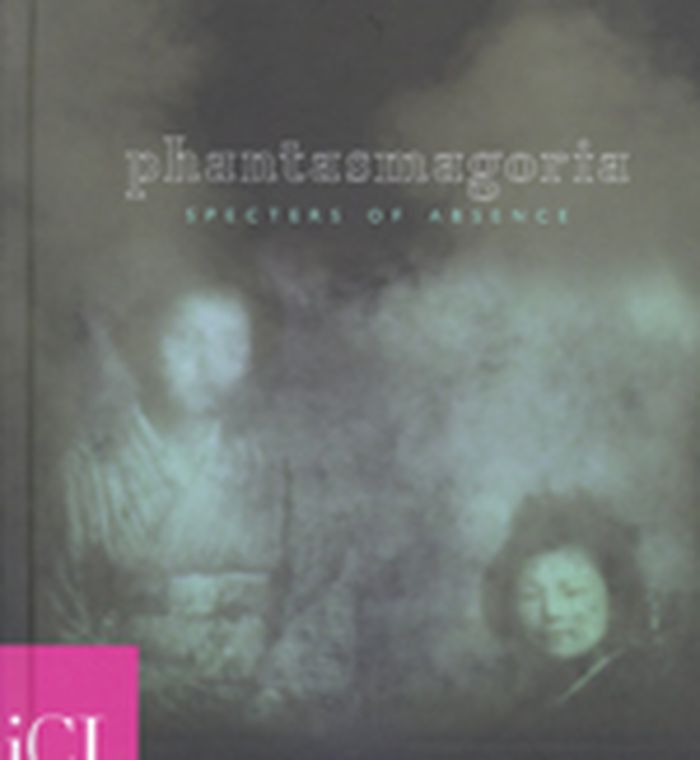
The 12 artists in Phantasmagoria: Specters of Absence--Christian Boltanski, Jim Campbell, Michel Delacroix, Laurent Grasso, Jeppe Hein, William Kentridge, Rafael Lozano-Hemmer, Teresa Margolles, Oscar Munoz, Julie Nord, Rosangela Renno and Regina Silveira--draw on forms of representation associated with phantasmagoria and reframe them around contemporary notions of absence and loss, using spectral effects and immaterial media such as shadows, fog, mist and breath. A "phantasmagoria" was a pre-cinematic theatrical show, devised in France in the late eighteenth century, which gained popularity throughout Europe in the nineteenth century. Long before blockbuster art exhibitions, crowds were wowed by these traveling shows, in which stories were performed with magic lanterns and rear projections that created dancing shadows and frightening melodramatic effects. These lively, interactive events incorporated narrative, mythology and theater in a single art form; they entertained a wide audience and provided a space to consider the otherworldly, mobilizing viewers' anxieties regarding death and the afterlife. This catalogue, produced for the traveling exhibition of the same name, includes a text by curator Jose Roca and his interviews with the 12 artists, as well as a newly commissioned short-fiction piece by Bruce Sterling. The exhibition is co-organized by the Museo de Arte del Banco de la Republica, Bogota, Columbia.
Phantasmagoria : Specters of absence
Actions:
Price:
$30.00
(available to order)
Summary:
The 12 artists in Phantasmagoria: Specters of Absence--Christian Boltanski, Jim Campbell, Michel Delacroix, Laurent Grasso, Jeppe Hein, William Kentridge, Rafael Lozano-Hemmer, Teresa Margolles, Oscar Munoz, Julie Nord, Rosangela Renno and Regina Silveira--draw on forms of representation associated with phantasmagoria and reframe them around contemporary notions of absence and loss, using spectral effects and immaterial media such as shadows, fog, mist and breath. A "phantasmagoria" was a pre-cinematic theatrical show, devised in France in the late eighteenth century, which gained popularity throughout Europe in the nineteenth century. Long before blockbuster art exhibitions, crowds were wowed by these traveling shows, in which stories were performed with magic lanterns and rear projections that created dancing shadows and frightening melodramatic effects. These lively, interactive events incorporated narrative, mythology and theater in a single art form; they entertained a wide audience and provided a space to consider the otherworldly, mobilizing viewers' anxieties regarding death and the afterlife. This catalogue, produced for the traveling exhibition of the same name, includes a text by curator Jose Roca and his interviews with the 12 artists, as well as a newly commissioned short-fiction piece by Bruce Sterling. The exhibition is co-organized by the Museo de Arte del Banco de la Republica, Bogota, Columbia.
Form:
books
books
Publication:
October 2007, New York
October 2007, New York
Subject:
Contemporary Art Monographs
Contemporary Art Monographs
Form:
books
books
Actions:
Price:
$45.00
(available in store)
Summary:
Mouna Andraos and Melissa Mongiat—together with their team at Daily tous les jours—have been creating celebrated interactive art and narrative experiences for public spaces around the world for over 15 years. Their groundbreaking work is part of an emergent practice that combines technology, storytelling, performance, and placemaking to build a new infrastructure for the(...)
$45.00
(available in store)
Summary:
Mouna Andraos and Melissa Mongiat—together with their team at Daily tous les jours—have been creating celebrated interactive art and narrative experiences for public spaces around the world for over 15 years. Their groundbreaking work is part of an emergent practice that combines technology, storytelling, performance, and placemaking to build a new infrastructure for the(...)
Publication:
August 2025
August 2025
Title:
Strangers need strange moments together: Designing interaction for public spaces
Actions:
Price:
$45.00
(available in store)
Summary:
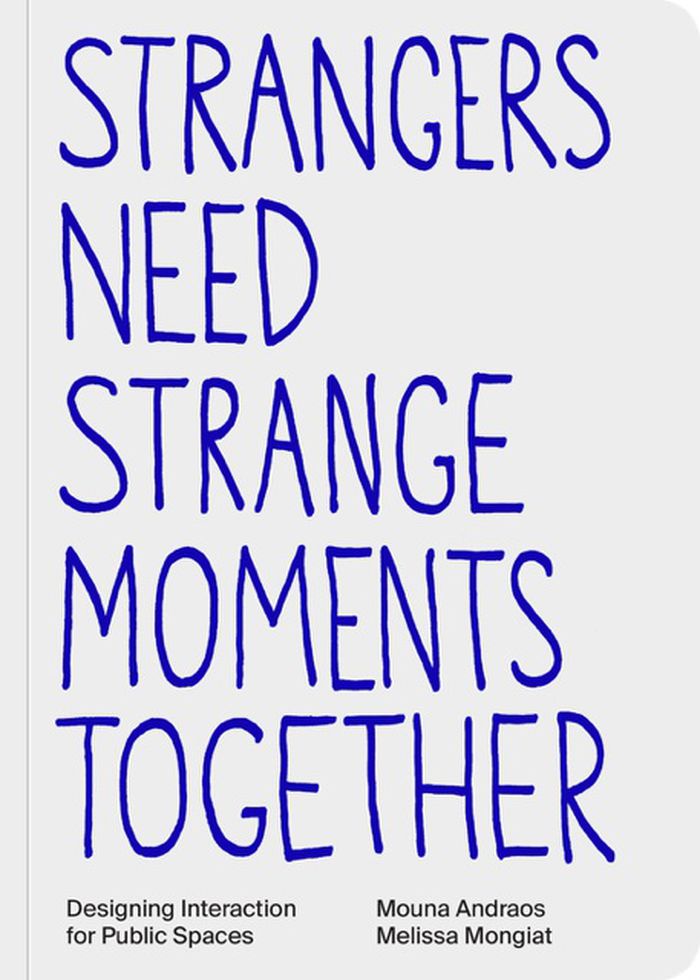
Mouna Andraos and Melissa Mongiat—together with their team at Daily tous les jours—have been creating celebrated interactive art and narrative experiences for public spaces around the world for over 15 years. Their groundbreaking work is part of an emergent practice that combines technology, storytelling, performance, and placemaking to build a new infrastructure for the human spirit. In ''Strangers Need Strange Moments Together'', Andraos and Mongiat invite a broad range of readers—fellow practitioners, urbanists, policy makers, educators, and engaged citizens—to take a joyful approach to building resilient urban communities and re-enchanting public space. In times of unprecedented pace of urban growth, with increasing loneliness and division, they shed light on the importance of moving beyond purely data-driven urban planning methodologies—which prioritize productivity, efficiency, and automation—and forging new modes of public interaction. Cities must be spaces for the whimsical, unexpected, and weird, and for the wasted time and strange moments of serendipitous encounter. Andraos and Mongiat use the raw material of the “daily everyday” to propose new models of living together in the 21st century, and to foreground the dimensions of life that characterize what it means to be human in the first place.
Strangers need strange moments together: Designing interaction for public spaces
Actions:
Price:
$45.00
(available in store)
Summary:
Mouna Andraos and Melissa Mongiat—together with their team at Daily tous les jours—have been creating celebrated interactive art and narrative experiences for public spaces around the world for over 15 years. Their groundbreaking work is part of an emergent practice that combines technology, storytelling, performance, and placemaking to build a new infrastructure for the human spirit. In ''Strangers Need Strange Moments Together'', Andraos and Mongiat invite a broad range of readers—fellow practitioners, urbanists, policy makers, educators, and engaged citizens—to take a joyful approach to building resilient urban communities and re-enchanting public space. In times of unprecedented pace of urban growth, with increasing loneliness and division, they shed light on the importance of moving beyond purely data-driven urban planning methodologies—which prioritize productivity, efficiency, and automation—and forging new modes of public interaction. Cities must be spaces for the whimsical, unexpected, and weird, and for the wasted time and strange moments of serendipitous encounter. Andraos and Mongiat use the raw material of the “daily everyday” to propose new models of living together in the 21st century, and to foreground the dimensions of life that characterize what it means to be human in the first place.
Form:
books
books
Publication:
August 2025
August 2025
Form:
books
books
Price:
$62.00
(available to order)
Summary:
An inquiry into emergent media's rich lineage, "Devices of Wonder" explores the artful machines humans have used to augment visual perception. The encyclopedic cabinet of curiosities serves as a model for this study of the archaic instruments lurking in state-of-the art technology. Featured in "Devices of Wonder" are android automata, lunar landscapes, perspective(...)
$62.00
(available to order)
Summary:
An inquiry into emergent media's rich lineage, "Devices of Wonder" explores the artful machines humans have used to augment visual perception. The encyclopedic cabinet of curiosities serves as a model for this study of the archaic instruments lurking in state-of-the art technology. Featured in "Devices of Wonder" are android automata, lunar landscapes, perspective(...)
Subject:
Architectural Theory
Architectural Theory
Publication:
November 2001, Los Angeles
November 2001, Los Angeles
Title:
Devices of wonder from the world in a box to images on a screen
Actions:
Price:
$62.00
(available to order)
Summary:
An inquiry into emergent media's rich lineage, "Devices of Wonder" explores the artful machines humans have used to augment visual perception. The encyclopedic cabinet of curiosities serves as a model for this study of the archaic instruments lurking in state-of-the art technology. Featured in "Devices of Wonder" are android automata, lunar landscapes, perspective theaters, vues d'optique, microscopes, magnetic games, magic lanterns, camera obscuras, boxes by Joseph Cornell, Lucas Samaras's Mirrored Room, Suzanne Anker's Zoosemiotics, Mark Tilden's UniBug 3.1, panoramic works by Jeff Wall and Giovanni Lusieri, paintings by Jean-Baptiste Chardin and Joseph Wright of Derby, projections by Diana Thater and James Turrell, and a pop-up book by Kara Walker. Barbara Stafford's introduction weaves these fascinating artifacts into a provocative narrative analyzing the complex links between old and new media. Her wide-ranging investigation is complemented by thirty-one short essays in which Frances Terpak tracks the often surprising connections among individual items. Like the cabinet of curiosities, "Devices of Wonder" functions as an analogical instrument, reframing the beautiful "eye machines" that continue to mediate our encounters with the world. This book is published in conjunction with an exhibition at the Getty from November 13, 2001, through February 6, 2002.
Devices of wonder from the world in a box to images on a screen
Actions:
Price:
$62.00
(available to order)
Summary:
An inquiry into emergent media's rich lineage, "Devices of Wonder" explores the artful machines humans have used to augment visual perception. The encyclopedic cabinet of curiosities serves as a model for this study of the archaic instruments lurking in state-of-the art technology. Featured in "Devices of Wonder" are android automata, lunar landscapes, perspective theaters, vues d'optique, microscopes, magnetic games, magic lanterns, camera obscuras, boxes by Joseph Cornell, Lucas Samaras's Mirrored Room, Suzanne Anker's Zoosemiotics, Mark Tilden's UniBug 3.1, panoramic works by Jeff Wall and Giovanni Lusieri, paintings by Jean-Baptiste Chardin and Joseph Wright of Derby, projections by Diana Thater and James Turrell, and a pop-up book by Kara Walker. Barbara Stafford's introduction weaves these fascinating artifacts into a provocative narrative analyzing the complex links between old and new media. Her wide-ranging investigation is complemented by thirty-one short essays in which Frances Terpak tracks the often surprising connections among individual items. Like the cabinet of curiosities, "Devices of Wonder" functions as an analogical instrument, reframing the beautiful "eye machines" that continue to mediate our encounters with the world. This book is published in conjunction with an exhibition at the Getty from November 13, 2001, through February 6, 2002.
Form:
books
books
Publication:
November 2001, Los Angeles
November 2001, Los Angeles
Subject:
Architectural Theory
Architectural Theory
Form:
books
books

Price:
$84.95
(available to order)
Summary:
The all-out war in Ukraine, started by the Russian Federation in 2022 has disproportionally affected housing and residential infrastructure. The destruction is so targeted, and the damage so significant that it has disfigured entire neighborhoods and erased entire cities. With the scale of damage and loss in mind, and the future wide-ranging reconstruction that will(...)
$84.95
(available to order)
Summary:
The all-out war in Ukraine, started by the Russian Federation in 2022 has disproportionally affected housing and residential infrastructure. The destruction is so targeted, and the damage so significant that it has disfigured entire neighborhoods and erased entire cities. With the scale of damage and loss in mind, and the future wide-ranging reconstruction that will(...)
Title:
Mass Housing in Ukraine: Building Typologies and Catalogue of Series
Actions:
Price:
$84.95
(available to order)
Summary:
The all-out war in Ukraine, started by the Russian Federation in 2022 has disproportionally affected housing and residential infrastructure. The destruction is so targeted, and the damage so significant that it has disfigured entire neighborhoods and erased entire cities. With the scale of damage and loss in mind, and the future wide-ranging reconstruction that will inevitably take place after the war, this study examines the history and typologies of mass housing in Ukraine. It does so in order to evaluate what is lost, explain the diversity of modes of urban living that exist in Ukrainian cities, and finally, reconsider the narrative of how Ukrainian housing came about. The study covers the period of the last 100 years: the time of the most dramatic expansion and change in character of Ukrainian cities. It begins with the experimental buildings constructed in the Soviet Central and Eastern Ukraine and Polish Western Ukraine in the 1920s and 1930s, continues by looking at type projects from the Stalin era, as well as the serial apartment blocks built during the reigns of Khrushchev and Brezhnev and in the late USSR. Finally, it showcases individually designed, yet also typical residential buildings from the turbo-capitalist period of the 1990s and 2000s.
Mass Housing in Ukraine: Building Typologies and Catalogue of Series
Actions:
Price:
$84.95
(available to order)
Summary:
The all-out war in Ukraine, started by the Russian Federation in 2022 has disproportionally affected housing and residential infrastructure. The destruction is so targeted, and the damage so significant that it has disfigured entire neighborhoods and erased entire cities. With the scale of damage and loss in mind, and the future wide-ranging reconstruction that will inevitably take place after the war, this study examines the history and typologies of mass housing in Ukraine. It does so in order to evaluate what is lost, explain the diversity of modes of urban living that exist in Ukrainian cities, and finally, reconsider the narrative of how Ukrainian housing came about. The study covers the period of the last 100 years: the time of the most dramatic expansion and change in character of Ukrainian cities. It begins with the experimental buildings constructed in the Soviet Central and Eastern Ukraine and Polish Western Ukraine in the 1920s and 1930s, continues by looking at type projects from the Stalin era, as well as the serial apartment blocks built during the reigns of Khrushchev and Brezhnev and in the late USSR. Finally, it showcases individually designed, yet also typical residential buildings from the turbo-capitalist period of the 1990s and 2000s.
Form:
books
books
Publication:
November 2024
November 2024
Subject:
Collective Housing
Collective Housing


